



Abstract
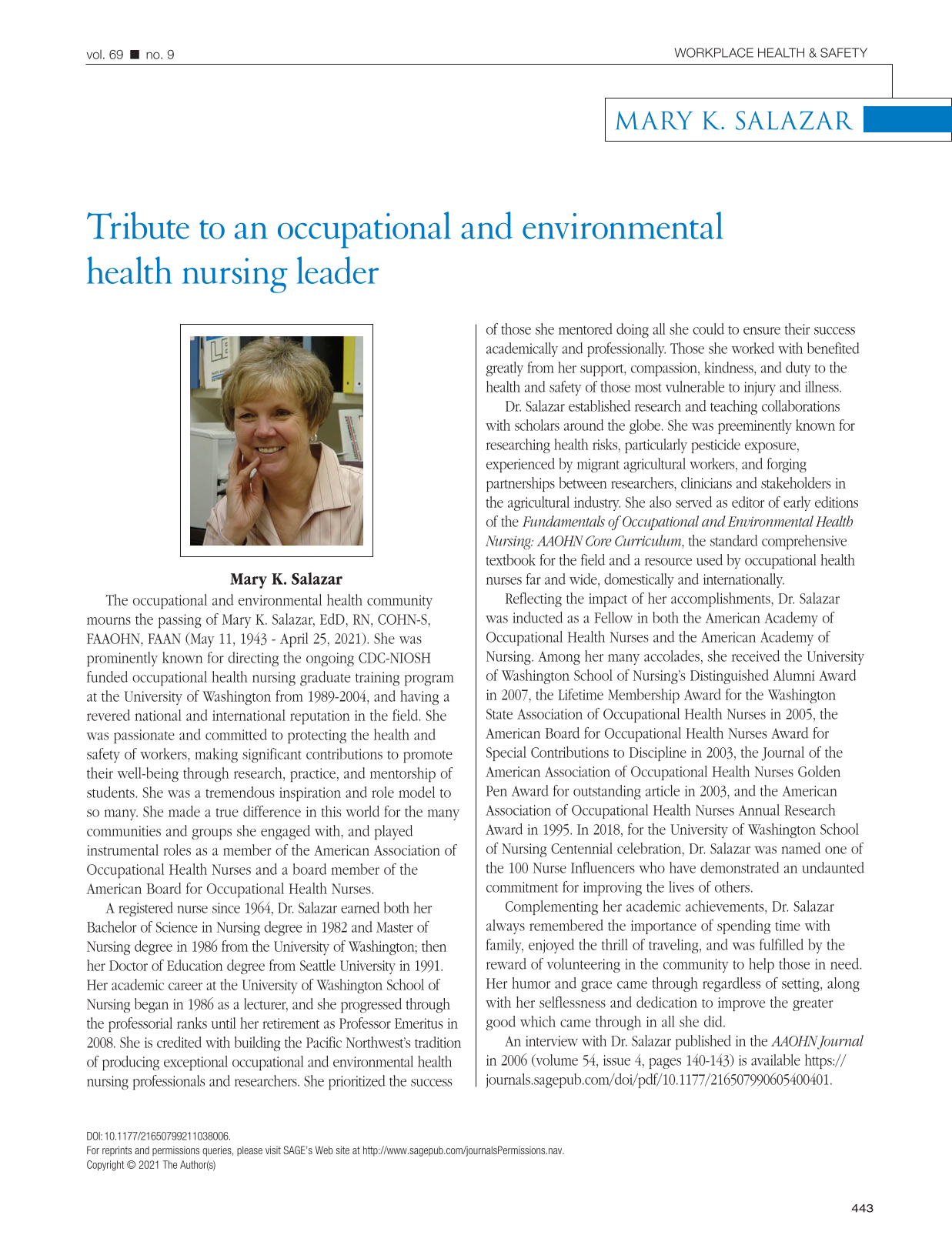
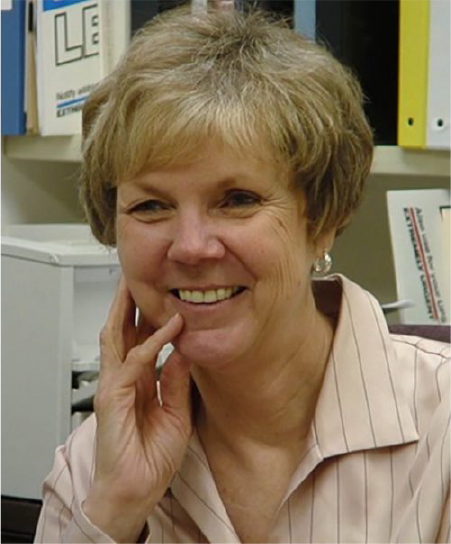
The occupational and environmental health community mourns the passing of Mary K. Salazar, EdD, RN, COHN-S, FAAOHN, FAAN (May 11, 1943 - April 25, 2021). She was prominently known for directing the ongoing CDC-NIOSH funded occupational health nursing graduate training program at the University of Washington from 1989-2004, and having a revered national and international reputation in the field. She was passionate and committed to protecting the health and safety of workers, making significant contributions to promote their well-being through research, practice, and mentorship of students. She was a tremendous inspiration and role model to so many. She made a true difference in this world for the many communities and groups she engaged with, and played instrumental roles as a member of the American Association of Occupational Health Nurses and a board member of the American Board for Occupational Health Nurses.
A registered nurse since 1964, Dr. Salazar earned both her Bachelor of Science in Nursing degree in 1982 and Master of Nursing degree in 1986 from the University of Washington; then her Doctor of Education degree from Seattle University in 1991. Her academic career at the University of Washington School of Nursing began in 1986 as a lecturer, and she progressed through the professorial ranks until her retirement as Professor Emeritus in 2008. She is credited with building the Pacific Northwest’s tradition of producing exceptional occupational and environmental health nursing professionals and researchers. She prioritized the success of those she mentored doing all she could to ensure their success academically and professionally. Those she worked with benefited greatly from her support, compassion, kindness, and duty to the health and safety of those most vulnerable to injury and illness.
Dr. Salazar established research and teaching collaborations with scholars around the globe. She was preeminently known for researching health risks, particularly pesticide exposure, experienced by migrant agricultural workers, and forging partnerships between researchers, clinicians and stakeholders in the agricultural industry. She also served as editor of early editions of the Fundamentals of Occupational and Environmental Health Nursing: AAOHN Core Curriculum, the standard comprehensive textbook for the field and a resource used by occupational health nurses far and wide, domestically and internationally.
Reflecting the impact of her accomplishments, Dr. Salazar was inducted as a Fellow in both the American Academy of Occupational Health Nurses and the American Academy of Nursing. Among her many accolades, she received the University of Washington School of Nursing’s Distinguished Alumni Award in 2007, the Lifetime Membership Award for the Washington State Association of Occupational Health Nurses in 2005, the American Board for Occupational Health Nurses Award for Special Contributions to Discipline in 2003, the Journal of the American Association of Occupational Health Nurses Golden Pen Award for outstanding article in 2003, and the American Association of Occupational Health Nurses Annual Research Award in 1995. In 2018, for the University of Washington School of Nursing Centennial celebration, Dr. Salazar was named one of the 100 Nurse Influencers who have demonstrated an undaunted commitment for improving the lives of others.
Complementing her academic achievements, Dr. Salazar always remembered the importance of spending time with family, enjoyed the thrill of traveling, and was fulfilled by the reward of volunteering in the community to help those in need. Her humor and grace came through regardless of setting, along with her selflessness and dedication to improve the greater good which came through in all she did.
An interview with Dr. Salazar published in the AAOHN Journal in 2006 (volume 54, issue 4, pages 140-143) is available https://journals.sagepub.com/doi/pdf/10.1177/216507990605400401.