




Abstract
An assessment was conducted to update a tool kit published by the American Association of Occupational Health Nurses (AAOHN) in 1998. The original document, Success Tool for Measuring and Articulating Value, had been a respected resource. Although the AAOHN guide, Demonstrating Value, is a tool with steps and examples for demonstrating value, the intention of this article is to explore the rich data collected during the assessment process, which included interviews with occupational health nurse leaders and an AAOHN member survey. Findings were summarized including data responses compared with occupational health nurses’ tenure in the profession, size of company, job title, and clinic setting (i.e., single- vs. multi-nurse or corporate clinic). In addition, key advice from occupational health nurse leaders was summarized. Justifying services and demonstrating value were viewed by all respondents as essential to the profession as well as for ensuring the quality of occupational health nursing services. A gap was identified between more experienced occupational health nurses and those new to the field, as well as between occupational health nursing settings related to the importance of, and involvement in, demonstrating value.
Demonstrating return on investment (ROI) is certainly not a new concept and is familiar to occupational health nurses. Nursing, human resources, health promotion, and business journals publish articles championing outcome measurements including ROI. Occupational health nurses are challenged to question the value of tasks that cannot be measured, and to measure what matters. Both certainly have merit, yet in discussions with occupational health nurses, the value of occupational health nursing services may be understood but is often not documented, reported, or promoted. If occupational health nurses are not documenting, reporting, and promoting the value of their services, the value of these services may be questioned by management.
Businesses today are struggling to compete in a global economy and marketing arena. To remain competitive, business leaders are creating the leanest systems that will still accomplish necessary work. Departments and functions that are not critical contributors to businesses are no longer valued and therefore no longer supported.
Both ROI and value on investment (VOI) tools have been developed to justify services and demonstrate value. Although demonstrating ROI (i.e., monetary gain) is important, VOI is also a useful method to demonstrate value. Value on investment takes into account intangible but measurable benefits of occupational health nursing services (e.g., enhancing trust, caring, satisfaction, retention, and talent acquisition). For some organizations, VOI is as important as ROI, honoring that people come first. From this perspective, value is not simply cost savings alone (Mastroianni & Machles, 2012).
Interestingly, research sponsored by Humana also demonstrated that cost effectiveness might no longer be the primary measure for assessing wellness programs (The Economist Intelligence Unit, 2014). Two hundred fifty-five U.S.-based senior human resource (HR) executives were surveyed as well as 630 employees; the researchers found that two-thirds of the respondents believed their wellness programs were cost-effective even though the outcomes were not monetarily measurable. As the authors noted, if the primary intention of wellness programs is to improve workers’ health and their quality of life, then the measured outcome should not be monetary.
The value of occupational health nursing services may seem unquestionable, but, as with all aspects of business, these services must demonstrate value. Occupational health nurses must document the tangible and intangible benefits of their services. Nurses must implement a strategic method to demonstrate and articulate how their services support the business mission, goals, and bottom line of the company. In essence, occupational health nurses must communicate that they are key business partners.
Method
The need for occupational health nurses to demonstrate value was evident based on the data collected to develop an AAOHN guide to demonstrating occupational health nurse value. The project, initially requested by AAOHN, was to update an educational module published as an AAOHN Success Tool in 1998 (Kalina, 1998). This module, Measuring & Articulating Value, provided an excellent resource for assisting occupational health nurses in determining ROI. In addition to updating the literature review and project examples, the project was undertaken to determine current AAOHN member interest and involvement in demonstrating the value of occupational health nursing services.
A grant for guide development was awarded through The AAOHN Foundation and funded by Kelly Services. The guide, Demonstrating Value (Mastroianni, 2016), was published by the AAOHN Academy and is available through AAOHN. The assessment for the project included interviews conducted by the author with seven occupational health nurse leaders, and a survey distributed to AAOHN members by AAOHN staff (AAOHN, 2014).
Each occupational health nurse leader interview lasted approximately 1 hour. The interviews were recorded with permission and transcribed to extract data as well as to prevent errors. An informal guide was used (Appendix A). Written permission to publish the interview results was obtained from each interviewee. In addition, interviewees reviewed their original interview transcripts for clarity and accuracy. The AAOHN Member Survey (Appendix B) was developed and distributed by AAOHN to members. The returned surveys were downloaded to an Excel spreadsheet for data analysis. Members responding to the AAOHN Member Survey were informed that their responses would be combined and a group summary reported. Survey participants were also informed that all other information would be confidential.
The resulting AAOHN guide, Demonstrating Value (Mastroianni, 2016), is a tool for occupational health nurses to determine value and position health services as an asset for business success, profits, and cost savings. The guide includes definitions, techniques, and examples of ROI methods including cost–benefit analysis, cost effectiveness, breakeven, and cost avoidance. A number of VOI methods are also explained and examples provided such as employee satisfaction, retention, and talent attraction as well as fostering a great place to work. In addition, a strategic process is outlined:
Conducting an initial assessment, identifying issue(s) or desired outcome(s), determining methods of measurement based on specific issue(s) identified;
Planning, including specific goals and data to be collected;
Implementing data collection and maintenance; and
Evaluating and reporting ROI and VOI outcomes.
The purpose of this article is to explore the rich data from the assessment conducted to refine the guide. Findings are summarized from both the AAOHN Member Survey and the interviews conducted with seven occupational health nursing leaders. These findings provided an in-depth perspective on the topic as well as support for demonstrating value. Only descriptive data were collected; therefore, although data comparisons were made and differences noted, statistical significance could not be determined.
Results
Interviews were conducted by the author with seven occupational health nurse corporate leaders to determine their perspectives on demonstrating value. In addition, a survey was distributed to AAOHN members regarding their experiences with, and requests regarding, demonstrating value and justifying the value of occupational health services at their worksites. A total of 817 members responded; 642 respondents answered every question. The AAOHN Member Survey captured nurses’ perceived need to conduct ROI, direct involvement in conducting ROI, whether nurses were asked to demonstrate ROI or VOI, perceived importance of demonstrating ROI or VOI, and use of the literature to demonstrate value. These data points were correlated with nurses’ tenure in the profession and their current positions, the size of the company, their job titles, and whether the nurses worked in single versus multi-nurse clinic or corporate settings.
Occupational Health Nurse Leader Advice
Key information was synthesized from leader interviews. Their advice and case examples are shared in the Demonstrating Value guide (Mastroianni, 2016); however, below are several key themes gleaned from the interview data. Regardless of whether occupational health nurses are working in single-nurse units or multi-nurse units and regardless of their positions, occupational health nurses must view themselves as managers who realize the importance of demonstrating value whether these data are requested or not. Occupational health nurses must
Articulate their goals and capture and track data on the status of the goals.
Align the goals with the ultimate mission of the organization and demonstrate how the goals support the business mission.
Track data regardless of whether the data will ever be used for ROI purposes. Reporting numbers and services delivered is valuable and may justify headcount or additional services.
Adjust value indicators based on specific industries and the values of senior management.
Know what management values and their business goals; then use both to plan ROI and VOI strategies.
Learn and model what is used by other company mangers to demonstrate value as each organization and culture is unique. For example, if worker attrition is low, this benchmark may not need to be documented.
Monitor leading indicators, not just lagging indicators. For example, demonstrate how occupational health nurses prevent injuries rather than simply reporting on the number of injuries treated.
Involve someone from finance in planning ROI because they can provide a perspective regarding data to collect and summary analysis.
Be intimately familiar with the data collected, PLUS be able to justify and defend why the data and methods were selected and why the data and methods matter.
Assess other data, not just ROI. For example, in biometric screenings track results, such as changes in high, medium, and low health risk categories and insurance cost trends, not focusing exclusively on risk cost savings alone.
Collect and use anecdotes because these stories remind managers that workers are behind the numbers which can promote and market health programs.
Be familiar with and utilize ROI and VOI literature.
Be willing to take risks by refining or eliminating services no matter how well nurses enjoy providing these services or workers praise them.
Articulate what occupational health nurses want to achieve and how to secure management support.
Know how to submit proposals to company leadership including the expected format and approach (e.g., power point or executive summary, overview or details, data support or human element).
Be prepared. Have frequent conversations with company leaders, report results, and discuss how health outcomes are aligned with management and the business mission.
Establish a relationship with the highest executives or plant manager as well as other key partners and champions.
Make sure management is aware of occupational health nursing goals.
Persist, even when a request or proposal is denied. One of those interviewed tried to hire a physical therapist for 4 years in a row and finally received authorization on the 5th attempt.
Be honest. Refrain from guaranteeing outcomes, but present facts regarding the benefits of proposed programs.
Report and present to company executives. If the occupational health nurse cannot present directly to upper management, develop a relationship with a colleague who has access and can explain occupational health and safety data for you.
Make sure the report is consistent with other managers’ reports, and models the type of information that interests management.
These findings can assist occupational health nurses in justifying services and providing practical information to guide the process of demonstrating value.
Assessment Findings
Several key findings were noted after analyzing the data. First, respondents believed that occupational health nurses must position programs and services as not only a business asset but also an essential component of business success (Mastroianni, 2016). The need to demonstrate value was clearly expressed by the survey respondents. The average rating of importance for demonstrating ROI on a rating scale of 1 to 10 was 8.4. Of interest, respondents also rated non-VOI value exactly the same, 8.4 on a scale of 1 to 10. In addition, almost half, 48%, reported being involved in demonstrating VOI. As one of the leaders stated, Most of the nurses out there are doing great things. They’re saving the companies that they work for huge amounts of money. And they’re achieving excellent outcomes for chronic disease management, et cetera. But many of them are not showing that value to the company’s administration and that’s the problem.
Similarly, a survey respondent noted, “In business everyone wants ROI and we do have a positive effect on the bottom line” (AAOHN, 2014), but it is unclear whether management realizes the impact of occupational health nurses on their bottom line. Occupational health nurses must communicate and promote their impact on their businesses. It is no longer enough for occupational health nurses to do their jobs, no matter how well, without analyzing whether what they are doing is in the best interests of all stakeholders.
The survey responses also clearly indicated that many participants had been asked to demonstrate value or justify a service (525 of 813 [65%] respondents). Thirty-five percent (288 of 813) of respondents reported they had not been asked to demonstrate value (Figure 1). Of interest is that 77% of respondents stated that they perceived the need regardless of whether they had been asked (Figure 1) and more than half (56%) had been involved in justifying a program or service (Figure 1).
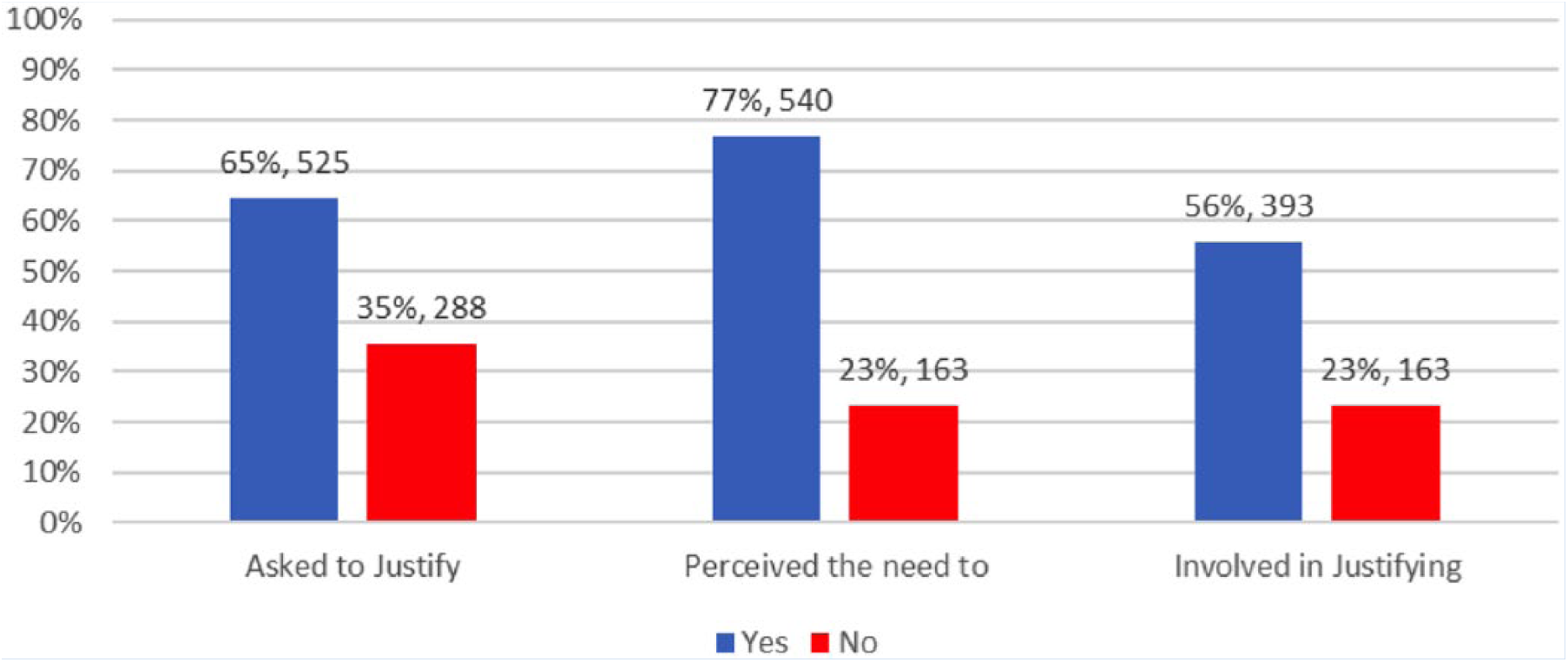
Overall justification of program or service.
Those interviewed indicated the same perceived need and noted that occupational health nurses must demonstrate value and justify services regardless of being asked to do so. For example, one of the interviewees stated that she realized the importance of analyzing ROIs early in her career, stating, “I figured if they’re (managers) looking at productivity measures, they’re looking at all kinds of dollars and cents measures for the company. Why would they not want to look at the value added of occupational health for the company?”
Moreover, every occupational health nurse leader interviewed expressed similar sentiments describing the importance of anecdotes and other nonquantifiable values (Mastroianni, 2016).
I do think for occupational health nurses that intangible benefits are really important. It is our responsibility to remind the leadership that these are people and it’s not just costs . . . You have to show value both in terms of employee morale and their appreciation of the company as well as the financial piece. (p. 15)
Other occupational health nurse leaders agreed. For example, a case was provided in which employee satisfaction influenced corporate management’s decision to maintain a clinic (Mastroianni, 2016). The leader described a pilot nurse practitioner (NP) program in which satisfaction made the difference. The Occupational Health Nurse Center conducted a small ROI investigation to assess the cost of the NP and savings resulting from employees remaining on site versus seeking community care. The cost-to-benefit analysis compared traditional community clinic visits versus services provided in-house at the various Centers; some Centers saved more than others, . . . but at the end of the day I have to say that what really sold the idea was documenting point-of-service feedback. So the high rate of employee satisfaction of the program meant as much if not more to our management. (p. 17)
Another benefit identified from survey data was the realistic assessment generated by documenting, tracking, and analyzing service data. These data could be used to determine which services should continue and which services should be eliminated or modified. Survey respondents reported changing responsibilities to benefit both employers and their employees; all leaders interviewed reported changing services to retain those that added value and eliminating services found to have little benefit. For example, two survey respondents reported contracting hearing surveillance examinations to allow time for staff to focus on more valuable services. Another respondent described closing first aid clinics to focus instead on case management based on need and value.
Interestingly, the same services that were mentioned as being eliminated by one company were reported as being valued by other survey respondents as well as occupational health nurse leaders. “What is of value is truly unique to the specific business and is based on employees’ needs and the best services that can be delivered” (Mastroianni, 2016, p. 8). Therefore, nurses should refrain from making assumptions; rather, nurses should confirm the need for particular services and objectively assess and justify the service.
Comparison of responses by clinic type
When comparing the perceived need to justify a program or service by clinic type, 82% of those respondents in corporate settings reported a need to justify services compared with 80% in multi-nurse clinics and 76% in single-nurse clinics (Figure 2). The importance of justifying a service or program using both ROI and VOI was also noted in interview data. One nurse leader stated that all nursing positions were maintained at her company even when other jobs at the company were restructured. In fact, this nurse leader and her staff have continued to document value even when informed by the executive team that documentation was no longer needed. A second respondent reported that when the need for a nurse was challenged, the positions remained intact due to justification data. A third interviewee reported adding new services based on justifying need and value. All of these experiences were attributed to the nurse leaders documenting the value of services and demonstrating both ROI and VOI.
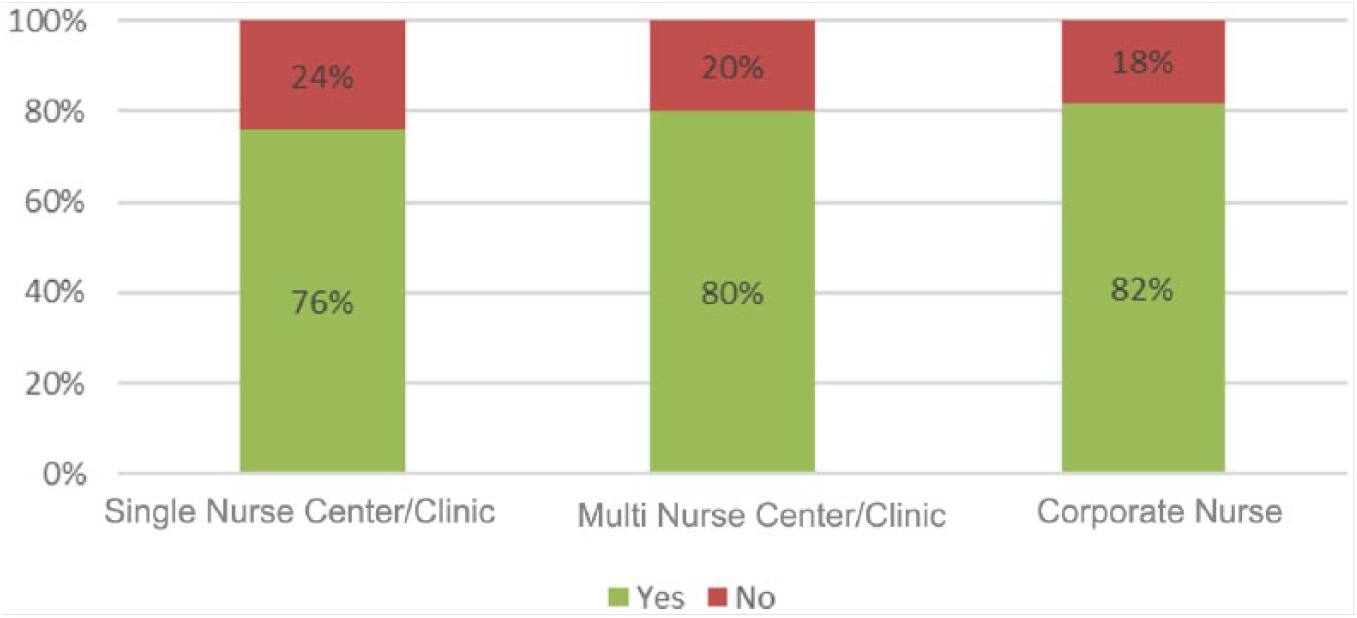
Perceived need to justify an occupational health nursing program by clinic type.
Final comparisons in this category included a request to justify a program or service, and actually conducting ROI and VOI analyses. When responding to being asked to justify a program or service, the percentages of those asked were similar regardless of clinic type (Table 1). Responses to actually conducting or being involved in ROI and VOI were only slightly higher in multi-nurse and corporate clinics with the highest reported involvement being those respondents who worked in multi-nurse clinic settings (Table 1).
Involvement in Justification by Clinic Type, Tenure, and Position
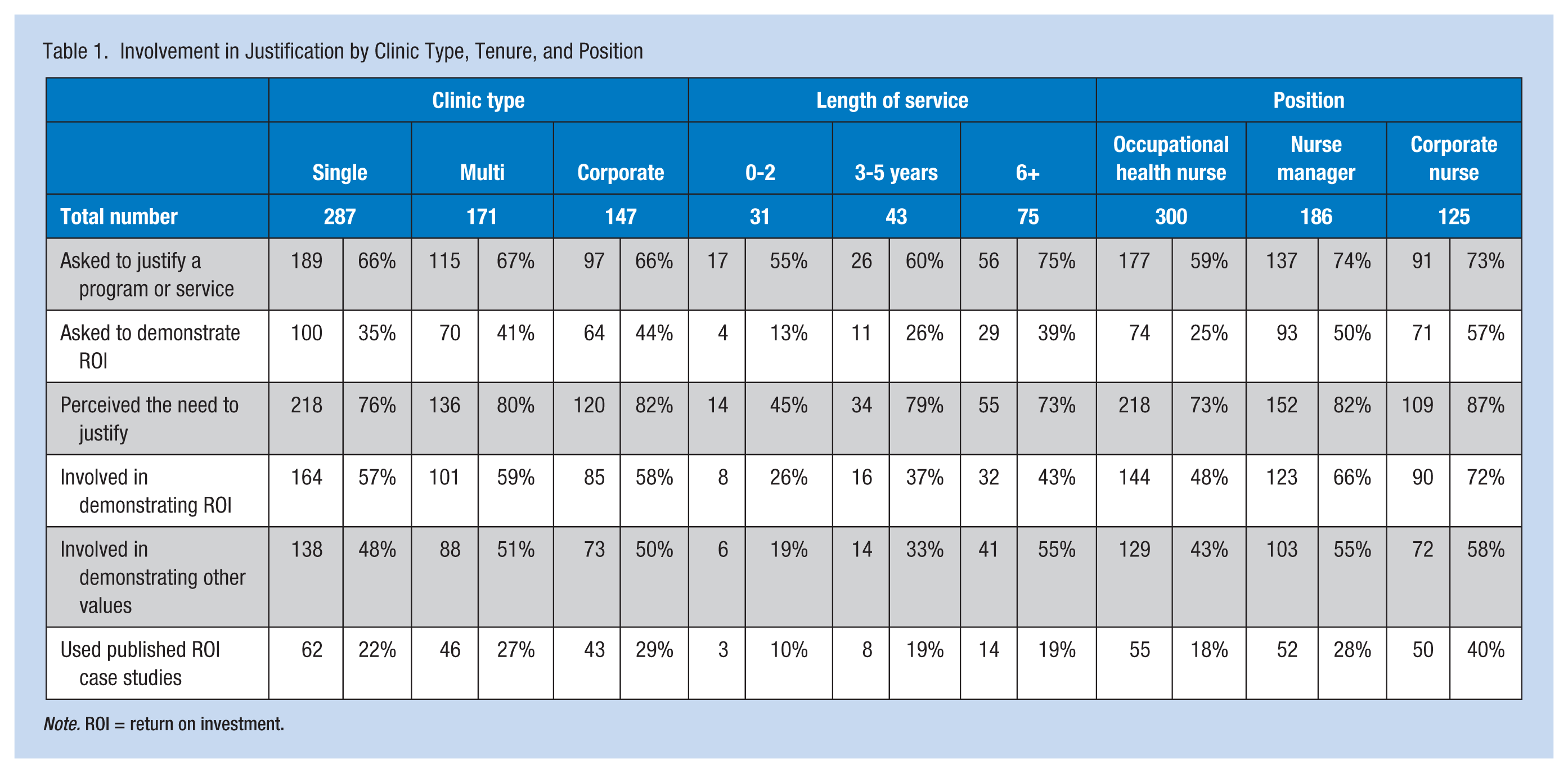
Note. ROI = return on investment.
Comparison of responses by occupational health nurse position
Several differences were noted in responses based on position or job title (i.e., occupational health nurse, occupational health nurse manager, or corporate occupational health nurse). Responses regarding whether respondents had been asked to justify programs or services were almost even between managers and corporate occupational health nurses, but about 15% lower for those identifying as occupational health nurses (Table 1). However, 73% of occupational health nurses, 82% of managers, and 87% of corporate nurses perceived the need to justify an occupational health nursing service (Table 1).
Differences were also found among positions in terms of who was involved in conducting ROI and VOI; corporate nurses and managers reported involvement more frequently than occupational health nurses (Table 1). In addition, differences were noted in rating the importance of ROI by position (Table 1).
Response comparison by tenure in the profession
A few differences were also noted when comparing responses by tenure in the profession. Not surprisingly, the longer respondents had worked in the field, the more likely they were to be asked to justify a program (Table 1). In addition, those working in the profession longer reported a perceived need to demonstrate value compared with those newer to the field. The longer occupational health nurses’ tenure, the more likely they were to be involved in demonstrating ROI and VOI (Table 1). Although these comparisons may not be surprising (e.g., tenure in the profession and more corporate resources increase the odds of being asked to justify services), the comparisons indicate a gap that may potentially leave new occupational health nurses and nurses employed in smaller companies and single-nurse units more vulnerable to downsizing.
Response comparison by reported company size
Responses also differed by company size. For example, those working in larger companies were more likely to be asked to justify services than those employed by smaller companies (Figure 3). Similarly, those nurses reporting that they were involved in VOI reporting also varied based on company size (i.e., larger organizations were more likely to require reporting than smaller organizations; Figure 4). However, regardless of the size of the company, almost the same percentage of respondents reported demonstrating ROI (Figure 5).
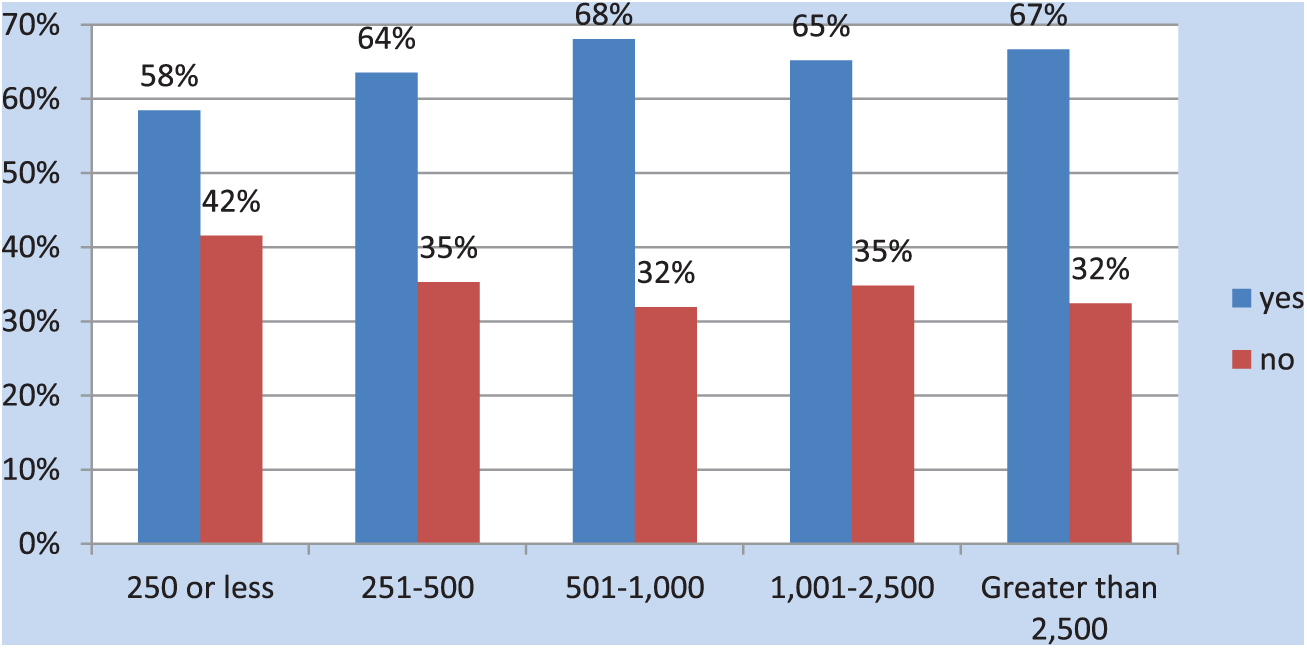
Requested to justify a program or service by company size.
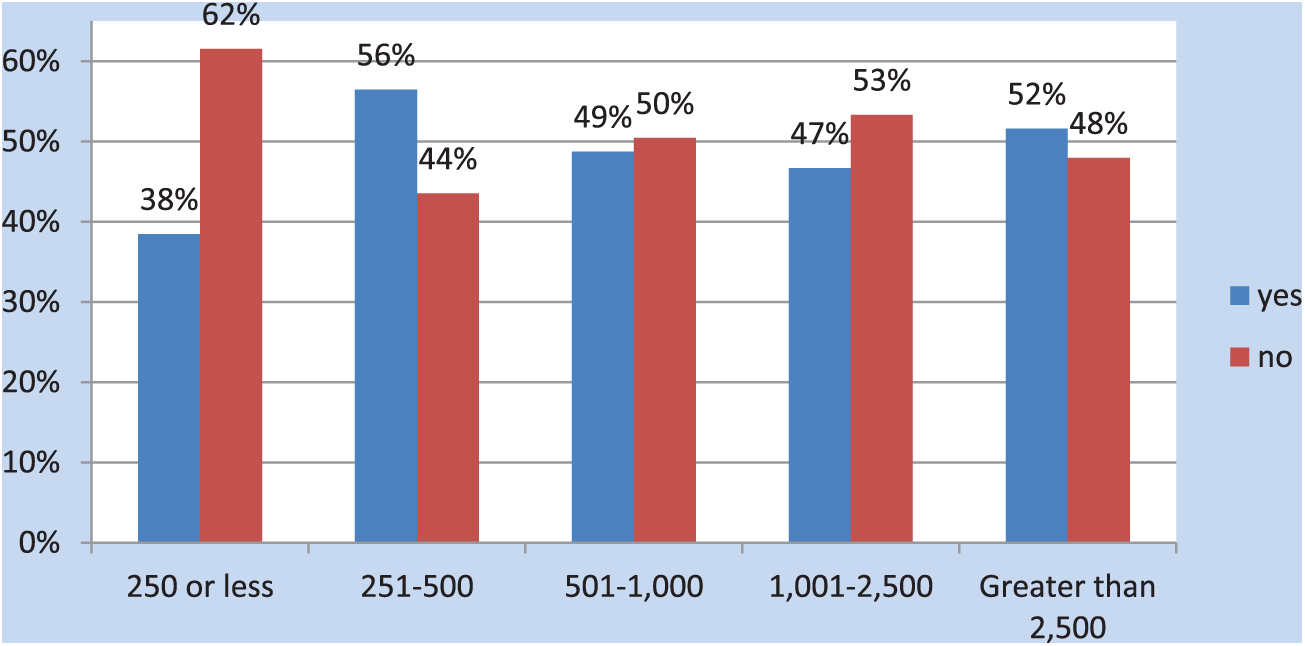
Involved in demonstrating VOI by size of company.
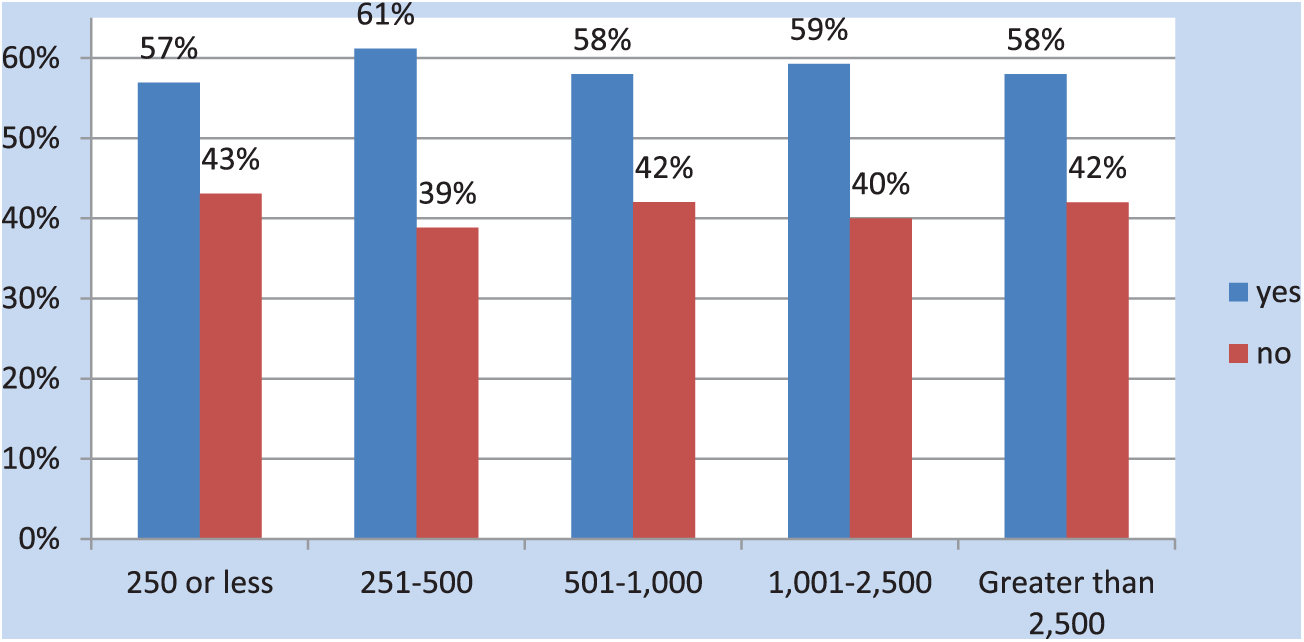
Involved in demonstrating ROI by company size.
Discussion and Implications for Practice
Justifying services and demonstrating value were viewed by all respondents as essential to the profession as well as to ensure the quality of occupational health nursing services. A potential gap in the assessment was identified related to the importance of demonstrating value and actual involvement in doing so between more experienced occupational health nurses and those nurses new to the field, as well as between those nurses working in single-nurse versus multi-nurse clinics, and those employed by smaller companies versus larger ones.
To address this gap, occupational health nurses new to the field or who work in single-nurse units or in small companies should consider seasoned occupational health nurse mentors who could assist them in demonstrating their value to their companies. Mentoring is an essential component of professional development as well as career enhancement (Rogers, 2012). The mentorship relationship brings together nurses with expertise and experiences they are willing to share with nurses who are interested in learning. Mentoring can be formal or informal, and should benefit both the mentor and the protégé (Harriss, 2012). The nature and quality of the relationship is key (Harriss, 2012); however, nurses need not rely on only one mentor for the length of their careers. In this context, mentoring could be between a nurse with professional experience in demonstrating value and either a new occupational health nurse or a nurse interested in gaining expertise in this area. Mentoring is usually voluntary with either the mentor or mentee initiating the relationship. A nurse interested in learning about ROI and VOI methods should seek a more experienced nurse to gain an understanding of business expectations.
Both parties should jointly decide on responsibilities, expectations, goals, and deliverables. Stanigar (2015) identified 22 indicators of effective mentoring support for entrepreneurs. Several indicators are also appropriate for mentoring occupational health nurses and capturing the essence of addressing this potential gap. An effective mentoring relationship includes
Being a source of inspiration
Being encouraged to grow and develop
Moving the vision and ideas into action
Feeling positive energy and enthusiasm when together
Having respect and valuing what each other says
Increasing capacity to produce or create something
Learning strengths and weaknesses
Providing strategies to solve business problems
Receiving practical business development assistance
Spending time on business development tasks.
Continuing education is another option for increasing nurses’ awareness of the need to demonstrate value and justify services, and providing opportunities to develop skills related to ROI and VOI.
Summary
This article explored the rich data generated from the leader interviews and member survey conducted to develop the Demonstrating Value guide (Mastroianni, 2016). Key quotes from the leaders interviewed were shared as well as themes from transcribed interview data. Comparisons of member survey responses were summarized by clinic type, occupational health nurse position, company size, and length of time in the profession.
A potential gap was noted between tenure, type of clinic, and employer size. Possible interventions included mentoring and education. The data from the member survey and leader interviews demonstrate the benefit of documenting, tracking, and analyzing services to support ROI and VOI as well as continuing, refining or eliminating programs and services.
However, despite the differences noted, occupational health nurses in all types of settings are being asked to justify services and programs. Many nurses realize the need for, and are actively conducting, ROI and VOI to justify services and demonstrate value. Survey and interview data indicated that many nurses are aware of the importance of ROI and VOI, and are involved in demonstrating both. However, the research data also indicated the need for professional development for nurses new to the field, working in single-nurse settings and employed by smaller companies.
It is essential to the profession that occupational health nurses seek professional development to learn how to demonstrate value. It is also essential that mentoring opportunities are offered by experienced, qualified nurses willing to share their expertise.
Footnotes
Appendix A
Appendix B
Acknowledgements
The author thanks Sharla Flora and Maddie Reid for assisting with the data organization and analysis summary.
Conflict of Interest
The author(s) declared no potential conflicts of interest with respect to the research, authorship, and/or publication of this article.
Funding
The author(s) received no financial support for the research, authorship, and/or publication of this article.
Author Biography
Karen Mastroianni is cofounder of Dimensions, Inc., a consulting firm in Raleigh, North Carolina, that works with organizations on a variety of issues to create a great place to work. In her role, the author focuses on human potential by enhancing individual well-being, creating physically and psychologically safe work environments, and cultivating leadership qualities to lead effective teams.