




Abstract
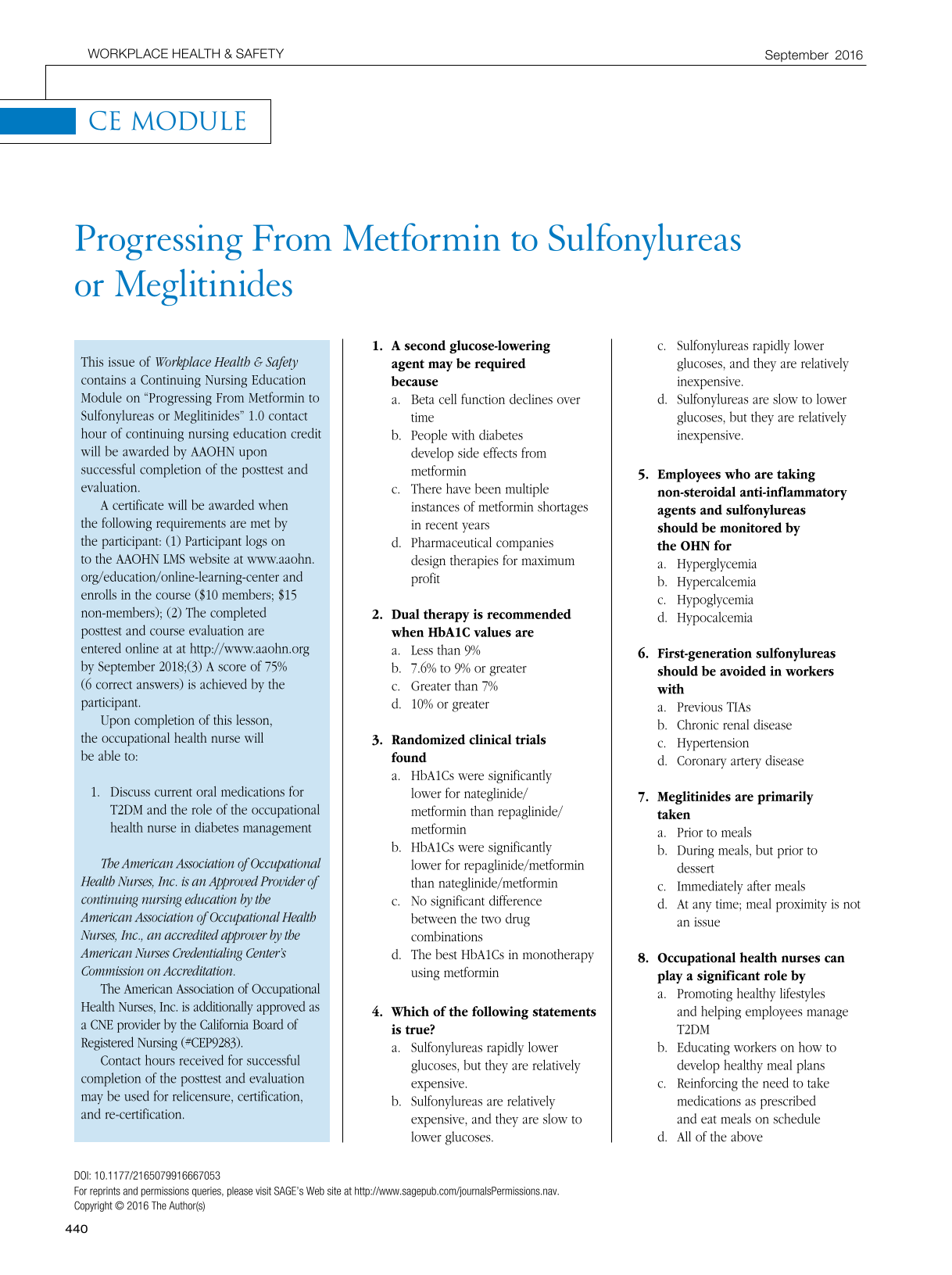
This issue of Workplace Health & Safety contains a Continuing Nursing Education Module on “Progressing From Metformin to Sulfonylureas or Meglitinides” 1.0 contact hour of continuing nursing education credit will be awarded by AAOHN upon successful completion of the posttest and evaluation.
A certificate will be awarded when the following requirements are met by the participant: (1) Participant logs on to the AAOHN LMS website at www.aaohn.org/education/online-learning-center and enrolls in the course ($10 members; $15 non-members); (2) The completed posttest and course evaluation are entered online at at http://www.aaohn.org by September 2018;(3) A score of 75% (6 correct answers) is achieved by the participant.
Upon completion of this lesson, the occupational health nurse will be able to:
Discuss current oral medications for T2DM and the role of the occupational health nurse in diabetes management
The American Association of Occupational Health Nurses, Inc. is an Approved Provider of continuing nursing education by the American Association of Occupational Health Nurses, Inc., an accredited approver by the American Nurses Credentialing Center’s Commission on Accreditation.
The American Association of Occupational Health Nurses, Inc. is additionally approved as a CNE provider by the California Board of Registered Nursing (#CEP9283).
Contact hours received for successful completion of the posttest and evaluation may be used for relicensure, certification, and re-certification.
Beta cell function declines over time People with diabetes develop side effects from metformin There have been multiple instances of metformin shortages in recent years Pharmaceutical companies design therapies for maximum profit
Less than 9% 7.6% to 9% or greater Greater than 7% 10% or greater
HbA1Cs were significantly lower for nateglinide/metformin than repaglinide/metformin HbA1Cs were significantly lower for repaglinide/metformin than nateglinide/metformin No significant difference between the two drug combinations The best HbA1Cs in monotherapy using metformin
Sulfonylureas rapidly lower glucoses, but they are relatively expensive. Sulfonylureas are relatively expensive, and they are slow to lower glucoses. Sulfonylureas rapidly lower glucoses, and they are relatively inexpensive. Sulfonylureas are slow to lower glucoses, but they are relatively inexpensive.
Hyperglycemia Hypercalcemia Hypoglycemia Hypocalcemia
Previous TIAs Chronic renal disease Hypertension Coronary artery disease
Prior to meals During meals, but prior to dessert Immediately after meals At any time; meal proximity is not an issue
Promoting healthy lifestyles and helping employees manage T2DM Educating workers on how to develop healthy meal plans Reinforcing the need to take medications as prescribed and eat meals on schedule All of the above