




Abstract
Korean-Chinese currently represent the largest group of migrant workers in Korea. The purpose of this study was to investigate the influence of risk factors on the occurrence of work-related injuries and illnesses (WII). Data for 486 Korean-Chinese migrant workers were drawn from the 2010 Migrant Workers’ Health and Safety Survey in Korea. Logistic regression was used to identify the association between WII and multiple risk factors. Individual health status (OR = 3.83, 95% CI [2.01, 7.30]), safety training (OR = 0.39, 95% CI [0.18, 0.85]), job satisfaction (OR = 1.90, 95% CI [1.07, 3.38]), physical and chemical hazard exposure (OR = 1.05, 95% CI [1.02, 1.08]), and length of stay (OR = 1.01, 95% CI [1.00, 1.01]) were identified as risk factors for WII. The findings suggest the need for a comprehensive approach to assess WII risk factors, including personal, work organization and psychosocial demands, and acculturation in Korean-Chinese migrant workers.
The number of foreign-born migrant workers in Korea has grown dramatically over the last 10 years and comprised 3.2% of the total working population in 2012 (Statistics Korea, 2012a). The number of migrant workers has increased the number of workers’ compensation claims, with a 2.5-fold increase in claims between 2005 and 2011 (Korea Worker’s Compensation Welfare Service, 2011). The majority (87.9%) of foreign-born migrant workers in Korea are employed in the manufacturing sector, followed by the agriculture, construction, and service sectors (Statistics Korea, 2012b). Due to the job tasks of manufacturing workers, the most commonly reported injuries were falls and fractures (Korea Worker’s Compensation Welfare Service, 2012). Compared with native-born workers, the occupational risks for migrant workers are higher because of their unsafe working environments. Their jobs are likely to be labeled “3D”: difficult, dirty, and dangerous. Migrant workers are exposed to physical and chemical hazards, such as uncomfortable postures which induce pain and excessive physical loading, repetitive movement, noise, hazardous chemicals (i.e., fumes, particles, gases), and heat (Yi, Cho, You, & Ahn, 2010).
Korean-Chinese (commonly called Chosun-Jok) is currently the largest group of migrant workers in Korea, accounting for roughly 45% of migrant workers in 2012 (Statistics Korea, 2012a). They are Chinese citizens of Korean descent living in China; by and large, their Korean ancestors moved from Korea to China at the end of the 1700s because of severe famine (Choi, 2006). The migration of Korean-Chinese back to Korea to earn money has increased since migrant workers were permitted employment as industrial trainees by the industrial trainee program for foreign-invested firms in 1991 and has recently been prompted by policies of the visitor employment system for foreign national Koreans (Kee, 2009). Despite the increasing Korean-Chinese migrant population and their substandard working environments, no systematic investigation of risk factors for occupational injury and illness has been completed.
This study was guided by the conceptual framework, Multiple Risk Factors for Workplace Injuries and Illnesses (MRFWII; Dembe, Erickson, & Delbos, 2004). This framework presents a complex interplay among multiple risk factors (i.e., personal characteristics, exposure to physical and chemical hazards, work organization, and psychosocial demands) and the occurrence of work-related injuries and illnesses (WII) in a broader social, economic, and cultural context. A review of 48 studies on occupational risk factors supports the MRFWII framework (Ahonen, Benavides, & Benach, 2007). As part of the social, economic, and cultural context, the acculturation factor was added to the framework in the current study. Acculturation, “a multidimensional process consisting of the confluence among heritage-cultural and receiving-cultural practices, values, and identifications” (Schwartz, Unger, Zamboanga, & Szapocznik, 2010), has been known to be a factor related to physical and mental health outcomes (Ahonen et al., 2007). Korean-Chinese migrants might have an advantage over migrants from other countries because their appearance is similar to that of native Koreans, and the majority of Korean-Chinese migrants have maintained their Korean cultural heritage while living in China. However, most Korean-Chinese migrant workers have low socioeconomic status and come to Korea for a specific purpose, to earn money. Because of this situation, they face issues with respect to their acculturation (e.g., discrimination and resistance from mainstream society), which are associated with the occurrence of WII (Lee, Ahn, Miller, Park, & Kim, 2012; Figure 1).
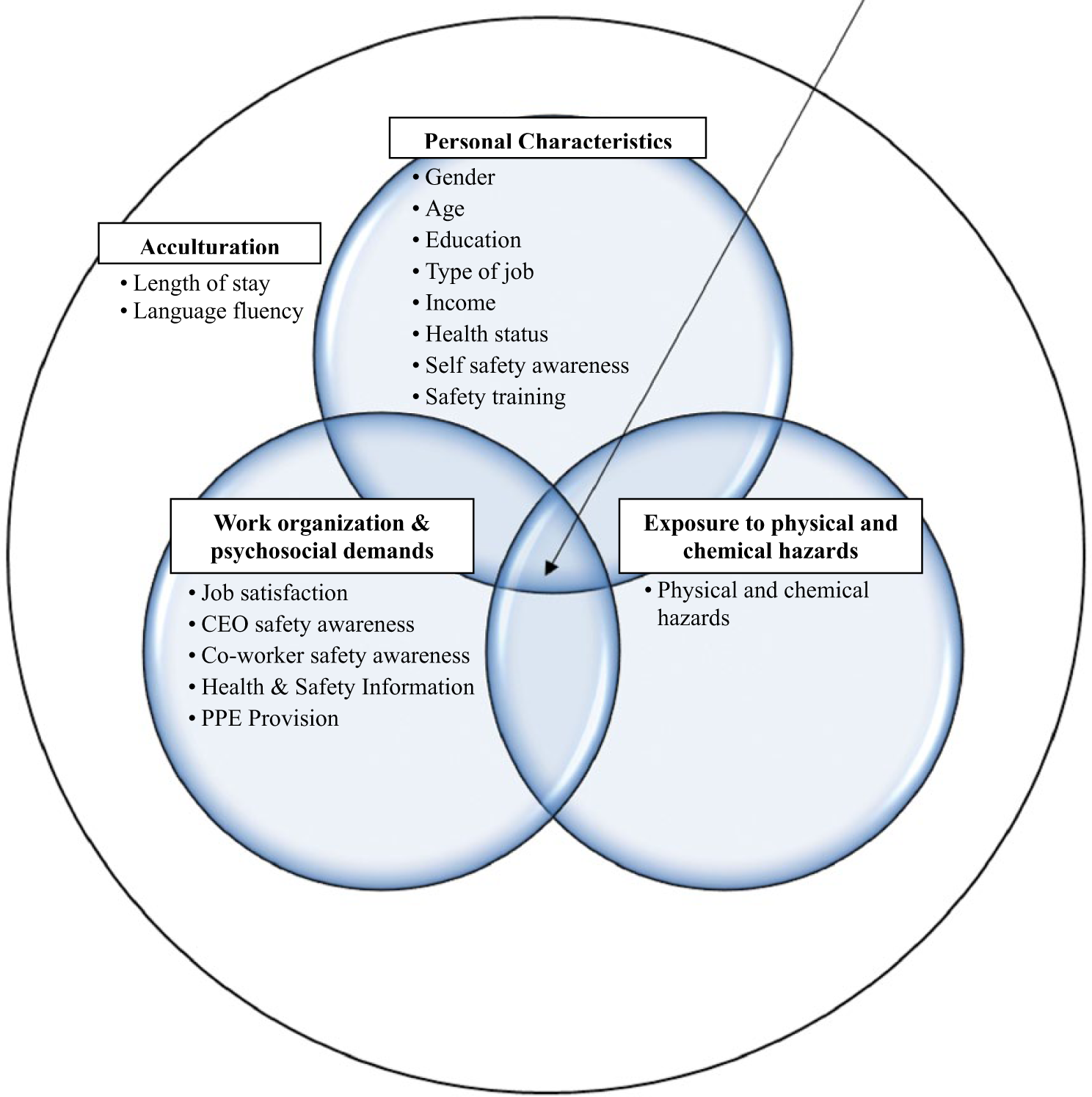
Conceptual framework of multiple risk factors for work-related injuries and illness in migrant workers. Adapted from the conceptual framework, Multiple Risk Factors for Workplace Injuries and Illnesses, in “Predictors of Work-Related Injuries and Illnesses: National Survey Findings,” by A. E. Dembe, J. B. Erickson, and R. Delbos, 2004, Journal of Occupational and Environmental Hygiene, 1, pp. 542-550.
The aim of this study was to investigate the associations of four factors: (a) personal characteristics, (b) exposure to physical and chemical hazards, (c) work organization and psychosocial demands, and (d) acculturation with the occurrence of WII in Korean-Chinese migrant workers.
Method
A secondary analysis of an existing dataset was conducted. Data for this study were drawn from the dataset of Migrant Workers’ Health and Safety Survey conducted by the Korea Occupational Safety and Health Agency (KOSHA) from April 12 to May 31, 2010. This was the first national survey to assess migrant workers’ health and safety status. Using a proportional stratified sampling method, a total of 2,050 workers were selected from migrant workers living in Korea. Using a structured questionnaire, the survey data were collected through face-to-face interviews by trained survey enumerators. For this study, the researchers extracted all data about the 486 Korean-Chinese migrant workers from the initial survey dataset.
Measures
Incidence of Work-Related Injury or Illness
The initial survey assessed incidence of work-related injury or illness within the last year using five dichotomous yes/no questions. Respondents were asked to indicate whether they had experienced (a) debilitating illness or injury due to work, (b) motor vehicle accident during work, (c) lost work time due to injury or illness, (d) lost work time due to occupational chemical exposures, or (e) musculoskeletal pain (e.g., neck, shoulders, hands, knees, or back) that required frequent resting or health care treatment. The researchers categorized these workers as having WII if the respondent experienced any type of the five above situations.
Personal Characteristics
Personal characteristics included gender, age, education, occupation, income, and health status. Perceived health status was categorized by four responses; the responses were grouped into a dichotomous variable: very good and good = 0 (good), poor and very poor = 1 (poor).
Work Organization and Psychosocial Demands
Work organization and psychosocial demands included job satisfaction (e.g., current work environment, work hours, and job conditions), chief executive officer (CEO) and co-worker safety awareness, health and safety information, and personal protective equipment (PPE) provision. The initial survey asked how satisfied respondents were with the current work environment, work hours, and job conditions by a categorical variable (very unsatisfied, not satisfied, satisfied, or very satisfied). Responses were then grouped into a dichotomous variable: very unsatisfied and not satisfied as unsatisfactory; satisfied and very satisfied as satisfactory. The safety awareness of CEOs and co-workers was assessed by a categorical variable (very high, high, low, or very low), and responses were grouped into a dichotomous variable: very high and high as high; low and very low as low. Provision of health and safety information was measured by a categorical variable (not at all, poor, good, or very well), and responses were grouped into a dichotomous variable: good and very well as yes; not at all and poor as no. PPE provision was measured by three responses: no, regular basis, or as needed.
Exposure to Physical and Chemical Hazards
Respondents were asked how long they were exposed to 10 types of physical and chemical hazards, including vibration, noise, high temperatures, low temperatures, dust or gas, chemicals, awkward postures, repetitive movements, enclosed spaces, and dangerous machines or equipment. Responses were measured on a 7-point scale (1 = no exposure, 7 = all the time). The scores of all items were averaged and then grouped into high and low groups using the median values.
Acculturation
Acculturation was measured by length of stay and Korean language proficiency. Respondents were asked how fluently they could speak and understand Korean, and responses were grouped in fluency categories of “minimum” (e.g., need interpreter or simple conversation), “medium” (50% to 60% comprehension), and “fluent” (speaks fluently and comprehends most everything).
Data Analysis
The data were analyzed using PASW Statistics 18. Differences between with and without WII groups were assessed using the two-tailed t-test and chi-square test. Logistic regression models were used to estimate the odds ratios (ORs) and 95% confidence intervals (95% CI) of incurring WII. To assess the diagnostic (explanatory) performance of the four identified factors, receiver operating characteristic (ROC) curves were constructed and the areas under the ROC curves (AUROCs) were calculated.
Results
Comparison of Characteristics Between Non-Work-Related Injury and Illness (Non-WII) and Work-Related Injury and Illness (WII)
Most respondents were male (63.8%) and over 40 years old (65.9%). The majority was employed in manufacturing (44.7%) or construction (24.7%). Of the total participants, 85.6% reported that their monthly income was between US$1,000 and US$1,999. The majority reported their health status as good (83.3%) and felt they had sufficient safety training (72.8%). The majority of participants (83.3%) thought that they had a high level of safety awareness. A similar number of participants reported that their CEOs (77.2%) and co-workers (76.5%) had high levels of safety awareness. About 39.3% of participants reported possessing job-related health and safety information, and 54.1% reported that PPE had been provided on an as-needed basis. The participants reported an average of 2.26 (± 0.90) physical and chemical hazards exposures. Their mean length of stay in Korea was 50.49 months (± 39.35), and most respondents (68.9%) reported they were fluent in Korean.
Among the 486 participants, 83 (17.1%) reported experiencing WII during the past year. A comparison of workers with and without WII showed significant differences in gender (p = .006), age (p = .014), income (p = .001), health status (p < .001), safety training (p = .010), job satisfaction (p < .001), co-worker safety awareness (p = .006), health and safety information (p = .033), level of hazard exposure (p = .001), and length of stay (p = .022; Table 1).
Comparisons of Characteristics Between Non-Work-Related Injury and Illness (Non-WII) and Work-Related Injury and Illness Group
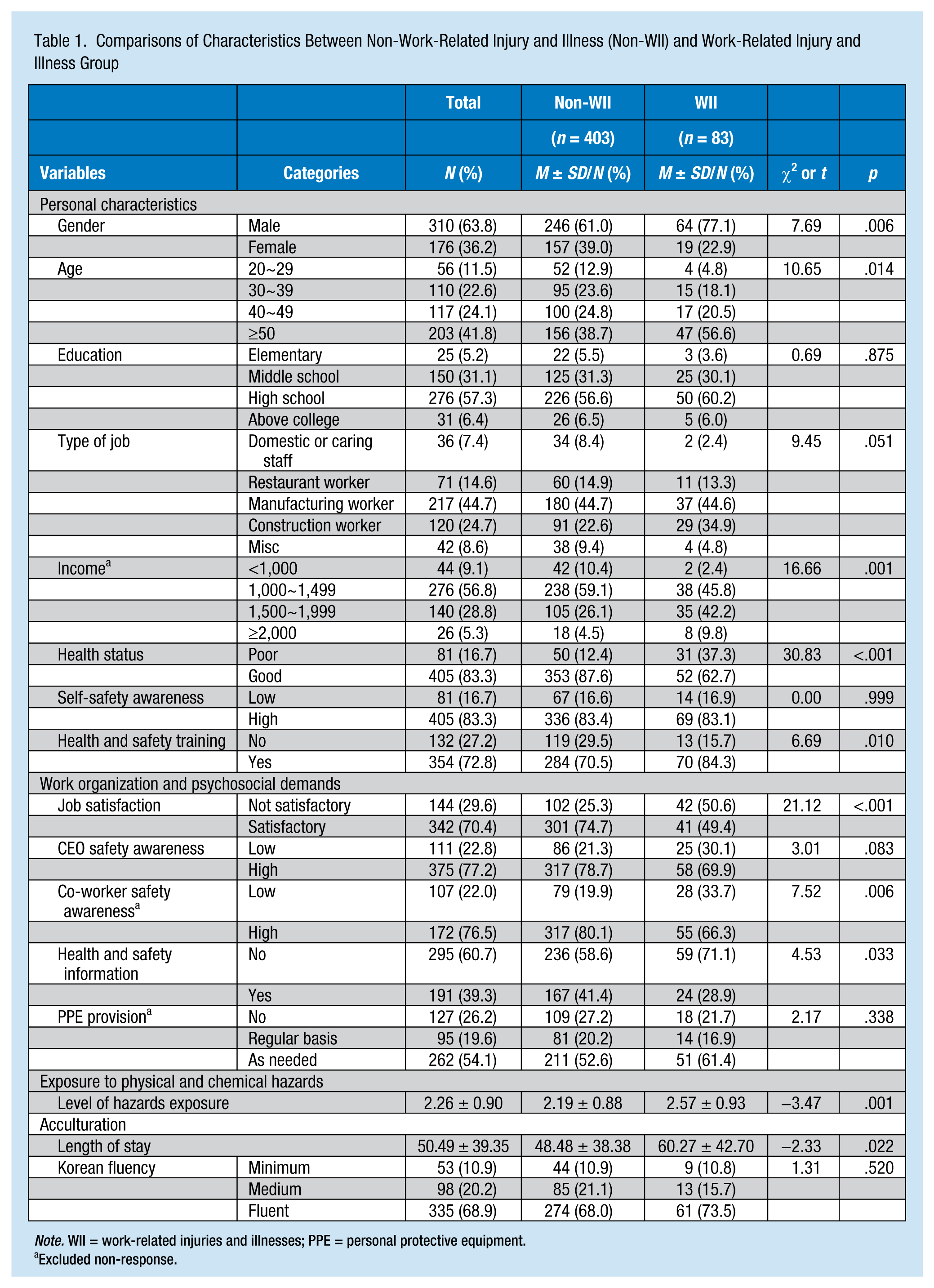
Note. WII = work-related injuries and illnesses; PPE = personal protective equipment.
Excluded non-response.
Factors Associated With Work-Related Injuries and Illnesses
In logistic analysis, Korean-Chinese migrant workers who perceived their health status was poor were found to be 3.83 times more likely to experience WII (95% CI [2.01, 7.30], p < .001). Workers who were not satisfied with their jobs were 1.90 times more likely to experience WII (95% CI [1.07, 3.38], p = .029). More worksite physical and chemical hazard exposures (OR = 1.05 95% CI [1.02, 1.08], p = .003) and longer periods of stay in Korea (OR = 1.01 95% CI [1.00, 1.01], p = .035) increased WII risks. Workers who never received safety training before starting their jobs in Korea showed a low occurrence of WII (OR = 0.39 95% CI [0.18, 0.85], p = .018). The other factors, including gender, age, income, co-worker safety awareness, and health and safety information, were not significantly associated with WII (Table 2). A ROC curve was constructed based on the sensitivity and specificity for estimating the accuracy of WII occurrence. Figure 2 illustrates the ROC curve; the area under the ROC curve was 0.82, indicating adequate accuracy with a 95% CI of [0.77, 0.87].
Factors Associated With Work-Related Injuries and Illnesses by Logistic Regression Analysis
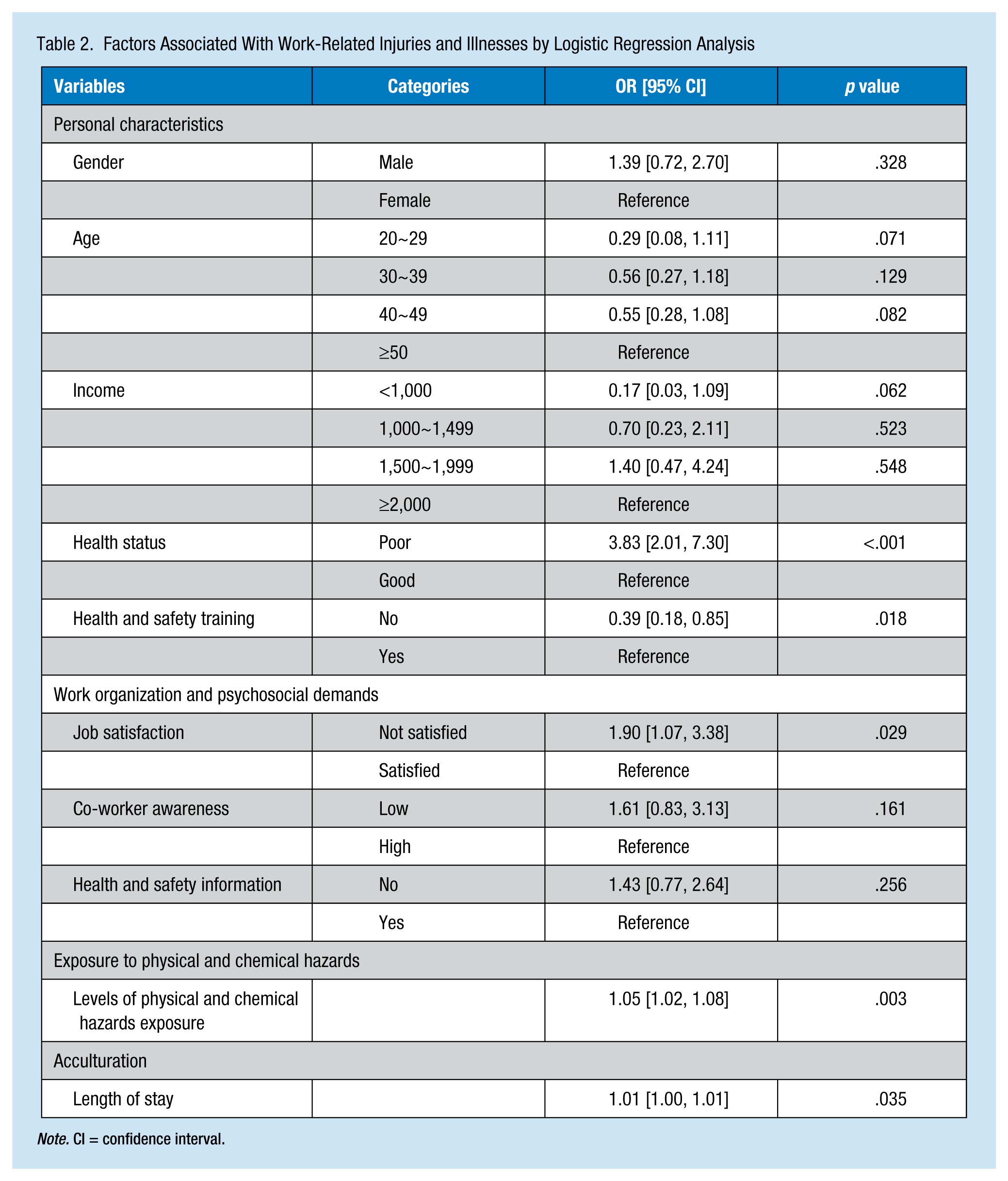
Note. CI = confidence interval.
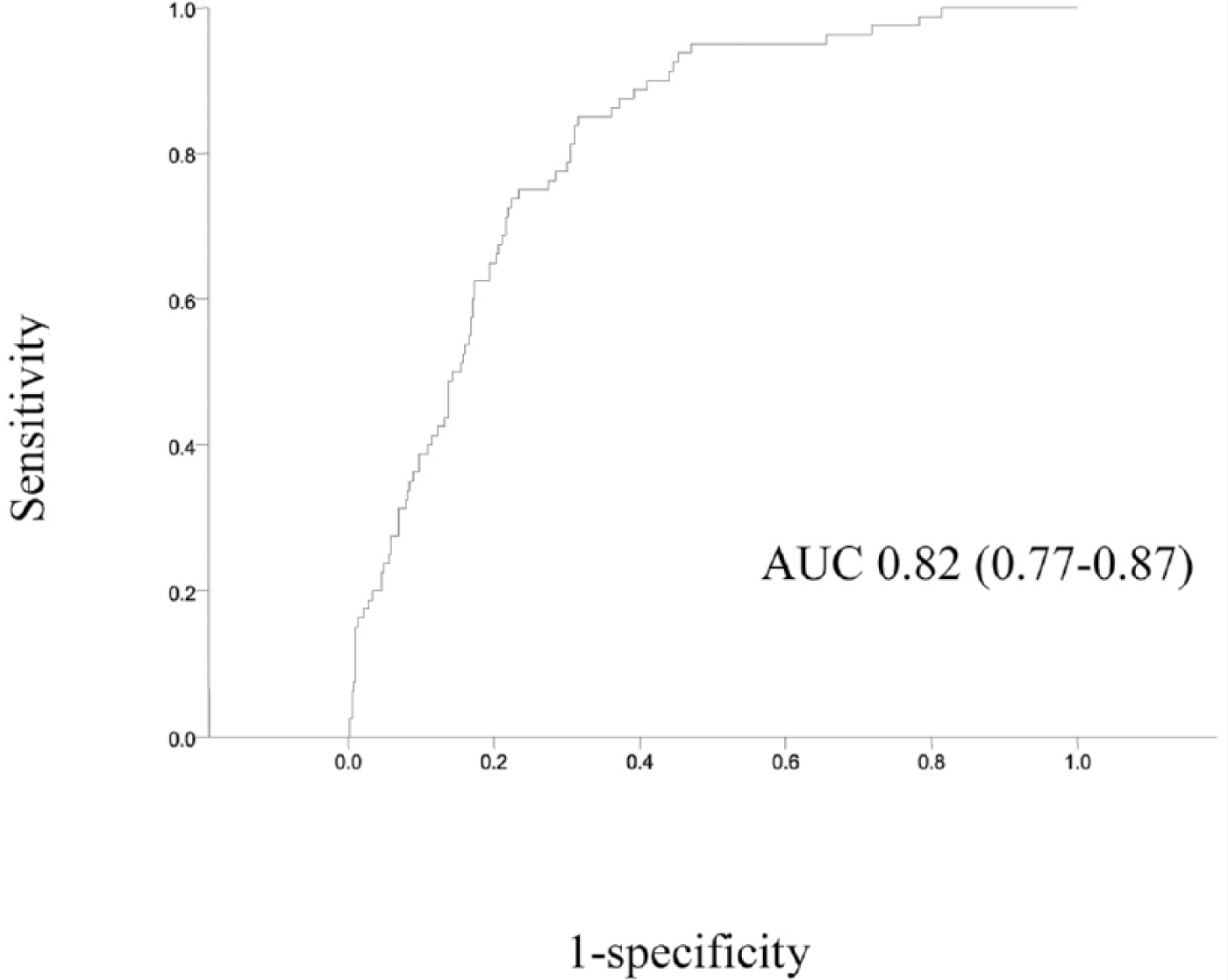
ROC curve to identify occurrence of work-related injury or illness.
Discussion
Safety perceptions may not be an immediate or proximal cause of injury and illness, such as actual physical hazards, but may be a distal cause of injury because awareness of safety may predict performance of safety behaviors and subsequently affect safety outcomes (Christian, Bradley, Wallace, & Burke, 2009). That is, the more workers perceive the importance of safety, the lower the rate of WII at workplaces. In this study, however, workers without safety and health training were less likely to have WII than those who experienced safety training. This finding might be due, in part, to a high rate of reporting WII as opposed to other studies. In a study that examined data from two U.S. Bureau of Labor Statistics (BLS) surveys, safety and health training resulted in an increase in reported cumulative trauma disorders in all industries, and its influence was higher in manufacturing industries and workplaces with more than 250 employees (Brenner, Fairris, & Ruser, 2004). Similarly, workers in all U.S. industries with safety training reported a 17% higher rate of days-away-from-work injuries than those without training (Waehrer & Miller, 2009). It is possible that migrant workers with safety training are employed by larger industries with various incentives, such as rehabilitation programs, and are in an organizational climate that encourages workers to report WII. In addition, migrants who have legally entered Korea to work are required to attend safety and health education before starting work and are employed in workplaces where they are at higher risk for WII and require more attention to safety than illegal migrant workers, who are employed in less dangerous workplaces, such as homes and restaurants. However, continuous training specific to work environments is more effective than initial training; present study was unable to determine the extent to which participants experienced additional training targeting their specific job-related safety and health risks. Further studies are needed to examine the relationship between health and safety training and the occurrence of WII by industry size, legal status of migrant workers, and the provision of continuous training.
Considering the influence of social and cultural context on WII, acculturation related to the occurrence of WII among migrant workers was assessed, using the variables of length of stay and language, which are the most common acculturation measures (Salant & Lauderdale, 2003). Migrants who spend more time in a host culture experience better health outcomes (i.e., better health status and less acculturative stress). Many studies have identified that longer length of stay in host countries has decreased acculturative stress and improved physical and mental health status (Ayoob, Singh, & Jan, 2011; Salgado, Castañeda, Talavera, & Lindsay, 2012). In this study, however, migrant workers with stays of 2 years or longer showed a higher prevalence of WII than those migrants who had stayed less than 2 years. This finding can be explained by greater potential risk of cumulative exposure to physical and psychosocial hazards. Although earlier studies in the United States showed evidence that migrants’ working status improved with longer duration of stay, the mean years of stay in Korea among the Korean-Chinese migrant participants was 4 to 5 years, indicating that they appear to still be in the process of adjusting to host country workplaces. Moreover, high salaries rather than safe working conditions may be a priority in finding jobs for migrant workers. In a study of day laborers, only 29% of an employee group of Mexican and other Latino Americans left their jobs due to dangerous work (Seixas, Blecker, Camp, & Neitzel, 2008). As Korean-Chinese migrant workers become accustomed to Korean society, they might prefer to find jobs with higher salaries rather than considering the safety of working environments or the availability of safety and health training programs. Therefore, migrant workers need information, education, and ongoing communication to improve their ability to safely control their job performance and reduce occupational health and safety risks.
Migrant workers often find jobs with a variety of health and safety risks because of language barriers. Immigrant workers with low language proficiency in a Canadian garment factory had difficulty understanding occupational health and safety information and asking for assistance with safety and health risks; Korean-Chinese migrant workers may face similar difficulties with communication (e.g., better equipment for safety, suitable working conditions, and psychosocial issues; Premji, Messing, & Lippel, 2008). As proposed by Christian et al. (2009), safety knowledge and motivation are most strongly related to safety performance behaviors, followed by safety climate and injuries. For example, Latino farm workers who received training on how to reduce the harmful effects of pesticides were more likely to use pesticide safety behaviors (Arcury, Quandt, & Russell, 2002). In particular, language proficiency should be carefully assessed when developing training content and materials. Compared with migrant workers from other countries, Korean-Chinese migrant workers are less likely to be at risk of WII because they have maintained their Korean culture to some extent in their home country. Nevertheless, one third of the participants in this study had only a 50% comprehension of Korean. In addition to insufficient language proficiency in the migrant population, health status was significantly correlated with health illiteracy (Sentell & Braun, 2012): “the cognitive and social skills which determine the motivation and ability of individuals to gain access to, understand and use information in ways which promote and maintain good health” (Kickbusch & Nutbeam, 1998). Because of the positive relationship between language proficiency and health literacy, it is expected that the health literacy of Korean-Chinese migrant workers would be lower than that of native Korean workers, indicating its negative influence on health status. Further studies are needed to examine the relationship among language proficiency, occupational health literacy, and WII. Furthermore, as suggested by Lee and colleagues (2008), employers should establish health-literate workplaces to reduce WII occurrence as well as consistent with government policies to create a positive, supportive environment.
Exposure to occupational physical and chemical hazards remains a risk factor in the global burden of disease as proposed by the WHO. In a recent study, occupational risk factors were ranked as the 11th most common risk factor contributing to the burden of disease and were associated with about 2.5% of disability-adjusted life-years (DALYs) in the United States from 1990 to 2010 (Murray et al., 2013). For migrant workers, the aforementioned physical and chemical hazards are the most prevalent causes of WII. Over two thirds of the Korean-Chinese migrant workers in this study were employed in the manufacturing and construction industries where exposures to physical and chemical hazards are most prevalent. In addition, the majority (90.8%) of workers’ compensation cases in 2006 were reported by migrant workers in workplaces with less than 50 employees (Lee et al., 2008). In 2009, the highest prevalence of occupational accidents among migrant workers was in the manufacturing industry (66.2%), followed by the construction sector (17.2%; Yi et al., 2010). Another finding of this study was the influence of work organization and psychosocial demands on the occurrence of WII. Korean-Chinese migrant workers who perceived their jobs to be unsatisfactory were at 1.9 times higher risk for WII than those who perceived their jobs to be satisfactory. Growing evidence suggests that job satisfaction is an essential work organization and psychosocial factor associated with physical and mental health, as well as WII. In a meta-analysis of 485 studies, job satisfaction was clearly associated with mental health, such as burnout and depression, as well as physical health, such as perceived physical illness and cardiovascular disease (Faragher, Cass, & Cooper, 2005). Workers who were satisfied with their jobs were more likely to perceive a climate of safety and were also more likely to use safety practices, consequently reporting a lower accident rate (Gyekye, 2005). Other work organizational factors, such as lack of work-related training and goal setting, significantly increased injuries among construction workers (Leung, Chan, & Yu, 2012) suggesting the need for a comprehensive assessment of work organization and psychosocial factors.
Implications for Practice
Workers with language barriers are considered to be populations at risk for a higher incidence of injuries and illness (National Institute for Occupational Safety and Health[NIOSH], 2010), and therefore, Korean-Chinese migrant workers with insufficient language proficiency remain a vulnerable group in need of special attention by occupational health nurses. As found in this study, poor health status increased the probability of WII occurrence. This finding implies that health literacy specific to safety and health in the workplace may play a key role in promoting individual health status and subsequently reducing the occurrence of WII. This finding study confirmed that the risk factors of physical and chemical hazards influenced the occurrence of WII in Korean-Chinese migrant workers, suggesting that more attention is needed in the construction and manufacturing sectors for health and safety surveillance and monitoring for migrant workers. Another finding of this study was the influence of work organization and psychosocial demands on the occurrence of WII. To obtain the beneficial effects for health and safety of Korean-Chinese migrant workers, occupational health nurses should advocate for policies from culturally adaptive counseling to solving work organizational and psychosocial problems (e.g., interpersonal conflicts, low autonomy, and insufficient information).
The secondary analysis in this study was beneficial in terms of cost and time effectiveness and representativeness via a proportional stratified sampling method. Nevertheless, several limitations should be identified. The authors’ original research interest was to investigate the influence of risk factors on all types of WII. However, the incidence of WII was limited based on five survey items instead of more comprehensive WII survey. In addition, some constructs, such as job satisfaction or acculturation, were operationally defined by a subset of a few items or a single item that can potentially affect the reliability and validity of study findings.
Conclusion
Overall, Korean-Chinese migrant workers are in better work environments in Korea than other migrant workers because of the nature of their specific ethnic group, Chinese citizens of Korean origin. However, this study confirmed that they have multiple risk factors for injury and illness at work, and the present findings suggest the need to prioritize risk assessment and intervention planning. Taking into consideration the specific social and cultural context, it is evident that acculturation factors play a role in the occurrence of WII in this vulnerable population. Moreover, this study demonstrated a significant relationship between job satisfaction and the occurrence of WII, as well as exposure to physical and chemical hazards and personal characteristics, indicating the importance of work organization and psychosocial factors in WII prevention and management. Additional research is needed to delineate the pathways among physical, personal, work-related psychosocial, social and cultural factors.
In Summary
Korean-Chinese migrant workers living in Korea are exposed to multiple risk factors for occupational injury and illness.
Work organization and psychological factors (e.g., provision of health and safety information, safety awareness, job satisfaction) influence the occurrence of WII among Korean-Chinese migrant workers.
Acculturation factors are also associated with the occurrence of WII among vulnerable populations, indicating the need for incorporating cultural context into WII prevention and management.
Footnotes
Conflict of Interest
The author(s) declared no potential conflicts of interest with respect to the research, authorship, and/or publication of this article.
Funding
The author(s) received no financial support for the research, authorship, and/or publication of this article.
Author Biographies
Dr. Hyeonkyeong Lee has had academic preparation, teaching, and research in community health nursing including occupational health nursing and has conducted community-based participatory research projects for migrant workers in Korea.
Dr. Dukhee Chae has had more than 15 years of OHN experience. She currently teaches community health nursing, and conducts research on health promotion for workers and on cultural competence of health care workers.
Dr. Yi is a senior researcher at Korean Occupational Safety & Health Institute. He has conducted research projects focused on safety policy and work-related injuries and illnesses.
Mrs. Soye Im is a graduate nursing student currently working on her master’s thesis. She is interested in community health nursing, especially about the issues relating to the elderly and workers.
Mrs. Sunghye Cho is a graduate student with more than 5 years of nursing experience in ICU. She has conducted research for migrants in a local community.