



Abstract
The dilemma faced by the San Antonio Missions regarding ongoing vandalism persists: whether to restrict access to protect the site or to allow public access for educational purposes, tourism, and cultural enrichment. This balancing act is complex, as visitor interaction can compromise site integrity. Applying Social Learning Theory (SLT) and Norm Activation Theory (NAT) to this dilemma reveals insights into how individuals learn and adopt behavior through observation, imitation, and modeling. In addition, the Theory of Planned Behavior (TPB) can also influence responsible behavior. Furthermore, how to safeguard heritage sites while ensuring public access and appreciations were discussed.
Keywords
Introduction
Heritage plays a significant role in shaping the identity of a place and influencing the perception of potential tourists as destinations (Dewar et al., 2012; Uzzell, 1996). The United Nations Educational, Scientific and Cultural Organization (UNESCO) designates World Heritage status to sites recognized as possessing significant universal values requiring protection for all humanity (UNESCO, n.d.). Leveraging these designations, Destination Marketing Organizations (DMO) make concerted efforts to embody a destination’s identity (Seraphin & Sealy, 2023). For instance, Cahokia Mounds State Historic Site (i.e., Cahokia Mounds), located in the suburbs of St. Louis, Illinois, is the largest and most historic archeological site in northern Mexico before Columbus discovered the Americas. This place was built by Native Americans in prehistoric times, proving that civilization existed before Columbus discovered the New World. It served as the economic, political, religious, and cultural center of the Mississippian culture, contributing to the formation of a unique culture in the Mississippi area, thus, it was listed as a World Cultural Heritage in 2024 (UNESCO, n.d.). Based on this historicity, the St. Louis DMO includes the symbolism of Cahokia Mounds in the city’s identity.
While UNESCO designation may draw more tourists to a destination, it also poses sustainability risks in preserving heritage site historical value. Open heritage sites, while attracting attention, also risk overcrowding and unpredictable visitor behavior. Though sustained interest in cultural properties boosts heritage preservation policies, transient curiosity without civic appreciation for heritage value reduces sites to mere tourist attractions. Such curiosity may lead to a desire to leave a mark, resulting in vandalism, a pervasive challenge worldwide. Vandals’ marks mar many renowned sites, including Gyeongbokgung Palace (Seoul, South Korea), The Eiffel Tower (Paris, France), and the Colosseum (Rome, Italy). For instance, on December 16, 2024, Gyeongbokgung Palace walls in Seoul suffered red spray graffiti, while the Colosseum in Rome, a frequent graffiti target, endures vandalism yearly. Vandalism is perpetuated as a human act, leaving lasting scars on precious historical sites.
San Antonio has long served as a Texas tourist hub since the 19th century (Doganer, 2017). Despite pandemic challenges, San Antonio welcomed 34.8 million visitors in 2022, illustrating its tourism resilience (San Antonio, n.d.). The San Antonio Missions, Texas’ only World Heritage site, has witnessed increasing visitor numbers, amplifying its appeal. However, persistent vandalism plagues the Missions, prompting the National Parks Service (NPS) to explore solutions such as increased security and surveillance. Yet, vandalism persists, underscoring the challenge of balancing site preservation with accessibility. This case study aims to chart a strategic direction for preserving cultural heritage, strengthening San Antonio’s identity, and bolstering destination branding through San Antonio Missions management. Addressing these challenges necessitates a balanced approach that considers both heritage preservation and community needs. Applying Social Learning Theory (SLT), this study delves into how individuals internalize and perpetuate vandalistic behaviors within their social milieu, shedding light on potential mitigation strategies.
Background
World Heritage Site: San Antonio Missions
The San Antonio Missions include four Missions along the San Antonio River in the southern part of the city (listed from North: Concepcion, San Jose, San Juan, and Espada) and the de Valero (Alamo) in the historic district in the center of the city. Even though Alamo is not national park, it is designated as UNESCO with other four Missions. Constructed by Franciscan missionaries in the 18th century, this heritage site is a testament to the efforts of the Spanish crown in colonization, evangelization, and defending the northern frontier of Nueva España. The mission complex includes a dwelling, church, warehouse, agricultural fields, and irrigation systems. The San Antonio Missions exhibit a blend of indigenous motifs inspired by nature and Catholic symbolism in church decorations, showcasing a convergence of Spanish and Coahuiltecan Indian cultures. Specifically, the economic, religious, and technological frameworks within these societies laid the foundation for the distinct racial amalgamation found in the American Southwest (National Parks Service [NPS], 2012). This created a unique culture where indigenous traditions blended with Spanish culture, which has become one of San Antonio’s important cultural heritage sites (Doganer, 2013; Doganer & Dupont, 2013). Since the mission’s establishment, the land has been utilized for agricultural purposes and local industry (Doganer & Dupont, 2013).
In 2015, San Antonio Missions were designated as Texas’ only World Heritage Site by the United Nations. The first mission, de Valero (Alamo), was constructed by native people. It served as a mission, a fortress for the Spanish cavalry, and a quartermaster’s depot for the U.S. Army. In the next decade of the Alamo being built, four other Missions (Concepcion, San Jose, San Juan, and Espada) were constructed. The churches in these four parishes are still active Catholic parishes (San Antonio Missions, n.d). Since its designation as a World Heritage Site, many visitors have flocked, revitalizing the city’s economy, and it is still continuing. According to a NPS (2023a) report, 1.2 million visitors visited the San Antonio Mission and spent $98.3 million on nearby park communities. This supported 1,540 jobs and generated $155 million in economic impact up to 60 miles in the region (Figure 1).
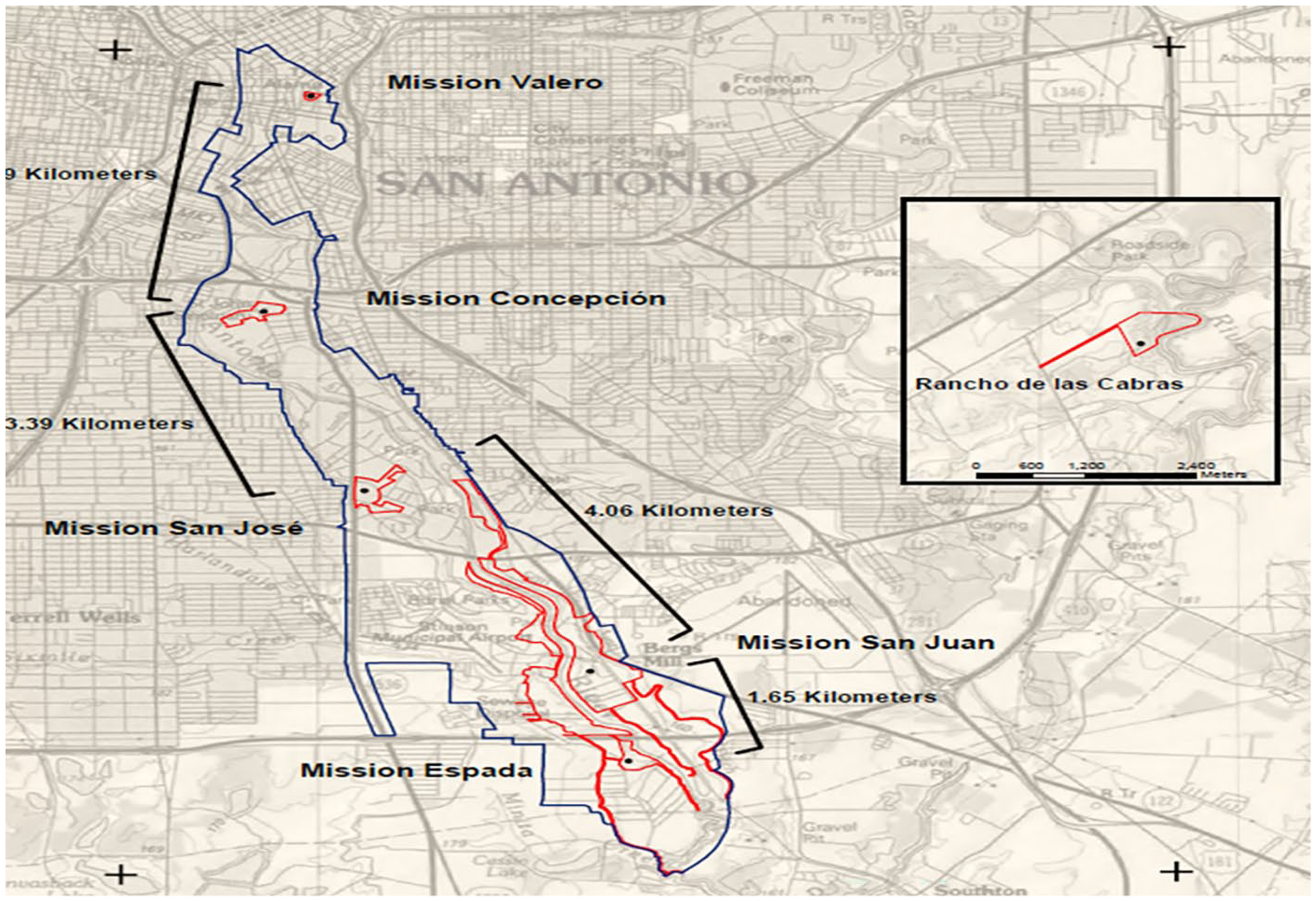
Map of San Antonio Missions.
Many efforts have been and are still underway to preserve the San Antonio Missions, which play an important role in the local economy. First of all, Las Misiones carries out detailed inspections, preventive maintenance, and regular repairs to the buildings each year. In 2022, the Alamo’s Conservation and Archeology Project investigated the Alamo’s west façade to identify its walls and any living creatures. It also contributed to raising awareness and contribute to maintaining and preserving the cultural landscape of the Missions by hiring youth in preservation programs. Another program was to use $800,000 to rebuild the structure of Mission San José. An event will also be held to prevent the disappearance of the historical story of Mission. Every month in October, NPS has an Ofrenda Exhibit, an event about the ancestors of the mission. The purpose of this event is to inform future generations of the history of the communities that lived here, to celebrate their lives, and to play an important role in contributing to the preservation of the Missions by preserving their intangible stories (NPS, 2023b). In addition, NPS is planning a World heritage festival, astronomy event, and Pajalate indigenous language prevention program to take the lead in preserving the Missions. Through these efforts, they make each year the Missions remain vibrant and visible to visitors.
Vandalism in Heritage Site
Vandalism is considered as a destructive or disruptive behavior (Bhati, 2023). Goldstein (2013) defined vandalism as individual or group actions that cause damage or destruction of property. He sees the question of deviant behaviors and why and how such behavior can be reduced as a very important task in the field of tourist destination management. Cohen (1984) focused on the question, “Why should such behavior be considered bad, deviant, and socially problematic in the first place?” rather than the behavioral category of “Why do people do bad things?”
Motives for vandalism have been identified not only in tourism, but also in many fields such as sociology, psychology, education, and criminology. Behavioral tendencies toward vandalism can be found in any society, and it is difficult to find a group that is completely immune from such behavior. However, what is noteworthy is that people who engage in destructive behavior may also pursue different psychological outcomes (Li & Chen, 2017). The motivation for vandalism is mostly related to solving needs and can be goal-directed (Cohen, 1984; Wu et al., 2020). Therefore, it suggests that solving problems related to vandalism depends on the extent to which these desires are understood. The essence of these needs appears to be related to the desire to respond to perceived unfairness, the unstoppable human desire for achievement and control of fate, and the hedonic value of the destruction of objects related to simple pleasure (Allen & Greenberger, 1978).
Vandalism generally targets public property rather than private property. It has been found that public property is attractive because of unclear ownership, low risk of criticism, clear symbolism, and low-cost burden (Ward, 1973). Due to this motivation, vandalism occurs frequently in tourist destinations. A study revealed trash dumping in the Xitou Nature Education Area, a national park in Taiwan, as vandalism, and recognized the younger generation’s unethical behavior despite their environmentally friendly attitudes, which indicated that their dissonance was stronger than the old generation (Wu et al., 2020). This suggests that this is due to the uncertainty of ownership of the national park and the lack of anyone to sanction it, which gives a psychological sense of safety in not having to worry about dumping waste.
The Issues
This case study focuses specifically on vandalism faced by the San Antonio Missions, Texas. Vandalism at the San Antonio Missions, Texas’ only World Heritage Site, has continued to occur in recent years. In September 2015, a visitor to the Alamo used his car keys to carve his name into the Monks’ Burial Room (Roy, 2015). The 250-year-old limestone, already weakened by centuries of exposure to the elements, suffered significant gouging and surface abrasion from the sharp metal keys. Upon witnessing this, the Alamo Rangers quickly restrained him, but the damage he caused to the 250-year-old limestone structure was already irreversible. Restoration experts noted that the limestone’s porous nature made it especially challenging to repair, as traditional methods of restoration could further alter the stone’s original appearance. His destructive little act caused an estimated $250,000 worth of damage, and the extensive research required to ensure that any restoration would preserve the site’s historical integrity.
The Mission San Juan Capistrano, recognized as both a place of worship and a public monument, holds deep cultural and religious significance, making the act of vandalism even more egregious. In June 2018, three young men and women spray-painted graffiti on the historic Mission San Juan Church and San Jose, defacing these sacred sites with phrases such as “I Don’t Care” and “Do you?” Some outlets claimed they were referring to the phrase on the back of a jacket worn by First Lady Melania Trump during her visit to the Rio Grande Valley in 2021 (Antonio, 2018). Alongside these provocative phrases, the vandals also included obscene messages about immigration enforcement (Antonio, 2018). The suspects, who were later apprehended by the police and the National Park Service, caused $1,000 worth of damage to the site. The graffiti were not only an eyesore but also posed a significant challenge for conservators, who had to carefully remove the paint without damaging the underlying centuries-old stonework. This process required specialized techniques and materials to avoid further degrading the history of the structures. As a result, the trespassing and defacement were classified as a state felony under the Texas penal code, reflecting the severity of the crime and the importance of preserving such irreplaceable landmarks (Beltran, 2018).
In 2020, a similar incident occurred at the Alamo Cenotaph, a monument deeply rooted in Texas history and symbolizing the bravery of those who fought in the Battle of the Alamo. The north face of the Cenotaph was defaced with graffiti bearing anti-police and white supremacist messages, including phrases such as “profit over people,” “white supremacy,” and “the ALAMO” (Scott, 2020). This act of vandalism was not only a physical defacement but also a symbolic attack on a site that holds great significance for many Texans. The graffiti caused an estimated $2,500 to $3,000 in damage, and it took many hours to return the site to its original condition. The process of removing the paint involved delicate cleaning techniques to preserve the monument, which had weathered over time and was vulnerable to damage from harsh chemicals or abrasive methods (Scott, 2020). Despite occurring in the heart of San Antonio, the vandalism took place under the cover of night, making it difficult for authorities to identify the perpetrators, and no arrests were made. The incident highlighted the ongoing tensions in society and the challenges in protecting public monuments from acts of defacement, which can leave lasting scars both physically and symbolically.
The Mission Concepción was vandalized twice in 2022. In the first incident, someone carved words into the top of the old wooden entrance door. The damage cost over $1,000 to repair, a sum reflecting the delicate and precise work needed to restore such an ancient piece of craftsmanship. In the second incident, an anonymous man entered the mission and deliberately smashed a glass bowl containing holy oil, a sacred element used in religious ceremonies, to the ground (Tiede, 2023). What makes this incident particularly alarming is that it took place during daylight hours, when both visitors and park rangers were present. Despite the incident taking place during the day, the culprit was difficult to identify because the suspect fled the scene with a white cloth wrapped around his body to hide his tracks, and the video equipment at the Concepción was ironically stolen at that time. The challenges of repairing the Mission Concepción are not merely financial but also involve preserving the historical integrity of the site. In repairing the Mission Concepción, Rebecca Simmons, the Archdiocesan Director of Las Misiones, mentioned it is not a problem that will simply be solved, and cited the difficulty of repairing the heritage sites: You cannot just slap paint [on the buildings], and you have to refabricate the actual door handle. That’s what makes it so difficult and expensive (Tiede, 2023).
Recently, the San Jose Church was the victim of vandalism, when an unknown individual attempted to force entry into the building, damaging the doors in the process. After failing to gain entry, the suspect(s) smashed the rose window. The rose window, regarded as the most distinctive feature of the San Jose Church, was a 250-year-old masterpiece and a prime example of North American baroque architecture (Rodriguez, 2023). Beyond its architectural significance, the window had become a cherished symbol of the city and the National Park Missions (Rodriguez, 2023). The destruction of such a historically and culturally important element of the church represents not just a physical loss but a deep wound to the heritage and identity of the community. Restoring this iconic window involves more than just repair; it requires a careful and respectful approach to ensure that the authenticity and cultural legacy of the site are upheld.
The San Antonio Missions, Texas’ only World Heritage Site, have faced persistent and damaging acts of vandalism in recent years, threatening both their physical structures and cultural significance. From the 2015 defacement of the Alamo’s Monks’ Burial Room to the more recent attacks on the Mission Concepción and San Jose Church, each incident has inflicted deep wounds on these cherished landmarks. The challenges of restoring these sites—whether it’s repairing ancient limestone, removing graffiti from historic stonework, or reconstructing a 250-year-old rose window—highlight the ongoing struggle to maintain their authenticity and cultural legacy. Despite the community’s efforts to protect these irreplaceable treasures, the repeated vandalism underscores the vulnerability of public monuments and the need for heightened vigilance. The continued threat to the San Antonio Missions serves as a stark reminder of the importance of preserving our shared heritage against future damage.
Dilemma
As vandalism continues at the archeologically significant site, the NPS and San Antonio authorities are faced with a dilemma: whether to close the area to protect the site for future generations or to allow the public access to the site for education, tourism, and cultural enrichment. Preservation emphasizes maintaining the integrity and authenticity of heritage, safeguarding it from deterioration or damage (Meado, 2013). This involves conservation measures such as restricting visitor access to the site, controlling environmental factors, and restricting activities that could damage the site. For example, climbing Hallasan Mountain on Jeju Island in South Korea requires reservations and limits daily visitors to 500 or 1,000, depending on the route. Museums and art galleries use glass cases to control lighting, maintain air humidity and temperature, and control environmental factors that can harm their collections. Guided tours can protect the remains by limiting the activities visitors do on the site.
Physical accessibility, on the other hand, opens historic sites to the public, making them accessible to more people. This can instill in visitors educational and cultural values and knowledge of the heritage, which may make them more inclined to contribute to conservation behaviors. Numerous studies have identified that tourism experiences at cultural historic sites influence visitors’ environmentally responsible behavior (Cheng & Chen, 2022; Xu et al., 2018), indicating how important the experience of being at an actual historic site is shaping visitors’ future behavior. In addition, the San Antonio Missions also provide educational value by providing a historical context, but they also serve as a public area for the public. On Sunday, Christians can worship in the four Mission’s church, and they can rent for weddings in a sacred setting. However, increased accessibility also brings more foot traffic to the site, increasing wear and tear and the possibility of damage to the site.
Balancing the conflict in San Antonio Missions is challenging. Interaction with visitors compromises the integrity, authenticity, and significance of the property, leading to a loss of historical context (Ashworth, 2009; Meado, 2013). The World Monuments Fund (WMF) monitored damage to cultural heritage buildings and sites and identified that tourism, political conflict, and tourism are threats facing sites (Ashworth, 2009). For instance, some ancient sites located in the Alpine or jungle are difficult for visitors to reach, therefore, they try to construct the infrastructure to promote tourism in the region. If so, it will be easy for visitors to access and turn on a green light for regional development, but at the same time, it will harm the originality of the heritage sites. Here the dilemma arises: whether to preserve it for future generations or to open it to the public. Priorities vary depending on the point in time.
Heritage should be enjoyed and appreciated by as many people as possible. This access will in turn help build awareness and knowledge of heritage, and share values with others, leading to inspiring support for heritage conservation. Chambers (2006) stated that heritages in the public are related to authenticity and history. Historic sites located throughout the urban offer citizens to view them freely at any time. This sparks interest in heritage among the surrounding citizens and provides an opportunity to more easily understand and share the importance of cultural heritage. San Antonio Missions face this dilemma which the NPS shall consider these matters and come up with a solution, that makes the balance of preserving the heritage site while serving to the public. However, strategy and policy toward solutions are still at a standstill, even though vandalism is increasing every year.
Theoretical Implications
Human behaviors is influenced by the interaction of stimuli from the external environment and internal events, with individuals possessing both subjectivity and objectivity (Bandura & Walters, 1977). Essentially, subjective cognitive elements within a person are believed to interact with objective stimuli provided in the environment (Main, 2023). Bandura (1969) posited the Social Learning Theory (SLT), suggesting that individuals can replicate behaviors by observing social phenomena and others’ actions. According to SLT, observing and imitating others’ behaviors is shaped by personal and environmental factors. Human internal factors, such as biological, cognitive, and emotional stimuli, can influence behavior, while behavior itself may vary depending on external environmental factors, such as peer influence or social norms. Notably, internal and environmental factors are not independent but rather interact with each other (Bandura & Walters, 1977), with certain internal factors influencing behavior only under specific environmental conditions. Understanding these interactions is crucial for accurately identifying the determinants of human behavior.
The motivations behind observing and imitating others’ behavior are multifaceted. Individuals may experience benefits or pleasure, find it easy to relate to the observer, or have reduced inhibitions toward imitative behavior. However, imitation and behavioral modeling occur only if the observation stage yields the positive outcomes expected by the observer (Nabavi, 2012). Individuals are more likely to mimic behavior when the observed outcomes align with their expectations and desires. Additionally, the act of observation itself can sometimes trigger aggressive behavior (Main, 2023). For example, while traveling, individuals may learn about graffiti being done on public property or historical sites through the media or witness it firsthand. Witnessing such instances of marking may increase their inclination to engage in similar behavior. Graffiti, serving as a means of self-expression, reflects an individual’s desire to convey their identity or emotions. Consequently, individuals may feel compelled to leave their mark while traveling, mirroring the actions of others on the sites, even if such behavior is deemed inappropriate. Behaviors may also be driven by a desire to attract attention or gain recognition in social contexts (Anderson et al., 2015; Meng & Choi, 2016). This elucidates how an individual’s observations influence subsequent actions, contingent upon internal and environmental factors.
This case study reflects the vandalism in San Antonio Missions explained by Bandura’s (1969) Social Learning Theory (SLT). Several theoretical and practical implications can be addressed. First, it allows for a deeper understanding of the process of how individuals learn and adopt behavior through observation, imitation, and modeling. Applying SLT, can consider how both positive and negative observed behaviors influence visitor actions at the San Antonio Missions. For instance, if visitors observe responsible behavior, such as adherence to site guidelines and respect for the environment, they are more likely to emulate these behaviors. Conversely, if vandalism or irresponsible actions go unchecked, such behaviors might be imitated by others, exacerbating the problem.
While many studies have employed SLT to forecast the future positive behavior of visitors (Le & Hancer, 2021; Lin & Wong, 2024), few have delved into predicting negative behavior in tourism. Individuals can observe the social groups involved through direct witnessing of vandalism occurring at a tourist site or through incident news about property damage delivered through the media. If these behaviors are perceived as socially acceptable or pleasurable to social groups within a specific region, they are more likely to be imitated. Those imitations can be caused by a variety of factors, including peer pressure, a desire for social acceptance, and seeking attention and status within a social group (Anderson et al., 2015). From another environmental perspective, the design and management of the environment, such as signage, barriers, and surveillance, can significantly impact how visitors interact with the site. For example, ambiguous signs may inadvertently create opportunities for harmful behaviors like vandalism by failing to clearly communicate expectations or by leaving areas unprotected. Therefore, this study confirms that SLT can be used to understand the mechanisms by which observations trigger inappropriate behavior. Based on this understanding, they should provide insight into a variety of potentially effective strategies for site management, such as developing educational programs to influence visitor behavior and attitudes toward conservation.
Second, it can help reveal the fundamental motivations and influence relationships that induce visitor behavior toward vandalism. According to the theory, individuals are more likely to imitate behaviors that are perceived as beneficial or enjoyable (Nabavi, 2012). Visitors’ personal factors—such as their values, beliefs, prior experiences, and even their emotional responses to the site—play a significant role in shaping their actions at heritage sites. For instance, if visitors derive a sense of excitement or satisfaction from engaging in destructive behavior, they may be more inclined to damage or deface a site. By gaining a deeper understanding of these complex motivations and social dynamics, site managers can develop more targeted strategies to address the root causes of vandalism. This could include tailored educational programs, more effective monitoring and enforcement measures, and efforts to engage visitors in ways that align their interests with the preservation of the site, ultimately ensuring its long-term sustainability.
Integrating location-based services within historic sites emerges as a practical measure to significantly deter vandalism, as the influence of environmental factors frequently prompts individuals to abstain from certain behavior (Bandura & Walters, 1977). These services furnish visitors with pertinent information based on their location. Conversely, historical sites can leverage this technology to track visitors’ whereabouts, aiding in the prevention of inappropriate behavior. While surveillance cameras within historic sites were initially installed to ensure safety and preservation, unfortunately, some have fallen victim to theft. Introducing location-based services facilitates real-time tracking of visitors’ proximity to historical sites, thereby enabling automatic alerts when they approach a site or surveillance camera. Additionally, installing supplementary surveillance cameras can contribute to deterring future thefts. Furthermore, outfitting unmanned drones with high-resolution cameras and heat detection technology enables regular nighttime patrols. Technological advancements now afford robots the capability to conduct nocturnal patrols more efficiently. Considering that vandalism often transpires under the cover of night, unmanned drones can surveil and monitor the perimeter surrounding historic sites during nighttime hours. These drones can adhere to programmed routes or be operated remotely by pilots. Moreover, affixing lighting devices to the drones ensures effective patrolling even in dimly lit environments.
On the other hand, the vandalism issues at the San Antonio Missions can also be explained through Norm-Activation-Theory (NAT). NAT is a psychological theory developed by Schwartz (1977) that posits that “altruistic behavior originates from a moral obligation to prevent harm to a valued object” (Landon et al., 2018, p. 959). NAT has since been acknowledged as an important framework in tourism for understanding environmentally responsible behavior among tourists (Zhao et al., 2020). The key components of NAT include awareness of consequences, ascription of responsibility, and personal norm. Awareness of consequences means an individual’s recognition of their actions’ negative outcomes on others or the environment. Ascription of responsibility pertains to the degree to which an individual feels responsible for the consequences of their behaviors. Personal norm refers to the internalized values or standards that guide an individual’s behavior. Importantly, activated personal norms have a direct impact on responsible behavior (Zhao et al., 2020). When awareness of consequences and ascription of responsibility is high, personal norms are activated, leading to a moral obligation to act in a certain way (Confente & Scarpi, 2021).
Applying the key components of NAT to the Missions, vandals may not fully recognize the negative impact of their actions on historical heritage sites like the San Antonio Missions and may not feel a sense of responsibility to protect cultural heritage. For instance, if they perceive their actions as merely a harmless prank, they may not feel responsible for the site, and this lack of awareness may lead them to underestimate the damage caused to the heritage. Additionally, personal norms determine what individuals consider to be the right course of action based on their values. If moral norms were internalized, there would be a tendency to protect the Missions, but vandals may have weak personal norms or may not place importance on them. Based on this, it is necessary to strengthen education and campaigns so that visitors and local residents can be aware of the cultural significance of the Missions and feel a sense of responsibility to protect them. This can be a strategy that activates individuals’ moral norms for protecting cultural heritage by utilizing elements of Norm Activation Theory.
The dilemma faced by the San Antonio Missions is complex, requiring a balance between preservation and public access. Applying SLT and NAT can develop strategies that leverage positive social influences and environmental design to promote behaviors that protect the site while allowing it to be enjoyed by the public. However, in addition to these two theories, the Theory of Planned Behavior (TPB) can also influence responsible behavior. TPB emphasizes that individual attitudes, subjective norms, and perceptions of behavioral control play crucial roles in shaping environmental behavior (Goh et al., 2017). By incorporating TPB to develop strategies that enhance visitors’ intention to engage in conservation behavior, we can further enhance conservation efforts at heritage sites. Although the NPS and local authorities are still grappling with finding the right balance, understanding the interplay of behavior, personal factors, and environmental influences is key to developing effective solutions. These applications provide a framework for addressing the ongoing challenges of vandalism at the San Antonio Missions, helping to protect and preserve this invaluable cultural heritage for future generations.
Discussion Questions
In your words, describe the definition of vandalism.
What is currently occurring at the San Antonio Missions?
What strategies has the National Parks Service (NPS) implemented to manage vandalism at the San Antonio Missions? Do you believe that simply preserving heritage sites is sufficient? If not, how would you propose enhancing the program or event to protect the Missions?
How does Bandura’s Social Learning Theory contribute to our understanding of vandalism at the San Antonio Missions?
What actions do you believe the community and stakeholders should take in response to vandalism at the San Antonio Missions?
Can technology alone effectively deter vandalism, or are there additional societal factors that need to be addressed?
What are the ethical considerations surrounding the use of surveillance technology to prevent vandalism in public spaces?
How might cultural differences affect the activation of awareness and personal norms and the effectiveness of NAT-based interventions at heritage sites?
If you are an ICHRIE member, you can access the Teaching Notes for this case study here: https://ichrie.memberclicks.net/jhtc. If you are not an ICHRIE member, the Teaching Notes will be published in a future Sage Business Cases (SBC) annual collection: https://sk.sagepub.com/cases. For more information, please contact
Footnotes
Declaration of Conflicting Interests
The author(s) declared no potential conflicts of interest with respect to the research, authorship, and/or publication of this article.
Funding
The author(s) received no financial support for the research, authorship, and/or publication of this article.
