




Abstract
Venice is facing significant challenges due to overtourism, with a high number of visitors straining local infrastructure and pushing residents out of their homes. To address this issue, local authorities are promoting longer-term visits to encourage tourists to adopt the local way of life. This case study aims to provide a detailed overview of the overtourism phenomenon in Venice and highlight the measures implemented to combat it. It emphasizes the global significance of Venice’s situation, illustrating the challenges faced by many tourist destinations worldwide. The study underscores the need for community-driven solutions to balance the economic benefits of tourism with the preservation of cultural and environmental heritage. Through exploring the issues, strategies, and lessons from Venice, other destinations can learn how to maintain their unique identities while meeting the demands of the tourism industry.
Introduction
Venice, Italy, often referred to as the “City of Canals,” is an enchanting and iconic destination. It remains to be a unique and unforgettable place to visit, cherished for its timeless charm and unparalleled beauty. Situated within a serene lagoon in northeastern Italy, Venice is renowned for its picturesque waterways, historic architecture, and rich cultural heritage. This UNESCO World Heritage Site boasts a history that spans over a thousand years, marked by its dominance in trade, art, and diplomacy during the era of the Venetian Republic. Visitors are drawn to the city’s Instagram-worthy landmarks, including St. Mark’s Basilica, the Rialto Bridge, and the Doge’s Palace, as well as the romantic experience of gliding through its winding canals on the famous gondolas. The culinary experience does not fall short with iconic dishes like black squid ink risotto, sweet and sour sardines, cicchetti snacks, and delightful desserts like tiramisu and zaleti cookies.
The allure of romance and charm has attracted an excessive number of visitors to Venice. Over the years, this has led to overcrowding, straining of the infrastructure, damaging landmarks, and displacing locals. Consequently, the city faces a pressing and complex issue: overtourism. The historic city center is often overcrowded with tourists, especially during peak seasons, leading to congestion in narrow streets and overcrowding at major landmarks. This influx of visitors puts immense pressure on Venice’s fragile infrastructure by damaging historical sites and buildings, disrupting the daily lives of residents, and straining local resources and services. Additionally, the rise of short-term rentals and souvenir shops catering primarily to tourists has led to the displacement of local residents and traditional businesses, altering the city’s cultural fabric. Overtourism in Venice threatens the city’s sustainability, authenticity, and quality of life for both residents and visitors.
The goal of this case study is to provide a comprehensive description of the overtourism phenomenon in Venice and the resulting challenges. As we dive deeper, we will explore these issues, the strategies employed to combat overtourism, and the lessons it offers for other destinations at the crossroads of maintaining their unique identities while adapting to the demands and expectations of today’s tourism industry. This case study underscores the pressing need for innovative, community-driven solutions to create a balance between the economic benefits of tourism and the preservation of cultural and environmental heritage.
Theoretical Background
Overtourism
Overtourism is defined as “the impact of tourism on a destination, or parts thereof, that excessively influences perceived quality of life of citizens and/or quality of visitors experiences in a negative way” (UNWTO, 2018). The term “overtourism” has become a part of the travel industry’s lexicon to denote destinations experiencing adverse outcomes due to an excess of visitors (World Ocean Initiative, 2023). It highlights the toll that too many visitors take on cities, landmarks, and landscapes. While there is no precise threshold defining excessive visitors, various economic, social, and environmental factors contribute to why and how visitor numbers are increasing (Leahy, 2023).
Overtourism, though a recent term, has been a long-standing issue in tourism since the mid-1960s (Mihalic, 2020). This phenomenon represents complex issues that can arise in destinations experiencing overcrowding, environmental damage, cultural commodification, and local resident dissatisfaction. According to the World Ocean Initiative (2023), overtourism is prone to impacting destinations that were not originally planned for tourism, such as Venice in Italy, Dubrovnik in Croatia, and Barcelona in Spain. On the other hand, places like Benidorm and Magaluf in Spain have infrastructure that was built to support tourism and handle high volumes of visitors more effectively.
As tourist numbers around the world rebound to pre-pandemic levels, the debate over what constitutes “too many” visitors remains contentious. The tourism industry is forecasted to represent 11.6% of the global economy by 2033 (Girma, 2023). However, a rapid rebound in travel following the financial recovery is causing overtourism, leaving the industry ill-prepared to handle the surge in vacationers, as highlighted by the UNWTO (World Ocean Initiative, 2023). Though destinations reliant on the income that tourism brings are still keen on arrivals, a handful of major cities and sites are now imposing bans, fines, taxes, time-slot systems, and, in some cases, even launching campaigns of discouragement in a bid to curb tourist numbers (Leahy, 2023).
Overtourism is an issue for both locals and tourists. It can ruin the experience of sightseeing for those trapped in long queues, unable to visit museums, galleries, and sites without advance booking, incurring escalating costs for basics like food, drinks, and hotels, and faced with the inability to experience the wonder of a place in relative solitude. Thus, the lack of proper regulations has led places to try to control crowds on their own, causing confusion and no real solution.
Venice, Italy
Venice’s story unfolds over more than a millennium, dating back to the 5th century AD. It was born from the convergence of refugees who sought safety on the marshy islands of the Venetian Lagoon after fleeing mainland Italy’s barbarian invasions. In time, these islands were transformed into a powerful maritime republic, the Venetian Republic, known for its dominance in trade, art, and diplomacy. The city’s architectural marvels, including the Byzantine-influenced St. Mark’s Basilica and the grandeur of the Doge’s Palace, stand as living testaments to this golden era (Figure 1).
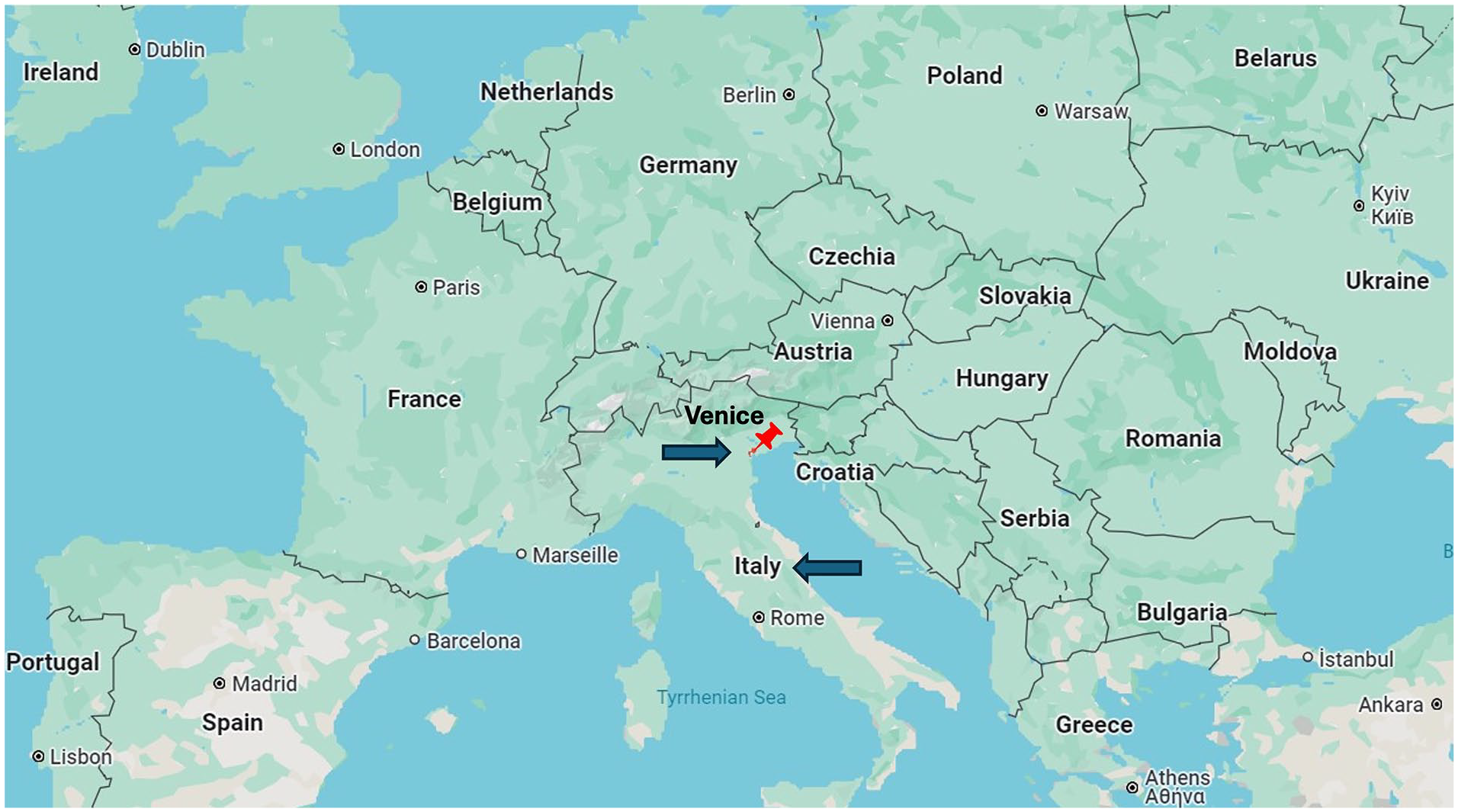
Map of Venice, Italy.
The allure of Venice extends beyond its history. Spread over a group of 118 small islands, Serenissima, as Venice is nicknamed, is one of the most popular Italian tourist cities, ranked among the most visited Italian municipalities. For centuries, poets, writers, and artists have drawn inspiration from its winding streets and charming canals. Its annual carnival, world-famous Biennale art exhibition, and international film festival are magnets for cultural enthusiasts. The city’s international fame, coupled with advancements in travel accessibility, has led to a tourism boom. In the late 20th and early 21st centuries, Venice witnessed an unprecedented surge in visitor numbers, transforming its tranquil streets into bustling roads. In 2019, Venice saw a total of 5.5 million international tourist arrivals as indicated in Table 1. This averages out to more than 15,000 visitors per day (Città di Venezia, 2023).
Number of Tourist Arrivals in Venice: Historical Series 2010–2022.
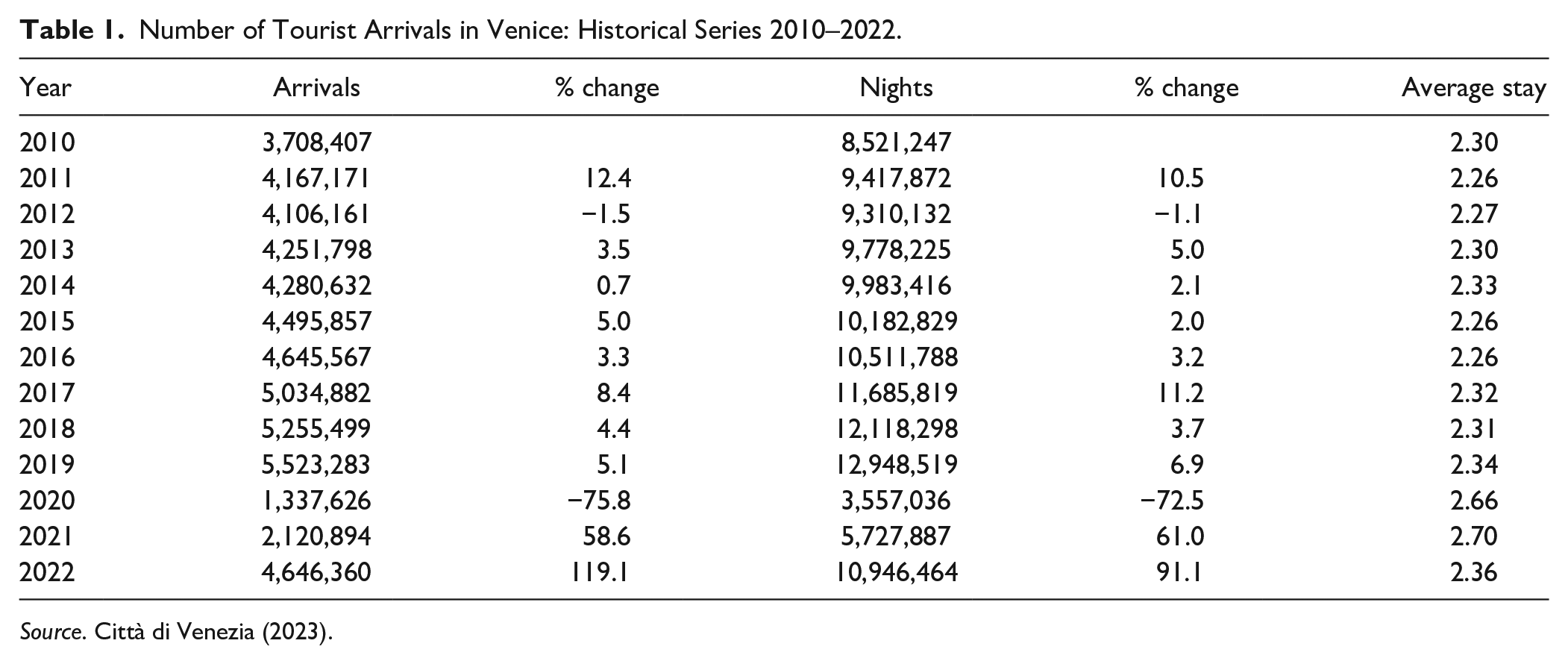
Source. Città di Venezia (2023).
However, the COVID-19 pandemic led to a notable decrease in global tourist arrivals due to international travel restrictions, lockdowns, and safety concerns. Arrivals fell from 5.5 to 1.3 million in 2020, marking a significant decline of 75.8% (see Table 1). As a result, Venice experienced an unprecedented pause in its ongoing struggle with overtourism. The city saw a sudden reduction in the large crowds that typically filled its narrow streets and historic sites in previous years. With significantly reduced crowds and the absence of cruise ships, Venice’s fragile ecosystem had a moment to recover. The water in the canals became clearer, and the erosion of historic buildings slowed down. However, the pandemic exposed the vulnerabilities of Venice’s heavy reliance on tourism, as many local businesses suffered severe economic losses. The shutdown of the tourism industry led to job losses and underscored the need for diversification in the local economy.
As travel gradually resumed post-COVID-19, Venice reached a crucial moment in its ongoing battle with overtourism. While the onset of the health crisis caused the share of international tourists to drop sharply, the city’s inbound travel market recovered in 2022, with over 80% of arrivals from abroad coming to this popular destination, many of whom are from European countries, the U.S.A., Canada, Mexico, and Brazil (Città di Venezia, 2023; see Table 2). In addition, UNESCO, deeply alarmed by the profound impact of overtourism on the fragile lagoon city, has pondered, not once but twice, the grave step of considering Venice for inclusion on UNESCO’s list of heritage sites in imminent danger (Barry, 2023).
Top 12 Countries Visited in Venice in 2022.
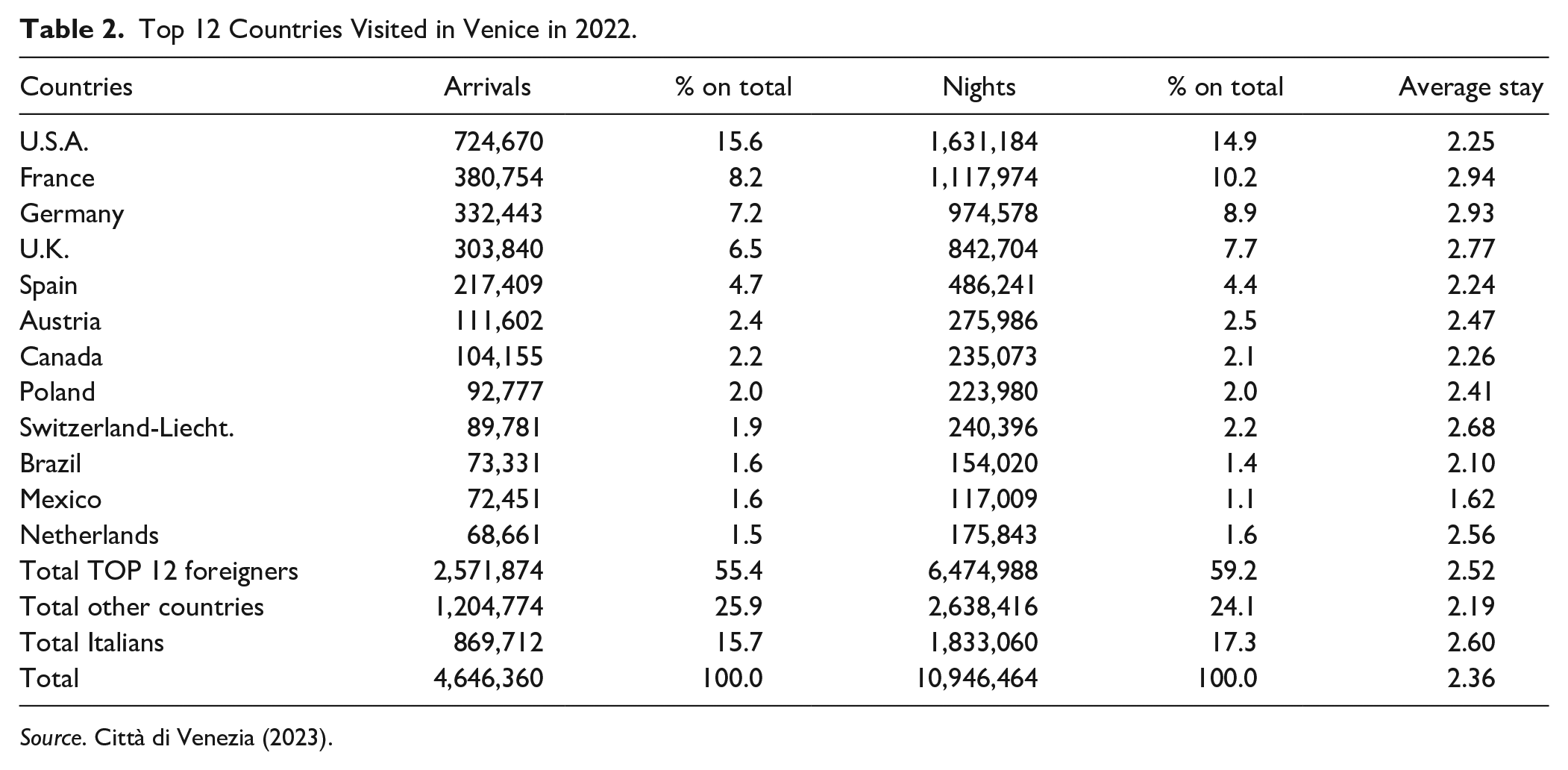
Source. Città di Venezia (2023).
Key Challenges
Venice continues to grapple with complex challenges due to overtourism, ranging from environmental and cultural concerns to housing and infrastructure issues (Seraphin et al., 2018). As illustrated in Figure 2, in 2022, Venice experienced over 4.6 million tourists, with roughly 70% heading to the historical center, the heart of the city filled with iconic landmarks and rich history. Specifically, around 3.2 million visitors arrived in this area, reflecting a notable 112% increase from 2021. The staggering number of visitors far exceeds the city’s capacity to sustainably accommodate them. The resulting overtourism phenomena has presented multifaceted challenges as illustrated below.
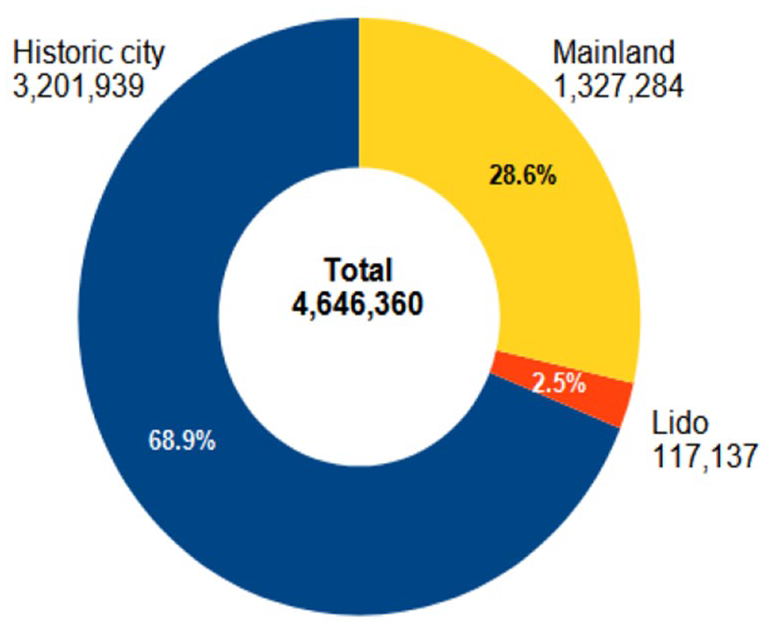
Arrivals in Venice by area in 2022.
The historic center faces an infrastructure strain that needs to be addressed. For example, more people coming to the historic center are turning the quaint lanes into busy streets. This is causing noticeable congestion that not only affects tourists but also the locals who use these paths every day. The canals are bustling with activity as gondolas, water taxis, and pedestrians navigate through them. This adds complexity and presents challenges for both visitors and locals moving around the area.
The upkeep of Venice’s historic buildings and complex infrastructure requires more than just a passing effort—it demands significant resources. The delicate balance of preserving the city’s timeless beauty comes at a financial cost, placing substantial strain on Venice’s municipal finances. These financial pressures create a conflict between the city’s commitment to preserving its heritage and the practical reality of strained resources. The echoes of history in Venice’s architecture are not merely silent witnesses; they are structures demanding careful tending in the face of the modern challenges posted by the city’s enduring popularity.
The environmental challenges faced by Venice are substantial. The massive influx of tourists contributes to an overwhelming volume of waste, imposing a costly and environmentally taxing burden on the city’s intricate canal system. Venice is already dealing with the constant threat of exceptionally high tides, called acqua alta. Now, the issue is happening more often, causing frequent flooding. The marshy ground on which Venice rests is compacting, resulting in the sinking of historic buildings, crumbling stonework, and eroding carvings. To combat these challenges, underwater barriers were installed, becoming fully operational in the summer of 2021 after over 18 years of construction (Eaglescliffe, 2024). Yet, whether attributed to rising sea levels, climate change, or the impacts of too many tourists, Venice is undeniably suffering. Scientists are continually watching and studying to understand the significant and real changes in water levels.
In addition, the controversy surrounding cruise ships in Venice is marked by profound environmental implications as well. The presence of these massive vessels in Venice’s lagoon has ignited significant debate and prompted protests due to their environmental impact. Residents have fought long and hard for a ban on cruise ships, with protest flags often draped from windows. The passage of large cruise ships through the narrow canals not only displaces water but also inflicts structural damage upon the historic buildings that line the waterways. Additionally, the heavy boat traffic, particularly from motorized vessels, contributes to water pollution in the canals. Concerns range from oil spills to sewage discharge and litter, posing persistent threats to Venice’s delicate environment. Notably, the displacement of large volumes of water by these ships contributes to erosion, raising concerns about the fragility of the area.
The continuous influx of tourists in Venice reveals the challenges of cultural erosion. Once a living canvas of history and heritage, the city now wrestles with a transformation that dilutes its authenticity. The draw of Venice results in overcrowding and commercialization, which diminishes the genuine experience for tourists. The pursuit of profit often commodifies cultural heritage, turning traditional Venetian experiences and products into marketable and/or mass-produced products that are likely imported. As a result, the once-charming narrow streets now undergo a shift, with traditional local enterprises overshadowed by souvenir shops, quick-service restaurants, and businesses catering specifically to tourists. Moreover, the rising presence of such businesses along the canals indicates increasing commercialization, reshaping the city center and dimming the true essence of Venetian culture that tourists expect (Salerno & Russo, 2022).
Seen from the viewpoint of locals, the ongoing influx of tourists undermines Venice’s authenticity and neglects the needs of the local community. It redirects resources away from residents, strains local infrastructure, and disrupts their daily lives. With nearly 400 tourists per day for each Venetian resident, many locals are compelled to leave their homes, causing a mass exodus (Misenheimer, 2022). This departure not only involves people leaving but also disrupts the natural rhythm of local life, masking the genuine Venetian experience. Balancing the needs of modern tourism with preserving the city’s unique culture has become a real challenge. In essence, it signifies a struggle to keep Venice’s true spirit alive in the face of a changing landscape driven by tourism. It is not just about buildings and canals—the very social and cultural identity of Venice is at stake.
The city’s popularity has translated into soaring prices and decreased housing affordability. As of December 2023, Venice held the title for the highest average prices for four-star hotels among Italian cities, with rates reaching approximately €190 (around $205 US) per night (Statista, 2024). This rise in hotel prices coincided with a significant increase in the number of hotels. Table 3 displays the number of accommodations in Venice categorized by type and area. In 2022, Venice had 457 hotels, totaling 32,655 beds, which marked a 16.6% increase compared to 2021—the highest recorded figure in a decade (Statista, 2024). Additionally, there were 8,054 non-hotel accommodation facilities in 2022, providing a total of 44,382 beds. This indicates an increase from 2021, which saw 7,918 facilities offering 42,106 beds (Città di Venezia, 2023). The breakdown by area showed a 4.8% increase in accommodation within the historical center in 2022 and a substantial 13.6% rise on the mainland. On the other hand, the Lido area experienced a decrease of 3% compared to 2021 (Città di Venezia, 2023).
Accommodations in Venice by Type and Area in 2022.
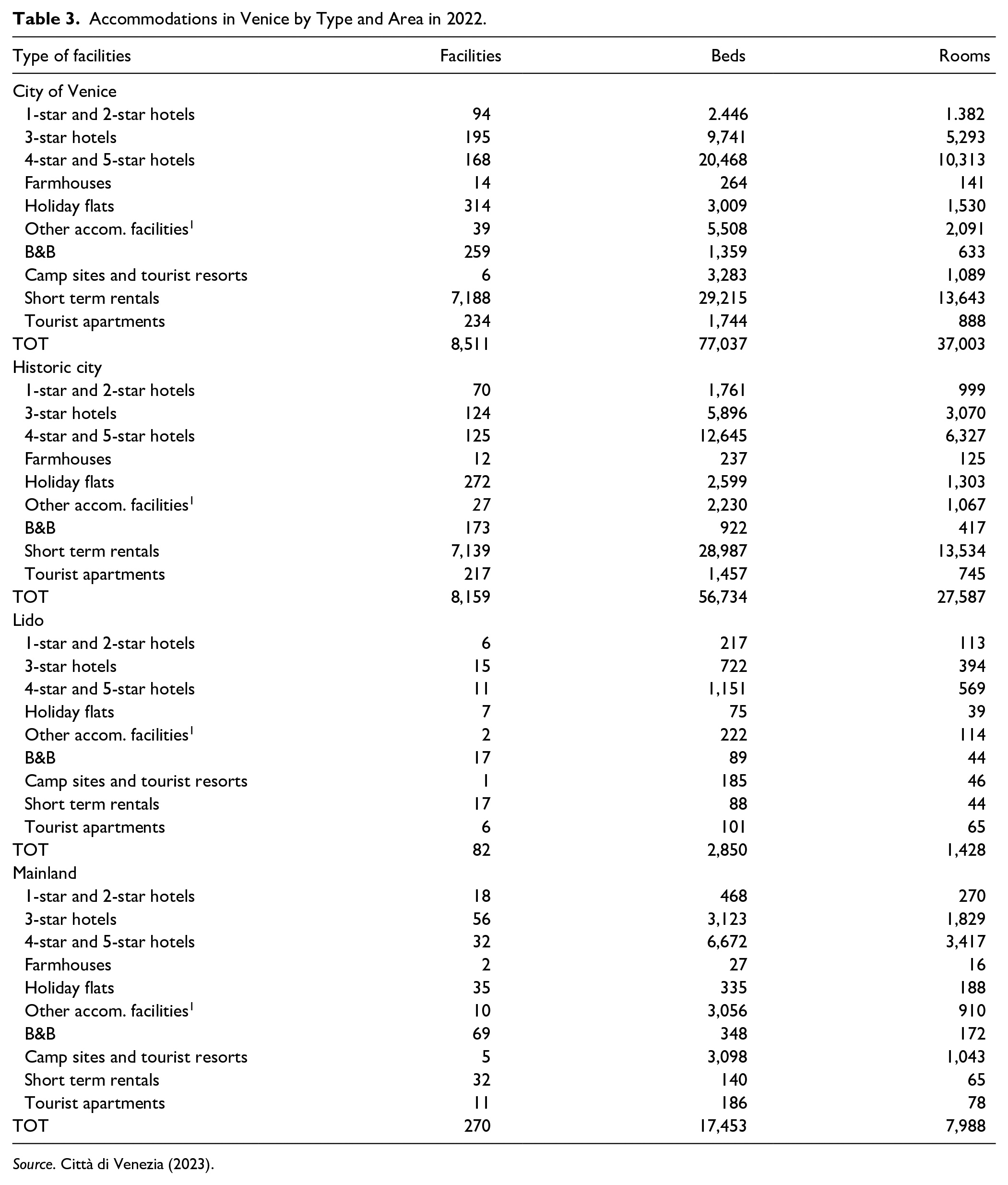
Source. Città di Venezia (2023).
Concurrently, the proliferation of short-term rentals, facilitated by platforms like Airbnb, has emerged as a key driver of the housing affordability crisis for Venetians. The conversion of residential properties into short-term rentals has led to an inflation of rent and property prices, making the quest for affordable housing increasingly challenging for the local population. In her interview, Venetian resident Marina Rodino noted that neighboring apartments in her residential building near the Rialto Bridge, once occupied by families, are now being rented out as short-term accommodations (NPR, 2024).
As more tourists propel living costs upward, many Venetians seek more affordable housing outside the city limits. Adding to the problem are empty properties left vacant by landlords who prioritize catering to tourists over long-term residents. This worsens the housing crisis and prompts critical questions about the city’s ability to support its local population (Celata & Romano, 2022).
The resident population has gone down while tourism has been a central pillar of Venice’s economy since the mid-20th century. Figure 3 shows a steady decline in Venice’s population residing in the historical center where major tourist attractions are located over the past several decades. In 1951, the area boasted a peak population of 174,808 residents, but since then, there has been a significant decrease. By 2022, less than 50,000 inhabitants remained in the center, marking a staggering 72% decrease from 1952. Conversely, the population on the mainland has remained relatively stable at around 180,000 over the last 20 years. The mainland offers better access to public services, modern infrastructure, and relief from the issues of overtourism. In contrast, the population residing in the estuary has never exceeded 51,000 people, with a consistent depopulation trend observed since the 1990s (Città di Venezia, 2024).
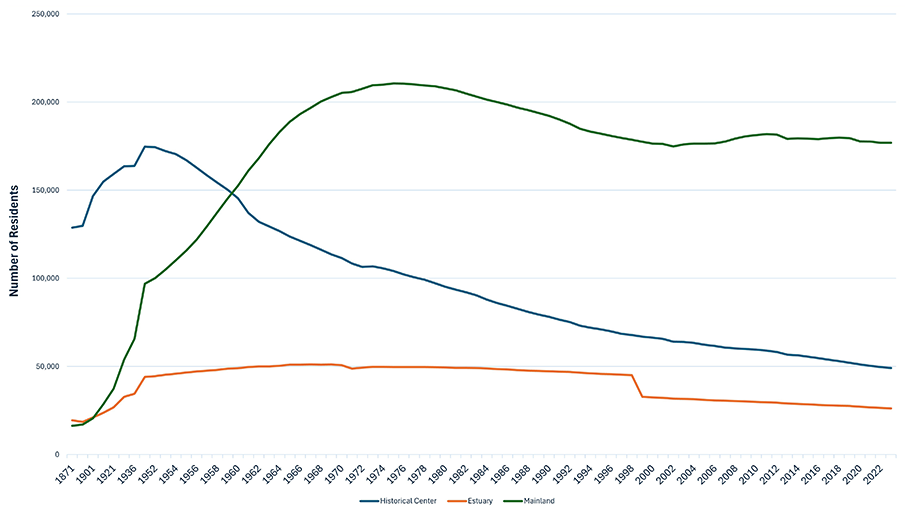
Resident populations in Venice by area.
This demographic shift highlights the profound impact of overtourism on Venice’s population dynamics over the decades. This decline is attributed to a blend of social and economic factors, including the skyrocketing cost of living, congested transportation systems, and a lack of well-paying job opportunities. The local landscape is undergoing a transformation, with tourist souvenir shops gradually replacing traditional stores. Meanwhile, housing costs are escalating as tourists and locals compete for accommodation. In essence, the consequences of overtourism have been profound, from environmental degradation to cultural erosion and housing affordability issues for locals.
In the face of these challenges, the situation in Venice has reached a critical point, and it is the appropriate moment for Venetians to take action to control over their city. The alternative is watching their home transform into a place they no longer recognize, prompting many to leave. The call to action is clear—Venice’s unique identity and way of life need the support of its residents to ensure it thrives in the face of overtourism’s impact. Given that the pandemic served as a clear reminder of the importance of resilience and adaptability in the face of global challenges, Venice may have a chance to reshape its future as a world-renowned destination while learning from the lessons of the past. It had an opportunity to rethink tourism management, implement sustainable practices, and strike a balance between the economic benefits of tourism and the preservation of its cultural and environmental heritage.
Strategies to Address Challenges
Venice has been actively implementing various measures to find a middle ground between welcoming tourists and preserving its unique heritage. The strategies emphasize the need for a comprehensive and sustainable approach to managing overtourism in the city. Activist groups, community leaders, and policymakers have embarked on a mission to address these issues and chart a sustainable future. Initiatives encompass environmental conservation, visitor management, infrastructure improvements, measures, housing policy reforms, and community engagement.
Venice has introduced various strategic initiatives to demonstrate its commitment to environmental conservation. Efforts emphasizing eco-friendly tourism practices include promoting waste reduction, increased recycling, and the adoption of electric or hybrid boats for transportation within historic canals. A significant measure involves the restriction of cruise ship access to the Venetian lagoon, with considerations for rerouting these vessels to neighboring ports. In 2021, large cruise ships over 25,000 tons were banned from using the main Giudecca Canal, leaving only smaller passenger ferries and freight vessels able to dock. Many large ships now dock at alternative locations, including the industrial port of Marghera and other commercial ports situated outside the main historic center of Venice (Imboden, 2024). By 2025, the largest cruise ships, accounting for approximately one-third of all cruise ships entering the Venice lagoon, will be redirected to terminals located outside central Venice (Raymond, 2024).
Concurrently, the city is focusing on enhancing port facilities outside its core, providing convenient transportation options for passengers to still experience Venice. The city is investing in canal restoration projects that employ innovative engineering solutions to strengthen canal banks and counteract erosive impacts, ensuring the preservation of its distinct aquatic landscape. Furthermore, Venice has made efforts to regulate the number of tourists visiting the city. Pending approval by the city council, Venice is proposing limits on tourist numbers in specific areas, set to be enforced on June 1, 2024. In an official statement, the city plans to restrict group sizes visiting the city to 25 people, which is the maximum size of tour groups allowed in Venice’s museums, as well as the proposed limit for walking tours. Additionally, tour groups will be prohibited from stopping on bridges or in narrow streets and passageways. Moreover, the use of loudspeakers will be banned to address concerns about potential confusion and disturbances (Brady, 2024).
Venice is proactively managing visitor experiences to mitigate the impact of overtourism. For example, the implementation of a reservation system for iconic attractions, including St. Mark’s Basilica and the Doge’s Palace, allows for crowd size control and efficient scheduling of entry times, effectively reducing congestion and enhancing the overall enjoyment of these popular sites. The implementation of reduced fares, exclusive events, or promotional offers to incentivize off-peak visits fosters a more even distribution of visitation throughout the year. This not only alleviates the strain on popular attractions but also provides tourists with a more serene and authentic experience. The city is also advocating for guided tours led by licensed local guides. These guided experiences not only offer tourists profound insights into Venetian culture and history but also serve to minimize the negative impact of self-guided exploration. By encouraging guided tours, Venice aims to strike a balance between providing an enriching experience for visitors and preserving the city’s unique charm. To disperse tourist foot traffic more evenly, the city is actively promoting alternative attractions and encouraging exploration in lesser-visited areas. This initiative not only enriches the overall tourist experience by unveiling hidden gems but also contributes to a more balanced distribution of visitors throughout the city.
Venice is actively engaged in bolstering its infrastructure to cope with the challenges posed by overtourism. A pivotal move involves the expansion of pedestrian-only zones in the city center, strategically designed to alleviate congestion and foster a more pedestrian-friendly environment for both residents and visitors. This initiative aims to enhance the overall experience of navigating the city, encouraging exploration on foot amidst its unique and historic surroundings. Furthermore, there is a concerted effort to elevate public transportation options, including water buses and trams. By providing efficient alternatives, the city aims to minimize reliance on private water taxis, consequently improving the overall efficacy of transportation systems. This not only benefits the mobility of residents but also contributes to a more sustainable and streamlined transportation network for tourists.
In addition, Venice has implemented new tourist fees and taxes to support the city. There is a city tax imposed on hotel stays in the Venice area. The hotel occupancy tax, pre-pandemic, generates about €30 million annually, while the daily tourist tax is expected to contribute around €50 million per year. Locals hope this tax will help find a compromise between their needs and the demands of tourism, especially during peak seasons when day visitors can outnumber residents by two to one. Starting January 16, 2024, all visitors, including day-trippers and those exempt from the day-tripper fee, must pre-book their visit through an online platform. Even those staying in Venice accommodations are required to register. Upon booking, visitors receive a QR code, which they scan at electric turnstiles at main access points. Random checks will also be conducted. This system aims to track visitor numbers, allowing authorities to allocate resources effectively, particularly in areas like waste management and traffic control on busy days (Brady, 2024). On April 25, 2024, the city launched a pilot program to levy €5 per person fee on short-stay day-tourists entering historic areas. This tax applies only to tourists, exempting Venetian residents, commuters, students, and children under 14. It is enforced solely between 8:30 a.m. and 4 p.m., with unrestricted and free access outside of these designated hours (NPR, 2024).
Next, Venice has taken decisive steps to tackle housing challenges amplified by overtourism. The mayor of Venice is reinforcing plans to implement stringent controls on short-term rental accommodation facilities. In an effort to address housing shortages and enhance affordability for residents. While discussions have been ongoing for potential restrictions, the city has not implemented these changes yet. Proposed measures include a possible ban on new short-term rental listings, reducing listings in specific central areas, limiting the proportion of flats available for rent in a building, and authorizing properties for a restricted number of rental days per year, similar to regulations in other European capitals. For example, Rome is planning to tighten regulations on new short-term rentals to prevent the “desertification” of historic towns and cities in Italy. Although the Italian government capped the annual rental days at 120, the mayor has yet to enforce this rule. He emphasized the city’s commitment to preserving its local character, expressing concern that the influx of tourists and short-term rentals was contributing to a decline in the local population and eroding the city’s essence (Borkar, 2023). Homeowners must now obtain permits, ensuring a tighter grip on the impact of short-term rentals on the local housing market. Furthermore, there is a push for affordable housing initiatives, with the goal of providing Venetians with access to affordable housing options within the city. This could involve collaborations with developers or housing cooperatives, underscoring the city’s commitment to addressing the housing needs of its residents in the face of tourism pressures (Boigenzahn et al., 2016).
In a dedicated effort to foster community engagement, Venice has implemented multifaceted initiatives aimed at involving residents in shaping tourism-related decisions. The city actively encourages residents to participate in decision-making processes through various channels, including town hall meetings, surveys, and community forums. This approach ensures that the local population has a voice in matters concerning tourism, fostering a sense of shared responsibility (UNESCO, 2021). To safeguard the rich cultural heritage of Venice, the city is committed to supporting local artisans and traditional businesses. This involves providing incentives such as tax breaks or grants to ensure the sustained presence of these businesses, thereby promoting authentic Venetian experiences for both residents and visitors alike. As part of its community engagement strategy, Venice organizes a diverse range of cultural programs. These include events, festivals, and exhibitions that celebrate the city’s heritage. By actively involving both locals and tourists in these cultural endeavors, Venice seeks to create meaningful connections and shared experiences, further enriching the cultural fabric of the city.
Venice has initiated impactful measures in the realm of tourist education, embarking on a mission to foster a more responsible and enriching tourist experience. At the forefront of these efforts are thoughtfully crafted EnjoyRespectVenezia (Venezia Unica, 2024), aimed at raising public awareness and instilling a sense of responsibility among visitors, going beyond mere sightseeing and emphasizing the significance of respecting local culture, heritage, and the environment. In line with this commitment, Venice is investing in DETOURISM, a campaign, initiated by the Tourism Department of the City of Venice, which promotes slow and sustainable tourism by urging travelers to explore beyond the usual tourist spots and instead seek out unique experiences (Venezia Unica, 2024). Embracing the concept of becoming a “detourist,” the campaign encourages venturing off the beaten path for unexpected encounters and a genuine Venetian experience. The core message emphasizes that to truly understand the soul of Venice, one must explore away from well-trodden tourist routes. The DETOURISM campaign provides travel tips for a sustainable Venice, offering insights into local aspects of the city. Utilizing various media platforms, including websites, thematic maps, web magazines, newsletters, and social media channels, the campaign aims to convey its message and inspire a more authentic exploration of Venice (Venezia Unica, 2024). Through these educational endeavors, Venice strives to cultivate a tourism culture that harmonizes with the essence of the city, promoting sustainability and mutual appreciation.
The strategies outlined above aim to tackle overtourism comprehensively by considering environmental conservation, infrastructure improvement, housing policies, community engagement, and tourist education. Implementing a blend of these strategies can help Venice strike a balance between the economic benefits of tourism and the preservation of its distinct cultural and environmental heritage.
Dilemma
Despite the Venice government’s efforts to tackle overtourism, the issue persists. They have taken steps like regulating tourism, promoting sustainability, engaging with the community, and preserving heritage. Some measures are still pending. Yet, the challenges endure, demanding continuous collaboration and fresh approaches for sustainable tourism management in Venice. Managing tourist numbers entails a dilemma. While reducing them might enhance the overall visitor experience and alleviate environmental pressures, it could also lead to a decline in revenue streams, causing a conflict between economic prosperity and sustainability. These could have adverse effects on existing jobs and businesses in the tourism sector, forcing a delicate trade-off between economic stability and sustainability. Regulating short-term rentals and tourist-oriented businesses presents yet another obstacle. While essential for maintaining housing affordability and preserving local culture, such regulations may impede property rights and entrepreneurial freedom, highlighting the complexity of finding a regulatory equilibrium. Despite efforts to conserve the environment, some companies exploit loopholes, such as using smaller ships or docking at nearby ports like Ravenna and using coaches to transport guests (Borkar, 2023). Efforts to ban cruise ships from entering Venice have been ongoing for years. While past attempts to restrict their access faced enforcement issues, there is now a renewed push to ban or reroute cruise ships away from the historic center. This shift is driven by public awareness, stronger pressure for action, and community concerns. However, the effectiveness of these measures is under question.
Additionally, the implementation of entry fees and taxes faces strong opposition from local associations and social movements, who argue that these measures are counterproductive and contribute to turning cities into theme parks. “You don’t pay a ticket to enter a city. This is the last symbolic step of a project of an idea of this municipal administration to kick residents out of Venice” said Tommaso Cacciari, an activist who led a protest against the measure on the first day of its implementation (NPR, 2024). Marina Rodino, a resident of Venice for 30 years, doesn’t believe the fee will solve the city’s problems. “This is not a natural oasis. This is not a museum. It is not Pompeii. It is a city, where we need to fight so the houses are inhabited by families, and stores reopen. That is what would counter this wild tourism,” she said. Rodino also noted that the fee won’t deter young people from flooding the city in the evening for rowdy traditional aperitivo gatherings (NPR, 2024). The application of “carrying capacity” or “limits of acceptable change” methods has been suggested, considering factors like physical capacity and infrastructure. However, measuring carrying capacity based on residents’ perceptions or sociocultural variables is deemed problematic, and the relationship between tourist density, acceptable change, and overtourism is not linear (Celata & Romano, 2022).
The case of Venice serves as a cautious reminder for other tourist destinations facing similar challenges, emphasizing the need to closely monitor the outcomes and success of such measures in the unpredictable landscape of overtourism.
Discussion Questions
What are the main challenges that Venice faces due to overtourism, as highlighted in the case study?
What strategies has Venice implemented to address overtourism? Which of these strategies do you think are the most effective, and why?
Are there any potential drawbacks or unintended consequences associated with the strategies used to combat overtourism in Venice?
From an ethical standpoint, what responsibilities do tourists have when visiting a place like Venice? How can responsible tourism be promoted?
How can residents and local businesses help in addressing the issue of overtourism in Venice? How can their involvement be further encouraged?
Considering the lessons learned from addressing overtourism in Venice, how can these insights be effectively applied to other destinations around the world facing similar issues? What specific strategies or measures would you recommend implementing in these destinations to balance the economic benefits of tourism and the need to keep the destination sustainable?
If you are an ICHRIE member, you can access the Teaching Notes for this case study here: https://ichrie.memberclicks.net/jhtc. If you are not an ICHRIE member, the Teaching Notes will be published in a future Sage Business Cases (SBC) annual collection: https://sk.sagepub.com/cases. For more information, please contact info@sagepub.com.
Footnotes
Declaration of Conflicting Interests
The author(s) declared no potential conflicts of interest with respect to the research, authorship, and/or publication of this article.
Funding
The author(s) received no financial support for the research, authorship, and/or publication of this article.
