




Abstract
LGBTQ+ healthcare clinics have been created in the past several years to provide healthcare in a safe and welcoming environment for the LGBTQ+ community. This case study examines how hospitable servicescape can be used to create a LGBTQ+ health clinic for a regional healthcare organization in a post-COVID environment. Utilizing a framework for creating a LGBTQ+ health clinic, learners will discuss key issues and challenges in the intersection of hospitable service design and theoretical frameworks at the health care, hospitality, and service design for an underserved community.
Introduction
The recent years have seen robust discussions on how hospitality can improve patient healthcare (Hunter-Jones et al., 2020). Many healthcare organizations, such as hospitals, emergency rooms, and clinics, are now including customer satisfaction scores as part of their patient evaluations, examining how food and beverages assist patient recovery and experience, and incorporating hotel- and spa-like functions into their patient offerings. Zygourakis et al. (2014) highlight the similarities between hospitality and hotels, including both organizations’ focus on customer/patient experience and satisfaction, large hierarchies of employees with specific role functions, and a variety of organization types.
The Intersectionality of Hospitality and Healthcare
Hospitality and service scholars are examining the phenomenon of hospitality and healthcare as well. A special guest issue titled, “Hospitality, Healthcare, and Design” in the Services Industries Journal (Volume 38, Issue 1–2, 2018) examines the topic of “specific types of environmental stimuli, along with the contexts and conditions, that affect consumers or service employees during service exchanges” (Rosenbaum, 2018, p. 2) in healthcare. Mody et al. (2020) examine how hotel attributes, such as hotel-like products and hotel-like services, have an impact on patients’ perceived well-being and behavioral intentions. The COVID-19 pandemic also saw the continuing convergence of the two industries, as numerous hotels were used to assist overburdened hospital health systems by allowing patients with COVID-19 as well as medical professionals to stay in hotels (Johanson, 2020). Numerous hospitality programs are now including coursework as it relates to hospitality and healthcare, including coursework and programs in senior living, patient experience, and managed food delivery. Examples of jobs in which hospitality students could engage in healthcare include patient experience managers, marketing and sales managers, human resources, managed food jobs, community relations, senior living managers, activity and event directors, and director of resident programs/services.
Unfortunately, healthcare disparities exist among underserved communities, such as the lesbian/gay/bisexual/transgender/queer plus (LGBTQ+) patients (the plus sign is used to represent the diversity within the LGBTQ+ community). For example, studies from the National Health Interview Survey show that lesbian women are more likely to report moderate psychological distress, poor or fair health, multiple chronic conditions, heavy drinking, and heavy smoking compared with heterosexual women. According to Lambda Legal, a nonprofit organization devoted to the civil rights of the LGBTQ+ community, around 56% of lesbians, gay, or bisexual patients and 70% of transgender and gender nonconforming patients reported they had been refused needed care, were blamed for their healthcare status; received harsh or abusive language, or were physically roughed or abused (2009).
Gaps also exist in knowledge and training by healthcare providers. Many healthcare organizations, such as the U.S. Department of Health and Human Services, the American Association of Medical Colleges, and the American Academy of Nursing, have called for LGBTQ+ training and education for medical professionals. Further, CIGNA, a leading healthcare organization, highlights a lack of training and education for workers (Cigna, 2022).
Such disparities exist due to multiple reasons, such as societal stigma and discrimination, when receiving healthcare. For example, a member of the LGBTQ+ community may not be “out” and may not share their sexual orientation and gender identity with their healthcare professional. Challenges in accessing care for the LGBTQ+ community may also enhance disparities. For example, having access to an “LGBTQ+ friendly” doctor in certain geographical areas, such as rural locations, may be challenging. Such disparities may be worse in 69 United Nations countries where same-sex activity is criminalized (International Lesbian, Gay, Bisexual, Trans and Intersex Association, 2022).
To offset some of these challenges, a number of LGBTQ+ health clinics have been created in recent years. For example, the Fenway Community Health Center, in Boston, which opened in 1971, is among the earliest clinics to provide care for underserved community members, such as “… seniors, gays, low-income residents, and students” (Fenway Health, 2022, para. 3). Today, the clinic provides services, such as HIV testing, STI testing, PrEP navigation services, trans care, substance use, high-risk sexual behavior testing, behavioral healthcare, and other services. Most urban cities in the United States now have a health clinic for the LGBTQ+ community. For example, the Lesbian, Gay, Bisexual, Transgender, Queer, and Questioning (LGBTQ) Clinic, as part of the University of Iowa Hospitals & Clinics, exists as an outpatient department. Other clinics are integrated into the entire healthcare system.
The process by which members of the LGBTQ+ community receive care and evaluate their patient experience in a service design process is unknown. Further complicating this process is the fear of not knowing how a medical professional may perceive or judge a member of the LGBTQ+ community when seeking care. As a result, organizations may “signal” that they are welcoming (Connelly et al., 2011) by using elements of the physical servicescape (Bitner, 1992), such as signs and symbols, as well as social servicescape (Tombs & McColl-Kennedy, 2003), such as employee responses and social norms. These tactics may be more pronounced for members of the LGBTQ+ community when seeking medical professionals for healthcare in a service setting.
We suggest that hospitality service design can be used to create a more welcoming and inclusive environment and experience for LGBTQ+ patients. In fact, we argue that the hospitality field has an obligation to lead the way for the healthcare industry when creating a welcome and inclusive environment for an underserved community. This case study is guided by the theoretical foundations of service design and signaling theory by discussing how a regional healthcare system is creating an LGBTQ+ clinic to provide comprehensive care for the LGBTQ+ community. For hospitality students, this case study expands our understanding of hospitality to include healthcare clinics and how hospitable service design can be used to facilitate a more welcoming and inclusive healthcare clinic.
Literature Review
Although U.S. citizens overestimate the number of gay people in the United States (23.6% in 2019) (McCarthy, 2019), it is currently estimated that about 5.6% of Americans identify as LGBT (Jones, 2021), which is about 1.85 million LGBTQ+ Americans. It is estimated that the global LGBTQ+ tourism market is worth $211 billion a year (Simpson, 2016). Community Marketing & Insights, a consulting LGBTQ+ research firm, found that LGBTQ tourists took 3.1 vacations and 1.5 business trips in the preceding year (2019). LGBTQ+ tourists also seek out destinations where they feel safe, welcomed, and accepted. Many hospitality organizations (e.g., Marriott, Hilton) and destinations (e.g., New York City, Ft. Lauderdale) actively market the LGBTQ+ community.
LGBTQ+ Health Care
Many in the LGBTQ+ community have different needs for healthcare compared with their straight/heterosexual counterparts. For example, gay men may have specific healthcare needs, such as pre-exposure prophylaxis (PrEP) or post-exposure prophylaxis (PEP), that is, medicine that is available for someone who is at risk for contracting HIV. Additionally, gay men may need healthcare-related to their sexual health and behavioral health needs (Taylor & Robertson, 1994). Members of the transgender community may have needs related to those who wish to transition, including pre-surgical and post-surgical care.
Sharing one’s sexual orientation and gender identity is of great importance when discussing healthcare needs with a medical professional. Results reported by Furukawa et al. (2020) found that 58.7% of gay, bisexual, and other men who have sex with men were open and out about their sexuality to their healthcare provider. Of a sample of 1,105 respondents in the survey, 14.6% reported being denied access to pre-exposure prophylaxis (PrEP), a medication used to prevent HIV infection.
Signaling Theory
Signaling theory (Connelly et al., 2011) provides a useful explanation for the way in which a healthcare setting can affirm an organization’s commitment to the LGBTQ+ community. When a member of the LGBTQ+ community is not sure how a healthcare environment will treat them in a healthcare setting, they may often rely on various cues that demonstrate how a healthcare organization will treat them. For example, a LGBTQ+ health clinic may engage in a wide variety of activities, initiatives, and marketing efforts to signal that they are friendly, welcoming, and affirming. Furthermore, they may draw upon elements of the physical servicescape (Bitner, 1992) (e.g., inclusion of welcoming signs and symbols, such as a posted nondiscrimination cause), social servicescape (Tombs & McColl-Kennedy, 2003) (e.g., employee response and employee behavior when interacting with a LGBTQ+ patient). By embracing elements of the physical and social servicescape, healthcare service design may signal that they are welcoming and affirming, thus increasing the satisfaction of patient care.
Physical Servicescape
Bitner’s (1992) seminal work on examining the physical surroundings impact on a consumer in approaching or avoiding a certain environment sets the stage for examining environment-user relationships in a service environment. In the framework, environmental dimensions, such as ambient conditions (e.g., temperature and music) and space/function (e.g., layout and furnishings) as well as signs, symbols, and artifacts (e.g., signage, and style of décor), lead to a holistic perception of the perceived servicescape, from which employee and customer responses lead to approaching or avoiding a service environment. The relationship between perceived servicescape and internal responses are moderated by employee and customer response moderators.
This framework has been used extensively by service scholars examining healthcare services. For example, Han et al. (2018) found six servicescape dimensions in the healthcare environment: external variables, internal variables, ambient variables, functional variables, product/furniture/displays, and social variables, as noted in Table 1.
Classification of Servicescape Dimensions.
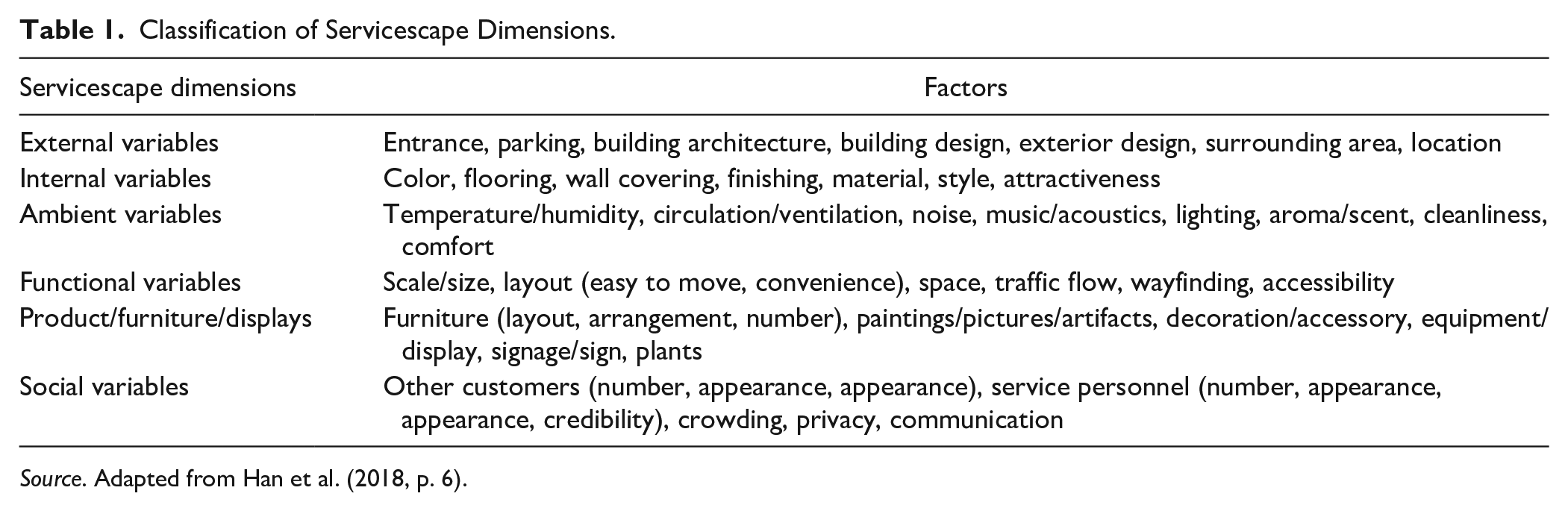
Source. Adapted from Han et al. (2018, p. 6).
Social Servicescape
Tombs and McColl-Kennedy (2003) build upon social facilitation theory (Zajonc, 1965), behavior setting theory (Barker, 1968), and affective events theory (Weiss & Cropanzano, 1996) to extend Bitner’s (1992) servicescape model to create a social-servicescape model. This model extends how customers—through social density and displayed emotions of others—in the service environment impact a customer’s response to the service environment. Of great importance in the social-servicescape model is the displayed emotions of others in a service environment. Research has suggested that the emotions displayed by people are often used to influence a customer’s affective state and intention behaviors (Levy & Nail, 1993). For members of the LGBTQ+ community, the impact of others and the emotions displayed by others in the environment is of great importance. For many LGBTQ+ persons, the unknown circumstances of how a healthcare service provider may act when one’s sexual orientation and gender identity are made known may cause fear and uncertainty when discussing their health with a service provider.
XYZ Healthcare System
XYZ Health System (name has been removed for confidentiality purposes) is a regional healthcare system located in a medium-sized city of 600,000 citizens living in the metro area in the Rocky Mountain region of the United States. The XYZ Health System is a critical-access hospital with 30 licensed beds and 500 employees. The health system provides a variety of hospital services, including surgical services, intensive care, medical and emergency care, and behavioral health services. Citizens are attracted to living in the XYZ City due to its low employment rate, a variety of industries, four seasons of recreation, and a vibrant downtown. Major employers include XYZ Health System, a regional state university with about 12,000 students, and city/county government services.
According to Gallup, about 5.6% of adults living in the United States identify as lesbian, gay, bisexual, or transgender (LGBT), with about one in six adults in the Generation Z cohort identifying as LGBT (Jones, 2021); this translates to around 33,600 LGBTQ+ members living in XYZ City. The city’s LGBTQ+ community is active, as there currently exists two LGBTQ+ bars, an annual Pride festival held in June of every year, and a LGBTQ+ sports and recreation club. The regional state university has an LGBTQ+ community center on campus, providing resources and support for students.
Table 2 highlights the major competitors of healthcare in XYZ City.
XYZ City Major Healthcare Competitors.
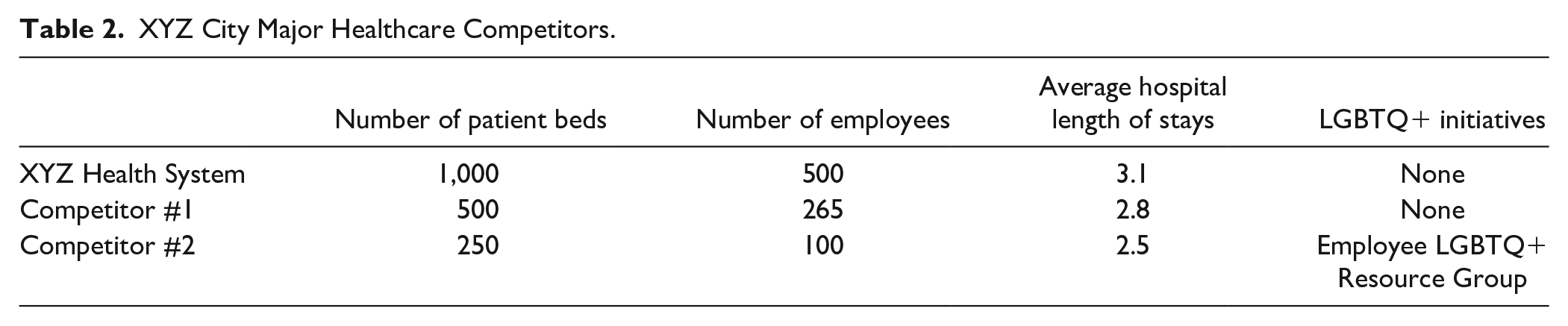
Several major initiatives have caused XYZ Health System administrators to examine the need for an LGBTQ+ clinic. First, when examining the competitive market environment, it does not appear that other hospital systems provide any specific clinic or programming for an LGBTQ+ clinic. Additionally, several key external stakeholders and leaders within the LGBTQ+ community in XYZ City have begun conversations regarding the lack of an LGBTQ+ clinic within the community. For example, a recent op-ed in the local newspaper called for the need to provide accessible healthcare for the LGBTQ+ community. Signed by several leaders of various LGBTQ+ service and community organizers, the op-ed suggested that healthcare systems need to do more to address the healthcare needs of the LGBTQ+ community.
Employees working for XYZ Healthcare, including doctors, nurses, and other medical professionals, have highlighted the need for programming and a clinic for the LGBTQ+ community. These calls are in alignment with numerous national medical associations, including the American Medical Association (AMA), which states, “The AMA is dedicated to creating an inclusive environment for the LGBTQ+ community and ensuring that they get the care they need” (American Medical Association, 2022, para. 1). Most national medical conferences have education, panels, and speakers related to education and training to improve the lives of LGBTQ+ patients. Access to education about LGBTQ+ community healthcare needs is now fundamental for most healthcare associations. For example, the AMA has partnered with the Fenway Institute to provide education and training modules on topics such as “Affirming Care for People with Intersex Traits,” “Trauma-Informed Care for Trans and Gender Diverse Individuals,” and “Addressing Social Determinants of Health for Black LGBTQ People.”
Launching a Program
Launching a hospitable LGBTQ+ clinic within XYZ Healthcare would be an exciting and daunting initiative. When launching an LGBTQ+ health clinic, leaders need to be concerned with several considerations in terms of organizational structure; the use of technology, education, and training for staff members; and the use of physical and social servicescape dimensions to communicate the clinic’s mission and values to the LGBTQ+ community, as outlined below.
Organizational Structure
Currently, most healthcare delivery systems revolve around the relationship between doctor and patient (Ellwood, 1972).There are currently several ways that an LGBTQ+ health clinic could exist as an organization within the context of a healthcare system. For example, UnityPoint Health, a healthcare system located in Des Moines, Iowa, operates a LGBTQ clinic in the evenings on the second Tuesday of each month (UnityPoint Health, 2022). Stand-alone clinics, such as Prism Health in Portland, Oregon, was opened by Cascade AIDS project (Woodstock, 2017). Many healthcare clinics are utilizing telehealth for LGBTQ+ patients, providing a safe alternative for those patients who are not physically able to visit a clinic. Several health clinics, such as the University of Iowa Hospitals & Clinics Lesbian, Gay, Bisexual, Transgender, Queer, and Questioning (LGBTQ) Clinic engage in a comprehensive, multidisciplinary approach to healthcare services as noted with professionals from family medicine, internal medicine, obstetrics and gynecology, pediatrics, surgery, pharmacy, physical therapy, and speech-language pathology (University of Iowa Hospitals & Clinics, 2022).
Technology
Technology may also be used to facilitate a positive experience when designing an LGBTQ+ health clinic. For example, Dahlamer et al. (2017) found that gay and bisexual men were more likely to use a computer to schedule an appointment with healthcare providers, more likely to seek out information or participate in an online chat about healthcare, and more likely to use a computer to fill a prescription compared with straight men.
In the design of applications, developers often use “personas” (see Figure 1), the basic premise of examining patients’ goals, frustrations, and other dimensions of one’s life.
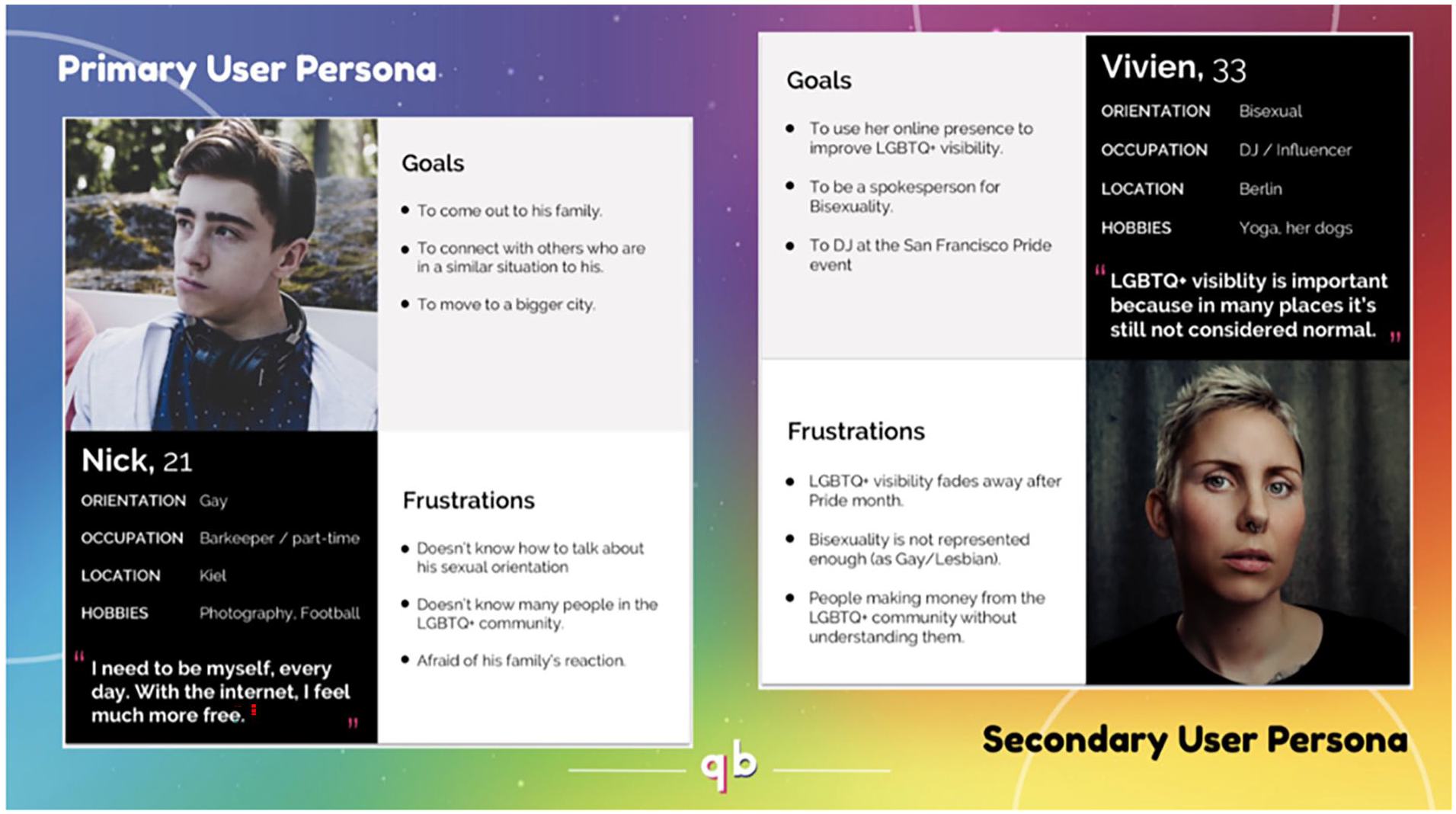
Example of Persona.
Healthcare devices, such as remote patient physical wearable devices and technology monitoring, may also be used as part of the Internet of Things in the medical fields (Haghi et al., 2017). Technology may also be used for LGBTQ health warnings and outreach. For example, the system could email a reminder to get a recommended test, such as HIV or STD testing every 12 months. Telemedicine may also be used to decrease disparities in HIV prevention/PrEP healthcare for high-risk individuals (Wong et al., 2020) and to provide care to members of the LGBTQ+ community who are unable to travel to physical hospitals in urban locations.
Education and Training
When creating an LGBTQ+ health clinic, organizers will also want to consider the education and training needs for employees. Workshops, such as Safe Space Training, allow workshop participants to “explore their role and responsibility in creating a more welcoming environment at work, school, and in our communities” (Safe Space Training, 2022, para. 1.) Professional medical associations, such as American Medical Association, provide numerous educational content, including leadership opportunities and advisory committee opportunities for medical professionals interested in receiving education and training related to LGBTQ+ healthcare initatives.
Physical and Social Environments
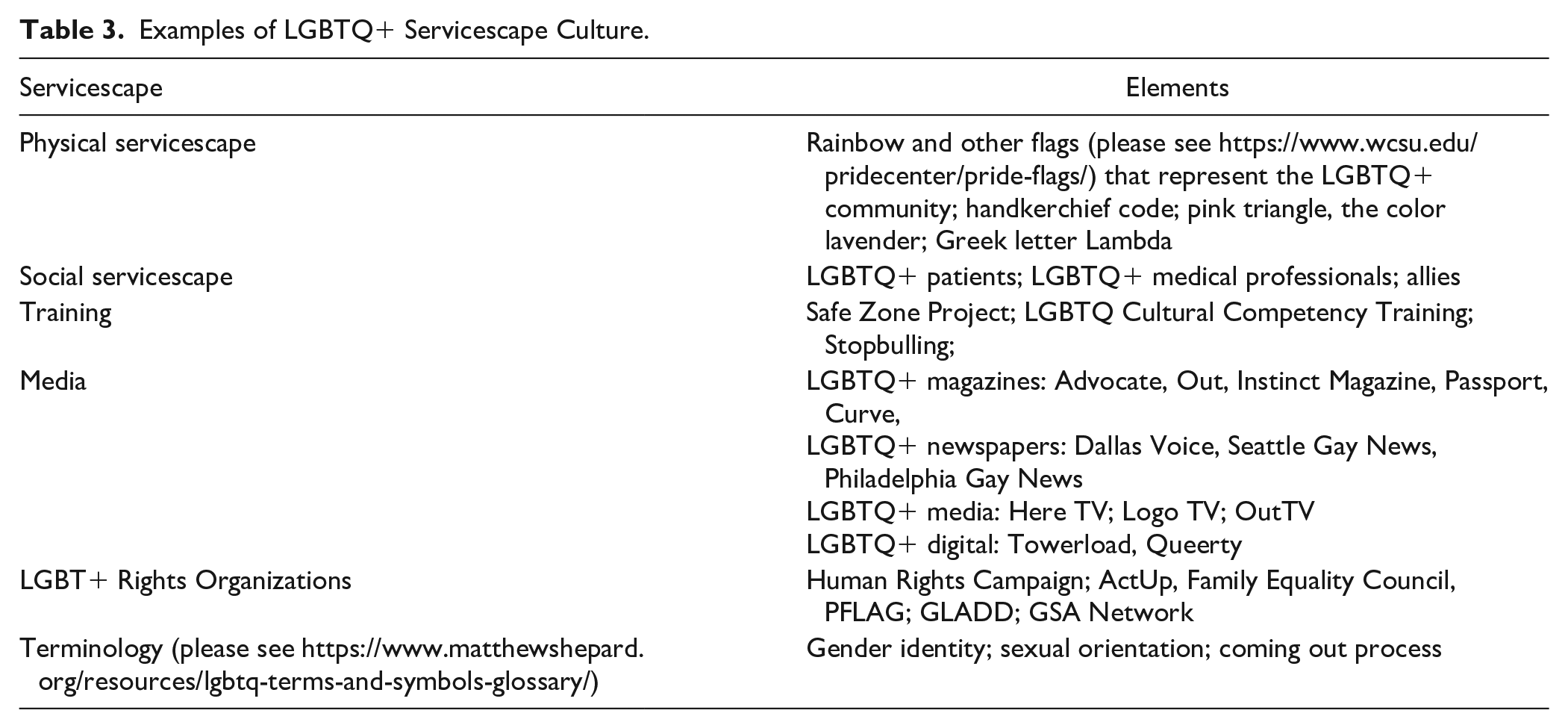
The LGBTQ+ community has a long history of creating their own physical and social environments and is rich in sharing the culture, norms, and values of the community. It is important to recognize that not all those in the LGBTQ+ community identify with aspects of LGBTQ+ culture, as noted in Table 3.
Examples of LGBTQ+ Servicescape Culture.
Community Relations
To create a clinic that is welcoming and friendly toward the LGBTQ+ community, numerous stakeholders need to be involved in the success of the health clinic. For example, hospital community relations and marketing teams will want to cultivate relationships and support from community organizations, such as civic associations, universities, and business associations. New LGBTQ+ health clinics may also want to consider partnering with local LGBTQ+ community centers and other LGBTQ+ organizations. Most urban areas have a LGBTQ+ community center that provides programming, content, events, and information for the LGBTQ+ community. For many in the community, these centers act as a “hub” for the LGBTQ+ in providing services and information regarding healthcare. Many centers also provide support groups, for example, for transgender and nonbinary individuals, individual and group counseling, LGBTQ+ seniors, and youth groups. Many centers also partner with local community health organizations to provide healthcare services for the LGBTQ+ community, such as sexually transmitted disease testing and vaccinations.
Case Study and Dilemma
XYZ Healthcare System is considering creating a healthcare system to provide healthcare to the LGBT+ community. Specifically, they are interested in using aspects of hospitality, and they need consultants to examine the feasibility of launching a LGBTQ+ healthcare clinic. The organization is also interested in balancing the needs of the community as well as the limited financial and physical resources of the organization.
By utilizing elements of hospitable service design, XYZ Healthcare System hopes to create a welcoming and inclusive environment that will greatly add to the restorative healthcare needs of the LGBTQ+ community.
Discussion Questions
What challenges do members of the LGBTQ+ community face compared to their straight/heterosexual counterparts in receiving healthcare?
What is the relationship between healthcare and hospitality?
What challenges would XYZ Healthcare System have in launching a LGBTQ+ healthcare clinic?
What resources (physical, financial, technological, human capital, and other resources) would be needed to launch an LGBTQ+ healthcare clinic?
How can technology be used to facilitate the health care provider/LGBTQ+ patient experience?
How can signaling theory through the use of physical servicescape and social servicescape be used to enhance the experience of a LGBTQ+ health clinic?
How can additional sectors of healthcare benefit from this discussion of hospitality service design?
Activity
You have been tasked to create a specialized design services report and presentation to the Board of Directors of XYZ Healthcare System that examines how hospitality can be used in creating a LGBTQ+ health clinic. In this report, you must provide tactical recommendations how hospitality can be used to improve healthcare for the LGBTQ+ community.
If you are an ICHRIE member, you can access the Teaching Notes for this case study here: https://ichrie.memberclicks.net/jhtc. If you are not an ICHRIE member, the Teaching Notes will be published in a future Sage Business Cases (SBC) annual collection: https://sk.sagepub.com/cases. For more information, please contact
Footnotes
Declaration of Conflicting Interests
The author(s) declared no potential conflicts of interest with respect to the research, authorship, and/or publication of this article.
Funding
The author(s) received no financial support for the research, authorship, and/or publication of this article.