




Abstract
This article quantifies the relationship between remittance inflows and migrant workers in SAARC economies, revealing a significant positive relationship. The analysis indicates that a 1% increase in migration stocks explains an average remittance increase of around 1.1%–1.7% across the region, holding other factors constant. A dynamic model further reinforces these findings by demonstrating that the growth of remittances is influenced by previous levels, confirming the sustained positive impact of net migrant labour on remittance flows. Additionally, country-specific analyses reveal that the long-term relationship between migrant workers and remittances is moderated by the Human Development Index (HDI) levels in each economy. Specifically, improvements in HDI in India and Bangladesh diminish the impact of migrant workers on remittances, while this effect is amplified in Pakistan, Nepal and Sri Lanka.
Introduction
The significant increase in global migration trends over the past few years has drawn special attention from policymakers worldwide (McAuliffe & Oucho, 2024). The number of international migrants is estimated to be around 281 million, which is 3.6% of the global population. McAuliffe and Oucho (2024) mention that geopolitical conflicts, the havoc caused by climate change, and high income disparities in low-income countries have particularly heightened cross-border movements. Frankel (2011) and Freund and Spatafora (2005) identify migration as a major determinant of remittances. According to Docquier et al. (2012), Le Golf and Salomone (2015) and Bettin et al. (2017), the stock of migrants is always a positive and highly significant variable while explaining inward remittances in the country of origin. Temporary migrant workers earn wages in the advanced economy and, after meeting their own consumption needs, send a portion of their earnings back to their home country (Lim & Khun, 2022). Permanent immigrants increase financial support during economic hardships at home. This creates an endogenous flow of remittances driven by labour migration (Acosta et al., 2009).
The economic implications of migration are vast, influencing not only the economies of the country of origin but also the development trajectories of the host countries (Causa & Jean, 2007; d’Aiglepierre et al., 2020; Freund & Spatafora, 2005). Therefore, the host economies attract high-quality labour by designing immigration policies and selecting on the basis of ability, which results in more productive immigrant labour (Kanat, 2020). This implies that the human capital endowments of host economies play an important role in determining the productivity of the workers, which leads to high remittances. In addition, Lueth and Ruiz-Arranz (2008) show that the inflation disparity between remittance-sending and remittance-receiving countries has a positive correlation with bilateral remittance flows. Both Lueth and Ruiz-Arranz (2008) and Le Golf and Salomone (2015) examine the nominal exchange rate relative to the US dollar to determine whether preserving the purchasing power of remittances is a factor; however, their results show no significant impact. Meanwhile, numerous studies examine the effect of remittances on economic fluctuations in recipient countries and find that remittance outflows are inversely related to the business cycles of receiving countries. This countercyclical behaviour of remittances helps to smooth economic fluctuations, thereby enhancing macroeconomic stability in recipient nations (Bettin et al., 2017; Frankel, 2011).
At the microeconomic level, probable determinants indicate that remittances rise to help relatives cope with income losses (Agarwal & Horowitz, 2002). Conversely, other studies show a positive link between remittances and the financial well-being of families back home, implying that remittances may be motivated by self-interest, such as investment. Meanwhile, some find no significant correlation with business cycles or shocks like armed conflicts (Naudé & Bezuidenhout, 2012).
Global migration trends indicate that Asia has the highest share in migrant, whereas the South Asian region has the highest share within Asia. Consequently, South Asia has emerged as a region with the highest inflow of remittances across the globe. Therefore, along with the numerous microeconomic benefits that migration offers, there also exist spillover effects directly impacting the economies of migrants’ home countries. The inflow of remittances is not only a significant part of the foreign exchange earnings of the regions but also provides a notable cushion to the economies in difficult times. Importantly, the remittance inflow as a percentage of exports in the South Asian region is considerably higher compared to the rest of the middle-income countries. Also, the trend of this ratio is increasing over time, validating the increasing role of remittances in foreign exchange accumulation within the region.
In the context of South Asian economies, migration trends have been particularly noteworthy. South Asia, home to some of the world’s most populous nations, has seen a consistent outflow of people driven by various economic, social and political factors. This migration has not only shaped the demographic landscape of host countries but also had significant economic implications, influencing labour markets, remittance flows and bilateral relations between South Asian countries and their international counterparts. Over the past few years, Asia has remained consistently the top origin region for migrants. The region’s dominance in global migration flows can be attributed to its large population base, economic disparities and political instabilities in certain areas. Within Asia, Southern Asia stands out as the leading sub-region in terms of emigration. This is primarily due to the high rates of labour migration, with millions of individuals from South Asian countries moving abroad, particularly to Western Asia, the Middle East, Europe and North America, in search of employment and better living conditions.
Zooming in on South Asia, especially within the South Asian Association for Regional Cooperation (SAARC) member states, India emerges as the major country of origin for emigrants. As of 2020, India accounted for 41.2% of the region’s emigration, ranking it as the biggest contributor to regional migration flows driven by its skilled and semi-skilled workers employed abroad. Bangladesh follows as the second-largest source of emigrants from Southern Asia, representing 17.1% of the region’s total. Migration from Bangladesh is frequently driven by economic necessity, with a large portion of migrants pursuing employment in the Gulf States. Also, remittances have become a key pillar of their economy, helping to lift people out of poverty and contributing to the rapid expansion of the middle class. Pakistan, contributing 14.6% of the region’s emigrants, also plays an important role in South Asian migration dynamics, with many Pakistanis moving abroad for work and education. In this context, remittances have become a critical lifeline, bolstering the economy in times of financial stress and serving as a buffer against external economic shocks.
However, when it comes to South Asian economies, research in this area remains relatively limited. While South Asia is a significant contributor to global migration flows, the specific impacts of migration on the region’s economic development have not been thoroughly explored. Thus, given the importance of the subject and gap in the literature, this study will address the economic impacts of human resource movement in SAARC members on remittance inflows in countries of origin in terms of its quantification, a very important component of the balance-of-payments position of an economy (Docquier et al., 2012). In addition, the research compares the relative impact of external factors, including global oil prices and international economic growth, with domestic variables such as national economic growth and inflation, in determining remittance flows across SAARC countries (Frankel, 2011), interest rates (Le Goff & Salomone, 2015) and exchange rate (Poghosyan, 2023).
The objective of this article is to explore the relationship between migrant workers and the inflow of remittances in SAARC economies. The estimates indicate that there exists a positive relationship between migrant workers and remittances in the SAARC region. On average, an increase of 1% in migration stocks may lead to a 1.1%–1.7% increase in remittances in the SAARC region, ceteris paribus. The country-specific finding indicates that the relationship between migrant workers and remittances depends on the level of the Human Development Index (HDI) in the economy. The improvement in HDI in India and Bangladesh may reduce the impact of migrant workers on remittances, whereas this impact gets stronger in the case of Pakistan, Nepal and Sri Lanka.
The study proceeds as follows: The second section presents the methodological framework on the basis of the literature. The third section presents the empirical evidence on the relationship between remittances and migrant workers. The fourth section concludes the study.
Methodological Framework
This section outlines various specifications of the structural relationship between remittances and migrant workers planned to be tested for our study. Additionally, it provides information on data sources and discusses the estimation technique used in the study.
The synthesis from the literature indicates that a migrant worker is the only input in the production of remittances, Rs = Msβ, where Rs = remittances and Ms = migrants. Based on this, we specify a simple logarithmic transformed relationship between remittances (Rst) and migrant workers (Mst), where the estimated value of ‘β’ reflects the returns to scale of the migrant workers. However, the host economies have implemented an appropriately defined selection system to maintain the labour standards. Therefore, the effectiveness or quality of the labour coming to the host economies should be ensured. In order to bring this aspect into the framework, we consider the human capital of the labour in migrating economies as an indicator of the quality of labour.
Singh et al. (2009), Freund and Spatafora (2005), Lim and Morshed (2015) and Adams (2012) use the stock of migrants as a core determinant of remittance inflow.

Rsi, t is the net inflow of remittances to country i in period t. Msi, t is the stock of migrant workers who have emigrated from country i in period t. The coefficient β measures the elasticity of remittance inflows with respect to the migrant stock. A positive β is expected, as a large number of migrants abroad increases the potential volume of remittances sent back to the home country. HDI is the Human Development Index of the country of origin. The coefficient γ captures the effect of the human development condition in the country of origin on remittance inflows. The expected sign of γ is positive, indicating that higher human development may be associated with better skills of migrants. In order to enrich the specifications of incorporating the control variables, the Z matrix represents the global control variables, including global oil prices, consumer prices of food items, interest rates and US industrial production, and the G matrix of the local control variables includes industrial production and the exchange rate of SAARC economies. vi, t is the error term.

On the basis of the saving capacity of workers, a migrating male living without a family will be remitting comparatively more; however, a male accompanying a family would send less due to family financial constraints and less saving capacity. Because of the unavailability of consistent data on such variables, we use the ratio of male-to-female migrants to capture the said phenomenon.
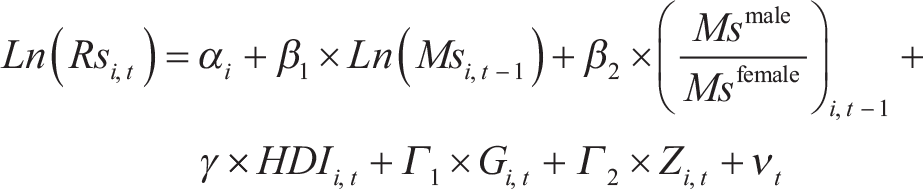
It may be noted that Equations 1–3 may not yield reliable parameter estimates in the presence of non-stationary data. However, if the periods are less than the cross-section, i > t, then time-series issues are generally less problematic. In our case, where i > t, implying periods are not greater than countries, Equations 1–3 are estimated by the panel data technique with country-specific fixed effects. Meanwhile, the issue of endogeneity may arise due to the reverse causality of remittances with migrant workers. Similarly, the exchange rate and other related variables may also introduce endogeneity bias, which must be addressed to ensure robust and unbiased estimates. Additionally, it is essential to test for cross-sectional correlation in the estimations.
As mentioned earlier, if periods exceed the cross-section, i < t, time-series issues arise. Therefore, Equations 4 and 5 are specified in first differences to ensure the stationarity of the data. In addition, net migrants are used as the main explanatory variables in these specifications instead of the stock of migrants used in earlier models. In Equation 5, the slope parameters are country-specific.


For our study, the sample constitutes data from seven countries of the SAARC region (Pakistan, India, Bangladesh, Sri Lanka, Nepal, Afghanistan and the Maldives). Table 1 presents all the variables used in the study along with their sources.
Data Description.
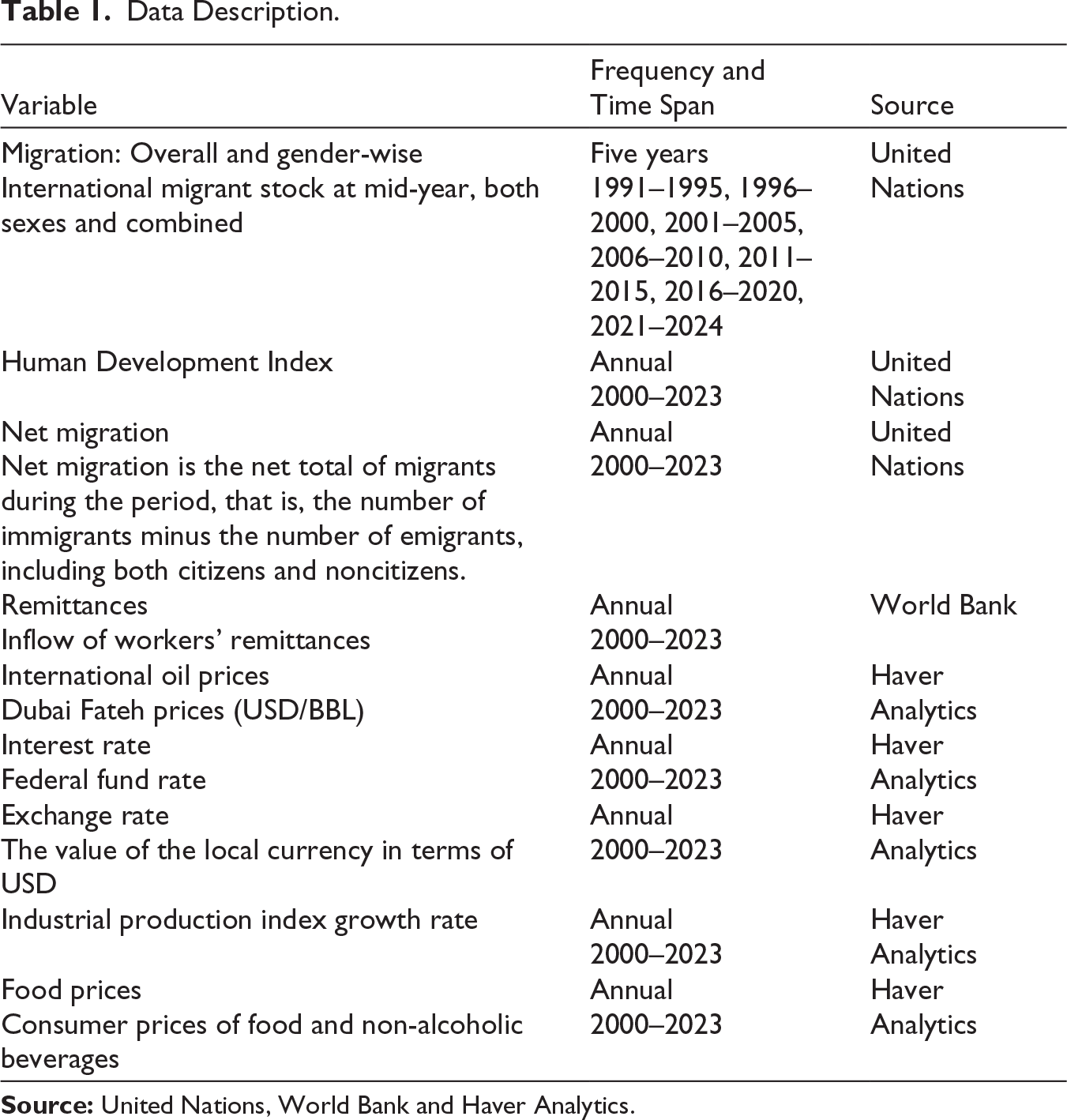
Panel regression using the fixed-effect model has been employed for Equations 1–3. The analysis has been performed on UN data of migrant workers from 1990 to 2023 by using the 5-year average data. However, for Equations 4 and 5, time-series stationarity data are used from 2000 to 2023 using the fixed-effect model. In addition, we use the annual data of net migration to avoid methodological bias that may arise due to return migration and recurrent migration in the stock of migrant data. To address the endogeneity issues in the existing set-up, the lagged values of the potentially endogenous variables have been used in the base set of regressors.
Estimation Results
The relationship between remittances and migrants has been investigated in three different dimensions. First, estimation has been performed on the aggregate data of countries and time periods with various specifications (Equations 1–3) using the fixed-effect panel model, for which parametric results are presented in Equations 6–8. 1 Second, estimation has been performed on enriched time-series dimensions with enhanced degrees of freedom (Equation 4), for which results are presented in Equation 9. Third, detailed and disaggregated information about the individual economies of the SAARC region is specified in Equation 5, for which results are presented in Equation 10.
The first scenario under the first dimension (Equation 1), quantifying the effects of migrant workers, the quality of human capital, interest rates and global oil prices, yields the following result:

The important coefficient representing the elasticity of remittances with respect to the stock of migrant workers,
Meanwhile, the quality of migrant workers is represented by the human capital index of the emigrating economy. Results indicate the existence of a significant relationship between remittance inflows and labour quality. This shows that as the quality of human capital improves in SAARC economies, remittances tend to increase in the initial phase. The global oil price in the equation is likely to capture two dimensions in the case of SAARC economies. For instance, an increase in global oil prices reflects prosperity in oil-exporting economies, such as the Middle East. Since a majority of migrants from the SAARC region are employed in oil-exporting economies of the Middle East, increased levels of income will improve the capacity of workers to send remittances back home. Meanwhile, rising global oil prices will lead to inflationary pressures in oil-importing economies like those in the SAARC region. Consequently, families of migrants back home may demand more financial support to cope with the rising prices phenomenon. Both dimensions will positively impact the remittance flow to home economies. Lastly, in Equation 1, the federal fund rate of the United States has been employed to proxy the overall global economic landscape. A rise in the Fed rate indicates worsening economic conditions; therefore, migrants will reduce remitting funds to home countries during the monetary tightening phase. On the other side, in the case of the rising Fed rate scenario, principles related to the ‘tapering of capital flow’ are also applicable.
In terms of the robustness of econometric results, the likelihood of endogeneity in the estimation has been tackled utilising lagged values of workers, while global oil prices and the US policy rate are considered exogenous factors for small open economies in the SAARC region.
The second scenario under the first dimension (Equation 3), incorporating the gender component (male-to-female ratio of emigrating workers), yields the following result:

The estimates indicate that men who live alone are likely to send more remittances to others, typically to family members or dependents, compared to men who do not live alone. This usually shows men’s features, such as connection with dependents, motivation to support and less expenses due to a shared pool of financial obligations.
The third scenario under the first dimension (Equation 2), incorporating the differential of industrial growth in each of the SAARC countries with respect to the United States, yields the following result:
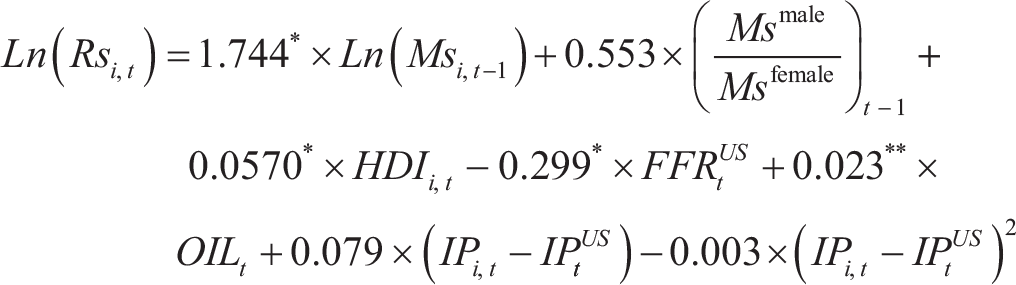
Estimates show that a positive growth differential causes a higher inflow of remittances in SAARC economies. This generally indicates migrants working abroad send more to their home countries for investment and consumption in light of economic stability in their home countries. Meanwhile, when the growth differential becomes significantly larger (referring to the square term), it suggests that SAARC economies are growing much faster than global economies. This will lead to fewer remittance flow into SAARC economies, possibly on account of reverse migration effects, self-sufficiency of the home country or investment shifts by the migrants (Table 2).
Key Diagnostics of Estimations (Equations 6, 7 and 8).
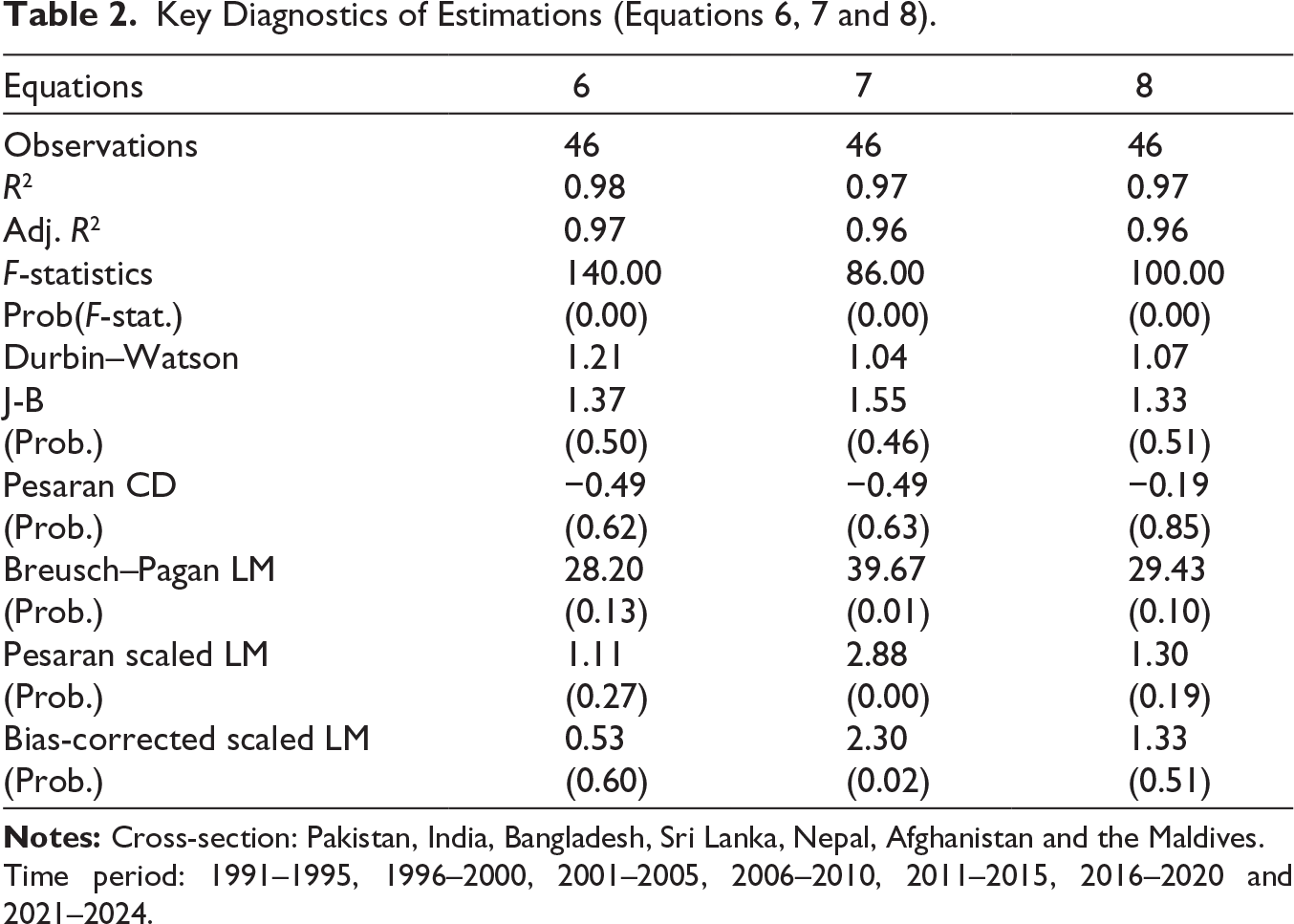
Time period: 1991–1995, 1996–2000, 2001–2005, 2006–2010, 2011–2015, 2016–2020 and 2021–2024.
The second dimension of the analysis employs a long time series using the annual frequency data from 2000 to 2023 for five economies of the SAARC region.
2
Instead of the stock of migrants, we use the net migrant as the main explanatory variable. Taking advantage of the relatively high-frequency data, this dimension also utilises some additional variables such as exchange rate (ER) and food prices (PF). It yields the following result:
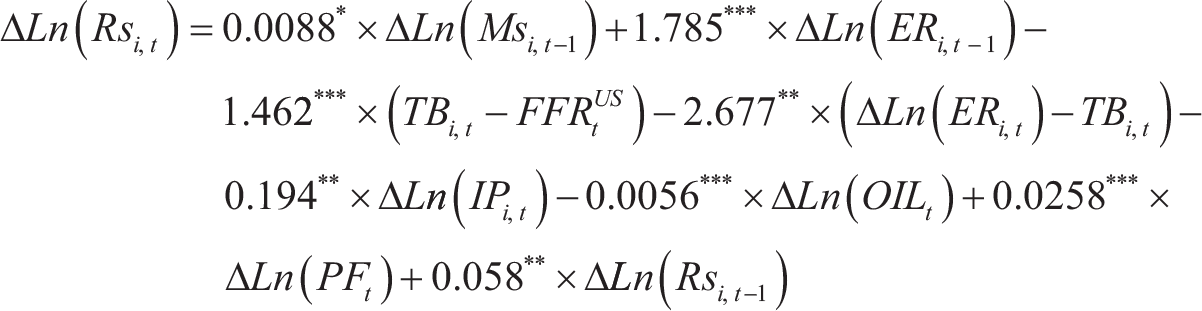
Results show that the exchange rate and food prices of the SAARC countries turned out be statistically significant variables that were previously insignificant in the case of low-frequency data. Therefore, it implies that the exchange rate and food prices of the SAARC countries have a significant positive impact on the inflow of remittances. However, rising industrial growth in SAARC economies reduces the inflow of remittances. This might also be attributed to the fact that self-sufficiency of the home country and a change in the investment patterns by the migrants lead to less remittance inflows. Finally, net migration has a positive and significant impact on the inflow of remittances, confirming the robustness of the relationship.
The third and last dimension examines the relationship between remittances and net migrant workers in each country. For this, the slope parameter of net migrants is interacted with each country present in the sample. Also, the net migrants and their interaction with HDI are introduced for each country. Meanwhile, the growth in global oil prices and exchange rate movements has been used as control variables. This yields the following result:
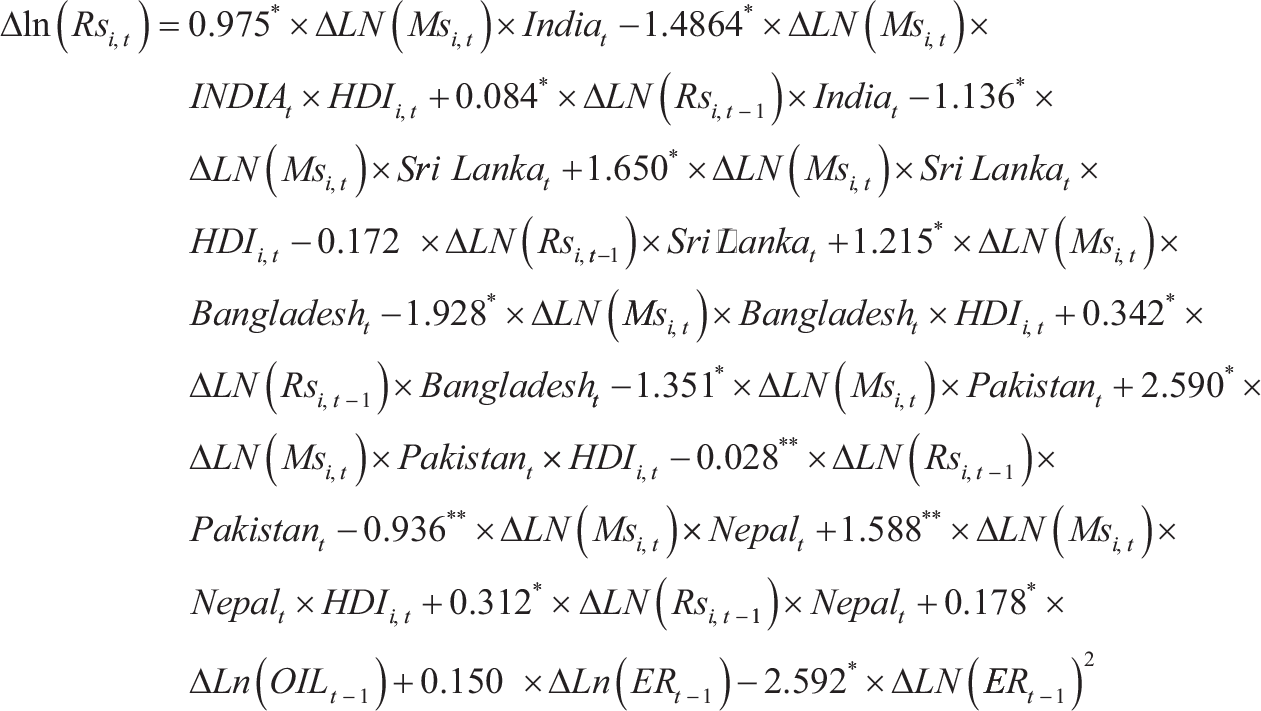
Results depict that for India, the long-run impact of migrants on remittances is stated to be
Key Diagnostics of Estimations (Equations 9 and 10).
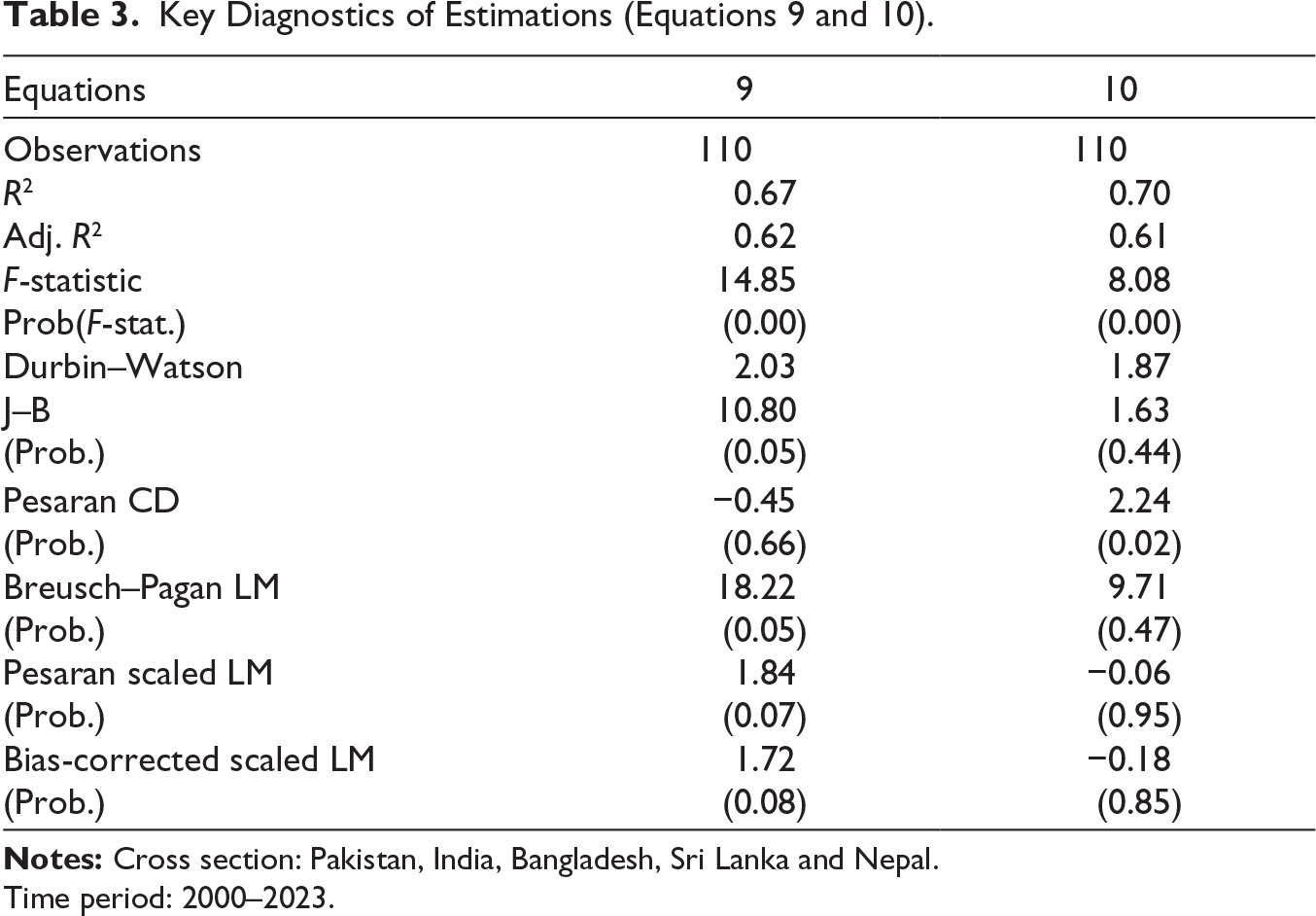
Time period: 2000–2023.
Conclusion
This article examines the relationship between migrant workers and the inflow of remittances in SAARC economies. The estimates show that there is a significantly positive impact of migrant workers on the remittances in the SAARC region; that is, an increase of 1% in migration stocks will lead to a 1.1%–1.7% increase, on average, in remittances to each economy of the SAARC region, ceteris paribus. Meanwhile, the dynamic scenario (which has a dependent variable in the growth form and includes the lag of the dependent variable as an explanatory variable) further strengthens the result of the positive impact of migrants on remittances. Finally, the country-specific coefficients of migrant workers and remittances reflect that the long-run relationship between migrant workers and remittances depends on the level of HDI in the economy. The improvement in HDI in India and Bangladesh will reduce the impact of migrant workers on remittances, whereas this impact gets stronger in the case of Pakistan, Nepal and Sri Lanka. One possible explanation for the role of HDI in changing the impact of migrants on remittances can be further elaborated by the change in the potential of the economy. India and Bangladesh have witnessed expansion in their productive capacity, whereas the economies of Pakistan, Sri Lanka and Nepal are struggling with respect to economic performance. Therefore, the role of change in the potential GDP can further improve the explanation of the results, which can be explored further.
Footnotes
Declaration of Conflicting Interests
The authors declared no potential conflicts of interest with respect to the research, authorship and/or publication of this article.
Funding
The authors received no financial support for the research, authorship and/or publication of this article.