



Abstract
As the only land bridge connecting South and North America, the Darién Gap has become one of the most widely used migration paths in the Americas. It is also one of the deadliest. Fleeing poverty, economic, political and social instability, migrants on this trek come from different countries around the world. Venturing through over 60 miles of dense rainforest, steep mountains and swamps, this manuscript examines the growing importance of the Darién Gap as a strategic transit point for migrants in Latin America. Examining the dynamics of forced migration, this work also evaluates the complex confluence of factors driving migration on the Pan-American highway. Facing immense harms to personal safety and autonomy, this manuscript underscores how factors such as human rights violations, gender-based violence (GBV) and climate change have affected forced migration streams through the Darién Gap.
Keywords
Introduction
The Darién Gap which separates Colombia from Panama is one of the world’s most dangerous migration routes. It is also at the epicentre of one of the largest humanitarian crises in recent history. Consisting of more than 60 miles of dense rainforest, steep mountains and swamps, it is the only overland path connecting South and Central America. The roadless, remote trek is one the most perilous and popular walks on earth. Patrolled by armed bandits, drug cartels, paramilitary organisations and human traffickers, it is a treacherous route with swollen rivers, insects and dangerous wildlife. Traversing the route means walking up to 12 hours a day in stifling humidity. It also means that small innocuous injuries can quickly become serious or even fatal. Despite its dangers, the Darién Gap has become one of the most prominent migration corridors for immigrants travelling to North America—particularly to the U.S.–Mexico border (Turkewitz, 2022; Yates, 2023). Fuelled by economic, political and humanitarian instabilities, over 250 thousand people made the crossing in 2022. These numbers nearly doubled from annual averages from 2010 to 2020 according to Panamanian officials (Franco & Valdivieso, 2023). This displacement of people has occurred for different reasons: basic survival, fleeing political persecution, safe harbour from violence and the desire to reunite with family. Amid the economic, social and political aftershocks of the COVID-19 pandemic, many risks their lives through one of the most impenetrable stretches of rainforest in the world.
In 2021, roughly two-thirds of the migrants in the Darién Gap were Haitians fleeing gang violence, political instability and the effects of recent earthquakes. Other migrants included Cubans and Venezuelans fleeing the collapse of their country (Obinna, 2024). More recently, however, the Darién Gap has seen migrants from Senegal, the Democratic Republic of the Congo (DRC), Bangladesh, Uzbekistan, China and Angola. Alongside this rise in migration are young children—some unaccompanied on the trail. The United Nations Children’s Fund (UNICEF) warned that from January to October 2022, over 32 thousand children crossed the Darién Gap surpassing the figure recorded for 2021 by 10%. The number of unaccompanied children in 2022 was estimated to be around 900 doubling the previous year’s total. Mindful of this unfolding humanitarian crisis, this manuscript takes a look at the harrowing and unprecedented migration through the Darién Gap on the Pan-American highway.
While worldwide travel slowed down due to the COVID-19 pandemic, the resumption of travel has once again seen a rise in migrants risking their lives in search of safety. Characterising the motivations for migration, this manuscript takes a look at how forced migration and displacement have led to a mass exodus of people through this inhospitable terrain. In this paper, forced migration is described as the movement of people resulting from an existential threat due to social, economic, political and religious reasons. Forced migrants may be refugees, asylum seekers, stateless persons or internally displaced persons (IDPs). As a lasting effect of post-colonial power relations on a global scale, processes of social change require an acknowledgement of internal conflicts which produced IDPs as well as conflicts which spill across state borders. As such, this manuscript suggests that migration from the Darién Gap does not exist in isolation. Rather, it is linked to larger sociopolitical trends shaping contemporary migration and the policing of borders in Latin America and the Global North/South.
Northern Trek: The Dangerous Journey Through Darién
For most immigrants, the first stops on the journey north are the coastal towns of Necoclí, Capurganá or Acandí—the closest Colombian towns to the Panamanian border. Located on Colombia’s Gulf of Urabá, other stops include the port town of Turbo in the Antioquia Department on the northern head of the Pan-American Highway. These towns have become crucial for inter-American migration because of their location near the Caribbean Sea and the proximity to the Darién Gap. They are also more accessible than Quito or São Paulo for migrants coming from Haiti or Cuba. After paying smugglers for maritime passage, migrants usually continue their journey on foot or take local transportation. Migrants from Venezuela usually travel through Colombia to the Darién Gap. This often includes an 8-hour bus ride from Medellín—Colombia’s second most-populated city. Other routes begin in Arboletes the northernmost city in Antioquia. For international migrants (who are not from countries in the Americas) namely migrants from Africa and Asia, many flies into Brazil or Ecuador and then transit to the Darién Gap. See Figure 1, which illustrates the location and migration routes through the Darién Gap.
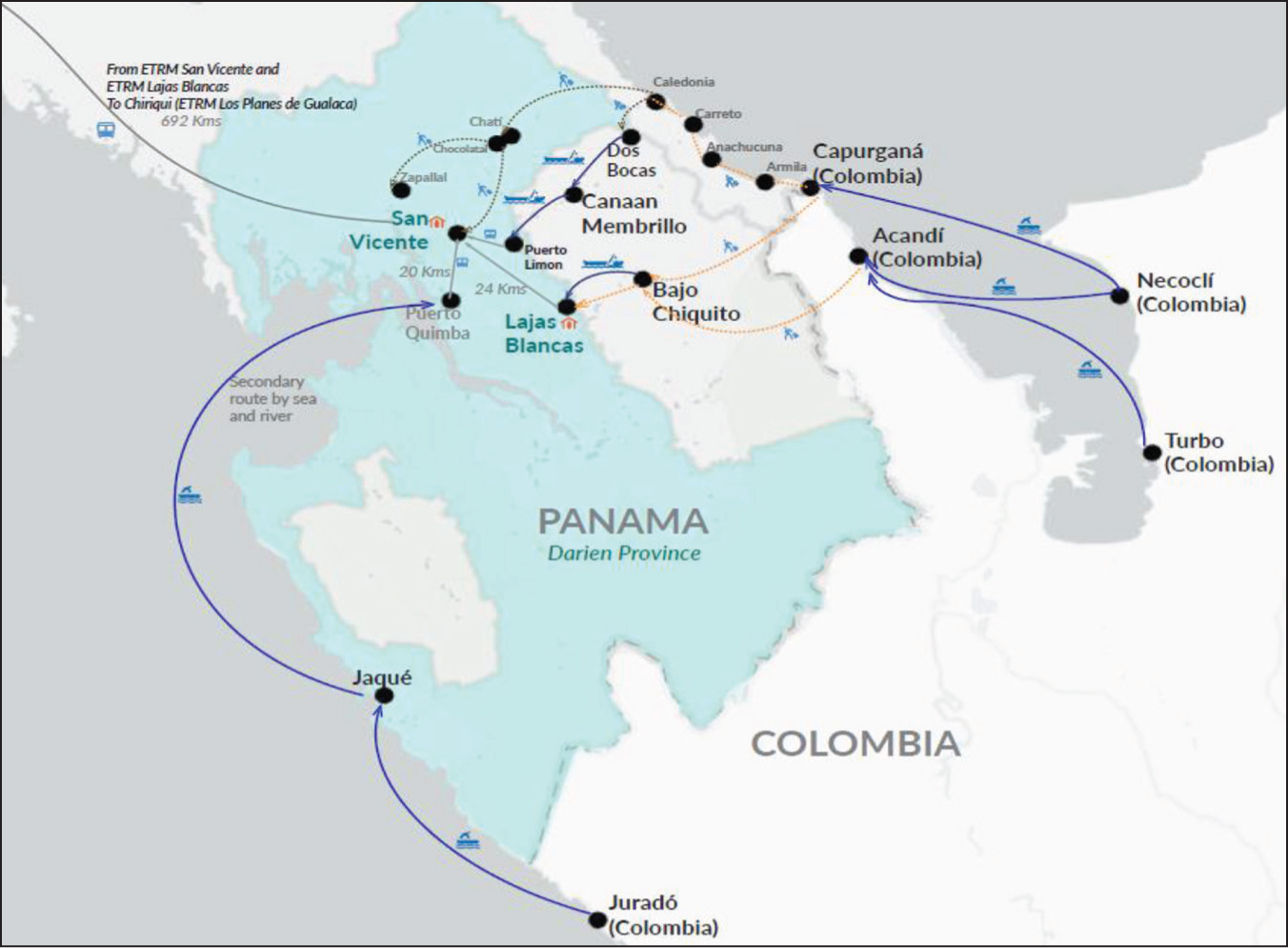
The northern trek is determined by the socioeconomic status of immigrants. For instance, they can pay up to 450 dollars to take a boat from Capurganá to Carreto, Panama and then walk through the jungle for about two and a half days before exiting the Darién at Canaán Membrillo—a small indigenous village in Panama or Bajo Chiquito another small remote indigenous village in Panama. Alternatively, if they cannot afford the cost, they can take the less expensive but more dangerous route by walking from Capurganá or Acandí for about 7 to 10 days through Darién where hundreds of people have experienced assaults, robberies and sexual violence. In addition to fees for passage, prices include extortion fees by gangs and communities who charge migrants for passing through their territories. Yates (2023) states that while some groups allow migrants to safely pass after payment, others ask for more money or assault migrants. The presence of armed groups such as the Fuerzas Armadas Revolucionarias de Colombia (FARC) or the Revolutionary Armed Forces of Colombia and the Gulf Cartel also pose risks as these groups exacerbate disappearances, sexual violence and human trafficking. According to data from Médecins Sans Frontières (MSF), at least 30 people died or disappeared in the Darién jungle between January and October 2022. MSF also reports that between April and May 2022, there were over 420 cases of sexual violence—most against women who are also subject to prostitution or trafficking in the jungle (Médecins Sans Frontières, 2022). Likewise, a United Nations report stated that over 300 women were raped while trying to cross the Darién Gap in 2021. The report also states that many local guides or ‘coyotes’ ask migrants for sexual favours in exchange for passage. Amid the increase in migrants in the Darién Gap, children now represent 1 in 5 people walking through the jungle. Children and teens are among the fastest growing migrant group fleeing their home countries in search of safety. UNICEF states that in 2022, 5 children were found dead in the Darién jungle though the death toll may be much higher (UNICEF 2022).
In addition to the risks of violence and assaults in the Darién, migrants also face health and climate challenges. During the journey, they are far away from health centres and the distance limits their access to immediate care. The rainy season in the Darién rainforest is between May and November with August as the wettest month. Rainfall can trigger landslides and flooding in the mountainous terrain. Also, temperatures can reach up to 95° F (35° C) with high humidity amplifying thirst, hunger and dehydration. River levels in the rainy season often rise and migrants are at risk—especially those unable to swim who are at risk of being swept away by the current. Crossing the dense and muddy jungle with mountains during the rainy season increases the risk of accidents and death. In particular, Loma de la Muerte (Hill of Death) is a slippery slope with ravines and paths with nothing on either side. The rainy season also brings an increased number of snakes and mosquitoes which transmit malaria and dengue fever. Migrants exposed to these high temperatures and humidity often suffer from food deprivation and cardiorespiratory failure.
By the time migrants reach Bajo Chiquito, most have already been on the road for months. Bajo Chiquito is in the Emberá-Wounaan Comarca or indigenous area of Panama. The invisible border between Panama and Colombia lies deep in the Darién rainforest and no officials stand by to check papers. However, in Bajo Chiquito migrants can receive medical assistance from non-governmental groups such as MSF, UNICEF and The International Organization for Migration (IOM). Although Panamanian authorities have set up infrastructure to temporarily house migrants and provide basic amenities, more assistance is needed. Arriving after walking in the jungle for several days, migrants are exhausted with serious foot wounds, bites and stings from insects, trauma from falls and diarrhoea and vomiting from drinking river water. As they are registered by local authorities, some are barely able to stand on battered feet. Often migrants pay local residents for space to pitch a tent while looking for a way to contact their families as they continue their northward journey.
While there is limited infrastructure in place, the Panamanian authorities have established a garrison which processes immigrants as they arrive. Here, authorities also separate migrants according to their nationalities or country of origin. Although the vast majority of migrants spend a single night in Bajo Chiquito before travelling north, during the rainy season the only way to transfer migrants is by boat with a capacity of 13 to 15 people. The canoes travel together when full and so the trip can take several hours and could be postponed if there is flooding due to heavy rain since travel will be too dangerous.
In addition, Panama has an agreement with Costa Rica to transit migrants as quickly as possible. To journey north, migrants are only allowed to use designated buses with contracts and prices set by the government. For those who cannot afford the bus fare, many begin walking up the highway. In an effort to combat human trafficking, Panama makes it illegal for private citizens to transport migrants. On the border with Costa Rica, those who have money can take the next bus, but those who do not are stuck until they can raise the funds for the journey. There is almost no possibility of migrants remaining in Panama. Franco and Valdivieso (2023) state that the asylum process in Panama is a complex and difficult process and in almost all cases it is granted at the discretion of the government. Waiting periods are lengthy and the lack of legal status and finances makes it difficult for migrants and asylum seekers to receive the humanitarian assistance and recognition that their situation warrants. Even those who are recognised as refugees often face considerable obstacles to becoming self-sufficient.
As migrants travel through Costa Rica, they must cross several borders in Nicaragua, Honduras, Guatemala and Mexico before reaching the United States. On their way north, survivors from Darién meet other migrants from El Salvador, Guatemala and Honduras who are also fleeing instability and violence in their own countries. A journey of over 2500 miles in Central America alone, many risks even more dangers as they travel through hostile territories (Roy & Baumgartner, 2022; Turkewitz, 2022). Even if they reach the U.S.–Mexico border, the asylum process is not straightforward or guaranteed. The Biden administration recently toughened its stance on asylum with the end of the Title 42 public health order, which was introduced by the Trump administration in response to the COVID-19 pandemic. Likewise, the countries that many asylum seekers pass through are dangerous and local residents are already fleeing untenable conditions.
Dynamics of Displacement: Forced Migration and Its Antecedents
Knowing the dangers of the Darién Gap, why would anyone risk their lives in favour of an uncertain future? This is not a decision that migrants take lightly—nor is it one devoid of nuance or complexity. While the motivations of migration are varied, this manuscript contends that given the dangers and difficulties of travelling through the Darién rainforest, migration on this route is more likely to be forced than voluntary. While forced migration is not a new phenomenon, the magnitude and severity of today’s migration—particularly that of the Darién Gap is unprecedented. Originating from different countries worldwide, migration through the Darién jungle is characterised by the increasing numbers of men, women and children forced from their homes due to conflict, persecution and climate-related weather events. Emerging amid racial and gendered dynamics of migration from the Global South, forced migration does not happen in a vacuum nor is it stationary. In addition to their journey through the Darién jungle, forced migrants face unimaginable trauma and severe violations of their basic human rights ranging from family separation, human trafficking, exploitation, sexual violence, disease and drowning.
Those who survive the Darién continue to face significant challenges in their quest to gain asylum and safety. From a theoretical standpoint, migration through the Darién centres on the experiences and realities of people forced into these untenable situations. Crossing into Panama, Costa Rica and the multiple transit stops which migrants make on their journey emphasises the role of borders and societal dynamics which have deep tangible impacts on the lives of forced migrants (Franco & Valdivieso, 2023; Obinna, 2019).
As migration through the Darién Gap illustrates, governments and non-state institutions have direct and indirect impacts on promoting or discouraging migration through their territories. Figure 2 illustrates the complexities of this journey as migrants risk their lives at multiple starting points in various countries of origin. However, the increasing securitisation of borders means that the decision to leave one’s home country does not always mean permission to enter another country. Consequently, many migrants trekking through the Darién Gap lack proper identity documents and find travel especially risky since this impedes their ability to gain legal recognition and protection. This is the case for many migrants from Venezuela who lack identity documents such as passports due to the extreme conditions back home (Ordóñez & Arcos, 2019). Forced migrants travelling through the Darién Gap may also lose or damage documents or they may be stolen on the arduous path.
Conceptual Model of Forced Migration Through the Darién Gap.
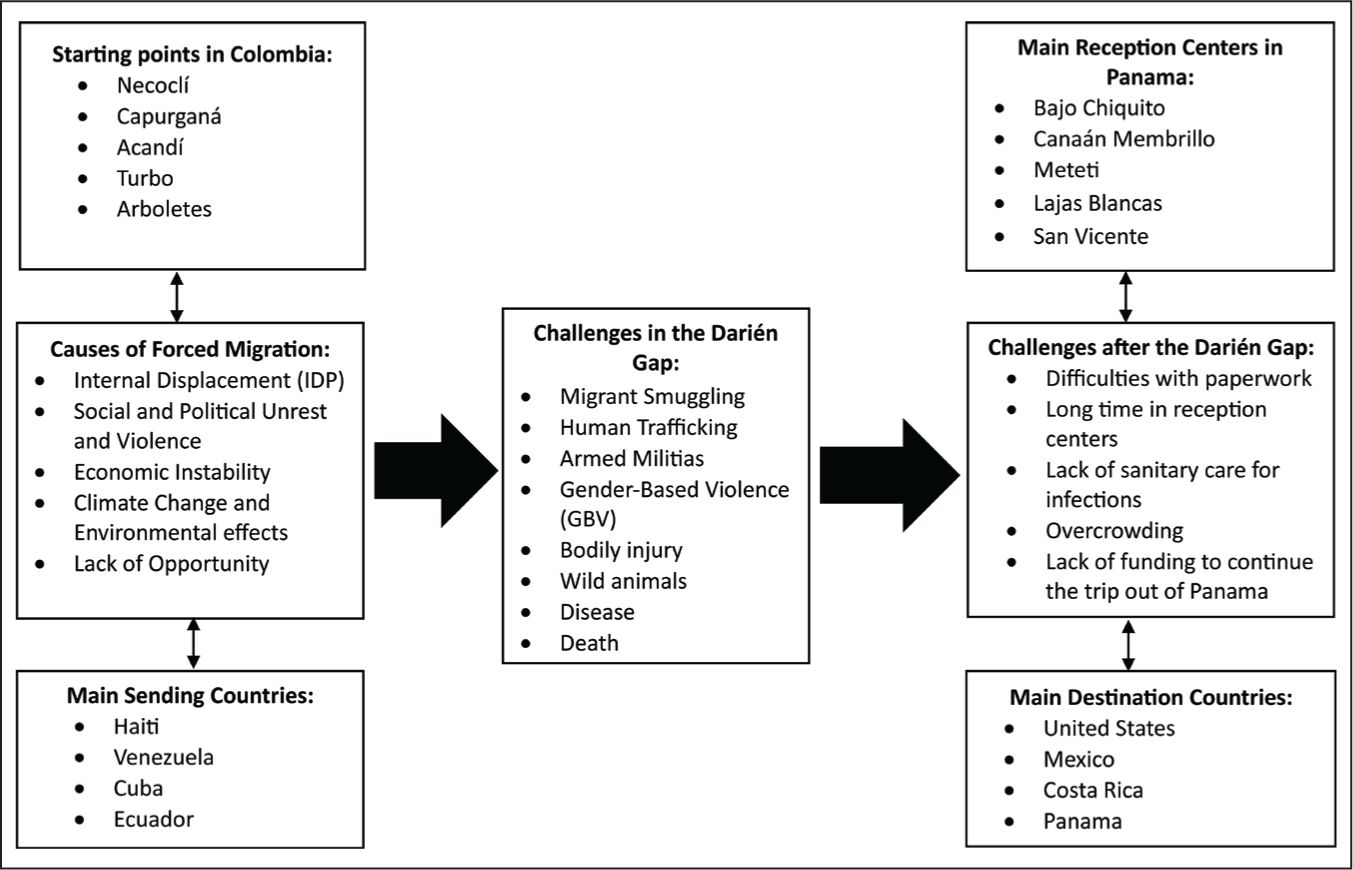
In charting the dynamics of displacement, it is important to note that forced migration is related to change. This change is often acute and disruptive. In the vast majority of cases, the decision to leave is in a sense involuntary—or not the preferred choice of the families or individuals involved. In a sociology of exile and displacement, when migrants cross international borders this disruption affects livelihood and kinship as well as social and cultural meanings which give stability and coherence to daily life (Riaño-Alcalá, 2008; Ruiz & Vargas-Silva, 2013). Those displaced—perhaps more than any other group of transnational migrants draw attention to the relationships between time, space and identity. As such, those who make the perilous journey through the Darién Gap reflect the desperation and dislocation of people from a place, but they also shed light on the Global North/South dynamic in the post-COVID-19 era. This migration also illustrates the complex processes of social change which are at play in areas of origin, transit and destination. This means that stricter border controls in destination countries have not necessarily reduced flows, instead the need to find security has led migrants to search for alternative routes—like the Darién Gap (Obinna, 2023; Roy & Baumgartner, 2022). These alternative routes are increasingly more dangerous as the human costs are staggering. Beyond exploitation, violence and untold violations, many who venture into the Darién do not survive. Additionally, the need to turn to smuggling networks has affected the financial costs of seeking sanctuary as only some can afford it. It is also worth mentioning that the vast majority of forced migrants live in the Global South often originating and hosted by some of the poorest countries in the world.
Restrictions on Human Rights
Being forced to leave one’s homeland is a violation of human rights. Forced migration has profound impacts on those who are displaced. Migrants face enormous danger as they deal with economic, physical and psychological challenges on their journey. According to recent figures published by the United Nations High Commissioner for Refugees (UNHCR), in 2022 about 108.4 million people worldwide were forcibly displaced from their countries. For receiving and transit countries, the mass exodus of forced migration poses immense challenges as countries struggle to provide immediate care and access to resources as immigrants cross their borders. This is especially true for Panama and Costa Rica which struggle to provide care to the many migrants risking the journey through the Darién Gap. Many State and non-State actors are increasingly ignoring the rules of war enshrined in the 1949 Geneva Conventions to reduce the impact(s) of war on civilians.
Armed gangs and militia often target civilians as well as civilian infrastructure, such as schools, hospitals and water systems. The result is a devastating loss of life, infrastructure and social systems, resulting in IDPs and people forced to flee in response to or in anticipation of direct violence. IDPs often seek sanctuary in their own countries before being forced to cross international borders. IDPs often experience cyclical displacements as some who attempt to return to their areas of origin are often forced to flee again. Médecins Sans Frontières (2022) states that despite the growing number of IDPs worldwide, they receive a fraction of the humanitarian assistance and formal international protections which they deserve.
In countries such as the DRC, Haiti and Venezuela, persistent violence has created large numbers of IDPs who are not protected by their home countries. The instability in Venezuela is not only one of the most extreme in the Americas—but it is one of the worst forced migration crises in the world. As of 2023, more than 6.1 million people have fled Venezuela as a result of the political turmoil and socio-economic instability gripping the country. Similarly, in June and August 2022, the IOM identified over 113 thousand IDPs in Haiti. In the capital of Port-au-Prince, the number of people displaced by gang-related violence has tripled as the country has fallen into violence and disarray. Inflation has reached double digits with more than 70% of the country living below the poverty line (Isaac, 2022; Obinna, 2024). To escape the instability, thousands of Haitians have risked their lives making dangerous journeys by boat and again through the Darién Gap to find sanctuary. Together, Haitians and Venezuelans are some of the largest migrant groups in the Darién jungle.
Amid the growing number of regional and international migrants attempting to trek through the Darién Gap are stateless persons. Stateless people are defined by international law as people who no nation considers a national under its laws (Médecins Sans Frontières, 2022). That is not to say that stateless people do not have ties to a particular country—however as a result of state action or inaction, people have lost their status due to unfortunate circumstances in the forced migration process. While the UNHCR as well as several Mercado Común del Sur (MERCOSUR) or Southern Market countries, such as Brazil, Colombia, Peru, Argentina and Paraguay, have committed themselves to ending statelessness in the region, it is still a critical issue (Ordóñez & Arcos, 2019). In particular, the Venezuelan and Haitian migration crises have led to many in the Darién Gap unable to prove through documentation that they are nationals of their countries.
Migrant Smuggling and Human Trafficking in the Darién
Due to the inhospitable nature of the trek through the Darién rainforest, one of the most widely documented features of the journey is the payment of ‘travel fees’ to smugglers either by boat or land to reach the border between Colombia and Panama (Franco & Valdivieso, 2023; Moore, 2023). Migrant smuggling occurs when a forced migrant voluntarily enters an agreement with a smuggler to gain entry into a foreign country or cross an international border. The UNHCR defines migrant smuggling in its Protocol Against the Smuggling of Migrants by Land, Sea and Air (Migrant Smuggling Protocol) and links it with transnational organised crime. 1 For those who are stateless, migrant smuggling often involves the procurement of fraudulent documents in order to cross a county’s border (Roy & Baumgartner, 2022).
In exchange for payment, these fraudulent identity documents are often obtained during transit. While there is a clear distinction between migrant smuggling and human trafficking, they are linked due to the extreme vulnerability of forced migration. Migrants smuggled through the Darién Gap are illegally present and often owe large debts to smugglers hence migrants are often subject to sex or labour trafficking at all stages of their journey. According to the UNHCR, migrant smuggling globally totals up to 7 to 10 billion dollars a year though full estimates may be higher.
Migrant mobility through the jungle has largely been facilitated by smuggling networks and corrupt officials who often work in tandem with other criminal organisations, such as the Gulf Cartel. Given the lack of sufficient pathways for forced migration, the sheer number of migrants in the Darién Gap illustrates that human smuggling occurs frequently.
Gender-Based Violence and Challenges in Migration
Research suggests that a growing number of migrants making the passage through the Darién Gap are female (Médecins Sans Frontières, 2023). The feminisation of forced migration means that women who are IDPs are treated as second-class citizens in host countries due to their status as asylum seekers and also as women. Cintra et al. (2023) state that during conflict and forced migration, there is often a significant increase in female headed households. In addition to this, women face significant economic barriers and constraints in seeking employment. While all migrants in the Darién Gap are vulnerable to sexual exploitation, trafficking and violence, women and girls are almost 70% more likely to be trafficking victims (Roy & Baumgartner, 2022).
Given the shortage of trained experts to monitor and respond to gender-based violence (GBV), women face protection risks during transit and displacement. Some of these challenges are related to health, access to products such as sanitary napkins, risk of disease, physical harm and injury. In the chaos of forced migration, Médecins Sans Frontières (2023) states that significant numbers of female migrants are likely to be pregnant or become pregnant. On the arduous trek, women lose access to sexual and reproductive healthcare including prenatal services. Lack of these services can mean life or death. The United Nations Population Fund (UNFPA) considers this to be one of the leading causes of death for childbearing women who are forced to migrate. While the UNFPA works with governments to guarantee that migrants have access to sexual and reproductive care, these services are incredibly difficult to procure in the dense Darién jungle. Even if migrants escape the journey out of the Darién, female migrants still face barriers to sexual and reproductive care as they wait in refugee camps or continue on their journey through Panama. Migrant women face higher risks of maternal injury than native-born women and they also risk diseases such as cholera or HIV from the journey (Médecins Sans Frontières, 2023). Combined with transportation challenges, costs, and trauma (physical and psychological), migrant women continuously face barriers to sexual and reproductive care at all aspects of their journey.
Climate Change Effects on Forced Migration
The Intergovernmental Panel on Climate Change (IPCC) recognises climate displacement as human migration due a number of factors such as erosion, coastal flooding, heatwaves, fires and agricultural disruptions. 2 While numerous factors drive migration, climate change is an increasingly important source of forced migration worldwide. Climate migration may cause displacement from the sudden onset of hurricanes, earthquakes or fires or it may be more gradual from slower effects such as sea level rise, pollution, rain pattern shifts and desertification. Since people rarely migrate for solely environmental reasons, it is hard to find exact numbers of people who have been displaced just based on climate change alone. Abel et al. (2019) state that when tensions arise over food insecurities and political instability, climate change is often overlooked as a reason why people may choose to leave their homelands. This means that people are forced to leave for multiple reasons which are often interwoven and mutually reinforcing.
Climate migration disproportionately affects black, indigenous, people of colour—especially women. The World Bank estimates that Latin America, Sub-Saharan Africa and Southeast Asia will generate up to 143 million climate migrants by 2050 (The World Bank, 2018). The increasing level of climate migration puts added strain on countries of origin as well as destination countries. It also affects migration routes—such as the Darién Gap. For migrants on this dangerous stretch of the Pan-American highway, the climate effects are numerous. For Haitians in particular, the journey only adds to the devastating environmental effects which the island nation is facing. Across South America, climate effects remain evident. Wildfires by human activity have affected natural ecosystems, such as the Amazon rainforest as well as the Pantanal and Gran Chaco biomes, which have been particularly affected by human-caused fires.
Methodology
As one of the most difficult migration routes in the Americas, tracking population movements through the dangerous terrain of the Darién Gap is replete with challenges. Data in this manuscript come from a number of different sources to adequately illustrate the sheer scope of this unprecedented exodus of people through the vast rainforest. Findings include nationalities, demographic makeup, documents carried, reasons for the journey and the dangers encountered. Tracking data into the Darién Province on the Panama-Colombia border, data from Servicio Nacional de Migración de Panamá or Panama’s National Migration Service are used. Data are collected when migrants emerge from the Darién jungle at reception centres such as Canaán Membrillo the small Embera indigenous community in the Darién Province.
Data are also collected at other reception centres such as Bajo Chiquito and San Vicente, Panama. Frequently overcrowded, migrants are processed as quickly as possible so that they can continue their journey north. Biometric and non-biometric information are based on how immigrants identify and the documents they have on them (either expired or unexpired). In addition to Panama’s National Migration Service, data in this manuscript also come from the UNHCR which collects information on immigrants in the Darién and Chiriquí Provinces of Panama. UNHCR data are from accounts of individual migrants who emerge from the jungle. Data are collected monthly based on the characteristics, vulnerabilities and needs of migrants at Panama’s southern border with Colombia.
Additionally, data in this manuscript are compiled from the IOM Missing Migrants Project. The Missing Migrants Project collects data on people who die in migration towards an international destination—regardless of their legal status or nationality. For the Darién Gap, data collection is particularly difficult due to the inhospitable nature of the region. Official sources are from migrants who emerge—having lost loved ones, as well as county medical examiners and coroners. Other sources of information include local news outlets, which sometimes report on missing migrants—though this information is sometimes incomplete or inconsistent. While migrants, local authorities and non-governmental actors have reported the presence of hundreds of unidentified remains, due to the fragmented nature of the data, the true scale of mortality and disappearances remain unverified.
A Region Transformed: Demographic Change in the Darién Gap
As a migration transit point, the Darién Gap has witnessed a sharp increase in the number of people who have ventured on this route in the last 12 years. As Figure 3 illustrates, from 2010 to 2020, the region was not a large migration route as it tended to have just slightly over 20 thousand migrants registered for the decade. The largest nationalities represented were Cubans and Haitians. Cuban nationals had just over 20 thousand migrants in 2015 and Haitians were just over 10 thousand in 2019. Other nationalities represented were migrants from Bangladesh and Ecuador though these migrants were also under 20 thousand in the time period between 2010 and 2020. By the start of the 2020s, the region is transformed by the sheer scope of the migration traffic which has come to dominate it.
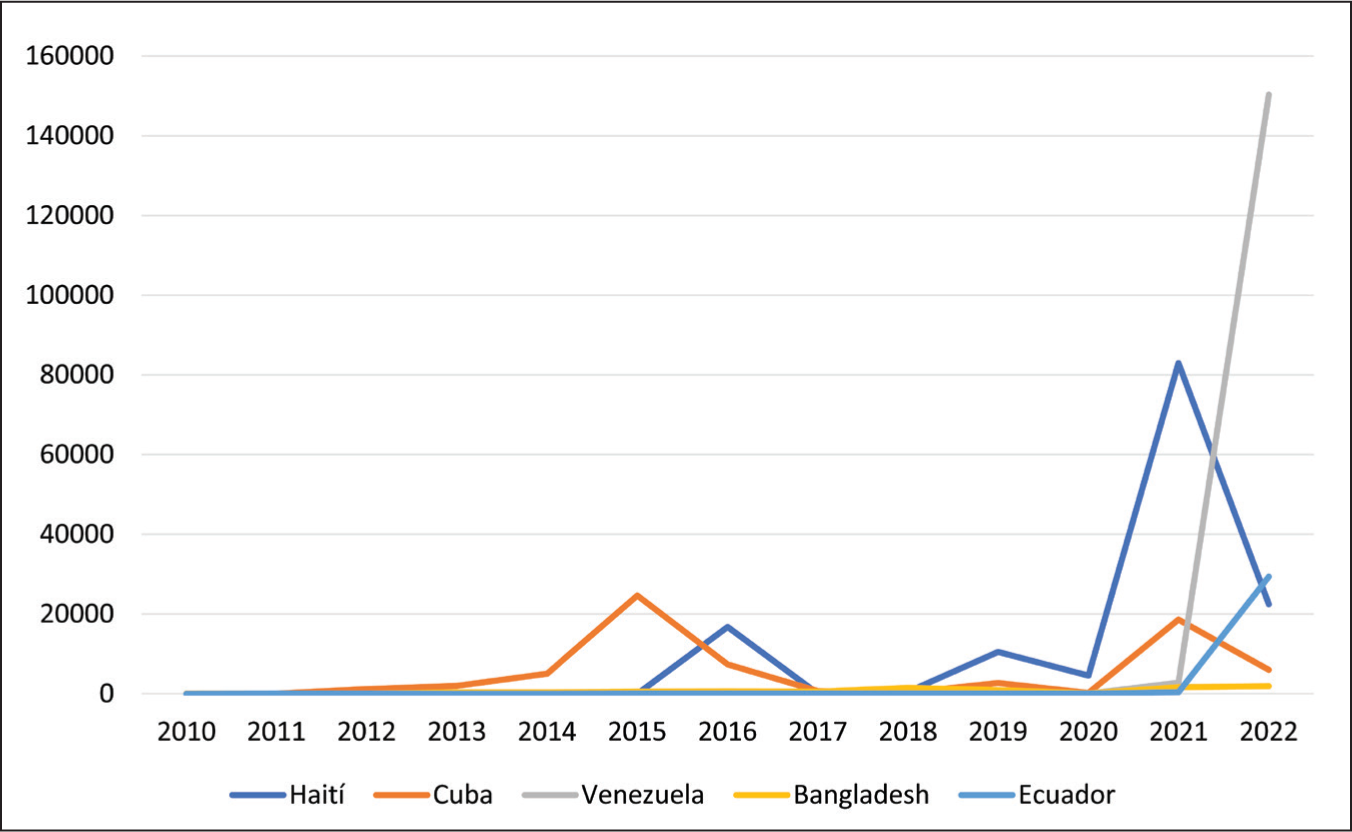
For instance, in 2021 there is a sharp uptick in the number of Haitians encountered in the Darién Gap. Data show that in this year, over 80 thousand Haitians ventured into the Darién jungle. By 2022, these numbers fall precipitously to just over 22 thousand. In 2021, Cuban migration reaches over 18 thousand and then declines to about 6 thousand by 2022. Perhaps the most noteworthy migration numbers come from Venezuelan migrants who dominate migration in the Darién Gap in the early 2020s. After a decade with hardly any migration traffic in the region, Venezuelan migration spikes between 2021 and 2022—increasing from about 3 thousand to over 150 thousand. Coinciding with internal political and social instabilities, Venezuelan, Haitian and Cuban migration stand out as some of the most dominant in the time period observed. Still, while these countries are some of the largest nationalities encountered, other migrants also came from Somalia, Cameroon, Nepal, Pakistan and the DRC.
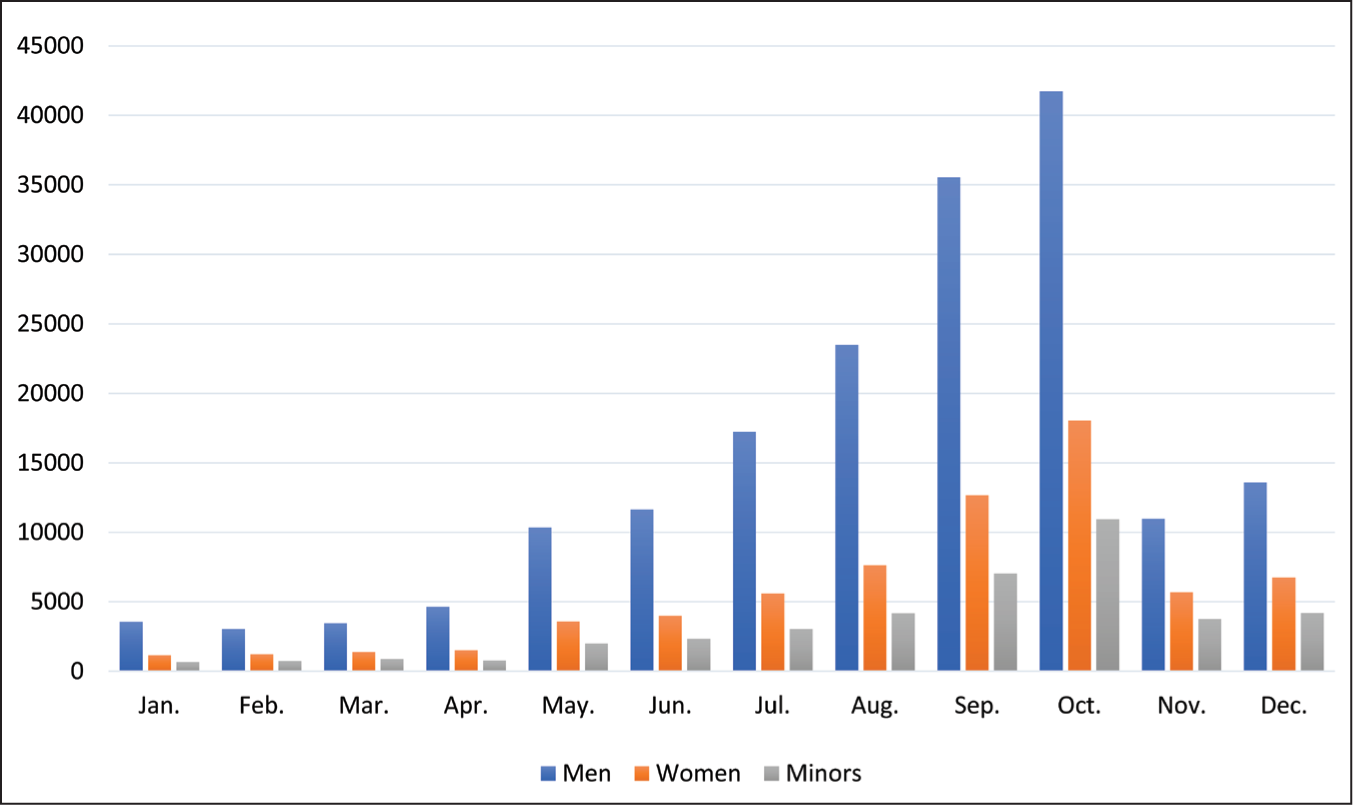
With regards to gendered migration, Figure 4 illustrates that from January to December 2022, majority of migrants were men and women travelling alone or within family units. The data show that most of the migrants encountered were men. Peaking in the month of October with over 40 thousand; most migrants in the Darién Gap were male. Female migration also peaks in the month of October with over 18 thousand women encountered. Steadily increasing throughout the observation period are migrants identified as minors. In Panama, minors are individuals under the age of 18. In October 2022, there were almost 11 thousand minors in the Darién Gap. The peak season of migration appears to be between July and October as these months register some of the highest numbers of migration traffic. Numbers decline sharply in November and December as fewer migrants are encountered. This decline does coincide with Panama’s rainy season between May and November which makes the Darién Gap particularly treacherous as record rainfall can trigger mudslides and drowning.
Documents Carried and Reasons for Leaving Home Countries
A key aspect of recording the number of migrants who travel through the Darién Gap deals with the documentation which they have with them. These may be biometric or non-biometric documents which are valid or expired. Figure 5 illustrates that the majority of migrants emerging from the Darién jungle have a birth certificate as their primary source of identification. Approximately 63% of migrants carried their birth certificate with them. About 17% had a national ID with 14% holding a valid passport. In total, 11% had an expired passport and about 3% had no form of identification. Data indicate that despite the hardships of the journey most migrants still have some documentation to present to authorities after they emerge from the jungle. For most migrants, the only document they have is a birth certificate since obtaining valid ID or passport is almost impossible to obtain without the payment of significant bribes. Venezuelan migrants from the Darién Gap often detail bribes of up to 3,000 USD for passports. At about 76%, most of the migrants interviewed by the UNHCR were Venezuelan. Some were migrating from Colombia, while others reported leaving directly from Venezuela. Migrants from Colombia and Ecuador reported leaving directly from their countries while Haitians reported mainly leaving from Brazil. UNHCR also reports that over 69% left their country of last residence less than 4 weeks ago. Over 92% of migrants interviewed reported the United States as their final destination.
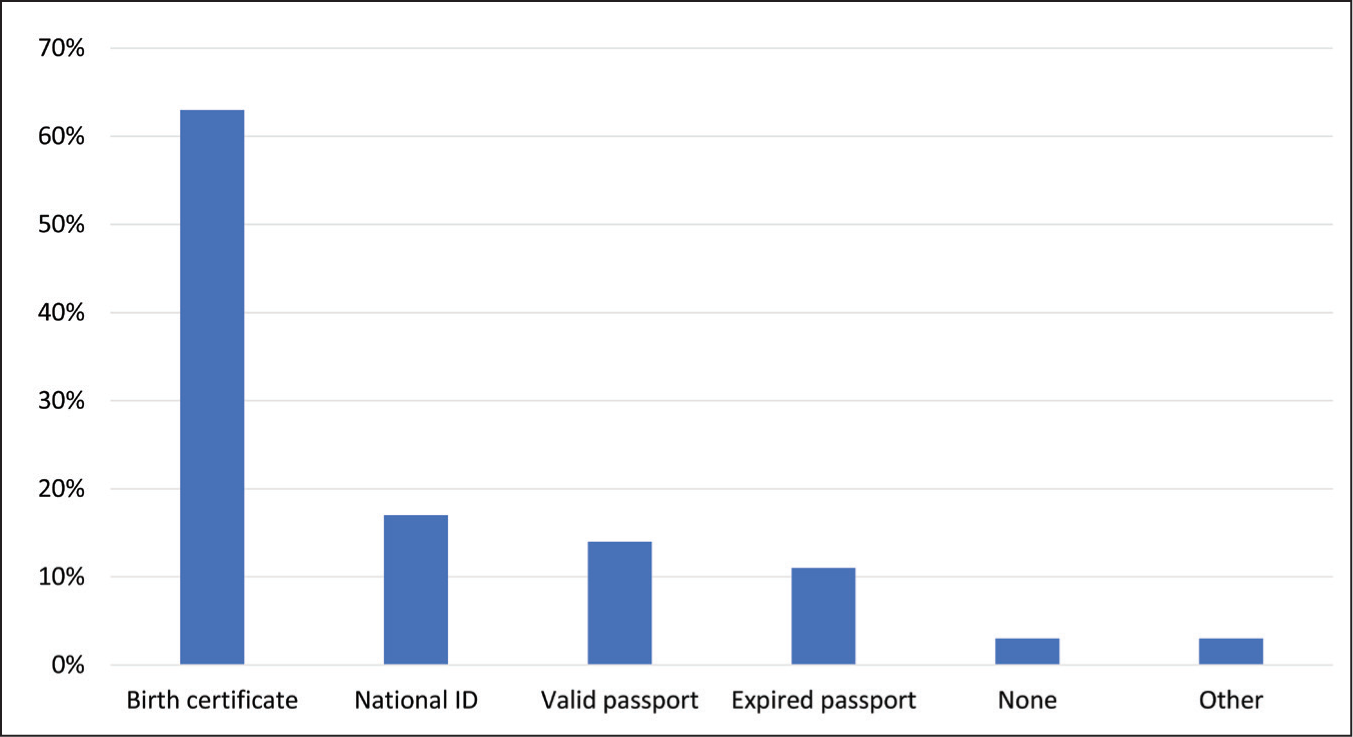
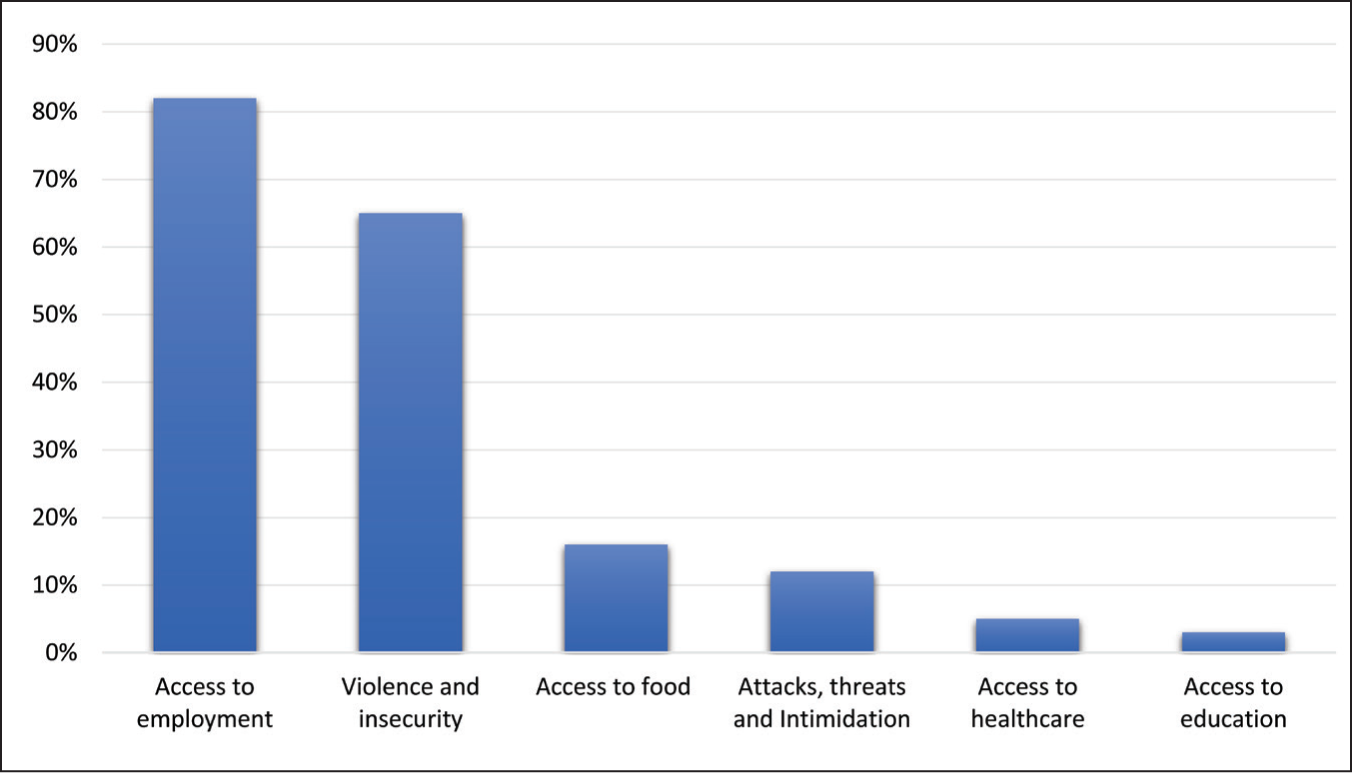
Figure 6 details the reasons migrants provided for leaving their home countries. Over 80% of migrants surveyed by the UNHCR stated that they left their home country due to lack of access to employment. About 65% of respondents stated that they fled their home country due to violence and insecurity. In total, 16% stated that they left due to the lack of food while 12% stated that they left due to attacks, threats and intimidation. Reasons provided by migrants highlight the complexities of forced migration and the interrelated nature of economic insecurity as well as the lack of basic access to food and healthcare. Participants also noted that they chose the Darién Gap because it was cheaper and that they did not need visas to enter Panama. Other migrants stated that visa requirements plus their lack of documentation limited their ability to take safer routes. Given the instabilities and uncertainties faced by many forced migrants in their countries of origin, it is not unsurprising that many choose to risk the trek through the Darién Gap.
Dangers Encountered in the Darién Gap
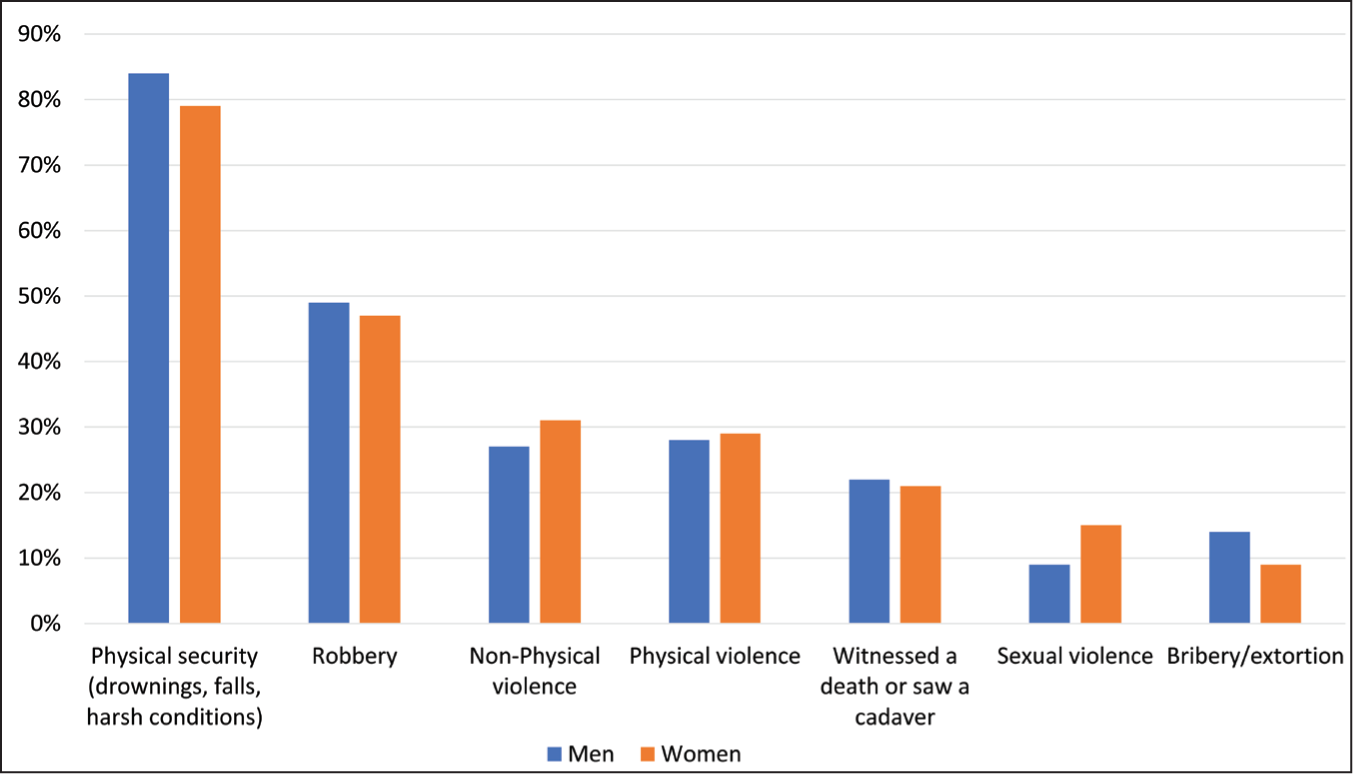
Widely reported by migrants, locals and non-governmental organisations, the Darién Gap is one of the most dangerous routes on the Pan American Highway. Yet despite its dangers, the continued flow of migrants through the jungle makes it a key access point for people migrating from South America and the Caribbean. Data from the UNHCR taken between 2022 and 2023 show that physical security was one of the biggest dangers encountered by migrant men and women. Figure 7 illustrates that about 84% of men and 79% of women described physical security, that is, drownings, falls and harsh conditions as the greatest dangers in the Darién Gap. Almost 50% of men and women interviewed stated that robberies were dangers encountered on their journey. About 30% of women stated that they encountered non-physical violence (i.e., verbal or emotional abuse) while about 27% of men stated that they encountered non-physical violence. For acts of physical violence, about 28% of men and 29% of women reported encountering this kind of violence. With regards to sexual violence, about 15% of women and 9% of men reported a sexual assault. Respondents often selected more than one answer when describing the kind of violence they encountered, indicating that all three forms of violence were present as either single acts or in conjunction with each other. In addition, about 22% of men and 21% of women reported seeing a death or a cadaver (corpse) on their journey. Migrants also reported that they had experienced bribery or extortion—with about 14% of men and 9% of women reporting such incidences. Most of the respondents acknowledged the Darién Gap as the most dangerous location on their journey and also stated that it is sometimes difficult to differentiate between armed groups, criminals and even those who are part of the local community.
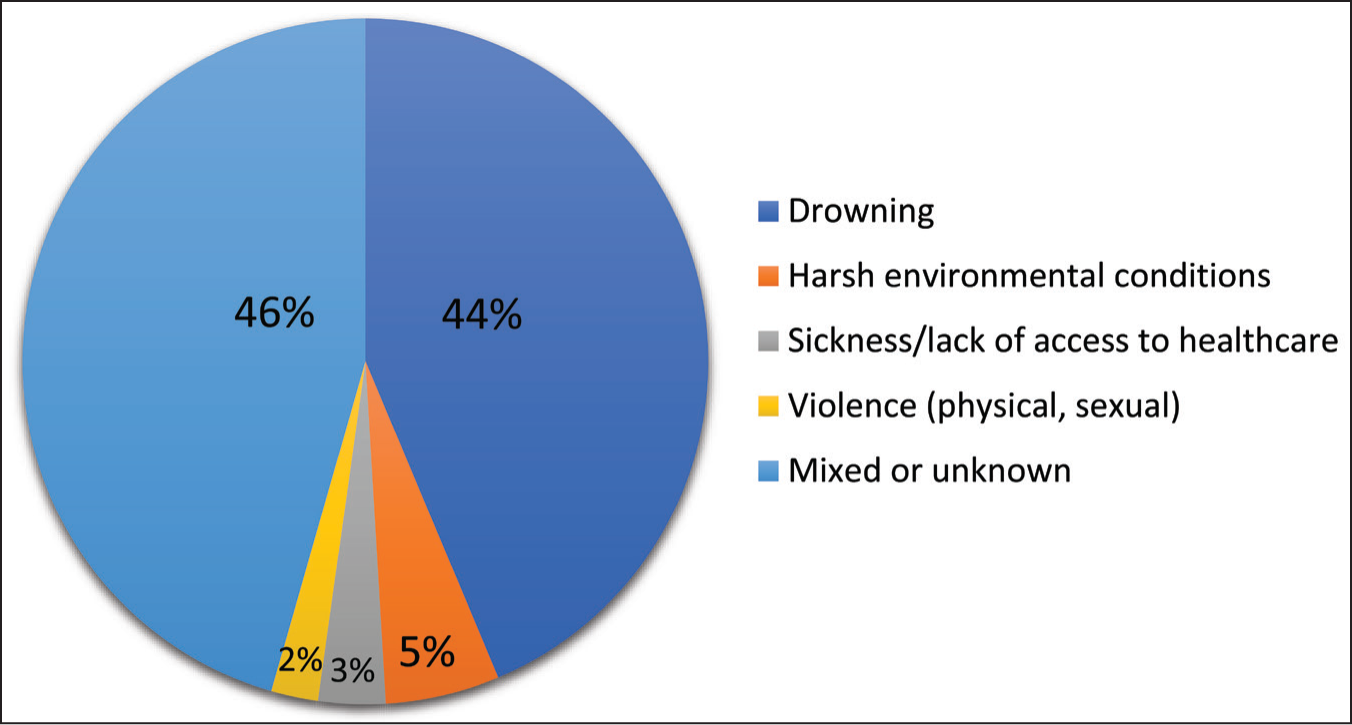
Using data from IOM’s Missing Migrants Project, Figure 8 illustrates that majority of the deaths in the Darién Gap are due to climate or environmental effects. For instance, over 46% of reported deaths were due to drowning. An additional 5% were due to harsh environmental conditions. About 44% of deaths in the Darién Gap were unknown possibly due to a variety of reasons including the climate or physical dangers encountered. Reports by migrants and local authorities also indicate an alarming number of unverified human remains where the exact cause of death is unknown. Other causes of death reported by the Missing Migrants Project include sickness (lack of access to healthcare and supplies) and violence (physical and sexual). It is also important to note that the data are largely fragmented due to the hard to access terrain and lack of aggregate numbers of migrants entering the Darién Gap from Colombia. Still, these data indicate the dangerous nature of this stretch of the journey northwards.
Discussion
A confluence of factors including highly violent conflicts, deteriorating infrastructures as well as the effects of climate change have resulted in a record number of people being forced to leave their countries. The sheer scale of forced migration streams makes it abundantly clear that present mechanisms are insufficient to meet contemporary challenges. The silent suffering of the migrants in the Darién Gap demands more attention from the international community. Migrant flows include a mix of people who are asylum seekers, IDPs and victims of political, social and economic strife. This emerging refugee crisis cannot go unnoticed.
As Latin American governments struggle to respond to this unprecedented flow of migrants, the absence of durable solutions is evident. Given that the vast majority of people in the Darién Gap are Venezuelans and Haitians, the domestic situations at home that are driving this migration cannot be ignored. Both Haiti and Venezuela are countries in the mid of protracted crises with economic and political collapse as well as brazen gang violence. In Haiti, the expanding territory of gang control has heightened food insecurities and limited access to stable jobs (Isaac, 2022; Moore, 2023). While the Colombian and Panamanian governments are jointly accessing the scale of the exodus through the Darién Gap, these efforts are limited given the territorial control of armed groups such as the Gulf Cartel and FARC. Additionally, because the Darién Gap lacks infrastructure such as roads and stable communication, the area is largely inaccessible until migrants emerge in Panama.
While the United States, Panama and Colombia along with the UNHCR have increased messaging campaigns to counter misinformation and warn about the dangers of the journey, these efforts are unlikely to be successful. Thousands of people are fleeing acute poverty and fierce violence and many are willing to risk the journey despite the dangers. As such, diplomatic efforts must focus on strengthening fragile state institutions, which would reduce new conflicts and help reduce the number of asylum seekers and IDPs. Additionally, more efforts should be made to prevent statelessness. Providing civil documentation which can be easily renewed is critical in reducing the number who are stateless. Although Colombia has made notable efforts in allowing Venezuelans to receive temporary border crossing and residence permits, more comprehensive solutions are needed to prevent widespread statelessness. As a migration route, there needs to be safer alternatives than the dangerous Darién jungle. Crossing the jungle leaves migrants acutely vulnerable to robberies, violence and sexual assault. Additionally, crossing multiple rivers is dangerous during the rainy season and drowning is common. Environmentalists also draw attention to the fact the increased human presence in the Darién rainforest is damaging delicate ecosystems and habitats.
Footnotes
Acknowledgements
The author would like to thank the editor and peer reviewers at Migration and Development for all their feedback and comments on prior drafts of this article.
Declaration of Conflicting Interests
The author declared no potential conflicts of interest with respect to the research, authorship and/or publication of this article.
Funding
The author received no financial support for the research, authorship and/or publication of this article.