




Abstract
This study aims to explore the use of digital media technologies in promoting the health and well-being of young people within a youth work setting in the non-governmental organisation sector. The study adopted a qualitative approach, Purposive sampling was used to select 20 youth workers from non-governmental organisations (NGOs) operating across four provinces in South Africa: Limpopo, Gauteng, the Western Cape, and the Northern Cape. Data were collected through semi-structured interviews conducted via Microsoft Teams. The data collected were analysed using the Framework Method. The study found that youth workers use digital media technologies such as virtual sessions using platforms like Microsoft Teams, TikTok videos, and health-related messaging on WhatsApp to promote the health and wellbeing of the youth. This includes providing virtual emotional support, disseminating health-related messaging, and posting videos on TikTok with health messages and content. Significant investment in youth work, particularly in the non-governmental organisation sector, is required to optimise the use of digital media technologies to promote the youth’s health and wellbeing. Such investment comprises both financial investment and the development of skilled human capital, competent in the use of digital media technologies. In conclusion, the positive aspect of digital media technologies in promoting youth health and well-being is evident in this study. Therefore, there is a need for youth workers to receive training in the use of digital media technologies which is essential in their professional development and professionalisation of youth work in developing nations like South Africa.
Introduction
Internationally, digital media technologies have become integral to how young people access and engage with health and wellbeing information (Fraticelli et al., 2021). The outbreak of the COVID-19 pandemic accelerated the transition of health services to virtual platforms, making digital health interventions more relevant than ever (Hawke et al., 2021). In the United States, it is estimated that up to 95% of young people aged 13 to 17 use digital platforms to obtain health-related information (The U.S. Surgeon General’s Advisory, 2023). In high-income countries, digital media tools are widely recognised as effective health promotion mechanisms that complement traditional approaches (Ferretti et al., 2023). Young people, unlike older generations, increasingly rely on digital platforms for accessing health information for example, following influencers on Facebook or YouTube who promote healthy lifestyles (Lim et al., 2022). Digital media technologies encompass a wide range of platforms that facilitate the distribution and access of diverse content from text and images to audio-visual and interactive formats across computer and mobile networks (Hongbo, 2022). This versatility positions them as powerful tools for health communication and education.
During the COVID-19 pandemic in Europe, digital media technologies, including video conferencing, social media, and interactive learning tools like online quizzes in youth work sector, were employed to raise awareness about health and COVID-19-related issues. This approach was initially considered an effective method for online youth work to promote youth health. However, the efficacy of this online youth work practice in promoting youth health was subsequently questioned. A notable limitation was its inability to reach all young people, particularly those from disadvantaged backgrounds who lacked access to internet connectivity (Ayllón, 2021; European Union, 2022).
In the global South, South Africa has proactively engaged with youth health issues through digital media technologies. Notably, mHealth initiatives, such as SMS helplines for Gender-Based Violence (GBV), have been implemented to support young victims in seeking assistance. This platform has been recognised for its safety and confidentiality (UNHCR, 2024), offering a crucial digital avenue for support. Young workers, functioning as peer educators and community workers, continue to play a vital role in promoting youth health and well-being, particularly mental health, which remains a significant concern for South African youth (Vostanis et al., 2025). The COVID-19 pandemic significantly altered the South African health promotion landscape, leading to the emergence of initiatives such as HealthAlert, a WhatsApp-based hotline designed to reach both young people and the broader South African population (Mbunge et al., 2022). Mindu et al. (2023) further argue that young people in South Africa frequently utilise platforms like Facebook to access health-related information. However, health promotion via digital media platforms presents substantial challenges for South African youth, primarily due to the high cost of data, which limits access. A similar study by Kubheka et al. (2020) in South Africa indicates that while digital media technologies offer considerable opportunities for promoting youth health by facilitating real-time communication with large numbers of young people, they also introduce significant challenges related to the digital divide and insufficient digital literacy among practitioners.
Previous studies conducted within the South African context (Kubheka et al., 2020; Mbunge et al., 2022; Mindu et al., 2023) have consistently demonstrated the positive effects of digital media technologies, such as Facebook and WhatsApp, in promoting youth health and well-being. Despite this growing evidence, the use of digital media technologies for health promotion within youth work settings particularly in the South African non-governmental organisation (NGO) sector remains underexplored. Therefore, this study aimed to explore how youth workers in South African NGO sector use digital media technologies to promote the health and wellbeing of young people. This study was centred around this research question, how do youth workers use digital media technologies to promote the health and wellbeing of young people in the NGO sector? Ferretti et al. (2024) highlight a critical policy gap in the South African context regarding the promotion of youth health and wellbeing through digital media technologies. Specifically, there is a lack of clear guidelines or a national framework to govern the ethical use of these digital media technologies in youth health promotion. This gap presents both a challenge and an opportunity for innovation in youth work practice. Therefore, the present study seeks to address this policy issue by advocating for the development of a youth health digital media technologies policy in South Africa. Such a policy would provide structured guidelines on the ethical and effective use of digital media technologies in promoting youth health and wellbeing, particularly within non-governmental organisations. Moreover, this study emphasises the pivotal role played by youth workers in NGOs an often overlooked profession in the South African context. By highlighting their contributions to youth health promotion, this study aims to draw the attention of policymakers and government stakeholders to the need for the professionalisation of youth work. In doing so, it also advocates for targeted digital literacy training for youth workers, many of whom operate without formal qualifications in this area. Enhancing their digital competencies will not only strengthen service delivery but also ensure that digital interventions are implemented ethically and effectively.
This study uniquely highlights the critical importance of digital youth work within non-governmental organisations for promoting youth health and wellbeing. This area has been largely unexplored in South African academic discourse, making our study a foundational contribution to understanding the evolving landscape of youth health support services in the region. By detailing the specific digital platforms and strategies employed by NGOs, we provide empirical evidence of their effectiveness and adaptability, especially in a post-pandemic environment. This addresses a notable gap in literature concerning the practical implementation and impact of digital interventions in youth-friendly health services in the Global North. Furthermore, our findings offer a clear pathway towards the professionalisation of youth work in South Africa. The study highlight the vital role of contemporary youth work practices, particularly those incorporating digital media technologies. Therefore, it is imperative that the youth work sector receives increased policy attention. Specifically, the integration of digital youth work in promoting youth health and wellbeing within NGO sector should be formally recognised and supported through dedicated policy frameworks. This would not only legitimise and strengthen the capacity of youth workers but also ensure sustainable and accessible health interventions for young people across the country. This study further contributes to the discourse on youth health policy by recommending that policies prioritise equitable access to digital health services. Specifically, it highlights the critical need for provisions that enable NEET (Not in Education, Employment, or Training) youth and those from disadvantaged socioeconomic backgrounds to access free internet data. Such provisions are essential to ensure these vulnerable populations benefit from digital health interventions.
Literature Review
African Context
Kubheka et al. (2020) identify digital media technologies as an effective instrument for health promotion. However, they further contend that in South Africa, governmental policy has not adequately recognised social media as a valuable tool for enhancing youth health and well-being. These findings indicate a lack of realisation by the government regarding the potential of digital media technologies in the context of health promotion. Similarly, Ferretti et al. (2024), acknowledging the absence of comprehensive policies on digital media technologies for health promotion, assert that South Africa and other Sub-Saharan African nations need to develop ethical guidelines for social media policy concerning youth health promotion, given the numerous ethical considerations associated with utilising digital media platforms for youth health promotion and wellbeing.
TikTok has emerged as a significant platform in Ghana for promoting youth wellbeing, offering access to health-related content, entertainment videos, and music all of which are vital for holistic youth development. However, the platform’s benefits are accompanied by substantial concerns, particularly regarding the exposure of young people to inappropriate content. In addition, this highlights a major issue: the premature exposure of young individuals to sexual content on TikTok (Kyei-Gyamfi, 2024). This concern resonates with Aidoo’s (2019) earlier study in Ghana, which examined the broader impact of digital media technologies on youth health and wellbeing. Aidoo (2019) cautions that while these technologies offer considerable potential for health promotion, their negative repercussions such as increased rates of depression, anxiety, and sexting among young people driven by a fear of missing out cannot be overlooked. These findings collectively highlight the complex and often contradictory influence of platforms like TikTok on the wellbeing of Ghanaian youth, necessitating a critical examination of both their advantages and inherent risks.
European Context
Emerging digital media technologies, which are a subset of digital tools, play a critical role in improving health and wellbeing issues among the youth. Those suffering from mental health issues, in particular, stand to gain from online-based interventions (Bradford & Rickwood, 2014). In the United Kingdom, individuals as young as 12 to 15 years old own smartphones, which they use to access online health information (Ofcom, 2016a). According to Ofcom (2016b), digital media technology allows young people to participate in health-promoting activities within online environments while keeping a degree of anonymity from external inspection. Prior study has also shown the positive effects of tools such as computerised cognitive behavioural therapy (cCBT) and mobile apps in improving youth mental health outcomes (Hollis et al., 2017).
In the Scottish context, the governmental apparatus took a decisive step towards mental health improvement by instituting the Mental Health Strategy, which outlines thematic directives aimed at improving mental wellbeing, particularly through the proficient use of digital media technologies such as Microsoft teams, WhatsApp’s. Although the initial implementation of the strategy was not specifically tailored to the demographic of young people, it is worth noting that professionals concentrating on youths’ mental health used digital media technologies like company websites and YouTube videos as a strategic medium for ameliorative intervention (Leigh & Flatt, 2015). According to the National Alliance on Mental Illness (2012), universities utilise their websites to distribute health-related content with the aim of enhancing the health and wellness of their students.
Following the Covid-19 epidemic, a significant population of young people (17%) in the United States of America has demonstrated a marked inclination towards connecting with emerging technology. Snapchat, TikTok, Instagram, Discord, Facebook, Twitter, Pinterest, Reddit, and Tumblr are examples of these technologies (Rideout et al., 2022). This phenomenon creates a beneficial opportunity for practitioners working with youth populations to meet with them in their own digital milieu, boosting the dissemination of health-related information relevant to this demographic. Hasamnis and Patil (2019) argue that one of the digital media technologies employed in disseminating health education to the audience is YouTube. Health service providers in developing countries frequently employ digital platforms, such as YouTube, as a means to disseminate health-related information to a broad audience (Harris et al., 2020).
Professionals in disciplines focus specifically on the wellbeing of young people, such as social workers, nurses, and youth workers, have used digital media technologies as a route for delivering interventions aimed at youth health. Notable empirical research demonstrates that this method of intervention is effective in reducing concerns related to alcohol and substance usage among people aged 12 to 25 (Burns et al., 2010). In line with the findings of Chory et al. (2021), professionals working in the non-governmental sector who are responsible for the promotion of youth health have used digital media technologies, such as the messaging app WhatsApp, to disseminate health-related information to the youth demographic. According to Chory et al. (2021), WhatsApp is an effective medium for boosting the health and wellbeing of young people, particularly those with sensory impairments such as speech and vision problems. The accessibility and user-friendly interface of WhatsApp make it an inclusive tool that overcomes hurdles resulting from traditional methods of health communication. Digital media technologies, according to Hollis et al. (2020), play significant roles in providing a therapeutic space for young people.
In Austria, Denmark, Finland, Northern Ireland, and the Republic of Ireland, youth workers utilise various digital tools, including email, texting, digital photography, filmmaking, Facebook, Snapchat, and Instagram, to promote youth health by disseminating health information. This practice highlight the vital role of online youth work in engaging young people in health matters. Consequently, it is essential that youth workers receive adequate digital literacy training to effectively deliver online youth work (National Youth Council of Ireland, 2016). However, there is no conclusive evidence to date that the use of digital media technologies definitively has a positive impact on promoting youth health and well-being (Dienlin & Johannes, 2020).
Theoretical Framing
This study draws on mediatisation theory to understand how youth workers adapted their health promotion practices within the evolving media landscape. Mediatisation refers to the process through which social institutions and practices become increasingly shaped by and dependent upon media logics (Couldry & Hepp, 2013). In the context of youth work, mediatisation provides a useful perspective for analysing how digital platforms such as Instagram, Facebook, and TikTok are not merely communication tools but also environments that reconfigure how relationships, outreach, and care are enacted. By examining how youth workers leveraged the affordances of digital media technologies to connect with youth during a time of limited physical contact, this study explores how digital media technologies shape not only the form and reach of health messaging, but also the very practices and identities of youth work itself. Mediatisation theory thus allows for critical engagement with how digital media technologies become interwoven with institutional objectives and everyday professional routines, highlighting the shifting nature of youth care in a digitally saturated world. Mediatisation theory emphasises that young people spend most of their time on digital media. Unlike traditional media, digital media serves as a primary source of knowledge that shapes young people’s understanding of their health and health-related practices (Hamilton et al., 2024; Krotz, 2017; Liadova, 2024).
Methods and Materials
Research Approach
This study used a qualitative method to explore how youth workers in South Africa use digital media technologies to promote young people’s health and wellbeing. In contrast to quantitative research, which is based on numerical data, a qualitative approach, as defined by De Vos et al. (2011), focuses on generating and interpreting results without the use of statistical methodologies. This method was chosen because of its explicit character, which allowed the researchers to interact successfully with participants in their natural contexts, producing extensive information. It also allows for a full explanation and description of the participants’ acts and experiences. Furthermore, this method made interaction with individuals in their social surroundings easier. A phenomenological approach, as a type of qualitative research, was used in this study to explore how youth workers within the non-governmental organisation sector make meaning of their lived experiences while integrating digital media technologies into their practice to promote youth health and wellbeing. This approach enabled the researchers to gain deep insights into the subjective realities of youth workers, focussing on how they perceive and interpret the role of digital media in their daily professional activities. Phenomenology further provided youth workers with the opportunity to reflect on and articulate their personal experiences, particularly highlighting the positive aspects of using digital media technologies in the youth work sector for the promotion of health and wellbeing among young people. This study further employs an interpretative paradigm, which aims to understand the subjective interpretations that participants ascribe to their experiences while accepting the reality of many realities. By using this paradigm, the researchers comprehend that there is no single truth or reality, and it allows for the examination of various points of view.
Study Setting
The study was conducted in four South African provinces: Limpopo, Western Cape, Gauteng, and Northern Cape. These provinces were chosen to ensure a diverse representation of youth workers working with South African youth. Purposive sampling was used by the researchers to sample 20 youth workers from non-governmental organisations. Purposive sampling, according to Palinkas et al. (2015), is a non-probability sampling technique used in qualitative research to select cases that are exceptionally rich in information relevant to the topic of interest. Purposive sampling was chosen in this study because it allowed the researchers to carefully sample people who had both knowledge and a vested interest in the topic under investigation. These 20 participants were carefully selected based on their experience in digital technologies targeted at promoting the health and wellbeing of South African youth. Furthermore, these people were recruited from non-governmental organisations that promote the youth’s health and wellbeing. Twenty participants were interviewed in this study after reaching theoretical saturation, whereby new themes and subthemes were no longer emerging during data collection. The criteria for sampling the 20 participants were that they must have at least 1 year of experience working with young people to promote health and wellbeing using any form of digital media technologies within non-governmental organisations in Limpopo, Gauteng, the Western Cape, and the Northern Cape proviences. Individuals who did not meet these criteria were excluded from participating in the study. The researchers gained access to these non-governmental organisations by conducting web searches for youth-focussed organisations in South Africa that actively promote youth health and then contacting them to seek interviews. After conducting the web search, the first author contacted these organisations and scheduled appointments for online interviews. Two organisations from Limpopo, two from Gauteng, two from the Western Cape, and two from the Northern Cape were chosen.
Data Collection
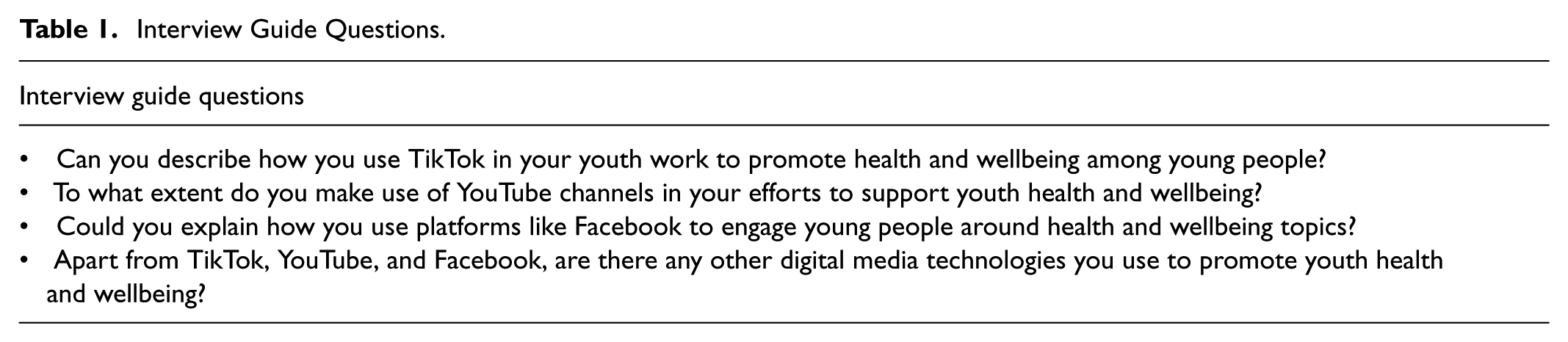
In collecting data, the researchers used individual semi-structured interviews (Creswell, 2016), which entail a constructive conversation approach between the researcher and the participants. This strategy was used to encourage meaningful dialogues with the participants. Four individuals were interviewed on the same day to obtain detailed information. Prior to each interview, the participants were briefed on the aims of the study, allowing them to make informed decisions regarding their participation. The interviews were conducted using the Microsoft Teams Meeting (MTM) platform, with each participant granted a 30-min session. Microsoft Teams was the most appropriate method for data collection in this study, as participants were drawn from different provinces. This approach helped the researchers minimise travel costs and logistical challenges. The transcript was generated during the virtual Microsoft Teams interviews. In addition, participants were given a copy of the interview schedule ahead of time, allowing them plenty of time to review and comprehend the questions. While English was used to collect the data, participants were given the choice to respond in their preferred language. The use of Microsoft Teams for data collection helped minimise physical and health-related risks to participants, such as potential exposure to illnesses like the flu, by allowing interviews to be conducted remotely. The potential benefit for participants outweighed the minimal risk, as the study provided youth workers in non-governmental organisations with a valuable platform to share their practices and experiences in promoting youth health and wellbeing within the South African context. The participants in this study were identified using pseudonyms. Youth workers are identified by the pseudonyms YW1 to YW20. The interview guide question listed in Table 1 were developed based on the aim and objectives of the study, as well as the core principles of mediatisation theory, which guided the exploration of the positive use of digital media technologies by youth workers in non-governmental organisations to promote youth health and wellbeing.
Interview Guide Questions.
Data Analysis
The framework method was used to analyse the data collected, which is a methodological approach renowned for its value, pragmatism, flexibility, and methodical rigour, particularly in the realm of qualitative inquiry in health research (Parkinson et al., 2016). Notably, the framework technique can be used to identify prevalent patterns, thematic elements, and interrelationships in accumulated data in the context of health research. The framework technique, as defined by Gale et al. (2013), comprises a structured analytic procedure with seven identifiable steps. The use of this method in the current study is based on the belief that its structured framework allows a careful and thorough assessment of the data. Furthermore, the use of the framework method aided in the identification of key themes, so contributing to the achievement of the overarching study objectives.
Stage 1: Transcription
This stage, according to Gale et al. (2013), includes the transcription of the interviews done throughout the data gathering procedure. During this step, the researchers devoted close attention to examining high-fidelity audio recordings, from which a rigorous verbatim description was derived, capturing the specific words used by participants and judged relevant for subsequent report writing.
Stage 2: Familiarisation with the Interview
This stage, according to Gale et al. (2013), requires becoming thoroughly acquainted with the full interview corpus. During this stage, the researchers iteratively review the textual transcripts or auditory recordings of the interviews. It was critical to emphasise this since this step necessitates a rigorous and repetitive engagement with the data, in which the researcher engages in a series of readings and re-readings to enhance immersion within the dataset.
Stage 3: Coding
This stage of the analytical procedure, according to Gale et al. (2013), comprises a comprehensive review of the transcript on a line-by-line basis. During this stage, the researchers did a thorough and careful examination of the text was conducted in parallel with a close auditory study of the recorded audio, with the goal of discerning various points of view. This determination informs the subsequent job of categorising each discovered perspective in relation to its particular theme allocation.
Stage 4: Developing a Working Analytical Framework
After coding the first few transcripts, all researchers involved should meet to compare the labels they have applied and agree on a set of codes to apply to all subsequent transcripts (Gale et al., 2013, p. 04). At this stage, the researchers organised all of the codes into categories. Thereafter, data that did not address the study’s goal were excluded.
Stage 5: Applying the Analytical Framework
This stage, according to Gale et al. (2013), entails applying existing categories and codes to future transcripts. At this stage, the researchers chose the best strategy to connect framework components with relevant study data, which aids in indexing.
Stage 6: Charting Data into the Framework Matrix
The main focus during this stage is on condensing the study data received from the interview (Gale et al., 2013). Using a spreadsheet, the researchers organised the data into a matrix, emphasising the most important information.
Stage 7: Interpreting the Data
The method in this stage includes the interpretative analysis of the compiled interview data in order to achieve the study’s objectives (Gale et al., 2013). During this stage, the researchers meticulously documented important thematic components related to the research question. Particular emphasis was placed on identifying relevant data extracts that served to illustrate the identified themes, easing the synthesis of the findings.
Trustworthiness
To ensure the trustworthiness of this study, the principles of credibility, dependability, confirmability, and transferability were carefully considered (Sirwan, 2024). In this study, triangulation was established by gathering data from diverse groups of youth workers across different South African provinces within the NGO sector. This approach allowed for a richer understanding of the research issue through multiple perspectives. Credibility was established through prolonged engagement, where the researchers interacted with participants via Microsoft Teams during the interview process. Additionally, peer debriefing was conducted by consulting a researcher with expertise in digital media, who reviewed the findings and compared them with the raw data to ensure that the data were accurately interpreted and reflected participants’ views and experiences. To ensure dependability, an audit trail was maintained, clearly documenting all decisions made throughout the research process. For instance, the rationale behind sampling youth workers as participants and the chosen methods of data collection were explicitly outlined. This allows future researchers to replicate or build upon this study with clarity and consistency. Confirmability was achieved by ensuring that the findings were grounded in participants lived experiences rather than the researchers’ personal biases or interpretations. This was demonstrated through the use of verbatim quotations in the Results section, enhancing the objectivity of the interpretations. Lastly, transferability was supported through purposive sampling of participants who shared common characteristics related to the phenomenon under investigation namely, the use of digital media technologies in promoting youth health and well-being. A thick description was also provided, detailing the study setting, data collection procedures, and research methods to enable readers to determine the applicability of the findings to other contexts.
Ethical Considerations
The safeguarding of human participants through the application of appropriate ethical principles holds paramount importance in all research endeavours. In qualitative studies, ethical considerations carry a special weight due to the comprehensive nature of the research process” (Arifin, 2018, p. 30). The Research Ethics Committee at the University of South Africa's College of Education Research Committee, approved the study’s conduct with the reference number 2023/11/08/57077894/46/AM. Following ethical approval, the researchers searched out youth-focussed organisations that are dedicated to boosting youth health by using digital technologies and obtained the contact information of these organisations. The researchers then contacted the organisations and set up online interviews with them. The researchers made certain that participants gave their informed consent, which served as physical proof of their willingness to participate in the study and have their interviews recorded. Participants were assured that their confidentiality and anonymity would be protected throughout the duration of the study. Since the study was conducted remotely, the informed consent process was also carried out online. The researcher explained the aim of the study and its potential benefits to each participant during a virtual meeting. Participants then provided verbal consent to participate voluntarily in the study.
Results
The sociodemographic characteristics of participants are indicated below in Table 1. The pseudonyms YW1 to YW20 (Youth Worker 1–Youth Worker 20) refer to individual youth workers who participated in this study. These youth workers are employed in the non-governmental organisation sector and are actively involved in promoting youth health and wellbeing through the use of digital media technologies (Tables 2 and 3).
Sociodemographic Characteristics of Participants.

Themes and Sub-themes: The Use of Digital Media Technologies in Promoting Youth Health and Wellbeing.

Findings
Themes and Sub-themes on the Use of Digital Media Technologies in Promoting Youth Health and Wellbeing
Our analysis revealed three overarching themes regarding the use of digital media technologies by youth workers to promote youth health and wellbeing: Virtual Platforms, Video-Based Platforms, and Online Platforms (Websites). Each theme encapsulates specific digital tools and strategies employed, as detailed in the subsequent sub-themes.
Theme 1: Virtual Platforms
Sub-Theme 1.1: Virtual Counselling via Microsoft Teams Meeting
The COVID-19 pandemic necessitated a significant shift in the delivery of critical services, particularly youth-friendly health services, in developing countries like South Africa. This forced professionals, including youth workers, to adapt to online platforms. A key component of this adaptation, as frequently mentioned by participants, was the use of virtual counselling via Microsoft Teams meetings for promoting youth health and wellbeing. Participants (n = 5) highlighted that during the pandemic, many young people struggled with mental health issues but were unable to access in-person counselling. To address this, youth workers leveraged Microsoft Teams to facilitate weekly online counselling sessions. The following excerpts illustrate this shift: Our youth health-friendly service has been affected as a result of COVID-19 restrictions, which included the prohibition of social gatherings and face-to-face events. Because of new technology, I was able to organise an online session with young people using Microsoft Teams meetings to provide them with counseling ranging from how to avoid stress during the pandemic to avoiding consumption of negative pandemic news that can affect their mental health, as the majority of these young people are suffering from mental health issues as a result of the pandemic. YW2 I organise weekly online counselling with a girl child and offer them counselling because some of the young girls in our program come from low-income families. So, I attempted to counsel them and encourage them to concentrate on their studies and avoid risky activities. Access to this online service can be difficult at times since our young ladies do not have enough money to purchase data, and load shedding causes internet connectivity to disrupt our sessions. However, I try to keep the session brief and purchase some of these young girls’ data so that they can access the internet. I must point out that this service is only available to individuals who own smart phones and have Microsoft Team APP on their phones. YW1
These accounts show that while virtual counselling through Microsoft Teams proved to be a valuable health intervention for youth, its accessibility was constrained by factors such as data costs and South Africa’s energy crisis, which leads to frequent power outages and unstable internet connectivity. Despite these challenges, the platform’s utility for ongoing support was evident: COVID-19, I must admit that it was a dreadful experience, but I learned how to use Microsoft Teams during that time in order to provide online health services to young people. Even now, I use Microsoft Teams meetings to deliver online counselling to youth. Through online sessions, young people are able to speak up about issues that are bothering them more than in face-to-face settings, which allows me to provide emotional support that aids them in improving their mental health. YW3
This ongoing use demonstrates that virtual sessions are perceived as highly beneficial in youth work, not only for delivering critical health services but also for fostering an environment where young people feel comfortable expressing themselves and receiving essential emotional support for their mental wellbeing.
Theme 2: Video-Based Platforms
Sub-Theme 2.1: TikTok Videos
Participants (n = 8) extensively reported leveraging TikTok videos as a dynamic digital media technology for improving youth health and wellbeing. Youth workers utilised TikTok to share educational content, often blending it with entertainment to engage young audiences. Examples included promoting sexual abstinence and protection against STDs/HIV/AIDS through accounts like @ForeverWena. Furthermore, participants created original TikTok content to illustrate the adverse consequences of substance abuse, using scenarios of individuals under the influence or involved in accidents to emphasise responsible consumption. Youth workers highlighted TikTok’s effectiveness due to its popularity among young people, facilitating easy dissemination of health information. YW4 articulated this dual approach: My colleague and I choose to develop TikTok material that contains a health message while also providing a lot of amusement since youth require information that is both instructive and entertaining. In this content, we teach young people to avoid substance misuse by demonstrating how detrimental substance abuse can be to one’s health and life in general. For example, there was a time when we made a video of a man who had been drunk and struggling to recognize himself before getting hit by a car on the road. This was done to demonstrate to young people that if they do not drink responsibly, they may find themselves in a horrible situation. YW4
YW5 further emphasised TikTok’s role in engagement and access to medical expertise: One of the digital tools I use to reach out to young people and promote health and wellbeing is TikTok. Almost every young person in our program uses TikTok, which makes it easy for me to send them health videos, such as those in which medical doctors teach about sexual and reproductive health. After receiving these videos, young people will ask essential questions as if they were making jokes, which is a way for them to learn about such things. TikTok, like other digital tools, is the greatest at boosting social engagement. YW5
These responses collectively show that TikTok’s accessibility and engaging format make it an effective platform for disseminating vital health information and fostering social interaction among youth. This engagement extends to specific health topics that resonate with young people: In some of the TikTok videos I make with health content, especially when I educate about food that boosts testosterone, which has lately been one of the most trending topics on TikTok, young people, particularly young males, feel empowered and express themselves. YW12
This suggests that TikTok empowers young people by providing a platform for expression and engagement with health content that directly addresses their interests and concerns. Beyond health promotion, TikTok also serves as a tool for skill development and economic empowerment: While TikTok videos promote youth health, they also contribute to youth empowerment because we teach young people how to make their own health content and share it with other young people. They even generate revenue for themselves while their TikTok videos acquire a lot of views and likes. YW13
This highlights TikTok’s potential to foster skill development and economic empowerment among youth who learn to create and monetise health-related content. Furthermore, youth workers actively curate and share existing relevant content: I looked for TikTok videos with content that encourages young people to adopt a healthy lifestyle and shared them with them. The consequences of having several sexual partners are examples of content. Then young people would contact me back, noting that such stuff helps them avoid sexual activity while they are younger. YW14
This demonstrates that youth workers also utilise pre-existing TikTok content to reinforce positive health behaviours, particularly in areas like sexual health, by leveraging relatable messaging that resonates with young people.
Sub-Theme 2.2: WhatsApp Health Texts and Video Calling
Another prominent digital media technology identified was WhatsApp, used by participants (n = 11) for sending health texts and facilitating video calls to promote youth health and wellbeing. WhatsApp was highly valued for its accessibility and cost-effectiveness, making it an ideal platform for delivering health information. Participants frequently sent text messages containing health-care information, recognising that young people spend significant time on their phones. YW6 noted the platform’s utility for direct communication about sensitive topics: I use WhatsApp to send messages to young people about how to avoid any form of sexual activity and to encourage those who are already involved in sexual activities to practice safe sex. Because some of these young people are sexually active, we cannot tell them not to have sex anymore, but we can teach them to practice safe sex. This platform is easily accessible and inexpensive; in order to use WhatsApp, young people do not require a large amount of data, as is the case with other, more expensive platforms. YW6
YW7 added that this method encourages interaction: I like to deliver health-related text messages to young people via WhatsApp. Because these young people spend a great deal of their time on their phones, they simply respond to my SMS asking for clarification on a subject they do not fully understand. YW7
These exchanges demonstrate that WhatsApp fosters strong connections and mutual relationships between youth workers and young people, facilitating engagement through direct messaging. Beyond individual texts, WhatsApp also served as a tool for broader social engagement and youth empowerment. Participants (YW8, YW9, and YW10) emphasised its role in fostering connection among youth: To foster youth empowerment through WhatsApp, I created a WhatsApp group where young people could teach other young people about any topic connected to health, including mental health, which is often overlooked, particularly in remote areas like mine. This empowers youth to take charge of their own health and development. This allows young people to connect with one another without adults telling them what to do. YW11
This illustrates how youth workers empower young people by facilitating peer-to-peer learning and discussion on health topics within WhatsApp groups, promoting autonomous engagement crucial for youth development. In addition to group interactions, one-on-one video calling via WhatsApp was also utilised: Sometimes I applied WhatsApp video calling to have one-on-one sessions with young people and provide them counselling, especially those who were depressed and needed someone to talk to. YW14 Since many young people are reluctant to join in WhatsApp chats, I call them individually through video call and provide health-related advice, such as teenage pregnancy prevention. I believe that this strategy empowers young people since they can express themselves through video calling. YW15
These statements show that WhatsApp’s video calling feature provides a personalised platform for youth workers to offer direct counselling and health advice, particularly for sensitive issues like mental health and teenage pregnancy prevention. This individual engagement contributes to youth empowerment by providing a safe space for expression.
Sub-Theme 2.3: YouTube Health Tutorial Videos
Participants (n = 18) frequently reported utilising YouTube health tutorial videos in their youth work practices. This involved sourcing and sharing videos from channels like “Everyday Mind” that promote healthy lifestyles, including home-based physical exercises and nutritious diet tips. The primary aim was to encourage young people to adopt healthier habits. Youth workers observed positive responses from young people who integrated the advice from these videos into their daily lives. YW16 detailed the impact of dietary advice: I search for short YouTube clips that encourage healthy eating and share them with young people. Young people greatly appreciate these videos, often informing me afterward that they have adopted healthier dietary habits, including incorporating more vegetables and fruits into their meals. YW16
YW17 highlighted the use of podcasts for mental health support: I regularly download podcasts from YouTube covering a wide range of health subjects, including mental health. I then share these with young individuals, aiding them in taking care of their well-being and being attentive to safeguarding their mental health. YW17
YW18 underscored the effort involved in curating relevant content and ensuring its accessibility: I dedicated the majority of my time to educating myself about various health subjects on Everyday Mind from YouTube channel, with a particular focus on content that imparts knowledge about leading a healthy lifestyle. This includes emphasising the significance of daily exercise, even if it involves performing physical activities at home. Following my viewing, I save these videos and share them with young people. I do this to enable them to grasp the significance of engaging in physical activities for the betterment of their health and overall well-being. I’m selective in my choices, ensuring the videos I download come equipped with captions to cater to a diverse audience of young viewers. YW18
These statements collectively illustrate the significant role of YouTube videos in disseminating accessible health knowledge. The ability to share diverse content, including practical exercise routines and mental health discussions, allows youth workers to empower young people to make informed choices about their wellbeing. The intentional selection of videos with features like captions further demonstrates a commitment to catering to a broad audience in youth work practices.
Theme 3: Online Platforms
Sub-Theme 3.1: Websites
This sub-theme identified that two participants from non-profit organisations utilised websites as a digital media technology to promote youth health and wellbeing. These organisations, often constrained by limited resources, relied on their regularly updated websites to disseminate information on various health topics, including substance abuse and Gender-Based Violence (GBV). The primary goal was to provide accessible resources that would enable young people to learn about self-care and supporting their loved ones.
YW19 articulated the reliance on this platform due to resource limitations: I am employed by a small organisation that operates with restricted resources. Because of this limitation, we heavily depend on our website to disseminate health-related information. Our primary aim is to motivate young individuals to take care of their well-being, adopt healthy lifestyles, abstain from alcohol and drug use, and prioritize their studies. YW19
Similarly, YW20 described their organisation’s consistent use of the website: In our organisation, we share health-related content on our website every Friday, aiming for young people to engage with it and make informed health decisions. The information we provide encompasses various topics, including sexual violence and Gender-Based Violence. While I wouldn’t necessarily claim that this approach directly fosters youth involvement, I can affirm that it is highly empowering. YW20
These statements reveal that for organisations with limited digital resources, websites serve as a crucial tool for disseminating essential health information, enabling young people to make informed decisions. However, a key limitation noted by participants is that while these methods are empowering by providing access to information, they often do not encourage the active engagement or interaction that is fundamental to effective youth work practices.
Discussion
This study was informed by a phenomenological approach, given its aim to explore and understand youth workers lived experiences in integrating digital media technologies to promote youth health and wellbeing within the non-governmental sector in South Africa. The focus of this approach was on capturing participants’ interpretations and subjective understandings of their experiences. While phenomenology guided the study’s conceptual framing and data collection emphasising meaning-making from the perspective of youth workers the data analysis was conducted using the Framework Method. This method is particularly well-suited for thematic analysis in applied qualitative health research. It enabled the identification of patterns and themes related to participants lived experiences, thereby supporting a practical understanding of how youth workers make sense of their roles and practices, rather than aiming to distill the essential structure of the phenomenon as pursued in traditional phenomenological analyses. This study found that youth workers in non-governmental organisations (NGOs) effectively utilised virtual platforms, specifically Microsoft Teams meetings, to promote the health and well-being of young people in South Africa. This approach proved particularly crucial during the Covid-19 pandemic, enabling the delivery of diverse counselling services, from stress management to mitigating the impact of negative pandemic-related news on mental health. The findings align with scholarly work by Hollis et al. (2020), who emphasise the significant role of digital media in creating therapeutic environments for young people. This rapid transition to virtual platforms for mental health services, as observed by Hawke et al. (2021), highlights a significant shift in youth healthcare provision brought about by the pandemic. Our findings thus support mediatisation theory’s core assumption that digital media is not merely a communication tool but a transformative platform reshaping social practices and institutional functions (European Union, 2022; Liadova, 2024). Despite limited resources in a Global South context, youth workers demonstrated significant innovation by leveraging platforms like Microsoft Teams, embodying the embedding of digital technologies into everyday practices and reconfiguring health interventions.
While virtual sessions offer considerable benefits for youth health and well-being, a critical concern emerged regarding the digital divide. Our findings reveal that young people lacking internet access face significant barriers to engaging with these platforms, echoing the observations of Kubheka et al. (2020) and Mindu et al. (2023). This highlights a crucial limitation of the transformative potential of digital media in the Global South, where the digital divide remains a significant obstacle. While mediatisation theory (Couldry & Hepp, 2013) highlights the shaping role of digital media in health services, our study emphasises that its application in under-resourced contexts necessitates acknowledging the structural challenges faced by both young people and youth work sectors. This points to the need for a more nuanced application of mediatisation theory, one that considers not only the affordances of digital technologies but also the socio-economic disparities that mediate their impact. This aligns with Ayllón’s (2021) study, which contends that online youth work should not be prioritised for promoting youth health and well-being due to its inherent disadvantage of failing to reach marginalised youth and those from low socioeconomic backgrounds.
A significant finding of this study is the pivotal role youth workers assume in integrating digital media technologies for youth health promotion, particularly through their engagement in creating and disseminating content on platforms like TikTok and WhatsApp. Youth workers actively produced TikTok videos containing health-oriented information, leveraging this popular platform to connect with young people in their preferred digital spaces. This aligns with Rideout et al. (2022), who highlight professionals’ use of digital platforms to promote healthy lifestyles. This strategic utilisation reflects the principle of media logic (Krotz, 2017), a key tenet of mediatisation theory, demonstrating how digital platforms actively shape institutional practices in youth work, influencing the construction and delivery of health messages. In contrast to the previous studies from the Global South, our findings diverge from the conclusions drawn by Kyei-Gyamfi (2024) and Aidoo (2019). Their respective studies posit that digital media technologies, including platforms like TikTok, contribute to the proliferation of unhealthy behaviours among youth, specifically citing sexual risk behaviours that often precipitate issues such as depression and social anxiety. This discrepancy in findings warrants further investigation into the nuanced impacts of digital media technologies on youth health and wellbeing across diverse contexts within the Global South.
Furthermore, youth workers effectively used WhatsApp to disseminate health-related information, including messages promoting sexual health. The interactive nature of WhatsApp groups, where young people proactively engage and pose health-related queries, aligns with Chory et al. (2021), who emphasise the effectiveness of messaging applications for health information transmission. This demonstrates the mediatisation of youth health promotion (Hamilton et al., 2024), where digital media increasingly influences how health messages are constructed, disseminated, and received.
Beyond interactive platforms, youth workers also utilised YouTube videos as a tool for health promotion. They extracted and disseminated brief segments of YouTube content covering crucial health insights, such as the importance of physical activity. This substantiates extant research by Hasamnis and Patil (2019) and Harris et al. (2020), which collectively emphasise YouTube’s role as a preeminent platform for health information dissemination and lifestyle advocacy, particularly among young people.
Additionally, youth workers in organisations with restricted resources relied on their websites to disseminate health-related information, including topics like sexual and gender-based violence. This approach aligns with findings from the National Alliance on Mental Illness (2012), which showed educational institutions using websites for health information sharing to enhance student well-being. This reinforces mediatisation theory’s (Hamilton et al., 2024) assertion that digital media increasingly reshapes social practices, including health promotion through digital platforms.
While previous studies (Chory et al., 2021; Harris et al., 2020; Hasamnis & Patil, 2019) have explored digital media use for youth health, limited attention has been given to the critical role played by youth workers in non-governmental organisations, especially in resource-constrained settings. This study addresses this significant gap, revealing how youth workers, despite facing limited resources, strategically leverage digital media technologies like WhatsApp and TikTok. Their innovative approaches extend beyond simple information dissemination, encompassing emotional support, facilitation of social interactions, and encouragement of self-expression among young people. This highlights their pivotal agency in supporting youth development and contributing to Sustainable Development Goal number 3, offering novel insights into the practical application of mediatisation theory in challenging environments.
Policy and Practice Implications
This study bridges the gap by highlighting the transformative potential of youth work practices in promoting health and wellbeing via digital media technologies, a perspective largely overlooked in existing literature. This study’s findings have implications for youth policy and online youth work practices. For example, the findings of this study should compel youth policymakers to develop a youth policy that requires stakeholders responsible for providing youth health-friendly services to integrate digital media technologies into their interventions, easing the burden on young people who cannot access health services in person. The findings should also compel youth-serving organisations in the Global South to bridge the digital divide among youths. Furthermore, this study should encourage youth workers in the Global South like South Africa to transition from traditional youth work to digital youth work, where youth health-related services can be delivered through digital platforms. The researchers’ effort to understand the phenomena from the viewpoints of youth workers was one of the study’s primary strengths. This also provided an opportunity to learn how youth workers use digital technologies to promote youth health and wellbeing. Understanding how these digital technologies empower the youth as the key recipients of youth health friendly services in poor countries is critical. Therefore, there is a need for the development of a national digital health policy in South Africa that specifically addresses youth health and wellbeing. Such a policy should be co-designed with meaningful input from young people and youth workers, particularly those operating within the non-governmental organisation sector. Furthermore, the policy should mandate that youth workers, as well as mental health professionals such as psychologists, receive comprehensive training in digital literacy before implementing or promoting digital mental health interventions within NGOs. This will ensure that interventions are both effective and ethically grounded. Lastly, youth policies in the Global South must recognise the financial challenges faced by youth workers in the non-governmental sector and provide adequate support to enable them to implement effective online youth work practices.
Implications for Theory
The findings of this study reinforce a core principle of mediatisation theory that digital media technologies are not merely communication tools but actively reshape social practices and institutional functions. In the context of South African youth work, the integration of platforms such as YouTube demonstrates how youth workers have adopted media logics to deliver health messages in ways that resonate with young people’s digital realities. This study thus extends mediatisation theory by illustrating how youth workers strategically leverage platform-specific affordances (e.g., visual storytelling on YouTube) to promote youth health and wellbeing. Moreover, it highlights that media logics are not only embedded in health promotion but are also actively negotiated and adapted by youth workers in the NGO sector, Global South contexts something that current applications of the theory have often underexplored.
Limitation of the Study
The limitation of this study is that the interviews were performed using Microsoft Teams, therefore the participants’ nonverbal expressions were not captured, which is significant in comprehending a phenomenon based on the participants lived experience. Another disadvantage is that only 20 youth workers were chosen to participate in the current study. As a result, the findings provided here may not represent the perspectives of all South African youth workers. Hence, there is a need for a future study in South Africa that will sample more participants using both qualitative and quantitative methodologies. A future study on the effectiveness of digital media technologies used by youth workers in promoting youth health and wellbeing is another possibility. In addition, this study sampled youth workers and excluded young people; therefore, future studies should include young people. This study acknowledges a methodological limitation in its reliance on a single data collection method, which impacts the potential for comprehensive triangulation. Future research on similar topics could enhance the trustworthiness and robustness of findings by employing multiple methodologies for data collection, thereby strengthening triangulation.
The interview guide was intentionally designed to allow youth workers in non-governmental organisations to shed light on the positive aspects of digital media technologies in relation to youth health and wellbeing. As such, the findings are cantered on these positive dimensions, consistent with the purpose and scope of the study. We acknowledge that this focus may limit the ability to capture potential negative impacts of digital media technologies. This represents a limitation of the study. Future research using a qualitative or mixed-methods approach could be valuable in exploring both the positive and negative effects of digital media technologies integration on youth health and wellbeing within the non-governmental sector in South Africa.
Conclusions
This study reveals the critical role of digital media technologies in empowering youth within non-governmental organisations (NGOs) in a resource-constrained developing nation like South Africa particularly in the four provinces namely Limpopo, two from Gauteng, two from the Western Cape, and two from the Northern Cape. Digital media technologies like TikTok, WhatsApp, YouTube, and Microsoft Teams enable youth workers to engage with young people, fostering participation, autonomy, and agency in their health and wellbeing journeys. By integrating these digital media technologies into their practices, youth workers not only strengthen their own professional capabilities but also contribute to the empowerment of young people by equipping them with knowledge, skills, and the motivation to take control of their health and lives. However, the structural barriers faced by NGOs, such as limited resources and insufficient training, hinder the full realisation of empowerment for both youth workers and the communities they serve. To address these challenges, this study recommends targeted investments in the youth work sector, focussing on resource allocation and the provision of structured digital literacy training for youth workers…Furthermore, the development of Short Learning Programmes (SLPs) by academics in Open Distance e-Learning (ODeL) institutions could play a transformative role. By enhancing digital competencies among youth workers, these programmess would enable them to facilitate more impactful interventions, thereby reinforcing a culture of empowerment within the youth health-friendly service sector. Ultimately, embracing empowerment as a guiding framework can drive systemic change, ensuring that digital technologies serve as catalysts for sustainable health and wellbeing among South Africa’s youth.
Footnotes
Acknowledgements
We would like to thank all the non-governmental organisations that acted as gatekeepers in this research, as well as all the youth workers who participated in this study.

Ethical Considerations
In compliance with ethical considerations, ethical clearance was obtained from the University of South Africa’s College of Education Research Committee with the Reference number# 2023/11/08/57077894/46/AM.
Consent to Participate
Informed consent was obtained from all subjects involved in the study.
Funding
The authors disclosed receipt of the following financial support for the research, authorship, and/or publication of this article: From the University of South Africa (Vision Keeper Programme).
Declaration of Conflicting Interests
The authors declared no potential conflicts of interest with respect to the research, authorship, and/or publication of this article.
Data Availability Statement
Data is available from the corresponding author upon request.