




Abstract
This study investigates user experience (UX) priorities in early childhood education applications by analyzing Korean-language user reviews using Bidirectional Encoder Representations from Transformers topic modeling (BERTopic). Eighteen latent topics were extracted and systematically mapped to the eight software quality characteristics defined by the ISO/IEC 25010 framework. The analysis revealed that compatibility, functional suitability, and usability were the most frequently referenced attributes, reflecting parental concerns related to device performance, educational reliability, and ease of use. Less frequently noted were issues related to maintainability, security, and portability. By aligning user feedback with a standardized quality model, this study offers practical guidance for improving UX in applications designed for young children. The findings suggest that early-stage design should prioritize technical stability and developmental appropriateness to foster engagement and trust. This approach can help create more effective and dependable learning environments that meet the needs of both children and their caregivers. Furthermore, the methodological framework adopted in this study can be applied in other linguistic and cultural settings to examine universal and context-specific UX concerns. Such cross-cultural application has the potential to support the development of inclusive, evidence-based design strategies in the field of educational technology.
Plain language summary
This study looks at how the experiences of parents and caregivers using early childhood education apps can be improved. By analyzing user feedback from Korean-language reviews, the researchers found important aspects that affect the quality of these apps. They compared these aspects with international standards set by the International Organization for Standardization (ISO) to create guidelines that developers can use to build better apps for young children. The research used a method called BERTopic, a machine learning technique that helps uncover key themes in large sets of written feedback. By applying this tool to Korean-language user reviews, the researchers identified 18 important topics. These topics were then linked to ISO standards, which focus on app qualities like functionality, usability, reliability, efficiency, and security. The results show that features such as how well an app works, how easy it is to use, and how reliable it is are crucial for making the app safe and effective for young learners. This study can help app developers and service providers improve their products by using user feedback to create more reliable, useful, and secure apps. It aims to help build better learning environments for children, making these apps a trusted resource for parents over the long term.
Introduction
Early childhood education applications have become essential tools for parents and children to learn together, with digital device use in this context becoming increasingly widespread (Papadakis & Kalogiannakis, 2017). These applications not only deliver educational content but also play a crucial role in fostering parent-child interaction and sustaining children’s engagement in the learning process (Hirsh-Pasek et al., 2015). Previous research suggested that the success of these applications depends not only on the quality of the educational content but also significantly on parental trust and satisfaction (Fantuzzo et al., 2006; Hummel et al., 2023; Sollars, 2020). Therefore, for parents to continue using these applications with their children, ensuring a positive user experience (UX) is essential.
However, there is a significant gap in research on UX design considerations that leverage natural language processing (NLP) to address key factors in the early childhood education applications. Most existing studies have primarily focused on technical features and the effectiveness of educational content, leaving a critical gap in understanding the user UX aspects that affect parent and child satisfaction (Papadakis & Kalogiannakis, 2019). Especially, few UX frameworks reflect user-centered insights derived from real-world data such as user reviews. As a result, current frameworks may insufficiently address practical elements like intuitive interaction for children and responsiveness to actual user needs. This gap can lead service providers to misunderstand parents’ needs, resulting in discomfort or dissatisfaction during application usage. Moreover, inadequate UX design can negatively affect young children’s learning experiences and hinder their growth and development (Law & Sun, 2012). Therefore, incorporating UX elements that foster both parental satisfaction and healthy child development is essential in the design of these applications such as intuitive navigation, child-friendly design, and parental controls.
Previous research has emphasized the effectiveness of review data as a valuable source that reflects actual usage experiences, providing a clearer understanding of the UX elements users expect from applications (Li et al., 2013; Lucini et al., 2020). Given this context, this study selected Korean-language review data from the Google Play Store to identify UX elements reflected in user feedback in early childhood educational applications. This linguistic focus was not merely for convenience but reflected South Korea’s distinctive digital and educational environment marked by leading broadband penetration (Koh et al., 2009), widespread early participation in private education (Financial Times, 2025), and strong parental involvement (H. Park et al., 2011). These sociocultural characteristics are likely to influence how parents evaluate UX, providing important contextual basis for interpreting the study’s findings.
To analyze user experiences within this context, the study employed Bidirectional Encoder Representations from Transformers topic (BERTopic) for identifying the key UX elements that parents consider important when evaluating applications (Grootendorst, 2022; Lee, Hong Lee et al., 2023). The derived elements were then analyzed based on the quality factors outlined in the International Organization for Standardization/International Electroechnical Commission 25010 (ISO/IEC 25010) model (International Organization for Standardization, 2023). The ISO/IEC 25010 framework was selected for its comprehensive, internationally recognized criteria for evaluating software product quality, with a particular emphasis on the satisfaction dimension closely aligned with UX (Estdale & Georgiadou, 2018; Haoues et al., 2017). Its structured approach supports the evaluation of quality attributes especially relevant to early childhood education applications. By aligning identified UX elements with this framework, the study ensures a systematic and standardized approach to quality assessment.
While previous studies have assessed educational applications using usability heuristics or ISO/IEC standards, few have integrated user-generated feedback with systematic NLP techniques. To address this gap, the proposed framework combines BERTopic with ISO/IEC 25010-based evaluation, offering both quantitative and qualitative insights into UX. This dual-layered approach captures nuanced themes specific to young children and their caregivers, generating interpretable outputs that are frequently overlooked by conventional methods. The main contributions of this research are as follows:
Identification of key UX elements crucial to parental satisfaction in educational applications through the analysis of Korean reviews.
Application of the BERTopic to extract meaningful topics from user feedback, enabling interpretable and scalable UX insights.
Alignment of extracted UX elements with the ISO/IEC 25010 framework to facilitate standardized evaluation of UX-related quality characteristics.
Provision of foundational insights to guide the design of more user-centered early childhood education applications.
The structure of this paper is organized as follows. In Section 2, we review previous studies that provided the theoretical foundation for this research design. Section 3 offers a detailed examination of the methodologies employed in this study. Section 4 reports the results of the analysis, and Section 5 provides a comprehensive discussion including design implications and limitations. Lastly, Section 6 summarizes the key findings of the research, outlines its theoretical and practical contributions, and presents suggestions for future research directions.
Literature Review
UX Design and Child-Computer Interaction in Early Childhood Education Applications
Modern early childhood education is rapidly evolving alongside technological advancements, particularly with the increasing use of smartphones and tablets. As educational applications become increasingly prevalent in home and school settings, there is growing scholarly interest in understanding how their design and UX influence learning outcomes. Accordingly, many researchers have focused on exploring UX design elements tailored for early childhood education applications.
For instance, Vaiopoulou et al. (2023) proposed a novel scale to identify applications suitable for early childhood education based on five dimensions: learning, appropriateness, ease of use, security, and parental control. Subsequently, pre-service early childhood teachers assessed 50 popular applications on their features and classified them into three clusters. The result emphasized the importance of security as a key factor for parents and educators when selecting appropriate applications. Rodić and Granić (2022) investigated how various tangible interfaces can enhance children’s learning experiences. The authors analyzed examples of services that children can physically manipulate. The results showed that such interfaces have the potential to increase children’s engagement and provide better experiences for both parents and educators. Nand et al. (2019) explored how gamification can enhance UX in early childhood education tools by surveying children under 10 about preferred game features. The children responded that elements such as challenges, feedback, and realistic graphics increased their engagement in learning. Based on these characteristics, the researchers proposed a design for educational tools that maximizes learning effectiveness, emphasizing the importance of incorporating children’s feedback into UX design. Additionally, Falloon (2013) pointed out that while various technological devices have been introduced into educational settings and promoted as important tools for facilitating educational efficiency, the actual outcomes often fell short of expectations. The author explored how the design and contents of iPad applications influence students’ learning and analyzed factors that enhance educational potential. The findings emphasized the necessity for educators, researchers, and developers to collaborate in improving application design for fostering educational effectiveness.
While the above studies provide insights into functional and feature-based UX design, child-computer interaction (CCI) perspectives contribute conceptual and developmental considerations that enrich user-centered application design. For instance, Hourcade (2008) emphasized that interfaces for young children should be tailored to their developmental capabilities, considering limited motor control, short attention spans, and evolving cognitive schemas. Similarly, Read and Bekker (2011) advocated participatory design approaches and simplified interaction metaphors when creating child-facing applications. These CCI principles reinforce the need for developmentally sensitive UX strategies that go beyond technical usability to ensure cognitive and emotional engagement tailored to young children.
These studies collectively demonstrate that the UX design of early childhood education applications plays a significant role in shaping learning outcomes. They underscore the importance of collaboration among educators, researchers, and developers, as well as the need for ongoing evaluation of UX elements to ensure developmental appropriateness and long-term usability.
Despite these contributions, most existing research still relies heavily on expert-driven design principles, often lacking data-driven and interpretable approaches that reflect real-world UX. To address this gap, the present study applies BERTopic to user-generated reviews and maps the extracted themes onto ISO/IEC 25010 quality characteristics, thereby establishing a more interpretable and user-centered framework for evaluating early childhood education applications.
Review Data Analysis for Understanding User Satisfaction
Analyzing user reviews is crucial for understanding user perceptions of specific services and enhancing service quality (Li et al., 2013; Lucini et al., 2020). By employing NLP methods to effectively extract sentiments, preferences, and issues from this vast unstructured data, developers and service providers can gain valuable insights to inform future strategies. In this context, researchers have explored various platforms to analyze review data, deriving comprehensive and detailed insights into user satisfaction or perceptions.
For instance, Lee, Jung et al. (2023) analyzed users’ sentiments and perceptions based on review data collected from YouTube and the Google Play Store using the query “metaverse.” By applying advanced sentiment analysis method, the research made a methodological contribution to predicting user satisfaction in metaverse services which allowed for a broader reflection of UX compared to previous studies. This research also provided an analytical framework applicable not only to metaverse-related services but also to other digital services, offering important insights that can potentially contribute to user-centered service improvements. Li et al. (2013) identified the factors determining customer satisfaction in the hospitality industry through online review analysis. The authors conducted text mining and content analysis on 42,668 online traveler reviews for 774 hotels with star ratings. The result revealed that convenience of transportation, food and beverage management, and value for money were crucial factors considered by customers for both luxury and budget hotels. Additionally, while customers paid more attention to aspects such as bedding, reception services, room size, and decorations, their satisfaction with these factors was found to be low. Additionally, Lucini et al. (2020) conducted a large-scale analysis of over 55,000 airline reviews using Latent Dirichlet Allocation (LDA), identifying 27 dimensions of customer satisfaction characterized by 882 descriptive adjectives. These features enabled a predictive model of airline recommendations with an accuracy of 79.95%. Their stratified analysis further revealed that the cabin type significantly influenced satisfaction dimensions, whereas passenger type had minimal effect. Moreover, temporal trends in the reviews highlighted shifting customer preferences, based on which the authors proposed practical guidelines to enhance airline competitiveness. Similarly, Lee et al. (2022) proposed a machine learning framework to predict user satisfaction with mobile healthcare services, using Google Play Store reviews and ratings collected during the COVID-19 pandemic. By applying a bag-of-words model with eXtreme Gradient Boosting (XGBoost), the authors demonstrated the effectiveness of review-based prediction. Their findings highlighted the potential of this approach to support user-centered improvements in digital healthcare platforms.
These studies underscore the crucial role of review data analysis in uncovering key drivers of user satisfaction across diverse service domains. By applying NLP techniques, researchers have identified user preferences, and actionable areas for service enhancement. Consequently, review-driven insights provide a robust empirical basis for informing UX design strategies that reflect real-world UX and expectations. However, such approaches have rarely been applied to early childhood education applications, where user feedback remains an underexplored yet potentially rich source for understanding design effectiveness.
Applications and Advances in Topic Modeling for Textual Data Analysis
As digital platforms continue to generate vast volumes of unstructured textual data, topic modeling has become an essential tool for uncovering latent themes that are not easily identifiable through manual analysis. Traditional models such as LDA and Non-negative Matrix Factorization (NMF) have been widely used for their computational efficiency and interpretability. These methods have been applied across domains such as education, tourism, public health, and consumer analytics (Athukorala & Mohotti, 2022; George & Vasudevan, 2020; M’sik & Casablanca, 2020). For instance, Yin and Yuan (2022) employed LDA to examine research themes and trends in blended learning, revealing a steady annual increase in topic prevalence. Additionally, S. T. Park and Liu (2022) employed LDA to analyze Tripadvisor reviews from foreign tourists in Korea, identifying key travel difficulties and proposing personalized tour routes. Despite their practical utility, these models often struggle to capture deeper semantic context and tend to generate overlapping or indistinct topics.
To address these limitations, recent transformer-based models leverage sentence-level embeddings to capture richer contextual semantics. This advancement enables the generation of more coherent and distinct topics, particularly within lexically diverse or noisy textual data. For instance, Jung et al. (2023) applied BERTopic to analyze cryptocurrency discourse across different platforms, identifying platform-specific themes and temporal dynamics. Similarly, Wang et al. (2024) utilized BERTopic to trace the evolution of interdisciplinary research topics, demonstrating the influence of external knowledge flows on the development of academic domains. Lee et al. (2025) employed BERTopic combined with BERT-based summarization to examine ESG-related discussions in earnings call transcripts of companies listed in the S&P 500 ESG Index, revealing correlations between evolving social themes and corporate financial performance. Collectively, these studies demonstrate that BERTopic is effective in handling thematic complexity, tracking temporal dynamics, and adapting to diverse domains, making it a valuable tool in modern text analytics.
Building on these advancements, this study applies BERTopic to Korean user reviews of early childhood education applications. Unlike traditional models that often fail to extract coherent themes from informal and sentiment-rich user-generated content, BERTopic effectively captures nuanced UX-related dimensions embedded in unstructured, conversational texts. This approach facilitates a more precise identification of quality factors aligned with ISO/IEC 25010 standards and contributes a novel, data-driven methodology for evaluating UX in educational applications.
Application of ISO/IEC 25010 Framework in Software Quality Assessment
The ISO/IEC 25010 model is an internationally recognized framework for evaluating software and ICT product quality, comprising eight characteristics and multiple sub-characteristics (International Organization for Standardization, 2023). It has been widely applied across domains to specify and assess quality throughout the software development lifecycle (Haoues et al., 2017).
For instance, Acharya and Sinha (2013) proposed an evaluation method for mobile learning services based on ISO/IEC 25010 framework, emphasizing the need to ensure system quality to fully benefit from mobile learning’s ubiquity. In the healthcare domain, Pratama and Mutiara (2021) evaluated the Halodoc telemedicine application during COVID-19 using usability testing grounded in the ISO/IEC 25010 framework’s 29 sub-characteristics. Similarly, Peters and Aggrey (2020) introduced an evaluation framework based on ISO/IEC 25010 characteristics for enterprise resource planning systems in higher education institutions, highlighting the increasing demand for standardized quality assurance. Kadi et al. (2016) developed a checklist-driven approach for heart disease decision support systems based on ISO/IEC 25010 attributes, and Sánchez (2016) designed an evaluation model for massive open online courses to enhance the quality of online education delivery.
These studies demonstrate that ISO/IEC 25010 framework offers a flexible yet rigorous standard applicable across varied digital services. However, despite its broad applicability, previous work has rarely incorporated user-generated feedback, especially in early childhood education applications where UX insights are critical. The present study addresses this gap by aligning interpretable topic modeling results with ISO/IEC 25010 quality attributes, thereby contributing a structured and user-informed framework for software quality evaluation.
Materials and Methods
In this study, we collected Korean user reviews of early childhood education applications and conducted topic modeling to extract key UX-related themes. This process aimed to identify the aspects that parents emphasize most when evaluating these applications. The extracted topics were then mapped onto the ISO/IEC 25010 quality framework to derive insights for improving UX in these applications. Figure 1 illustrates the overall workflow of the study, and the details of each step are described in the following subsections.

Schematic overview of this research.
Data Collection and Preprocessing
We obtained Korean-language review data through a Python scraper targeting applications listed on the Google Play Store. The search was conducted using queries such as “early childhood education,”“Science, Technology, Engineering, Arts, and Mathematics (STEAM),”“STEAM for children,” and “STEAM application for children.”
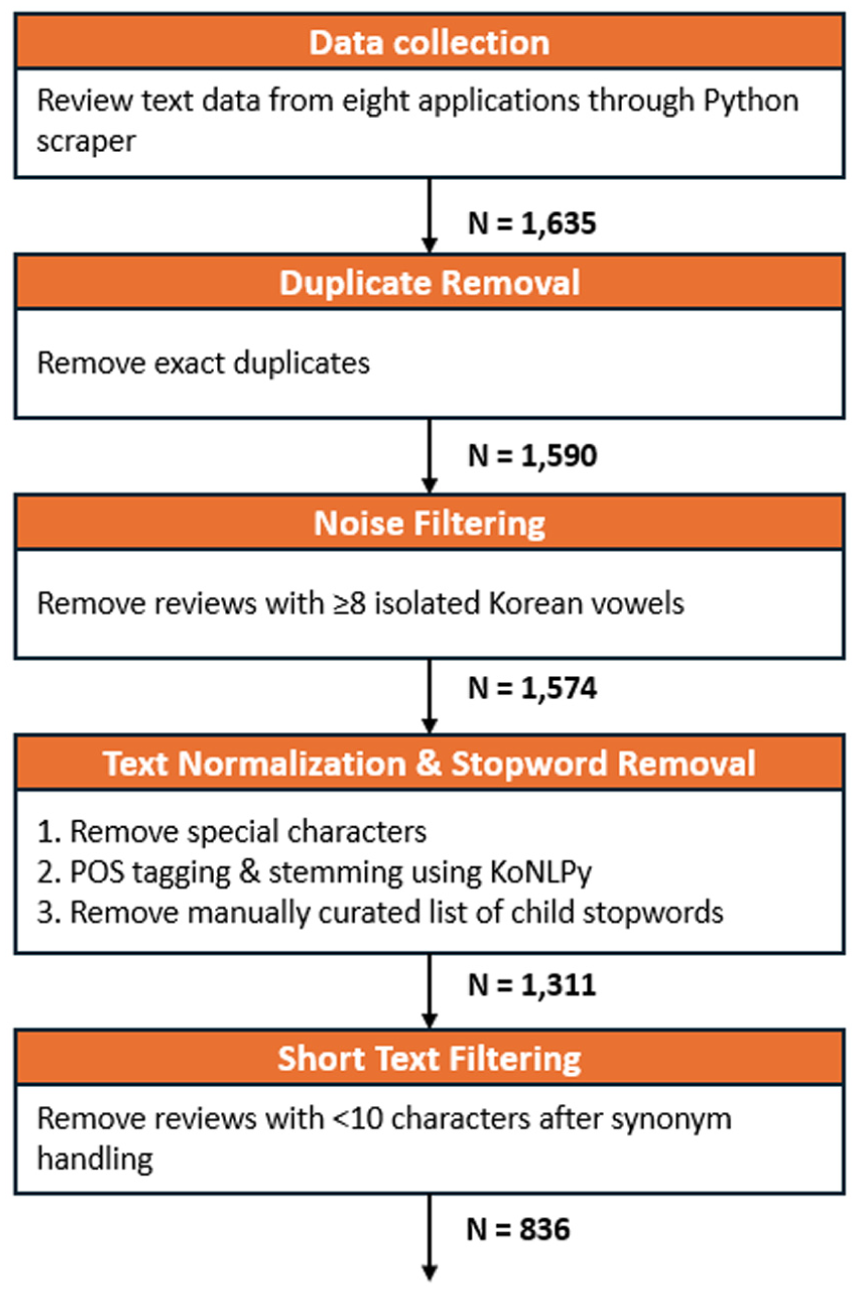
Among the search results, we selected only applications with over 100,000 downloads to ensure sufficient user engagement and representativeness. This criterion resulted in a final selection of eight applications, from which a total of 1,635 reviews were initially collected (Table 1).
Details of the Collected Data.

Following the removal of duplicate entries, a total of 1,590 unique reviews were retained. To minimize linguistic noise caused by unintentional inputs, we excluded reviews that contained eight or more standalone Korean vowels. These entries typically lacked semantic content and were consistently identified during preliminary manual inspection as likely the result of toddlers’ random tapping. Although not derived from established literature, this heuristic was supported by consistent patterns observed during initial data review. After this step, 1,574 valid entries remained.
Subsequently, we applied text preprocessing using KoNLPy, a Python-based package for Korean language processing (E. L. Park & Cho, 2014). The process involved removing all special characters except Korean letters and spaces, followed by normalization, part-of-speech tagging, and stemming. During this stage, we also excluded nonsensical terms frequently observed in child-generated content, which were treated as stopwords. This step resulted in the removal of an additional 263 reviews.
To assess the textual sufficiency of the cleaned dataset, we examined the distribution of word lengths, as shown in Figure 2. To ensure linguistic sufficiency for topic modeling, we further excluded reviews with fewer than 10 characters after synonym handling. As a result, the final dataset comprised 836 reviews, which were used for the subsequent topic modeling analysis.

Distribution of review lengths after stopword removal and noise filtering.
While the final dataset consisted of 836 reviews, this dataset size reflects the realistic upper bound of high-quality Korean user reviews currently accessible for this domain. The limited size is attributable not to selective sampling, but to the application of rigorous filtering and preprocessing criteria aimed at ensuring data reliability. Figure 3 summarizes the preprocessing pipeline, including each step and the number of reviews retained.
Preprocessing pipeline for review data refinement.
Topic Modeling Analysis Through BERTopic
We employed BERTopic for topic modeling, which combines BERT embeddings with cluster level term frequency inverse document frequency (c-TF-IDF) to generate efficient and compact clusters while preserving essential topic-related words. A key advantage of BERTopic lies in its modular design, which allows the integration of different algorithms for embedding, dimensionality reduction, and clustering.
For text embedding, we utilized Sentence-BERT (SBERT), which encodes sentences into dense vectors that preserve semantic meaning (Reimers, 2019). Specifically, we employed the pretrained transformer model “jhgan/ko-sroberta-multitask,” which was trained on the Korean Semantic Textual Similarity and Korean Natural Language Inference datasets (Ham et al., 2020). This model was selected for its high performance in Korean semantic tasks and its ability to capture fine-grained syntactic and morphological patterns in informal, user-generated content (Baek et al., 2025).
We employed Uniform Manifold Approximation and Projection (UMAP) to reduce the embedding vector dimensionality while preserving the structural features of the clusters (McInnes et al., 2018). By focusing on local structures through small distance and minimum distance settings, UMAP facilitates the formation of denser clusters. Subsequently, we utilized Hierarchical Density-Based Spatial Clustering of Applications with Noise (HDBSCAN) for generating density-based clusters (McInnes et al., 2017). HDBSCAN is particularly advantageous in handling noisy data, making stable clusters even under irregular conditions.
After clustering, we used CountVectorizer to filter low-frequency terms and prepare the data for c-TF-IDF calculation (Pedregosa et al., 2011). In this process, each cluster was treated as a single large document, and word importance was computed using inverse class frequency rather than document frequency. This technique enhances the intra-cluster relevance of words, allowing us to identify the most representative terms per topic. For each topic, the top eight keywords with the highest c-TF-IDF scores were extracted to support qualitative interpretation.
The hyperparameters for dimensionality reduction and clustering were determined through iterative empirical tuning, guided by manual inspection with a focus on topic separability and interpretability. Specifically, setting the min_cluster_size parameter to values below eight often resulted in fragmented clusters with overlapping semantic content, while larger values tended to generate thematically ambiguous groupings with blurred boundaries. The final choice of eight was found to achieve the most appropriate balance. The n_neighbors and min_dist parameters were selected based on BERTopic guidelines (Grootendorst, 2022), with an emphasis on preserving local semantic structures within the high-dimensional embedding space. This consideration was particularly important given the limited size of the corpus in the present study. Such an approach to hyperparameter selection aligns with common practices in small scale topic modeling studies, which prioritize semantic clarity and cluster coherence over exhaustive parameter optimization (Maier et al., 2021). Appendix 1 presents the detailed parameter settings used in the BERTopic pipeline.
Mapping UX Topics to the ISO/IEC 25010 Quality Framework
Building on the rationale established in previous sections, we applied the ISO/IEC 25010 quality framework to interpret the extracted topics in terms of relevant UX attributes for early childhood education applications. This integration enabled a structured analysis by mapping thematic clusters from BERTopic with specific software quality attributes.
To ensure consistency and reduce subjectivity in the mapping process, the alignment between topics and ISO/IEC 25010 characteristics was guided by a set of predefined criteria: (1) the semantic content of the top-ranked keywords per topic, (2) representative user comments sampled from each cluster, and (3) reference to previous literature on UX quality attributes (Haoues et al., 2017).
These criteria facilitated the systematic classification of topics, helping to enhance interpretive consistency and increase the transparency of the mapping process. For instance, topics dominated by terms related to intuitive interaction and ease of use were linked to the “usability” characteristic, while those referencing crashes, lag, or loading times were associated with “reliability” or “performance efficiency.” Similarly, topics reflecting concerns about advertisements or inappropriate content were interpreted in connection with “security” and “functional suitability.”
By applying this structured approach, the study translated user-generated review data into meaningful quality indicators, offering an interpretable bridge between data-driven topic modeling outputs and the standardized quality dimensions outlined in ISO/IEC 25010.
Results
Topic Modeling Result Employing BERTopic
To determine a suitable topic range, we computed c_v coherence values across topic counts ranging from 5 to 30. The c_v metric assesses the degree of semantic similarity among top keywords within each topic and is widely used to evaluate topic interpretability (Jung et al., 2024). As shown in Figure 4, coherence peaked at 19 topics, indicating an optimal trade-off between topic coherence and granularity. However, since BERTopic does not strictly enforce the number of topics during clustering, we configured the model to produce clusters close to this optimal value. The result yielded 18 distinct clusters, which provided clear and interpretable themes while preserving the semantic diversity of the corpus.

Coherence across topic numbers for BERTopic configuration.
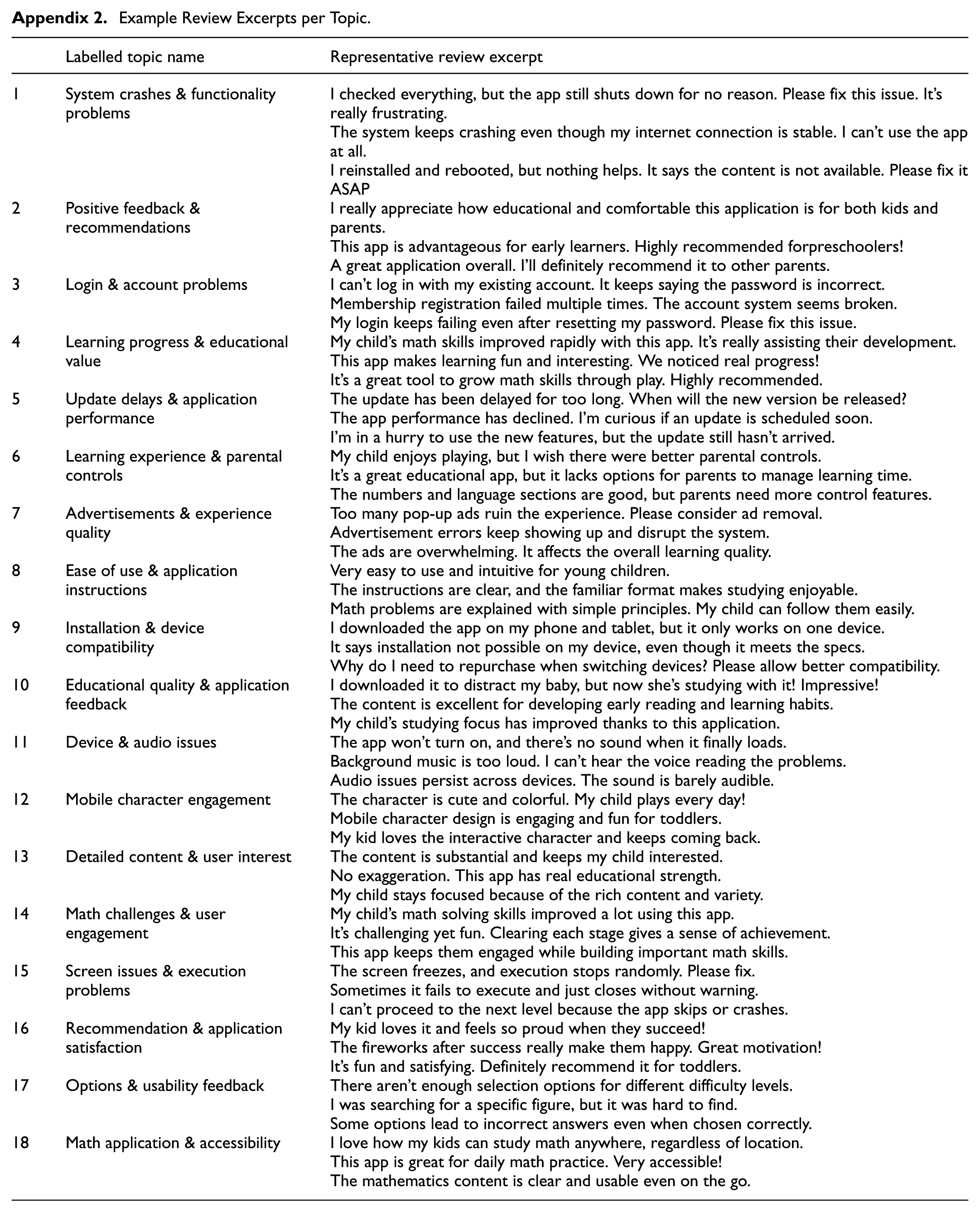
To interpret and label the identified clusters, the top five keywords for each were extracted using c-TF-IDF scores, as presented in Table 2. Subsequently, we manually labeled the main theme of each text cluster based on the significant keywords and the original review data associated with each cluster. This method is widely applied in studies employing topic modeling algorithms to interpret the outcomes (Jung et al., 2024; Lee, Hong Lee et al., 2023). Specifically, the initial labeling was performed by a researcher with extensive experience in topic modeling and subsequently reviewed and validated by the other two co-authors through iterative discussion to ensure consistency and clarity. To support transparency and qualitative understanding of each cluster, three representative user review excerpts per topic were extracted and presented in Appendix 2.
Manually Labeled Topic Modeling Results With Important Keywords.

To further interpret the semantic structure of user concerns, we conducted hierarchical clustering based on the 18 topics derived from BERTopic (Figure 5). The dendrogram was generated using Ward’s agglomerative clustering method based on Euclidean distance (Grootendorst, 2022). In this visualization, shorter horizontal linkages represent higher semantic similarity among topics, allowing us to examine how thematically related concerns are grouped (Murtagh & Contreras, 2012). This analysis reveals four distinct clusters that reflect parents’ primary areas of concern in early childhood education applications.

Hierarchical clustering results from BERTopic.
The first cluster (Topics 8, 4, 18, 14) is closely related to essential educational elements of learning applications, such as ease of use, skill progression, and educational value. These topics focus on UX and learning achievements, highlighting their relevance in providing educational value to learners. The second cluster (Topics 17, 5, 9, 3, 1, 15) consists of items related to functional issues and system stability. It includes technical issues that may inconvenience users, such as system errors, account problems, installation, or compatibility issues. In addition, it reflects attributes that directly affect system performance. The third cluster (Topics 12, 11) is composed of items focused on device usage experience. This includes mobile interaction elements or audio-related issues, which appear to be grouped based on significant aspects of user-device interaction. The fourth cluster (Topics 7, 2, 6, 10, 13, 16) consists of items related to user satisfaction and feedback. Topics like learning experience, content quality, and advertisement are included, reflecting overall satisfaction factors and the learning service.
These clusters provide a structured view of the topics that are central to UX in learning applications. By grouping related attributes, the hierarchical clustering results highlight how various aspects ranging from functional stability to user satisfaction collectively shape the overall application quality. These elements offer a foundational perspective for assessing the sustained impact and usability of learning tools and can be linked to several factors within the internal and external quality evaluation criteria outlined by ISO/IEC 25010 framework, contributing to the assessment of the practical quality of applications.
Mapping Topics to ISO/IEC 25010 Attributes
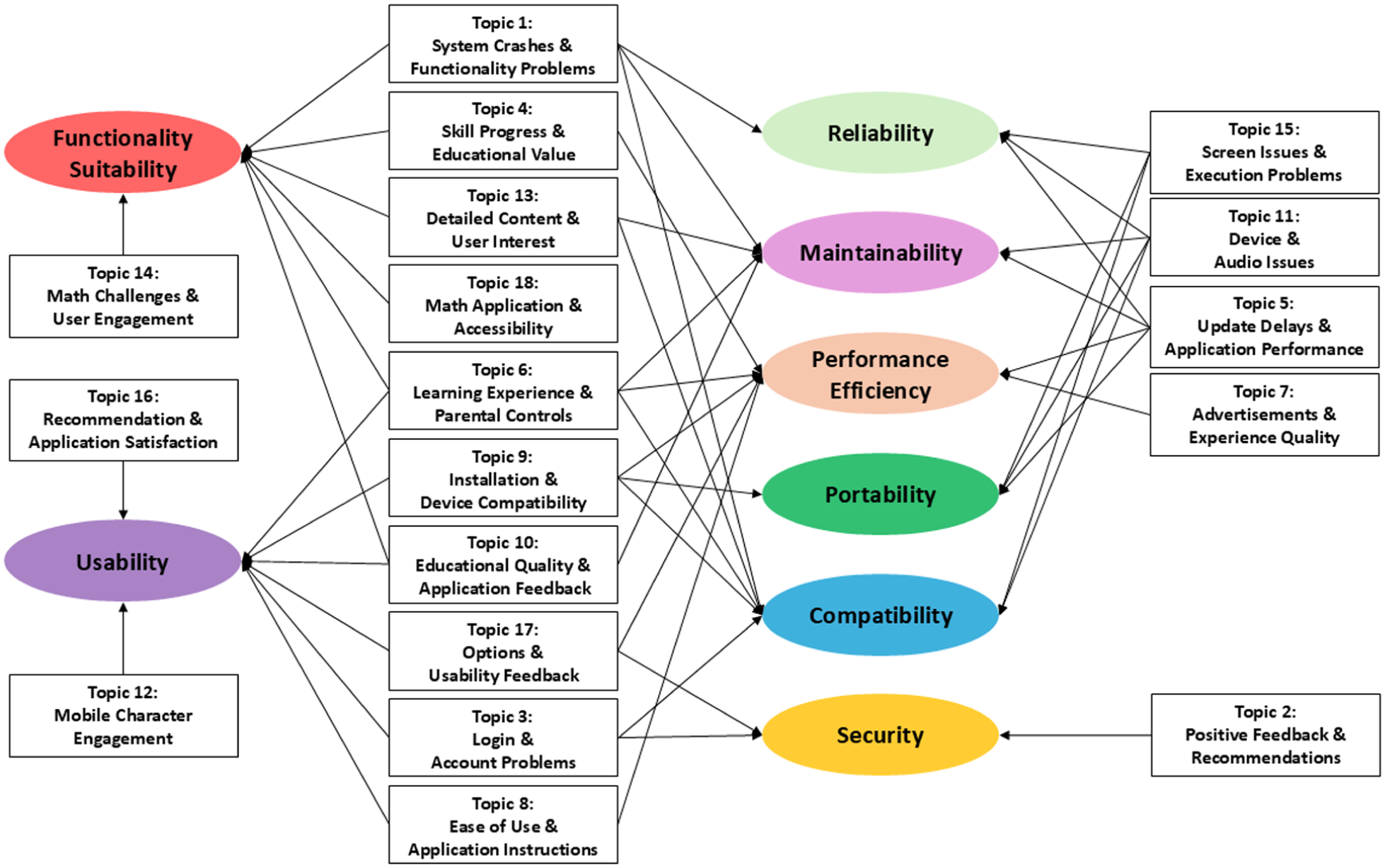
Figure 6 and Table 3 summarize the alignment between the 18 identified topics and the ISO/IEC 25010 quality attributes. The mapping was conducted using keyword semantics and user excerpts, ensuring a coherent interpretation of user feedback within a standardized evaluation framework.
Alignment between UX topics and ISO/IEC 25010 attributes.
Topic-to-ISO/IEC 25010 Quality Attributes Mapping Table.

The first characteristic, “functionality suitability,” assesses how well the application fulfills its intended functions and whether these functions align with user needs. Several topics highlight this aspect. Topic 1 emphasizes that system crashes or functional errors hinder the provision of educational features, directly affecting functional adequacy. Topics 4 and 6 focus on features such as tracking children’s learning progress and providing effective parental controls, which enable tailored learning experiences and personalized support. Topic 10 points to the importance of incorporating user feedback to enhance the functional capabilities of the application. Topics 13, 14, and 18 collectively underscore the importance of detailed and engaging content in maintaining children’s attention and encouraging continued use of the application. This enhances its functional relevance and overall effectiveness.
The second characteristic is “usability” which assesses the overall ease of use of the application. The application for young children should provide an intuitive user interface (UI)/UX design and clear instructions to ensure children can use it easily. Topic 3 illustrates that login and account management issues negatively affect usability by complicating essential processes. Topics 6 and 8 emphasize the importance of intuitive design and clearly presented instructions that guide both children and parents through the app’s features. Topic 9 discusses the significance of smooth installation and device compatibility in reducing entry barriers and enhancing user experience. Meanwhile, Topic 10 suggests that immediate feedback strengthens usability by reinforcing learning. Topic 12 highlights how easily understood and familiar characters contribute to an engaging and user-friendly interface. Lastly, Topics 16 and 17 stress that intuitive navigation and a range of interactive options contribute to user satisfaction and overall perceived success of the application.
The third characteristic, “reliability,” assesses whether the application operates continuously without errors, ensuring a seamless UX. This is particularly important because it guarantees that children can use the application consistently and confidently during their learning activities. Reliable performance fosters trust in application, encouraging repeated engagement. Topic 1 discusses how frequent crashes disrupt children’s experience. Topic 5 indicates that a lack of regular updates and maintenance leads to instability, thereby reducing users’ trust in the application. Topic 11 addresses compatibility issues and audio playback problems, which can interrupt the learning flow. Topic 15 notes that screen errors or freezing during use disrupt the continuity of children’s engagement, highlighting the importance of smooth and uninterrupted operation.
The fourth characteristic, “maintainability,” is a crucial factor in assessing how easily the application can be updated and how effectively issues can be resolved when they arise. This characteristic is particularly important for early childhood education applications, where promptly addressing user feedback and introducing new features can significantly enhance the overall UX and educational value (Daugherty et al., 2014). Additionally, a well-maintained application can adapt to changing educational needs, ensuring it remains relevant and effective over time. Topic 5 shows that delayed updates can impair performance and frustrate users. Topic 6 emphasizes the need to address accessibility in order to promote inclusivity among children with diverse needs. Topic 11 shows that responsiveness to device and audio issues contributes to improved maintainability of the application. Topic 13 reinforces that regularly refreshing content and responding to user input are essential to sustaining user interest and ensuring the application remains aligned with evolving educational needs.
The fifth characteristic is “performance efficiency,” which evaluates how effectively an application utilizes resources while ensuring quick and smooth operation. This includes evaluating aspects such as resource consumption, response times, and the impact of advertisements on performance. Topic 4 emphasizes that children must be able to track their learning progress efficiently. Topics 5 and 6 underscore that delays in updates or unresponsive parental controls can reduce efficiency. Topic 7 points out that intrusive advertisements can hinder performance, while Topic 8 notes that complex or unnecessary instructions can delay interaction. Topic 9 raises the issue of prolonged installation or compatibility challenges affecting efficiency, and Topic 17 stresses the importance of quick responsiveness in user option selection and feedback handling.
The sixth characteristic is “portability,” which evaluates how well a system or application can be transferred or adapted to different environments, such as new hardware, software platforms, or operating systems. The emphasis here is on how easily the application can be installed, maintained, and used across various environments without requiring major changes. Topic 5 addresses how inconsistent update performance across devices reduces portability. Topic 9 notes the importance of ensuring smooth installation and operation, particularly on devices commonly used by children. Topic 11 highlights that consistent audio playback must be guaranteed across environments, and Topic 15 points out that adapting to different screen sizes and resolutions is key to ensuring a uniform experience.
The seventh characteristic is “compatibility,” which refers to the application’s ability to function correctly in various environments, particularly with other systems or components, such as hardware, software, or different operating systems. The main focus is on interoperability and coexistence with other systems. Compatibility issues arise if the application does not work well with other software or hardware. Topic 1 reveals that frequent crashes across systems indicate compatibility issues. Topic 3 points to login problems that may arise due to software inconsistencies. Topic 6 stresses the need for features like parental control to function equally well across platforms. Topic 9 reiterates installation difficulties, while Topic 11 highlights the importance of consistent audiovisual performance. Topics 13 and 15 note that discrepancies in content presentation or screen behavior across devices can reduce user engagement and overall compatibility.
The eighth characteristic is “security,” which is a critical factor in protecting user data and privacy. It involves measures that ensure confidentiality, integrity, and availability of information, safeguarding it from unauthorized access, misuse, or breaches. In particular, secure handling of sensitive data in early childhood education applications is essential, given the vulnerability of the users involved. Topic 2 shows that users tend to leave more positive reviews when they feel their data is secure, indicating that trust in privacy protection plays a major role in user satisfaction. Topic 3 emphasizes that login and account management should incorporate strong security protocols. Topic 17 highlights the necessity of customizable settings that enable parents to safely control and monitor their children’s activity, thereby ensuring a secure learning environment.
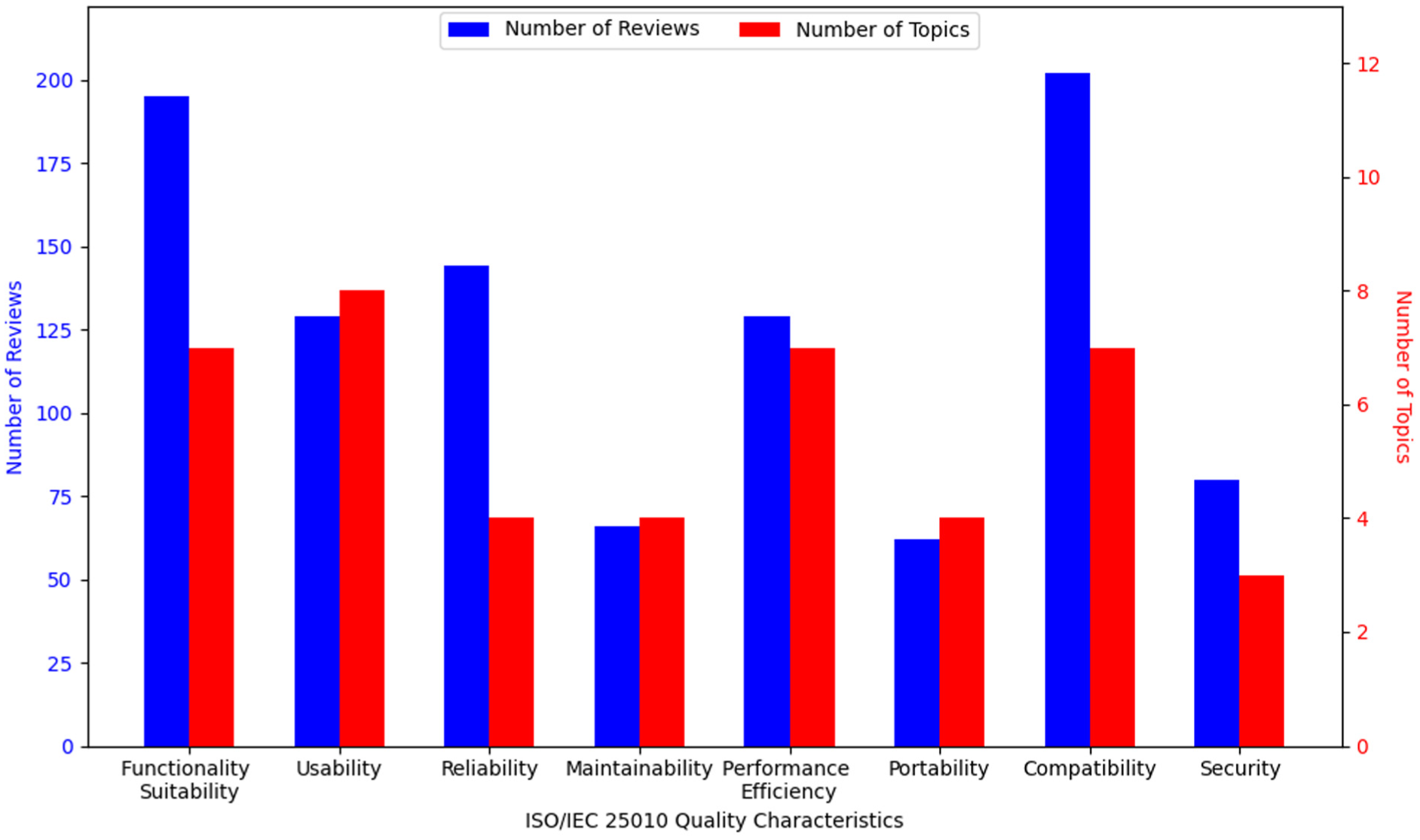
Additionally, based on previous research indicating that frequently mentioned issues are prioritized by users (Kwak et al., 2010; Pagano & Maalej, 2013), the relative importance of each characteristic of the ISO/IEC 25010 framework was evaluated by examining the number of topics and reviews associated with them (Table 4).
Distribution of Reviews and Related Topics by ISO/IEC 25010 Elements.

The results of the analysis revealed that compatibility is the most prioritized factor, with 202 reviews and seven associated topics. This finding suggests that parents highly value the application’s smooth functionality across various platforms. Compatibility issues, particularly those related to login and account management, directly impact the UX, leading parents to prioritize this factor to ensure their children have a consistent experience regardless of device or setting.
Following compatibility, functional suitability was highlighted, with 195 reviews and seven topics, emphasizing parents’ focus on features that support the application’s educational goals. Parents particularly value the application’s stability and educational effectiveness, viewing these as integral to their child’s learning experience. Features such as system stability and progress tracking are seen as essential for fostering children’s growth and development.
Usability was represented in 129 reviews and eight topics, indicating a strong preference for an intuitive, easy-to-use interface. Parents emphasize the need for a child-friendly UX, noting that complex procedures can disrupt children’s focus and immersion in learning.
Reliability was underscored in 144 reviews and five topics, reflecting parents’ expectations for continuous and error-free application. Concerns about system crashes or bugs during learning activities affect parents’ willingness to use the application, as reliability issues can reduce long-term user satisfaction and engagement.
Performance efficiency was highlighted in 129 reviews and seven topics, showing parents’ attention to resource utilization and fast response times. They consider smooth application performance as essential for supporting children’s uninterrupted learning progress.
Maintainability appeared in 66 reviews and four topics, illustrating the importance of on-time updates and problem-solving. Parents expect regular performance improvements and responsiveness to feedback, regarding these as key to enhancing their child’s learning experience over time.
Portability was reflected in 62 reviews and four topics, indicating parents’ concern for consistent functionality across different devices commonly used by children. They anticipated that portability would enable children to access the application consistently, regardless of their location.
Finally, security emerged in 80 reviews and three topics, reflecting parents’ concerns about protecting their child’s data and privacy. A secure learning environment is considered essential, as parents associate strong security measures with their trust in the application for their children’s use.
This further analysis provides a clearer understanding of user priorities, emphasizing that parents place significant importance on compatibility and functional suitability, particularly when considering the volume of review text and the number of associated topics (Figure 7). Examining the reasons behind this, compatibility and functional suitability emerge as critical factors that intersect with various other UX elements, playing a central role in the UX of applications designed for young children. This finding suggests that parents seek a stable and consistent learning environment that meets educational goals, thereby supporting a productive and reliable UX for their children.
Distribution of reviews and topics across quality attributes.
In summary, this study evaluates user feedback derived from BERTopic in early childhood education applications in alignment with the ISO/IEC 25010 quality model, emphasizing critical characteristics in terms of functionality, usability, reliability, maintainability, performance efficiency, portability, compatibility, and security. Each characteristic is closely interconnected and plays a significant role in shaping the overall UX for parents and young children. By addressing these topics, developers can enhance the application’s educational value, engagement, and user satisfaction. This research provides a theoretical foundation for improving UX in the application development process and offers valuable guidance for comprehensively integrating various quality elements.
Discussion
Summary of Key Findings
This study employed BERTopic to extract latent themes from user reviews of early childhood education applications and mapped these themes onto the ISO/IEC 25010 quality framework. Among the eight quality characteristics, compatibility and functional suitability were most frequently addressed by users, followed by usability, reliability, performance efficiency, maintainability, security, and portability. These findings suggest that parents value not only educational effectiveness and ease of use but also technical stability and secure application environments. By aligning unsupervised topic modeling with a standardized software quality framework, the study reveals how UX factors intersect with broader quality considerations in child-focused educational technology.
Interpretation and Practical Implications
The analysis revealed that functional suitability and compatibility were the most frequently referenced quality attributes in user reviews, followed by usability, reliability, performance efficiency, maintainability, security, and portability. These findings highlight that parents prioritize not only educational effectiveness but also technical stability, ease of use, and trustworthiness when selecting applications for their children.
Functional suitability emerged as a central concern. Several topics (e.g., Topics 1, 4, 6, 10, 13, 14, 18) reflected frustration with crashes, inadequate learning feedback, or poorly implemented educational content. Such deficiencies undermine the application’s ability to support sustained engagement and learning. For instance, Topic 1′s reference to functional breakdowns directly threatens the app’s ability to deliver on its core educational promises. Developers should prioritize reliable content delivery, trackable progress, and age-appropriate personalization to strengthen this dimension.
Compatibility was closely linked to user frustration about performance inconsistencies across devices (e.g., Topics 9, 11, 15). Since young children often use older or shared family devices, ensuring cross-device operability and resource efficiency is crucial. Responsive UI design, lightweight architecture, and thorough device testing can reduce barriers to usage and broaden accessibility.
Usability issues were reflected in topics addressing navigation difficulties, complex login processes, and confusing UI (e.g., Topics 3, 8, 12). Given the cognitive limitations of young users, intuitive interaction flows and visually guided engagement mechanisms (e.g., character-led storytelling, voice prompts) should be emphasized. Additionally, simplifying parental controls and account creation can ease onboarding for families.
Security concerns, including data privacy and the presence of inappropriate content (e.g., Topics 3, 7, 17), may discourage parental trust. Educational applications must ensure secure data handling and integrate robust content filtering, especially when in-app advertisements or external links are involved. Transparent parental control settings and opt-in permissions further enhance perceived safety.
Maintainability was discussed in relation to outdated content and unaddressed bugs (Topics 5, 11, 13). To maintain relevance and usability, developers should implement frequent update cycles, establish feedback loops, and proactively resolve technical issues. Including user feedback mechanisms within the application interface can support continuous improvement.
Performance efficiency, while less frequently mentioned, still appeared through issues related to loading time or application freezing. Lightweight resource management and modular coding practices can mitigate these problems, particularly for low-specification devices.
Portability, although rarely referenced explicitly, remains an implicit concern. Synchronization features or cloud-based user profiles may improve the portability experience, enabling seamless transitions between devices.
The practical implications drawn from this mapping can be summarized as follows:
Ensure functional stability through robust testing and minimal downtime.
Enhance compatibility by optimizing application performance for diverse devices, especially low-specification devices.
Improve usability by designing intuitive and age-appropriate interfaces for both children and parents.
Reinforce security through strict data privacy policies, content moderation, and customizable parental controls.
Support maintainability through regular updates and feedback-driven improvement cycles.
Optimize performance efficiency by minimizing resource consumption and reducing loading times.
Consider portability for users with multiple access points or shared devices.
These recommendations are grounded in real user concerns and systematically aligned with the ISO/IEC 25010 framework, offering a practical guideline for developers seeking to enhance UX in early childhood educational applications. Given that functional suitability and compatibility emerged as the most prominent concerns, these two dimensions should be prioritized during the initial stages of design and testing. To assess the success of implementation, specific performance indicators such as crash frequency, device responsiveness, and parental satisfaction may be systematically monitored following deployment.
While these guidelines provide actionable insights, their execution may face practical constraints. Developers often operate under limited technical resources, device fragmentation, or platform-specific restrictions that challenge full compliance with all quality dimensions. Nonetheless, embedding these quality considerations early in the development lifecycle is essential to achieving both pedagogical effectiveness and sustained user engagement.
By integrating these UX priorities into iterative design and evaluation processes, application developers can not only meet recognized international quality standards but also respond meaningfully to the specific needs of young learners and their caregivers. In this context, this study broadens the application of ISO/IEC 25010 to early childhood educational technology and highlights its value for future research and development.
Methodological and Contextual Limitations
Despite these contributions, several limitations should be acknowledged to guide future research and application.
First, the study’s focus on Korean-language user reviews limits cultural generalizability. South Korea’s highly digitized environment and its competitive early education culture may have shaped users’ UX expectations. The prominence of compatibility and functional suitability in this study likely reflects these cultural priorities. Similar tendencies have been noted in other East Asian countries (Zhou et al., 2007), suggesting that such sociocultural factors should be considered when applying these findings cross-nationally (Fischer et al., 2021).
Second, although the dataset reflects all reviews retrievable under the defined query, its moderate size may influence the stability of some topic modeling results and their applicability beyond the current context.
Finally, while the BERTopic labeling was conducted by an experienced researcher and iteratively reviewed by the co-authors, inter-rater reliability was not formally assessed. The lack of quantitative agreement measures may introduce an element of subjectivity into the labeling process. Likewise, although the mappings between topics and ISO/IEC 25010 characteristics were systematically reviewed within the research team, no external expert validation was conducted at this stage, given the exploratory nature of the study.
Future Research Directions
Building on the findings and limitations of this study, several directions for future research can be proposed to enhance both methodological rigor and practical relevance.
First, cross-cultural validation is needed to examine whether the identified UX priorities generalize across different linguistic, technological, and educational contexts. Given that this study focused on Korean-language data within a highly digitized and education-intensive culture, it remains unclear whether attributes such as compatibility and functional suitability hold equal importance in other regions. Future research could investigate whether users from different cultural backgrounds prioritize aspects like performance consistency or interface usability depending on local educational practices and expectations.
Second, while this study demonstrated the applicability of ISO/IEC 25010 in the context of early childhood educational technology, further empirical work is needed to validate the link between specific UX factors and educational outcomes. For example, connecting user feedback to behavioral indicators such as session duration, learning task completion, or parental satisfaction could provide more concrete evidence of the pedagogical impact of quality attributes like usability or maintainability.
Third, experimental research that applies design changes based on this study’s findings could help assess their practical impact. For example, adjustments to interface elements, content delivery, or parental controls based on mapped quality attributes could be tested for effects on engagement, comprehension, or satisfaction. Such studies would support a more evidence-informed approach to designing educational applications for young children.
Finally, future research may consider the development of a benchmark or quality labeling system grounded in standardized frameworks like ISO/IEC 25010. A data-driven UX rating scheme could assist parents, educators, and policymakers in identifying applications that meet verified criteria for reliability, usability, and educational effectiveness, ultimately enhancing decision-making in the growing digital learning ecosystem.
Conclusion
This study examined how parents evaluate early childhood education applications by applying BERTopic to user-generated reviews and mapping the extracted themes onto the ISO/IEC 25010 software quality framework. The analysis showed that compatibility, functional suitability, and usability were the most frequently referenced quality attributes, indicating parents’ emphasis on both technical reliability and educational effectiveness.
By aligning unsupervised topic modeling with a formal quality framework, this research offers a data-driven yet interpretable understanding of UX concerns in the domain of child-focused educational technology. Rather than presenting abstract design principles, the study provides concrete quality dimensions that stakeholders can adopt to enhance responsiveness, trustworthiness, and educational value in learning applications.
While this study focused on Korean-language reviews, its methodological framework can be replicated in other linguistic and cultural settings to explore both universal and context-dependent UX priorities. This allows future studies to examine how UX expectations may vary across cultural contexts, grounded in real-world user feedback.
Future work should focus on translating these findings into practical tools, such as modular evaluation frameworks or data-driven quality benchmarks, to support informed decision-making by developers, parents, and educators. Advancing early childhood educational technology involves not only technical enhancement but also the adoption of inclusive, evidence-based design principles that reflect the developmental needs of both children and their caregivers.
Efforts to improve the user experience of early childhood education applications should be informed by real user feedback and extend beyond technical adjustments to address broader developmental and contextual needs. Such an approach helps ensure that digital learning tools are not only reliable and well-designed but also aligned with the developmental needs and social expectations of young children and their caregivers.
Footnotes
Appendix
Example Review Excerpts per Topic.
| Labelled topic name | Representative review excerpt | |
|---|---|---|
| 1 | System crashes & functionality problems | I checked everything, but the app still shuts down for no reason. Please fix this issue. It’s really frustrating. The system keeps crashing even though my internet connection is stable. I can’t use the app at all. I reinstalled and rebooted, but nothing helps. It says the content is not available. Please fix it ASAP |
| 2 | Positive feedback & recommendations | I really appreciate how educational and comfortable this application is for both kids and parents. This app is advantageous for early learners. Highly recommended forpreschoolers! A great application overall. I’ll definitely recommend it to other parents. |
| 3 | Login & account problems | I can’t log in with my existing account. It keeps saying the password is incorrect. Membership registration failed multiple times. The account system seems broken. My login keeps failing even after resetting my password. Please fix this issue. |
| 4 | Learning progress & educational value | My child’s math skills improved rapidly with this app. It’s really assisting their development. This app makes learning fun and interesting. We noticed real progress! It’s a great tool to grow math skills through play. Highly recommended. |
| 5 | Update delays & application performance | The update has been delayed for too long. When will the new version be released? The app performance has declined. I’m curious if an update is scheduled soon. I’m in a hurry to use the new features, but the update still hasn’t arrived. |
| 6 | Learning experience & parental controls | My child enjoys playing, but I wish there were better parental controls. It’s a great educational app, but it lacks options for parents to manage learning time. The numbers and language sections are good, but parents need more control features. |
| 7 | Advertisements & experience quality | Too many pop-up ads ruin the experience. Please consider ad removal. Advertisement errors keep showing up and disrupt the system. The ads are overwhelming. It affects the overall learning quality. |
| 8 | Ease of use & application instructions | Very easy to use and intuitive for young children. The instructions are clear, and the familiar format makes studying enjoyable. Math problems are explained with simple principles. My child can follow them easily. |
| 9 | Installation & device compatibility | I downloaded the app on my phone and tablet, but it only works on one device. It says installation not possible on my device, even though it meets the specs. Why do I need to repurchase when switching devices? Please allow better compatibility. |
| 10 | Educational quality & application feedback | I downloaded it to distract my baby, but now she’s studying with it! Impressive! The content is excellent for developing early reading and learning habits. My child’s studying focus has improved thanks to this application. |
| 11 | Device & audio issues | The app won’t turn on, and there’s no sound when it finally loads. Background music is too loud. I can’t hear the voice reading the problems. Audio issues persist across devices. The sound is barely audible. |
| 12 | Mobile character engagement | The character is cute and colorful. My child plays every day! Mobile character design is engaging and fun for toddlers. My kid loves the interactive character and keeps coming back. |
| 13 | Detailed content & user interest | The content is substantial and keeps my child interested. No exaggeration. This app has real educational strength. My child stays focused because of the rich content and variety. |
| 14 | Math challenges & user engagement | My child’s math solving skills improved a lot using this app. It’s challenging yet fun. Clearing each stage gives a sense of achievement. This app keeps them engaged while building important math skills. |
| 15 | Screen issues & execution problems | The screen freezes, and execution stops randomly. Please fix. Sometimes it fails to execute and just closes without warning. I can’t proceed to the next level because the app skips or crashes. |
| 16 | Recommendation & application satisfaction | My kid loves it and feels so proud when they succeed! The fireworks after success really make them happy. Great motivation! It’s fun and satisfying. Definitely recommend it for toddlers. |
| 17 | Options & usability feedback | There aren’t enough selection options for different difficulty levels. I was searching for a specific figure, but it was hard to find. Some options lead to incorrect answers even when chosen correctly. |
| 18 | Math application & accessibility | I love how my kids can study math anywhere, regardless of location. This app is great for daily math practice. Very accessible! The mathematics content is clear and usable even on the go. |
Acknowledgements

Ethical Considerations
This article does not contain any studies with human or animal participants. The dataset used consisted of publicly available user reviews from the Google Play Store, which are anonymized and accessible in the public domain.
Consent to Participate
Informed consent was not applicable, as the data analyzed were publicly accessible and did not contain any personally identifiable information. Therefore, the study qualifies for exemption from informed consent requirements under standard ethical research guidelines.
Author Contributions
HSJ conducted data collection, modeling, result description, and drafting. HL developed the ideas and modeling, created the schematics, and reviewed the draft. KCP handled funding acquisition, draft review, and supervision.
Funding
The authors disclosed receipt of the following financial support for the research, authorship, and/or publication of this article: This work was supported by the National Research Foundation of Korea (NRF) grant funded by the Korea government (MSIT) (No. RS-2023-00251378)
Declaration of Conflicting Interests
The authors declared no potential conflicts of interest with respect to the research, authorship, and/or publication of this article.
Data Availability Statement
The datasets used and/or analyzed during the current study are available from the corresponding author on reasonable request.