



Abstract
Globalization and migration have led to a multicultural and diverse global society. With increasing numbers of immigrant children, Japanese schools are experiencing diversity. We aimed to fill the gap in understanding the difficulties experienced by immigrant children in Japanese schools with a particular focus on their social, emotional, interpersonal, and psychological well-being. We conducted a qualitative survey among 15 parents of three nationalities (South Korea, the Philippines, and Vietnam). Parents of children aged between 6 and 18 years, and attending Japanese schools (elementary or junior high school) were recruited. Detailed written data were collected from participants in their preferred language. After several rounds of translation by bilingual experts, thematic analysis took place. The insights of participants led to identification of interrelated themes: Language barriers in communication, self-expression, and keeping pace with learning at school; Friendship, establishing satisfactory interpersonal relationships, social connection, and cultural integration; Bullying, discrimination and psychological/emotional well-being; Teachers’ care, support, and parental wishes; and Comparisons, preferences, and feedback. Language and cultural differences significantly impact the ability to communicate, develop relationships, and learn. Children’s emotional manifestations of these difficulties signify problems with integration, adaptation, and mental well-being, and include fear, feeling lonely, difficulty with friendships, rejection, bullying, and discrimination. Although the strict rules, competitive exams, and monolingual environment in Japanese schools were noted, most families appreciated teachers’ support and care, and Japanese education’s focus on teaching life skills and teamwork. The findings inform schools, healthcare professionals and other concerned stakeholders about ways to support immigrant students to develop and flourish.
Keywords
Introduction
Japan has experienced great demographic changes and increasing diversity over the last few decades. Consequently, many immigrant children have enrolled in its educational system, profoundly changing the composition of classrooms (OECD, 2018). The population census of Japan, released in November 2021, showed the decline of the population of Japanese citizens by 1.4% from 2015, or 0.29% on an annual basis, whereas the population of foreign residents increased by 43.6% from 2015, or 7.51% annually. As reported in Nippon.com (2022), a survey by the Ministry of Education, Culture, Sports, Science, and Technology (MEXT) found that immigrant children of compulsory educational age totaled 133,310, and 120,070 of those were attending either elementary, junior high, or international schools. Globalization and international migration are common phenomena with pull and push factors resulting in attraction to developed economies. Many developed nations require human capital given their decreased birth rates, and increased aging populations (Castelli, 2018). Likewise, the amendment of immigration policies—such as the specified skilled worker visa and permanent residence—further enhanced immigration opportunities for foreigners in April 2019, and thus, Japan’s immigrant population is expected to rise (Ministry of Foreign Affairs, Japan, 2021).
The immigrant population has already impacted society, and issues regarding the acculturation of parents and their children will increase along with increasing numbers of immigrants (Singh, 2021; Wentzel & Looney, 2007). Immigrant children in Japan may experience the impact of acculturation in the educational system. Although Japanese education is equal and accessible for native speakers of the language, it offers little support for immigrants from other language and cultural backgrounds (Nae, 2022). The Japanese government has devolved responsibility to local bodies to address immigrants’ issues (Nippon.com, 2019). In areas with many immigrant children, the local education authorities sometimes provide educational support for children and seminars for in-service teachers to meet educational needs. However, teachers have few training opportunities on how to respond to cultural diversity (Takahashi, 2020), which may lead to adverse effects for immigrant children and their families (Joshi & Tabata, 2021).
School is an important environment for children’s holistic development and socialization (Wentzel & Looney, 2007). Therefore, the school climate and educators’ understanding of their students’ diverse cultures can enhance a child’s sense of belonging, satisfaction, and motivation (Darling-Hammond & Cook-Harvey, 2018). A positive school environment promotes subjective well-being (Tapia-Fonllem et al., 2020) and social skills development (Blatchford et al., 2015), and supportive friendships reduce depression and promote mental health (Taniguchi & Tanaka, 2012). In general, immigrant children’s school adjustment determines their long-term adaptation but research indicates that immigrant youths thrive more in some countries than others (Schachner et al., 2017). Therefore, this study explored the multifaceted challenges experienced by immigrant children in adjusting to their new educational environment in Japan, focusing on the interplay of language, culture, and socialization, and the impact of these aspects on socio-emotional, interpersonal, and psychological well-being.
Review of Literature
Immigration is a stressful experience for children that places them in a strange and unpredictable environment removed from their relationships with friends, grandparents, and neighbors with their shared community, culture, and language (Suárez-Orozco & Suárez-Orozco, 2009). A Norwegian study indicated that immigrant parents often struggle with lack of language and communication skills, making them feel they are being treated differently (Arfa et al., 2020). Immigrants come with many expectations of a better life, and Asian-American parents’ pressure on their children to excel in school might be the reason for the high suicide rate (14.1%) among this population in the U.S. (Rothe et al., 2010). Immigrant children may experience loss of identity, often compounded by feelings of worthlessness, shame, and guilt when they fail to achieve the academic success expected by their parents (Brault et al., 2022). Being an immigrant creates anxiety for many parents and increases mental health risks for children (Barajas-Gonzalez et al., 2022; Curtis et al., 2018; Masaud et al., 2015; McNaughton et al., 2014; Sirin et al., 2019) who may experience emotional and peer problems (Parviainen et al., 2021). Regarding sense of belonging, a European study revealed that first-generation immigrants and those perceived as more culturally distant experienced more negative impacts. In contrast, speaking the same language at home and school has positive associations, and school belonging was a significant predictor of school adjustment (Schachner et al., 2017). As a possible solution to these challenges, a study in Sweden revealed a parenting program increased Somali parents’ confidence and competence in parenting, and helped them become more aware of their children’s social-emotional needs (Osman et al., 2019). Supportive interventions and the role of the school nurse were advocated in a study of Mexican immigrant children in the U.S. (McNaughton et al., 2014). However, such interventions have not been trialed with immigrants in Japan.
Studies of immigrant children have primarily focused on academic success and parental expectations. Research in Japan (Ishida et al., 2016; Kobayashi & Tsuboya, 2021) and other countries (Areepattamannil & Lee, 2014; Brault et al., 2022; Calzada et al., 2015; Guerra et al., 2019; Hofferth & Moon, 2016; Sánchez et al., 2022; Schachner et al., 2017; Thomas & Lonobile, 2021) revealed varying results in these areas, but little research has been undertaken on other important aspects of childhood, such as emotional and psychological well-being, happiness, adaptation, feelings of worth, friendship and positive socialization, and development of life aspects. Against this background—and based on our findings among Nepalese immigrant children (Banstola & Inoue, 2023)—the study aimed to describe the experiences of immigrant children and their parents from South Korea, Vietnam and the Philippines. Statistics Bureau of Japan (2021) reported foreign residents living in Japan by nationality. China had the largest proportion—27.8% of the total foreign residents, followed by South Korea (15.6%) and Vietnam (13.4%). According to the OECD Library and the International Migration Outlook (2021), Vietnam, China and the Philippines were the top three nationalities of newcomers in 2019. Therefore, findings from this study have implications for supporting immigrant children and creating inclusive schools and society for the well-being and development of every child in the country.
Theoretical Background
This study utilizes both acculturation theory and social identity theory to explore immigrant children’s adjustment difficulties and psycho-socio-emotional well-being in Japanese schools. Acculturation theory provides a fundamental framework to understand how immigrant children adjust to the school environments in the countries of settlements. The process of changes in cultural and psychological aspect of the individuals of one culture of origin after he comes in contact with another culture is acculturation (Berry, 2003). Berry’s acculturation model is particularly relevant to school children because it acknowledges the ecological context of children that is, family, school and society which have direct influence in their acculturation (Ward & Geeraert, 2016). The acculturation strategies are categorized into four types in Berry’s acculturation theory: integration, assimilation, separation, and marginalization. And these are defined by two dimensions: maintenance of original cultural identity and engagement with host culture (Berry, 2005; Berry & Sam, 2006; Sam & Berry, 2010). Psychological well-being and sociocultural competence are the adaptation outcomes in the theory. Sam and Berry (2010) found that those who integrate were better adapted than those who oriented themselves to one or other culture by assimilation or separation or to neither culture (marginalization).

In addition, social identity theory proposed by Tajfel and Turner, asserts that individual derives and develops self-worth, sense of belonging, identity and purpose from their membership in social group and this contributes to mental health and well-being (Tajfel, 1975; Tajfel & Turner, 1978; Yuan et al., 2013). However, in case of immigrant children, those in early stage of acculturation experience a dual social identity (one, from where they came and another, culture linked to host society). Hence, the struggle with maintaining dual identities impacts their adaptation at school as well as their psychological well-being. Studies suggested that children who succeed in both identities report better social and psychological outcomes (Y. Chen et al., 2022; Yuan et al., 2013). Whereas, those face identity crises struggle academically, socially and emotionally (Oppedal, 2006). Therefore, social identity is an important factor in promotion of well-being among first-and-second generation immigrant children (Brance et al., 2024). Overall, Acculturation strategies, such as integration and assimilation reflect cultural preservation and engagement in host culture that influence experience of stress or resilience. Likewise, social identity developed by children that is, children’s peer relationships and feeling of belongingness leads to overall adjustment and mental health or vice-versa.
We have generated the hypothesis that is intended to explore in the study as below.
Language Barrier Hypothesis: Immigrant children in Japanese schools may face significant challenges in communication, interaction, and self-expression due to language barriers, impacting both academic performance and social integration.
Acculturation Effect Hypothesis: Older children who relocate to Japan are more susceptible to experiencing an acculturation effect compared to those born or raised in Japan, resulting in difficulties in integrating into multicultural, monolingual Japanese school settings.
Social and Cultural Integration Hypothesis: Immigrant children encounter challenges in forming friendships, establishing satisfactory interpersonal relationships, and integrating into the social and cultural fabric of Japanese schools, which affects their overall well-being and sense of belonging.
Psychological Well-being Hypothesis: Immigrant children in Japanese schools experience distressing emotional and psychological experiences, such as fear, bullying, and peer derogation, which negatively impact their mental health and academic performance.
Teacher Support Hypothesis: Despite the challenges faced by immigrant children, teacher support, care, and encouragement play a crucial role in mitigating their difficulties and fostering a positive learning environment.
Methods
Design
A qualitative survey design was used to collect data from the participants of three nationalities (South Korea, Vietnam, and the Philippines) residing in Japan (Braun et al., 2021; Braun & Clarke, 2006, 2014; Davey et al., 2019; Rohleder & Lyons, 2014).
Research Question
What are the challenges experienced by immigrant children in adjusting to their new educational environment in the schools of Japan? Concerns and perspectives of parents and in some cases children’s views are explored focusing on the interplay of language, culture, and socialization, and the impact on socio-emotional, interpersonal, and psychological well-being.
Sample
The target population was defined as nationals of Korea, Vietnam, and the Philippines. South Korea is a neighboring country that has been active in exchanges with Japan for some time. Vietnam and the Philippines are also among the main countries in terms of percentage of immigrants to Japan, with the number of immigrants increasing after the start of the technical intern trainee acceptance system (International Migration Outlook, 2021; OECD, 2023; Statistics Bureau of Japan, 2021). Nepal is another top-ranking country in terms of immigration to Japan. However, the experience of Nepalese children and parents was explored in our previous study with the similar aim, and the findings promoted us to focus on other diverse group. Thus we decided to exclude Nepalese from this study to avoid duplication participating. The aim of this study was to collect data on the cultural backgrounds of participants from the target nationalities, which had been delineated in advance. Purposive sampling was done to recruit the non-native parents whose children were attending elementary and junior high school in Japan. Participants were located, contacted and recruited via the Internet with the help of study assistants who could read, write, and speak the native languages of Korea, Vietnam, and the Philippines. Those who were registered as Internet response monitors of the survey company and indicated that they could participate in the survey were contacted through a researcher and asked for their cooperation. Participants were informed about the study and their consent was obtained.
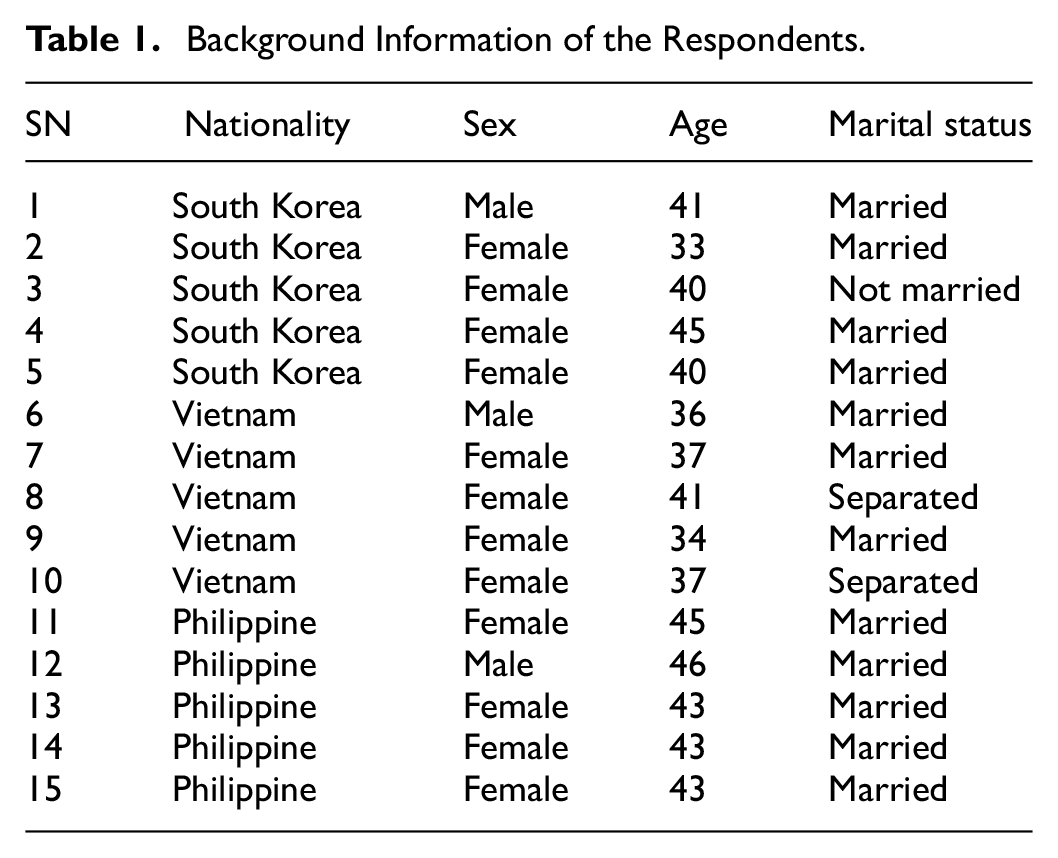
An anonymous, open-ended survey was administered to the participants. The survey instrument included questions about participants’ background information, followed by open-ended questions asking participants to provide detailed descriptions, for example, “Please tell a story about when your child found school life difficult.” To obtain sufficient data for qualitative analysis, free-text responses were collected in two steps. Data from the initial responses were translated from the participants’ languages into Japanese and reviewed by the researcher. If there were sentences or words that needed further clarification, explanations were requested in participants’ original language and information was collected again in step two using free-text data. This repeated measures of collection of data derived the sufficient voluminous information on the phenomena being studied. Data collection was done from December 2022 to May 2023. Participants who were able to agree and cooperate with this “two round” approach were recruited to the study. Sample size was based on the sufficient data and the point of data saturation with no new information obtained (Hennink & Kaiser, 2022; Saunders et al., 2018). Regarding the power analysis, we followed the process of qualitative metasummaries (Onwuegbuzie & Leech, 2007). Characteristics of the 15 participants are presented in Table 1.
Background Information of the Respondents.
Inclusion Criteria
Fifteen participants (five respondents per nationality) were included. Although the study focused on parents, but in some cases the children also contributed their responses, or parents/children completed the survey together. The parents whose children attending elementary and junior high schools in Japan were included in the study.
Ethical Procedure
Ethical approval was obtained from author’s University Institutional Review Board (No. 21-54, Approved on November 22, 2022). The details and purpose of the study were explained and a detailed information sheet was provided to the participants. Participation in the study was voluntary.
Data Analysis
Data were translated into Japanese and English, and the meanings were checked with several back translations. The six-step guide to thematic analysis detailed by Braun and Clarke (2006 was used: (1) familiarization with the data; (2) generating initial codes; (3) searching for themes; (4) reviewing themes; (5) defining and naming themes, and (6) producing the report. This approach led to an interpretation from a comprehensive reading of the data to finding patterns and developing themes (Braun et al., 2021; Braun & Clarke, 2006, 2014; Davey et al., 2019; Rohleder & Lyons, 2014). The transcripts are read and reread several times by the researchers in order to thorough grasp of all the data obtained. Researchers worked on the transcribed data to derive the codes often highlighting the portions of text and applying the labels. This process of scrutinizing the data and repeated review assured us that no information is jumped out and allowed for more new codes. During the process any disagreement was resolved with common consensus. Codes and then themes were finalized by both the researchers, keeping in mind the wide range of perspectives. Thus, no viewpoint was privileged over others. Constant comparison of each participant’s responses took place, and these were subsequently highlighted while deriving the common themes (Dingwall & Staniland, 2020). Reviews of codes and themes took place several times to ensure that the codes and themes matched and truly reflected the data (Braun & Clarke, 2006). The stage of reviewing themes includes back-and-forth approach of review, assessment, comparison, and inquiry. Thus we were assured that anything have not been overlooked and the themes definitively supported by the data. As the final step, we put our findings in writing that is each theme is addressed in detail in result section. And importantly the findings were also communicated to the participants for their views and approval.
Results
The experiences of immigrant children and the way their parents described these manifested in varying ways. Thematic analysis revealed five interrelated themes. The descriptions, codes, and themes are presented in Supplemental Table 2.
(1) Language barriers in communication, self-expression, and keeping pace with learning
Most of the children experienced language problems on entering school. However, they worked hard.
I didn’t speak Japanese when I entered the elementary school, but [after] one year of school life, I became good at Japanese, and I had [a] good relationship with my friends. She didn’t know anything about Japanese, and she was sad that she couldn’t see her Korean friends anymore. She worked hard to learn Japanese so that she could make friends as soon as possible. Even so, when I couldn’t understand the language, I was hurt because I couldn’t express my pain and what I wanted to convey well.
The language issue impacted learning and caused worry.
[It is] difficult not just for the child but also for the parents. Inability to talk to the teachers; difficulty in reading the sheets or instructions; kanji and grammar lessons; difficulty in participating in class. In Grade 3, her nihongo has improved but [she] still has difficulty in subjects such as science and math problems (word problems).
For those born in Japan and living there from a young age, the problems were greatly reduced.
The child was brought to Japan when he was 15 months old… went to public nursery school as we were working. Therefore, [he] naturally accepted Japanese culture. Our child was born and raised in Japan, and she attends kindergarten from the age of one, so there are not many problems.
(2) Acculturation effect in forming friendship, interpersonal relationships, social connections, and cultural integration
Children missed their friends and familiar environment. In their new country, they felt different and struggled to adapt, particularly in establishing satisfactory friendships and social connections.
…..he didn’t have any close friends until then. When I asked him why, he said that lots of friends didn’t like him. My child says he has no friends! Why is it so difficult to make friends? How do you relate to your classmates at school?
Cultural differences were reflected in terms of relationships between parents and the way children are treated:
In Vietnam,…much easier for children to play with each-other because their parents know each-other. And the teacher not only intervenes in time, but observes and perceives. Japanese children are often encouraged to be confident and do what they love, so teachers often do not interfere in their personal affairs.
One parent reported changing to a school where there were more foreign students, and later the basketball team helped the child to become more involved with Japanese friends. The participant described how their child adapted after initial periods of difficulty:
When my eldest started, he wanted to make friends… he speaks poor Japanese, so the other kids avoid him. He also struggled in his relationships with teachers and other children. What we did was move to the school that has international classes and [his] friends are foreigners like him. The difficulty here is that Japanese and foreign children are also separated because Japanese is not taught very well. Now my son is in the 5th grade of elementary school and most of the foreigners in the class have left. Initially having foreign friends, especially a Filipino fellow, really helped,… [then] he started on the basketball team (which wasn’t really our plan)… In his club, he had Japanese friends who were classmates at school, and now all his friends are Japanese.
Parents shared positive experiences regarding their children born in Japan. Even transferring school did not have a great impact:
We lived in X City before we moved to Y City when my daughter was in Grade 2. I was worried that it might be hard for her to adjust in [the] new school, but she was able to adapt easily and made new friends… knowing the language and the culture here made it easy to interact with her classmates and teachers. She also has no problem when it comes to academics and other extracurricular activities.
Therefore, to be born or grow up in Japan has advantages.
(3) Bullying, discrimination, and psychological/emotional well-being
Many of the children faced bullying.
There have been incidents of bullying by classmates who inflicted injuries, such as kicking, pushing, and choking. There was an incident where the teacher punished him for not doing extra work.
One of the children expressed feeling scared, rejected and discriminated against by his classmates because of his nationality.
When in elementary school, boys asked me why I was in Japan and told me to go back to Korea. I was in a bad mood because I was teased with Kimuchi. When I was learning about an island in 5th grade social studies class, I was scared when the boys raised their voices in the classroom….
Parental worry and expression of difficulties and discrimination was frequently evident.
I don’t think Japanese friends had any ill intentions either. However, as a parent, I worry about how to deal with such discriminatory remarks when the child grows up and reaches the upper grades.
The painful experience of discrimination was noted as follows.
My child doesn’t want to go to school because he has no friends. Children don’t let him play games. Or say you have to do this or that to play. Also, there are some behaviors and words of my child that his classmates find strange… even my child’s foreign name. For teachers, it’s mostly a non-issue …One time my child was so sad during recess that he cried on the telephone pole behind the school. Then after break… went to the doctor’s office and said he was in pain. In fact, I think he needed the consolation of the doctors in the infirmary.
As a coping strategy, a child expressed:
When someone bullies me, rather than reacting, I just ignore it and give up if [I’m] not happy.
(4) Teachers’ care and support, and parental wishes
Most of the parents appreciated the teachers’ approach:
…I always felt that they were taking good care of our child.
Despite the language and communication difficulties causing problems at school, parents were happy with the support and encouragement of teachers:
…difficulty in conveying sentiments; difficulty in standing up for oneself; classmates not understanding that her nihongo (Japanese language) level is different and, therefore, have more difficulty following instructions from the teacher.
Parents wished for bilingual support and an orientation to assist with adapting to the new environment. They also felt that an orientation and explanation for the native children would be beneficial in educating them about not using discriminatory language:
When entering elementary school, it is necessary to give explanations so that [the Japanese children] can become familiar with foreign friends or friends from multicultural families who share their school life, and to give caution not to use discriminatory words.
Parents would have liked teachers to observe the children and intervene beyond the classroom, that is, pay more attention to how children play and get along with each other:
It’s a bit difficult to deal with bullying, but teachers, please be careful and go out of the classroom and watch over them even during breaks.
Parents not only seek support and advice, but also generated solutions for themselves:
… when I talked to my co-workers and acquaintances at the church I attended, I was able to get some advice. …As a parent, I didn’t worry too much because I thought that if my child had a hard time, I would be able to solve the problem by moving schools or returning to home country.
(5) Comparisons, preferences, and feedback
The participants observed that Japanese follow rules strictly, which is different to what many immigrants are used to.
When our child was in first grade of elementary school, he had a picnic. I heard from the homeroom teacher the children were not allowed to share food, and that they were instructed to only eat what they brought.
Another example was the strict rules about school bags:
…in Japan, school bags are traditionally used as elementary school bags … I get the impression that Japanese education doesn’t encourage individuality of the individual, and everyone is pursuing the same thing.
Parents described the challenging entrance examination, which is very competitive and difficult for non-native students. They worried about the exam and sought additional information:
…all students have to pass the high school entrance exam once. High school students [must] study like [for] Korean university entrance exams. There is a lot of money in the entrance examination, and the gap between rich and poor is also very large. The Japanese education system is different in many ways, and it is necessary to collect a lot of information to raise children.
Parents found communication a challenge and wished for support in their native language:
To be honest, [back home] I would like to contact my homeroom-teacher directly by phone or letter. It is true that it is difficult to communicate, especially in non-native Japanese’. I’m hesitant because I’m worried that, visiting and talking to them in person might give the image that I’m contacting [them] for minor issues (not from the same foreigner’s position, but from a difference in level of understanding). It seems that there is still a lack of consideration and understanding of foreigners. It would be nice to have a counseling facility where you can consult on even the smallest issues. If possible, I would like to have a place where I can consult in my native language. Communication in elementary schools in Japan is different from Vietnam in many ways. Japanese are hesitant to exchange personal information (phone numbers). In Vietnam, there are often chat groups where parents can exchange information, so it is easy to contact anyone directly. I hope parents and teachers can communicate more closely and openly.
There were also positive views about Japanese education:
The Vietnamese education system focuses on mathematics and literature knowledge… Japan’s education teaches more about traditional culture, social knowledge, life, group-work, etc. However, child need to study too much from elementary school to get into a high school or good university, …parents have a hard time keeping up with their children. Different to our country, school here in Japan has a lot of physical activities, such as cleaning the school, playing after lunch, marathon, sports games and so on.
Parents also raised the issue about where their children would prefer to live.
Sometimes when I joke about going back to Vietnam, she says she likes being in Japan. It’s more convenient and safer to play outdoors than in Vietnam. Japan is also an environment for children to draw pictures and play games.
As feedback, a parent indicated that though there are many positive aspects to the Japanese education system and facilities for children, there are some drawbacks:
[the] system is limited in terms of space allowing non-Japanese kids to be themselves and express their cultures, their individuality and identity. Another is that the English language curriculum and the global citizenship preparation are very limited. We feel that the public education system lags in terms of those two areas.
Discussion
Immigrant children arrive in a new country with different linguistic, ethnic, economic, and socio-cultural backgrounds, leaving their past relationships, comfortable connections, and social dynamics behind. Here, we discuss the challenges experienced in Japanese schools by the children and their parents of three nationalities, considering the interplay of socialization, language acquisition, cultural influences, and psychological/emotional well-being.
The first theme identified was language barriers in communication, self-expression, and keeping pace with learning at school. After a year of challenges and determination to learn the local language/cultural patterns, the children were able to adjust to the monolingual environment of Japan. Outcomes were mixed, with a few having acquired the language while others had made less progress. We found that children who had moved to Japan at a very young age and grown-up there, or those born and raised in Japan who had attended Japanese nursery, had seamlessly acquired the language and culture. The language issue was more pronounced for children who had moved to Japan when they were older, and it impacted their academic achievement in a concerning way. Nae (2022) also pointed out the acculturation difficulties of immigrant children. A study in Portugal found that immigrant and immigrant-descendant children had lower school achievement than their native peers (Guerra et al., 2019), and Schachner et al. (2017) reported that language spoken at home and feelings of belonging at school were associated with school adjustment. Brault et al. (2022) identified the cause of school refusal and absenteeism as poor academic achievement and being unable to fulfill study expectations, which triggered feelings of worthlessness, shame, and guilt. Therefore, it is important to note that compared with children born and raised in Japan, non-native children relocating to Japan are more prone to experience acculturation effects. These children should form the focus of supportive interventions.
Second, we explored the issues in friendship development, establishing satisfactory interpersonal relationships, social connections, and cultural integration. Establishing relationships at school provides an important base for child development,socialization and future well-being (Cavicchiolo et al., 2023; Parker et al., 2015; Wentzel & Looney, 2007). Children need to master emotional and social developmental tasks for school success and to lay the foundation for a successful life (Denham, 2007). However, we found that immigrant children have difficulties in establishing relationships because of cultural differences and poor language ability. Barriers arise in interaction, expression, and communication when a child cannot communicate appropriately and completely with school mates and teachers. Interaction and communication difficulties influence immigrant children in many facets (Blatchford et al., 2015; Škof & Sangawa, 2013). An Italian study also revealed that the immigrant children who were more proficient in Italian were found to be more accepted by their peers and to have more friends in the class (Cavicchiolo et al., 2023). Being uninvolved with friends and alienated at school can cause children emotional pain, and studies have shown an adverse impact on psychological well-being (Li et al., 2020; Cavicchiolo et al., 2020; R. Chen et al., 2020; Okada et al., 2010). A Finnish study described increased parental worry about children who were less engaged, reluctant to talk, and felt lonely at school (Parviainen et al., 2021). Similarly, the immigrant parents in our study expressed that in their countries of origin, parents know each other, which makes it easier for children to socialize. However, they felt it was difficult to establish relationships with parents and children in Japan. In this regard, a Swedish study showed that a parenting program delivered in participants’ own language and focused on cultural sensitivity increased parental confidence and competence, helping parents become more aware of their children’s needs (Osman et al., 2019). A meta-analysis revealed that governments of multicultural societies could offer support program for example, language classes and local activities for migrants which can increase cultural social identity and leads to better social integration and adaptation to host environment (Hu & Cheung, 2024). Japanese children are encouraged to be confident and allowed to do what they enjoy. Thus, teachers tend not to interfere in children’s personal affairs. However, the immigrant children’s parents wished that teachers would be more involved at all available opportunities. Martin et al. (2020) explored difficulties faced by school personnel, and their feelings of ambivalence in dealing with children and families whose culture differs from their own. Parents shared positive experiences regarding adaptation through language, cultural acquisition, and making friends with children born or raised in Japan. A study in Italy indicated that having proficiency in the language of the host country is beneficial for mental well-being in immigrant children, regardless of whether or not they were born in the country (Cavicchiolo et al., 2020). In support of this finding, Pellegrini and Blatchford (2014) indicated that languages can be most effectively taught when children are young. Therefore, adaptation to language and culture will be easier for those immigrant children born or raised in the host country. Our findings stress that children who relocate later face the greatest challenges. We also described how some children moved to new schools where there were international classes and foreigner friends. In some cases, however, even changing schools was not the solution, and parents worried about future integration as there was little connection with Japanese students. Here, it is worth noting that peer association and identity development strongly predict the self-esteem, confidence, social, psychological, and emotional well-being of children and youths (Schoeps et al., 2020; van Hoorn et al., 2016).
The third theme was psychological/emotional well-being, bullying, and discrimination. Many of the immigrant children had been bullied. Yamamoto (2013) described how an immigrant parent moved her child to an international school because of bullying, and a study from Finland described being bullied for being a foreigner and not matching the cultural norms (Parviainen et al., 2021). Past finding based on social identity theory emphasized the significance of social identity in terms of sense of belonging, self-worth, purpose and identity lead the first generation migrants to successful adjustment and psychological well-being (Brance et al., 2024). One of the participants in our study described coping with bullying by ignoring those who made him feel unhappy. Emotional regulation or coping occurs when emotions are aversive or distressing (Denham, 2007). However, there is a lack of research to support findings about the coping strategies of immigrant children and their families. Thus, future studies could explore how immigrant children cope with bullying and discrimination. For the potential support measure to discuss, a recent randomized control trial among secondary school students in Turkey identified that Self-Esteem Development Programme improved self-esteem level and reduced peer bullying, thus reported an effective nursing intervention in increasing self-esteem and reducing peer bullying among students who are at risk (Sır & Lok, 2024). Therefore, immigrant children being at risk, this approach can be utilized in reducing bullying and its effects. Likewise, two of the Finnish studies, one examined the anti-bullying program KiVa on changes in self-reported affective and cognitive empathy and tested whether these effects varied depending on students’ gender, initial levels of empathy, peer-reported bullying, and peer-perceived popularity, as well as school type and classroom bullying norms, and found that KiVa can raise students’ affective empathy regardless of students’ gender, status, initial empathy, or levels of bullying, and regardless of school type or classroom bullying norms (Garandeau et al., 2022). Second, a school-based controlled trial study reported the effectiveness of drama program to enhance social relationships and decrease bullying in children in grades 4 to 5 (Joronen et al., 2012), suggesting that applied drama and theater methods in the classroom can be effective to be used in schools where there are immigrant children. For example, a US and UK based studies among refugees and immigrant children also determined that language support and peer-to-peer support at school can enhance relationships and emotional wellbeing (Allen, 2021), and parents and family engagement and support increases the trust and well-being in immigrant children (McNeely et al., 2020). Hence, based on past findings, the interventions can be planned, practiced and examined the effectiveness among immigrant children in Japanese schools.
Our findings revealed experiences of fear, emotional pain, and distress. The immigrant children in our sample were scared by their schoolmates, cried alone behind a pole at recess, rejected by friends, and subjected to discriminatory words. Like our findings, Parviainen et al. (2021) reported issues in their sample of children, such as emotional difficulties, lack of confidence, loneliness, and limited school engagement. A pilot study from Ireland also revealed mental health issues in immigrant children (Masaud et al., 2015). School climate has a great influence on children, and a sense of belonging leads to satisfaction, motivation, happiness, feelings of connection, and overall social and psychological well-being. Schachner et al. (2017) note that feelings of belonging have positive outcomes on academics and psychological well-being. A study based on social identity theory also indicated that sense of belonging and self-worth can fortify against distress in migrant children (Yuan et al., 2013). Similarly, another Chinese study among migrant children also reported the negative correlation between social identity and mental health problem in school children (Y. Chen et al., 2022). A Portuguese study showed that immigrant children had lower levels of well-being and peer acceptance, and the perceived discrimination was negatively related to school achievement (Guerra et al., 2019). Previous study of Nepalese immigrant children in Japan revealed their feelings of being different especially during meals at school (Banstola & Inoue, 2023). Although different in the present study, the participants reported feelings of discrimination and hurt when Japanese friends did not take or share food or drink. Although the Japanese children were simply adhering to the rules of their school and society, immigrant children felt rejected. Children’s emotional competence plays a great role in their growing social competence, cognitive development, and mental health (Denham, 2007). This study revealed some problems specific to the nationalities, religion and cultural background of the participants involved. Understanding their perspectives is important for planning an inclusive school and society.
Fourth, most of the participants appreciated the teachers’ care, support, and encouragement of the children. The welcoming and supportive nature of Japanese teachers has been noted previously (Maruyama, 2018; Takahashi, 2020), despite their lack of training in dealing with students from multicultural and diverse language backgrounds. Along with their positive experiences, parents wished that teachers would observe children and intervene beyond the classroom, that is, noting how children play and get along with each other at recess. Teachers have a key role in supporting new students and their parents (Tokunaga, 2019). One parent described how in their country of origin, parents contact teachers directly and chat groups comprising parents and teachers are common, which is not the case in Japan. Parents found that Japanese rarely share personal contact details and communication is more formal. Parents worry about their children and want assurance that their child is secure, happy, involved and accepted at school. We explored parents’ desire for bilingual support and an orientation at school to help them and their child adapt more readily to the new environment. An orientation and explanation to the native children would be helpful in preventing the use of discriminatory words and reducing bullying. Unfortunately, bullying and discrimination remain common issues for immigrants (Elamé & Elamé, 2013; Mendez et al., 2012). Native children may not intend to discriminate in this way but perceptions differ because of cultural difference. One parent reported that she received advice from friends but no professional help. Support is important in coping and emotional regulation (Denham, 2007), and therefore, immigrant parents should have access to information, support, and counseling, to reduce their anxiety and facilitate their adaptation. A Canadian review highlighted that comprehensive mental health interventions for immigrant-refugee children/youth—involving cultural brokers/interpreters and racially diverse teachers—are important to establish a trusting relationship between school authorities and marginalized populations (Herati & Meyer, 2023). Another study of Mexican immigrants suggested that school nurses partner with immigrant families, outlining a potential intervention that expands the school nursing role (McNaughton et al., 2014). The Japanese educational system could focus on the wishes of immigrant parents to better support them and their children, using some of the suggestions made to develop appropriate interventions.
Finally, the fifth theme was comparisons, preferences, and feedback. Parents compared the Japanese education system, educational setting, and communication between children, parents and teachers, in light of their previous experiences. They appreciated that Japanese education imparts knowledge of traditional culture, society, life, and group-work. Some parents expressed their children’s preference to stay in Japan because they enjoy the facilities and system. However, parents found it challenging to keep pace with educational demands and support their children. The competitive and demanding entrance examination requires hard work and preparation for future academic success, often determining students’ educational and career paths after graduation (Tokunaga, 2019). These examinations are more difficult for non-Japanese children mainly because of the language barrier and factors such as parental guidance and economic support (Joshi & Tabata, 2021; Nae, 2022). Parent feedback was that there are many positive aspects to the Japanese educational system, but also some challenges. The system is limited in terms of opportunities for non-Japanese children to be themselves and express their cultures, individuality, and identity. The English language curriculum and global citizenship preparation were also considered very limited.
Overall, immigrant children and their parents face a mix of difficulties and positive experiences. School is the most important social world for children and has great significance in their overall development (Cavicchiolo et al., 2023; Wentzel & Looney, 2007). Enhancing positive factors and addressing the issues identified in the study might help to build a more inclusive society where every child can thrive and meet their full potential. Various school and community based practices and interventions could be effective to support immigrant children and family which can contribute to the integration and inclusion at host society. For example, language support at school and the English as second language has been found an effective intervention at schools (Adesope et al., 2011). Study in English speaking country have found peer involvement and interaction strategy by and with native peers improved the vocabulary, speaking and overall English proficiency, which helped in academic and relational requirement of immigrant pupils (Téllez & Waxman, 2010), but in case of Japan where native language is used at almost schools, the immigrant children need Japanese language support to facilitate language acquisition, communication skills development, better interpersonal relationships and overall satisfaction. In this regard findings from Italian primary schools by Cavicchiolo et al. (2023) indicated that of immigrant children, intervention that facilitate national language proficiency is most important than group, family, and individual characteristics for social inclusion. Similarly, cultural integration activities can bring social cohesion and lessens the feeling of isolation. Welcoming communities and interagency collaboration as prevention strategy, and community relationship through connection and mentors as well as Church (as a resource) as intervention strategies has been indicated by a US based study (Evans et al., 2024). Likewise, peer support programs where native students mentor and support immigrant peers can facilitate social integration and provide a sense of belonging. Study in 11 European countries revealed the importance of classroom environment and peer support, and recommended for the need of school intervention focused to positive relationships with immigrant peers (Walsh et al., 2016). It is also denoted that through school-based peer support intervention program, that is, support with language, welcome with smile, embracing culture of one another and reducing discrimination and isolation was significantly effective for mental well-being of first-generation immigrant students from Iran, Iraq, Mexico, Poland, Romania, Russia, Syria and Ukraine in UK (Allen, 2021).
Moreover, schools can actively involve immigrant families and in this notion, study from US on school-linked mental health services for refugee and immigrant children revealed the family engagement was the best one above all other services offered and the assistance with basic needs through economic support and assistance with adaptation to a new culture directly promoted the emotional wellbeing (McNeely et al., 2020). Osman et al. (2022) reported that culturally tailored parenting support program for Somali immigrant parents staying in Sweden were satisfied with the intervention as they gained knowledge about children’s rights and from where (social services) they could seek support. A school-based creative expression program in Belgium revealed the beneficial effect on children’s self-esteem and social connectedness with peers and to foster emotional connections between parents, teachers, and children (de Smet et al., 2024).
The culturally responsive teaching practice can have great importance, a study in Italian schools determined the teachers’ support at school to foster students’ autonomy would be an effective approach for protecting against mental illness among immigrant adolescent children (Alivernini et al., 2019). A scoping review noted the importance and need for collaboration between schools and communities in developing mental health interventions for immigrant children by involving cultural brokers or interpreters and racially diverse school teachers/staff (Herati & Meyer, 2023). Accordingly, traumatic life events experienced by immigrant children can deleteriously affect mental health and well-being, given that, a trauma-informed approach and intervention that increases empathy in students can reduce bullying and discrimination between native and immigrant students. A Finnish anti-bullying program KiVa showed positive effect on affective empathy of students regardless of gender, status etc. (Garandeau et al., 2022). Therefore, this kind of approach can be practiced where immigrant children are enrolled in Japan and its effectiveness can be assessed. Similarly, inclusive policies especially at schools can promote equity and inclusion. For example, Menesini and Salmivalli (2017) reported that in several countries schools have an anti-bullying policy, teachers’ clear communication with students about their antibullying attitude and involving parents strengthens the positive effects, however, having any kind of policy might not be enough and therefore, programs and policies found effective in other context can be utilized but should be assessed and analyzed.
Strength and Limitations
The study has incorporated the insights from three nationalities who are among the highest number of foreign nationals residing in Japan. To our knowledge this is the first study of such kind focusing on socio-emotional, relational and psychological issues experienced by immigrant children in Japanese schools. In overall, this study added in literature on importance of language acquisition, cultural integration, role of information and orientation to parents and support to children by the teachers. We also added that compared to the non-native children born and raised in host country, those grownups relocate to host country need more focus and support. However, some limitations of the present study should be mentioned. The study was based on parents’ perspectives, although in some cases children’s views were also incorporated. Future work could focus on children’s opinions to a greater extent. It might bring more reach data through face to face interview or focus group discussion, where the researcher has opportunity to make field note on participants expression, mood, reactions related to the issues being explored. Through interview or FGD future work can also bring the perspectives of those parents who are illiterate or those who cannot express in detail in written form. We explored the experiences of children and parents but did not consider the challenges and issues experienced by teachers. Hence, future work could explore the challenges faced by teachers when integrating children from diverse backgrounds into their classrooms. The perspectives of more stakeholders will lead to greater support toward an inclusive environment where every child can grow and thrive.
Implications for Practice
The study findings have important implications for educators, school health personnel, policymakers, parents, families, and society at large to effectively support the successful integration of immigrant children into their new educational settings. The study also has implications for future researchers and opens up new lines of enquiry, such as considering the perspectives of educators, school nurses and health personnel, and exploring the coping strategies of immigrant children.
Conclusion
After home, school imparts the crucial life skills that pave the way to a happy, healthy, productive, and stable adult life. However, not all children have equal opportunities and immigrant children are a vulnerable group who must first adapt to an unfamiliar environment. This study delved into the issues confronting immigrant children in Japanese schools, with a particular focus on emotional, social, and psychological well-being. Drawing insights from participants from three nationalities (Vietnam, the Philippines and South Korea), we concluded that the language barrier significantly hinders communication, interaction, and self-expression, and impacts both academically and socially. Issues in forming friendships, establishing satisfactory interpersonal relationships, and integrating into the social and cultural fabric are encountered. Older children who relocate to Japan are more prone to an acculturation effect compared with those born or raised in Japan, highlighting the challenges of integration into multicultural, monolingual Japanese school settings. The study uncovered distressing emotional and psychological experiences, such as fear, bullying, and being called derogatory names by peers. On a positive note, most of the participants appreciated teachers’ care, support and encouragement. There were positive views on the educational system and facilities, and immigrant children often hope to stay in Japan. At the same time, parents and children have worries and wishes, and make comparisons with their countries of origin. This study revealed five interrelated themes with practical and policy-level implications for inclusiveness, so that every child can grow and thrive to their full potential. Ultimately, we need to support immigrant children and their families to adapt and contribute to global society in the long term.
Supplemental Material
sj-docx-1-sgo-10.1177_21582440251340627 – Supplemental material for Adjustment and Adaptation Issues Affecting the Social, Emotional and Psychological Well-Being of Immigrant Children in Japanese Schools
Supplemental material, sj-docx-1-sgo-10.1177_21582440251340627 for Adjustment and Adaptation Issues Affecting the Social, Emotional and Psychological Well-Being of Immigrant Children in Japanese Schools by Sachiko Inoue and Ratna Shila Banstola in SAGE Open
Footnotes
Acknowledgements

Author Contributions
SI: conceptualization, data curation, formal analysis, funding acquisition, investigation, methodology, project administration, resources, software, supervision, validation, visualization, writing, review, and editing. RSB: data curation, formal analysis, methodology, project administration, validation, visualization, writing original draft, review, and editing. Both the authors have read, edited and approved the final manuscript.
Funding
The author(s) disclosed receipt of the following financial support for the research, authorship, and/or publication of this article: This work was supported by JSPS KAKENHI Grant Number 20K19281.
Declaration of Conflicting Interests
The author(s) declared no potential conflicts of interest with respect to the research, authorship, and/or publication of this article.
Data Availability Statement
The data that support the findings of this study are available from the corresponding author upon reasonable request.
Supplemental Material
Supplemental material for this article is available online.
References
Supplementary Material
Please find the following supplemental material available below.
For Open Access articles published under a Creative Commons License, all supplemental material carries the same license as the article it is associated with.
For non-Open Access articles published, all supplemental material carries a non-exclusive license, and permission requests for re-use of supplemental material or any part of supplemental material shall be sent directly to the copyright owner as specified in the copyright notice associated with the article.
