




Abstract
Gender inequalities in the workplace present a profound challenge, undermining not only the psychological well-being and performance of employees but also the fabric of organizational justice and efficiency. Such inequalities are detrimental to the fundamental sustainability and viability of organizations. To address this issue, the current research delves into the dynamics of gender as a pivotal factor in fostering workplace inequalities. More critically, it investigates the role of gender congruence in moderating the relationship between gender and perceived inequalities. To this end, the study utilizes ordinary least squares models to meticulously analyze data from the 2007 Career Advancement Survey conducted by the U.S. Merit Systems Protection Board. This comprehensive survey engaged a diverse cohort of full-time, permanent federal employees from over 30 U.S. agencies selected through both web and traditional paper methods. The findings reveal that women are more likely than men to perceive gender inequalities in the workplace. Although female supervisor–employee gender congruence does not directly relate to these inequalities, it acts as a moderating factor, reducing the extent of perceived inequalities among female employees. These insights are crucial for scholars and practitioners seeking to address and mitigate gender inequality issues in organizational settings.
Plain language summary
Gender inequalities are a serious problem in the workplace. It not only threatens employees’ psychological well-being and work performance but also organizational justice and performance. Indeed, it is a critical concept for organizational sustainability and survival. Thus, identifying the factors associated with gender inequality can offer meaningful insights and implications for sustainable organizational management. First, this study explores the role of gender in explaining gender inequalities. More importantly, this study focuses on identifying having the same gender supervisor as a variable of influencing the relationship between gender and gender inequality. Using the 2007 Career Advancement Survey by the U.S. Merit System Protection Board, the findings suggest that women are likely to perceive gender inequalities in their workplace. However, having the gender supervisor helps weaken female employees’ degree of perceived gender inequalities. Because of using a cross-sectional based dataset, this study should not be interpreted as causal.
Keywords
Introduction
Women encounter systemic gender inequalities in not only private but also public organizations. These disparities, particularly pronounced in human resource (HR) practices including hiring, career advancement, and compensation, significantly impact women’s professional lives (Stamarski & Son Hing, 2015). Despite some progress, women remain underrepresented in high-ranking positions and often face unequal treatment (S. Choi, 2018). Such persistent inequalities lead to demoralization among women, adversely affect organizational performance, and entrench gender discrimination in workplace structures (Stamarski & Son Hing, 2015). Manifestations of these disparities, such as unequal pay, limited career opportunities, and pervasive stereotypes, not only diminish women’s organizational commitment and job satisfaction (Hicks-Clarke & Iles, 2000; Kark et al., 2023) but also pose risks to their psychological well-being (Borrell et al., 2010; Schmader et al., 2008) and metabolic syndromes (e.g., hypertension, diabetes, and hypercholesterolemia; Choe et al., 2020; Rochlani et al., 2015). Moreover, these conditions negatively impact women’s job performance (Cohen et al., 1998). Recognizing the importance of these issues, it is crucial to identify and address the factors contributing to gender inequality within organizations to promote long-term sustainability and a more equitable work environment (Caven et al., 2022).
Building upon this context, the present study addresses the relationship between gender and gender inequalities, noting the persistence of gender disparities in the workplace despite recent progress, especially in the public sector. Although women’s representation in leadership roles is increasing (Garcia-Retamero & López-Zafra, 2006), they still lag behind men in both numbers and earnings (Blau & DeVaro, 2007; S. Choi, 2018; Ramos et al., 2022). Despite the substantial influence of gender inequalities on work-related outcomes, empirical research on the determinants of these inequalities has been limited. In response, this research focuses on analyzing the perceptual differences between men and women regarding gender inequalities within organizations. The fact that women face numerous systemic challenges emphasizes the need for this research. They often confront entrenched norms and stereotypes, limiting their career advancement and relegating them to less powerful and lower-paying positions (Gauci et al., 2022; Riccucci, 2009; Stamarski & Son Hing, 2015; Wood, 2008). Additionally, the greater emotional demands placed on women as primary caregivers and homemakers have a negative impact on their professional opportunities and frequently go unrecognized and uncompensated in the workplace (Desai et al., 2014; Guy & Newman, 2004; Mandel & Semyonov, 2021). These factors collectively contribute to a higher likelihood of women perceiving gender inequality more acutely than men do.
Expanding on this, the present study critically examines the moderating effect of gender congruence on the relationship between gender and perceived gender inequalities in the workplace. While demographic similarity between employees and their supervisors, known as gender congruence, has been shown to notably influence employees’ attitudes and behaviors (Fjendbo et al., 2022; García-Cabrera et al., 2023; Grissom et al., 2012; Hatmaker & Hassan, 2023), a significant research gap exists in exploring its specific impact on mitigating gender inequalities, particularly concerning female supervisor–employee congruence. This concept is underpinned by several theoretical frameworks that highlight the importance of demographic similarities in organizational contexts. Relational demography theory suggests that gender similarity between employees and their organizational units significantly influences their work attitudes and behaviors (S. Choi, 2019; Fairchild et al., 2012; Riordan & Shore, 1997). The similar attraction theory proposes that shared characteristics between individuals foster mutual understanding and connections (Ali et al., 2023; Byrne, 1971; Crijns et al., 2017). Representative bureaucracy theory also emphasizes the importance of demographic congruence, advocating for the alignment of government employees’ demographics with their constituents to positively influence policy-making and decision-making (H. Choi et al., 2018; Dhillon & Meier, 2022; Selden, 1997). These theories collectively suggest that gender congruence is crucial in building strong relationships in the workplace, especially between supervisors and employees. However, despite its recognized importance in shaping employees’ job attitudes, research on whether gender congruence, particularly between female supervisors and employees, moderates the effects of gender inequalities has been notably limited. This study seeks to address this gap by specifically examining how gender congruence between female employees and female supervisors may enhance mutual understanding and shared values (Li et al., 2023), thereby potentially reducing female employees’ perceptions of gender inequalities. Prior research indicates that female supervisor–employee gender congruence fosters empathy and support from female supervisors toward their same-gender employees (S. Choi, 2018; Nielsen, 2015). Thus, this study posits that gender congruence between female supervisors and employees acts as a moderating factor, lessening perceived gender inequalities among female employees (Lucifora & Vigani, 2022).
In summary, this study recognizes the diverse range of gender studies in the workplace and seeks to expand on this established base. Previous research has offered various insights into gender dynamics in distinct contexts. For instance, Grissom et al. (2012) highlighted the impact of gender congruence on job attitudes and behaviors in U.S. public schools, while Doornkamp et al. (2023) provided empirical evidence of the positive effects of student–teacher gender congruence on student performance in Dutch schools. Additionally, Naciti et al. (2022) demonstrated that gender representation in the Italian healthcare sector significantly predicts increased financial performance. Further, Hatmaker and Hassan (2023) explored gender dynamics in U.S. local government settings, primarily focusing on broader gender issues rather than specific gender inequality. Although most of these studies have explored gender dynamics in various workplace and regional contexts, there remains a significant gap in understanding these dynamics from women’s perspectives within public organizations, especially in the U.S. federal government. This study seeks to bridge this gap by investigating how gender congruence moderates the relationship between gender perceptions and inequalities in U.S. federal agencies. By doing so, it aims to contribute to contemporary gender studies discourse, offering a more inclusive and diverse perspective.
The study is structured in the following manner. Initially, it explores the theoretical link between gender and gender inequalities. The focus then shifts to the role of gender congruence in explaining gender inequalities, examining the mechanism behind female supervisor–employee gender congruence as the moderator of the gender–gender inequalities linkage. Hypotheses are generated based on early theoretical explorations and are subsequently subjected to empirical analysis. The final section discusses the results and their implications for both scholars and practitioners.
Gender and Gender Inequalities
Gender inequality is a complex yet serious problem for organizations. Defined as “the departure from parity in the representation of women and men in key dimensions of social life” (Grissom et al., 2012, p. 57), gender inequality adversely affects women, demoralizing them and leading them to leave their organizations.
Inarguably, the environment surrounding gender inequality is better in the public sector compared to its private counterpart (Colley et al., 2021). This is seemingly because the public sector functions as a “shelter” that protects women from economic discrimination (Mandel & Semyonov, 2021). Indeed, public sector jobs are attractive for women, as the implementation of anti-discriminatory measures and egalitarian commitment to recruiting, compensation, and promotion is stronger than in the public sector (Mandel & Semyonov, 2021).
Nevertheless, as Guy lamented roughly three decades ago, the pay of female employees is still not equal to that of men, and women’s positions in leadership are not proportional to their share in the public workforce (Guy, 1993). Getting closer to their male counterparts in terms of pay and position does not mean that female employees receive the same treatment in HR practices as men (Grzelec, 2024). Female employees still feel that they lack opportunities afforded to men in career advancement, training, and mentoring (Farley et al., 2021). Women still predominate in low-level, low-paying jobs (Riccucci, 2009; Sneed, 2007). Women’s pay disparity compared with men is still pronounced in senior leadership positions in the government, such as the U.S. federal government; the top General Schedule [GS] levels from GS 13 to GS 15 demonstrate statistically significant disparity between men and women, with women earning 2.19% less than men at the same level (S. Choi, 2018). For local governments associated with the International City/County Managers Association, women occupy only 13% of chief local government positions (Farley et al., 2021). Furthermore, a Spanish local government case study revealed that women are visibly and invisibly subject to gender inequalities (Bermúdez-Figueroa & Roca, 2022).
Many factors result in women’s vulnerability to unequal treatment and discrimination in the workplace (Desai et al., 2014; Guy & Newman, 2004; Mandel & Semyonov, 2021; Riccucci, 2009; Stamarski & Son Hing, 2015). First, some of these factors are norms and stereotypes. From an early age, women are supposed to exhibit feminine traits (Stamarski & Son Hing, 2015). The way women dress, talk, and behave is expected to conform to gendered norms through which women are judged by society. Gendered norms, then, are internalized by individuals and institutionalized by organizations (Cejka & Eagly, 1999). Second, women’s career advancement is still framed by male-oriented notions of leadership (Stamarski & Son Hing, 2015). Women are stereotyped as modest, emotional, and relational (Koch et al., 2015). However, when they are evaluated for a promotion, they should demonstrate male-oriented traits, such as assertiveness, risk taking, and competitiveness (Stamarski & Son Hing, 2015). Third, given that the number of women in power positions is far lower than that of men, women hold job titles that pay less than men, contributing to a widening pay gap (McCandless et al., 2022; Riccucci, 2009). Fourth, the responsibilities women hold at home can adversely affect them. Employers who are less generous toward work and childcare flexibilities indirectly create gender inequalities for women because of women’s extensive obligations at home (Stamarski & Son Hing, 2015). Fifth, women who prioritize work over family responsibilities are often stigmatized in their workplaces, generating gendered inequalities for women (Desai et al., 2014). Sixth, marriage structure is also responsible for gender inequalities in the workplace; men in traditional marriages with their spouses at home are likely to view working women negatively and deprive qualified women of promotion opportunities, thus exacerbating gender inequalities (Desai et al., 2014). Seventh, family obligations and gendered roles at home also hinder women’s ability to earn more and advance because they deprive women of overtime work in both the private and public sectors (Mandel & Semyonov, 2021). Finally, women are often required to conduct more emotional labor than men do; however, such labor is often not visible or well compensated (Guy & Newman, 2004).
Indeed, Alkadry et al. (2017) demonstrate that sex and workplace authority variables significantly predict pay, with male city managers earning more. On average, female city managers earn 73% of their male counterparts’ salaries and manage smaller teams and budgets, overseeing only 60% of the employees and 62% of the budget that male managers do. Recently, Bishu and Headley (2020) analyze interview data from city managers and police officers in U.S. to explore how gendered organizational processes affect women in male-dominated roles. Although the opportunities appear to be equal, the findings reveal that women face persistent gendered barriers that directly influence their job experiences and outcomes.
Taken together, the studies noted above indicate that women experience a higher likelihood of gender inequalities compared to men. Thus, women are likelier than men to perceive gender inequalities in their organization. The following hypothesis is proposed for an empirical investigation:
Hypothesis 1: There is a positive association between female gender identity and the perception of gender inequalities.
Role of Gender Congruence in Gender Inequalities
This study explores whether supervisor–employee gender congruence affects women differently when they perceive gender inequalities. Before discussing the moderating effect of supervisor–employee gender congruence in this regard, it is essential to engage in a theoretical discussion about gender congruence. In recent decades, several theoretical streams, such as relational demography, similar attraction, and representative bureaucracy, have shown that manager–employee gender congruence is significant in shaping female employees’ attitudes and behaviors (H. Choi et al., 2018; Crijns et al., 2017; Fairchild et al., 2012; Marvel, 2015; Nicholson-Crotty et al., 2011; Parent-Rocheleau et al., 2024; Riordan & Shore, 1997).
The first of these streams is relational demography (Riordan & Shore, 1997). Relational democracy theory indicates that demographic similarities or dissimilarities between employees and those in their social units shape their job-related attitudes, behaviors, and opportunities (Fairchild et al., 2012; Riordan & Shore, 1997). Such similarities or dissimilarities can include gender, race, and age (Fairchild et al., 2012; Riordan & Shore, 1997). Relational demography theory insinuates that gender is a critical part of reshaping employees’ perceptions of their leaders and supervisors (Fairchild et al., 2012; Riordan & Shore, 1997). In addition, the theory informs us that the demographic similarities or differences between supervisors and employees affect employees’ perceptions of relationships with their supervisors (Bradbury & Kellough, 2008; Grissom et al., 2012; Nicholson-Crotty et al., 2011; Riordan & Shore, 1997), of their supervisors’ leadership (Goldberg et al., 2008), and of their work groups (Goldberg et al., 2008), as well as employees’ level of social capital (S. Choi, 2019).
Correspondingly, similar attraction theory focuses on similarities in characteristics, attitudes, or beliefs that help foster one’s connection and closeness to others (Byrne, 1971; Crijns et al., 2017). Applied further to supervisor–subordinate dyads, supervisor–employee similarities can facilitate interpersonal trust and affinity. Gender is one of many similarities that supervisors can share with their subordinates, and gender congruence can generate positive actions from supervisors on behalf of their subordinates (Piatak et al., 2022; Vecchio & Bullis, 2001). For instance, supervisors are likely to offer family-related support to their same-gender subordinates (Foley et al., 2006).
Finally, representative bureaucracy research in the field of public administration has long maintained that the democratic characteristics of bureaucracy should be closely associated with those of the population to deter nondemocratic impulses of bureaucracy from being insulated from the people it is supposed to serve (H. Choi et al., 2018; Meier, 1993; Selden, 1997). Thus, studies of representative bureaucracy have tested whether similar democratic characteristics between bureaucracy and the population produce policies and bureaucratic behavior that enhance the welfare of the population (H. Choi et al., 2018). The scope of the theory includes not only race but also gender as common demographic characteristics of bureaucracy and the population (H. Choi et al., 2018; Dhillon & Meier, 2022). In terms of gender, female leaders have been proven to facilitate communication and trust with citizens (Fox & Schuhmann, 1999; Joshi & Diekman, 2022) and have delivered positive bureaucratic performance (Jacobson et al., 2010). Female teachers are positively associated with an improved level of performance of female students (Dhillon & Meier, 2022; Zhang, 2019), and female teachers put in greater effort when they have same-gender principals (Marvel, 2015). Thus, representative bureaucracy theory signals positive relationships between supervisors and their subordinates, indicating that employees may expect positive individual and group outcomes from having same-gender supervisors due to shared values resulting from demographic similarities. Indeed, several studies have demonstrated that supervisors or leaders treat their same-gender subordinates positively (Bradbury & Kellough, 2008; H. Choi et al., 2018; Hultin & Szulkin, 1999; Jong, 2023; Marvel, 2015; Nicholson-Crotty et al., 2011; Selden, 1997).
The theories discussed above explore how gender congruence between supervisors and female employees can lessen perceptions of gender inequality by reinforcing shared values and expectations (Brown & Treviño, 2009; Jacobsen & Staniok, 2020; Marvel, 2015). Indeed, empirical evidence supports the positive implications of female supervisor-employee congruence. For example, Nielsen (2015) highlights that such congruence actively encourages supervisors to engage more deeply in the professional development of same-gender subordinates, which includes aspects like recruitment, support, and promotion. This engagement is vital as it reduces role ambiguity (Tsui & O’Reilly, 1989) and fosters a supportive work environment, leading to increased job satisfaction and lower turnover rates (Grissom et al., 2012). Moreover, Hatmaker and Hassan (2023) reveal that gender congruence enhances perceptions of leadership behaviors and engenders more supportive leadership practices. These findings are critical as they not only reflect on leadership effectiveness but also on organizational retention strategies and employee morale. Furthermore, Marvel (2015) and S. Choi (2019) found that the extended benefits of gender congruence include an increased willingness among employees to undertake overtime and enhanced career advancement opportunities for women, respectively. These empirical results indicate a significant shift in how gender congruence can influence organizational loyalty and career trajectories for female employees. Finally, Tőkés (2024) recently showed that private sector companies in Europe with female leaders tended to maintain or increase the proportion of female employees during COVID-19, demonstrating “sisterhood behavior” where gender discrimination was less likely or absent.
Based on these theories and mechanisms, the theories and studies noted above strongly suggest that female supervisor–employee gender congruence matters in how female employees perceive their job-related attitudes by fostering value congruence with female supervisors. Gender congruence is particularly crucial for women facing diverse types of visible and invisible discrimination in their organizations. Thus, even though women may perceive gender-related inequalities in their organization as high, having same-gender supervisors may mitigate their negative perceptions of gender inequalities in the organization. Therefore, the following hypotheses can be developed for an empirical test:
Hypothesis 2: The relationship between female gender identity and perceived gender inequalities is moderated by gender congruence. Specifically, this relationship is hypothesized to weaken as the level of gender congruence between supervisor and employee increases.
In summary, Figure 1 provides an overview of the hypothesized relationships between female gender identity, gender congruence, and the perception of gender inequalities. It suggests that female gender identity directly influences perceptions of gender inequalities (H1) and that this relationship is moderated by gender congruence (H2), with higher gender congruence potentially reducing the perceived impact of these inequalities.

Theorizing female gender identity, gender congruence, and perception of gender inequalities.
Data
This study utilized the 2007 Career Advancement Survey conducted by the U.S. Merit Systems Protection Board. The primary aim of the survey was to evaluate the fairness of career advancement opportunities for federal employees and to identify the factors influencing their career progression (U.S. Merit Systems Protection Board, 2007). The survey comprehensively covered areas such as job satisfaction, work environment, career experiences, performance evaluations, and life-related issues (U.S. Merit Systems Protection Board, 2007). To ensure a representative sample, the survey targeted full-time permanent employees across more than 30 federal agencies (See Appendix 1 for a list of the 30 agencies). It utilized a stratified random sampling approach, incorporating key demographic variables such as gender, ethnicity, and national origin to foster a diverse and inclusive participant base. The sampling pool was derived from the Central Personnel Data File, which includes records for most Federal civilian employees. The survey was distributed using a dual method: a web-based format was the primary mode, complemented by a paper survey for the approximately 5% of employees without internet access. A stratified random sampling method was used, incorporating key demographic variables, such as gender, ethnicity, and national origin, to ensure a diverse and inclusive participant base. This methodology resulted in the collection of approximately 11,538 responses, equivalent to a 53% response rate. Participant confidentiality and voluntary participation were paramount in the survey design, with assurances provided to all respondents regarding the privacy of their responses. For the purpose of this study, the sample was refined to 5,793 respondents, selected based on the relevance of specific variables to the study’s aims. To address potential biases, particularly non-response bias, and to bolster the representativeness of the sample, the survey implemented sampling weights. These weights were carefully applied to all analytical estimates used in this study, with the aim of ensuring that the findings accurately mirrored the characteristics of the broader federal employee population. Table 1 lays out the detailed background descriptions of the respondents.
Background Characteristics of Respondents.

Dependent Variable
The dependent variable for this study consisted of three items: gendered voice, gendered standards, and gendered promotion. Each item ranged from 1 to 5. It was reverse-coded so that a value of 5 indicated the highest degree of gender inequalities, and a value of 1 indicated the lowest degree of gender inequalities. For gendered voice, the respondents were asked to give their choice regarding the question: “The viewpoint of a woman is often not heard at a meeting until it is repeated by a man.” For gendered standards, respondents were asked, “Standards are higher for women than men.” Finally, for gendered promotion, respondents were asked, “My organization is reluctant to promote women to supervisory or management positions” (U.S. Merit Systems Protection Board, 2007). All items were measured using a Likert-type scale ranging from 1 (strongly disagree) to 5 (strongly agree). The means of gendered voice, gendered standards, and gendered promotion were 2.51, 2.63, and 2.20, respectively. Given that the summed average of the variables ranged from 1 to 5, the means of the three variables, as well as the summed average (2.46), suggest that the federal employee respondents, on average, considered gender inequalities in their organization relatively low. The Cronbach’s alpha reliabilities of the scale for social capital was .78 (See Appendix 2 for item–total statistics of perceived gender inequality).
Independent Variables
The main independent variables are gender, gender congruence, and the interaction between gender and gender congruence (gender × gender congruence). Gender is a dummy variable; females were coded as 1 and otherwise 0. Roughly 50.7% of the respondents were women. Gender congruence is also a dummy variable; it was coded as 1 if the supervisor’s gender was the same as the respondent’s gender and otherwise 0. Approximately 57% of respondents indicated that their gender was congruent with their supervisors. The expectation for the model is that being a woman is positively associated with perceived gender inequalities.
Most importantly, however, this study focused on the role that gender congruence may play in moderating the link between gender and gender congruence. Female supervisor–employee gender congruence is expected to moderate and mollify the positive connections between gender and gender inequalities because demographic similarity—based on the theories of relational demography, similar attraction, and representative bureaucracy (Byrne, 1971; H. Choi et al., 2018; Crijns et al., 2017; Fairchild et al., 2012; Marvel, 2015; Nicholson-Crotty et al., 2011; Riordan & Shore, 1997)—is likely to create shared values and empathy between female supervisors and female employees.
Controls
The model includes controls for several variables that may be associated with perceived gender inequalities. First, controls for the respondents’ family responsibilities were included. Employees experiencing a significant amount of family obligations may be psychologically stressed and likely to feel gender inequalities more acutely than those who are relatively free of family responsibilities (Stamarski & Son Hing, 2015). The variable is based on one item: “Has caring for elderly family members or other adult-dependent family members significantly impacted your availability for work?” (U.S. Merit Systems Protection Board, 2007). Respondents who answered “yes” to the questionnaire were coded as 1 and otherwise 0.
Second, an additional variable included in the controls was social capital. The variable was a summed average of two items; respondents were asked to assess “contacts who know the selecting official and recommended me” and “networking through a professional association or other formal network” for their career advancement (U.S. Merit Systems Protection Board, 2007). The items were assessed on a Likert-type scale, which varied from 1 (very negative) to 5 (very positive). The Cronbach’s alpha reliabilities of the scale for social capital was .69. Employees who enjoy rich social capital are likely to have a greater number of opportunities for career advancement, as well as resolving workplace problems (S. Choi, 2019) and, consequently, be less likely to encounter and perceive gender inequalities in their workplace than those who are devoid of social capital.
Third, supervisor support was addressed in the model. Managerial support is critical to employees’ psychological well-being, and those enjoying a high level of supervisory support are less likely to feel gender inequalities (Ko et al., 2013). The variable was based on one item—respondents were asked whether they have “a supportive supervisor to encourage [their] development and advancement” (U.S. Merit Systems Protection Board, 2007). The item was evaluated on a Likert-type scale that ranged from 1 (very negative) to 5 (very positive). The mean of the variable was 3.68, indicating that respondents, on average, felt that their supervisor support was relatively high.
Fourth, the ethical culture in the workplace significantly influences the degree to which employees perceive gender inequalities (H. Choi et al., 2018; Stamarski & Son Hing, 2015). When employees feel that their workplace is ethical in terms of discriminatory or prohibitive practices against employees, they perceive the state of gender equality in a more favorable light. The variable was a summed average of two items—respondents were asked whether the management in their organization would take action when a supervisor or manager committed a discriminatory practice and whether they would be treated fairly if they filed a complaint regarding discrimination. The ethical culture was measured using the following two ordinal survey items: “if a supervisor or manager in my organization was found to have discriminated based on prohibited factors (e.g., race/national origin or gender), management would take appropriate action against that person” and “if I filed an action charging discrimination, I am confident that it would be resolved in a fair and just manner by my organization.” The items were measured using a Likert-type scale ranging from 1 (strongly disagree) to 5 (strongly agree). The mean of the variable was 3.15, suggesting that employees perceived the degree of ethical culture in their organizations as slightly more ethical than neutral. The Cronbach’s alpha reliabilities of the scale for ethical culture was .78.
Finally, the model accounted for tenure, being white, and education. The mean of the respondents’ tenure was 16.54 years. Employees with more work years are less likely to be satisfied with their jobs (Bright, 2008) and likely to perceive gender inequalities in the workplace. Employees who are white are likely to be in an advantageous position in terms of career advancement and discriminatory practices, so they would be less likely to be exposed to gender inequalities than minority employees (S. Choi, 2018). Finally, the model accounted for educational level ranging from 1 (less than high school) to 9 (completed doctorate). The more education the employees have, the more sensitive they are to instances and perceptions of gender inequality (S. Choi, 2018). Table 2 shows the descriptive statistics of the variables used in this study.
Descriptive Statistics.

Measurement Validity
Given that the model relies on one dataset, it may suffer from common method variance. Several actions were taken to alleviate concerns about common method variance. First, the survey was designed to ensure the anonymity of respondents and specifically stated that their participation was “voluntary.” In this manner, the respondents were not pressured to produce desirable answers, alleviating concerns about common method variance (Podsakoff et al., 2003). Second, Harman’s single-factor test was conducted. The most dominant factor explained 45% of the total variance in the model. While somewhat concerning, the result was still less than 50%, which is the widely accepted threshold for the potential presence of common method variance.
Results
Table 3 displays zero-order correlations between the perceived gender inequality and other variables. It reveals a significant positive correlation with the variable female (r = .37), indicating a strong association where increases in this variable are linked with increased perceptions of gender inequalities. Conversely, the relationship between perceived gender inequality and gender congruence is negatively correlated (r = −.13). Although this correlation is relatively weak, it suggests that higher gender congruence may slightly decrease the perception of gender inequalities. This analysis highlights the critical role of gender-related variables in discussions on perceived inequalities, showcasing how gender identity and congruence influence these perceptions differently.
Correlation Matrix of Variables Included in the Analysis.

Note. (1) = perceived gender inequalities; (2) = female; (3) = gender congruence; (4) = family responsibilities; (5) = social capital; (6) = supervisory support; (7) = ethical culture; (8) = tenure; (9) = white; (10) = educational level.
Not significant at 95% confidence interval.
In the current study, we treated the dependent variable, a composite average, as continuous. This treatment allowed us to employ ordinary least squares (OLS) regression for our estimations. To enhance the robustness of our results, we applied weights to the data and used Huber-White robust standard errors that were clustered by agency. This adjustment was made to address potential heteroskedasticity within agencies, ensuring that our estimates are reliable and not overly influenced by agency-specific variance.
The analysis was structured into a two-step process to comprehensively assess the effects of our explanatory variables. In the first step, we conducted a focused investigation of the direct relationships between the explanatory variables and the dependent variable. This initial step allowed us to understand the individual contributions of each explanatory variable, providing a baseline from which to assess their impacts independently.
In the second step, we expanded our analysis to examine how gender congruence influences the relationship between gender and perceived gender inequalities. This involved integrating gender congruence as a moderating variable to see if and how it changes the strength or direction of the relationship between gender and perceptions of inequality. This nuanced examination is crucial for understanding the potential of gender congruence to either mitigate or exacerbate the effects of gender on perceptions of inequality.
Detailed findings from both stages of this two-tiered analytical approach are presented in Table 4. This structured methodology not only clarifies the individual and combined effects of the variables involved but also provides a comprehensive understanding of the dynamics at play, shedding light on the intricate ways in which gender and gender congruence interact to shape perceptions of workplace inequalities.
Regression Results.

Note.*, **, and *** denote statistical significance at the .10, .05, and .01 levels.
The results of Step 1 supported Hypothesis 1, revealing a significant positive association between being female and perceived gender inequalities. As hypothesized, women are likelier than men to experience unfair treatment in various personnel and management practices (β = 0.89, p < .01). Our results extend prior research by quantitatively demonstrating how societal and organizational structures, such as stereotypes equating leadership with masculine traits, marginalize women, limiting their advancement opportunities and contributing to a leadership gender gap. Additionally, our analysis highlights how women’s underrepresentation in power roles not only reflects but also reinforces gender inequalities. Moreover, the dual pressures of domestic responsibilities and societal stigma against women prioritizing careers over family life further intensify these inequalities. These dynamics suggest that the professional challenges faced by women are exacerbated by traditional gender roles that pervasively influence both the workplace environment and their career progression.
In Step 2, we tested Hypothesis 2, which posited that female supervisor–employee gender congruence would moderate the relationship between gender and perceived gender inequalities. A moderation analysis was performed using an interaction term between gender and supervisor–employee gender congruence in a hierarchical regression model. The interaction term was found to be significant (β = −0.36, p < .01), supporting Hypothesis 2. Specifically, the results showed that the positive relationship between being female and perceived gender inequalities was weaker when female employees had a female supervisor. This suggests that gender congruence between supervisor and employee can reduce perceptions of inequality. The presence of a female supervisor appears to mitigate these perceptions, likely due to increased empathy and shared experiences between female supervisors and their female subordinates. This mutual understanding may foster an environment where gender inequalities are less perceived, thereby reducing the overall sense of discrimination among female employees.
Figure 2 graphically demonstrates the combined effects of female supervisor–employee gender congruence on perceived gender inequalities. It shows that the level of perceived gender inequalities is significantly lower in situations of gender congruence compared to instances of gender incongruence, highlighting the importance of this congruence in understanding gender dynamics in the workplace. This finding is consistent with relational demography and similar attraction theories, which suggest that demographic similarities, such as gender, between supervisors and subordinates can significantly influence job-related attitudes, behaviors, and perceptions of leadership. Specifically, gender congruence facilitates a deeper understanding and stronger relational ties, leading to enhanced support and reduced perception of gender biases within the workplace. Additionally, representative bureaucracy theory supports these findings, highlighting that similar demographic characteristics between supervisors and the workforce can lead to more democratic and equitable workplace practices. This translates into more supportive behaviors from supervisors, greater career advancement opportunities, and improved job satisfaction for female employees, ultimately contributing to a reduction in perceived gender inequalities.
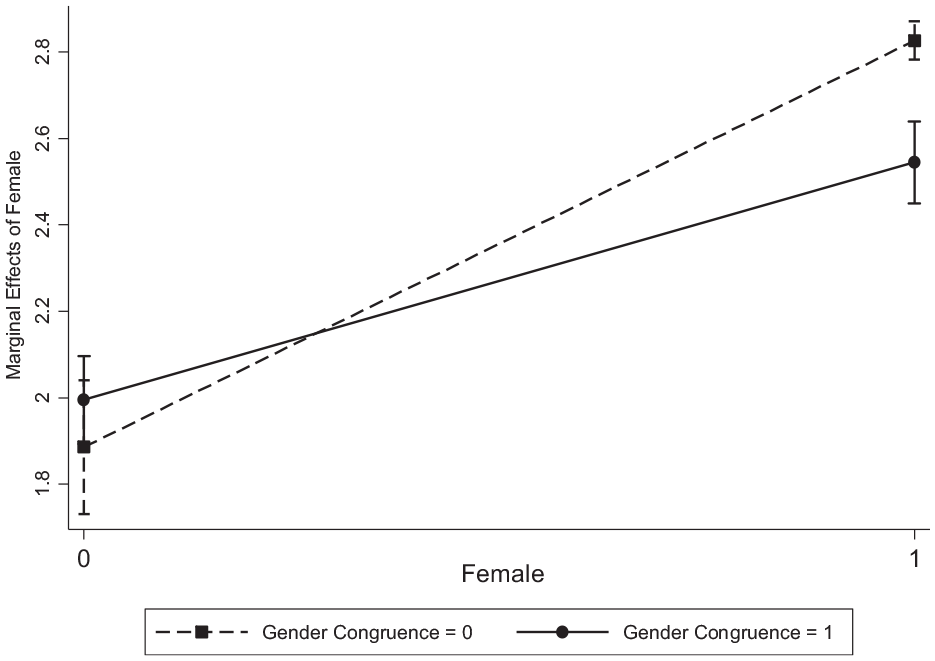
Marginal effects of being female on perceived gender inequalities as dependent on gender congruence.
In terms of controls, several variables have proven to be significant with regard to perceived gender inequalities. First, family responsibility is positively associated with perceived gender inequalities (Stamarski & Son Hing, 2015). A significant burden of responsibilities to take care of their families can crowd out employees’ abilities to cope with gender inequalities (Stamarski & Son Hing, 2015). As these employees are already psychologically stressed, they may perceive instances of gender inequality more acutely. Ethical culture, being white, and education turned out to be factors that are negatively associated with perceived gender inequalities (H. Choi et al., 2018; S. Choi, 2018; Grissom et al., 2012; Stamarski & Son Hing, 2015). When the workplace is deemed ethical in terms of institutional measures in place against managerial discrimination, and when it protects employees who file complaints against discriminatory instances, the employees are less likely to perceive gender inequalities in the workplace (H. Choi et al., 2018; Stamarski & Son Hing, 2015). White employees were also less likely than minority employees to experience gender inequalities. Compared with minority employees, they are likely to be in an enviable position in terms of personnel practices and less likely to encounter discrimination (S. Choi, 2018; Grissom et al., 2012), resulting in reduced perception of gender inequality. Education worked similarly for perceived gender inequality. Better-educated employees may not be exposed to or tolerate gender-related discrimination as much as less-educated employees (S. Choi, 2018). Well-educated employees may be more aware of procedures to rely on when encountering gender inequality; this would alert supervisors or managers to be cautious regarding discriminatory personnel and career advancement practices.
Discussion
The results of this study underscore the critical role of gender in shaping organizational dynamics, directly supporting the hypotheses and objectives outlined in the research. Specifically, the findings confirm that female employees are more likely than their male counterparts to perceive gender inequalities in the workplace, as hypothesized (H1). This aligns with the study’s objective to explore the influence of gender on perceptions of organizational fairness and equality. Moreover, the study’s focus on the moderating role of gender congruence (H2) is validated, showing that women with female supervisors report a diminished perception of gender inequalities, suggesting that gender congruence can mitigate negative impacts. These outcomes not only reinforce existing literature (Bermúdez-Figueroa & Roca, 2022; S. Choi, 2018; Riccucci, 2009; Sneed, 2007) but also offer practical implications for organizations aiming to address gender disparities by highlighting the importance of gender congruence in leadership roles.
The findings of this study emphasize the critical role of gender congruence between female supervisors and their employees, aligning with theoretical frameworks such as relational demography, similarity-attraction, and representative bureaucracy. These frameworks collectively suggest that demographic similarities, including gender, can significantly influence the attitudes and behaviors of employees within organizations. The results of this study extend these theories by empirically demonstrating that as gender congruence increases, the negative impact of perceived gender inequalities on women in the workforce declines. This finding underscores the importance of gender congruence in moderating the relationship between gender and perceived inequality, thereby contributing to a nuanced understanding of how gender dynamics operate in organizational settings.
For instance, the relational demography theory posits that demographic similarities between supervisors and employees, such as gender, can positively shape employees’ perceptions of their leaders and their work environment (Riordan & Shore, 1997). This study’s findings provide empirical support for this theory, illustrating that female supervisors can mitigate the negative perceptions of gender inequality among female employees, likely due to the shared experiences and understanding that come with demographic similarity.
Similarly, the similarity-attraction theory suggests that individuals are more likely to form positive relationships and trust with others who share similar characteristics, including gender (Byrne, 1971; Crijns et al., 2017). This study demonstrates that female supervisors are more likely to empathize with and support female subordinates, thus reducing the perceived impact of gender inequalities. This connection not only fosters a supportive work environment but also enhances the psychological empowerment of female employees, contributing to improved job performance and organizational success.
Moreover, the findings align with the principles of representative bureaucracy, which argue that the demographic characteristics of leaders should reflect those of the broader population to ensure equitable outcomes (Meier, 1993; Selden, 1997). In this context, female leaders serve as representatives of their female subordinates, using their shared gender as a basis for understanding and addressing the unique challenges women face in the workplace. This dynamic not only reduces the perceived gender inequalities but also enhances organizational outcomes by promoting a more inclusive and supportive work environment.
In response to these findings, organizations are encouraged to actively address sources of unequal treatment and gender disparity. First, they need to tackle the prevalent gendered norms and stereotypes that disadvantage women (Eagly & Karau, 2002). This can be achieved by introducing a range of programs and training sessions aimed at examining and eliminating gendered norms and practices in the workplace. Second, the underrepresentation of women in power positions (S. Choi, 2018) should be addressed by reforming practices determining promotions to recognize and motivate female employees effectively. Promoting successful female leaders as role models can also inspire and support female subordinates. Moreover, considering that women generally have greater family responsibilities than men (Tower et al., 2011), it is crucial for both governments and employers to provide flexible work arrangements. This approach should extend to men, allowing them to participate in childcare without facing workplace penalties and ensuring that women’s household responsibilities do not result in workplace stigma or discrimination. Finally, organizations should recognize and appropriately compensate the emotional labor often undertaken by women (Guy & Newman, 2004), and make concerted efforts to place women in traditionally male-dominated areas, challenging the norms that contribute to gender inequality.
The findings of this study emphasize the critical role of gender congruence between female supervisors and their employees. This shows that as the level of gender congruence increases, the negative impact of gender inequalities on women in the workforce declines, which points to a direct relationship between the presence of female supervisors and the reduction of gender-based challenges experienced by women. This moderating effect, in which the presence of female leaders weakens the negative consequences of gender inequality, is in line with several prior studies (S. Choi, 2018; Foley et al., 2006; Goldberg et al., 2008; Marvel, 2015; Nicholson-Crotty et al., 2011). An important aspect of this dynamic is the role-model effect, in which female employees view their female supervisors as exemplars (Farley et al., 2021). These supervisors serve not just as leaders but also as empathetic figures who understand and relate to the specific challenges faced by women in professional settings (Stoker et al., 2012). This empathy is significant because it allows for a deeper connection and understanding between female supervisors and their subordinates regarding the unique aspects of gender inequality that disproportionately impact women more than men. The presence of female leaders, therefore, acts as a buffer against the adverse perceptions and experiences associated with gender inequality in the workplace. It fosters an environment of mutual trust and a sense of being supported by the organization, which is particularly empowering for female employees. A supportive atmosphere can significantly contribute to the psychological empowerment of women in the workplace, enhancing their job performance and, by extension, benefiting the overall productivity and success of the organization. In summary, this research underscores the importance of female leadership in creating a more equitable and supportive work environment that actively counters gender disparities.
Expanding on these insights, organizations are advised to adopt specific strategies to enhance female representation in leadership roles, particularly in departments where female employees are in the majority and more prone to gender-based disparities. One effective approach is to deliberately position female supervisors in these areas. This strategic placement can serve as a catalyst for reducing gender inequalities, as female supervisors are likelier to understand and address the unique challenges faced by their female subordinates. Additionally, the development of mentorship programs has emerged as a crucial initiative. Such programs, as suggested by Farley et al. (2021), should be tailored to equip women with the necessary skills and knowledge for career progression. By assigning female supervisors as mentors, these programs can offer a more personalized and relevant learning experience for female employees. Mentors can provide guidance on navigating workplace challenges, career planning, and skill development, thereby ensuring that female employees are well-prepared for their roles. Furthermore, the presence of female mentors can significantly boost the confidence of female employees. Seeing women in leadership positions helps cultivate a sense of possibility and ambition among the rank-and-file female staff. This increased confidence, coupled with the support and insight of female leaders, can instill a strong sense of self-efficacy in female employees. Such empowerment is instrumental in enabling them to confront and gradually eliminate gender inequalities within their organizations. Therefore, through strategic supervisor placement and well-structured mentorship programs, organizations can create a more supportive and equitable environment for their female workforce.
The findings of this study warrant careful interpretation. While highlighting the benefits of gender congruence in diminishing women’s perceptions of gender inequalities, it is crucial to acknowledge the complexities of this dynamic. Notably, Ryan et al. (2012) observed instances in which women perceived female supervisors as antagonistic to their career advancement. Therefore, while the data suggest that gender congruence is advantageous in reducing perceived gender inequalities, its impact may vary across different contexts. For example, in educational settings, Fairchild et al. (2012) found that gender congruence between teachers and principals, particularly when both are female, negatively impacted teachers’ job satisfaction in the U.S. Similarly, research within a Fortune 500 company (Graber Pigeon et al., 2012) indicated that women mentored by female supervisors experienced slower promotions and lower earnings than those with male mentors. These examples highlight that the effects of gender congruence are not universally positive and can differ based on specific circumstances and measures, such as job satisfaction and career progression. Furthermore, the study operates under the assumption that gender differences significantly influence employee attitudes. While it advocates strengthening female supervisor–employee gender congruence, Nielsen (2015) suggests that strong regulatory frameworks can mitigate the influence of individual characteristics including gender. Established laws, regulations, and institutional procedures could potentially obviate the role of female supervisors in addressing gender inequalities. Therefore, the results of this study, focusing on the impact of female supervisor–employee gender congruence on perceptions of gender inequality, should be considered within the context of this specific issue. The broader implications of gender congruence, particularly in other environments and under various institutional conditions, require further investigation and cautious interpretation.
Conclusions
This study underscores the persistent challenge of gender inequalities in the public sector, especially how they impact women’s job attitudes and performance. Despite progress in reducing gender disparities, the continued prevalence of male dominance in high-ranking public sector roles is concerning. It is imperative that future research evaluates the effectiveness of specific organizational interventions designed to mitigate these disparities. Such evaluations should rigorously test the outcomes of gender-balanced recruitment, promotion strategies, and the introduction of flexible working conditions. Additionally, the role of gender-sensitivity training in reshaping organizational culture warrants thorough investigation.
Our findings highlight the nuanced role of gender congruence between female supervisors and employees in reducing perceptions of gender inequality. To build on these insights, future studies should expand the scope to assess the impact of gender congruence in varied demographic and professional settings, including its effects on male employees and mixed-gender leadership teams. Longitudinal studies are crucial to understand the long-term impacts of gender-congruent leadership and its potential to systematically alter gender perceptions and realities in the workplace.
Exploring the effectiveness of female leadership in traditionally male-dominated public sector environments is another promising research avenue. Such inquiries could reveal how female leaders navigate these challenges and their potential to transform entrenched gender norms and expectations. By examining these dynamics, researchers can offer more comprehensive strategies for promoting gender equality across diverse public sector contexts.
Moreover, the cross-sectional design of this study, relying on a single-year survey, presents limitations in establishing causal relationships. Future research should utilize longitudinal designs to capture the evolution of gender inequalities over time. The study’s reliance on a limited set of survey items to measure complex constructs like family responsibilities, supervisor support, and ethical culture also suggests a need for more robust psychometric tools. Expanding the item pool and employing multiple datasets from various time periods could enhance the reliability of future studies and provide a deeper understanding of the underlying issues.
By addressing these areas, subsequent research can develop more informed and effective policies to close the gender gap and enhance the health and sustainability of organizations in the public sector.
Footnotes
Appendix 1

Funding
The author(s) disclosed receipt of the following financial support for the research, authorship, and/or publication of this article: This study was supported by research fund from Chosun University (2022).
Conflicting Interests
The author(s) declared no potential conflicts of interest with respect to the research, authorship, and/or publication of this article.
Data Availability
The datasets generated during and/or analyzed during the current study are available in the US. Merit System Protection Board.