




Abstract
This paper presents research on the hydropower-displaced communities of the Middle Bhotekoshi and Arun-III projects in Nepal, focusing on the effects of different livelihood assets on their livelihood strategies. The study finds that certain assets, such as social and human capital, significantly affect livelihood strategy selection, while others, such as physical and financial capital, do not. Additionally, most households (66%) diversified their income away from agriculture. Although non-farm sources were the most viable strategy, the majority (67.77%) of people living below the international poverty line also used this strategy. The paper also explores the impact of the COVID-19 pandemic on hydropower-displaced people in Nepal, highlighting key challenges such as reduced household income, disrupted agricultural production, and inadequate access to medical care. Ultimately, the study underscores the need for targeted interventions to address the specific needs of hydropower-displaced people in Nepal, considering both their displacement and the ongoing pandemic.
Plain Language Summary
This research fills the knowledge gap about the hydropower displacees situation in Nepal using sustainable livelihood framework. The findings reveal that a majority of households (66%) diversified their income sources beyond agriculture. Similarly, non-farm activities were the most viable strategy, but it was observed that a significant majority (67.77%) of people below the international poverty line also relied on this strategy. Additionally, it also draws attention to the additional hardships caused by the COVID-19 pandemic, underscoring the need for appropriate support measures to address the specific needs of these communities. Our findiings highligts the serious issues of dispalcement due to development projects and policy makers can use our findings improve the displacees conditions.
Introduction
Nepal is a country with enormous water resources. The difference in topographic elevation has enabled the enormous possibility of hydropower generation (Sharma & Awal, 2013). Since Nepalese strategic planners believe that hydropower development will improve the country’s economic situation and prosperity, the government intends to increase electricity production through hydropower construction. Soon, thousands of rural communities will be affected and displaced by these numerous hydropower projects (R. S. Shrestha, 2010). This might lead to a change in livelihood and disruption of livelihood activities, resulting in loss of income, food insecurity, and reduced access to essential resources, which can significantly negatively impact the affected communities (Schulz & Adams, 2019; Scudder, 2012). In addition, relocated communities may face challenges in adapting to new social and cultural environments and may experience a loss of traditional practices, knowledge, and social networks, which can affect their livelihood strategies (Ali et al., 2022; Nguyen et al., 2017; Y. Xu et al., 2022).
There have been relatively few studies on hydropower displacement in Nepal. A few studies indicate that, after being uprooted from their original locations, the living conditions of the displaced population have deteriorated (E. K. Gautam & Dangol, 2015; Koirala, 2016). Despite introducing new land acquisition guidelines in 2015, cash compensation at maximum market value (equivalent to replacement value) remains one of the compensation mechanisms used in Nepal for people affected by development projects (Koirala et al., 2017). Previous research on the Kulekhani Hydropower Project in Nepal revealed that the monetary compensation program was created to put as little financial strain on the government as possible (P. Shrestha et al., 2016). Furthermore, according to a recent study conducted in four Budi Gandaki-affected villages, the project has a minimal beneficial effect on social sustainability, even after designating resettlement and rehabilitation programs for affected households (Khanal et al., 2021).
Hence, hydropower displacement can have significant impacts on livelihood assets and livelihood strategies of affected communities. Loss or degradation of livelihood assets due to displacement can affect the ability of communities to sustain their livelihood and may result in changes in their livelihood strategies as they adapt to new circumstances. It is considered to be an important problem to investigate how displaced people might achieve sustainable development, specifically starting with the livelihood capital they hold and deciding which livelihood strategy should be followed. However, to the best of our knowledge we did find empirical analysis of hydropower displacees relationship between livelihood assets and livelihood strategies in Nepal.
Thus, to fill this research gap, we analyze the compensation mechanism of the current system using the sustainable livelihood framework. This research paper, therefore, investigates the connection between livelihood assets and livelihood strategies using a case study of the Arun-III and Middle Bhotekoshi hydropower projects in Nepal. Furthermore, Covid-19 has affected various people around the world. The situation is similar in Nepal, and the effects of Covid-19 on the displaced people are also discussed.
Material and Methods
Case Study
The Arun-III hydroelectric project on the Arun River will include construction of a concrete gravity dam 70 meters high and 466 m long. The hydropower plant is expected to cost more than $1.6 billion U.S. dollars and generate 4,018.87 million units of electricity annually. The project displaced 269 households from four village development communities. However, in response to rising energy demand in Nepal and neighboring India, the Arun-III hydroelectric plant in Sankhuwasabha District, Province 1, East Nepal, is being built on the Arun River.
The Middle Bhotekoshi Hydroelectric Project is in the Central Development Region’s Sindhupalchowk District’s Bagmati Zone. The project displaced 86 families, 51 of whom lived in the Chaku Bazaar neighborhood. Even though project compensation was completed in 2016, the project has been delayed due to natural disasters such as floods and earthquakes. The Employees Provident Fund and Chilime Hydropower Company partially funded the project as public shares. Figure 1 shows the map of Nepal with the study area highlighted.

Map of Nepal showing the district of surveyed areas.
Analytical Framework
This paper employed the Sustainable Livelihood Framework to assess the connection between the livelihood assets and strategies of those displaced by hydropower projects in Nepal. The methodologies were primarily created to better understand rural households, but they are currently applied to research livelihoods in metropolitan and peri-urban regions (Santha et al., 2022). Sustainable livelihood has been employed in research examining rural livelihood (Bhandari & Grant, 2007; Li et al., 2020). The framework of sustainable livelihood includes vulnerability, capital for livelihood, and policies that eventually provide results for livelihood (DfID, U. K, 1999). The initial component of the vulnerability context relates to the external setting where people dwell. Vulnerability emerges when individuals confront adverse impacts without sufficient ability to react appropriately. The approach’s secondary features involve livelihood assets, while the primary focus remains on people. These assets, or capital, embody the vital strengths of individuals, which need comprehensive analysis to convert them into favorable livelihood results, necessitating numerous resources. Human, social, natural, physical, and financial capital are the five most important factors for building sustainable livelihoods (Li et al., 2020; Manlosa et al., 2019; Paudel Khatiwada et al., 2017).
The third component of the framework, namely Policies, Institutions, and Processes (PIPs), significantly affects factors such as access to finance, strategies for livelihood, decision-making mechanisms, and influential parties. The fourth component of the Sustainable Livelihood Framework (SLF) pertains to the strategies employed by individuals to achieve their livelihood goals. Our characterization of a household livelihood strategy involves activities that generate income, like Soltani et al. (2012), and Paudel Khatiwada et al. (2017). Therefore, based on the proportion of an individual’s overall household income, this research categorizes households into two distinct livelihood strategies: farming and non-farming. Livelihood strategies lead to specific results, known as livelihood outcomes, and comprise the fifth element (Fahad et al., 2022; Soltani et al., 2012). The benefits of various livelihood strategies, including income, food security, and environmental sustainability, are called livelihood outcomes, which differ across strategies and households (Ellis, 2000; Paudel Khatiwada et al., 2017). In this study, higher income was considered as a welfare outcome measurement. Figure 2 shows the analytical framework for this research article.
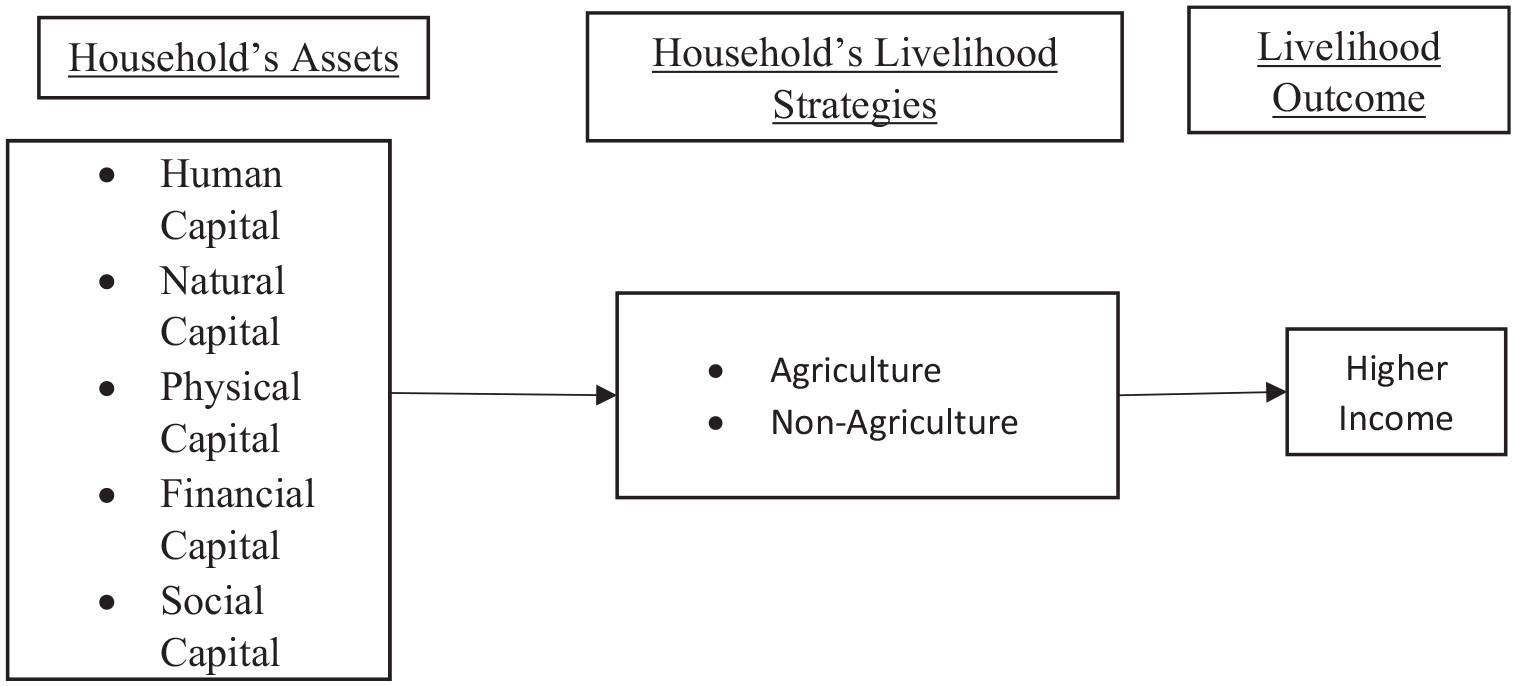
Analytical framework adopted from (Paudel Khatiwada et al., 2017; Rakodi, 1999; Soltani et al., 2012).
Livelihood Outcomes Measurement
This article employs daily per capita income as a welfare outcome, based on the assumption that the average per capita daily income shows the expected outcome of a selected strategy (Nielsen et al., 2013; Paudel Khatiwada et al., 2017). After summing up the annual household income, the daily per capita income was computed by dividing the total by the household size and the result by 365 to obtain a daily value. The per capita income was translated into dollars (131.05NRP = 1 US $, according to the Nepal Rastra Bank’s currency rate on 2nd February 2022).
Methodology
Data Collection and Questionnaires
In the Sankhuwasabha District, the Arun III hydropower project’s Wards 3 and 5 of Makalu Village and Chaku, Ward No. 5 of Bhotekoshi Rural Municipality, were the focus of the survey of homes affected by hydropower. We completed only 180 household surveys, with 100 households from Arun-III, and 80 from the Middle Bhotekoshi project had affected people. Our initial survey was done in April 2021. However, with the impact of the pandemic, the overall survey was finally completed between December 2021 to February 2022. The questionnaires contained profiles of household livelihood assets, strategies, and livelihood outcomes. Table 1 outlines the livelihood assets measurement indicators for this research purpose. For data collection, we employed stratified and convenience sampling methods. Initially, we identified displaced households in all three Village Development Committees (VDCs) and selected approximately 25 samples for a pilot study. Following the removal of any duplicated questionnaires and considering time constraints, we redesigned the questionnaire. The revised questionnaire was then distributed to households affected by the hydropower project for data collection.
Livelihood Assets, Proxy Variables, and Their Definition.

Note. *Special identities or experiences refer to backgrounds such as army personnel, village leaders, educators, or politicians.
Similarly, after the initial data collection was completed with the recommendation of experts and reviewers, further data was collected on the Covid-19 effects on surveyed people. The COVID-19-related questionnaires were collected through a five-point Likert scale where 1 = strongly disagree and 5 = strongly agree. The questionnaire utilized for the data collection on COVID-19 was developed based on household livelihood assets and was adopted from a previous study conducted by Yazdanpanah et al. (2021). A total of 180 questionnaires were administered to the same households that were interviewed during the initial survey. We verified the reliability of these questions through Cronbach’s Alpha coefficient, which resulted in a satisfactory value exceeding .7 (.768). This result necessitated no elimination of any item score, signifying that the internal consistency fell within the acceptable range in the statistical reliability table (Tora et al., 2022). Table 6 provides the detailed results of Cronbach’s Alpha value.
Furthermore, following the distribution of the translated questionnaires and explanation of consent in Nepalese, we conducted the household interview in their home. Out of 355 displaced households, we distributed approximately 250 questionnaires for data collection. Among the distributed questionnaires, 195 were returned, but only 180 were deemed usable for analysis. Statisticians recommend a sample of 366 for a population of 7,500; the resulting sample size of 50% in our sample exceeded this standard response rate (Saleh & Bista, 2017).
This study adhered to stringent ethical guidelines to ensure the safety, dignity, and confidentiality of all participants, with ethical approval obtained from China Three Gorges University Review Board under reference number IRB2021KF001. Verbal consent was obtained from participants, who were provided with detailed information about the study’s objectives, methodology, and their rights in a language (Nepali) they could understand. Participation was voluntary, and participants were informed of their right to withdraw at any time without consequence. Confidentiality was strictly maintained, with personal identifiers either not collected.
Data Analysis and Statistics
In order to investigate the influence of livelihood assets on farmers’ choice of preferred livelihood strategy, a multinomial logistic regression model is employed. This model enables us to predict the probabilities of various potential outcomes for a dependent variable that is distributed categorically. It considers a range of independent variables, which can be real-valued, binary-valued, categorical, and so on (Zhang et al., 2019). With this approach, we assume that the probability (P) of farmers adopting specific preferred livelihood strategies can be determined based on the set of independent variables.

where i represents the sample; j represents the preferred livelihood strategies for displacees; Xi represents the different livelihood assets; and βi is the parameter to be estimated. In our research we have identified two preferred livelihood strategies, that is, farming, and non-farming. Therefore, we limited the value of the two strategies to [0,1], of which for “non-farming” is Y0 and “farming” is Y1 and Y1 is the reference item of the model.
To meet logistic regression assumptions, including independence and non-collinearity, we conducted principal component analysis (PCA) on the quantitative farm socioeconomic data and transformed it into independent variables. Following the approach described by Field (2009), this analysis aimed at reducing potential multicollinearity among the variables. Before PCA, we employed a Varivax rotation with the Kaiser Normalization procedure to determine the number of factors to retain, as Field (2009) and Zhang et al. (2019) suggested.
Results
Basic Statistics
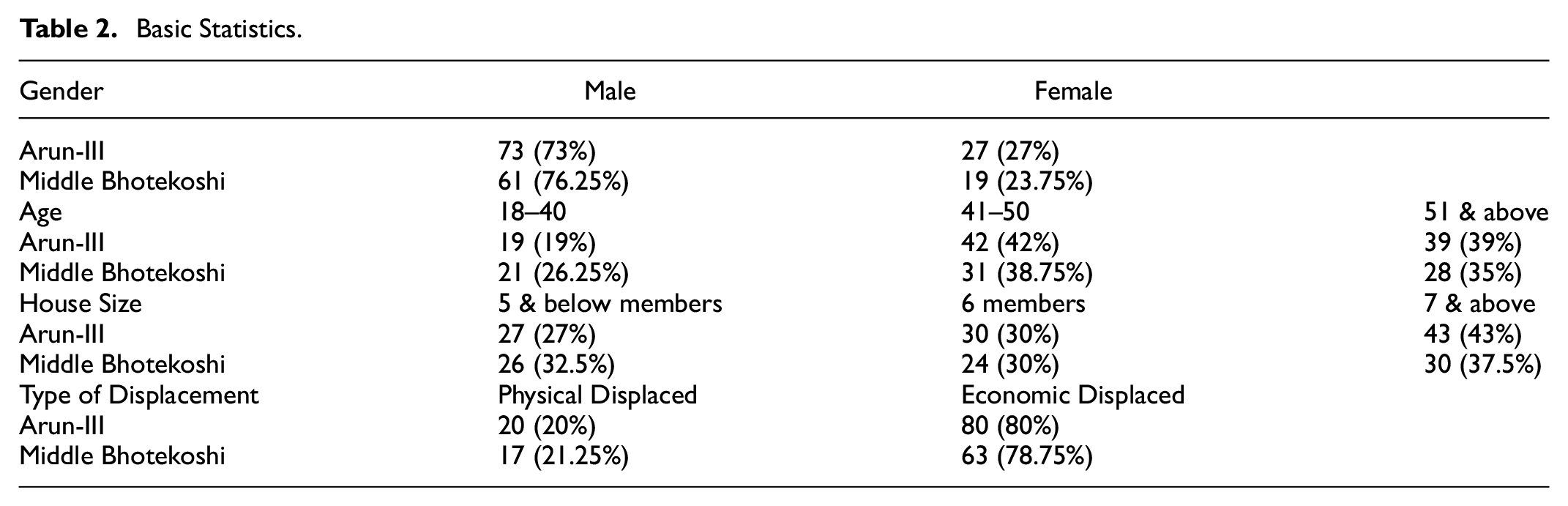
Table 2 shows the basic characteristic of the displaced household. Among the 180 respondents, 73% were male and 27% female in Arun-III, 76.25% were male, and 23.75% were female in Middle Bhotekoshi. The age distribution of the respondents is 19% between ages 18 and 40, 42% between ages 41 and 50, and 39% above age 51 for Arun-III displacees. Similarly, 26.25% of the respondents are between the ages of 18 to 40, 38.75% are between 41 and 50, and 35% are above 51 for Middle Bhotekoshi displacees. Furthermore, household family members range from 27% for members 5 & below, 30% for six members, and 43% for 7 & above under Arun-III displacees, while 32.5% for members 5& below, 30% for 6 members and 37.5% for 7 & above members under Middle Bhotekoshi. Lastly, 20% of the households said they were physically displaced (both land and house) under Arun-III, and 80% were economically displaced (predominantly agricultural land). In comparison, under Middle Bhotekoshi, 21.25% of surveyed people were physically displaced, and 78.75% were economically displaced. All the households reported they agreed to cash compensation.
Basic Statistics.
Livelihood Capital’s Effect on Livelihood Strategies
To understand the effect of livelihood capital on livelihood strategies, we classified these assets based on Zhang et al. (2019). Component one represents the human asset, component two represents the production resource, component three represents the household wealth, and component four represents the opportunity for external assistance. The suitability of factor analysis for the sample was confirmed by the Kaiser-Meyer-Olkin (KMO) criterion, which yielded a value of 0.603. Although this value is considered mediocre (Field, 2009), it indicates that factor analysis can be applied. Furthermore, Bartlett’s test of sphericity, χ2 (55) =141.770, p < .01, demonstrated that the correlations between variables were sufficiently large to support factor analysis. In accordance with the Kaiser criterion for factor extraction, four components were extracted. Collectively, these components accounted for 50.94% of the variance in the data. The factor loadings after rotation are presented in Table 3. A multinomial logistic regression analysis with latent variables was conducted to assess the relative importance of these components. Among the independent variables, only household gender did not qualify for the factor loading of 0.40.
Rotated Component Matrix.
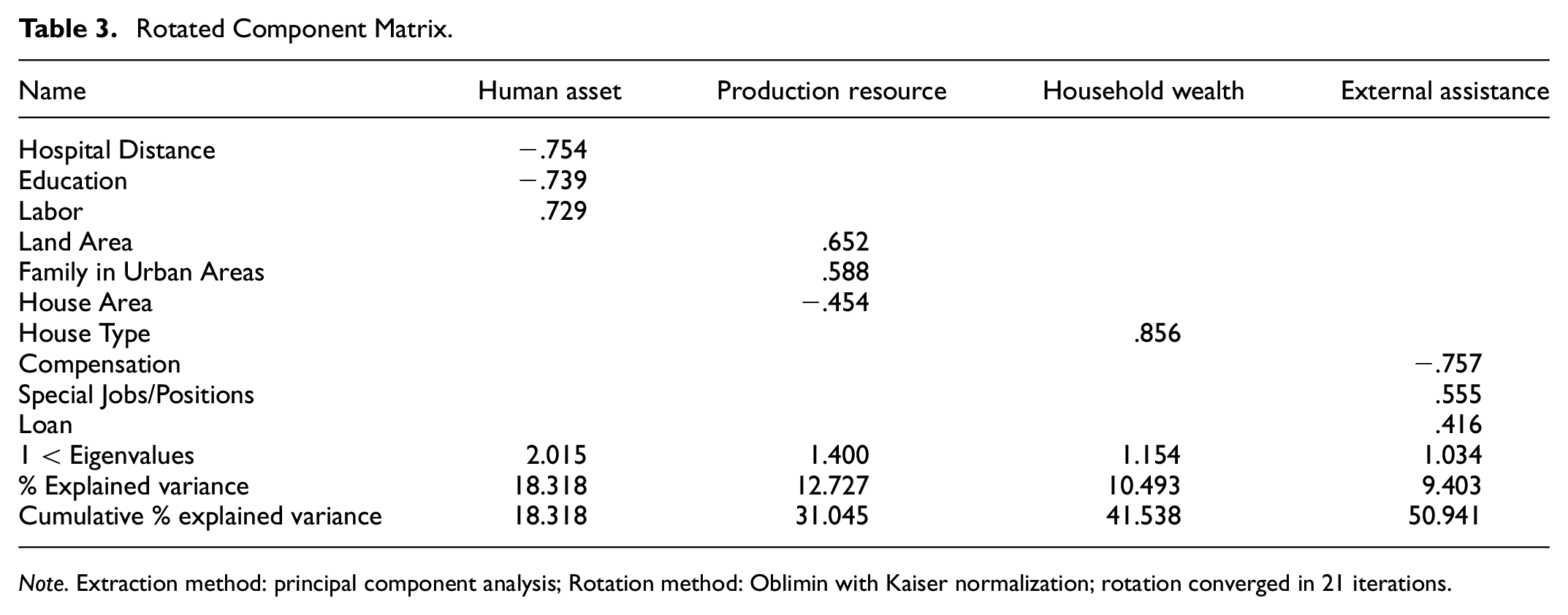
Note. Extraction method: principal component analysis; Rotation method: Oblimin with Kaiser normalization; rotation converged in 21 iterations.
The reference category is Farming Strategy; Cox and Snell R Square are .088, Nagelkerke R Square is .123, and McFadden is .074.
Regarding Goodness-of-Fit, the Pearson Chi-square is 184.850; df is 175, and Sig. = 0.290.
Table 4 displays the results of the multinomial logistic regression study, which provides valuable insights. The variable “Human asset” has a statistically significant positive coefficient of .363, showing that those with greater human assets are more likely to engage in farming activities. In contrast, the factors “Production resource” and “Household wealth” have little effect on the chance of selecting various strategies. Finally, the external help coefficient is −.557**. The negative coefficient indicates that, compared to the reference category of farming, a rise in external help is related to a reduced likelihood of engaging in non-farming activities.
Parameter Estimates From the Multinomial Logistic Regression Model, N = 180.

Significant at the .10 level. **Significant at the .05 level. ***Significant at the .01 level.
Livelihood Outcomes
According to Table 5, displaced households’ daily per capita income ranged from less than 0.50 cents USD to 10.50 USD in non-farming-based strategies, while it ranged from less than 0.50 cents USD to 6.80 USD in agriculture-based strategies. Furthermore, our research discovered that, although the non-farming livelihood strategies are superior to the farming, 69.67% of displaced households adopted the international poverty standard (at $2.15 a day) for non-farming-based livelihood strategies. In comparison, 53.44% adopted agriculture-based livelihood strategies.
Livelihood Outcome.

Discussion
Livelihood Assets and Strategies
This paper uses logistic regression to empirically investigate the relationship between hydropower-displaced people’s livelihood assets and livelihood strategies. Although the research on livelihood studies is constantly evolving, Nepal lacks research on the framework of the hydropower-displaced population’s sustainable livelihoods.
The above research findings shed light on various factors influencing livelihood strategies among hydropower-displaced communities. Additionally, the degree and relationship between livelihood capitals and strategies are not significant and reflect issues of rural households in Nepal (Giri, 2022). Table 4 shows that increasing human assets has a statistically significant effect on the likelihood of engaging in non-farming activities. Individuals with higher human assets, such as education, skills, or social capital, are more likely to engage in non-farming activities. This is consistent with past research, which has shown that education and skill sets are essential factors in transitioning from agriculture to non-agriculture livelihoods (Paudel Khatiwada et al., 2017; D. Xu et al., 2019). According to our research, production resources, such as agricultural land and support from family, have been proven to be essential in developing livelihood strategies. While the coefficient estimate for production resources is positive in the regression model, showing a potential positive link with non-farming activities, it is not statistically significant. Previous research, however, has emphasized the importance of production resources as the foundation for earning revenue in many rural households (Lazarus, 2011; Zhang et al., 2019). Households with more extensive production resources can often create enough revenue to save as liquid and semiliquid assets, often known as precautionary savings (Ullah et al., 2017; Zhang et al., 2019). However, there was a negative relationship between household wealth and external assistance. Household wealth is not focused on direct productive means but is a buffer against economic shocks and uncertainties (Carter et al., 2007). Wealthier households may be better positioned to absorb losses and continue farming in times of crop failure or market changes. Furthermore, higher levels of external help were related to a lower likelihood of selecting non-farming methods. This could imply that, with the proper support, farming practices can still be implemented for displaced people.
Similarly, our finding reveals that approximately 67.77% of households surveyed rely on non-farm-related strategies. Empirical research and official reports support this shift toward non-farm income (Paudel Khatiwada et al., 2017; Rahut et al., 2014), highlighting the increasing significance of remittances and non-agricultural income for households in Nepal and the country’s economy. Interestingly, households with agricultural livelihoods, which constitute around 33% of the surveyed displaced people, were found to have lower poverty levels than households with other types of livelihoods. This finding is higher than the results reported in previous studies (Paudel Khatiwada et al., 2017), which found that only 23% of sampled households in rural Nepal relied on farming as their primary source of income. This suggests that subsistence farming is still a significant source of income generation for the hydropower displaced population in rural areas of Nepal.
Additionally, during our fieldwork, individuals talked about changes brought on by hydropower developments. On the one hand, they said they could get employment on the project because the majority of those who lost their land resided close to the project’s development zones. Similarly, the money they received as compensation for their land allowed them to upgrade their housing. Better transportation, educational facilities, medical care, and other services were made possible by improved road conditions. On the other hand, the respondents listed several unanticipated negative experiences, including increased pollution due to construction, sound pollution, and the inability to use the communal forest.
Considering the previous state of the region, the hydropower development project improved the lives of the project’s beneficiaries; the community’s income increased because of the increased employment opportunities and improved connections made possible by the hydropower project. However, the high poverty among the displaced people through our analysis shows that the capabilities or livelihoods have not been adequately increased in quantity or quality. Lastly, in our survey, we found that all the respondents opted for cash compensation; however, compensation policies may not be universally effective in addressing the needs and expectations of all displaced people, and comprehensive measures must be in place to address these challenges (Cernea & Mathur, 2007; Wilmsen et al., 2011; Yuefang et al., 2021).
Impact of Covid-19
The COVID-19 pandemic has posed a unique threat to food systems, the labor market, and public health. Millions of people risk falling into extreme poverty because of the pandemic’s devastating economic and social disruption (Workie et al., 2020). The supply chain problem has decreased agricultural production and income for farmers (Joshi et al., 2021; Karn, 2021). In addition, many Nepalese migrant workers who were working abroad lost their jobs or faced reduced wages due to the economic impact of COVID-19 (Adhikari et al., 2022). This has led to a decline in remittance inflows, negatively affecting the livelihoods of many families in Nepal (Sah et al., 2020). People who have been displaced due to the construction of hydroelectric projects are already a vulnerable group. Hence, investigating the impact of COVID-19 on hydropower-displaced people can help assess their socioeconomic consequences, identify the specific barriers they encounter in recovering their livelihoods, and develop strategies to support their economic well-being.
Table 6 gives the statistics for our survey on Covid-19’s impact on displaced people. First, we can find out that the reduction in household income, with 43.9% of respondents either disagreeing or strongly disagreeing with the statement, indicates that the pandemic has resulted in economic challenges for these individuals. Second, the disruption in agricultural production, with 52.8% of respondents either agreeing or strongly agreeing with the statement, suggests that the pandemic has affected agricultural activities, which may be a significant source of income and subsistence for hydropower-displaced people in Nepal. This disruption could further exacerbate food insecurity and economic challenges for these individuals, potentially leading to long-term consequences for their well-being.
Covid-19 Impacts.

Note. CA = Cronbach’s alpha.
Third, the decreased trust among people, with 43.9% of respondents either agreeing or strongly agreeing with the statement, highlights the social implications of the pandemic for hydropower-displaced people in Nepal. A decrease in trust could affect the ability of hydropower-displaced people to access support networks and resources, leading to increased vulnerability and isolation. Fourth, the inadequate access to medical staff, with 45.6% of respondents either agreeing or strongly agreeing with the statement, underscores the potential health implications of the pandemic for hydropower-displaced people in Nepal. Finally, the lack of adequate health information, with 46.1% of respondents agreeing or strongly agreeing with the statement, suggests that hydropower-displaced people in Nepal lack access to precise and timely health information to lower the chances of contracting COVID-19. This could cause increased vulnerability and hinder their ability to take necessary precautions to protect themselves and their communities.
Hence, these findings highlight the multifaceted effects of the COVID-19 pandemic on hydropower-displaced people in Nepal, encompassing economic, agricultural, social, and health aspects. These challenges could further exacerbate the vulnerabilities and hardships faced by hydropower-displaced people, underscoring the need for targeted support and interventions to address their specific needs during and after the pandemic.
Conclusion, Recommendations, and Limitations
Conclusions
This paper researched the hydropower-displaced communities of the Middle Bhotekoshi project and the Arun-III project in Nepal. The findings from our research highlight that different livelihood assets have varying effects on the livelihood strategy for hydropower-displaced people. According to the study’s findings, boosting human assets, such as education, skills, and social capital, has a considerable beneficial effect on the likelihood of engaging in non-farming activities. This emphasizes the significance of education and skill development in transitioning from agriculture to alternative livelihood options. Furthermore, the study underlines the importance of production resources, such as agricultural land and family support, in building livelihood strategies. According to the influencing factors of livelihood strategy selection, while some non-framing livelihood strategies have been found to be higher earning, most of the hydropower displaced who have adopted this strategy live below the international poverty line of USD $2.15 per day.
Lastly, the COVID-19 pandemic has significantly affected hydropower-displaced people in Nepal. The reduction in household income, disruption in agricultural production, decreased trust among people, inadequate access to medical staff, and lack of adequate health information were the key challenges faced by these individuals. In conclusion, combining the earlier vulnerabilities of displacement and covid-19, these challenges can adversely affect their livelihoods, well-being, and social cohesion within their communities. Therefore, it is imperative to implement targeted support and interventions to address the specific needs of hydropower-displaced people in Nepal.
Recommendations
Hence, based on our findings, our research proposes the following suggestions. The government should: 1) focus on human capital development, including skills training, vocational education, and access to credit and markets to promote sustainable livelihoods and income generation opportunities. 2) Address concerns related to land abandonment, support for agriculture, and other income-generating activities. 3) Develop targeted interventions to address the impact of the COVID-19 pandemic on hydropower-displaced people, including access to healthcare, income support, and health information, to mitigate the adverse effects on livelihoods, well-being, and social cohesion. 4) Implement regular monitoring and evaluation mechanisms to assess displaced people’s livelihood outcomes, identify challenges and opportunities for improvement, and use the findings to inform policy and programmatic interventions. 5) Foster collaboration among stakeholders, including the government, private sector, civil society, and local communities, to collectively address the challenges of hydropower-displaced people and promote their well-being and resilience.
Limitations
We conducted this research in three villages where the displaced population from the hydropower project live. However, because of the cash compensation mechanism, some affected households left the areas and relocated to other parts of the country, which may have given our findings a different perspective. This also affected the sample size for this study. Similarly, although the primary covid-19 impact was addressed in this revised manuscript through the Likert scale questions, a more detailed analysis would be needed to further understand the impact on hydropower-displaced people once the pandemic is over.
Footnotes
Acknowledgements
We are thankful to the respondents for their valuable time as well as to the anonymous reviewers and journal editors for their efforts in evaluation of this study.
Author Contribution
Yuefang Duan: Conceptualization, Writing—review & editing, Validation; Ribesh Khanal: Methodology, Software, Data curation, Writing—original draft, review and Editing; Binod Prasad Bhattarai: Data collection, Writing—review & editing
Declaration of Conflicting Interests
The author(s) declared no potential conflicts of interest with respect to the research, authorship, and/or publication of this article.
Funding
The author(s) disclosed receipt of the following financial support for the research, authorship, and/or publication of this article: This work was supported by the National Social Science Fund of China (Fund No. 21 & ZD 183), Community Governance and Post-relocation Supporting on Cross District Resettlement, and the fund of Research Center for Reservoir Resettlement, China Three Gorges University (Grant No. 2021KFJJ01).
Ethics Approval and Consent to Participate
This research was approved by the China Three Gorges University Institutional Review Board (IRB2021KF001). Verbal consent was obtained from all respondents during the survey.
Ethical issues
There are no ethical issues. Data is available upon reasonable request with the corresponding author.

Data Availability
Data for this research paper can be provided upon reasonable request with corresponding author.