




Abstract
This study’s aim was to explore and describe positive leisure activities in South African Batswana families. The research employed a qualitative, explorative-descriptive research design. The population included adult Tswana family members residing in Mafikeng in the North West Province of South Africa. Through the utilization of purposive sampling, the sample size (seven families consisting of 13 individual adult family members, three males and 10 females, mean age of 34) was determined through data saturation. Family semi-structured interviews were utilized to collect data and analyzed using thematic analysis. The findings allude to five main themes: participants’ understanding of family leisure, positive leisure activities families engage in, leisure activities families enjoy the most, the role of positive leisure activities, and the role played by leisure activities during Covid-19 and lockdown in 2020.
Plain language summary
This study’s aim was to explore and describe positive leisure activities in South African Batswana families. Family interviews were conducted with seven Tswana families’ adult family members who reside in Mafikeng in the North West Province of South Africa. The findings identify five main themes: participants’ understanding of family leisure, positive leisure activities families engage in, leisure activities families enjoy the most, the role of positive leisure activities, and the role played by leisure activities during Covid-19 and lockdown in 2020.
Introduction and Background
The term Tswana (plural noun: Batswana) refers to an ethnic or cultural group in South Africa (Schapera & Comaraff, 2015). Globally, the view of a traditional family is of a unit related by marriage, blood or adoption (Engels, 2010; Khodnapur, 2020; Tam et al., 2016). In the Tswana culture, family often includes extended family and multi-generational families (Alexander, 2010). While the nuclear family consists of a married couple and their biological children, the family structure is dynamic with various structures such as single-parent families, blended families, child-headed families, and extended family such as grandparents, aunts, and uncles (Correa Júnior et al., 2019; Edwards, 2009; Oelze, 2018; Thompson, 2008).
Despite the changing family structure, the institution of family remains a central institution in society (Makiwane et al., 2017). Described as possibly being the most enduring of all social institutions (Lubbe, 2008; Makiwane et al., 2017), the family plays a central role in socialization in that there is social development from generation to generation (Khodnapur, 2020; Peterson, 2009). People within a family have both instrumental and emotional roles to play that are central in maintaining healthy family relationships (Koerner & Schrodt, 2014; Ruffin, 2009). Instrumental roles focus on the arrangement of physical assets, for example, food, shelter, clothes, decision-making and family management (Peterson, 2009; Southwick et al., 2016). Emotional roles, conversely, consist of offering enthusiastic support, and support to relatives (Ruffin; Southwick et al.). Nurturance and support, such as giving comfort, support, reassurance, or warmth to family members, is therefore an important family function (Peterson, 2009; Roman et al., 2016). Family members further provide maintenance and management of the family system, which include decision-making, leadership and showing respect to one another (Peterson, 2009). Family plays a central role in the formation of human society, since men, women, and children are bound in a relationship through family (Kapur, 2018). A family provides a foundation in which children learn different types of cultural norms, standards and values they are required to practice in order to function as a productive member of the family and larger society (Kapur, 2018; Khodnapur, 2020).
In Tswana culture, social authority influences the values system and social life, with roots in custom or tradition (Shehan, 2016). Therefore, the establishment of the Batswana culture is through a requirement for sustainability and preservation of personality, in which the family system plays a focal part (Shehan). The importance of extended family in the Tswana culture is emphasized in that the extended family act as a traditional society security framework (Lombe & Ochumbo, 2017). Family members are liable for the protection of individuals who are vulnerable, care for the individuals who are sick and poor, and transmit customary social values and education to other family members (Lombe & Ochumbo, 2017). Adding to the above, the extended family can assume a significant role in caring for children who do not live with their biological parents (Lombe & Ochumbo, 2017).
Despite the central role of family in our society, evidence increasingly points to the challenges that families face. In South Africa specifically, some of these challenges include HIV/AIDS (Turner, 2019), which contributes to the increasing number of orphans and child-headed homes (Sooryamoorthyt & Makhoba, 2016). Furthermore, single-parent homes are increasing, which can have negative cognitive, social, and emotional consequences (Holborn & Eddy, 2011; Mudau et al., 2018). Another risk is absent fathers, which can manifest behavioral problems amongst the family including fights, physical aggression, and mental health issues (Holborn & Eddy, 2011; Koketso et al., 2019). Further challenges include unemployment (Holborn & Eddy, 2011; Kwenda et al., 2021) and violence and crime (Holborn & Eddy, 2011). Service delivery challenges in South Africa has impacted the basic needs of families, such as having access to water and electricity (Mabitsela, 2012; Meyer, 2014).
Considering the above, the need to focus on the well-being of South African families becomes clear. The growing field of positive psychology has great potential in this regard. Positive psychology focuses on enhancing the quality of human life by looking into aspects such as strengths and existing resources, promoting optimal functioning, and enriching life (Wissing et al., 2014). Positive psychology has also provided a new lens through which to study leisure.
Leisure is a term utilized to incorporate an entire series of experiences that individuals can attempt or partake in in their extra time (Wise, 2014). Through an integrated approach of the positive and negative, positive psychology has brought about a new research focus regarding leisure (P. Freire, 2017). While leisure is one of the core elements of general well-being, Freire indicates the need for research on leisure within the field of positive psychology. Moreover, Freire states that “positiveness” is a feeling felt by individuals who pursue things in life that they desire with the aim of making their reality attractive and worthwhile. Considering that leisure is an activity that should not involve worry or concern and that is embraced during free time, “positiveness” and leisure go hand-in-hand due to the positive and fulfilling feeling that people experience during leisure activities (T. Freire, 2013).
Positive leisure is the most significant force promoting cohesive, healthy relationships among families (T. Freire, 2013). The forming of the Core and Balance Model of Family Leisure Functioning was initially based on the Family Systems Theory and suggests an immediate connection between family leisure and parts of family functioning, in particular cohesion and adaptability (Buswell et al., 2012; Townsend et al., 2017). The model characterizes family leisure into two fundamental classifications, namely core and balance leisure, with family leisure involvement being the core of the model (Buswell et al., 2012; Townsend et al., 2017).
Core family activity patterns will in general address the need for stability and familiarity by giving standard experiences in family leisure that are predictable and advance closeness among family members and personal relatedness (Buswell et al., 2012; Townsend et al., 2017). Core family leisure therefore entails leisure activities that are more common, every-day, low-cost, usually easily to access and mostly home-based, such as watching television, playing board games, cooking, and gardening (Townsend et al., 2017; R. B. Zabriskie & McCormick, 2003). The balance family activity patterns generally address the requirement for difficulty and change as they give avenues for the family to develop, be challenged and create as a functioning system (Buswell et al., 2012; Townsend et al., 2017). Balance involves leisure activities that are less common, less frequent, more out of the ordinary and that are usually not home-based, such as family holidays, going to sporting events, and going fishing. These leisure activities usually take more planning, time, effort, money and tend to be more formalized (Townsend et al., 2017; R. B. Zabriskie & McCormick, 2003).
There is evidence that family participation in both these types of family leisure is important (Townsend et al., 2017), but the importance of core family leisure in family functioning is emphasized (A. B. Zabriskie, 2009; R. B. Zabriskie & McCormick, 2001). Evidence suggests families that occasionally take an interest in core leisure activities have opportunities to bond or cultivate connections, and therefore, generally feel closer as a family (Smith et al, 2009; Townsend et al., 2017). In addition, Family Systems Theory holds that families have a need for strength in interaction, structure, and connections, also a requirement for curiosity in experience, input and challenge (P. Freeman et al., 2010; Townsend et al., 2017). Families frequently look for this balance through their leisure involvement (P. Freeman et al., 2010; Townsend et al., 2017).
Leisure in families is recognized as one of the most important behavioral characteristics identified with positive family outcomes, such as family closeness, bonding, wellness, and general family functioning (T. Freire, 2013). Internationally, leisure activities in families are seen as an aspect that increases family bonding, family life satisfaction, perceptions of family functioning, family cohesion and family adaptability (Hodge et al., 2015). Positive interaction that occurs because of positive leisure within the family fosters meaningful relationships and can develop skills as well as competencies (Townsend et al., 2017; Ward & Zabriskie, 2011). Families view leisure as a way to advance the nature of family life, for example, family unity and fulfilment, physical and psychological well-being and for helping relatives learn values, including social skills, such as critical thinking, compromising and negotiation (Ward & Zabriskie, 2011).
In South Africa evidence suggests that leisure activities in families play a role in healthy development, satisfying marriages, family relationships and exposure to sports talent (Makiwane et al., 2017). In the Tswana culture, families partake in various leisure activities, however recreation and leisure are additionally dependent upon class position (Ember & Ember, 2013). Men in rural areas mainly take care of cattle, slash firewood, and butcher animals when there is a function (Atanga et al., 2013). It is more culturally satisfactory among the Tswana for men to invest a lot of energy frequenting pubs or bars, drinking and socializing (Ember & Ember, 2013). Soccer is very popular among contemporary Tswana families, although mostly the men are interested in the sport (Ember & Ember, 2013). Music and drama historically form part of Tswana life and oral custom (Ember & Ember, 2013). Traditional Tswana music mostly utilizes vocals and stringed instruments with less use of drumming (Ember & Ember, 2013). Family members also listen to music for leisure purposes (Ember & Ember, 2013). Women have a critical contribution to traditional agriculture, as they are the main producers of food, which could be a form of leisure (Nkomazana, 2012). Furthermore, leisure activities for women include taking part in beadwork, basket weaving, pottery, tapestry, woodcarving, leaver crafts, and musical instruments (Thebe & Denbow, 2006). According to Ember and Ember women do an enormous level of domestic work, especially in more rural areas and, as a result, have less leisure time.
While busy with this study, South Africa was under lockdown due to Covid-19. To contain infection of the Corona virus, various governments have authorized limitations on outdoor activities or even collective quarantine on the populace (Mattioli et al., 2020). In South Africa national lockdown, alert level five was implemented from 26 March 2020. These numerous restrictions on where people can go, what they are able to do and spending an increasing amount of time at home, had an effect on leisure activities, and stressed the need for positive leisure, including family leisure This was reflected in the various articles, social media pages, news coverage, and so forth focusing on how people could keep themselves busy with fun activities during this time while also stressing the importance of work-family balance (Fisher et al., 2020). Some of the more prominent leisure activities include physical exercise (Hendricks, 2020), gardening (Han, 2020), cooking and baking (Kiely, 2020), DIY projects, hobbies and family activities, such as movie nights, board games, puzzles, or reading (Airlines Association of Southern Africa [AASA], 2020). Many people also make use of platforms such as Skype and Zoom to interact with family members who do not reside with them and to do activities together (Tarokana, 2020).
Problem Statement
While numerous international studies point to the potential of positive leisure in contributing to general well-being and family well-being (Aslan, 2009; T. Freire, 2013; Ward & Zabriskie, 2011) and provide insight into positive leisure as experienced by families from other countries, there is no existing research focusing specifically on positive leisure in South African Batswana families. Recent research points to the need for qualitative research in order to have a deeper understanding of family leisure (R. B. Zabriskie & Kay, 2013). The study’s contribution lies in the fact that it will give insight and contribute to our understanding of the phenomenon of positive leisure, specifically regarding South African Batswana families.
Research Question and Aim
The research question was as follows: How do Batswana families practice positive leisure activities? The aim of the study was therefore to explore and describe positive leisure activities in Batswana families.
Method
Research Design
The research employed a qualitative explorative-descriptive research design. McCombes (2019) explains that descriptive research is a scientific method that aims to describe a population, or a phenomenon. Qualitative descriptive research is data driven and aims to describe individual experiences within a unique context (Doyle et al., 2019). Furthermore, qualitative descriptive research is usually explorative in nature (Doyle et al., 2019). Exploratory study identifies limitations of the environment in which the problems of interest reside and the relevant factors that may be there that are of importance to the research (Van-Wyk, 2015). The choice of research design was based on the above hence the design was fitting for the study and its aim. Moreover, qualitative descriptive research is appropriate for research where there remains much unknown about the topic, such as leisure activities in South African Batswana families (Doyle et al., 2019).
Sampling
The population included adult Tswana family members residing in Mafikeng in the North West Province of South Africa. Mafikeng was the area of focus as there was no evidence found of similar studies conducted in the area, and because the researcher is familiar with the area and the Tswana culture of the area as she herself resides there and is Tswana. The Tswana culture is the dominant culture in Mafikeng, making up approximately 79% of the Mafikeng population (South African History Online [SAHO], 2019). Due to South Africa’s Apartheid past, the Tswana culture is one that has previously been disadvantaged and under-represented in research (Callahan, 2018), which provides further motive to focus on this population in research.
Non-probability, purposive sampling was used (Crossman, 2019). Purposive sampling entails selecting participants who have knowledge regarding the phenomenon being studied and is frequently used in descriptive research (Doyle et al., 2019; Palinkas et al., 2015). All willing adult family members of a family were sampled in order to allow for data collection from multiple family perspectives. Participants had to meet the following inclusion criteria: Willingness to participate; fluency and literacy in English or Setswana; access to a cell phone; they had to be Tswana and part of a functioning or intact family unit; they had to be adults and above 18 years of age; and they had to reside in Mafikeng in North West Province, South Africa. Apart from the criteria indicated above, there were no other exclusion criteria.
The sample size (seven families consisting of two to eight individual adult family members except in one case where only one adult family member was able to participate) was determined through data saturation. Table 1 provides an overview of the demographic profile of participants, established using a demographic information form.
Demographic Profile of Participants.

Procedure
Institutional approval for the study was obtained from [excluded for review] and relevant Ward Councilors or traditional leaders (informed by the extent of homogenous culture and prominence of tribal law of each relevant area in Mafikeng) gave goodwill permission. Participants were recruited through an advertisement in both English and Setswana that was placed at Mafikeng’s local shops and schools. Participants had to give written informed consent to participate, and participation was voluntary.
Data Collection
Semi-structured interviews are commonly used in qualitative descriptive research (Kim et al., 2017). Therefore, family semi-structured interviews were utilized together with a demographic information form to collect data. Data were collected in August 2020 during level 2 Covid-19 lockdown. To prevent Covid-19 transmission during data collection, data were collected telephonically by either the researcher or a field worker, who had to sign a confidentiality agreement prior to data collection. Interviews were audio recorded and conducted with all willing adult family members of a family and not with individual family members (except in one case where only one adult family member was able to participate). The motivation for the inclusion of all willing adult family members in the family interviews, is that data were collected from multiple family perspectives. Evidence suggested that the use of telephonic interviewing does not impede the quality of the data and that it has several advantages, such as saving money, taking less time and being less intrusive (Farooq & De Villiers, 2017; Tucker & Parker, 2014).
The semi-structured interview schedule was as follows: (a) Leisure can be described as using your free time or making time for enjoyment and relaxation. What is your understanding of family leisure?; (b) Which leisure activities do you normally engage in with your family?; (c) Which of these leisure activities do you most enjoy and why?; (d) What role does leisure activities play in your family?; (e) How has participation in leisure activities influenced your family well-being?; (f) What role has leisure activities played in your family during the Covid-19 pandemic and lockdown specifically?
The first interview acted as a trial run to determine the effectiveness of the questions. The interview proved successful and was therefore included as data. Each family interview was approximately 1 hr and was done in the language of choice (English or Setswana) of participants. If participants became tired or bored during an interview, they were informed via the informed consent form that they could ask for an opportunity to take a break.
As data collection consisted of family interviews (a group data collection technique), only partial confidentiality could be ensured. This was communicated to the participants through the informed consent form and precautions were put in place to minimize this risk. If participants became tired or bored during data collection, they had an opportunity to take a break. If any of the participants experienced emotional or psychological distress as a direct result of their participation in the research, the informed consent form advised them to inform the researcher so that she could provide them with the contact information of a clinical psychologist for debriefing.
Data Analysis
The first author transcribed the audio-recorded interviews for analysis purposes. Thematic analysis was utilized to analyze the data in this study. Data collection continued until data saturation was achieved and data collection and data analysis ran concurrently in order to identify the point of data saturation. The six steps of thematic analysis (Braun & Clarke, 2006) were followed, namely (a) familiarizing yourself with data, (b) generating initial codes, (c) searching for themes, (d) reviewing themes, (e) defining and naming themes, and (f) producing the report. The researcher and an experienced, independent co-coder, both literate in English and Setswana, manually analyzed the data; the co-coder was required to sign a confidentiality agreement prior to data analysis. The researcher and co-coder both analyzed the data independently and then met to determine the consensus.
Trustworthiness
Trustworthiness criteria (credibility, dependability, confirmability, and transferability) were informed by Lincoln and Guba (1985) and measures to ensure trustworthiness were as follows: Reflexivity (the researchers reflected honestly and critically throughout the research process); peer review (the researchers consulted with peers for guidance and feedback regarding the study); structural coherence (the researchers conducted a literature integration to integrate the findings with other research and to check the similarities or contradictory findings of the research); dense and detailed description of the research is provided to ensure consistency and replication of research; code-recorder procedure (data were analyzed independently by the first author and an experienced co-coder); and keeping detailed records and field notes for audit trail purposes.
Results
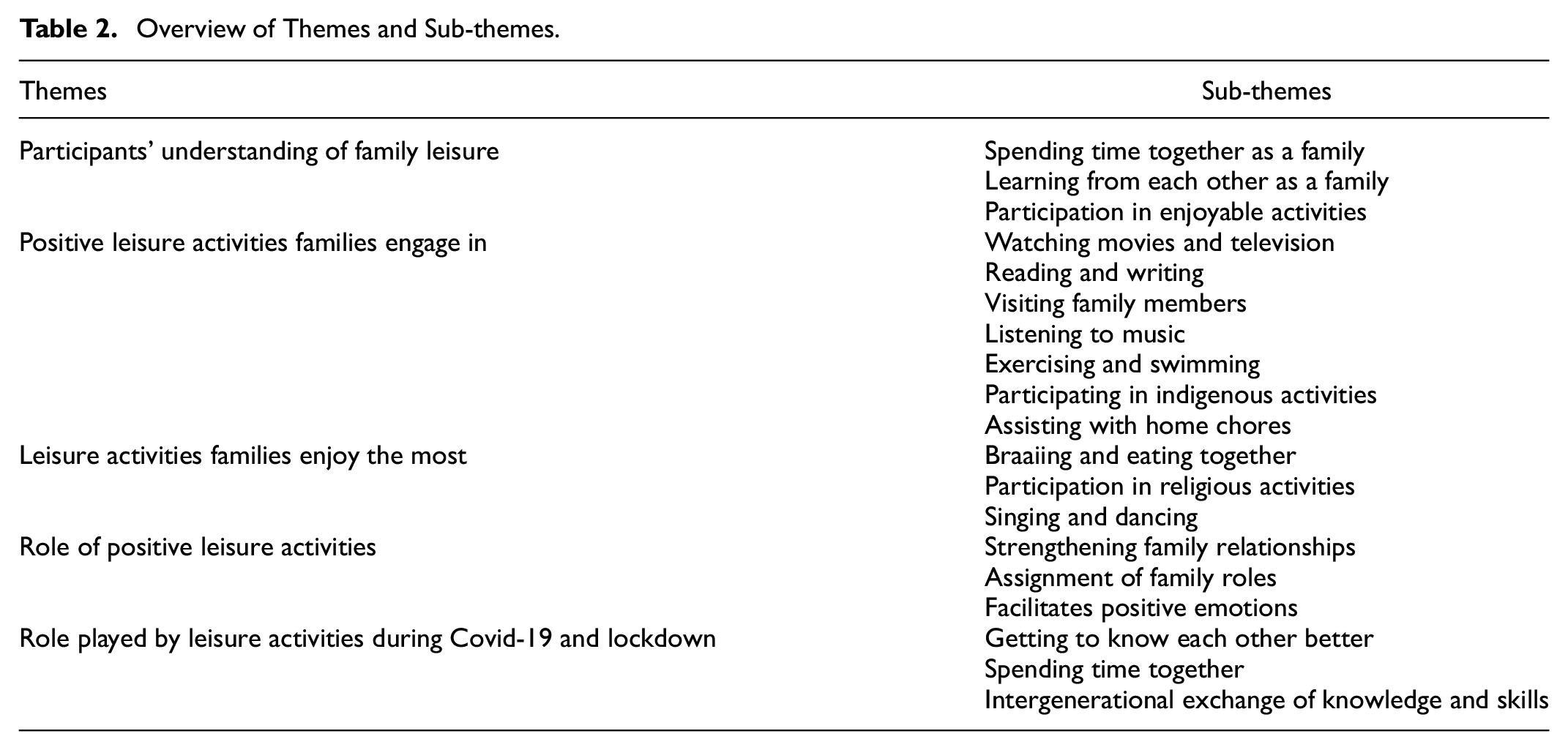
Table 2 provides an overview of the five main themes and sub-themes, and a detailed discussion follows. Direct quotes of the participants support the findings. Setswana quotes were translated to English for inclusion in the article, but the quotes of participants were not otherwise changed.
Overview of Themes and Sub-themes.
Theme 1: Participants’ Understanding of Family Leisure
Participants stated that their understanding of family leisure entails spending time together as a family, learning from one another and participating in enjoyable activities.
Spending Time Together as a Family
Participants perceive spending time together as a family as part of leisure:
My understanding is that family leisure is when we spend time together as a family, to catch up on whatever we have been doing within that day just to know what each other’s day have been and it is anything besides work. (family 1, participant 1) …spending time with your family regardless whether indoors or outdoors, as long as you spend time together and make those memories together. (family 7, participant 2) …spending a lot of time with them because with the kids ever since lockdown, we have been playing games together with them. (family 7, participant 2)
Learning From Each Other as a Family
Participants emphasized that through family leisure, they also get to learn from one another:
Time that you take as a family, discussing issues of building each other, and teaching each other generally about life. (family 2, participant 1) Showing each other what is wrong or right. (family 2, participant 2) Most of the time we take part in leisure activities as a family when we need guidance and advice. We share knowledge. (family 4, participant 1)
Participation in Enjoyable Activities
The findings emphasize that family leisure consists of participating in enjoyable activities:
…doing things that you like at your free time especially when you are free. (family 6, participant 1) …to deviate from the normal routine which I do on a daily basis and do something that will satisfy me and the kids and family. (family 7, participant 1) We try to detach from our old things that we have in our mind and we relax and enjoy the moment. (family 6, participant 2)
Theme 2: Positive Leisure Activities Families Engage In
This theme includes watching movies and television, reading and writing, visiting families, listening to music, exercising, swimming, participating in indigenous activities, and assisting with home chores.
Watching Movies and Television
Participants stated that watching movies and television is part of positive leisure activities they engage in as a family:
…just relaxing and watching TV. (family 1, participant 1) I like watching my TV. (family 6, participant 1) So most of the time the whole family, we only have one TV for now and they are owning the remote and like my wife said we normally go out when we are getting paid. (family 7, participant 2) So it may be around TV time we talk. (family 1, participant 1)
Reading and Writing
Participants shared that reading and writing is part of the positive leisure activities that they engage in:
We explain our leisure time as time to read, writing maybe something on the computer. (family 3, participant 1) …reading my novel because it increase my vocabulary and also reading those books of, the ones that help you to manage life and aspects of life for me to be a better person of tomorrow. (family 6, participant 1)
Visiting Family Members
Participants indicated they engage in positive leisure activities by visiting other family members:
We would have braais and talk over those. Sometimes invite each other, it’s either at my place or my family’s place and we would have some cook out together. (family 1, participant 1) …we go out to restaurants and visit our external families. (family 7, participant 2)
Listening to Music
Findings show that some participants listen to music when they engage in leisure:
We go to the park, and there is some music there. (family 1, participant 1) Yes and listen to music…House music, Hip Hop, Gospel… (family 6, participant 1)
Exercising and Swimming
Some participants engage in exercising and swimming as leisure activities:
…I enjoy like jogging a lot and some kind of things. (family 6, participant 1) Most of time we go out to that place where people swim… (family 3, participant 1)
Participating in Indigenous Activities
Participants indicated that participating in indigenous activities is their form of family leisure that they engage in:
We normally play games such as Morabaraba [a traditional two-player strategy board game]. (family 2, participant 1) We prepare Setswana traditional beer [Bojalwa jwa Setswana] and traditional food.” (family 4, participant 1) We make traditional clothing and cook Mabele [sorghum porridge]. (family 4, participant 2) “Eating together as a family and also dancing traditional dances…and we also enjoy cooking Ting [Sorghum- fermented porridge]… (family 5, participant 2)
Assisting With Home Chores
Participants stated that assisting with home chores could be a form of leisure when it was something they enjoyed doing:
I really enjoy cleaning my yard. (family 4, participant 2) …I like being in the kitchen, I enjoy cooking for my family very much… (family 5, participant 2) Like cooking, cleaning and washing, doing laundry. (family 5, participant 1)
Theme 3: Leisure Activities Families Enjoy the Most
Participants revealed the leisure activities they enjoyed the most included braais and eating together, participation in religious activities, and singing and dancing.
Braaiing and eating together
Some participants indicated the leisure activities they enjoyed the most revolved around eating:
Mainly enjoying some meals together… (family 1, participant 1) Leisure activities that involves eating. (family 2, participant 2)
Participation in Religious Activities
Some participants enjoyed participating in religious activities the most:
…we prayed with my family. (family 1, participant 1) …I enjoy spending time at church… (family 2, participant 1) …by also going to church as a family… (family 3, participant 2)
Singing and Dancing
Participants stated that singing and dancing are leisure activities that they enjoy the most:
We enjoy activities that involves singing and dancing. (family 2, participant 2) …I like dancing to traditional music and also dancing. (family 5, participant 1)
Theme 4: Role of Positive Leisure Activities
This theme includes strengthening family relationships, assignment of family roles and facilitation of positive emotions.
Strengthening Family Relationships
Participants indicated that positive leisure activities strengthen family relationships in some form or another, such as offering opportunities to connect and understand each other better:
…broaden family relationship…We get to understand each other better during leisure activities. (family 2, participant 1) I think it puts us together…we feel like we are together. (family 6, participant 1) …we learn more about each other it may strengthen the family relationship. (family 1, participant 1) It brings a strong bond between us. (family 2, participant 1)
Assignment of Family Roles
Participants emphasized that due to the role that leisure activities play, they end up assigning roles to one another:
It helps us to understand that each one of us has different roles within the family. (family 5, participant 2) …assigning roles on who will do this and who will do that. (family 4, participant 1)
Facilitates Positive Emotions
Participants stated that positive leisure activities bring about positive emotions such as happiness and feeling relaxed in their families:
Happiness because we share knowledge. (family 4, participant 2) We feel happy because we love it… (family 5, participant 2)
Theme 5: Role Played by Leisure Activities During Covid-19 and Lockdown
The participants stated the role leisure activities played during Covid-19 and lockdown specifically had benefits, including getting to know each other, spending time together and intergenerational exchange of knowledge and skills.
Getting to Know Each Other Better
Participants stated that they got to understand each other better:
…has made us know each other better… (family 2, participant 1) …you get to know or learn a person every day… we get to learn about each other more. (family 7, participant 1)
Spending Time Together
The lockdown gave the families’ time to be together:
…we have to cherish the moment, the time that we have together. (family 6, participant 1) …the more we do things together, the more we spend time together … (family 7, participant 1)
Intergenerational Exchange of Knowledge and Skills
The lockdown provided an opportunity for older generations to exchange knowledge and skills, especially regarding cooking, with younger generations:
The skills that I have learned is of cooking…and to help my uncle to slaughter.” (family 5, participant 2) …learn a lot from my mother how to cook…” (family 2, participant 1)
Discussion
The findings indicate that in terms of understanding family leisure, the participants’ regarded leisure as spending time together as a family, learning from each other as a family, and participation in enjoyable activities. Family Systems Theory, developed by Murray Bowen, states that interaction between family members can influence behavior of family members and the family as a whole (Watson, 2012). Family closeness is reportedly an important source for family fulfilment (Compton & Hoffman, 2019) and families that participate in core leisure activities have opportunities to bond and connect, as well as feel closer as a family (Smith et al., 2009). The Family Systems Theory further proposes that families have a need for interaction, connection and structure (P. Freeman et al., 2010). In addition, leisure activities in families are perceived to facilitate family bonding, perceptions of family functioning, family life satisfaction, family cohesion and family adaptability (Hodge et al., 2015). In many cases, families view leisure as a way to enhance the nature of family life, for instance, family fulfilment, family unity, psychological—and physical well-being, as well as helping relatives learn values, which includes social skills such as negotiating, critical thinking and compromising (Ward & Zabriskie, 2011).
The positive leisure activities that the participants engage in include watching movies and television, reading and writing, visiting family members, listening to music, exercising, swimming, participating in indigenous activities and assisting with home chores. It is therefore clear that the majority of these sub-themes indicate that participants engage more in core family leisure activities, which are common, every-day, low-cost and usually home-based, instead of balance leisure activities that are less common, less frequent, more out of the ordinary and usually not home-based (Buswell et al., 2012). While research shows that family participation in both these types of family leisure is important, the importance of core family leisure in family functioning is highlighted, as core leisure activities give families a chance to bond (Smith et al., 2009; A. B. Zabriskie, 2009; Zabriskie & McCormick, 2001).
It is quite an interesting finding in this study that participation in home chores was considered a form of leisure since leisure is generally an activity that is free of duty (Wise, 2014). Viewing participation in chores as leisure can be beneficial in that the chores indicated by participants (gardening, cooking, cleaning, etc.) seem to involve some form of physical activity. Evidence shows that more amounts of moderate physical activity decrease the risk of a significant number of the most widely recognized diseases or conditions, such as, stroke, heart disease and type 2 diabetes (Cusatis & Garbarski, 2019). Other sources also confirm that leisure activities could include home chores, and further state that taking part in activities that have a particular objective can give a person a feeling of fulfilment, satisfaction, happiness or accomplishment (Ho et al., 2020). It should be noted, however, that people’s financial status can also play a prominent role in the type of leisure they engage in, as people who are more secure financially may participate in active outdoor leisure activities, such as golf, sailing and horse riding, more frequently compared to people with less income (Cusatis & Garbarski, 2019).
The findings include participating in indigenous activities and listening to music as forms of leisure activities in which participants engage in. Available evidence suggests that in the Tswana culture, there are different indigenous leisure activities that families or family members tend to participate in, and of these, activities related to traditional Tswana agriculture seem quite prominent (Makiwane et al., 2017; Nkomazana, 2012). Women additionally partake in beadwork, basket weaving, pottery and leather crafts as forms of leisure (Thebe & Denbow, 2006). Historically, music and dramatization have commonly played an important role in Tswana life and customs as leisure activities (Ember & Ember, 2013) and appear to continue to do so as another sub-theme, singing and dancing, was one of the leisure activities that families enjoy the most.
The findings further indicated that exercising and swimming are part of the leisure activities that participants engage in, which can be beneficial to their health and well-being. People are encouraged to live a healthy lifestyle by encouraging them to participate in some type of leisure that involves physical exercise at least several times a week (Pendleton & Schultz-Krohn, 2013). Some examples of leisure activities that provide physical exercise are dancing, swimming, boating, golfing and yoga (Pendleton & Schultz-Krohn, 2013).
Visiting family members is another positive leisure activity that participants take part in. Seligman’s PERMA model clarifies that the experience of positive relationships is an important component of well-being (Butter & Kern, 2016). Social connections and social support from family has been associated with less depression and a lower mortality risk (Butter & Kern, 2016). Different models on meaning also incorporate interpersonal connections and specifically, family as a source of meaning (Wissing, 2020). In turn, positive leisure can foster cohesive, healthy connections among families (T. Freire, 2013).
Braaiing and eating together, participation in religious activities, and singing and dancing were leisure activities that participating families enjoyed the most. Evidence reveals that the shared experience of the feast permits people to socialize, talk and mix with, and to feel connected with each other (Goode, 2018). In addition, Delistraty (2014) stated that eating together can act as an occasion to relieve stress and an opportunity to catch up with those whom we love and can help children improve in school as well as make them less inclined to use drugs and liquor.
Peters (2011) states that social leisure activities, which include partaking in religious activities, play a prominent role in the experience of quality of life. Westerink (2013) also states that leisure activities that involve worship can promote happiness. Shu (2015) stresses the importance of families partaking in activities together and specifically points to the potential of religious activities in this regard. Further evidence reveals that religious and spiritual identification can play a role in shaping people’s leisure preferences and interests, including familial leisure (Barbieri, 2011).
Leisure activities reportedly play an array of important roles, including strengthening family relationships, assignment of family roles and the facilitation of positive emotions. T. Freire (2013) confirms that leisure in families is perceived to be one of the main behavioral characteristics related to positive family outcomes, for example, family closeness, bonding, health and general family functioning. Positive interaction that occurs due to positive leisure within the family cultivates significant relationships and can develop skills and abilities of family members (Ward & Zabriskie, 2011).
While writing this article, South Africa was under lockdown due to Covid-19. The findings therefore also call attention to the role of family leisure specifically during this time. Participating families indicated that leisure provided an opportunity for family members to get to know each other better, spend time together, and for intergenerational exchange of knowledge and skills. The numerous restrictions brought about due to the pandemic meant that people were spending an increasing amount of time at home, which had an effect on leisure activities, but also pointed to the importance of positive leisure, including family leisure, during this time. This reflected in the various articles, social media pages, news coverage, etc., focusing on how people could keep themselves busy with fun activities during this time (Fisher et al., 2020). Other sources also highlight the important role that leisure played during lockdown in other contexts. S. Freeman and Eykelbosh (2020), for example, reported that generally, families were engaged with each other, and that the lockdown gave them an opportunity to converse with each other and take part in leisure activities together. Some of the leisure activities families reportedly engaged in, included physical exercise, playing cards, playing Monopoly, reading, singing together and baking and cooking (Hendricks, 2020; Kiely, 2020; Morris, 2020). The findings are indicative that participating in positive leisure activities during lockdown contributed to the assignment of family roles. Roles have a critical part in healthy family functioning, as roles within a family are associated with a family’s ability to manage everyday life (Dudash, 2019).
Conclusion
The findings highlight that the participants in this study tend to engage mostly in core family leisure activities that are a combination of traditional Tswana and more Western leisure activities that reportedly play an important role in their family functioning. Some of the participants’ responses focused on individual leisure instead of family leisure. It is important to consider that this information is still valuable data in terms of family leisure, as the leisure that one family member participates in can have an influence on their larger family system—this view is supported by the Systems Theory, which indicates that the family is a system that consists of interacting individuals and change in or behavior of one family member can facilitate change in the larger family context (Becvar & Becvar, 2009).
Recommendations for future research include: The possible inclusion of children in future studies with a similar focus; the use of more balanced samples through, for example quota sampling; conducting similar studies in other Tswana contexts in order to be able to make comparisons; conducting similar studies on other South African cultures for comparison purposes and because there is little available research on positive family leisure in the South African context in general; the use of a variety of qualitative data collection techniques and quantitative data in order to collect information on the phenomena from different perspectives.
Footnotes
Acknowledgements
The authors wish to thank T Matlou and A Visagie for editing of the article.
Declaration of Conflicting Interests
The author(s) declared no potential conflicts of interest with respect to the research, authorship, and/or publication of this article.
Funding
The author(s) received no financial support for the research, authorship, and/or publication of this article.

Data Availability Statement
Data can be made available upon reasonable request from the authors.