




Abstract
This research paper seeks to explore a newly proposed model to assist public educational systems with properly integrating digital technology into their currently practiced teaching and learning processes. Digital learning has been adopted for the past two decades under various forms of internet-based learning, such as online learning, e-learning, blended learning, and hybrid learning. However, those practices and initiatives have encountered many obstacles that crippled educational communities in many parts of the world and prevented them from successfully and sustainably integrating digital learning into their systems. Unfortunately, the crisis of the COVID-19 outbreak has clearly revealed the need for immediate action to find effective methods to ensure the quality implementation of digital learning in K-12 education. Consequently, this paper benefits both individuals and governments with successful and sustainable solutions for K-12 education. This proposed digital education shifting (DES) model was constructed based on several learning theories, mainly the cognitive load theory, constructive learning theory, and connectivism theory. To achieve its objectives, this paper adopts a descriptive method by constructing an open-ended questionnaire to collect experts’ opinions and suggestions on DES. The results revealed high agreement among experts on DES effectiveness.
Background
The implementation of modern digital technologies in education, whether face-to-face, blended, or online, has been under discussion by researchers, educationalists, governments, and stakeholders for the past two decades (Willis & Aurigi, 2020). However, with the worldwide outbreak of COVID-19, the demand for online teaching and learning greatly increased. Universities and departments and ministries of education recognized this and moved to internet-based education, encouraging their instructors, students, and administrators to go online at a distance. Different countries promoted various online forms of distance teaching and learning; some of them called for e-learning, while others turned to blended or hybrid learning. Regardless of the type of digital-based learning approach, strategic institutional planning was not seriously considered. However, separate individual or school efforts were undertaken. Because those attempts have been carried out independently, they were not effectively utilized. Many organizations and governments now realize the importance of making a digital shift in education and recognize its influence (Aldhafeeri, 2015).
Even before the COVID-19 outbreak, many studies, conferences, and seminars were held on the topics of online, blended, and distance learning, aiming to supplement the traditional classroom environment. Therefore, finances have been allocated to equip classrooms with cutting-edge technology, which led to the emergence of technological proposals in many parts of the world, such as smart classroom projects, tablet projects, and “bring your device” projects. However, those projects have not achieved their ends due to the lack of a developed model or strategy to guide the implementation process that focuses more on the educational aspect than the technological one, especially regarding the digital technological acceptance of both teachers and learners (Aldhafeeri & Male, 2020).
Kuwait’s educational systems took the initiative to implement online learning; however, its implementation of internet-based distance learning was awkward and disappointing, resulting in a return to paper-based examinations along with online teaching. In 2002, the Ministry of Education in Kuwait implemented an e-learning initiative developed by a group of researchers (Aldhafeeri et al., 2006). It found that Kuwaiti teachers were neither aware of e-learning approaches nor ready to adopt one. Indeed, it found that teachers needed to be aware of e-learning both conceptually and culturally. Teachers had little understanding of e-learning’s deep concept and how it benefits education; thus, the Ministry of Education was not able to replace traditional methods. Other attempts were made that also were not successful or sustainable.
The shift toward digital learning has been increasingly reinforced by private educational institutions. Many private schools are determined to use a blended learning approach to support students’ learning (Gonzales & Paul, 2020). Those schools encourage teachers and students to be more involved in online learning activities by establishing social connections with them. Parents can also follow up with their children’s homework, grades, and attendance. However, knowledge sharing has not yet reached as optimal a level as anticipated. On the other hand, public schools are still waiting for a suitable model or strategy that facilitates the process of shifting to digital education. Hence, an urgent demand has arisen recently to provide the educational field with a strategic model that can guide decision-makers through a successful educational shift and sustainable digital implementation.
Statement of the Problem
A coronavirus pandemic has shaken the whole world regarding not only people’s health but also other aspects of human lives, not to mention education. Many schools and universities during these hard and unexpected circumstances have closed their doors or have become unable to continue their traditional teaching or training routines in the ways they were doing before. K-12 education worldwide was negatively affected by this crisis, with an estimated 50% of the global population attending school regularly negatively impacted by COVID-19 (Aboagye et al., 2020). As a result, the whole educational community was deeply concerned about the future of their children’s teaching and learning. The local educational decision- and policy makers in many countries (Donnelly & Patrinos, 2020) were confused about how to handle this situation and make appropriate decisions that would benefit the students and keep them safe and healthy. They had two options: The first was related to utilizing the features of technology and shifting the whole of their instruction online and at a distance, and the second was closing schools and stopping any kind of learning until the crisis was over and then continuing with the traditional classroom environment. In this regard, many independent efforts on both institutional and individual levels were exerted with the purpose of finding some appropriate avenues to support the continuation of students’ learning.
However, the concern about the sustainability and quality of education is still present. This concern has led to the issuing of unfair and impractical alternative plans that may not be acceptable from educational perspectives and may not be in harmony with digital technological advancements and related educational theories. For example, many institutions, both secondary and post-graduate, have attempted to implement hybrid classes, as well as classes offered exclusively online. Initially, the pandemic saw many students show intense interest in this option, but as the pandemic word on their efforts became less enthusiastic an estimated 35% of the time (Dietrich et al., 2020). It was surmised over time that students, particularly those still in secondary education were not disciplined enough to complete coursework without a certain amount of accountability, that is, parent and teacher involvement (Cahapay, 2020). A unique aspect of COVID-19 was the lack of any supervision; schools were closed and offered online as an alternative or not at all, while parents eventually were often forced to return to work. Unattended children essentially stopped participating.
Transitioning current education to a completely different platform was a necessary but admittedly difficult endeavor to undertake. It was only attempted to ensure students did not lose an exponential amount of time learning, potentially setting them back in their education; many educators feared COVID-19 would also be the beginning of a significant increase in dropout rates, pressuring the academic community further (Di Pietro et al., 2020). While some classes are already offered online these were typically hybrid classes or classes with material lending itself to online learning, that is, English, History, Psychology, etc. The pandemic ultimately demanded classes for science, health, mathematics, and other subjects requiring laboratory work and experience were also shifted or eliminated (Cahapay, 2018). Consequently, the lack of consideration of educational theories results in an awkward transformation to internet-based distance education with a predefined, traditional philosophy and image of education. This kind of limited implementation provides a shaky, backward, and unstable education. Additionally, an educational system that employs the latest technology and increases the learners’ cognitive load is unsustainable and can be interrupted in emergencies.
Research Questions
Based on the research problem, the following main question is addressed:
RQ1: To what significant extent do educational experts perceive the importance, relevance, clarity, and appropriateness of the digital education shifting (DES) model’s elements?
RQ2: Are there any significant differences among the educational experts regarding the importance, relevance, clarity, and appropriateness?
Significance of the Study
This research proposes a new model for departing from the limited perspective of education, either face-to-face or online, and shifting toward a digital one that utilizes advanced technologies to promote the awareness, acceptance, readiness, and orchestration of global teaching and learning. The implementation of DES results in a sustainable, successful, and engaging education.
Research Objectives
The study aims to achieve the following significant objectives:
Provide a possible strategy for governments to implement sustainable digital education successfully.
Develop a new model containing key aspects of a digital education development strategy and identify essential elements of a successful and sustainable education.
Theoretical Framework for Digital Education Shifting Model
The underlined theories behind this research on shifting to digital education are based on the notion that learning can mostly be achieved in a social environment, through socialization and sharing (Bandura, 1977). To implement this kind of education, learners ought to be encouraged to practice self-learning and scaffold their knowledge. This is because DES requires more self-learning practices to be applied, with instruction being the obligation of active learners who are responsible for the construction of their knowledge (Arguedas et al., 2016).
Before a system shifts to digital education or integrates any new technology, its leaders need to consider several educational theories to design an efficacious pedagogical strategy. The social learning, cognitive loading, constructivism, and connectivism theories all reflect critical considerations for pedagogy, including the instructional mode and style associated with delivery.
Overall, the digital education shifting (DES) model is proposed to assist in the departure from the limited perspective of education and the shift toward a digital one that utilizes advanced technologies to promote the awareness, acceptance, readiness, and orchestration of global teaching and learning that will potentially result in the provision of sustainable, successful, and engaging education. Aldhafeeri (2021) divided DES into pillars, see Figure 1.
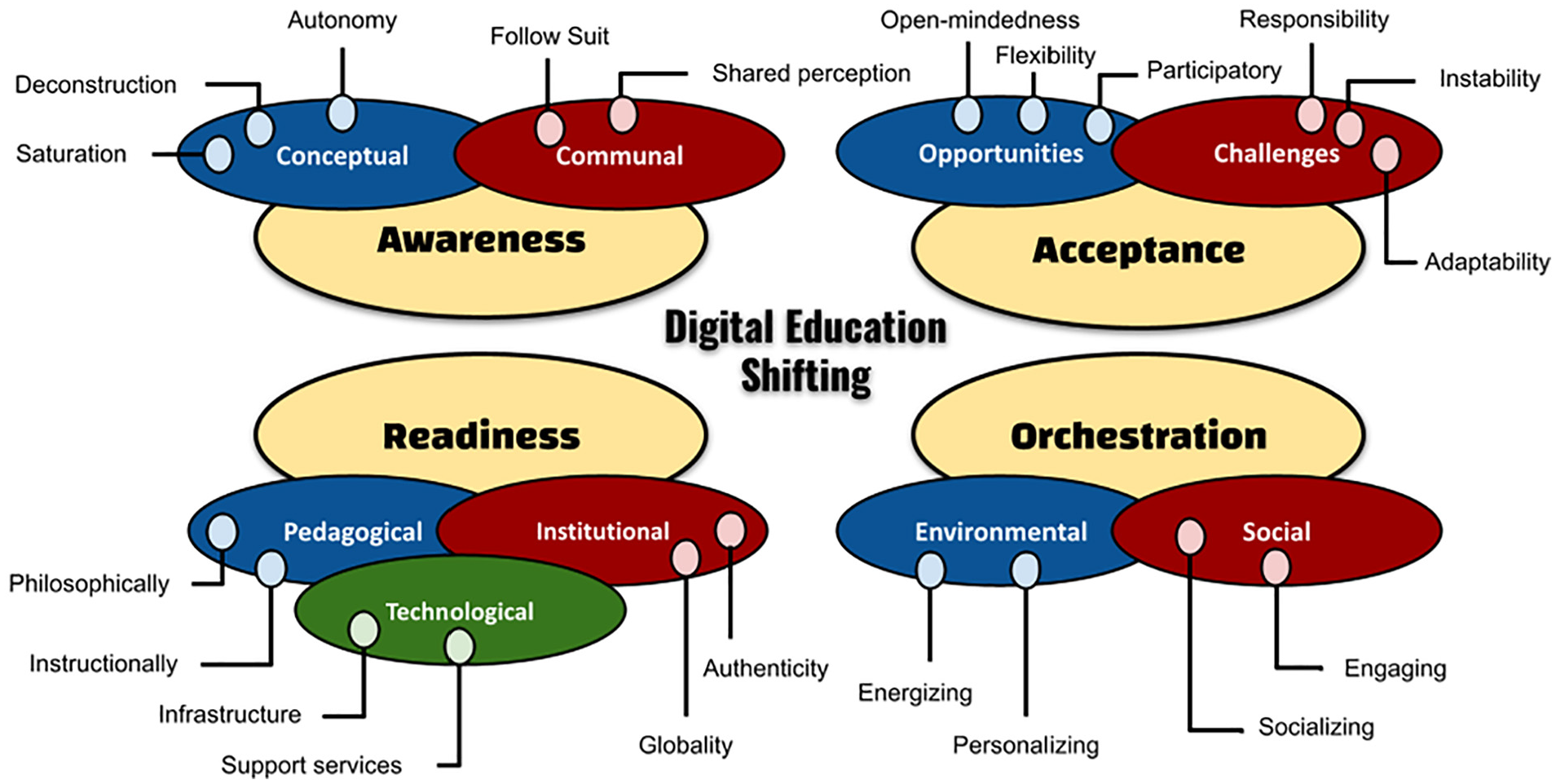
Digital education shifting (DES) model
According to Aldhafeeri and Alotaibi (2022), the DES model includes four core elements which are awareness, acceptance, readiness, and orchestration. Each element has certain facets to be taken into condescension when shifting any educational system toward digital delivery. The model emphasizes different modes of educational delivery, whether it is blended learning, distance learning, or any other form of internet-based learning. However, the DES model can serve as a scheme that seeks to direct the successful and sustainable conversion from traditional methods in education that just provide and indoctrinate students with information to those methods that encourage students to be critical and creative thinkers (Aldhafeeri & Alotaibi, 2022). They also added that the DES model can guide the transformation from the limited perspective of academic achievements to establishing a solid educational system that allows for the exploration of opportunities for using digital technologies for students, instructors, and the knowledge community to offer that kind of learning which can be engaging and motivating, regardless of being face-to-face or at a distance.
For the DES model to ensure quality and sustainability, Aldhafeeri and Alotaibi (2022) state that “it must consider the needs of all educational communities including teachers, parents, learners, curriculum designers, educational supervisors, and relevant staff” (p. 6). Furthermore, they mentioned that “the transfer of any educational system to one that adopts online learning should be done collectively with the cooperation of all parties involved in the educational process” (Aldhafeeri and Alotaibi, 2022, p. 6). Therefore, the implementation of any new strategy in education is supposed to be ineffective if it is applied individually, so the DES model could contribute to the implementation of effective and integrated learning strategies.
Awareness
The outbreak of COVID-19 has resulted in the closure of schools and learning facilities. Undoubtedly, the virus had caused a disruption in teaching for three main parties: students, teachers, and parents. The deprivation of learning the students have experienced—and not just online teaching and learning—was ultimately the inspiration for DES.
Even with the sense of emergency that COVID-19 instilled into education globally, many people question online learning’s effectiveness as an alternative to traditional schooling. In their study, Rahayu and Wirza (2020) interviewed 102 junior high school English teachers to examine their perceptions of online learning during the COVID-19 pandemic. The teachers’ perceptions were analyzed mainly in terms of the perceived usefulness of, ease of use of, and overall attitude toward online learning. The researchers found that while the teachers demonstrated positive perceptions of the usefulness and ease of use of online learning, the majority of them thought that it was not effective enough to completely replace face-to-face education. The results of other studies have shown similar criticism over the effectiveness of online learning (Aliyyah et al., 2020; Fakhrunisa & Prabawanto, 2020; Gómez-Rey et al., 2016).
Hence, simply transferring traditional teaching and learning methods along with the existing curriculum is not a successful and sustainable digital education shift (Evans et al., 2020). Moreover, if governments authorize teachers to use online learning and train them without increasing the awareness of the parents or the educational community, the success will be minimal (Aldhafeeri & Male, 2020). Therefore, in order to sustain mental growth and maintain continuity and success in the educational process, a safety net must be secured. This entails a backup plan in which an institutional digital atmosphere for education is established. Figure 2 presents two aspects of awareness in DES: conceptual and communal awareness.

Awareness in digital education shifting.
Conceptual Awareness
Conceptual awareness is defined as the ability to grasp concepts through different aspects (Cheema et al., 2011). Thus, the idea of the digital shift movement must be interpreted in different dimensions, specifically in terms of its resource ability deriving from the impact of technological advancement. Digital technology is part of people’s daily lives and influences them in various ways; for example, it changes how we perceive ourselves in one aspect and the world of today in another, with social media being the main culprit for such.
Technology-Saturated World
Self-identity becomes a psychological issue in a technology-saturated world. Since homes, offices, streets, etc., are surrounded by digital devices, a great understanding of their effects on the following attributes related to personality is needed: (1) physical and intellectual capabilities, (2) relationships and interests, and (3) confidence and trust.
Many people, including educators, are confused by the rapid changes in today’s digital technology, which uses different terms for similar topics. For example, the terms digital learning, virtual learning, online learning, blended learning, hybrid learning, remote teaching, emergency learning, and others refer to digital technologies’ use in education.
Deconstruction of Education
The concept of deconstruction may be incorporated within a questioning of the modes of learning. To address the general concept of education, or the pedagogical philosophy, with a life surrounded by technology, one must consider and weigh the benefits that are gained by and the efficacy of traditional methods to understand them. This is a factor of the current inactivity in traditional teaching and a result of the need to sustain continuity within the educational process. Education must then be restructured for the appropriate environment by teaming students with consistent instructors who become familiar with smaller communities of learners as part of the larger ones.
Modes of education must evolve with changing sociological, psychological, and economic conditions. The twentieth century saw radical changes in technology that prompted the labels “Information Age” and “Digital Age.” The model for schooling remained the same from the Industrial Age through the 19th century (Winthrop et al., 2018, p. 25). The model was an enterprise in social quality and continues to be upheld with federal and state legislation like the Elementary and Secondary Education Act in the United States (Winthrop et al., 2018, p. 26). Winthrop et al. (2018) espoused the belief that the principle every child is equally entitled to a quality education has produced a healthier and wealthier world. Advances in communication have allowed opportunities for fundraising and patent registration that did not previously exist. The School offers many women the ability to enter the workforce. Another fundamental contribution is the shift in social identity, a sharing of history, language, and customs across a country (Winthrop et al., 2018). However, education cannot stand still. The concept of education needs reinventing through the construction of a new algorithm and the development of a new paradigm.
Autonomy
Cognitive science and neuroscience have provided new ideas about how the brain works. Those studies have helped craft new designs for and expand practices in adult learning, memory, and retention. The development of learning for young children has shown that there is more to education than learning academic subjects. Young people need to learn work and life skills to be positioned for future success (Winthrop et al., 2018, p. 28).
The traditional public within society does not favor the excessive use of technology, in education or otherwise. Elderly people tend to stick to traditional ways of teaching and learning. Thus, the initial impetus of the shift to digital learning is autonomy, which is provided by enabling individuals to make decisions based on their knowledge and awareness of the digital shift without the influence of societal or traditional views. Once individuals join the transition to online learning, the community will follow suit. For example, on a daily basis, people are introduced to new concepts that become trends because we generally do not desire to be excluded (Salikhova et al., 2020).
Communal Awareness
The community has a great deal of impact on education. The introduction of any new system must be accepted by political parties, religious groups, minorities, and all classes within the society. In Kuwait, small social entities reconstruct their knowledge through social interactions with each other. This concept may be demonstrated during the transition to virtual learning.
T. Oliveira and Martins (2011) presented the Diffusion of Innovations theory, which is concerned with how, why, and at what rate a new technology is spread through a culture. The theory advocates continuous communication among individuals to facilitate the adoption of a new innovation. It is important to break people’s opinions into segments, such as early, reluctant, and last adopters. Both supporters and opponents’ opinions are vital to the decision-making process.
Follow Suit
The bandwagon effect describes the act of individuals doing something because other people are doing it. This idea originates in politics where people support those whom the majority favors, and it is applied in advertising the concept of digital shifting (Sundar et al., 2008). For the aforementioned communities to be convinced of the digital shift, individuals must change the traditional view of how people learn, which is exemplified in the previously mentioned deconstruction of education. Traditionally, there are three corners of education: the teacher, the student, and the parent. This is called the iron triangle (Ryan et al., 2021). Successful shifting requires rethinking these roles to include administrators, digital interactive content, and other factors to compose a more modernized form of education. It is vital for educational leaders to increase awareness around how societies view education in general and digital learning specifically. The following are some of the considerations:
Learning is a communal responsibility.
Teachers show more flexibility and encourage knowledge sharing and teamwork.
Curriculum planners utilize the digital devices at hand to promote critical thinking, creativity, and higher order thinking skills more than replicating the role that today’s technology promotes—long-term memory. Learners do not need to remember things; instead, they need to know how to apply those things in various situations.
Parents take more active roles in their children’s learning and create a positive environment for learning, regardless of time and place.
Shared Perception
Debate has to be carried out among educational communities to form adequate processes regarding reconstruction for DES, for example, departing from what has been defined as individualized instruction and moving to open learning environments, where wider and more diverse learning experiences are available. Consequently, students would have better opportunities to select the learning experiences that reflect their different needs, interests, abilities, and ambitions and to eliminate student grouping practices (Magolda, 2001).
Shared perceptions are required among the educational community to make DES successful. This includes providing services in varying teaching situations for those with special needs or with certain learning disabilities requiring assistance. The aim of the digital shift is to maintain an adequate learning environment for the betterment of the public, thus providing the public with a major role in influencing this movement. Communal demands advocate for change and impact current political, social, and economic conditions.
The concept of student presence is addressed in this study to emphasize the way DES looks at K-12 learners. The 24/7 presence of online learners needs to be respected by providing various educational approaches such as community-based learning or project-based learning to make their education more authentic. In addition, more attention should be given to social interaction not only among students, but also between students and educational specialists, such as advisors, mentors, technicians, etc. with the purpose of achieving the following:
Definition of various forms of digital learning and how they work well in education.
Benefits of digital learning and its effects on today’s lifestyles. These amount to the learning experienced through interaction, outreach—especially to shy students, innovation in teaching, and convenience (24/7).
Paradigm shifting in teaching and learning to enable constructive learning based on the work derived from Swiss philosopher Jean Piaget. It aims to create synergistic social collaboration and interaction between tasks, learners, and instructors (Klein, 2018).
The majority of the world has converted to digital technology-based education for the betterment of the education of the youth. If not for the digital shift, education would have come to a halt, damaging students’ intellectual growth, among other aspects. The digital shift reduces the impact of educational disturbance. Continuity is an integral element of cultural awareness; it helps in filling the participation gap between different cultures. This gap exists between those who have the opportunity to participate in a rich media experience and those who do not have the ability to access, reflect, and contribute to global media communication. This element of awareness can be achieved in many ways:
Accessing and analyzing international resources that are available on the internet.
Discovering various opinions behind global issues as exposed through different digital tools such as blogs, videos, discussion boards, webinars, etc.
Teaming up with global networks, where individuals realize the power of being part of groups with different perspectives and share their abilities in the collective analysis and synthesis of information to refine and refute existing knowledge or generate new knowledge.
Showing the power of global participation by encouraging individuals to utilize existing digital media tools to publish their work online. An example would be publishing articles in online international newspapers or blogs and receiving feedback.
Testing beliefs and theories through virtual reality and modeling applications that simulate real-world experiences and allow individuals to immerse themselves in real situations.
Acceptance
Davis (1989) developed the technology acceptance model to explore how people accept or reject a new technology. He suggested two dimensions influence individuals’ perceptions: usefulness and ease of use. These factors affect an individual’s inclination to use a new technology. In addition, Venkatesh (2003) suggested three determinants that encourage use: performance expectancy, effort expectancy, and social influence. Traditionally, consumers weigh the pros against the cons when considering investing money in new technology, which is an ideology that may be applied in the digital shift. For the public to accept the idea of online education, the opportunities must be considered along with the challenges (Davis, 1989). Figure 3 shows the elements of these two aspects of acceptance in DES.

Acceptance in digital education shifting
Opportunities of Acceptance
Previous studies have highlighted three interlocking changes that influence the acceptance of teaching and learning: open-mindedness, flexibility, and participatory learning (Campbell, 2020). These factors are reviewed as the three main points through which opportunity is gained in digital learning and teaching.
Open-mindedness
DES has its supporters and detractors. The controversy stems from this being a disruptive technology. It is common to see adults using laptops and tablets and smartphones to take notes and pictures while in a workshop or conference. Even in those places, people are busy checking their email and phone messages, so their attention is not fully focused on the presenter or course content. Parents of junior high and high school students usually have gifted their children with a smartphone for emergencies, tracking, or just being connected with what is happening in their lives. Still, there are signs in medical offices requesting that they be turned off or that patients exit the office if they need to answer their phones. There were rules about students not having such phones in schools, but such rules are less common now that protocols for etiquette are firmly established.
Flexibility
The tools and technology increase the aspect of knowledge sharing, augmenting the ability to collaborate, create, and disseminate ideas that can generate solutions to local and global problems (Manderino & Castek, 2016, p. 79). The challenge is to convey which techniques to use to the educators who need them. Sibel (2018) has shown the effectiveness of the digital assessment tool Kahoot for elementary and middle school knowledge checks. Several companies like Turning Point, Ballot Box, and Poll Everywhere offer handheld devices that can be used for surveys and quizzes. Mobile design web applications allow the teacher to construct follow-up lessons and questions to reinforce the content.
Shanley et al. (2020) pointed out that any change in delivery has pros and cons. It resembles the market classifications of an early adopter and late accepter. The enthusiasts tout “access, empowerment, relationship building, and community,” and the naysayers claim, “weaknesses around access, content, quality of learning, accreditation, pedagogy, poor engagement of weaker learners, and exclusion of learners without specific networking skills” (Shanley et al., 2020, p. 214).
Shanley et al. (2020) crystallized the history of technology in the delivery of education: Debates are not new; debates concern the relationship between knowledge sharing and suitability, and those new technologies have potential but depend on the social and political environment. A fault they found with Massive Open Online Courses (MOOC) for instance as online platforms is that they are impersonal; they cannot substitute for engagement with the teacher and other students. Another objection Shanley et al. raised is the inability of online platforms to train intellectual virtues. They highlighted the inability issue to allow integrated dynamic content and access to data or media environments. Eventually, this focus on the digital humanities created an awareness of the practice of the digital experience and lent credence to its adaptability, making digital learning a viable modality in the reimagined educational environment.
Participatory
The digital shift can be accepted by stakeholders because of its practicality and convenience for the user. Evidence of the practicality of DES is exemplified in how it eases usability for teachers, students, and parents in terms of interaction, access to resources, ability to track learning progress, etc., and how it allows students to go to school and educate themselves from the comfort of their homes.
Other areas in which DES is efficacious are as follows:
It enhances engagement between students and teachers and between parents and teachers.
The simplicity in the release of feedback and constructive criticism provided to and from the students is an example of the usefulness of digital learning.
It provides the comfort of working at home, thus limiting forced social interaction in resemblance to the more commonly known term homeschooling.
The transition from traditional learning to online learning (digital shift) diminishes the disruption and delay of the educational process, which is certainly useful.
The digital shift alters perspectives on current modes of teaching and learning, transforming them into a more integrated, social, and constructive practice.
It includes all communities’ needs and ambitions. Such inclusion leads to the successful implementation of digital learning, where students with special needs interact with their communities during the learning process. Moreover, including those who are not involved with the educational system makes education more authentic (Klein, 2018; Magolda, 2001).
Challenges of Acceptance
DES faces some obstacles and challenges to be overcome. The challenges include responsibility, instability, and adaptability.
Responsibility
In the past and in many parts of the world, students take very little part in the design, development, and delivery of instruction and assessment. The DES model in this study emphasizes active learning and a self-directed learning approach in which learners take more responsibility for their education.
Learners have a higher level of responsibility to speak up for their values, beliefs, thoughts, and perspectives. Learners help determine the instructional methods and techniques that are suitable to their needs, preferences, and interests and make choices to help them to compose their own decisions and opinions.
Paternalism, in the context of the digital shift, refers to the involvement and ability of parents or legal guardian(s) to accept new learning practices for their children. These practices include the following:
Family support: Without parental or familial acceptance of the shifting process, learning could not take place. Managing technological use at home can be a great responsibility for parents. They should exude support by providing children with a suitable learning environment in which technological use is encouraged. Parents also must discourage the misuse of technology, where playing and gaming affect learning.
Parental control: While there is a requirement for using technology at home, restrictions must be placed on technological distractions (games) and screen time. Too much screen time can negatively impact young children’s brains, impairing their structure and function (Canadian Paediatric Society, 2017).
Parental supervision union: Parents can create a community in which they interact with other parents to gain new experiences and find out what is effective for their children’s learning. Furthermore, digital parenting communities, along with monitoring children, can encourage fun and enjoyable family bonding. Parents should recognize that children need to socialize with their friends, as they do in traditional schools, via video chats, even if doing so requires asking for permission from other parents to allow their children to do the same.
Instability
It is anticipated during the digital shifting process to perceive instability with various aspects in education. Learners’ needs are not as consistent as used to be, teachers vary in their teaching styles due to the high exposure to collaborative work and experiences which they gain from ongoing social media communications with their peers. Curriculum elements, such as objectives, content, media, tools, methods of teaching and assessments are also affected by the vast and rapid technological applications, social networks, knowledge-based societies, and highly competitive economies.
Instability becomes one of the biggest challenges for DES. It requires general acceptance by all parties involved in the educational process. The “one size fits all” is not going to work anymore. For sustainable and successful educational system, it should be able to maintain adequate level of flexibility to be able to run smoothly. Otherwise, any educational system that does not respond promptly to the continuously occurred changes and to the instability in all relevant elements will not survive during the digital shifting process.
Adaptability
DES is part of the change from traditional classroom teaching to fully online instruction, which can be self-paced, or instructor-led. It is part of the package that has evolved to satisfy employees’ needs to remain at their work locations or maintain their work schedules as more companies embrace telecommuting and work-at-home options during this pandemic crisis.
One of the challenges encountering DES is learners’ adaptabilities to different learning environments. Learners need to accept the new learning circumstances. They need to be prepared for open discussions with peers, and they need to acknowledge the benefits and the challenges of online learning. One of the main challenges that online learners are confronted with is technical discrepancy. Aldhafeeri and Khan (2016) found that although digital devices are in the hands of many learners, a high percentage of them are not using these devices for educational purposes. Furthermore, Aldhafeeri and Khan (2016) highlighted essential factors that cause technical discrepancies among learners, such as a lack of technical assistance, digital tools support, and technical course requirements. Moreover, many students lack the basic skills to manage their online learning time, take electronic notes, and manipulate communication tools.
Readiness
One of the most common concerns of educational stakeholders during the COVID-19 pandemic has been whether everyone was ready for the shift to digital learning. Teachers, especially K-12 teachers, were not trained to teach online. As a matter of fact, studies showed as Al-Awidi and Aldhafeeri (2017) that the vast majority of teachers reported they were not trained to teach virtually and applied only their traditional training to teaching online. Additionally, some of these teachers were not tech-savvy; therefore, using technological tools proved to be a serious challenge and an impediment to performing their job appropriately. Most importantly, these teachers were not satisfied with their own performances, and they believed that with extra training, they could make better use of online learning.
From students’ perspectives, learning online was predetermined for them, because they had no say in it. Without the students being psychologically ready and mentally prepared for online learning, teachers had to implement a variety of activities to engage them and make learning as fun as possible. Indeed, the absence of social interaction was a dilemma that teachers at all levels had to address.
Acquiring an optimal educational experience is vital for K-12 learners. However, DES is not about getting ready for the online teaching environment or finding a temporary substitute for traditional learning methods; instead, it emphasizes three main aspects of readiness: pedagogical, institutional, and technical. Figure 4 demonstrates these three aspects of readiness in DES.
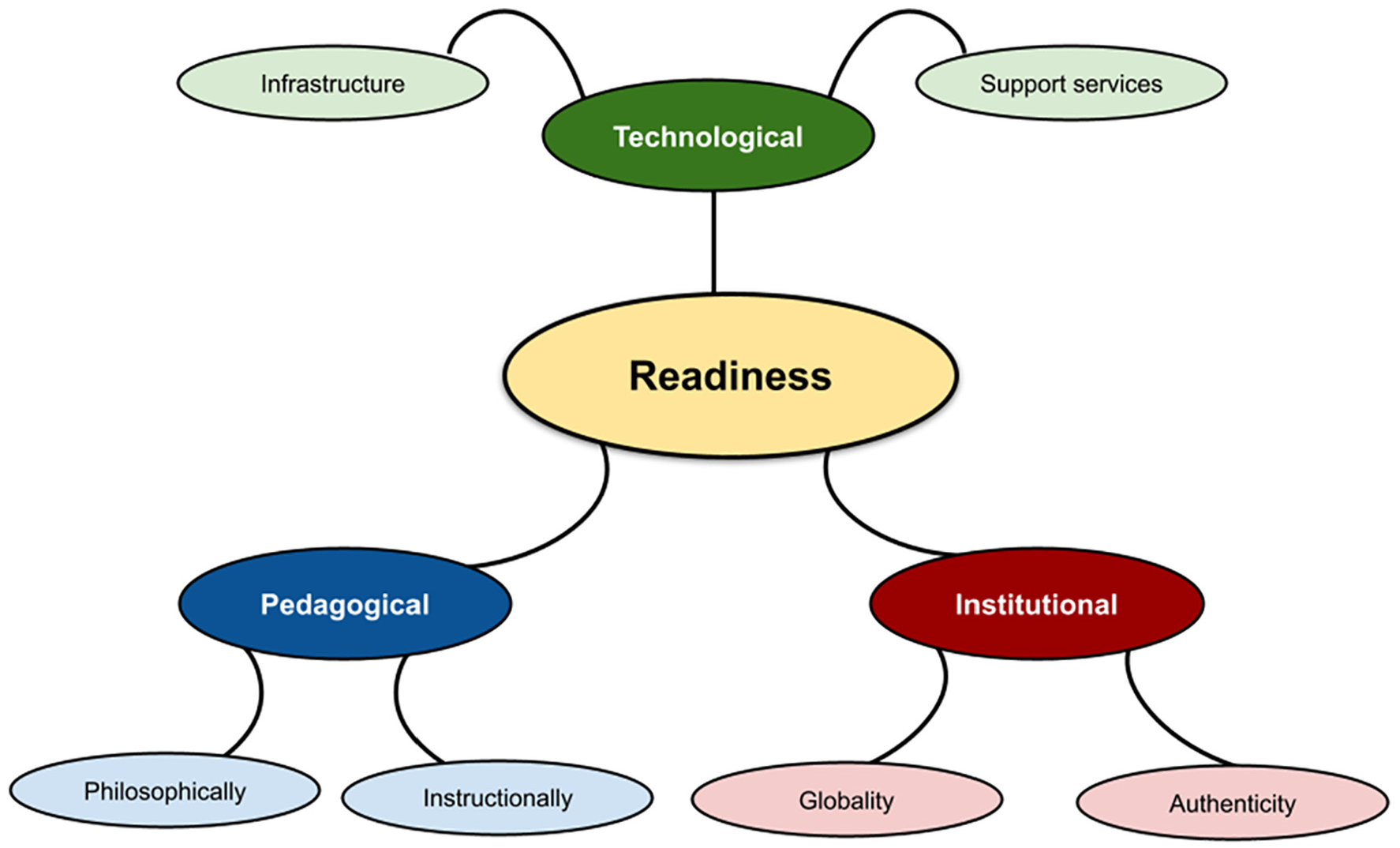
Readiness in digital education shifting
Pedagogical Readiness
Current pedagogical practices are traditional in their modes of regulating instruction. However, a digital education environment requires different considerations for personalized, self-directed, and social constructive learning (Aldhafeeri & Male, 2016). To enable DES, pedagogical readiness should be looked at philosophically and instructionally.
Philosophically
In 1998, Cognitive Loading Theory (CLT) was used in a study of instructions intended to lower the extraneous cognitive load, and the educator’s design, which was based on a paradigm, became different from that of the instructional designer (Kirschner, 2002). In this study, complex cognitive skills were added to allow the learners to apply these skills, when necessary, in new situations. Thus, when teaching specific subject matter, careful instructional design is important (J. R. Anderson et al., 1997).
Any instructional learning context can employ CLT. In minimizing the extraneous cognitive load and the means-end analysis task imposed during learning, which hinders the learning process due to the limitation of the human working memory, educators should ensure that information is presented in a way that does not impede learning. By facilitating long-term knowledge and skill acquisition, the germane cognitive load will be increased. To reduce the extraneous cognitive load on learners, teachers can simplify how they express their ideas to learners by eliminating superfluous details.
Digital technologies involve activities other than obtaining digital skills. This generally means that shifting to digital education not only provides a tool for teaching subject matter but also enhances problem-solving and higher-level thinking skills. In other words, digital education does not require levels of digital literacy or digital awareness but rather employs digital technologies where they are best suited to support reimagining education in a way that is successful and sustainable.
Instructionally
Learner-centered pedagogy enhances social constructive learning through cooperative groups, where concepts of interactivity, instructor-led facilitation, and feedback are core elements. Instructors and instructional designers should comprehend the unique needs of “global” learners in the digital age. Both should be aware of the distinctive differences in learning through face-to-face teaching and the online delivery of material to make the content accessible. The basic requirement for facilitating the digital environment is instructor-provided content and resources.
Curriculum adaptation initiates instruction and learning in the digital environment. This includes adapting learning outcomes, activities, and delivery by identifying the most appropriate methods which include the following:
meeting learners’ needs in real time.
pinpointing knowledge gaps.
giving learners an opportunity to enrich teachers’ instruction with topics that have not yet come up in the curriculum.
providing specific guidance to help each student grow to push them exactly where they need to be.
doing what learners need to do in a way that still allows them to enjoy learning.
Converting traditional educational delivery to active learning strategies integrates high-quality and digitally enabled curriculum, along with technology that works to provide engaged learning. For instructional content to be effective, it should consider certain aspects related to constructivism, which is “an approach to learning that holds that people actively construct or make their own knowledge and that reality is determined by the experiences of the learner” (Elliott et al., 2000, p. 256). These aspects include the following:
Comprehensive: includes basically all curricula and at various levels, supports all lessons and learning objectives, and presents deeply adaptive content that ensures learners are always challenged.
Diagnostic: assesses learners at a deep level across every concept in the curriculum and gives accurate portraits of their overall and leveled knowledge followed by personalized action plans.
Personalized: guides learners to precise, timely lessons that are just what they need to build skills and confidence, ensures teachers have the flexibility to choose what students work on and how to extend their lessons, and gives students the tools to learn independently.
Analytics: identifies points at which learners struggle, gets them back on track by reteaching the same concept, and alerts teachers when students need support.
Institutional Readiness
Educational institutions, in light of a digital shift, should consider educational globality and authenticity.
Globality
Digitized offerings, which may include streaming audio or video, have been successful mechanisms of professional advancement and support for offering institutions. Massachusetts Institute of Technology has been offering its Open Courseware online since 2002; “at present 2,260 courses are available, and the site has had 175 million visitors to date (Zwaan, 2017, p. 141). Stanford University’s MOOC course on artificial intelligence drew 160,000 people (Zwaan, 2017, p. 142). The sustainability of this movement resides in the accessibility of small colleges and universities. The COVID-19 pandemic that closed schools suggests a redesign is needed that will build small personal online courses that might even be bundled to create a viable lower-level educational program.
Authenticity
DES should continuously utilize digital technologies to make learning more authentic. It should perform content-based diagnostics on a regular basis to obtain reliable data (Davie & Wells, 2009). Authentic learning requires true assessment; however, selecting the appropriate mode of assessment is an important element. Assessment techniques can:
Provide multiple opportunities for authentic assessment and the demonstration of student learning outcomes.
Employ multiple assessment strategies to maintain active student engagement.
Integrate informal dialogue to receive regular constructive student feedback.
Highlight the unique challenges affecting academic integrity in an online learning environment.
A content management system (CMS) is a software application that can be used to manage the creation and modification of digital content. Computer-mediated courses can help educators to collect, disseminate, analyze, and act on student learning data effectively to provide (Davie & Wells, 2009; Meikleham & Hugo, 2020):
Students with feedback during the process of problem-solving, allowing for self-paced, incremental progress toward learning objectives.
Instructors with a method that empowers them to intervene in a timely and effective way.
Course designers with rapid and informal feedback to improve online courses.
Apps that model how students use particular course features and compare usage patterns with learning assessment results.
Technological Readiness
The technological aspect is important and usually takes over the pedagogical and institutional readiness when it comes to DES. Current research had stressed two elements of technological readiness: infrastructure and support services.
Infrastructure
There are several kinds of learning platforms available in today’s market. The most common platforms are learning management systems (LMSs). Good LMS platforms allow users to manage and track learners’ progress and record tasks and results. The adoption of an LMS depends on the level of collaboration among all users, channels, and materials. Customization is another feature an LMS offers. Scalability is important to allow schools to support a multitude of learners. Some LMSs are integrated with a CMS to allow learners to collaborate on content, upload and organize materials, and set access controls. An LMS platform alone is not enough for DES to be successful; it should be used along with a Learning Content Management System (LCMS), which is primarily for digital learning content creation, interaction, and storage. A good LCMS includes tools that can be easily customized for individual learners (P. C. Oliveira et al., 2016).
Support services
DES requires accessibility for both learners and members of an institution. Teaching platforms must be accessible from multiple devices, including tablets, phones, and laptops. This variety increases learning opportunities for students. However, education in the digital age demands more security measures than ever before. Security is a vital element of institutional readiness (Huda et al., 2017).
Another element is confidentiality. Personal information should not be available over the internet, which makes people vulnerable to hackers. Therefore, preparation in regard to information sharing should include the following:
Privacy settings to decide who can access information and to what extent.
Visibility controls, so information such as emails, feedback, and phone numbers are not made public.
Location services that do not have to appear when posting or communicating over the internet or social media.
Previews of visible information to allow users to know what others are able to see.
Warnings about online information sharing to prevent people from becoming victims of identity theft or blackmail.
Cyberbullying is another major issue that arises from the widespread use of technology. Education, in this sense, can make positive changes and encourage good practices within society and with the outside world.
Institutions should be aware of cyberbullying attributes such as harassment, abuse, or threats. They also should be aware of the severe consequences cyberbullying can have. Cyberbullying can be monitored by instructors or through parental controls.
Individuals could be provided with the option to hide their identities from other students to avoid criticism and social rejection.
The shift must relay an important aspect of readiness: legal issues. Individuals need to be aware of the legal consequences of their digital behaviors. Education helps increase people’s awareness of digital practices for dealing with abusive, offensive, or illegal materials and interactions. It should focus on relevant issues, such as (1) copyright and content ownership, (2) threats and abuse, and (3) language misuse.
Orchestration
A digital shift ensures the inclination of the model to become a successful reality. The ideas within the model, similar to the instruments of an orchestra, must harmonize in performance. This can be achieved through environmental and social orchestration (Figure 5).

Orchestration in digital education shifting.
Environmental Orchestration
Piaget (1970), who presented constructivism theory, asserted that knowledge was not simply transmitted between the teacher and the learner but that it was environmentally being constructed in the mind of the learner as well. Hence, it was postulated that learners do not receive ideas during learning from teachers, but rather they tap into their knowledge base and create or construct whatever it is they are learning (Steffe & Gale, 1995). The learner should deliberately try to develop meaning, and through such effort, meaning can be developed within the knowledge structure. Therefore, learners within this context, as Mahoney (2002) explained, may feature certain aspects of learning such as critical thinking, which allows the learner to think critically about a subject and determine the larger context in which the subject is applied. In doing so, learning reaches outside the limited resources introduced by the teacher so the learner can fully comprehend the situation.
Energizing
For motion to be carried out within the human body, a required stimulus generates an action potential. The same can be applied to a modern movement, which people must be energized or stimulated into joining. Digital shifting has the potential to re-energize educational efforts. It calls for new teaching methods that are enhanced and modernized to suit the needs of today’s youth.
Individuals have an innate curiosity to learn more about themselves; therefore, they are inspired to take an active role in understanding what they can do to improve the effectiveness of teaching and learning strategies. Hence, an energetic educational system increases curiosity to make the learning environment more provocative and rewarding.
To increase all parties’ commitment to the digital shift, there is a need to focus particularly on two things: connectivity and responsiveness. Connectivity is practiced by communicating both asynchronously and synchronously. In this process, instructors, for example, should be able to:
Structure, organize, and cultivate learning communities and group activities.
Practice regular effective instructor–student contact.
Provide and acknowledge the importance of prompt feedback to students.
Responsiveness can be increased through electronic notifications promoted by a system to all parties (Lowenthal et al., 2020). The ideas presented in digital teaching and learning encourage more professional practices by increasing teachers’ presence and social communication. The digital shift is also supported by collegiality and is committed to professional learning. Instructors should also be able to meet the anticipation of their learners when shifting to an online environment, mainly by:
Being available online for a longer duration.
Responding quickly to inquiries, usually within 24 hours.
Using text-based communication with the ability to provide details as the situation requires.
Providing clear guidance for task performance since the communication is not face-to-face.
Sharing personal real-world experiences during teaching.
Personalizing
Learning will be shifted from being instructor-led to being student-centered, and from one-size-fits-all to customized instruction. Digital learning allows for the assessments and the assignments, for example, to vary from one student to another.
Through constructivism learning, a person is motivated as an independent thinker and learner. Since this approach to learning emphasizes the need for the learner to be as independent as possible and construct ideas from their knowledge base, it implies that the teacher in such a learning context plays a role in facilitating the learning process and lets the learner work independently and make discoveries that count as part of the learning process (Alesandrini & Larson, 2002).
In essence, the digital learning environment allows learners to (1) become responsible for their own education and more in control of the educational process, for example, choosing when to go to class and dividing their workload to set their own pace in learning; (2) access unlimited online resources; (3) choose places and tools of learning; and (4) have no restriction on time for learning.
Social Orchestration
This aspect involves the social aspect within institutions. The shift toward digital education requires a change in the concept of schooling. Schools should be viewed as social entities in which students can socialize and examine their perceptions and constructions of what is being taught in the curriculum. Similarly, in an online environment, students should reconstruct their knowledge by increasing open dialogue and making connections to the outside world. Education should depart from schooling and move toward socializing. This new view can be reflected through socializing and engaging in relation to curriculum goals and designs, schedules and time, evaluations, assessments, etc.
Socializing
The aspects of socialization and knowledge circulation have been reflected remarkably via online educational platforms. Lichtman (2012) stated, “Netnography, use of research communities, crowdsourcing, and co-creation are among some of the creative moves schools in the Middle East are using through social media” (p. 132). Additionally, according to data from Statcounter (2017) on social network use in the Middle East, Kuwait is among the Arab states with the fastest-growing number of users of social networking services. Therefore, social networking has become common among many people including teachers and educators. They embrace this technology because it is easier to access, is convenient, and easily connects teachers and students for educational purposes. Hence, it would be greatly beneficial for these advanced technology tools to be utilized in instructional contexts to pursue a massive number of educational objectives.
In fact, digital learning tools have increased the quality and rate of K-12 students’ collaborative learning experiences. Many studies have revealed that the use of online platforms has greatly increased the students’ abilities to meet, communicate ideas, and share information related to school activities (Alrajehi, 2016). Thus, communication among students and instructors at schools has increased as a result of the use of online means. This approach has remarkably fostered a more convenient exchange of class details since most students, especially those owning smartphones, can easily access the information their teachers provide (Ahmed & Sulaiman, 2015). In this context, learners are able to construct and re-construct their gained knowledge, as advocated by the connectivism theory (Harasim, 2017).
Engaging
Research on levels of student engagement has focused on curriculum and course design. There is a symbiosis between engagement and involvement, the term Astin used in his student involvement theory (as cited in Wolf-Wendel et al., 2009). Both refer to the level of interaction between the student and primarily the content. It is incumbent on the instructor to design activities that keep the students’ interest. An online platform offers similar capabilities, but such activities are incorporated in the web application functions. The breakout room substitutes for small group discussions. Polling windows can be used for knowledge checks or demographics. Learning platforms such as Blackboard and Canvas allow students to upload documents to respond to other students’ posts. Zhou and Tian (2019) discussed abstract qualities that should be considered: the integration effect, pertinence, professionalism, richness, knowledge, ability improvement, quality improvement, and learning results. Pella-Donnelly (2018) showed how valuable web conferencing can be in allowing students to listen to experts in specialized fields and from locations far away from the university or students’ locations. She gives examples of a seabird expert in Anchorage, Alaska, and a microbiologist at the University of Hawaii. This structure allows the students to question the expert directly and gives the instructor a chance to pose thought-provoking queries after the event. It is a means to be creative and innovative with the instructional design; it just involves learning the application. The instructor is key to making this work to create a positive association with the learning environment. They will have to deal with different levels of information literacy, but that is part of the new formula in this revamped educational scenario.
Beckett et al. (2016) achieved some acceptance through STEM projects in a high school serving low-income African Americans. New (digital) technology offers exciting options but that does not mean the physical classroom is obsolete. Many activities are viable in both environments; it is just the delivery that varies.
The reimagined landscape has several paths. One modern dimension is the creation of a hybrid course. Shea et al. (2015) clarified the elements of a hybrid course: “(a) online learning activities are used to complement in-person activities; (b) time in the classroom is reduced, but not eliminated; and (c) online and in-person instructional elements of the courses are designed to interact and benefit from the strengths of each (citing the Learning Technology Center, 2014). . . . Studies have shown that student satisfaction and achievement of learning outcomes correlate with high levels of three types of presence, social, cognitive, and teaching (Learning Technology Center, 2014, p. 540). That is a roundabout way of saying student satisfaction is linked with student engagement, which is a perspective to consider when designing a course. Jafar (2016) presented a novel way to design a course: collaborate with the students. He considered this the road to enabling students to achieve goals for themselves (Jafar, 2016, p. 221). Kuh’s (2007) comments about students’ preparation for college informed the academic community, parents, and public that student involvement in secondary school is not to be dismissed; it is not just part of the andragogy but a vital construct for success in higher education.
Methodology
This research aimed to study the extent to which educational experts significantly perceive the importance, relevance, clarity, and appropriateness of the DES model’s elements. Therefore, the first phase of the study was proposing and constructing the DES model. The second phase of the research was validating the model via collecting the opinions of experts on the DES model and its components.
Research Design
The study was guided through the exploratory approach with the construction of two data collection instruments to elicit specific data from the participant groups included in this study, who were educational technology experts, for validating the model.
Figure 6 shows the breakdown details for the design of this study. Two main stages were undertaken to develop the DES model: Stage one was for proposing the DES and its subcomponents, and stage two was for gathering experts’ opinions to help in the adjustment of the DES.
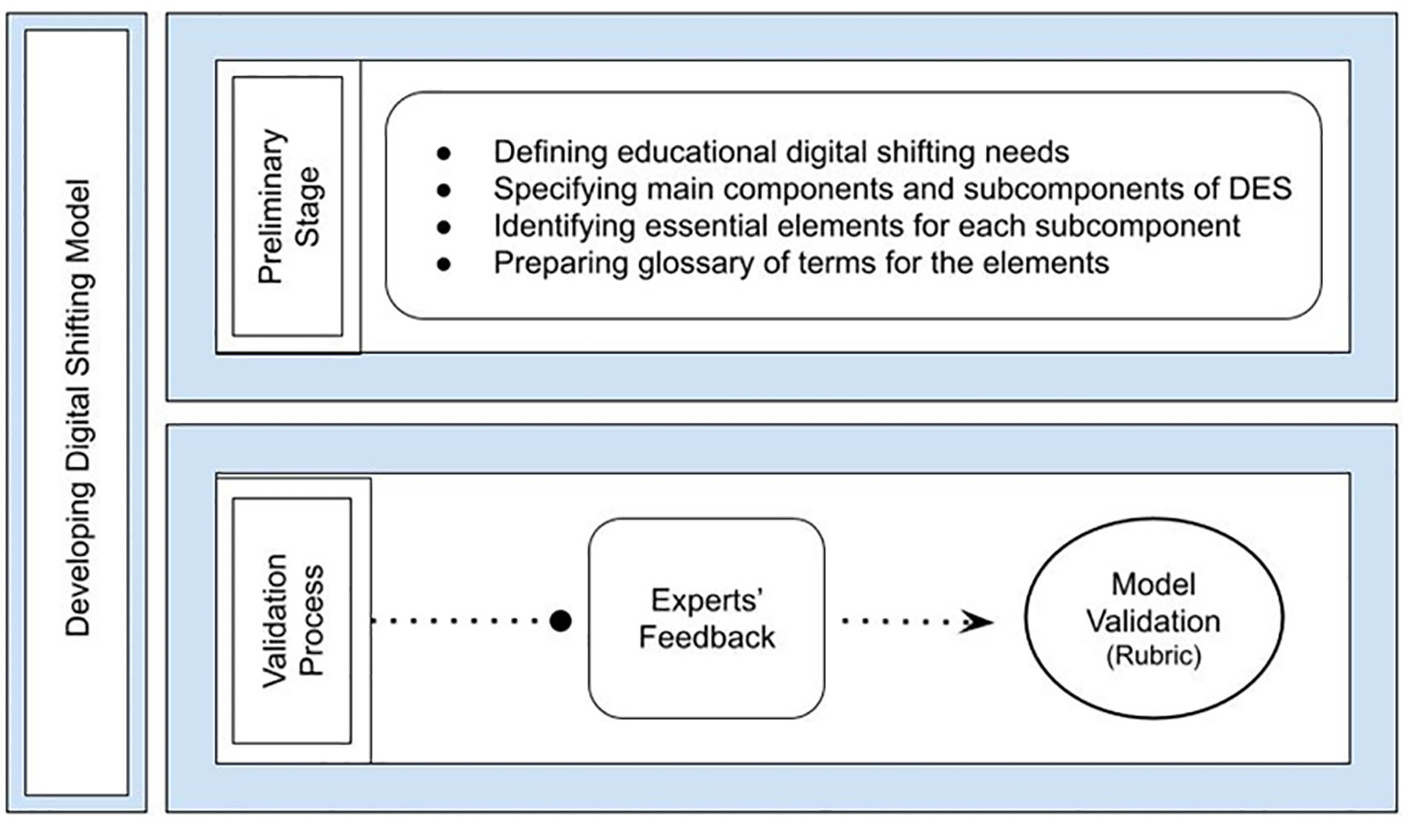
Developing and validating the study model.
Procedures
We developed and refined the model as much as possible so that it reflects the most recent best practices in the global context of education. After the first draft of the model was finalized, 15 experts in the field were contacted for their input and critical points of view on the model. Their online responses were recorded using SurveyMonkey and highlighted the validity of the model and its elements. The data collected were used to answer the main research question.
Participants
A total of 15 experts in the field of education and educational technology helped with the validation of the DES model. They varied by nationality, gender, age, and professional ranking. The participant experts were ranging from 35 to 65 years old, and they were academic and educational practitioners who held graduate degrees (Master’s and Ph.D. holders). The first language of some experts is Arabic whereas others’ is English. Additionally, some of these experts were Kuwaiti faculty members, professionals, and field experts, while others came from Saudi Arabia, Jordan, and several other countries like the United Kingdom and the United States of America. This was done deliberately so the model would be critically analyzed from various perspectives that were not limited to context, language, or culture. In this context, we would like to clarify that the small number of participants was due to the circumstances surrounding the implementation of this research paper, as it was conducted during the peak time of the COVID-19 outbreak, the language of research, and the lack of the number of required participants who are experts in the field of this study.
Instrumentation and Data Collection
As stated, the data were collected using an instrument constructed by this research’s authors for validating the model via SurveyMonkey. Experts were asked to rank each DES element based on its importance, relevance, clarity, and appropriateness in addition to providing any needed suggestions and comments. The data from the validation rubric were analyzed quantitatively using SurveyMonkey.
Findings
The data from the validation rubric were analyzed quantitatively using SurveyMonkey.
Data Cleaning
Data analysis is a multi- step process where data are prepared for a final analysis. Traditionally, the initial step in any given quantitative data analysis is getting the data ready for the analysis, that is, data cleaning. Although this step is commonly known to be the most tedious one, it is essential because it safeguards the data from errors that might influence the study’s analysis. This step basically helps produce statistical analyses that are adequate and provide accurate statistical conclusions. Tabachnick and Fidell (2019) described this step as a recycling mechanism analogous to the concept of “garbage in, roses out” (p. 5). In their book, Mertler and Reinhart (2016) stated, “The results of any statistical analysis are only as good as the data analyzed” (p. 27).
Descriptive Statistics
The main research question asked to what extent educational experts significantly perceive the importance, relevance, clarity, and appropriateness of the DES model’s elements. Approaching the answer to this research question, we looked at the data that were collected using SurveyMonkey. The experts who helped with the model validation process responded to the survey where they looked at the DES model’s elements and sub-elements. They were asked to rate each sub-element based on its importance, relevance, clarity, and appropriateness of terminology used. They rated each sub-element on a scale from 5 to 1 (negligible, low, moderate, high, or tremendous). Thus, the lower the value, the higher the rating. The results of their responses are shown in Table 1.
Descriptive Statistics.

As shown in Table 1, the mean values of all sub-elements ranged from tremendous to high on average in terms of their importance, relevance, clarity, and appropriateness of term labeling. For example, the importance of awareness was reported as M = 1.76, SD = 0.48. Similarly, the relevance of the term awareness had a mean value of 1.97 (SD = 0.53). Additionally, the appropriateness of term labeling for the awareness sub-element yielded a mean value of 2.07 (SD = 0.67). Therefore, it is safe to say that the 15 experts who responded to the online survey reported high importance, relevance, clarity, and appropriateness of term labeling on average.
Discussion
The purpose of this study was to propose and validate a new model for an educational shift that employs cutting-edge technologies to promote and endorse the awareness, acceptance, readiness, and orchestration of global teaching and learning. We suggested that the implementation of the DES model would yield sustainable, successful, and engaging education. After answering the research question in the results section, a detailed discussion of the results and their implications are presented in this section. Implications and recommendations are also provided in view of the results.
The results confirm the validity of the model and the importance, relevance, clarity, and appropriateness of the term labeling of each of its sub-elements. The experts who reviewed the model almost unanimously agreed that each sub-element was an important part of the DES model and about the educational shift as a whole. This in itself proves that the model is valid and is ready for implementation and adoption by educational organizations. Further, governments, educational leaders, and educational practitioners are encouraged to adopt the DES model to achieve a smooth and successful shift from one educational platform or setting to another (T. Anderson, 2016; Campbell, 2020). Undoubtedly, many effective programs that were established using sound standards might fail miserably simply due to a poor shift from one platform to another, for example, face-to-face education to online learning (Harasim, 2017; Jafar, 2016). Overall, though, the DES model applies to more than simply shifting from traditional schooling to online learning. Indeed, it could apply in a wider sense as long as its main elements and sub-elements are applied and adopted appropriately.
Implications and Recommendations
The DES model can be viewed as a solution to a lot of problems regarding shifting education from face-to-face to online, which was the case during the COVID-19 pandemic. The model tackles issues regarding readiness in all its sub-components, which proved to be an important part of the educational shift. Further, the DES model was comprehensive in terms of including all issues that could play a significant role in shifting education from one setting to another. Therefore, having validated the model, we highly recommend endorsing this model to governments and policy makers. Ensuring positive results when passing new policies is a priority, and this model does just that. As a result, the DES model would make an exceptional addition to the list of resources that policy makers at all levels use when making decisions. In fact, it facilitates decision-making and planning.
Limitations of the Study
The originality of this paper is to present a totally new model which the authors think suits the educational needs for making a digital change specifically in K-12 education. However, the implementation of the model in this research article is limited mainly to Kuwait’s educational context. Another limitation of this study is related to the design of the DES model that targeted the public educational systems, so the adoption of this proposed model should be applied with caution in private educational institutions. Additionally, this model went through only one validation level because it was proposed during exceptional circumstances that related to the COVID-19 pandemic peak period which restricted the authors to apply more validation levels. Therefore, more validation levels might be needed when applying the DES to a wider range.
Future Research
Digging deeper into the components of the DES model, future research could look at each component separately and evaluate its sub-elements more thoroughly. Another study could evaluate and compare the main elements and potentially add another element or update the model. Furthermore, it would be interesting to see a replication of the study in another context to see if the results of this study would hold or not.
Conclusion
To summarize, there are clearly many issues that encounter in today’s K-12 education such as what resulted obviously from the COVID-19 pandemic. The ignorance of addressing them would essentially doom the world’s current student population to forced ignorance. One answer to this problem is to adopt the digital education shift (DES) model. The process seems ideal, but it could confront educational pioneers with many different challenges and obstacles throughout its potential implementation. Though sometimes increasingly problematic in implementation and use, the study suggests if experts in their fields were able to cooperate, collaborating on the best method of implementation, as well as the best instruction to provide then the model could provide a realistic way to enhance education permanently through the use of cutting-edge technology. This would also avoid another instance wherein an entire generation of students is essentially left behind due to another outbreak or any other unexpected hard circumstances. Ultimately the study’s results hope to provide additional insight into how helpful and necessary changing education and education delivery methods have become; the education system owes this transformation to current students and future generations.
Footnotes
Declaration of Conflicting Interests
The author(s) declared no potential conflicts of interest with respect to the research, authorship, and/or publication of this article.
Funding
The author(s) disclosed receipt of the following financial support for the research, authorship, and/or publication of this article: The Project was Funded by the Kuwait Foundation for the Advancement of Sciences (KFAS) under project code: CORONA PROP 17.
