




Abstract
Child injuries are replacing infectious disease as the leading cause of mortality in developing countries. As school is one of the environments where children spend significant time during their formative years, school safety should be effectively managed, promoted, and prioritized. In Thailand however, school safety is considered to be of low priority compared with other educational issues, lacking effective policy, and with schools struggling to justify safety costs. This article proposes a novel application of lean thinking to control the cost, bureaucracy, and waste associated with managing and administering a safe school. Through a case study in northern Thailand, one primary school’s current safety scenario is reviewed with regard to people, finance, and operations, before applying a lean framework to improve the handling of safety suggestions. Results show significant capacity to improve the management of school safety, along with management implications and potential to expand the framework beyond Thailand.
Keywords
School Safety
The United Nations Convention of the Rights of the Child states that as well as an education, every child has the right to be safe (United Nations, 2012). Despite this mandate, child injuries are replacing infectious disease as the leading cause of mortality in developing countries (Kozik et al., 1999). Therefore, as one of the principal environments where children spend extensive time during their formative years, school safety should be effectively managed, promoted, and prioritized. This is reflected in the breadth of discussion, debate, and literature about school safety. However in Thailand, school safety is generally considered to be of low priority compared with other educational issues, with a lack of effective policy, and with schools struggling to justify safety costs. As a result, child injury is common in Thailand, and according to Sitthi-amorn et al. (2006), approximately 6,000 children die from preventable injuries each year. While these injuries do not necessarily occur at school, children spend significant amounts of time within the school environment, and there is a growing demand for safe schools in Thailand, along with associated parental expectations of safety. Thailand has responded to child injury and mortality through appropriate legislation (e.g., mandatory use of seat belts and crash helmets), but it is argued that such laws are not intrinsically effective, requiring enhanced awareness and robust enforcement. In response, the Thai government recommends schools play a more active role in preventing child injury by managing and promoting safety. As such, the education system in Thailand represents a key component of child injury reduction and safety promotion. However, Thailand’s school safety is geographically variable and significantly dependent on each individual school’s resources and attitude toward safety. Budgetary constraints and a lack of clear policy or related governmental guidance are key issues affecting the management of safety in Thai schools. The aim of this article is thus to present a framework aimed at improving the management of school safety in Thailand, specifically through the novel application of lean thinking to reduce the barriers related to the cost and inefficiencies of managing and promoting safety. This article hypothesizes that the concept of lean thinking, which has been successfully utilized to reduce costs, waste, and improve service, could also be applied to issues of school safety. The application of lean thinking to school safety in Thailand has potential to cut costs, minimize the associated management burden, and improve the levels of safety delivered to the relevant stakeholders.
The State of School Safety in Thailand and Associated Management Implications
There are a variety of definitions of what constitutes a safe school, or which aspects of school safety should be managed, promoted, and prioritized. For example, Hernandez, Floden, and Bosworth (2010) suggest a safe school is a place free from violence, and represented by an environment where there is no perceived fear with respect to the school or its disciplinary procedures. A general definition of a safe school is one that provides a positive environment, allowing students, teachers, staff, and visitors to interact without fear or threats, and in a supportive way to achieve the educational mission of the school while fostering and nurturing personal growth (Butcher & Manning, 2005). Hull (2010) provides a more practical and management-oriented elucidation of school safety, stating that it includes the school’s culture and the appropriate training and resources to respond to threats and hazards. Definitions also vary according to geographic location, with U.S. school safety research chiefly focused on violence and crime prevention (e.g., Heinen, Webb-Dempsey, Moore, McClellan, & Friebel, 2007), while the European perspective takes a wider viewpoint to include health, risk, a safe learning environment, and lifelong learning related to health and risk (European Agency for Safety and Health at Work [EU-OSHA], 2009).
Defining school safety is often challenging, as the definition can encompass a wide remit of different themes, where the separation of rhetoric versus reality becomes problematic, and where a key difficulty is distinguishing between personal beliefs and evidence-based research (Mayer & Cornell, 2010). The most commonly noted aspects of school safety in the literature are physical, psychological, environmental, and social.
In terms of physical issues of school safety, violence and bullying are commonly discussed in the literature. For example, in a recent assimilation of school safety data, Dunlap (2013) focuses particularly on school violence as the central aspect of school safety. Literature often takes school violence as the contextual basis for school safety research and aims to develop response mechanisms to crises (e.g., Kingshott & McKenzie, 2013). The school violence literature primarily focuses on schools in the United States, where the effects of recent school shootings have prompted national discussion regarding the safety of schools and wider social issues, including gun laws (e.g., Jones, Waite, & Clements, 2012). As well as school violence, risk and injuries to children form a central precept within the school safety literature. Injuries at school are often investigated with the primary discussion and analysis aimed at reducing accidents or risk (e.g., Scala, Gallagher, & Schneps, 1997), but such discussion often neglects the management barriers associated with creating a safe school, and does not necessarily consider the potential fallacy of using only accident or injury statistics to monitor school safety.
Psychologically, school safety is discussed in the literature with reference to how safe students feel at their school (Mooij & Fettelaar, 2013). More recently, discussions regarding the feeling of being safe at school have developed into debates about how safe individuals feel in terms of gender (e.g., Toomey, McGuire, & Russell, 2012), homosexuality (e.g., Fleming, 2012; Vega, Crawford, & Pelt, 2012), and disabilities (e.g., Boon et al., 2011).
In terms of the school environment, road safety predominates the literature and represents an important subset of school safety research. This is a particularly important issue in developing countries—For example, Hidayati, Liu, and Montgomery (2012) focus on traffic flows as a key part of improving school safety in Indonesia, while John, John, and Bose (2012) illustrate that road safety and school transport in India are a leading cause of injury. Others (e.g., Parusel & McLaren, 2010) suggest that focusing on road safety creates an illusion of a safe school and ignores wider safety issues at school. This represents a key tenet of school safety literature, where specific problems are often identified and analyzed, but without consideration of the wider problem. For example, focusing on school safety is unrealistic for schools in developing countries where efforts are primarily centered on raising educational standards.
As well as road safety, the school and its buildings are considered instrumental to creating a safe school. A key concept of invitational education theory (Purkey & Novak, 1996) suggests that the school should be an inviting place across a set of five key areas (people, place, processes, policies, and programs). In response to this, attention has often focused on creating a safe school environment, including the school’s buildings and surroundings (e.g., Stanley, Juhnke, & Purkey, 2004). In relation to this, a small subset of school safety literature investigates school safety in the context of natural hazards, but this usually relates to specific geographic locales, for example, in Taiwan, where typhoons are a common occurrence (e.g., Chen & Lee, 2012). Shaw and Kobayashi (2001) suggest that schools can be used as a way to reduce the wider impact of natural hazards, and focus on India, Nepal, Indonesia, and Uzbekistan. Linking the schools with their communities is often investigated in terms of its impact and relationship with safety and violence in the wider community (Ozer & Weinstein, 2004). There is strong evidence that the safety of a particular school cannot be taken in isolation, and is inseparable from the surrounding community (Kitsantas, Ware, & Martinez-Arias, 2004).
The common aspect of school safety in the literature is its diversity ranging from the school’s environment to community violence, natural hazards, and the psychological effects of bullying. The diversity represents a challenge, particularly for schools where the concept of school safety is nascent. The issues with school safety research and literature are highlighted by Furlong, Morrison, Skiba, and Cornell (2004), who suggest that school safety research can only progress by developing a core literature to critically assess the methods, measurement, and analysis of school safety. In keeping with these assertions, the research in this article aims not to recount the specific safety problems experienced by schools in Thailand but rather to develop a new way of thinking about school safety and how best to manage it given the context of budgetary constraints and raised awareness in Thailand about the need for safer schools.
Although a variety of school safety definitions exist, in this research, the remit of school safety relates to the physical well-being of the pupils, the school environment, and road safety. If all these factors are fulfilled, a school might be judged as being safe (The Center for the Protection of Children’s Rights Foundation, 2007). However, achieving all three aspects of school safety represents a considerable challenge with far-reaching management implications.
In Thailand, school safety lacks suitable guidance in the form of governmental policy and is geographically fragmented, with safety effectiveness highly dependent on the school’s location, leadership, and financial status. In addition, educational priorities in Thai schools are focused predominantly on academic achievement as opposed to issues of safety, which are largely considered as peripheral and less important aspects of education. Although academic attainment is regarded as a decisive factor determining educational quality, United Nations Children’s Fund (2009) argues that children have the right to learn in a safe and healthy environment, and thus, governments have a clear obligation to provide such environments through appropriate frameworks, guidance, and legislation.
Thailand’s political focus over the past decade has been firmly on economic development, which resulted in the recent upgrade of its economic status from lower-middle to upper-middle income economy (World Bank, 2011). However, the focus on economic development has not resulted in parallel upgrades to the education system, and according to Hewison (2012), Thailand faces a shortage of skilled labor, a lack of innovation, and an education system that has continuously failed to deliver quality schooling. The result is a persistent focus on raising academic, vocational, and technical skill, but a lower prioritization of issues such as school safety. For example, in 2009, the Thai Ministry of Education (MoE) launched an economic stimulus package for education (MoE, 2009), and of 11 key projects, including teacher development, school quality, and school improvement, there was no specific mention of promoting safety, of developing and managing the school environment with regard to the health and safety of pupils. The focus of this 54,000 million baht economic stimulus was primarily aimed at generating economic benefits for Thailand via the education system (MoE, 2009). This highlights Thailand’s focus in pursuing what it considers core aspects of education, while largely ignoring the critical aspects required for safety management and promotion in schools.
The lack of ubiquity in Thailand’s approach to school safety means variance in the management and quality of safety at local, regional, and national scales. This is partly due to governmental decentralization in Thailand and the resulting dependency on individual provinces to effectively manage education, which has meant school safety policies and guidelines are fragmented, and rely mainly on the stance of local administrative organizations. For example, Article 24 of Thailand’s 2003 Child Protection Act states that district heads have a duty to protect children living within their jurisdiction, and the associated responsibility to inspect schools in terms of safety. As part of the same Act, Article 63 states that schools must provide guidance and training to promote safety, yet in reality, this is not common.
According to the EU-OSHA (2009), four functional components affect the management of school safety. These components are shown in Table 1 along with an assessment of Thailand’s current position in achieving these based on a review of the literature and policies in this area.
Components of Managing a Safe School Along With Thailand’s Corresponding Status.

Source: Adapted from Garcia (2010) and European Agency for Safety and Health at Work (2009).
Table 1 indicates that in terms of safety, Thai schools suffer from a lack of government policy as well as fragmented and variable assistance from local administrative organizations. This means they must autonomously manage and design their own school-level policies and approach to safety, but often lack appropriate knowledge, experience, and motivation. In ventures to remedy this, external organizations and NGOs have attempted to promote and improve school safety in Thailand. For example, The Alliance for Safe Children (TASC) has implemented a safe school project to manage safety and reduce child injury, while the United Nations International Strategy for Disaster Reduction (UNISDR) launched the One Million Safe Schools initiative (UNISDR, 2011).
Perhaps unsurprisingly, there is also a significant difference in the safety approach between public and private schools in Thailand. Private schools often use safety as a differentiating factor when attracting new parents and students, and in a competitive market environment, schools must attract students to achieve sustainability (Smith, 1994). When choosing a private school, parents often visit to explore the school, search for information about its educational quality, and pay considerable attention to safety (Trump, 2012). The school selection process within the private education sector thus provides an additional financial impetus to ensure safety. However, school safety can be costly in terms of resources, time, and processes, making safety an unattractive proposition for schools. The biggest barrier to effective school safety for public and private schools in Thailand is the creation of an effective management program to address safety. School safety is often overlooked due to the significant management barriers and burdens, including cost, efficiency, organizational strain, and bureaucracy. In terms of cost, Hull (2010) argues from the global perspective that budget cuts represent one of the biggest threats to safety in educational environments. This is particularly so for Thailand while attempting to balance conflicting demands on its education system (Witte, 2000). Based on a literature review and in-depth interviews with 15 leaders from schools in northern Thailand, seven key management barriers to effective safety were identified in Thai schools, which are illustrated in Figure 1, and described in the corresponding sections.

The seven management barriers to effective safety in Thai schools.
The seven management barriers are key issues requiring attention if schools in Thailand are to effectively implement and sustain a focus on safety. Each of the seven components is described independently, but in reality, they are inextricably linked.
Financial Implications
Managing safety has considerable financial implications, in terms of the intrinsic cost of safety-related activities in the school, and the opportunity cost of spending on safety, versus other school needs, such as staff or academic development. The relatively intangible nature of risk minimization and effective school safety adds to the financial burden, and schools would often prefer to spend in more visible ways. This is particularly true for private schools where attracting parents and students is critical to the school’s sustainability.
Time
Managing safety in schools requires a significant investment in time. This is set against a backdrop of existing time constraints faced by school leadership, staff, and teachers.
Leadership
Developing appropriate safety strategies and disseminating these throughout the school require strong and committed leadership to promote safety and motivate all stakeholders in alignment with the safety strategy and policy.
Communication
Communicating safety issues throughout the school is an important aspect of creating and managing a safe school. Such communication requires appropriate management and strategy to ensure the perception of safety is not one of burden, but a realization of its vital importance to all stakeholders.
Stakeholder Understanding
Effective safety requires the commitment and participation of all school stakeholders. While some stakeholders (e.g., parents) will be more willing to align themselves with safety policy, others (e.g., leaders and staff) may not fully understand the justification for safety, or may feel it adds to their workload.
Culture
Risk taking and safety policies vary according to national cultures (Hofstede, 1991) and the Thai culture toward safety is markedly different from other, more developed countries. While there is a well-established health and safety culture in Europe and the United States, the notion of health and safety in Thailand is still relatively nascent. This often means school management faces resistance when attempting to implement safety in a culture where it is not traditionally considered important or necessary.
Commitment
The six management barriers presented so far contribute to the issue of commitment. Effective safety requires the commitment of all involved and achieving such commitment is a substantial management challenge.
Together, these seven management challenges create inefficiencies, waste, and costs for management when attempting to design, implement, and transform the school’s approach to safety. A need therefore exists to research and develop new ways of approaching and managing school safety. The research in this article suggests that a lean thinking management approach could be used to develop, implement, and transform school safety from a bureaucratic and inefficient process to a streamlined, sustainable, and value-adding school activity.
Lean Thinking to Improve School Safety
To reduce the inefficiencies, waste, and cost associated with school safety, this article proposes a framework based on lean thinking. Lean thinking tools emerged from lean manufacturing, which is an automobile-manufacturing process pioneered in Japan during the 1980s and now utilized by organizations globally. While lean manufacturing is quintessentially associated with industry, and the physical production of goods, lean thinking is a more recent philosophy with proven credibility as a process reengineering methodology (Radnor, Holweg, & Waring, 2012). The result is that lean thinking has been adopted in a number of scenarios to reduce waste, cut costs, and increase efficiency. Most notably, the literature has indicated that lean thinking can have significant impacts in health care settings, often being adopted in hospitals to improve patient care while reducing the costs and waste associated with providing quality health care (e.g., Chalice, 2007; Dart, 2011). Lean thinking utilization in health care research and practice, along with the general aims of eliminating waste and improving satisfaction, is compatible with school safety, where waste could be reduced and the satisfaction of parents and students could be improved. Furthermore, the way in which a school is run in terms of administration and internal climate directly affects its safety (Anderson, 1998).
This research illustrates by way of a case study, how school safety can be approached and managed in Thailand using the principles of lean thinking to cut waste and improve safety-related processes. The article reports on progress toward developing an effective and efficient method to promote and manage school safety at a primary school in northern Thailand.
Case Study and Method
Prior to outlining the case study details, it is necessary to justify the selection of a case study approach as opposed to other research methods. Although safety at school can be discussed from a conceptual or theoretical perspective, the nature of school safety is intrinsically practical, with a need to gather empirical evidence-based data (Astor, Guerra, & Acker, 2010). Coupled with the practical aspects of school safety, lean thinking is commonly an applied endeavor, with practical application being frequently reported in the lean thinking literature (Arlbjørn & Freytag, 2013). The inherently practical and applied aspects of school safety and lean thinking, along with the lack of information regarding school safety in Thailand, suggested that a case study approach was most effective.
Figure 2 shows the location of the case study, which is a private school in northern Thailand approximately 30 min by car from Thailand’s largest northern city (Chiang Mai). The school has been operational for 25 years, and aside from a high-quality education, parents expect their children to be safe. The school runs kindergarten and primary-level education programs and is well known among parents in its catchment area. With 1,420 students on roll, including 451 kindergarten and 969 primary students, and 98 teachers and administrative staff, safety is a significant issue of concern for the school and its reputation.

The case study school and relative proximity to Thailand’s largest cities.
Productivity in the service sector trails manufacturing by a significant margin (May, 2005) and the application of lean thinking beyond manufacturing is being considered and investigated by a wide variety of sectors and organizations. The concept of lean thinking as applied to school safety relates to the three main aspects affecting safety management in the school (operations, finance, and people), and the three corresponding aspects of lean thinking, which derive from the Japanese words mura, muda, and muri. Muda is the central precept, which represents waste, and in relation to school safety correlates mainly to financial aspects of school safety, such as wasted resources or budget. Mura refers to unevenness (Manuele, 2007), and in terms of managing school safety, refers to the unevenness in the practical and operational aspects of safety. For example, there might be inconsistencies in the way safety policies are implemented. Finally, muri refers to strain (Radnor et al., 2012), and in transposing the term to school safety, represents the organizational strain in managing safety from the perspective of all the key stakeholders (parents, students, teachers, and staff). For example, muri relates to the additional workload teachers might face when implementing school safety policies or processes. In reality, these components are interlinked and can be applied holistically to improve safety at the school, as shown in Figure 3.

The three components of lean thinking (mura, muda, and muri) as they relate to the key aspects of managing and promoting safety at the school.
The focus in this article is the application of lean thinking to manage safety-related suggestions in the school. Currently, the school operates a safety recommendation/suggestion system whereby safety-related suggestions or recommendations are elicited from stakeholders (parents, teachers, and staff) via a variety of sources (e.g., Facebook, email, and telephone). The focus on the safety recommendation/suggestion system reflects the fact that safety suggestions are the most tangible and visible aspect of school safety, and represent a key communication interface between all stakeholders. An effective safety suggestion system also has the potential to raise awareness and promote safety. In future research, the remit of lean thinking is likely to move beyond the school safety suggestion system to create a framework encompassing all aspects of health and safety at the school.
The practical application of a lean thinking approach to managing safety suggestions required a series of steps, including assessing current safety performance and issues, mapping the current value stream, identifying improvement opportunities, and then mapping the future value stream. A conceptual overview of the methods used at the case study is illustrated in Figure 4.

The steps applying a lean approach to managing school safety.
Step 1 of the method consisted of knowledge acquisition from the three key aspects of the school’s safety, namely, finance, people, and operations. Data provided a snapshot of the school’s current safety status to determine areas where improvement was required, and where lean thinking can make significant impacts. All financial, operational, and safety data were collected over the three most recently available school semesters, including the second semester of 2010 and the first and second semesters of 2011. Following knowledge acquisition, and in line with the principles of lean thinking (Womack & Jones, 2003), the next stage of the method was to specify value, which aimed to identify the value within each aspect of finance, operations, and people, particularly in terms of enhancing safety or safety awareness for the school and students. Once the value had been specified, the next step involved mapping the current value stream related to managing and promoting safety in the school. Value stream mapping is a lean technique to create a holistic view of the processes and activities involved in managing and promoting safety at the school. Value stream mapping is a common aspect of lean thinking and is used as a diagnostic tool to improve financial and nonfinancial performance while enhancing resource allocation and satisfaction (Comm & Mathaisel, 2003; Paciarotti, Ciatteo, & Giacchetta, 2011). Value stream mapping facilitates a sorting process to distinguish between activities and processes that enhance safety at school, those that do not directly affect safety but are required and therefore cannot be eliminated, and finally, those that add zero value to safety at school, and can thus be immediately eliminated. This sorting leads to the identification of improvement opportunities before the final step of creating a future state value stream map, which then acts as a safety improvement program. The key steps to replicate the method are first, the collection of appropriate school safety data, second, the creation of the current state value stream map, and then the creation of a future state map. The gap between the current state value stream map and the future state map identifies the necessary steps required to create improvements.
When collecting safety data regarding people, teachers and parents were questioned about their opinion of safety at the school. It was important to collect teachers’ views on safety, as they have an increasingly important role to play in assessing and reporting on the school environment (Brand, Felnerb, Seitsingera, Burnsa, & Bolton, 2008). Teachers and parents answered the same set of questions to ascertain their opinions of safety at the school and to identify the type of hazards or safety issues that most concerned them. In total, 93 teachers and 750 parents responded to the questionnaire.
Data regarding the operational aspects of safety were collected from three sources: the school’s accident record books, an interview with the school’s management to identify the current state of safety, and an identification of any key issues or hazards reported by parents. Financial data were collected via an analysis of the school’s safety expenditure and the subsequent success rate of the implemented safety suggestions.
The analysis of people, financial, and operational aspects of school safety facilitated the creation of a current state value stream map, which was then validated by school’s management, including the director, manager, and senior teaching staff. Finally, the current state value stream map was assessed to identify improvement opportunities suitable for integration into the future state value stream map, which was then applied at the school.
Results
Current Safety Scenario and Management at the School
Initial data collection revealed that parents were concerned about safety at the school. The most commonly described issues related to the play equipment, tripping hazards, and building materials in communal outdoor areas. Road safety during the school pick-up and drop-off times was also reported as a common issue. Figure 5 illustrates a sample of the frequently reported hazards at the school.

A sample of frequently reported hazards at the case study, including (A) hazards in commonly used areas, (B) hazards relating to building work in the school, and (C) tripping hazards and road safety.
Despite numerous hazards in the school, parents and teachers were generally positive when categorizing the school’s safety status. Figure 6 shows results from the questionnaire given to parents and teachers, which asked the question, “To what extent do you consider the school to be safe?”

Parents’ and teachers’ views on safety at the case study.
As shown in Figure 6, the majority of teachers and parents consider the school safe, with approximately 74% of teachers and 55% of parents judging the school as “safe” or “very safe.” Overall, teachers responded more positively than parents, with few teachers (4%) considering the school “very unsafe” or “not safe.” Approximately, 16% of parents felt the school was either “very unsafe” or “not safe,” and a significant proportion (29%) remained neutral, deeming the school “neither safe nor unsafe.”
The survey identifies a discrepancy between teachers’ and parents’ perceptions of school safety. Perceptions of school safety can have significant impacts on the reality of school safety (Welsh, 2000), and it is therefore important that parental and teacher perceptions of school safety are brought into alignment. The lean approach to school safety in this article encourages this through more effective communication about safety issues and a real improvement in safety efficiency and effectiveness, which is then reflected in parental perception.
As expected, teachers were more positive than parents, feeling ownership and responsibility for the school environment. This is corroborated by Jimerson and Furlong (2006), who illustrate that there is a strong relationship between school safety and the way teachers are perceived. While parents were generally positive, if those parents who answered “neither safe nor unsafe” are added to those who answered “very unsafe” or “not safe” nearly half of parents could be considered as not satisfied with safety at the school. The proposed lean approach would therefore have the dual benefit of not only enhancing safety in the school but also promoting it among parents thus increasing their opinion of safety.
Table 2 shows that the average accident rate over three semesters was 2.3%. The majority of accidents were categorized as relating to physical well-being. While the accident rate appears relatively low, in keeping with the schools’ desire to develop a proactive rather than reactive approach to safety and maintain its reputation, the low rate does not represent a reason to be complacent. Furthermore, a traditional lean concept is Six Sigma (Kwak & Anbari, 2006) meaning a target of less than 3.4 defects per million. In this sense, the accident rate of 2.3% per semester could be reduced, although the differences between school safety incidents and manufacturing defects would preclude the achievement of Six Sigma in a school safety scenario.
Number of Safety Incidents and Associated Accident Rate Over Three Semesters.

As noted previously, the focus of the research is initially on applying lean thinking to manage the safety suggestions being provided to the school. Table 3 shows the various channels currently used by parents and staff to deliver these suggestions as well as the number of suggestions and success rate. Successful suggestions are defined as those, which have been implemented and remain in place at the school over a period of 3 months or more. If multiple suggestions were received for the same incident, these were still counted separately, as each suggestion requires management input whether acted upon or not. Also, one of the aims of the lean approach is to assist the school in cutting the burden associated with excessive safety-related communication. The number of suggestions and average success rate of only 33% highlights the need to cut waste and improve efficiency.
Number of Safety Suggestions and Success Rate Over Three Semesters.
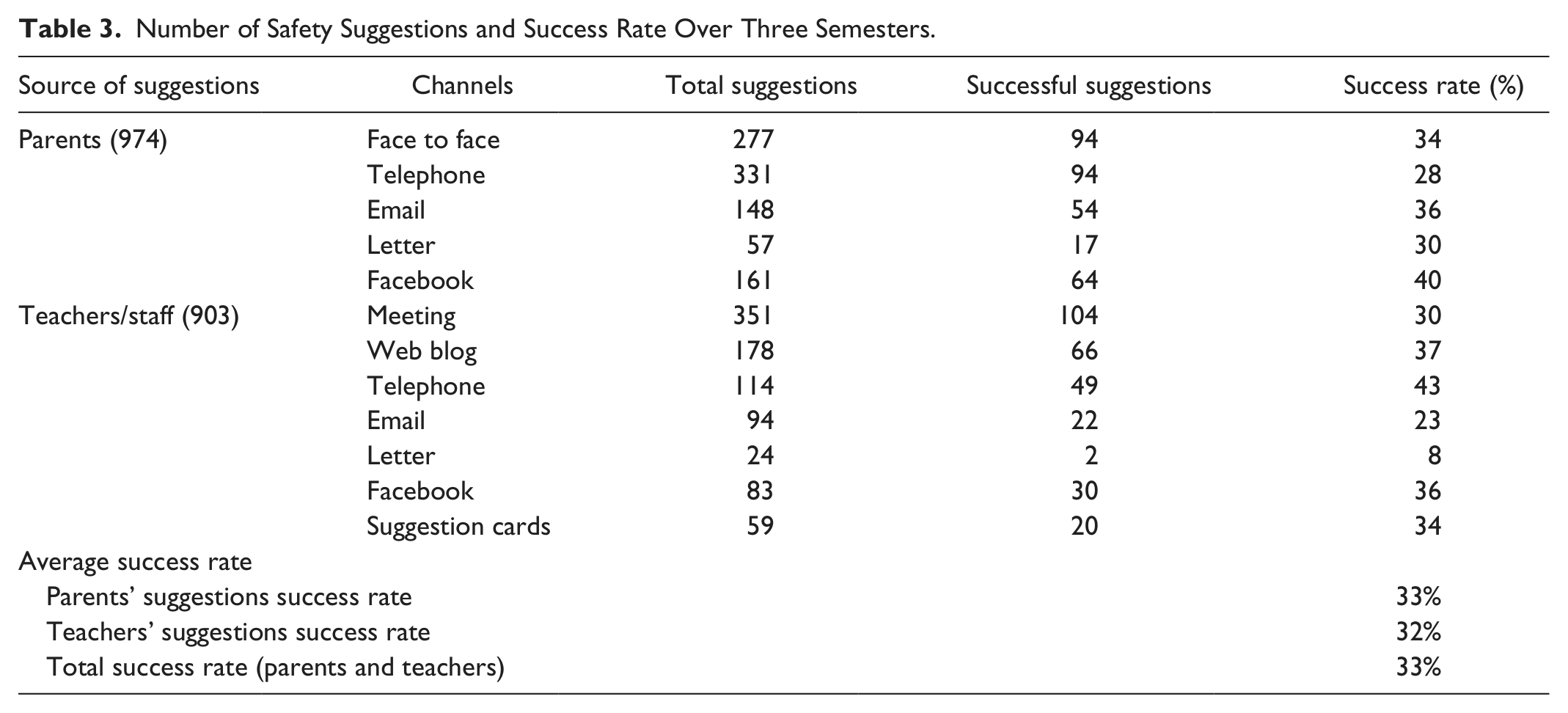
Figure 7 indicates that as a percentage of the total school budget, safety currently represents between 3% and 5% of the budget, averaging 3.2%. In comparison, the U.S. schools spend approximately 5% of their school budget on safety (Chase, Coffee-Borden, Anton, Moore, & Valorose, 2008). The key point regarding school safety expenditure is that it is relatively low when compared with other budgetary categories (e.g., teachers and staff) and therefore maximum value must be extracted from any safety expenditure. Maximizing value of this budget can be achieved through the application of lean thinking and by value stream mapping. With this intention in mind, the current value stream map at the school is shown in Figure 8.

Safety expenditure over three semesters.

Value stream map of the current safety suggestion system at the case study school.
Applying Lean Thinking to School Safety
According to the current value stream map shown in Figure 8, for each safety suggestion or recommendation received, there are six steps before possible implementation at the school. There is a processing time of 9 days and 1 hr, but an actual work time of only 85 min. The process begins with suggestions from parents, teachers, or staff being passed to teachers, the safety manager, or the school director. The received suggestions must then be reported to the school safety manager, who in turn reports to the school director. The time taken for a safety suggestion to reach the school director can be up to 24 hr. Once suggestions have been received, they are discussed at the weekly school management meeting, which could be up to 7 days from the time the suggestion is received.
Discussion of each suggestion at the weekly meeting is relatively short, but there is often an overload of suggestions (see Table 3), and pressure on time. This makes it difficult to distinguish between valuable and nonvaluable suggestions. Once a decision is made to implement a particular safety suggestion, the process can be relatively slow, with no dedicated personnel to take responsibility for implementation. According to the concepts of muda, muri, and mura, the following areas of weakness were discovered, along with corresponding opportunities for improvement.
Muda
A lack of standardized reporting procedures means time is wasted in receiving and reporting safety issues or suggestions. The lack of effective procedure also results in administrative delays and associated costs. Multiple communication channels are also costly and wasteful to manage and maintain with respect to safety.
Muri
The biggest issue with regard to organizational strain is an overload of safety suggestions and the corresponding time and resources required to sort effective from ineffective suggestions. Strain also exists in communications between schoolteachers/staff and parents, mainly due to the wasteful use of time, and lack of procedure mentioned in the category of muda.
Mura
Key issues with unevenness are the variable treatment of the reported suggestions, the variance in the decision-making process when considering whether to pursue a suggestion, and the lack of procedure or personnel to implement useful suggestions.
The future value stream map, based on the weakness in current value stream (Figure 8), and opportunities for improvement are shown in Figure 9.

The future value stream map and opportunities for improvement.
The expectation is that the 9 days and 1 hr processing time can be reduced to 4 hr through lean process reengineering. The new aspects of the safety suggestion system based on the lean management principles of muda, muri, and mura analysis are as follows:
A new standardized procedure to manage the reporting of safety suggestions has been created to streamline the reporting process, and cut down the time taken to pass suggestions to the relevant individuals in the school. Rather than the school director being the final step in the reporting chain, a flatter hierarchy has been created, with multiple individuals receiving safety suggestions as part of a team. The two key aspects of muda that have been eliminated are waste and delays when receiving suggestions, as well as the elimination of multiple delays during reporting through the chain of command.
The newly created team that receive safety suggestions are also capable of assessing and making decisions regarding the feasibility of implementation. This assessment and decision making is based on a predetermined set of criteria, as shown in Figure 10. Increasing the speed of decision making is important so the school becomes proactive rather than reactive toward its safety. The creation of the new team and related decision-making criteria reduces muri (or organizational strain).
The final aspect relates to reducing the unevenness (mura) associated with making decision and implementing safety suggestions. The newly created team and decision criteria constitute one method to reduce unevenness, while the other is a dedicated member of staff responsible for the implementation of any safety suggestions. This reduces the previous uncertainty and lack of task ownership associated with too many individuals taking on safety-related tasks.

A conceptual outline of the lean process to make decisions regarding safety suggestions.
Figure 10 illustrates a key aspect of lean implementation at the school, which is a procedure to help standardize and speed up safety-related decisions. Safety suggestions received by staff must first be assessed in terms of the value they provide and in line with the principles of lean. The value must be visualized before asking whether the suggestion meets a set of safety goals/criteria at the school. If not, the suggestion is rejected, while if it does meet these goals, the physical, operational, and financial constraints are considered using the guiding ideas of muda, muri, and mura. This allows the safety suggestion to be implemented, modified to remove any constraints, or rejected. This decision-making process has been trialed in the school and shows preliminary success in speeding up decision making. The process is also consistent in dealing with safety suggestions and reducing the administrative burden. Parents are also able to understand that their suggestions/recommendations are being appropriately, fairly, and consistently addressed and, more importantly, in a timely fashion. This has improved safety communication and parental satisfaction at the school.
The future state value stream map and decision criteria for the safety suggestions have been implemented in the school for a period of 3 months. Initial reports based on a school safety assessment before and after the implementation of the lean strategy show success. The school director and other management used a checklist to assess five aspects of school safety, pre and post lean implementation. The results are summarized in Table 4, along with a qualitative assessment of the school’s current status in these areas.
School Safety Assessment Pre and Post Lean Implementation.
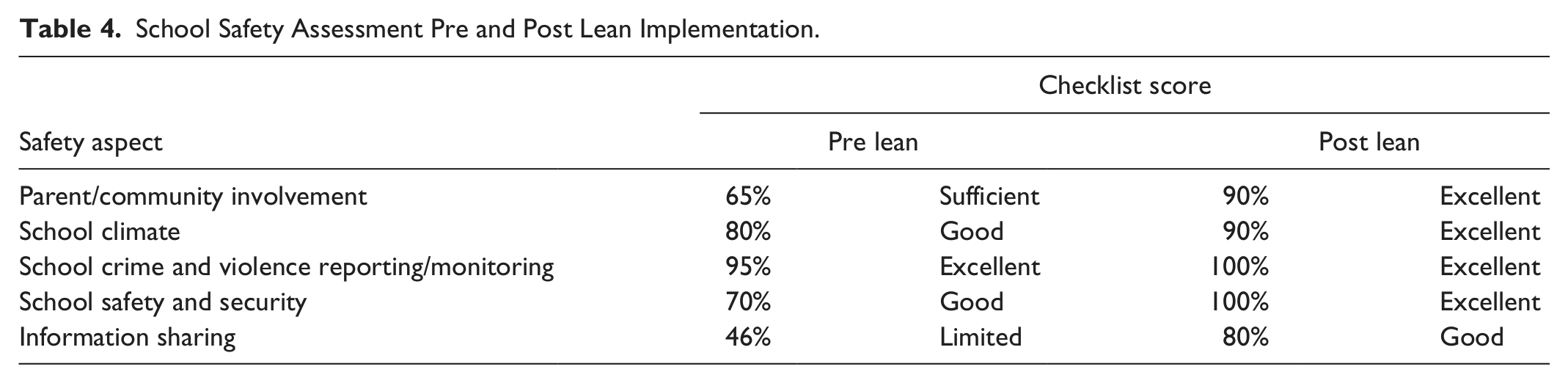
The pre and post lean assessment in Table 4 shows significant improvement in certain areas of safety, most notably in information sharing and parent/community involvement. This is due to the flatter hierarchy, standardized reporting process, and improved decision making. The assessment indicates that lean has significant potential for the school to maximize the value of its safety budget, improve safety promotion, and enhance parental perception of safety at the school. While the initial focus of the research has been the safety suggestion system, the school is planning to expand the application of lean to ensure all aspects of school safety benefit from the lean approach. Some might argue that the application of a philosophy originating in the car manufacturing industry to a school environment is misguided, or inappropriate, but the auto industry has been, and remains, fundamental to the way organizations and individuals operate in terms of living, working, and thinking (Womack, Jones, & Roos, 1990). Despite the potential of a lean approach to school safety, there are a number of significant management implications.
Management Implications
There are a number of key management implications when attempting to apply a lean framework to school safety. These implications arise during the design, testing, and implementation of the lean framework, and finally, the transformation of the school to become a lean organization. These management implications are not confined to Thai schools and would be similar for any school attempting to implement a lean approach to safety. Table 5 illustrates these management implications, which are discussed according to each stage of the lean development process.
Management Implications During the Design, Implementation, and Transformation of the School’s Safety Management.

Design and Testing
When designing and testing a lean approach to school safety, there are a number of significant management implications. The process of designing a new approach to safety puts strain on the school’s leadership and adds to an already heavy burden. There is also a degree of uncertainty adding to this strain. Management are likely to ask questions such as “Will this work?” or “Will it save money?”
In addition, a period of intensive knowledge capture is required to gather appropriate data for the development of the lean approach. For example, in this research, school management questioned 750 parents and analyzed the resulting data. This represents significant data capture and analysis for the school.
Implementation
During the implementation of a lean approach, there are a significant number of management implications and barriers. Perhaps most demanding from a management perspective is the resistance and anxiety toward change, which is experienced by staff and teachers in the school. Management must be prepared to justify the program and get staff cooperation to ensure success and sustainability of the program. Stakeholders are critical to organizational processes (Henning, Buckle-Henning, & Hyland, 2012), and therefore management must ensure commitment from all stakeholders.
The typical issues associated with turning theory into practice also affect the implementation of a lean safety program. For example, while lean thinking is entrenched in manufacturing, the application of lean to improve school safety is novel, and has not been widely investigated. The resulting management implication is that existing theories and practical tools do not fit the context of school safety without appropriate modification and adaptation.
Transformation
Once the lean framework is implemented at the school, there are still significant management implications. These relate to the continuing transformation of the school and its safety program after the implementation of lean. There is often a tendency for staff to return to old habits, and management must continue to champion the importance of the new lean program in transforming school safety. This difficulty may be compounded by the relatively intangible results, or the long timescales before the benefits of lean become evident. Training may also be required as it can significantly affect organizational success (Dermol, 2012). Thus, school leaders face critical management implications when attempting to sustain organizational change within the school.
Conclusion and Wider Context
Safe home, safe school, safe community (The Alliance for Safe Children [TASC], 2006) is often recounted as a mantra to impart the fundamental importance of child safety in each of these domains, with children spending significant time at school during their formative years (Frumkin, Geller, & Rubin, 2006). As a result, schools have a responsibility to provide a safe and healthy environment, yet while education is considered a fundamental human right (United Nations, 2012), in the determination to achieve education for all, Wisner et al. (2009) argue that children in developing countries are being put at risk.
School safety means different things to different people and varies across national and international scales. While school safety is considered a critical issue, it is mediated and tempered by geography, culture, and perhaps more importantly, the budget available to a school. Safe schools are usually those with an effective leadership along with an appropriate strategy and vision for a schoolwide approach to safety. Safe schools should ensure the well-being of their students by monitoring safety on a regular basis, responding to parents’ concerns, complying with safety policy and regulation, and effectively managing the school budget.
The development of education in Thailand has not kept pace with economic growth and development (Tsang & Wheeler, 2012). Therefore, school safety in Thailand has become a significant issue, which is affected by weak governmental guidance and policy, along with a focus on educational attainment rather than issues deemed as peripheral. The attitude and approach to school safety vary widely across Thailand, with private schools often using safety as a differentiating factor. The biggest barriers to promote and achieve effective school safety relate to management, and involve cost and bureaucracy, which are two key targets of lean thinking. Lean thinking represents a powerful opportunity to resolve the issues of school safety, and offers the opportunity to cut waste, bureaucracy, and nonvalue-added tasks to ensure safety is efficient and not a burden on a school’s budget.
Research in this article has used a case study to outline the current safety scenario and has illustrated some of the key safety issues at a primary school in northern Thailand. The application of a lean management approach to maximize the safety budget, increase parental involvement, and ultimately lead to a safer school is an effective way to tackle the issue of school safety in Thailand. Future work will focus on adapting the lean framework and providing a generalized model of best practice, which other schools in Thailand can follow to improve their safety management. The ultimate aim is to promote safety in Thai schools, tackle the issue of child injury in Thailand, and do so while operating with limited management resources. This is set against a backdrop where child safety is often viewed as a peripheral and low priority aspect of education.
Internationally, school safety is a significant area of research, and goes beyond the issue of safety per se. Schools throughout Asia have issues with safety, and according to Han (2008), these can also have significant impact on academic achievement. Research in this article suggests that addressing school safety is not necessarily one of cost, but more importantly, a question of how to effectively manage school safety. While the issue of school safety varies internationally, and even more so at regional and local scales, the effective management of safety could help reduce this variability. In more developed countries, school safety is also an issue of considerable debate and most often in relation to juggling an already stretched budget to address pressing safety issues. The lean thinking approach has already been demonstrated in a variety of settings to effectively tackle issues of cost, inefficiency, and waste, but so far has not extended to educational management. The main conjecture from the research in this article indicates that lean management tools might be an effective way to address issues of safety not just in Thailand but any school where cost, bureaucracy, waste, and inefficiencies plague management processes.
Footnotes
Acknowledgements
The authors wish to thank Dr. Paul Goldsmith and the anonymous reviewers for their comprehensive and detailed comments.
Declaration of Conflicting Interests
The author(s) declared no potential conflicts of interest with respect to the research, authorship, and/or publication of this article.
Funding
The author(s) received no financial support for the research and/or authorship of this article.
Author Biographies