




Abstract
Drawing from the life-course framework and an integrated model of social resources and social costs, this article investigates (1) the dynamics of personal network changes, (2) their impact on loneliness following widowhood, and (3) the gender-specific effects of these changes. Analyzing panel data from the German Ageing Survey (N = 7,012; observations = 20,816) using multi-level mixed-effects models, the study reveals a modest expansion in non-kin networks and the number of children in networks after widowhood. Additionally, the findings indicate that over time, widowed individuals generally experience a reduction in the distance to their nearest network members, particularly kin. Growing non-kin networks are associated with lower loneliness following widowhood. Geographic changes in networks display gender-specific patterns: proximity to children is linked to reduced loneliness for widowed men, but greater loneliness for widowed women. These results underscore the complex and gendered nature of relational adaptations to widowhood, highlighting that network changes can offer both benefits and challenges during life transitions. The study also suggests that considering opportunity costs can be a valuable extension of the social cost framework.
Introduction
In the life-course perspective, “transitions” encompass the movement into and exit from diverse institutional roles and statuses (Elder, Johnson, and Crosnoe 2003). Widowhood emerges as one such significant life transition for older adults, exerting an impact on their well-being both directly—through the grief process—and amidst corresponding changes in their social ties, what life-course theorists call linked lives (Carr 2018). Indeed, people’s networks change in a variety of ways following major life events, new ties being added or lost, friends and family shifting from peripheral positions to the inner circle. What makes widowhood such a pivotal experience is its combined and concurrent impact on social relationships and emotional well-being, particularly loneliness. Later-life loneliness is a pressing public health issue because it is associated with cognitive decline, disability onset, and mortality (Holt-Lunstad et al. 2015; Lara et al. 2019; Perissinotto, Stijacic Cenzer, and Covinsky 2012); recent studies, moreover, indicate that approximately 25 to 35 percent of older adults frequently experience loneliness (Fierloos et al. 2021; Stall, Savage, and Rochon 2019; Stegen et al. 2024).
Existing research does a good job describing both network change and the progression of loneliness in the widowhood transition. In brief, widowed men and women tend to report overall network growth in the short-term period after losing their spouse (Dean, Matt, and Wood 1992; Donnelly and Hinterlong 2010; Kalmijn 2012). Recent evidence from Germany suggests that this growth lasts until the fourth year post-widowhood (Klaus 2021). Much the same way, people grow lonelier shortly after becoming widowed (King, Carr, and Taylor 2021; Perrig-Chiello et al. 2016; Schmitz 2021). And again underscoring the importance of duration, loneliness appears to ebb somewhat after the first several years of the event (Yang and Gu 2021; Utz et al. 2014).
Limited research, however, has thoroughly examined these two processes in tandem—how changes in networks correspond to changes in loneliness. We begin from the combined social resource and social cost model (Song et al. 2021), which posits that though close personal relationships are key conduits of encouragement and practical aid during hard times, their influence is not unconditionally ameliorative. Our analysis gives particular attention to the relational composition and the geographic dispersion of changing core networks. We first ask whether people’s networks following widowhood become more concentrated within or outside the family, and whether people obtain—or lose—connections best-positioned to provide in-person contact. We then consider whether particular forms of compositional and geographic network change soften and shorten the intensity of post-widowhood loneliness. In posing the question this way, we intend to move beyond patterns of central tendency in the post-widowhood adaptation period and to trace the consequences of previously unacknowledged heterogeneity.
Overall, the intersection of widowhood, network change, and potential moderating effects is important to study because recently widowed adults are at a critical juncture for prolonged loneliness (Vedder et al. 2022). Chronic loneliness, in turn, is linked to numerous markers of physical and cognitive health decline (Luchetti et al. 2020; Shiovitz-Ezra and Leitsch 2010; Singham et al. 2021), as well as mortality risk (Hughes and Waite 2009). Our longitudinal investigation of German panel data demonstrates that changing networks appear to have complex implications for post-widowhood loneliness. Through a gender-based analysis, we show that the shifting role of children in widow(er)s’ networks matter differently for men and women, revealing an underrecognized form of gender specificity to the widowhood experience.
Widowhood and Loneliness: The Role of Social Resources and Costs
Loneliness is defined as the subjective gap between desired and available social contact (Peplau and Perlman 1982). Given that spouses offer a wide variety of emotional and instrumental supports and are most often at the very center of older adults’ core personal networks (Cohn-Schwartz, Levinsky, and Litwin 2021; Mejía and Hooker 2014), it comes with little surprise that the loss of a husband or wife would cause that gap to widen (Grimby 1993; Schmitz 2021; Van Baarsen 2002).
That said, a newfound deficit in support and companionship can spur network adaptation, either from the bereaved seeking to replenish their social resources or from the response of family and friends recognizing and responding to their needs (Atchley 1989; Donnelly and Hinterlong 2010; Zettel and Rook 2004). Evolutionary accounts of loneliness suggest that the perceived need for contact provides strong motivation to pursue this adaptation (Cacioppo, Cacioppo, and Boomsma 2014). The convoy perspective in gerontology specifies that such adaptive responses are usually in the context of established relationships; more peripheral members of the network become drawn into more central roles more often than people develop new ties from scratch (Antonucci 1985).
We apply the social resources and costs model (hereafter, SRCM) to these processes of widowhood-related network adaptation. The SRCM articulates the ways that social ties in people’s networks matter for their well-being, including during times of transition (Lin 2002; Song et al. 2021). Social resources—the better-recognized side of the model—emphasizes how networks facilitate support, positive control, and access to diverse resources (Berkman and Syme 1979; House 1981; Lin 2002; Seeman 1996). Social costs recognizes the oft-neglected reversal, how networks’ content and structure can have downsides, such as introducing stressors, demands, and negative social comparisons (Grace and VanHeuvelen 2022; C. Kim and Hyun-Soo Kim 2023; Li, Guo, and Shi 2023; Song 2020). Though Song et al.’s (2021) summary statement of the SCRM is premised on cross-sectional network characteristics, we apply the model dynamically, focusing on two key aspects of structural change from which flow many potential forms of network content. 1
Network Change and Resources in the Widowhood Transition
Previous research notes that widowed older adults often turn primarily to their children immediately after losing a spouse (Guiaux, van Tilburg, and Broese Van Groenou 2007; Isherwood, King, and Luszcz 2017; Roan and Raley 1996). Compared to married older adults, widowed people have more contact with their adult children and derive more support from them (Guiaux et al. 2007; Ha 2008). For those who are childless, other kin networks such as siblings may gain importance (Ha 2008). This set of kin-based relationships is potentially important as a salve for loneliness because family members often share an understanding linked to their lived history, take a sympathetic view from experiencing the same loss, and are motivated by familial norms to care for the needs of the bereaved. That is, kin-based network members tend to be ideal for offering dependable, commiserating contact and support (Cantor 1979; O’Bryant 1988).
Adult children are likely to rise above other family ties in this regard, and so we investigate potential differences between relatives who are children and those who are not. Studies on parent-adult child relationships reveal that the parent-child emotional bond is typically stronger than any other non-marital role-dyad combination in the family system (including the bond a child feels toward the parent) (Silverstein, Gans, and Yang 2006; Suitor, Gilligan, and Pillemer 2016). The underlying dynamics of sibling relationships, for instance, are more often characterized by balanced reciprocity, where support expectations lean more toward optional than mandatory (Campbell, Connidis, and Davies 1999; Scharf, Shulman, and Avigad-Spitz 2005). Similarly weaker norms around obligation can be assumed for other intra-generational relationships.
To the extent that family contact and support is optimal in the adaptation to widowhood, we hypothesize that growth in the number of kin network members will buffer the association between widowhood and loneliness over time (Hypothesis 1). Returning to the life-course perspective, these newly integrated kin members would likely have been “latent” network resources (see Marin and Hampton 2019; Vacchiano and Spini 2021), linked lives called on and activated when the need arose. In this way, H1 is premised on the social resource model.
Past the initial period of bereavement, the importance of friends and new relationships typically begins to grow (Ha 2008; Pai and Ha 2012; Zettel and Rook 2004). The resources embedded in these ties tend to differ from those offered by close kin. In particular, non-kin ties are more voluntary and usually based in shared activities or interests. The mutuality of such relationships appears optimal for enhancing self-esteem and positive affect in later life (Lee and Shehan 1989). Likewise, non-kin ties often act as bridges to more diverse, non-redundant groups of people, linking older adults to new ideas, activities, and friends (Ferrand, Mounier, and Degenne 2018). This structural resource, too, could provide a form of social stimulation and a boost to well-being (Collins et al. 2022). In line with the social resource model, we therefore hypothesize that growth in the number of non-kin network members will buffer the association between widowhood and loneliness over time (Hypothesis 2). 2
Finally, the proximity of people’s networks may undergo a change in the aftermath of widowhood. Proximity is a structural condition in that it enables in-person contact (Bengtson 2001; Cornwell and Goldman 2021; Hank 2007), still the optimal scenario for satisfying companionship and timely support provision (Fischer 1982; Frei and Axhausen 2007; Ha and Carr 2005; Ikkink, van Tilburg, and Knipscheer 1999; Logan and Spitze 1994; Small and Adler 2019). Whether it is actual face-to-face company—or the possibility of such contact—that matters most, we expect that there is no substitute for proximity. Therefore, we hypothesize that kin networks located in closer proximity will buffer the association between widowhood and loneliness over time (Hypothesis 3) and likewise that non-kin networks located in closer proximity will buffer that association (Hypothesis 4).
Though to our knowledge, changes in personal network proximity following widowhood have yet to be systematically studied, there are several reasons to anticipate that networks become more localized among widowed individuals. First, widowed adults may prioritize local ties to ensure support availability, downplaying faraway connections and favoring accessible ones when constructing their core network. Second, those in the widowed adults’ social circle most aware of and responsive to their needs may be those most nearby. Research suggests that in times of heightened stress, such as widowhood, individuals rely more heavily on local support networks for both emotional and practical assistance (Bourassa et al. 2017). Third, family members—particularly adult children—may relocate to be closer to the bereaved in their time of need (Mulder and van der Meer 2009; Schenk and Dykstra 2012). This may result in such movers making their way into the older adult’s core networks. At the same time, technological developments allow more peripheral family and friends to be “pulled in” to the core of people’s networks, even from great geographical distance (Harper, Wellman, and Quan-Haase 2020). Thus, it is possible that after widowhood, people rekindle dormant ties living far away, in addition to reaching out to ties close-by. The implications of these various types of network re-configurations for loneliness, however, remain poorly understood.
Network Change and Costs in the Widowhood Transition
It is conceivable that certain network changes, particularly involving kin, pose potential costs as people undergo adaptation to widowhood. In other words, it is not only possible that kin networks fail to ameliorate loneliness, it could be that growing kin-based networks makes things worse. We posit two possibilities, not identified in Song et al.’s formulation of the SCRM, that yet have substantive relevance to the emotional experience of widowhood.
First, because family members have a connection—often directly, as with a biological child; or in other cases indirectly, through law—to both the bereaved and the deceased, kin-based ties may serve to remind a widow(er) of his or her loss. Offspring, in particular, serve as lasting reflections of the departed, echoing their physical traits, behaviors, attitudes, and values (Moss and Moss 1985). Within families, children often assume roles previously held by the deceased, integrating aspects of their identity into their own (Moss and Moss 1985). This surrogate continuity of the relationship could foster rumination or other maladaptive coping strategies for those left behind. While we acknowledge the possibility that “fictive kin”—including widow(er)’s friends who have shared considerable time with the deceased—can also serve as reminders of the spouse’s death, we anticipate that kinship relations, on average, are more likely to elicit this process. 3
Second, kin-based ties could crowd out chances to cultivate other—perhaps more—protective relationships, thus representing a type of network opportunity cost (see Leana and Van Buren 1999). Kinship ties are predetermined by biological relatedness rather than the quality of interaction, whereas non-kin relationships—particularly friendships—are largely voluntary (Chen and Fu 2008). Though family and friend relationships can both offer emotional support, family connections tend toward more instrumental functions, while companionship, social integration, and other self-esteem boosting functions are more commonly associated with friendship bonds (Messeri, Silverstein, and Litwak 1993). Moreover, non-kin relationships diversify social networks with various roles, intimacy levels, and resources, unlike kin networks that often share similar backgrounds (Ellwardt, Aartsen, and van Tilburg 2016). Involvement in activities with friends increases positive emotions and life satisfaction while decreasing negative emotions, whereas participation in family activities tends to elevate both positive and negative emotions (Huxhold, Miche, and Schuz 2014). Though the time and energy demands placed on a widowed person may be well-intentioned and indeed functional, kin ties may nevertheless stymie alternative options that could otherwise reduce loneliness. As with the resources linking network change during widowhood with well-being, proximity may be intertwined with both processes, exacerbating the potential “costliness” of kin-based ties. Family ties close-by, for instance, could put heavier time demands on a widowed person than a faraway sibling or child serving an as-needed confidant role. On the other hand, the proximity of non-kin relationships could foster healthier emotional adaptation by providing opportunities for distraction, new shared activities, and friendships that are less burdened by the memory of the deceased. In light of these considerations, we pose two hypotheses that draw from the social costs model and compete with Hypotheses 1 to 4: A growing number of kin ties will exacerbate loneliness after widowhood (Hypothesis 5). Similarly, kin networks located in closer proximity will exacerbate the association between widowhood and loneliness over time (Hypothesis 6).
Gender Differences
Existing literature consistently highlights the influence of gender on widowhood experience. On the side of network change, prior research shows that men are often connected to friends and family primarily through their wives. Traditionally, women play the role of kin-keeper in the family, investing time and energy to maintain relationship with children and relatives, with men often passively benefiting from these efforts (Di Leonardo 1987; Hagestad 1986; Rosenthal 1985). Adult children are also more likely to relocate closer to their widowed mother than they are to a widowed father (Michielin, Mulder, and Zorlu 2008), potentially reflecting the fact that children tend to report better relationships with their widowed mothers than with their widowed fathers (Kaufman and Uhlenberg 1998; Silverstein and Bengtson 1997). The non-family social lives of older men are also often centered on their spouse; friends are commonly made as couples, with wives playing the role of manager and organizer of social activity (Van den Hoonaard 2010). Maintaining relationship once bridged by a late wife can be challenging or even burdensome (Kalmijn 2012), leading to network shrinkage. Overall, then, widowed men’s networks may decrease (or fail to increase) relative to widowed women.
Gender also appears important on the loneliness side of our inquiry. Men appear to have their emotional needs met primarily within marriage, whereas women tend to receive this fulfillment from a wider range of contacts, thus offering more protection against loneliness (Dykstra and de Jong Gierveld 2004). Complementary evidence comes from investigations of adjacent mental health issues; indeed, numerous studies suggest that widowers suffer more psychological distress following widowhood than widows (Lee et al. 2001; Lee, Willetts, and Seccombe 1998; Sasson and Umberson 2014; Van Grootheest et al. 1999; but see Simon 2020).
In combination, we anticipate that social network change may transpire differently for men and women, but how these changes translate into gendered resources versus costs in the bereavement process is not yet clear. One intriguing proposal from Song et al.’s (2021) recent article is that network ties impose greater social costs on women relative to men—gender norms around care provision and emotional labor implying that they experience disproportionate burdens in their close connections. As an exploratory question, then, we ask whether the social resources hypotheses (H1–H4) are more universal across genders than the social cost hypotheses (H5 and H6), which may be uniquely applicable to women.
Summary of Research Questions
Research Question 1
First, given that is not yet clear whether older people’s networks adapt to widowhood in systematic ways, we examine changes in network size among kin and non-kin and investigate changes in network’s geographical dispersion. This part of our analysis is exploratory, not hypothesis-driven.
Research Question 2
Second, acknowledging that adaptations may be heterogeneous, we consider what network alterations tend to mitigate loneliness, and which modifications, if any, may exacerbate it. Network resource hypotheses (H1–H4) specify a protective role for network change—that an increase in kin and non-kin network core members, respectively, buffers the loneliness of widowhood, and that local ties, kin and non-kin alike, are protective. Our network cost hypotheses posit a potential loneliness downside for growing and localized kin-based networks (H5, H6). To explore possible gender specificity of buffering patterns, we address these hypotheses separately among older men and women.
Methods
We use longitudinal data from the German Ageing Survey (DEAS) (Vogel et al. 2022). The DEAS is a multi-topic study that provides data to examine the changes and diversity in the living conditions of the middle-aged and older population as well as on the process of individual aging. For the present analysis, the unbalanced longitudinal sub-sample of 9,327 respondents (persons) from Wave 3 to Wave 6 was selected, providing 24,233 interviews (person-years). The first DEAS wave was conducted in 1996 and follow-up studies were carried out in 2002, 2008, 2011, 2014, and 2017. Waves 1 and 2 were not included due to differences in questionnaires on social network members. The primary data collection instrument utilized in this study was a computer-assisted personal interview (CAPI) conducted with a standardized questionnaire. Following the personal interview, participants were provided with an additional paper-and-pencil “drop-off” questionnaire, which they were expected to complete independently. Only respondents who are at risk of losing their spouse were analyzed, specifically those who were married (including registered partnership) in at least one wave. To focus on widowhood effect, individuals who experienced divorce, separation, or remarriage after widowhood over the subsequent panel waves were not considered in the analysis (only a total of 174 respondents experienced any of these transitions). To avoid confounding network change with widowhood, only non-spouse network members were counted for the network variables. Only respondents with complete information on variables of interest were included. Those who moved to other locations since the last wave was also excluded (2.6 percent of the sample). 4 This resulted in a final analytical sample of 4,238 persons (1,962 women and 2,276 men). They provided 11,208 person-years with 2.88 observations on average.
Measures
Network Size after Widowhood
Ego-centric network modules with name generators were conducted by asking: “Please give me the names of the people you have regular contact with and who are important to you.” Respondents could name up to eight people, which were summed up. Relationship to the network members were recoded as non-kin (friends, neighbors, colleagues, acquaintances) and kin members (family members and relatives).
Geographical Dispersion
As an aspect of network structure, respondents’ geographical distance to each network member were recorded as (0) in the same household, (1) in the neighborhood, (2) in the same town, (3) another town but close-by, (4) in Germany, (5) Abroad. For nearest distance to specific types of network members, we assign the relevant category (e.g., non-kin) the lowest distance score that fits its role type. In other words, if a person had three non-kin ties, the closest of which lived in the same town, the respondent would be scored a “2.”
Loneliness
A short version (de Jong-Gierveld, van Tilburg, and Dykstra 2006) of the established 11-item De Jong Gierveld Loneliness Scale (de Jong-Gierveld and Kamphuls 1985) was used to quantify loneliness (1 = “strongly agree,” 2 = “agree,” 3 = “disagree” to 4 = “strongly disagree”). Items include “I miss having people around among which I feel comfortable,”“There are plenty of people I can rely on when I have problems,”“I often feel rejected,”“There are many people I can trust completely,”“I miss emotional security and warmth,”“There are enough people I feel close to.” The value of the scale is the mean of the six items, which we calculated for all respondents who had at least three valid responses. Reliability and validity of this scale has been demonstrated by past research (de Jong Gierveld and van Tilburg 2010). Higher values reflect higher perceived loneliness. Cronbach’s alpha ranged from 0.81 to 0.83 across the waves.
Time Since Widowhood
To analyze the effects of widowhood on social network change and on loneliness, time passed since widowhood was computed as the main independent variable. It ranges from 0 (pre-widowhood) up to seven years after widowhood, indicated in years. 5 Observations after seven years of widowhood were excluded because of their small frequency and the diminished effect of widowhood after such a long period. In the analytical sample, 258 persons’ transitions to widowhood were observed out of 4,283 (6.02 percent) and the mean age at widowhood was 73.70 years (SD = 9.16, range = 50–92). As women have higher life expectancy and are less likely to re-marry in many Western countries (Wu, Schimmele, and Ouellet 2015), more women are included in the widowed population (62.02 percent) than men (37.2 percent).
Control variables
Several time-invariant and time-varying variables were controlled within the analyses to disentangle network changes due to widowhood from changes due to other characteristics. Education was indicated by an internationally standardized measure of educational attainment named International Standard Classification of Education (ISCED) (UNESCO 1997) distinguishing three levels of formal educational: no degree (4.57 percent), vocational degree (49.47 percent), and university degree (45.96 percent). Gender was a dummy variable with women set to 1. Total number of children ranges from 0 to 8 and includes both those who were mentioned and not mentioned in the network roster. Poor health may induce dependency on others, while also restricting one’s ability to maintain social connections (e.g., Aartsen et al. 2004; Broese van Groenou and van Tilburg 1997); thus, we controlled for a subjective assessment of health ranging from 1 (very poor) to 5 (very good).
We utilized the household’s needs-adjusted monthly per capita income ranged from 90 Euros to 65,000 Euros per month. Number of siblings (0–4 and more) and household size (1–7) were controlled. Employment status was categorized as working (1), retired (2), not employed (3). Size of the town (large city (1), urban city (2), urban-rural (3), rural (4)) and East/West Germany (West Germany = 1) were also included. The percentage of missing data in control varied between 0 and 4.9 percent, falling below the commonly accepted threshold of 5 percent, where listwise deletion remains a justifiable approach (Schafer 1999).
Data analysis
We use a multilevel mixed-effects model to examine the changes in social network characteristics following widowhood and to understand the moderating effect of these characteristics on loneliness. For our first question, network size and proximity were modeled as outcomes to assess changes after widowhood. The size of kin and non-kin networks were positively skewed count variables (skewness = 0.12 and 0.58, respectively). In these scenarios, we therefore report multilevel mixed-effects negative binomial regression, using Stata’s menbreg command. Incident rate ratios (IRRs) (eB) were calculated due to the non-linear distribution of the network size variable. This quantity expresses the relative change in the dependent variable caused by a unit change in the jth independent variable, accounting for both within- and between-person variation. Preliminary analyses included an interaction term with sex. For sake of space, we present findings without the interaction because there were no significant differences observed between men and women. We identify our generic Level 1 equation for network size as:

where log(E(Yij)) represents the log of the expected value of the network size for individual i in group j. β0 is the fixed intercept, representing the average log network size when the individual is not widowed. β1 is the fixed slope, representing the change in log network size for each one-year increase in the years since widowhood ranging from 0 to 7.
For distance to nearest network member, we provide the following equation:

where β0 is the fixed intercept, representing the average log network size when the individual is not widowed. β0 is the fixed intercept, representing the average distance to the nearest network member when the years since widowhood is zero. β1 is the fixed slope, representing the change in distance to the nearest network member for each one-year increase in the years since widowhood.
For our second research question, investigating how changing networks are linked to loneliness progression, we use a multilevel mixed-effects linear regression function, using Stata’s mixed command. Loneliness was modeled as the outcome, incorporating interaction terms between widowhood duration and network characteristics to identify moderating effects. We report additional models with interaction terms between network size/geographic dispersion and female to determine whether the relationship between network characteristics and widowhood is moderated by sex. We identify our generic Level 1 equation estimating loneliness as:
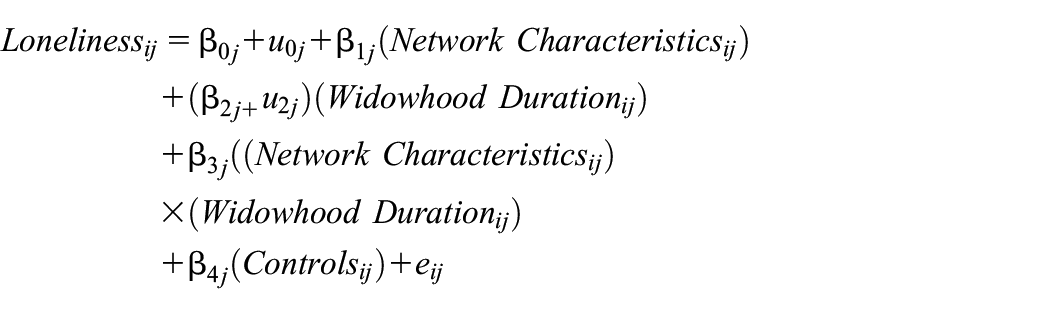
where β0j represents the fixed intercept and u0j is the random intercept for individual j capturing individual specific baseline loneliness. β1 is the fixed effect of network characteristics and (β2j+u2j) represents the random slope for widowhood duration, indicating that the effect of widowhood duration on loneliness can vary across individuals.
All the analyses controlled for selected social and demographic covariates to ensure the robustness of the findings. Addtionally, a random slope for widowhood duration was added to estimate the variation in this association across individuals, capturing between-person heterogeneity alongside within-person effects.
All of the coefficients testing our hypotheses reflect within-person changes, capturing how an individual’s networks and loneliness shift from before to after widowhood. These models also account for variability in baseline levels and individual trajectories through random effects. We initially included quadratic terms of time since widowhood to test for non-linear effects of widowhood, but relaxing the linearity assumption did not improve model fit in any of our analyses.
As noted earlier, we disaggregated kin ties into two sub-categories, namely children and other relatives (e.g., siblings, in-laws), recognizing that such network members may have distinct expectations and life histories. Of these sub-categories, the text and main tables present only the results for children. Network properties of non-child kin were not associated with widowed, nor did they significantly buffer the relationship between widowhood and loneliness. These results are available upon request.
Results
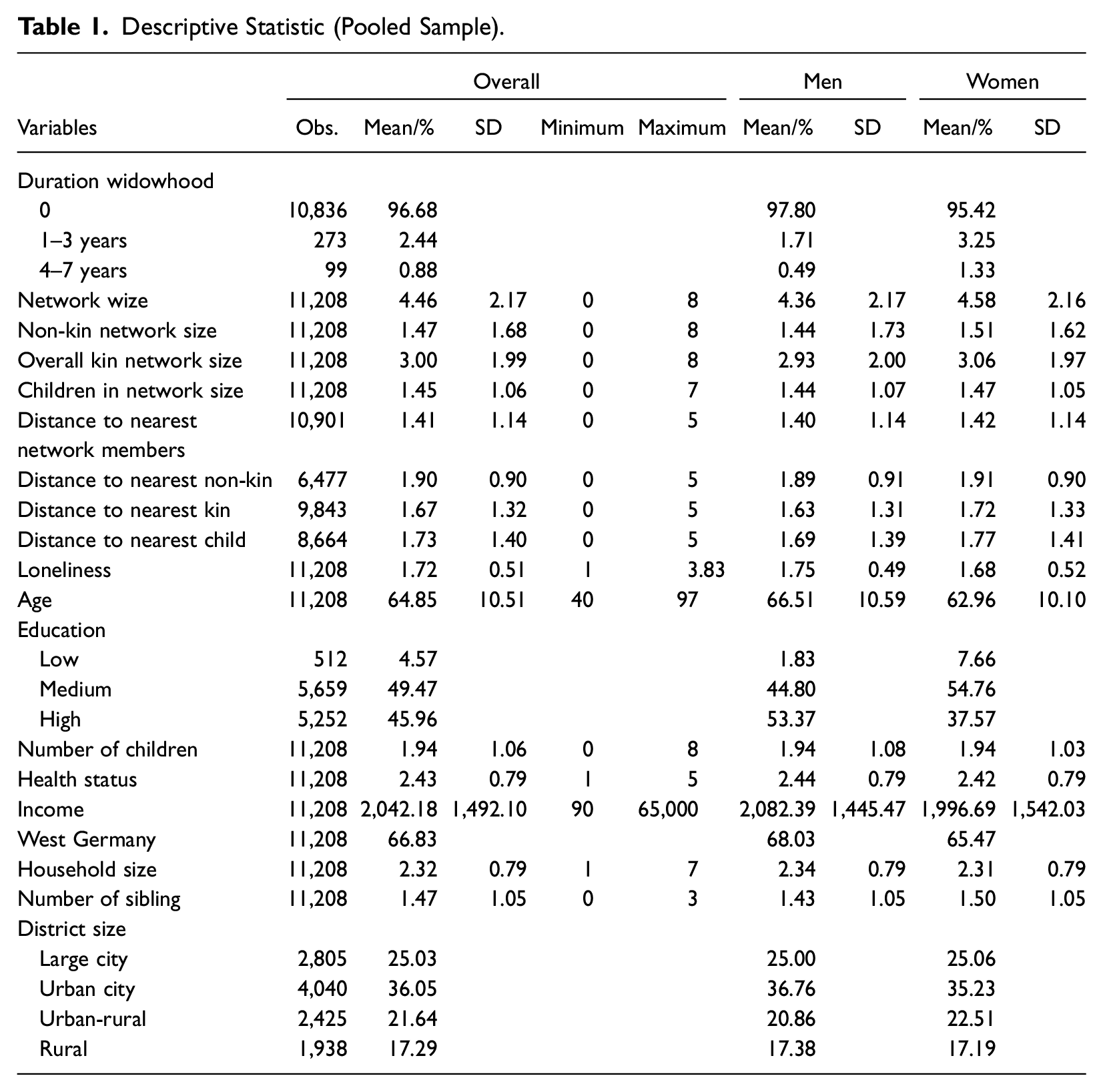
Table 1 presents the descriptive statistics (percentages and means) for the pooled sample, separately by gender. Among those who are widowed, the average time since widowhood is 2.7 years (Men = 2.3, Women = 2.9). The average overall network size is 4.36 for men and 4.58 for women. Children comprise the largest share of the kin-based ties. On average, network members lived in the same town as the respondent and the nearest person in their network tended to live in the same village as the respondent.
Descriptive Statistic (Pooled Sample).
Personal Network Change after Widowhood
To offer a comprehensive portrait of how an individual’s social network evolves following the loss of a spouse, we present the association between the duration of widowhood and network size (Table 2) and its geographical dispersion (Table 3). From Table 2, we observe a few systematic network changes associated with widowhood. Widowhood duration was associated with non-kin personal network size (Model 1) but overall kin size was not associated with time widowed (Model 2). The number of children in one’s personal network was associated with widowhood duration (Model 3). An increase in widowhood years predicts a 6 percent increase in non-kin personal network size and a 4 percent increase in size of children in the network; both associations are significant at the .01 level.
Size of Network Members after Widowhood Using Multilevel Mixed-Effects Negative Binomial Regression.
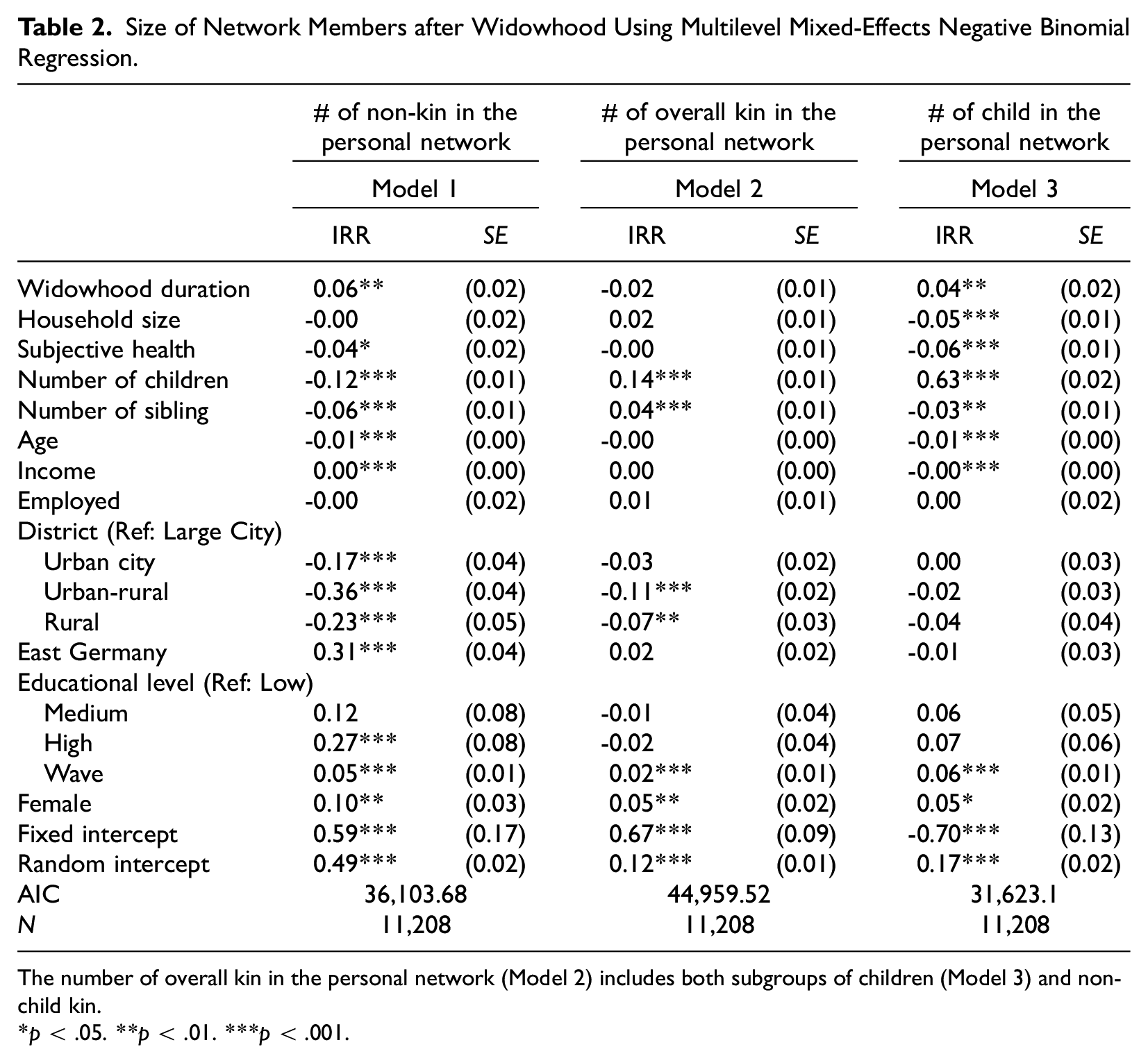
The number of overall kin in the personal network (Model 2) includes both subgroups of children (Model 3) and non-child kin.
p < .05. **p < .01. ***p < .001.
Distance to Nearest Network Member after Widowhood Using Multilevel Mixed-Effects Model.
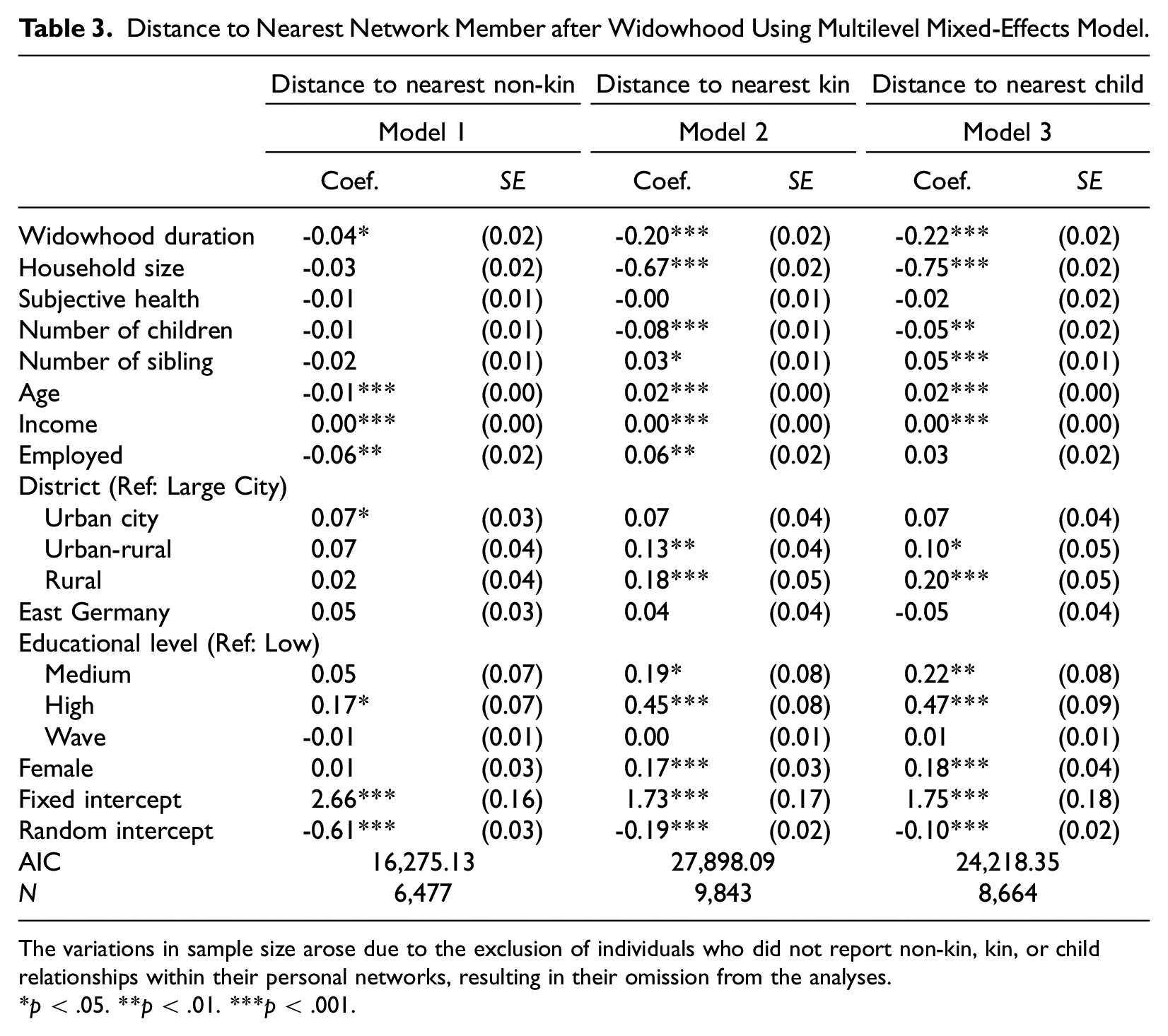
The variations in sample size arose due to the exclusion of individuals who did not report non-kin, kin, or child relationships within their personal networks, resulting in their omission from the analyses.
p < .05. **p < .01. ***p < .001.
Table 3 investigates the geographical dispersion of personal networks in the context of widowhood. The analysis reveals a statistically significant negative association between the duration of widowhood and the physical proximity to personal network members. In Model 1, each additional year of widowhood is linked to a 0.04-unit decrease (on the five-point scale) in the distance to geographically closest non-kin network member (p < 0.05). This trend becomes more pronounced when considering kin relations. Specifically, Models 2 and 3 indicate that distance to nearest kin and nearest child network member, respectively, decreases by ~0.2 units on the same five-unit scale for every additional year of widowhood (both associations p < 0.001). As the analysis excludes individuals who relocated since the last wave, these results suggest that over time, kin, and especially children, either tend to (a) move closer to their widowed parents or (b) be drawn into the core network if living in relatively close proximity.
Overall, the first stage of our analysis reveals that older adults tend to experience a modest expansion in the non-kin people and children in their networks following widowhood. Moreover, the result indicates that over time, widowed individuals tend to experience a general reduction in the distance to their network members, especially their kin.
Loneliness Following Widowhood and the Role of Network Change
Having described the ways that older adults’ personal networks tend to change after widowhood, the remainder of our analysis considers how varied adaptions associate with loneliness. Table 4 focuses on network growth and shrinkage. As seen in Model 1, the negative interaction between non-kin network size and widowhood duration supports Hypothesis 2. The coefficient suggests that having a larger non-kin network is associated with a decrease in loneliness during the adjustment to widowhood. The interaction terms fail to reveal gender differences (Model 2). Meanwhile, the interaction term between number of kin and widowhood duration is statistically significant and positive, offering preliminary support for Hypothesis 5, which predicted the cost of a growing kin network (Model 2). However, the interaction term becomes non-significant when introducing a random slope for widowhood duration (which was itself significant), suggesting substantial variability in how widowhood duration shapes loneliness (Model 3). Altogether, then, support for hypothesis is weak. The number of children in the network and widowhood duration is not statistically significant (Model 4). The three-way interaction terms between number of each network members, widowhood duration, and gender are also not statistically significant (omitted from the table).
Network Size and Loneliness after Widowhood Using Multilevel Mixed-Effects Model.
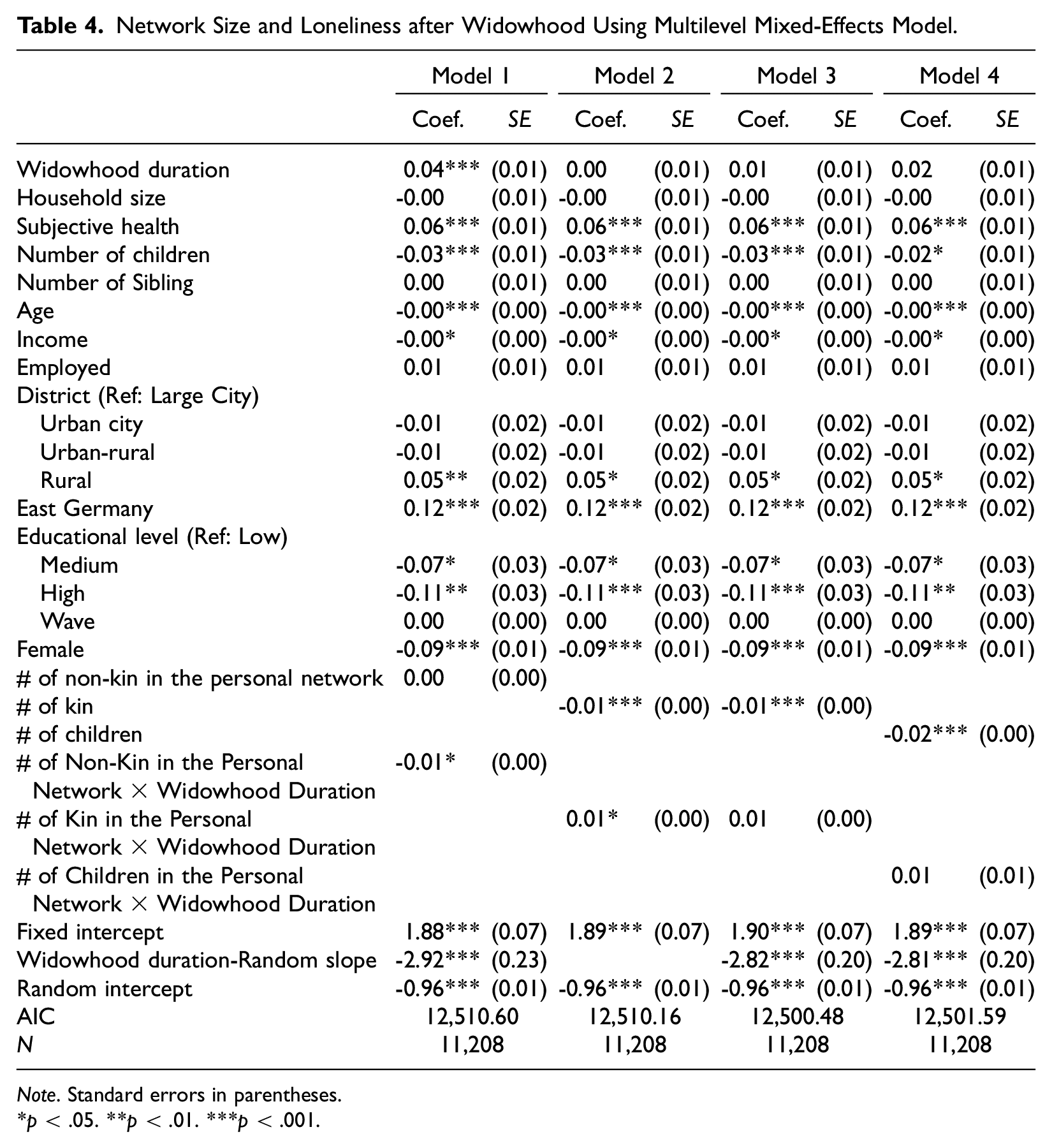
Note. Standard errors in parentheses.
p < .05. **p < .01. ***p < .001.
Table 5 shifts to the geographic component of network structure, examining how proximity to nearest network member modifies the association between duration of widowhood loneliness. As shown in Model 1, there was no significant variation in post-widowhood loneliness based on the distance to non-kin network members (i.e., H4 was not supported). Also, as shown in Model 2, the distance to their nearest kin member—including all types of kin—does not significantly modify feelings of loneliness (H3 was not supported). Moving to the case of children, while the two-way interaction between the duration of widowhood and the proximity to their nearest child is not significant (Model 3), the findings differ significantly for men and women (Model 4): for men, the interaction between duration of widowhood and the proximity to their nearest child is negative (supporting H3), whereas for women, it is the reverse (supporting H6). Figure 1 demonstrates that although loneliness tends to increase with time for widowed men, those whose closest child lives abroad experience a far more substantial rise in loneliness over time than those with a neighboring child. In contrast, the figure reveals that widowed women tend to report greater loneliness when their child resides in the same neighborhood, while those with a child living abroad experience no discernible rise in loneliness as time progresses.
Distance to Nearest Network Member and Loneliness after Widowhood Using Multilevel Mixed-Effects Model.
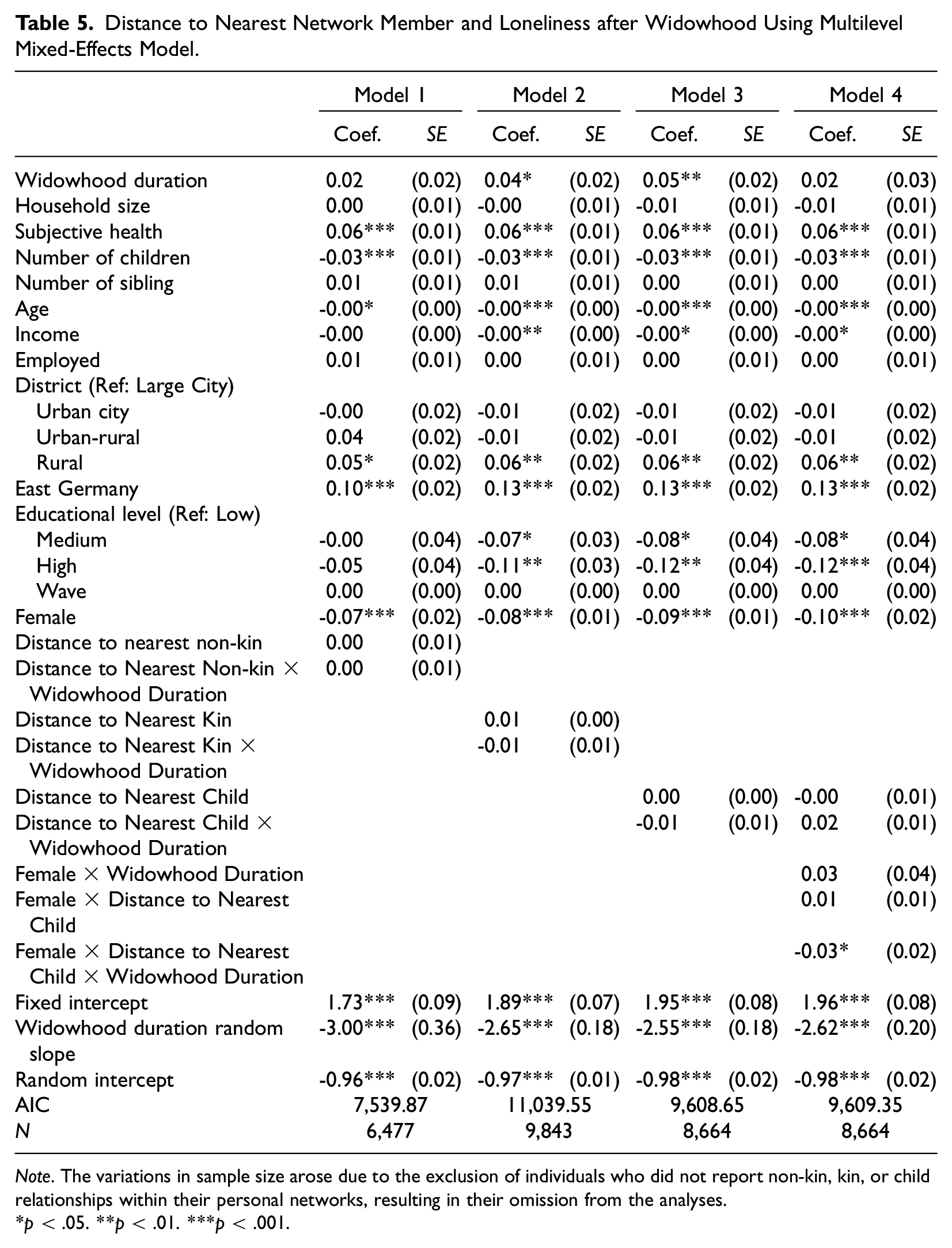
Note. The variations in sample size arose due to the exclusion of individuals who did not report non-kin, kin, or child relationships within their personal networks, resulting in their omission from the analyses.
p < .05. **p < .01. ***p < .001.
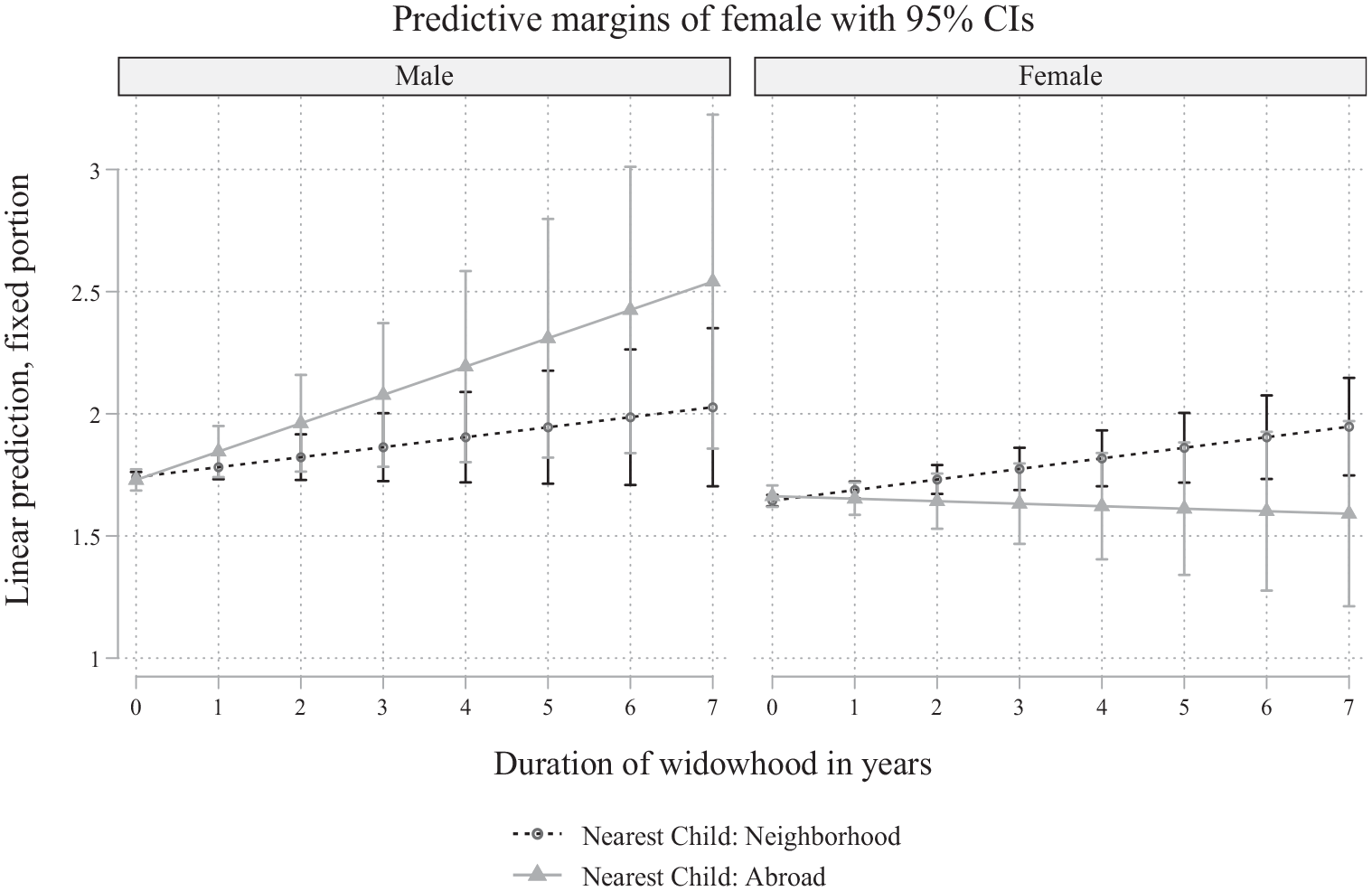
Predictive margins of loneliness and nearest child after widowhood.
Supplementary analyses were conducted using a different operationalization of network member distance, the mean distance to all reported non-kin network members and kin members. Results replicate the gender difference in the effects of average distance to children on loneliness. (Full results using the alternative operationalization are available upon request.)
Discussion and Conclusion
Considering multiple ways that personal networks evolve alongside life-course transitions, the current study sheds new light on the heterogeneity of loneliness during the widowhood process. Our aim was first to understand possible trends in network change after widowhood, then to determine whether networks growing, shrinking, or shifting in proximity had implications for well-being, paying close attention to potential gender differences. Results reveal key insights for research on late-life personal networks and the duality of resources and costs in these systems.
How Social Networks Change Following Widowhood
We first illustrated how people’s social networks adapt to the life-course transition of widowhood. Previous studies reported a temporary increase in social network size after widowhood, followed shortly by a decrease (Guiaux et al. 2007; Klaus 2021). We found an increase in network size, but this growth derived primarily from non-kin and child sources. Another extension of existing research relates to the spatiality of social networks. Early periods of widowhood, our findings suggest, are marked by a geographical tightening of people’s networks, especially among kin. Nearby relatives—previously around, but not a significant presence—may be sought out for immediate support during the bereavement process. Alternatively, adult children or others previously identified as part of the core network may relocate to lend needed support.
Consequences for Loneliness: Social Resource Explanation
Beyond documenting whether networks change for widowed men and women, we primarily sought to clarify whether different forms of network evolution shaped widows’ experiences of feeling alone. We first posited a series of hypotheses based on the premise that the socio-emotional resources facilitated by network members could act as a salve against loneliness.
The social resource model indeed finds support through several findings. First, for older adults, a growing non-kin network softened loneliness following a spouse’s death. This finding aligns with previous research indicating the positive impact of social network ties in the aftermath of widowhood (de Vries et al. 2014). Though there was little evidence that an expanding kin network similarly mitigated the loneliness of widowhood, this is not completely surprising given existing studies. Previous authors note that non-kin network members typically offer a unique blend of voluntary support, validation, sense of belongingness (Pinquart and Sörensen 2000); the shared activity and companionship of friends and neighbors also invokes less of the emotional ambivalence frequently connected to kinship ties (Campbell et al. 1999; Schnettler and Wöhler 2014).
Second, only among widowed men, we found that having child network member close-by attenuated loneliness. Though we do not have measures to fully elucidate the reasons, children nearby may provide forms of instrumental help, such as assistance with domestic tasks previously handled by their late wife. Having a child only a short trip away may also be re-assuring in its own right.
Consequences for Loneliness: Social Cost Explanations
Our findings also speak to an important emerging perspective in the study of relationships and well-being: networks can be resourceful, but they also have their costs (Song et al. 2021). We proposed a series of hypotheses about such potential downsides, particularly with respect to kinship ties. Here we observed some evidence of social network costs, particularly for women. In contrast to the finding that widowed men benefited from proximity to a child network member, we found evidence that such geographical closeness was for women a cost. Again, though data limitations preclude a detailed mechanistic explanation for why more loneliness accompanies a localizing child network, several possibilities stand out as important issues to examine in future research. First, division of gender roles may play a role, as widowed women are often expected to fulfill domestic responsibilities (e.g., caring for grandchildren, performing household chores) when a child lives nearby. Consequently, time and energy that widowed women could spend on established friends or in forming new non-kin relationships—the types of ties thought to be optimal safeguards against loneliness—becomes limited by competing demands. This adds to theories of social resources and costs the notion of an opportunity cost. Another possible explanation is that the presence of an accessible, nearby child serves as a reminder of the widowed woman’s late husband. This gender-specific explanation is plausible to the extent that women are more apt to engage internalizing processes such as rumination. We note that both possibilities fit with Song et al.’s (2021) argument that women experience disproportionate downsides of social ties—even broadly supportive ones—compared to men.
We devised a set of simple follow-up analyses to offer preliminary insight into these possibilities, and to guide future research on this topic (detailed results available upon request). First, we re-visited models in Table 4, differentiating the loneliness outcome variable into two sub-components, social and emotional loneliness (de Jong Gierveld and van Tilburg 2010). 6 We reasoned that if the first possibility—opportunity costs—was correct, we would find only an increase in social loneliness due to fewer opportunities to socialize with non-kin others. If the reminder and rumination story was accurate, we should find the interaction effects applying only to intensified emotional loneliness. The statistically significant interaction between child network tie proximity and widowhood applied only to women’s social loneliness. Second, we examined how geographic proximity to child network members was associated with non-kin network size and reported time spent with friends, particularly among women who became widowed. Briefly, widowed women whose closest child lived in the same house, neighborhood, or town reported having, on average, 1.01 fewer non-kin connections than their counterparts whose nearest child lived farther away. Similarly, only 17 percent of women in the latter scenario reported seeing friends less than once a month, compared to 26 percent of widowed women with nearby children. Though not decisive causal tests, these supplementary analyses make a strong case that time and energy approximate zero-sum resources when it comes to how people allocate their social contact. And these findings are consistent with Song and colleagues’ (2021) contention, that what manifest as social resources for men can instead operate as costs to women.
Taking a broader view, future research can further develop the manifold ways that social networks exert well-being costs through the operation of opportunity costs. In our empirical example, we surmise that nearby child(ren) often foreclose valuable alternative network options for women. We expect that different versions of this general process may operate in various empirical settings. For example, certain friends in an older person’s networks may not only promote risky health behaviors such as smoking and heavy drinking (E. S. Kim et al. 2023), their presence may also drive away conscientious influences in someone’s life who would otherwise help enhance their health habits. The extent to which such social cost processes complement versus confound presumed social causation processes (i.e., effects of network members) marks an important agenda for research on social networks and health in later life.
Strengths and Limitations
This study extends previous research on widowhood experience of aging adults in several significant ways. First, it employs a dynamic perspective on widowhood and network change using extensive longitudinal data encompassing a large middle- and old-aged population over 12 years. Second, the study considered both adaptive and maladaptive aspects of network change in widowhood, whereas previous research has been almost exclusively focused on the positive aspects of social connectedness in this process. Indeed, a main theoretical contribution is the acknowledgment of how network characteristics can both offer resources and impose costs in dynamic situations, as people adapt to challenging life circumstances. In other words, what can be a functional adaptation (access to a resource) can shift over time (become a cost) as that network change becomes habituated and as emotional needs evolve.
The study also had several limitations. Findings are based on observational data, limiting the ability to establish causality. Relatedly, the study does not provide an in-depth exploration of key findings—namely, why a growing non-kin network appears to benefit women or why they face greater challenges when children are nearby. Regarding the latter, we surmised that close relationships with children may evoke memories of a deceased spouse. However, the study lacks data on the interaction between non-kin network members and the deceased spouse or the extent to which these close-knit, non-kin ties might also foster rumination. Such information would be valuable in clarifying the mechanisms driving our findings. In addition, network information was collected using a single name generator, the type of which is more likely to capture strong, well-established relationships rather than weaker ties (Marin 2004). This method could lead people to recall only the most prominent figures in their life. Alternative approaches may be necessary to identify significant individuals who might not be easily remembered, possibly because of their distance or lack of recent contact, despite their continued importance (Bidart and Charbonneau 2011). Future research should also explore the impact of personal network characteristics on the well-being of non-married individuals and among those adjusting to divorce or separation.
Another potential extension of this research, though beyond the scope of the present study, is to examine how loneliness following widowhood increases the risk of depression and dementia, and how network changes might intervene in these processes. Cognitive decline is particularly relevant for adults in the age range of our sample and might be thought to impact the reliability of measures central to our analysis. However, prior research suggests that even older adults with cognitive impairment can respond reliably to survey questions on loneliness (Boss, Kang, and Branson 2015) and provide meaningful information about their social networks (Perry et al. 2022). Finally, the generalizability of our findings is limited, as they focus solely on German adults. Future research could examine the resources and costs of social networks after widowhood in other settings.
Conclusion
In summary, the varied ways that network changes shape loneliness after widowhood are contingent on gender. The ideal scenario for widowed men seems to be a robust set of non-kin ties, but also a child living nearby. The safety net of on-demand companionship and potential domestic assistance could free widowed men to boost their engagement with non-kin others. For widowed older women, having those child(ren) nearby seems to bring its own downsides. The complex array of relational adaptations to widowhood and their varied implications for well-being attests to the necessity of theoretical models that acknowledge both the promise and potential pitfalls of social network connections.
