




Abstract
The widespread adoption of restorative practices in U.S. schools to address educational inequities has been significant. However, the existing literature on restorative practices lacks research regarding the impact of this approach on sexual/affectual minority students. In our study, we explore the experiences of sexual/affectual minority students in Grades 3–12 compared to heterosexual students within a school district implementing restorative practices. Our findings indicate that sexual/affectual minority students face more discrimination and feeling left out, and less sense of belonging in school, feeling supported by adults, and feeling valued in comparison to their heterosexual peers. They are also less likely to feel heard or safe during talking circles. The article reports on these findings and concludes by discussing the implications and recommendations for school counseling practice and future research.
Introduction
School counselors and educators across the country are implementing restorative practices to transform schools into spaces that emphasize belonging and relational trust with the intention to also uproot traditional punitive discipline approaches that contribute to the school-to-prison nexus (Zakszeski & Rutherford, 2021). An emerging body of OW scholarship has found that restorative practices can positively impact school climate, but the restorative practices literature is, as of yet, silent on outcomes specifically related to sexual/affectual minority students—those who have sexual/romantic orientations outside the heterosexual norm: lesbian, gay, bisexual, pansexual, polysexual, asexual, queer, and questioning. For the past 7 years, our team has engaged in a community-based participatory research university/district partnership to evaluate the implementation of restorative practices. In keeping with evaluation directives from our community partners, this empirical study utilized exploratory quantitative methodology to investigate the experiences of sexual/affectual minority students compared to heterosexual students. This article focuses solely on the experiences of sexual/affectual minority students rather than lesbian, gay, bisexual, transgender, and queer+ (LGBTQ+) identities more broadly to emphasize and honor the distinction between sexual/affectual orientation and gender minority identities.
Literature
School Counseling and Restorative Practices
Both the ASCA National Model (ASCA, 2019) and ASCA Student Standards: Mindsets & Behaviors for Student Success (ASCA, 2021) call on school counselors to advocate for social justice by utilizing data to both identify and address structures that hinder achievement for diverse populations (ASCA, 2019). In their pursuit of equity and social justice, school counseling scholars and practitioners are embracing restorative practices as a paradigm to advance equity within school systems (Domina et al., 2022; Gomez et al., 2021; Gregory et al., 2021; Savitz-Romer & Nicola, 2022; Smith et al., 2017, 2021). Restorative practices are rooted in indigenous cultures and religious traditions wherein community belongingness and social cohesion are prioritized (Evans & Vaandering, 2022). Use of restorative practices is guided by the following assumptions: (a) Students in healthy relationships develop a sense of belonging and community, (b) positive relationships in a group generate an inherent drive to uphold healthy norms in the community, (c) caring accountability to one another further reduces the likelihood of doing harm or engaging in misbehavior, and (d) the work to build relationships and nurture socially just communities requires intention (Darling-Hammond & Gregory, 2023). In short, restorative practices entail a wide array of relational skills and tools designed to proactively foster secure relationships so that misbehavior is less common and, when harmful behavior occurs, the conditions for active repair are present (Gregory et al., 2020; Smith et al., 2017).
Although scholars have identified substantive limitations within the restorative practices empirical literature (Zakszeski & Rutherford, 2021), most studies report positive outcomes of implementing restorative practices, including improvements in school climate (Augustine et al., 2018), increased feelings of student belonging (Velez et al., 2020), modest reductions in disparities in exclusionary discipline (Green et al., 2019), and social/emotional learning growth (Skrzypek et al., 2020). In one systematic restorative practices literature review, Zakszeski and Rutherford (2021) examined 71 methodologically diverse study designs reporting outcomes from nine countries. Most studies found promising outcomes related to school climate, gains in social/emotional skills, and reductions in exclusionary discipline, with only slight reductions in discipline disparities. At the same time, Zakeski and Rutherford’s review made no mention of sexual/affectual minority concerns. In another recent systematic review, Lodi et al. (2021) examined studies from seven countries that addressed implementation of restorative practices. As in Zakeseki and Rutherford’s work, Lodi and colleagues found that restorative practices produced positive results with respect to discipline, school climate, and social/emotional skills in a majority of the studies. Only four of the studies reviewed found a reduction in discipline disparities, and, again, outcomes related to sexual/affectual minority students specifically were left unaddressed (Lodi et al., 2021).
Sexual/Affectual Minority Students’ Experiences in Schools
Scholars in the field of human development have found that individuals begin to encounter milestones such as attraction and questioning one’s sexual orientation as early as age 9 (Bishop et al., 2020; Hall et al., 2021). When considering the extant literature on K–12 educational experiences of sexual/affectual minority students, this means that students as young as third grade experience school systems as sites of harm and oppression (Marraccini et al., 2022; Moyano & del Mar Sanchez-Fuentes, 2020). A recent systematic literature review revealed that sexual/affectual minority students face significant discrimination in schools and are at a higher risk of experiencing various forms of bullying compared to their heterosexual peers (Moyano & del Mar Sanchez-Fuentes, 2020). The annual nationwide study from GLSEN (Kosciw et al., 2022) has consistently found that an overwhelming majority of sexual/affectual minority students encounter heterosexist language, victimization, and discrimination, leading to avoidance of school activities or even school absenteeism. Recent research has indicated that sexual/affectual minority students are denied access to curriculum that reflects their identities (Antonelli & Sembiante, 2022) and punitive discipline data shows overrepresentation of sexual/affectual minority students, with pansexual students particularly affected (Kosciw et al., 2022; Snapp et al., 2015). The deleterious impact of ecological heterosexism on the health, well-being, and development of sexual/affectual minority students is evident, with LGBTQ+ youth exhibiting increased risk of suicidal thoughts, self-injury, and related behaviors (Marraccini et al., 2022; Speer et al., 2022).
This critical state of affairs has garnered attention within the school counseling literature, accompanied by calls for the field to challenge heteronormative injustice and equip school counselors with the necessary competencies to meet the needs of sexual/affectual minority students (Beck & Wikoff, 2020; Gonzalez & McNulty, 2010; Goodrich & Luke, 2009; Smith, 2013; Smith et al., 2021; Whitman et al., 2007). As school counseling practice intersects with the implementation of restorative practices (Boulden, 2021; Case & Amand, 2014; DePalmer & Livick, 2022; Smith et al., 2017), studies by school counseling scholars and practitioners that examine how restorative practices can address the specific needs of sexual/affectual minority students are crucial (ASCA, 2023). If evaluation data finds that implementing restorative practices fails to sufficiently disrupt structures of heteronormativity, school counselors can utilize these data to inform systemic advocacy and transform schools into affirming spaces for sexual/affectual minority students.
Although scholars have explored the potential of restorative practices to redress structural racism, ableism, and classism, notably absent from the literature is scholarship on the transformative potential of restorative practices as a tool for disrupting structural heterosexism. This state of affairs can be understood through the aid of critical theory, which posits that individuals, including scholars of restorative practices and school counseling, are socialized to feel comfortable in relations of domination and subordination resulting in a lack of attention to the needs of marginalized groups (Kincheloe, 2008). As a result, both the empirical and theoretical restorative practices literature has participated in the larger heteronormative knowledge production complex that erases the experiences of sexual/affectual minority students through omission (Martino et al., 2020). In other words, by failing to gather data specifically from students identifying as sexual/affectual minority when conducting research, well-intended restorative practices researchers reinforce the subversive, heterosexist discourse that the experiences of these students in schools is of little importance. Therefore, for those implementing and studying restorative practices to make good on this approach’s promise to promote inclusion, belonging, and safety for all students within a school community, examining how restorative practices address the specific needs of sexual/affectual minority students is crucial.
Purpose
Within the context of a multiyear, community-based participatory research project (Garnett, Moore, et al., 2019), this quantitative exploratory study utilized a survey instrument to investigate the experiences of sexual/affectual minority students compared to heterosexual students within one school district that has implemented restorative practices in grades K–12 for 6 years. Specifically, we analyzed student data to explore the following research questions: 1. What are the experiences of sexual/affectual minority students compared to heterosexual students within restorative practices community-building circles? 2. How do sexual/affectual minority students perceive and experience adult responses to their misbehavior compared to heterosexual students within the restorative practices framework? 3. What are sexual/affectual minority students’ perceptions of the school climate and their sense of belongingness compared to heterosexual students within a school that has implemented restorative practices? 4. How do the above results differ when considering different school levels (elementary, middle, and high school)? 5. How do sexual/affectual minority students experience microaggressions and discrimination compared to heterosexual students within a school that has implemented restorative practices?
Research Context and Design
In 2016, our partner school district conducted a district-wide equity inclusion report that revealed significant exclusionary discipline disparities for students who are eligible for free and reduced lunch, Black and brown children, and students with disabilities. In response, restorative practices were identified as a promising systemic approach to reduce exclusionary discipline and improve school climate. To support this work, school district leadership signed a comprehensive memorandum of understanding (MOU) in spring 2017 with our research team and the vice president for research at the University of Vermont, supporting a multiyear, mixed-methods, collaborative research partnership to evaluate the efficacy of implementing restorative practices. The MOU explicated and operationalized research activities, consent procedures, data collection, sharing and storage, and institutional research board review.
Although our partner school district started implementing restorative practices district-wide in earnest in 2017, several years’ worth of thinking and conceptualizing the issue, solutions, and related implementation needs were dedicated to operationalizing restorative practices. As a result, implementation efforts entailed philosophical and programmatic shifts, including: (a) explicitly naming and seeing the value of restorative practices for teachers and adults in the district as a tool for growth, healing, and relationship building with each other; (b) starting planning for professional development activities and restorative practices with a readiness assessment to have more information about buy-in and implementation needs; (c) creating building-level restorative practice teams that would create an implementation map for their school community during the first year of implementation; (d) a focus on starting the restorative practices work at Tier 1 and going “slow”; and (e) embedding professional development activities, support, and coaching on restorative practices implementation through existing and newly created district-wide structures for peer learning and sharing.
The program also invited parents, care providers, and community stakeholders to participate in implementation efforts. Early in the process, we held community forums to introduce families to restorative practices and to address questions and concerns. Another key component of early implementation was inviting representatives from community justice centers and community youth counseling centers to serve on steering commitments and as consultants, provide professional development and training, and assist in assessment needs such as instrument development and data collection efforts.
Instrumentation
The data for this exploratory quantitative study was collected in 2022 through the administration of the Student Restorative Practices and Equity Experience Scale (SRPEES; Simpfenderfer et al., 2023). The SRPEES was developed through collaborative processes that integrated best practices in scale design and embodied our community-based participatory research social justice methodological assumptions and values (see Garnett, Moore, et al. [2019], for a fuller discussion). Early instrument design and item generation entailed convening a community working group of nine people—university researchers, school district administrators, local community justice center professionals, and regional restorative practices trainers—to share ideas, review other instruments already in use, and brainstorm initial items that would support the goals for our particular community aligned with the restorative practices implementation context within our district partner schools. Other instruments that served to seed our instrument were Anne Gregory’s Restorative Practices Use Student Scale (Gregory et al., 2016), the Chicago Public Schools Impact of Restorative Practices Survey (2017), the PBIS School Climate Survey (Center on PBIS, 2022), the School-Based Racial and Ethnic Microaggressions Scale (Keels et al., 2017), and locally developed items by school-based restorative practices practitioners measuring program implementation (Kidde, 2017).
Our community-based participatory research project team next engaged in multiple rounds of participant feedback, pilot testing, and item-generation brainstorming. For example, we presented the initial survey items to a consortium of more than 50 practicing classroom teachers and administrators, who meet monthly to receive restorative practices professional development, support each other in restorative practices implementation, and share out data and stories about the restorative practices work in their schools. This group provided invaluable feedback on our draft SRPEES, offering more developmentally attuned language, calling us in for not initially including demographic items to allow transgender and gender-nonbinary students to self-identify, and to be more explicit about the context within a socioecological system of schools. We then field tested the instrument through a “think aloud” exercise, inviting students to complete the survey while verbally expressing any thoughts occurring during the process (Dillman et al., 2014. The field test administrations provided valuable knowledge regarding the time required to complete the survey and how the directions, items, and procedures could be understood and interpreted by students taking the survey in the future. Following a rigorous process of stakeholder feedback and pilot testing, we had a scale that consists of items that inquire about various aspects of students’ experiences, including their participation in restorative circles, perceptions of the school climate, encounters with microaggressions, and observations of how adults handle misbehavior.
The final step of our instrument design process was to administer the survey districtwide, and then statistically examine the construct validity of the SRPEES using confirmatory factor analysis (CFA) to test the theoretical foundations of the instrument. A total of 1575 students completed the survey across 11 schools in the district (about 60% of students in Grades 3–12) for the validation study. Parents and care providers received multiple communications that they had the right to opt out of having their student complete the instrument. The opening administration procedures also invited students to opt out of completing the survey if they chose.
Our CFA analysis found evidence supporting the construct validity for the SRPEES with a five-factor structure of Restorative Practices Benefits, Restorative Practices Quality, School Support, Repair Harm, and Feeling Left Out. The quality of the instrument was assessed for both validity and reliability. Construct validity was assessed using fit indices produced by the CFA for overall goodness of fit, and for factor loading estimates of items on the expected constructs. Each of the fit indices suggested that the survey items were effective in measuring the expected constructs: (125) = 238.343, p < 0.001, SRMR = 0.038, RMSEA = 0.036 (90% CI = 0.029–0.043), CLI = 0.969, and TLI = 0.961; factor loadings ranged from 0.294 to 0.850 and were statistically significant. To assess construct reliability, we utilized the omega coefficient (ω), which is a more conservative and preferrable measure of reliability compared to Cronbach’s alpha (Hayes & Coutts, 2020). The construct reliability results were: Restorative Practices Benefits (ω = 0.79), Restorative Practices Quality (ω = 0.61), School Support (ω = 0.86), Repair Harm (ω = 0.84), and Feeling Left Out (ω = 0.80), indicating good to excellent measures of reliability across the constructs.
Methods
The SRPEES was administered to students in Grades 3–12 at schools that are actively implementing restorative practices within one district. The school district administers the survey annually using Google Forms; this study draws from the spring 2022 semester data. Each spring, parents receive notification in advance regarding the purpose of the survey; the University of Vermont’s involvement with deidentified, secondary data analysis; and an invitation for their child to opt out should they so choose. The survey is administered during class time to allow teachers to answer clarifying questions that might arise. Students are given the choice to participate or to decline. The first question on the survey asks students if they have participated in restorative circles at least once during the year; students who respond “yes” then receive questions specifically related to their experiences within restorative circles. All students receive questions related to school climate and microaggressions, and demographic questions related to gender and sexual orientation.
Sample
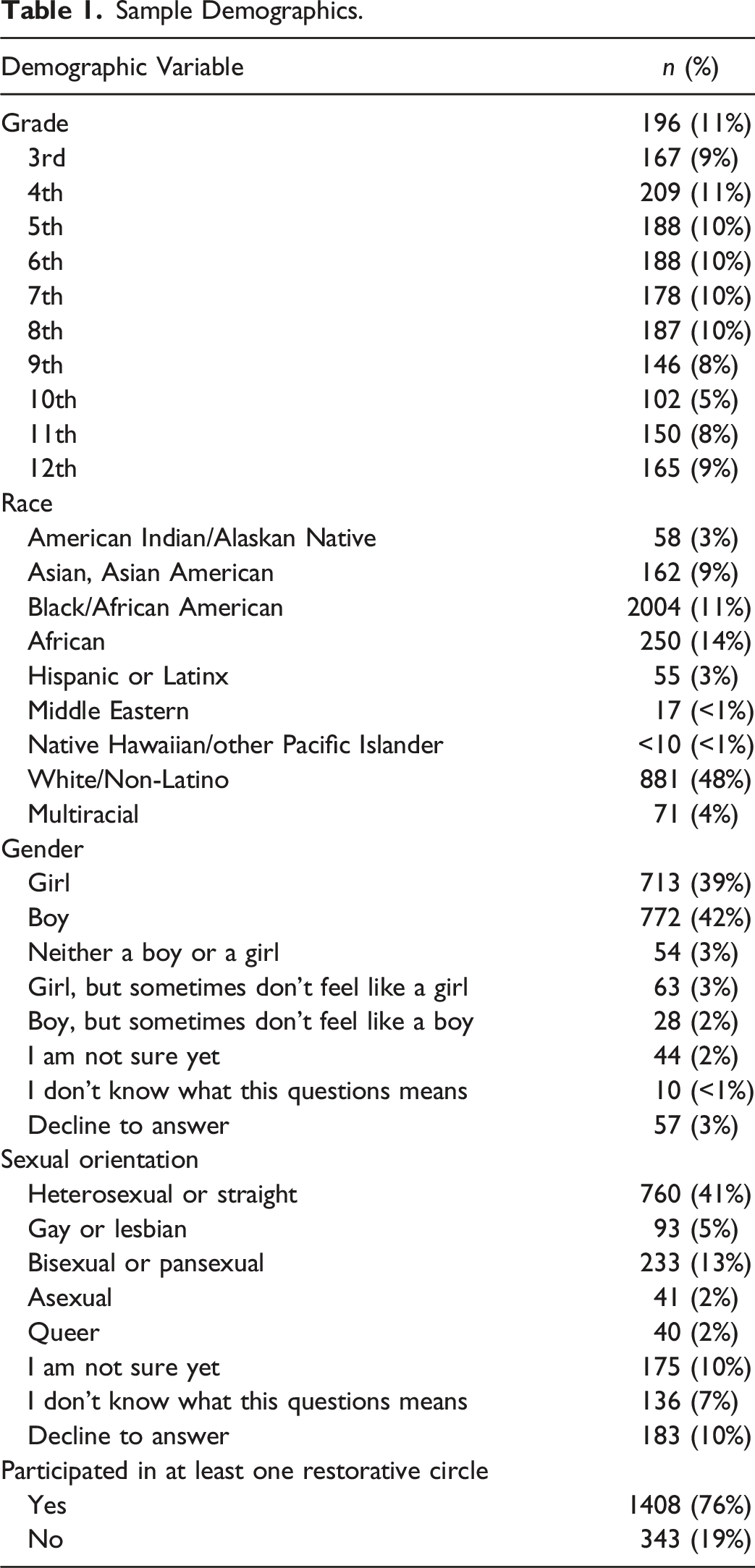
Sample Demographics.
Measures
Survey Item Descriptive Statistics.

Experiences in Restorative Circles
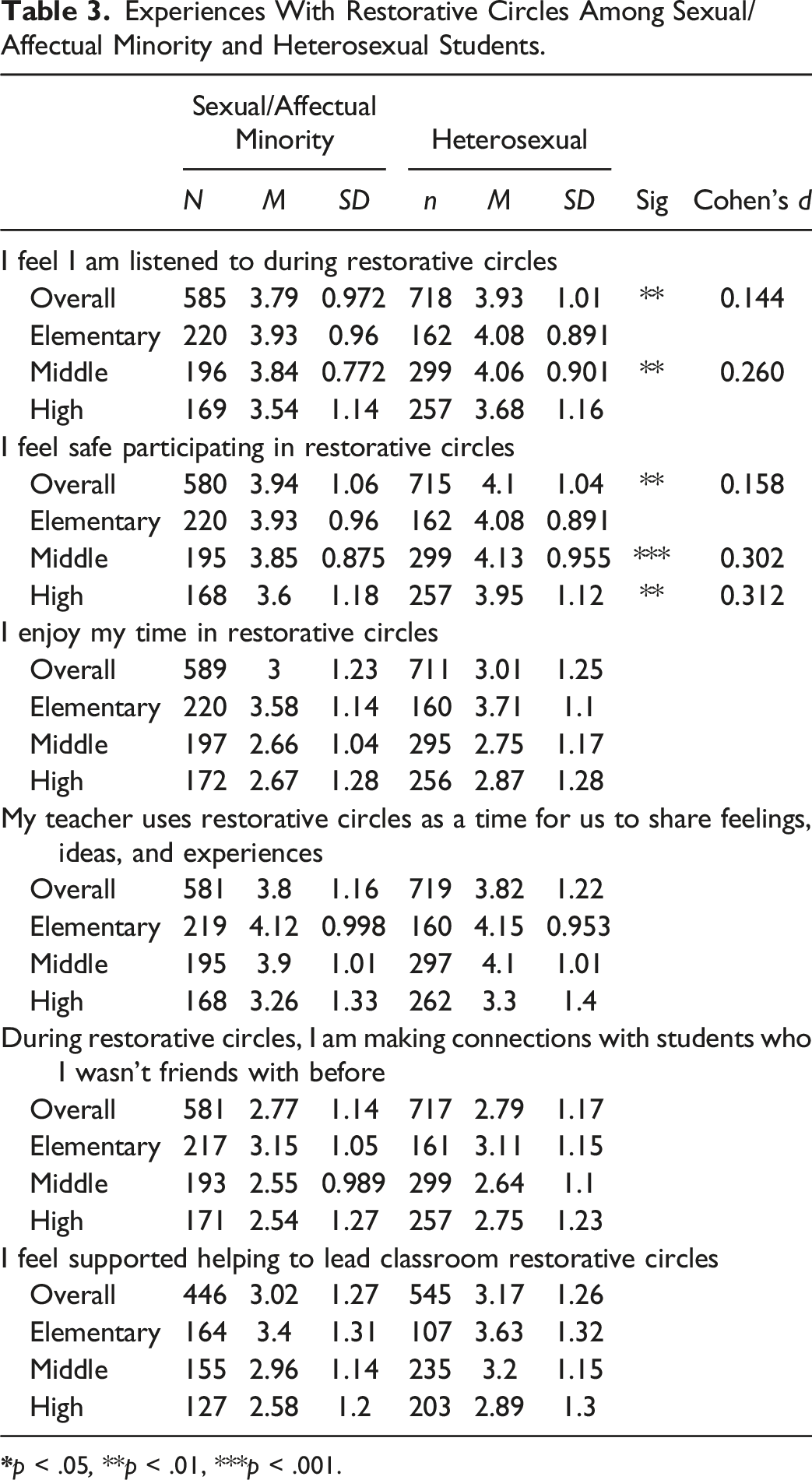
Students who responded that they had participated in at least one restorative circle during the year were also presented with a series of questions regarding their experiences within those circles. Examples of questions related to restorative circles include asking if the student felt listened to within restorative circles, if the circles helped them connect with other students, and whether they feel safe participating in restorative circles. Students responded on a 5-point Likert-type scale, with responses ranging from 1 (Not at all) to 5 (Always).
Experiences with Adults’ Response to Misbehavior
All students who completed the survey were asked about their experiences with adults in the school. These questions included: “If I cause harm, my teachers treat me with respect, are calm, and are open to what I have to say” and “If I cause harm, I am given the opportunity to understand the harm and make it right.” Students responded on a 5-point Likert-type scale, with responses ranging from 1 (Not at all) to 5 (Always).
School Climate and Sense of Belonging
The survey also asked all students to respond to statements related to school climate and sense of belonging. Sample items in this domain include: “I feel like I belong at my school” and “Our school shows respect for people from all backgrounds and cultures.” Students responded on a 5-point Likert-type scale, with responses ranging from 1 (Not at all) to 5 (Always).
Microaggressions and Discrimination
Finally, all students who completed the survey were asked about their experiences with microaggressions and discrimination at school. Microaggression questions included “I feel left out by adults because of who I am” and “I feel left out by peers because of who I am.” Students responded on a 5-point Likert-type scale, with responses ranging from 1 (Not at all) to 5 (Always). To capture discrimination at school, students were asked if they had experienced different types of discrimination, including discrimination on the basis of race, gender, sexual orientation, learning disability, physical disability, language spoken, or the amount of money their family has. Students were invited to check all that applied to represent the types of discrimination they experienced.
Demographic Questions
The SRPEES asked a series of demographic questions, including race, gender, sexual orientation, language spoken at home, and if the student is on an IEP. The sexual orientation questions allowed students to select as many identifies as they identified with; options included heterosexual or straight, gay or lesbian, bisexual or pansexual, asexual, queer, and “I am not sure yet.” It also offered an “other” category in which students could self-identify, and the option to indicate “I don’t know what this question means.” Although we prefer not to collapse identify categories and experiences can vary across different identities, to protect students’ anonymity, sexual minority categories were collapsed into LGBQA (gay or lesbian, bisexual or pansexual, asexual, queer, and I am not sure yet) and heterosexual or straight.
Data Analysis
Due to this study’s exploratory nature, we conducted tests of difference to examine our research questions. To answer our first three research questions, we used independent sample t tests to examine the differences between sexual/affectual minority and heterosexual students. Each item related to experiences with restorative circles, experiences with adults responses to misbehavior, and school climate and sense of belonging. To answer our fourth research question, we divided the sample into elementary (30%), middle (30%), and high school students (40%) to examine differences in experiences across school levels. To answer our fifth research question, we examined the differences in the categorical variables of types of discrimination experienced between the sexual/affectual minority and heterosexual students. We utilized a chi-square analysis to examine these differences because the responses are dichotomous (1 = student experienced a specific type of discrimination, 0 = student did not experience a specific discrimination). Chi-square analysis allowed us to examine differences in the frequency of responses between sexual/affectual minority and heterosexual students. Due to small n size in the discrimination responses at the separate elementary, middle, and high school levels, the chi-square analysis was run only at the district level.
Results
The results of our analysis show that sexual/affectual minority students had small yet statistically significant differing experiences compared to their heterosexual peers regarding feeling safe and listened to within restorative circles, belonging in school, feeling supported by adults, and feeling valued, and in feeling left out and discriminated against. We discuss results as they relate to each of our research questions in turn.
Experience Within Restorative Circles
Experiences With Restorative Circles Among Sexual/Affectual Minority and Heterosexual Students.
Experience With Adult Responses to Students’ Misbehavior
Experiences With Adults’ Responses to Misbehavior and Microaggressions, Among Sexual/Affectual Minority and Heterosexual Students.

Perceptions of School Climate and Sense of Belonging
School Climate and Sense of Belonging, Sexual/Affectual Minority and Heterosexual Students.

Experiences of Microaggressions and Discrimination
Overall, sexual/affectual minority students were more likely than their heterosexual peers to report feeling left out by adults and peers because of who they are. When looking at the school-level analysis, elementary sexual/affectual minority students reported that they were more likely to feel left out only by peers.
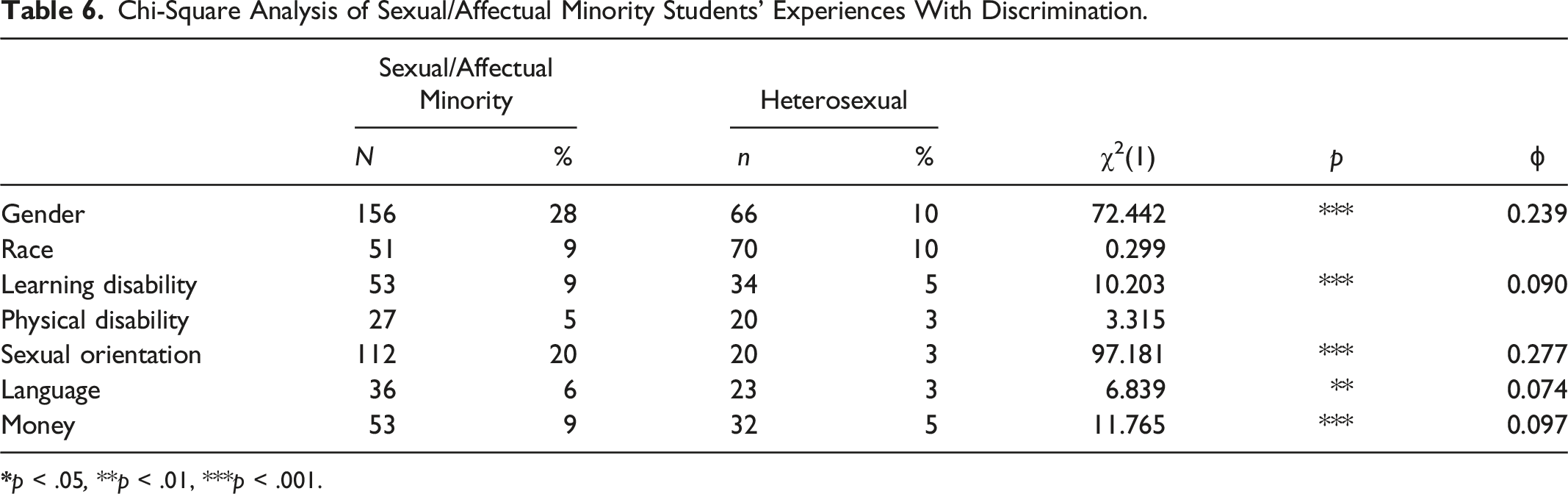
Chi-Square Analysis of Sexual/Affectual Minority Students’ Experiences With Discrimination.
Discussion
Our findings suggest that across numerous indices, sexual/affectual minority students are having a more challenging experience than that of heir heterosexual peers within a school district implementing restorative practices. With the exception of the category Adult Responses to Misbehavior, the restorative practices policy aspirations for students (i.e., experiencing a sense of belonging; feeling heard, respected, and valued for who they are; feeling safe; and feeling like they have an adult they could go to with problems who will support them) are not being realized with sexual/affectual minority students to the same degree as they are with students who identify as heterosexual. That being said, the effect sizes of our findings were small to medium. Therefore, in terms of practical significance, although our findings merit thoughtful consideration and discussion, further research is needed to determine a fuller picture of the degree of inequity.
Sexual/Affectual Minority Competence Within Restorative Circles
At the district level, we found statistically significant differences between sexual/affectual minority students and heterosexual students in perceptions of feeling listened to and feeling safe during restorative circles. A crucial aspect of restorative practices implementation is the use of restorative circles, also called talking circles, which create ritualized spaces for inclusive participation, equitable sharing, and deep listening (Boyes-Watson & Pranis, 2015). Restorative circles, led by students or adults, serve various proactive and responsive purposes, including community building, problem solving, and addressing harm (Evanovich et al., 2020; Gregory et al., 2021; Kidde, 2017). Talking circles, as a primary tool within restorative practices, contribute to building community, reducing challenging behavior, fostering discussions, and promoting safe communication (Costello et al., 2010; Evanovich et al., 2020; Smith et al., 2017; Wroldsen & Follestad, 2018). For school counselors, the format and dynamics of talking circles are likely to feel like familiar territory, akin to task-oriented counseling groups (Corey & Corey, 2018; Dylan, 2013).
Our study found that sexual/affectual minority students at the middle and high school were less likely to report feeling listened to or safe with restorative circles compared to their heterosexual peers. Like all small groups in schools, restorative circles do not occur within a social vacuum; they, too, are microcosms of the ecology of schools and the communities, the majority of which reinforce heterosexism at multiple ecological levels (Goodrich, 2018; Kosciw et al., 2022). Regarding restorative circles specifically, all of the of the objectives mentioned above—community building, celebrations, problem solving, building social competence, and repairing harm—can be pursued in ways that are affirming of sexual/affectual minority identities or in ways that cause harm and disconnect for sexual/affectual minority students (Peters & Luke, 2023). For example, if, during a community building circle, a student shares a joyful story about a family experience with “both of my moms,” and then receives a response from a peer, “What do you mean two moms?”, the circle space instantly becomes a space of disconnection and harm rather than one of community and safety for participants who are sexual/affectual minority.
Research emphasizes the importance of LGBTQ competency for small-group facilitators to ensure a safe and positive experience for LGBTQ individuals (Goodrich & Luke, 2013; Smith & Shin, 2008). Unfortunately, many school counselors and teachers lack the necessary skills to effectively facilitate restorative circles that meet the needs of sexual/affectual minority students (Lloyd-Hazlett & Foster, 2013). A national study found that only 47.4% of school counselors felt confident in leading support groups for LGBTQ students, despite professional standards expecting competency in this area (Kuff et al., 2019). Similar concerns exist in teacher education, where preservice educators receive insufficient training to support LGBTQ students (Carter Andrews et al., 2018; Coulter et al., 2020; Jones et al., 2021). Insufficient LGBTQ competency among circle facilitators may affect the findings of our study.
Based on our results, we echo calls from scholars of restorative practices implementation to develop critical consciousness and anti-oppressive skills among circle facilitators (Gregory et al., 2021). School counselors, as suggested by Bauman and colleagues (2023), should incorporate the principles of anti-oppression into facilitating small-group restorative circles. Implementing an anti-oppression approach in restorative circles involves incorporating symbols and posters of LGBTQ pride within the classroom space, creating a circle centerpiece that affirms sexual/affectual minority identities, using prompts that address sexual/affectual minority concerns, celebrating sexual/affectual minority pride, promoting critical consciousness, and providing opportunities for affinity group talking circles for sexual/affectual minority students (Sedlacek & Darling-Hammond, 2021).
Sexual/Affectual Minority Perceptions of School Climate, Sense of Belonging
Within our partner school district, sexual/affectual minority students had statistically significantly lower perceptions than their heterosexual peers of feeling like they had an adult they could go to with problems, feeling like they belonged at school, feeling that they were respected for who they were at school, feeling supported by adults, and feeling like they were valued for who they were within their school.
School counseling scholarship that examines school climate and culture suggests that feeling connected or engaged with school is associated with improved social/emotional health outcomes for students (Aldridge & McChesney, 2018; Cleveland & Sink, 2017; Hernandez & Seem, 2004). This same association has been identified with the presence of positive, supportive relationships with adults at school (Johns et al., 2018). School climate and culture can also directly impact a student’s sense of belonging and interactions with both peers and adults, and shape their overall learning experience (Kosciw et al., 2015; Maxwell et al., 2017). Studies have also explored the relationship between restorative practices and school climate, with some reporting increased connectedness and improved relationships between students (Augustine et al., 2018). Although certain constructs may impact outcomes to varying degrees for different student groups (La Salle et al., 2015), collectively, the culture and social climate within a school can significantly shape the academic and psychological well-being of students (Aldridge & McChesney, 2018).
Our findings buttress previous scholarship that noted the essential role of trusted adults in the lives of sexual/affectual minority youth and their association with adolescent emotional states and suicidality (Colvin et al., 2019; Rimes et al., 2018). Research has identified that enforcement of rules and safety and implementation of inclusive policies have a positive association with improved academic and social outcomes for sexual/affectual minority students (Wernick et al., 2017). Our findings tentatively suggest that elements of school climate and culture, even within our partner district focused on restorative practices, may negatively impact perceptions of safety, belonging, and success for sexual/affectual minority students.
At a more granular level, our findings may indicate that sexual/affectual minority students within our restorative-practices-implementing partner school district are less likely to feel cared for or treated fairly by adults in middle and high schools. This is consistent with a robust body of literature that calls for more focused supports and interventions for sexual/affectual minority students as they transition into adolescence (Johns et al., 2019; McDonald, 2018; Schweizer & Mowen, 2022). For schools and districts considering or currently implementing restorative practices, steps including intentionally seeking to hire critically conscious personnel with shared sexual/affectual minority identities (Cerezo & Bergfeld, 2013), providing professional development opportunities for school personnel to develop as allies (Ratts et al., 2013), and working directly with school principals to promote sexual/affectual-minority-affirming school cultures (Beck, 2016) may contribute to disrupting structures of heteronormativity and create safer, more equitable learning environments for students identifying as sexual/affectual minorities.
Microaggression and Discrimination
The findings in our study further emphasize the significance of the concept of intersectionality when it comes to experiences of discrimination and microaggressions. Sexual/affectual minority students in our sample were more likely to report being discriminated against based on gender, learning disability, sexual orientation, language spoken at home, and how much money they have. These findings run parallel to research highlighting the exacerbated barriers and challenges faced by individuals with multiple intersecting marginalized identities (Cyrus, 2017; Samimi et al., 2023). Moreover, the extant literature has found that higher frequencies of discrimination and microaggressions predict mental health struggle in general, while uniquely predicting depression (Kattari, 2020; Nadal et al., 2014; Vargas et al., 2020). Intersectionality magnifies these deleterious outcomes, considering the research suggesting that those with intersecting identities, such as sexual/affectual minority students who also identify as persons of color or persons with disabilities, exhibit higher risk for certain mental health problems, particularly symptoms of depression (Abbas & García, 2021; Vargas et al., 2020).
A school that has identified restorative practices as central to its values and practices is a school that is fertile ground for school counselors to disrupt and redress the harm of discrimination and microaggressions (ASCA, 2023; Garnett, Smith, et al., 2019; Ginwright, 2015). Concretely, restorative practice talking circles are ideal spaces within schools for students and adults to reflect upon, process, heal from, and learn from experiences of discrimination and microaggression incidents (Bauman et al., 2023). To foster a positive school climate and address microaggressions, various strategies can be implemented. Aligned with the ASCA National Model (ASCA, 2023), school counselors can conduct school climate surveys that specifically ask about microaggressions and discrimination, and then share out the results with faculty and staff to assess the occurrence and harm of such incidents. School counselors can also organize restorative conferences between students and offending adults, to flatten power differentials and promote understanding. Addressing microaggressions and discrimination at Tier 1, Tier 2, and Tier 3 levels is also crucial, targeting both individual students and systemic issues (for a fuller explication of how to address discrimination through a multitiered systems of support framework, see Betters-Bubon et al., 2022). However, genuine change requires personal transformation among adults, and policy changes alone may not suffice. Therefore, professional development opportunities should prioritize adult transformation to promote relational safety and foster sexual/affectual minority consciousness throughout the school community.
Limitations
Our study is not without limitations. First, the study design was nonrandomized, which introduces the possibility of self-selection bias. Because the students chose whether to participate in the study, our results may be influenced by this self-selection and may not be fully representative of the entire population. Further, our outcomes were measured through participant-reported survey items, which may be subject to perception bias. Another consideration is that our study focused on a specific school district that has LGBTQ-affirming policies, situated within a city and state with LGBTQ-affirming laws. Therefore, the findings of our study may not be easily generalizable to other school districts or states that may have different policies, cultural contexts, or levels of LGBTQ acceptance. With regard to implementation science, our study is limited in that it does not include measurements of restorative circle frequency nor fidelity of delivery. Finally, in line with the cross-sectional nature of our analysis focusing on a single academic year, we acknowledge that establishing causality is not feasible. We are currently engaged in a longitudinal study that we hope will offer a more comprehensive understanding of the impact of restorative practices on sexual/affectual minority-identified students, provide valuable insights into the long-term effects of restorative practices implementation, and contribute to a deeper understanding of the causal pathways of sexual/affectual minority students having a more positive experience within schools.
Conclusion
In conclusion, restorative practices show promise for transforming schools into inclusive environments that prioritize belonging and relational trust. However, there is a critical gap in understanding the specific outcomes of restorative practices for sexual/affectual minority students. Our community-based participatory research partnership has allowed us to evaluate restorative practices implementation and bridge this empirical gap. Congruent with recommendations from scholars of equity-centered school discipline reform, and in line with the ASCA National Model, our findings emphasize the importance of naming and considering the sociohistorical and structural conditions of oppression. Furthermore, intentional integration of critically conscious education is crucial for cultivating sexual minority empowerment and fostering inclusive school climates (Gregory et al., 2021). Without critical policy analysis, restorative practices implementation risks perpetuating heteronormative subjugation within schools, where heterosexism may persist even within the framework of restorative practices. In the end, the aim of our research is to shed light on how heteronormative school structures and cultures, including those schools that have embraced restorative practices implementation, might negatively impact sexual/affectual minority students (Farley and Leonardi (2021). By doing so, we hope to join with liberation-oriented school counselors, scholars, educators, and activists in promoting a more equitable school environment for sexual/affectual minority students.
Footnotes
Declaration of conflicting interests
The author(s) declared no potential conflicts of interest with respect to the research, authorship, and/or publication of this article.
Funding
The author(s) received no financial support for the research, authorship, and/or publication of this article.