




Abstract
Cold is a kind of mild and self-limiting viral illness that is considered as a prevalent disease with global occurrence and is caused by more than 200 types of viruses. Ethnobotanical studies and the use traditional experiences have increased the probability of detecting effective medicinal substances for cold by 40%. This study aimed to identify effective medicinal plants for cold in Lorestan province. Traditional medical information of this work was obtained from information from indigenous people in 8 cities of Lorestan province. A previously prepared questionnaire was given to trained health liaisons to record the people’s beliefs about the plants. The results showed that 23 medicinal plants were used in Lorestan province for treating cold and its symptoms (cough, sore throat, sneezing, runny nose, etc). Plants studied in this article contained bioactive substances that are recommended as the most popular traditional treatments. More research studies should be done on the efficacy and the potential harms of medicinal plants used by people, and in the case of their positive pharmacological impacts, they can be used to produce natural and effective drugs for cold.
Cold (viral nasopharynx) is a kind of mild and self-limiting viral illness. 1 This disease is one of the most conventional respiratory diseases caused by more than 200 different viruses. Cold (along with influenza) is among the most prevalent diseases, which affects the majority of people in winter. Although it is mild and its effects do not last for more than 1 or 2 weeks, in most cases it may lead to other infections such as asotitis, sinusitis, and bronchitis. On the other hand, under 3-year-old children, over 65-year-old elderly, people with weakened immune systems, and AIDS patients are the at-risk groups. Adults catch cold 2 to 4 times per year on average, and 20- to 30-year-old women are affected more often than men. 2,3
Until a few decades ago, what was used as drugs was obtained from natural resources, mainly plants. With rapid scientific development, synthetic drugs replaced medicinal plants in many cases. 4,5 Experience has shown that synthetic drugs, in spite of their considerable effectiveness, cause many undesirable effects. Thus, use of medicinal plants has attracted great attention nowadays. However, proper use of medicinal plants needs precise and practical knowledge, which has been unfortunately distorted over time. 6,7 Hence, the interference of ignorant and profit-seeking people and unreal information has been added that needs to be identified. 8 Research on medicinal plants in Lorestan province is an attempt to account for the broad need of society for understanding the properties and applications of plants. Also, implementation of these projects is in fact an infrastructure that prepares the way for other research projects like determining effective materials and cultivation and domestication of medicinal plants. 9
According to the definition of Iranian traditional medicine, the main source of secretions is the brain, and matters that come out from nose and eyes off is coryza, and the secretions that dumped in the lower respiratory tract and throat is catarrh. In Iranian ethnopharmacology, most herbal plants contain bioactive compounds that are able to treat diseases; among them there are some herbal medicines for treatment of cold. 10
Ethnobotanical studies provide valuable information for science of botany and this information paves the way for clinical research to produce new drugs. 11,12
The treatment background of diseases by medicinal plants is as old as the history of human life on the earth. 4 Humans have treated themselves using medicinal plants based on their experience, knowledge, and ideas. 13–16
Use of natural and herbal medicines has become conventional in most countries of the world today and is also increasingly expanding. Identified compounds of medicinal plants are used as new drugs and can be a key for finding low-cost treatments with fewer complications for curing many diseases. The importance of ethnobotanical research is so high that application of traditional experiences increases the probability of discovering effective drugs by 40%, whereas this rate is only 1% in random studies. 17,18
Given that the traditional medical information of each region is a part of its traditional medical information, which is very important, this study aimed to identify medicinal plants in Lorestan province, west of Iran, and to report the effects of these plants on cold treatment.
Materials and Methods
Studied Region
Lorestan province is located in the west of Iran, between 46° 51′ and 50° 3′ east of the Greenwich meridian and 32° 37′ and 34° and 22′ north of the equator. This province has 4 different climates (semidry, semihumid temperate, semihumid cold, and altitudinal climate). Its area is approximately 28 300 m4, with a minimum height of 330 m above sea level in Pol-e Zal and a maximum height of 4050 m in Oshtoran Kooh. This province has a varied climate, which is quite evident from northeast to southwest. Lorestan is adjacent to Hamedan and Markazi provinces from the north, Isfahan from the east, Khouzestan from the south, and Ilam and Kermanshah from the west. The map of Lorestan province is shown in Figure 1.
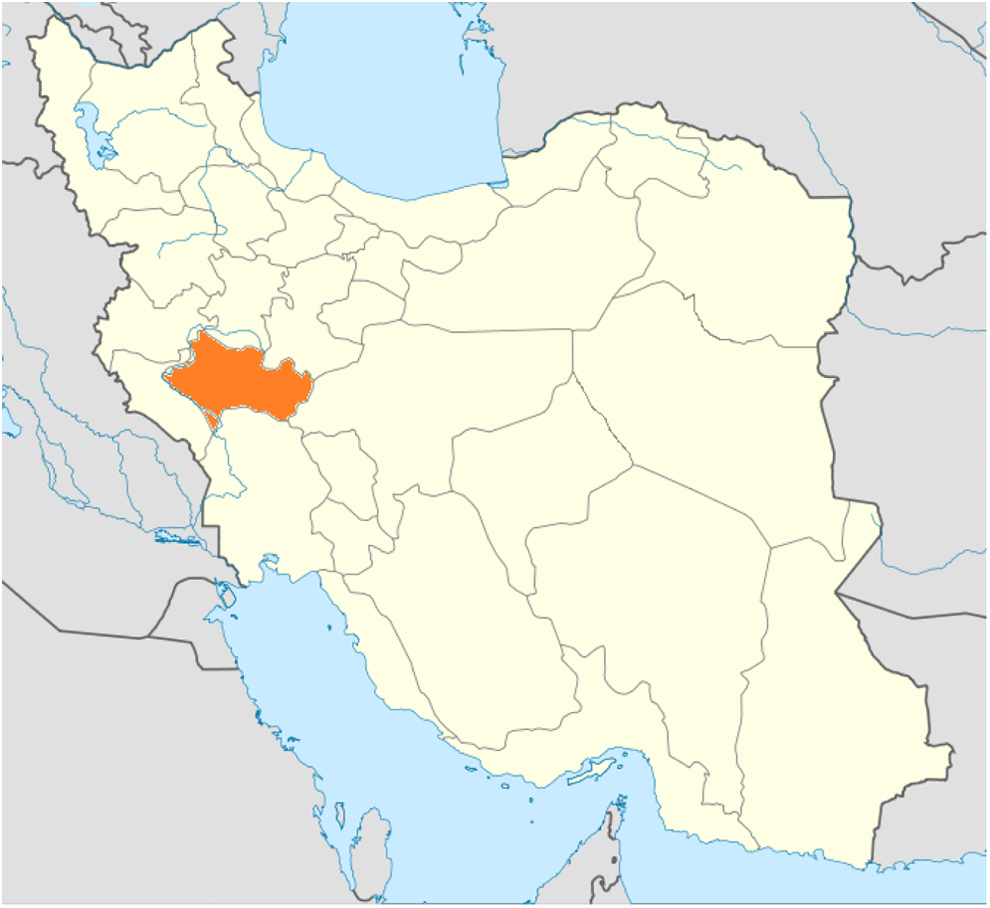
Lorestan province in Iran.
Also in terms of weather, Lorestan has 4 different climate (dry, semimoist, temperate, semihumid). There are more than 1.5 million hectares of forest and rangeland and the diversity of flora is remarkable and diverse climate. The Flora Iranica so far has reported more than 1200 plant species from the province, from them, 600 species of plants belong to the Lorestan province. 19
Collection and Identification Methods of Therapeutic Effects of Effective Medicinal Plants for Cold
Ethnobotanical details of this study were collected within the time range of 2007 to 2010 through interviews and questionnaires with Research Deputy of Lorestan University of Medical Sciences and indigenous people’s information along with the cooperation of health network staff in 8 cities of Khoramabad, Aligoudarz, Nurabad, Borujerd, Poldokhtar, Kouhdasht, Aleshtar, and Doroud. A previously prepared questionnaire was given to some trained health liaisons by 11 directors of health care networks. These questionnaire contained information about growth season, the location, native application, native name of plants, characteristics of interviewers, applied part, consumption mode, and kinds of plants kept at home. The trained liaisons attended the considered villages and recorded people’s beliefs about these plants in the questionnaire; they were mostly asking the elderly who were recommended by the villagers. The inclusion criteria to enter the study were at least 50 years of age, including persons experienced in the field of herbal medicine. The questionnaire was completed by 70 native people (21 female and 49 male). The age range of people who completed the therapy information was 50 to 85 years. Identification of the species was based on the Flora Iranica. 19
Results
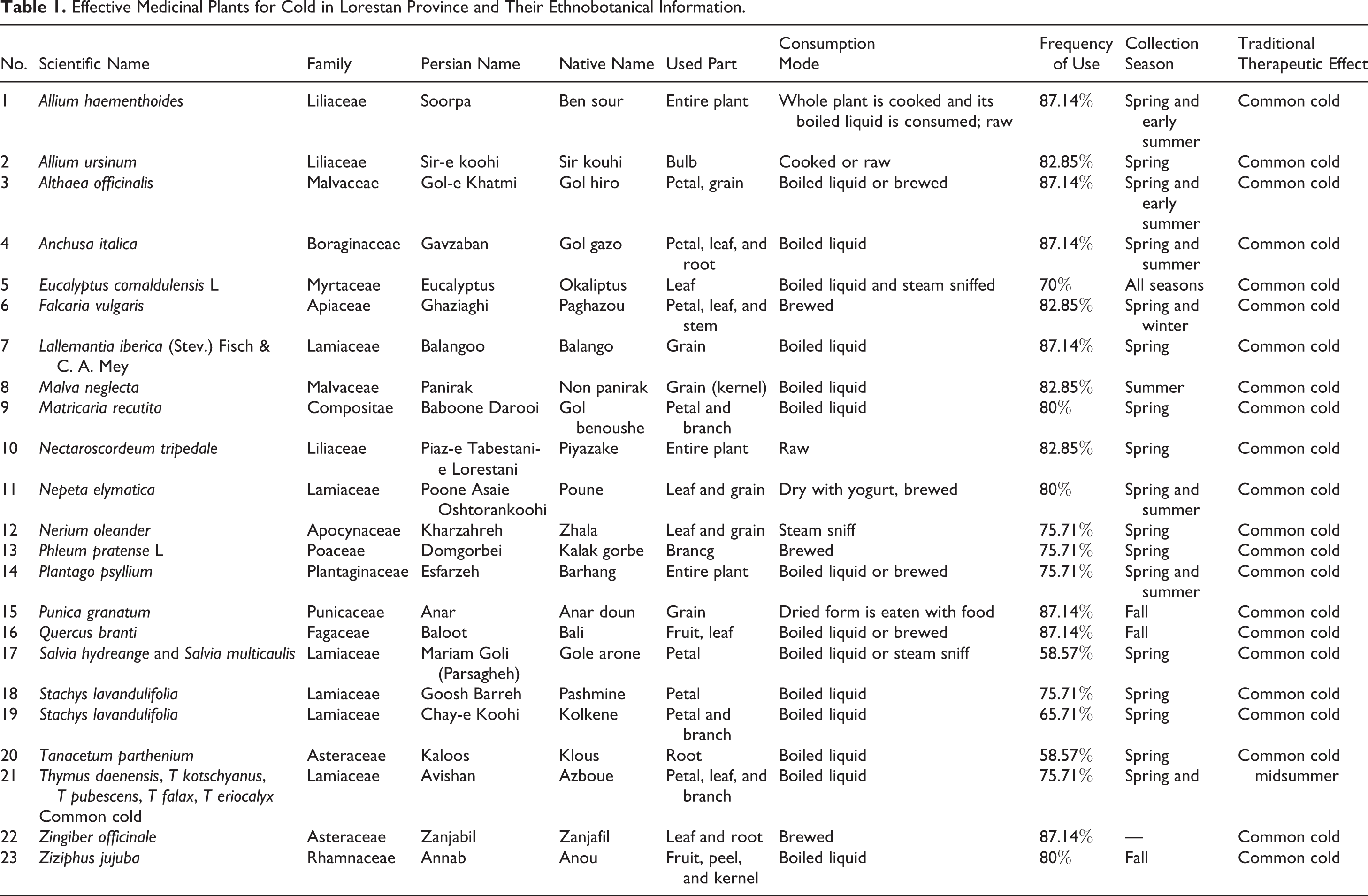
People from 8 cities of Lorestan province (Doroud, Borujerd, Khoramabad, Aleshtar, Poldokhtar, Aligoudarz, Nurabad, and Kouhdasht) use 23 medicinal plants as cold medicine. Scientific name, family name, native name, Persian name, used part, consumption mode, plant collection season, and traditional treatment effect of each plant are given in Table 1 and Figures 2 and 3.

Frequency distribution of the number of each plant in families.

The percentage of different organ parts used.
Effective Medicinal Plants for Cold in Lorestan Province and Their Ethnobotanical Information.
Discussion
The present study demonstrated that people in Lorestan province use 23 medicinal plants to treat cold and alleviate its symptoms and complications such as cough, sore throat, sneezing, runny nose, nasal congestion, bronchial asthma, and so on.
Current findings support traditional uses of the plants used in Lorestan to ease cold. In this regard, Allium ursinum bulb is used to treat flu, bronchitis, and amoebic dysentery. This plant is able to relieve whooping cough. 20 Efficacy of Althaea officinalis on cough has been proven. 21 Falcaria vulgaris contains effective medicinal substances such as spatolnol, carvacrol, saponins, and tannins. 22,23 Petals of Malva neglecta contain anthocyanin and mucilage, and all parts of this plant, especially its flowers, have softening effect on the respiratory tract, which could be related to its high mucilage content. 24 Nerium oleander has anti-inflammatory, analgesic, and antimicrobial effects. 25,26 It appears that the effective substances of these plants are responsible for their therapeutic effects on cold.
Fruit of Quercus branti contains significant amounts of active compounds such as tannin, gallic acid, alagic acid, and galvil derivatives or diphenyl hexahydroxy. These compounds have antioxidant properties. 27 Antimicrobial effects of Quercus branti have been also reported. Tannin has astringent and antiseptic effects and is a major constituent of Iranian oak. 28–30 Salvia hydreange and Salvia multicaulis are better known owing to numerous antimicrobial studies. 31–33 Stachys lavandulifolia has antimicrobial, anti-inflammatory, and analgesic effects. 34–37 It can be inferred that, due to the proven antimicrobial effects, Quercus branti, Salvia hydreange, Salvia multicaulis, and Stachys lavandulifolia are effective in cold treatment by affecting its infectious factors.
In Asia, oil obtained from leaves of eucalyptus is used as an anesthetic, expectorant, antipyretic, and antiworm substance. It is also used for the treatment of respiratory diseases such as shortness of breath, asthma, and tuberculosis. 36–38 1,8-Cineole is the main material of eucalyptus that has therapeutic effects. 39 It is used in anticough syrups, toothpaste, and other drugs as flavoring. Eucalyptus extract also has antioxidant and anti-inflammatory effects. 40,41 Eucalyptus also has antibacterial properties. 42
Punica granatum has malic acid, butyric acid, tannic acid, or tannin. 43–45 It contains various phenols such as alagic tannins, alagic acid, and galic acid and has very high antioxidant capacity. 46,47 Also, it has antimicrobial properties. 48 Alagic acid and quercetin have antioxidant and carcinogenic properties. 49,50 It seems that its secondary antioxidants are responsible for its therapeutic effects.
Plantago psylliumis is used to treat cough and respiratory disorders. 51 In traditional medicine, ginger is used for treating a wide variety of diseases such as asthma, rheumatoid arthritis, neurological diseases, diabetes, constipation, common cold, motion sickness, and gum and teeth illnesses. 52–54
Ginger drops have been proven to relieve coughing. 55 Phytochemical studies have demonstrated that it is rich in gingerols and shagavols, 56 and they are the main elements of treating cold and its symptoms.
In traditional medicine, Ziziphus jujube has been used as a medicinal plant in East Asian countries for the treatment of cardiac diseases, liver disorders, anemia, and dyspnea. 57–60 It contains cyclopleptics, alkaloids, flavonoids, and terpenoids. Also, leaves of this plant contain betolic acid and cynotinic acid. 59,61 Ziziphus jujube has antioxidant effects. 62
About 10 pharmaceutical companies in Iran are commercially producing effective medicinal medicines for cold flu and its complications. Altadin (for curing inflammation of the throat and mouth), AVI Packet (for cough, expectorant), Eucalyptus (cold, cough, and nasal congestion), Eucalyptus Dineh (cold, cough, and nasal congestion), Eucalyptus inhaler (cold, cough, and nasal congestion), Aki Herb (respiratory tract infections, cold, and strengthening the immune system), B.B. Cold (bronchitis, runny nose, cough), Bronchotidy (cough, expectorant), Bronchosin (cough, bronchitis, whooping cough, laryngitis, and shortness of breath), Termurab (nasal congestion), Tocian (cough, bronchitis, whooping cough, laryngitis, and shortness of breath), Tocigel (cough, expectorant, antibronchitis), Tocivin (severe cough), Timex (expectorant, respiratory tract inflammation in asthma, bronchitis, and cold), Timian (cold and cough [even caused by pertussis and sensitivity], bronchitis [bronco-spasmolytic], antiseptic, antispasmodic, expectorant, and mucus binding), Timiklid (cold, cough, whooping cough to relieve mucosal inflammations of the respiratory tract), Druzil (cough, expectorant, bronchial dilator), Fitogold (cold reliever), Coldrub (cold), Likofar (inflammatory mucosa of the mouth and throat, cough, expectorant), and Menthol (nasal congestion, cold) are the plant medicines that have been already produced in Iran to treat cold and reduce its complication such as cough, sneezing, runny nose, and so on. Many of these drugs are derived from the knowledge of traditional medicine in Iran. Most of the above-mentioned plants possess phenolic compounds, and it has been known that phenolic compounds possess antimicrobial property. 63–66 In most cases it is not known how much the phenolic compounds are responsible for the anticold property of these plants. Furthermore, there are a lot of plants having polyphenol compounds. 17,18,67–75 Hence, if we accept that phenolic compounds have anti-infectious activities, these plants might also be useful in the treatment of cold.
Plants of the present study contained bioactive substances and, considering the importance of medicinal plants, are recommended as one of the most popular traditional treatments. 76–82 More research should be done on the efficacy and potential harms of medicinal plants used by people. 83–90 In the case of their positive pharmacological impact, they can be used to produce natural and effective drugs for cold.
Footnotes
Acknowledgements
This study was undertaken in collaboration with Management and Planning Organization of Lorestan province and Deputy for Research and Technology of Lorestan University of Medical Sciences. We also thank the support of Research Deputy of Shahrekord University of Medical Sciences. We are thankful to Prof Mahmoud Rafieian-Kopaei and Dr Fatemeh Fallah-Rostami.
Author Contributions
All the authors wrote the article equally.
Declaration of Conflicting Interests
The authors declared no potential conflicts of interest with respect to the research, authorship, and/or publication of this article.
Funding
The authors disclosed receipt of the following financial support for the research, authorship, and/or publication of this article: The authors are thankful for the following financial support for the research. This study was supported by Grant Number 161-9467 from Deputy for Food and Drug, Lorestan University of Medical Sciences, Khorramabad, Iran.
Ethical Approval
This study is exempt from oversight by human subjects research protection as there were no human subjects involved.