




Abstract
Oxygen consumption varies with physical and mental activity as well as pathological conditions. Although there is a strong relationship between yoga and metabolic parameters, the relationship between yoga and oxygen consumption has not yet been formally reviewed. This systematic review attempted to include all studies of yoga that also measured oxygen consumption or metabolic rate as an outcome. A total of 58 studies were located involving between 1 and 104 subjects (average 21). The studies were generally of poor methodological quality and demonstrated great heterogeneity with different experimental designs, yoga practices, time periods, and small sample sizes. Studies report yoga practices to have profound metabolic effects producing both increase and decrease in oxygen consumption, ranging from 383% increase with cobra pose to 40% decrease with meditation. Compared to nonpractitioners, basal oxygen consumption is reported to be up to 15% less in regular yoga practitioners, and regular yoga practice is reported to have a training effect with oxygen consumption during submaximal exercise decreasing by 36% after 3 months. Yoga breathing practices emphasize breathing patterns and retention ratios as well as unilateral nostril breathing, and these factors appear critical in influencing oxygen consumption. A number of studies report extraordinary volitional control over metabolism in advanced yoga practitioners who appear to be able to survive extended periods in airtight pits and to exceed the limits of normal human endurance. More rigorous research with standardized practices is required to determine the mechanisms of yoga’s metabolic effects and the relevance of yoga practices in different clinical populations.
Introduction
Human metabolism is the result of continuous anabolic and catabolic processes that maintain homeostasis and sustain life. Metabolic pathways include a complex network of nutritional, neuronal, and humoral inputs that are integrated by the central and autonomic nervous systems through pathways that monitor and maintain physiological functioning. All metabolic processes generate heat and are ultimately dependent on the expenditure of energy via consumption of oxygen, which drives oxidative phosphorylation.
Energy expenditure is a directly related to metabolic rate and oxygen consumption, and these terms are often used interchangeably. Monitoring oxygen consumption has received a great deal of interest in determining oxygen delivery to tissues, cardiorespiratory function, and metabolic response to activity. Assessment of oxygen consumption is used in determining energy requirements for healthy lifestyles, exercise programs, and critically ill patients. 1 –3 Oxygen consumption is reported to increase with adaption to physiological stress and pathology. 4,5 The measurement of energy expenditure can be performed via direct calorimetry, which measures heat loss using insulated chambers, or via indirect calorimetry, which directly measures oxygen consumption 6 through respiratory gas exchange. Direct calorimetry is not frequently used as it is complex, does not accurately measure rapid changes in metabolism, and requires significant expertise and elaborate equipment including specially constructed chambers. Indirect calorimetry is the most commonly used technique for measuring energy expenditure and can be used to measure the substrate of metabolism as well as oxygen consumption, which can be expressed in terms of VO2 (absolute oxygen consumption), VO2/kg/min (relative oxygen consumption), and MET (metabolic equivalent task). 2,3,7
Oxygen Consumption, Stress, and Pathology
Oxygen consumption is maximal during intense physical activity and lowest during basal or resting conditions and higher oxygen consumption is associated with psychological and physiological activity, stress, pathology, and accelerated aging. 4,5,8,9 Oxygen consumption has also been found to increase with activities such as mental arithmetic and playing video games, 10 –13 as well as with psychological distress and anxiety. 14 A growing body of research further suggests that oxygen consumption is higher in various pathological conditions, including congestive heart failure, 15 locomotor impairment, 16 HIV, 17 chronic obstructive pulmonary disease, 18 insomnia, 2 and congestive heart failure. 19 Oxygen consumption has also been found to increase with features of metabolic syndrome, including obesity, 20 –22 type 2 diabetes, 23 –26 and hypertension. 27 –29
The measurement of oxygen consumption can provide insights into overall homeostatic balance and response to stress, which are mediated through multiple pathways under the control of the autonomic nervous system and the hypothalamus. The sympathetic nervous system is involved in rapidly mobilizing vital physiological functions via sympathetic–adrenal–medullary pathways in response to acute stress, 30 –32 which serves to increase oxygen consumption. Repeated or chronic stressful stimuli may lead to changes in the hypothalamic–adrenal–pituitary axis, leading to a sustained stress response involving cognitive, emotional, endocrine, and immune system changes. 33 The parasympathetic nervous system provides a counter to the stress response and reduces oxygen consumption by activating the so-called relaxation response, 34 which serves to reduce physiological arousal and induce a hypometabolic state mediated via enhanced vagal activity. 35 Such hypometabolic states are suggested to enhance survival in plants and animals by facilitating restorative and repair functions. 36
Yoga, Stress, and Metabolism
Mind–body practices that induce relaxation have been traditionally used by people across cultures to improve health and serve as a path for spiritual awakening. 37 Yoga is an ancient mind–body approach that combines the practice of postures (asana), breathing (pranayama), and meditation (dhyana) with the aim of achieving an effortless state of harmony (samadhi).
Yoga postures include both static and dynamic postures that are designed to attune the body to a stable state suitable for meditation. Yoga breathing includes a range of practices such as Bhastrika (bellows breath), Ujjayi (victorious breath), Kapalbhati (lustrous cranium), and unilateral nostril breathing, which can be performed at different rates (reported as breath/minute) and with different retention periods and patterns that involve either internal retention (inspiration–retention–expiration) or external retention (expiration–retention–inspiration). The yogic state of meditation is characterized by decreased oxygen consumption and cardiovascular activity 35,38 and has been shown to elicit the relaxation response. 34 This meditative state, which is distinct from rest, 39,40 physical relaxation, 41 and sleep, 42 may be voluntarily induced, even while performing fixed physiological workloads. 43
The ability of yoga to induce relaxation and relieve stress has been widely reported, 44 –46 and there are reports of yoga practices reducing acute, chronic, and posttraumatic stress. For example, yoga is reported to relieve workplace stress, 47 examination stress, 48,49 and stress-induced inflammation. 50 Yoga practices have also been reported to improve many clinical conditions such as anxiety, 51 –53 depression, 53,54 negative mood states, 55 –58 and posttraumatic stress disorder (PTSD) symptoms in war veteran, 59 –61 tsunami survivors, 62,63 hurricane refugees, 64 and flood survivors. 65 Furthermore, 2 reviews, one involving 35 clinical studies 66 and the other 8 controlled trials of healthy adults, 67 acknowledge the promising role of yoga in reducing stress. Li et al also suggest yoga as a potential adjunct to pharmacologic therapy for patients with stress and anxiety. 66 There are further studies to suggest that regular yoga practice reduces physiological and metabolic activity under normal conditions. Compared to nonpractitioners, regular yoga practitioners have been found to have lowered resting heart rate, 68 blood pressure, 68 breath rate, 69 and metabolic rate. 70,71 Yoga has also been found to improve all features of metabolic syndrome, including obesity,72,73 hyperlipidaemia, 74 –76 hyperglycemia, 75,77,78 and hypertension, 79 –81 with 3 separate randomized controlled trials demonstrating benefits of yoga in metabolic syndrome patients. 82 –84
While there seems to be a strong relationship between yoga and metabolic parameters, the relationship between yoga and oxygen consumption has not been formally reviewed. The objective of this article is to systematically review previous research exploring the relationship between yoga and oxygen consumption and explore the impact that different yoga practices has on oxygen consumption in different populations.
Methodology
For this systematic review, a comprehensive search of multiple databases including Scopus, PUBMED, PSYCHINFO, CINAHL, Science Direct database was conducted, and a separate search was conducted in Indian medical journals through IndMed, which indexes more than 100 prominent Indian scientific journals. Similarly, a search was performed of Yoga Mimamsa, which includes published yoga research literature dating back from 1920 not listed in the above databases. The archives of the International Journal of Yoga were also searched, along with the reference citations from all full-text articles identified. The primary search terms included Yoga, yogic, pranayama, yoga nidra, breathing, relaxation, meditation, Transcendental meditation, Brahamakumari meditation, Raja Yoga meditation, Om meditation, mantra meditation, Sahaj Yoga meditation, cyclic meditation, and Kundalini yoga, Kriya yoga, and Sudarshan Kriya along with keywords oxygen consumption, energy expenditure, metabolic cost, and metabolic rate.
All studies that had oxygen consumption (at resting, during yoga intervention, or during physical exercise in which yoga included in the intervention) as an outcome were included in the systematic review. The search was performed for articles published up to December 2012 and was not otherwise restricted by date or study population. The review included studies that examined a range of yoga practices including asana and/or integrative yoga, breathing, meditation and yogic relaxation practices used either alone or as an integrated practice. The studies were excluded if they were not in English (n = 4), unobtainable (n = 5), in press (n = 8), or only documented study protocol (n = 5). Studies were also excluded if they only involved meditation (religious or nonreligious) and relaxation practices that are not directly associated with yoga such as Zazen/Zen Buddhist meditation, Vipassana Meditation, Tum-Mo yoga, Qigong, relaxation response, progressive muscle relaxation, and autogenic relaxation. However, it was beyond the scope of this systematic review to collect and synthesize clinical outcomes other than oxygen consumption or critically assess the methodological quality of all studies. The selection of relevant studies is shown in Figure 1, and the results, including their statistical significance, are noted in the relevant text and tables.
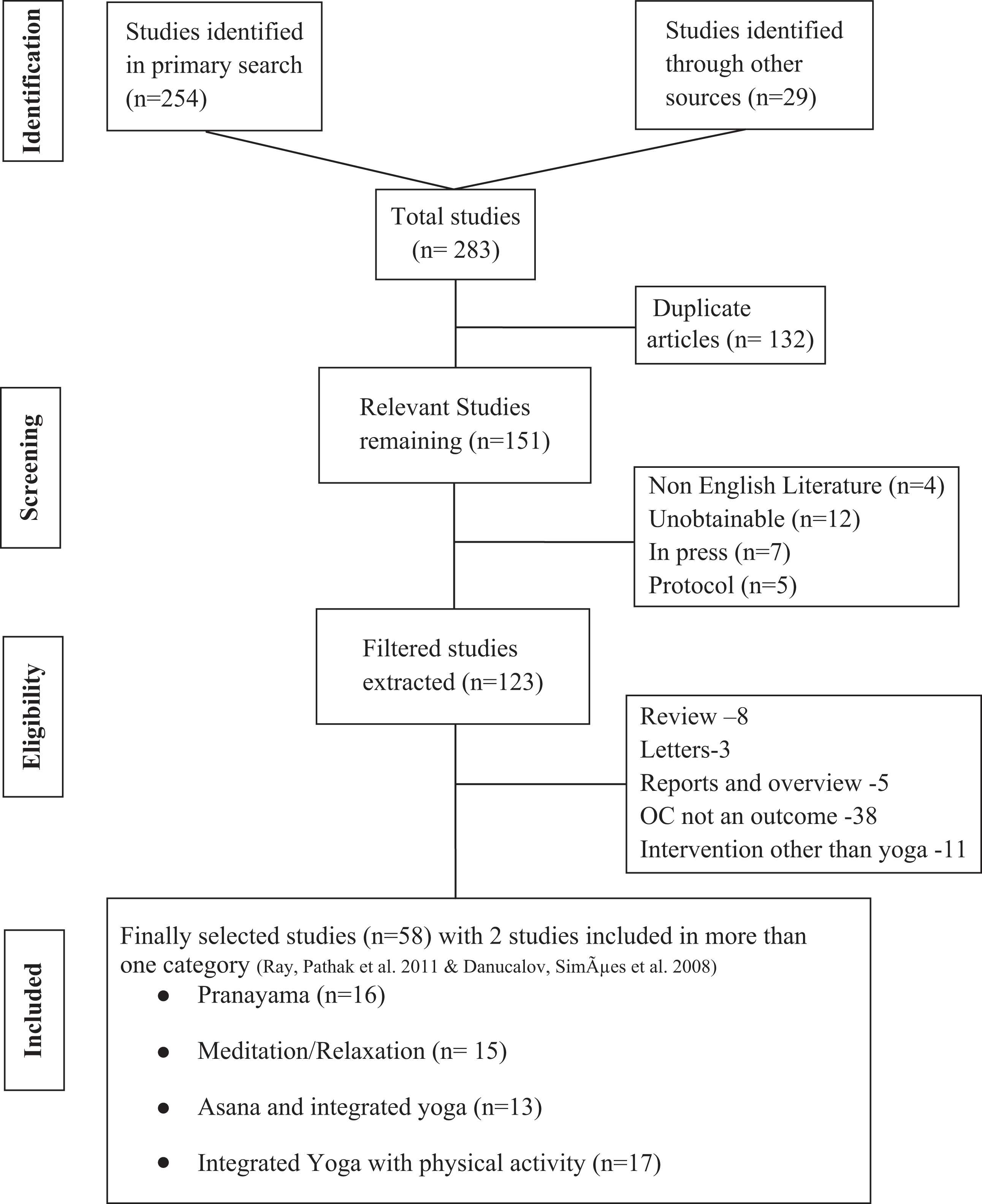
Flow chart of study search and included studies.
Results
A total of 58 studies of oxygen consumption and yoga practices were extracted (Figure 1). These studies involved between 1 and 104 subjects (average 21) and demonstrated great heterogeneity with many different experimental designs, yoga practices, and time periods. Extracted studies, which were categorized according to the type of intervention (pranayama practice, meditation/relaxation, integrated yoga/asana practice, integrated yoga with physical activity), are presented in Tables 1 to 4, which also include information about study design.
Summary of Studies Reporting Changes in Oxygen Consumption With Pranayama Practice(s).

Abbreviations: OC, oxygen consumption; HR, heart rate; CO2, carbon dioxide; MV, minute ventilation; VT, tidal volume; I:R:E, inspiration–retention–expiration; E:R:I, expiration–retention–inspiration; BPM, beats per minute; CO, cardiac output; RNB, right nostril breathing; SBP, systolic blood pressure; GSR, galvanic skin resistance; ANB, alternate nostril breathing; LNB, left nostril breathing.
Summary of Studies Reporting Changes in Oxygen Consumption With Mediation/Relaxation Practice(s).

Abbreviations: OC, oxygen consumption; HR, heart rate; BPM, beats per minute; CO, carbon dioxide; BMR, basal metabolic rate; BR, breath rate; GSR, galvanic skin resistance; I:R:E, inspiration–retention–expiration; LF, low frequency; HF, high frequency.
Summary of Studies Reporting Changes in Oxygen Consumption With Asana, Integrated Practice(s).

Abbreviations: OC, oxygen consumption; CO2, carbon dioxide; BR, breath rate; HR, heart rate; BPM, beats per minute.
Summary of Studies Reporting Changes in Oxygen Consumption With Yoga and Physical Activity.

Abbreviations: OC, oxygen consumption; HR, heart rate; SBP, systolic blood pressure; DBP, diastolic blood pressure; BMI, body mass index, NRCT, nonrandomized controlled trial; RCT, randomized controlled trial; FEV1, forced expiratory volume in 1 second; HRV, heart rate variability; CO2, carbon dioxide exhalation; BMR, basal metabolic rate; BR, breath rate.
Of the total studies, 35 studies were published from India, 70,71,85 –117 15 from the United States, 118 –132 2 from the United Kingdom, 133,134 and 1 each from Mexico, 135 New Zealand, 136 Thailand, 137 Brazil, 138 Japan, 139 and Sweden. 140 Most studies reported assessing direct measurement of respired gases for measuring oxygen consumption using indirect calorimetry techniques, whether through open circuit, closed circuit, bag system, or respiratory chamber method. Some studies derived oxygen consumption through the standard equations, that is, oxygen consumption was predicted through regression equation with measures of heart rate and oxygen consumption of submaximal exercise, 94 while VO2 max was predicted through achieved workload and using standard formula from the American College of Sports and Medicine. 116,130 Oxygen consumption was reported to both increase and decrease with different yoga practices. Increases in oxygen consumption ranged from 7.7% with Ujjayi breathing to 383% during cobra pose (Tables 1 and 3). Studies also report decreases in oxygen consumption, with slow yoga breathing techniques and meditation practices ranging from a 3.7% decrease during Om meditation to a 40% decrease in an advanced yogi during meditation in an airtight pit (Table 2). Basal oxygen consumption is also reported to be up to 15% less in regular yoga practitioners compared to nonpractitioners, and oxygen consumption during submaximal exercise is reported to decrease by 36% after 3 months of regular yoga practice (Table 4).
Pranayama Practices and Oxygen Consumption
Table 1 summarizes 16 pranayama (yogic breathing) studies that include a total of 143 participants and report wide variations in oxygen consumption. While oxygen consumption was seen to increase with most breathing practices performed at both fast (232 breath/min) and slow (1 breath/min) rates (Table 1), a decrease in oxygen consumption from rest was also seen in some slow breathing practices. The highest increase in oxygen consumption was seen with extremely rapid Bhastrika breathing, which involves rapid, forced thoracic inhalation and exhalation. When Bhastrika was performed at a rate of 232 breath/min by 3 advanced practitioners, oxygen consumption was reported to increase by 208%, 140 and increases in oxygen consumption of 30%, 24%, 22%, 17%, and 15% is reported with Bhastrika performed at different rates and retention periods. 88,90,118,119 Increases in oxygen consumption of 12% 119 to 50% 87 are also reported with Kapalbhati breathing, which involves forced rapid exhalation. Unilateral nostril breathing (alternate nostril breathing, right nostril breathing, and left nostril breathing) are reported to increase oxygen consumption with a 150% increase during alternate nostril breathing 94 and increases of 37% 96 to 18% 93,96 reported immediately after alternate nostril breathing, right nostril breathing, and left nostril breathing practices.
Oxygen consumption is also reported to increase with some slow yoga breathing. Ujjayi breathing, which involves controlled slow, deep breathing with long inhalation and exhalation and gentle contraction of the glottis creating a soft snoring sound, 141 has been consistently reported to increase oxygen consumption, even at extremely slow rates. An increase of 10% is reported in a single advanced practitioner while practicing Ujjayi at a rate of 1 breath/min, 139 while further studies report increases in oxygen consumption of 25% and 52% during Ujjayi with a 40-second retention (rate of 1.26 breath/min) 119 or with an inspiration–retention–expiration ratio of 1:1:1. 92 An increase in oxygen consumption was also reported with Ujjayi performed at different altitudes, with a 16% greater oxygen consumption observed in a single practitioner at 3200 m elevation practicing Ujjayi breathing at 3 breath/min compared to practicing Ujjayi breathing at 520 m elevation at 1.5 breath/min. 86 An increase in oxygen consumption to 17% has also been reported in advance yoga practitioners during slow paced breathing with and inspiration–retention–expiration ratio of 1:4:2. 138
Only 4 studies (Table 1) report decreases in oxygen consumption with pranayama. A decrease in oxygen consumption of 4%, 21%, and 19% is reported during slow Ujjayi breathing at rates of 2 breath/min, 90 1.4 breath/min, 91 or with an inspiration–retention–expiration ratio of 1:4:4. 92 A decrease in oxygen consumption of 16% is also reported during Bhastrika breathing at 12 breath/min. 95
Yoga Meditation, Relaxation Practices, and Oxygen Consumption
Table 2 summaries 15 studies with a total of 310 participants that consistently report reduced oxygen consumption during different meditation and relaxation practices. Two studies of yogic relaxation practices report 25.2% and 23% reductions in oxygen consumption compared to rest. 100,101 Transcendental meditation is also reported to produce reductions of oxygen consumption from rest, with 3 separate studies reporting reductions of 20%, 17%, and 5%. 120 –122 Reductions in oxygen consumption from rest of 15% and 3.7% are also reported during 2 to 3 minutes of meditation. 95
Studies comparing meditation with non-yogic relaxation techniques shows modest or no difference between interventions. Four studies report no difference in oxygen consumption between groups practicing Transcendental and those practicing a control relaxation intervention, 123,124,134,136 while a further study reports no significant reduction in oxygen consumption from baseline rest during either after Om meditation or relaxed sitting, despite reported reductions in heart rate and increases in galvanic skin response. 117
Among the studies reporting reductions in oxygen consumption, the most dramatic reductions were seen in 2 studies involving advance yoga practitioners, with one study reporting reductions in oxygen consumption of 40% below rest during a 4 hour stay in an air tight subterranean chamber 99 and another study reporting reductions of 32% and 37% below rest during 2 separate 10-hour stays in an airtight box. 97 Reductions in oxygen consumption of around 35% below rest are also reported during meditation in a group of experienced yogis (n = 9). 138 An early study with 3 advanced yoga practitioners further reports that during a prolonged stay in an airtight pit, advanced meditators could tolerate ambient oxygen levels of 12.2% and carbon dioxide levels of 7.3%. 98
Asana/Integrated Yoga Practices and Oxygen consumption
Table 3 presents 13 studies with a total of 272 subjects that consistently report increases in oxygen consumption with different yoga asanas (postures). The most dramatic increase was seen in a group of 21 male practitioners who experienced a 383% increase in oxygen consumption while performing cobra pose. 104 Increases in oxygen consumption were also reported with warrior III pose (300%), 125 plough pose 2 (160%), 95 Hero pose (159%), 103 headstand pose (68%), 85 and accomplished pose (27%). 102
Over the course of a yoga session, oxygen consumption has been reported to increase by 100% with Ashtanga yoga, 126 114% with Hatha yoga, 131 133% with Thai yoga, 137 and 144% with Iyenger yoga. 125 Three studies have examined oxygen consumption during Sun Salutation (a dynamic sequence of 12 postures) and report that oxygen consumption increased 205% above resting levels 104 and 25% 126 and 81% 131 above the levels during static postures.
The reported increases in oxygen consumption seen with yoga practices are less than observed with maximal or submaximal exercise. Oxygen consumption during Thai yoga is reported to be 35.5% of VO2max, 137 Vinyasa yoga, 50%, 127 bow posture, 26.5%, and Shavasana (supine pose), 9.9%, 95 of VO2max. Similarly, Iyenger, Ashtanga, and Hatha yoga sequences have been shown to be of lower intensity than submaximal exercise, having oxygen consumption that is 26%, 33%, and 54% lower than oxygen consumption during treadmill walking at 4 mph, 132 3 mph, 126 or 3.5 mph, 131 respectively.
While oxygen consumption is reported to increase during a yoga session, there are reports that oxygen consumption may fall below presession levels immediately after certain practices. During cyclic meditation, which involves a series of postural sequences interspersed with periods of relaxation, oxygen consumption is reported to increase by up to 55% during the active phase and then fall to 19% below presession levels in the immediate postsession period. 106 Similar results are reported in a further study, which reports a 32% decrease in oxygen consumption immediately after cyclic mediation. 105
Regular Yoga Practice, Physical Activity, and Oxygen Consumption
Table 4 presents 16 studies involving 516 participants that measured oxygen consumption at rest or during physical activity (submaximal and maximal) after 1 month to 24 months of integrated yoga practice (including asana, pranayama, and relaxation) along with 2 studies comparing oxygen consumption at rest in yoga and non-yoga practitioners 70,71 and 1 study comparing oxygen consumption between groups who regularly practiced lotus posture and groups of regular exercisers or healthy sedentary subjects. 107
Most of these studies report that regular yoga practice leads to progressive reductions in oxygen consumption over time. In a 3-month cohort study, yoga practice was found to reduce oxygen consumption during submaximal exercise by 36% compared to baseline levels. 110 A randomized trial involving male soldiers found that 6 months of yoga practice (n = 15) reduced oxygen consumption during submaximal exercise by 5.7% (P < .05) compared to no change in a physical training group (n = 15), 114 while a nonrandomized study reports that 12 months of regular yoga practice with regular sports activity improved submaximal work efficiency in athletes with 51% greater work output per liter of oxygen consumed, compared to no change in regular sports activity group. 112
VO2max was also reported to increase with regular yoga practice, ranging from 6 weeks to 6 months in diverse populations. A 3% increase in VO2max is reported in the cohort of middle-aged yoga practitioners who practiced intensive yoga for 11 weeks 142 and 7% increase in VO2max in a cohort of yoga navies who practiced integrated yoga for 8 weeks. 128 Similarly, up to 7% increment of VO2max is reported in a randomized trial of 6 months in male soldiers with integrated yoga (n = 17) compared to no change in a physical training group (n = 11), 115 and a 13% (P < .01) increase in VO2max is reported in elderly subjects in a randomized trial after 6 weeks of yoga with practice (n = 20), similar to significant increase with aerobic training (n = 20). 133
Increases in VO2max of approximately 17% are also reported after yoga practice in 2 cohort studies including a 6-week study of healthy subjects (n = 17) 116 and an 11-week study of elderly yoga practitioners (n = 9). 142 Similar increases in oxygen consumption are reported in an 8-week randomized controlled trial of patients with congestive heart failure who practiced yoga (n = 9), compared to no change in a standard medical therapy group (n = 10). 130 A further cohort study of female physical trainers found that 1 month of yoga practice led to 14% greater maximal work efficiency. 111 Maximal work efficiency was also seen to improve in a nonrandomized controlled trial by 34% in athletes after 24 months of regular yoga practice compared to a control group practicing physical exercise. 112
Not all the studies report improvement in oxygen consumption or work efficiency with regular yoga practice. A 12-month randomized study reports no change in oxygen consumption during submaximal exercise in either a yoga or aerobic training group. 113 In another randomized study, no change in VO2max is reported after 8 weeks in a yoga practice group (n = 10) compared to a no-intervention control group (n = 11). 129 Similarly, two 3-month cohort studies report no change in oxygen consumption at rest after regular yoga practice, 109,110 and similar results are reported in a 12-month randomized controlled trial. 113 In contrast to most of the above-mentioned studies, one small cohort study reported increased oxygen consumption during submaximal exercise after 6 months of regular yoga practice in healthy subjects despite an observed reduction in resting core body temperature. 108
When examining oxygen consumption at rest, 2 studies report basal oxygen consumption to be significantly less in regular yoga practitioners compared to non-yoga practitioners. One study 70 reports that regular yoga practitioners had basal metabolic rate 13% less than predicted based on the FAO/WHO/UNU equation 143 and that oxygen consumption during basal conditions was significantly less in regular yoga practitioners compared to non-yoga practitioners. Similar results were reported in the second study, which report that regular yoga practitioners had basal metabolic rate that was 17.8% less than non-yoga practitioners. 71
Discussion
Studies published to date suggest that yoga practices can have profound metabolic effects producing both significant increases and decreases in oxygen consumption. Like other physical activity, physical yoga postures can increase oxygen consumption dramatically, yet yoga practices do not involve maximal exertion. For example, dynamic postures such as cobra pose are reported to increase oxygen consumption by 383% or around 1220 mL/min, which is less than half that produced with maximal exercise in the average untrained healthy male. 3 The most dramatic change seen with yoga is reduction of oxygen consumption, with reports of yoga practices downregulating the sympathetic nervous system and producing modest reductions in oxygen consumption comparable to practices such as progressive muscle relaxation, closed eyes relaxation, and listening to music, 123,124,134,136 as well as reports of dramatic reductions up to 40%. 99 This suggests that yoga may downregulate the hypothalamic–pituitary–adrenal axis and the sympathetic activity and therefore promote relaxation and stress relief.
Regular yoga practice also appears to have a training effect, with regular yoga practitioners consistently showing significant reductions in oxygen consumption during normal physical activity compared to non-yoga practitioners. Thus, unlike other physical training, which generally increases resting metabolic rate, 144,145 regular yoga practice is reported to decrease resting oxygen consumption to levels lower than predicted by the FAO/WHO/UNU equation. 70 This may be due to regular physical training producing an increase of muscle mass, which requires greater oxygen consumption supply at rest, whereas yoga training may instead increase efficiency of mitochondrial oxidative phosphorylation and reduce oxygen demand.
Yoga practices are also reported to shift lactate threshold (anaerobic threshold) and improve work efficiency, indicating aerobic capacity and reduced muscle fatigue to a greater degree compared to physical activity. 112 These results are supported by a randomized crossover trial documenting reduction in blood lactate, heart rate, and blood pressure with regular yoga practice. 146
A recent review of yoga and exercise found that yoga may be as effective as or better than aerobic exercise at improving a variety of health-related outcome measures in both healthy and diseased populations. 147 Despite multiple studies demonstrating the benefits of yoga in various clinical conditions, only one small study examined the effects of yoga and oxygen consumption in a clinical population. This study reported increased aerobic capacity (VO2max) in patients with congestive heart failure after practicing yoga postures, breathing techniques, and meditation over a period of 8 weeks. 130 Previous research also suggests that instruction on respiration and relaxation, in addition to physical exercise, enhances respiratory sinus arrhythmia and slows heart rate and breath rate in myocardial infarction patients during rehabilitation 148 and that slow rhythmic respiration can be used as a therapeutic tool for anxiety, 149 hypertension, 150,151 and asthma. 152 Due to the wide variety of yoga practices and styles, further research is required to determine the most appropriate practices for different clinical conditions. Typical yoga sessions of different styles appear to differ in exercise stimulus, resulting in varied increase in oxygen consumption 125,126,131,137 with profound increases reported during dynamic posture sequences compared to static posture sequences. 126,131 Different yoga practices and styles, however, are likely to have different health and fitness benefits. 153,154
It appears that breath rate and retention periods are critical in determining oxygen consumption and that yoga practitioners are able to vary their breath rate widely with reported breath rates ranging from 1 breath/min to more than 230 breath/min. Oxygen consumption is also reported to paradoxically increase by up to 10% despite breath rates of only 1 breath/min. The most profound changes in oxygen consumption with breathing techniques are seen in advanced yoga practitioners who are reported to increase their oxygen consumption by 208% and their carbon dioxide exhalation by 395% when performing Bhastrika breathing at 232 breath/min, or decrease their oxygen consumption by 16% when performing the same type of breathing at 12 breath/min. Similarly, altering the retention period during Ujjayi breathing is reported to either increase oxygen consumption by up to 52% when performed with a short retention period with an inspiration–retention–expiration ratio of 1:1:1 or decrease by 19% when the same type of breathing is performed with a longer retention period of inspiration–retention–expiration ratio of 1:4:4. Ultradian rhythms in nasal cycles and unilateral nostril breathing practices may also influence oxygen consumption with alternate nostril breathing being reported to increase oxygen consumption by up to 150%. 94
Advanced yoga practitioners appear to be able to exert extraordinary conscious manipulation of their metabolic and autonomic functions, 155,156 with reports of yogis being able to tolerate ambient carbon dioxide levels of more than 7% and oxygen levels less than 12%. 98 There are further reports of advanced yogis being able to reduce oxygen consumption by 40% while meditating in an airtight pit 99 and survive 8 days in an airtight pit with an unrecordable electrocardiogram. 157 These reports appear inexplicable, yet are similar to reports of advanced Zen meditators being able to decrease oxygen consumption up to 20% and dramatically reduce their respiratory rate to 1.5 to 2 breath/min during Zazen meditation, Tum-mo meditators being able to increase or decrease their oxygen consumption by more than 60% during seated meditation, 158 and reports of modern free divers being able to hold their breath for more than 10 minutes while diving to depths of more than 200 m. 159 So far, these extreme feats of metabolic control are poorly documented and limited to single case studies or small cohorts. They therefore require further investigation and documentation as they may provide clues about extending the limits of human endurance and metabolic control.
This review suggests that yoga can have profound metabolic effects with a consistent picture emerging from experimental, cohort, nonrandomized, and randomized controlled trial studies. Yet most of the studies are of poor methodological quality and do not provide adequate reporting of the study design, study population, yoga practices, methods of measurements, or statistical methods. Furthermore, most studies were performed in India (n = 35) and included only small numbers of adult male yoga practitioners without matched comparison groups. Furthermore, there are 2 randomized controlled trails of healthy people that report no change in oxygen consumption with yoga despite significant changes in other physiological measures. Of these, a controlled trial (n = 10) reported significant improvements in flexibility with yoga but no change in maximal aerobic capacity, 129 while another controlled trail (n = 18) reported improvements in respiratory variables and breath hold time but no change in oxygen consumption during submaximal exercise with yoga. 113 A further cohort study (n = 10) reported significant improvements in biochemical and anthropometric parameters after 3 months of yoga practice but did not find any change in oxygen consumption. 109
The small sample sizes, variable practices, and limited, nonclinical populations involved in the reviewed studies make it difficult to generalize results to wider populations or make definitive statements about specific practices. Thus, more rigorous studies with larger samples and standardized practices are required to determine the role of yoga in modulating oxygen consumption and determine if the reported results can be reproduced in non-Indian, female, adolescent, and non-yoga-practicing populations as well as in different clinical conditions. The reports of advanced yogis performing extraordinary feats also warrant further investigation using modern equipment and research methodologies.
Conclusion
Research to date on yoga and metabolism includes many heterogeneous yoga practices in studies of poor methodological quality. This research suggests that yoga practices can produce dramatic changes in oxygen consumption and metabolism and that regular yoga practice may lead to reduced resting metabolic rate. Research further suggests that different yoga postures and breathing practices, which involve the control of respiratory rate and retention periods, may produce markedly different metabolic effects with reductions in oxygen consumption being more dramatic than increases. The volitional control over autonomic functions and increased metabolic endurance demonstrated by advanced yoga practitioners warrant further investigation. Rigorous research on standardized practice is required to determine the relevance of yoga practices in various clinical conditions.
Footnotes
Authors’ Note
This article was prepared as part of Anupama Tyagi’s PhD research.
Acknowledgement
The work for this article was performed at RMIT University. The authors would like to acknowledge the assistance of RMIT University biomedical librarian Savita Hazari for her help in conducting the searches and sourcing and obtaining articles.
Author Contributions
Anupama Tyagi was responsible for conducting the literature searches, preparing the tables, and writing the first draft of the article. Marc Cohen was responsible for conceiving the article, categorizing the papers, and assisting in writing the article and reviewing drafts.
Declaration of Conflicting Interests
The authors declared no potential conflicts of interest with respect to the research, authorship, and/or publication of this article.
Funding
The authors received no financial support for the research, authorship, and/or publication of this article.
Ethical Approval
As this article represents a systematic review of literature and no human or animal experimentation, no ethics review was sought or required.