



Abstract
This study sought to describe how consumers found the Bill Henderson protocol, a dietary intervention for cancer treatment, and to describe their perceptions and evaluation of its effects. In all, 630 surveys were completed online. Most respondents were ages 55 to 74 years old, well-educated, and had experience with a cancer diagnosis. Most respondents identified the Bill Henderson protocol through Internet searches. More than two thirds had used the protocol, although adherence to its components varied. A number of positive attributions were made to the protocol, including cancer cure (n = 73) and improvements in health status indicators (n = 170). Negative attributions included disease progression (n = 10) and death (n = 2). Consumers search for disease management options online. Attributions regarding this intervention’s success or failure are based on anecdotal experience. There has been no empirical investigation of the Bill Henderson protocol’s safety and efficacy to date, limiting the information on which choice can be made. This could place protocol adherents at risk.
Introduction
The Bill Henderson protocol, first described in 2004, is intended to be used primarily as a complementary and alternative medicine treatment for cancer. The dietary protocol was developed by Bill Henderson, who states that he is “on a crusade for cancer information and cure,” following the death of his wife from cancer in 1994. Mr Henderson is a self-described entrepreneur with a background in business who collects and disseminates information on alternative cancer therapies. The Bill Henderson protocol is promoted through books that Mr Henderson has published, newsletters he produces, and the Internet. 1–4
The Bill Henderson protocol addresses the 4 physiological conditions that, according to Mr Henderson, lead to the development and spread of all cancers. These 4 conditions are a weak immune system, lack of oxygen to the cells, excessive acidity, and toxicity. 5 The Bill Henderson protocol requires adherence to a restricted diet (no gluten, animal protein, sugar, dairy, or processed food), the consumption of raw vegetables, and the ingestion of nutritional supplements. 6 The daily consumption of a cottage cheese and flaxseed oil combination in specific proportions, borrowed from an earlier diet proposed by Johanna Budwig in 1951, is strongly advocated. 7
Numerous complementary and alternative dietary interventions exist and are described for cancer treatment, prevention, or cure. 8–10 Consumers can find information in medical journals, online and through books, at holistic clinics, and by word of mouth. At the time this study was undertaken, searches in AltHealth Watch, AMED, CancerLit, CINAHL, Evidence-based Complementary Medicine, PubMed, and Medline did not reveal any information on the Bill Henderson protocol. In the 2007 edition of his book “Cancer Free,” Mr Henderson stated that more than 7800 people were sent his newsletter. 11 In May of 2009, he reported that this number had risen to 17 500.
The Bill Henderson protocol is described on the Internet and in Mr Henderson’s books, which are available both through his Web site and online (eg, Amazon.com). Through these channels, consumers could have discovered and opted to join Bill Henderson’s electronic newsletter group. The monthly newsletter, authored by Bill Henderson, provides readers with updates on his protocol, news, and information related to other alternative cancer treatments, and a recurring testimonial piece called “A Reader’s Story.” Access to this group is maintained by Mr Henderson. Through his Web site, consumers are offered the opportunity to contact Mr Henderson directly by phone for some “coaching” if they are experiencing trouble with the regimen (ie, their cancer is not reversing with protocol adherence).
Accessing people subscribing to the electronic newsletter provided a unique opportunity to report on a self-selected group of people who are aware of and possibly use a relatively new complementary and alternative medicine method for the treatment of cancer for which there is currently no evidence of efficacy. Unlike consumer use surveys where a variety of complementary and alternative medicine methods are examined, these consumers have all expressed interest in a single approach—the Bill Henderson protocol—and have their access regulated by the protocol’s founder.
The purpose of this survey was to directly examine these consumers in terms of their sociodemographic characteristics and to describe their knowledge of, adherence to, and perceptions of the effects of the Bill Henderson protocol.
Materials and Methods
We were interested in addressing consumer motivations and experiences with use of the Bill Henderson protocol. At the time we were planning the research program, we learned that a charitable donor had contracted Cygnus Applied Research, Inc, 12 to survey members of Mr Henderson’s newsletter database to assess interest in the financial support of research into the Bill Henderson protocol. Database access is maintained by Mr Henderson. To facilitate administration, and in consideration of respondent burden, we agreed to combine our survey questions with those of Cygnus. In this way, the sample participants only received 1 request for survey participation. This article will report on the content relevant to consumer experiences with the Bill Henderson protocol.
In all, 31 multiple choice questions captured information on consumer age, gender, diagnosis, knowledge of Bill Henderson’s products (eg, books, newsletters, Web site, and forums), experiences with conventional medicine, and experiences with complementary and alternative medicine generally and the Bill Henderson protocol specifically. Where response options might not have captured the respondents' experiences, respondents were invited to describe their experiences by writing additional comments.
The survey link was sent out once electronically by Mr Bill Henderson to the 17 500 subscribers to his newsletter. 13 The link remained active for 10 days. The information letter preceding the survey authored by Cygnus assured potential survey participants of the confidentiality of their responses and the security of the online data. Data were collected by Cygnus. We received the quantitative data in aggregate from Cygnus and received the qualitative data as text files. The qualitative data were analyzed by the researchers using descriptive content analysis. 14
Results
Sociodemographics
A total of 630 surveys were returned yielding a response rate of 3.6%. Gender was evenly split (315 male, 311 female). Most were between the ages of 55 and 74 years (n = 337); 87% had some postsecondary education (n = 548), and 57% (n = 315) of those had completed a university degree. As regards income, 24% (n = 152) declined to provide an income category, and among those who responded, the median income range was $40 000 to $69 000.00 (before taxes).
Diagnostic History
Of the 630 respondents, 91% (n = 575) had cancer or had a family member who had received a diagnosis of cancer. The most common diagnoses were breast (23%; n = 133), prostate (16%; n = 92), lung (8%; n = 48), and colorectal (8%; n = 47), and most diagnoses had been received within the past 5 years (67%; n = 384). Also, 62% (n = 296) of those who were able to provide a cancer stage at the time of diagnosis (n = 475) indicated that it was stage 3 or 4, and 50% (n = 291) described their cancer as currently in remission.
Treatment History
Substantial proportions of the people reporting a diagnosis of cancer (n = 575) had been recommended to use conventional medical treatments, including chemotherapy (59%; n = 337), radiation therapy (49%; n = 284), and surgery (64%; n = 369). However, 66% (n = 381) had chosen to decline or discontinue treatment options recommended by their physicians. The most frequently offered explanations for declining or discontinuing conventional treatment were dissatisfaction with conventional methods for treating cancer (77%; n = 298), personal belief in alternative medicine (74%; n = 287), and a lack of trust in the medical system (64%; n = 249). Most people (80%; n = 310/389) stated that they had learned about alternative treatments as a result of their own investigation, and 25 % (n = 94) had heard success stories from others and had subsequently decided to try them.
Awareness of the Bill Henderson Protocol
About half of the respondents (51%; n = 319/630) had become aware of Bill Henderson or his protocol through online searches for cancer treatments, and others mentioned books (33%; n = 207) or word of mouth 79 (13%). Most people had been receiving his newsletter for 1 year or less (64%; n = 406/630), whereas the remainder of the sample had received it for longer (36%; n = 224/630).
Usefulness of Bill Henderson Protocol Resources
Ratings of the perceived usefulness of Bill Henderson’s cancer resource materials (eg, books, newsletter, and personal support) are shown in Table 1 . Ratings were given by those consumers who had used the various resources.
Respondent Ratings of the Value of Bill Henderson’s Resources

Experience With the Bill Henderson Protocol and Complementary and Alternative Medicine
Experience with the Bill Henderson protocol varied among the respondents. More than two thirds of the people indicated that they had used it (72.8%; n = 459) in the past (26.2%; n = 165) or were currently following it (46.7%; n = 294). Slightly more than a quarter of the respondents (27.1%; n = 171) reported that they had not used the protocol at all. Most people had used the protocol for 12 months or less (74.5%; n = 342), some had used it for up to 2 years (14.4%; n = 66), and a few (11.1%; n = 51) had used it for up to 5 years.
Those who had used the Bill Henderson protocol or who had a family member who used it (n = 459) were asked to rate their adherence to various components of the protocol. These ratings were given on a scale of 1 to 7, where 1 reflected complete nonadherence and 7 reflected complete adherence. Table 2 presents these ratings in decreasing order of adherence.
Self-rated Adherence to Bill Henderson Protocol Requirements

The perceived effects of using the Bill Henderson protocol on cancer are shown in Table 3 . In all, 276 people endorsed a response option from the choices in the survey, whereas 46 provided a codable description in the “other” category (total of 322 descriptions).
Descriptions of Perceived Outcomes Following Use of the Bill Henderson Protocol (n = 322)

Apart from cancer-fighting effects, respondents were asked if other benefits or difficulties were experienced by following the Bill Henderson protocol, and 343 (75%; n = 343/459) people agreed that some benefits were experienced. Most (62%; n = 213) described these as improved health and often stated “better immunity,” “lowered blood pressure,” and “weight loss.” Improved well-being was described by 93 people, and this included things such as improved attitude, feelings of empowerment, and peace of mind. Also, 37 people believed that they had improved their awareness and knowledge of cancer and possible interventions, stating that “gives more of an insight into cancer, things you never had thought about like eating the correct diet and taking supplements.”
As regards negative comments, 79 people (17%) reported that following the Bill Henderson protocol had created difficulties for them, and 68 comments described negative physical (n = 59) or psychological (n = 9) effects arising from use of the Bill Henderson protocol. These included abnormal liver function, nail problems, fatigue, weight loss, and frequently, digestive issues such as nausea, vomiting, heartburn, and diarrhea. A few comments were directed against Mr Henderson; they criticized him for practicing medicine without a license and for his resistance to scientific evaluation. Problems with protocol adherence were described by 46 people (eg, impossible diet restrictions that few could continue to follow, hard to find supplies, and socially hard to follow when dining out).
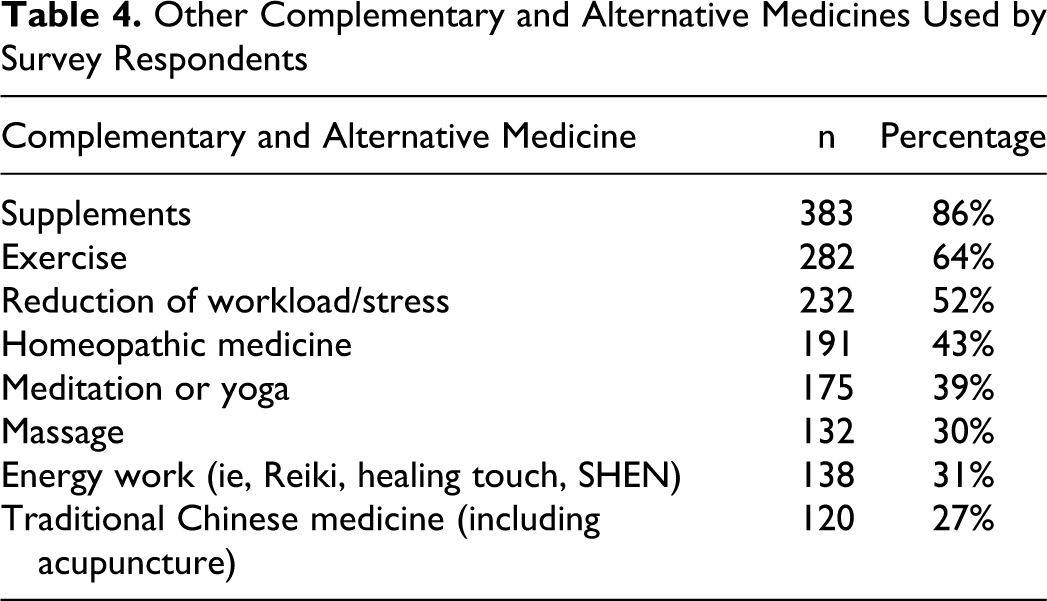
In addition to the Bill Henderson protocol, most respondents reported using other complementary and alternative medicines and/or lifestyle changes. The most common therapies or changes (used by >25%) are given in Table 4 .
Other Complementary and Alternative Medicines Used by Survey Respondents
General Comments
Respondents added final comments to the end of the survey relating to their experience with the Bill Henderson protocol as well as any comments regarding research into alternative methods or the survey itself. Among the 234 responses given, common themes were repeated with positive statements (n = 88) and criticisms (n = 28) of the protocol and/or Bill Henderson. There were reports or reiterations of respondent’s mistrust or dissatisfaction with conventional medicine (n = 32) or interest in and/or support of alternative methods (n = 42). There were 58 comments related to respondents' expressions of support or gratitude for this and other studies of alternative protocols.
Discussion
This study reports on a select group of consumers who have found, and followed to a greater or lesser extent, an alternative dietary approach proposed as a cure for cancer—the Bill Henderson protocol. Duration of use varied, although it did not exceed 2 years for 83% of the consumers. Compliance with the protocol components varied considerably among the participants. Many perceived that use of the Bill Henderson protocol had beneficial effects on disease status, whereas a smaller number thought that it had a negative effect. To date, empirical data on the Bill Henderson approach, including safety and efficacy data, do not exist.
Similar to users of complementary and alternative medicine in general, this group of consumers was well educated. 15 Like many with people with medical diagnoses, they were self-motivated and sought information about treatment options online. 16 Consistent with some previous research, most survey respondents reported that use of alternative medicine was motivated in part because it was consistent with personal beliefs and preferred to conventional methods, whereas half reported a mistrust or dissatisfaction with conventional medicine. 15,17
Criticisms are frequently levied at complementary and alternative medicines for their unfounded claims and lack of empirical evidence, and the Bill Henderson protocol is no exception. 18–20 The protocol’s founder, who does not have a medical background, suggests that following his proposed diet and supplement regimen for 6 to 8 weeks while postponing conventional methods of treatment will reverse cancer. 4 Although attributions were made by some respondents regarding the protocol’s success, effectiveness cannot be causally assigned to the Bill Henderson protocol. It does not appear that any protocol adherent complied with all its prescribed elements. Most people with cancer appear to have used conventional methods as well as other complementary and alternative medicine or lifestyle change approaches, any or all of which may have positively influenced health outcomes.
Of concern is Mr Henderson’s suggestion that people with cancer postpone use of conventional medicine while they try his protocol. Although consumers have the right to make their own treatment choices, decisions to use the Bill Henderson protocol cannot be supported by information on its risks and benefits because this information is not known. Anecdotal reports of success do not constitute evidence of the protocol’s efficacy. Reports of failures are not given the same publicity. Suggesting that people delay conventional treatment for which the risks and benefits are known and where timeliness is important could be to the consumer’s disadvantage. 21–23
Although there is some evidence to suggest that certain components of the protocol might be beneficial to those with cancer, the evidence is far from conclusive. 24–31
Possible risks associated with the protocol’s use can be considered. It is known that in cancer patients, nutritional status interacts with disease factors, treatment factors, and resulting quality of life. 32 Moreover, this relationship intensifies with disease progression, and advanced disease is strongly associated with malnutrition, weight loss, decreased energy, and decreased quality of life. 33–35 Cancer-related nutritional deterioration has been attributed to anorexia, loss of lean body mass, and altered carbohydrate and lipid metabolism. 32,36 Deficiencies in nutritional intake vary with disease progression, and cancer-related anorexia-cachexia is a strong independent risk factor for mortality. 33,37
The Bill Henderson protocol presents a restrictive dietary intervention that does not appear to consider the unique nutritional requirements of cancer patients. Potential harms could therefore include inadequate nutritional intake, leading to significant weight loss and resulting negative impact on quality-of-life parameters. The diet’s inclusion of nutritional supplements in the absence of any consideration of recommended daily allowances raises the possibility of inappropriate supplementation. In cases where supplementation meets or is in excess of tolerable upper intake levels, the possibility for toxicity exists. 38–40 Perceived side effects of dietary adherence described by some respondents in this survey included abnormal liver function, weight loss, and digestive complaints.
Although complementary and alternative medicine often promotes itself as an individualized approach, the Bill Henderson protocol promotes a blanket intervention for all cancer patients. 41 Research has shown that dietary needs of patients vary by a host of individual factors, including stage and type of cancer, and that an individual dietary counseling approach is more effective than supplementation alone. 32,35
Strengths and Limitations
This survey is unique in that the group of consumers had chosen to join an email list maintained by the protocol's founder. The opportunity to use this email list allowed investigation of the experiences of a significant number of protocol users who otherwise could not have been identified.
The interpretation of these findings is limited primarily by the low response rate which compromises the generalizability of the results. This rate is likely an underestimate however. The true number of active email addresses is unknown as information on the number of unavailable emails (i.e., bounce-backs) was not provided to the researchers. Given the population this protocol is designed to help, it is possible that a significant number of email addressees could have died and thus the number to whom the survey reached was actually much lower, thereby increasing the true response rate. Again, this information was not available. Further, subscription to this email list is open to anyone and it is likely a proportion of subscribers had not experienced a cancer diagnosis. The survey's content would not have been salient to them and therefore they would not have participated.
The low response rate could have been influenced in part by the incorporation of requests for donations within the survey of consumer experiences. This could have been offensive to some people, and they could have refused to take part.
The interpretation of these survey data are limited by the potential for response bias. Specifically, responses were received by relatively new users of this intervention. The experiences of those whose cancer had progressed to the point where they were too ill to complete the survey or who had died could not have been represented, and therefore, the experiences reported potentially reflect a positive response bias.
Similarly, the participants had chosen to join the e-mail list hosted by the protocol’s founder. This may also reflect a positive endorsement of the protocol by the list members and may be reflected by a positive response bias in certain survey items.
Conclusion
The popularity of complementary and alternative medicine among the general population is well established, and its use among those with disease is particularly prevalent. 42,43 Adherence to self-directed therapies like the Bill Henderson protocol might provide consumers with a feeling of control over their illness and could provide them with the sense that they are playing a role in their recovery.
Cancer patients are a particularly vulnerable group of people, particularly those for whom a terminal diagnosis has been given. They can be susceptible to misleading information and could be willing to try seemingly innocuous regimes with little evidence to support their efficacy and little information on their potential harms. 16,44
Given the prevalence of complementary and alternative medicine use, there is a continuing need for consumers to be educated on what constitutes evidence of an intervention’s effectiveness. In particular, the role of anecdotal evidence needs to be deconstructed: stories about the occasional person getting better following adherence to a particular regimen cannot be taken as evidence that the therapy works or is safe for all. The goal of such discourse is not to take away hope but to facilitate informed decision making. Ongoing discussion should be maintained with those people choosing to follow the Bill Henderson protocol and other complementary and alternative medicine approaches, and their nutritional status should be monitored.
Until further research on the Bill Henderson protocol is undertaken and disseminated, consumers cannot be informed as to whether adhering to this protocol is a health risk or treatment option.
Footnotes
Acknowledgment
This study was undertaken in the Faculty of Medicine, University of Calgary, Calgary, Alberta, Canada
Stacey Page was the principal investigator in this study and took the lead in survey design, data interpretation, and manuscript preparation. The coinvestigators Cynthia Mannion, Laurie Heilman Bell, and Marja Verhoef each contributed to survey development, data interpretation, and manuscript review.
Work attributable to the Office of Medical Bioethics, RM 93, HMRB, Faculty of Medicine, University of Calgary.
The authors declared no potential conflicts of interest with respect to the research, authorship, and/or publication of this article.
The authors disclosed receipt of the following financial support for the research, authorship, and/or publication of this article: Funding for this study was provided by the Holistic Health Research Foundation of Canada.
This study received ethics approval from the Conjoint Health Research Ethics Board at the University of Calgary.