



Abstract
Purpose:
Fertility preservation (FP) is essential for adolescents and young adults (AYAs) with cancer aged 15–39, yet gaps persist in guideline-concordant care. Despite American Society of Clinical Oncology (ASCO)’s 2018 recommendations, clinician and systemic barriers hinder timely FP counseling. Allied health care professionals (AHPs) play a critical role in supporting patient education and support. This study examined AHPs’ conceptualizations of optimal FP care, assessed alignment with ASCO guidelines, and identified facilitators and barriers to implementation.
Methods:
This study analyzed data from Cohort 4 (2020) of the Enriching Communication Skills for Health Professionals in Oncofertility (ECHO) program, an 8-week web-based training for AHPs on AYA reproductive health communication. A directed content analysis was used to qualitatively examine factors influencing FP care delivery. Multilevel themes were analyzed to identify potential mechanisms to facilitate optimal FP care, resources needed for implementation, and barriers to FP patient education.
Results:
Among 130 AHPs (92% female, 72% White), most were social workers (29%) or oncology nurses (25%), working in academic cancer centers (49%). Alignment with ASCO guidelines was observed in fertility risk discussions (72%) and specialist referrals (56%). Key facilitators included patient education (46%), clinician training (48%), and interdisciplinary collaboration (47%). Primary barriers identified were systemic challenges (20%), including financial constraints, limited institutional resources, and time pressures.
Conclusion:
AHPs demonstrated strong commitment to advancing FP care for AYAs with some alignment to ASCO guidelines. Persistent gaps in psychosocial support and system-level resources highlight the need for expanded clinician education, stronger interdisciplinary networks, and institutional prioritization to ensure equitable, developmentally appropriate FP care.
Keywords
Introduction
Fertility preservation (FP) discussions are a critical component of comprehensive cancer care for adolescent and young adult (AYA) patients aged 15–39, 1 who may face infertility due to cancer treatment.2,3 With the increasing incidence of survival rates,4–6 addressing fertility concerns is essential to support informed decisions about future family-building options and quality of life.7–11 Despite the American Society of Clinical Oncology (ASCO) 2018 guidelines recommending that clinicians initiate discussions regarding fertility risks and referrals to reproductive health specialists prior to undergoing gonadotoxic therapies, 12 significant barriers remain in delivering FP care.13,14
Clinician-level barriers to FP care have been well documented in the literature. Oncology clinicians, particularly those without specific training in reproductive health, often feel uncertain about how and when to initiate fertility-related discussions with AYAs.11,15,16 Some additionally report difficulty identifying which patients are at risk for fertility impairment and locating appropriate services. 17 Further, oncologists, focused primarily on treating the cancer, may prioritize immediate treatment decisions over discussions about potential fertility risks.18,19 Referral patterns for FP additionally remain suboptimal, with one study finding that less than half of clinicians refer patients to a reproductive specialist when fertility concerns are expressed. 20 This finding contradicts ASCO guidelines, which recommend prompt referral for patients who are unsure or express an interest in FP care. 12 These barriers are further compounded by differences in clinical settings. Oncology clinicians at well-resourced institutions, such as National Cancer Institute (NCI)-Designated Cancer Centers, generally have better access to reproductive specialists and clinical collaborations with established referral pathways. In contrast, oncologists in community hospitals or private practices may struggle with limited resources and a lack of referral networks. 21
Strategies to improve FP care provision among oncology clinicians have been examined.14,15 A systematic review found that educational programs can effectively increase clinician awareness and confidence in FP discussions with patients. 22 Another review found that institutional support, such as clear referral pathways and multidisciplinary collaboration, is essential for integrating fertility counseling into oncology care. 17 However, addressing additional gaps requires a broader, team-based approach.14,22
Allied health care professionals (AHPs) (e.g., nurses, social workers, psychologists) have emerged as key players in bridging gaps and enhancing FP care. 7 Although oncologists often focus on immediate cancer treatment, AHPs provide education, psychosocial support, and counseling on broader impacts, including fertility. ASCO guidelines additionally extend the responsibility for FP care coordination to AHPs, recognizing their integral role in addressing emotional and informational patient needs, especially in complex fertility and family-building decisions. 7 Training AHPs to confidently address fertility concerns can aid in more effective and timely referrals to fertility specialists. 23 However, despite the critical role of AHPs, there has been limited attention on their training and support in accordance with ASCO guidelines.
Given these complexities, this study examines the alignment between AHPs’ aspirational goals for providing optimal FP care within their institutions and ASCO guidelines, identifies potential facilitators and required resources to enhance FP care delivery, and highlights barriers to achieving guideline adherence.
Methods
Data source and study population
This study analyzed data from the Enriching Communication Skills for Health Professionals in Oncofertility (ECHO) program, an 8-week web-based training for AHPs to enhance communication skills regarding reproductive health for AYA patients with cancer. Intervention details are published elsewhere.24,25 Briefly, ECHO was launched in 2017 and provides training on psychosocial, clinical, and skill-building aspects of oncofertility to a national cohort of AHPs. Offered at no cost to participants, it provides continuing education credits upon completion and has demonstrated steady growth in learner engagement. 26
As part of the ECHO program, participants were asked to complete the “Dream Big Assignment” (DBA), where they developed action plans for optimizing FP care within their institutions. Action plans included written responses to open-ended questions regarding overarching goals for providing optimal FP care, key action items to achieve goals, necessary resources, responsible personnel, and success indicators. ECHO Cohort 4 (2020) was utilized for this analysis. Those who did not complete the DBA were excluded.
Qualitative study design and data analysis
This study employed a directed content analysis approach, 27 drawing on existing theory and literature. Analysis was informed by two key frameworks: the 2018 ASCO guidelines 12 and the Implementation Research Logic Model (IRLM), an implementation science structured framework that systematically identifies and organizes multilevel determinants affecting the adoption, integration, and sustainability of evidence-based practices.28,29 The IRLM was applied to map facilitating mechanisms and key barriers, providing a structured lens for understanding how multilevel factors shape FP care.
Initial coding categories were derived from ASCO guidelines, which define key clinician responsibilities. Specifically: (1) discussing infertility as a potential risk to cancer treatment and FP options, (2) referring patients who express an interest or uncertainty in fertility to reproductive health specialists, (3) engaging in these discussions and appropriate referrals as soon as possible after a cancer diagnosis, (4) referring patients to psychosocial clinicians when they are distressed about potential infertility, and (5) encouraging participation in registries or clinical trials. 12 Statements were coded as guideline-aligned when they explicitly reflected these responsibilities. Guided by the IRLM framework, additional inductive codes were developed to capture nuances about proposed mechanisms facilitating optimal FP care, resource needs to implement action plans, and current barriers to implementation.
To ensure rigor, two coders (SP, PL) independently analyzed five transcripts, compared the application of codes, refined operational definitions for each code, and reconciled any coding discrepancies through discussion. This process was repeated with an additional 10 transcripts to ensure consistency and reliability. Disagreements were resolved through consensus, resulting in the final codebook. One coder (SP) completed coding the remaining transcripts. Following coding, themes were analyzed by level (patient, clinician, organizational, and system) to identify key mechanisms facilitating optimal FP care, resource needs for implementation, and barriers to implementation. This analysis was determined to be nonhuman subjects research and exempt from institutional review board oversight under institutional self-certification procedures at NYU. Qualitative analyses were conducted using MAXQDA software. 30
Results
Participant sociodemographic and institutional characteristics
A total of 130 participants were included in the analysis. The sample was primarily female (92.3%) and White (71.5%). Few (8.5%) participants identified as Hispanic/Latino. Participant professions included social workers (29.2%), oncology nurses (24.6%), and psychologists (17.7%). On average, participants had 11.6 years of experience in their profession (range <1–51) and worked in oncology an average of 7.9 years (range <1–40). Institutional characteristics were distributed across multiple census regions, 31 with most institutions located in the South (46.2%). Prevalent institutional types were Academic or NCI-Designated Cancer Centers (48.5%). Nearly half of the participants (47.7%) reported having access to AYA programs, and 77.7% had access to fertility navigators (Table 1).
Enriching Communication Skills for Health Professionals in Oncofertility Cohort 4 Participant Characteristics
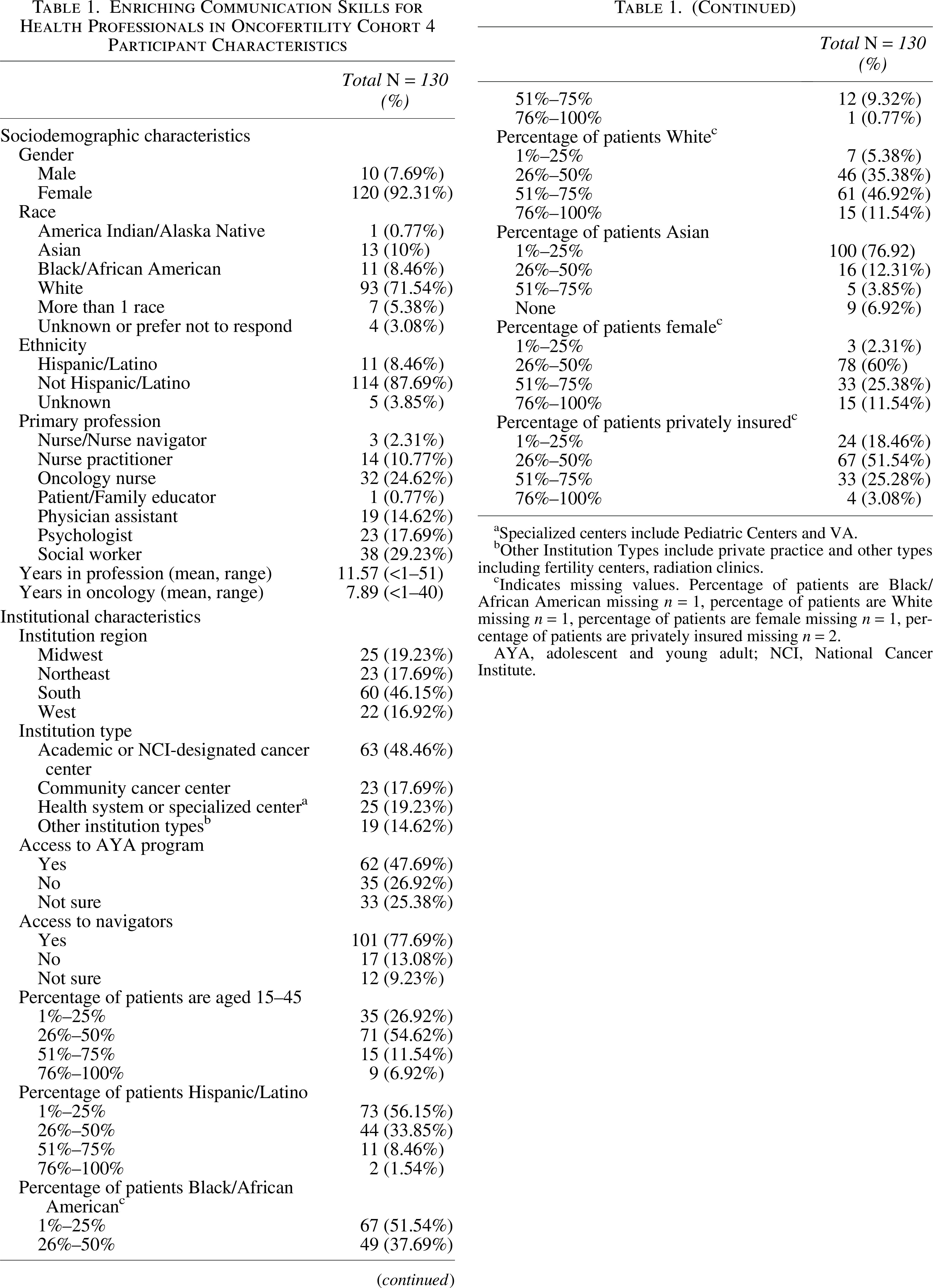
Specialized centers include Pediatric Centers and VA.
Other Institution Types include private practice and other types including fertility centers, radiation clinics.
Indicates missing values. Percentage of patients are Black/African American missing n = 1, percentage of patients are White missing n = 1, percentage of patients are female missing n = 1, percentage of patients are privately insured missing n = 2.
AYA, adolescent and young adult; NCI, National Cancer Institute.
Qualitative findings
Conceptual alignment with ASCO guidelines
Analysis of the DBAs revealed that most participants’ action plans reflected conceptual alignment with key elements of the ASCO guidelines (Table 2). Specifically, 71.5% of AHPs included plans to discuss fertility risks with AYAs, and 56.2% highlighted referrals to reproductive health specialists. Engaging in discussions about infertility, FP options, and referrals to reproductive health services were often intertwined themes. One AHP stated, “Optimal care for our AYA patient population would ensure that every single patient of reproductive age receives information, education, and referrals for fertility preservation” (Oncology Nurse). When considering timeliness, 44.6% emphasized the importance of early discussions and referrals to FP services. As one participant noted, “Timely referral for fertility preservation is important and may be better addressed at diagnosis, allowing time to explore options without delaying treatment” (Psychologist). Additionally, 17.7% addressed referrals to psychosocial services, most often citing the need for social workers to provide counseling support. Only 2.3% recognized the importance of engaging patients in FP-related clinical research.
Allied Health Care Professional Goal Alignment with American Society of Clinical Oncology Guidelines
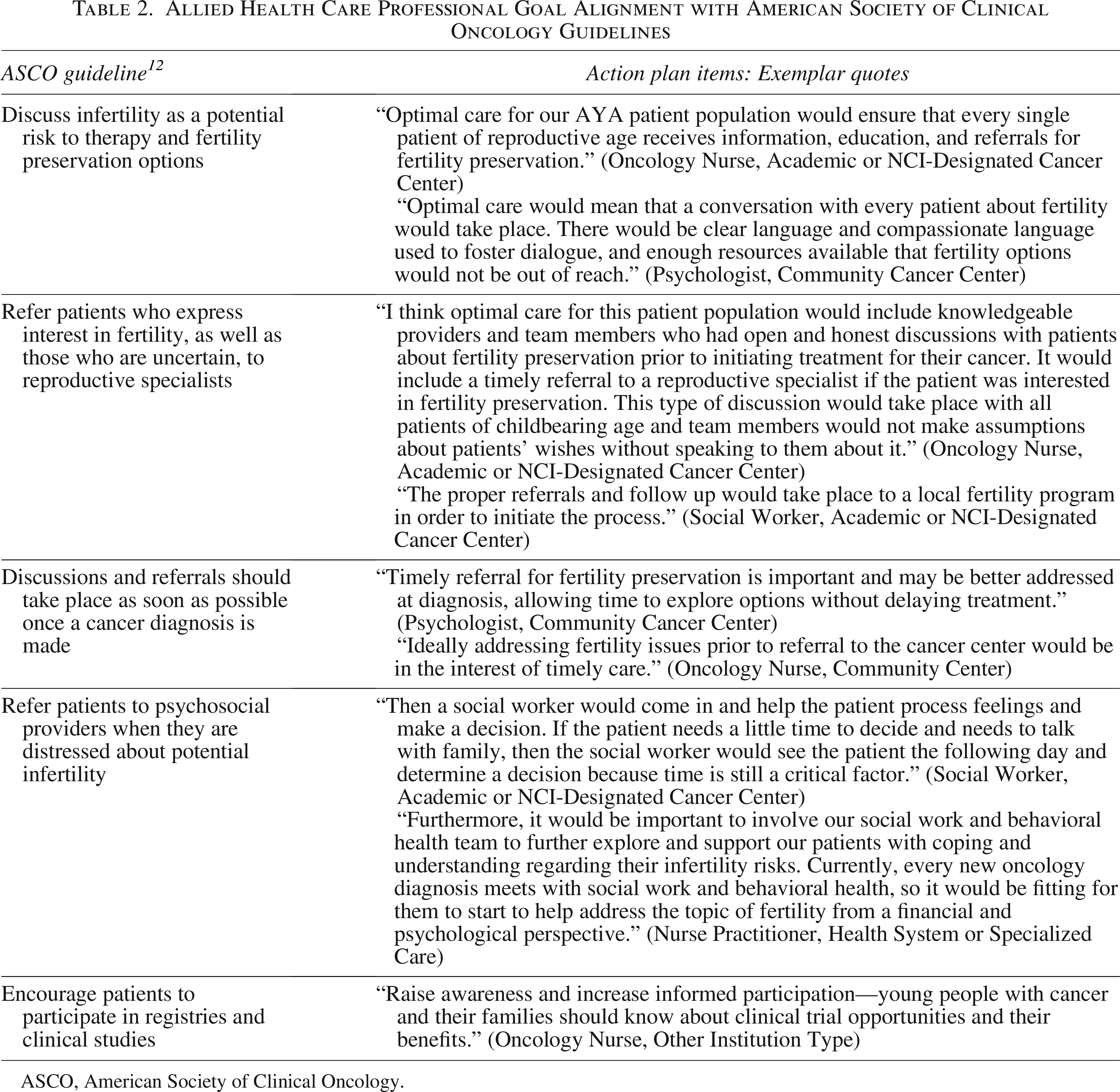
ASCO, American Society of Clinical Oncology.
Despite conceptual alignment with several elements of the ASCO guidelines, none of the participants incorporated all five guideline components into their action plans. As shown in Table 3, most action plans included two (N = 36) or three (N = 34) guideline elements, whereas 12 included four elements, 28 included one element, and 20 did not include any guideline-aligned elements.
Intersecting American Society of Clinical Oncology Guideline Elements Conceptually Reflected in Allied Health Care Professionals Action Plans (N = 130)
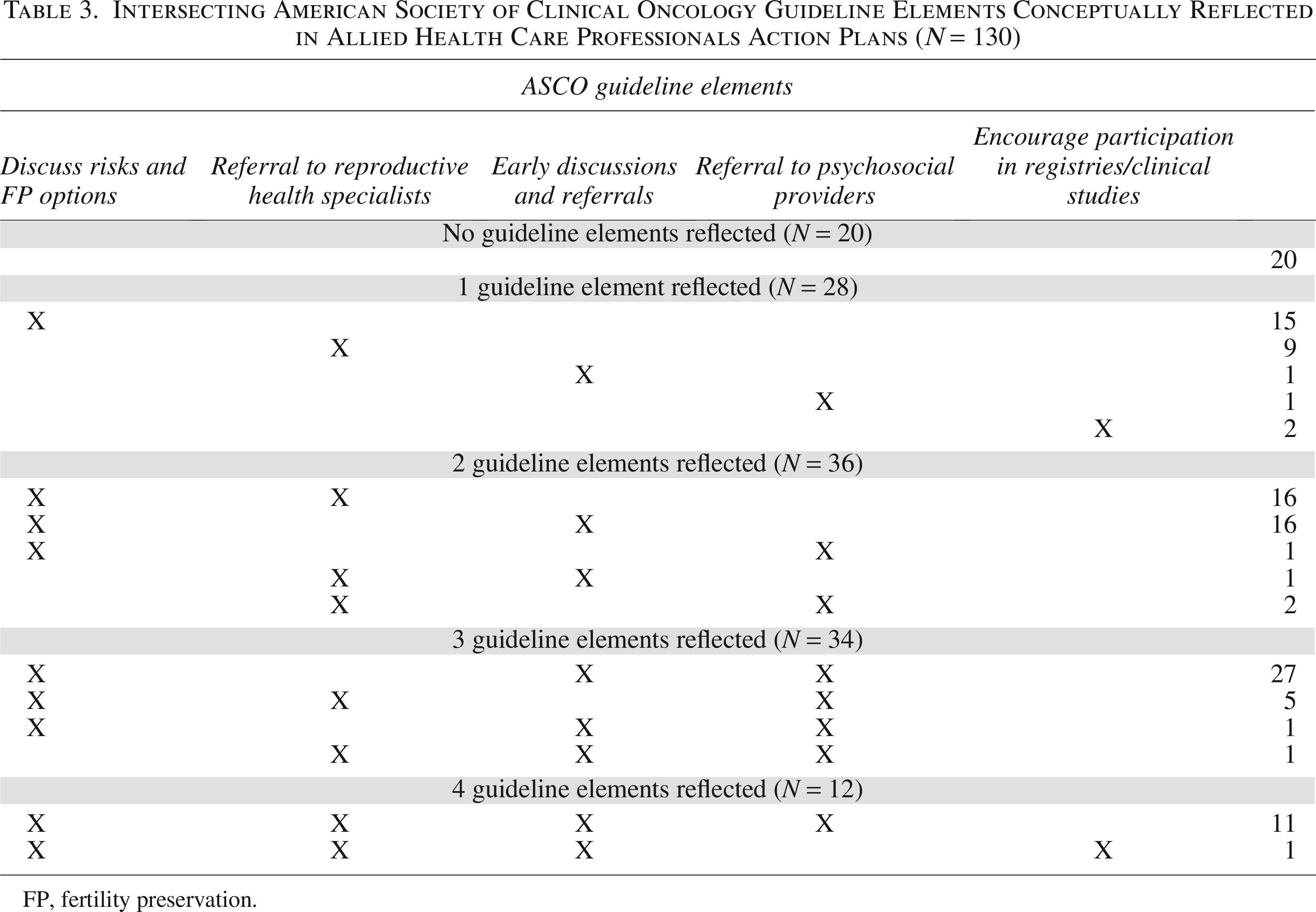
FP, fertility preservation.
Mechanisms to facilitate optimal FP care
Several key multilevel mechanisms to facilitate optimal FP care were identified (Table 4). At the patient level, education and resources (45.7%) emerged as a central strategy to enhance understanding and engagement, ensuring that patients are well informed about FP options. Additionally, patient advocacy and support groups were proposed by 10.9% as a mechanism to encourage engagement in FP discussions. Some participants (12.3%) identified strategies targeting patient psychosocial factors that may influence one’s ability to process information, with addressing patient distress as the most noted.
Proposed Mechanisms to Facilitate Optimal, Guideline-Concordant Fertility Preservation Care
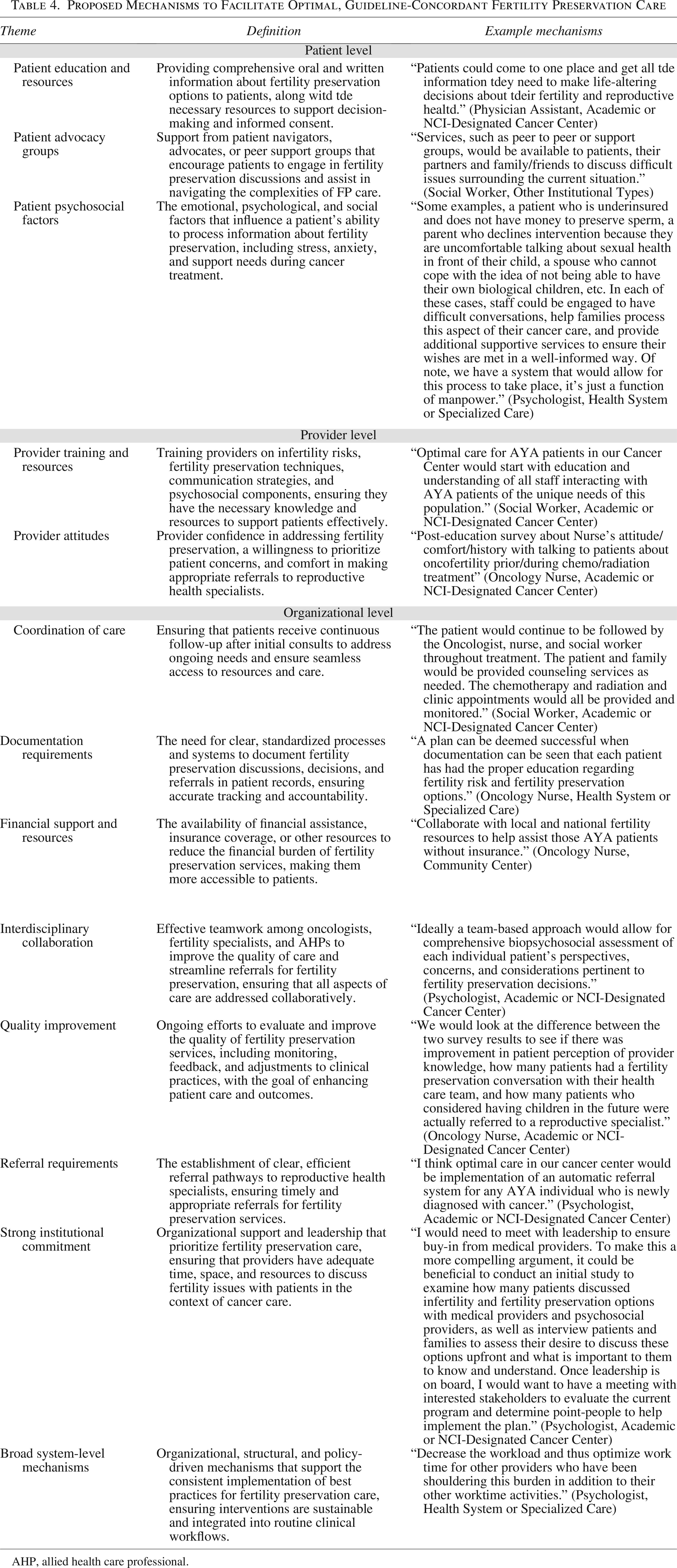
AHP, allied health care professional.
At the clinical level, 48.1% of participants identified clinician training and resources as a central strategy, emphasizing the need to educate oncology clinicians on fertility risks and referral options to overcome hesitancy and ensure timely information. One AHP highlighted, “Optimal care for AYA patients in our Cancer Center would start with education and understanding of all staff interacting with AYA patients of the unique needs of this population” (Social Worker). A smaller proportion of participants (4.6%) included targeted efforts to address clinician attitudes, aiming to increase clinician willingness and confidence in offering appropriate FP care.
A significant portion of the identified mechanisms at the organizational level, with 46.5% of participants emphasizing their importance. A critical mechanism highlighted by many AHPs was interdisciplinary collaboration. Many participants emphasized the value of team-based care, with one participant noting, “Ideally, a team-based approach would allow for comprehensive biopsychosocial assessment of each individual patient’s perspectives, concerns, and considerations pertinent to fertility preservation decisions” (Psychologist). Additionally, strong institutional commitment (33.3%) was recognized as a facilitator, describing how institutional buy-in could help drive the development and implementation of FP initiatives.
Other broad system-level mechanisms identified included financial support and resources (24.8%) critical for ensuring access to FP services, referral requirements such as establishing clear referral pathways, and fostering external collaborations and partnerships with reproductive health specialists (20.9%). Effective coordination of care (20.2%) emerged as a key mechanism, ensuring that follow-up and seamless access to resources are maintained. Many participants also highlighted the importance of quality improvement and tracking (26.4%) to continuously monitor and enhance the integration of FP discussions into routine care. Mechanisms such as EPIC alerts, dashboards for tracking referrals, and automated referral processes were considered essential for ensuring timely and efficient implementation. Additionally, standardized documentation requirements (20.2%) were highlighted, stressing the need for institutionalized processes to track FP discussions and referrals. Finally, several participants emphasized leveraging existing oncofertility program models and external partnerships rather than creating entirely new workflows.
Resource needs
AHPs identified several essential resources necessary to optimize proposed mechanisms for FP care, often with one-word responses. The most frequently cited need was time (43.5%), with many emphasizing the importance of allocating sufficient time for FP discussions, follow-up care, and the planning and implementation of action items. Clinician training resources (37.4%) were recognized as a critical need, with participants stressing the importance of enhancing clinicians’ knowledge and skills in delivering effective FP counseling. The need for additional personnel (34.8%) emerged as another key resource, with AHPs advocating for the inclusion of roles such as AYA coordinators, nurse navigators, social workers, and reproductive health specialists to ensure comprehensive care and adequate patient support.
Financial resources (29.8%) were also frequently cited as a key need, with participants emphasizing the importance of securing sufficient funding to support action items such as personnel salaries, electronic medical record (EMR) implementation, and patient assistance, ensuring the availability and sustainability of FP services within their institutions. A small number of participants also referenced the financial burden associated with long-term gamete storage, including for pediatric populations, noting limited funding mechanisms to support extended storage costs (e.g., maintaining cryopreserved gametes until adulthood).
The availability of patient educational resources (27%) was considered crucial, ensuring that patients are provided with the educational materials and resources to be well informed about their risks and FP options. Additionally, EMR improvements (26.1%) were noted, with AHPs emphasizing the need for better EMR systems (e.g., order forms, other functionalities) to more effectively track FP discussions and referrals. The need for adequate physical space (24.4%) was mentioned to ensure sufficient room for FP counseling, host patient advocacy groups, hold planning meetings, and in-person clinician training. Finally, data needs (20.9%) were highlighted as a critical resource for monitoring and evaluating FP care. AHPs suggested using needs assessment data to address care gaps and data from the literature to implement evidence-based practices, thereby enhancing the overall effectiveness of FP care.
Barriers
Although understanding current barriers to FP implementation was not the primary focus of the DBA, a third of participants noted challenges that hinder current optimal guideline-concordant FP care. Reported barriers spanned multiple levels, including patient and caregiver distress, clinician knowledge gaps, and the urgency of initiating cancer treatment, which limits opportunities for fertility discussions. Systemic challenges were commonly cited, such as institutional and logistical barriers, financial constraints, and limited resources or infrastructure. A few participants highlighted cultural barriers, including stigma and disparities related to gender and sexual orientation. Collectively, these findings highlight the multilevel obstacles that continue to impede equitable FP care.
Discussion
This study contributes to novel insights into the aspirations of AHPs and identifies key barriers and potential mechanisms that facilitate optimal FP implementation. Although previous research has largely emphasized oncologists’ role in FP care,7,24,32 results highlight the possible ways that AHPs can contribute to optimizing fertility-related decisions. By examining AHPs’ perspectives, findings highlight areas of aspirational alignment with ASCO guideline-concordant components and persistent gaps, reinforcing the need for a multidisciplinary approach to FP care. Results provide actionable recommendations for enhancing clinician education, institutional support, and systemic policies to improve FP access.
Although many health care clinicians recognize the importance of FP discussions and referrals to reproductive specialists, gaps remain in the scope of their planned and intended FP care efforts. Prior clinician-focused literature has documented persistent gaps in guideline-concordant referral practices and documentation, frequently citing time constraints, competing treatment priorities, and insufficient reproductive health training as barriers.13,16,17 Encouragingly, AHPs in our study articulated strong aspirational alignment with guideline-concordant FP care, particularly in planned discussions of fertility risks and referrals to reproductive specialists. This contrast suggests that AHPs’ professional orientation toward patient education, psychosocial support, and care coordination may position them as valuable partners in operationalizing guideline implementation within multidisciplinary oncology settings. Findings from this study highlight the potential to expand oncofertility education beyond oncologists to a broader range of clinicians.
Prior research has demonstrated that early FP discussions can improve patient access to fertility services and reduce decisional regret,17,22,33–38 making these high rates of planned action items a promising finding. However, results also indicate that psychosocial support referrals and engagement in FP-related clinical research were less frequently cited as planned priorities. Given the well-documented emotional burden of fertility loss among young cancer patients,39–41 this suggests that although AHPs acknowledge the importance of these elements, they may perceive barriers or lack clear strategies for implementation. Addressing gaps through targeted education, interdisciplinary collaboration, and system-level interventions could help translate these intended FP care goals into consistent, comprehensive clinical practice.
A unique contribution of this study is the focus on the multilevel mechanisms AHPs identify as crucial for facilitating optimal FP discussions and referrals. Many of our findings align with existing literature demonstrating that clinician training and institutional resources are key enablers of FP care.23,42 Notably, AHPs emphasized the importance of structured FP training programs, decision-support tools, and EMR integration, which are interventions that have been previously shown to improve FP counseling rates and documentation.22,24
Despite these facilitators, systemic barriers continue to hinder FP implementation, many of which have been well documented in the literature, including time constraints, clinician knowledge gaps, and financial burdens.16,43 This study also prompts discussions surrounding FP access by reinforcing the need for institutional mandates and financial support programs to address economic barriers. Prior research has established that the high cost of FP services remains a significant obstacle for many AYA patients with cancer, particularly those without insurance coverage.44,45 Our findings suggest that AHPs recognize the impact of these financial constraints but may lack the institutional resources to effectively support patients in overcoming them. Expanding financial assistance programs, advocating for insurance coverage mandates, and implementing standardized FP documentation policies within their institutions could help reduce disparities and ensure that all eligible patients receive fertility counseling and referrals. 42
This study is not without limitations. Data were collected during the early COVID-19 period in 2020, which may have influenced participants’ perceptions of institutional capacity, staffing, and access to FP services. Additionally, this study examined aspirational action plans rather than directly observed clinical behaviors. Therefore, alignment with ASCO guidelines reflects intended priorities and conceptual commitments rather than verified implementation in routine practice. The cross-sectional design limits the assessment of whether proposed plans were enacted or sustained over time. Finally, reliance on self-reported data may be subject to social desirability bias, as participants may have provided responses they believed were expected or more favorable. Future research should explore these dynamics longitudinally and in varied settings.
Since 2020, when these data were collected, oncofertility care has continued to evolve. Recent updates to the ASCO clinical practice guideline emphasize integration of FP discussions across the cancer care continuum, including survivorship care, and highlight the responsibility of providers to assess and address reproductive goals at any stage of treatment, including survivorship. 46 The updated recommendations also call for advocacy for comprehensive insurance coverage of FP services, including long-term storage, parity with other benefits, and elimination of prior authorization barriers, while supporting clinic-based infrastructure to help patients access these benefits. 46 In parallel, institutions have expanded telehealth integration47,48 and EMR-based referral prompts and documentation systems to facilitate implementation.3,48 Despite these advances, recent studies continue to document persistent geographic and socioeconomic disparities in access to fertility services, highlighting the need for sustained multilevel implementation efforts that equip AHPs with the training, institutional support, and workflow integration necessary to translate guideline recommendations into routine practice. 21
Conclusion
The aims of this study provide a unique perspective on the role of AHPs in FP care and identify key mechanisms for improvement at the patient, clinician, and organizational levels. By addressing knowledge gaps, enhancing system-level interventions, and implementing financial equity measures, institutions can move toward a more comprehensive and inclusive model of FP care for AYA patients with cancer. The findings of this study highlight the critical role AHPs can play in prioritizing FP discussions and referrals, while also emphasizing the challenges and resources needed to optimize FP care. Although many AHPs articulated alignment of their FP care priorities with ASCO guidelines, gaps in implementation persist, highlighting the need for targeted interventions to improve clinician training, institutional support, and interdisciplinary collaboration. Addressing identified systemic barriers is essential to ensuring equitable access to FP services. By building on established FP programs and best practices, institutions can strengthen their existing frameworks, ultimately delivering more comprehensive, evidence-based, and guideline-concordant FP care for AYAs.
Authors’ Contributions
S.P.D.: Conceptualized and designed the study, conducted data analysis, and led manuscript writing. G.P.Q. and S.T.V.: Led the parent ECHO study and contributed to study design, data acquisition, and critical revision of the manuscript. W.S.R., E.R.W., and M.B.: Contributed to study design, interpretation of findings, and critical revision. P.L.: Contributed to qualitative analysis and critical revision. B.A.: Contributed to data collection, data management, and manuscript revision. All authors reviewed and approved the final manuscript.
Footnotes
Author Disclosure Statement
No competing financial interests exist.
Funding Information
This project has been supported in part by the ECHO R25 Grant NIH/NCI R25CA142519; the T32 CA00946 (multiple principal investigators: Jennifer Hay/Jamie Ostroff) and P30 CA008748 (principal investigator: Selwyn Vickers) (Authors: SPD and MB).