



Abstract
This study was devoted to an examination of Canadian experiences being criminally profiled in retail stores. Using one's race or ethnicity as the primary method to identify potential shoplifters is referred to as consumer racial profiling (CRP). Relying on a national sample of Canadians, the research investigated four aspects of CRP. First, the research investigated the frequency of CRP experiences among the Canadian population. Second, the research studied the characteristics of CRP victimizations among Canadians. Third, the study also investigated whether the frequency of CRP victimization varied by race/ethnicity. Finally, the research explored whether CRP victims reported their encounter to an employee in authority following their victimization. The findings provide evidence that CRP is a national problem in Canada—with non-White racial/ethnic groups reporting the highest levels of victimization. In addition, despite their negative CRP experiences, very few victims decide to pursue remediation. The implications of the results along with future research directions are also discussed.
Shoplifting has typically garnered little scholarly interest among criminologists and scholars in other fields (Gabbidon & Higgins, 2020a; Shteir, 2011). Despite this lack of interest, the offense has been around for centuries and remains a concern for businesses across the globe (Abelson, 1989; Murphy, 1986; Segrave, 2001; Shteir, 2011; Whitlock, 2005). In more recent times, concerns have arisen regarding organized retail theft, which has contributed to monumental retail losses, increased violence, and, in the worst situations, the closure of some stores of major retail establishments (Fonrouge, 2023; Kubota, 2023; National Retail Security Survey, 2023). Mirroring the rest of the world, shoplifting in Canada has been on the rise. Data from Statistics Canada reveals that shoplifting rose 31% from 2021 to 2022 (Statistics Canada, 2023). This is a continuing trend, with The Retail Council of Canada reporting in 2023 that some retailers have experienced 300% increases in shoplifting since 2020, amounting to about 5 billion dollars (CND) in losses.
Racial profiling has been a central focus of discourse in the field of criminology/criminal justice for some time (del Carmen, 2009; Harris, 1999, 2002; Withrow, 2006). This focus has largely centered on traffic-stops (Baumgartner et al., 2018; Warren & Tomaskovic-Devey, 2009), street-stops (Peterson et al., 2023) and airport screenings (Carr et al., 2020). Within this line of research, there has been a sliver of interest and research devoted to understanding the reliance on racial profiling tactics in retail establishments to identify potential shoplifters. The practice, referred to as consumer racial profiling (CRP), has emerged as a new thread of profiling research in the United States (Bennett et al., 2015; Dunlap, 2021; Gabbidon, 2003; Gabbidon & Higgins, 2020a; Henderson et al., 2016; Massey et al., 2022; Pittman, 2020).
Despite the emerging research devoted to CRP in the United States, other countries have been slow to explore the extent and nature of racial profiling occurring in their retail businesses. Considering that retailers suffer billions of dollars in losses each year due to shoplifting (Retail Security Survey, 2023), the measures the industry adopts to limit their losses represent a neglected area of research. Moreover, if racial profiling has been found to occur in policing encounters in Canada, and its existence has been confirmed by Canadian courts (Cecco, 2024; Tator & Henry, 2006; Wortley & Owusu-Bempah, 2022; Wortley & Tanner, 2003), it stands to reason that similar practices might also be used in retail settings to prevent theft. Given the expanding body of CRP scholarship in the United States, this research extended this new focus to Canada. Specifically, the paper presents the results of a nationwide victimization study that investigated the perceived nature and extent of CRP victimization among Canadians.
Literature Review
Over the past 20-years, the literature on CRP has become more diverse. Initially, scholars seeking to study the topic had to turn to litigation to determine the nature of the incidents. This wave of scholarship was followed by several public opinion studies that investigated the level of support for the use of racial/ethnic profiling in retail settings. More recently, there have been victimization surveys conducted to learn more about CRP incidents. Finally, in limited instances, studies have incorporated experimental approaches to investigate the topic. We review some of this literature below.
CRP Litigation Studies
Early researchers of CRP had great difficulty securing information on the topic. One avenue that provided a window into the nature of the incidents was to review litigation in which retailers were sued by plaintiffs who alleged they had been profiled by retail employees. One of the early articles in this area reviewed 29 state and federal cases (Gabbidon, 2003). The cases largely involved Black and Latino litigants who alleged that either sales associates or security personnel had profiled them. This profiling often took the form of excessively monitoring the plaintiffs or being subjected to situations in which they were required to provide extra identification for purchases. The litigants were seeking monetary compensation for their alleged discriminatory treatment. The results showed that more than 50% of the litigants lost their cases (Gabbidon, 2003). Subsequent articles based on analyses of litigation revealed similar findings (Harris, 2003; Harris et al., 2005; Williams et al., 2006). In more recent years, scholars have discussed the avenues that litigants have pursued their claims and noted that, in some cases, the law makes it extremely difficult to secure victories (Gabbidon & Higgins, 2020a; Thomas, 2021).
Public Opinion and Victimization Surveys on CRP
During the early 2000s racial profiling and criminal injustices were hot topics for public opinion researchers (Brunson & Weitzer, 2009; Peffley & Hurwitz, 2010; Reitzel & Piquero, 2006; Reitzel et al., 2004; Rice et al., 2005; Unnever, 2014; Weitzer & Tuch, 2002, 2005, 2006). National polling organizations such as Gallup frequently included questions on the topic. The 2004 Gallup Minority Rights and Relations/Black and Social Audit poll provided questions on racial profiling in the more traditional research areas including questions about traffic stops and airport setting, which followed the 2001 terrorist attacks (Carlson, 2004). Unique in its breadth on the topic of racial profiling, the poll also included questions devoted to perceptions on the use of profiling in retail settings. Researchers analyzing the poll found that few respondents supported the use of racial profiling in retail settings; moreover, Black respondents were less supportive than White and Hispanic respondents (Jordan et al., 2009). Later studies focused on understanding public opinion on the topic and revealed that one's philosophy on the ethical nature of using profiling impacted whether one supported the practice (Higgins & Gabbidon, 2012). Thus, if a respondent felt racial profiling was unethical, they were less likely to support its use.
Other themes that have been tied to the opposition of the use of CRP include the belief that there is a certain universality of thieving across race/ethnicity that does not align with profiling, profiling is ineffective, profiling is perceived as being unconstitutional, profiling is based on stereotypes, and profiling is ineffective (Gabbidon & Higgins, 2020a; Gabbidon & Laws, 2016). On the other side, if respondents believed that the practice was effective, they were more likely to support the use of profiling to target potential shoplifters (Gabbidon & Higgins, 2011; Gabbidon & Laws, 2016; Higgins & Gabbidon, 2012). Supporters of CRP believe that the practice is effective and consider it a strong preventative measure (Gabbidon & Higgins, 2020a). Additional reasons provided for supporting the practice included that retailers are simply following the shoplifting statistics when deciding who to target for suspicion and that the respondent's personal experience revealed that profiling was justified (Gabbidon & Higgins, 2020a; Gabbidon & Laws, 2016).
Public opinion research represents a useful starting point for uncovering citizens’ views on a topic (Oberschall, 2008). However, victimization surveys typically provide more detailed nuances on a topic by exploring the nature and scope of one's experiences with various phenomena. This holds true for CRP as well. Gabbidon and Higgins (2007) conducted the first CRP victimization survey. Conducted in 2006, the researchers aimed to determine the nature and scope of racial profiling among a sample of 500 Philadelphia area residents. The study found that Black people were nearly 10 times more likely than White people to report experiencing profiling in retail settings. The research also revealed that males were more likely than females to report experiencing CRP and income does not shield one from experiencing CRP (Gabbidon & Higgins, 2007; for related earlier findings, see Crockett et al., 2003; Feagin, 1991; Lee, 2000). The initial study and a replication involving students at several historically Black colleges also found that those respondents who reported experiencing CRP experienced negative emotions (Gabbidon et al., 2008; Higgins & Gabbidon, 2009). Additional findings showed that the two variables that consistently predicted whether respondents reported their experiences to someone at the establishment where the profiling occurred included experiencing negative emotions and White employees being the ones conducting the profiling (Gabbidon et al., 2008; Gabbidon & Higgins, 2020b).
Experimental Studies on CRP
There have been limited experimental studies on CRP. Nonetheless, the few that have been conducted have provided some meaningful results. Asquith and Bristow (2000) conducted a one-group pretest posttest study to determine whether exposure to educational material would reduce stereotypical perceptions about shoplifters. Even after the exposure of accurate data on the racial/ethnic profile of shoplifters, the students involved in the study still maintained their biased perceptions (Asquith & Bristow, 2000). Dabney et al. (2004) relied on experimental methods to identify the characteristics of shoplifters in a drug store located in Atlanta. The researchers conducted random observations of shoppers to determine whether one racial/ethnic group shoplifted more than another. Their research found that “Blacks and Hispanic shoppers are no more likely than Whites to commit theft” (Dabney et al. 2004, p. 214). Ironically, at some point, the researchers found that their trained observers also engaged in unconscious bias (Dabney et al., 2006).
Another important experimental study devoted to CRP involved the observation of 33 White salesclerks and their treatment of Black and White customers who were part of the experiment (Schreer et al., 2009). The research found that store sales associates were more suspicious of the Black customers and monitored them more than the White testers. Moreover, Black males were more scrutinized than any other racial/gender category (Schreer et al., 2009).
Building on the growing research in this area, companies have reached out to scholars and prominent figures to assist them with better understanding the nature of their CRP problem (Covington Report, 2019; Gabbidon & Mitchell, 2015a, 2015b; Pittman-Claytor et al., 2021). The resulting research and reports have continued to find concerning levels of perceived discrimination among retail shoppers. In fact, a recent study commissioned by the retailer Sephora found that “3 in 5 retail shoppers have experienced discriminatory treatment, 2 in 5 retail shoppers have personally experienced unfair treatment on the basis of their skin color, and 3 in 5 retail employees have witnessed bias at their workplace” (Pittman-Claytor et al., 2021). Given the continuing nature of this problem in the United States, we decided to investigate the nature and scope of this issue in Canada.
The Canadian Context
Canada is a country of close to 37 million people (Statistics Canada, 2023). With more than 25% of the country's population being classified in racial/ethnic categories other than White (9.6 million residents)—like the United States—Canada is a melting pot (Statistics Canada, 2023). South Asians (7.1%) and Chinese (4.7%) Canadians represent nearly 12% of the population. In addition, those of Indigenous ancestry represent 4.97% and Black people represent 4.3% of the Canadian population (Statistics Canada, 2023). Unfortunately, also like the United States, Canada has been susceptible to racial/ethnic divisions. As briefly mentioned earlier, there have been continuing concerns about racial/ethnic profiling related to encounters with the police and throughout the Canadian justice system (Banerjee, 2024; Department of Justice, 2022; Owusu-Bempah & Gabbidon, 2021; Wortley & Owusu-Bempah, 2022). Carding or the stopping, questioning, and documenting of individuals—without evidence of wrongdoing—has been an ongoing topic of discussion in Canada (Amnesty International, 2020; Tobias & Joseph, 2020). While there has been robust discussion about racism in the Canadian criminal justice system, very little has been produced regarding CRP.
It is noteworthy that the Nova Scotia Human Rights Commission produced a report on CRP in 2013 (“A report on consumer racial profiling,” 2013). The report claimed to be the first of its kind in Canada. Building on the research in the United States, the researchers investigated the following questions from a sample of nearly 1200 respondents: Does consumer racial profiling exist in Nova Scotia? Who is being racially profiled as a consumer in Nova Scotia? What is the frequency of consumer racial profiling experiences in Nova Scotia? and, What is the prevalence of consumer racial profiling experiences in Nova Scotia? (p. 31). When asked about whether they had been followed around a retail store by staff or security personnel 73% of Aboriginals, 62.7% of African Canadians, and 61.5% of Latin Americans said this happened to them. In comparison, only 23.6% of White, 32% of Middle Eastern, and 31% of Asian respondents reported this occurring. Moreover, racial/ethnic groups other than Whites experienced this more frequently than others (“A report on consumer racial profiling,” 2013, pp. 44–45). The results also showed that white people were also the least likely to have been searched or removed from a store. When asked about wrongful detainment, only 1% of the sample responded yes—but 3.3% of African Canadians and 2.1% of Asians had experienced this (p. 51). Although more than a decade old, these results provide some baseline information on CRP in Canada.
Since the publication of the pioneering Nova Scotia report, there have only been media stories on “shopping while Black” in Canada. These media accounts sound remarkably familiar to the findings in the Nova Scotia report and the growing CRP scholarship in the United States (Bundale, 2018; Cameron, 2018; Gabbidon & Higgins, 2020a; Komadina, 2017; The Canadian Press, 2015).
Theoretical Framework
Scholars have turned to a variety of theories to contextualize the practice of racial profiling (Engel et al., 2002; Gabbidon, 2003, 2020). Considering that racial/ethnic minorities in general—and Black people in particular—historically have been demonized as evil and criminal (Lamelle, 1995; Muhammad, 2010; Rome, 2004), it is easy for retail employees to rely on stereotypes to determine which groups are targeted for observation. The power of stereotypes to racialize or connect certain crimes to certain racial/ethnic groups originated with the slave-era “Black Thief Stereotype” (Gabbidon & Higgins, 2020a, pp. 19–20), which extended to other racial/ethnic groups through the historical criminalization of ethnic immigrants that continues today (Das, 2020).
The racialization of criminality has been discussed at length by scholars who have discussed the “criminalblackman,” “symbolic assailant,” or “Folk Devil” stereotypes (Hall et al., 1978; Jones-Brown, 2007; Owusu-Bempah, 2017; Russell, 1998, 1999; Russell-Brown, 2006; Young, 2006). These authors have largely discussed the ruinousness of stereotyping Black men in society that is often exacerbated by media coverage that contributes to “moral panics,” while other authors have expanded this view to the criminal stereotyping of other groups (Mann et al., 1998). While this article is not a test of a particular theory, the role of stereotyping or racialization provides powerful context for understanding why some groups become the target of criminal suspicion in retail settings (Covington, 1995, 2010).
Current Study
This study replicated the victimization survey conducted by Gabbidon and Higgins (2007). The replication moved past the Nova Scotia report in that it was a nationwide study that provided a picture of CRP more encompassing than the million people that live in the area. Specifically, this article examined four research questions. First, the study investigated what is the frequency of CRP among the Canadian population? Second, what are the characteristics of CRP victimizations in Canada? Third, does the frequency of experiencing CRP in Canada vary by race/ethnicity? Finally, for those persons who report experiencing CRP, what factors are involved in whether they decide to take action to remedy the situation by reporting the incident to someone from the offending retailer? The methods are outlined in the next section.
Method
Sample Procedures
The data collection was conducted by RIWI, which is a third-party research center based in Toronto that conducts studies across the globe. Sample recruitment by RIWI was reliant on the following two approaches: Random Device Engagement (RDE) and RIWI communities. RDE is a web-intercept recruitment method that engages users across apps, websites and pop-ups. RDE leverages spaces where ads typically appear, offering incentives like coupons or in-app currency to encourage participation. Participants are notified about incentives and their privacy is maintained with hashed IP addresses and separate storage of IP and email addresses. Surveys last up to 15 min. RIWI Communities is a sample ecosystem that is comprised of several panels, augmented by carefully selected and vetted supplemental permission-based sample sources. These source partners include market research agencies, media owners, publishers (digital and traditional), nonprofits, and companies with access to large-scale web traffic.
While we provide the percentage of each racial/ethnic group that both experienced and didn’t experience CRP, our study focused on the 422 Canadians who experienced CRP. It is common in research to study particular subgroups as a way to understand behaviors and perceptions of that group, whether it is examining only sentenced defendants (e.g., Koo et al., 2022; Lehmann & Gomez, 2021), only one racial/ethnic group (e.g., Gaston & Doherty, 2018; Glynn, 2013; Potter, 2006), female defendants (e.g., Chesney-Lind & Pasko, 2013), etc. The current study follows in this established approach in research. The final sample included completed surveys with the following racial/ethnic groups: Black, White, Asian, Indigenous, Latino, and respondents from other racial/ethnic groups, which was largely comprised of Middle Eastern people. Nonwhite racial/ethnic groups were oversampled to ensure a large enough sample size in each category to draw meaningful statistical conclusions. The data collection took place from May 2, 2024, to May 21, 2024.
Survey Instrument
The survey instrument used in the study was based largely on the one used in the Gabbidon and Higgins CRP Victimization Survey (for details, see Gabbidon and Higgins, 2007, 2020a). The survey is comprised of 40 questions that focus on several substantive areas. The first substantive area asks about CRP victimization. The respondent is first provided with the following prompt: “The following questions ask you about Consumer Racial Profiling, which we refer to as CRP. CRP is defined as the act of discriminating against customers, by retailers, based on their race. This study is specifically concerned with CRP as it relates to your experience as a shopper being racially profiled by retail clerks, managers, and security personnel. All races and ethnicities can experience this type of discrimination. Based on this definition of Consumer Racial Profiling (CRP), do you believe that you have ever been subjected to this practice?” The prompt made explicitly clear that the study was devoted to CRP as it relates to the suspicion of theft since there are numerous other studies that examine the related area of the lack of service provided to racial/ethnic minorities in businesses—especially restaurants (see Brewster, 2012a, 2012b; Brewster & Rusche, 2012, 2017).
If the respondents stated that they experienced CRP, they completed the entire survey. Those respondents stating they had not experienced CRP, were simply asked to complete some demographic information and dropped from the study. Those who completed the entire survey were asked about the frequency that they experienced CRP, the nature of the experience (e.g., were they watched, followed in store, repeatedly approached, asked to leave, accused of theft, etc.), the type of retail establishments where it occurred, what they did when they experienced it, how the incident made them feel, and their suggestions for reducing CRP. We also asked respondents some key demographic information including age, gender, language (English or French), race (we relied on the Statistics Canada census categories), income, and educational level.
Variables
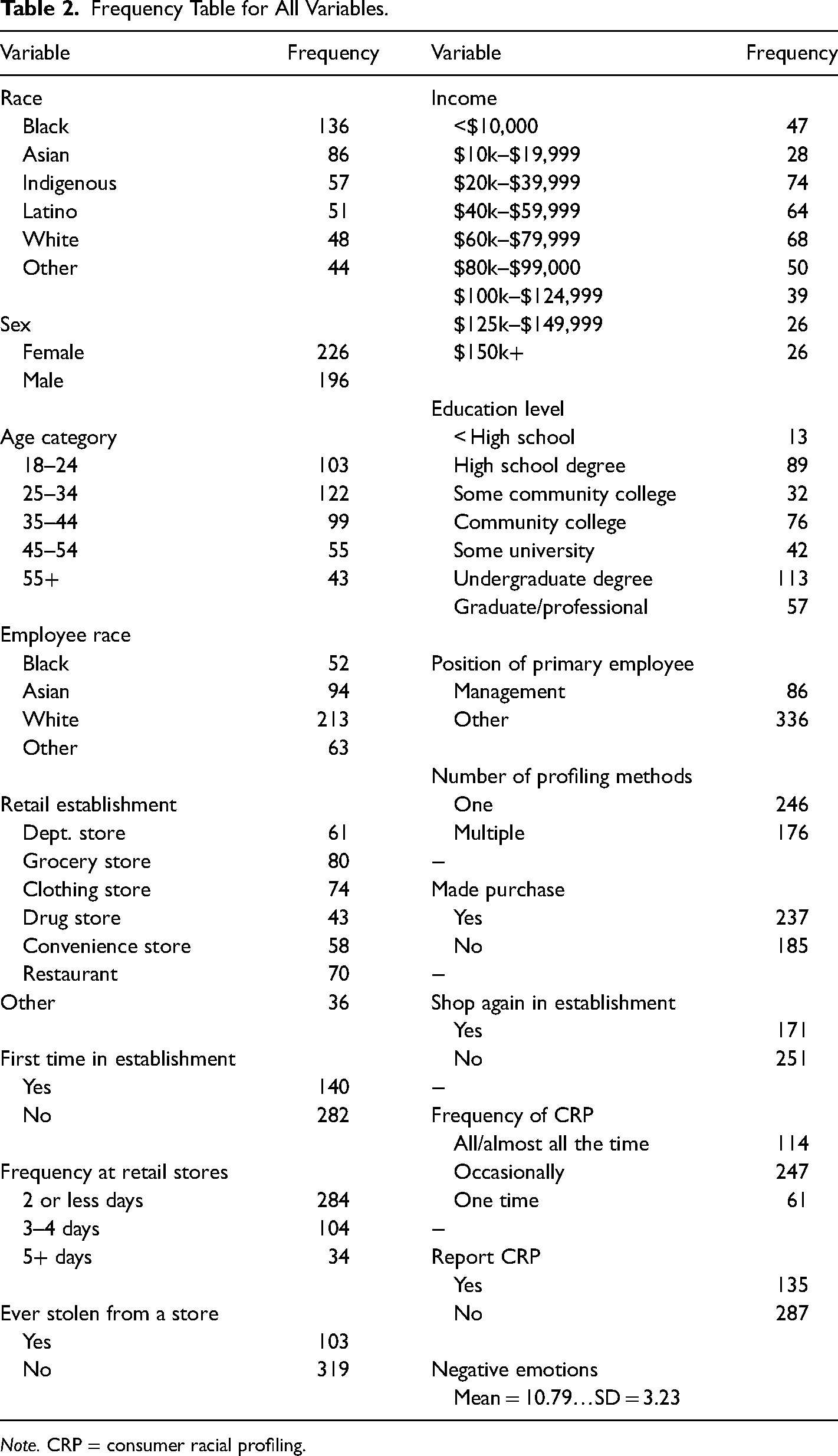
Table 2 presents the descriptive statistics for all the variables used in the analyses. As shown, there are two dependent variables in this study: frequency of consumer racial profiling and reporting of consumer racial profiling at the establishment. Frequency of consumer racial profiling was measured as an ordinal level measure with three categories: All or almost all the time, occasionally, and one time. A sizeable majority of the respondents reported experiencing CRP occasionally (59%), followed by all/almost all the time, and then one time. The second dependent variable, reporting of CRP, was measured in a binary manner: yes or no. Approximately 68% (287 of 422) of the respondents indicated they did not report the CRP incident.
The central independent variable in the current study is race/ethnicity. Most respondents identified as Black (n = 136) with the smallest number of respondents identifying as “other.” Other categories of race and ethnicity included Asian, Indigenous, Latino, and White. We also accounted for gender and age categories in the analyses, with most respondents identifying as women between ages 25 and 34. Another variable we controlled for in the analyses was the perceived race of the employee identified as the profiler, which was measured as Black, Asian, White, and Other. 1 Additional variables we included were the type of retail establishment (e.g., department store, grocery store, etc.), whether it was their first time in the establishment, the frequency at which they visit retail stores, whether they had ever shoplifted, the position of the employee who did the profiling (e.g., sales associate, security personnel, owner, management, etc.), 2 number of profiling methods utilized, whether they made a purchase, and if they have shopped in the establishment since the profiling incident. These variables have been found to be of significance in similar studies (Gabbidon & Higgins, 2020a; Gabbidon et al., 2008). We also controlled for negative emotions felt during the event. Replicating the approach developed by Higgins and Gabbidon (2009), negative emotions were constructed as a weighted variable, after a factor analysis, from seven individual items asking respondents how they felt from the consumer racial profiling: stressful, angry, shocked, sad, embarrassed, self-worth impacted, and negative impact.
The final two control variables we accounted for were income and education. Income was measured on a nine-item ordinal scale from less than $10k to $150k or more. Education was also measured on a seven-item ordinal scale from less than high school to graduate/professional degree. While the individual categories are presented here so the reader can see the distribution of categories, given the number of categories for each scale, they were treated as continuous for the analyses (Robitzsch, 2020).
Analysis
Although the first dependent variable, frequency of CRP, is an ordinal level measure, using ordinal regression violated the parallel lines/proportional odds assumption. Therefore, multinomial logistic regression was the appropriate method of estimation (Menard, 2002). The second dependent variable, the reporting of CRP, was measured as a binary variable, indicating that binary logistic regression was the appropriate analysis. When using any logistic regression, the unstandardized coefficients indicate the log odds of the outcome occurring (Menard, 2002). Additionally, for multinomial logistic regression, the estimates will be different depending on which category of the outcome is used for reference. Therefore, to ease the interpretation of the results, predicted probabilities were calculated using the margins command in Stata. All control variables were held at their means, allowing us to show the predicted probability of each racial/ethnic group to experience and report CRP.
Results
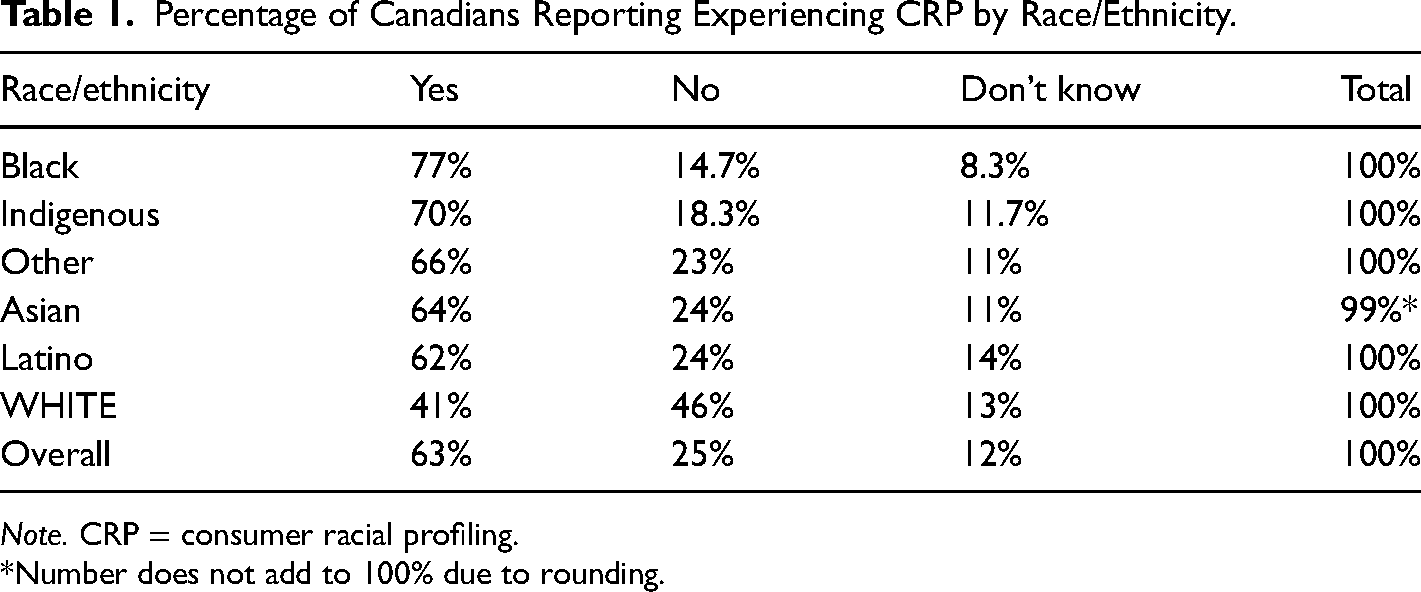
Table 1 shows that, overall, slightly more than 60% of the sample reported experiencing CRP. Of these, Blacks and Indigenous Canadians reported having the highest levels of CRP. Table 2 provides multiple characteristics of those who experienced CRP victimization. The respondents largely experienced CRP in grocery stores, restaurants, and clothing and department stores. White and Asian employees were the ones most often identified as the profiler. Most of the employees involved in the CRP encounter were largely sales associates, security personnel, and management. Respondents stated that most CRP encounters involved one store employee and a single method of profiling such as being excessively monitored or repeatedly approached.
Percentage of Canadians Reporting Experiencing CRP by Race/Ethnicity.
Note. CRP = consumer racial profiling.
*Number does not add to 100% due to rounding.
Frequency Table for All Variables.
Note. CRP = consumer racial profiling.
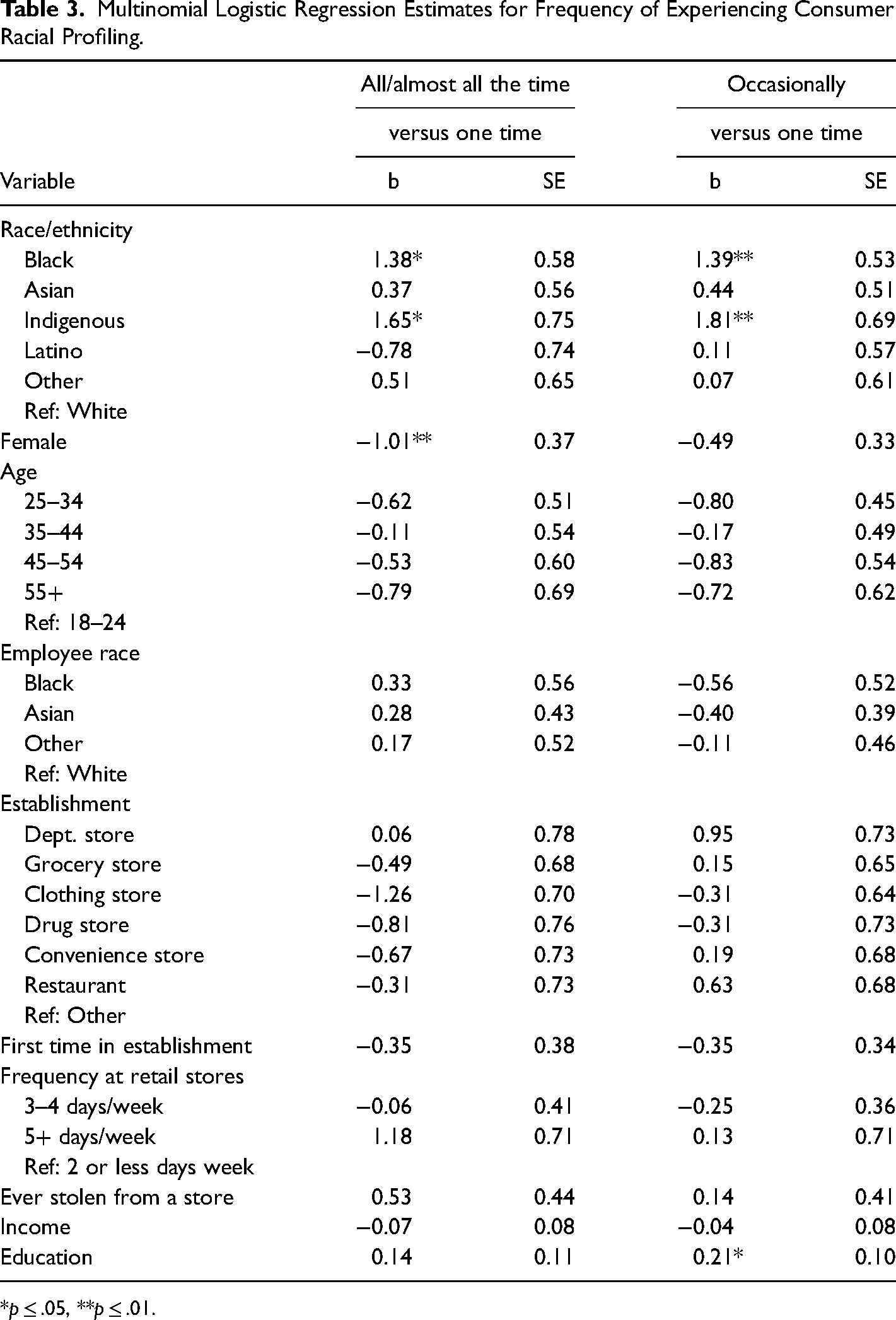
Table 3 presents the multinomial logistic regression estimates examining the impact of race/ethnicity on the frequency of experiencing CRP. In comparison to White respondents, Black respondents were more likely to experience CRP all/almost all the time and occasionally than just one time. In comparison to White respondents, Indigenous respondents were more likely to experience CRP all/almost all the time and occasionally than just one time. As mentioned above, to allow for practical interpretation of the results, we used the margins command in Stata to calculate predicted probabilities for each racial/ethnic group to experience the various frequencies of CRP. As indicated in Table 4, for experiencing CRP all/almost all the time, the “other” racial/ethnic group was more likely than all other groups to experience at that level with a .34 probability. Black respondents had a .30 probability of experiencing CRP all/almost all the time, followed by Indigenous (.28 probability), Asian (.26), and then White (.25 probability). Latinos were the least likely to experience CRP all/almost all the time.
Multinomial Logistic Regression Estimates for Frequency of Experiencing Consumer Racial Profiling.
*p ≤ .05, **p ≤ .01.
Predicted Probability for Frequency of Experiencing Consumer Racial Profiling by Race.
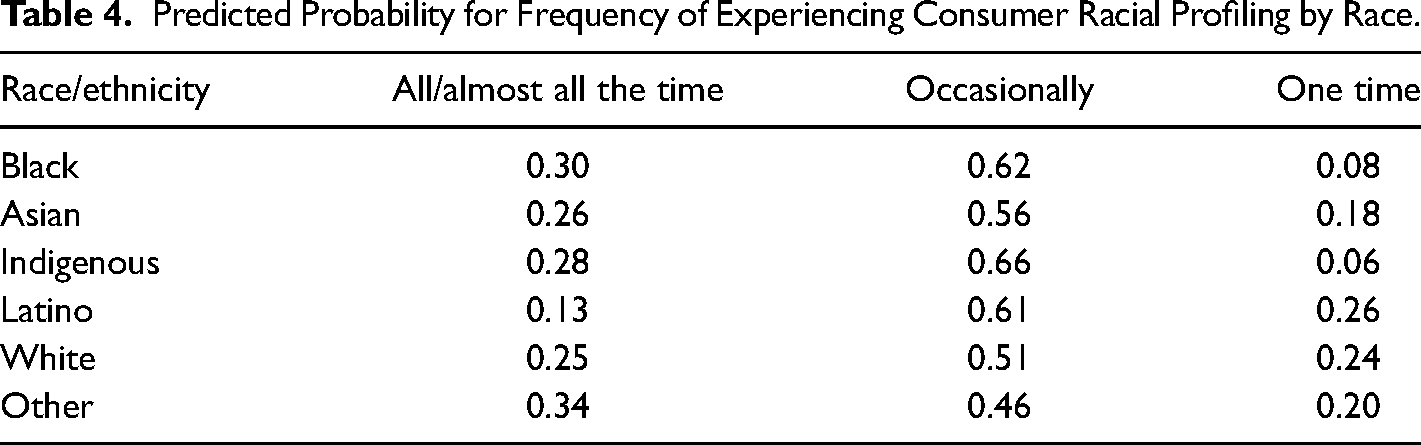
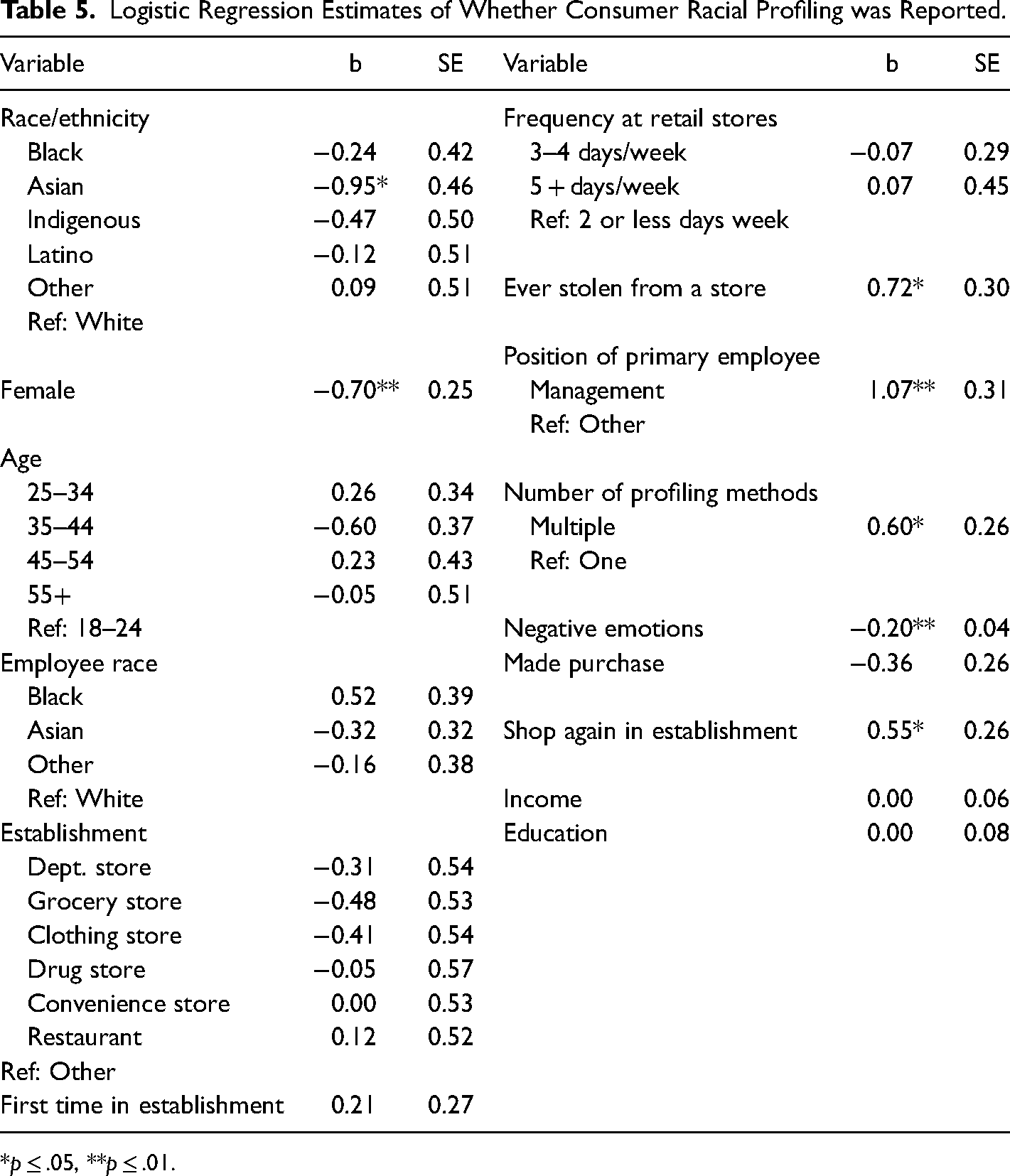
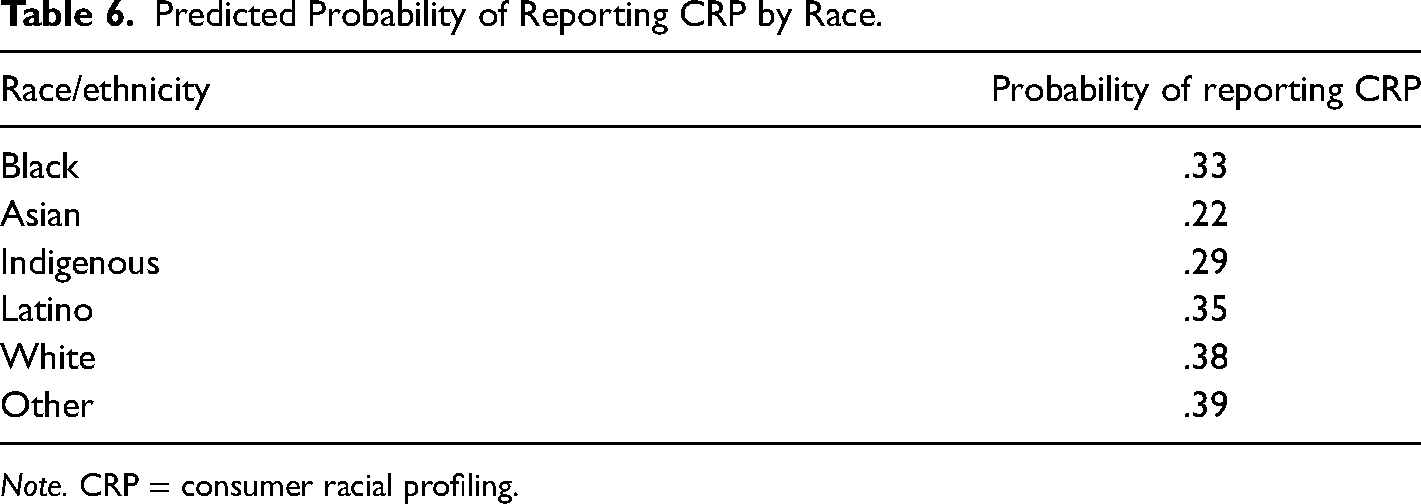
Table 5 presents the binary logistic regression estimates for examining the impact of race/ethnicity on the reporting of CRP while at the retail establishment. The results indicate that Asian respondents were less likely than White respondents to report the incident. No other race/ethnic group had significant results when compared to White respondents. This suggests that Asian respondents had the lowest likelihood of reporting their experiences. The predicted probabilities in Table 6 support this assertion. After holding all control variables constant at their means, Asian respondents had a .22 probability of reporting their experiences of consumer racial profiling, which is the lowest of all racial/ethnic groups. The racial/ethnic group that had the highest probability of reporting CRP was “other,” followed by White and then Latino respondents. The groups with the lowest probability of reporting CRP were Asians (the lowest probability), Indigenous persons, and Black respondents.
Logistic Regression Estimates of Whether Consumer Racial Profiling was Reported.
*p ≤ .05, **p ≤ .01.
Predicted Probability of Reporting CRP by Race.
Note. CRP = consumer racial profiling.
Other predictors of increased reporting included having previously shoplifted, having a CRP encounter involving more than one profiling approach, experiencing a CRP incident that involved someone in management, and returning to the store to shop following the incident. Predictors that lowered the likelihood of reporting the incident included being female and experiencing negative emotions.
Discussion
This research was devoted to understanding CRP in Canada. Specifically, the research investigated the following four research questions. First, the study investigated the level of CRP among the Canadian population. Approximately 60% of the respondents reported experiencing CRP. This figure was higher than the 43% reported in a similar study conducted nearly two decades ago in Philadelphia (Gabbidon & Higgins, 2020a). In addition, Blacks and Indigenous respondents reported the highest levels of experiencing CRP. The findings related to Blacks align with previous research in which they were nearly ten times more likely than Whites to report experiencing CRP (Gabbidon & Higgins, 2007, 2020a). Given the continuing concerns related to the treatment of the Indigenous population in Canada, and the findings from the previously reviewed Nova Scotia CRP study (“A report on consumer racial profiling,” 2013), our results were not surprising.
Second, the research focused of identifying the characteristics of CRP encounters in Canada. The character of the CRP incidents shows that CRP victims face considerable scrutiny—largely by White and Asian employees—in a variety of retail businesses. Some of these results align with the pioneering Nova Scotia research. This research provides preliminary evidence that the CRP problem identified in both the Nova Scotia report and the recent media reports is prevalent across Canada. Despite nearly three-quarters of the sample stating that they only experienced CRP “occasionally” or “one time,” close to 30% said they experienced it either “almost all the time” or “all the time.” These numbers reveal the daily suspicion that a sizeable number of Canadians believe they encounter when they enter retail stores.
The third research question focused on whether there were racial/ethnic disparities among CRP victims. This investigation revealed that Other (largely Middle Eastern respondents) Black, Indigenous, and Asian customers had the highest significant probabilities of experiencing CRP. Of the remaining Canadian racial/ethnic groups included in the study, White and Latino customers had the lowest probability of being regularly profiled in Canadian stores. These findings align with the Canadian traffic and street stop-related research that has consistently shown that Black, Indigenous, and Asian people—perceive that they are treated worse than White people during encounters with the police (David & Mitchell, 2021; Wortley & Owusu-Bempah, 2022). It is also noteworthy that females were less likely to be frequently profiled than males. Given that men commit most of the crime in Canada (approximately 75%)—and are the ones frequently profiled—regardless of the setting—this finding was not unexpected. In general, as a product of the nature of the past and existing discriminatory treatment in other aspects of Canadian life (Anderson & Robinson, 2024; Wallis et al., 2009), the findings related to racial/ethnic minorities were unsurprising. Ironically, while there remains a limited amount of CRP research in Canada, the robust research related to police stops in the country provides additional support for the respondents’ perceptions uncovered in the current research.
The final research question focused on what factors influenced whether victims of CRP decided to take some proactive action following this incident. Only about one-third of the victims of CRP took some action following the incident. This is more than percentage points higher than the 18% to 20% of CRP victims that reported the incident in similar studies conducted in the United States (see Gabbidon & Higgins, 2020a, 2020b; Gabbidon et al., 2008). Even with the larger figure, it remains intriguing that customers who are treated like criminals do nothing most of the time they encounter this discriminatory treatment. Again, if we lean on the policing literature, most citizens simply want to move on with their lives and prefer not to become entangled with the often-arduous procedures involved in reporting misconduct. Corporations are not unlike police departments in that they prefer to avoid any perception of misconduct. Hence, limiting the recording of such misconduct is one way to accomplish this. Thus, only the most egregious behavior is reported to officials of the company where the discriminatory CRP treatment occurred.
The multivariate analyses tied to understanding the factors that influence reporting incidents of CRP provided some interesting results that contrasted those from previous studies. The diversity of the sample allowed for comparisons not found in previous studies that were limited to Black/White comparisons. In this study, after controlling for a host of factors, Asian respondents were found to have the lowest likelihood of reporting CRP. Coincidentally, nonreporting among Asian people has recently become of interest in the United States and Canada due to concerns related to the spike in anti-Asian hate crimes during the COVID-19 pandemic (Lantz & Wenger, 2022; Wang & Moreau, 2022). Traditionally, Asian people have preferred to stay out of formal systems, which might be tied to their historical mistreatment and segregation into Chinatowns across Canada. Reporting CRP incidents to retailers is apparently no different. In addition, the finding that Whites were among the most likely respondents to report CRP was intriguing. It has been suggested that since they are among the racial/ethnic groups least likely to report experiencing CRP—as majority group members—their outrage might compel them to report the CRP experience (Gabbidon & Higgins, 2008). Furthermore, it is also possible that Whites may also believe that as—majority group members—their privileged status will result in some corrective action.
Other interesting predictors that reduced the likelihood of reporting CRP included: being a female CRP victim and experiencing negative emotions. Reduced reporting by women could be tied to their sense that they will be ignored, which has been the case with other types of female justice-related victimizations. It was surprising to find that experiencing negative emotions reduced reporting. This is counter to previous CRP scholarship in which experiencing negative emotions heightened the likelihood that the victim would report the incident (Gabbidon & Higgins, 2020b; Gabbidon et al., 2008). This unusual finding among Canadians might be reflective of people being too emotional to take the time to report the encounter. Thus, this research adds to the CRP literature by providing evidence that negative emotions can produce action (decision to report) or inaction (decision to not report).
Several of the predictors increased the likelihood that respondents reported the incident. These included: having shoplifted in the past, experiencing a CRP incident involving multiple tactics, and returning to the store after the CRP incident. We provide some speculative insights on some of these results. Prior shoplifting experience increasing the likelihood of reporting CRP was surprising. One can only speculate that having shoplifted in the past, the CRP victim might be hypersensitive to being closely followed around and suspected of shoplifting. Also, when multiple profiling tactics are encountered by a victim, it might bring heightened sensitivities that lead the person to report the incident. Finally, those persons who returned to the retail store where the incident occurred were more likely to report the episode could be a product of the victim realizing that they have limited shopping options; therefore, they are willing to take the time to report their experiences in hopes of improving future shopping experiences.
Limitations
The study had several limitations. First, the study relied on a quota sample that included oversamples of specific racial/ethnic Canadians. This represents a nonprobability approach and cannot be generalized beyond the sample. Even so, the study did yield useful preliminary insights on an understudied aspect of discrimination in Canada. Second, online surveys are restricted to those persons with a computer and internet service. This adds a measure of bias to the pool of available participants. Third, the study relied on perceptions of CRP victimization. Respondents might have perceived they were victims of CRP but might have been scrutinized in retail settings for other noncriminal reasons. This is an inherent weakness of victimization surveys—there are limited means to verify the actual victimization. Fourth, the survey questions were largely close ended. This limited the ability to clarify answers and elicit a more detailed understanding of the actual CRP incidents reported in the study. Finally, the study included a limited number of Middle Eastern respondents who were collapsed into the “other” category. Sharing this category with other miscellaneous racial/ethnic groups doesn’t capture the entirety of their CRP experiences.
Conclusion
This article focused on the nature and scope of CRP in Canada. The research revealed that, as in the United States, racial/ethnic minorities in Canada are being profiled as suspected thieves in retail stores more than Whites. This profiling takes shape in multiple forms and includes people of all socio-economic backgrounds. Reporting practices in Canada also mirror those in the United States. In short, very few victims report these incidents. This is crucial because—unlike with police stops where there are often statutorily or court-mandated paper trails—retailers are not required to report any of their security-related practices. Thus, without CRP victims coming forward to report these encounters, no record exists. This needs to change to be able to document the extent of the CRP problem in Canadian retailers. Thus, documenting the nature and extent of CRP is crucial to ameliorating the problem.
It is important for criminologists to understand, studying CRP is not simply about uncovering any racist tactics being employed by retailers to prevent shoplifting. It is also about eliminating behavior that some scholars refer to as “everyday racism” (Essed, 1991). Everyday racism includes the microaggressions that targeted racial/ethnic groups encounter in their daily lives either in stores, during traffic-stops, and in other justice-related situations (Russell, 1998). Cumulatively, these microaggressions (in and out of the justice system) often take their toll on the day-to-day lived experiences of targeted racial/ethnic groups. This everyday racism has been correlated with disparities in short-term health outcomes as well as overall life expectancies (Geronimus, 2023).
After more than two decades of research on the topic, criminologists remain largely uninterested in the tremendous research possibilities tied to CRP. Despite the difficulties researching the topic, some retailers have had the foresight to work with select scholars to study the topic. These industry-funded scholarly collaborations have produced important contributions in the area. Nonetheless, public and private funding agencies in Canada and the United States need to be more expansive in their request for proposals to include CRP. The time is ripe for the funding of a large-scale experimental study of retailers to determine if the perceptions documented in this study and related ones are duplicated in audit-style studies involving testers (see Dabney et al., 2004; Gabbidon & Mitchell, 2015b; Schreer et al., 2009). Additional research might also be extended to other countries to determine if the findings in Canada, and the past studies in the United States, are reflective of a larger global trend of profiling certain racial/ethnic groups as criminal suspects in retail stores.
Footnotes
Declaration of Conflicting Interests
The authors declared no potential conflicts of interest with respect to the research, authorship, and/or publication of this article.
Funding
This project was supported by Penn State's Criminal Justice Research Center housed in the College of Liberal Arts.
