



Abstract
Racial inequality in arrest is a social problem that has challenged the United States for as long as police records have been kept. Prior work documents the extent of the disparity and observational studies have attempted to sort out the mechanisms that explain why the disparity exists. Building on the “constructivist” perspective of race, the current study draws on data from the National Longitudinal Study of Adolescent to Adult Health (Add Health) to assess the degree to which race and skin color explain the observed racial disparity in criminal justice contact and arrest. Results revealed that controlling for criminal behavior and a host of covariates, neither race nor skin color increased the likelihood of police contact. Race, however, was predictive of an increase in the odds of arrest—with Black respondents being 92% more likely to experience arrest than White respondents—and this relationship remained controlling for the effects of skin color, police contact, and prior criminal behavior. These findings suggest that the “race effect” may be due to unobserved biases not related to skin color.
Racial inequality in outcomes related to criminal justice contact and processing is a longstanding topic of concern. Recent evidence suggests that while White individuals are more likely to experience police contact, racial/ethnic minorities are disproportionately arrested when contacted (Beck, 2021; Harrell & Davis, 2020). Additionally, changes in policing techniques have led to increases in police contact and arrests. During the early to mid-2000s, nearly 90 percent of police stops did not result in arrests whereas recent data indicates that now only 65% of police stops do not result in arrests (Novak & Gilbreath, 2023). Findings like this have raised many questions among social scientists. One such question draws attention to the potential sources of the inequality. Is it that criminal justice professionals act discriminatorily? Is it that racial minorities are overinvolved in criminal behavior? Or is the answer more complicated?
In the present study, we build on recent developments from epidemiology and sociology which conceptualizes race in the “constructivist” framework (Barnes, 2018; Sen & Wasow, 2016), meaning the term “race” is defined by more than just skin color. In the constructivist tradition, race captures various aspects of one's life including culture, ancestry, and socioeconomic opportunities. This framework conceptualizes race as a composite measure, such that statistically adjusting for its constituent parts will help to unpack the race effect. In this way, race is examined with more depth and moves past simply categorizing race by groups.
This provided the motivation for analyzing the impact, if any, of skin color on initial contact by police and adulthood arrest. While only briefly touched upon within the criminological literature (Alcalá & Montoya, 2018; Finkeldey & Demuth, 2021; Kizer, 2017), colorism—or the differential treatment of individuals based on the color of their skin—has been shown to offer lighter-skinned citizens more advantages and privileges than darker-skinned citizens (Dixon & Telles, 2017; Monk, 2014; Ryabov, 2016). If skin color has an impact and statistically adjusting for skin color reduces the effect of racial classification on arrest, then we can begin to better understand the “race effect” on the arrest. This is an important endeavor for at least two reasons. First, if skin color, even after adjusting for race, is a predictor of criminal justice processing, then this finding would support arguments that racial biases play a role in criminal justice contact. Second, if skin color is not found to predict criminal justice processing after adjusting for race, it would suggest that other components of the race variable are the mechanisms of action causing racial inequalities.
We believe this is both a timely and broadly important research focus given the increasing scrutiny placed on American criminal justice professionals, especially police officers, and the racial inequality narratives that increasingly dominate colloquial conversation (Trinkner et al., 2019). The findings from this study could help shape the national narrative by identifying the potential sources in need of intervention to reduce the prevalence of inequalities in criminal justice outcomes and aid in criminal justice reforms. But first, the following section will review the available literature that speaks to the association between race and contact with the criminal justice system, the impact of race and skin color on police contact and arrest, and then end with a theoretical framework for the current study.
Race and Contact With the Criminal Justice System
Minority citizens, especially Black Americans, have a higher probability of arrest than do White citizens when coming into contact with the criminal justice system. This includes long-term experiences like incarceration (Pettit & Western, 2004; Young & Reviere, 2005), but also short-term contact with law enforcement during traffic or street stops (Harrell & Davis, 2020). Minority group members are also more likely to experience and report negative interactions with law enforcement (Davis et al., 2018; Harrell & Davis, 2020; Rosenbaum et al., 2005; Tapp & Davis, 2022).
After arrest, Black and Hispanic Americans were more likely to be denied bail and have higher bail amounts when compared to Whites, although this could be explained by economic factors in some situations (Bechtold et al., 2015; Demuth, 2003; Freiburger & Hilinski, 2010; Sawyer, 2019; Schlesinger, 2005). Research suggests these racial/ethnic disparities continue as individuals move through the criminal justice system, with White defendants being more likely than their Black counterparts to have more successful outcomes during the plea-bargaining process, such as lowered or dropped charges or avoiding incarceration (Berdejó, 2018; Johnson, 2003).
White Americans are also less likely than their non-White counterparts to be convicted, although most of these disparities were explained by legal factors such as criminal history (Abrams et al., 2012; Omori & Petersen, 2020). The type of conviction, however, has some inconsistencies, with some research finding that Black offenders are more likely to receive a community sentence, jail, or prison compared to their non-Black peers, and others finding the opposite or similar rates (Freiburger & Hilinski, 2013; Harrington & Spohn, 2007; Jordan & Freiburger, 2015). Young Black offenders appear to be subjected to more restrictive control measures during their probation (Kimchi, 2019). However, the experiences of young Black and White probationers appear to be similar, with similar rates of arrest for probation violations (Bechtold et al., 2015). Black Americans are also more likely to violate their parole, but this appears to be due to actual differences in violations and not due to racial biases from parole boards (Mechoulan & Sahuguet, 2015; Steinmetz & Henderson, 2016).
These disparities could be linked to a variety of causal factors, including systemic bias and discrimination within the system (Sampson & Lauritsen, 1997). Contact with the criminal justice system has been associated with a variety of detrimental outcomes, such as poor social relationships (Geller, 2013; Jacobsen et al., 2022; Massoglia et al., 2011; Siennick et al., 2014; Turney, 2015), poor mental health (Sugie & Turney, 2017), difficulty finding and maintaining employment (Pager, 2003; Sugie et al., 2020; Uggen et al., 2014), and continuation in criminal activity (Johnson et al., 2004; Kirk & Sampson, 2013). As non-White Americans have a higher likelihood of arrest, it stands to reason that they would also disproportionately be impacted by these detrimental effects.
Race, Skin Color, Police Contact, and Arrest
The difference between arrest and contact is a small but critical detail. An arrest is a specific action where a person is formally taken into custody because they are believed to have taken part in a crime. This is almost always a negative aspect of one's life. In contrast, contact with the police can include a wide variety of circumstances, from citizens requesting assistance from the police, traffic stops, or contact initiated with the intent to arrest. While these can be negative interactions, they can also be positive interactions and even requested by the citizen. The choice by a law enforcement officer to stop and initiate contact with an individual represents an initial decision point in the criminal justice system. Given the amount of discretion afforded to law enforcement officers, assessing the factors related to these decisions to stop and then make an arrest remains salient. Despite much interest in the potential impact of race on police decision-making, decades of research have resulted in mixed findings (Alpert et al., 2005; Kochel et al., 2011). Examining police decision to arrest across three different states, Smith and Visher (1981) found that Black citizens were more likely to be arrested than White citizens. Conversely, Alpert et al. (2005) found that Black individuals were no more likely than their White counterparts to be stopped by police.
Lastly, Kochel et al. (2011) conducted a meta-analysis assessing the relationship between race and arrest between 1966 and 2004. Their results indicated that minority individuals are significantly more likely to be arrested than White individuals, even when taking into account factors such as offense severity and prior offense history. More specifically, the researchers found that minority individuals were around 30% more likely to be arrested than their White counterparts (Kochel et al., 2011).
Despite continued interest in the relationship between race/ethnicity and the criminal justice system, few studies have assessed whether skin color impacts police decision-making above and beyond the impact of race. Among these studies, findings are mixed concerning if, and how, skin color may impact police decision-making. Using the National Longitudinal Study of Adolescent to Adult Health (Add Health), White (2015) investigated the relationship between skin color and police contact among Black and Latino young adults. After controlling for factors such as prior delinquency and gender, White (2015) found darker skin color was related to an increase in police stops and arrests for Black individuals. For Latinos, however, an interaction between skin color and being male revealed that lighter-skinned Latinos were more likely to be arrested than their darker-skinned counterparts.
A later study conducted by Alcalá and Montoya (2018) assessed how generation status and skin color were related to being arrested. Their results indicated that skin color was only associated with arrest for second-generation respondents. Looking at a sample of Black and White men, Branigan et al. (2017) found that the probability of being arrested remained constant across skin color for Black men, while White men benefited from having lighter skin. Finally, estimating within- and between-family differences, Kizer (2017) found that skin color was related to the likelihood of arrest for Latino, Black, Native American, and Asian men. Although studies that have examined the impact of skin color on criminal justice decisions are limited, the few studies that have examined this topic indicate that skin color may influence criminal justice decisions.
Overall, findings from recent literature are mixed and complex. While initial contact with police and the criminal justice system may be similar for Whites and non-Whites, there is evidence to suggest that non-White Americans may be facing significantly more negative outcomes during important and specific decision points throughout the system, such as arrest. These highlighted disparities point to important different experiences with the criminal justice system between White and non-White Americans that can have lasting effects on an individual's life. The differences in experiences also appear to contribute to the increasing trend of police contact leading to negative outcomes later in life (Novak & Gilbreath, 2023). These effects are also wide-ranging, from less educational attainment to one's mental health. In short, these differences in experiences with the criminal justice system should not be underestimated.
Theoretical Framework
Drawing on the constructivist framework, the current study will examine the separate influence of skin color from the “global” effect of race. The constructivist view of race emphasizes that it is a social construct, and that race—or the common conception of it—is a sum of its parts. Such parts include culture, historical and political influence, geographic location, and ancestry. Sen and Wasow (2016) note that race is considered an immutable characteristic, or one that cannot be manipulated. By disaggregating race, however, its constituent parts may be manipulated allowing for a better understanding of the effect of race on outcomes in question. Relevant to the current study, one part that can be assessed on its own is skin color.
Skin color is an observable characteristic that is often used as a marker for racial categorization. With this, however, comes generalizations about an individual's character and, consequentially, differential treatment based on their skin tone. Known as colorism or skin tone stratification, individuals with lighter skin tones are often treated better than their darker-skinned counterparts (Dixon & Telles, 2017; Monk, 2014, 2021; Ryabov, 2016). This preferential treatment toward lighter-skinned individuals dates back to the times of European colonization, wherein Europeans in power created a social hierarchy which positioned those with lighter skin above those with darker skin (Lilly et al., in press; Ryabov, 2016). Over time, stereotypes resulting from this hierarchy remain, with some elements of Eurocentric beauty standards still being deemed as preferable. Research has found colorism to play a part in a variety of outcomes, including educational attainment (Ryabov, 2016), health (Monk, 2021), and economic earnings (Gomez, 2000). Within criminological research, however, findings have been mixed on the potential role colorism plays in criminal justice outcomes (Alcalá & Montoya, 2018; Finkeldey & Demuth, 2021; Kizer, 2017; White; 2015).
Taken together, traditional measures of race may not adequately measure its impact. By disaggregating it, research may be better able to understand its effect on a variety of outcomes. Given the inconclusive findings for criminal justice outcomes, more research is needed on the role of skin color in criminal justice processing decisions. The current study seeks to determine how much skin color is driving the observed race effect, thereby providing an indicator of how much of the disparity in criminal justice outcomes is due to racial bias.
Current Study
Given the detrimental impacts criminal justice contact can have, the purpose of the current study is to extend research on race/ethnicity and police contact by assessing if, and how, perceived skin color predicts both coming into contact with police and arrest using a nationally representative sample. For instance, Novak and Gilbreath (2023) found that police stops and subsequent delinquency and arrest varied by race and gender. Specifically, Black females experienced the highest likelihood of arrest following police contact during adolescence (Novak & Gilbreath, 2023). Despite evidence indicating disproportionate outcomes for racial/ethnic minorities, there lacks research on the potential influence of skin color on criminal justice outcomes. Further, studies that have assessed this relationship show mixed findings (Branigan et al., 2017; Finkeldey & Demuth, 2021; Kizer, 2017; White, 2015).
A recent study by Finkeldey and Demuth (2021) assessed a similar relationship between race/ethnicity, skin color, and arrest using the same dataset (i.e., the Add Health). The current study sets itself apart from their study in a few ways. First, we examine the potential influence of race/ethnicity and skin color on both police contact (i.e., being stopped by police) and arrest. As contact with police is often the first encounter individuals have with the criminal justice system, it is important to investigate if race/ethnicity and/or skin color predict such contact. Further, police contact precedes arrest and represents an initial decision point which has the potential to begin the process of moving through the criminal justice system. Second, the current study accounts for a lifetime measure of criminal behavior rather than solely criminal behavior in adulthood. Some suggest that police may be more likely to stop individuals who have been engaged in delinquent behaviors previously because they have knowledge of the individual's reputation (Muir, 1977; White, 2015). As such, we control for four waves of criminal behavior in adolescence and adulthood to remove potential contact bias. Third, we include theoretically informed covariates that have been found to be related to criminal behavior. This allows us to better examine which variables predict being stopped by police and being arrested and how these may vary by race.
To be sure, the current study adds to the existing research by examining the relationship between race/ethnicity and perceived skin color across multiple decision points. Theory and prior research indicate that it is important to examine both police contact and arrest (McGlynn-Wright et al., 2022; Novak & Gilbreath, 2023). Police contact, especially when experienced in adolescence, is associated with many negative life outcomes, including arrest later in life (Novak & Gilbreath, 2023). Thus, police contact and arrest were included in this study a priori. Additionally, to better illuminate the “race effect” the current study is the first to look at the combined impact of race and skin color on police contact and arrest. The effects of skin color on police contact and arrest will also be examined in race-specific models to examine the impact of skin color for each racial category.
Methods
Data
The current study draws on data from the National Longitudinal Study of Adolescent to Adult Health (Add Health; Harris, 2009; Harris et al., 2009). The Add Health is a nationally representative five-wave longitudinal study conducted both in the school and at home. The first wave of data collection began in 1994 when the adolescents were in grades 7 through 12. The initial sample frame consisted of 26,666 schools that were stratified by size, type, region, urbanization, and percent White. This stratification resulted in the selection of 132 middle/junior high and high schools for inclusion in the study—resulting in a sample of 90,118 respondents. The Add Health incorporates information from multiple sources and across multiple time points as well as data on different social contexts such as the home, school, peer network, and neighborhood. The second wave was collected roughly 1 year later and drew on the same sample of adolescents who were interviewed at Wave 1, with a few exceptions (N = 14,738). Due to the comparatively short time between Wave 1 and Wave 2 (i.e., 1 year), the survey instruments in the second wave were nearly identical to the first wave. For instance, Wave 2 tapped the respondent's daily activities, friends, physical development, delinquency, fighting and violence, and victimization. The third wave of data collection occurred between 2001 and 2002, approximately 5 years after the second wave. Because most participants were now adults, the survey was redesigned so that questions were more age-appropriate. For example, the Wave 3 in-home questionnaire asked about the respondent's pregnancies, child-rearing practices, and work history. More than 15,000 respondents were reinterviewed during the third wave. Wave 4 was a follow-up in-home interview conducted in 2007 and 2008 when the cohort was 24 through 32 years of age. All original Wave 1 in-home respondents were qualified to be included in the Wave 4 sample. The sample had a 92.5% location rate and an over 80% response rate with a final sample size of 15,701. Included in the fourth wave was an inventory of individuals' self-reported involvement in delinquent behavior and arrest. The current study draws on the Wave 1 (Mage = 16), Wave 2 (Mage = 17), Wave 3 (Mage = 22), and Wave 4 (Mage = 28) in-home questionnaire. Applying listwise deletion, the current study had a final sample of 7,105 participants, which provided sufficient statistical power (Barnes et al., 2020). Due to the oversampling of certain populations, some individuals had a higher probability of being included in the sample than others (i.e., not randomly selected). For this reason, survey weights—provided by the Add Health researchers—for the corresponding wave will be used in all models.
Measures
Dependent Variables
Times Stopped. The number of times stopped by police was measured during the Wave 3 interviews using a single question. The question asked, “How many times have you been stopped or detained by the police for questioning about your activities? Don’t count minor traffic violations.” Answers were coded so that high scores reflect more police stops.
Adult Arrest. Arrest was measured during Wave 4 using one question. Specifically, the question asked, “Have you ever been arrested?” Answers were coded 0 = no and 1 = yes. Importantly, any interviews that were conducted while the respondents were in prison were also coded as being arrested.
Covariates
Black. During the first wave of interviews, participants were asked a series of questions regarding their race/ethnicity. Any respondent who selected “Black or African American” was coded as 1 for this variable and all others were coded 0.
Hispanic. The coding for Hispanic also came from the in-depth race/ethnicity questions asked during Wave 1. The question asked, “Are you of Hispanic origin?” Responses were coded 0 = no and 1 = yes.
White. Respondents were also asked to indicate if their race was White. Responses were coded 0 = no and 1 = yes.
Skin Color. During Wave 3, interviewers were asked a series of questions about the participants. One of the questions asked the interviewers, “What is the respondent's skin color?” 1 = white, 2 = light brown, 3 = medium brown, 4 = dark brown, 5 = black.
Criminal Behavior (W1-3). During Wave 1, respondents were asked questions pertaining to criminal behavior in the past 12 months. Respondents were asked about behaviors such as painting graffiti, lying to their parents, theft, damaging property, fighting, and selling drugs. The same questions were asked in Wave 2, with the inclusion of questions about carrying a weapon or using a weapon in a fight. During Wave 3, similar questions were asked, with the addition of questions about writing bad checks and using someone's credit card without their permission. Some questions differed in order to be relevant to the respondent's age. To create the delinquency variable, a composite score was created from the delinquency scales constructed in all three waves (α = .61).
Criminal Behavior (W1-4). To capture prior and current delinquency, a composite measure of delinquency across all four waves was created. This required first creating a measure of delinquency at each individual wave. To do so, items that reflected delinquent or criminal activity at each wave were summed so that higher values reflected a greater involvement in delinquency. Specifically, 17 items were summed from Wave 1 (α = .86), 17 items were summed from Wave 2 (α = .82), 12 items were summed from Wave 3 (α = .77) and 12 items were summed from Wave 4 (α = .75). The last step was to create a composite measure by summing all four delinquency scales—that is, Wave 1, Wave 2, Wave 3, and Wave 4—into one variable tapping criminal behavior over the life course (α = .61).
Low Socioeconomic Status (SES). Low SES was measured via a dichotomous variable from the Wave 1 interview indicating whether the respondent's mother received welfare. Respondents were asked several questions about their mother including, “Does she receive public assistance, such as welfare?” The item was coded such that 0 = did not receive welfare, 1 = received welfare.
Intelligence (IQ). During the Wave 1 in-home interview the respondents were administered the Add Health Picture Vocabulary Test (AHPVT). This test was given on a computer and is an abbreviated version of the well-known Revised Peabody Picture Vocabulary Test. The test consists of 87 items and captures variation in verbal ability and receptive vocabulary or in other words, the ability to use and combine words to effectively communicate and problem-solve. The AHPVT raw scores were standardized by age by the Add Health researchers such that higher values reflected higher levels of verbal IQ. Although there are limited studies that have examined the relationship between verbal intelligence and police contact, there is support that lower verbal intelligence is linked to a greater likelihood of arrest (Boccio et al., 2018; Yun & Lee, 2013).
Low Self-Control. Low self-control was captured via a 23-item scale available at Wave 1. Individual items captured a range of concepts indicative of low self-control. For example, participants were asked if they made decisions without thinking too much about the consequences, went out of their way to avoid dealing with difficult problems, and whether they try and think through multiple solutions to a problem. Items were coded such that higher values reflected lower levels of self-control when combined into a scale (α = .75).
Drug and Alcohol Use. During the Wave 1 in-home interviews, respondents were asked about their tobacco, alcohol, and drug usage. All the variables were dichotomously coded with 0 = no and 1 = yes and were summed together so that higher scores represent more drug and alcohol use (α = .70).
Victimization. Victimization was measured via a scale consisting of five items from Wave 1. Participants were asked whether any of the following five things happened to them during the last 12 months: seen someone shot or stabbed; had someone pull a knife or gun on them; someone shot them; someone cut or stabbed them; they were jumped. Items were coded 0 = never, 1 = once, 2 = more than once and so that higher scores were indicative of more victimization (α = .73). Due to the victim–offender overlap, it is important to consider victimization when examining police contact and arrests (Berg et al., 2012; Jennings et al., 2010; TenEyck & Barnes, 2018).
Low Social Support. Seven items were used to create the social support scale, all of which are found in the “protective factors” section of the Wave 1 in-home survey. This section contained items tapping into the support the respondents received from people around them. All variables were coded so that higher values indicated lower levels of social support (α = .79).
Delinquent Peers. The delinquent peers scale was measured via three items taken from the Wave 1 interview. Respondents were asked to specify how many of their three best friends smoked one cigarette a day, drank alcohol at least once a month, and used marijuana at least once a month. Each variable was coded such that 0 = no friends, 1 = 1 friend, 2 = 2 friends, 3 = 3 friends. Responses were summed to generate the scale (α = .75).
Time Spent With Peers. Time spent with peers was measured during Wave 1 by asking respondents to indicate how often, within the last week, they hung out with friends. Responses were coded so that 0 = never, 1 = 1 or 2 times, 2 = 3 or 4 times, and 3 = five or more times.
Parental Permissiveness. The parental permissiveness scale consists of seven items tapping the level of autonomy granted to them by their parents measured at Wave 1. Respondents were asked whether they were allowed to make their own decisions about their bedtime, curfew, peer group, clothes, diet, and how much television they watched (0 = no, 1 = yes). The scale was generated by summing the variables together so that higher values reflected more parental permissiveness (α = .64). Prior research indicates that parental permissiveness impacts criminal behavior (Tapia et al., 2018).
Age. Age was measured via a count variable indexing the respondent's age in years during the Wave 1 interview.
Male. The respondent's biological sex was obtained from a binary variable measured during the wave 1 interview (0 = female, 1 = male). Descriptive statistics for all variables included in the analyses can be found in Table 1.
Descriptive Statistics.
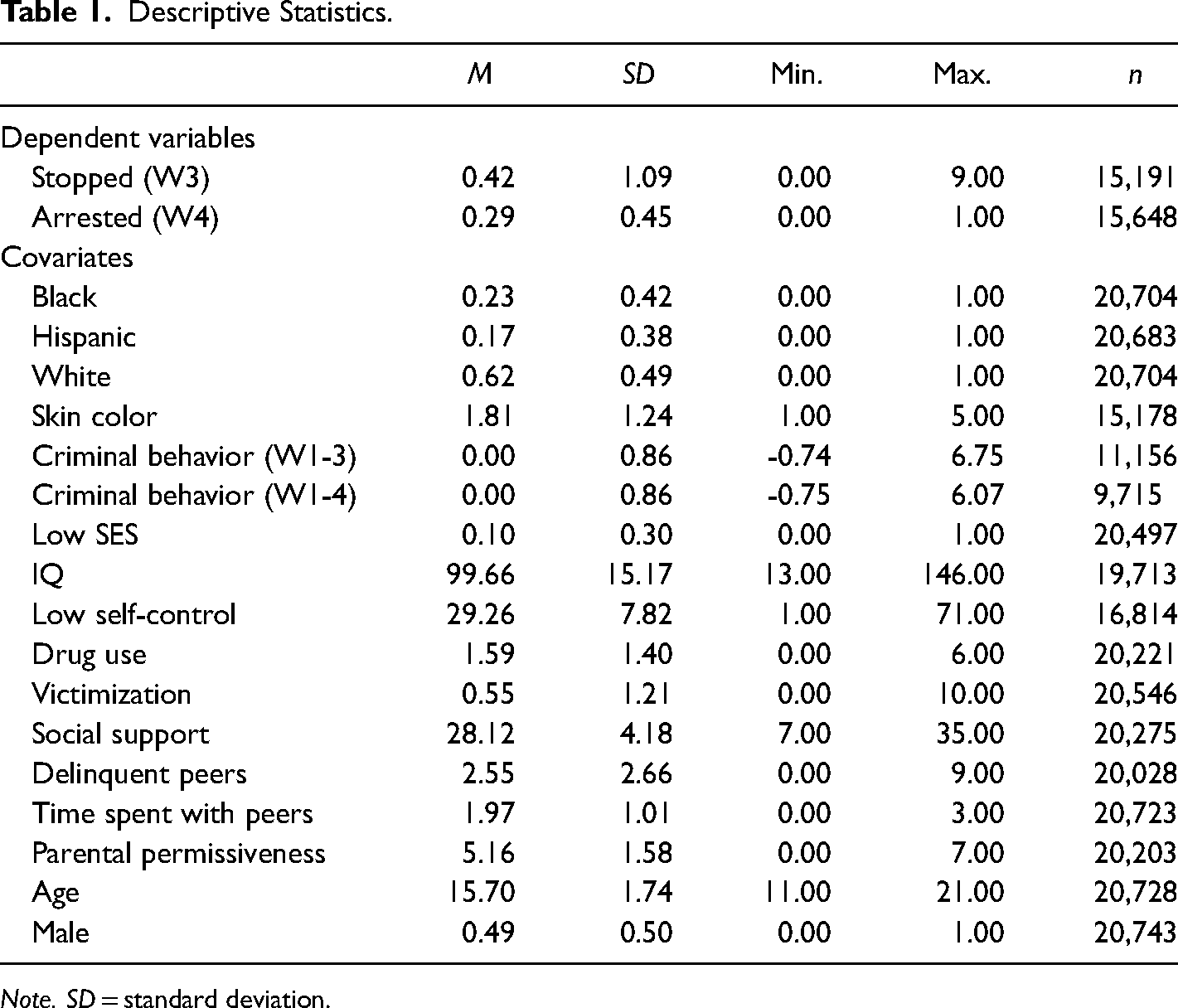
Note. SD = standard deviation.
Analytic Plan
The goal of this study is to assess the impact of race and skin color on the extent of being stopped by police and adult arrest. The current study will use negative binomial regression and logistic regression in a breadth of models to examine these research questions. The aim of the present study is to examine whether racial inequality plays a role in criminal justice processing and if so, whether skin color operates as a predictor for determining police contact and arrests controlling for race. To assess these questions, race will be examined as it typically is by including all racial categories in one model for each examined criminal justice process (i.e., police contact and getting arrested). Skin color will then be assessed as a key independent variable to unpack the “race effect,” if evident, on police stops and arrests. Finally, each racial classification will be used in a split-sample framework to examine the predictors of criminal justice processing for each group. Collectively, the series of models will better clarify the “race effect” by examining whether skin tone predicts being stopped by police and/or arrested within each racial category.
Negative binomial regression will be used when analyzing police stops as the dependent variable. Incident risk ratios (IRRs) will be used to interpret the magnitude of the effect. Incident risk ratios can be calculated by converting the coefficient estimates from the negative binomial model and exponentiating them: IRR = eßk, where ßk represents the estimated relationship between covariate k and Y. This allows for it to be interpreted as a percentage change in the rate of police stops as a function of a one-unit change in the independent variable. An IRR of 1.00 indicates no association, whereas an IRR below 1.00 indicates a negative association, and an IRR above 1.00 indicates a positive association.
Logistic regression will be used for the dichotomous outcome, of being arrested. Odds ratios (ORs) will be used to assess the magnitude of the effect of the independent variable on the dependent variable—while adjusting for the influence of other variables within the model. ORs are interpreted as a percentage change in the odds of the dependent variable as a function of a one-unit change in the independent variable (i.e., OR−1 × 100). To illustrate further, an OR greater than 1.00 indicates a positive association, an OR less than 1.00 indicates a negative association and an OR of 1.00 indicates no association.
Results
The results to follow assess whether racial inequality exists in outcomes related to criminal justice processing (i.e., police contact and arrest). Table 2 presents the negative binomial regression results for a number of times stopped by police and the impact of race and skin color. In examining whether race (with the “White” category as the reference) impacts the number of times stopped by police, Hispanic is the only racial category that was statistically significant. Specifically, identifying as Hispanic has a negative relationship with being stopped by police (IRR = 0.78, p < .05). Placing this finding in context, the results indicate that Hispanics were stopped 22% less than White respondents. Previous delinquent behavior reported in waves 1–3 is positive and significant (IRR = 1.45, p < .05), indicating a 45% increase in police stops for every one-unit increase in offending. Verbal IQ is related to a 1% increase in the likelihood of being stopped by police (IRR = 1.01, p < .05). Drug use is associated with a 14% increase in police stops (IRR = 1.14, p < .05).
Predictors of Getting Stopped by Police (Wave 3).
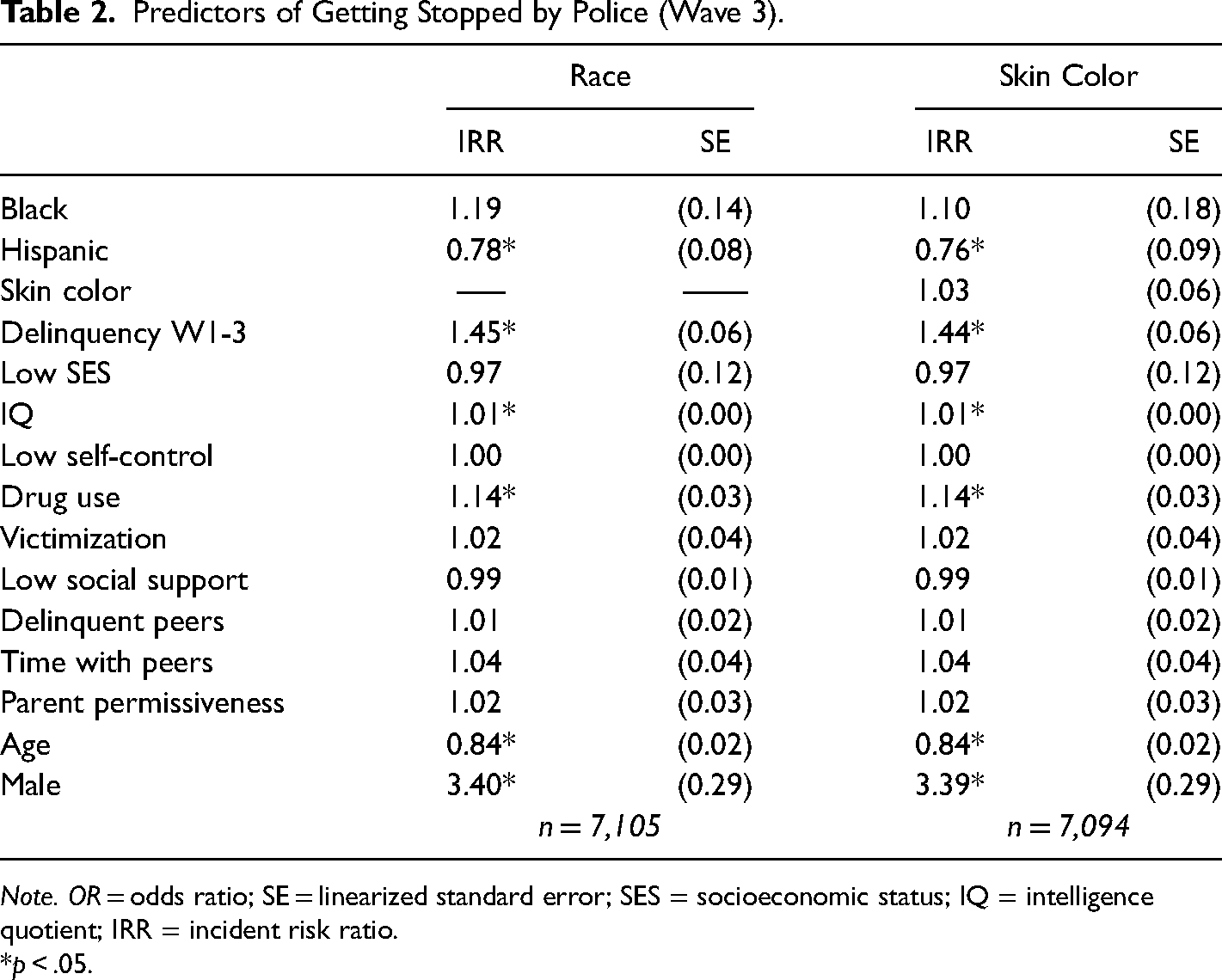
Note. OR = odds ratio; SE = linearized standard error; SES = socioeconomic status; IQ = intelligence quotient; IRR = incident risk ratio.
*p < .05.
The second model in Table 2 examines the number of stops by police with skin color as the primary independent variable. As can be seen, skin color is not significantly related to stops by police (IRR = 1.03, p > .05) nor was being Black (IRR = 1.10, p > .05). Hispanic, however, was again related to a 24% decrease in the likelihood of being stopped by police (IRR = 0.76, p < .05). Previous delinquent behavior is positively related to being stopped (IRR = 1.44, p < .05), IQ is related to a 1% increase in the likelihood of being stopped (IRR = 1.01, p < .05), drug use is associated with an increase in police stops (IRR = 1.14, p < .05).
Table 3 examines getting stopped by police using race (i.e., Black, Hispanic, and White) within a split-sample framework, with each racial category analyzed in a separate model. Results indicate that for Black (IRR = 1.00, p > .05), Hispanic (IRR = 0.97, p > .05), and White (IRR = 0.89, p > .05) respondents’ skin color was not significantly related to being stopped by police.
Predictors of Getting Stopped by Police (Wave 3) Using Split-Sample by Race.
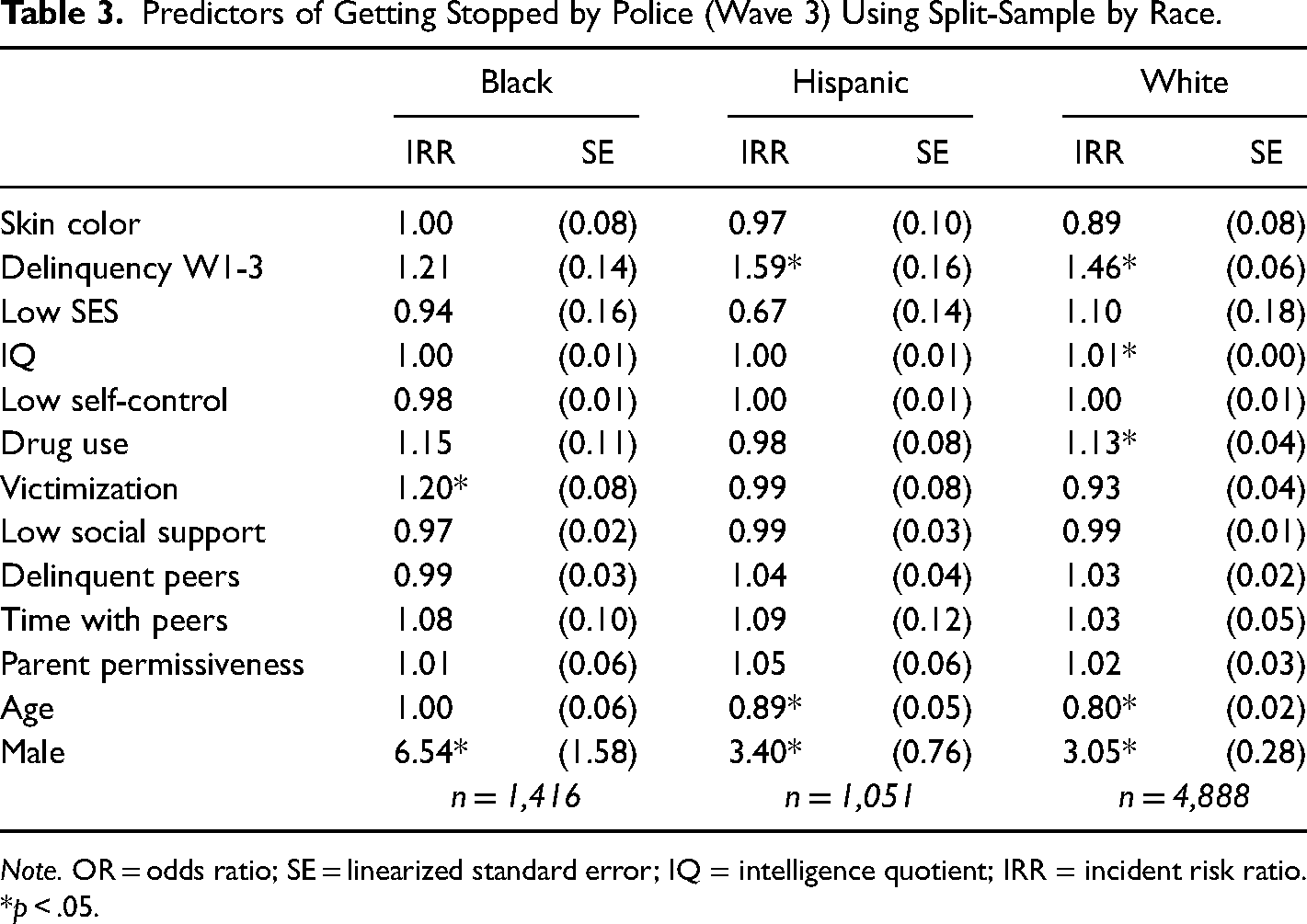
Note. OR = odds ratio; SE = linearized standard error; IQ = intelligence quotient; IRR = incident risk ratio.
*p < .05.
Results reported in Table 4 examine predictors of arrest using logistic regression. The first model examines whether race impacts the likelihood of being arrested during adulthood. Black respondents were 64% more likely to experience arrest than White respondents (OR = 1.64, p < .05). There was no difference between Hispanic and White respondents (OR = 0.91, p > .05). The number of times stopped by police also had a positive impact, with a one-unit increase in being stopped by police being related to a 61% increase in the odds of arrest (OR = 1.61, p < .05).
Predictors of Getting Arrested (Wave 4).
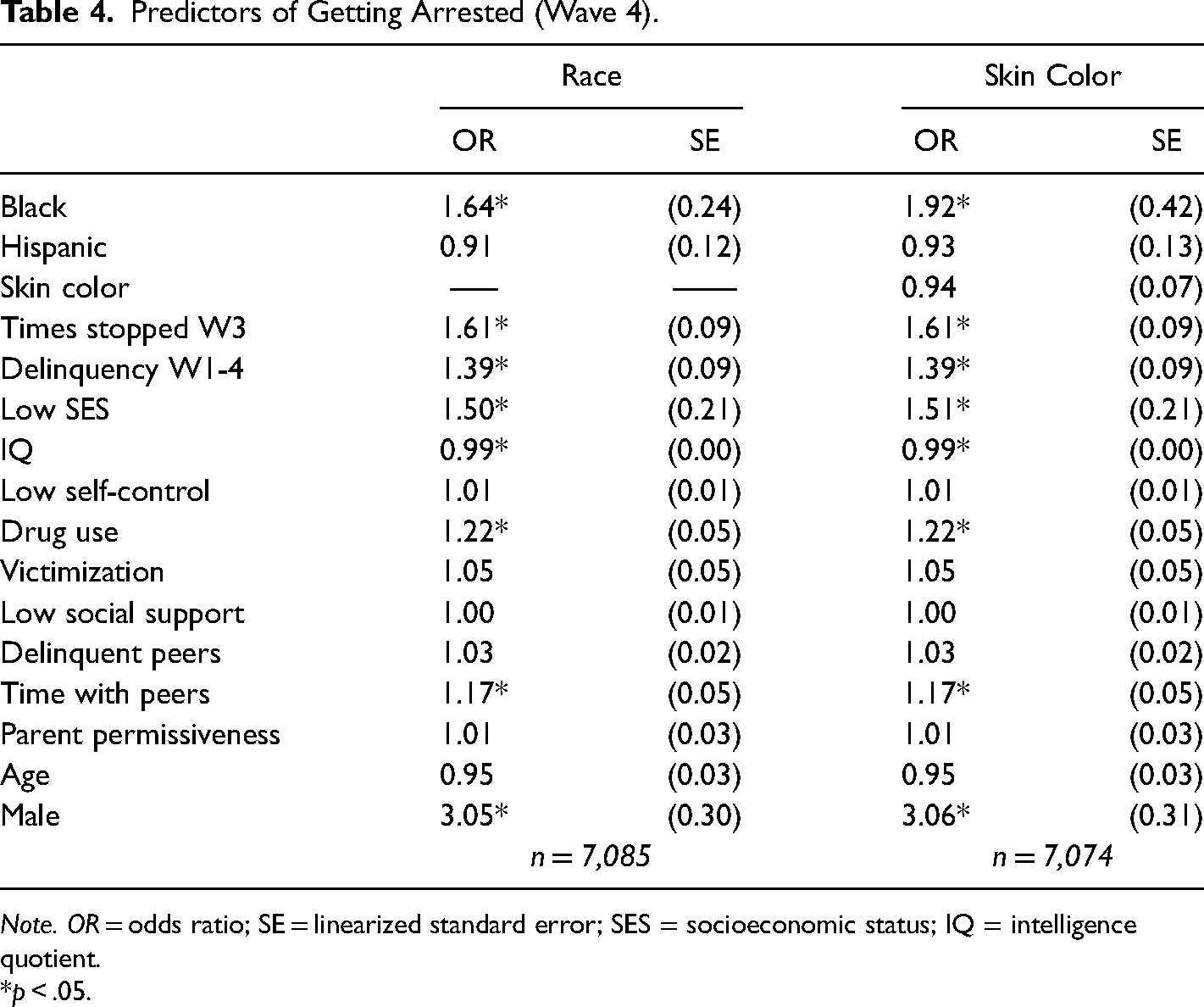
Note. OR = odds ratio; SE = linearized standard error; SES = socioeconomic status; IQ = intelligence quotient.
*p < .05.
The second model reported in Table 4 examines the predictors of getting arrested with skin color included as an independent variable. Skin color is not significantly related to arrest (OR = 0.94, p > .05). Black respondents were again more likely to experience arrest than White respondents (OR = 1.92, p < .05). Again, there was no difference between Hispanic and White respondents (OR = 0.93, p > .05). The number of times stopped by police is associated with a 61% increase in the odds of arrest (OR = 1.61, p < .05).
Table 5 examines the odds of arrest after stratifying the sample according to racial group status. Results indicate that for Black (IRR = 1.06, p > .05), Hispanic (IRR = 0.98, p > .05), and White (IRR = 0.93, p > .05) respondents, skin color was not significantly related to the arrest.
Predictors of Arrest (Wave 4) Using Split-Sample by Race.
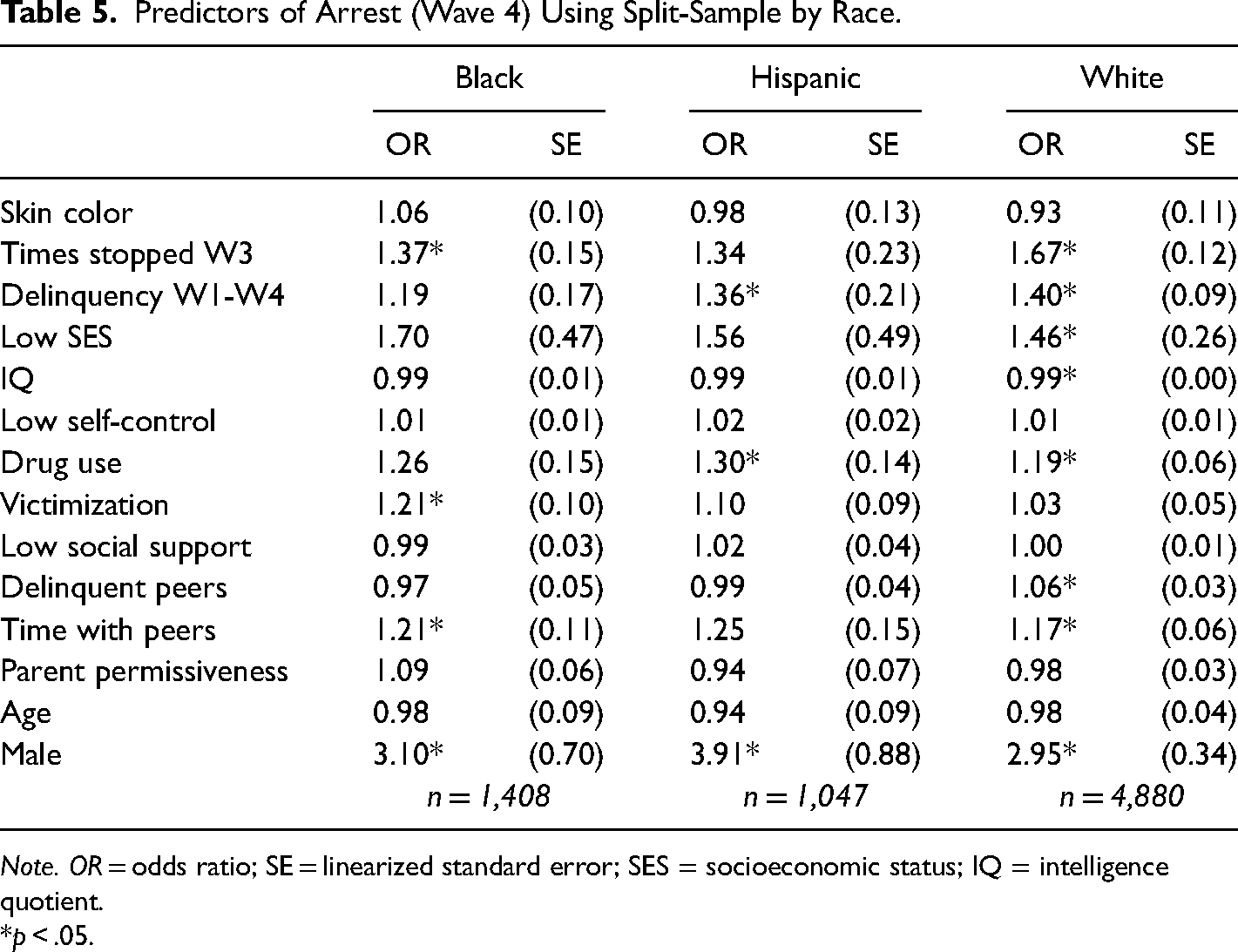
Note. OR = odds ratio; SE = linearized standard error; SES = socioeconomic status; IQ = intelligence quotient.
*p < .05.
Sensitivity Analyses
Prior work suggests skin color can also be coded as mutually exclusive categories (King & Johnson, 2016; Monk, 2015). Given this, sensitivity analyses were performed in which all models were reanalyzed with skin color coded as a series of dummy variables with the “White” category being left out as a reference category (Finkeldey & Demuth, 2021). Results remained relatively unchanged with skin color and race being unrelated to the number of times stopped and with Black individuals being more likely to report arrest even after controlling for skin color and additional covariates. Similarly, skin color was not predictive of an increase in either police contact or arrest in the race-specific models. While the current study sought to look at the correlates of police contact and any arrest, arrest could also be measured as a count variable (i.e., the total number of arrests). Because of this, the models examining arrest as a dependent variable were reanalyzed with “total number of arrests” as the outcome. Total number of arrests ranged from 0 to 64, with most respondents reporting no arrest (72%) and one arrest (14%). Because the dependent variable (total arrests) was heavily skewed with a large number of zeros, negative binominal regression was utilized. Again, results were relatively unchanged with skin color and race being unrelated to the number of times stopped, Black individuals were more likely to be arrested even after controlling for skin color and additional covariates, and skin color remained unrelated to police contact or arrest in the race-specific models.
Discussion
The current study examined whether self-reported race/ethnicity and perceived skin color predicted police contact or being arrested. Our study revealed several interesting findings. First, neither race nor skin color predicted an increase in police contact. This finding runs contrary to that found by White (2015). This may be due in part to controlling for all prior delinquent behavior (i.e., adolescence to adulthood) in the current study, while White's (2015) study only controlled for prior delinquency in Wave 1 when respondents were in grades 7 to 12. Police may be more likely to contact or arrest individuals who they are aware have been engaged in criminal behavior previously. As measures of contact and arrest are derived from survey responses taken in adulthood, controlling for a lifetime measure of criminal behavior accounts for this potential influence. Indeed, prior delinquency was a significant predictor of police stops and arrests in all models, except for the results for Black respondents in the split-sample models.
Second, although skin color was not significantly related to arrest, Black respondents were 92% more likely to experience arrest than White respondents—controlling for the influence of skin color and theoretically informed covariates. This finding hints that the “race effect” observed may be due to factors that are not related to skin color, and remains despite controlling for a host of additional covariates. Based on the constructivist framework, this might suggest that some other aspect tied to race—or a constituent part—may be accounting for the stark difference in arrests between Black and White respondents. Third, results revealed that skin color was not related to being stopped by police or arrested for any race. Fourth, delinquency was related to being both stopped and arrested for White and Hispanic respondents but not Black individuals. One explanation for this finding may be that rates for being pulled over and being arrested are so high for Black individuals that traditional predictors were not significant. Alternatively, it may be that Black individuals are socialized to interact with police in a different way than their White counterparts, generally through “police talk,” a socialization practice by Black families which provides guidance to Black youth on how to behave should they encounter police (Gonzalez, 2019). Interviews with Black parents indicate that this way of talking is about survival and diminishing the chances of violence by police (Gonzalez, 2019). Youth who are taught “police talk” are often informed to minimize the perception of them being a potential threat, control their tone of voice so as not to appear hostile, and to not engage in behaviors that may warrant potential police contact in the first place.
Hispanic Americans experience with the criminal justice system in general and with law enforcement, specifically, is not well examined (Reitzel et al., 2004). Minority views of law enforcement, which are generally centered on the Black experience, commonly assumed that Hispanic individuals have similar views. Though, as Herbst and Walker (2001) point out, “the experience of Hispanics with the police is different in important aspects from the experience of African-Americans” (p. 330). Findings from the current study highlight such differences. Specifically, the current study found that Hispanic respondents reported less police contact than White respondents. Moreover, while Black respondents were more likely to experience arrest than White respondents, there was no difference in arrest between Hispanic and White respondents. These findings highlight that Hispanic and Black individuals may have different experiences with law enforcement. Similarly, Cheurprakobkit (2000) found that Black individuals tend to have less favorable views of law enforcement compared to White and Hispanic individuals and suggested that this may be due to the differential interactions Black and Hispanic individuals have with law enforcement. To be sure, while there are little guiding theoretical or empirical explanations for why Hispanic individuals reported less police contact, findings from the current study are in line with prior evidence suggesting that Black individuals are at a particular disadvantage when it comes to arrest controlling for prior criminal behavior, number of times contacted by police, and myriad other covariates.
Fifth, having a higher verbal IQ was significantly associated with an increase in police contact but significantly related to a decrease in the odds of arrest. While, at first glance, this may seem perplexing, there are reasons to suspect that high IQ might predict an increase in police contact but a decrease in arrest. For example, research has found that verbal intelligence is associated with openness to experience (DeYoung et al., 2014) as well as drug, alcohol, and tobacco use (Kanazawa & Hellberg, 2010). So, it may be that higher IQ individuals are exposed to more police contact because of their lifestyles or routine activities (e.g., openness to experience). Others have, similarly, found that higher IQ was unrelated to the number of crimes committed but was related to a decrease in arrest (Boccio et al., 2018). To be sure, it may be that a higher IQ is not a protective factor when it comes to criminal behavior or police contact, but when higher IQ individuals are stopped, they have the skill level to talk their way out of further police intervention. This result is similar to that found by Yun and Lee (2013), whose study indicated those with a lower verbal IQ are at an increased risk of being arrested. As Yun and Lee (2013) suggest, these individuals may also evoke more negative reactions from police once they have been contacted, resulting in their increased likelihood of arrest. Finally, the effect of sex was evident throughout the analysis with males being more likely to be pulled over and arrested—these findings remained despite controlling for a host of theoretically informed covariates. The impact of sex did vary by race. For instance, Black males were 554% more likely to be stopped by police and White males only had a 205% increase in the likelihood of being contacted by police.
Although this study adds to the current knowledge on how race/ethnicity and perceived skin color may impact police decision-making, there are limitations which need to be addressed. First, it is beyond the scope of this study to control for all potential covariates. As such, there may be additional confounding from variables that have not been accounted for that could be influencing the observed outcomes. Additionally, only three racial/ethnic groups were included in the study. The impact of race/ethnicity may be different for other racial/ethnic groups, such as Native Americans or Asians. Indeed, Finkeldey and Demuth (2021) found that darker-skinned Native American respondents were more likely to be arrested than lighter-skinned Native Americans. Future research should assess more racial/ethnic identities to broaden the current knowledge on differential experiences with police and the criminal justice system overall. Third, the measure of police contacts (i.e., number of times stopped)—and to a lesser extent, arrest—relies on respondent recall, which may introduce bias. Arrest is likely a more impactful event which would remain in the respondent's mind longer and more accurately than general police contact. While the current study utilized a measure of arrest that has been employed in other recent research using the same data set (Knox & TenEyck, 2023), others have used a count measure (Boccio et al., 2018). Thus, future research examining police contact and arrest should look not only at the total number of arrests but also at the age of the first arrest and the impact of police contact on future arrest (see, e.g., Novak & Gilbreath, 2023). Lastly, as Finkeldey and Demuth (2021) point out, the measure of participant skin color relies upon the interviewer's interpretation. In conjunction, the provided options for skin color are limited and do not allow for a more nuanced assessment of how skin color may impact police encounters. This may explain why findings indicated little difference between race and skin tone. It may be that within the potentially brief interaction time with respondents—which is likely similar for the interviewers and police officers—the perception of character and potential threat reduces focus on skin tone variation. Despite these limitations, this study adds to the examination of race and skin tone with criminal justice contact and arrest. While results suggest that race and skin color may not impact initial contact with police, there is the support that race impacts decisions to make an arrest despite controlling for skin tone, suggesting a “race effect” beyond skin color.
Footnotes
Acknowledgments
This research uses data from Add Health, a program project directed by Kathleen Mullan Harris and designed by J. Richard Udry, Peter S. Bearman, and Kathleen Mullan Harris at the University of North Carolina at Chapel Hill, and Special acknowledgment is due to Ronald R. Rindfuss and Barbara Entwisle for assistance in the original design. Information on how to obtain the Add Health data files is available on the Add Health website ( ).
).
Declaration of Conflicting Interests
The authors declared no potential conflicts of interest with respect to the research, authorship, and/or publication of this article.
Funding
The authors disclosed receipt of the following financial support for the research, authorship, and/or publication of this article: This research was funded by grant P01-HD31921 from the Eunice Kennedy Shriver National Institute of Child Health and Human Development, with cooperative funding from 23 other federal agencies and foundations. No direct support was received from grant P01-HD31921 for this analysis.