



Abstract
Stop and search is an innovative policing approach aimed at deterring crime and disorder and promoting public trust and confidence in law enforcement. While many studies have investigated racial biases in this approach and its effectiveness in reducing crime and disorder, little attention has been paid to its role in fostering citizens’ feelings of safety. Using the 2016 General Social Survey data (N = 2,876), this study examined whether police use of pedestrian stop-and-search practices generated citizens’ feelings of safety. Our results revealed prevailing disparities between Black and White Americans on the effectiveness of police stop-and-search practices. Namely, police stop and search made White persons feel safer and more protected in their neighborhood, compared to Blacks. The conclusion discusses the implications of this disparity, and potential policy and managerial solutions.
Stop and search is a proactive policing strategy used by law enforcement agencies throughout the world for crime reduction and prevention (National Academies of Sciences, Engineering, and Medicine [NASEM], 2018). This policing tactic involves stopping and questioning civilians on the basis of reasonable suspicion, on the streets or through traffic enforcement, and then frisking them for weapons or contraband (Skolnick, 2011). According to deterrence theory, the use of stop and search can prevent individuals from committing acts of crime out of fear of arrest and apprehension (Nagin et al., 2015).
To date, the usefulness of police stop and search practices has been mixed. Some studies found associated positive effects, such as the deterrence of minor crimes like drug dealing, prostitution, and street and gang violence, the prevention of criminal acts among repeat offenders, the promotion of coproduction of police and community, and enhancement of community satisfaction with the police (Barrett et al., 2014; Bowling & Weber, 2011; Loeffler & Bovaird, 2020; Ridgeway et al., 2009). Others reported negative consequences, including racial discrimination, constitutional violations, time- and resource-consuming operations, and emotional and psychological harms to stopped individuals, their parents, and communities (Baćak & Nowotny, 2020; Bandes et al., 2019; Haldipur, 2018; Weisburd et al., 2016). Additionally, scholars (e.g., Barr & Pease, 1990; Sullivan & O’Keeffe, 2017) found that the use of certain policing tactics, such as police presence, stop and searches, and surveillance and CCTV, can cause crime to relocate to other areas or even generate more serious crimes: if minor offenders can pass by police unnoticed, they may feel invincible.
Yet little research has examined the associations between the police use of pedestrian stops and searches and its impact on citizens’ feelings of safety in the United States (U.S.). To close the gap, the current research used data from the 2016 General Social Survey (GSS) collected from residents across the U.S. to investigate whether police use of pedestrian stop and search enhances feelings of safety for all American people. Since numerous studies have reported that American police officers use traffic and pedestrian stop and search disproportionately against Blacks compared to other racial or ethnic groups (Goel et al., 2016; Hetey et al., 2016; Levchak, 2017), we hypothesize that racial disproportionality in stops and searches may affect Black Americans’ trust and confidence in the police. Disproportionate targeting and mistrust in the police may lead to decreased feelings of safety among Blacks during stops and searches when compared with Whites and members of other minority groups.
Review of Literature and Hypotheses
Police Stop and Search Practices
Proactive law enforcement in the U.S. emerged from a national call for policing transformation, which can be traced back to the early 1960s (Walker, 1984). At that time, many citizens disapproved of the American police response to national crises, such as the civil rights movement, racial discrimination, and mass riots and criminal rates (Walker, 1984). The 1967 President’s Task Force on the Police and related research revealed a number of obstacles to performance, including large bureaucratic structures, corruption, unresponsiveness to residents, and general ineffectiveness and inefficiency in reducing crime (Scott, 2009). These factors provoked the U.S. police professionalization movement, which led to transformation initiatives such as police-juvenile functions, an increased number of policewomen, police leadership, and systematic police department records and documents (Walker, 1984). Innovative and proactive law enforcement strategies, such as place-oriented policing (e.g., hot spots, closed-circuit television, and COMPSTAT), problem-oriented policing (e.g., attenuating conditions leading crime occurrences), and community-oriented policing, looked to prevent crime and disorder and enhance public feelings of safety (NASEM, 2018).
The police stop-and-search approach (also known as a pedestrian and vehicle stop, question, and frisk tactic) is one such strategy targeting suspected criminals (Ridgeway, 2007). It originates from the deterrence theory, which suggests that individuals will commit an unlawful act if they think the benefits outweigh the costs (Pratt et al., 2010). However, governments can respond to this tendency with intervention, making prospective criminals aware of the risks of apprehension and using sanction strategies to demotivate would-be offenders (Nagin et al., 2015). Bowling and Weber (2011) found evidence of this relationship: stop and search could make would-be criminals hesitate or change course.
The exercise of stop and search begins with police justification and legitimacy. To decide whether to employ this approach, officers must practice intuitive and rational reasoning, which can be developed via learning, training, and life and professional experiences (Brown & Daus, 2015). Even so, decisions based on biases (e.g., racial profiling) or negative affectivities (e.g., stress, depression, and anxiety) can result in the abuse of stop and search powers and may create public controversies (Bowling & Phillips, 2007).
Critiques of Police Use of Stop and Search
U.S. stop-and-search practices have invited controversy. First and foremost, some argue that the practice violates the Fourth Amendment of the U.S. Constitution, which protects American citizens from unreasonable government searches and seizures of property (Harcourt & Meares, 2011). The U.S. Supreme Court’s decision in Terry v. Ohio (1968) constitutionally warranted police officers to conduct stops and searches with justifiable speculation that the suspect is committing or about to commit a crime (Alschuler, 2002). However, many insist on the rights and freedoms guaranteed by the Bill of Rights and other related laws, and suspect that police use this power without reasonable grounds (Tyler et al., 2014).
Previous research is divided on the impacts of stop and search on crime deterrence. Some scholars (e.g., MacDonald et al., 2016; Rosenfeld & Fornango, 2014; Tiratelli et al., 2018) found that the reasonable use of stops and searches can lower rates for minor offenses like robbery, burglary, vehicle theft, and firearm attacks, but not for major crimes like rape or homicide. Furthermore, implementing stops and searches in high-crime areas in a deliberate manner can yield a positive impact on citizens’ feelings of safety (Cheurprakobkit, 2006; Doyle et al., 2016).
However, other research suggests that stop and search does not deter occurrences of crime as expected, and instead can lead to undesirable consequences. For example, Mitchell and Ridgeway (2018) analyzed the effectiveness of bicycle stops in Tampa, Florida and found that they were not statistically associated with crime reduction. Other studies showed that impacted individuals reported feeling like a suspected criminal, which has been linked to lower evaluations of police legitimacy and refusals to cooperate with the police (Bradford, 2017; Pew Research Center, 2016; Tyler et al., 2014). In high-crime areas where stops and searches were heavily deployed, citizens were found to be less likely to report a crime to the police (Tyler et al., 2014). Furthermore, rates of citizen complaints about police use of stop and search were higher among those who lived in more economically underprivileged, minority areas (Bonner, 2014; Rengifo & Fowler, 2016). Lastly, a longitudinal study of adolescents’ experiences with police stops and criminal behavior conducted by Del Toro et al. (2019) revealed that Black and Latino boys who experienced police stops reported more frequent involvement in delinquent acts 6, 12, and 18 months later.
Race, Police Stop and Search, and Citizens’ Feelings of Safety
The public expresses concern with racial disproportionality in police stop and search. The New York City Police Department (NYPD)’s Annual Reports, for example, have revealed that, since 2002, more than half of all stop and searches were among Black people (New York Civil Liberties Union, 2021). Black people in Washington, D.C. were five times more likely to be searched than their White counterparts in 2019, even though they accounted for only 47% the district’s population (Metropolitan Police Department, 2019). Similar racial disparities in enforcement have been found in other cities, including Chicago, Illinois, Los Angeles, California, and Philadelphia, Pennsylvania (American Civil Liberties Union Foundation of Illinois, 2019; Sunlight Foundation, 2015).
In 2013, this issue reached the courts in Floyd, et al. v. City of New York, et al. The plaintiffs of this case were minority residents who argued that they were unreasonably approached and searched by the NYPD, leaving them feeling ashamed and embarrassed, and pointed to racial disparities in those targeted: 90% of those stopped and searched were Black and Latino, even though these two racial groups made up only 52% of New York City’s population (Center for Constitutional Rights [CCR], 2014). On August 12, 2013, the District Court for the Southern District of New York ruled that the NYPD’s use of warrantless stop and searches violated the Fourth Amendment (CCR, 2014). Furthermore, they found evidence of racial disparity in use of stop and searches by the NYPD which violated the Fourteenth Amendment (CCR, 2014).
In practice, it can be difficult to identify whether or not individual officers, who are constrained actors in large and complex governmental institutions, have a “taste” for discrimination. However, the trends are persistent. Research has shown that stops of Black and Latino drivers are often less likely to result in the discovery of contraband, even though they are searched and stopped at higher rates than Whites (Goel et al., 2016; Levchak, 2017; Morrow et al., 2017). Similar analyses found that Blacks and those in poor neighborhoods, though stopped and frisked more frequently than Whites, were less likely to be found in possession of contraband, suggesting discrimination based on perceived racial identity (Fagan et al., 2010; Gelman et al., 2007; Harcourt, 2009; Soss & Weaver, 2017).
American police have been implicated in a history of brutality against minority groups, especially Black Americans (Hong, 2017; Kramer & Remster, 2018). Blacks’ negative experiences and perceptions may produce negative attitudes toward the police. Evidence shows that Black Americans’ trust in the police has eroded over the past few years. The recent national survey conducted by Yahoo News/YouGov after the killing of George Floyd in June 2020 found that only 7% of Black respondents had a great deal of trust in the police, and almost half (49%) said they did not feel secure when encountering police (Yahoo News/YouGov, 2020).
Black Americans are often over-policed, over-stopped, and over-profiled at rates disproportionate to their representation in the population (Jones-Brown, 2000; Pew Research Center, 2016, 2019; Warren, 2011). Unsurprisingly, these negative police encounters lead Blacks to develop negative perceptions and attitudes toward the police when compared to their racial counterparts (Cochran & Warren, 2012; Gau & Brunson, 2010; Pew Research Center, 2020). The loss of trust in police among Black communities can be costly—not only physically (e.g., limiting cooperation with police and law breaking), but also psychologically (e.g., psychological distress and feelings of lowered security and safety in police presence; Bradford, 2014; Fagan & Tyler, 2005; McLeod et al., 2020; Tyler, 2005).
While many studies have investigated racial biases in the use of stop and search and its effectiveness in reducing crime and disorder, several major gaps still remain in our knowledge. Under-explored areas include how citizens of different racial groups evaluate the effectiveness of the use of pedestrian stop and search on enhancing feelings of safety. We hypothesized that American citizens of all races, except Blacks, should feel safer and more secure when police officers perform stops and searches in the interests of public safety. Based on these reasons, the following hypotheses are proposed:
Method
Sample
To test our hypothesis, we employed a cross-sectional data set of the 2016 General Social Survey (GSS). The GSS, administered by the National Opinion Research Center (NORC) at the University of Chicago, has gathered information about present-day issues of American society since 1972 (Smith et al., 2018). The NORC utilized the multi-level and multi-source data approach to collect data from the sample cases. Unlike the traditional survey approach, which relies only on information contributed by respondents, the NORC’s approach took into account contextual effects at the case- and aggregated-levels from various sources (e.g., economic databases, local crime rates, voting records, environmental records, etc.) that would affect response rates (Smith & Son, 2019). The advantages of this approach include increasing our understanding of respondents’ attitudes and behaviors, validating self-supplied information from the respondents against database records, and reducing measurement and total survey errors, as well as nonresponse bias (Smith & Son, 2019).
The study sample of the 2016 GSS included 2,867 people living in the U.S. In terms of sample characteristics, Table 1 shows that 55.49% of the sample were female; 73.25% were White (n = 2,100), 17.09% were Black (n = 490), and 9.66% were other races (n = 277); the age of the respondents was between 18 and 89 years (M = 49.16, SD = 17.69); 51.10% had a high school diploma; 37.45% considered their political view to be moderate; and 36.69% were living in the South. The average community population size was about 334,331 residents with a standard deviation of 1,149.63.
Demographic Statistics of the Respondents.
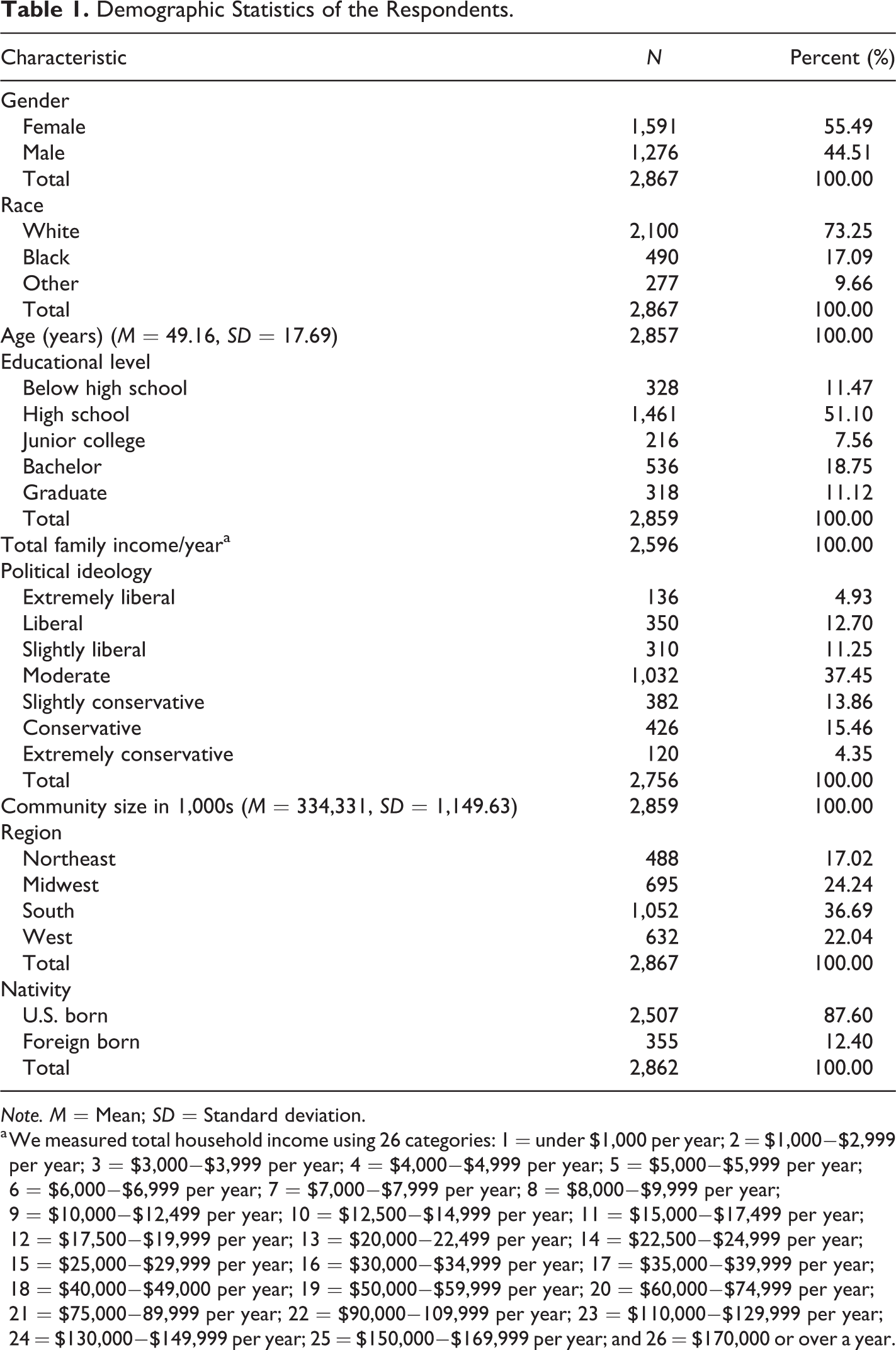
Note. M = Mean; SD = Standard deviation.
a We measured total household income using 26 categories: 1 = under $1,000 per year; 2 = $1,000−$2,999 per year; 3 = $3,000−$3,999 per year; 4 = $4,000−$4,999 per year; 5 = $5,000−$5,999 per year; 6 = $6,000−$6,999 per year; 7 = $7,000−$7,999 per year; 8 = $8,000−$9,999 per year; 9 = $10,000−$12,499 per year; 10 = $12,500−$14,999 per year; 11 = $15,000−$17,499 per year; 12 = $17,500−$19,999 per year; 13 = $20,000−22,499 per year; 14 = $22,500−$24,999 per year; 15 = $25,000−$29,999 per year; 16 = $30,000−$34,999 per year; 17 = $35,000−$39,999 per year; 18 = $40,000−$49,000 per year; 19 = $50,000−$59,999 per year; 20 = $60,000−$74,999 per year; 21 = $75,000−89,999 per year; 22 = $90,000−109,999 per year; 23 = $110,000−$129,999 per year; 24 = $130,000−$149,999 per year; 25 = $150,000−$169,999 per year; and 26 = $170,000 or over a year.
Measures
Perceptions of stop and search
To assess citizen’s perceptions of police stop and search practices, we used a single item from the 2016 GSS. Respondents were asked to rate the extent to which the police should have the right to stop and search people randomly on the street. This item was originally rated on a scale ranging from 1 (“definitely should not have the right”) to 4 (“definitely should have the right”; M = 2.08, SD = 1.07).
Citizens’ feelings of safety
We used a single question from the 2016 GSS to assess respondents’ perceptions of their safety in the neighborhood: “Now thinking about safety in your neighborhood, how safe do you think it is?” This item was originally rated on a scale ranging from 1 (“very unsafe”) to 5 (“very safe”; M = 3.45, SD = .71).
Controls
In order to concisely evaluate the effects of police stop and searches, we controlled for eight respondent variables: gender (1 = female), age (in years), education (1 = Below High School, 5 = Graduate), total family income using twenty-six categories ranging from “less than $1,000/year” to “$170,000 or more a year,” place of birth (1 = U.S. born), seven types of political ideology (extremely liberal, liberal, slightly liberal, moderate, slightly conservative, conservative, and extremely conservative), the region of residence (Northeast, Midwest, South, and West), and community size (number of community population). 1
Prior research has found disproportionate police stop and search against men and young people (e.g., Wortley & Owusu-Bempah, 2011). Some studies also found that lower educational attainment, unemployment, and people living below the poverty line were more prone to be stopped by the police (e.g., Gould & Mastrofski, 2004; Murray, 2014). We controlled for citizens’ political ideology because prior research has shown that consistent conservatives were more likely to support police use of excessive force when compared to liberals (Silver & Pickett, 2015). The respondents’ place of birth (a.k.a., nativity) was controlled because prior research has found that non-native-born citizens tend to express relatively unfavorable attitudes regarding police and favor restraint in police use of force, while native-born U.S. citizens tend to favor permissiveness in police use of powers (Carter & Corra, 2016; Simon et al., 2020). Notably, prior research has demonstrated that there is no statistically significant association between foreign-born citizens and stop and search rates (Fagan et al., 2010). Finally, previous research (e.g., Kubrin et al., 2010; Roh & Robinson, 2009; Spencer & Kochel, 2018) has demonstrated that population density and residential location have significant effects on crime rates, the frequency of police stops and searches, and citizens’ attitudes toward the police. Hence, community size and region of residence were controlled in our analysis.
Analyses
We used an ordinary least squares (OLS) regression to estimate a linear relationship between the police stop and search practices and citizens’ feelings of safety using Stata 15.1 (StataCorp, 2017). As recommended by the NORC, we applied the default weight variable, “WTSSALL,” in our analyses to reduce survey bias and ensure that respondents were representative of the intended population (Smith & Son, 2019).
Next, we ran separate regressions to estimate the predicted (fitted) values of the dependent variable (citizens’ feelings of safety) given values of the explanatory variable (police practices to stop and search) for four groups of respondents: Blacks, Whites, members of other minority groups, and pooled data (all racial groups combined). We then compared regression coefficients across racial groups using Paternoster et al.’s (1998) method, which helps determine the significance of the difference between two regression coefficients across independent samples, via the z test. The formula for this test is as follows:
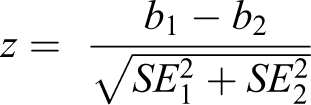
where b 1 is the unstandardized coefficient of the first group, b 2 is the unstandardized coefficient of the second group, and SE 1 and SE 2 are the standard errors associated with the first and second groups respectively (Paternoster et al., 1998).
If the value of z lies outside the range [−1.96, 1.96] (for a 95% two-tailed test) or the range [−1.65, 1.65] (for a 95% one-tailed test), then null hypothesis is that b 1 = b 2 is rejected (Ibe, 2014). Since the t statistics reported by Stata, by default, were based on two-tail tests (StataCorp, 2017), we used the critical value for a 95% two-tailed test (± 1.96) as criteria for making significance tests.
Finally, we utilized the Stata command “graph two-way” to plot the best-fitting line, with a 95% confidential interval, to show the linear relationship between the police stop and search practices and citizens’ feelings of safety (Jann, 2015).
Results
Table 2 displays the results of the OLS regression analyses of citizens’ feelings of safety on the use of pedestrian stop and search. The variance inflation factor (VIF) values reported in Table 2 were below 5, indicating that there is no multi-collinearity among variables (Kutner et al., 2004). For the pooled sample, holding other variables constant, the respondents’ perception of the stop-and-search practice was not significantly related to feelings of safety (b = .019, n.s.). However, in the Black sample model, when holding other variables constant, a significantly negative association appeared between police stop and search and feelings of safety (b = −.116, p < .05), providing support for Hypothesis 1. Furthermore, police stop and search practices had a significant and positive effect on perceptions of safety for Whites (b = .036, p < .10); hence, Hypothesis 2 was supported. For the “other race” model, the use of police stop and search practices was not significantly related to feelings of safety (b = −.055, n.s.); thus Hypothesis 3 was not supported.
Tests for the equality of the two regression coefficients demonstrated that the effect of police use of stop and search on feelings of safety was statistically different for Blacks and Whites (z = −2.52), but not for Blacks and members of other minority groups (z = −.69) or for Whites and members of other minority groups (z = 1.28). The current findings add substantially to our understanding of racial differences in attitudes toward the use of stop and search and its comparative impact on feelings of safety in White and Black Americans.
Figure 1 exhibits linearly predicted values of citizens’ feelings of safety based on the use of police stop and search practices for each sample group, controlling for all covariate variables. The fitting lines given by the regression equations have a positive slope for pooled sample, suggesting that the more respondents agree with the practice of stop and search, the more the police may be able to foster feelings of safety among these citizen groups. However, a negative slope of the fitted lines is found for Black samples, which indicates that as stop and searches increase, feelings of safety among Blacks decrease.
Ordinary Least Squares (OLS) Regression Predicting Citizens’ Feelings of Safety.
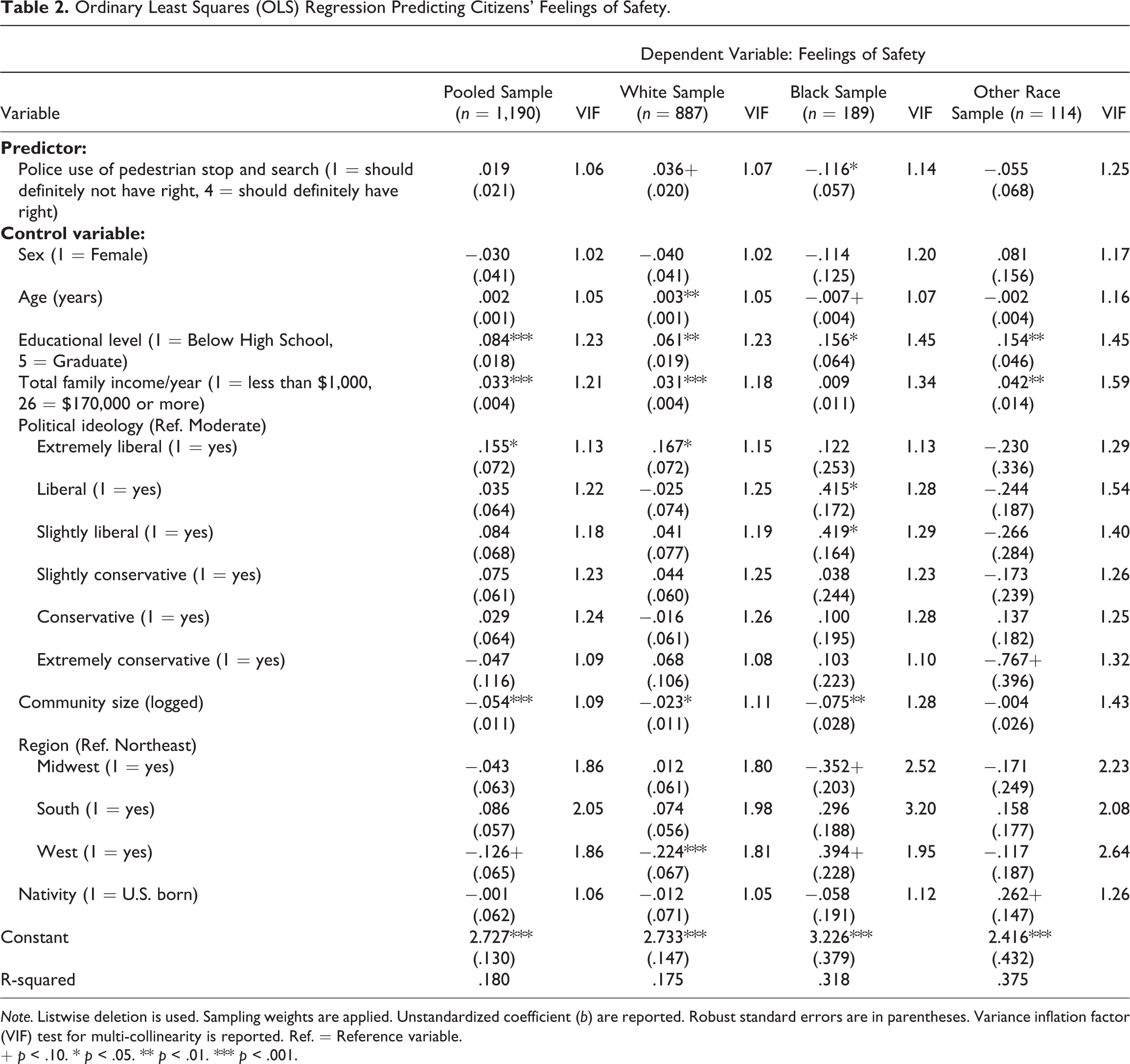
Note. Listwise deletion is used. Sampling weights are applied. Unstandardized coefficient (b) are reported. Robust standard errors are in parentheses. Variance inflation factor (VIF) test for multi-collinearity is reported. Ref. = Reference variable.
+ p < .10. * p < .05. ** p < .01. *** p < .001.
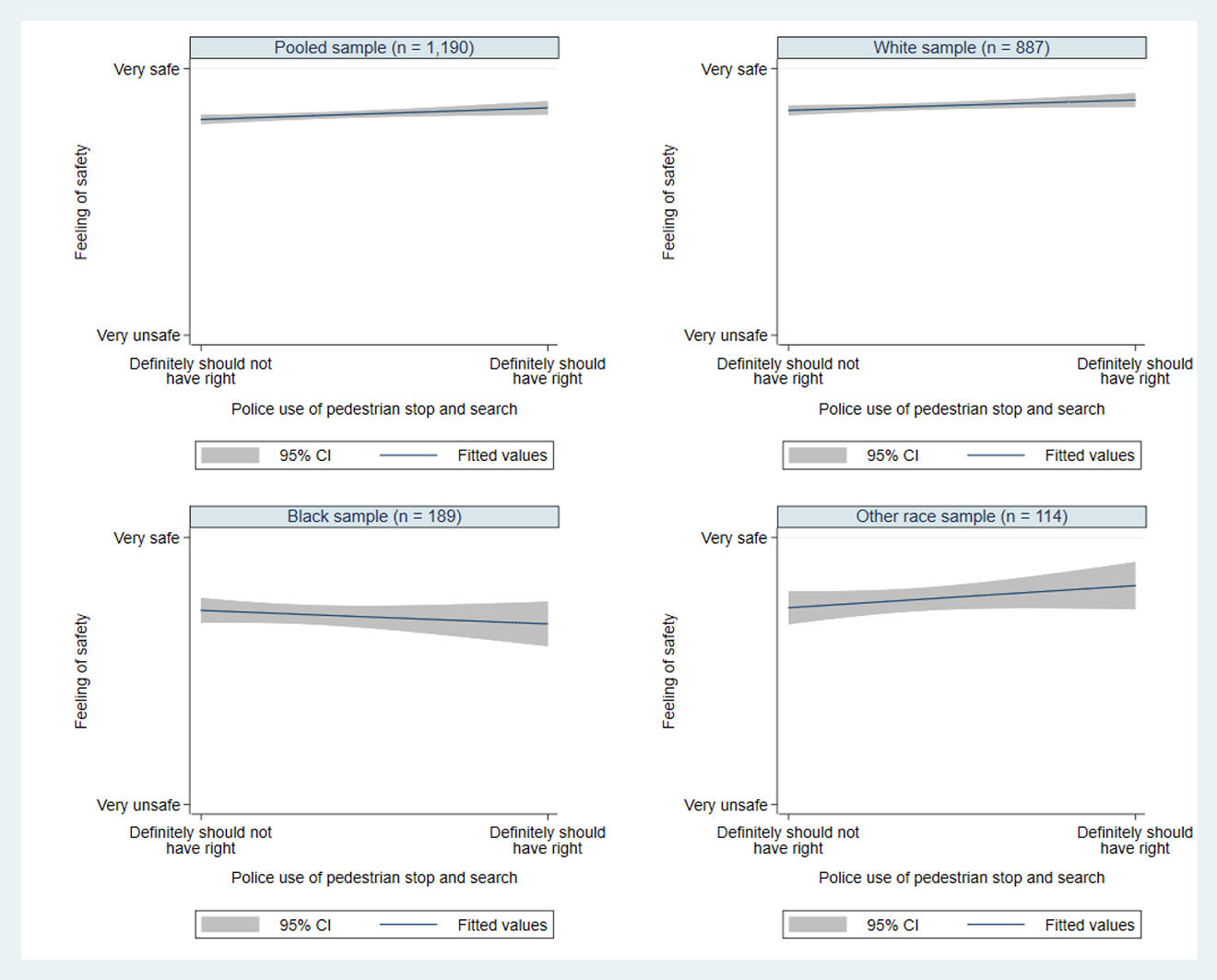
Predicted values of citizens’ feelings of safety from the police use of stop and search.
Discussion
While significant research has examined racial bias in police stop and searches and its effectiveness in deterring crime and disorder, this study extends the literature (e.g., Doyle et al., 2016; Nofziger & Williams, 2005; van de Veer et al., 2012) by investigating whether its use can elevate citizens’ feelings of safety. Our findings, based on data from citizens across the U.S., show that Whites reported feeling safer when the police were present performing stops and searches; however, these police practices result in decreased feelings of safety for Black Americans. For other racial groups, the finding showed no significant association between police stop and search practices and feelings of safety. Overall, the current study’s findings highlight the importance of race in predicting the success or failure of policing in the U.S., and echo the prevailing crisis in the legitimacy and approval of American law enforcement. Moreover, our research contributes to the literature on the effectiveness of stops and searches, as when citizens, especially Blacks, have a negative or distrustful attitude toward the police, their cooperation is less likely (Murphy et al., 2014; Reynolds-Stenson, 2018; Tyler et al., 2014).
The findings of the current research hold practical implications for law enforcement agencies, to better implement policing operations, lessen racial bias in policing, and improve Blacks’ attitudes toward the police as well as contribute to the greatest increase in feelings of safety. First, since the success of stop and search and other law enforcement operations depends heavily on citizens’ perceptions of police (Mazerolle et al., 2013; Sever et al., 2018), law enforcement agencies can use certain strategies to improve their legitimacy and image. For example, police organizations should formulate written antiracial profiling policies and procedures and consistently implement them during their operations. Furthermore, these units may allow stakeholders to participate in monitoring and auditing police officers’ stops to ensure their compliance with the law and organizational standards (Hetey & Eberhardt, 2018; Sargeant et al., 2017). Finally, police agencies should establish effective training programs on the principles of procedural justice and cognitive bias reduction. Specifically, the current research suggests that in order to improve relationships between police and Black communities, police training should focus on pertinent and relevant issues, such as bias-free policing (Fridell, 2016), courtesy policing (treating citizens with respect, kindness, and responsiveness; Rios et al., 2020; Slocum et al., 2016), and fairly and equitably order maintenance policing (Gau & Brunson, 2010, 2012). Additionally, police organizations need to develop training courses and proper supervision that educate police officers about racial conflict and bias and give them a better, in-depth understanding of the historical and racial issues affecting the communities they serve (Milazzo & Hansen, 2002). Prior studies have indicated that these training programs can make police officers more aware of unfair treatment and implicit racial biases, and teach them to treat citizens equally and respectfully (Hetey & Eberhardt, 2018; Mazerolle et al., 2013; Murphy et al., 2014; Nofziger & Williams, 2005; Sellier et al., 2019; Tyler, 2003).
Second, police agencies should establish good relationships with Black communities to increase their confidence in the police. Jones-Webb et al. (2018) conducted interviews with young Black men and key stakeholders, including police officers, regarding the ways to prevent youth violence and improve relationships between local police and Black communities in Minneapolis. The results of the interviews reveal that young Black young men want police officers to become more engaged in the communities they serve, while police officers feel that they are already sufficiently engaged. To reconcile this disparity, the current research suggests that police departments establish appropriate engagement programs. For example, the Portland Police Bureau, along with five other law enforcement agencies, initiated a program called “Word is Bond,” an opportunity for Black teens to share concerns about police brutality in their own words. 2 The program also invites Black youths to participate in leadership development programs, join law enforcement trainings, and apply for paid summer internships in the field. Word is Bond not only encourages Black youths’ positive attitudes toward the police, it also improves feelings of safety, comfort, and trust in the Black community.
Additionally, police departments can build mutual trust and respect among police, Blacks, and other minorities by inviting them to co-produce public/community services, such as street and community outreach programs, community development activities, and police/youth embassies. Previous studies have demonstrated that police-Black partnership programs can produce desirable outcomes, such as attenuating negative attitudes toward the police (Jones-Brown, 2000), building trust and respect between Blacks and police (Jones-Webb et al., 2018), decreasing violence involving young Black Americans (Brunson et al., 2015), reducing serious crime and strengthening community safety (Brunton-Smith & Bullock, 2019; Connell et al., 2008), and enhancing police legitimacy (Frank et al., 1996). Interestingly, Wehrman and De Angelis’s (2011) revealed that Blacks were more likely than Whites to express willingness to cooperate with police–community coproduction programs, signaling a greater engagement in community decision-making.
Third, a positive police-media relationship can enhance police effectiveness and legitimacy and build citizen trust. Social and news media today can have a significant impact on police organizations (Gest, 2019). More specifically, media reports can shape citizens’ perceptions toward police practices and create generalizations that fuel potential misunderstandings about police officers and their actions (Franklin et al., 2019). For instance, people use personal social media to express their opinions about the police; these stories can stimulate nationwide attention and collective action (Hockin & Brunson, 2018; Ince et al., 2017).
To manage these threats to police legitimacy and image, police departments should consider maintaining a strong public relations (PR) function, hiring PR professionals to foster image and actively communicate with the media and the public (McGovern & Phillips, 2017). Moreover, police organizations should use social media platforms as tools to communicate with the public directly, sidestepping news media reports (Korteland & Bekkers, 2008). Prior studies have demonstrated that law enforcement still fails to maximize the benefits of social media platforms, especially managing impressions online (Lee & McGovern, 2013; Walsh & O’Connor, 2019) and communicating with citizens during a crisis (e.g., the riots; Procter et al., 2013). Official police departments’ Facebook and Twitter accounts are increasingly used as a means to communicate with other police officers and community members (Beshears et al., 2019; Cartwright & Shaw, 2020; Hu et al., 2018; O’Connor, 2017). Though this practice has benefits, police organizations should be careful that their social media content does not reveal sensitive information or violate citizens’ privacy (Colbran, 2020). Additionally, law enforcement agencies should carefully control the reporting of police activity, as certain false or out-of-context information on police actions may be widely spread by social media users, causing organizational damage and dissatisfaction with the police (O’Connor & Zaidi, 2020; Walsh & O’Connor, 2019).
Lastly, using advanced technologies in police operations, such as body-worn cameras (BWCs) and stop records, may help improve the legitimacy and efficacy of the police. Previous studies have found that BWCs can make police officers more active, accountable, and professional (Demir et al., 2020; Jennings et al., 2014). Furthermore, their use can help reduce citizen complaints against the police (Demir, 2019). However, Headley et al. (2017) found that some police officers were reluctant to wear BWCs, arguing that all of their actions would be recorded and that footage could be subject to administrative and legal considerations.
Study’s Limitations and Directions for Future Research
While our findings present important theoretical and managerial implications, the present study has several limitations. First, the primary focus of the present study is the police use of pedestrian stops and searches and its impact on citizens’ feelings of safety. Future research may broaden the scope of research to police traffic stops and vehicle searches and citizens’ resulting perceptions of injustice or safety (e.g., Lundman, 2012; Pierson et al., 2020; Warren et al., 2006). Second, this investigation, conducted using non-experimental data, was unable to make causal inferences. Third, all variables were self-reported by citizens, and therefore vulnerable to common method biases. Fourth, this study used a cross-sectional research design that relied on the GSS’s dataset collected in 2016, which was the only year that the GSS included a question regarding citizens’ perceptions of police stop and search in its survey. Thus, we encourage future studies to apply a longitudinal research design, in order to capture the changes in policing tactics and citizens’ perceptions over time. For instance, some innovative policing procedures, such as body-worn cameras or drones, computerized crime mapping, police-community collaborations, and the use of civil ordinances, might shape the use of policing methods and citizens perceptions in the years to come (Lum et al., 2017; NASEM, 2018). Finally, since the data and variables used in this study were derived from the GSS’ dataset, we were unable to include certain variables from previous research that have been found to influence the relationship between the police use of stops and searches and citizens’ feelings of safety. Such variables include individual characteristics (e.g., marital status, employment status, the number of children/dependents), knowledge of and experience with stop-and-frisk, and general attitudes toward police (see Evans & Williams, 2017). Future studies may further explore the effects of the use of stop and search on peceptions of safety for members of particular ethnic or cultural groups, such as Latino and Black young adults, Asian Americans, and LGBTQ people. Additionally, prior research on citizen perceptions of police stop and search accounted for the influence of contextual factors, such as neighborhood context (e.g., crime rates, community culture, quality of life, measures of neighborhood disadvantage), nighttime vs. daytime stop and search operations, race/neighborhood factors, and calls for police service rates (see Ferrandino, 2015; Hannon, 2020; Renauer, 2012; Schafer et al., 2003; Weisburd et al., 2014). Therefore, we suggest that future studies utilize more comprehensive research designs that can control for other confounding factors affecting the associations between policing activities and outcomes.
Conclusion
Police stop and search is a proactive law enforcement practice used around the world to reduce crime and disorder and enhance quality of life for all citizens. The United States, however, carries a unique racial history, leading to racial tensions between minority citizens and law enforcement and requiring specialized intervention. More importantly, research to date has displayed inconsistent findings regarding the effectiveness of the stop and search practices of American police officers. Our research seeks reconcile these differences, supporting greater understanding of how American citizens evaluate the effectiveness of this approach and how it affects feelings of safety. Although these empirical findings reveal existing racial disparities between the perceptions of American Whites and Blacks on police stop and searches, hopefully they can serve as a wake-up call. Policy-makers and public and police administrators can use these results to develop strategies to rebuild trust and legitimacy between the police and citizens, and ideally work to bridge American racial divides.
Footnotes
Acknowledgment
We thank the anonymous reviewers for their helpful comments and suggestions.
Declaration of Conflicting Interests
The author(s) declared no potential conflicts of interest with respect to the research, authorship, and/or publication of this article.
Funding
The author(s) received no financial support for the research, authorship, and/or publication of this article.
