



Abstract
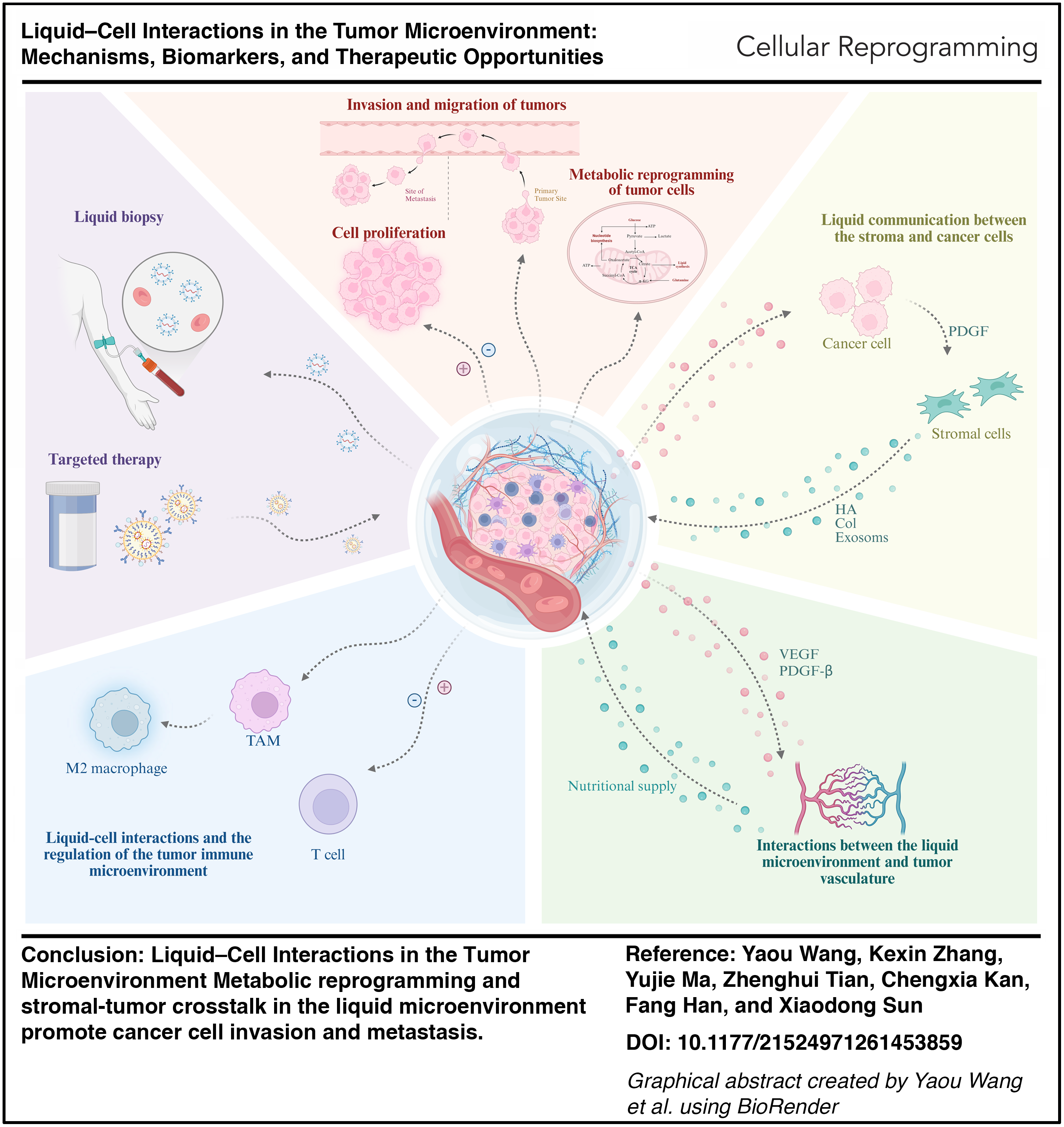
Tumor-associated fluids, including interstitial, vascular, and lymphatic fluids, are increasingly recognized as active regulators of cancer progression rather than passive transport media within the tumor microenvironment. As an integrative working concept, liquid–cell interactions describe how these fluids regulate biochemical signaling, extracellular vesicle trafficking, metabolite exchange, and force transmission among cancer, stromal, and immune cells. Hydrodynamic forces, chemical gradients, extracellular vesicles (EVs), and damage-associated signals jointly shape proliferation, invasion, metabolic reprogramming, angiogenesis, immune escape, and inflammatory propagation. Perturbations in flow, viscosity, pH, and fluid composition further remodel tissue architecture and reprogram cell states, thereby influencing therapeutic response. Clinically, liquid-phase biomarkers, including circulating cytokines, nucleic acids, EVs, and circulating tumor cells, support early detection, real-time monitoring, and resistance prediction. Therapeutically, strategies that normalize fluid dynamics, modulate soluble signaling networks, or block vesicle trafficking show translational promise and may enhance standard treatments. This review synthesizes recent advances from mechanisms to clinical applications and highlights the liquid phase as a distinct regulatory dimension of the tumor microenvironment with diagnostic and therapeutic relevance.
Keywords
Get full access to this article
View all access options for this article.