



Abstract
By the year 2035 almost 20% of the US population of 389 million people will be 65 years and older. What this group has, compared with aged populations in the past, is better health, more mobility, and more active lifestyles. From January 1989 through December 2010, a total of 494 elderly patients with 536 foot and ankle injuries were identified. Within this group, 237 (48%) patients with 294 injuries were sustained as a result of a high-energy mechanism. These mechanisms consisted of 170 motor vehicle accidents, 30 as a result of high (not ground level) energy falls, 2 from industrial accidents, and 35 classified as other, which included sports, blunt trauma, bicycle, airplane or boating accidents, crush injuries, and injuries resulting from a lawn mower. The injuries produced were 17 metatarsal fractures, 9 Lisfranc injuries, 10 midfoot (navicular, cuneiform, or cuboid) fractures, 23 talus fractures, 63 calcaneal fractures, 73 unimalleolar, bimalleolar, or trimalleolar ankle fractures, 45 pilon fractures, and 3 pure dislocations of the foot or ankle. Overall, 243 (83%) of these injuries underwent surgical fixation and data have shown that when surgery is used to manage high-energy injuries of the foot and ankle in the elderly individuals, the complications and outcomes are similar to those seen in younger patients. Therefore, the decision for surgical intervention for high-energy injuries of the foot and ankle should be based primarily on the injury pattern and not solely on the age of the patient.
The 2010 census demonstrated that of the 308 million people living in the United States, 13% were aged 65 and older 1 and that, except for those in the 45 to 65 years bracket, this group grew at a faster rate than any other segment of the population. 2 Extrapolation data have estimated that by the year 2035, almost 20% of the US population of 389 million people will be 65 years and older. 3 What this group has, compared with aged populations in the past, is better health, more mobility, and more active lifestyles. Given the high physical demands, both through an occupation or from their recreational activities, it is expected that high-energy injuries of the foot and ankle in the elderly individuals will also occur. Coupled with this increased mobility is the fact that when patients sustain a foot or ankle injury, they also present with preexisting medical comorbidities. Combining their injuries and their medical problems often results in disproportionate stays in the intensive care unit or the hospital with greater risks of complications and mortality.4,5
There are, however, some problems when attempting to address specific areas of trauma within this group. First, in the lower extremity and excluding hip or ankle fractures, there are few, if any, prospective, randomized trials in the elderly population. Most of the studies on geriatric trauma are retrospective and discuss the presentation of patients as it pertains to polytrauma 4,6 –9 or discusses the more common injuries seen in the elderly individuals 10 rather than addressing specific problematic areas in geriatric trauma. In addition, unless authors specifically target the elderly or geriatric patient, 11 –41 the demographic data listed in their manuscript primarily describe the outcomes of all their patients. Looking specifically at some of the high-energy injuries reported in the foot and ankle literature and trying to extrapolate the data are difficult because the authors often fail to segregate the results of their elderly patients. 42,43
Second, there is no consensus regarding the specific age that qualifies when a patient is to be considered “geriatric.” Although some patients attaining the age of 62 years may be eligible for Medicare claims and could be considered elderly individuals, there is no real agreement as to the age that is necessary for someone to reach and crossover from middle age to elderly individuals. For example, how do we classify a 71-year-old male who has a 40-hour work week and exercises 3 to 4 times a week? In a study evaluating age, Demetriades et al made a recommendation to use 70 years or older as the criterion to describe the geriatric patient. However, these authors were unable to draw any conclusions regarding the true impact of age. 44 A more recent study has demonstrated that the physiologic compromise of the patient may play a more important role than simply classifying the patient by age. 45
A third problem is that surgical treatments afforded to younger patients, especially in the foot and ankle, may be withheld simply because of age bias. 46 –48 Excluding fractures of the femur, proximal humerus, or distal radius, some authors and treating physicians use “age prejudice” as their personal expectation that the elderly individuals will not do as well with surgery as nonelderly patients. This is apparent from the literature that discusses conservative approaches even for the management of such fractures as those involving the ankle, acetabulum, or the calcaneus. 13,14,19,21,49,50 Withholding surgical intervention from the elderly patients who present with high-energy injuries can result in significant problems producing an increase in the socioeconomic burden from those injuries. 49 This occurs despite a better understanding of the approaches and the techniques needed to manage these injuries, expected outcomes, and the resulting debilitating nature of injuries when they are treated nonoperatively.
The last concern is whether high-energy trauma seen in the younger population mirrors those seen in the elderly individuals. When mechanisms of injury for all trauma patients are evaluated, the leading cause of injury remains the motor vehicle accident (MVA). In the elderly individuals, a fall is the most common mechanism of injury4 with an MVA being the second most common. However, Schwab and Kauder noted that up to the age of 75 years, the MVA was still the most common mechanism of injury after which falls became the most common mechanism. 51 When falls are associated with the elderly individuals, one often pictures that osteoporotic/osteopenic patients sustaining a fall from a standing height due a decreased visual, auditory, and proprioceptive input, loss of strength, an inability to recognize and avoid a hazardous situation, or due to medical reasons such as syncope, arrhythmias, cerebral vascular accidents, or as a side effect from their medications. 52 –56 Although this applies to all falls, the healthier, more mobile, and active elderly patient often have falls from greater heights, such as from a ladder or roof, sustaining foot and ankle injuries similar to those seen in younger patients.
Given the current lack of information on the elderly patients, the purpose of this article will be to provide an expert opinion and review of the literature on the evaluation of high-energy foot and ankle injuries in the geriatric population, discuss their mechanisms of injury, and evaluate the treatment available for the care of elderly patients who present with these injuries.
Review of Injuries
An analysis of an orthopedic trauma registry database (level I trauma center) was performed looking specifically at foot and ankle injuries in the elderly patients. For this review, the working definition of an elderly patient was considered someone who was 65 years or older at the time of their injury. From January 1989 through December 2010, a total of 494 elderly patients with 536 foot and ankle injuries presented to the orthopedic service at an average of 22.5 patients per year. The average age of the 225 males and 269 females in our registry was 73.2 years (range 65-94). To give one an idea of how uncommon foot and ankle injuries were in this population, the registry data from 2005 through 2009 identified a total of 10 220 patients that presented through the emergency room at the level I trauma center. Within this population, there were 3002 patients (29.8%) who were aged at least 60 years. Looking specifically for patients presenting with an injury to the foot or ankle identified 164 patients (2%). However, this number is misleading because it does not exclusively represent high-energy foot and ankle injuries in the elderly individuals or patients strictly over the age of 65 years. Therefore, it is fair to assume that not all of these 164 patients are elderly individuals or sustained a high-energy foot and ankle injury.
Evaluating the 494 elderly patients, who did present with an injury to the foot or ankle, identified 237 (48%) patients with 294 injuries, as a result of a high-energy mechanism. These high-energy mechanisms consisted of 170 MVAs, which included motorcycle and pedestrian accidents, 30 as a result of high (not ground level) energy falls, 2 resulting from industrial accidents, and 35 classified as other, which included sports, blunt trauma, bicycle, airplane or boating accidents, crush injuries, and injuries resulting from a lawn mower. It is possible that there may have more than 237 patients who sustained a high-energy injury because in 41 other patients, no mechanism of injury was recorded.
In these 237 patients, a total of 218 (92%) patients underwent surgical intervention as a result of their high-energy injury. Looking specifically at the 294 high-energy injuries that these patients sustained, found that 243 (83%) of these injuries underwent surgical fixation. All injuries (51) treated nonoperatively were treated with nonweight-bearing casts for 4 to 6 weeks, followed by a boot and formal physical therapy. Classifying the high-energy injuries identified that fixation was used in 17 metatarsal fractures, 9 Lisfranc injuries, 10 midfoot (navicular, cuneiform, or cuboid) fractures, 23 talus fractures, 63 calcaneal fractures, 73 unimalleolar, bimalleolar, or trimalleolar ankle fractures, 45 pilon fractures, and 3 pure dislocations of the foot or ankle. When patients did present with a high-energy injury to the foot or ankle, age alone was not used as a criteria to avoid the surgical management of these injuries.
Surgical Management
There is a paucity of information regarding the outcomes of surgically managed high-energy foot and ankle injuries in the geriatric population. Performing a search on PUBMED and Google Scholar, from January 1980 to August 2011, and using the key words elderly, geriatric, high energy, fractures, injuries, foot, and ankle found no articles specifically discussing fractures involving the tibial plafond (pilon), Lisfranc, or dislocations for the last 30 years. Four articles were found to be mentioning elderly patients with talus, midfoot, or metatarsal fractures, but these were either review articles offering no specific treatment for the elderly population 30,31 or simply discussed the incidence of these injuries in older patients. 40,41 The only injuries to mention specific evaluations and treatment of fractures in the elderly individuals were those involving the ankle 11 –26,28,29,31 –38 or calcaneus. 22 –24,39 Among these 2 specific fractures, most ankle fractures occurred from simple ground level falls. However, the literature has shown that good outcomes, equal to a nonelderly population, can be expected with the use of surgery for the management of these injuries.
The published literature often suggested that surgery was discouraged in the elderly individuals because of a concern of low rates of healing, failure of fixation, and high complication rates secondary to the poor state of the soft tissues, diabetes, peripheral vascular disorders, osteoporosis, or other medical disorders (such as Alzheimer’s) which may produce noncompliance. That does not mean that elderly patients were excluded from surgery. Indeed, when surgery was indicated, it also included elderly patients and was based on their presenting injury rather than on their age. However, as previously noted, data offered in those manuscripts described the outcomes of all the patients but did not segregate those of the elderly population nor discuss whether fixation was altered based on treating the elderly individuals. What is important to note, however, is that whether the indications and the principles of the operative care of these injuries are the same regardless of the age of the patient.
A discussion of the surgical treatment of elderly patients should include adjunctive fixation, the use of cement, and the development of locking plate technology. The use of temporary transarticular pin fixation 57 or cement augmentation of osteoporotic bone has been discussed in the literature, 58 but one recent improvement in the management of the elderly patient is the increased use of locking plate technology. The advantages of locking plates are that they provide angular stability, which increases its load-carrying capacity. Functionally, each locked screw behaves like a miniature blade plate creating a single beam construct. This allows for load transmission from the screw to the plate and then relies on the frictional forces applied from the threaded screw head to the threaded screw hole in the plate resulting in shear stress being converted to compressive stress at the screw-bone interface. This allows locking plates to be 4 times stronger than load-sharing constructs. 59,60 Therefore, the preloads that are necessary for construct stability are lower than those for conventional plates and screws. 60,61 In addition to these biomechanical advantages, specific configurations of locking plates, similar to pin placements for external fixators, have also demonstrated an increase in the overall rigidity of the construct, which can also help in the management of osteoporotic fractures. 60,62 This section will discuss specific approaches for the surgical management of high-energy foot and ankle injuries in the elderly population.
Tibial Plafond (Pilon) Fractures
In our study, 45 patients who presented with a pilon fracture were managed surgically. Fractures of the distal tibia can present with the intra-articular or the extra-articular patterns, but it is the associated soft tissue injury that is of most common concern for surgeons. Swelling occurs rapidly and is exacerbated by the shortening of the extremity. The initial care of these injuries should be based more on the soft tissue injury than on the osseous fracture pattern because blisters, skin necrosis, and impaired perfusion are frequently observed and will affect the ultimate success of any surgical intervention.
The initial surgical management requires a plan based on the bony injury pattern, any open wounds, and the associated soft tissue problems. If definitive fixation is anticipated, reestablishing length of both the fibula and tibia will be necessary. This is performed as a staged approach to permit the soft tissue envelope to improve without necessitating an acute fixation of the fractures. The initial surgery should consist of the application of a spanning external fixator with or without fibular fixation. If the surgeon plans to transfer the patient to another institution, then application of the fixator itself is sufficient. If fixation of the fibula is performed, then tibial length is achieved with a medially applied external fixator, placing the pins into the proximal tibia and the calcaneus distally (Figure 1A-C). If fixation of the fibula is not performed, then adequate length of the tibia and fibula can be achieved by placing a centrally threaded pin through the calcaneus and connecting it to proximally placed pins onto the anterior proximal one third of the tibia (delta frame configuration 63,64 ; Figure 2A-C). Some important principles for fixator application include placing pins away from any anticipated incisions, avoid placing pins into the talus, and placing pins into subcutaneous bone in order to avoid irritation and drainage. The addition of a posterior splint will help maintain the foot into a neutral position, provide some compression, and help stabilize the soft tissues. After application of the fixator, a computed tomography (CT) will better delineate the fracture pattern.

A, Initial x-rays of a 76-year-old male who fell 12 feet off a ladder sustaining a comminuted pilon fracture. B, Patient was taken to surgery where fixation of the fibula and the application of a medially placed external fixator were performed. Note the calcaneal pin distally and that length of the extremity has been achieved. C, Clinical appearance of the extremity with the medial external fixator in position.

A, X-rays of a 73-year-old female involved in a motor vehicle accident. Note the displacement and angular deformity of the tibia and fibula. B, Due to significant swelling of the extremity, fixation of the fibula was not performed. Rather the application of a delta configuration, external fixator was applied to obtain length to the tibia and fibula. C, Intraoperative fluoroscopic view of the ankle after the application of the delta frame demonstrates that the length and the alignment have been improved.
Definitive fixation is performed once there has been improvement of the soft tissue envelope. This is noted by the ability to easily wrinkle the skin and may take anywhere from 10 to 20 days to occur. Different surgical approaches have been described for the definitive fixation of these injuries but the principles of management are the same for all patients. First, the fibula must be restored to the correct length and rotation. This provides a stable lateral column and indirectly reduces the posterolateral tibial articular section. Second, an anatomic reduction of the articular surface must be obtained. Third, there needs to be stable fixation applied to connect the articular/metaphyseal section to the tibial shaft. Finally, bone graft should be used to fill in any defects (Figure 3). Given the potential for osteopenic or osteoporotic bone, strong consideration should be given to using locked plates. 65 If the applied fixation is considered tenuous, the addition of a transarticular external fixator, transarticular pinning, or a period of prolonged casting cast can also be added to the patient’s treatment. Evaluating the results of surgical intervention has demonstrated that even in younger patients, long-term outcomes are suboptimal. Nevertheless, a good reduction of the articular surface, providing a stable fixation and allowing early ankle motion may optimize the results in these complicated fractures.

Postoperative view demonstrating fixation of the patient in Figure 1. Note that multiple locking plates have been used to achieve and maintain the reduction.
Ankle Fractures
The third most common fracture, after hip and wrist, in the elderly population is the ankle fracture. 10 In our population, the 73 patients managed for a unimalleolar, bimalleolar, or trimalleolar ankle fracture were the largest group treated in our elderly patients. A good outcome may be expected if a congruent reduction of the mortise can be obtained and that reduction is maintained until healing has occurred.
When discussing the ankle joint, it can be divided into 3 columns: lateral, medial, and intermediate. The lateral column consists of the fibula and the lateral collateral ligaments. The medial column is made up of medial malleolus and deltoid complex and the intermediate column consists of Volkmann (posterior malleolus) tubercle, Chaput tubercle and the ligaments, and membrane that make-up the syndesmotic complex. It is the ability to recognize injuries in all the 3 columns and stabilize them that dictates a successful outcome.
The authors’ preferred sequence of fixation is to manage the fibula first. Addressing the fibula requires that adequate length and rotation be obtained. This will help reduce any posterior malleolar fracture and help “push” the talus medially to reduce the medial malleolus. Any residual widened medial clear space often indicates that adequate length of the fibula was not obtained and will not allow an anatomic reduction of the mortise. 66 After the fibula has been addressed, the medial malleolus is approached. Multiple fixation techniques have been described to stabilize this fracture. Regardless of the fixation technique selected, visualization of the axilla of the medial malleolus should be used to verify that an anatomic reduction has been obtained. The only exception is when percutaneous fixation techniques are used to manage the entire ankle injury. Finally, evaluation and treatment of any residual intermediate column instability should be performed (Figure 4A-C).

A, Initial x-rays of an 82-year-old male who sustained a trimalleolar ankle injury after falling off of his racing bicycle, while training for a triathlon event. B, Postoperative anteroposterior view demonstrating fixation of the medial, lateral, and intermediate columns of the ankle. Note that a bicortical screw has been used to fix the medial malleolus along with a locking plate on the fibula. C, Lateral postoperative view of the ankle demonstrating fixation.
As discussed for plafond injuries, for the management of ankle fractures, especially in patients presenting with osteoporotic or osteopenic bone, the use of locking plate technology has provided a significant improvement for the care of these patients. As with any injury, patient selection is critical. However, studies, with and without the use of locking plates, have demonstrated good to excellent outcomes of operative treatments of ankle fractures in the elderly individuals. 12,15 –18,25,26 Additionally, in studies comparing operative versus nonoperative techniques, better outcomes using surgery have also been demonstrated due to the ability of the implant to maintain the reduction until healing has occurred. 13,14,19 –21,29,33,35,38 Since locked plates have shown an improvement in the fixation of osteopenic and osteoporotic bone, they should be used. 25 –27 Adjunctive external fixation, grafting, temporary pinning across adjacent joints, or prolonged casting should also be considered in patients with tenuous fixation. 32,34,35 Given these results, surgery should be considered a viable option for elderly patients who present with displaced, high-energy injury ankle fractures.
Calcaneal Fractures
Fractures of the calcaneus are common tarsal injuries, consistent with our series of 63 fractures, which represented 21% of all high-energy injuries and 36% of all foot injuries. The biggest problem in managing these fractures is the lack of surgeon familiarity with the surgical approaches and fixation techniques needed to obtain an adequate reduction. This often results in a nonoperative approach, which can lead to poor outcomes resulting from such complications as dislocations or entrapment of the peroneal tendons, impingement of the sural and posterior tibial nerves, the development of painful bony prominences, a widened heel with associated calcaneofibular impingement, a loss of height producing a varus or valgus hindfoot, the development of arthritis in the subtalar and calcaneocuboid joints, and the potential for anterior impingement of the anterior tibiotalar joint secondary to loss of talar height 67 –69 (Figure 5A and B).
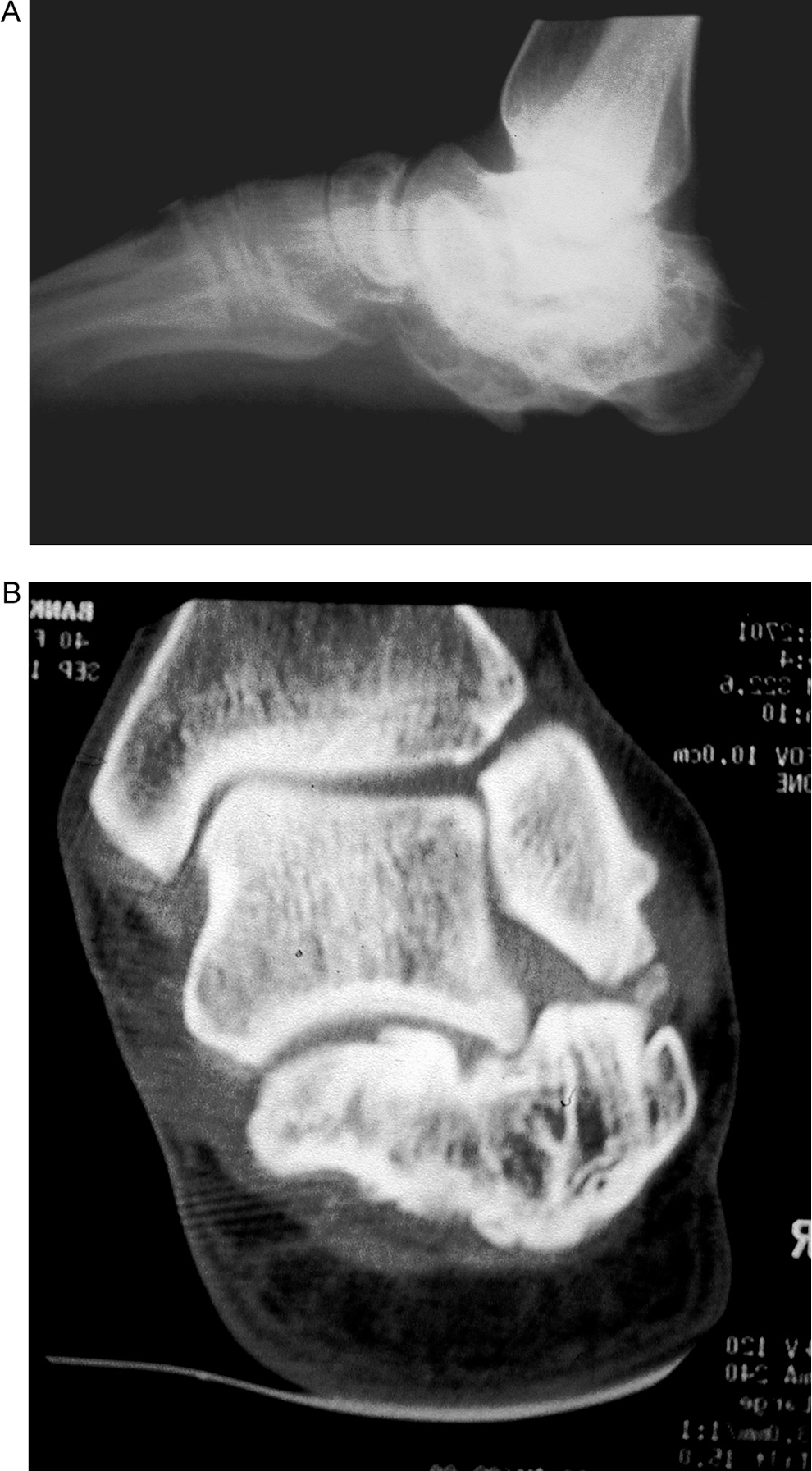
A, Lateral view of a malunited calcaneus fracture. This demonstrates that the talus has eventually settled into the calcaneus making it difficult to accurately see the subtalar joint or the hindfoot. B, Coronal computed tomographic (CT) view of the same patient demonstrating a widened and shorted heel, severe arthrosis of the subtalar joint, impingement of the fibula that resulted in the dislocation of the peroneal tendons along with some malalignment of the tibiotalar joint.
In managing these fractures, the care given to the soft tissue envelope is again one of the keys to success. 70 Swelling often produces fracture blisters and should result in a delay for definitive treatment until the blisters have reepithelialized 71 and the skin demonstrates obvious wrinkling throughout the hindfoot. 72,73 This can take up to 3 weeks but can be aided with the use of splints and compressive dressings, with or without cryotherapy devices and with the elevation of the extremity. Once a healthy soft tissue envelope has been obtained, definitive fixation can be undertaken. The only exception to the delay is tuberosity fractures producing tongue-type or avulsion fractures, which compromise the overlying skin. If compromise of the skin is present, early reduction and fixation may be necessary to relieve the pressure on the posterior skin. 74
If surgery is selected as the method of treatment, the goals include an anatomic reconstruction of the posterior facet, restoration of the calcaneal height (Böhler angle), restoration of the width, restoring length by reattaching the anterior and middle facets to the anterior column, providing rigid fixation to the fragments, with or without the use of bone graft, and a tension-free closure of the incision (Figure 6A and B). The most common approach used, especially for displaced intra-articular fractures, is an extensile lateral incision but medial approaches and percutaneous techniques have also been described. Reduction techniques, adjunctive equipment, and the use of implants to obtain and maintain the reduction have all been described in detail in current fracture textbooks. 75 –77 As with the previous discussions, the use of locked plates, with or without cement augmentation, should be considered in patients with questionable bone stock.

A, Lateral view of a 76-year-old male who sustained a calcaneal fracture after falling 10 feet off a ladder, while he was painting his house. Note the impaction and depression of the posterior facet. B, Postoperative lateral view demonstrating that the height and length have been restored using a locked plate and the addition of allograft bone.
Although the management of calcaneal fractures can be controversial, it is in the elderly patients that specific age bias and a nonoperative approach have been proposed. 22,24,39,78 One problem may be the level of experience a surgeon has treating these injuries. Even in young patients, these are difficult injuries to treat. Studies have demonstrated that institutions treating greater numbers of these fractures have decreased complications and better reductions, decreasing the rates of post-traumatic subtalar arthritis. 78,79 Looking specifically at the results of experienced surgeons using internal fixation for the management of calcaneal fractures in the elderly patients has demonstrated rates of healing approaching 97% along with rates of complications and outcomes equivalent to those of younger patients. 22 –24,39 Whether the elderly patient would be better served with a primary arthrodesis versus primary fixation is unknown, given the fact that none of these 3 articles provides any patients who underwent a primary fusion. However, the indication for a primary fusion would appear to be the same as for a younger patient, that is, fractures that are unable to be reconstructed. 80 Therefore, with proper patient selection and experience, surgery appears to be a viable option to restore the anatomy of the calcaneus.
Foot Fractures
Complex injuries of the hindfoot, midfoot, and forefoot are common and have been recognized as being an important determinant of patient outcomes. In our population, excluding calcaneal fractures, surgery was performed on 59 (24%) high-energy foot injuries. As with any other trauma, improved implants, advances in surgical approaches and techniques, along with a better understanding of the injuries that occur to the soft tissues, have improved the care offered to patients presenting with these injuries. It is these injuries where a nonoperative approach is likely to occur. The suspected reasons for this approach are that these are small bones, patients are of lower physical demand, the injuries are on the cusp as to whether surgery is indicated, and a subjective feeling that they will “do well” with casting. The indications for the surgery of these injuries, however, should be the same regardless of the patient’s age.
When fractures of the talus occur, they are uncommon injuries and can present as a fracture to the body, neck, head, and lateral process or as an osteochondral lesion. Fractures of the body may require the use of medial malleolar osteotomy to obtain a reduction, while a dual incision approach is recommended for the fractures of the talar neck, in order to verify that a reduction of the neck has been obtained. 81 Fractures of the talar head, lateral process, or osteochondral lesions require different approaches, and like other articular injuries, the goal is an anatomic reduction of the joint. Regarding the timing of surgical fixation in closed fractures, no difference exists whether they were treated before or after 6 hours. 82 However, fracture–dislocations should be reduced urgently to avoid necrosis of the soft tissues. Reviewing the outcomes of talus fractures has demonstrated that despite the ability to obtain and maintain an anatomic reduction, 40% of patients will still develop avascular necrosis of the talus and that almost all patients will develop some form of arthritis either in the ankle, subtalar, or talonavicular joint. 82 Nevertheless, some form of reduction should be attempted to improve the function of the hindfoot.
Navicular, cuboid, and cuneiform fractures are quite rare and often present in conjunction with other injuries in the foot. The goal of the treatment of these injuries is to prevent shortening of either the medial or lateral columns of the foot. When these injuries occur, it is important to verify whether there is any associated instability of either Chopart (talonacular/calcaneal cuboid) or Lisfranc (tarsometatarsal) joints. Fixation can be obtained either by direct reduction of the fracture, using a transarticular fixation toward an adjacent stable bony structure, or using percutaneous fixation techniques in conjunction to strategically placed external fixation devices. Reviewing the outcomes of these injuries has demonstrated that there is no difference in outcomes regarding age or gender. Although there was no statistically significant difference regarding the different methods of treatment, open reduction techniques led to higher outcome scores than percutaneous techniques. The largest difference, however, was in comparing operative versus nonoperative treatment. Patients managed without surgery had significantly poorer outcomes that those managed with any surgical technique. 83
As with other midfoot injuries, Lisfranc (tarsometatarsal) injuries can produce significant problems if left untreated. Reduction of the joints often requires a dual-incision approach with the medial incision centered over the first Web space, and extended proximally, while the lateral incision is centered over the proximal half of the fourth metatarsal shaft. Although discussion exists as to whether it is better to perform an acute arthrodesis or use an open reduction technique, the goal should still be to obtain an anatomic reduction of the joint and maintain it until adequate healing has occurred. Outcomes have again demonstrated no differences regarding age or gender. Although 25% of all the patients with anatomic reductions develop some form of post-traumatic arthritis, the most significant factor identified between obtaining a good or poor result was whether operative versus nonoperative treatment was used to manage these injuries. As with midfoot injuries, those managed nonoperatively had poorer outcomes than those treated surgically (Figure 7). 84,85

A, Lateral view of a 78-year-old female involved in a motor vehicle accident who presented with midfoot instability demonstrating dorsal extrusion of the a navicular bone. B, Intraoperative anteroposterior view demonstrating placement of schantz pins into the talus and cuneiform for placement of an external fixator. C, Lateral view demonstrating the external fixator in position, reducing the fracture, and improving alignment of the midfoot.
Fractures of the metatarsals are common injuries, which rarely require surgical intervention. However, certain injury patterns require a surgical intervention to obtain a satisfactory outcome. The first metatarsal can bear one third to one half of the body weight and is the terminal insertion for the peroneus longus and the tibialis anterior tendons. Several fixation techniques are available but if managed nonoperatively, malaligned fractures will ultimately affect load and gait patterns. The primary concern with fractures involving the second through the fourth metatarsals is to avoid shortening and angulation in the sagittal plane. Again, multiple techniques have been reported in the literature but the authors’ preferred method is the use of a 2.0-mm k-wire used as an intramedullary device. The fifth metatarsal is the most mobile metatarsal in the foot and rarely requires surgical intervention for a diaphyseal injury. However, fractures at the base may require intervention if they occur 1.5 to 2.0 cm distal to the styloid (Jones fracture) process and fail to unite with conservative care. The use of an intramedullary screw or plate fixation, with or without bone grafting, may be necessary to ultimately obtain a satisfactory outcome.
Discussion
The most common fractures in the elderly patients are those of the hip, wrist, or proximal humerus. However, even for these familiar injuries, the management can be controversial. This statement can probably be applied to any fracture presented in the elderly individuals, so it should not be of any great surprise that surgeons are hesitant to recommend surgery as a treatment option for injuries of the ankle or foot in the geriatric population. If one is looking for contraindications to surgery, for foot and ankle injuries in the elderly individuals, it should include those patients refusing surgery, bed or chair bound patients, patients with severe peripheral vascular disease, patients who have severe medical problems that preclude surgery, or for those with significant cognitive disorders in whom noncompliance issues will result in high rates of failure. For elderly patients, not in one of the aforementioned groups, surgery for high-energy injuries to the foot or ankle should be considered a viable treatment option in order to restore the anatomy, regain early function, and avoid complications seen with the nonoperative care of these injuries. This appears to be especially true since data have shown that the use of surgery for injuries of the foot and ankle in the elderly individuals has similar complications and outcomes to those seen in younger patients. 11 –24,28,32,33,38,39
The surgical approaches and fixation methods used to manage these injuries are similar to the principles used in the surgical treatment of younger patients, with some slight modifications. With the development of locking plate technology along with improved surgical approaches and techniques, the concerns for providing fixation to pathologic bone have been lessened. 39,60,61,78 However, as with the surgical treatment of any osteoporotic/osteopenic bone, should fixation of the foot or ankle injury be tenuous, the use of a nonweight bearing cast or the addition of some method of adjunctive fixation, such as the addition of bone cement or the application of an external fixator or pinning the bones across adjacent joints, can also be used until adequate healing has occurred. 25,26,32,34,35 To complete the treatment of the surgical management of the elderly individuals, a discussion on the management of the soft tissue envelope should also be included. For most patients, this does not appear to be an issue. However, for those injuries that appear to be at risk of wound problems, the addition of incisional negative pressure wound therapy (vacuum assisted closure device) may help prevent complications. 86,87
It appears, therefore, that age, by itself, should not be used as a contraindication to surgery. Rather, one should consider the physiological age of the patient. The patients presented with high-energy injuries to the foot or ankle have similar mechanisms of injury to younger patients. Many elderly patients are healthy and mobile, maintain active lifestyles, have occupations with greater than a 40-hour work weeks, and are often involved in high impact recreational activities. Although patient selection is critical for the success of any surgical intervention, preselecting them to nonoperative care and the potential for a poor outcome based on preconceived notions or on anecdotal bias about elderly patients is destined to produce significant financial, social, and psychological hardships to the patients and their families. However, one large difference to remember when treating these elderly patients is that their preexisting medical comorbidities can impact their overall care. If the physician treating these patients feels uncomfortable recommending a surgical option, when patients present with these injuries, then a transfer to another facility should be considered.
A limitation of this study is that, excluding calcaneal or ankle fractures, there were no long-term follow-up or outcome studies on the surgical techniques used to manage high-energy foot and ankle injuries in the elderly individuals. Therefore, this review is presented as a case series study in which the recommendations offered are considered an expert opinion without any long-term follow-up of these 237 patients. However, treating the displaced injuries with recognized surgical techniques, despite the age of the patient, appears to be instinctively correct. Using a previously published article on the surgical management of calcaneal fractures in the elderly patients, we demonstrated a 97% rate of healing with complications approaching similar rates to calcaneal fixation in younger patients. 24 This has been validated by other studies 22,23 and has demonstrated similar findings for the management of ankle fractures in the elderly individuals. 11 –21 Using this as a guide, such complications as the development of post-traumatic arthritis may be higher in the elderly patients, perhaps due to preexisting arthritis, but good outcomes can be obtained with very few patients needing an arthrodesis as a salvage for their management of pain. 24 A second problem is in dealing with complications associated with patient comorbidities. The literature has shown that certain medical conditions, such as diabetes, result in higher levels of postoperative complications. 88 However, since long-term follow-up was unavailable in these patients, no definitive recommendations can be made regarding the management of these comorbidities.
In conclusion, the authors recommend that, based on their experiences, the decision for surgical intervention for high-energy injuries of the foot and ankle should be based primarily on the injury pattern and not solely on the age of the patient. If complications arise, these should be managed similar to younger patients. Expected outcomes, using surgery to manage these injuries, should approximate those injuries managed in younger patients.
Footnotes
The author(s) declared no conflicts of interest with respect to the research, authorship, and/or publication of this article.
The author(s) received no financial support for the research, authorship, and/or publication of this article.