




Abstract
Background
Health-promoting lifestyle is an effective strategy for maintaining and controlling health, especially in immigrant women as a vulnerable group. Regarding this, the present study was conducted to determine the health promoting lifestyle and its associated factors in Afghan migrant women in Iran.
Method
This was a population based cross-sectional study in which 255 Afghan women of reproductive age. The study population was selected using the continuous sampling method from all Afghan women who referred to health centers of southwest of Tehran in 2018. The data were collected through the socio-demographic and Health Promoting Lifestyle Profile-II (HPLP-II) questionnaire.
Results
The total HPLP-II mean score of women was (124.05 ± 17.28). The lowest score was related to physical activity dimension (14.70 ± 3.78) and the highest score was related to spiritual growth (24.56 ± 5.06). Although some factors such as age, duration of education, income level, ability to speak Persian, education level of husband, and number of children significantly related factors to participant’s lifestyle (P <.05), but multiple regression model showed that income level and ability to speak Persian are final statistically related factors to Afghan women health promoting lifestyle in Iran.
Conclusion
Familiarization of the individual with the Persian language and the promotion of employment status should be considered due to the low socio-economic level and the fact that most women participating in the study are housewives.
Introduction
Health promotion behaviors are known as a main determinants of health in prevention of many diseases.1,2 Health-promoting lifestyle is a multi-dimensional pattern of appropriate behaviors such as good diet, physical exercise, sleep well, away from physical force and stress and no smoking that helps improving well-being.3,4 Epidemiological studies have shown that the risk of lifestyle-related chronic diseases including diabetes, hypertension, metabolic syndrome, and obesity have been increased with worsening healthy lifestyle.5,6
Health-promoting behaviors are classified in 6 dimensions based on Pender’s health promotion model as follows: physical activity, nutrition, stress management, spiritual growth, interpersonal relations, and health responsibility. 7
Based on various studies, lifestyle have been investigated in different countries among groups of university students, 8 elderly, 9 and reproductive age women.1,10 Due to women of reproductive age, have crucial stages, including puberty, pregnancy, and breastfeeding and their health play an important role in next generation’s health. So, choosing a healthy lifestyle is a positive approach to promoting their well-being.1,10
The concept of women’s lifestyle is formed in a specific context and under many factors such as norms, culture, national health policies and situation, one of which is immigration.1,11 Immigration plays a key role in shaping the lifestyle of migrant women. They encounter serious problems such as poverty and malnutrition due to low economic status. Poor social support and insufficient maternal health care of migrant’s women influence their adverse health outcomes.12,13
Afghanistan is a country where its people suffer from war and insecurity. 14 The health status of Afghan women has been marginalized because of a long history of cultural beliefs and gender discrimination.15,16 Most of Afghan women are illiterate and marry at an early age, thus they are more likely to have unintended pregnancies. Many deliver at home and have a higher rate of maternal mortality due to limited access to health facilities. 17
Iran is second of the host countries of Afghan immigrants, which hosts about 3 million Afghan refugees.18,19 Iran has partially been able to help these women by improving their health behaviors. However, it seems that they still struggle with a significant gap in their lifestyle. 15
Multiple studies of different groups of women immigrants have demonstrated that socio-economic and cultural factors such as being employed, higher education level 20 ability to language of host country20,21 better individual health status, education from their original country, greater communication ability, better health status of the husband, and adaptive family functioning 22 have been associated with healthy lifestyle.
By considering the impact of lifestyle on consequences of health, investigating lifestyle of Afghan women is necessary. In the review of literature conducted, studies on this subject are limited. Therefore, the present study aimed to determine the health-promoting lifestyle and its related factors in Afghan women who referred to health centers of Tehran.
Materials and Methods
This cross-sectional study was conducted on 255 women of reproductive age who referred to health centers in southwest of Tehran in 2018.
To determine the required sample size with an accuracy 95% confidence and the power of 80%, assuming that the correlation coefficient between health -promoting lifestyle and its related factors is at least 0.2, by following formula n =
Most of the Afghan live in the southwest of Tehran, the southwest of Tehran consists of 2 parts that were easier for sampling. According to the Cib electronic system of health, the population of Afghan reproductive age women of Islamshahr and Rey was 9536 and 45 767 with 19 and 28 health centers, respectively.
Researcher asked all managers of health centers, that classified their health centers by considering socio-economic indicators such as access to educational and health facilities, geographical location, price of house, and job opportunities in 1 of 3 groups as good, moderate, and poor. Multi-stage stratified sampling of health centers with appropriate allocation, were performed. Numbers of health care were randomly selected among groups. The sampling was performed through the continuous sampling method from all the Afghan women who referred to health centers of the southwest of Tehran. Data was collected by the selection of 44 samples out of 6 Islamshahr’s health centers and 211 samples out of 9 Rey’s health centers. Sampling was carried out during August to October 2018.
Inclusion criteria were: being Afghan, being in reproductive age (15-49), and having a health document file in the health centers of Islamshahr or Rey. The exclusion criteria were being pregnancy, having diseases including cancer, chronic cardiovascular disease, epilepsy, diabetes, and severe mental and physical disabilities, occurrence of events including mourning for the loss of close family members in the past 3 months.
Because a significant number of Afghan women are illiterate, the questionnaire was completed through an interview by an Afghan midwifery student who was fluent in both Persian and Dari languages for all women. Thus, the response rate was 100%.
The questionnaire had 2 parts. First part was made up of socio-economic and cultural factors (influential variables) that was measured by demographic characteristics questionnaire designed and approved by the researcher.
The second part consisted of Health Promoting Lifestyle Profile-II (outcome variable) questionnaire. Walker’s Health Promoting Lifestyle Profile-II (HPLP) questionnaire which contained of 52 items in 6 dimensions of physical activity, spiritual development, health responsibility, interpersonal relationships, nutrition, and stress management based on a Likert scale of scoring from 1 to 4 (1 = never, 2 = sometimes, 3 = often, 4 = routinely). It is estimated that the total score can range from 52 to 208. The higher score represents a maximal level of health with respect to lifestyle. 23
Both content and face validities were applied to validate the tool for assessing health promoting lifestyle. In this study, the Persian version of HPLP-II was used for measuring 52 health-promoting lifestyle behaviors. 1 Because some Persian words were complicated, the researcher team including (Iranian and Afghan nationality) made it easier by replacing similar simple words with complex ones. Then, researcher give questionnaire to 30 Afghan women in order to evaluate the level of difficulty and ambiguity of the questionnaire. After confirming the face validity of the questionnaire by samples, the questionnaire was given to 5 faculty members of the Department of Midwifery and 1 Afghan PhD of reproductive health for checking the face and content validity. Finally, after getting approval, this questionnaire was used as an instrument in this study. Also the reliability of the questionnaire was determined. In the present study, Alpha Cronbach’s and the internal correlation coefficient of this questionnaire were estimated at 0.89 and 0.9, respectively.
Ethical Considerations
The Ethics Committee of Iran University of Medical Sciences approved the protocol of this study (code number: IR. IUMS.REC1396, 9513593004) before the collection of samples. The samples signed the written consent form during the interview, and they were assured that their information would be kept confidential.
Analysis
Data were analyzed in SPSS software (version 16). The demographic characteristics data were presented as frequency distribution, central tendency, and index of dispersion (ie, mean and standard deviation). Independent t-test, one-way ANOVA, and Pearson correlation were used to examine the association between demographic characteristics and total HPLP.
Finally, multiple regression analysis was used to determine the effect of each demographic variable on overall HPLP via enter method. Findings were considered statistically significant if the P value was <.05.
Results
The obtained results showed that 30.2% of the samples were 25 to 29 age old. (97.6%) of them were housewives. Nearly, half of the study population were illiterate 45.1% and 93.3% lived in poor economic conditions. 67.9% of the sample were of Hazara ethnicity and 75.3% were Shia. Nearly a quarter of the sample resided in Iran from 1 to 4 years (24.4%). Around 62.7% of the subjects had an Identity document and 98.4% did not smoke. None of the samples reported drug abuse. About 75.3% of them were born in Afghanistan and 53.7% could not speak Persian fluently. 70.6% of these women lived in city, 37.3% of their spouses were illiterate, and 62% of them were laborers. Marriage duration of 27.5% was from 1 to 4 years and 28.2% of the samples had 1 child. About 98% of women were housewives (Table 1).
Demographic Characteristics of the Participants (n = 255).
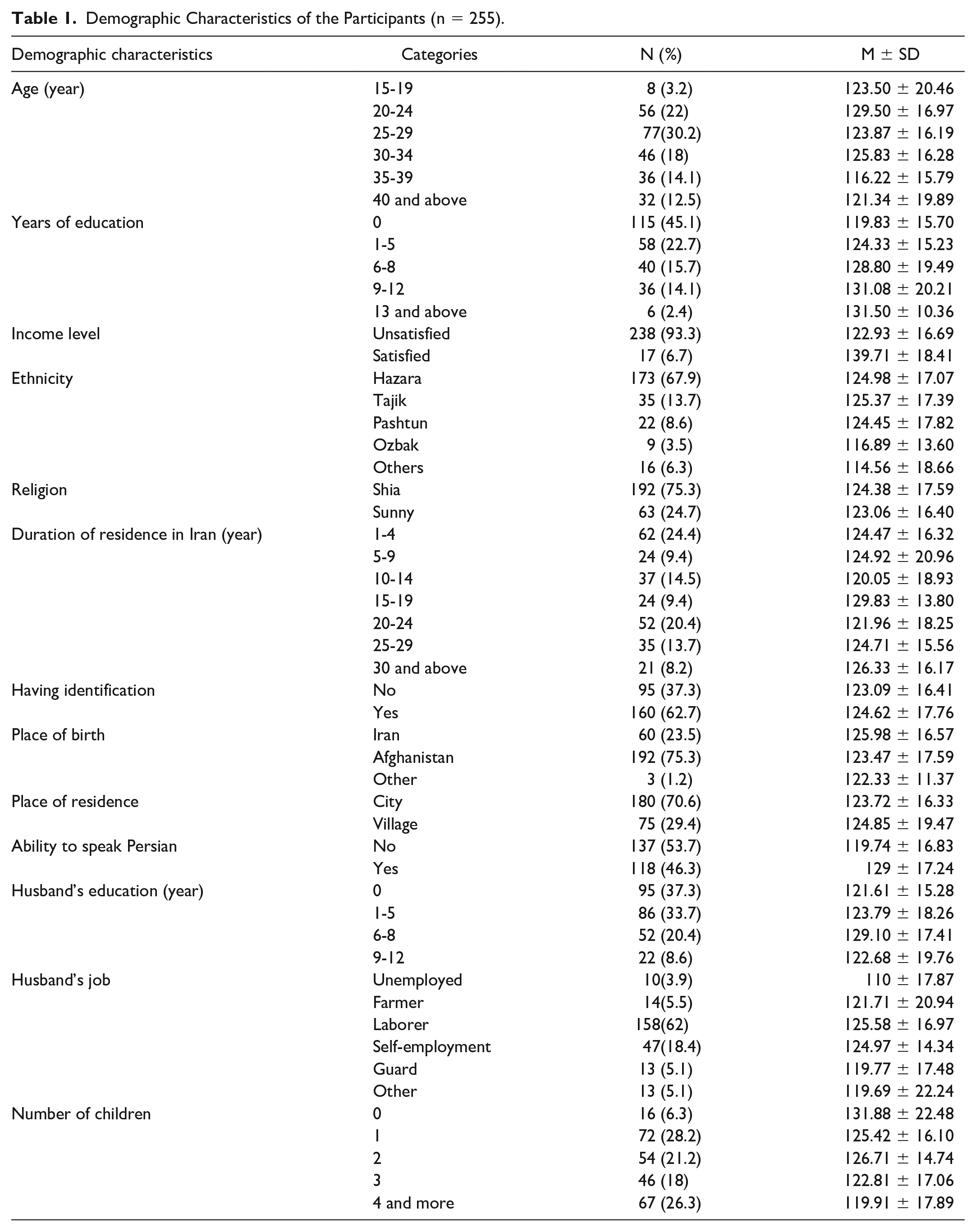
Table 2 present HPLP score and its dimensions. In assessing the relationship between demographic variables and total HPLP is shown in Table 3. The results of ANOVA showed that HPLP of the participants who are 35 to 39 years old, was lower than the participants aged 20 to 24 years (f = 2.95, P < .01), (r = −0.16, P < .009). Number of children (r = −0.15, P = .01) were inversely correlated with HPLP (The normal distribution of this variable was confirmed by chi-square test).
Total Score of the Health-Promoting Lifestyle and its Domains.

Correlation Total Score of HPLP and Independent Variables.

P < .05, Bold represents the significant P-values.
HPHP score was significantly related to the women’s education (r = .25, P < .001), (f = 4.32, P < .002) and husband’s education level (r = .13, P = .02).
The results of the t-test showed that HPLP of people who are unsatisfied income level status is lower than people who are satisfied (P < .001). In addition, HPLP of people who cannot speak Persian well is lower than people who can speak Persian fluent (P < .001) (Table 3).
Six variables were entered into the multiple regression model. Finally, income level and ability to speak Persian were 2 variables that were significant in the model and accounted for 13% of the changes in overall health-promoting lifestyle score (Table 4).
Multiple regression analysis for factors associated with overall HPLP II.

P < .05, Bold represents the significant P-values.
Discussion
In the present study, the lowest score of HPLP dimension was related to the physical activity and the highest score was related to the spiritual development, which was similar to the results of a study conducted by Bhandari et al 24 and Hsiao et al. 22
The results of another study carried out by Sohng et al which examined the lifestyle of elderly Korean immigrants in the United States, showed that although the lowest score was related to the physical activity dimension, the highest score was associated with the nutrition dimension. 25
However, achieving these results was not far from expectations, since the Afghan people have strong religious background and they believe that their first supporter is God. 26 In addition, the undeniable role of immigration, sense of homesickness and need for praying to mitigate the stress of immigration amplify a high score in spiritual dimension. Moreover, by the advancements in technology,27,28 people have less attention to sport and physical activity, especially among Afghan women who are mostly housewives in this study, the obtained results were not surprising.
The results of this study showed that ability to speak Persian and satisfied income level were 2 factors that can be related to better lifestyle of Afghan immigrant women. Researchers use the acculturation hypothesis to examine health behaviors of immigrants. 29 Berry categorized immigrants’ acculturation into 4 types, including assimilation (adopts the receiving culture and discards the heritage culture), separation (rejects the receiving culture and retains the heritage culture), integration (adopts the receiving culture and retains the heritage culture), and marginalization (rejects both the heritage and receiving cultures). 30
It seems that when immigrants adapt to host country, their health behaviors will improve. Acculturation could manifest in 3 domains: behavior (ie, cultural practices including media use, language preferences), cognition (ie, cultural values, familial values, and self-constructs), and identification (ie, ethnic membership and attachment to the original or host country. 31
One of the criteria for adaptation in behavior domain is ability to master the language of the host country. Language acculturation (adoption of the host country language (can be assessed by language proficiency. 32
In this study, Afghan women immigrants who were fluent in Persian (Iranian language), had better lifestyle. They have adapted in Behavioral dimension. Therefore, they are probably more confident and more connected to the Iranian people. Therefore, they can expand their opportunities for social resources (eg, health care provider), and were abler to obtain health knowledge and make health decisions for a better HPLP.
The results of a study conducted by Okafor et al on African-American adult immigrants in the US were in agreement with present study. It shows that language Proficiency is associated with health behaviors of immigrants. 32
Nonetheless, Kim et al conducted a study to investigate the lifestyles of Korean immigrants in the United Arab Emirates, it was found that mastery of the host community’s language was not correlated with lifestyle score of the immigrants. 33 The results of this study were inconsistent with the findings of the present study. This inconsistency was due to temporary presence of the immigrants in the target community for a specified period of time which the author has mentioned.
Income level was another important factor related to lifestyle. Afghan women who satisfied with income level had better lifestyle. A significant number of Afghan migrant women are illiterate and housewives. Moreover, most their husbands are laborers. Their economic level is low. Their socio-economic status has led them to consider their identity completely separate from Iran society. Thus, they are marginalized by social conflict. The majority of them are anxious, stressed and depressed. They lose their motivation to improve their healthy lifestyle.15,34 Thus, it seems that satisfied income level as a powerful variable may reduce this conflict and adapt them in identification dimension of acculturation. Therefore, adaption encourages them to improve their lifestyle. The findings of a study performed by Hardan-Khalil et al on Arab American women were in agreement with the results of the present study. It showed that Arab immigrant women who adapted to American culture had more communication and better lifestyle. All of Arab American were literate. They had health insurance and had significant annual income. 35
Additionally, results of studies by Hsiao et al was conducted on Vietnamese female immigrants in Taiwan were in agreement with present study. Immigrant women who adapted to the culture of the host country, had a better lifestyle. About 75% of them were employed and reported a good monthly income. 22 It seems that in both recent studies was no significant social conflict and immigrants had completely acculturation with the host country.
Strengths of the Study
It seems that few studies have been done on the lifestyle of Afghan immigrant women in Iran. This study can provide new information in this field.
Limitation of the Study
Since this was a descriptive study for a group of residing in the southwest of Tehran, the finding cannot be generalized to the entire Afghan women population in Iran.
Conclusion
Two factors in this study that were associated with improving lifestyle as an immigrant for Afghan women in Iran were increased income and the ability to speak Persian. When considering the effect of socio-cultural factors on lifestyle, the impact of the instruction of Persian language and job creation for Afghan women in Iran could be further studied.
Recommendations and Suggestions
Replicated studies with other groups residing in different geographical areas are needed. Health providers should spend more time on Afghan women, and give training simply and get feedback from them. Health system give health necessary training to Afghan women who are literate and fluent in Persian and Dari as Health professional assistant that help them to promote health.
Financial and Ethical Issues
This article was extracted from an MS thesis to improve the Afghan women health in Iran with financial support of the Italian Embassy and UNFPA in Tehran. It obtained the approval and ethical license from the Iran University of Medical Sciences, Tehran, Iran, and was registered under the ethical code of IR.IUMS.REC.1396.9513593004.
Footnotes
Acknowledgements
This study was part of a M.S. thesis supported by Iran University of Medical Sciences (grant no:9513593004). We want to acknowledge all Afghan women participated in this study and the respected professors of the Midwifery Department of Iran University of Medical Sciences.
Declaration of Conflicting Interests
The author(s) declared no potential conflicts of interest with respect to the research, authorship, and/or publication of this article.
Funding
The author(s) disclosed receipt of the following financial support for the research, authorship, and/or publication of this article: This research has been funded and supported by Iran University of Medical Sciences.
