




Abstract
In recent years, China has actively guided the development of the cultural industry through national policies and promoted the natural integration of science and technology with the cultural industry. Such a trend has not only inspired a large number of new forms of scientific and cultural products but also provided new grounds for science and technology museums and popular-science museums to develop content based on cultural heritage. Relying on the content and exhibit resources of the China Science and Technology Museum and taking the intangible cultural heritage project ‘Chinese shadow puppetry’ as a research case, this paper analyses the traditional cultural factors and scientific elements of the case, elaborates on the theoretical logic of integrating scientific and traditional cultures in science exhibitions, summarizes from a practical perspective the exhibition principles and exhibition and education models featuring the integration of scientific and traditional cultures, and explores viable paths for integrating traditional culture into science exhibitions.
According to the report of the 20th National Congress of the Communist Party of China (CPC) delivered on 25 October 2022, promoting the creative transformation and innovative development of fine traditional Chinese culture is a key aspect of the protection and development of important cultural and natural heritage and intangible cultural heritage (ICH). This philosophy will serve as the fundamental guide for China's efforts to construct the scientific culture and promote the organic integration of traditional and scientific cultures in the coming period. As the only national comprehensive science and technology museum in China, the China Science and Technology Museum (CSTM) has made useful explorations in showcasing the integration of scientific and traditional cultures through the medium of ICH. It encourages visitors to view ICH through a scientific lens, thereby fostering an appreciation for the brilliant achievements of Chinese civilization and its significant contributions to humanity. Here, the ‘Chinese shadow puppetry’ exhibition at the CSTM (Figure 1) was taken as a research case to explore the integration of scientific and traditional Chinese cultures within the ICH context.
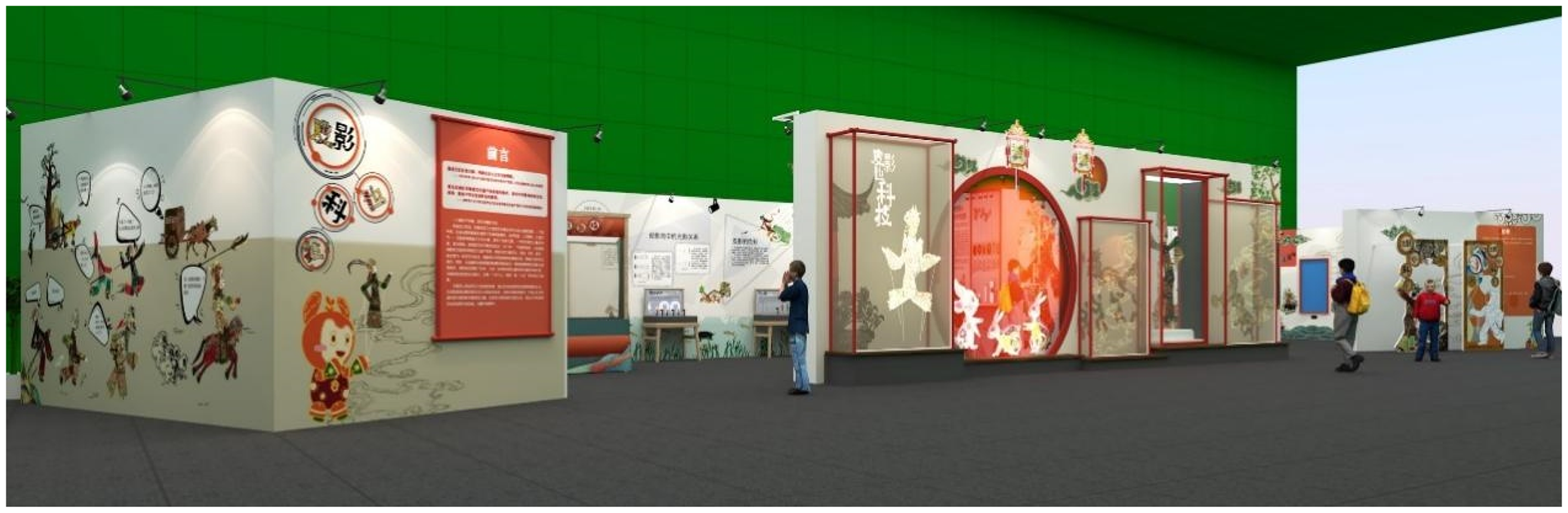
The ‘Chinese shadow puppetry’ exhibition at the China Science and Technology Museum.
Every advance in science and technology brings about changes in the means of cultural production, which in turn affect the transformation of cultural forms. In recent years, the scientific and technological methods used by the CSTM in its exhibitions have promoted the creative conversion and development of the traditional culture contained in the exhibition objects. To a certain extent, they have also facilitated the innovative integration of scientific and traditional cultures. The driving forces for such integration include both exhibition concepts designed at the top level and facilitated by national policies, and spontaneous factors in the convergence of cultural content.
Policy guidance promotes the integration of scientific culture and traditional Chinese culture in multiple dimensions
The integration of scientific culture and traditional Chinese culture is reflected in policies at all levels and in various fields. First, in terms of the top-level design of national policies, the Outline of the 14th Five-year Plan (2021–2025) for National Economic and Social Development and Vision 2035 of the People's Republic of China pledged to implement programmes to carry on the best of Chinese cultural traditions and heritage, improve the systematic protection of important cultural and natural heritage and ICH, and promote the creative conversion and development of fine traditional Chinese culture. Under this general guideline, in recent years, the Ministry of Culture and Tourism, the Ministry of Education, the Ministry of Science and Technology, the National Cultural Heritage Administration and other government departments have jointly issued documents such as the Notice on Carrying Out Intangible Cultural Heritage Inheritance and Education Activities in Extracurricular Activity Venues for Minors to promote ICH inheritance and education activities. In August 2021, the General Office of the CPC Central Committee and the General Office of the State Council issued the Opinions on Further Strengthening the Protection of Intangible Cultural Heritage, proposing to increase the dissemination and popularization of ICH. In June 2022, 10 government ministries jointly released the Notice on Promoting the High-quality Inheritance and Development of Traditional Crafts, proposing to step up the promotion of traditional crafts. In the field of popular science, in the ‘Strengthening the construction of popular science infrastructure’ chapter of the Outline of the Action Plan for Improving Scientific Literacy for All (2021–2035), it is proposed to promote the integration of and sharing among science and technology museums and other facilities, such as museums and cultural centres, and to build a modern science and technology museum system aimed at enhancing scientific and cultural literacy.
Currently, the China Association for Science and Technology is advancing the construction of the Science and Culture Museum Consortium (Gao, 2022). Science and culture venues, social organizations and research institutions are working together to promote the integration of science and culture; comprehensively enhance people's ideological, moral, scientific, cultural and physical- and mental-health qualities; and support the development of a culturally advanced nation (Ruan et al., 2021). From the initial concept to specific requirements for relevant departments, these institutional policy guides have constituted a policy structure for guiding cultural integration and provide an important basis for the practical work of science and technology museums. On this basis, the CSTM has a responsibility to use its exhibition and education platform on ancient science and technology to showcase the cultural and scientific confidence of the Chinese nation and promote the Chinese spirit by integrating scientific and traditional cultures.
Exploring the feasibility and key points of integrating scientific culture with traditional Chinese culture from a technological standpoint
As far as the relationship between science and culture is concerned, modern science and technology, as well as the social institutions they encompass, are themselves a form of cultural expression and cultural force. This is manifested in two ways: the development of science and technology is associated with the practical functions of culture, such as improving human security and enhancing people's ability to resist natural disasters, and it is also connected to the humanistic aspects of culture, such as the role of science in changing human world views.
In Prague, on 24 August 2022, the Extraordinary General Assembly of the International Council of Museums (ICOM) approved a proposal for a new museum definition, with 92.41% voting in favour (for, 487; against, 23; abstentions, 17). Following the proposal's adoption, the new ICOM museum definition is: ‘A museum is a not-for-profit, permanent institution in the service of society that researches, collects, conserves, interprets and exhibits tangible and intangible heritage. Open to the public, accessible and inclusive, museums foster diversity and sustainability. They operate and communicate ethically, professionally and with the participation of communities, offering varied experiences for education, enjoyment, reflection and knowledge sharing.’
Such a definition inherently embodies a profound cultural endowment. ICH, as a precious spiritual and cultural legacy left by our ancestors, represents the unique spiritual values, ways of thinking, and cultural consciousness of the Chinese nation. It records the historical trajectory traversed by ancient Chinese in cultivating their scientific consciousness and creative thought and inspires modern Chinese in pursuing scientific and technological innovation. In the practice of science communication, the combination of ‘ICH + science and technology’ is effective in promoting the integration of scientific and traditional cultures, mainly in three aspects: content, media forms and popular-science platforms.
Content-wise, science communication through ICH is an important part of science and technology-themed exhibition and education programmes in the Chinese context. First, the origins and developmental trajectories of ICH projects are closely related to the scientific and technological levels of their respective historical periods. The knowledge and skills embedded in ICH are predominantly scientific elements of the past (Cassirer, 1944/2013); 1 they reflect the state of productive forces and the level of scientific and technological development across different eras. They also encapsulate the unique cultural essence of science as it has evolved in China, serving as a pristine preservation and objective reflection of human creativity and cognitive development. As such, they fall within the purview of research into the history of Chinese science and technology (Luo and Tang, 2017). The scientific principles underlying ICH are inherently consistent with modern scientific content and presented in a more intuitive manner that is easily understood by the public. For example, shadow puppetry, as a classic ICH item in China, incorporates scientific elements, such as light and shadow, and materials science. In its heyday, it was a tech-rich social product of its time, with distinct technological features and significant scientific relevance. Therefore, ICH-empowered science popularization involves contextualizing scientific and technological principles within their historical settings and examining the everyday applications of these principles across time and space. Second, science and technology, as collectively a major aspect of the intellectual development of a society and an important cultural component, also serve as a significant manifestation and vehicle of cultural expression. For example, the craftsmanship of shadow puppetry in different historical periods reflects the productivity and advanced technological capabilities of those times. These tangible aspects of human development also vividly illustrate the cultural characteristics of their societies. Third, popular science without the dimension of cultural values is evasive and aimless. The combination of ‘ICH + science and technology’ can showcase the new charm of ICH in the modern era, enabling the public to understand ICH and appreciate their craftsmanship from a scientific perspective, and acknowledge the important role of the integration of science and culture in driving social development, thus truly realizing the important role of culture in shaping the values of popular science.
In terms of media forms, the integration of culture with science and technology has become an inevitable trend and a crucial choice for the inheritance and development of ICH. ICH, which represents intangible human behaviours and living habits, must keep up with technology in order to persist and develop in the contemporary technological environment. Modern science and technology serve as the driving force for the inheritance and development of ICH, not only by innovating the forms of ICH resources but also by enhancing the values of these resources. As tools and means, modern technologies have made it possible to digitally record ICH, transformed its dynamic process into permanent visual and auditory resources, and enabled visualized protection of ICH (Zhou and Chen, 2020). For example, the shadow puppetry exhibition at the CSTM features the integration of light and shadow interaction, motion–sensing interaction, and mechatronic interaction technologies. While preserving the cultural essence of traditional shadow puppetry, the application of digital and intelligent technologies pushes the exhibition to a new artistic height. These technologies not only provide a modern interpretation of traditional art but also offer visitors an immersive experience, allowing them to participate in and understand how technology integrates into life to construct culture. This ultimately achieves the effect of embodied learning.
In terms of the integration of popular-science platforms, as the only national comprehensive science and technology museum in China, the CSTM offers platforms to promote and showcase the achievements of ancient Chinese science and technology. They include the ‘Glory of China’ exhibition hall, a series of exhibitions on ancient Chinese science and technology, and the ‘Chinese Science and Technology Classroom’ series of educational activities. ICH, as an important vehicle and manifestation of traditional Chinese culture, is already well represented in the ‘Glory of China’ exhibition and education programmes. The combination of ‘ICH + science and technology’ is a key demonstration of the integration of science and culture. As a common topic for science and technology museums and cultural museums, it facilitates cross-sector integration in the supply of scientific and cultural resources among popular-science venues and cultural institutions. It also facilitates the creation of collaborative intellectual properties between science and technology museums, cultural museums and ICH museums. In doing so, it promotes the development of ICH in the new era and serves the goal of enhancing the public's scientific and cultural literacy.
The practical logic of integrating scientific and technological culture with traditional culture in science exhibitions
Exhibition development principles for the integration of ‘ICH + science and technology’ cultures
(1) Fully leveraging the role of ICH bearers. ICH bearers are the vital custodians and conveyors of ICH. ‘With their extraordinary intelligence and spiritual insight, they store, master and carry the cultural traditions and exquisite skills in the ICH categories. They are both the living repositories of ICH and the contemporary bearers and representatives in the relay race of ICH transmission’ (Liu, 2006). Take shadow puppetry as an example. This folk art relies entirely on the active participation of its bearers. In developing exhibitions on the integration of ‘ICH + science and technology’ cultures, science and technology museums should first thoroughly study ICH bearers to explore the underlying scientific and cultural essence of ICH. This should be the foundational principle for developing exhibition and education resources featuring the integration of ‘ICH + science and technology’ cultures.
During the development of the shadow puppetry exhibition, several key bearers of this art form were involved, including Lu Baogang (Figure 2), a representative bearer of the national ICH ‘Beijing Shadow Puppetry’, and Wang Xi, a representative bearer of the district-level ICH ‘Jingxi Shadow Puppetry’ in Haidian District, Beijing.
(2) Highlighting a storytelling perspective that integrates science and culture. ICH is not just an important symbol of China's historical and cultural achievements and a vital component of fine traditional Chinese culture; it also contains a wealth of scientific knowledge, methods, ideas and spirit. In essence, ICH is itself a fusion of science and culture. The CSTM has set forth the vision of becoming an ‘international communicator of scientific culture’ in the new era. The exhibition and education activities featuring the integration of ‘ICH + science and technology’ cultures are well aligned with this vision. Therefore, when exploring the relevant exhibition and education resources, it is crucial to highlight the perspective of scientific culture. The ‘Mechanical shadow puppet’ exhibit (Figure 3) features the classic shadow puppetry figure Hua Mulan, crafted from modern acrylic materials. It uses classic linkages and servo motors to animate the puppet's limbs and head, demonstrating the dynamic movements and trajectories of the puppet's components. This innovative approach breaks the spatial and temporal limitations of traditional shadow puppetry performances, allowing the audience to experience the dazzling fusion of traditional shadow puppetry culture and contemporary technology.
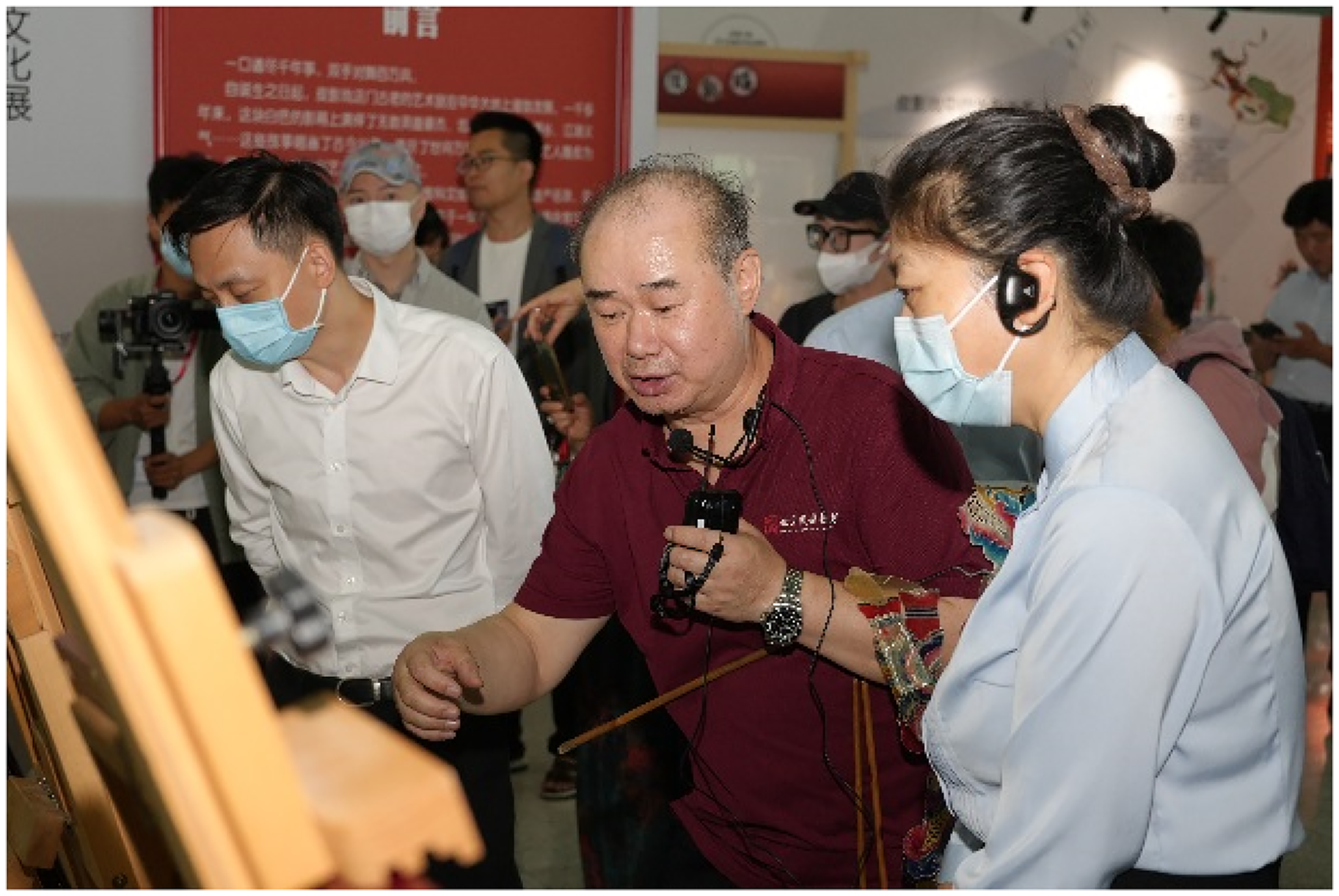
Lu Baogang, a representative bearer of the national ICH ‘Beijing Shadow Puppetry’.
(3) Deeply exploring the scientific and cultural values behind ICH. In developing exhibition and education resources based on the integration of ‘ICH + science and technology’ cultures, it is important to fully explore the scientific and craftsmanship spirits embedded in ICH. ICH is a product of history, preserving and reflecting the original state of productive forces, technological development, and human creativity and cognitive levels across different eras. It embodies the spirit of scientific exploration of its time and serves as a fundamental pathway for future generations to access technological literature and information. While the exhibition and education philosophy of science and technology museums emphasizes both people and objects, it also highlights the spirit behind them, including the scientific and craftsmanship spirits demonstrated during the process of invention and creation. The ‘Shadow puppet-making process’ exhibit (Figure 4) showcases the tools used by shadow puppetry bearers, accompanied by video introductions, to highlight craftsmen's pursuit of excellence in the traditional shadow puppet-making process. There are a close link and a mutually complementary relationship between ICH and the spirit of craftsmanship. The most prominent feature of ICH is its intangibility, which aligns with the spiritual pursuit of people and reflects the intrinsic essence of ICH. In ICH, traditional craftsmanship is the core, while the spirit of craftsmanship is the intrinsic essence. The intangible nature of ICH has captured the true meaning of the craftsmanship spirit and embodied craftsmen's pursuit of perfection. Meanwhile, the spirit of craftsmanship is materialized through the vehicles of ICH.
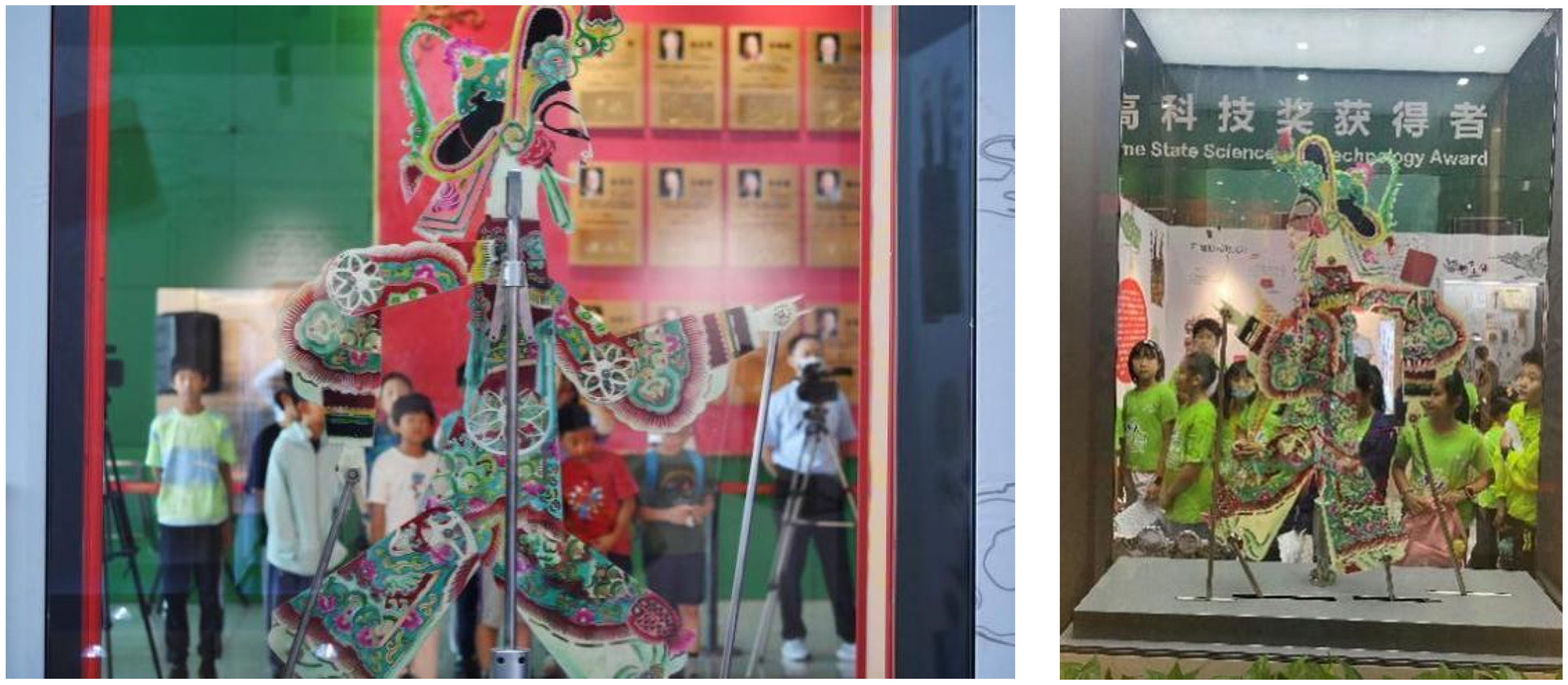
The ‘Mechanical shadow puppet’ exhibit.
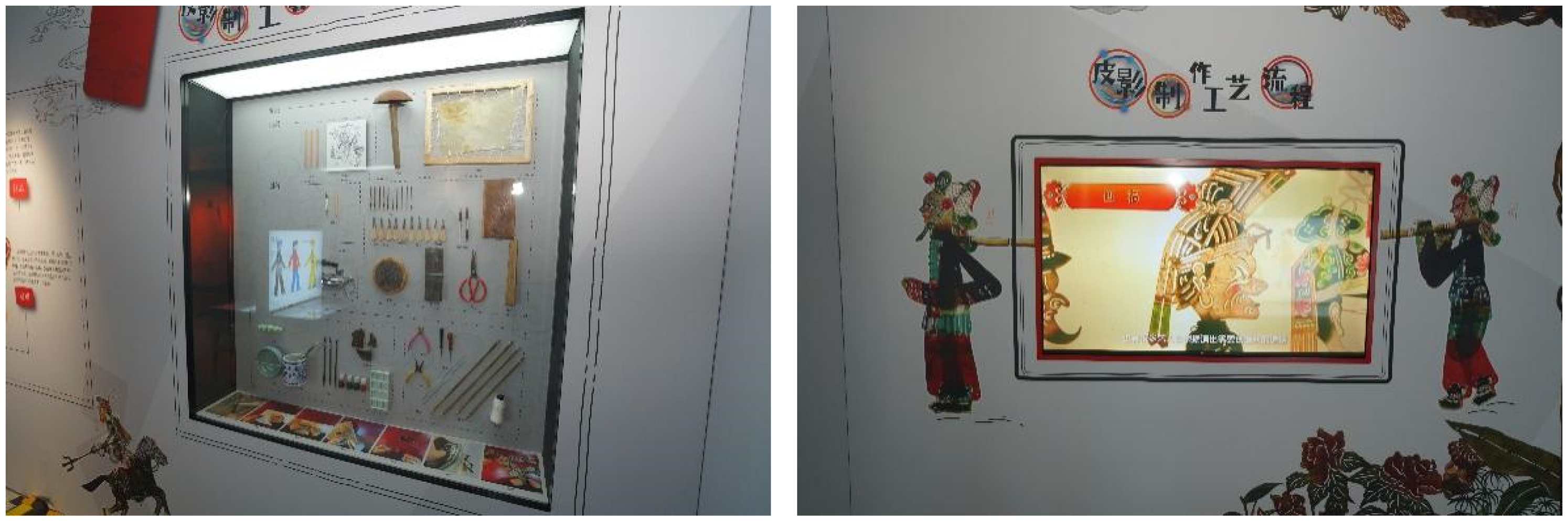
The ‘Shadow puppet-making process’ exhibit.
When ICH is introduced into science and technology museums as a target for popular-science activities that feature the integration of two cultures, the basic model adopted is ‘Research → Transformation’ (Wang, 2017). Typically, the design of exhibition and education resources in science and technology museums, such as exhibitions or educational activities, covers both research and transformation processes. Research serves as the foundation, while transformation is the key. Without thorough research, great science and technology cannot be transformed into good exhibition and education products. During the research process, it is essential to conduct in-depth studies and achieve a thorough understanding of research findings and relevant literature. Transformation, on the other hand, is a technical process that follows certain patterns, methods and means. Similarly to the information communication process in general museums, science and technology museums need to transform their own understanding into the audience's understanding, embedding their insights into exhibitions and educational activities in order to achieve the desired education and communication effects. The executors of the research, transformation and communication processes are the staff of science and technology museums.
In the research phase, educators and designers at science and technology museums need to conduct in-depth studies on ICH projects, choose topics that are suitable for science popularization at science and technology museums, and study and analyse their respective features.
First, from the perspective of science and technology museums, ICH projects such as traditional music, dance, drama, storytelling, acrobatics, folk art and crafts can be used to illustrate science and technology. For example, creating and presenting artistic works themed around science and technology, the history of science or stories of scientists can effectively achieve the goal of science popularization. Another category, including traditional handicrafts and other craft techniques, traditional medicine and pharmacology, as well as folklore, is rich in scientific knowledge and embodies various craft methods and principles. These ICH items hold the potential to gain new connotations when viewed through the lens of science and technology, making them key subjects for popular science in science and technology museums.
Second, ICH possesses both tangible and intangible attributes (Xi, 2019). The tangible aspect refers to the physical carriers of ICH, as well as the bearers and physical spaces associated with it. The intangible aspect encompasses skills and techniques, craft processes, knowledge, principles, and even spiritual values, ways of thinking, imagination and cultural consciousness. By examining both the tangible and intangible characteristics of ICH, knowledge points and scientific principles can be uncovered, forming the core content for science communication in science and technology museums.
Finally, the knowledge points of ICH projects are classified and sorted. As a cultural phenomenon, ICH carries unique cultural knowledge points, such as names, origins, history works, representative bearers and inheritance stories. Nevertheless, science and technology museums tend to focus more on extracting scientific knowledge points from ICH. This involves sorting and analysing materials related to craft processes, materials and tools, scientific principles, and technological applications to form the foundation for popular science. Take shadow puppetry as an example. As a form of drama, shadow puppets can be used to tell stories of science or scientists. However, what most concerns science and technology museums are the technological aspects of shadow puppetry—specifically, the principles of light and shadow, the materials and tools used, and the scientific history behind this traditional art form.
In the transformation phase, the popular-science function of science and technology museums is realised mainly through exhibitions and educational activities. Designing exhibitions and educational activities is a core expertise of science and technology museums, each with its own distinct design patterns, methods and approaches. Transforming ICH into exhibitions based on research is essentially a transformation of material form; that is, converting the cultural and scientific knowledge points of ICH into tangible exhibition exhibits that can be experienced through senses such as sight, hearing, taste and touch. The transformation of ICH into educational activities is more of an intangible transformation. It converts the knowledge points of ICH into education products that can be communicated only through the interaction between science museum educators and visitors.
In summary, as a cultural phenomenon, ICH can yield a wealth of popular-science materials through in-depth research, systematic sorting and refinement. Subsequently, these materials are transformed into science and technology exhibitions and educational activities by the creative efforts of professional designers in science and technology museums, and then presented to the public. In this process, research on ICH forms the foundation, while creative transformation is the crucial step. Without either of these elements, it would be impossible to produce high-quality exhibition and education products that integrate science and culture.
The exhibition and education model of ‘ICH + science and technology’ in science and technology museums: Take shadow puppetry as an example
In the protection of ICH, dissemination is an important measure, and inheritance is the ultimate goal. Both inheritance and dissemination are crucial for ensuring the vitality of ICH. The UNESCO Convention for the Safeguarding of the Intangible Cultural Heritage explicitly stipulates that each state party shall endeavour to organize educational, awareness-raising and information programmes aimed at the general public, in particular young people. ICH has traditionally been passed down through oral and intangible means, such as word of mouth and hands-on teaching. However, these spontaneous traditional methods of transmission are insufficient to independently address the contemporary challenges facing ICH. Therefore, it is necessary to enhance the promotion and display of ICH culture through interventions outside the traditional ICH system to achieve the goal of protecting ICH culture. The following approaches can be adopted.
(1) Developing exhibitions on the theme of ‘ICH + science and technology’ for science and technology museums. Building on the strengths of science and technology museums in popular-science exhibitions and leveraging their exhibition platforms, we can develop a coherent narrative that integrates various elements, such as the history of shadow puppetry, its performance characteristics, the craft of shadow puppet-making, the scientific principles involved, the technological issues encountered in its inheritance and development, and the design of shadow puppet figures, and hold temporary and thematic exhibitions that capitalize on the museums’ strengths of dynamic, interactive and innovative means of display. These displays might include a variety of exhibits, such as shadow puppet artworks, textual and graphical illustrations, scene reconstructions, interactive devices, shadow puppet assembly games, motion‒sensing interactions, virtual reality and augmented reality, to deepen the public's understanding of ICH projects and expand their reach. (2) Carrying out educational activities on the theme of ‘ICH + science and technology’ in science and technology museums. Leveraging the vivid, intuitive and interactive strengths of science and technology museums in exhibition and educational activities, visitors can engage directly with ICH bearers to experience ICH activities at first hand. Through this engagement, participants not only acquire knowledge but also develop a deeper appreciation for the craftsmanship spirit exemplified by the bearers. This approach ultimately enhances the public's awareness and commitment to ICH protection and inheritance, especially among young people. Drawing on case studies of shadow puppetry research and related activities, technological analyses of shadow puppets and assessments of audience engagement, an educational activity model centred on shadow puppetry technology can be developed. It is a model that integrates acting, training and hands-on experience. Acting: shadow puppetry performance. From a technological perspective, shadow puppetry plays can be planned and written based on the animated character named Ke Xiao Bei (a creative cultural product of the CSTM) or around themes such as disseminating scientific knowledge, scientific ideas, scientific methods, scientific spirit, craftsmanship, traditional Chinese culture and Chinese history, with different roles assigned according to the script. Possible performances may include shows such as ‘Technology in Shadow Puppetry’ and ‘Stories of Ancient Scientists’. These performances can feature both professional shadow puppetry artists and child audiences as participants (Figures 5 and 6). Training: shadow puppetry training activities. Child audiences interested in shadow puppetry can join such programmes. ICH bearers and experts of the art form may be invited to provide training on the development history of shadow puppetry, its scientific connotations and performance skills (Figure 7). These courses guide children to learn and grasp the scientific knowledge behind shadow puppetry, as well as theories related to shadow puppetry opera. This training also helps young participants master the performance skills of shadow puppetry plays and encourages them to perform for other audiences. Making: shadow puppetry-themed educational activities (Figure 8). Guided by educational concepts such as inquiry-based experience and ‘learning by doing’ in science and technology museums, a variety of formats, including lectures, exploration through learning guides, inquiry experiments, hands-on creation and sharing sessions, can be used to develop ICH courses on the theme of ‘Technology in shadow puppetry’. These courses aim to guide children in understanding the cultural and scientific connotations of shadow puppetry through hands-on practice.
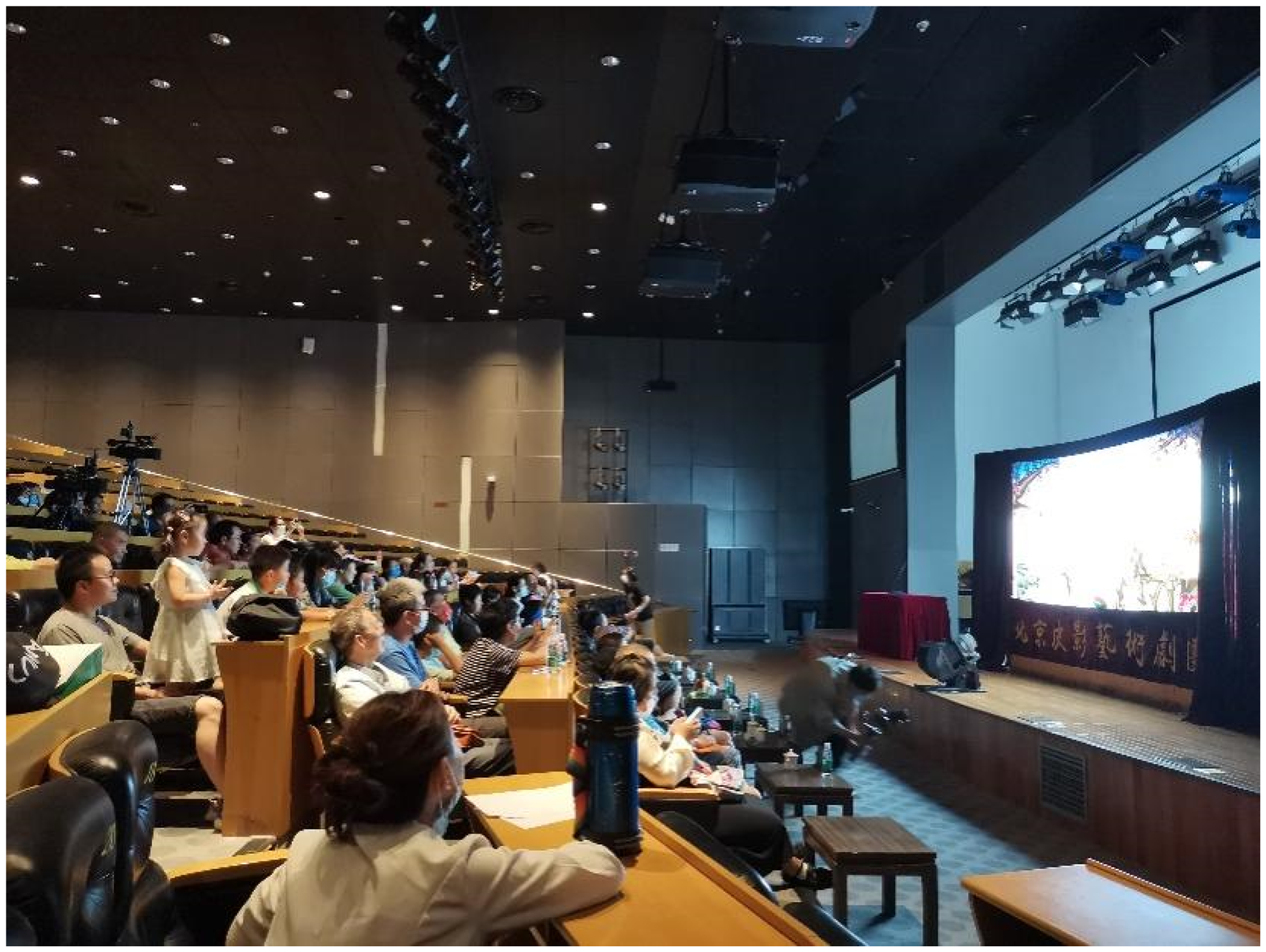
Artists of the Beijing Shadow Puppetry Theatre in a public performance.
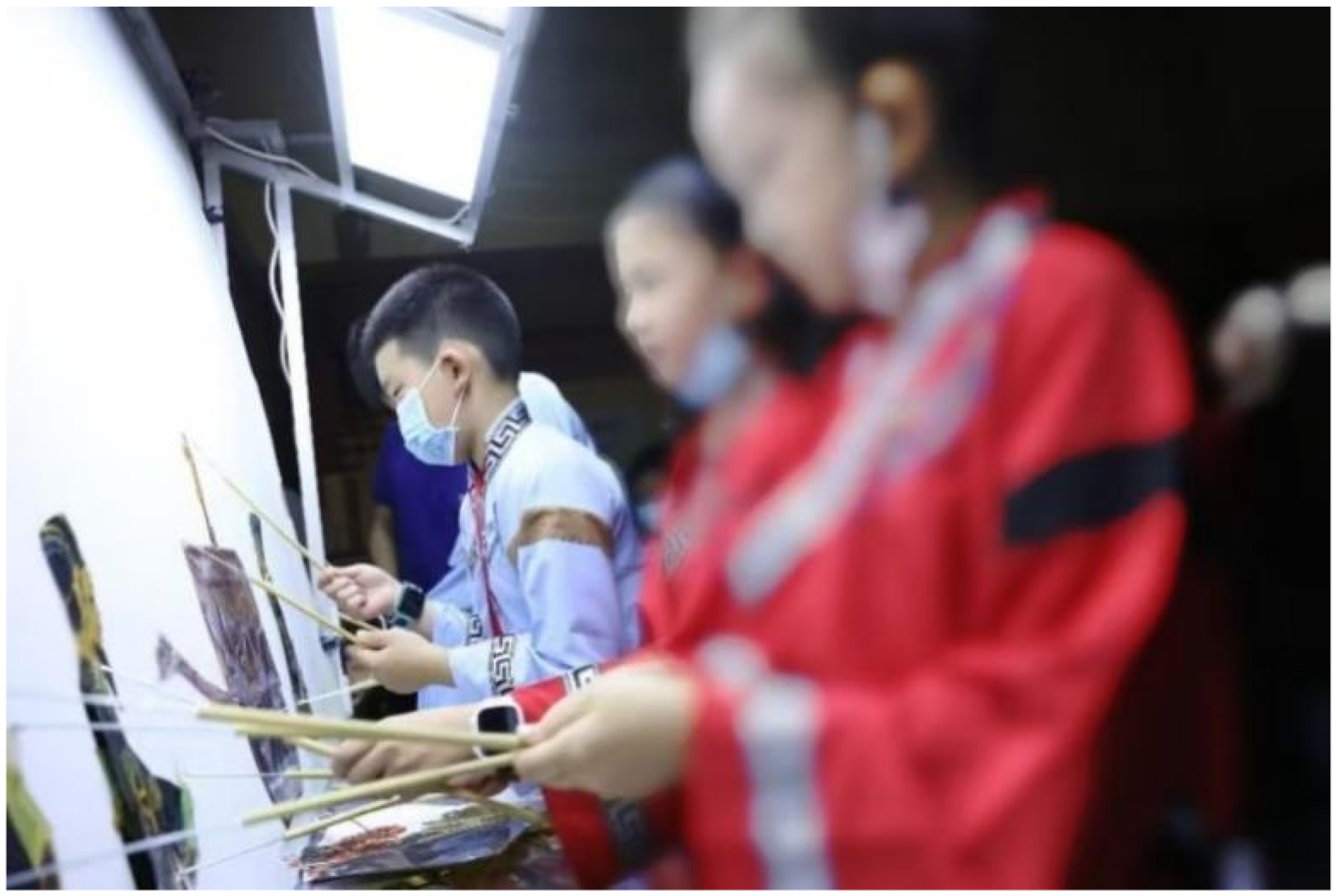
Children who have received training at the CSTM in a public performance.
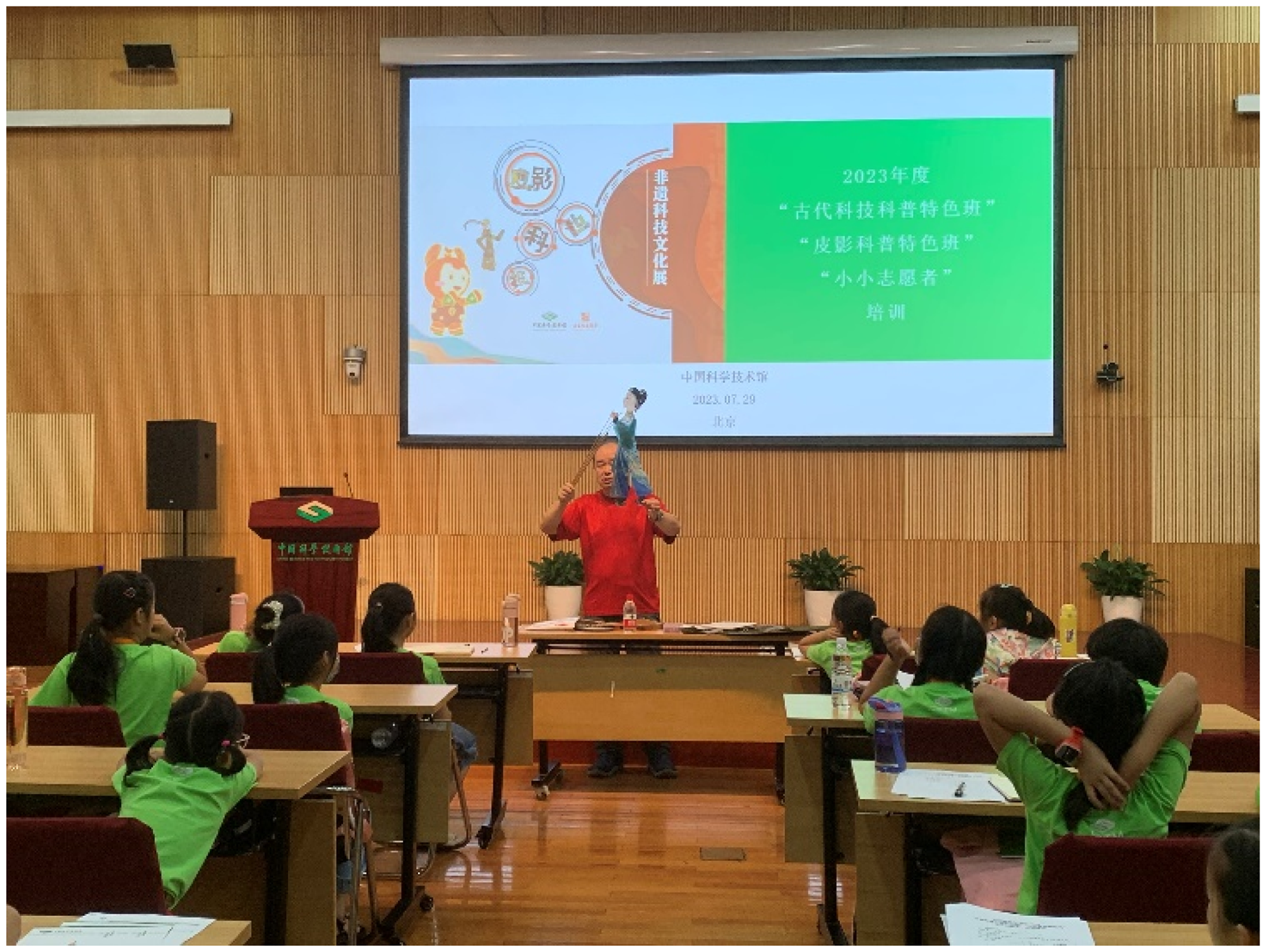
ICH bearer providing shadow puppetry training to children.
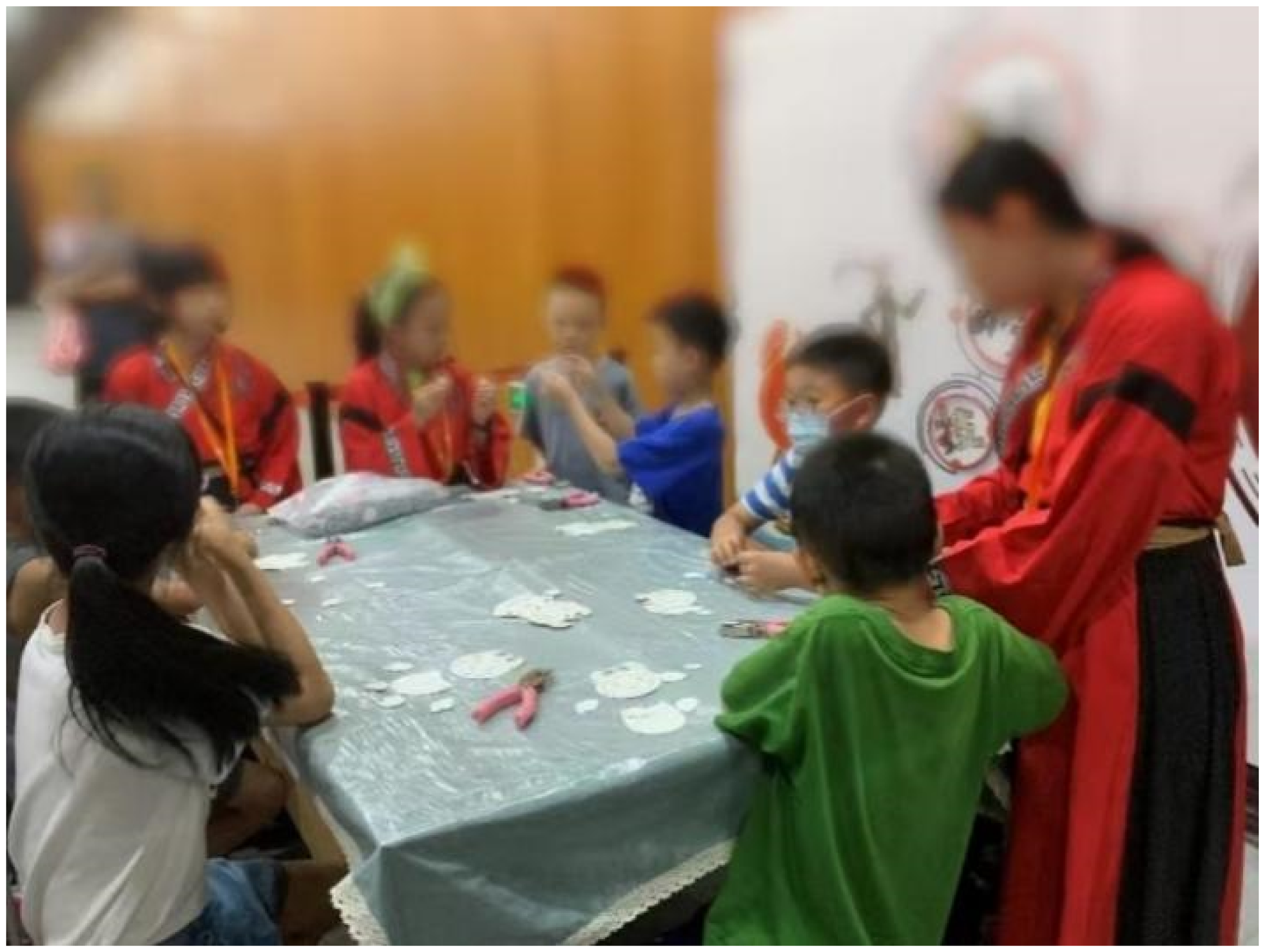
Children experiencing the assembly and making process of paper shadow puppets.
The shadow puppetry exhibition at the CSTM attempts to integrate science and culture through its display vehicles, forms and content, thereby expanding the viable channels for the integration of science and culture. ‘The closeness of integration between science and culture reflects the extent to which exhibitions express the dual attributes of scientific and cultural values in the context of innovative development and the building of a culturally strong nation’ (Jin, 2022). Designing science exhibitions with a focus on the integration of science and culture is a new trend aimed at more comprehensively leveraging the cultural and educational functions of exhibitions. Based on the case analysis of shadow puppetry, the following two reflections are proposed to improve the effect of science communication through museum exhibitions.
From the presentation of physical objects to the representation of intangible socio-historical culture
In exhibition practice, what is intuitively displayed by ICH are knowledge and skills. However, this knowledge and these skills are part of historical science and an integral part of China's scientific history. Therefore, the content of science communication must deeply explore the scientific knowledge and methods embedded in ICH, along with the scientific ideas and spirit conveyed through it. This approach ensures that the integration of science and culture runs throughout the exhibition, which aligns with the principles of ‘seeing people, seeing objects and seeing life’ in ICH protection and inheritance. The essence of ICH is its living nature. In exhibitions, the exhibits are not the true subjects; rather, the true subjects are the external manifestations of human essence in life and history, presented through tools, physical objects and other material media or carriers.
The exhibition and education philosophy of science and technology museums not only underscores the primary aspects of people and objects (Wang, 2016) but also highlights the spirit behind them, including the scientific and craftsmanship spirits demonstrated in the process of invention and creation. ICH bearers exemplify the craftsmanship spirit through their inheritance of ICH skills, techniques and technologies. Therefore, as the integration of ‘ICH + science and technology’ deepens, science and technology museums must balance the presentation of ICH bearers, ICH works and the life and spiritual values they carry, adhering to the principle of ‘seeing people, seeing objects, seeing life, and seeing spirit’. Thus, beneath the surface of acting, training and making lies the projection of culture at the levels of material objects, institutions and spirit, which is consistent with the basic theories of cultural construction. These exhibition practices have enabled science and technology museums to transform the abstract concept of scientific and cultural construction into tangible material entities, and, as illustrated by the shadow puppetry example, expanded the interpretative possibilities for a broader range of ICH items.
Modern technology is the driving force for the inheritance and development of ICH
This is specifically manifested in the following five aspects: (1) Modern technology enables the digital recording of ICH, solidifies its dynamic processes into visual and auditory resources, and thereby achieves the visual protection of ICH. (2) Modern technology, including virtual reality, augmented reality, motion‒sensing interaction and artificial intelligence, enhances the visual and interactive display of ICH, making it more mature and engaging for the public. (3) Modern technology facilitates the creation of ICH resources sharing and display platforms. Image recognition, audio, selfies, live streaming, short videos and other online information platforms empowered by modern technology facilitate the spread and display of ICH in various forms, including images, sounds, real-time visuals and videos. (4) Modern technology expands the paths and scope of ICH communication. The rapid rise of social media, mobile applications and the ‘internet of things’ has built a comprehensive, multilayered and wide-ranging system for ICH communication, which can help the public to better understand the scientific and cultural values embedded in ICH. (5) Modern technology promotes the innovative development of ICH. The development and application of new materials and technologies provide solutions to the technological challenges in ICH inheritance and development. Computer-aided design, laser engraving, three-dimensional printing and other emerging technologies can inspire innovative approaches to ICH design and infuse new vitality into ICH in the modern era. For these reasons, technology, as a means of display, provides the necessary instrument for ICH presentation both inside and outside the exhibition halls of science and technology museums. Meanwhile, the scientific elements within traditional culture, which are already part of the display content, can form an intertextual expression with tool-based technology. Together, they can reshape the scientific and cultural content in the linguistic context of the exhibition hall.
Footnotes

Funding
The authors received no financial support for the research, authorship, and/or publication of this article.
Declaration of conflicting interests
The authors declared no potential conflicts of interest with respect to the research, authorship, and/or publication of this article.