




Abstract
Sustainability communication arises in the face of complex socio-environmental crises that manifest on different scales and in different ecosystems. Museums and science centres, as cultural institutions, are key to building social representations and generating discourses and experiences in their visitors to facilitate engagement in the search for future alternatives. This empirical research, conducted at the Universum Science Museum of the National Autonomous University of Mexico, seeks to contribute to the advancement of the academic field of sustainability communication by analysing the main elements and exhibition practices related to sustainability in the exhibition Producing by Conserving: Biodiversity and Sustainable Communities. We investigated how sustainability is expressed in the museum, utilizing the proposed perspective of analysis based on four typologies of science exhibitions. We employed qualitative analysis to achieve a comprehensive understanding of the exhibition. We identified central aspects and limitations in communication concerning sustainability that could nurture communication practices in demonstrations and other exhibitions with related themes. The implications of this study extend beyond the specific context of the university museum. They can be useful for communication practices in universities and other cultural institutions seeking to develop a culture of sustainability and envision transformation of future societies.
Keywords
1. Introduction
This research article focuses on an analysis of the museology implemented in the temporary exhibition Producing by Conserving: Biodiversity and Sustainable Communities at the Universum Science Museum of the National Autonomous University of Mexico (UNAM). This exhibition highlights sustainable communities and their relationship with biodiversity through sustainable production systems in Mexico. The goal is to analyse the main features and museological practices concerning sustainability in the exhibition. We utilized Navas Iannini and Pedretti's (2022) approach, which considers the typologies developed in science museum exhibitions as an analytic perspective for visualizing the role of museums as key spaces that promote public commitment to sustainability.
Environmental communication as an academic discipline emerged from the modern environmentalist movement in the late 1960s. The discipline's first academic journal, Environmental Education, was founded in 1969, featuring studies on journalism and environmental affairs (Takahashi, 2022). The diversity of approaches and the number of studies on environmental communication increased at the turn of the century, framed by a major socio-ecological crisis. During the first decade of the twenty-first century, research on sustainability communication was developed, establishing conceptual, interdisciplinary and social learning perspectives to analyse the discourses, framing and representations of sustainability issues (Adomßent and Godemann, 2011; Newig et al., 2013; Godemann, 2021). The discursive nature of sustainability has been used to propose the typologies and narratives for communication models of this concept. This makes it possible to identify and propose diverse context-dependent and culturally relevant strategies to communicate issues aimed at promoting transitions towards sustainable societies. Many relevant studies focus on the environment and applied communication approaches to sustainability communication (Golob et al., 2023).
Sustainability communication emerges from planetary emergency scenarios that manifest on different scales and in different socio-ecosystems. In the face of this pressing reality, museums and science centres are key spaces for constructing social representations and generating narratives and experiences that seek to engage visitors in the visualization of alternatives to the scenarios in which we live. These spaces are also conceived as places where society can look at itself, observe others and find the possibility of dialogue about important contemporary issues (Singer and Roldan, 2023). They are spaces for conservation, education and dialogue that promote social learning and are increasingly being used to predict future conditions and the role humans play in transforming possible future scenarios (Johnson et al., 2023).
The development of perspectives in sustainability discourses and the revision of this concept as a subject for communication in museums and science centres have emerged mainly from studies conducted in countries of the Global North. This research is guided by the authors’ interest in recognizing the typologies of exhibitions with sustainability as their central theme in terms of their key content. The aim is to present sustainable communities in a Latin American context and to determine whether these approaches can be maintained or adapted to local contexts.
Sustainability communication, which is based on dissemination, dialogue and participation (Lindenfeld et al., 2012; Suldovsky et al., 2017), has been extensively researched with a focus on complexities in sustainability sciences, narrative perspectives, empirical studies on discursive studies in print media, and, recently, approaches towards sustainable production and consumption. This includes addressing the complexities of sustainability sciences through communication (McGreavy et al., 2013), exploring perspectives on sustainability narratives (Weder et al., 2019) and conducting empirical studies on sustainability terminology in print media (Fischer et al., 2017).
Most of these investigations acknowledge the complexity involved in communicating a polysemic term that contains contradictions between short-term perspectives and future narratives. Weder et al. (2021) identified three major approaches to sustainability narratives. The first approach views sustainability as an alternative regulatory framework within a hegemonic, capitalist, market-oriented growth model. This approach aims to achieve a balance between social justice, economic profit and ecological wellbeing (Elkington, 1997) framed by progress and technological innovation. The second less promising approach conceives of sustainability as an alternative to capitalism. This approach advocates the restriction of certain fundamental freedoms, such as the free market, and affects individual people (Weder et al., 2021).
The third approach, presented by Weder et al. (2021), conceives of sustainability as a revolution that involves social innovations and cultural changes, leading to the identification of the need for urgent transformations. It is a narrative of progress with a deeper understanding of the practices of renunciation, regeneration and the creation of new ecological identities (Weder et al., 2021; Weder and Milstein, 2021; Milstein and Castro-Sotomayor, 2020). This approach is closer to the ecopolitical perspective of sustainability proposed by Toledo and Ortiz-Espejel (2014), who recognized it as an emancipatory force that guides the construction of citizen power to generate effective experiences of sustainability. Recently, Evans and Achiam (2021) explored the potential of out-of-school institutions, such as museums and science centres, to prepare citizens for a sustainable future. These spaces generate conversations that are necessary in the search for solutions to the wicked problems of sustainability, involving transdisciplinary dialogues that favour the inclusion of visitors through museographic content that addresses local problems. In this study, we focus on communication for sustainability and offer guidelines that help optimize the organization of sustainability issues in these cultural spaces.
Museums are positioned as institutions intended to educate, engage, support and transform societies (Cameron, 2012). In particular, since the turn of the century, science museums have been recognized as spaces that allow reflection on planetary problems (González et al., 2002). In 2001, the International Council of Museums (ICOM) created a committee dedicated to museums and university collections that assigned a special category to the museum–university partnership (García and Ramírez, 2022). In this relationship, universities benefit from museums by expanding their capacity to impact society beyond their teaching and research activities. Museums also enable their university communities to practice public communication skills while enriching the disciplinary perspectives of university students. In other words, university museums have the potential to create change for the benefit of sustainability by synthesizing information relevant to society, expanding the diversity and number of audiences served through their activities and fostering conversations that contribute to critical actions on sustainability (Rodegher and Freeman, 2017).
In the wicked sustainability problems we face, the work of the arts, science, education and mass media are an intimate part of the culture that makes sustainability issues accessible as a means of providing information and inspiring the imagination to trace directions towards more sustainability-involved societies. The cultural domain of sustainability also recognizes that traditional, indigenous and locally settled peoples hold worldviews that are much more connected to nature than those of urban societies (Lüttge, 2020). Therefore, the concept of biocultural diversity is particularly relevant. It refers to biological and cultural diversity and the strong links between them that nourish the relationship between human societies and nature.
2. Museums, society and environment
Museums are renowned icons of modern and critical humanism, and they play a decisive role in the formation of views on the world, culture, cultural differences and human relations with the non-human world, technology and society (Cameron, 2016). Although they safeguard cultural heritage and are considered social spaces for learning, knowledge acquisition and cultural development (Yanes, 2011; Arbués, 2014), the academic literature on their role in addressing the challenges of socio-environmental deterioration is still evolving (Hebda, 2007; Cameron, 2012; Cameron and Deslandes, 2011; Hodge, 2011; Dibley, 2011). In Latin America, academic research on museums and science centres was rare before the beginning of the twenty-first century. In 2017, 120 research articles based on museums and science centres in the region were analysed by Cambre (2017). Most of them focused on reviewing the value of museums from the perspective of their visitors, the scope of their educational activities and, more recently, the role that museums play as agents of social change.
The commitment of natural history museums to the preservation and exhibition of scientific collections spans more than two centuries. From the turn of the twentieth century, a discourse transformation was observed in museums and science centres, which began to include social responsibility, trying to increase the importance of science, technology and issues related to society–nature interactions in social consciousness (Pedretti, 2002). Currently, these institutions face new challenges, as highlighted by Krishtalka and Humphrey (2000) and Campagna and Campagna (2012), who argue that the urgency of changing society–nature interrelations means that museums can no longer simply exhibit the current state of nature.
The conceptual definition of museums has been transformed, and they are now recognized as spaces that are open to the public, being more participatory with a more inclusive vision. They are also seen as promoting diversity and sustainability among different social agents (Cordón, 2017). The concept of ‘museum’ was most recently updated by ICOM in 2022. According to this organization, what is conceived today as a museum is better suited to the reality of contemporary societies: ‘A museum is a not-for-profit, permanent institution in the service of society that researches, collects, conserves, interprets and exhibits tangible and intangible heritage. Open to the public, accessible and inclusive, museums foster diversity and sustainability. They operate and communicate ethically, professionally and with the participation of communities, offering varied experiences for education, enjoyment, reflection and knowledge sharing’ (ICOM, 2022). In this way, sustainability is placed as a cross-cutting theme in the experiences of audiences, who are also expected to participate more actively in the exchange of knowledge and reflections generated by exhibitions.
The recent history of sustainable perspectives on the environment in the context of science museums began in 2017 with the signing of the Tokyo Protocol, in which the leaders of museums and science centres recognized the need to strengthen public commitment to global sustainability. The Tokyo Protocol acknowledges that almost 3000 science centres and museums influence more than 310 million visitors and participants to seek feasible solutions to achieve the sustainable development goals proposed by the United Nations in 2015 (Science Centre World Summit, 2017). One of the points of the agreement is to ‘engage the public more directly with research, using this engagement to help empower people, broaden attitudes and ensure that the work of universities and research institutions is relevant to society and to wider social concerns on a global scale’.
In the twenty-first century, museums are moving towards a deeper understanding of complex environmental issues, such as climate change, water crises, threats to biodiversity and future ecological uncertainties (Cameron and Neilson, 2015). These topics have been featured in so-called socioscientific issues exhibitions: current science and technology affecting our society are being incorporated as content in museum exhibitions (Pedretti, 2004; Zeidler et al., 2005). However, Redondo et al. (2021) found that contents related to planetary emergencies presented synthetically in museums are insufficient for contributing to the integral education of citizenship in the transition towards sustainability. To some extent, sustainability is a contemporary, cross-cutting and complex issue that is difficult to represent and operationalize.
Isager et al. (2021) examined 41 exhibitions about the Anthropocene—a term that proposes that human or anthropogenic activities have a major influence on planetary ecosystems and should therefore be considered a new geological epoch—and the social understanding of the Anthropocene across museums worldwide. The authors note that the Anthropocene is presented as an unsettled category and that visitors are required to contemplate complex factual accounts and highly emotional images of the past and future. Although, during visits to these exhibitions, the public is invited to engage in transformative practices, most exhibitions seem to deliberately exclude significant controversies about the Anthropocene and the predicament of the world from their scope of reflection.
Along the same lines, several authors have identified typologies of science exhibitions that contribute to the understanding of the logic of exhibition practices (Wellington, 1998; Pedretti, 2002; Pedretti and Navas Iannini, 2020). So far, four types of exhibitions have been recognized: pedagogical, experiential, critical and agential. Wellington (1998) characterized two types of expositions: pedagogical and experiential. Pedagogical exhibitions seek to teach visitors something, while experiential exhibitions implement interactive concepts that allow visitors to experience the phenomena displayed in exhibitions. Pedretti (2002) added the category of critical exhibitions, recognized as ‘those that invite visitors to actively participate, consider socioscientific issues from various perspectives and critique the nature and practice of science and technology’. These types of exhibitions prioritize the sociocultural contexts in which science takes place and question the very nature of science by inviting visitors to develop critical stances towards science.
Pedretti and Navas Iannini (2020) proposed a fourth category: agential exhibitions that consider visitors to be political agents of change and transformation, causing them to engage with issues in a manner that is more critical and rooted in action (see Figure 1). These exhibitions may include activities such as dramatization, opportunities for decision making and the generation of conversations and deliberations. They address complex and sometimes controversial issues, moving away from the false idea of a science that is finished or offering simple solutions to complex problems. The authors believe that environmental issues are of interest to the public and are included more frequently in museums and science centres, in line with contemporary approaches based on critical or agential curatorial practices.
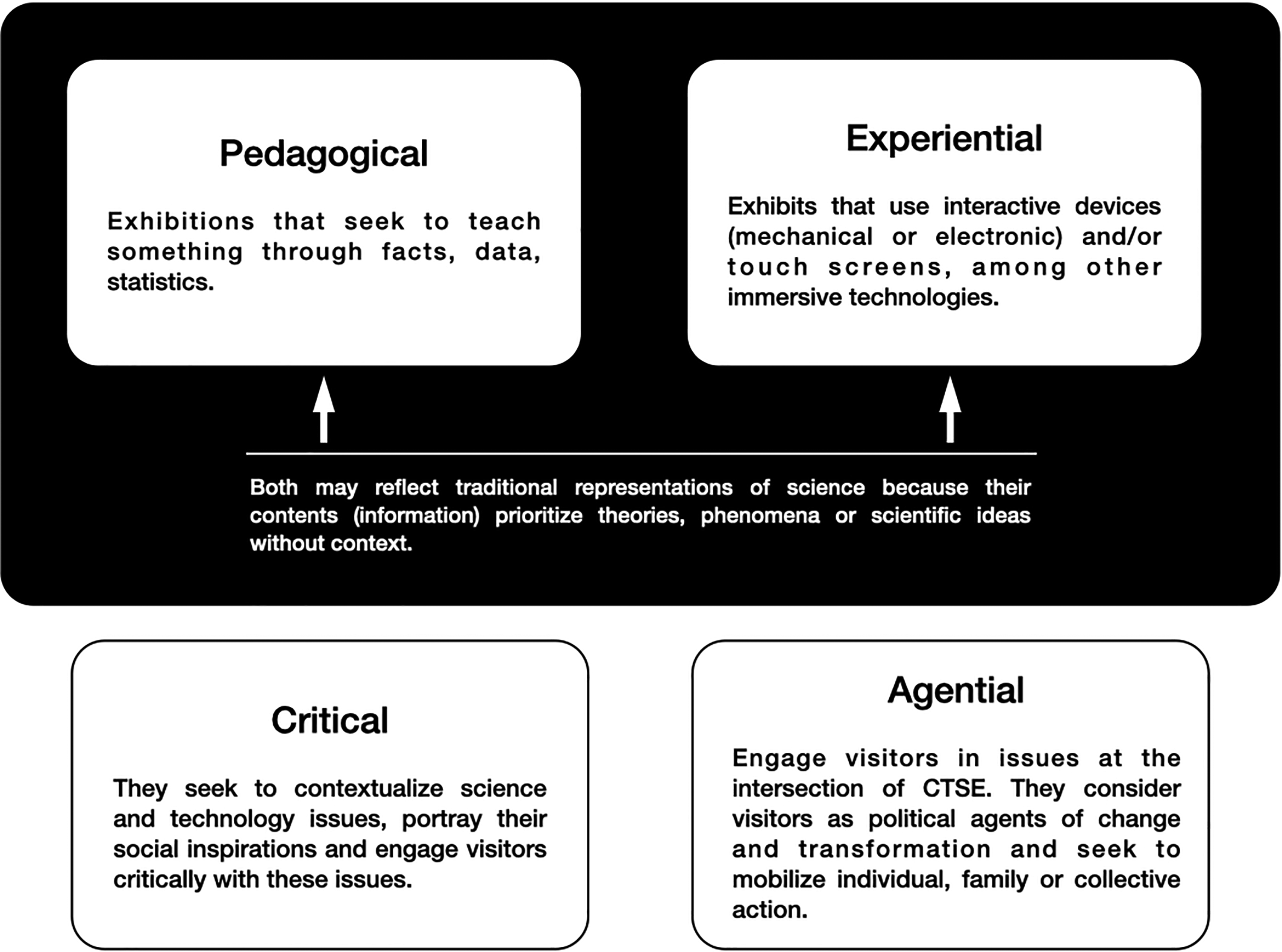
Typologies of science exhibitions as illustrated in Navas Iannini and Pedretti (2022).
3. Sustainability in a university science museum
The Universum Science Museum, with 30 years of activity, is one of the 27 university museums operated by UNAM. As a university museum, it works closely with researchers. This involves providing high-quality consultations and expert advice, in addition to exhibiting the scientific developments of the university (Guzzy, 2018). UNAM has historically been a leading macro-university in Latin America. Over the past decade, efforts have been made to integrate sustainability into its substantive tasks, including scientific research, teaching and cultural outreach. The Universum Museum has been recognized as the university's most important entity for cultural outreach and science communication. It hosts permanent and temporary exhibitions and offers courses and workshops related to environmental and sustainability issues (Oyama et al., 2018).
3.1 Origin of the ‘Producing by Conserving' exhibition
The value of university museums is that they make research and educational activities public and accessible, thereby increasing the social projection of universities (García and Ramírez, 2022). For many years, university researchers have been interested in identifying initiatives and organizations working on sustainability issues in southeastern Mexico (Toledo and Ortiz-Espejel, 2014; Bray and Merino, 2004; Chapela and Merino, 2019; Carabias, 2019; Carabias et al., 2018; Arango et al., 2018). Among these, work from the perspective of sustainability has been identified as an emblematic example of the possibilities and scope that sustainable communities can have in society (Toledo and Ortiz-Espejel, 2014).
In 2010, the Global Environment Facility began to cofinance, together with Mexican federal institutions, a project aimed at promoting sustainable production chains for goods and services based on biodiversity to promote a development strategy compatible with conservation and the improvement of living conditions for the inhabitants of southeastern Mexico (Cedillo Alvarez, 2012). The project involved associations and networks of honey, coffee and cocoa producers, as well as those involved in the exploitation of wildlife and operators of ecotourism services in biological corridors in the following states of southeastern Mexico: Campeche, Chiapas, Oaxaca, Quintana Roo, Tabasco and Yucatán. The project supported 13,000 producers from 26 social enterprises in the region, and after the project, the institutions involved produced the exhibition analysed in this study.
As part of the results of this collective and multi-institutional experience, university researchers proposed that the museum's director create a temporary exhibition at the Universum Museum to place sustainability and biodiversity conservation issues on the museum's agenda. The objective of the Producing by Conserving: Biodiversity and Sustainable Communities exhibition was to ‘raise awareness among young people and the Mexican population about sustainable production and biodiversity and show how rural communities and cooperatives in Mexico have managed to improve their quality of life through the adoption and development of biodiversity-friendly practices in their productive systems’ (Dirección General de Comunicación Social, 2018). Another goal was to make visitors to the exhibition appreciate producers and commit to supporting initiatives and models of sustainable development, thereby becoming responsible and informed consumers with an outlook on sustainability.
The purpose of the exhibition was to show the sustainable and environmentally friendly approaches of indigenous and rural cultures that have developed agricultural practices that take advantage of biodiversity in southern and southeastern Mexico. This was achieved through seven thematic modules: (1) an introduction to sustainable challenges in Mexico, (2) apiculture and meliponiculture, (3) traditional cocoa cultivation, (4) shade coffee cultivation, (5) community forest management, (6) ecotourism, and (7) a participatory module exhibiting products made by the communities and presented in the exhibition (chocolate, coffee, different types of honey, jams, toys made of wood from sustainably managed forests and natural fibres).
The exhibition was opened to the public between November 2018 and April 2019. It was an inter-institutional production by the University General Directorate of Science Communication, the Universum Museum, the University Seminar on Society, Environment and Institutions, the National Commission for the Knowledge and Use of Biodiversity, and other public and private entities. The main theme was biodiversity and its relationship with community production systems, which was understood as a particular set of activities conducted in rural areas to obtain goods or services with the intention of trading them (Cedillo Alvarez, 2012). One of the museum's temporary exhibition rooms with an area of 450 square metres was made available. The museographic narrative revolved around the productive activities and experiences of biodiversity-friendly practices developed by the 26 southeast Mexico organizations involved in the exhibition (see for example, Figure 2).
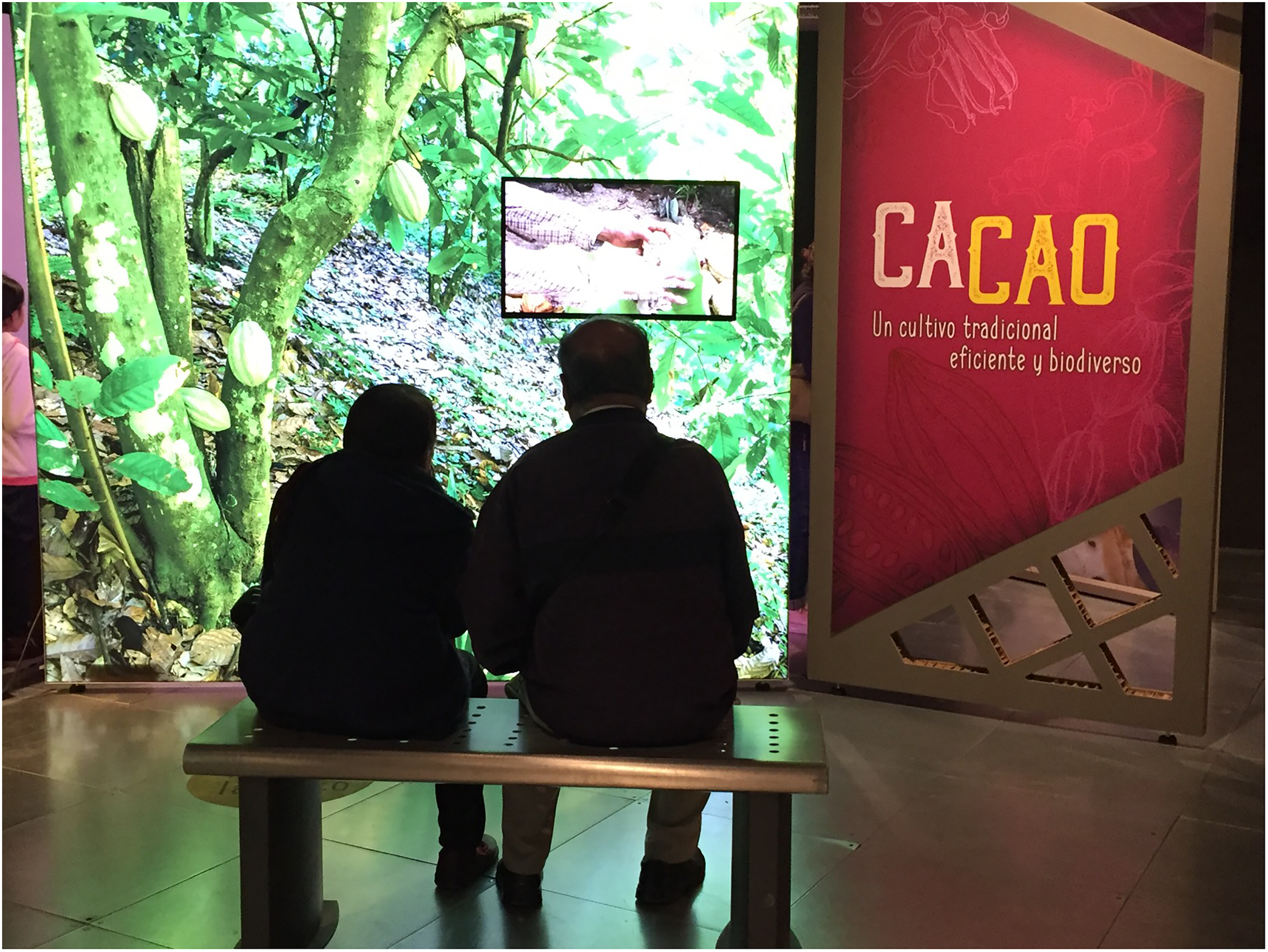
Visitors in the interactive module on sustainable honey production and bee conservation.
The content of the exhibition was also based on food production practices with high cultural significance in Mexico. For example, cocoa is regarded as one of the most significant agricultural and cultural resources in the humid tropics. The cocoa tree is native to South America. However, domestication of this plant occurred in Mexico and Central America. Mesoamerican civilizations consider cocoa beans as a gift from the gods (Sántiz et al., 2023). The fruit is part of Mexico's gastronomic history and has been present in culture and traditions for several centuries as part of the residents’ heritage. It is estimated that 90% of global production is in the hands of small producers with plots of less than five hectares, and more than 20 million people worldwide depend directly on the income generated by cocoa for their subsistence (Díaz et al., 2013). Mexico currently occupies 11th place worldwide in cocoa production (Gutiérrez and Yañez, 2021).
4. Materials and methods
This study consists of content analysis and graphic and aesthetic element analysis that compares the exhibition in one of the galleries of the museum with the typologies proposed by Navas Iannini and Pedretti (2022). Between November 2018 and April 2019, 26 independent immersions were conducted in the exhibition. During this study, the following data collection tools were used:
Our empirical analysis stems from the theory of museum exhibition typology proposed by Pedretti and Navas Iannini (2020) and Navas Iannini and Pedretti (2022). Based on the four categories of exhibitions proposed by those authors, we identified the features and elements of the museology implemented in the design and production of each module in the Producing by Conserving: Biodiversity and Sustainable Communities exhibition. It is important to mention that the visitors to the temporary exhibition were generally self-guided. However, there were always at least two people available to give guided tours as required. Their work consisted of answering questions or stimulating additional conversations on topics of interest to visitors.
This empirical research is confined to the limits of the exhibition, which was built on the initiative of a three-year project entitled ‘Sustainable Productive Systems and Biodiversity’ and involved the participation of producers and social enterprises of local Mexican communities who understand sustainability as a process that has been part of the history of these communities. The framework of analysis offers possibilities for analysing other exhibitions related to socioscientific issues, such as sustainability, conservation of biodiversity and biocultural heritage. We consider that this experience is unique and shaped by collaboration between academic and governmental institutions. The results of the analysis contribute to a broader identification of the key elements that characterize what is understood as a sustainable community.
5. Results
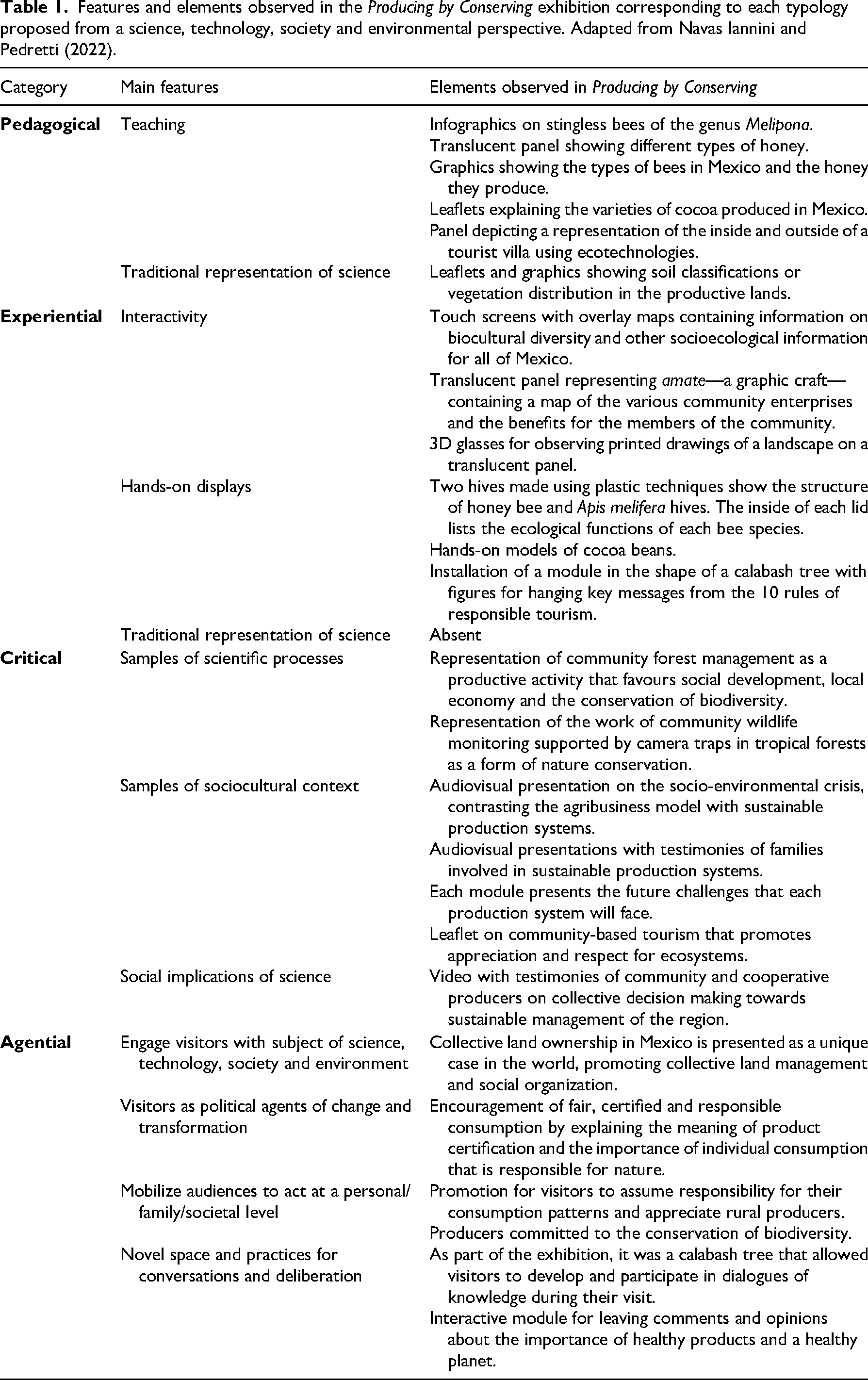
The results are presented according to the typology with four exhibition categories—pedagogic, interactive, critical and agential—making it possible to identify the features and elements of the discourse on sustainability in the Producing by Conserving exhibition. Table 1 shows the features and elements observed in the Producing by Conserving exhibition, corresponding to each typology proposed from the perspectives of science, technology, society and environment.
Features and elements observed in the Producing by Conserving exhibition corresponding to each typology proposed from a science, technology, society and environmental perspective. Adapted from Navas Iannini and Pedretti (2022).
5.1 Pedagogical category
Traditionally, museums have been considered intrinsic educational entities because of the learning possibilities they offer to the educational communities they serve. The aspects of teaching, according to the typology of Navas Iannini and Pedretti (2022), were identified in the data presented in the infographics and panels. For example, in the module related to honey production, the aim was for visitors to learn about the main characteristics of the product: ‘The characteristics of honey are determined by various analyses: sensory, physicochemical and palynological. The latter indicates the plants from which the pollen in each type of honey originates and helps to determine whether the honey is monofloral (i.e., the nectar and pollen of one species predominates) or multifloral (coming from the nectar and pollen of flowers of several species and in different proportions).’
Data relating to the number of bee species were also provided. ‘There are about 400 species of stingless bees in the Americas, of which 46 have been identified in Mexico’, or percentages related to coffee production patterns. For example: ‘In Mexico, 25% to 35% of coffee farms produce coffee using specialized shade systems (commercial polyculture and monoculture under shade), and only 10% produce coffee in the full sun.’
The module related to coffee production included a panel explaining the meaning of coffee certification labels and how consumers can use this information to make their purchasing decisions based on the production process. On weekends, visitors consisted of families, groups of young people and people of a greater range of ages and conditions who visited the museum for fun, entertainment, curiosity or their interest in learning more comprehensively about the contents of the exhibition.
5.2 Experiential category
The modules dedicated to sustainable honey and cocoa production systems had the largest number of interactive elements and hands-on displays. The beekeeping module contained various objects, such as two hives made from plastic resins, which showed the interior structure of a beehive. On the inside of each lid, visitors could read the ecological functions of the bees of the genus Apis and stingless bees. There was also a roulette wheel with small, perforated metal containers arranged in a circle so that visitors could approach and smell the different floral aromas that attract bees and are manifested in the flavours of the honey. The module presenting the three varieties of cocoa consumed in Mexico—criollo, trinitario and forastero—contained some realistic reproductions of the beans, which visitors could take from the baskets and handle. At another point in the module, a screen showed a video of a family of producers explaining the practices involved in ecological agricultural management for soil fertility, pest control, pruning and shade management in cocoa plantations.
Another interactive strategy used in the exhibition was pushing buttons to activate the illuminated graphic elements. The touchscreen showed a map of the entire country of Mexico, allowing visitors to visualize the country's different biocultural landscapes. The information about Mexico's ecosystems, emblematic species, indigenous territories and other sustainable production systems was presented with different layers of maps. Taken together, these maps show the complexity and biocultural diversity of the territories in which various socio-environmental problems occur and the possibilities of addressing them from a sustainability perspective.
The fifth module, dedicated to community organization and the benefits of participatory forest management, consisted of a translucent panel in the style of a type of Mexican handicraft known as amate paper. Visitors can approach and press a series of buttons on a panel to activate LED lights that backlight the details of the drawing on the amate, creating a visual narrative with descriptive audios of different socio-environmental elements of the community (see Figure 3). Each button was accompanied by a different sound narrative, short stories lasting two to three minutes about the activities of a community reserve, a plant nursery, a sawmill, a carpentry shop, or about the importance of the school, the traditional health clinic and the community centre. Overall, visitors had the opportunity to listen to the testimonies of participatory work and community building in southeastern Mexico.
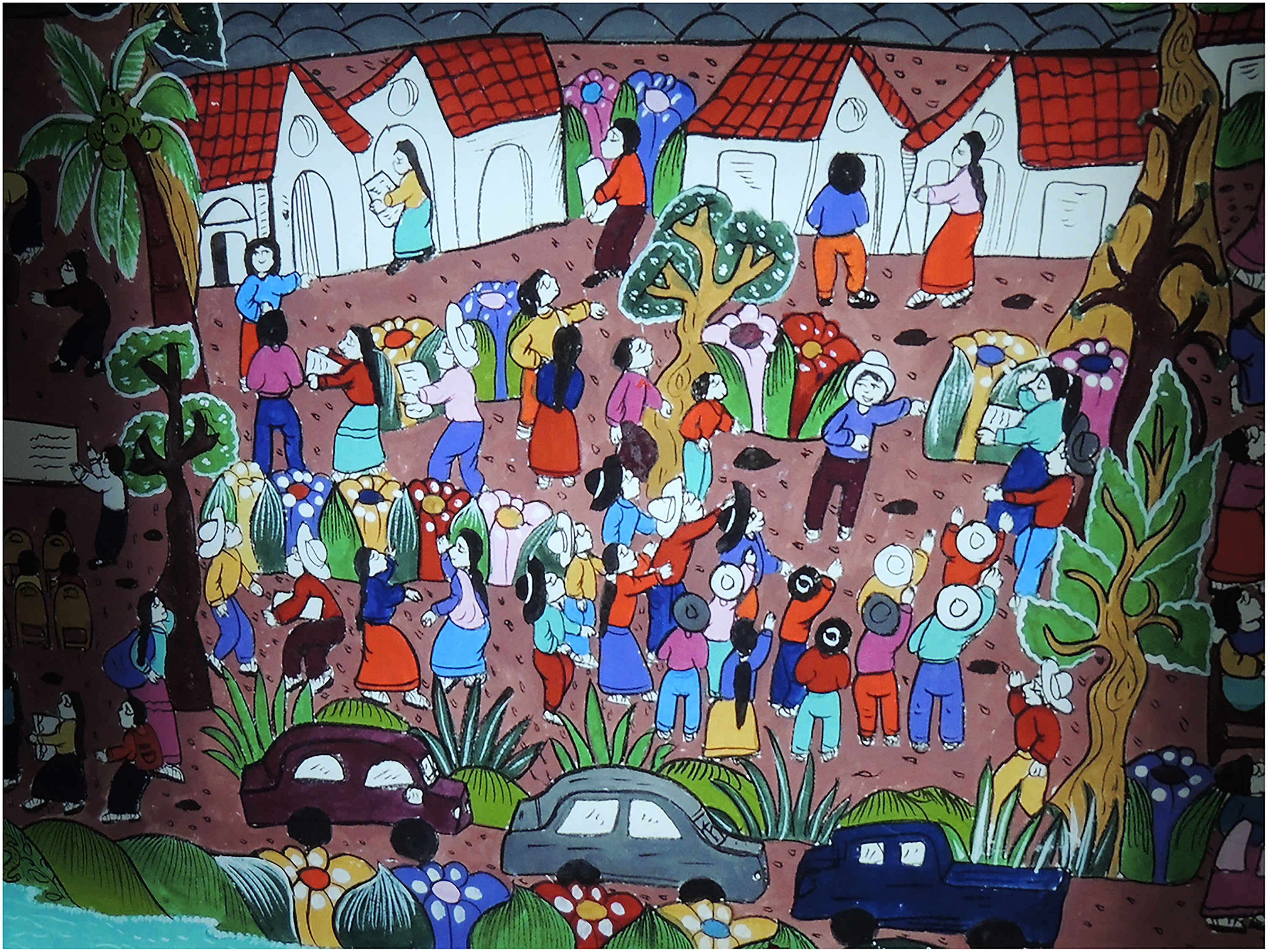
Representation of the traditions and customs of sustainable communities in Oaxaca, Mexico in the module on community forest management.
5.3 Critical category
The core issues addressed by the exhibition were based on a critical stance towards the current model of social and economic development that prevails in Mexico. From the beginning, it aims to show visitors ‘examples of fair and inclusive social and economic development, as well as a viable alternative for the conservation and sustainable use of biodiversity’. It also adopts a critical stance regarding extraction-based practices in the exploitation of nature, invasion of indigenous territories and neglect of vulnerable groups. These practices have generated socio-environmental conflicts across Mexico that have multiplied in the last two decades (Tetreault et al., 2012). The conflicts are the result of the effective application of ‘an economic development model and an often adverse political and legal context, which favors activities such as open-pit mining, monoculture-based industrial agricultural production and large-scale tourism development, with high social and environmental costs’. The content of the exhibition showed paths towards sustainable economies that benefit local communities and organizations.
The testimonies of the producers included in the audiovisual material and the information provided by the guides of the exhibition aimed to communicate the importance of ecological agricultural practices as viable ways of producing food. These practices consider the diversity of species and avoid the use of agrochemicals and pesticides that impact the soil, water and food consumed by humans and animals. One of the videos features a voice saying that ‘monoculture is a form of production that is violent against Mother Earth’.
5.4 Agential category
The overarching narrative of the exhibition consistently demonstrated to visitors the agency that producers and their organizations have in the development of productive activities. The texts displayed frequently expressed ideas intended to highlight the emancipation and agency of the producer communities: ‘Seeking alliances with farmers in our regions to avoid the use of agrochemicals and to obtain organic certification or biodiversity-friendly differentiation for our honey.’
One of the key concepts associated with sustainable communities is collective action, which is understood as ‘cooperation among groups of people to achieve common goals’. The discourse of the exhibition considers this characteristic to be ‘fundamental for the construction of agreements and rules for the sustainable use and conservation of common natural resources’ and adds that ‘many indigenous and peasant communities that preserve and use their resources in a sustainable manner have long trajectories and important lessons learned from collective action’.
Another important concept in the discourse of the exhibition was local governance as a ‘fundamental element for the effective conservation of territories and common natural assets, because the rules for the use and protection of resources must align with local conditions and the visions and rights of those who inhabit the territories, know their dynamics and depend on their permanence’.
Although the agency of the producers is a central aspect of the content of the exhibition, there were no novel discourses, practices or spaces that might have generated debate or collective reflections among visitors. The exhibition concluded with a so-called ‘participatory’ module, which had sheets of paper and coloured pencils that the public could use to draw pictures or write messages about their ideas and concerns at the end of their visit to the exhibition. This strategy left little opportunity for the exhibition to inspire greater agency among visitors.
6. Discussion and conclusions
6.1 Sustainability science and public communication
The overall concept of the exhibition is supported by the sustainability paradigm. Sustainability science is a novel discipline characterized by inter- and transdisciplinary frameworks that facilitates knowledge generation and promotes collaboration among scientists and other social agents, engaging peer communities from outside academic circles. This is relevant for managing socioecological challenges and pursuing integrated solutions across communities involved in the research and practice of this science (Lang et al., 2012; Evans and Achiam, 2021).
Sustainability research contributes to the discursive process of joint knowledge construction (Brandt et al., 2013). The contents of the exhibition were constructed around field interviews with producers, academic literature and personal and collective stories of those who involved in sustainable production as well as community-based management and conservation of natural resources. This experience put sustainability science in a dialogue with traditional ecological knowledge, showcasing exhibition visitors the importance and validity of the knowledge and practices upheld by certain rural communities over time.
Sustainability science research involves the use of diverse methodologies, disciplines and philosophies of science that can bring complexity to the perspective of reality to be understood. Therefore, the traditional representations of science and technology in the Producing by Conserving exhibition were scarce present only for pedagogical purposes to explain some disciplinary terms, such as soil classification. This leads us to recognize what Brian Trench (2023) calls intersectional collaboration as a form of public participation in knowledge production in which lay expert communities bring tacit or indigenous knowledge to the process. Inter- and transdisciplinary sustainability research usually involves different types of expertise and ways of knowing. Therefore, sustainability communication formats call for more inclusive approaches (Vitting-Seerup and Achiam, 2023). However, the curatorial decisions for the exhibition and museum texts were developed by university staff, with little input from actual producers.
6.2 More producers in context and traditional knowledge
The thematic focus of the exhibition was people who belonged to sustainable productive systems based on the organization and participation of rural communities in southeastern Mexico, subject to the rules of collective action and governance. This focus highlighted remarkable experiences from the perspective of the sustainability paradigm. The modules addressed social processes based on traditional knowledge and practices, representing alternative ways to guide a transition towards sustainable societies. Each module provided contextual information and presented the challenges faced by people in maintaining their way of life in rural environments. One way to address these challenges is community organization through the formation of cooperatives for the responsible management of communal lands.
In Latin American countries, there is a diversity of worldviews, which represents a challenge for science communication (Aguirre and De Regules, 2022). This exhibition contemplated traditional ecological knowledge and local forms of organization that facilitate processes oriented towards environmental sustainability. In doing so, the curators of the exhibition faced the unresolved problem of recognizing indigenous worldviews without imposing visions of modern science on the contents of the exhibition.
This aspect adds a different approach to those identified by Weder et al. (2021) in the form of sustainability narratives. The exhibition shows the strength of social organization as a form of social innovation and allows an understanding of sustainability as a form of resistance to the various threats that local and indigenous communities face daily. These threats include the dispossession of their territories, the privatization of their natural assets and the loss of biodiversity. In other words, sustainability is not an alternative or a revolution. For many local communities, it has been a form of resistance that seeks to maintain the ‘buen vivir’ (good living) (Gudynas and Acosta, 2011) of all living entities.
For example, approximately 80% of Mexico's forests and jungles are community owned (Bray et al., 2005). This places Mexico as a leader in community forest management, alongside China and New Guinea (Klooster and Ambinakudige, 2005). The most appropriate type of social organization for the conservation and management of communal lands is based on collective decision making through community assemblies as the highest local authority. This type of social organization promotes community enterprises comprised of community members, thereby boosting the creation of supportive mechanisms for the accumulation of collective or social capital (Toledo, 2018).
6.3 Limitations of the typologies
Typologies are systems for ordering and classifying ideas, practices or concepts to facilitate a simple understanding of elements. They serve as a frame of reference for creating order, arguments or proposing new classifications. The construction of typologies can be limited because the design and conception of museum exhibitions is a complex exercise that involves syntheses and representations of reality. However, it can provide a starting point for analysing exhibitions.
As mentioned above, exhibitions, such as Producing by Conserving, can supply information and aim to generate a learning experience focused on science, but mostly on a wide range of community experiences. Therefore, we consider that the categories should not be used exclusively.
Pedagogy is also critical, especially if it is understood from the perspective of culture for sustainability and when it aims to influence the formation of citizenship that is more alert and critical with respect to collective decisions and public policies on issues of common interest, such as species conservation, water handling and management and adaptations against climate change in urban contexts. However, other authors (Rennie and Williams, 2006; Navas Iannini, 2023) have reflected on the difficulties of some science museums placing socioscientific issues at the centre of their exhibitions, issues that offer opportunities for dialogue and the co-creation of knowledge with their audiences and other stakeholders.
In the case of Producing by Conserving, museology was complex, and the sum of the elements presented fit into the four categories. The starting point is a narrative that is critical of the hegemonic model of the industrial production of food and goods that ignores the biocultural richness of the territory. Some hands-on materials were used, and there was little content to memorize or learn. However, the exhibition was limited in scope as it brought agency to visitors from a megalopolis with few individual opportunities to influence the transformation to sustainable communities. Therefore, it seems that the possibility of building or achieving sustainable communities is limited to rural contexts where biodiversity is abundant, where the food that reaches the cities is produced, and where people are looking for fair and healthy practices that allow them to continue living and producing sustainably to benefit city dwellers. This may preserve preconceived ideas of the artificial division between the countryside and the city, whereby the countryside equals nature or biodiversity and the city is not understood as an ecosystem that also offers possibilities for the development and conservation of biodiversity.
7. Conclusions
Sustainability science has temporal aspects. Sustainability focuses on the future of humanity. At the same time, it also represents the construction of the present and shows a path destined to transform paradigms that affect human and nonhuman wellbeing. Some future aspects are already present today and demand urgent and compelling attention. Funtowicz and Ravetz (1993) suggested new forms of science that include high levels of communication and dialogue, where the commitment of stakeholders strengthens the value of the diversity of voices, experiences and collaboration between scientists and producers to promote sustainable production and consumption practices.
The present study analyses the principal elements and exhibition practices related to environmental sustainability in a university science museum in Mexico. Through the modules that comprised the exhibition, we identified central aspects that corresponded to the characteristics that Navas Iannini and Pedretti (2022) defined in their framework of analysis of the typologies of scientific exhibitions. We found that sustainability as a socioscientific issue encompasses four main types of exhibitions. However, the aspect related to promoting greater agency in sustainability issues for museum visitors is an issue that has yet to be addressed. The exhibition offered information to the public about the labels of certified products, such as coffee, but the message was limited to promoting responsible individual consumption. This initiative may not be sufficient to achieve greater public interest and engagement in supporting sustainable production practices. Museums have many opportunities to influence the transformation of culture for sustainability among their visitors and those who work in these institutions.
A crucial aspect of the exhibition is that it focuses on the sustainable production of coffee, cocoa and honey in the context of traditional practices that have been maintained for generations in some indigenous and local communities in Mexico. The consumption of these goods is a central part of the diet of many families, and the territories in which they are produced are part of an invaluable biocultural heritage. This makes us recognize that sustainability narratives also represent a form of resistance that seeks to maintain the practices and worldviews of many local and indigenous communities.
We recognize some limitations of our study. The sustainability concerns are mainly confined to agroecological production and responsible consumption of goods by small producer organizations in southeastern Mexico. However, the exhibition was based on a multi-sector project that supported the development of 26 social enterprises in southeastern Mexico. This makes the characteristics of this exhibition dependent on the specific local context. Another limitation we identified was that although other studies (Trench, 2023; Achiam, 2024) have recognized the need to incorporate more inclusive approaches to science communication by favouring the co-production of content and giving greater agency to visitors to exhibitions, this has yet to be accomplished.
This study allows us to contribute to identifying crucial elements in museographic narratives that characterize what can be broadly understood as sustainable communities, those that prioritize traditional knowledge and practices linked to the value of ecosystems for their own survival and the survival of other living beings. In these communities, food and other materials are produced through collective action and governed by local, fair and supportive systems. Our study also contributes to the understanding of how exhibitions related to socioscientific issues have been produced in a university science museum that is strongly linked to the production of knowledge. This study highlights the need for further research in diverse environments to enrich the understanding of sustainability science communication practices and their impact on fostering sustainable communities in multiple settings.
Our contribution to the field of sustainability science communication focuses on the scope and limitations of its practice in a university science museum in Mexico. However, this study's implications extend beyond the specific context of university museums. It seeks to position itself in an active role in the vital task of offering valuable perspectives for museums, science centres and cultural institutions that seek to advance cultures of sustainability to transform societies into more hopeful futures.
Footnotes
Acknowledgements
We gratefully acknowledge the Programme in Sustainability Sciences at UNAM (Posgrado en Ciencias de la Sostenibilidad, Universidad Nacional Autónoma de México), and the Academic Staff Development Support Programme at UNAM (Programa de Apoyos para la Superación del Personal Académico, Universidad Nacional Autónoma de México), the UNAM Academic Writing in English Programme and the ESOCITE Asociación Latinoamericana de Estudios Sociales de la Ciencia y la Tecnología Paper Lab. We also thank all the people who provided linguistic advice and proofread the article.
Declaration of conflicting interests
The authors declared no potential conflicts of interest with respect to the research, authorship, and/or publication of this article.
Funding
The authors received no financial support for the research, authorship, and/or publication of this article.

Author biographies
Ana Claudia Nepote is an associate professor at the National School of Higher Studies in Morelia and a graduate student in sustainability sciences at the National Autonomous University of Mexico (UNAM). She is a member of the Scientific Committee of the Public Communication of Science and Technology Global Network. Her research interests are communication on sustainability issues, informal spaces for science and the environment, and environmental journalism in Latin America.
Paulina Uribe-Morfin is a full-time professor at UNAM for the National School of Higher Studies in León. As an environmental activist, she is a co-founder of the NGO Agora de Cultura Ambiental Guanajuato. Her research interests include environmental and intercultural education, citizen science, and youth. She is part of UNAM's Gender Equality Coordination.
Jorge Bartolucci is a senior professor at the Institute for Research on University and Education at UNAM. He holds a PhD in sociology. His research interests focus on the sociology of higher education and science and the formation of scientific communities in Mexico. He is a member of the Mexican Society for the History of Science and Technology and a member of the Civil Association of Historians of Sciences and Humanities.