




Abstract
Purpose
This study examines the development and application of the Classroom Assessment Informed Reflection Ladder (CAIRL) method to facilitate teacher reflection on classroom assessment practices, thereby fostering their professional learning.
Design/Approach/Method
To illustrate the use of CAIRL, we conducted a case study involving four rounds of lesson observations and post-lesson semi-structured interviews with an English language teacher at a primary school in Singapore. The data were analyzed based on three components of the laddering method—purpose, intention, and process—to identify the patterns and changes in the teacher's reflection.
Findings
Our study shows that the teacher initially adhered to a rigid teaching procedure, prioritizing the coverage of prescribed content and exam preparation. Through the CAIRL method, discussions were fostered between the teacher and the researcher about student learning in relation to the teacher's beliefs. This led the teacher to adapt his teaching, using students’ learning evidence as feedback to inform his subsequent teaching practices.
Originality/Value
This paper presented an in-depth inquiry into the role of classroom assessment in shaping a teacher's reflection and developed a CAIRL approach to facilitate this purpose. The findings of this study lay the groundwork for our understanding of the dynamic integration of classroom assessment and reflection as a means for in-service teacher professional learning.
Introduction
Over the past decades, educational reforms have consistently emphasized the importance of preparing a strong teaching workforce as a means to various educational improvements. These calls are now more pressing than ever as part of the global efforts toward both educational quality and equity in the wake of the pandemic, requiring teachers with growing expertise at work. However, notwithstanding varied evidence that some professional development programs have significantly influenced teacher learning (Kennedy, 2016), the attention to examining the specific interactions and dynamics inside teaching as spaces for in-service teacher professional learning is limited. Comparing to the rich scholarship on core teaching practices for preservice teachers (Ball & Forzani, 2009; Grossman et al., 2009), a relatively small number of research emerges to scrutinize how daily classroom teaching practices, especially instructional activities involving attention, noticing, and assessing student learning, constitute a space for in-service teacher learning when making decisions, persisting, interrupting, or changing in teaching practices (Jiang et al., 2020; Mannikko & Husu, 2020). In these studies, reflection has been playing a significant role in fostering teacher learning on the job (Korthagen & Nuijten, 2022; Loughran, 2002). However, there is a notable gap in developing tools to track and develop the trajectory of how teachers critically reflect on their instructional activities to integrate their experiences and knowledge into a coherent framework for action.
This gap in the literature highlights the need for a deeper exploration of how in-service teachers can be supported in recording and reflecting on the evolving process of learning to transform their teaching practices in response to educational changes. In this paper, we focus on classroom assessment (CA) as the focal instructional activity to engage teacher reflections for professional learning, as CA is deemed as the co-regulation of learning by teachers, students, instructional materials, and contexts (Andrade & Brookhart, 2020). This co-regulatory process is particularly salient in Singapore's examination-oriented education system, where teachers regularly engage with CA data. But we do not simply focus on teachers’ CA practices and tests, nor do we specifically attend to CA for student learning. Rather, we intend to examine how CA can regulate and contribute to teacher professional learning. In particular, we have developed a method of “Classroom Assessment-Informed Reflection Laddering” (CAIRL) to unravel the intricate relationships between classroom assessment activities and teacher reflection to enable teachers to explore what they could learn from student learning, make well-informed decisions, adjust their instructional approaches, and find creative solutions to challenges in response to educational reforms. As follows, we present a qualitative analysis of four lessons taught by a primary school English language teacher in Singapore using the CAIRL method. This analysis traces the changes in his understanding of teaching and learning over 4 months.
Our findings indicate that the teacher initially adhered to rigid teaching routines, prioritizing prescribed content coverage with a focus on examination preparation. The CAIRL method elicited discussions between the teacher and the researcher on the students’ classroom assessment work for long-term, student-oriented goals, prompting reflections on the teacher's values and beliefs behind his chosen actions, which led to changes and refinement in teaching routines, incorporating students’ responses to inform follow-up teaching. This study suggests that examining teacher reflections could enhance our understanding of how teachers develop their thinking and judgment for teaching practices in response to educational change. Further, discussions and (re)interpretation of classroom assessment can strengthen teachers’ reflections and potentially improve their teaching practices. This study is timely given Singapore's educational shift toward bite-sized assessments and away from standardized mid- and end-year exams. It explores how teachers can effectively interpret student learning and refine teaching without heavy reliance on standardized tests, proposing the CAIRL method as a viable tool to facilitate this essential, daily reflective practice. While this case study is situated in Singapore, it addresses fundamental issues about how teachers reason through and learn to improve their practices amidst educational changes. These issues are relevant to educational researchers, practitioners, and policymakers worldwide.
Literature Review
In the past decades, researchers have taken various approaches to define teacher professional learning. In contrast to earlier behaviorist approaches to have teachers apply theories to change their teaching behaviors, researchers taking practice-oriented, situative, and realist perspectives define teacher professional learning as a complex ongoing process of engagement in meaningful activities that result in changes in teacher practices, attitudes, affections, motivations, and cognitions regarding teaching and learning (Korthagen, 2017; Mannikko & Husu, 2020; Opfer & Pedder, 2011; Putnam & Borko, 2000). Reflection has been regarded, arguably, as an integral part of ongoing professional learning to provide support for teachers to build, innovate, and improve their pedagogical approaches (Zeichner & Liston, 2014). In this article, we draw upon Dewey's (1933, 1938) work on reflection, which addresses the relationships between beliefs, intentional acts, and consequences, and accordingly focus on the changes in teacher behaviors and beliefs that drive their teaching practices, while recognizing the multi-level and multi-dimensional nature of teacher professional learning (Korthagen, 2017).
A belief refers to “an assertion about some matter of fact or some principle or law. It means that a specified state of fact or law is accepted or rejected, that it is something proper to be affirmed or at least acquiesced in” (Dewey, 1933, p. 6). Beliefs are often operationalized as working ideas for interpreting and making decisions in the professional context (Greenberger & Chavez, 2025), and reflection begins often when these working ideas are confronted with discrepancies in reality and are shaken by doubts.
Thus, reflection requires an initial state of perplexity, followed by an active search for information to resolve the uncertainty. Teachers encounter this perplexity when there is a discrepancy between their expectations for student learning and the actual learning outcomes. This realization acts as a catalyst for examining the evidence and scrutinizing one's own beliefs and practices. It is through this reflective thinking that individuals establish or challenge beliefs on a solid foundation of evidence and rationality. But surfacing and examining deeply ingrained beliefs could be complex, as they are often formed through past experiences and operate as implicit guidelines (Dewey, 1933).
CA plays a critical role in this process by highlighting these gaps and creating contingencies that demand attention to the beliefs undergirding teaching (Black & Wiliam, 2009). Rather than randomly capturing students’ responses, CA systematically collects student learning data that enable teachers to evaluate their instructional strategies, the representation of content, and their underlying assumptions about student learning. The consequences of teaching practices can be revealed through a purposeful classroom assessment, offering insights into the effectiveness of current approaches and suggesting areas for improvement (Brookhart & DePascale, 2025).
In turn, reflection also helps teachers make use of assessment data in a meaningful manner. Despite having access to a wealth of assessment data, teachers often struggle to effectively utilize this information to refine their instructional practices (Forbes et al., 2015). Oftentimes, when faced with evidence of students’ difficulties identified during assessment, teachers may resort to re-teaching the content, thereby perpetuating existing routines and beliefs about teaching and learning (Veugen et al., 2021). However, engaging in reflective practices may empower teachers to critically analyze assessment data to scrutinize their existing beliefs and rationales behind teaching (Jiang et al., 2019).
It is through this interplay of reflection and classroom assessment that teachers can refine their teaching practices, ensuring that they remain morally and intellectually grounded. By purposefully collecting student learning data, assessment not only makes the unobservable beliefs driving teaching practices more tangible but also serves as a crucial feedback loop for continuous professional growth and the cultivation of phronesis in educators.
Revisiting the Idea of Reflection
Reflection plays a pivotal role in transforming practical experiences into meaningful learning processes, bringing clarity and coherence to initially incoherent situations. However, defining reflection precisely is challenging due to the diverse perspectives found in the literature (Marshall, 2019). Various authors have contributed specific perspectives on reflection, which is often categorized into technical, practical, critical, and personal forms (Elliot, 2012).
Dewey (1933) was one of the first to write about the importance of reflection in response to concerns about an overly technical view of the teaching profession. He defined reflection as an “active, persistent, and careful consideration of any belief or supposed form of knowledge in the light of the grounds that support it and the further conclusions to which it tends,” which “includes a conscious and voluntary effort to establish belief upon a firm basis of evidence and rationality” (Dewey, 1933, p. 9, italics added). In this definition, he highlighted that reflection is not just directed toward what conclusions and consequential action could be implied, but also, and more importantly, toward the grounds (justifications) of one's beliefs by rationally examining the assumptions by which we have been justifying our convictions. Specifically, reflection involves two key components: scrutinizing the grounds of belief and considering the conclusions (including suggested actions) to which the belief tends.
For examining the grounds of belief, reflection requires individuals to examine the underlying reasons, evidence, or justifications that lead them to accept a certain belief, and to critically evaluate the logical and factual support for that belief. The grounds of beliefs include evidence and reasons. Evidence typically refers to the “seen thing” and data that “signify” or serve as a “clue” that warrants beliefs (Dewey, 1933, p. 10), while reasons encompass the justifications or logical explanations for why a belief is held. By scrutinizing the grounds of belief, individuals can better understand the selected proof behind their beliefs and assess whether they are well-founded or require further examination.
Considering the conclusions to which the belief tends means drawing out its implications, thinking about the potential outcomes of decisions for actions, and examining how these align with their purposes and expectations. This involves “reasoning in a narrower sense” (Dewey, 1933, p. 111), which is essential for refining beliefs by subjecting them to scrutiny. It entails exploring the implications and consequences of proposed solutions, tracing out the full ramifications of conjectures, and developing ideas into more relevant forms for addressing the problem at hand. Through reasoning, individuals can transform seemingly conflicting elements into a consistent whole, aiding in the development of ideas and solutions.
Dewey's definition alludes to an evidence-based inquiry approach that seeks to find meaning, and the notion of “careful consideration” suggests the need to weigh various factors at work and the evidence of teaching, pointing to the need for analysis. Scholars like Rogers (2002), who have interpreted Dewey's work on reflective practice, point out that Dewey's focus on reflecting on a problematic situation as it is experienced results in interaction with others and the environment, implying that reflection, while a personal process, has implications for not just oneself but for others and the wider environment. Further, Dewey (1938) highlighted that teachers experience learning when their established routines and beliefs clash with the demands of teaching practice. It is through reflection on these inconsistencies and finding resolutions that teachers grow.
Donald Schön (1983), akin to Dewey, also calls upon practitioners, like teachers, to reflect on the puzzling experiences they encounter in practice. One of his most significant contributions would be his conception of reflection as not just a process of thinking, but as both instinctive and deliberate knowing that can occur while one is engaged in the practice and after the practice (Anderson, 2019).
Focusing on the transformative nature of reflection for teacher professional learning, Black and Plowright (2010) defined reflection as “the process of engaging with learning and/or professional practice that provides an opportunity to critically analyse and evaluate that learning or practice” which is “empowering, enlightening, and ultimately emancipatory” (p. 246). These interpretations of reflections resonate with Dewey's (1933) concept, as he claimed that reflection occurs in order to foster growth, with no external purpose.
In short, central ideas on reflection surround the notions of perplexing experiences and meaning-making, resulting from a proactive analysis of the evidence confronting an individual and leading to transformations in practices and knowledge for the individual and the environment. Thus, it is important to note that considering or scrutinizing evidence, reasons, and the reasoning through the consequences of the suggested solutions entails a critical perspective, sparked by perplexities in practice, for examining the grounds of beliefs and the suggested actions. It requires a “suspense of judgment and intellectual search” (Dewey, 1933, p. 16): … reflective thinking, … involves (1) a state of doubt, hesitation, perplexity, mental difficulty, in which thinking originates, and (2) an act of searching, hunting, inquiring, to find material that will resolve the doubt, settle and dispose of the perplexity. (Dewey, 1933, p. 12)
Classroom Assessment for Reflection and Teacher Professional Learning
Classroom assessment relates but differs from standards-based education systems, serving as a process through which teachers obtain “information that is used to make educational decisions about students, to give feedback to students about their progress, strengths, and weaknesses, and to judge (their) instructional effectiveness” (American Federation of Teachers, National Council on Measurement in Education & National Education Association, 1990, p. 1). McMillan (2013) defines classroom assessment practices as a broad and evolving conceptualization of a process that teachers and students use in collecting, evaluating and using evidence of student learning for a variety of purposes, including diagnosing student strengths and weaknesses, monitoring student progress towards meeting desired levels of proficiency, assigning grades, and providing feedback to students and parents. (p. 4)
Previous studies have explored how teachers think and act when carrying out classroom assessment to inform reflection and decision-making in everyday professional practice as well as how they interact within different communities (Jiang et al., 2020; Leong, 2018; Nolen et al., 2011). These studies provide an in-depth description of the complexity teachers face when making decisions based on classroom assessment amidst conflicting demands and considerations. Hence, classroom assessment can be an integral part of teachers’ reflection in their everyday practice, allowing them to experiment with the possible “relationships between their actions and consequences” (Biesta & Stengel, 2016, p. 34), make or change decisions by observing student learning in an iterative assessment process, and “stay alert to situations where previous routines are not working well and seeking different kinds of solutions” (Muijs et al., 2014, p. 248).
We argue that exploring the intricate relationship between assessment and reflection may empower teachers, particularly those in Singapore's examination-oriented education system, who regularly engage with classroom assessment data. This process may enable them to reflect on what they could learn from student learning data, make well-informed decisions, adjust their instructional approaches, and find creative solutions to challenges. As will be detailed later, the goal of this study is to introduce a tool that leverages classroom assessment to enhance teachers’ reflections and document the evolution of their teaching practices in a Singapore primary school.
Understanding Reflection and Classroom Assessment in the Context of Singapore
Singapore has attracted much international attention for its outstanding performance in student assessments in the past decade. However, the teaching methodologies employed by educators in Singapore were found to be predominantly traditional, deeply rooted in conventional pedagogical beliefs and practices (Deng & Gopinathan, 2016). These practices are heavily influenced by a prescribed national curriculum, high-stakes examinations, and an examination-centric meritocracy (Lim & Tan, 2018). The Ministry of Education (MOE) in Singapore, with a futuristic vision aimed at preparing the younger generation for a globalized world marked by knowledge innovation and unpredictability, has been spearheading educational reforms since the 1990s. More recent efforts include changes to the Primary School Leaving Examination scoring system and admission criteria for the autonomous universities in Singapore, as well as the removal of mid-year examinations in schools at all levels by 2023 (MOE, 2018, 2023). This may allow teachers more curriculum time to use bite-sized classroom assessments to improve learning. Such reforms are designed to promote student-oriented teaching, enhance curriculum integration, and foster critical and higher-order thinking, problem-solving, creativity, and positive attitudes toward the integration of new technologies.
Despite numerous reform initiatives promoting the “Thinking Schools, Learning Nation” (TSLN) and “Teach Less, Learn More” (TLLM) philosophies, which emphasize student-centered pedagogy, classroom practices in Singapore continue to be largely traditional. The focus remains on curriculum content delivery and examination performance (Hogan et al., 2013). Teaching is primarily driven by content coverage and preparation for high-stakes examinations, with the main emphasis on transmitting knowledge and skills outlined in the national curriculum (Hogan, 2014). There is a scarcity of evidence indicating a shift toward teaching for higher-order thinking, meaningful integration of learning technologies, student knowledge construction, and interdisciplinary learning. When teachers tried to employ constructivist-pedagogical methods, such as reviewing prior knowledge, monitoring understanding, and providing feedback, this was often done with the goal of guiding students to the correct answers (Deng & Gopinathan, 2016). The limited impact on pedagogical practices has been attributed to teachers’ traditional beliefs about knowledge, teaching, and learning, and teachers often experience tensions between the standardized assessment and their own classroom assessment practices (Chan & Tan, 2022; Hogan et al., 2013).
Consistent with the TSLN vision, the Teachers Network (TN) was inaugurated in 1998 with a mission to establish a community of teachers committed to excellent educational practices through collaborative support, professional interaction, and continuous learning (MOE, 2006). The importance of reflective practice among educators was underscored in 2004 when the Minister for Education declared the ministry's intention to allocate teachers’ additional opportunities to ponder upon their teaching methods, foster creativity, and stimulate their students (Tharman, 2004). As part of their pre-service training, teachers are required to complete a core module focused on reflective practice. In-service teachers are encouraged to engage in reflection through professional development activities such as learning circles and action research initiatives at their schools. Instances of this practice include a primary school's adoption of reflective journaling, where departmental teachers are tasked with writing weekly reflections on their teaching experiences, and another school's approach of incorporating reflective lesson planning into weekly plans, detailing the intended learning outcomes, teaching methods, and resources for upcoming classes (Tan, 2008).
Some studies have delved into the teachers’ thought processes to understand how they respond to educational changes in moment-to-moment classroom practices and the factors that influence their reasoning. For instance, Tan (2008) discusses how the Singapore government's approach to improving schools through teacher reflection is predominantly technical and focuses on student achievement. This focus, while beneficial for academic and social efficiency, may limit teachers’ development as creators of new knowledge and practices. Lim-Ratnam et al. (2022) mirrored Tan's (2008) observation and found that Singapore teachers’ reflections were oriented toward strategies, such as different entry points for students, the use of hands-on activities, age-appropriate materials, clarity in explaining math concepts, motivating struggling learners, and being learner-centered. Further, Tan (2008) advocates for a kind of reflection that includes implicit and intuitive elements and addresses general and contextual issues in education. Although these studies have provided many insights into teachers’ reflections, they have not traced the evolving patterns of teachers’ reasoning when they are engaged in reflecting on their classroom practices. In this article, we will fill this gap to present the changes in teaching practices of one English language teacher via the CAIRL method. To be more specific, we address the following research question: How do the thought processes of a primary school English language teacher evolve over time as he engages in reflective practices using the Classroom Assessment-Informed Reflection Laddering (CAIRL) method?
Methodology
Our research is to introduce a tool that utilizes classroom assessment to enhance teacher reflection and foster the evolution of teaching strategies within the Singapore primary school setting. Instead of diluting our focus across multiple cases within the word limit constraints, this single case study allows for the collection of rich, qualitative data that can deeply explore the teacher's experiences and reflections facilitated by the CAIRL method over an extended period.
Classroom Assessment-Informed Reflection Laddering Method
As reviewed above, the interplay between reflection and assessment can challenge and potentially transform teachers’ long-held beliefs, paving the way for more thoughtful instructional approaches that move beyond a simple reiteration of the same teaching methods. But teachers’ beliefs may be difficult to detect and reveal (Ashton, 2014). To elicit teachers’ underlying beliefs and the reasoning behind them, we conducted four rounds of lesson observations and post-lesson stimulated recall interviews, as well as employed the laddering method, which is based on the notions of heuristic goal system and rational laddering (Janssen et al., 2014; Jiang et al., 2020), to show the layers of reasoning that include the intentions undergirding teaching tasks.
The laddering method, which has its roots in clinical psychology, is a well-established technique for constructing personal goal-means structures across various fields (Veledo-de Oliveira et al., 2006). Specifically, the reasoning ladder is operationalized in two aspects: (a) a heuristic goal system that addresses how multiple goals are related and accommodated in explanations for the intentions behind actions; and (b) interpretations based on moment-to-moment reasoning, through which teachers decide which goals are valuable and how they choose among sometimes competing action sequences and goals. In teaching, teachers have to make instant decisions, and they often do not have time to choose fully rationalized actions (Janssen et al., 2013). The laddering encompasses the spontaneity teachers display in teaching, their attentiveness to and consideration of various situational features during decision-making, and the practical solutions they implement in their work. Audi (2006) delineated the structural flow of such reasoning with three basic elements: a purposive premise (desiring a goal), an instrumental premise (suggesting an action leading to that goal), and a practical conclusion (deciding to perform the action). We adapted this structure and applied it in the three rungs of the laddering in this study: purpose, intention, and process. During the interviews, we asked the participant teacher to describe the process of the lesson activities (process), probing him into the intention, “a readiness to act” (Fishbein & Ajzen, 2011, p. 39), of choosing the lesson activities with attention to both the regular instructional activities and classroom assessment activities. Then we asked about his values and beliefs with regard to the purposes, and drew lines to link his values/beliefs with his intentions and classroom activities. We did not provide immediate feedback to the teacher, but the questions we raised and the use of the CAIRL method facilitated the teacher's reflection.
Participants, Data Collection, and Analysis
This study draws upon data from a larger 2-year research project involving ten primary schools and 81 teachers in Singapore. They participated on a voluntary basis and agreed to the ethically approved Internal Review Board (IRB) procedures in the study. In this particular study, we focus on one English language teacher for Grade 4 students in a primary school to illustrate how to use CAIRL to reveal and trace teacher reflection. By examining four lessons and conducting follow-up interviews with a single teacher, our in-depth case study provides a wealth of detailed data, offering a close-up examination of the CAIRL tool in action. The goal is not to generalize the results to all educational contexts but to present a nuanced demonstration of how the CAIRL tool can facilitate teacher professional development through reflective practice.
This teacher, Mr. F, is in his early 30s with 2 years of teaching experience. Based on the interview data, we constructed the teacher's reasoning ladders of how he thought of the observed lessons and asked for his input. These reasoning ladders functioned as an explanatory frame for teachers to reflect on and make meaning of the decisions made during classroom teaching. Thus, the laddering method could reveal teachers’ reflection process and serve as both a method of data collection and a tool for data analysis. In this study, our adaptation of this method involves the following specific steps:
We started by observing Mr. F's lessons, taking meticulous notes. Mr. F. was assured that the observation was not an evaluation and that we aimed to witness a typical lesson unaffected by our presence. This approach was designed to minimize the potential for a demonstration lesson tailored for observers. During the post-lesson interviews, Mr. F was prompted to document the sequence of teaching and assessment activities on post-it notes. Our objective was to understand his thinking processes during instruction. We encouraged him to pinpoint moments of heightened self-awareness, such as instances of unexpected occurrences, newfound insights, uncertainty, or retrospective realizations. Further probing was conducted to delve into the rationale behind these decisions. Mr. F was then queried about the lesson's objective, the intent behind each activity, and how these intentions were fulfilled and adapted through various activities. We emphasize that the intention is not just fixed objectives, but the judgment the teacher exercises that reframes his relationships to existing situations in the classroom. He was also asked to establish connections between the beliefs/values and previously discussed intentions and assessment activities. The responses were recorded on additional post-it notes and arranged above the corresponding activities or intentions. This process facilitated the creation of a visual representation of the lesson's structure with the post-it notes and Mr. F's reflection in response to our inquiries. Finally, Mr. F was invited to evaluate the lesson and assess the accuracy of his laddering representation. He was asked to consider whether any goals were omitted, whether goals were appropriately connected, and whether there were any missing connections. He was also encouraged to share what changes he would implement if given the opportunity to teach the lesson again.
The collection of laddering systems enabled us to illuminate the interplay between beliefs, classroom practices, and the interpretation of assessment data, thereby enabling the teacher to make more informed decisions about his instructional strategies. In analyzing the data, we traced the process of classroom activities in the laddering systems during four lessons conducted by Mr. F over 4 months and conducted a within-case analysis (Miles et al., 2020) on the evolving patterns of his reflection and teaching practices. To ensure the trustworthiness of the data analysis, we employed a systematic coding process involving two researchers who coded the data and a research team that discussed and refined the coding. Both coders were trained in the study's theoretical framework and coding guidelines. They independently coded the teaching videos, identifying key themes and assigning codes accordingly. Following the initial coding phase, the research team convened to compare the coders’ coding decisions. Discrepancies were discussed in light of the study's objectives, leading to the refinement of the coding scheme. An iterative process ensued, with both coders revisiting the data to apply the revised coding scheme. Any persistent discrepancies were addressed through weekly meetings and, where necessary, by consulting our team members for additional perspectives.
Findings
Through our lesson observations and post-observation interviews, a clear pattern emerged: Teachers’ decisions informed by classroom assessment were grounded in what we term “appropriateness.” This concept encompasses Mr. F's views on what constitutes a suitable, reasonable, and proper response to the insights he gained into student learning. Appropriateness not only justifies decisions with intentions and values (“My intention was, of course, for them to learn.”) but also demands specificity (“Are they aware of it and able to do it?”) in observed details via classroom assessment.
Also, we noticed how the consideration of “appropriateness” interacts with other practical and ethical considerations, such as time constraints or the equitable approaches to meet the assumed needs of different student groups. These interactions can either lead to a problematization of teaching practices or reinforce existing routines. When problematizing teaching, teachers use identified student learning from the classroom data as a springboard for deeper exploration and experimentation with alternative methods. Conversely, decisions aimed at reinforcing routines can result in a reliance on familiar strategies, with an expectation that teaching the content again will resolve student confusion. It may be said that this reinforcement is borne out of the need to address practical considerations such as time constraints. It may sometimes obscure the deeper connections between student difficulties and teaching dilemmas. But the discussions via CAIRL seemed to push Mr. F to challenge his beliefs on teaching and learning. Below, we present the types of CA identified during the four observed lessons and show how discussions on these CA prompted Mr. F to reflect on his beliefs on teaching and learning.
Classroom Assessment Integrated in the Lessons
Our analysis of classroom assessment activities within teaching routines revealed four key functions:
Monitoring Student Learning: Mr. F frequently used classroom assessments to gauge student comprehension. For instance, Mr. F used questioning during the lesson and check-out slips at the end of the lesson to promote students’ reflection and metacognitive development. Informing Instructional Adjustments: Assessments provide feedback that guides teachers in tailoring their instruction, as Mr. F planned to address misconceptions about the strategy of annotation for reading comprehension after identifying them through a worksheet. Challenging Assumptions: Classroom assessment prompts Mr. F to reflect on and adjust his practices, as he questions why the “weaker” students could not follow the instruction. Exam Preparation: Mr. F also recognized the link between classroom assessment and standardized exams, using the metaphor of “checkpoints” and a “mountain” to describe how assessment guides his teaching to meet examination standards.
Below, we delineate each lesson with a brief overview and the CAIRL diagram.
Lesson 1: Initial Focus on the Examinations
As the ladder in Figure 1 shows, this lesson focused on improving reading comprehension through the use of the PQC (Paragraph, Questions, Connections) annotation technique. The class is a mixed-ability group, with students from a school where this technique has been implemented in all P4 English classes. Mr. F began by introducing the PQC method and the lesson objectives. Then he projected a paragraph on the whiteboard and engaged students in a discussion about its content, emphasizing the importance of understanding and asking questions about the text. The students were then given a stack of paragraphs to annotate in pairs, using the PQC technique within a 5-min time frame. Mr. F circulated the stack, offering guidance and answering questions. This field note captured that Mr. F used questioning, reviewing annotation skills, and a worksheet to monitor student learning:

CAIRL diagram of the first lesson taught by Mr. F.
Throughout the lesson, Mr. F emphasized the importance of reading, stopping to ask questions, and seeking understanding of the text. The PQC technique is highlighted as a tool for fostering this understanding. He used exit cards to check for comprehension by asking students to define the components of PQC and how to use them. The lesson concluded with the teacher assigning homework and reminding students to utilize the PQC technique for a deeper comprehension of the material.
In the post-lesson interview, Mr. F revealed that his classroom activities aimed to “stimulate student thought, gauge their comprehension of the text, and facilitate knowledge retention,” which can help measure his students’ learning: We just came up with a structure where there are no P1, P2 exams. P3, there will be no mid-year, only the end of the year. I think it will be very hard for tail-end students. It will be very hard to help them if you just let them be, and then at end of the year, you give them a test. It's unfair because some students are not like that. You cannot expect them to hold water and queue everything up. I think ultimately the end goal is definitely for the test, for the end-of-year assessment. Making sure that whatever they have learnt, the assessment, will somehow help them to put together what they have learnt. And then they go for the test in SA2. I think that is the end goal. All the homework, all the exit cards, are all toward making them sit down for the test and know exactly what to write down, what they need to learn for the test.
Lesson 2: Nuanced Beliefs on Holistic Development
After 1 week, we observed Mr. F's second lesson. This lesson focused on oral reading as a revision for the final exams and began with some initial settling-down time. Although it was preparation for the exam, Mr. F opined that students’ holistic learning was also important. The lesson was structured around four activities: using questions to diagnose students’ oracy, discussing the simplified grading rubrics with students, providing instructions on how to complete the self-assessment of reading at home, and explaining how to use parents’ help for the self-assessment. Mr. F provided detailed guidance on effective oral reading, emphasizing clear speech, correct pronunciation, sentence stress, and appropriate pausing. He addressed pronunciation issues, suggesting students use pre-test time to become familiar with difficult words. To assist with practice, Mr. F distributed a “reading checklist” for students to use with their parents at home and reviewed the criteria with the class. A sample reading recording was played, and students were encouraged to use the checklist to evaluate the reading (Figure 2).

CAIRL for Lesson 2.
Such a strong focus on explicit exam preparation throws some light on the cultural context of this school and the larger educational system. However, Mr. F did not simply prepare students with oracy skills for the exam. His careful preparation of the simplified rubrics, which were adapted from the exam rubrics and easy for his students to comprehend, the attention paid to the discussion with students on the rubrics, and the guiding questions to elicit students’ mistakes were all deliberately conducted to address students’ areas for improvement. This particularity, as he said, was not just for test scores, but for developing students’ characters through thoughtful learning, resilience in revisiting the errors, and active participation in the lessons: I think getting good results just shows good character. It shows good character; it shows determination that they want to get good results. But the main thing is: How you approach bad results when you get them. Like I’m trying my best, I’m getting all my revision, I’m having good character by doing my revision, but if I don’t get good results, what do I do with that? So I hope to teach them that if you don’t get good results, you know what you lack and you work toward bridging that, you work toward what you lack, or you work toward something else that you like. … for those who even after this exercise, err do not get their reading correct, when I listen to it tonight, if I listen and I know which students really not good and I already have a list of who failed last semester. So I specifically listen to those students, and I’ll follow up with them tomorrow.
Lesson 3: Shifting to Student-Centric Reflection
The third lesson was at the beginning of the new term. A spelling exercise commenced the lesson, where Mr. F repeated each word for emphasis and clarity. Afterward, he distributed the reading materials and engaged students in a recall activity, which helped the students to review the PQC technique for annotation. During the process, Mr. F encouraged students to ask questions and seek answers within the text. Students were prompted to stand, stretch, and clap as a group activity, fostering a dynamic classroom environment. Throughout the lesson, Mr. F ensured students understood the concepts by asking probing questions and eliciting responses from the class (Figure 3).
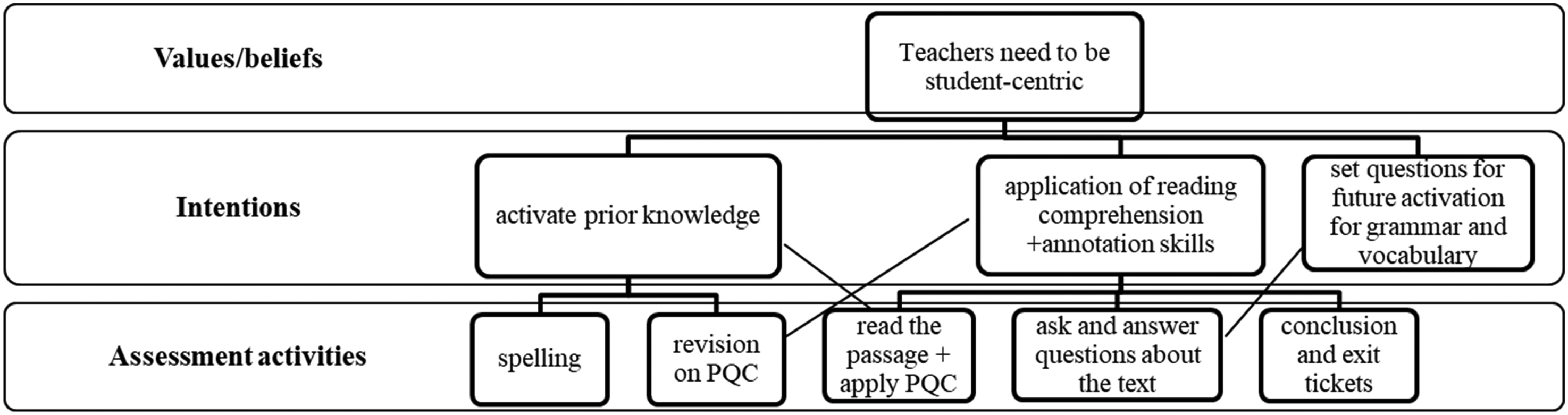
CAIRL for Lesson 3.
He drew upon his experiences of discussing his teaching with the researcher and watching his teaching video with his colleagues at school to illustrate his reflection on teaching: It's good that you ask. It was actually because of this study, though, it was this study that you all came, and took a video that day, and that day one of my … . There were two cameramen, you and me, for my own PLC. So we used my lesson for our PLC, professional learning committee, was how to teach the PQC technique. When I watched the video, I was like, Oh my goodness, I was so focused on teaching the technique. And when I gave that answer to your question, I reflected, was it really fair to him, that he was this … as a teacher, I could change that, maybe it was the way I taught him that he is like that, like he doesn’t buy it. Because every student, even no matter how clever they are, there is a way to engage them. So what is it that I am not doing correctly? So after I gave you the answer to the question, I went back on holiday, thinking, not just on that question, but there were other questions. I was thinking maybe it's the way I teach, I could have been more engaged. How do I engage students of all different levels, at the same time, in the same class? So that got me thinking, I must be more fluid, I must be more adaptive. And I must know what they do not know, I must know what they know, and it is important to touch base with everyone. If I cannot touch base with whoever I can, and follow the next lesson. I think definitely student profiles, and how much you know, how well [school bell rang] you know the students, are very important in my lesson planning nowadays. I would make a conscious effort to look at my lesson and try to remember the students’ faces and their abilities. When I do, even when I do one question, I would be like, okay, can they answer this? Who am I teaching? Can they answer this? And if they cannot, I’ll be like, okay, if they cannot, can other people in the class answer? Then I will write it down. Then also with the lessons, like okay, for example, my PQC, half the class can do it, then let's go. Prepare to get pupils who cannot do it, in my mind, who I think cannot do it. Before I stepped into class, I already knew there were some people who could not do, and I would preempt that. All this is knowing the students and adapting to them.
Lesson 4: Embracing Complexities in Teaching and Learning
The ladder (Figure 4) shows more complexity and nuances in the 4th lesson. In this lesson, Mr. F employed a jigsaw grouping method to enhance reading comprehension. Students were divided into groups of 7–8, and each “expert group” received a section of a reading passage. They annotated their sections, wrote questions, and then regrouped to form a complete picture of the text. Mr. F encouraged students to ask questions but not provide answers, fostering critical thinking. Mr. F provided feedback and guidance throughout the group activity. He seemed to be more open to various students’ responses, compared to what he did in the first lesson, and was not constrained by the standard answers. For instance, he responded to the students’ question “outside the text” with “Good question. I also do not know.” He utilized a variety of resources—asking more questions to students, sharing his teaching video with peers for discussion, and documenting common student errors in reading comprehension—to tackle students’ inquiries more effectively. In the meantime, Mr. F was puzzled by his students’ inability to understand a text through annotation. He observed how students responded to his instruction and provided follow-up adjustments to his teaching. He gave three sets of instructions for students to work as a group to piece together the passages into an article. Once he noticed that the students could not listen to each other when he had individual students read their passages one after another within the group, he changed to ask his students to put the passage together and read as a whole article. This flexibility allowed him to explore thoughtful teaching in response to student learning, either immediately with some uncertainty or after deeper reflection. It also indicated that he had yet to develop the expertise that would give him the sureness of touch of an expert teacher.

CAIRL for Lesson 4.
Having students master skills and understand content were important intentions, as shared by Mr. F. He articulated that his beliefs have developed into two interrelated dimensions: adaptive teaching and “every student's input matters.” I was thinking that my philosophy of teaching also needed to change, if the way my pedagogies needed to be better, and so I decided this year I should be more adaptive, shouldn’t be so worried about finishing up my lesson. Sometimes lesson plans are there, but you have to adapt accordingly, and it is okay not to finish it … . And my second philosophy is that every input from the student is very important, every input. No matter even if he says he doesn’t understand or even if he says he understands, that is important to me. Why do you not understand, or why do you understand, or what do you understand? So it is not enough to just say to me I understand, I want to know what you understand. It is not enough to tell me, Mr. F, I don’t want to annotate. Tell me why you don’t want to annotate. How can I help you understand the importance of annotation, or if you don’t want to annotate, what can we do now, in this class, to help you become better? So it's a very reflective, reflecting on your teaching at every moment. … ever since your study, I have been very reflective on what I am doing, every moment, like to make sure that, if let's say there is a need to change the way I am teaching to make them understand … . It makes you reflect on the way you assess right, it is not just as simple as formative and summative, it's more of what you are doing there and then, if you need to change the way, because some of their needs differ at different times of the day, today was toward the end of the day, very … they are tired, last few lessons.
Discussion
This study offers compelling evidence that, via the CAIRL method, a beginning teacher could cultivate a deeper and more self-aware understanding and adaptability (Jiang et al., 2020) of his instructional strategies. It illustrates the evolving process of Mr. F's praxis, which shows his reflections on student learning evidence and his engagement with reflective questions about his beliefs and practices. Mr. F's increasing openness characterizes the evolution of his reflection, as his learning from evidence of student learning through assessment and reflection is helping him grow and become more adaptive in his approaches, specifically by becoming more student-focused, which is the intended outcome of current educational reforms in Singapore and beyond.
The significance of considering students’ backgrounds became evident in Mr. F's realization as he approached the fourth lesson observation and post-interview. The value of self-reflection, coupled with the facilitation of deeper reflection by an external agent—the researcher—empowered Mr. F to personally come to this realization. This empowerment led to a transformative understanding of his teaching approaches and the underlying intentions, as he assessed his students’ ongoing learning. This realization is particularly significant for a beginning teacher, for whom sufficient teaching experience, coupled with reflection, is necessary for deeper insights into the nature of student-centered assessment reforms, which aim to foster assessment for learning (Brookhart & DePascale, 2025).
Moreover, this evolution does not occur overnight but takes place over time through a process of in-depth reflection, facilitated in part by the researcher and Mr. F's professional learning community (PLC) team. This process led Mr. F to a critical appreciation of the need to be more open and flexible in his strategies, which he considered “appropriate,” given how he specifically reasoned that students’ backgrounds and different readiness levels need to be paid attention to even before stepping into class. Such meaningful reflection seems to have resolved the conflict between exam preparation and concern for students as individuals, in Mr. F's case. Previously, the conflict was a source of perplexity, but critical reflection on evidence of student learning led Mr. F to deeply inquire into the problem, leading to changes in his beliefs about what was important for his teaching, hence interrupting and refining his teaching routines, in light of the new knowledge he gained through the reflective process. Mr. F's openness to diverse student responses and his willingness to adjust his teaching based on observations indicate a beginning teacher's eagerness to learn and adapt. This learning process may mirror what is called double-loop learning, which changes the values and beliefs behind an action (Argyris & Schön, 1974). Mr. F's openness to diverse student responses and his willingness to adjust his teaching based on observations indicate a beginning teacher's eagerness to learn and adapt. More studies need to be done on how CAIRL can reveal experienced teachers’ reflections and practices.
The study supports the international trend of empowering teachers as reflective practitioners, as suggested by Zeichner and Liston (2014), who advocated for teachers to actively participate in shaping educational objectives, goals, and methods. This approach emphasizes the importance of teacher expertise through ongoing reflection on student learning data, a perspective that is vital for professional learning, as noted by Mockler (2022). In addition, we acknowledge the complexity of reflection in teaching: the interplay among various situational factors and the need to deal with different student profiles are aspects that make reflection less of a straightforward process. This suggests that it may not always lead to the “correct” answers or decisions, as illustrated in Mr. F's class, where not all strategies led to a resounding success, which explains the need to consider “appropriateness,” as stated earlier. Thus, while the benefits of reflection are widely recognized, this research reveals that it involves more than a technical examination of teaching methods. Mr. F reflected not only on how to help his students perform well in exams, but also on his beliefs and values regarding the development of his students’ characters, confidence, and conceptual understanding. All of these were considered his responsibility as a teacher when he justified his approaches to show the “appropriateness” in his strategies. This aligns with van Manen's (1995) expansion to include critical reflection, which considers broader moral implications.
The study is limited in four ways: (a) The assumption of CAIRL being conducive to teacher professional learning is mediated and conditioned by multiple contextual factors, including school culture, institutional arrangements, and others. Although a PLC was mentioned by Mr. F to play a role in his reflection, it is not within the scope of this paper, and thus, it is not clear what specific factors within and outside the PLC can support teachers to learn with CAIRL to grow professionally. One limitation lies in the lack of explicit investigation into how the PLC shapes Mr. F's engagement with CAIRL. While Mr. F acknowledged PLC as a catalyst for reflection, this study did not analyze the specific mechanisms within or beyond PLC that may enable or constrain his learning. This gap may narrow the applicability of findings, as prior research underscores the critical role of collaborative inquiry in fostering teacher learning. DeLuca et al. (2017), for example, identified teacher autonomy to choose the inquiry focus, peer interaction, access to external expertise, improved student outcomes as a result of such collaboration, and resource availability as enablers of teacher growth. This suggests future research that integrates sociocultural and structural dimensions of teacher reflection in PLC to better understand how CAIRL can support sustainable professional learning. (b) The researchers’ interview questions made Mr. F more reflective on his teaching and allowed him to learn from alternative interpretations of the information collected via classroom assessment. It may be deemed as a “contamination” of the results. However, we see value in the interview protocol to facilitate the adoption of the more adaptive approaches to teaching. Although the researchers mediated the reflection process, Mr. F exercised autonomy in the eventual decisions he made in subsequent lesson designs. Further, we postulated that with the initial use of the CAIRL tool and the prompting questions from the researcher, teachers can also use CAIRL independently to foster their own professional learning. This independent use of CAIRL aligns with the complex and non-linear nature of teacher learning, as described in the literature review, empowering teachers to take ownership of their professional growth, whether they are working with a facilitator or on their own. Future research is needed to examine how teachers, once they understand the structure and purpose of CAIRL, can use it in a self-directed manner, engaging in reflective activities that are tailored to their specific needs and contexts. (c) Individual teachers and their unique learning practices are one dimension of complex interactions of mutually influencing and recursively co-constituting systems, including the social, discursive, and material dimensions and structures of teachers’ local work environments. Mr. F appropriated rich resources and considered various practical factors when making decisions. To this end, the analysis of laddering, while fruitful, remains incomplete without attention to the implicit dimension of teachers’ practical knowledge and the combined curricular, social, and cultural resources to which teachers have access. (d) This article presents a single-case study which, while rich in detail, may not be readily generalizable to all contexts. We recognize the benefits of a comparative approach that includes multiple cases, as it can offer broader insights. Our intention is to address this in future publications, where we plan to discuss the wider applicability of the CAIRL tool and its limitations based on a more extensive dataset from varied cases.
Conclusion
In this study, we presented a qualitative analysis of the instructional practices of one English language teacher, illustrating how the CAIRL method can serve as a tool for a deeper understanding of teacher reflections, particularly within the educational landscape of Singapore. Although limited as a single case study, the journey of Mr. F exemplifies how teachers could evolve from a focus on examination preparation to a more holistic, student-centered approach through reflective inquiry and the use of classroom assessment data. It suggests that teachers need support to engage in meaningful reflection and analysis of student learning data to enhance their ability to make judgments that align with human values and educational desirability.
The use of classroom assessment in this study contrasts with a more traditional approach in which classroom assessments are enacted mainly for accountability purposes. The risk of the traditional approach is what Ball (2003, 2015) proposed to be datafication, performativity, and the tyranny of numbers that may diminish teachers’ sense of professional expertise. In the approach taken in this study, we explicitly took the stance to promote teachers’ professional growth at work. As Biesta suggested that the very heart of teaching “… is the need for concrete situated judgments about what is educationally desirable, both with regard to the aims of education and with regard to its means” (Biesta, 2012, p. 44). For scrutinizing the grounds for the judgment and the underlying beliefs (Dewey, 1933), reflection remains an essential element for teachers. The CAIRL approach, introduced in this paper, has the potential to empower teachers to critically assess student learning outcomes as a direct result of their instructional strategies. This critical examination not only offers valuable insights into the effectiveness of their teaching methods but also serves as a feedback loop to reveal and challenge their beliefs, while refining their decisions in teaching. By integrating the CAIRL approach with reflective practice, we believe that teachers could be better equipped to make informed judgments that are central to the educational process.
The practical implications of this study, more specifically, may include engaging teachers to regularly reflect on their teaching by analyzing classroom assessment data and student learning outcomes, developing a deeper understanding of the impact of their instructional strategies on student learning, and challenging their own beliefs and decisions in teaching. While this study is set within the Singapore context, its implications are relevant to educational reform and teacher development initiatives globally. As the teaching profession continues to evolve, fostering a reflective and adaptive teaching force is essential for preparing students for an uncertain future and for shaping the future of education. We encourage further research into the integration of reflection and classroom assessment in teacher professional development, emphasizing the need for teacher learning models that are nuanced, context-sensitive, and aligned with the development of teaching praxis to help all students learn.
Footnotes

Ethical Considerations
We declare that we have obtained written informed consent from the participants and approval from the NTU Institutional Review Board (IRB-2018-05-013).
Author Contributions
Heng Jiang conceptualized the study, designed the Classroom Assessment-Informed Reflection Ladder (CAIRL) method, and carried out the research project. She wrote the abstract and the majority of the manuscript, including theorizing and analyzing how classroom assessment and reflection can be integrated to foster teacher professional learning. She finalized the manuscript and led revisions in response to reviewers’ comments. Saminathan s/o MOGHAN contributed by identifying, analyzing, and reviewing literature on reflections and classroom assessment. He also edited the original draft. Both authors approved the final version for submission.
Funding
The authors disclosed receipt of the following financial support for the research, authorship, and/or publication of this article: Singapore Ministry of Education (Education Research Funding Program, OER33/17JH).
Declaration of Conflicting Interests
The authors declared no potential conflicts of interest with respect to the research, authorship, and/or publication of this article.