




Abstract
This article analyses the thorniest issues raised by the implementation in the Netherlands of Framework Decision 2008/947/JHA, often referred to as ‘European Probation Order’. It delves into Dutch law and practice regarding mutual recognition of probation measures and alternative sanctions and analyses how the Netherlands deals with principled questions with respect to the legitimacy of the transfer of probationers, both as a mechanism in itself and with respect to the ultimate goal of promoting social rehabilitation. The analysis focuses on (i) the basic tenets of the Dutch implementation (goals, competent authorities and application in Dutch legal practice); (ii) challenging issues regarding the types of probation measures and alternative sanctions eligible for recognition and the implementation of refusal grounds and (iii) how procedural rights and informed consent of the sentenced person are dealt with in relation to social rehabilitation.
Keywords
Introduction
In this article, we will delve into an analysis of the thorniest issues raised by the implementation of Framework Decision 2008/947/JHA (thereinafter ‘FD 947’) which established a transfer mechanism allowing for the mutual recognition of probation measures and alternative sanctions, across the EU’s area of ‘Freedom, Security and Justice’, often referred to as ‘European Probation Order’ (or EPO). Most notably, we aim to analyse the way Dutch law and practice deals with mutual recognition of probation measures and alternative sanctions.
The ‘Dutch case’ regarding FD 947 emerges as a particularly relevant one for the sake of a broader account of the ‘actual practice’ of the EPO within the EU. As recently underscored, in contrast to other national jurisdictions, the Netherlands stands out for a relatively high use of FD 947 procedures, though relatively more so as an issuing state (Brandariz et al., 2024; Nauta et al., 2018; Nelen and Hoffman, 2019): the newest data (as shown in par. IIIA) show a steady increase in the past years.
While most recent EU level scholarship has cast its eye on the possible causes of the deceiving rate of application of the legal instrument at hand (Montero Pérez de Tudela and García Ruiz, 2023), further ‘principled’ questions arise with respect to the legitimacy of the transfer of probationers, both as a mechanism in itself and with respect to the ultimate goal of promoting social rehabilitation. In the following, we will conduct a bottom-up analysis drawing some answers to these questions from the national implementation of FD 947 within the Dutch legal system.
Analysing the Dutch situation, we will focus on (i) the basic tenets of the Dutch implementation (goals, competent authorities and application in Dutch legal practice); (ii) challenging issues regarding the types of probation measures and alternative sanctions eligible for recognition and the implementation of refusal grounds and (iii) how procedural rights and informed consent of the sentenced person are dealt with in relation to social rehabilitation.
In several respects, the European Probation Order bears resemblance to the European Supervision Order (Framework Decision 2009/829 on supervision measures as an alternative to provisional detention), which applies the principle of mutual recognition to supervision measures as alternatives to pre-trial detention. Though such supervision measures take place at an earlier stage in the proceedings, pre-(potential) sentencing, there are similarities as to the Framework Decisions’ goals and the types of measures to be supervised. We will therefore address certain aspects of the European Supervision Order throughout this paper, where relevant in relation to the European Probation Order.
Mutual recognition of probation measures and alternative sanctions
Before delving deeper into an analysis of how FD 947 has been implemented in the Netherlands, one must look closely at the relevant EU normative background. FD 947 allows the circulation of judgements and probation decisions within the EU area of ‘Freedom, Security and Justice’. More specifically, it does so to enable the ‘enforcement and supervision’ of probation measures and alternative sanctions in a Member State other than that in which such measure or sanction has been handed down. The recipients of this instrument are, by definition, perpetrators not living in the state of conviction. For this purpose, the FD applies the principle of mutual recognition to ‘final decisions’ (sentences or orders) involving probation or other forms of supervision. In this section, we place particular emphasis on the main rationale behind this instrument: that is, the ‘social rehabilitation’ of probationers and other convicted individuals eligible for one of the sanctions or measures listed under Article 4 of the FD. Before that, however, we must clarify the meaning of mutual recognition, a principle whose nature and content are of importance to grasp the implications of the transfer of probation decisions across the EU.
The principle of mutual recognition (commonly referred to as the ‘cornerstone’ of judicial cooperation in the EU) constitutes the basis for an enforcement of sentences and judicial decisions across borders. Most notably, mutual recognition in criminal matters allows for the enforcement of judicial and law enforcement decisions issued by the authority of a different Member State, in a semi-automatic fashion: that is, in the absence of many legal requirements which typically apply to traditional inter-state mechanisms of mutual legal assistance. Mutual recognition, in addition, allows for a one-on-one dialogue between relevant national law enforcement authorities, with little to no involvement of domestic governments.
The development of the principle of mutual recognition, operationalized by the adoption of EU legislative instruments, has followed a gradual development that corresponds to the improvements of the Union’s ‘constitutional’ framework outlined by the EU’s founding Treaties. FD 947 was adopted in 2008 under the so-called ‘third pillar’: that is, the inter-governmental legal basis provided for by the Treaty on the European Union (TEU), prior to the ‘constitutional revolution’ ushered in by the Treaty of Lisbon in 2009. Legal provisions contained in FD 947 are binding and while the FD may not lead national authorities to disapply legal provisions in contrast with this instrument, a duty exists for national administrative and judicial authorities to conform national law to EU provisions (the so-called duty of consistent interpretation) (Court of Justice of the EU CJEU 2005, par. 60). The Court of Justice of the EU may also be called on to adjudicate on the interpretation of the instruments (including FD 947) which were adopted under the third pillar. Perhaps more significantly, it now falls within the ‘tasks’ of the Court to rule on infringement proceedings that can be launched by the European Commission against Member States if they do not correctly implement the legal instruments on cooperation in criminal matters.
For this reason, it is of importance to explore in more detail the aims of the transfer mechanism provided for under FD 947 before moving on to address its implementation under national law. In the following, we begin with an interpretive analysis of the term ‘rehabilitation’ in the context of EU cross-border proceedings (drawing on its relationships with mutual recognition) and we briefly touch upon the inherent tensions existing between the rehabilitative aim and the other opposing goals of the transfer mechanism, before concluding this section with a word on the most sensitive issues raised by the Framework Decision in terms of legitimacy and procedural justice.
The ambivalent nature of ‘social rehabilitation’
Ostensibly, the main declared aim of FD 947 is to enhance the prospects of reintegration into society, by enabling a sentenced person to preserve family, linguistic, cultural and other personal/social ties. From this perspective, FD 947 aligns with other instruments involving the transfer of sentences across the EU, being mostly concerned with what legal scholars have called ‘social reintegration’ or ‘social rehabilitation’ (Coppola and Martufi, 2024). From a criminological viewpoint, instead, transferring a probation measure is part of what can be referred to as a process of ‘resettlement’ (De Wree et al., 2009) with the ultimate goal of achieving desistance from crime. After all, scholars have underscored the almost complete overlap between the elements required by EU law (such as the strengthening of family and social ties) with some of the key pro-social factors studied by desistance literature (Faraldo-Cabana, 2021; Martufi, 2018; Wieczorek, 2018). The latter include employment and family relations (McNeill, 2006) as a springboard to develop/re-build social and individual capital. In this connection, FD 947 builds on a long-lasting tradition of international instruments aiming at ‘social rehabilitation’ through the transfer of sentenced persons (Froment, 2002). 1
But what is exactly the meaning of ‘rehabilitation’ within an instrument regulating cross-border cooperation? Ambiguity due to a partial terminological overlap may be deceptive. 2 The concept of ‘rehabilitation’ as a penological aim is usually linked to sentences enforced within a purely national context. Theoretically speaking, ‘rehabilitation’ is an attribute of punishment. While the ends (desistance through resettlement) and some of the means (increasing the individual and social capital of convicted individuals) might be common, the transferring process regulated by the FD is something different from the enforcement of a sentence in a purely domestic case. In such instances, what must be ‘rehabilitative’ is the transfer procedure, not the sentence itself (whose enforcement is regulated by national law).
While this is without prejudice to the penological orientations pursued at the domestic level, EU law regulates the interaction between domestic authorities and the material transfer of those having been convicted. In doing so, FD 947 identifies ‘social rehabilitation’ as one of the rationales behind the decision to transfer. In other words, the term ‘rehabilitation’ used by FD 947 is not an attribute of domestic punishment but, rather, a feature of what could be referred to as ‘cross-border punishment’. This notion refers to cases in which a person, having exercised their freedom of movement, is convicted in a Member State other than that of residence thereby allowing for the transfer of their sentence from the state of sentencing to the state of residence.
The assumption, in such cross-border cases, is that a lack of integration of foreigners in the state of sentencing would hinder the chances of being ‘reintegrated into society’. These chances, in turn, are thought to be higher in the state of origin thanks to the ‘stimulation of societal bonds’ (De Wree et al., 2009: 115) resulting from closer ties with family, friends and the overall polity. 3 As a general rule, Article 5 (1) of FD 947 provides that a sentence or probation order may be sent to the Member State in which the sentenced person ‘is lawfully and ordinarily residing’, if the sentenced person has returned or wants to return to that State.
At the same time, the concept of rehabilitation can hardly be disentangled from the goals underpinning the principle of ‘mutual recognition’. Mutual recognition is commonly described as the cornerstone of the EU area of Freedom, Security and Justice. It allows the free circulation of judicial decisions for the purpose of ensuring a ‘high level of security’ for EU citizens. In accordance with this principle, EU rules on the transfer of sentences are imbued with the goal of securing a more effective cooperation between judicial and police authorities in the Member States to ensure a high level of protection against crime.
Underlying EU cooperation in criminal matters is therefore a focus on security and crime prevention: this approach has framed the way in which the CJEU interprets the concept of ‘social rehabilitation’. More concretely, this means that the Court has repeatedly construed ‘rehabilitation’ in such a way as to allow for a larger and more expansive application of mutual recognition instruments. In other words, the Court has systematically chosen to interpret this (admittedly, vague) concept only in ways that could increase the effectiveness of mutual recognition (the recent case AP discussed below is illustrative of this trend).
A further element contributing to the ambiguity of ‘rehabilitation’ is the dual role of judicial cooperation in the field of sentencing. FD 947 lays down rules for the enforcement of decisions involving ‘non-residents’ of the sentencing state 4 : beneficiaries of the transfer mechanism are often regarded as ‘outsiders’ as they do not ‘live’ in the state of conviction. For this reason, they are demonstrably more likely to receive a custodial sentence rather than an alternative sanction, and subsequently to be expelled or deported to the country of origin (Light and Wermink, 2021). From this perspective, the possibility to transfer a probation measure or alternative sanction is an improvement, as it can indeed avoid imprisonment in the sentencing state, thus addressing potential inequalities in the imposition of custodial sentences between residents and non-residents of the state of conviction (in accordance with the goals of the FD 947). In the same vein, Framework Decision 2009/829 on the European Supervision Order is meant to address the problem that EU Member States tend to use less alternatives for pre-trial detention in case of foreigners, as they may be considered at risk of fleeing.
At the same time, however, with regard to FD 947, new problems could come to the fore: the decision to execute a probation measure in the state of origin may result in a relocation of the probationer if he or she had not moved back already and/or independently from the transfer proceeding (Brandariz et al., 2024; Vandennieuwenhuysen, 2022). True: the state of execution must be chosen, in first instance, based on the criterion of the state where the person is ‘lawfully and ordinarily residing’. One may question, however, to what extent the FD prevents a more formalistic approach allowing for a forcible transfer ‘under supervision’ on grounds that the convicted person no longer has a status as an official resident. This may end up blurring the (apparently) neat distinction between crime prevention and immigration-control, with the transfer of probation decisions becoming related to the broader crimmigration trend, as migration law and criminal law become increasingly intertwined (Stumpf, 2006). The interpretation of the goal of ‘rehabilitation’, in this context, cannot evade the fact that the implementation of FD 947 may result de facto in the attribution of a differential status between ‘insiders’ and ‘outsiders’, one that is typical of the crimmigration phenomenon. Under a crimmigration framework it could be argued that the precondition for rehabilitating foreign convicted persons would be their relocation to the state of origin (Brandariz et al., 2024): on the one hand, this may tip the balance of sentencing discretion in favour of a prison sentence; however, if a non-custodial sentence or probation are issued, the foreign status may turn the time spent on probation into a ‘waiting room’ before the actual transfer takes place. In general, as shown by crimmigration scholarship (Brouwer, 2020), the fact of being ‘foreigners’ may have the effect of leaving sentenced persons in a vacuum of rehabilitative opportunities while awaiting transfer. Admittedly, things would look differently if the person has given free and informed consent to such transfer. To what extent the requests issued under FD 947 must build on a probationer’s prior consent, however, will be discussed below.
The aims of the free circulation of probation measures: open questions
Under Article 1 of FD 947 the main objectives of the transfer mechanism are: ‘facilitating the social rehabilitation of sentenced persons’; ‘improving the protection of victims and of the general public’; ‘facilitating the application of suitable probation measures and alternative sanctions, in case of offenders who do not live in the State of conviction’. As revealed by the preamble to the FD, these goals are thought to be compatible with each other. At closer inspection, however, tensions may arise between the goal of rehabilitation discussed above and the other policy objectives pursued by the legal instrument at hand, most notably the protection of victims (Faraldo-Cabana, 2021). While the last aim mentioned here (the application of a suitable measure or sanction) is broad enough to be synonymous with the tenet of ‘individualisation’ or ‘fitting punishment’, a closer look at the concept of ‘victim and public protection’ may raise more interpretive questions. Most notably, two most pressing questions seem to depend on the exact scope of the notion of ‘victim and public protection’ which may bear on the implementation and on the actual practice of this instrument.
First, as seen above the FD under Article 4 (1) lists the measures and sanctions eligible for transfer to the state of origin of the convicted person. However, the wording of the relevant provisions is broad enough to include multiple forms of measures or sanctions, thus leaving to domestic law the choice of the relevant ‘devices’ that could be eligible for recognition and enforcement abroad. This question has come to the fore in the recent case AP (CJEU, 2020), where the CJEU was asked to rule on whether a suspended sentence imposing the obligation not to commit a new criminal offence without any formal supervision would fall within the list of Article 4 (1). Interestingly, the Advocate General in his opinion noted that the recognition of a measure involving no supervision on the person’s behaviour could not be regarded as conducive to social rehabilitation. In contrast, aims of ‘victim and public protection’ (which might very well justify the execution abroad of such measure) could not override the ultimate aim of rehabilitating a convicted individual. The CJEU did not espouse this reading of the FD and opted for an interpretation which brings together ‘rehabilitation’ and ‘crime prevention’. Not only must a suspended sentence without supervision (as that at issue in the case dealt with by the Court) be recognized under FD 947, but the transfer of such measure is seen to be keeping with both social rehabilitation and public protection. Article 14 (1) of FD enables the authorities of the executing state to oversee the compliance with measures adopted in the state of sentencing and to act under their national law in case of breach: this would allow to ponder the prospects of reintegration in the individual case (gauging the seriousness of the possible violation), while tailoring the most suitable reaction to protect the public and further potential victims in the state of origin.
Second, the equilibrium between rehabilitation, on the one hand, and victims/public protection, on the other, bears significantly on the interpretation of the (entirely optional) grounds for refusal. A pressing question, in this respect, is the minimum length of the sanction or measure to be executed. In particular, Article 11 allows MS to provide for a ground of non-recognition when the duration of a measure or sentence is lower than 6 months. As we shall see, questions may arise with respect to the applicability of such a provision to community service. 5 What remains to be clarified, in particular, if whether the time-lapse considered refers to the provision of the sentence’s duration by the law or if, by contrast, such requirement may be thought to refer to the time left for the execution of community service in concreto. In practice, it appears that some confusion may arise also in relation to the length of replacement detention in the event of breach of probation conditions (see below in par. IIIB).
Finally, an open question concerns the possibility of refusing to execute an EPO because of risks for the protection of fundamental rights: to what extent can the general clause laid down by Article 1 (4) function as an additional ground of non-execution? This provision – similarly to what is provided for by analogous mutual recognition instruments – stipulates that the implementation of FD 947 shall not have the effect of modifying the overarching obligation to respect fundamental rights as enshrined in Article 6 of the Treaty on the European Union (TEU). A question which has thus far attracted little attention is whether, based on this provision, national authorities may refuse to execute a foreign judgement or probation order when an actual risk exists of breaches of fundamental rights, such as the right to a fair trial before an independent tribunal (considering the attacks on the independence of the judiciary in countries such as Poland, Hungary and Romania in the past decade). With regard to the European Arrest Warrant, the CJEU’s case law since 2016 (CJEU, 2016; CJEU, 2018) allows for postponement of the surrender decision if there is evidence of systemic or generalized deficiencies and there are substantial grounds to believe that the person concerned will be exposed to a real risk that particular fundamental rights as enshrined in the EU Charter of Fundamental Rights will be breached as a result of the surrender. The Court only allows for ending the surrender procedure if the issuing authority has not been able to discount the risk by providing supplementary information within a reasonable time. The CJEU has ruled in 2023 (CJEU 2023) that with regard to the transfer of custodial sentences under FD 909, Member States may also refuse to recognize and enforce a judgement in case of systemic or generalized deficiencies regarding the right to a fair trial, if there are substantial grounds to believe that these have had a tangible influence on the criminal proceedings against the person. Hence the two-step test from the EAW case law is also applicable to the transfer of custodial sentences, thus adding a broad-brush interpretation of the similar clause laid down by FD 2008/909/JHA, suggesting that the same test (involving a general and individual risk-assessment) may very well apply to other instruments such as FD 947 (Rosanò, 2024). This will raise a fundamental dilemma: on the one hand, accepting semi-automatic recognition of probation measures or alternative sanctions issued by a non-independent judiciary can be regarded as detrimental to the integrity of EU criminal cooperation and as putting its core values at stake (Bárd, 2023). On the other hand, accepting such refusals of EPOs also means that social rehabilitation may turn out to become more difficult in particular cases.
General questions in terms of procedural justice: involvement and consent
Before moving on to a more detailed analysis of the domestic implementation of FD 947, we must address the major topic of the legitimacy of a transfer procedure involving the mutual recognition of probation or alternative sanctions. In keeping with existing literature in this field, a valid framework of analysis is provided by the theory of procedural justice. We will draw on this theory only to a limited extent, emphasizing the need for affected individuals to have their voice heard as an element to increase the perceived legitimacy of the outcome of a given legal procedure (Tyler, 2003). Such legitimacy, in turn, is thought to contribute greatly to a perpetrator’s efforts towards resettlement in the context of the messy and complex process of relocation to their state of origin.
A key requirement, in this respect, is the consent of the sentenced person to the transfer of their sentence or measure. In this respect, FD 947 is ambiguous to say the least. While Article 5 (1) identifies the executing state with that ‘where the sentenced person has returned or wants to return’, this provision has been traditionally interpreted as meaning that consent is required unless the person has willingly moved back to the country where they are lawfully and ordinarily residing. In the latter case, consent seems to be presumed. Presumption of consent in such instances, though in keeping with the ‘peculiar’ understanding of rehabilitation analysed above, has been the subject of relevant scholarly criticism (Durnescu, 2017; Vandennieuwenhuysen, 2022), most notably as it seems to run counter to the need to individualize the enforcement of sentences in accordance with the broader aim of rehabilitation (Neveu, 2013). The requirement of consent – although implicit in these latter instances – is confirmed by official evaluations of the FD: in 2014, the Commission stated that ‘[u]nder the Probation and Alternative Sanctions consent of the sentenced person is always required, unless the person has returned to the executing State, when his consent is implied. This is important as this Framework Decision cannot be used against the will of the person concerned. The reason for this is that this Framework Decision only comes into play if the person has already been released in the issuing State and wants to return as a free person to his home country and is ready to cooperate with the supervising authorities’ (European Commission, 2014: par. 4.1).
A slightly different question in terms of procedural justice is whether, regardless of a requirement of formal consent, probationers may be asked to express their opinion as regards the prospects of their rehabilitation in the state of origin. Practice in the use of Framework Decision 2008/909 shows that the opinion of the sentenced person (which that legal instrument requires) may be an important source of information for the purposes of a prospective assessment of their future life upon transfer (as this would provide concrete information around the individual and family ties in the executing state). Unfortunately, the clause requiring the prior opinion of the sentenced person is not reiterated by FD 947. This however leaves to the Member States the possibility of introducing further procedural safeguards to increase the ‘voice’ of convicted individual and add up to the legitimacy of the entire procedure.
Whether or not the person has willingly moved back to the country of origin (thereby making consent implicit), their involvement to the transfer procedure seems crucially relevant for the sake of rehabilitation. Such involvement may take place ex ante through information given by the probationer expressing an ‘informed opinion’ to the transfer (this could be ritually acquired to the case file orally or in writing); or, at least ex post via the attendance to a (complaint) hearing before a judicial or administrative body after the issuing decision has been taken.
EU law has generally failed to require Member States to establish a system of domestic remedies against transfer decisions. This may be partly explained on the basis of the EU principle of ‘procedural autonomy’ (CJEU, 1976) which leaves Member States free to determine national procedural conditions governing the protection of rights under EU law (in the absence of specific rules on this subject). Though, as we shall see, Dutch legislation has provided for a legal complaint against decisions of transferring prisoners under FD 909 (where the Netherlands are acting as issuing authorities), no such provision has been laid down for the EPO.
The lack of a complaint mechanism enabling an (at least ex post) involvement of the sentenced person may be legally questionable if one considers that Article 47 (1) of the Charter of Fundamental Rights of the EU enshrines the right to an effective remedy before a ‘tribunal’. The fact that in such instances proceedings deal with the enforcement of a sentence – and are thus beyond the scope of the autonomous notion of ‘criminal proceedings’ – does not prevent the application of article 47 (1). This provision must ensure at least the same degree of fundamental rights protection as article 6 ECHR, which ensures a right to fair trial beyond its criminal limb (European Court of Human Rights ECHR, 2012: par. 85). Admittedly, the manner in which possible adjustments such as those proposed here might be adopted is a matter of national discretion. Such discretion encounters some limits, however. Under the principles developed by CJEU’s case law after Rewe, when establishing procedures that allow a vindication of rights under EU law, Member States should grant a protection to those rights that is at least equivalent to that available against similar violations of national law (see CJEU, 2004). We can take this reasoning even further: as similar actions under national law exist (including, under Dutch law, those involving complaints against the intended transfer of prisoners (FD 909), for outgoing cases – see par. IIIC), it would not seem far-fetched to argue in favour of a similar complaint mechanism with respect to transfers under FD 947.
Mutual recognition at work for probation and supervision measures and alternative sanctions in the Netherlands
Introduction: the ‘Dutch way’ of mutual recognition regarding probation and supervision measures and alternative sanctions
The Netherlands has implemented FD 947 (and Framework Decision 2008/909) as per 1 November 2012 in the (WETS, 2012) (hereafter we use the Dutch abbreviation: WETS). 6 In keeping with the aims of the legal instrument at issue, social rehabilitation comes forth as a central goal in the Dutch implementation law of FD 947, as can be inferred from the explanatory report (Explanatory Report WETS 2010-11: 4). Equally in accordance with the goals of FD 947, Dutch implementing legislation norms seem strongly invested in protecting the general public and victims, by strengthening the monitoring of compliance with probation measures (rec. 8 FD 947; Explanatory Report WETS 2010-11: 16).
Meanwhile, as of the late 20th century, the Netherlands has witnessed an increasing trend towards more punitive policies reducing the room for non-custodial alternatives, while possibilities for reintegration become more and more limited (Meijer and Rodermond, 2022). For instance, conditional release rules have become much stricter since July 2021. Such release used to be possible after having served two thirds of a prison sentence, yet an additional requirement has been added that the period of conditional release can last maximum 2 years, significantly amending the time that will effectively be served in custody (Sanctions and Protection Act, 2021). Since 2012 the sanction of community service cannot be imposed as a stand-alone sentence anymore in certain cases, for example for certain serious crimes (Act on Restricting Imposition of Community Service 2012).
In the Netherlands, foreign citizens are much more likely to receive custodial sentences – and they also receive longer custodial sentences – than their Dutch counterparts: such disparities are roughly equal for EU and non-EU nationals (Light and Wermink 2021). Judges and prosecutors in Light and Wermink’s study highlighted that foreign defendants who do not reside in the Netherlands are not so much seen as ‘their responsibility’ and that in sentencing decisions regarding this group, deterrence took centre stage – including preventing foreign nationals from returning – rather than rehabilitation. Community service is often thought to be impractical for this group, considering communication difficulties. Non-permanent residence in the Netherlands is regarded as a contraindication for imposing this type of sentence (Public Prosecution Service, 2012: par. 4; Meijer, 2023: par. 4.). Moreover, foreign nationals are more likely to be held in pre-trial detention, which in turn makes custodial sentences more probable. In any case, the Netherlands has long been criticized for making much – and uncritical – use of pre-trial detention, especially toward foreign suspects (Boone et al., 2017; Crijns et al., 2016; Wermink et al., 2022). In relation to FD 829 it is still puzzling that alternatives to pre-trial detention are not regarded as self-standing options in the Dutch legal system; a judge or court first needs to order pre-trial detention before it can suspend it, which is discretionary and does not often happen. 7
The public prosecution service (PPS) has been appointed as the central authority for incoming and outgoing orders regarding FD 947 as well as FD 829 (art. 3.3 WETS; Art. 5.7.4 Dutch Code of Criminal Procedure (hereafter: CCP)). The Dutch legislature has reasoned that this would appear as the most logical solution as, in the Dutch system, the PPS already has the task of – and thus the knowledge of and experience with – monitoring compliance with probation measures and executing alternative sanctions (Explanatory Report WETS 2010-11: 20). Importantly, requests under both FD’s – as well as FD 909 8 – are dealt with by a central desk, the International Centre for Mutual Legal Assistance (IRC) Noord-Holland, where practical know-how and experience are concentrated. In the Council’s 9th Evaluation of mutual recognition legal instruments in the field of deprivation or restriction of liberty (2022), it mentions having such a single point of contact as a model of good practice for all Member States (Council EU, 2022, Recommendation 4). The IRC cooperates with the Probation Service, which has an international desk that can help to obtain information from probation services in other Member States (Boone et al., 2017).
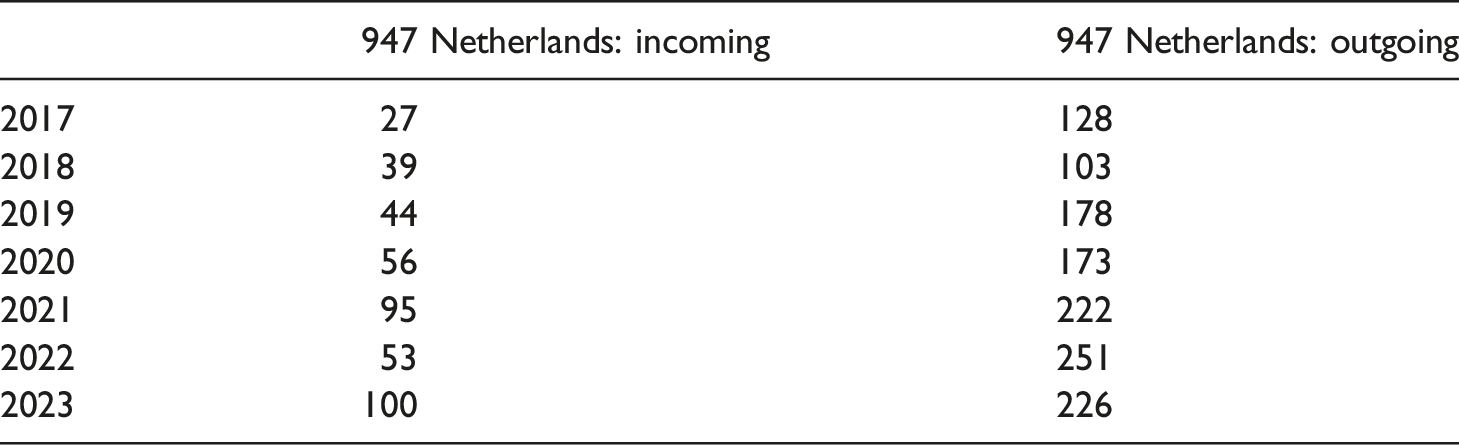
The high number of issued EPOs is explained by the fact that the PPS automatically searches for information on convicted persons’ residence and check whether they have an EU address (Nauta et al., 2018). Of the incoming cases in 2023, so far 50 have been recognized and 9 refused (while most other cases are still pending or concern an advice). In 2017, the total number of recognized cases was 20 out of 27 (Nauta et al., 2018). In 2016–17 the majority of incoming and outgoing EPOs concerned Belgium and the large majority of outgoing cases involved community service (Nauta et al., 2018).
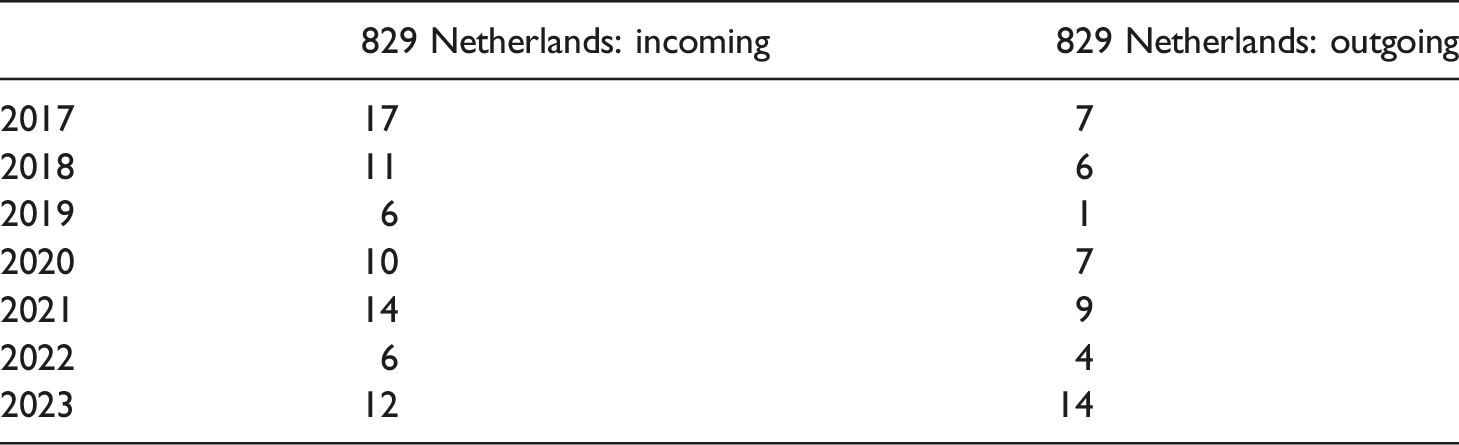
Research conducted under the auspices of the DETOUR project in 2017 has shown how little known the ESO still was among practitioners at the time (Boone et al., 2017). As is the case for the EPO, Dutch practitioners experience the lack of a centralized authority with knowledge and expertise in many countries to be problematic.
The Dutch authorities process incoming EPO cases rather swiftly: while art. 12 (1) of the FD states that the executing authority shall decide within 60 days, in the Netherlands incoming procedure lasted on average 41 days in 2016 and 22 days in 2017 (Nauta et al., 2018, table 7.1). However, when the Netherlands issues EPOs, the average time between the receipt and decision amounted to 132 days in 2016 and 261 days in 2017, with huge differences between the various issuing countries. Contacts between the Netherlands and some countries, such as Belgium, are good and lead to easier and faster cooperation, especially in case of experienced competent authorities – hence the general recommendation for centralized authorities. Dutch authorities are worried about the lengthy delays for some countries in responding to applications and requests for information, which leads to situations where there are less than 6 months of the measure or sentence remaining so that the case comes to be regarded as ineligible for transfer (Council of the EU, 2022).
Meanwhile the 2022 Council evaluation mentions that there is still a continuing practice of informal transfers and remote supervision, particularly in border areas: ‘in some cases, it was commented that the behaviour arose from lack of familiarity with FD 2009/947/JHA and “old habits”’ (Council of the EU, 2022: 69). In general, the Council concludes that ‘[t]here is significant further work to be done in the Netherlands regarding awareness raising, information dissemination and training and skills development among legal and supervisory professionals and bodies. There is a particular challenge with disseminating information and raising awareness of FD 2008/947/JHA among eligible persons and Netherlands nationals and residents in other jurisdictions’ (Council of the EU, 2022: 76).
Types of probation measures or alternative sanctions and grounds for refusal
There are some particularities in Dutch law that come into play with regard to FD 947. Dutch law does not provide ‘conditional sentences’ as sentence-enforcement modality as foreseen in Article 2 (1) (c) FD 947. It does have the possibility for suspended sentences (Article 2 (1) (b)) (voorwaardelijke straffen) and conditional release (Article 2 (1) (a)) (voorwaardelijke invrijheidstelling). Community service in the Dutch system is a stand-alone sentence (taakstraf); thus, if other Member States have applied community service as a probation measure, the Netherlands will amend this into a stand-alone sentence for the purposes of monitoring.
As was mentioned in par. II, the taakstraf leads to difficulties as regards the rule that state authorities may refuse an EPO if the probation measure or alternative sanction is of less than 6 months’ duration (art. 11 (1) (j)). Community service in the Netherlands has a duration of at most 240 h. Recital 18 clarifies that refusal is allowed ‘if the community service would normally be completed in less than 6 months’. Under Dutch law, this was translated into the rule (in Article 3:13 (1) (b) WETS) that the Netherlands authorities can refuse to execute an EPO if the community service imposed has a shorter duration than 80 h (or if the obligation or probation period has a shorter duration than 6 months): 80 h community service is seen as the equivalent of 6 months, on the assumption that, all things considered, such a sentence can be executed within that period of time (Explanatory Report WETS 2010-11: 55–56). However, some Member States tend to refuse Netherlands-issued requests for executing community services because the replacement detention is less than 6 months (under Dutch law, replacement detention is maximum 4 months: see Article 22d par. 3 Criminal Code) (Council of the EU, 2022: 72). This most likely misinterprets the ground for refusal of Article 11 (1) (j), since what should be decisive for the refusal ground is the timeframe within which the community sentence is (normally) performed. In any case, we argue that the 6-month timeframe, being so closely connected to the judicial decision on how many hours of community service are to be performed, counts as a sentencing rule (not a sentencing execution rule) and is therefore governed by the law of the issuing state. The lack of EU-wide harmonization of sentencing rules also affects implementation in other ways: what happens, in practice, when a person does not perform community service? National legislation regarding this issue differs enormously across the Member States (from varying degrees of replacement detention to electronic surveillance) (Council of the EU, 2022).
For both the implementation of the EPO and the ESO, the Netherlands legislature has conceded that it would accept the monitoring of further measures – beyond those mandated under Article 4 of FD 947 and Article 8 of FD 829 – as executing state. Such measures are included in separate decisions (Uitvoeringsbesluit, 2012, 2013) and both – for now – only include electronic monitoring (which for Dutch suspended sentences is a condition that can be attached to other probation conditions).
Some of the mandatory measures are rather widely formulated by both FD 947 and by Dutch implementation provisions: for instance, the ‘obligation to avoid contact with specific objects, which have been used or are likely to be used by the sentenced person with a view to committing a criminal offence’ (FD 947, art. 4 (1) (g); art. 3:2 par. 1(f) WETS). In this respect, the Dutch explanatory report provides the example of a prohibition to use the internet in the event of a conviction for downloading and spreading child pornography (Explanatory Report WETS 2010-11: 50). Given that this crime is only one example and that internet or social media restrictions anno 2024 are arguably much more far reaching than they were not so long ago, one may expect such issues to lead to controversies between Member States. Most notably, not being able to use the internet or social media platforms can greatly affect one’s everyday life (work, payments, social contacts etcetera) and thus negatively affect social rehabilitation, as well as impact upon fundamental rights such as the right to freedom of expression.
The PPS can adapt probation measures/periods or alternative sanctions if the nature or duration is incompatible with Dutch law, by lowering the duration to the Dutch maximum for equivalent offences (Article 3:11 par. 1 WETS) or by adapting the obligation or sanction in such a way that it corresponds as much as possible to the obligation or sanction imposed in the issuing state (Article 3:11 par. 2 WETS). The result may not be more severe or longer than the measure originally imposed. 12 The PPS assesses, based on experience, how to adapt the nature of a measure: it sometimes requests the Ministry of Justice and Security for assistance in hard cases (Nauta et al., 2018). Measures included in incoming EPOs are discussed with the international desk of the Probation Service: a 2018 evaluation report mentions that sometimes for example contact prohibitions are formulated so broadly (‘no contact with persons in Belgium’) that they are not practically enforceable (Nauta et al., 2018). Sometimes a draft recognition decision is presented to the receiving state in order to gather whether they will accept it.
A well-known issue in the Dutch implementation acts of both 947, 829 as well as 909 is that the Netherlands has made most refusal grounds mandatory, leaving no discretion for the competent authorities. This is not in line with the FD’s, which explicitly leave such discretion to executing authorities (Dieben, 2022; European Commission, 2014; CJEU, 2019; CJEU, 2021). 13 As the Commission has emphasized, such discretion is also in the interests of the social rehabilitation of the person concerned if they have requested the transfer (European Commission, 2014: par. 4.4).
Although FD 947 refers to the obligation of respecting fundamental rights as enshrined in Article 6 TEU (see above), the FD and Dutch implementation do not contain a fundamental rights refusal ground. In contrast, within its provisions implementing the European Arrest Warrant (EAW), Dutch law used to include a refusal ground for situations where the execution of the EAW would lead to a flagrant violation of the fundamental rights of the person concerned (Article 11 Overleveringswet). In 2021 this provision has been amended in accordance with the case law of the CJEU (Aranyosi; LM), which allows for a more restricted way of taking fundamental rights into account (as discussed in par. IIC). Since the CJEU has ruled in 2023 that a similar Aranyosi/LM-test is also applicable to the transfer of custodial sentences under FD 909, we will have to await what this entails for the Dutch implementation of FD 909 ánd what it could mean for FD 947.
The Dutch legislature has opted to maintain the double criminality requirement – the underlying offence shall be criminalized under the law of both the issuing and the executing state – even though Article 10 (4) of FD 947 allows for removing this requirement. This choice has been explained by the far-reaching nature of certain restrictions of liberty and the possibility of deprivation of liberty as a subsequent measure. With regard to custodial sanctions (FD 909 was implemented together with FD 947), it was also argued that resocialisation would not be helped if a person would need to serve a sentence for behaviour that is not criminalized in the Netherlands (Explanatory Report WETS 2010-11: 10). Yet for the ESO, the Netherlands has accepted restrictions to the requirement of double criminality where it concerns listed offences (art. 5.7.10 par. 3 CCP). In its explanatory report, the government pointed to the more limited nature of the ESO, which is merely about monitoring compliance with certain obligations and does not involve deprivation of liberty (Explanatory Report ESO 2012-13: 6).
The position of the sentenced person: consent, social rehabilitation and procedural justice
In line with FD 947, Article 3:5 WETS stipulates that the PPS does not need to give its consent for a Member State to forward a judgement to the Netherlands in case the sentenced person has their permanent residence in the Netherlands and has returned or wants to return to the Netherlands. This is where mutual recognition appears most effectively applied. Consent of the sentenced person is not an explicit requirement either (in FD 947 nor in its Dutch implementation law), in keeping with the semi-automatic and swift mutual recognition paradigm (Ouwerkerk, 2012). For persons not having their permanent residence in the Netherlands, Article 3:6 WETS makes clear that the PPS may consent to or request the forwarding of a judgement ‘whether or not upon request of the sentenced person’ in case of a ‘demonstrable and sufficient relationship with the Netherlands’ (which is the condition that the Netherlands has chosen to use implementing Article 5 (3) FD). While Article 5 (2) of the FD stipulates that such forwarding as regards non-residents should be ‘upon request of the sentenced person’, thus implying their consent, this is not necessarily required under Dutch law.
The FD, as the Dutch legislature interprets it, presumes that the sentenced person will prefer suspended or non-custodial sanctions and will have declared their willingness to cooperate with probation measures (Explanatory Report WETS 2010-11: 19). Consent with transfer is also presumed, given the requirement that the sentenced person has returned to their country of residence or wants to return there (and that requests for transfer of non-residents will most likely be made by the sentenced person themselves, although Dutch law does not require this to be the case) (Explanatory Report WETS 2010-11: 23). While the PPS used to ask defendants for written consent in case the Netherlands was the issuing state, they stopped doing so as it was time-consuming and complex and they rarely received any response; the international desk of the Probation Service does, however, ask probation advisors and supervisors to have their client sign a declaration of consent if possible (Council of the EU, 2022: 68; Nauta et al., 2018: 57). As noted in par. II, however, the requirement of consent is highlighted by EU official evaluations of the FD (European Commission, 2014: par. 4.1). The Council’s evaluation in 2022 concluded with regard to the Netherlands that ‘It is important that consent be confirmed in some form, since implicit consent cannot be assumed if the person has returned to the executing State’ (Council of the EU, 2022: 68). This raises questions as to the sentenced person’s standing – procedurally as well as substantially – within their process of reintegration through transfer. This is especially so since judicial authorities are not involved and there is no specific complaints process (which the FD admittedly does not require) – as opposed to the Dutch implementation of FD 909 in the WETS, which requires the Dutch authorities with regard to issuing requests to give the sentenced person the opportunity to express their opinion about the intended forwarding of the judgement (Article 2:27 par. 1 WETS), and if the authorities nevertheless decide to proceed, provides for the opportunity to file a complaint about this decision with the Court of Appeal of Arnhem-Leeuwarden (Article 2:27 par. 3 WETS). Sentenced persons can address civil courts with complaints about incoming or outgoing EPOs, but this process should be viewed as a rather residual (and possibly ineffective) 14 form of legal protection. 15
FD 947 and its implementation act are also silent about when and how to inform the persons concerned on the rules and procedures on supervision and probation, which differ quite a lot per Member State (Durnescu, 2017). Legal safeguards for informed consent are thus not strong, let alone where consent is implicit. 16
An important reason why the Dutch legislature has chosen not to involve judicial authorities for incoming or outgoing EPOs (except in case of subsequent decisions), is because it presumes consent with the transfer, given the requirement that the sentenced person has returned to the executing state or wants to return (Explanatory Report WETS 2010-11: 23). Since the sentence itself – including the decision on restrictions of liberty – has already been decided upon in the issuing Member State, the Dutch legislature sees no need to involve a court.
Interestingly, the Dutch authorities in the Council’s 2022 evaluation indicated that they found the lack of an appeals process problematic in the event of rejection by the central authority of a different Member State (Council of the EU, 2022: 72).
The requirement that non-residents need to have a ‘demonstrable and sufficient relationship with the Netherlands’ in order to allow transfer of probation measures or alternative sanctions to the Netherlands is very adequate in light of social rehabilitation. Yet it is noteworthy that the notion of a ‘demonstrable and sufficient relationship with the Netherlands’ is interpreted restrictively in the parliamentary documents regarding the EPO. Recital 14 of the FD puts forward that consent may be given for a person who intends to move ‘because he/she is granted an employment contract, if he/she is a family member of a lawful and ordinary resident person of that Member State or if he/she intends to follow a study or training in that Member State, in accordance with Community law’. The Dutch explanatory report states that a demonstrable and sufficient relationship can appear from, for instance, having Dutch nationality; however, for accepting an EPO it is not sufficient that a person has been granted an employment contract or is planning to follow a study or training in the Netherlands, without additional circumstances (Explanatory Report WETS 2010-11: 52). This is not only striking because it goes against the spirit of the FD, but also because the Dutch legislature has interpreted the same criterion of a ‘demonstrable and sufficient relationship’ differently with regard to the European Supervision Order (which contains similar rules on residents and non-residents as the EPO). The explanatory report to the ESO’s implementation states that an example of a demonstrable and sufficient relationship with the Netherlands is that of a person who has found a job or wishes to start studying in the Netherlands (Explanatory Report ESO 2012-13: 15). The legislature has not provided reasons for these differences between 947 and 829.
Whereas we have pointed to the potential problems of a lack of consent of the person with forwarding judgements or decisions on probation, there is also another side of the coin: the situation where the person wishes to have their probation measures passed on to another Member State, but the authorities are not taking heed of their request (or not sufficiently fast). As indicated above, the EPO mutual recognition system provides for a 60-days time limit for deciding upon an incoming request and thus in theory is rather fast. However, this only starts counting from the moment the executing authority has received a judgment or decision and the relevant certificate (implying in case of non-residents that the executing authority has already consented to such forwarding and has thus been asked to consent) (Durnescu, 2017; Nauta et al., 2018). The pre-phase of all this is unregulated. There is no right for the sentenced person to have (monitoring of) probation measures or alternative sanctions applied in a different Member State than the one of conviction, and the competent authorities under the FD and the Dutch implementation act are left discretion to decide on issuing (or to consent to having forwarded to them) an EPO.
However, there is some case law by the Dutch Supreme Court touching upon non-Dutch residents’ alleged right to have alternative sanctions imposed rather than custody in light of FD 947. This is important, as criminological research indicates that Dutch prosecutors and courts are less likely to request and impose community sentences for foreign defendants who lack permanent residence in the Netherlands (Light and Wermink, 2021: see par. IIIA). All Supreme Court cases deal with situations where an appeals court has imposed a custodial rather than an alternative sanction (i.e. community service) on persons living in other EU Member States (Supreme Court of the Netherlands 2019a; 2019b; 2019c; 2021). The Supreme Court has stressed that, considering FD 947 and the WETS, the sole circumstance that an accused resides in another EU Member State does not hinder the imposition of community service. From this we might infer that if such circumstance would be the sole reason not to impose community service (and rather a custodial sanction), this would be against the law. However, the sentencing court is allowed to take into account whether there is a real possibility that such a sanction will (potentially) be enforced upon transfer; enforcement may, for instance, be a problem when it concerns only a short period of community service whose recognition may be refused by the executing state (under art. 11 (1) (j) FD 947). The Supreme Court stresses in this regard that the PPS is not obliged to issue an EPO and that courts maintain large discretion in sentencing. However, the Supreme Court makes clear that too general reasoning to refuse community service to non-residents (such as ‘Lithuania has refused a Dutch EPO in the past, so we are not sure it will be successful this time’) cannot be upheld (Supreme Court of the Netherlands, 2021).
Conclusion
The Netherlands makes a relatively high – and fast – use of the EPO in practice. It pragmatically concentrates much expertise in its central authority (the IRC Noord-Holland), thus serving as an example for other Member States (Council of the EU, 2023). At the same time, however, disparities in sentencing between Dutch and foreign citizens (including other EU nationals) are still high in the Netherlands, partly because social rehabilitation is considered to be less important with regard to non-residents. In this regard, more knowledge of the EPO and acknowledgement of the importance of transnational social rehabilitation in wider Dutch criminal justice circles are key. Dutch case law shows the problems that arise regarding the lack of a ‘right to have one’s sentence transferred’ to another Member State.
The Dutch example also shows that the EU needs to strengthen consent requirements and tailored complaints procedures in the FD, for social rehabilitation and procedural justice to be taken seriously. In the Netherlands there is no judicial involvement in the EPO at all (except in case of subsequent measures) because of the convicted person’s presumed consent, which is not officially verified; and while criticism has been voiced at European level, Article 5 (1) of the FD itself is not explicit about consent either.
FD 947 contains a limited list of obligatory measures to supervise, and it is interesting that the Netherlands – while it has itself a very open-ended system on probation measures in its legislation – has only added electronic detention as an additional measure that it can supervise. This shows the untapped potential of FD 947 if more widely applied across the Member States. For instance, a wider range of victim-centred conditions (apart from already existing obligatory measures such as financial compensation for the prejudice caused by the offence), such as restoration of harm done, would fit in with the FD’s victim-centred goals. Perhaps, links could be considered with other EU instruments (most notably, Directive 2012/29/EU) to increase restorative justice processes and enhance both the chances of offender reintegration and more fulfilling and reassuring prospects of conflict resolution for victims.
At the same time, some of the obligatory measures in the FD are still quite widely formulated and translated with quite different meanings across the Member States, leaving ample room for misunderstanding between national authorities and thus potentially hindering the process of mutual recognition. More generally, mutual recognition impediments stem quite often from minor translation difficulties such as those regarding community service, thus showing how the lack of harmonization of sentencing continues to cause difficulties that may affect social rehabilitation in practice.
Finally, the way of dealing with refusal grounds will require attention at both the Dutch and EU level – raising questions as to whether fundamental rights can function as grounds to withhold semi-automatic recognition of alternative sanctions or probation orders. Whilst this issue has for long been debated with regard to the European Arrest Warrant, similar dilemmas are now being posed with regard to the transfer of custodial sentences. As argued, above, it cannot be ruled out that this may soon become a key issue in the EPO’s practice as well.
The years ahead will present a difficult test for the transfer of probation decisions across the EU. Empirical evidence shows that in most cases convicted persons actually wish their sentencing decision to be transferred ‘back home’ (Durnescu et al., 2016). For this reason, current legal fragmentation as regards sentencing will continue to frustrate a person’s willingness to change and move towards social reintegration through relocation (the alternative being, more often than not, ‘doing time’ in the state of sentencing). On the other hand, a formalistic understanding of the level of integration needed to qualify for probation in the ‘host country’ would appear equally detrimental for non-citizens, giving rise to forcible removals or, perhaps most likely, to the imposition of a term of imprisonment.
For these reasons, enhancing the role of individuals and the ability of policy-makers to hear their ‘voice’, will be crucial to the success of the legal instrument analysed in this article.
Footnotes
Acknowledgements
The authors wish to thank the anonymous reviewers and prof. J. W. Ouwerkerk for comments on the manuscript.
Author contributions
The article has been drafted together; Adriano Martufi is the main author of Sections I and II, Marloes van Noorloos of Sections III and IV.
Declaration of conflicting interests
The author(s) declared no potential conflicts of interest with respect to the research, authorship, and/or publication of this article.
Funding
The author(s) received no financial support for the research, authorship, and/or publication of this article.
