




Abstract
The growing availability of new and emerging data sources (e.g. mobile phone data, social media data, and open access administrative data) offer promising avenues for crime related research. For today’s generation of researchers, the challenge appears to lie less in accessing rich datasets than in creating value from them. With the development of powerful computational techniques, such as those emerging from the field of artificial intelligence, the focus is on formulation of useful hypotheses, and meaningful organisation of knowledge. Thus, the question remains how these multimodal data can be placed in context to create value from it and how to organise knowledge in a meaningful way so that innovative techniques can leverage it. This article discusses the potential value of using crime scripting to put data in context and utilise novel techniques for the purpose of problem-oriented and intelligence-led crime reduction. Crime scripting is an analytical method for generating, organising, and systematising knowledge about the procedural aspects and procedural requirements of crime commission. Here, crime scripting acts as a generic knowledge structure (or ‘backbone’ method), where the dots with multimodal data and innovative techniques are connected.
Keywords
Introduction
New and emerging data sources, as well as innovative techniques to process and analyse them, are proliferating in both scientific research and practice. This is also true in criminology and crime science, where researchers increasingly apply sophisticated data analysis techniques (including artificial intelligence) to push the boundaries of knowledge (e.g. Nieto et al., 2022; Rummens et al., 2021). As Huberty (2015) emphasises, today’s challenge lies less in the availability of relevant data than in creating value from them and use them in a meaningful way. However, the question remains in both crime research and the criminal justice system: how to create value from big data? Contrary to ‘made’ research data, such as survey data, big data (often with a ‘found’ nature; see Snaphaan and Hardyns, 2021a) are mostly univariate. To make sense of them, results of analysis must be interpreted in both ecological and theoretical contexts. This point was made by others (see Amaya et al., 2020; Ekblom, 2014), but it is important to repeat here, as it justifies the need for shared frameworks and other knowledge structures that can be used to organise insights.
Big data as a concept is now beyond the hype phase (Gandomi and Haider, 2015). This evocation was mainly centred around the belief that larger volumes of data always lead to better results, also known as the ‘big data hubris’ (Lazer et al., 2014). However, when it comes to reducing crime, we should not focus on this hype, but rather – as Ratcliffe (2019) proposed – on the HIPE (
Considering the future of crime science, Fischer (2021) posits that ‘the rise of [big data] and advanced computing power may enable crime science to assist criminal justice institutions in how to best capture, collate and analyze large amounts of data to help inform crime control and prevention strategies’ (p. 574). The question remains as to how it can be done in practice. Prior studies mainly characterised crime scripting as an analytical method for ‘eliciting the offender’s behaviour and the rationale for their decisions’ or ‘organizing existing knowledge about the requirements of crime commission such as the skills or resources that criminals need to deploy in order to execute a crime’ (Dehghanniri and Borrion, 2021: 505). However, we would like to examine the role that crime scripting can fulfil to put multimodal data in context and organise existing knowledge in a unified manner so that innovative techniques can leverage them in an intelligence-led and problem-oriented approach to crime reduction. With this wider conception of crime scripts, we aim to expand their application in both research and practice.
The aim of this article is to discuss the applicability of crime scripts as a potential generic knowledge structure (or ‘backbone’) to organise knowledge from new and emerging sources and to then leverage this in a unified way with innovative analysis methods in practice. This article starts with a brief introduction of problem-oriented policing, intelligence-led policing, crime script analysis and the main features of this method. After that, we explain what we consider multimodal data and innovative techniques. Next, we link these data and techniques to key features of crime scripts to further address the argument that crime scripts can function as a generic knowledge structure. The article concludes by discussing the pathways that can be used by researchers and practitioners to leverage these conceptual ideas for crime reduction.
Problem-oriented and intelligence-led policing
Problem-oriented policing is a proactive policing strategy that suggests that police could be more effective if they scrutinised root causes of crime and develop tailor-made responses (Hinkle et al., 2020). The problem-oriented policing approach proposed by Goldstein was operationalised by Eck and Spelman (1987) in the form of the SARA model. This model describes the way police should work as a four-stage process: Scanning, Analysis, Response and Assessment (see Figure 1). Intelligence-led policing is defined by Ratcliffe (2016: 66) as a policing strategy that ‘emphasises analysis and intelligence as pivotal to an objective, decision-making framework that prioritises crime hot spots, repeat victims, prolific offenders and criminal groups. It facilitates crime and harm reduction, disruption and prevention through strategic and tactical management, deployment and enforcement’. This definition of intelligence-led policing is known as the revised version with a more holistic approach to crime prevention and policing, since the initial focus was mere offender-centric (Ratcliffe, 2016). Intelligence-led policing recognises the value of what Ratcliffe (2008) calls ‘old knowledge’, but also seeks to integrate it with ‘new knowledge’, that comes from very different sources. Recently, specifically in the context of data-driven investigations for law enforcement agencies, a novel framework (Van de Sandt et al., 2021) was introduced, based on the foundation of an intelligence-led approach to crime reduction. The CSAE model (see Figure 2) – the acronym for Collect, Store, Analyze, Engage – provides within this framework a business model for translating data into intelligence, 1 to engage with factual evidence.
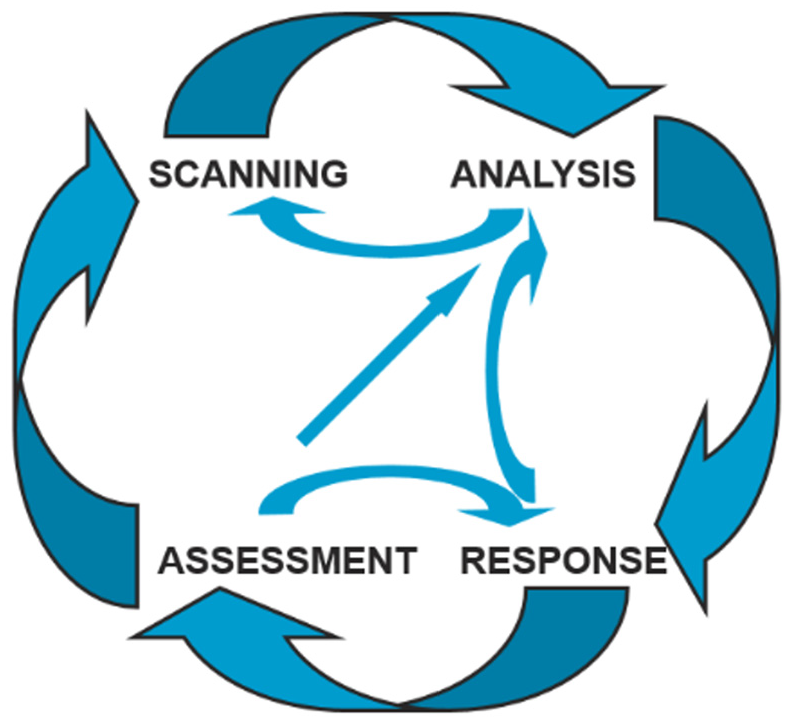
SARA model (Clarke and Eck, 2016).
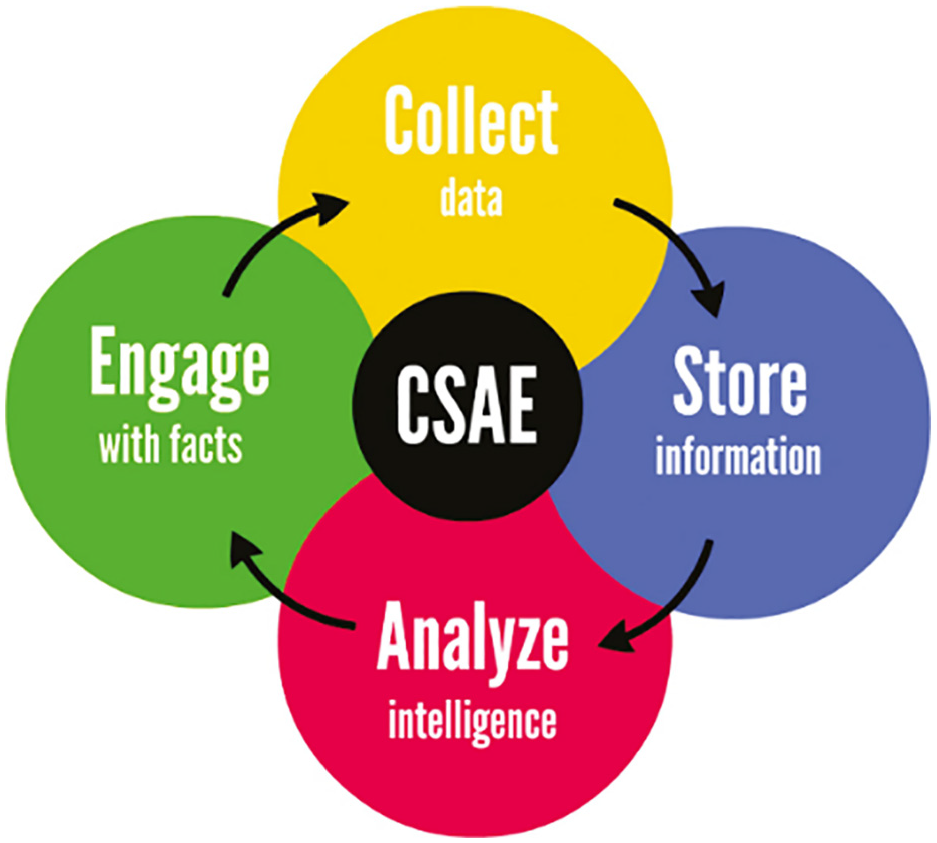
CSAE model (Van de Sandt, 2021).
With a view to both models (see Figures 1 and 2), there are many similarities. The Scanning phase from the SARA model corresponds to the (data-driven) Collect phase in the CSAE model. The Analysis phase from the SARA model corresponds to the Store and Analyze phases from the CSAE model. The Response phase from the SARA model is similar to the Engage phase in the CSAE model. Evaluation is an important cornerstone of evidence-based practices and therefore the Assessment phase from the SARA model is indispensable. In what follows, reference will be made to the phases from the CSAE model given the data-driven perspective, but, as described, these correspond well to the components of the SARA model.
As Ratcliffe (2016) mentions, there is a lot of overlap between problem-oriented policing approaches and intelligence-led policing (specifically, the revised version). 2 Moreover, both approaches could reinforce each other: ‘problem-oriented policing could benefit from greater use of crime intelligence and offender focus, while intelligence-led policing could benefit from the strategic problem-solving capacities of problem oriented-policing’ (p. 67). We believe that crime scripting is a way to help put both strategies into practice, since they both start from a strong analytical basis. More specifically, we demonstrate how this approach can be operationalised using crime script analysis, one of the elements in the crime science toolkit (Cockbain and Laycock, 2017).
Crime scripting
Crime scripting has its roots in cognitive sciences (Schank and Abelson, 1977). Scripts are related to the concept of schemas, that are abstract cognitive representations of existing knowledge derived from previous experiences (Fiske and Linville, 1980). Schemas are used to simplify social reality, and comes in different forms, including self-schemas, person-schemas, role-schemas and event-schemas (Fiske and Taylor, 1991). In their seminal work on event-schemas, Schank and Abelson (1977) described a script as ‘a predetermined, stereotyped sequence of actions that define a well-known situation in a particular context’ (p. 41). They attempted to use scripts to simulate human cognitive structures and processes for understanding text. Scripts were assumed to be knowledge structures with the function of representing the psychological and physical events that influence the mental life of individuals (Schank and Abelson, 1977).
Influenced by their work, Cornish (1994) introduced the script-theoretic approach to criminology as ‘a way of generating, organizing and systematising knowledge about the procedural aspects and procedural requirements of crime commission’ (p. 151). He notes here that scripts are part of a family of hypothetical knowledge structures (schemas, see above) that serve to organise our knowledge about persons and events (pp. 157–158). It should be noted that crime scripting is an analytical method to generate, organise and systematise knowledge about procedural aspects and requirements of crime commission, and is not related to the concept of social schemas used in criminological research (e.g. Simons and Burt, 2011).
Types of crime scripts
Scripts can be elaborated at different levels of abstraction, from different perspectives, and may differ in the extent to which they have been brought to execution.
First, Cornish (1994) presented four levels of abstraction: tracks, scripts, proto scripts, and meta scripts. The track level concerns a specific sequence of actions in specific circumstances. This level has proven to be most valuable for identifying intervention points for situational crime prevention (Haelterman, 2016). At the script level, the crime-commission process is more generalised. The script level is a composite of all tracks. At the proto script level, further abstraction is applied. This is a generalisation of the script level. The meta script concerns the highest level of abstraction and is therefore the most general. At this level, subgroups of crime types are distinguished (e.g. illegal trade, sexual offences).
In addition to these four levels of abstraction of crime scripts, there is also a universal script: a generic structure of scenes that is assumed to be applicable to all forms of crime. These universal scripts consist of scenes that are sequentially ordered and provide ‘standardized guidelines for constructing scripts at the track level, whatever the state of knowledge about the offense in question’ (Cornish, 1994: 160–161). Cornish (1994) states that the universal crime script consists of the following nine steps: Preparation, Entry, Precondition, Instrumental precondition, Instrumental initiation, Instrumental actualization, Doing, Post-condition and Exit. Tompson and Chainey (2011) propose an alternative (simplified) generic model consisting of four steps: Preparation, Pre-activity, Activity and Post-activity.
Second, crime scripts can differ depending on the perspective that is taken. Traditionally, crime scripts focus on the offender perspective: what does the crime-commission process look like? Other perspective could be taken as well. It is also possible that a crime script is drawn up from a victim or guardian 3 perspective, thus explicitly referring to the three groups of actors who, according to routine activity theory (Cohen and Felson, 1979), are central in the commission (or absence) of crime. In addition to these crime scripts from a single perspective, it is also possible to create an interpersonal crime script (Haelterman, 2016; Leclerc, 2013). After all, scripts, like the crime-commission process it represents, are not a sequence of serially dependent scenes executed in a fixed order. They are not rigid, stereotyped sequences of actions, but rather adaptive processes and systems. Wortley (2012) describes a criminal act as ‘a multistaged, dynamic process that involves a connected chain of decisions based on an ongoing evaluation of the available options in a given situation, and that may take different paths depending upon the nature of the environmental feedback’ (p. 186). In the case of interpersonal types of crime, such as violence and sexual abuse (e.g. Leclerc et al., 2013), an interpersonal script can provide valuable insights, as it responds to the adaptive nature of the actions in the script. Such interpersonal crime scripts specifically focus on the interactions between the different actors.
To apply scripts in practice, it is useful to distinguish between potential, planned and performed scripts (Borrion, 2013). Potential scripts describe hypothetical sequences of actions. They are closely related to misuse cases (i.e. a tool for modelling (misuse of) business processes) and scenarios: ‘plausible and provocative stories about how the future might unfold’ (Heuer and Pherson, 2011). Planned scripts are a subset of potential scripts. They start from a sequence of actions that someone has planned to perform. These planned scripts are typically generated based on intelligence obtained by analysts (e.g. in the case of a planned bank robbery). In practice, planned scripts can be elaborated based on incomplete, uncertain, and sometimes incorrect contextual information. When the context changes with respect to the planning phase, the (performed) script may in reality only bear little resemblance to the original planned script. Performed scripts concern sequences of actions that actually took place. Most crime scripts in the literature are constituted based on empirical data and thus can be seen as performed crime scripts. However, when they are used to develop new intervention strategies, these are interpreted as a model of what might happen in the future and should therefore be interpreted as potential crime scripts. For crime types that occur repeatedly with the same modus operandi, performed crime scripts can prove very useful to police and risk managers. However, this approach (replication of performed crime scripts) has limitations, as contextual changes must be considered before they can be effectively employed (Borrion, 2013).
Building blocks of crime scripts
Crime scripts consist of several components. First of all, scripts are built up from scenes, roles, activities, props, and settings. Additionally, crime scripting has several sources of variation, to account for the dynamic nature of crime itself (due to, among others, offender adaption): equifinal actions (that can permutate), paths, and tracks. Figure 3 shows the conceptual structure in which the various components are visualised.
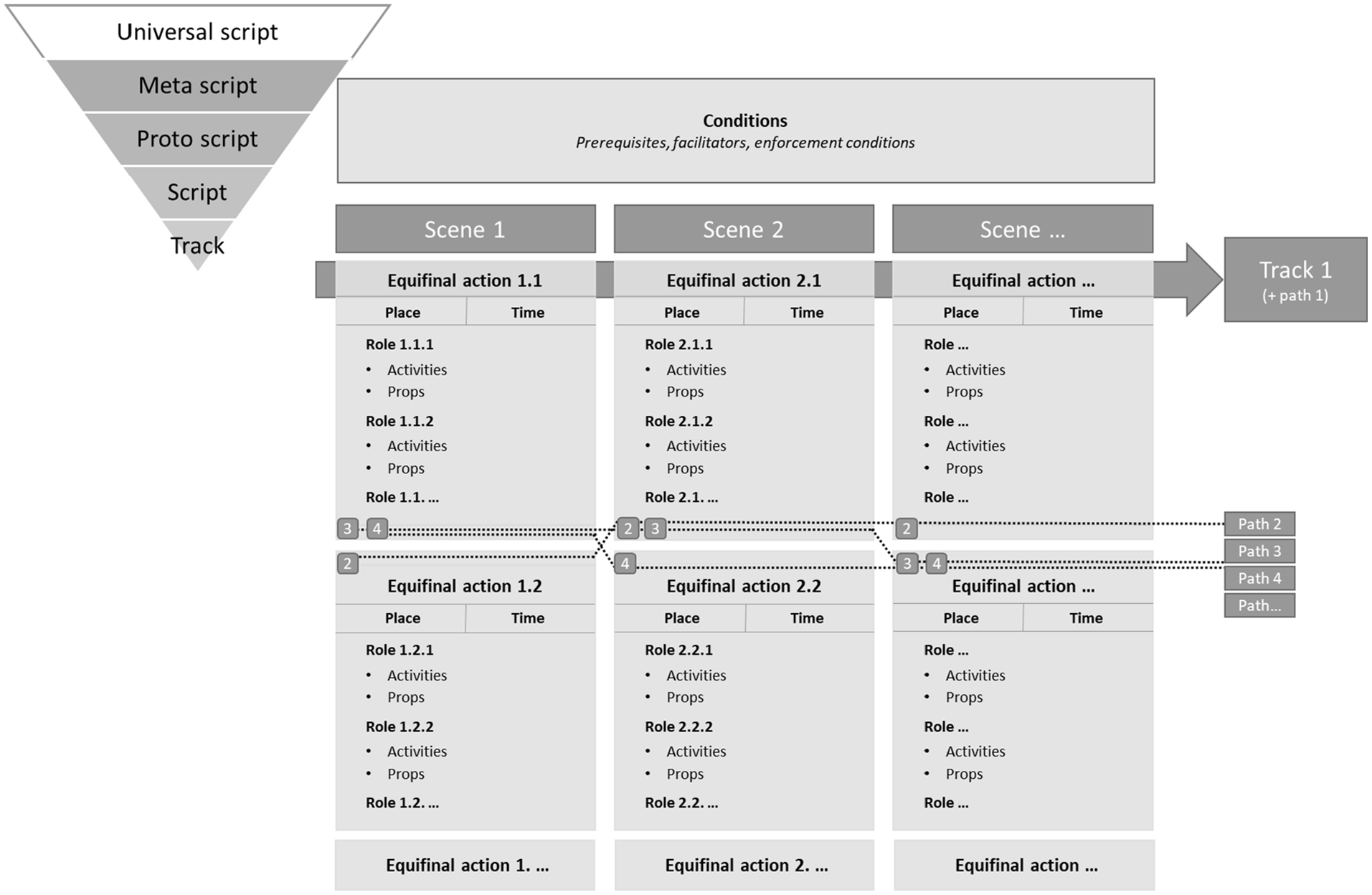
Conceptual structure of a crime script (script level with different tracks; Snaphaan, 2021).
Scenes are the building blocks of the crime script. Scenes are smaller units in the overall script that are arranged in such a way that they pursue a concrete sub-goal. The universal script can be used for this, because as Cornish (1994) states: ‘[b]y interrogating the data in this way, omissions, such as missing information about preparations or aspects of the offense’s aftermath, are much more likely to be identified’ (p. 163). The scenes consist of several components, namely: roles, activities, props, and settings.
Roles (also known as the cast) are the representation of actors who make decisions and perform actions in the script. A role involves a coherent set of activities that can be performed by one or more individuals. Activities or actions are units of behaviour of the central actors (e.g. perpetrator, victim, guardian) or any other actor that has an influence on the event chain. Props are used in the execution of the crime script. Finally, the setting refers to the specific context in which the activities take place, both temporal and spatial. To explore the specific circumstances and ultimately devise successful interventions, it is necessary to be specific in this regard.
Crime scripts evolve over time. Alternative scenes and activities within scripts can develop, as new forms of crime emerge and new ways of carrying out existing crime are developed. Crime scripts, like crime itself, must therefore have an adaptive capacity. In addition, when interventions are made, the modus operandi may change, as situational circumstances are altered. Cornish (1994), following Abelson (1981), defines three main sources of variation of crime scripts, which are outlined below.
As explained above, scenes are arranged to pursue a specific sub-goal of the script. However, there are different ways in which a sub-goal can be achieved. These different ways – also known as equifinal actions (Abelson, 1981) or facets (Morselli and Roy, 2008) – can be construed as different ‘modi operandi’ within a scene. It should be noted that each track within a script does not necessarily contain the same number of scenes, because sometimes a scene may be skipped (e.g. the scene ‘cutting cocaine’ is skipped when pure cocaine is traded or exported in the script cocaine trafficking). Second, script paths involve the development of alternative routes through the script. In some cases, substantial changes may also take place, such as the omission of certain activities or steps within a scene, creating new paths. Possible combinations (script paths) within a crime script are called ‘permutations’ (see also Morselli and Roy, 2008). This number increases rapidly: in a relatively simple script with, for example, four scenes and three equifinal actions, there are already (43 =) 64 possible permutations. Third, tracks are the lowest level of abstraction of crime scripts. They can be seen as specific script path that have been tried-and-tested to such an extent that it can be considered a track. It is also necessary that tracks that fall under a certain script are conceptually sufficiently similar. Thus, all tracks can be seen as script paths, but not all script paths are tracks, because some combinations of equifinal actions are simply not plausible. Compare it to a slot machine in the casino: not all combinations are winning combinations (Cornish, 1994).
The last elements of crime scripts, which are more overarching for the crime script at hand, are conditions. These conditions relate to the prerequisites, facilitators, and enforcement conditions of the specific crime type, and thus focus on the opportunity structures and system characteristics. In Figure 4, a number of questions are provided that guide the collection of information to populate a crime script, classified according to the aforementioned crime script elements.
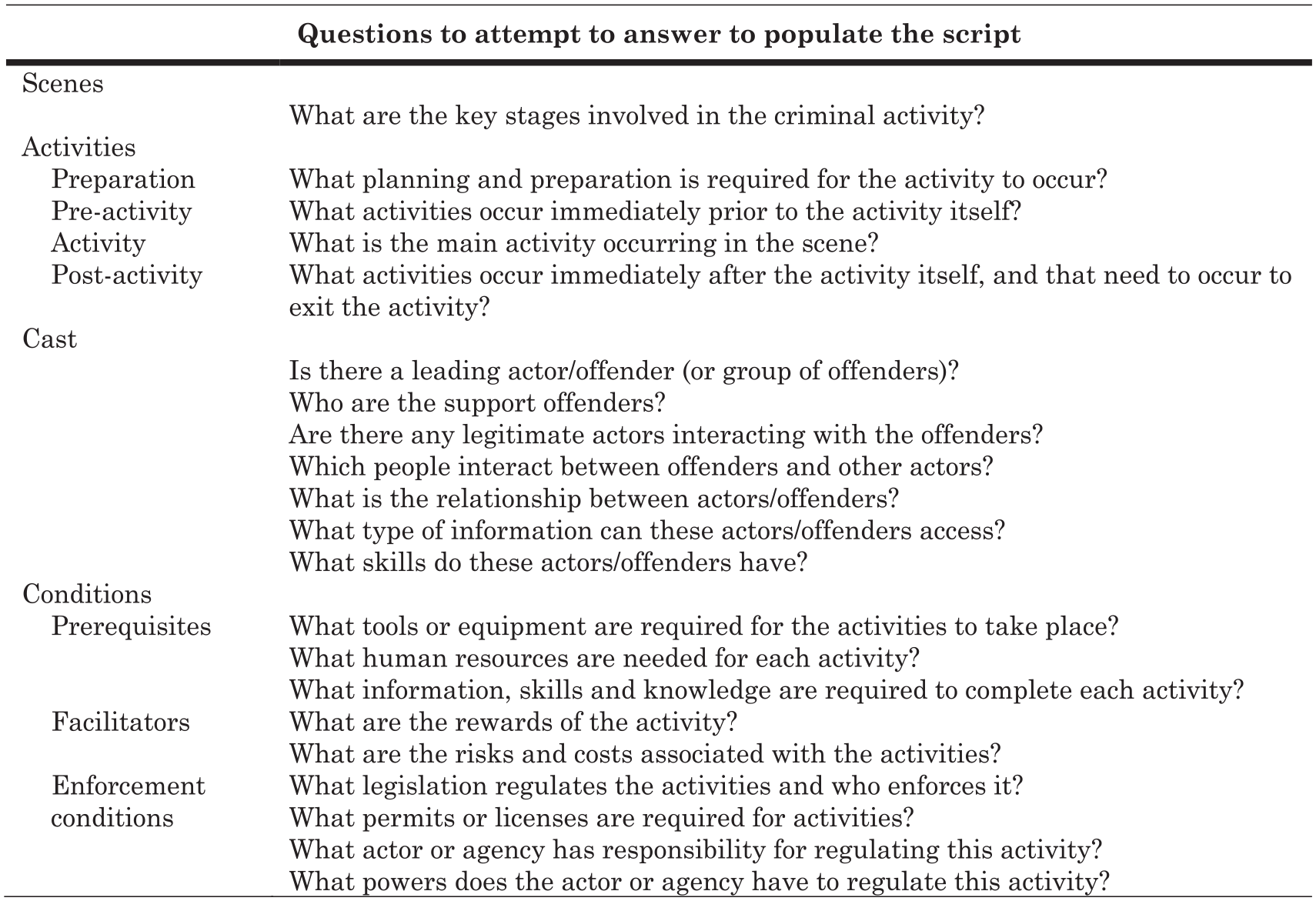
Questions to attempt to answer to populate the crime script, classified to the crime script elements (slightly adapted from Chainey and Alonso Berbotto, 2022; Snaphaan and Van Ruitenburg, 2024).
Interrelation of scripts
Crime scripts can be interrelated, both horizontally and vertically. There is a vertical interrelation when the same crime phenomenon is considered at different levels of abstraction (see Figure 3). In other words, crime scripts can be constituted at the track, script, proto script and meta script levels. It should be noted that the lowest level of abstraction (track level) offers the most guidance for the identification of intervention points with a view to reduce crime (Haelterman, 2016; Leclerc et al., 2011).
There is a horizontal interrelation when several crime scripts of the same level of abstraction can be related to each other. Gómez-Quintero et al. (2022) refer in the context organised crime to ‘connected crimes’ and distinguish between enabling and fuelled offences, which are related to the direct offences (i.e. directly related to the organised crime activity, e.g. recruitment of victims for human trafficking). Enabling offences facilitate direct offences but do not necessarily involve the victim or the illegal commodity and could be replaced by another enabling activity (e.g. money laundering to launder the proceeds of crime). Fuelled offences are facilitated by the direct offence and do not involve the victim, target, or illegal commodity (e.g. human trafficking funded with the proceeds of drug production).
Applications of crime scripting in research and practice
Crime scripting is used in academic research to describe the behaviour and decision-making processes of offenders on one hand, and to map the knowledge about the conditions surrounding the commission process on the other (Dehghanniri and Borrion, 2021; see resp. Homel et al., 2013, and Gilmour, 2014, for examples). Additionally, Haelterman (2016) identifies several broader benefits of using crime scripting to advance criminological research. Crime scripting provides insight into the evolutionary, adaptive, and innovative aspects of criminal processes, serves as a method to link different criminal activities, and enables a more comprehensive study of criminal phenomena.
To reduce crime in practice, law enforcement agencies and other crime prevention partners are deploying crime scripting as a means to organise and systematise knowledge on criminal phenomena. In these cases, crime scripting is both used at the strategical level to conduct analyses on criminal phenomena, modus operandi and characteristics of criminal networks (e.g. Police Netherlands, 2022) and on the tactical level as a means to implement intelligence-led policing strategies in practice (Snaphaan, 2021).
The dots: Multimodal data and innovative techniques
Before connecting the dots, these dots will be briefly described. A distinction is made between multimodal data and innovative techniques.
Multimodal data
Data are collected in the Collect phase of the intelligence cycle (see Figure 2) and therefore function as inputs for the crime script in the Store phase. Commonly used forms of data are numbers, alphanumeric, text, images, audio, and video (Jain, 2009). It is estimated that 80%–95% of the data are unstructured 4 (Gandomi and Haider, 2015), so big data mostly refer to unstructured data, and relate to the latter four types: unstructured text, audio, images, and video. Consequently, there are three relevant fields in artificial intelligence aimed at processing these respective multimodal data sources: natural language processing (more specifically: text mining) for unstructured text, audio mining for audio, and computer vision for images and video (since a video is simply a sequence of frames (images) displayed at a given frequency).
Natural language processing (NLP), and more specifically the domain of text mining, refers to the automated analysis of (unstructured) textual data. NLP is a domain situated at the intersection of linguistics and computer science. Consequently, NLP also relates to speech data, for example. Text mining is thus narrower than NLP and relies primarily on insights gained in the domain of NLP (Kao and Poteet, 2006). Text mining concerns the retrieval, classification and understanding of large text corpora. These techniques are not new. In the past, this mainly involved rule-based systems that were pre-programmed. What is new is that today machine learning is mainly used, making the techniques much more adaptive and flexible.
Audio mining focuses on computationally processing of audio. Nowadays, this computational processing of audio is mainly done by speech-to-text mechanisms and then further processed as text (see above). However, audio mining is a domain at itself, since just processing speech-to-text loses a lot of quality of the original (speech) data, such as intonation and capturing sounds that cannot be expressed in text.
Computer vision refers to the analysis of images and video by computers, referring to the mimicry of the human sense of sight. This is an interdisciplinary field in which research is conducted on how computers can process imagery. Significant steps were already being taken in this area in the early 1980s. The work of Marr (1982) contains the building blocks for the work being done today within the field of computer vision. This involves processing visual material in a format that computers can read. After all, a computer does not see images, colours and pixels, but ones and zeros (also known as bits). So, the pixels are converted to pixel intensities. This can be done either one-dimensionally or multidimensionally. Multidimensional pixel intensities apply to colour images, such as an image rendered according to the RGB colour system that has one dimension for each base colour and is therefore three-dimensional.
Innovative techniques
Innovative techniques are used in the Analyze phase of the intelligence cycle and therefore utilise data from the crime script (assembled in the Store phase). Following the ‘three main trends that define the increasingly computational nature of research on crime’ (Campedelli, 2022: 65), three computational methods will be connected to crime scripting: social network analysis, agent-based modelling, and spatiotemporal modelling of crime.
Social network analysis refers to the application of a network perspective in the analysis of social phenomena, such as crime (McGloin and Kirk, 2010). The terminology is mainly borrowed from graph theory (Butts, 2009). Although social networks have been implicated in theories of crime and criminal justice interventions, the application of social network analysis in the study of crime lagged behind compared to other fields (Faust and Tita, 2019; Papachristos, 2011). Social network analysis in the study of crime has, among others, been applied to co-offending networks, illicit networks, gang-rivalry networks, and neighbourhoods and crime (Faust and Tita, 2019). In general, these analyses can be used to (1) track the transmission of crime risk, (2) identify suitable co-offenders, and (3) dissect the structure of crime groups (Bichler and Malm, 2019), hence, ‘social networks are instrumental to explaining and reducing crime’ (p. 209). Its computational application has become more feasible due to advancements in data collection, storage, and algorithmic techniques, such as community detection (Bedi and Sharma, 2016), role detection (Forestier et al., 2012) and link prediction (Daud et al., 2020).
Agent-based modelling is a tool for empirical research that simulates specific behaviours or dynamics through a computational generative process of interacting agents (Epstein, 1999; Malleson, 2011). Bonabeau (2002) states that agent-based modelling is beneficial because of (1) its ability to capture emergent phenomena, (2) its potential for providing a natural description of a system, and (3) its flexibility. Since agent-based models allow for controlled experimentation, it is highly useful in developing and testing theories of crime causation (Gerritsen and Elffers, 2020; Groff et al., 2019). Given the complexity of conducting experiments in the study of crime, for example due to economic costs and ethical concerns, simulation models are particularly palatable to crime researchers (Campedelli, 2022). Although the method offers significant potential for crime research, previous studies lack (reported) evidence to fully unleash this potential impact of the models.
Spatiotemporal modelling of crime builds on a rich tradition of research that due to theoretical, technological and methodological advances is gradually shifted towards smaller units of analysis (Bruinsma and Johnson, 2018). Weisburd’s call in 2015 for a turning point in the mainly person-based approach in the study of crime to a place-based perspective is illustrative for the impetus in this domain. The use of new and emerging data sources in the spatial and temporal study of crime is also proliferating (Snaphaan and Hardyns, 2021a).
While these methods provide unique insights and although there is also interaction between the aforementioned innovative methods, as Bichler and Malm (2019), for example, foresee that progress will be made in the areas of ‘integration of spatial and social networks’ and ‘network simulation studies’ (p. 219), using them in isolation has limitations. Social network analysis, for example, captures relational structures but may oversimplify individual behaviours or ignore the dynamic nature of criminal activities over time. Similarly, agent-based modelling provides a granular view of individual actions but may struggle with scalability or the integration of real-world data. Spatiotemporal modelling effectively highlights patterns of crime across space and time but may overlook the social or relational factors driving those patterns. Therefore, a more holistic approach, combining these methods, is essential to address these limitations and achieve a deeper understanding of complex criminal phenomena.
Leveraging multimodal data and innovative techniques
The building blocks of crime scripts offer starting points to think about connecting and contextualising results obtained from multimodal data and innovative techniques. Data from multiple sources and types are used as input to the crime script. These need to be converted and stored in a unified way so data from different sources can be analysed in conjunction. This unified manner is provided by the building blocks of the crime script. Additionally, this provides a generic knowledge structure for organising and systemising knowledge about the procedural aspects and requirements of specific crime types (i.e. scripts). This unified information can then be used to conduct subsequent analyses. Results from these analyses then flow back to the script as they potentially provide new insights relevant for the crime script. Both the crime script analysis and the subsequent analyses generate intelligence that can be used to identify, design, and select intervention to reduce crime. This section elaborates on how these data and techniques can be utilised in conjunction with crime scripting as a backbone method (see Figure 5 for a visual summary).
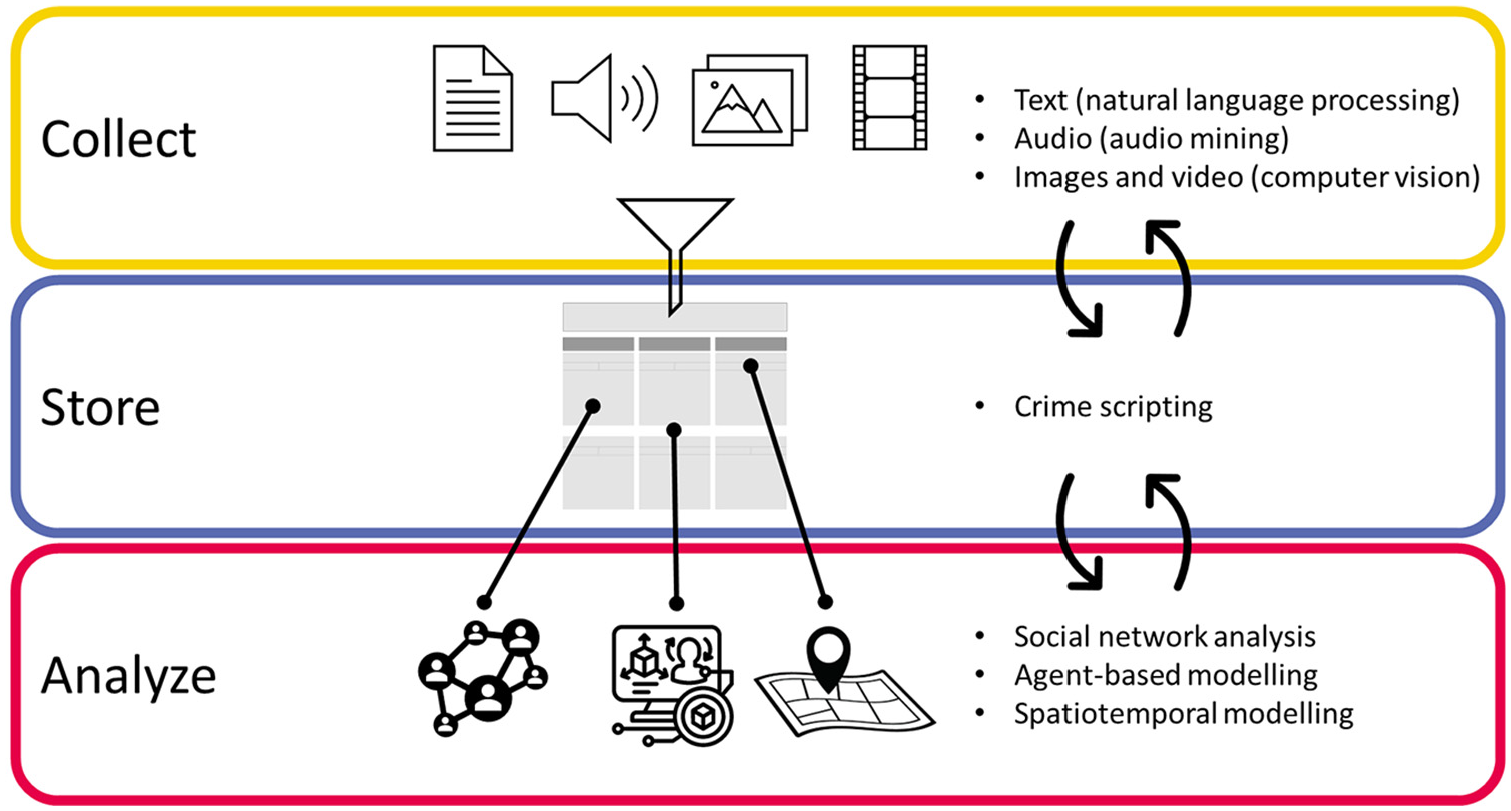
Connecting the dots between multimodal data, crime scripting and innovative techniques.
Two important notes must be made regarding the CSAE model as described in this article. First, in this context, the CSAE model should not be viewed as a sequential workflow where all steps must be completed in order. Rather, it is an iterative process; for example, props identified in a crime script can inform the selection of data sources and entities for analysis. Second, it is not necessary to complete all steps of the model in every application. The process should be tailored to meet the specific objectives at hand. For instance, if the goal is to disrupt criminal networks, a combination of crime scripting and social network analysis may suffice to achieve the desired outcome.
In what follows, we will detail on the different dots – multimodal data and innovative techniques – that can be connected to crime scripting. We will illustrate the potential of these connections with examples related to the crime commission process of cocaine trafficking.
Entity extraction and object detection from multimodal data
Extracting entities and detecting objects from data are core tasks of contemporary machine learning models. As described earlier, different types of entities and objects are also the building blocks of crime scripts: actors (i.e., persons or organisations), props, places, and times. For textual data, named-entity recognition (NER) can be used to identify and label named-entities such as persons, organisations, locations, and time indications (e.g. Barros et al., 2022; Lwin Tun and Birks, 2023). For images and video, computer vision can be used to detect objects in imagery, such as graffiti or garbage as indicators for physical neighbourhood disorder (Snaphaan and Hardyns, 2021b). Audio can be mined in multiple manners: NER can be used when speech-to-text is applied, and when audio is directly processed and analysed audio-objects can be detected in a comparable way as with computer vision.
Related to cocaine trafficking, it might for example turn out that, for specific tracks in the crime script, the use of containers, or perhaps more specifically refrigerated containers, might be identified as relevant props. This knowledge then can be used to filter in particular data, such as textual document or photos, to search for relevant data points. From a more general perspective, this also goes for example for the use of the harbour for importing cocaine. Specific terms (including for example slang and coded language) that are relevant to the crime script can also provide handles to search in unstructured textual data.
Analysing roles in networks
An important building block of a crime script is the cast. Or, with other words, the roles that perform the actions; the acting agents. Prior research has frequently combined crime script analysis with social network analysis (e.g. Duijn and Sloot, 2015; Haelterman, 2022; Morselli and Roy, 2008). In these studies, the roles within crime scripts are used to interpret positions, relationships, and clusters in the social (criminal) networks. There are also (open access) software packages available to combine the analytical capabilities of crime scripting and social network analysis (e.g. ScriptNet, see Bellotti et al., 2022; Lord et al., 2020). Also in criminal justice practices, combining crime scripting with social network analysis allows to distinguish different types of roles and identify weak spots in criminal business processes (Duijn and Klerks, 2014). Although prior research shows that disrupting criminal networks not always will have the effect as expected or desired (Duijn et al., 2014), the intelligence obtained provides a basis for informed decision making, such as limiting the scope of alternatives for crime script permutation and flexibility (Morselli and Roy, 2008). It should be noted that, in practice, social network analysis spans both the ‘store’ and ‘analyze’ phases because the preparatory work often involves structuring and storing data in formats that are compatible with network analysis tools, ensuring effective integration with analytical processes.
In our example regarding cocaine trafficking, specific roles might be identified that have specific knowledge that is rather scarce, that provide leads for intervention. If, for example, it turns out that a chemist is a crucial role for the track of cocaine trafficking where the cocaine needs to be extracted from carrier material that has been used to conceal the cocaine during overseas transport and import in Europe, this might provide leads to intervene on scarce resources of a criminal network.
Modelling permutations
Agent-based modelling allows for modelling human behaviour in the context of social systems in which they are embedded (e.g. Hill et al., 2014). Variations in human behaviour or the social systems are parameterised in a model. Model outcomes differ based on the configuration of the parameters included. Permutating these configurations is thus one of the key features of agent-based modelling. Crime scripting aims to enhance insight in the different scenes and equifinal actions to succeed the crime-commission process. These equifinal actions are dependent on several factors, which are different for specific kinds of crime. These factors are actually the variations in human behaviour or the social system. Crime scripting can deliver input for agent-based modelling, and agent-based modelling can simulate the interactions of the gathered information (from multiple sources) regarding both individuals and the systems in which they are embedded in a single model.
Regarding our example, different modi operandi and logistical routes exist to smuggling cocaine from Latin America to Europe. The factors underlying the choices that criminals make to import cocaine by means of specific modi operandi vary significantly between the different means and routes. Based on existing knowledge of the opportunities, risks and gain factors (e.g. Magliocca et al., 2019) assumptions on different levels can be tested.
Modelling the setting
Modelling the spatiotemporal aspects in the context of specific crime scripts or tracks provides enriched insights and, hence, specific leads for interventions (e.g. Balemba and Beauregard, 2013). From this perspective, spatiotemporal analyses are not conducted in isolation and refer to specific modi operandi in specific situations. Besides specific locations and times, modelling the setting aims to identify the specific characteristics of that locations and times that create opportunities for crime, so that prevention measures can be aimed at changing the environment and reduce opportunities for crime. Here, the emergence of geospatial artificial intelligence (GeoAI) is important to mention, as it fuses the field of geospatial science and the domain of artificial intelligence (e.g. Gao, 2021).
Explicitly incorporating spatial and temporal dimensions into crime scripts for, in our example, cocaine trafficking enhances the understanding of this complex process by contextualising activities within specific spatial and temporal aspects. Spatial analysis identifies key nodes in trafficking networks, such as production sites and transshipment hubs, shedding light on critical environmental and infrastructural factors. Integrating spatial and temporal data allows crime scripts to not only outline the sequential steps of trafficking but also pinpoint when and where interventions are most effective—such as targeting supply chains at choke points or timing enforcement actions during critical stages. This approach creates space for the integration of both qualitative insights (e.g. Roks et al., 2021) and quantitative methods (e.g. Magliocca et al., 2022), fostering a more comprehensive and nuanced understanding of crime, and in our example particularly cocaine trafficking.
Discussion and conclusion
This article describes a manner of connecting theory and methodology to practice. Multimodal (big) data and innovative (artificial intelligent) techniques are proliferating, however, the challenge for using these data and methods to reduce crime lies in translating these data to intelligence. Crime scripting can be used as a backbone method to contextualise data, information, and knowledge. Hopefully, this contribution will foster future crime reducing practices and empirical research that connects the dots between those multimodal data and innovative methods.
Building on prior research that uses crime scripting to account for related harm in the context of organised crime (see Gómez-Quintero et al., 2022), this work motivates why crime scripting can be used as a way of putting problem-oriented and intelligence-led crime reduction into practice when engaging with multimodal data and innovative techniques. To fulfil the HIPE-ambition of Ratcliffe (2019), crime scripting can also be used to put evidence in the right context, which makes it also an interesting tool for evidence-based policing. The results from the Assessment phase from the SARA model flow back to the crime script, so an evidence base is built for a specific crime type. Such an approach can help with explicating the mechanisms and moderators of what works in crime reduction (see also the EMMIE-framework; Johnson et al., 2015). Last, a script-theoretic approach could also be utilised regarding the mechanisms at work in a particular intervention, thus answering the how-question in the context of a realist evaluation (Pawson and Tilley, 1997).
Although this approach can help to contextualise data and will contribute to a conscientious way of using (scientific) knowledge to inform crime reduction practices, this approach also holds some limitations. First, although the proposed approach potentially provides new insights and generate intelligence, this does not capture person-environment convergences to test hypotheses about the causes of crime (Wikström and Kroneberg, 2022). Second, crime scripting itself has particular limitations, mostly regarding the availability and quality of the data used to populate the crime script (Leclerc, 2017). Even though engaging a broader palette of data sources could potentially accommodate this, the methodological questions regarding quality, representativeness, and comprehensiveness are still valid (e.g. Snaphaan et al., 2024). Last but certainly not least in the context of this article that aims to put theoretical ideas into practice, there may be practical challenges in implementing these ideas. The 5i-model from Ekblom (2011) might provide a helping hand in this occasion. While the ideas are enticing, it is important to evaluate how purposeful and effective their application in practice actually is. This is an important avenue for future research.
In addition to the proposed added value for practice, future studies should dive into how these and other analytical methods can provide tools for crime reduction practices from a more holistic and integrated perspective. First, the individual ‘dots’ or methods can be further developed, such as advancements in social network analysis by using hypergraphs (e.g. Arya and Worring, 2018). However, it is equally important to explore the intersections between methods, like integrating text mining with social network analysis for automatic role detection (e.g. Jacobs et al., 2022). Additionally, it should also be assessed whether other types of data sources and/or innovative methods (e.g. system dynamics to capture complex feedback loops) can be utilised in conjunction with crime scripts, so that we continue to connect the dots.
Footnotes
Acknowledgements
The author is grateful for the valuable help of Prof. Dr Hervé Borrion (UCL) and extends sincere thanks to the anonymous reviewers for their insightful comments.
Declaration of conflicting interests
The author declared no potential conflicts of interest with respect to the research, authorship, and/or publication of this article.
Funding
The author received no financial support for the research, authorship, and/or publication of this article.
Ethical approval and informed consent
Not applicable.

Availability of data and materials
Not applicable.