



Abstract
Practice theory-based research has been established theoretically as an answer to health and social problems, but its use in empirical research is still emerging. We conducted a scoping review in accordance with JBI guidelines for evidence synthesis to identify methodological characteristics of practice theory-based research concerning parenting. A total of 2681 abstracts were identified, with 214 retained for full text screening. A total of 33 articles were included in the review. The included studies in the review focussed on a range of practices relating to parenting including meal preparation and cooking, mobility and transport, homework and school engagement. Major findings from this scoping review identified the use of multiple methods to draw on different aspects of practice and a high variety of time frames for data collection. The tailoring of practice theory approaches was highly varied, and some studies also combined practice theory with alternate theory and concepts. The results reveal significant diversity in the use of social practice theory, the range of methodological approaches used and the application of a high variety of methods. All studies used some form of interview to investigate practices and ethnography was a main methodological approach adopted. Across the studies there were recommendations for expanding sampling and recruitment strategies. Given the call to adopt new approaches to parenting and child development research, our review serves as a mapping of the multitude of ways practice theory-based research can provide can be used to examine parenting.
Introduction
Background
Health and social problems present considerable challenges to social and public health systems (Blue et al., 2016; Rittel and Webber, 1973; Walls, 2018). Health promotion strategies have had varying impact on addressing these problems, whilst policymakers continue to have difficulty responding effectively to issues including climate change, the obesity epidemic and food insecurity (Head, 2022; Hopson and Cram, 2018; Walls, 2018).
Individualistic theories of human behaviour have historically commandeered research and intervention focus. The effectiveness of such approaches remains limited and can lead to the adoption of victim blaming notions. There has been argument that they do not encapsulate the true cause or potential resolutions of such issues, leading to minimal change (Thompson and Kumar, 2011). Providing more knowledge with the assumption it will lead to lasting behaviour change has largely been proven to be ineffective (Delormier et al., 2009; Maller, 2015). It assumes if people are aware and capable of making better choices based on information provided to them, positive change will occur. Evidence shows this does not address elements of routine, habit and how different practices may combine to exacerbate or alleviate complex issues (Blue et al., 2016). Similarly, a focus on contextual factors alone fails to move focus away from the individual and their actions and choices (Cohn, 2014).
Research into how an alternative approach, such as using social practice theory is crucial to understanding how we can improve understanding and broaden examination in a range of health and social fields, one of which being parenting. There is an abundance of literature, including books, that provide high level explications of social practice theory (see, e.g. Hui et al., 2016; Nicolini, 2012; Schatzki, 2002; Shove et al., 2012) but researchers (especially those completing higher degrees or who are early career) would benefit from additional guidance to complement the complex, theoretical underpinnings of social practice theory. This review is presented as an attempt to catalyse this process. It aims to accentuate what contemporary social practice theory research looks like and what is being done as a means of orientation and clarification. Given how relatively new the field of empirical, social practice theory research is, we conducted a scoping review to contribute to ‘’on the ground’ knowledge and to provide guidance.
Brief overview of practice theory
The Ecological Model of Human Development is an example of how different layers of influence have been conceptualised to make sense of parental behaviours (Bronfenbrenner, 1993; Luster and Okyagaki, 2006). Bronfenbrenner’s ecological system consists of hierarchical stages, ranging from the micro to the macro. Working from a social practice theory lens differs from Bronfenbrenner’s work in two ways. First, a world populated by practice is nonhierarchical. Some theorists, such as Schatzki argue social practice theory has a ‘flat ontology’ (Schatzki, 2002). Second, where Bronfenbrenner’s model centres on behaviours, a social practice theory lens assumes the world around us is instead populated by practices. In this way, practice is neither big or small, micro or macro because no single practice is positioned above another. Instead, practices are connected and form bundles and networks within the social world.
Practice theory is presented as a novel way to not only examine phenomena but also explore ways different elements may be interconnected. It assumes neither individuals, materials or context is given priority over one another as they are all considered aspects of practice (Gherardi, 2019). In the last decade there has been a resurgence of the application of practice theory to a range of social issues (Nicolini, 2012; Shove et al., 2012). Social practice theory and its emergence in research across a range of social contexts moves away from focussing on individual behaviour. Social practice theory argues that everyday practices are bundled together and are interdependent on one another.
A practice-based approach shifts focus to the relationships between the individual and social structures. Shove et al. conceptualised practice as having three core components: meaning, materials and competence. Schatzki (2002) defines practice as a nexus of doings and sayings. One of the most prolific definition of practice within the research is provided by Reckwitz (2002): “A routinised type of behavior which consists of several elements, interconnected to one other: forms of bodily activities, forms of mental activities, “things” and their use, a background knowledge in the form of understanding, know-how, states of emotion and motivational knowledge” (p. 249)
Any reference made to a practice-based approach must firstly acknowledge there is no (and should not be) one unified theory of practice. Practice theory is better described as a family of theories (Nicolini, 2012). Several works within the practice theory space stress the importance of a tailored practice approach dependent on the type of research questions being asked (Gherardi, 2019; Nicolini, 2012; Shove et al., 2012). One key premise within the practice ‘family’ is that social reality is made up of connections between activities and meaning. These are mediated by materials and further guided by space and time (Smagacz-Poziemska et al., 2021).
Nicolini (2012) provides five explanations for how a practice-based approach is radically different from an individualistic methodology. First, practice theory foregrounds the importance of activity and performance in the perpetuation of daily life. Second, a practice-based approach brings to the fore the role of the body and material in social contexts. Third, it places strong focus on individual agency and agents (meaning focus is on the practice and not the individual). Fourth, a practice approach transforms knowledge, meaning and discourse and finally, it places heavy emphasis on power, conflict and politics as elements of the social which we experience (Nicolini, 2012).
The vast amount of theory available within the practice realm is both exciting and daunting. Researchers have boundless avenues of opportunity when employing a practice-based approach. Corradi et al. (2010) examined the bandwagon of practice and provided an overview of varying definitions of practice found in the literature. Their paper provided examples of six different ways practice research is undertaken in education and organisation fields as a means of clarifying the range of similarities and differences seen in practice approaches.
This scoping review aims to reduce complexity by providing a map of relevant, contemporary parenting research utilising practice theory. We intend to present a snapshot of methodological and theoretical applications of practice theory in the field of parenting. It is anticipated this scoping review will act as a catalyst for researchers interested in using a practice-based approach to address persistent patterns of inequality and to solve complex issues (Shove et al., 2012).
There has been an evolution in methods used to synthesise diverse types of evidence (Peters et al., 2020). A scoping review is an ‘‘exploratory project that systematically maps the literature available on a topic, identifies key concepts, theories, sources of evidence and gaps in the research’ (Grimshaw, 2010). This means it is a suitable method to explore applications of practice theory to a range of social and health problems (Peters et al., 2020). In contrast to a systematic review, a scoping review does not seek to examine the effectiveness or feasibility of a certain practice, instead the scoping review aim to determine the breadth of a body of knowledge, the type of research being done and the way such research has been conducted (Munn et al., 2018).
For the purpose of this review, a practice-based approach has been defined as the utilisation of elements of practice theory from study inception and design through to data collection and analysis. A preliminary search of Figshare, Prospero and JBI Evidence Synthesis was conducted and no current or underway systematic reviews or scoping reviews on the topic were identified. Existing literature including Nicolini (2012), Gherardi (2019), Schatzki (2002) and Shove et al. (2012) have contributed significantly to building a strong theoretical base for practice-based studies as well as providing advice relating to methodology and study design, sometimes through empirical examples. They do not provide an in-depth exploration of the scope of contemporary, empirical research using practice theory. This review seeks to fill that gap given the growth of practice-based studies in the last decade alone (Smagacz-Poziemska et al., 2021). Providing a mapping of applications of practice theory in empirical research will give further insight into the current field of knowledge.
Aim
This scoping review aimed to identify methodologies, methods, research design and analytical tools used within practice-based research on parenting.
RQ1: What theories of practice are utilised in empirical studies relating to parenting and families?
RQ2: What methodologies and methods are used in practiced based research relating to parenting and families?
RQ3: What are the barriers and facilitators to using a practice-based approach when researching parenting and families?
Inclusion criteria
Eligibility criteria was defined through expansion of the PCC (population, concept and context) formula as recommended by JBI and detailed below.
Population
Empirical research which utilised a practice-based approach within qualitative, quantitative and mixed methods studies was included. The search was inclusive of all sectors and professions, however parents or family needed be identified as the target population within the study. This element of eligibility was kept broad given the vast uptake of practice perspectives in research across several different fields.
Concept
Eligible studies implemented a practice-based approach from study inception through to analysis. Studies were deemed eligible if they referenced an aspect of practice theory within their methodology, data collection and analysis. Studies which used practice theory for analysis were not included given this review aimed to examine a practice-based approach from study inception.
No limitations were placed on what theorist or elements of practice theory an eligible study adopted. The rich vastness of the practice theory perspectives available is one of the reasons it has the potential to elicit change and an examination of ways it has been utilised needed to be broad to maintain this benefit. Where other terms were used apart from practice theory or practice approach, papers were scrutinised to determine eligibility by confirming whether the study being described utilised a practice-based approach. The review included empirical research only.
Context
No limitation was placed on country or sector. This was kept deliberately broad as the key aim of the review was to examine and map the types of studies currently adopting a practice-based approach.
Language
Only papers retrieved from literature database records or full-text articles were included in the review.
Date
No limitation was applied regarding date of publication.
Types of sources
This scoping review considered published, peer reviewed papers reporting on empirical data from primary research. A search of Open Grey and British Library ETHOS was also completed. In addition, analytical observational studies including case-control studies, interviews, focus groups and analytical cross-sectional studies were considered for inclusion. This review will considered descriptive observational study designs including case series, individual case reports and descriptive cross-sectional studies. Studies that focussed on qualitative data including, but not limited to, designs such as phenomenology, grounded theory, ethnography, qualitative description, action research and feminist research were also considered.
Search strategy
Both published and unpublished studies were identified through the search. Searches combined terms from two themes; practice theory and parenting. An initial limited search of SCOPUS was undertaken to identify articles on the topic. The text words contained in the titles and abstracts of relevant articles, and the index terms used to describe the articles were used to develop a full search strategy. The search strategy, including all identified keywords and index terms, was used for each included database and information source. Additionally, the reference list of all included sources of evidence were screened for additional studies which were then assessed for eligibility.
Several test searches were conducted in collaboration with a librarian to ensure they yielded articles on the desired topic and an example of a full search strategy has been provided as Supplemental Material. The databases searched were Cochrane library, Cinahl, Medline, SCOPUS, PubMed and ProQuest. An additional search was undertaken through the e-thesis online service for the British Library (Ethos) and OpenGrey archive.
Method of the review
A scoping review protocol was published and registered with Open Science Framework (DOI: https://doi.org/10.17605/OSF.IO/P8SGH. The Joanna Briggs Institute Methods Manual for scoping reviews informed our method and reporting follows Preferred Reporting Items for Systematic Reviews and Meta-analysis for Protocols (PRISMA-P; Tricco et al., 2018). Given that full the full method is detailed in the protocol we have provided a brief outline below.
Data collection
Search results were screened using Covidence software in two stages (Veritas Health Innovation, 2023). Titles and abstracts were screened by two reviewers and included titles then underwent a full text review. Conflicts at each stage were resolved through discussion during team meetings and a third reviewer was not required. Covidence systematic review software was used to manage all article screenings and one reviewer had conducted several reviews using the software in the past. The final search was conducted in September 2022.
Data synthesis
Following full text review, included studies were inputted into a custom data extraction form developed collaboratively by authors. Data relating to the following study characteristics was extracted: author, year of publication, lead author contact details, country, timeframe of study, funding sources, limitations and conflicts of interests as reported by the author and population/participants descriptors (e.g. age of children, parent descriptors, social class and ethnicity). Key elements of study design were then identified: methodology, sampling and recruitment methods (e.g. convenience or snowball sampling and sampling from larger project), setting and context of study and methods used (e.g. whether study employed multiple methods, used interviews and observation) and recorded on a data extraction tool that was developed by two of the authors and piloted before use.
Additionally, the data extraction form included elements specifically related to practice theory, such as: which practice theory was applied (e.g. whether study used one theory or multiple, which theory, what elements from that theory were noted, definition of practice used), practices that were examined in the study, the analysis undertaken, how practice theory was applied throughout the study design and reporting and whether practice theory was used in conjunction with other theories. One researcher extracted each of the articles and completed the extraction sheet.
Results
After removing duplicates, the search strategy located a total of 2681 citations for screening. About 2455 citations were deemed irrelevant and the full text of 212 papers were retrieved and read to determine inclusion in the study (Figure 1). A further three papers were added through hand searching. From a total of 214 papers, 175 papers were assessed as not meeting inclusion criteria and were discarded. About 115 of the studies were excluded because they did not adopt a practice-based approach in their methods and/or analysis, 59 were excluded because they did not address parenting practices, 5 were excluded as they were not published in English, 4 studies were excluded because they adopted a practice-based approach retrospectively and 3 papers were excluded because they did not report on empirical data.
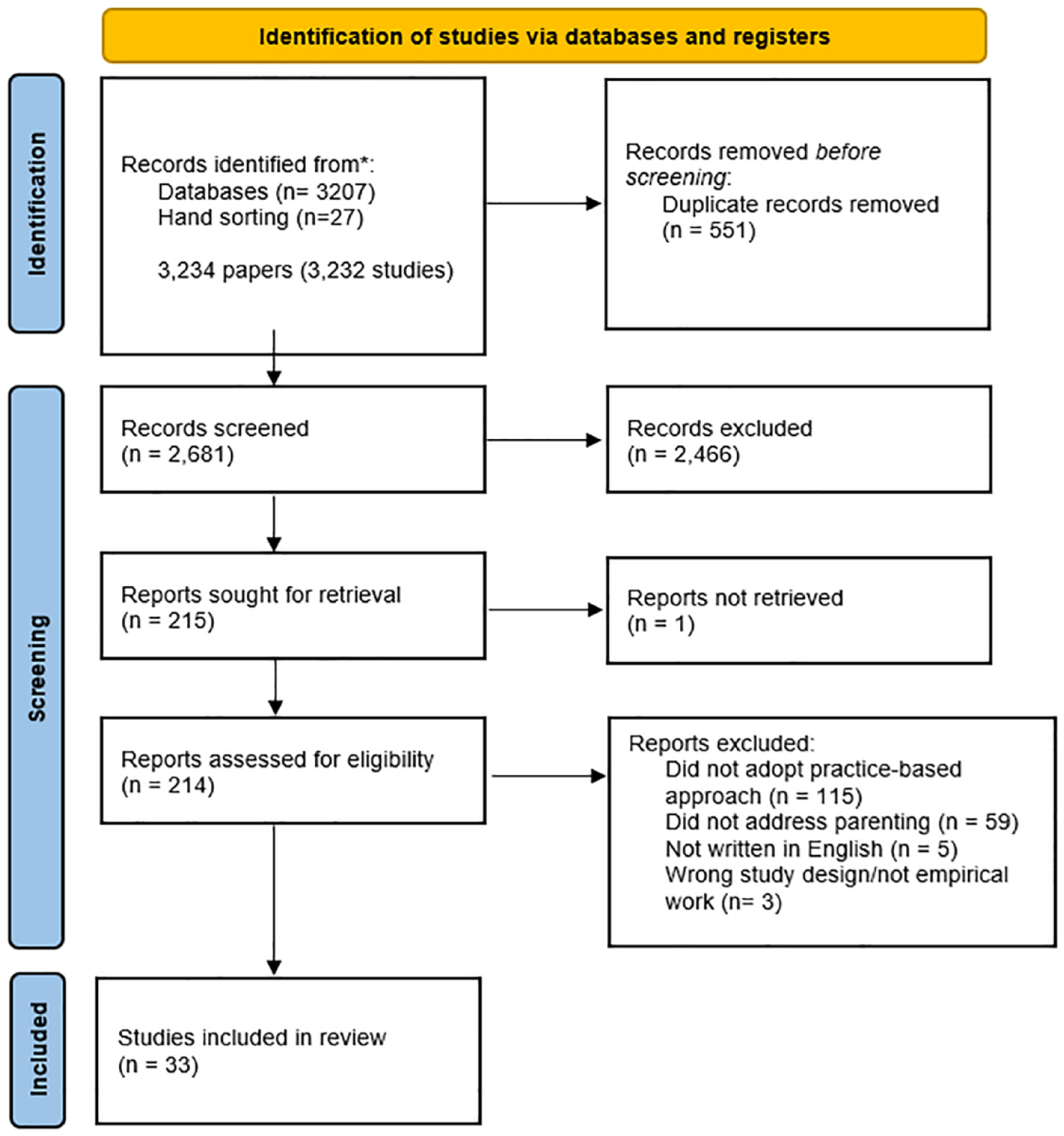
PRISMA flow chart for search results.
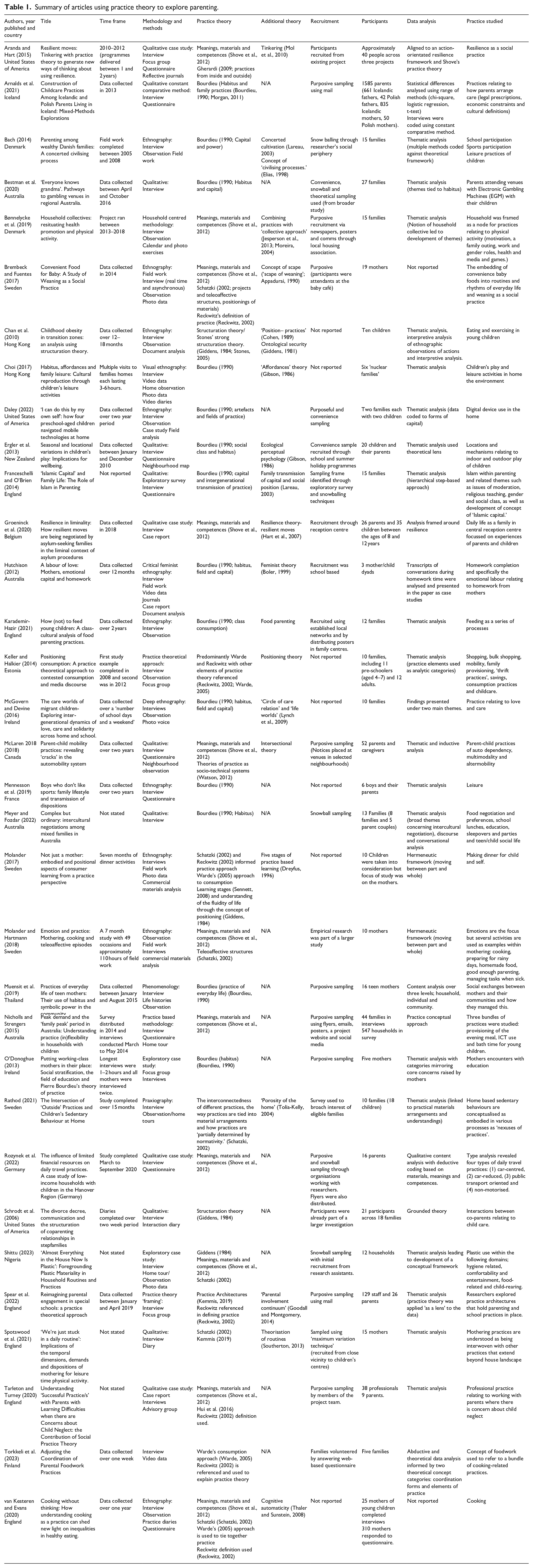
The full text of one paper was not able to be located despite attempts to contact the author and assistance from a librarian. Additionally, for two of the studies, the author found and read additional papers to clarify details. Two studies (Molander, 2017; Molander and Hartmann, 2018) used the same data set and applied different practice theoretical frameworks. In total, 33 articles were included in the scoping review and have been detailed below (Table 1).
Summary of articles using practice theory to explore parenting.
Year of publication
Included studies were published over a 16-year period between 2006 and 2022. About 12 of the 33 articles were published from 2020 onwards and all bar one study were published from 2010 onwards (Figure 2).
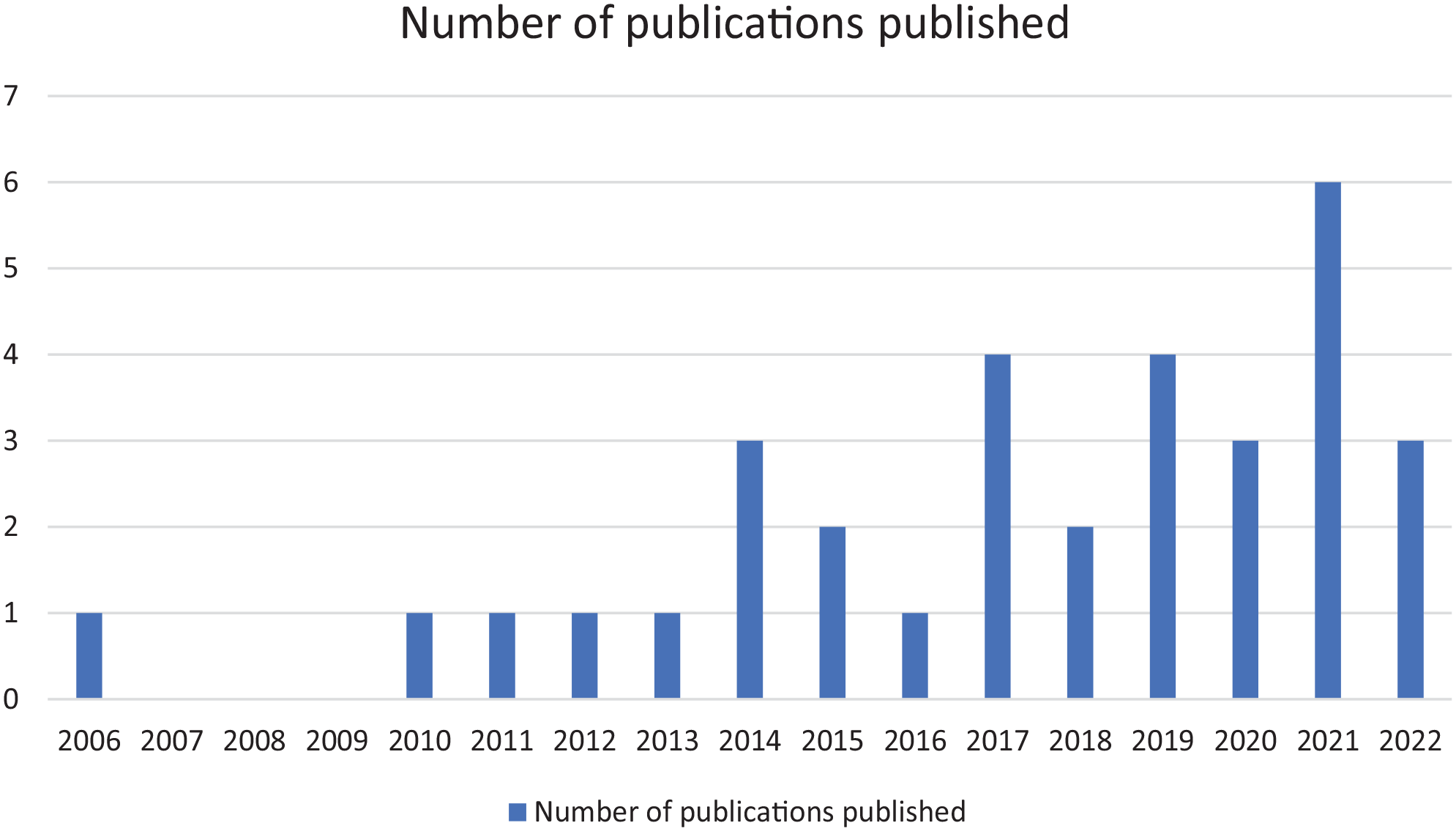
Peer-reviewed articles by year of publication.
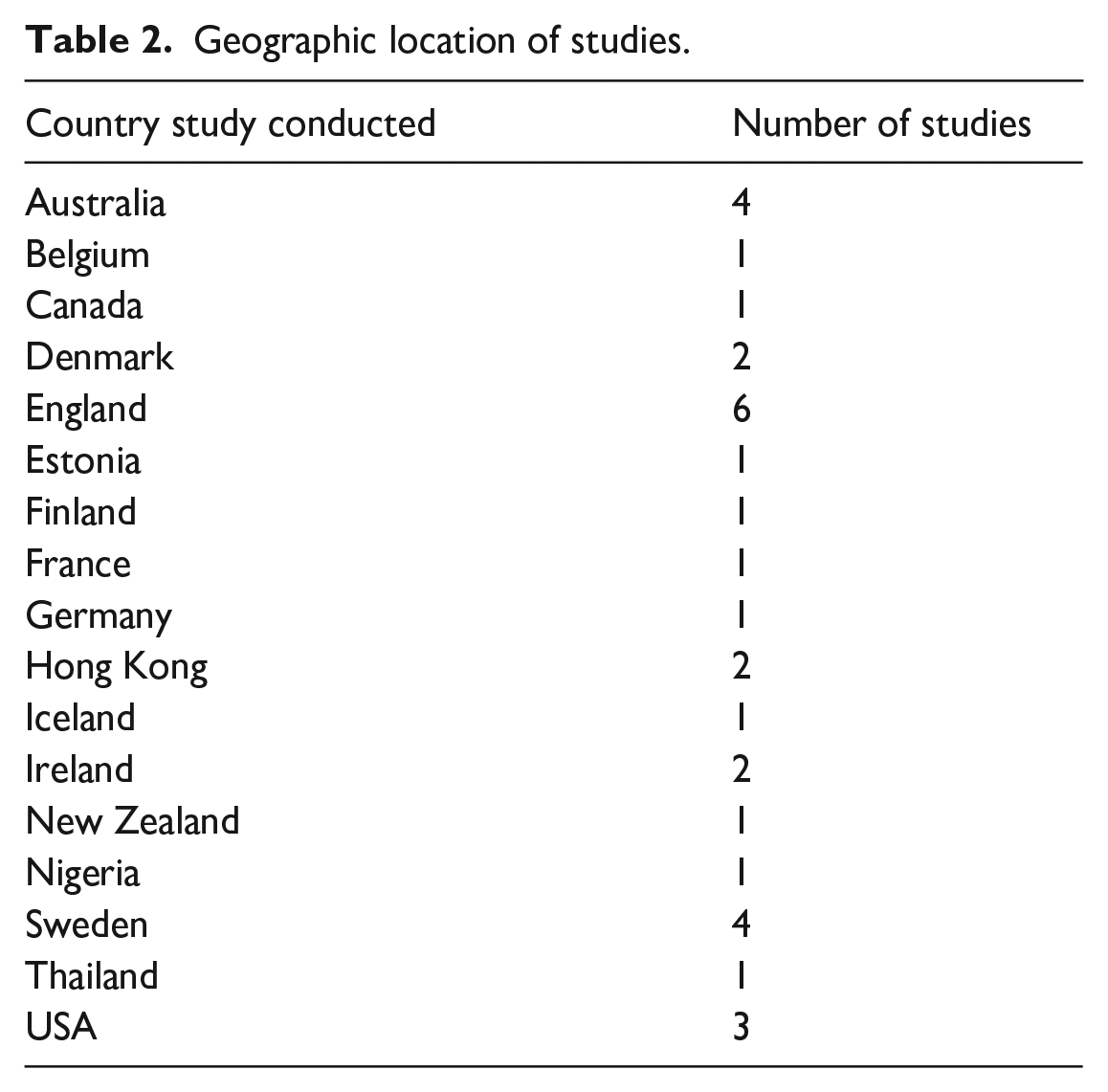
Geographical location
Most studies were conducted with samples in England (n = 6), followed by Sweden and Australia (n = 4), United States of America (n = 3) and Ireland and Hong Kong (n = 2; Table 2).
Geographic location of studies.
For fifteen of the studies, data was collected inside the family home. One study included analysis of the home environment with the social media sphere. Other settings included school (n = 2), organisation (n = 1), a combination of home, school and organisational contexts (n = 4). Other studies were completed in the community contexts of a neighbourhood, a grocery store and baby cafe. Two studies reported data was collected in a focus group. Five studies did not disclose the location of their data collection. However, these studies only conducted interviews and noted the location varied dependent on participant availability and preference. Select studies went so far as to disclose they were not as focussed on details relating to method and data collection but more so on practice as a theoretical and methodological concept itself.
Publication
Included studies were published in a wide array of journals. Three studies were published by Sociology of Health and Illness. The remaining studies were published in 30 different journals.
Timeframe
Included studies reported a wide range of time periods for data collection. Some studies reported in terms of frequency of interviews or discrete occasions of data collection, such as singular interviews or diary writing (n = 6). Others reported on hours spent completing field work, or the months during which field work was completed (n = 22). Time periods ranged from 1 week to 3 years, although the amount of data collected during the various timeframes of studies differed. Five of the studies did not disclose the timeframe for data collection.
Population and participants
The high degree of variance in methodology and study design resulted in a wide range of participants in terms of characteristics and number. Studies reported participants as families (n = 14), households (n = 2), parent and child dyads (n = 4), parents and other stakeholders such as school workers (n = 3), children (n = 2) and parents or caregivers (n = 8).
Sampling
Twenty-four studies disclosed their sampling and recruitment process. The majority of studies within this review employed purposive sampling (n = 14). Other sampling methods included snowball sampling (n = 3), convenience sampling (n = 1), recruitment from established networks (n = 2), sampling from researcher’s social periphery (n = 2) and use of maximum variation technique(n = 1). One study identified using a combination of convenience, snowball and theoretical sampling techniques.
Sampling varied across studies and included strategies such as; flyers, emails, posters, social media and survey. Seven studies did not disclose their sampling technique and three reported sampling was part of a larger research project using a subset of data/ participants. Four studies reported providing compensation for participation.
Practices studied
The studies included in this scoping review can be divided into two groups; those that analysed and investigated concrete nexuses of practices or isolated practices and those which utilised a practice theory approach to explore more abstract ideas of parenting or mothering as a practice in itself.
In terms of concrete activities as practice, most studies explored meal preparation and feeding. Other discrete practices that were analysed include daily travel practices, parent’s interactions with schooling and education, indoor and outdoor play, sports and leisure participation, bath time, computer/ technology use, food shopping and homework completion. These studies employed methods to look at discrete practices inside and outside of the home.
Other studies focussed on how teleoaffective structures and forms of capital are present across parenting as a nexus of practices. Schatzki (2002) defines teleoaffective structures as ‘a range of normativized and hierarchically ordered ends, projects and tasks, to varying degrees allied with normativized emotions and even moods’ (p. 83). A teleoaffective structure exists when there is general agreement about what is acceptable and unacceptable within a given practice, including elements like beliefs and rituals that belong to a given practice, not individual actors (Schatzki, 2002). Two studies focussed on emotional labour and its presentation across different aspects of parenting. Consumption of plastics was explored across facets of parenting and similarly co-parenting as a practice was examined by one study. One study focussed on the use of Islamic capital and two studies did not disclose any specific practices that they focussed on for analysis.
Practice theory use
Part of the inclusion criteria required studies to have utilised some form of practice theory within their study design so all included studies reported some form of practice theory. A summary of the different theoretical approaches taken by each study can be found in Table 1. Studies which identified one form of practice theory mostly used Shove, Pantzar and Watson’s theory (n = 5). Other theories used in isolation included Bourdieu (n = 13), Giddens’ Structuration theory (n = 2), Schatzki (n = 1) and Kemmis’ practice architectures (n = 1). For Bourdieu in particular, included studies were highly selective with which elements of the ‘logic of practice’ theory informed their design and analysis.
Twelve studies used multiple forms of practice theory. Some studies chose to combine the Shove et al. (2012) approach with the work of Schatzki (2002; n = 4), Giddens (1984) and Schatzki (n = 1), Hui et al. (2016; n = 1) or Gherardi (2019; n = 1). Other studies combined the work of Warde (2005), who is well known in the field of consumption, with the work of other practice theorists including Reckwitz (2002) and Halkier et al. (2011). Of the papers that specifically defined practice, most used the definition provided by Reckwitz (2002; n = 6), followed by a definition of practice that aligned with Schatzki (2002; n = 2) or a combination of Schatzki and Shove et al. (2012; n = 2).
Other theories
More than half (n = 17) of the included studies utilised practice theory alongside additional theory or concepts. The scope of application was broad and included: feminist theory, intersectional theory, concerted cultivation, tinkering, positioning theory, food parenting, cognitive automaticity, Affordances theory, food parenting, porosity of the home, the parental involvement continuum, Ecological perceptual psychology and circle of care relations. The remaining fifteen studies did not disclose any other theory which informed their methodology or study design and identified that practice theory or certain branches of practice theory were used in isolation.
Data analysis
About 31 of the 33 studies described their process for analysing data and the most common was thematic analysis (n = 15). Authors described using thematic analysis inductively to produce themes that were not specifically related to practice theory. Four additional studies performed thematic analysis but reported adopting a practice-theoretical based lens.
Other analytical processes reported included a hermeneutic approach (n = 2), analysis as case studies (n = 2), content analysis (n = 1), inductive and deductive language embedded analysis (n = 1) and analysis using an action-oriented resilience framework (n = 1). Other studies employed multiple analytical processes. One study employed iterative coding of interviews combined with descriptive statistics. Another study used abductive video and transcript data analysis, initially using thematic analysis and then using coordination forms and practice elements.
Methods and methodology
Table 1 shows the methodological approach taken by each study. The most common methodology employed was ethnography (n = 13) and four studies described a practice-based methodology (sometimes termed praxiography). There does not appear to be any temporal relations to the use of specific method or methodology in terms of year of publication.
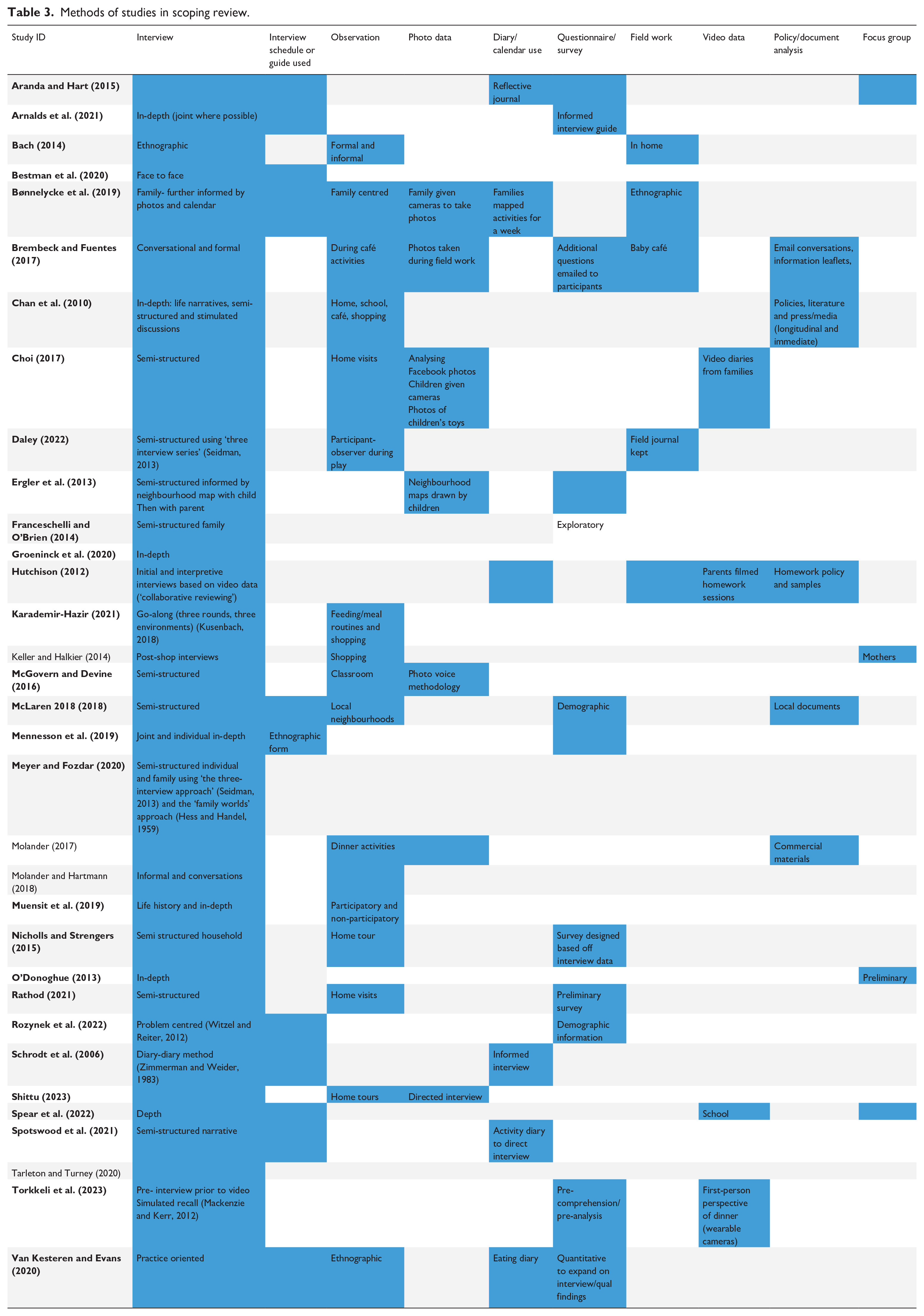
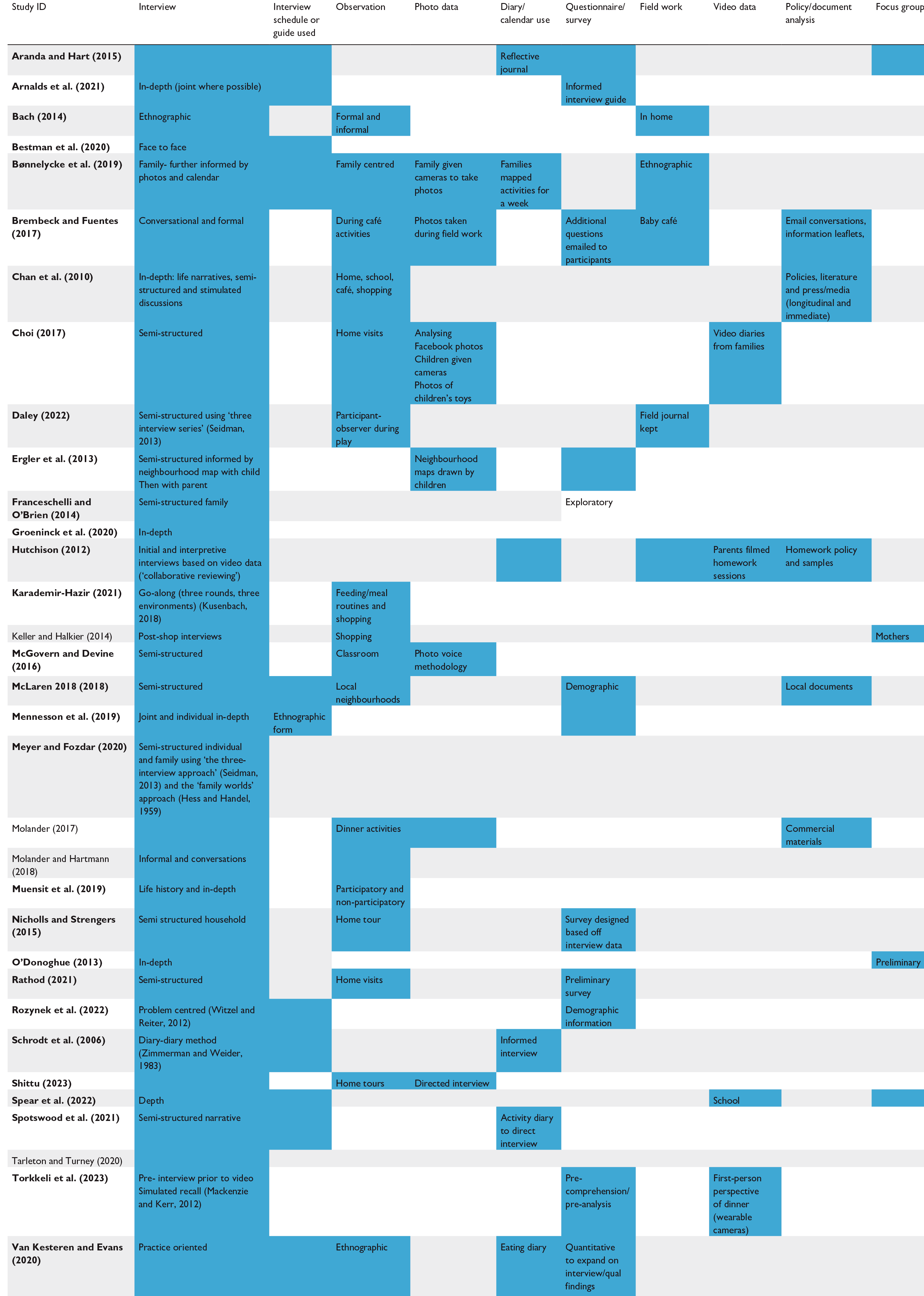
All studies employed some form of qualitative method which always included some form of interview. Studies were identified as using mixed methods if more than one method was reported on (n = 23). Methods within the included studies were varied and some included utilisation of a survey to inform on demographic data prior to completing interviews (n = 8), as well as broader field-based studies using a multitude of innovative and sometimes practice specific methods including family interviews, go along interviews, observations, calendar and photo exercises. A full overview of methods can be found in Table 3. Three studies (Keller and Halkier, 2014; Molander, 2017; Spear et al., 2022) also reported using field notes in addition to the methods outlined in Table 3 and one study used an advisory group (Tarleton and Turney, 2020).
Methods of studies in scoping review.
Ethical reporting of included studies
Several studies reported gaining ethical approval from their institution and some studies involving video data discussed utilising ethical principles considering consent, access and vulnerabilities. Video and photographic data collection also raised issues around children’s privacy and were discussed in one paper. Other ethical issues which were raised in the studies pertained to outsider status and the importance of reflexivity, considerations for entering homes and private spaces, gaining children’s trust and the potential impact of pre-existing relationships between author and participants. Sixteen of the studies did not report on the ethical process for their research.
Reported limitations
Sixteen of the included studies self-reported limitations to their research. The most common reported limitations involved reduced generalisability to a broader population or small sample size (n = 9). Other reported limitations included sampling not including both parents (n = 2), a risk of families presenting self-desired accounts of practice and activity in interviews and the potential for pre-existing relationships with participants to impact data collection (n = 1). Three studies reported limitations relating specifically to practice and not addressing; meta practices (n = 1), how practices connected to one another (n = 1) or the make-up of examined practices (n = 1).
Discussion
Summary of evidence
Our initial aim was to determine what practice theory, methodology and methods have been used and to identify barriers and facilitators to practice-based research. In this scoping review we identified 33 studies which addressed parenting using a practice theoretical approach published between 2006 and 2022. Findings indicate the application of a broad range of methods, methodology and practice theoretical approach across a variety of settings. This is consistent with the ethos of practice theory and its historical development.
Methodology and methods
We did not identify differences in the application of methodology or methods over time. The use of ethnographic methodology and qualitative methods remained constant and formed the majority of practice-based studies included in this scoping review. The use of a wide variety of methods is a strength of the literature. Included studies came from a range of disciplines and backgrounds and this is reflected in the rich array of methods presented and the creativity across study design.
Although each of the studies used interviews, the type and frequency of interview varied broadly. The majority of studies identified using semi-structured interviews and some studies used interviews in isolation. Within practice theory, there is an ongoing debate regarding the utility of using solely interviews within empirical research. Bourdieu argues that interviews force the agent or actor to reflect post practice, which can provide insight but also limits the ability of the agent to express the truth of the practice. Similarly, Nicolini (2017) argued ‘by interviewing someone about their practice, you learn a lot about interviewing, their relationship and (usually very little) the actual practice under investigation’ (p. 29). Interviews can also be a means of enactment and can reveal hidden meaning relating to practice (Halkier et al., 2011). As seen in Table 3, most studies used multiple qualitative methods to collect data.
Studies can be seen as adopting a weak or strong programme of practice theory research (Jonas et al., 2017). A weak programme runs the risk of reducing practice theory to describing ‘what people do’. Whereas a strong programme goes a step further and strives to explain social matters and how they may change, emerge or disappear over time rather than only identifying what practices are being performed.
In this scoping review, select studies combined specific interview types (including practice theory specific forms such as ‘practice oriented’ and ‘go-along’ interviews) with additional methods including observation, video data and diary use. Employing a variety of methods may help to uncover the difference between what actors say they ‘do’ and what they actually ‘do’, as well as uncovering other actors and elements within the examined practice. Halkier and Jensen (2011) suggests practice-based research should employ various methods for data production to reveal tacit element as well as explicit elements of practice and the majority of studies adopted at least two methods within their research design.
Participants
Some studies recruited for parents but consistently this resulted in the recruitment of mothers. Fathers were included in studies that recruited on the basis of ‘family’, such as when using video data for family meals or homework completion. Some studies advised they advertised to all parents and the call was answered by mothers, others rationalised limited involvement given fathers were not as ‘relevant’ for the practices being examined, such as food and meal preparation. Theorists have previously confirmed the major importance food preparation plays in parenting (specifically motherhood) and this may also explain the high presence of mothers as participants across these studies (DeVault, 1991; Lupton, 1996).
There is a well-established gender skew in parenting tasks and labour which seems to be reflected in the data and recruitment. There were studies which included solely mothers in their sample, but in the cases where fathers were included in the study they were never included in isolation from mothers. Leach et al reasoned extremely low recruitment of fathers in parent-focussed studies may stem from low engagement with gender neutral parenting terms accompanied with a disproportionate saturation of mothers being exposed to their study advertisements, especially relating to online recruitment using social media. For future studies, findings suggest recruitment that targets fathers must be father-focussed and not limited to gender neutral strategies.
In addition to parents and children being involved in the studies, research also involved stakeholders and actors including school workers such as teachers and members of community organisations. Research revolved around human actors within the practices. There was also a paucity of research referencing materials.
Theory
Given using a practice-based approach was part of the inclusion criteria, all studies reported some theoretical standing relating to a branch of practice theory. This was most commonly supported by the definition of practice given by Reckwitz (2002) and usually focussed on theory from Bourdieu, Schatzki (2002) or Shove et al. (2012). This aligns with broader claims that most contemporary work in the practice theory sphere builds from these theorists (Maller, 2015).
Bourdieu (1990) in particular, has been identified as a popular theorist within broader parent-based research and this scoping review confirmed this popularity is mirrored in the practice theory field for parent research specifically (Lareau, 2003). With regards to practice theory, Bourdieu’s work, ‘The Logic of Practice’ in particular, is significant (Jonas et al., 2017). Bourdieu acknowledged his work needed to move beyond the abstract and be tested empirically (Lunnay et al., 2011). Bourdieu may not have developed a consistent theory of practice, however his writings were influential in introducing the idea of practice into wider social theory debate (Shove et al., 2012). Specifically, the recursive nature between Bourdieu’s concept of habitus and practice is of central concern within social practice theory (Bourdieu, 1990).
Nicolini (2017) acknowledges theory is necessary when conducting practice-based research authentically but argues the research must remain a methodological project. This approach was evident in studies where a practice approach informed not only the theoretical standpoint, but also methodological decisions and analysis. In contrast, some studies discussed practice theory whilst adopting a more traditional, qualitative analysis and methodology.
In this review, some studies investigated certain activities or ‘practices’ in isolation, whilst others allowed practice theory to permeate through their approach to the research. When a practice is empirically explored in isolation from others the power of such research is likely to be limited in its ability to both explain social issues and effect change or intervention (Maller, 2015).
Each of the included studies used practice theory to identify the aspects of practice that can be seen and observed. Additionally, some studies expanded further by analysing the invisible or implicit elements of practice and this could be likened to the concept of generative mechanisms associated with critical realism. Blom and Morén (2011) describe a five-step methodological process to identify, describe and explore generative mechanisms. If we were to reflect on the findings of studies within this scoping review using their frame it is evident that studies successfully describing and categorising empirical data to shed light on discrete practices (such as those examining meal preparation through observation and interviewing) and there are other others which also examined larger bundles of practice such as mothering and consumption moved beyond the ‘empirical’ world and into the ‘real’.
The studies in the latter category show evidence of abducting and retroducting observed, empirical happenings to draw conclusions on the more implicit elements of practice. Some studies were able to demonstrate how practices form larger nodes and networks within the social world by extrapolating from the observed data. For example, Aranda and Hart (2015) applied practice theory to examine the concept of resilience in a group of parent participants in resilience-based programmes. They state their research shows ‘how practice theory reveals entangled and emergent meanings, competencies and materials that constitute resilience as a social practice comprised of resilient moves.’ Their process is comparable to the concepts of contextualisation and concretisation as described by Blom and Morén (2011) and is an example of how empirical data can be used to examine the more abstract, underlying elements of practice and how elements such as norms are constituted. Eighteen studies merged aspects of practice theory with alternate theory or concepts. The breadth of different areas of research which have used practice theory to investigate parenting is evident in the fact no two papers used the same alternate theories or concepts alongside practice theory in their research.
Limitations of scoping review
The above findings should be addressed with consideration of the following limitations. To increase feasibility of the review and as stated in the PRISMA flow chart, five studies were excluded on the basis they were not published in English. The authors acknowledge that inclusion of articles written in all languages is recommended for scoping reviews (Peters et al., 2020). Expanding the constraints of the review to include articles published in languages other than English would have expanded the geographical spread of the data.
This scoping review emphasised the creativity that can be afforded when adopting a practice-based approach, in respect to method, theory and across a range of research fields. This impacted how elements of the included studies could be discussed and compared within the review and it meant that operational definitions of what a practice-based study was and what a parenting-based study were important to clarify and reflect on throughout the scoping review.
Given the large number of papers included in the initial search, the data were abstracted by one researcher and then verified by a second reviewer. A pilot test was conducted prior to each stage of the data abstraction to allow verification.
Conclusions
The goal of this scoping review was to provide a preliminary map of how practice theory is being used to investigate parenting in contemporary research. Although practice theory has a long-standing theoretical presence, its use in empirical research remains novel. The results show a high diversity of methodological and theoretical approaches to several aspects of parenting using a practice-based approach. Across the studies there were recommendations for expanding sampling and recruitment strategies and major findings from this scoping review include using multiple methods with participants to draw on different aspects of practice and tailoring practice theory approaches and sometimes combining with alternate theoretical concepts. Included studies recommended future research should focus on examining the connections between practices and this has identified as a contemporary need across social practice theory research more widely (Shove, 2023).
Supplemental Material
sj-docx-1-mio-10.1177_20597991231202897 – Supplemental material for Using social practice theory to examine parenting: A scoping review
Supplemental material, sj-docx-1-mio-10.1177_20597991231202897 for Using social practice theory to examine parenting: A scoping review by Caitlan McLean, Linda Slack-Smith and Paul R Ward in Methodological Innovations
Footnotes
Declaration of conflicting interests
The author(s) declared no potential conflicts of interest with respect to the research, authorship, and/or publication of this article.
Funding
The author(s) disclosed receipt of the following financial support for the research, authorship, and/or publication of this article: This research was funded by the Australian Government through the Australian Research Council Discovery Project: DP210101166.

Supplemental material
Supplemental material for this article is available online.
Author biographies
References
Supplementary Material
Please find the following supplemental material available below.
For Open Access articles published under a Creative Commons License, all supplemental material carries the same license as the article it is associated with.
For non-Open Access articles published, all supplemental material carries a non-exclusive license, and permission requests for re-use of supplemental material or any part of supplemental material shall be sent directly to the copyright owner as specified in the copyright notice associated with the article.

