



Abstract
The increasing adoption of Local Area Coordination across the United Kingdom as a strengths-based approach to acting on inequalities which impact on individual health and well-being, and reducing reliance and avoidable use of health and social care services, has catalysed increasing calls for evidence to justify economic commitment. In a time of austerity where extreme pressure is on resources to prove short-term outputs, Pawson and Tilley’s realist evaluation methodology holds significant promise in asking critical questions of how and why programmes work. Ultimately, such philosophical standpoints facilitate opportunities to examine whether the sustainability of programmes are cost-effective for the system in the longer term. This article draws upon the findings of a realist evaluation of Local Area Coordination on the Isle of Wight and establishes how and why the programme works for people and local communities. A blend of realist approaches, Q-method and realist interviews were adopted within this study. The study’s sample was a cross section of 18 people who engaged with the Local Area Coordination programme across the Isle of Wight. The findings of the evaluation established that the Local Area Coordinators’ ability to facilitate a ‘golden triangle’ of listening, trust and time were factors which made Local Area Coordination work. It was also clear that Local Area Coordination worked for different people in different ways, demonstrated through the contextual differences between three subgroups who were categorised based on shared viewpoints, and presented through the holistic narratives and corroborating interview data.
Introduction
Austerity has catalysed a significant shift in the ‘responsibility’ of health and social care in the United Kingdom, resulting in a greater emphasis and investment in more person-centred, strengths-based practices to improve self-management capacity. Subsequently, communities and local systems have had to transform, reconfigure and integrate their health and social care provision to reduce the demand and reliance on services (Swansea University, 2016). Local Area Coordination (LAC) has emerged as one approach which aims to generate sustainable solutions to the current challenges experienced in health and social care. LAC was pioneered in Western Australia almost 30 years ago as a holistic approach to working alongside people to achieve their vision of a ‘good life’ (Government of Western Australia, 2003; Broad, 2012). The programme is built on the premise of an individual (local area coordinator) supporting people and communities within a specific geographical ‘community’. The key roles and responsibilities of this coordinator are to work with individuals to build and pursue a positive vision of a good life at an individual and community level and engage in practical ways to make this happen. This is achieved through a specific set of principles which include identifying gifts, strengths and needs; accessing information advice; relationship and community building; and planning for the future (Broad, 2012, 2015).
The existing evidence pertaining to LAC has supported its increasing adoption across the United Kingdom, with empirical evidence linking the responsive, adaptable, flexible and accessible nature of LAC in relation to alleviating pressures across a wide range of services, and improving individual outcomes (Billingham and Mceleney, 2016; Broad, 2012; Swansea University, 2016; Wessex Academic Health Science Network, 2018). Despite the numerous evaluations on LAC which showcase a range of different methodologies and data collection tools used to capture outcome(s) and impact, there is still limited insight surrounding how and why LAC works in specific contexts to produce certain outcomes. Therefore, this article makes the case that due to the complexity of the programme, it is important to utilise a methodology which has the capacity and capability to understand questions related to how, why and for whom does LAC works for, and under what circumstance does it achieve this.
This article begins with a brief introduction to LAC. It then provides justification for why realist evaluation was deemed an appropriate approach to assess the programme utilising Q-methodology and interviews. The findings of this article are then presented through a synthesis of the holistic narratives from the Q, and interview data to generate a series of programme theories which explain how and why LAC worked for different subgroups of people across different geographical and demographical areas on the Isle of Wight (IOW).
This evaluation of LAC on the IOW focused on the first three geographical areas in which the approach was introduced in 2016, with the evaluation occurring throughout 2018. Each geographical area had a local area coordinator who covered a population between 10,000 and 12,000 residents.
The realist approach to understanding complexity
There is indeed an abundance of evaluation work that has been undertaken in relation to LAC, with formative, impact and outcome, and economic being the predominantly favoured approaches. This is driven by the accountability culture of evaluation to prove the value and worth of new social innovations within local systems in order to obtain continued economic commitment and support. There is thus a major gap in the existing evidence base in relation to learning how and why LAC works, for different people, in different ways and in different contexts, with this type of understanding being able to better support in improving the LAC practice. It is this backdrop against which realist evaluation emerges as a suitable evaluation methodology to address this gap.
Realist evaluation is rooted in the philosophical orientation of realism. Dalkin et al. (2015) highlight that one of the key tenets of realism is the very basic idea that observational evidence alone cannot establish causal uniformities between variables. Rather, it is necessary to explain how and why the relationships occurs, that is, what it is about LAC’s principles in practice through a local area coordinator, and how working alongside an individual, within a certain set of circumstances, leads to generating change(s) in their life, as this causally links the generated change in outcome(s) to the ‘intervention’ (Pawson, 2013). The generative view of causation and need to dig beneath the observational surface level of reality (Jagosh, 2019) means that an effective realist evaluation seeks to move beyond the traditional ‘what works’ approach to evaluating an intervention to ‘what works (or not), for whom, in what circumstances, and why (Pawson, 2006; Pawson and Tilley, 1997; Wong et al., 2016).
A key contribution of Pawson and Tilley’s (1997) realist approach is the view of the mechanism (Astbury and Leeuw, 2010) which places an emphasis on understanding the interplay between the complex social reality in which different ‘interventions’ like LAC (being evaluated) are mobilised within, and how they adapt and respond to generate a change in individual outcome(s). This enables an evaluation to seek the theories which explain how and why interventions are successful in some instances, but not in others (Hewitt et al., 2012). Pawson and Tilley (1997) emphasise the importance of context in social change projects, because the conditions and environments of the participants involved in a given project will influence the project outcomes (Dalkin et al., 2015; Westhorp, 2014).
Therefore, programmes like LAC will work in different ways for different people in different situations. Thus, a compelling rationale emerges for the mobilisation of realist evaluation for approaches such as LAC, because they are socially context dependent involving human volition and change mechanisms (Harris, 2018). LAC ‘may’ work for some people in certain circumstances but the question from a realist sense concerns how, and why, so that learning, explanation and understanding can take shape and be used to inform and improve practice.
Methodology
As already alluded to, realist evaluation was designed to understand what worked (or not), for people who engaged with local area coordinators across three different geographical and demographical areas on the IOW. The evaluation focused on identifying the generative mechanisms of change, that is, what was it about LAC specifically that caused a change in an individual’s reasoning which led to a change in outcomes, relative to their circumstances, at an individual level, that is, health and well-being and self-management capacity, community level, that is, connectedness within their community, and/or at a system level, that is, reducing reliance or avoidable use of services, that is, health, care and the judicial system.
Realist evaluation
According to Pawson and Tilley (1997), realist evaluation involves three key phases of first, establishing a programme theory, second, testing programme theory and finally, refining programme theory to result in evidence-informed explanations about how social innovations like LAC work, for whom, under what circumstances and why.
Programme Theories in a realist sense are made up of ‘candidate’ Context–Mechanism-Outcome (CMO) configurations (Pawson and Tilley, 1997). The key components of, and interrelationship between, the CMO are described by Harris (2018: 4) as follows:
Context: What conditions are in place for an ‘intervention’ to trigger mechanisms to produce outcomes?
Mechanism: What is it about an ‘intervention’ that may lead it to have a particular outcome in a given context, for example, how do resources intersect with participants’ beliefs, reasoning, attitudes, ideas and opportunities?
Outcome: What are the practical effects produced by causal mechanisms being triggered in a given context?
Developing programme theory
Within this evaluation a series of candidate CMOs were compiled with programme staff and system-level stakeholders at the very beginning of the process to understand their preliminary theories and assumptions about LAC. This was a crucial phase as it enabled the research team to grasp a contextual understanding about the programme. Such an exercise was beneficial for gleaning what was worthy of exploration in the testing phase of the evaluation. The developing programme theory stage also consisted of the completion of a comprehensive literature review of LAC across the world as well as the grey literature pertaining to LAC on the IOW.
Testing programme theory
Following the creation of the candidate CMOs, the next phase involved testing them. Realist evaluation does not favour a particular type of data or data collection method, and has been referred to as being methodologically neutral (Pawson, 2006). Rather, what is important in a realist evaluation is that the relevant type of data is extracted in relation to the programme theory (Dalkin et al., 2015; Wong et al., 2016). Therefore, in testing a programme theory it is entirely acceptable that realist evaluations will incorporate a mixed-methods approach to capture both qualitative and quantitative data in relation to context(s), mechanism(s) and outcome(s) to enable CMOs to be tested (Pawson and Tilley, 1997; Westhorp, 2014).
The mixed methods selected for this study were made up of the Q-method (Watts and Stenner, 2012) and realist interviews (Manzano-Santella, 2016; Pawson, 1996). As stated above, these methods were informed by the programme theory development stage of the realist evaluation.
Q-method
Harris (2018) and Harris et al. (2019) draw a connection between the Q-method and realist evaluation with reference to its compatibility within the realist philosophy, that is, its contribution to understanding how, why, for whom and under what circumstances an intervention works, therefore possessing potential in the developing, testing and refining of the programme theory.
The Q-method was pioneered in 1935 by Stephenson (Watts and Stenner, 2012); it is defined by Brown (1993) as the systematic study of subjectivity through capturing an individual’s viewpoints: their opinion, beliefs, thoughts, notions and attitudes in relation to a set of statements about a topic (Stephenson, 1961; Watts and Stenner, 2005, 2012). In doing so, it establishes what does (and what does not) have value and significance from their perspective (Watts and Stenner, 2005). The Q-method sets out to quantitatively analyse the subjective viewpoints of participants, which are then qualitatively interpreted to explain the relationships and patterns emerging from the factor (quantitative) analysis of the data (Watts and Stenner, 2012).
Table 1 gives an overview of the Q-procedures (from Harris et al., 2021, forthcoming) and provides an outline of the key steps in conducting the Q-method within an evaluation.
Overview of Q-procedures.
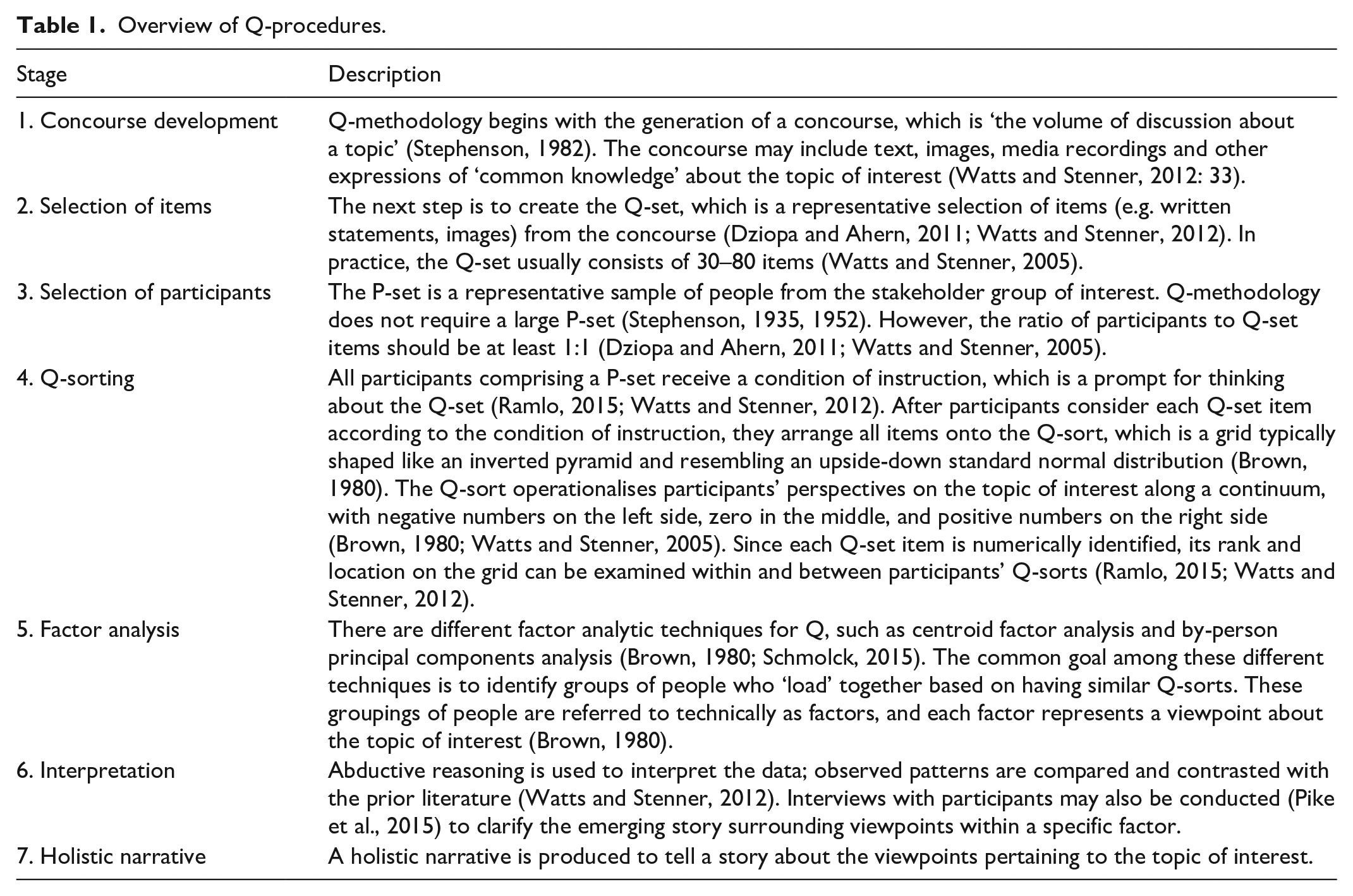
In relation to LAC, the concourse represented the gathering of ‘substrate’ theoretical explanations which cumulatively represented how and why LAC might work, and the different outcomes which could occur. From the concourse, a total of 35 statements were developed and linked to the initial programme theory development stage. These statements (known as the Q-set) were then ranked by participants (known as the P-set) relative to one another. The focus on the subjective viewpoints allowed a sample of participants to decide what was, and what was not meaningful to them related to LAC (Watts and Stenner, 2005). An example of the statements pertaining to this evaluation can be seen in Table 2.
Example of statements (Q-set).
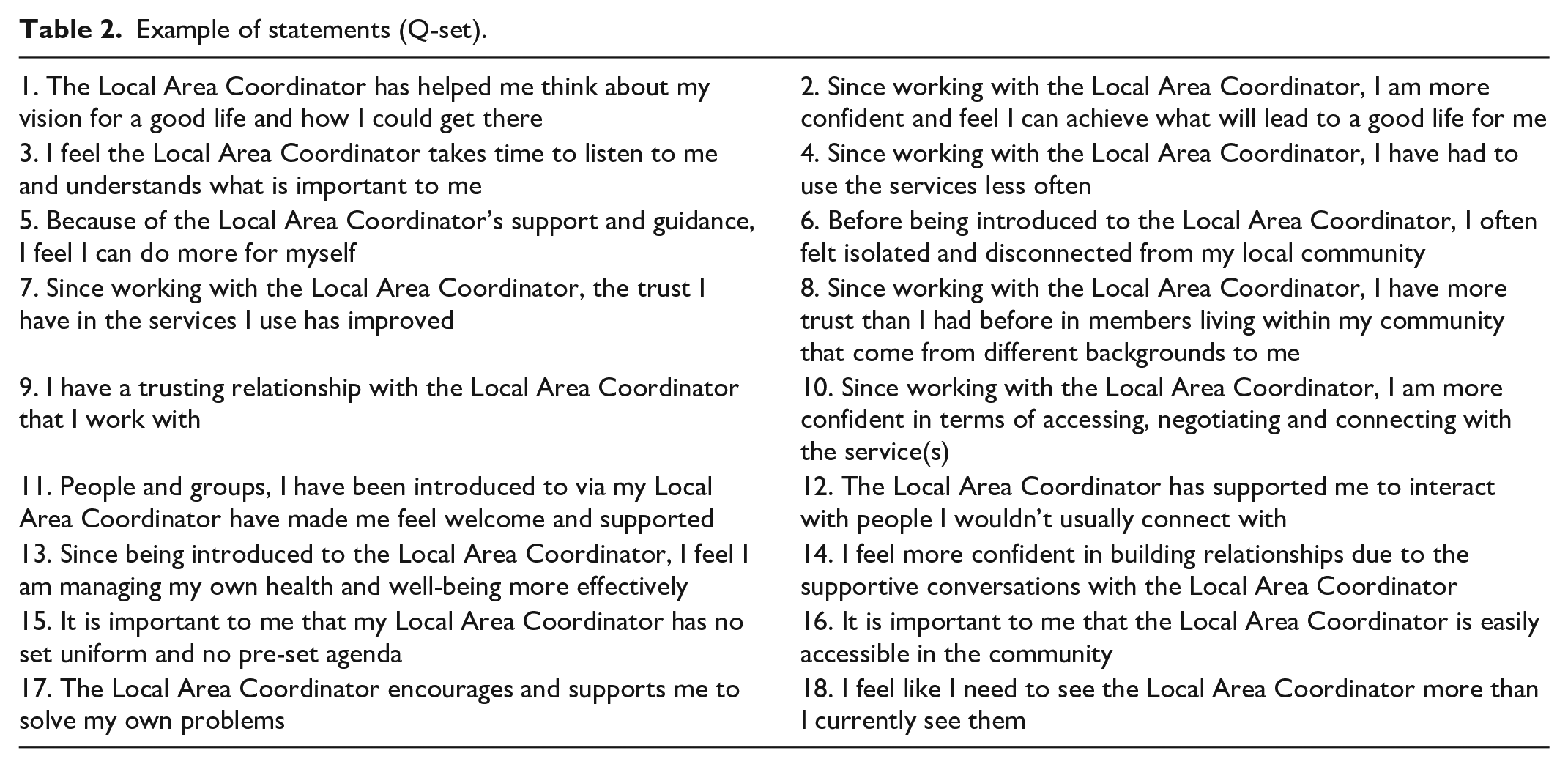
The Q-set was presented to the participants (P-set) individually and purposively during community-based sessions/activities within each of the three geographical areas where a local area coordinator would routinely connect into. Importance was raised about not ranking statements to measure the performance of their respective local area coordinator, rather to understand in more depth what was meaningful for people who had worked alongside a local area coordinator. This process ultimately helped to reduce evaluator bias.
Q-sample (P-set)
A sample of 18 individuals across the three geographical areas, who had different experiences in working with a local area coordinator, made up the participants of the research. Of the 18 participants, 11 were male and 7 were female, and aged between 18 and 74 years. The statements were then ranked relative to each other in terms of what was most important (+4) to what was most unimportant (−4) by each participant using a ‘Q-grid’ depicted in Figure 1, as suggested by Watts and Stenner (2012) to complete the Q-sort exercise.

Example Q-grid.
Data analysis and interpretation
The proceeding stage focused on the analysis of the Q-sorts completed by the P-set which was conducted through factor analysis. The factor analysis involved searching for statistically significant correlations of shared viewpoints among the participants. This led to the identification of seven possible factors (subgroups of shared viewpoints) among the 20 participants. However, further analysis on the variance and numbers of participants within each subgroup led to three subgroups being selected for full qualitative interpretation.
From these three subgroups, seven participants loaded into subgroup 1, six within subgroup 2 and five within subgroup 3. The qualitative interpretation involved examining the resultant subgroup Q-sort scores in-depth. Thus, in this case three resultant Q-sorts were examined, making use of Watts and Stenner (2012) crib sheet (see below).
Statements ranked at +4/+3
Statements ranked higher in the factor group than any other group
Statements ranked lower in the factor group than any other group
Statements ranked at −4/−3
Distinguishing statements
Using demographical information about participants and micro–macro circumstances
First take – (building in initial story or theory)
Any other additional information.
The crib sheet guided the abductive reasoning in explaining the linkages between the statistical correlations between shared viewpoints. As such, a defining feature of Q-methodology is the use of abductive reasoning to interpret the results. Emanating from the work of Charles Peirce (1839–1914), abduction can be simply defined as ‘studying facts and developing theory to explain them’ (1931/1958: 90, cited in Watts and Stenner, 2012: 39). Distinct from the bottom-up nature of induction and the top-down nature of deduction, abduction is somewhere in-between because it offers both explanation and theory-building by going back from, below or behind observed patterns (Watts and Stenner, 2012). This led to the development of three holistic narratives, one for each subgroup, which are presented and discussed within the ‘Results and discussion’ section.
Realist interviews
Harris (2018) draws a connection between the values of interviews following Q-methodology to follow-up, clarify and consolidate why a participant ordered and ranked the statements the way they did. This is of relevance when requiring data which explain gaps or questions arising from the holistic narrative based on the researcher’s interpretation. This supports the researcher to ‘dig deeper’ (engaging in retroduction) to corroborate their qualitative interpretation of the subgroups.
A realist interview is generally semi-structured in nature, though different to a conventional interpretivist interview as it is not focused on exploring the constructed meanings based on an individual’s experience in relation to a particular topic under investigation. Rather, a realist interview following an intervention is focused on ‘testing’ and ‘refining’ programme theories as a result of the ‘real’ effects caused by the intervention relative to the participant.
To guide the realist interview, Manzano-Santella (2016) outlines a ‘teacher-learner cycle’ approach, whereby the realist questions are designed around the stakeholders’ awareness and experience of the programme, including their reasoning (Dalkin et al., 2015) about specific propositions which relate to the research questions/objectives. Therefore, programme theories are the subject matter of the interview and these are hypotheses that need to be elicited, developed, refined and tested (Pawson and Manzano, 2012). This is achieved through the interviewer (researcher) sharing the programme theories verbally or through use of visualisation techniques with the interviewee (stakeholders) who having learned the theory under test, then teaches the interviewer about components of it, that is, how and why aspects of LAC did or did not work for that subgroup (Harris, 2018; Manzano-Santella, 2016).
In relation to the research study, a purposive sampling method was used and a sample P-set from each subgroup. In total, six participants were involved in this phase, with two participants from each of the three subgroups. The interview schedule was informed by clarifying gaps in understanding, while remaining open to the notion of emergence being applied, with the interviewers being planned for the unplanned, ready for the exploration of unexpected (not previously hypothesised) CMOs (Pawson, 2013).
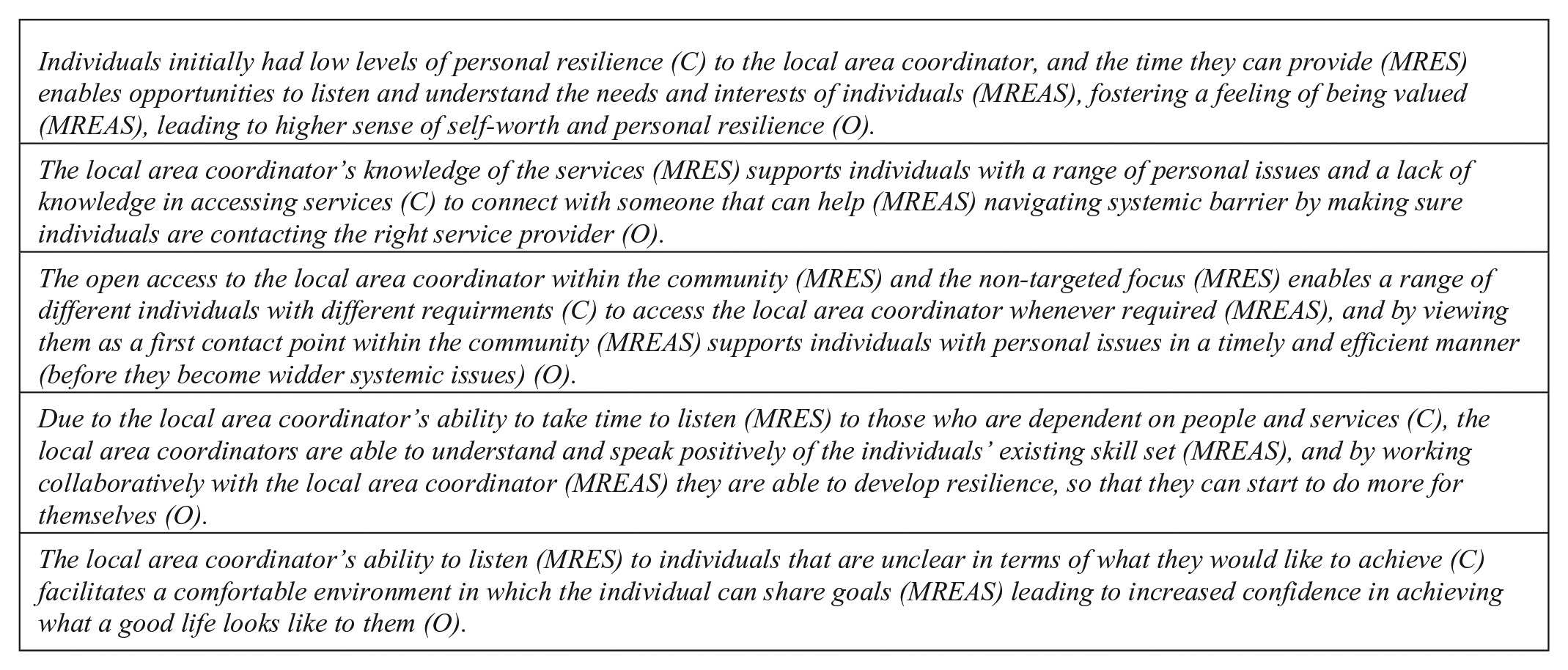
As a result of the interviews, data were transcribed, and analysed through coding, extracting and synthesising the data using the CMO as an analytical framework (Oatley and Harris, 2020). To simplify explaining how LAC worked to generate certain outcomes, Dalkin et al.’s (2015) disaggregation of ‘mechanism’ was adopted to illustrate how specific resources (MRES) provided by local area coordinators generated certain reasoning responses (MReas) in relation to certain outcomes. As such, we present our programme theories as Context–Mechanism Resource–Mechanism Reasoning–Outcome (CMMO) patterns. This empirical data corroborated and refined the holistic narratives from the Q-method. In doing so, it provided scaffolding to support the Q-method findings.
Refining programme theory
The data generated were synthesised in relation to refining the initial programme theory produced. To achieve this, the CMMO was utilised as an analytical unit to code, analyse and identify CMMO configurations informed by the holistic narratives and realist interviews. As such, the analysis was ‘intraprogramme’ in its focus, as it sought to establish inter-group comparisons through CMMO configurations, illustrating the different ways in which LAC worked (or not) for people relative to their circumstances (Gilmore et al., 2019; Jagosh et al., 2012). To assist this phase, the researchers engaged with the data retroductively to theorise the relationships within the data to explain the identified patterns within (Gilmore et al., 2019; Greenhalgh et al., 2015; Jagosh et al., 2012; Wong et al., 2016).
Results and discussion
The findings of the evaluation established that the ‘golden triangle’ of listening, trust and time were consistent mechanisms which led to outcomes being achieved. This aligned to other evaluations such as the Wessex Academic Health Science Network (2018), which found that the unrestricted nature (time) of LAC compared with other services led to a wide range of impacts being achieved, built on the foundations of a trusting relationship between the local area coordinator and an individual. However, it was also quite clear that LAC worked for different people in different ways, with the Q-method creating three different subgroups of end users experiencing LAC. There were also key contextual factors, which influenced the degree to which broader LAC outcomes were achieved.
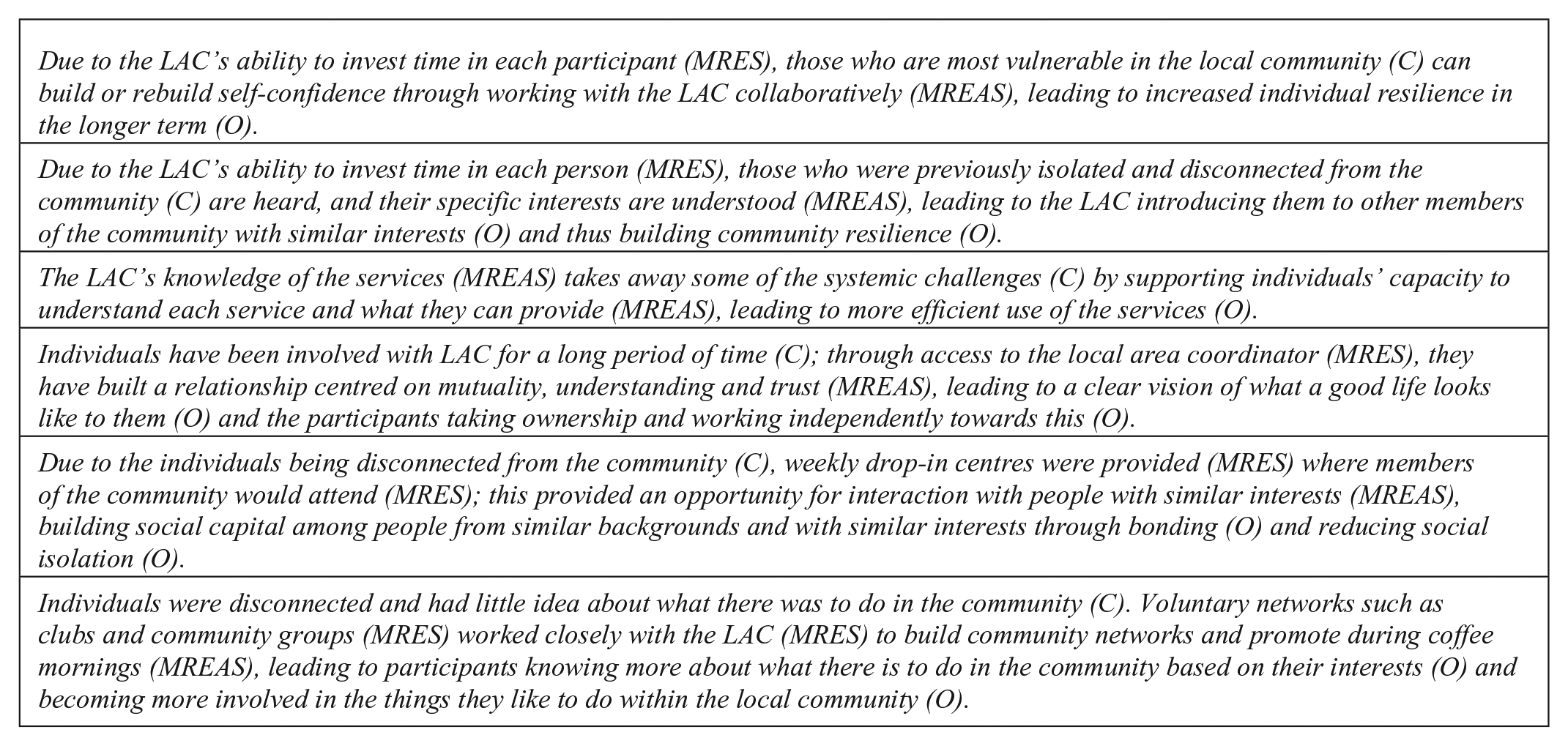
The findings from each of these subgroups are illustrated below through a holistic narrative, data from the realist interviews which are then synthesised to provide key CMMO configurations for each subgroup. Each holistic narrative is displayed below, in present tense with the support of statement rankings (Watts and Stenner, 2012). For example, in group 1, ‘5 + 4’ would indicate that participants within this group ranked statement 5 at ‘+4’ on their Q-sort, whereas they ranked statement 9 at ‘−4’. Each ranking and score acts as a supporting reference to justify the narrative.
Subgroup 1: ‘I know you are there and that means a lot, but I’m building my own social networks’
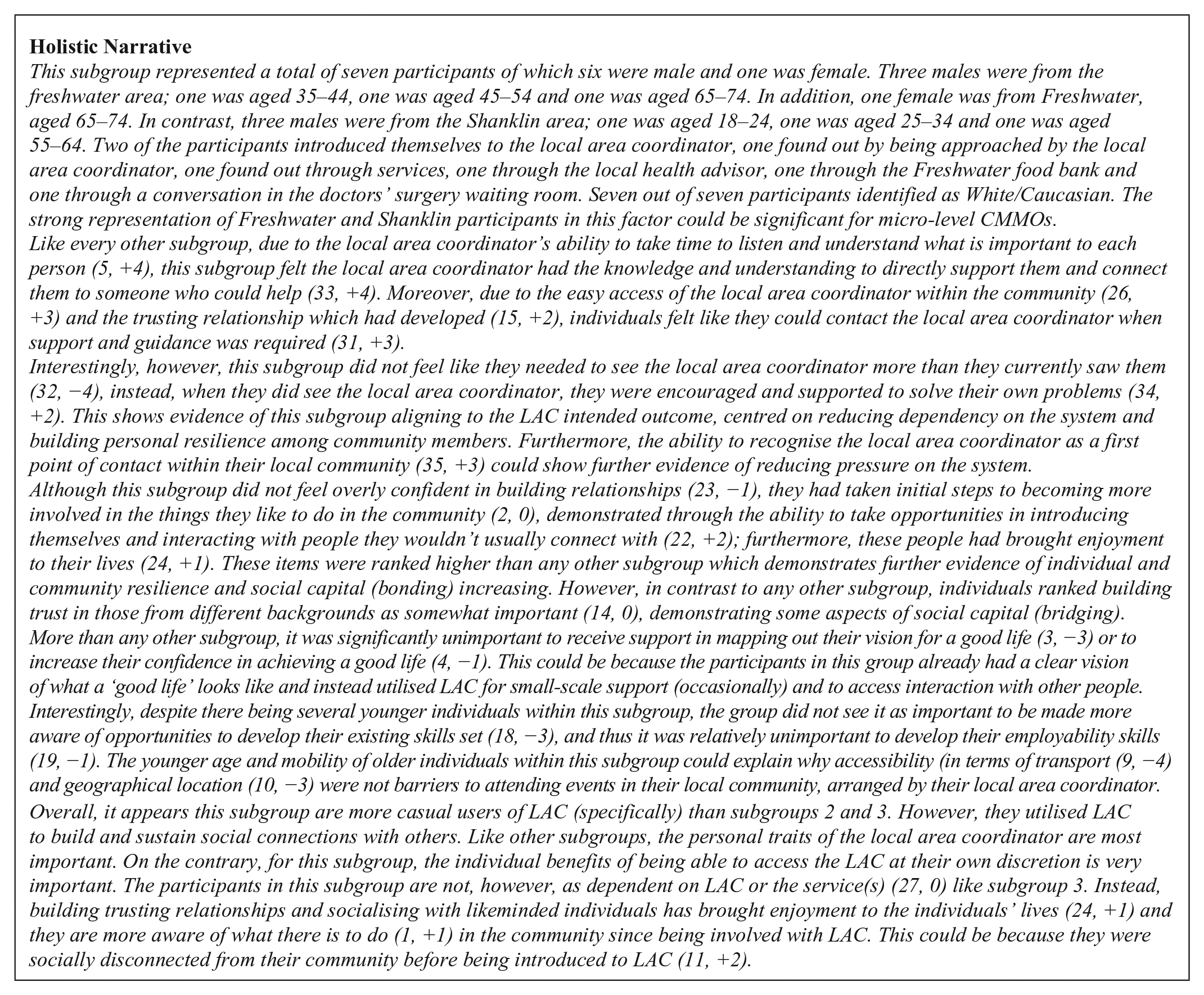
Interview data to support narrative: subgroup 1
The interviews supported the notion that this group was mostly capable in their everyday lives, though they needed some support. Introduction to other individuals through the local area coordinator had provided participants with a friend, as well as giving them the opportunity to receive help or advice from the local area coordinator. Those in this subgroup use the local area coordinator casually for minor things, such as setting up a mobile phone. These small actions seemingly have a big impact on this subgroup’s lives. Where this subgroup does not have close family or friends on the island, the casual use of LAC is important to them. When an incident occurs that would cause disruption to the individual, the local area coordinator is a mechanism for emotional support and actions are collaboratively set to reassure the individual:
When something goes wrong, I look forward to the coffee morning where I get to speak with the Coordinator, it gets me through the week. (Participant 1)
This indicates that they continue to require access to the local area coordinator to prevent greater use of services or a reliance on LAC. The value of keeping casual contact through LAC aligns to findings from Swansea University (2016), which underlines the challenges which can emerge in making positive individual, societal and financial benefits if problems are not identified and addressed through the earliest possible intervention.
It is suggested that the participants do not worry about developing their employability skills as they already hold a good level; however, their mental health has caused them to stop working or being confident to continue working. This also affects taking up any volunteering opportunities. It is not that developing employability skills is not important, rather their involvement in LAC is to get the specific help they need when they need it:
The local area coordinator has shown me where I can volunteer and get involved in different things, but I am not at a stage where I take these opportunities. (Participant 2)
Interaction via interviews would indicate that members of this group have a higher potential to generate social capital than other subgroups, allowing greater interaction with new people; they are, however, still relatively isolated. The relationship with the local area coordinator was still a large contributing factor to these participants taking the next steps in improving their lives:
My mental health has really suffered, and I have struggled recently, especially with the stress it has caused. I’m going to be moving closer to my daughter who can help me. Adam has helped me realise this. (Participant 2)
The listening skills, trusting nature and openness of the local area coordinator have helped the individuals to collaboratively outline the next best steps to achieve a good life. These individuals are not reliant on LAC; however, this does not mean that they are completely free of their use of services.
Sample of overarching key programme theories for subgroup 1
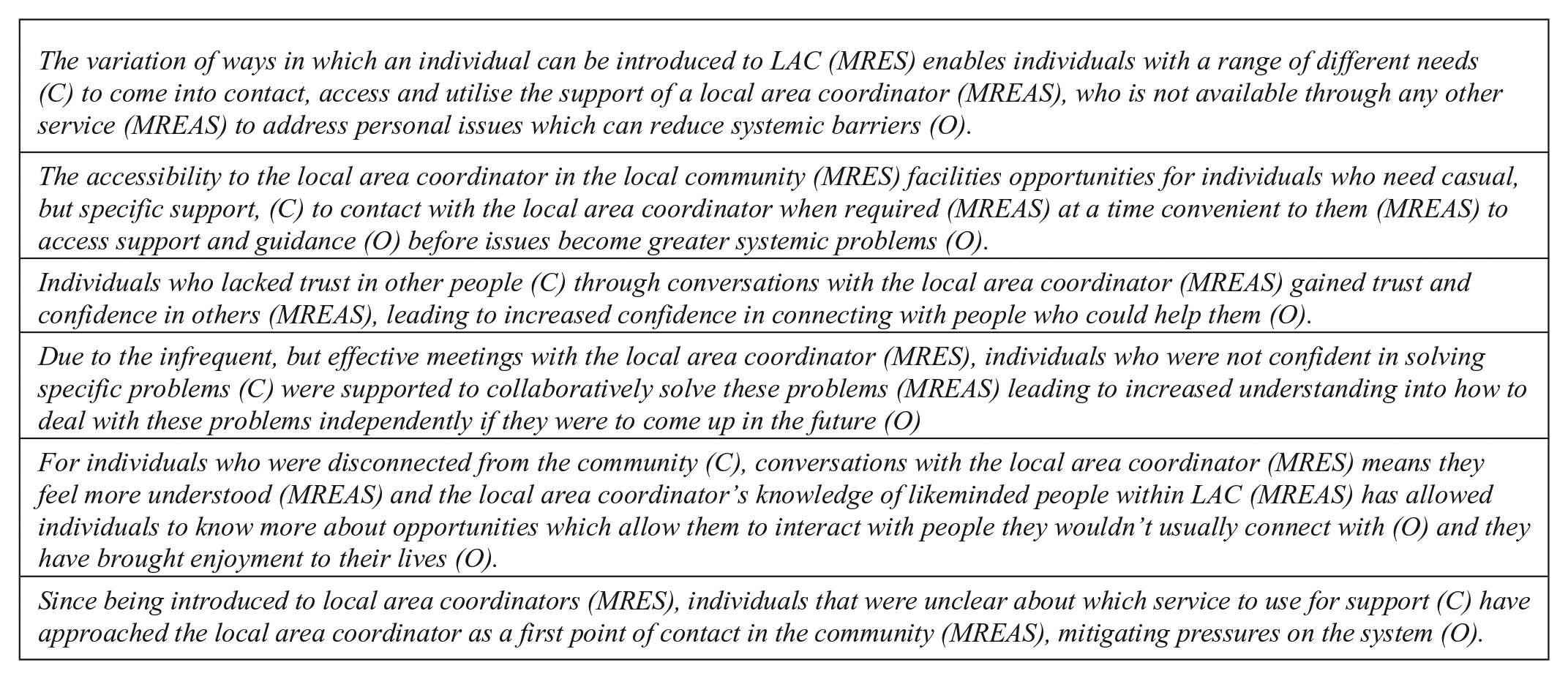
Subgroup 2: ‘thank you for your support, I’ve come a long way’
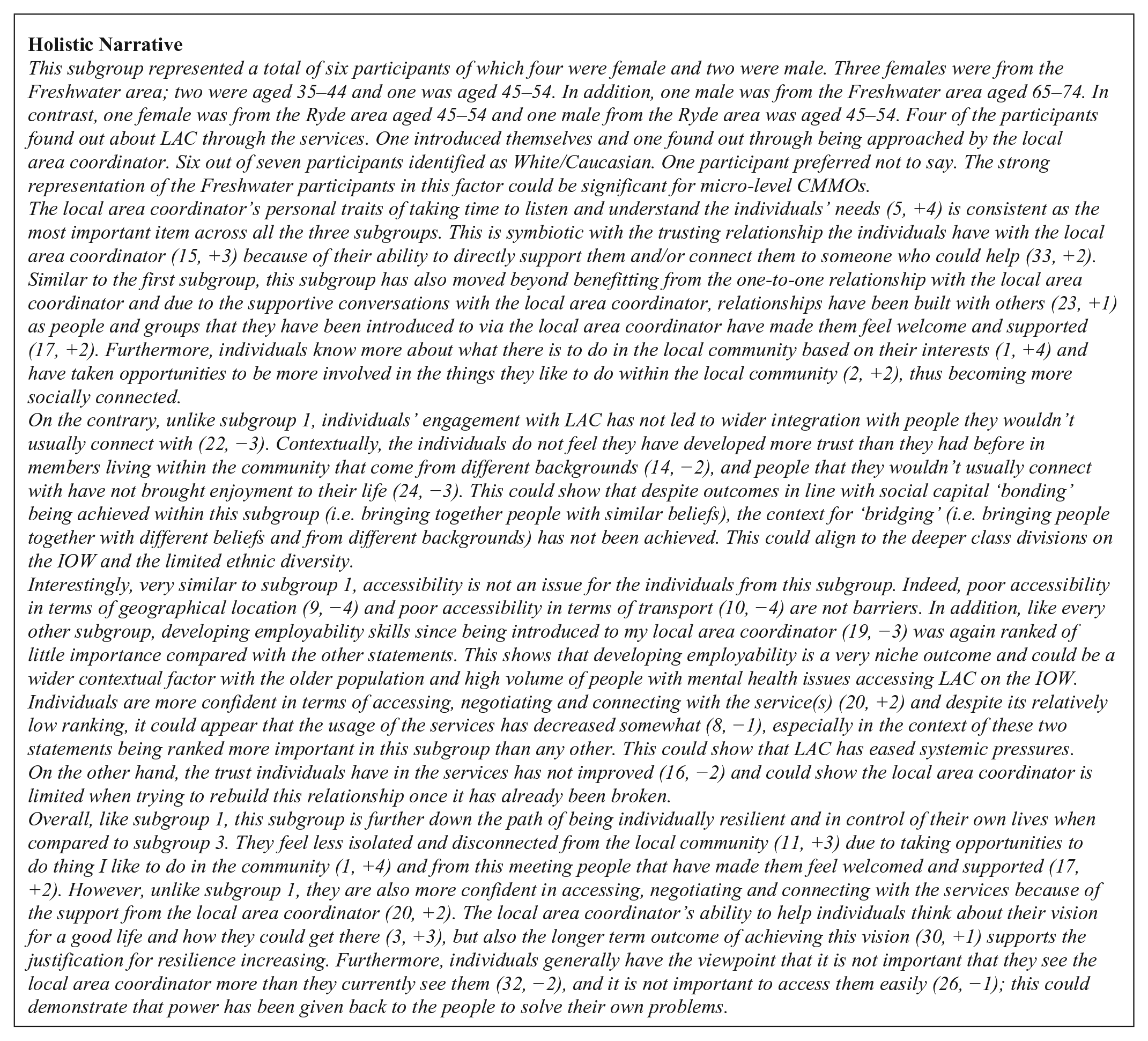
Interview data to support narrative: subgroup 2
The local area coordinator is instrumental in supporting the participants with small achievable tasks in this subgroup to improve their lives. These tasks ranged from supporting the application for benefits, to providing information on volunteering and skill building opportunities (cooking), to conversations in terms of local affordable activities for family members:
The local area coordinator has been vital to developing a community spirit inside me where I want to give back to others and help them. (Participant 3)
The introduction to community life is an important factor, with the local area coordinator a key instigator to encouraging them as a trusted friend. This trust has been built up through the caring actions of the local area coordinator, which is extoled by those who frequently get to see the local area coordinator on a weekly basis.
The participants still rely on services such as a social/support worker as well as various health supports, a mental health nurse or psychiatrist. However, since the introduction to LAC, they have built confidence and reduced their reliance on some of these services due to the guidance and support from the local area coordinator, a factor which is key to avoiding costs (Swansea University, 2016). Listening and caring skills shown by the local area coordinator has proved important to the participants trusting the local area coordinator’s advice and helping them to shape a better life:
The local area coordinator advised me to take up opportunities [a cooking class] which I would not have taken if I did not trust the local area coordinator. They show they care and explain the how these things can help me, and it did help me. (Participant 3)
The reliance on the local area coordinator has stabilised; however, the local area coordinator is still an important part of the participants’ lives. The time taken up by participants in this subgroup ranges from 2 hours a week individually to conversations when they come across the local area coordinator via different engagements (Sports Centre, Our Place, Food bank, etc.):
My partner did everything, so when she passed away, I did not know how to pay the bills, how to cook. The local area coordinator was great, just sorted everything out for me and got me to come along to Our Place. (Participant 4)
The participants tended to rely more on the local area coordinator after an incident (bereavement, issue, with child behaviour or mental health issue). The local area coordinator was a support mechanism in their time of need:
The local area coordinator comes over for an hour a week, we talk, and he chats with my son. They get on very well, and he’s supported him loads with his anger issues. (Participant 3)
The local area coordinator appears to have enough time to work with participants in the way they need them most. As more participants come into LAC, it is likely to decrease the time each local area coordinator can spend with each participant individually.
Sample of overarching key programme theories for subgroup 2
Subgroup 3: ‘I’m moving down the path, but I still need your personalised support’
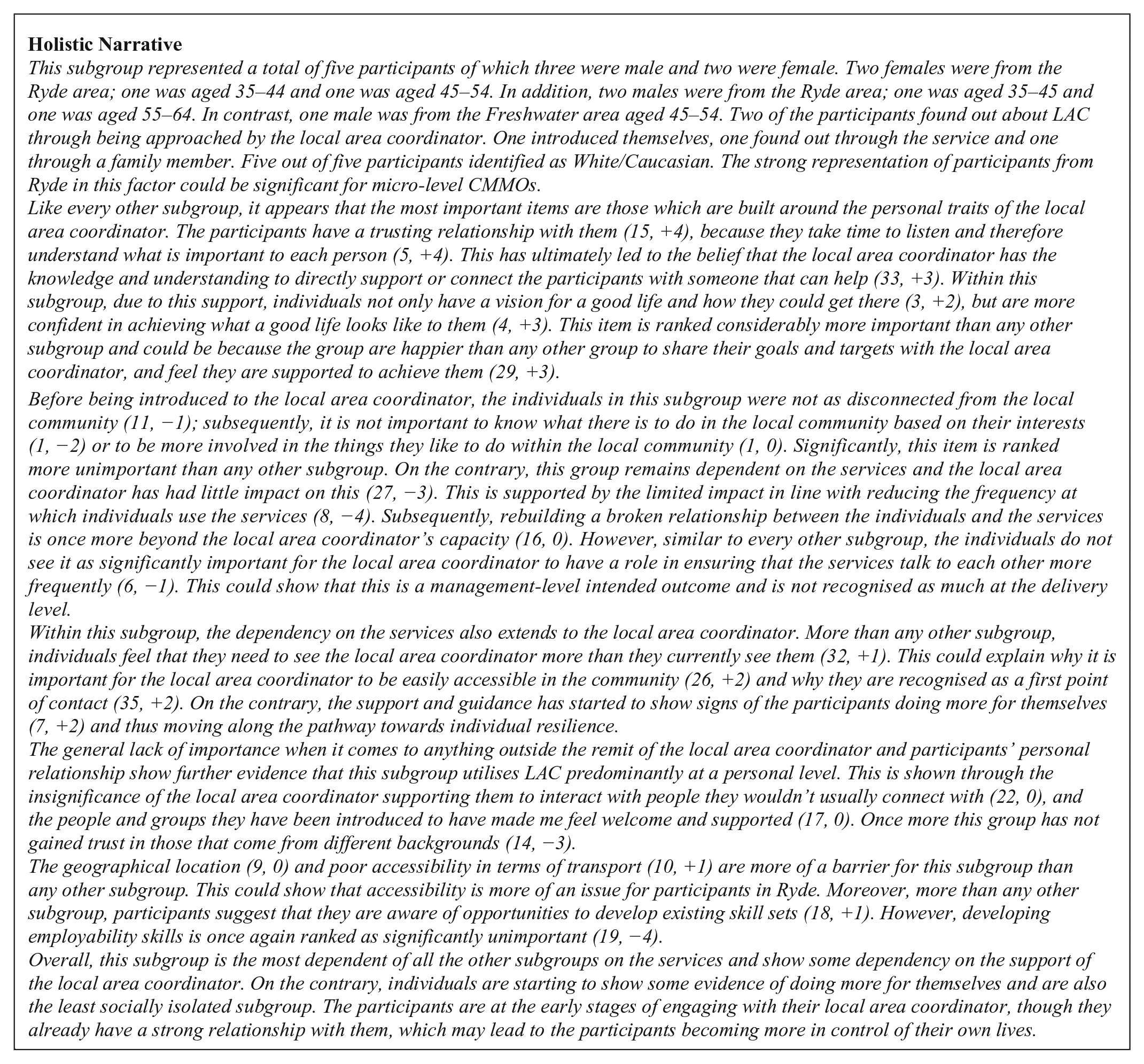
Interview data to support narrative: subgroup 3
Interviews highlighted how the participants in this subgroup were the most reliant on services and were dependent on others, including the local area coordinator, social/support worker for many things. The relationship with the local area coordinator is very important to them, as is seeing them more often and relying on them for greater, more time-consuming support when compared with the other two subgroups.
The local area coordinator is helping me to get another flat, my old social worker was rubbish and left me in a bad area, but the local area coordinator and my social worker are trying to get me out of there. (Participant 5)
This indicates the difference in support provided by the local area coordinator. Rather than small interventions that build up to make a greater difference, there is a different level of reliance on the local area coordinator. It also shows how participants feel they have been let down by services in the past, with little done to reassure that faith.
The local area coordinator continues to provide support with the little things; the listening skills and time provided by the local area coordinator is vital for the participants, while with one participant the local area coordinator provided emotional support that had been absent throughout their life.
The interviews also illuminated how differing participants viewed the importance of developing new relationships. The participants were not socially isolated, so they did not feel that developing new relationships through LAC was important:
I’ve got lots of mates from different things, and I come to this church because of the people. They are sound Christians who care about others, and I will care for them too. That is what I want to be involved in. (Participant 5)
The participants do not struggle with social interaction in this subgroup; however, their dependence on services and the local area coordinator does not seem likely to change in the short term:
I would like to see the Coordinator more than I currently do, he’s really great when I get to see him but he’s a really busy man. (Participant 6)
This statement emphasises the current workload for the local area coordinator, showing that the participants who currently access LAC within this subgroup require more time with them. Due to the demanding nature of participants in subgroup 3, it is clear that the complexity of LAC means that it is difficult to measure and evaluate workload and could result in local area coordinators’ capacity becoming unmanageable if they are working with too many people from subgroup 3 at one time.
Sample of overarching key programme theories for subgroup 3
Conclusion
The findings have demonstrated how a realist approach to unravelling the complexity of how and why LAC works for different people, in different ways, is possible through Q-methodology and realist interviews, and illustrated by the three distinct subgroups. The holistic narratives of each subgroup also demonstrate that key outcomes centred on individual and community resilience, social capital and mitigating systemic barriers were being achieved, though the time it takes for different individuals to become confident to work independently towards their vision of a ‘good life’ will vary. It was clear that all three subgroups were on their way to achieving a ‘good life’ and were supported in different capacities. The complexity of individuals accessing LAC means that LAC will continue to be an asset for the services, particularly in supporting those hard-to-reach individuals.
Overall, the ‘golden triangle’ of listening, trust and time are pivotal and these were confirmed as the most important mechanisms to every subgroup. The ability to ensure that marginalised voices are heard through listening and understanding the needs of every individual they work with, is vital, and provides the basis for a wider scope of outcomes to be achieved. Alongside this is the knowledge and understanding the local area coordinator has of the services and indeed the assets and resources available within the community, such as community clubs. However, undoubtedly, the infinite time the local area coordinator can spend with every individual (within reason) is the most important mechanism. Moving forward, these factors should continue to be considered through the recruitment and managerial process.
Importantly, the evaluation highlights some crucial aspects in terms of the local area coordinators’ capacity within their role and demonstrates that while individuals from subgroup 1 will require casual support, subgroup 3 requires a lot more support and, therefore, this could become problematic when managing workloads of local area coordinators. Furthermore, like the findings of Swansea University (2016) and Wessex Academic Health Science Network (2018), the success of LAC will be dependent on developing a reciprocal relationship with other services, such as developing an awareness of strategic positioning, boundaries and the role of local area coordinators among key stakeholders to avoid the replication of roles and responsibilities. In addition, a monitoring approach (which tracks the usage of services by those who access LAC) will support evidencing the impact of LAC on whether the participants are changing their usage of services because of being involved in LAC.
Footnotes
Declaration of conflicting interests
The author(s) declared no potential conflicts of interest with respect to the research, authorship, and/or publication of this article.
Funding
The author(s) received no financial support for the research, authorship, and/or publication of this article.
