




Abstract
Many countries around the globe have seen increases in the enrollment of female and visible minorities in postsecondary education. Therefore, it is critical to evaluate whether recent demographic changes at the postsecondary institution have translated to employment opportunities in scientific fields for women and previously underrepresented groups. Instead of relying on algorithm indices, surveys, or anonymous census data, this study is the first research to utilize an innovative approach to report the demographic representation of top-ranking scientists from around the world. The recently developed Google Scholar profile platform, university ranking system, and the search engine are the main methods that allowed this study to identify and categorize the top scientists from countries in which English is one of the official languages, or where English is used as the language of instruction in higher education. Overall, findings reveal that at top-ranking universities in which the majority of the population is Caucasian, women and minorities are severely underrepresented in all areas of science, capturing 7.3% and 6.4% of the total citations, respectively. Each country’s highest concentration of scientists in each field, based on citation and percentage of researchers, is highlighted. There are recommendations offered to help make scientific advancement more favorable to underrepresented groups, and also to encourage institutions of higher education to adapt and build new capacities.
Keywords
Introduction
Over the past two decades, most universities in the Western countries have seen an increase in women enrollment. Some academics have argued that higher education has become a “feminized” area, while others have labeled men as a “disadvantaged group” in research-intensive universities (Church, 2009; Clark, 2014; Read and Kehm, 2016). There have also been significant advancements for minority students, including Black and Hispanic individuals, at higher education institutions, including increased admission and graduation rates (Garibaldi, 2014; Guerra, 2013; Ma et al., 2016). Simultaneously, many top-ranking universities have increased both the undergraduate and graduate admission rates for international students from East and South Asian countries in order to attract a broader range of skill sets (Findlay, 2006; Gera and Songsakul, 2007). Moreover, there have been attempts made by universities in many Western countries to make higher education a more inclusive environment for underrepresented groups, such as Indigenous and LGBTQ+ students (Castro and Dockendorff, 2017; Pidgeon et al., 2014.
At the same time, many advanced economies around the globe have already seen a shift from traditional economic approaches to increasingly knowledge-based economies in which higher education, lifelong learning, vocations/trades, and online modes of education play pivotal roles in an individual’s success in the job market, obtaining higher wages and lowering levels of unemployment (Audretsch and Thurik, 2000; Scott, 2000). Despite the noted advantages of the 21st century job markets when coupled with appropriate education, there are no real indicators demonstrating that recent changes in academic institutions over the past decades have actually resulted in visible changes at the top levels in research institutes and universities for women and minority groups around the world. In fact, despite an increase in the enrollment of women in universities, women’s research is cited less frequently than men’s research, even in fields in which a majority of academic journal articles are published by women (Dion et al., 2018). Also, women scientists still patent at approximately 40% of the rate of their male counterparts (Ding et al., 2006). These staggering differences in representation confirm the current gap that exists in the knowledge and diversity of the scientific and academic community. Many feminist scholars have argued that the language and history of science has been constructed based on the epistemological and ontological perspectives of Caucasian men. Acknowledging and actively incorporating the voices and ideas of women scientists will greatly advance and improve not only how science is practiced, but also its ability to benefit the world.
Literature: the scientific ranking
A majority of previous research related to ranking and scientific prestige has been based on the concept of the “Matthew Effect.” The “Matthew Effect” occurs when the attention received by an already famous scientist—regardless of his or her productivity or new work—will continue to increase in terms of citations and promotions (Goldstone, 1979). However, in this modern age of powerful computing, new methods have emerged to better reflect scientific prestige without some of the disadvantages of the “Matthew Effect.” An example of this includes ranking algorithms, such as Hirsch’s (2005) h-index, in which a scientist’s broad impact can be compared without solely focusing on the total number of papers, citations, citations per paper, number of significant papers, and subsequent citations per scientist:
The h-index allows the top scientists’ identifications to be based mainly on both the number of . . . publications and their impact on his or her peers (a scientist has index-h if h of his/her Np papers, have at least h citations each, and the other (Np; h) papers have fewer than h citations each). (Bornmann and Daniel, 2005: 391)
However, there have been many drawbacks to this ranking system, such as weighing a researcher’s most cited works as an insignificant factor in the overall analysis. The method has also been labeled as imprecise (Costas and Bordons, 2007; Egghe, 2006). Moreover, there have been other numerous adjustments or attempts to improve the current h-index version, including the o-index 1 (Dorogovtsev and Mendes, 2015), g-index 2 (Egghe, 2006), r-and ar-indices 3 (Jin et al., 2007), and finally the f- and t-indices 4 (Tol, 2009) with limited success or mixed results.
Despite these advances, there has been no attempt to decipher, identify, or suggest a new approach that also considers the ranking of universities or research institutes when determining the top researchers or ranking. This is especially relevant in today’s economy, as institutions’ reputations, ranking, and program prestige play a vital role in obtaining funding and investment while promoting innovation and growth. In addition, many governments consider additional factors besides a researcher’s ranking indices alone. In the current climate of limited resources and competitiveness, many governments are concerned about employment outcomes, teaching quality assessment data, and graduation rates, which are factors that previous ranking systems have not evaluated.
When attempting to discuss issues related to the demographics of top scientists in each jurisdiction or region, it becomes even more complex to rely on ranking indices to determine the sex, affiliations, area of research, or race. There is an increasing need to better reflect and identify top researchers based not only on their ranking indices, but also their university affiliation, race, sex, and region. Other important factors should also be considered, such as a university’s reputation for teaching in a more simplified manner that does not rely on expensive surveys, or accessing governments’ anonymized census data.
Rationale and focus
This study is the first to rely on the Google Scholar profile platform and a reputable university ranking system to highlight the demographics (e.g. gender, race, citations, and other valuable information from the scientist’s website) of top scientists in countries in which English is one of the official languages. Previous research has been based on using different index algorithm models based on web of science, survey research, or census data. In this study, the area of research based on the total cumulative number of citations and the concentration of each scientist will be determined for each country/region. These factors are particularly relevant, as many universities and research institutes evaluate citation counts when considering promotions and salary adjustments for their scientists and researchers (Kandiko Howson et al., 2018).
Ultimately, this study aims to demonstrate whether changes at top-ranking universities over the past decades have produced a myriad of advancements for women and previously underrepresented groups in the field of science. The study also reports on the status of women scientists at top-ranking universities. Also, this study will determine the areas of concentration in which men are still overrepresented, and fields in which women seem to have more balanced representations. Finally, the field of study or the area of concentration of the top scientists in each country will be evaluated to determine the scientific concentrations/area of expertise.
Methods
Sampling
The sample includes countries in which English is one of the official languages, as English is the official language of science (Crystal, 2013). Data from Australia, Canada, New Zealand, the United Kingdom, and the United States were analyzed, as these countries contain top-ranking universities at both the undergraduate and graduate levels for English- and French-speaking nations, as well as some of the highest concentrations of international students. The noted countries are also Caucasian-majority nations (Tillman, 2010).
Material
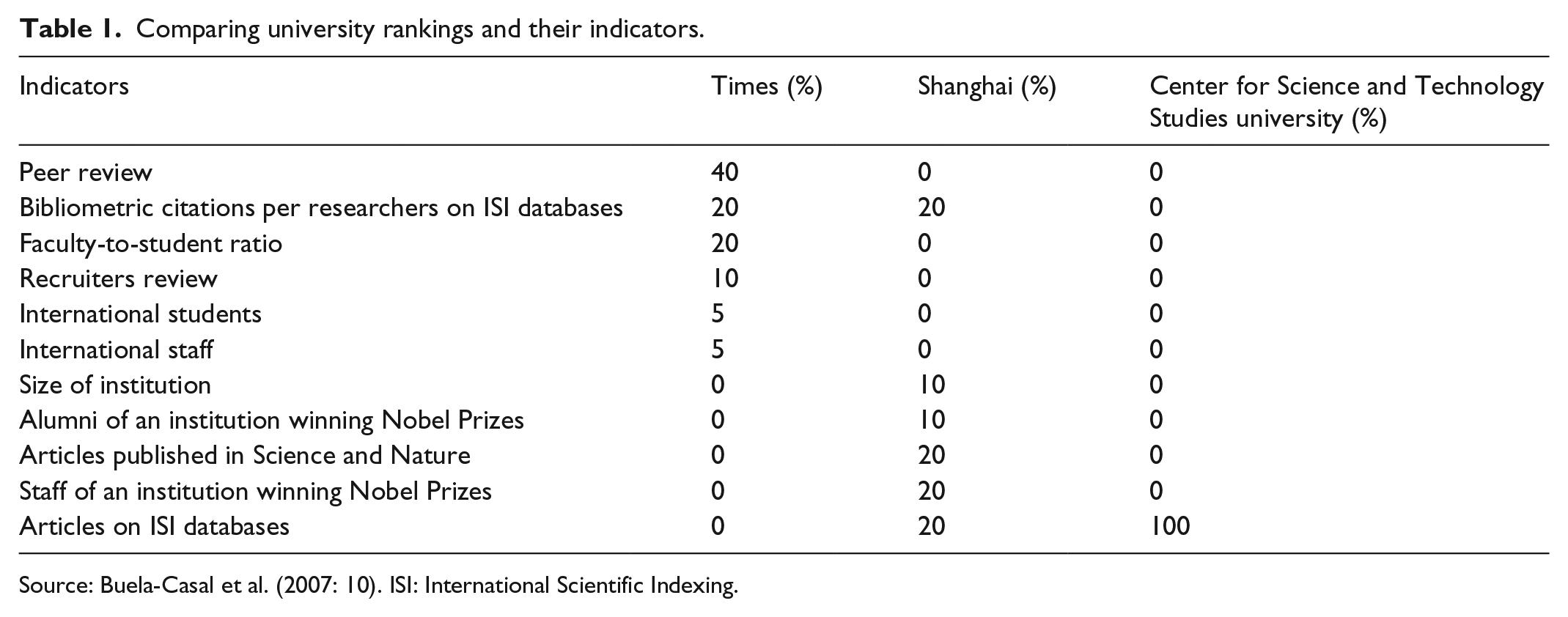
To identify the top scientists/researchers, this study relied on the university ranking system to determine the top 10 universities in the world. Moreover, the university ranking system aided in determining the top 10 universities from 5 countries, which according to Times Higher Education (T.H.E.), have the highest percentages of international students. There are numerous university ranking systems around the globe, including, but not limited to the Australian Good Universities Guide, U.S. News and World Report in the United States, the Guardian in the United Kingdom, T.H.E., Maclean’s Magazine in Canada, Der Spiegel in Germany, the Financial Times in the United Kingdom, Reforma in Mexico, Asiaweek (now defunct), and others (Aitbach, 2015). The T.H.E. was selected because it ranks academic programs internationally, and also considers institutional and aggregated institutional rankings, whereas a majority of the noted ranking systems are regionally focused (Dill and Soo, 2005). Furthermore, T.H.E. combines key factors, such as employment outcomes, teaching quality assessment data, graduation rates, and employment rates, which many other ranking systems do not consider (Boeker et al., 2013). Finally, it is important to emphasize that T.H.E. is one of the only ranking systems that does not consider a university’s reputation. Table 1 reflects some of the factors considered in the T.H.E. ranking system in comparison to other ranking systems.
Comparing university rankings and their indicators.
Source: Buela-Casal et al. (2007: 10). ISI: International Scientific Indexing.
As shown in Table 1, Academic Ranking of World Universities, known as Shanghai Ranking, and the Center for Science and Technology Studies university ranking, known as CWTS Leiden Ranking, were compared. Table 1 depicts some important factors that are considered in the T.H.E ranking that are often excluded in other ranking systems. Table 1 also reflects the relative importance of each category considered in the ranking systems.
Google Scholar was chosen for this study, as previous research has identified Google Scholar as a reliable, feasible, and valuable source for identifying highly cited articles (Halevi et al., 2017; Martin-Martin et al., 2017). Since its inception in 2004, Google Scholar has provided free indexed scholarly books, theses, peer-reviewed articles, letters, commentaries, reports, and documents from a variety of disciplines and languages (Halevi et al., 2017; Martin-Martin et al., 2017). These unique advantages, in addition to recent expansions of the search engine, have made Google Scholar an innovative source of information to gather valuable demographic information. The site has become especially significant to this research with the development of the search engine’s citation profile page, in which scientists, researchers, and other academics can link their profiles to their universities, colleges, or research institutes.
Analysis
Once the ranking of each university was established by analyzing data from T.H.E. (if a country did not have any ranked institution listed in the T.H.E., the country’s largest university was selected), Google Scholar was used to determine the top 10 scientists belonging to the top 10 universities worldwide, based on the rankings of their citations. The same strategy was employed for countries that house ranked universities in the T.H.E. From 19 March, until 31 December 2018, all of the top scientists who had linked their public Google Scholar profiles (from all continents except Antarctica) were identified through each university’s Google Scholar page. To identify and categorize each researcher, each scientists’ public profile on Google Scholar was later searched.
The top 10 researchers at each identified university based on their Google Scholar citations were identified. As part of the quantitative analysis, their citations were counted and later placed in unique categories that corresponded with their area of research. Subsequently, Google searches were conducted to classify each researcher’s main area of research and to determine each scientist’s race, gender, and other relevant information. In cases in which a scientist’s area of specialty was not clear, publications, department affiliation, and previous degrees were used to classify the area of research. For example, several researchers in the field of Neuroscience were categorized based on research, departmental affiliation, and publications. In addition to quantitative representations of the results, qualitative findings, such as case studies and unique examples, are also reported.
Once the total numbers of men and women scientists for all countries were identified, the total citation percentages of women and men were calculated as part of the quantitative analysis. Furthermore, the ratios of women and men based on his or her area of scientific study were reported for each country. Other unique cross examinations for each country, via quantitative and qualitative analysis through Google searches, will also include each region’s area of concentration or field of study, similarities between rankings, gender ratios, and unique factors such as race or sexual orientation.
Results
The initial search only identified top scientists in Australia (n = 100), Canada (n = 100), New Zealand (n = 80), the United Kingdom (n = 100), and the United States (n = 100), since the institutions in these countries contained the highest percentages of international students, as mentioned previously. The percentage of international students is relevant to the sampling strategy, as the number of international students reflect the level of diversity in these Caucasian-majority countries. According to the initial search, most women scientists are affiliated in the areas of health/medicine and social science. Interestingly, as the ranking of the universities increased, women scientists’ overall concentrations decreased. For example, the United Kingdom, which is home to one of the highest ranking universities, only had one female scientist (n = 1/41; 2.5%) in health/medicine based on citation metrics. In effect, further analysis in all the five countries revealed that as the ranking of universities decreased, women scientists’ concentration increased. Moreover, in all of the five countries examined, there were no top women scientists specializing in chemistry or engineering.
Other compelling findings from visiting each scientist’s university or lab web page revealed that only 1 scientist out of the 480 analyzed self-identified as LGBTQ+. Moreover, there were no Black or Indigenous scientists in the top 480 examined. The majority of non-Caucasian scientists were from the East or South Asian countries, representing the greatest concentrations in engineering, computing science, IT, and machine learning. After examining the profiles of 480 scientists, there were no non-Caucasians specializing in psychology and social science (e.g. anthropology, archeology, criminology, communications, education, English, gender studies, history, humanities, law, linguistics, political science, religious studies, and sociology).
Australia and New Zealand had the highest concentration of scientists in climate science, ecology, and marine biology. Canada had the highest percentage of scientists focused on mathematics and statistics, followed by psychology, whereas the United States had the highest concentration of scientists in engineering, physics, biochemistry, cell science, genetics, and microbiology. Finally, the United Kingdom had the highest percentages of scientists in the areas of medicine, health, epidemiology, pharmacology, veterinary medicine, and nutrition.
Based on the quantitative findings as shown in Table 2, the percentages of citations between men and women scientists are reported for each country. Citations by non-Caucasian scientists are also reported.
The percentages of citations of scientists as reported for each country.
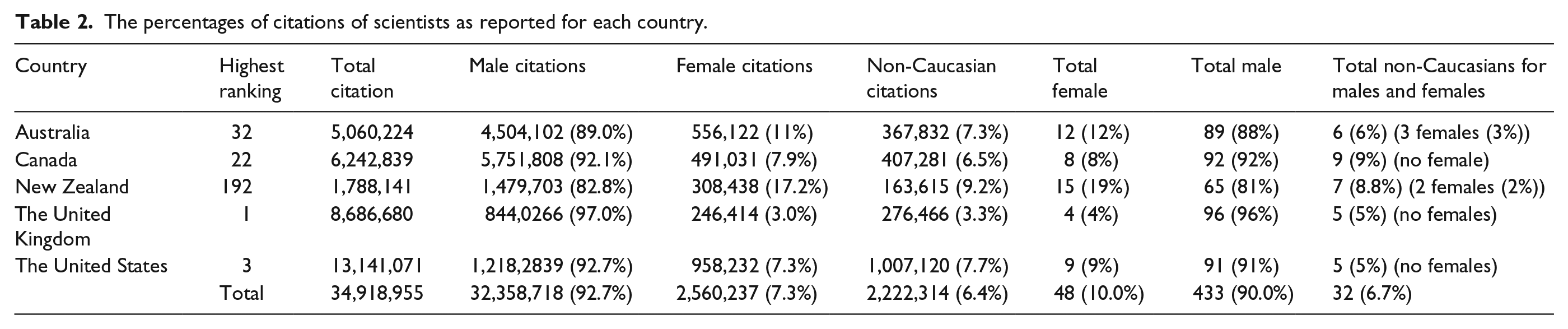
As depicted in Table 2, only 7.3% of the total citations belonged to women, with non-Caucasian women having a lower percentage of 6.4%. Also, more than 62% of all the citations belonged to scientists from the United Kingdom (24.9%) and the United States (37.6%). New Zealand has the highest percentage of women and non-Caucasian citations, followed by Australia and Canada. Overall, only 10% and 6.7% of all citations belonged to women and non-Caucasian scientists. Based on the analysis, as reported in Table 3, the majority of female scientists (19.7%) specialize in areas of social science (climate science, ecology, education, geography, linguistics, political science, psychology, and social science) and medicine and health (9.0%; epidemiology, health, medicine, nutrition, pharmacology, and physiology).
Area of focus for scientists as reported for each country.
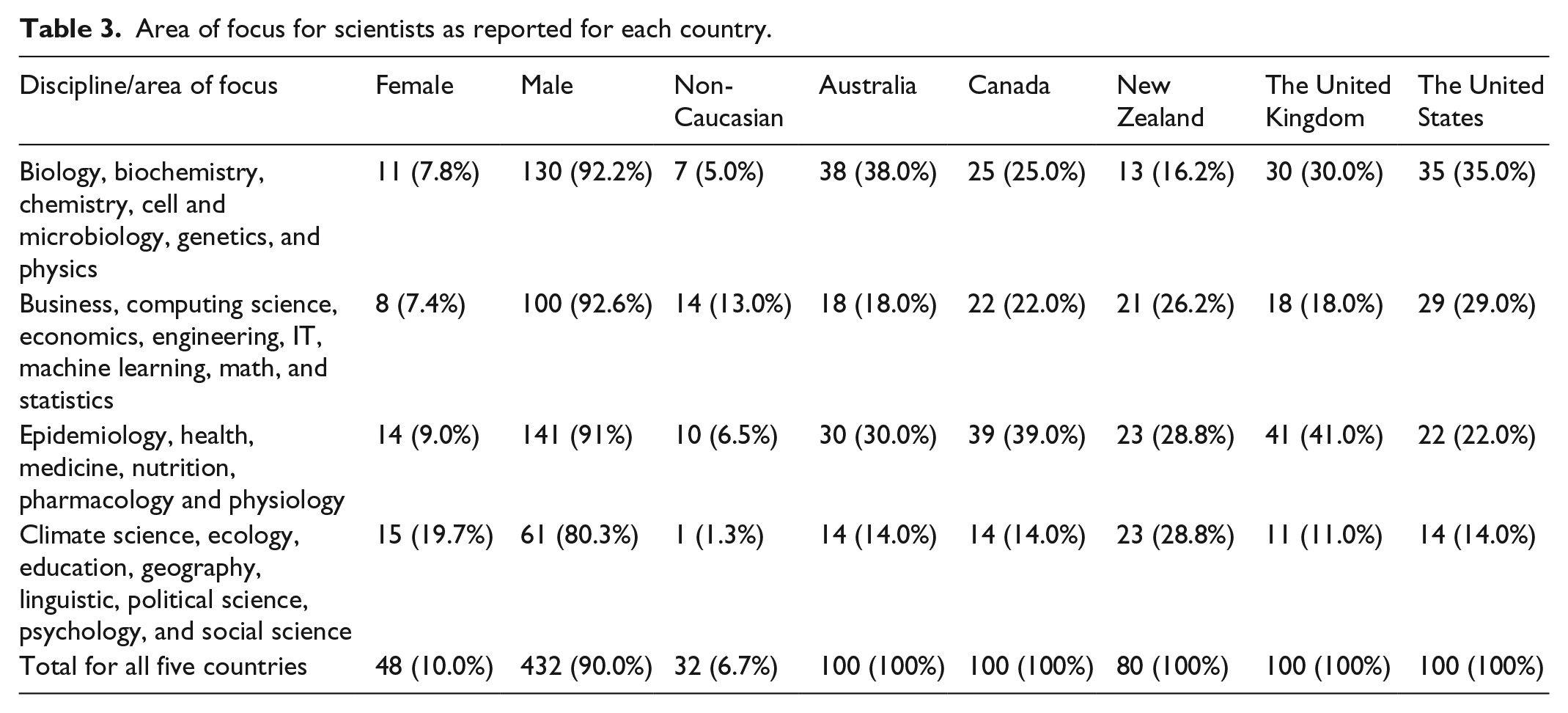
Non-Caucasians are most represented in engineering (13%; business, computing science, economics, engineering, IT, machine learning, math, and statistics) and health (6.5%; epidemiology, health, medicine, nutrition, pharmacology and physiology). According to Table 3, Australia has the highest percentage of scientists in natural sciences (38.0%; biology, biochemistry, chemistry, cell and microbiology, genetics, and physics) followed by health (30.0%). Canada has the highest percentage of scientists in health (39.0%) and natural sciences (25.0%). Similarly, the United Kingdom also has a majority of scientists in health (41%) and natural sciences (30.0%). The United States has the highest percentage of their scientists in the fields of natural sciences (35.0%) and Engineering (29.0%).
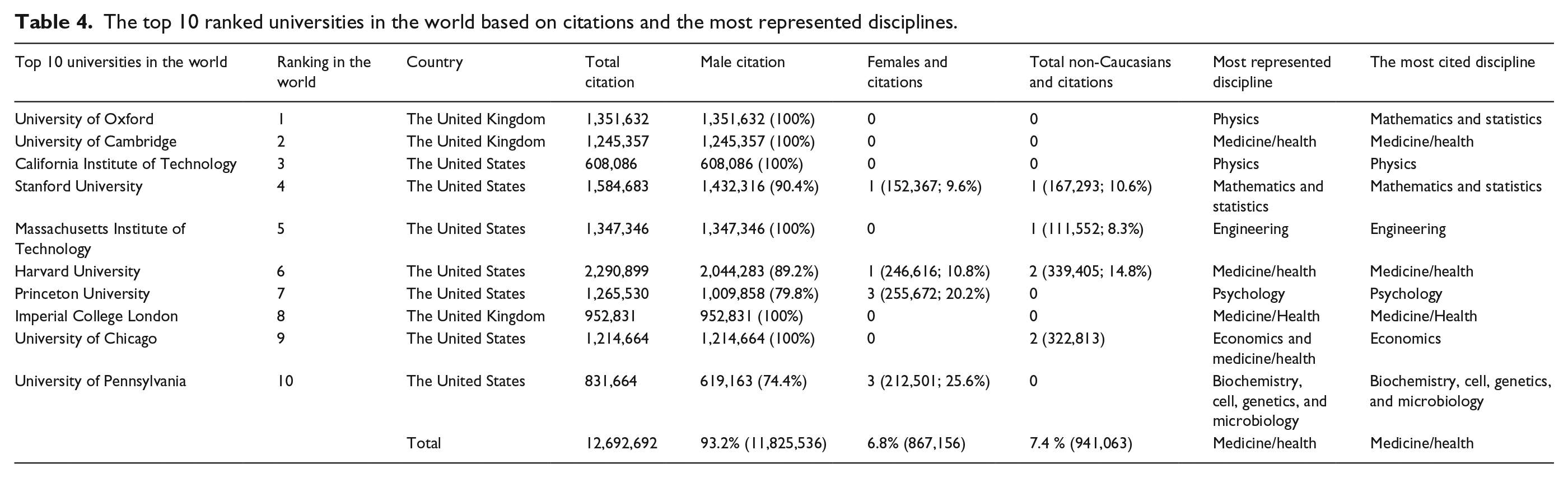
To conclude, Table 3 reflects the citations of the top 10 universities in the world not only based on men (93.2%), women (6.8%), and non-Caucasian scientists’ citations (7.4%), but also based on the most represented and the most cited disciplines.
As shown in Table 4, medicine/health is the most represented and the most cited discipline in the world’s top 10 universities, followed by physics as the second most represented discipline. The third most cited discipline after medicine/health, and physics in the top 10 universities in the world is mathematics and statistics.
The top 10 ranked universities in the world based on citations and the most represented disciplines.
Discussion
As shown above, women and individuals belonging to minority groups are still vastly underrepresented in scientific research and practices. These findings parallel previous research, indicating that women and minorities continue to be underrepresented in senior academia positions and higher education (Dean et al., 2009; Doherty and Manfredi, 2006; Morley, 2014; White et al., 2011; Winchester and Browning, 2015). This is especially true for the fields of math, science, engineering, and technology (National Science Board, 2002; Snyder et al., 2009).
This study is the first research conducted that has ranked scientists based on citations and their affiliated university’s ranking through Google Scholar. This research has also revealed that as the ranking of universities increase, the percentages of women scientists subsequently decrease. In addition, women still continue to be severely underrepresented in fields that have historically been male-dominated, such as engineering or chemistry. Moreover, a significant proportion of scientists, even among women members, are of Caucasian descent. In addition, a majority of non-Caucasian scientists are men from the East or South Asian countries, with most specializing in engineering or computing science.
However, considering that citation counts take years to build, researchers may argue that the scientists represented in this research occupy more senior positions in their respective institutions. The lack of demographic diversity reflected in this research could suggest that the shift in diversity and gender representation can be more easily observed among junior scientists at an assistant level, rather than as full professors. However, the results presented in this research have been consistent with higher education sectors across the globe, where nearly 80% of professors are men (Kandiko Howson et al., 2018). This is also reflected in the recent appointments at the Royal Society (2014) University Research Fellowships. Furthermore, according to the Equality Challenge Unit (2013), women and minority groups are highly overrepresented in non-managerial and part-time appointments in academia.
There has been a decline in the number of women and minorities holding senior titles in scientific fields (Bebbington, 2012; Winchester and Browning, 2015). The disparity among women and minorities compared to Caucasian males has been attributed to masculine, competitive, and neoliberal norms, values, and working patterns that currently exist in higher education (Fotaki, 2013; Knights and Richards, 2003; Leathwood, 2017; Leathwood and Read, 2009; Morley, 2011, 2014). Tessens et al. (2011) suggest that one of the main hurdles in the way of diversifying academia lies in the “continuing systemic and cultural barriers” (p. 653). A recent report in Nature also highlights the realities of the disparities that continue to persist, such as “women and minorities [being] disadvantaged in hiring or promotion decisions, awarding of grants, invitations to conferences, nominations for awards, and forming professional collaborations. These scholarly activities are crucial for career advancement and job retention” (Lerback and Hanson, 2017: 455).
Therefore, universities, labs, research institutions, research agencies, and governments must recognize that both scientific and academic culture needs to evolve and diversify to reflect the changing demographic of their students’ population and the realities of globalization. According to Kandiko Howson et al. (2018), departments, schools, faculties, and institutes need to be conscious of the ways in which “unconscious biases” may influence evaluations, promotions, and the funding and hiring of minorities, women, and underrepresented groups. In addition, universities, labs, institutes, and governments need to adopt strategies that not only encourage women, minorities, and underrepresented groups to pursue careers in non-traditional fields of science, but also to successfully implement appropriate modes of intervention and support for these individuals.
Unlike men, women are less likely to self-promote their work, which could possibly correlate with the likelihood of creating personal Google Scholar profiles (Miller et al., 1992). As self-promotion is generally seen as more accepted from male figures, numerous research on the modesty effect has demonstrated that women are more likely to be modest in public versus private circumstances, ostensibly due to societal pressures and expectations (Daubman et al., 1992; Gould and Slone, 1982; Heatherington et al., 1993). Moreover, according to Rudman (1998), “Traditionally, men have been socialized to speak well of themselves in order to compete intrasexually for both economic resources and romantic attention from women” (p. 629). Therefore, it is crucial to remove sociocultural and psychological barriers that prevent or deter women from fully participating in science and academia.
There are a few limitations to the research presented. One of the disadvantages of the Times ranking system is “the emphasis on inputs, particularly research assessment ratings,” which may comprise the validity of the ranking system (Dill and Soo, 2005: 520). Second, Google Scholar has been criticized by external researchers for its lack of information on citation overestimations when compared with Scopus, or Web of Science (Boeker et al., 2013; De Winter et al., 2014). In addition, it is important to acknowledge that this study fails to capture the overall impact of women’s citations, as the social processes that produced the results are not analyzed or discussed. In other words, looking only at the most cited scientists fails to identify the women and minority scientists that should be on the list, but are missing due to the Matilda and the Matthew effects. Finally, not all top-ranking scientists provided a link to their Google Scholar profiles to their affiliated university, thus reducing the citation counts and potentially the demographic ratio of women and non-Caucasian scientists. Additional research is needed in other jurisdictions where the language of science is not English or French. Moreover, there are new machine learning models that indicate that not all citations are important (Hassan et al., 2018).
Therefore, researchers need to implement machine learning models to measure whether women’s or minorities’ citations are in fact underrepresented in terms of their significance when compared with men. In sum, as our global community becomes increasingly interconnected through social media and the Internet, targeted investment in science and education could offer new possibilities for women, minorities, and underrepresented groups to play greater roles in scientific and academic advances. For example, recent research has suggested that women are at a greater advantage in 21st century economies because they not only adapt better to new work environments in comparison to men, but because new economies based on new technologies, digitalization, and entrepreneurship will emphasize women’s comparatively better social skills when complemented with appropriate higher education (Krieger-Boden and Sorgner, 2018). Immigrants and other underrepresented groups (e.g. Black, Indigenous and LGBTQ+ individuals) could be at a greater advantage when granted with appropriate and supportive educational environments in 21st century economies because of their knowledge of other languages, cultures, varying unique identities, and experiences (e.g. race/ethnicity, Indigenous, sexual orientation; Nguyen et al., 2018). This is particularly important, as the 21st century has been identified as the golden age of scientific innovation, entrepreneurship, and discovery (Hockfield, 2018). As the world’s economies continue to develop, adapt, and strive toward the golden age of innovation and scientific discovery, it is crucial that the science shared with the global community is constructed based on balanced epistemological and ontological perspectives that encourage and acknowledge the perspectives and ideas of women and non-Caucasian researchers.
Footnotes
Acknowledgements
Caimen Yen’s editorial assistance on this work is acknowledged. The author was supported by the Canadian Institutes of Health Research Postdoctoral Fellowship (201511MFE-358449-223266) and the Killam Postdoctoral Fellow Research Prize.
Declaration of conflicting interests
The author(s) declared no potential conflicts of interest with respect to the research, authorship, and/or publication of this article.
Funding
The author(s) received no financial support for the research, authorship, and/or publication of this article.
