



Abstract
In this article, we propose a model that we call ZombieApocalypse and that relies on agent-based simulation on a dynamic network topology. We simulate three strategies common to the zombie mythology and the sociology of figurational dynamics by Norbert Elias: cutting ties, being sentimental, and stigmatization. The simulation results are analyzed on two dimensions: the outcome for the populations of zombies and humans as well as the resulting changes in topology. We show that the introduction of social dynamics into these models leads to unexpected outcomes. Implications for more “serious” research on general models of infection and social dynamics are discussed.
Introduction
The zombie may very well be one of the most influential modern monsters. Besides the pop-cultural hype surrounding the undead, they increasingly receive the attention of scientists and scholars. There are basically two kinds of zombie studies. On one hand, the zombie is treated as a cultural object, and its myths and legends are often seen as representations of underlying cultural struggles (e.g. Bishop, 2010; Harper, 2002). The other branch of zombie research is more scientific in nature and is concerned with using the attack of the living dead as a metaphor and modeling tool to understand and bring attention to epidemiological processes of infection as well as global disasters (e.g. Brooks, 2003; Engler, 2012; Stanley, 2012). Clearly, most of this research is trying to provide a humorous access to otherwise difficult topics, which this article tries to emulate. Despite this, the body of research in this area has grown over the recent years. Zombies are easy to model and easy to understand, so they can be used to effectively demonstrate techniques and software solutions (Crossley and Amos, 2011; Gelman, 2010; Munz et al., 2009; Smith, 2014). This is especially true for simulation models who try to understand and predict the spread of infectious diseases, which is where our model of the zombie apocalypse comes in.
While we somewhat build on the use of zombies as a general metaphor for disease and infection, we do believe that this metaphor deserves to be taken more seriously. As it stands, zombies are reduced to a simple infection and the zombie apocalypse is just a pandemic. Yet, everyone who has ever seen a movie about the hungry dead, read a book about them, or has in any other way been introduced to the zombie myth should have noted two things. First, the story is seldom about the zombies, but more or less about how humans react to this threat. Or, as George A. Romero put it once, “my stories are about humans and how they react, or fail to react, or react stupidly. I’m pointing the finger at us, not at the zombies” (Spitznagel, 2010). Second, the zombie apocalypse is at its most fundamental a story about the breaking down of civilization. There is no modern 1 zombie story that does not in some way or other show the decay and ruin of society. Often it is even played out twice, once as the general setting of the story and again as the destruction of social bonds is mirrored in the group of survivors, who so often turn on each other as the zombies close in on them.
From a sociological viewpoint, the topos of the zombie apocalypse implies several moments that are of utmost importance in describing and analyzing society at large. Zombie lore focuses on the interrelations between social classes and groups (zombies and humans) as well as on the ones between different groups of humans. These interrelations involve power struggles in both a material (food, shelter, weapons) and a symbolic sense (trustworthiness, comradeship). As a consequence of these struggles, the internal organizations of the groups are also recurrent elements of the zombie myth, sometimes ending in either a democratic or an autocratic structuration of the survivors. Likewise, structural conditions defining the position of actors are assessed based on their effects on psyche and morale. Additionally, the processes character of the zombie apocalypse, starting from the first infection and ending in the (near) decline of mankind, is also a prominent aspect of sociological research.
We believe that the fundamental lesson we can learn from the zombie apocalypse pertains to the importance of social dynamics and social configurations in modeling the spread of infectious diseases. A quite suitable sociological theory for this purpose is the process theory of Norbert Elias. This approach seems to be especially appropriate for our purposes as figurational sociology consists in: (a) modeling relations of actors and groups; (b) their temporal dynamics; (c) the interplay between objective structure and the mental dimension; (d) the relational operationalization of such figurational structures; and (e) the abstract reflection about figurations applying “game models.” Usually, however, Elias is used as a “qualitative” sociologist. In this article, we will show how to utilize network and simulation techniques in order to operationalize the relational logic of Elias’ approach.
The figurational model we propose and demonstrate on the following pages tries to incorporate both these lines of thinking. We call it ZombieApocalypse. 2 It follows the standard model of a zombie infection, wherein the infection spreads rapidly among the human population converting them to zombies in the process. To introduce social parameters and dynamics to the mix, we use networks as the topology and allow our human agents to act on and change this topology. This is inspired by Norbert Elias’ notion of the fundamental role that formation and destruction of social relationships play in the interaction of social groups. Three different strategies are simulated, which are inspired by the zombie mythology. In our “escape” scenario, the human players are given the ability to defend themselves by cutting their ties to zombified players. We then test a “sentimentality” scenario in which the ability to cut your ties is dependent on the time this tie existed, meaning it becomes harder to let go of old friends even when they become rampaging, undead monsters. This is in stark contrast to our final scenario of “stigmatization,” which allows human players to cut their ties to other humans dependent on the number of zombies the other human has connection to.
For the simulation, we used the Python programming language. 3 We were able to build upon and use some excellent packages, which provided us with all the necessary tools for running and analyzing the simulation. Most prominently, we used Simpy’s 4 framework for the agent-based simulation, while the NetworkX (Hagberg et al., 2008) module provided us with tools for the generation and maintenance of the network graphs. The combination of those two packages was made easy by the nxsim 5 project, which already provides a basic template for this task. It is a happy coincidence that the nxsim documentation also uses a zombie infection scenario as an example. Again, this underlines the apparent usefulness of the zombie model for didactic purposes.
The social dead
Munz et al.’s (2009) seminal paper on the mathematical modeling of a zombie infection introduced the hungry undead to the world of academia. Judging from the number of publications and the research effort (e.g. Beeton et al., 2014; Hébert-Dufresne et al., 2014; Tang et al., 2013) on this subject, the study of zombies is not only taking place but is gaining attention among researchers interested in the mathematical models and simulations. The book Mathematical Modelling of Zombies, edited by Robert Smith (2014), shows not only the wide variety and the complexity of the mathematical models used to understand a fictional subject, it also highlights the usefulness of such an endeavor. Beyond its didactic value and the obvious “hipness” of the topic, there are more serious reasons for considering the zombie apocalypse as an interesting model for the spread of infections and diseases. First, it is a very simple model, which most people have at least a passing familiarity with. Second, it lends itself to speculative thinking, thereby opening up the view on interesting new lines of inquiry. Furthermore, because of its social nature, the zombie apocalypse highlights some interesting scenarios that so far and to our knowledge have been neglected in current models.
The simplicity of the zombie model stems from the fact that it ignores a large set of factors that are important in actual epidemics, for example, incubation time, chances of remission, how long a carrier is still infectious although he shows no outward signs, and the mode of infection, just to name a few. While there are some differences in zombie lore on the progression of the virus, in general it is a fairly simple scenario. You either get bitten and turn into a zombie or you are eaten alive. There is no cure and no noteworthy period of incubation. Most characters realize pretty fast that they have been bitten, although they might try to hide that fact from their companions. This again emphasizes the inherent social element in the zombie model.
Neglecting lots of details that are present in actual epidemics is not necessarily a bad thing. Simplicity is an important resource in simulation studies. Since we mostly do simulations to understand processes that are either too complex or too convoluted, it is beneficial to reduce the underlying assumptions as much as possible. After a fundamental understanding is reached, one can gradually increase the complexity of the model by adding new interactions, rules, or changing the environmental parameters. If we were to start out with the complete model, not much could be learned because the interaction between the parameters could not be reconstructed from the outcome of the simulation. Even simple rules can breed complexity, which makes it impossible to formally predict the outcome. This follows on from the so-called halting problem, which is a fundamental rule of the studies of algorithms. It essentially tells us that there is no way to predict the outcome of a Turing-complete system except by letting it run its course. 6 The fact that very simple rules can actually lead to such complex systems has been shown in John Conway’s famous “Game of Life” (Gardner, 1970).
The second reason for using zombies as a metaphor has already been mentioned, namely, the general social character of the zombie mythos. Zombies in general do not possess any agency, nor do they have any discernible kind of social coordination or a society of any sort. They are more or less anti-social automata with little to no intelligence. One could argue that there is no plausible scenario in which a handful of zombies could pose a viable threat to human society. In fact, humanity has a history of ruthlessly dispatching species who contended with us for domination. Although many of these contenders were superior in terms of physical strength or aggression, they were no match against the ingenuity and social coordination of Homo sapiens. There are a couple of zombie stories that go into a similar direction by showing rather realistically how humans would deal with zombies, either by killing them for sports (e.g. “Zombieland”) or by using them as cheap labor (e.g. “Fido”). This could be the reason why zombie lore has almost no stories about the fight between humans and zombies leading up to the destruction of mankind. Instead, most take place in a world where a group of humans are already vastly outnumbered by a horde of zombies. In these scenarios, the microcosm of the social relations among the group members becomes intensified against the anti-social background of the undead masses. Zombie stories often use this for social commentary and to show the drama of small-group relations.
While the interaction between anti-social zombies and the social dynamics of the group sometimes only hints at the social nature of the zombie myth, the setting of the zombie apocalypse shows this more clearly. The terror of the zombie apocalypse does not stem from the fact that one is hunted by a supernatural enemy but rather from the utter destruction of civilization. Even if you could run away, what would be the point? What worth does human life hold, without human society? This point is even made clearer by the constant killing of zombies who look like humans. In “The Walking Dead” Issue 24 (Kirkman and Steward, 2015), Rick Grimes, one of the main characters, comments on this by coming to the realization that after they have broken all laws of humanity and killing zombies has become part of everyday life, the group of survivors and not the zombies have become the actual “walking dead.”
Social dynamics of a zombie apocalypse
Elias’ concept of “figuration” addresses the relational and processual characters of social reality, focusing on the “nature of the actors’ interdependence” and not on “independent characteristics of their members” (Elias and Scotson, 1993: 27; authors’ translation). This approach emphasizes the relational and processual character of societal power struggles and interrelations between social classes within a common figuration. Figurations are conceptualized as “interaction chains” (Elias et al., 1998), and societies at large are then described by the relative density and length of those chains, structural conditions which correspond to individual agency, and mental schemes of the actors involved. Figurational structures interrelate with open and closed valencies on the side of the human actors, that is, the affective orientations toward other actors, which may or may not be satisfied. These affective interdependencies are central for the operation of societies and indicators for particular societal conditions.
The figurational perspective was made fruitful in his book with co-author John L. Scotson, Established and Outsiders (1993), where the relations between already established and new residents of a small English town have been analyzed. Elias highlighted the figurational dynamics between the two groups and described a strong integration within the established and a weak integration of the outsiders. A core theoretical and methodological aspect of Elias work is “game models” which are “simplifying intellectual experiments,” abstracting from empirical contingencies, and which enable to bring out “more graphically the processual character of relationships between interdependent people” (Elias et al., 1998: 121). Game models allow analyzing relationship structures and power differentials in an abstract way and under different constraints. They make clear in what way the interdependences of actors change, if the distribution of power is changed (Elias et al., 1998: 121) The most simple game model consists of two actors, A and B, and the analysis of their power relation, whereas the most complex models analyze complex figuration with many actors on different societal levels. While Elias (1978) himself utilized game models in analytical ways, only he was very aware of the further potential and restrictions of his work: “If sociology has to investigate figurational processes resembling complex games, then statistical aids must be developed which will be suited to this task” (p. 132).
Most of Elias’ work, however, consisted of qualitative and historical methods (cp. Baur and Ernst, 2011), such as studying the dynamics of manners. Whereas most modern proponents of this sociological tradition apply similar methods (cp X), some also discuss the objective dimension of figurations. Baur and Ernst (2011: 132) postulate the collection and analysis of “network analysis” and “process-generated data” in order to empirically reconstruct the “sociogenesis of figurations.” Whereas this methodological approach is promising per se, a challenge for a methodology of figurational processes is given as longitudinal network data are rarely extant.
Here, the tool box of social sciences offers another way for deriving a straightforward methodology. The application of “game models” explicitly implies the contrafactual variation of starting conditions and thus less require the analysis of actual networks or longitudinal data, but rather the potential to abstract from empirical contingencies and to explicitly model figurational dynamics by changing the initial conditions and the parameters of figurational mechanisms.
In the next chapter, we propose the use of simulations as they offer the systematic depiction of various apocalyptic scenarios (“game models”) and play through modifications under central figurative parameters. This approach enables an objectification of the relational structure between and within the groups while taking the inherent process character into account. In doing so, figurational sociology analyzes “action chains,” that is, the structure and length of interdependences between (groups of) social actors. Applying this view on the relations between “infected and outsiders,” we find that at
The central, theoretical focus on figurations as relational structures implies the use of (a) network graphs and (b) abstract game models as an adequate model for these kinds of processes. In the zombie myth, there is nothing to suggest networks as a topology for the infectious process. In fact, a Euclidean space would be much more fitting with the pop-cultural depiction of the zombies interacting with humans. Biting people is an action which clearly represents a function of bodily proximity. Our decision to use network graphs as an environment for the zombie apocalypse, therefore, stems not so much from the zombie model but from the wish to explore the effects of the social dynamics, that is, figuration, in a game model of infection. It has been shown that it is feasible to use networks as model for established-outsider figurations (Fuhse, 2012), even if it does not capture the entirety of the concept.
In the social setting of the zombie apocalypse, there are a lot of stereotypical plots and subplots (i.e. tropes), 7 for example, the “humans are the real monsters” message prominently featured in many zombie stories. From the vast range of available tropes, for the time being we will consider only three as candidates for our ZombieApocalypse model: Escape, Sentimentality, and Stigmatization. In doing so, the proposed analytical case may well be understood as a “multi-person game” (Elias et al., 1998: 123 ff.), with different human groups and isolated zombie actors, who appear in the form of a horde.
The baseline model of a zombie apocalypse has the human protagonists fleeing from the undead menace. We call this scenario Escape. Other zombie models sometimes add a “fighting back” strategy (e.g. Munz et al., 2009), which has the humans taking the fight to the zombies. In zombie lore, this seems to be almost never a sensible strategy because in a full-blown zombie apocalypse, the survivors are always completely outnumbered. Under these circumstances, attacking zombies results either in an untimely demise or zombification. In keeping with this perspective, we decided to model the zombie apocalypse as a threat against which there exists no strategy except flight or quarantine procedures, for example, a disease which has a very high lethality and against which there are no countermeasures. In this respect, our Escape scenario resembles the “flight rule” of the zombie invasion model proposed by Hébert-Dufresne et al. (2014) minus the reconfiguration of the survivors—a step we chose to forego in favor of the following scenarios. In Elias’ terms, the Escape scenario represents a simple game model, with isolated human and undead actors and no organizational complexity.
The second scenario is called Sentimentality and builds on the common zombie trope of having to kill a loved one or member of the group because they have been bitten and are about to turn. Failure to do so in a timely fashion always results in the death of the human protagonist. It is one of the central themes of the zombie apocalypse to connect humanity’s downfall to our moral choices. In the fallen society of a zombie apocalypse, compassion is weighed against survival. In this scenario, the Escape strategy is made less likely by the emotional bond between a human and a zombie. Consequently, this game model includes the figurational mechanism of valencies, that is, affective bindings between actors.
In the third scenario, which is called Stigmatization, we try to capture the theme of “leaving the dead weight behind.” Among the many morally disturbing questions protagonists in a zombie apocalypse have to face, this is the one that most clearly shows the eroding of morality in a post-zombie society. Essentially, this trope consists of leaving a person or a group of persons behind because they are clearly marked as “zombie snack” from the beginning and would only serve to slow the others down. In some ways, this can be thought of as the corollary to the Sentimentality scenario. Albeit in a more pre-emptive sense, because, under the assumption of the Stigmatization strategy, people who are the most vulnerable to attack are left behind. The cohesion of figurations also means that the attributes lead individual members to be extended to others. This stigmatization process operates via the attribution of problematic properties on the basis of group membership rather than the consideration of the respective person. It is thus a more complex game model, which conceptualizes the change of affective valencies as a result of a change in the figurational power structure.
The rules of ZombieApocalypse
As already mentioned, the general setup follows an agent-based modeling approach of the particular human–zombie figuration. More concretely, we defined two types of agents (humans and zombies) who differ in the strategies they employ. We then populated a network environment with those agents and let them interact. This approach has some aspects of an evolutionary game dependent on the spatial arrangement of the agents (Eshel et al., 1998; Jun and Sethi, 2007) because the game revolves around the competition between different populations, whose interactions are constrained by the topology of the figuration. Yet, there is no evolutionary “learning” of different strategies because we explore only one strategy for the human population in any given scenario.
The use of networks as a topology for the simulation of social dynamics has become an integral part of social network analysis. Much of the research trying to connect social network analysis with agent-based modeling is done with a specific focus on public health and the containment of pandemics (for an overview, see Luke and Stamatakis, 2012: 5ff). Other models, while not always considering social networks directly, have used agent-based simulations to introduce social dynamics into models of epidemics (Epstein, 2009; Epstein et al., 2008). Most of these simulation studies are based on highly standardized models named after the different states an agent can be in, such as Susceptible/Infected (SI) or Susceptible/Exposed/Infected/Recovery (SEIR) (Murray, 2002: 319ff). The baseline model for the ZombieApocalypse can be considered an SI model since there are only two possible states our agents can exist in (Human or flesh-eating Undead). The reason for this is our focus on the social dynamics rather than on the development stages of actual diseases. As stated before, the zombie myth is not interesting in terms of its consistency with epidemiological facts, of which there are barely any. Stories about the zombie apocalypse are social dramas, not biological ones.
Different graph generators were considered as topologies, most notably Erdös–Rényi Graphs (Erdös and Rényi, 1960) and Small World Graphs (Watts and Strogatz, 1998). In the end, we decided to use scale-free graphs (Barabási and Albert, 1999), which are essentially small-world networks with the additional constraint of preferential attachment. In essence, this creates a network of dense clusters of nodes connected by central hubs. This structure seemed sensible for the model of the zombie apocalypse. Since the scale-free model is known for the resilience of the resulting network (Cohen et al., 2000) and we are especially interested in the breakdown of such social structures, this seemed like a natural choice. In addition, preliminary tests showed not much difference between classic Small World and scale-free models in the general outcome. Because our research focus here is on the social dynamics rather than on the effects of network topologies and because there is already extensive research (Hufnagel et al., 2004; Newman, 2002; Pastor-Satorras and Vespignani, 2001) done on the latter, we did not pursue this line of inquiry any further.
In accordance with zombie lore, we only gave human agents “real” agency, in the sense that they would be able to react to the zombie threat and to manipulate the social topology. The zombies, on the other hand, only serve as a source of infection. We used the object-oriented programming technique of inheritance and started out with the template of a simple network agent whose only “strategy” was to check for an infection. In this scenario, every human agent looks at every zombie neighbor in the network topology, meaning every zombie to which this agent has a geodesic distance of
The Escape scenario introduces the possibility of running away from the zombies by removing the connections (edges) that connect a human agent to a zombie. During each round of the simulation, a human agent makes a test against a globally defined probability
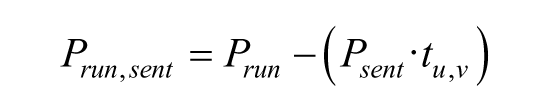
Under the Sentimentality scenario, the probability
The Stigmatization strategy works in a very similar manner as the Escape strategy, but enhances the “foresight” of the human agents. Every turn, after checking against

During the entire run of the ZombieApocalypse, the states of the network agents as well as the global topology were logged.
Living in the ZombieApocalypse
Some parameters were kept constant during all simulation runs. The population was set to 1000 agents, which resulted in a network graph consisting of 1000 nodes. One of those nodes was then randomly selected to be “Patient Zero.” Each complete game of ZombieApocalypse was restricted to 28 rounds to be as consistent with zombie lore as possible and also because all simulations reached their equilibrium within this timespan. Each scenario of the ZombieApocalypse was run a thousand times to bring out the general tendencies of the population dynamics. Therefore, in the following figures, the lines denote the mean values across all simulations, while the transparent areas show the minimum and maximum values.
Since the Simple scenario offers its human agents no way of escape, it is only a question of time until the human population is entirely consumed by zombies (Figure 1). Even a relatively small chance for infection will result in a steep rise of infections during the first few rounds of the simulation. In other models of the zombie apocalypse, especially in the Munz et al. (2009) model based on ordinary differential equations, we see a sigmoid or logistic curve instead. The reason for this difference lies in the topology of a scale-free network. No matter where the zombie starts out, he is never too far from a hub that will eventually connect him to other clusters of nodes. This results in the exponential rise of infections early on. It also emphasizes the role the topology plays in our simulation. In the Munz et al. model, the infection is only dependent on the number of zombies already in the game, while in the ZombieApocalypse, it is much more dependent on the number of human nodes within reach of the zombies. These findings concur with other network-based zombie simulations (Hébert-Dufresne et al., 2014: 157ff). From a theoretical standpoint, it is important to note that this model contains only the objective dimension of the figuration. The subjective elements, like agency, strategy, or reactions, are extant. Therefore, the Simple model cannot be considered as a figuration in the actual sense.
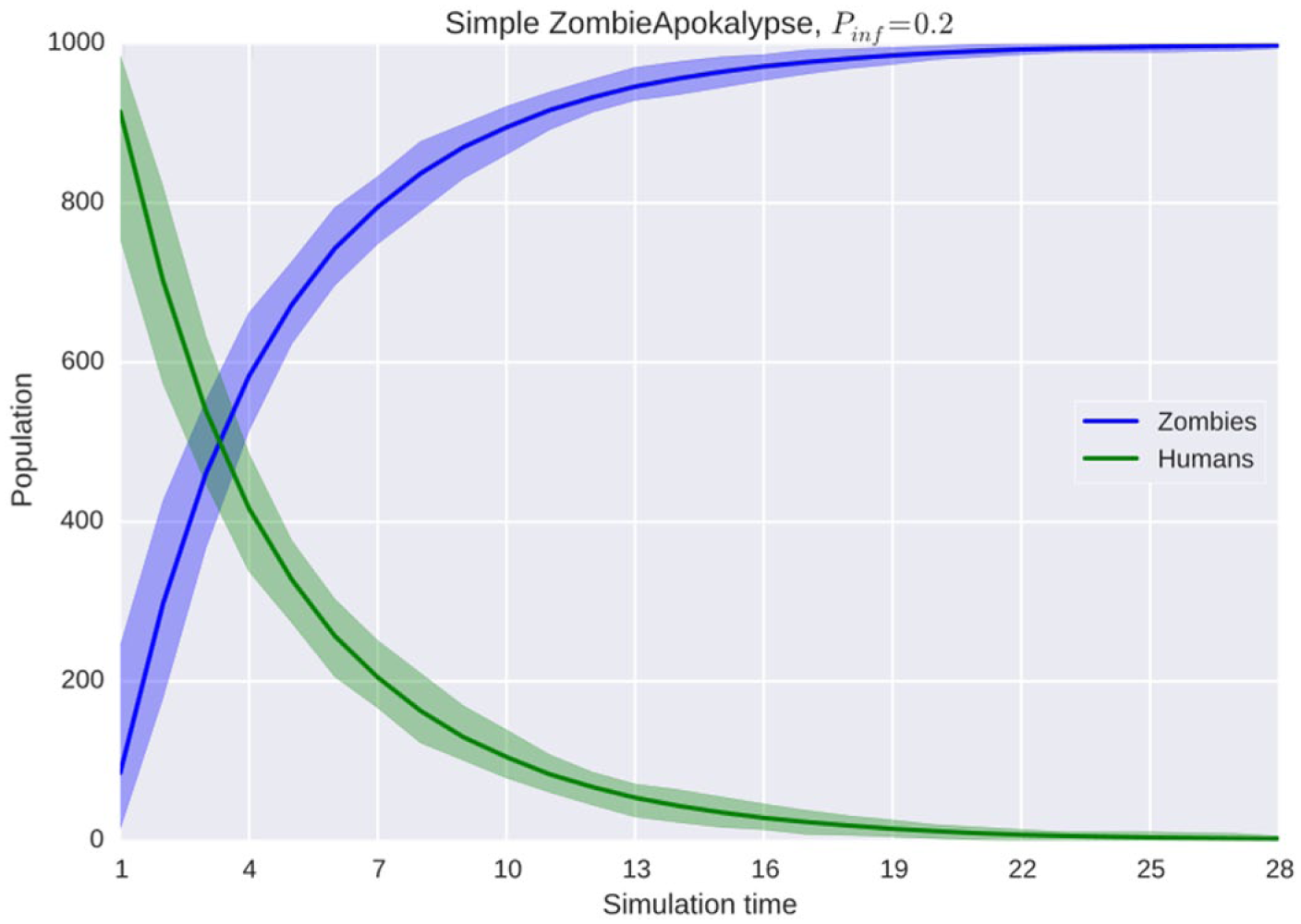
Simple ZombieApocalypse populations.
In the Escape scenario, we give the human agents a chance to defend themselves by manipulating the network topology. The resulting model (Figure 2) shows the impact this strategy has, although the probability of cutting one’s tie to a zombie is relatively low (
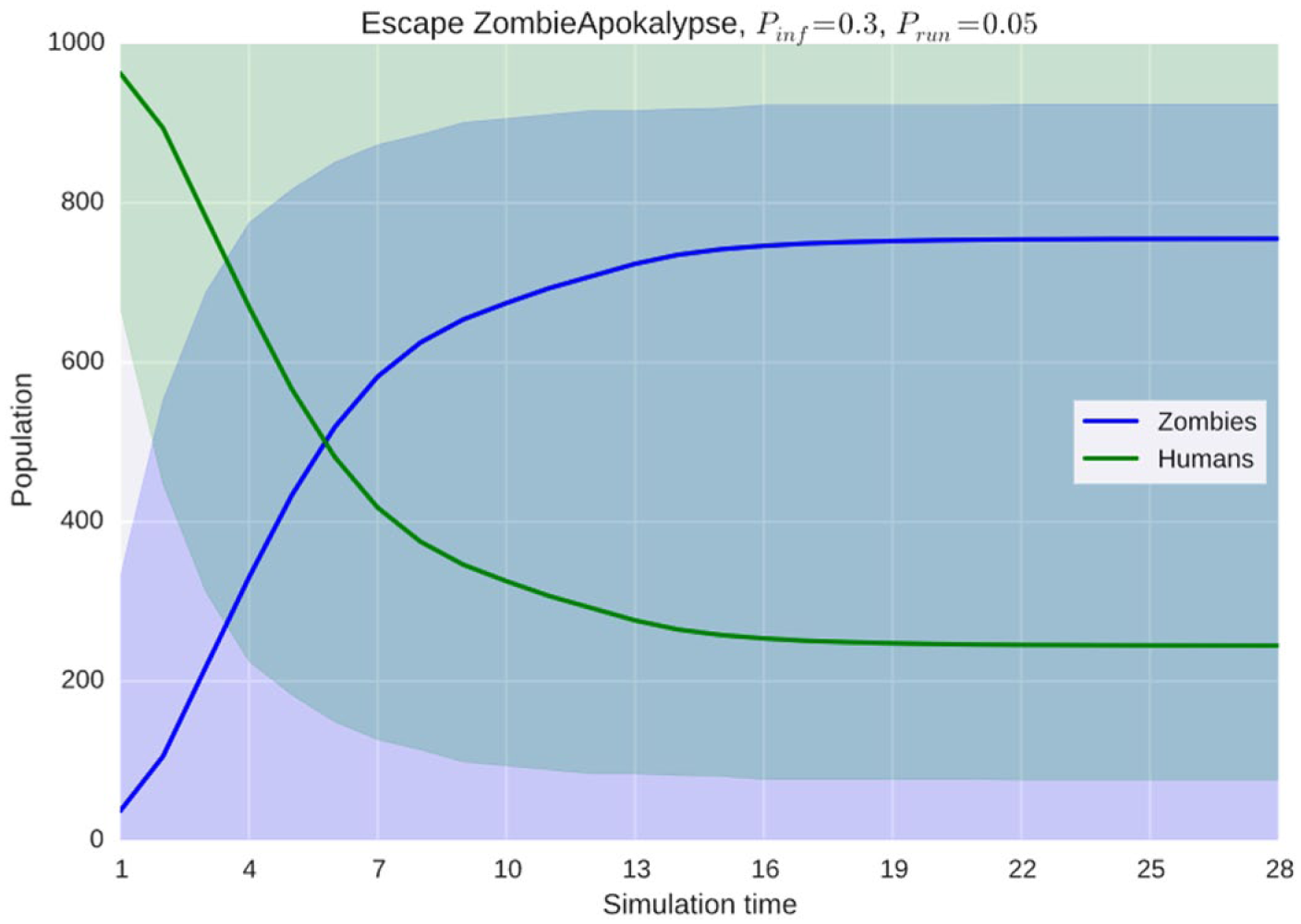
Escape ZombieApocalypse populations.
The minimal values give the best-case scenario wherein the zombie node itself gets isolated very early on, as is shown by the colored areas touching the bottom and the top of Figure 2. This emphasizes the overall effectiveness of an early quarantine strategy in a network topology. However, the isolation of nodes from the network only works if the zombies are isolated in the very early stages of the simulation. Otherwise, the high connectedness and relative robustness of the scale-free graph become its weaknesses as there are many alternative routes the infection can take.
Introducing our Sentimentality strategy makes the decompartmentalization of the network even harder. For this scenario, the probability for sentimentality was set to 0.01, meaning that in every round the probability of running was reduced by this amount. As a result, the Escape strategy only exists for five rounds, after which the game reverts to a Simple ZombieApocalypse. Under these rules, we see on average a steeper curve than was the case in the Escape scenario (Figure 3). Another difference to the Escape scenario is the resulting population maxima. In the Escape scenario, there were always some isolated nodes safe from the zombies. This outcome is no longer insured in the Sentimentality scenario. Only the human agents that were disconnected in the beginning of the simulation survived the Sentimentality game. This result reinforces the notion that timing becomes more essential with a growing robustness of the figurational network. We ran the simulation with differing probabilities for sentimentality and defection but always found the same tendencies as predicted by our assumption that Sentimentality is not a very sensible strategy in a world overrun by the hungry undead. Here, the zombie apocalypse appears as a moderated figurative de-differentiation with a contraction of “action chains” leading to sup-populations.
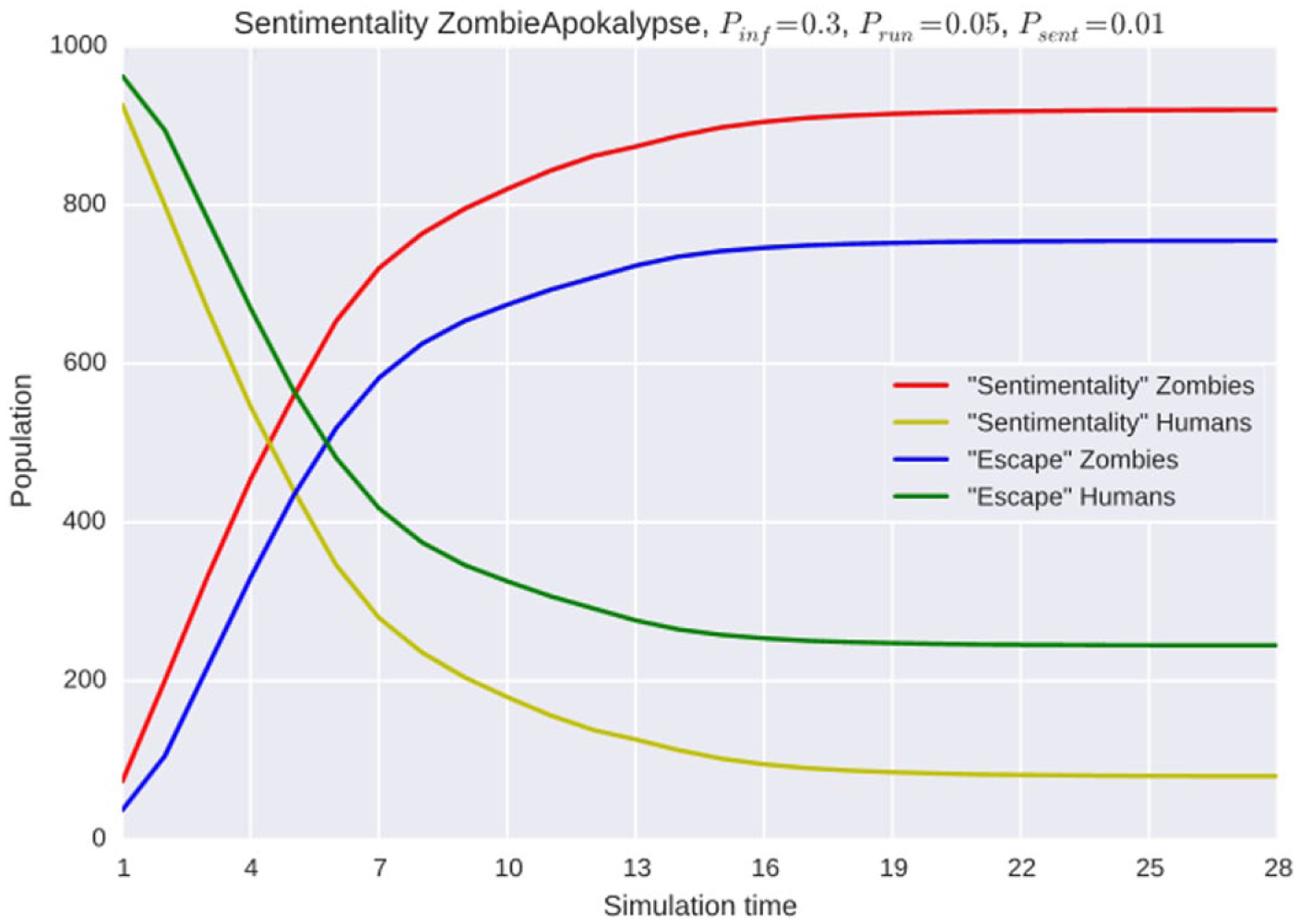
Sentimentality versus Escape ZombieApocalypse populations.
In our third model, we take a look at the strategy of Stigmatization as a way of pre-emptively cutting network ties to human agents who are in danger of becoming zombies. For Figure 4, we set the stigmatization probability
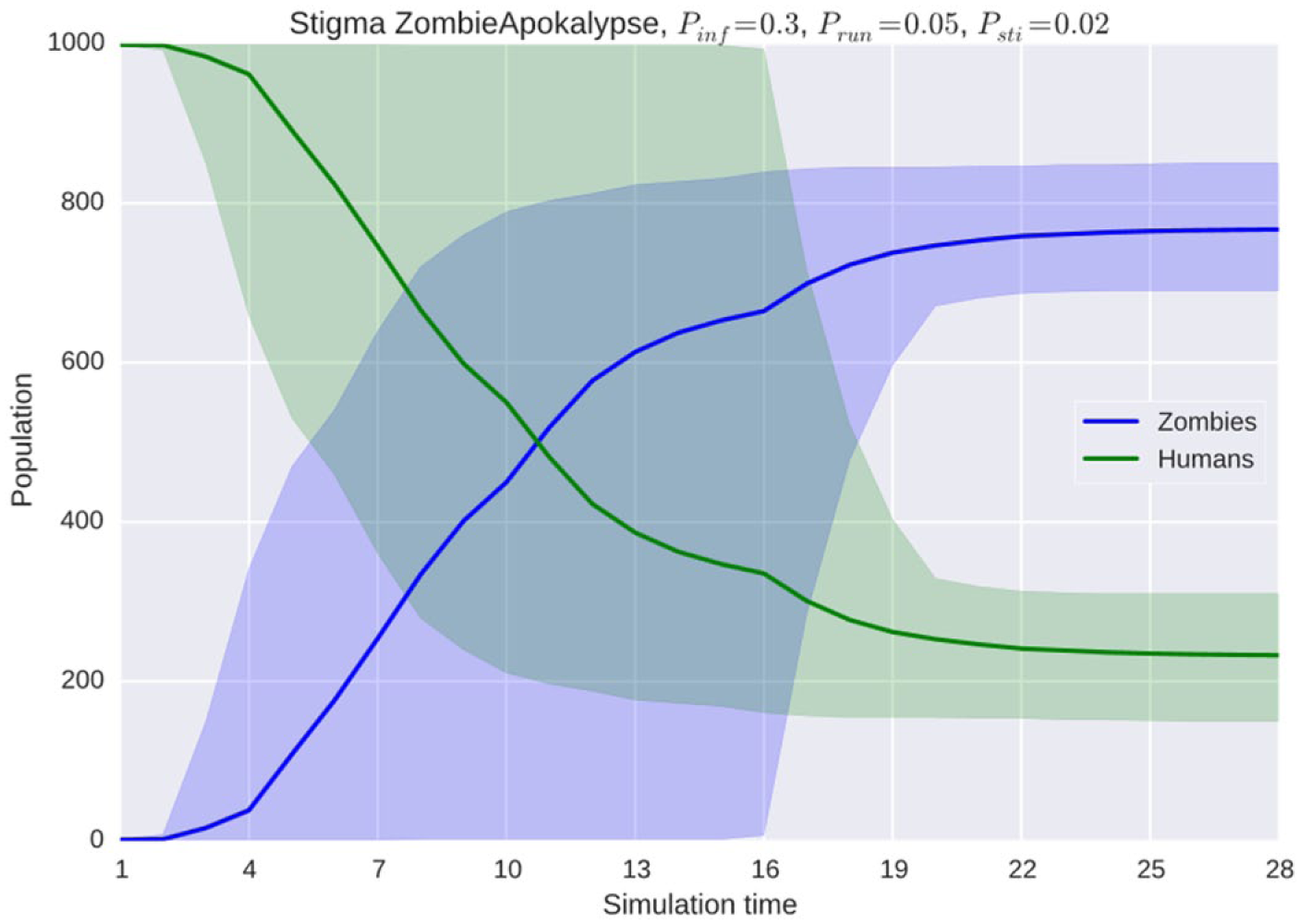
Stigmatization ZombieApocalypse with
Figure 4 shows populations that deviate from the power-law distributions of the other scenarios and are closer in shape to the sigmoid curves found in the standard zombie model that does not rely on a network topology. The Stigmatization strategy seems to be able to significantly slow down the zombie apocalypse while being about as effective in containing the outbreak as the Escape strategy. Also, the infection tends to spread out at different speeds in separate runs of the simulation. In Figure 4, we see this in the form of small, stepwise jumps in the population development. This seems to point to the special importance of the hubs in the Stigmatization scenario. The zombie agents spread relatively fast in the densely connected clusters, but, because of the stigmatization strategy, these clusters are starting to fall apart and to disconnect. The hubs, on the other hand, tend to have many connections to nodes in different clusters. While they will terminate some of them, because of the zombie onslaught, this will always never be enough to keep them from getting infected eventually. The infection then spreads rapidly to the clusters connected to the hub. Therefore, one can conclude that in this game, the starting position of the zombies is more important than in the other scenarios.
This also leads to perhaps the strangest effect of the Stigmatization scenario. While it was common in the Escape scenario that in some of the simulation runs zombies were isolated early on and did not manage to spread far beyond their initial starting points, this is no longer the case in the Sentimentality game. Although the general probability to run still exists, games where the zombies are isolated early on are consistently fewer than they were under the pure Escape ZombieApocalypse. Somehow the Stigmatization strategy slows the infection down but, at the same time, lessens the impact of the quarantine. On average, there may be not that much difference, but the best-case scenario (i.e. early containment) is much less likely in a Stigmatization game.
To understand this effect, one has to look at two different starting positions for Patient Zero. When the first zombie starts out as a hub, the game becomes an Escape scenario very fast, but early containment is also highly unlikely, meaning big parts of the population will always be lost to the infection. The second case is more interesting. Here, the zombie starts out in a densely connected cluster. The infection spreads through this cluster, while at the same time the connections in the cluster are reduced as stigmatization becomes more likely with the increasing number of zombies in the cluster. Because the hubs are more strongly connected to the clusters, the paths from every zombie to the hubs are lengthened, which leads to the aforementioned slowing down of the infection. But it also has the important consequence of making it more likely for the infection to eventually reach a hub and spread across the network. As the Stigmatization reduces the connections within the cluster, all remaining paths become more likely to be at some point connected to a hub. Since the infection is effectively a random walk, it is only a matter of time before a hub is reached and humanity is doomed.
The Stigmatization model represents a figuration where small autonomous human groups with less complex action chains between the survivor groups emerge, resulting in less concerted and effective anti-zombie practices and finally in a higher risk of infection for the overall network. As an unintended consequence of the stigmatization by humans, the power relations between infected and human actors change to the disadvantage of the latter.
This interpretation of the hidden dangers of the Stigmatization strategy is further enhanced as we turn our attention to the changes in the topology resulting from the ZombieApocalypse. We looked mainly at two indicators: the percentage of edges retained in the graph after the zombie rampage had subsided and the remaining “friends” the survivors had on average. Friends, in this instance, refers to the number of human agents connected to a human agent. In Table 1, we give an overview of the three scenarios which allowed for changes in the topology.
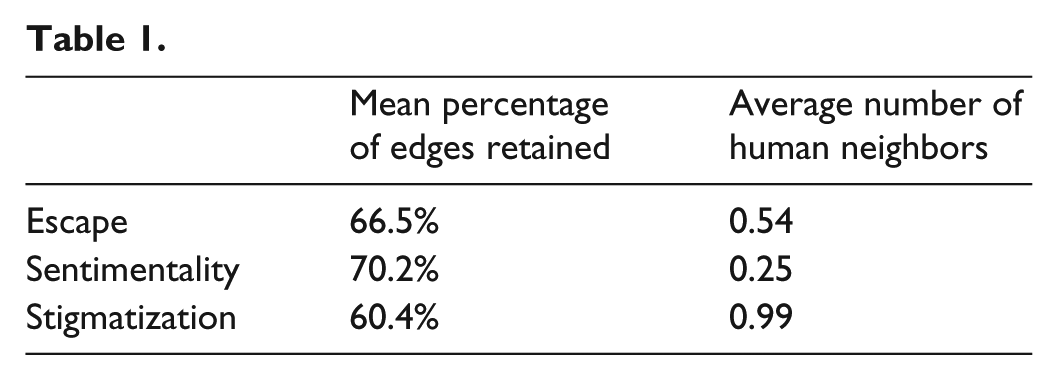
One can see that the Stigmatization strategy leads to the biggest loss in edges for the graph. But it also results in small groups instead of lone survivors. Sentimentality, on the other hand, retains most of the original topology, albeit populated mostly by zombies. In this sense, the Stigmatization scenario comes very close to the zombie myths. It leads to small groups of survivors, whose inability to work together makes society as a whole more vulnerable to the spread of infection. On one hand, this strategy is effective as zombies will find less human food, but on the other hand, the infected society transforms into a figurational structure of small human groups, giving space for the decline of human solidarity on the macro-level and ongoing competition for survival. Both effects seem to arise systematically from the combination of a scale-free network topology and the Stigmatization strategy. This means they are a structural outcome, which cannot be reduced solely to the intentions of the agents but rather to the figurational structure of the model.
Looking at network clustering measures, we find that the Stigmatization strategy really seems to change the network in a way that makes it more susceptible to infectious processes. Figure 5 gives the average transitivity for all three scenarios. Transitivity describes the average clustering in a graph by comparing the number of closed triangles to triads (Wasserman and Faust, 1994: 165). The sporadic bumps in transitivity can only be observed in the case of the Stigmatization scenario. This reinforces the idea that the network decompartmentalizes in a way that increases the grouping of the remaining nodes at least temporarily. Furthermore, this effect seems to be centered on the hubs of the network since the average network clustering coefficient (Watts and Strogatz, 1998) for our three scenarios behaves directly opposite to the transitivity of the graphs. Since transitivity gives more weight to nodes with larger degrees and the network clustering coefficient tends to favor nodes with relatively fewer degrees, the sporadic clustering seems to be an effect centered on the hubs of the network.
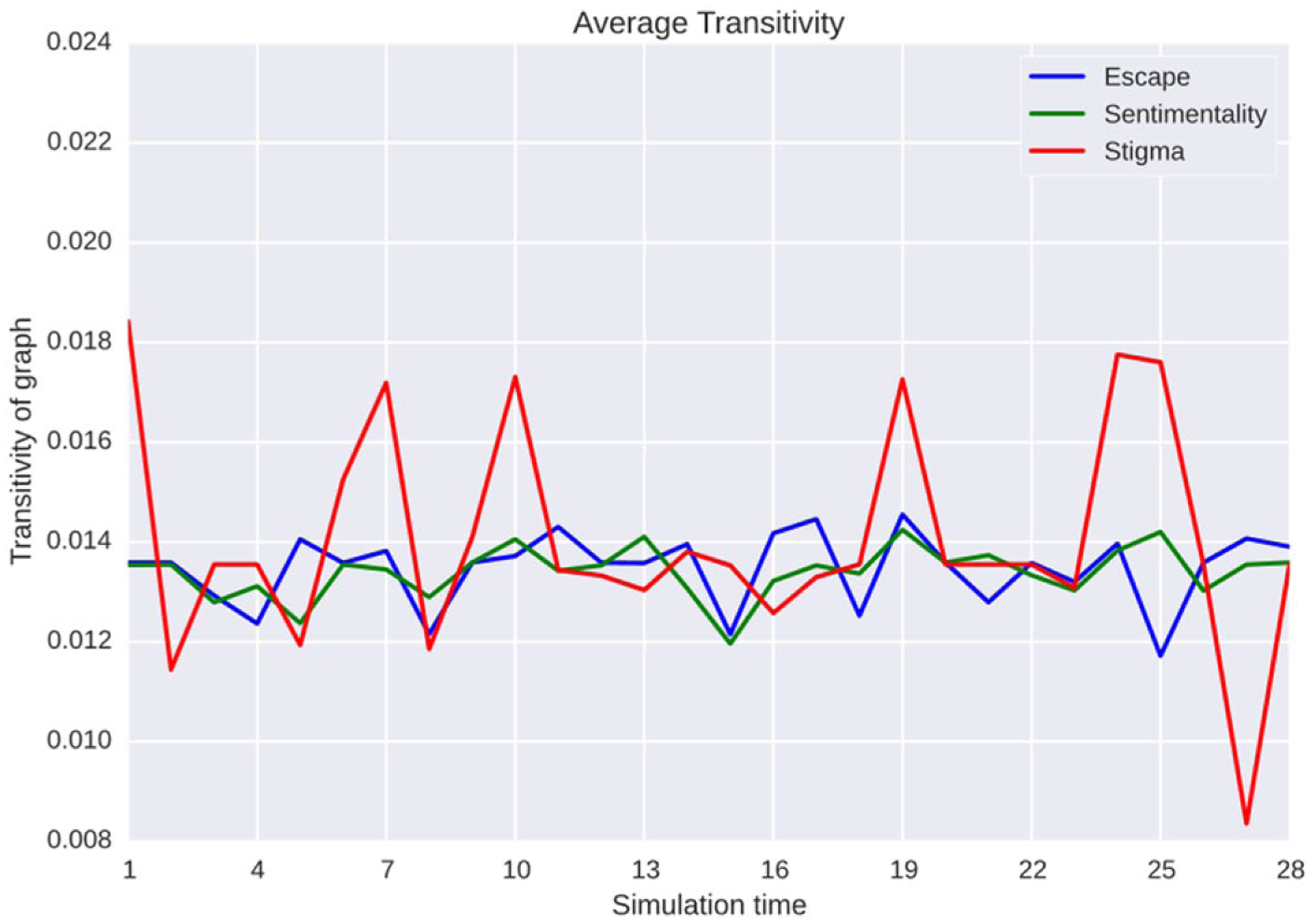
Average transitivity of graphs over time.
Similar to the classical analysis of Elias and Scotson, it turned out that the structural conditions of the group relations are important factors for the development of society in general. In contrast to the classical analysis of established and outsiders, however, in our models of zombie infection, the established groups become disintegrated. A new “figuration of interdependent small groups” emerges, which needs not only to survive against the zombie horde but “at the same time as rivals for coveted opportunities” (Elias, 1996: 89 author’s translation).
Conclusion
Inspired by the zombie apocalypse, we investigated three different scenarios as a series of game models in the sense of figurational sociology, which we analyzed using agent-based simulation on a scale-free network topology. In the case of the Escape scenario, it was shown that time is of the essence when it comes to effective quarantine procedures on network topologies. While this may be true for all infection scenarios, it should be mentioned that the exponential growth pattern observed here suggests that this is especially true for scale-free graphs. Looking at the Sentimentality strategy (i.e. a game model including affective valencies), we saw that it practically negated the quarantine efforts while retaining much of the original structure of the graph. In the Stigmatization game model, we observed a strategy that somewhat mirrored the effectiveness of the quarantine procedures of the Escape scenario, while also containing a hidden danger. The pre-emptive cutting of ties led to groups of survivors, but at the same time decompartmentalized the network in a way that made it very unlikely to contain the infection early on. Stigmatization almost automatically resulted in small groups of locally connected agents, thereby creating paths spanning the entire figuration and opening it up to the dangers of infection.
We set out to prove the utility of taking a more serious look at the zombie apocalypse. Setting the metaphor aside for a moment, one can see that the three scenarios we described can and do play a role in many real-life infection scenarios. The social dynamics of stigmatization, exclusion, or sentimentality influence the spread of diseases as well as the way people interact with the infected and with each other. Furthermore, the proposed approach of simulating group relations represents a promising way of transferring sociological theories, such as figurational sociology, into formal models. Classical sociological methods of (figurational) theory, such as observational studies or survey research, cannot reveal the processual dynamics in the way a simulation does. We conclude that figurational sociology can profit from the techniques of simulation modeling. More generally, social phenomena between groups and classes competing with each other in a common figuration can be explored using the proposed combination of relation theory and simulation models. In doing so, social problems, referring to interaction and infection processes, can be analyzed within this framework.
As we have shown, the social dynamics in infection scenarios can become systemic very fast and lead to unanticipated patterns in the spread of diseases, which was a lesson the World Health Organization (WHO) had to learn the hard way during the recent Ebola epidemic in West Africa. The aptly named report “Why the Ebola outbreak has been underestimated” (WHO, 2014) shows that the effects that were underestimated were mostly social in nature. Among them, we find the Sentimentality scenario, as it is revealed that many people tried to care for their relatives and loved ones at home, which consequently undermined quarantine procedures. Stigmatization and other group processes are also mentioned as social dynamics that were overlooked and at the same time contributed significantly to the failure to contain and effectively combat the infection.
We do believe that this is true not only for the Ebola outbreak but also for basically all epidemics and processes that behave in an infectious manner. Social dynamics, as well as social structure, play a crucial role in how a disease unfolds and what consequences it has. It is a grave mistake to treat and model diseases as though they were removed from the social mores of human life. If the zombie apocalypse can teach us anything, it is this.
Footnotes
Declaration of conflicting interests
The author(s) declared no potential conflicts of interest with respect to the research, authorship, and/or publication of this article.
Funding
The author(s) received no financial support for the research, authorship, and/or publication of this article.