



Abstract
Previous research has highlighted the prevalence of mental health challenges in the music industry, citing high rates of anxiety, depression, and burnout among professionals. However, stigma and limited awareness of industry-specific support services continue to hinder help-seeking behaviors. This study aimed to identify systemic changes that could improve the industry's approach to mental health and well-being. Using an ethnographic framework combined with Participatory Action Research (PAR), qualitative data were collected through semi-structured interviews and focus groups with 15 music professionals, including performers, producers, and managers (aged 23–50, with 5–25 years of experience). Findings indicate that social media pressure is perceived as the most significant contributor to poor mental health, followed by job instability and inadequate preparation for the realities of the profession. The results underscore the urgent need for an industry-wide code of practice to support mental health and promote sustainable career development. The music industry refers to the global network of live and recorded music production, distribution, and promotion, encompassing artists, producers, managers, labels, and digital platforms. As a multi-billion-dollar sector, it generated over $31 billion globally in 2022.
Keywords
Epidemiological research has consistently shown elevated levels of psychiatric morbidity and suicide among musicians. Edwards (2015) found a significantly higher mortality rate due to suicide and substance abuse among pop musicians compared to matched controls. Vaag et al. (2015) confirmed similar trends using registry-based data in Norway, suggesting systemic occupational risks beyond self-report bias.
The mental health crisis in the music industry is an urgent and growing concern, with mounting evidence revealing high levels of stress, anxiety, burnout, and depression among musicians and industry professionals (Gross & Musgrave, 2017). For example, survey studies such as Help Musicians’ “Can Music Make You Sick?” from 2016 found that from over 2,000 respondents, 69% of musicians suffered with depression (Gross & Musgrave, 2016, 2017; 2020). A similar study conducted in Sweden found that 73% of 1,500 musicians surveyed had struggled with some sort of mental illness (Schatz, 2019). In Canada, a small study of 50 respondents found that 20% disclosed suicidal thoughts within the few weeks prior to being surveyed (ECMA 2018 Mental Health Survey Results, n.d.).
A combination of lifestyle pressures and personality traits appears to contribute to the early death of popular musicians. An analysis of 13,195 musician death records from 1950 to 2014, compared to age-matched US population data, revealed that musicians face significantly higher mortality rates, with life expectancy notably shortened across all age groups. Violent deaths—including suicide, homicide, accidental deaths, drug overdoses, and vehicular incidents—and liver disease were particularly prevalent, especially among those under 25. Mortality patterns varied by genre: Country, metal, and rock musicians showed elevated rates of suicide and liver disease; hip hop and rap artists experienced more homicides; and accidental deaths exceeded expectations in genres such as country, folk, jazz, metal, pop, punk, and rock (Kenny & Asher, 2016).
While high-pressure environments are common across sectors, the music industry combines creative labor with extreme career precarity, irregular income, high public exposure, and identity fusion with one's work—all contributing to a multifactorial stress profile distinct from other freelance or creative sectors (Gross & Musgrave, 2017; IQ, 2023; Help Musicians, 2022).
In response to this unique sector and some of the issues that its members face, several initiatives have been developed to support musicians’ mental well-being, including therapy services, crisis helplines, peer support networks, and digital mental health platforms (Magazine, 2016; Help Musicians, 2022). Some artists engage with personalized therapy, while others rely on industry-led programs that offer short-term relief (Williamon et al., 2021). However, these interventions have limitations, particularly in terms of long-term impact and accessibility. There has been little research into the efficacy of these interventions or the level of response in relation to the scale of the problem. Many focus on crisis intervention rather than prevention, and independent musicians often struggle to access support due to financial constraints or a lack of industry backing (IQ, 2023). Additionally, while technological solutions such as mental health apps and virtual therapy exist, they have not yet been fully integrated into industry-wide support systems (Löchner et al., 2025). Despite increasing awareness of mental health issues within the music industry, the industry's response remains fragmented and largely reactive, leaving many professionals without long-term care (IQ, 2023). This not only endangers individual well-being but also threatens the sustainability of the industry itself due to issues such as chronic stress, burnout, and poor working conditions, which impact the long-term viability of the entire sector. Research shows that when workers experience prolonged stress and emotional exhaustion, their productivity and performance decline, which can negatively impact the overall output and quality of work. High turnover rates often follow, as professionals leave the field due to unsustainable conditions, leading to increased recruitment and training costs and a loss of experienced talent (Ascenso et al., 2016; Dobson, 2010; Van Der Doef & Maes, 1999). As awareness of mental health issues in the music industry continues to grow, there is an urgent need for more sustainable and inclusive solutions. This study, therefore, aims to explore the effectiveness of existing mental health support, identify barriers to access, and propose strategies for more comprehensive and long-term industry-wide support for music industry professionals and semi-professionals.
Job Demand-Control Model
Karasek's (1979) job demands-control (JDC) model provides a valuable framework for understanding occupational stress in the contemporary UK music industry, where high job demands, irregular schedules, and financial instability contribute to poor mental health (Gross & Musgrave, 2016). The model suggests that when individuals have greater job control—such as the ability to manage their workload, schedule, and creative direction—they are better equipped to handle job demands, thereby reducing stress and improving well-being (Karasek, 1979). Although some authors have questioned the model's applicability across different professions (De Lange, 2025; Van Der Doef & Maes, 1999), it remains relevant for examining stress in the music industry by showing how high demands combined with low control can lead to stress and burnout. Many artists face heavy workloads, financial insecurity, rigid contracts, and constant social media pressure, yet have little control over their schedules, creative choices, or career paths. This imbalance makes it hard to manage stress. The model also highlights that greater autonomy, especially creative freedom, can help buffer these pressures (Bennett & Janssen, 2015).
By applying this framework, this study seeks to explore how increasing autonomy, promoting self-acceptance, and fostering systemic support from industry management can mitigate stress and contribute to a healthier, more sustainable work environment (Bain, 2019; Karasek, 1979).
The Current Research
The objective of this research was to learn from members of the contemporary music industry community, defined herein as professionals and semi-professionals working in the music industry. The aim was to explore what participants currently feel “works” for them within the existing mental health service provision landscape, and identify key changes needed to improve the music industry's approach to mental health. Three main research questions were explored: Does working in the contemporary music industry impact your mental health? What, if any, interventions have been effective? What needs to change systemically to create a more supportive environment in the music industry?
While all three questions are rooted in participant perspectives, the degree of research interpretation increases with each question.
The first research question focuses on the personal experiences of interviewees, reflecting their own views on how working in the contemporary music industry impacts their mental health. The second question begins to incorporate some interpretation, as patterns are identified in which interventions participants found effective. The third question moves more clearly into analysis, using interview data alongside existing literature to draw broader conclusions about the systemic changes needed in the industry.
While still grounded in participant input, these later questions require interpretation of the data, identifying patterns, and beginning to construct a broader narrative (Mason, 1996).
An argument can be made that qualitative thematic analysis is inherently interpretive, as researchers actively construct meaning from data through the lens of their positionality, values, and theoretical frameworks
Methodology
An ethnographic approach incorporating Participatory Action Research (PAR) was employed to explore participants’ experiences and exposure to the music industry, with the goal of developing practical recommendations to support mental well-being. Ethnography provides a holistic lens for understanding cultural and professional experiences, while PAR emphasizes lived realities and the meanings individuals assign to their experiences, making them complementary for this study (Goodson & Vassar, 2011; MacDonald, 2012). PAR encourages collaboration between researchers and participants, allowing for mutual knowledge exchange and deeper insight into social phenomena, making it a powerful tool for studying and improving real-world practices (Webb, 1989).
To gather qualitative data, semi-structured interviews and focus groups were conducted. Semi-structured interviews allowed participants to share personal experiences in-depth, while focus groups offered a collaborative environment where participants could engage in collective discussions, providing layers of insight and enabling cross-referencing of experiences (Baum et al., 2006; Bresler, 1996). This anthropological framework enabled a deep exploration of industry-related challenges, providing insights to inform mental health practices.
Participants
A total of 12 music industry professionals and semi-professionals participated in semi-structured interviews, while 8 additional professionals took part in 2 focus groups. Participants were all members of the contemporary music industry and had various ages, races, genders, and roles. Participants were recruited through industry contacts using a convenience sampling method. While this approach may introduce certain biases, it also offers significant advantages in qualitative research by allowing researchers to quickly access participants who are relevant to the research topic (Hassan, 2024). Given that the primary goal of qualitative studies is to explore experiences, perceptions, and meanings in depth, convenience sampling is well-suited to facilitate the collection of rich, detailed data from individuals with lived experience in the subject area.
Participants provided basic demographics, which are illustrated in Tables 1 and 2 below. Information on profession, age, gender, and race of the participants was collected.
Demographics of interview participants.

Demographics of interview participants.
Demographics of focus group participants.

Procedure
There were 12 interviews in total, each lasting no more than 60 min. A 60-min time limit kept interviews focused and manageable, maximizing participant engagement, which typically peaks within 30–60 min (Knapik, 2006). This duration also supports reaching data saturation, where no new themes emerge, ensuring comprehensive insights (Baker et al., 2012). The interview questions were designed to elicit responses regarding mental health issues, lifestyle, existing interventions, and change. Refer to Appendix A for the complete interview schedule.
In addition to the interviews, two focus groups (four participants per focus group) were conducted, each lasting no more than 90 min. The time limit for these sessions was similarly designed to maintain participant engagement and ensure a productive exchange of ideas.
Small groups of around four to six people are recommended for focus groups when the topic is complex or sensitive, or when participants have a lot to say individually. Smaller groups allow for richer interaction and ensure everyone has a chance to contribute (Krueger & Casey, 2015). Other research suggests that groups of four to six participants work well for in-depth discussions, providing enough diversity of perspectives without being overwhelming (Stewart & Shamdasani, 2015)
The focus groups were structured into two key discussion areas: issues contributing to poor mental health and the challenging lifestyle of the music industry, and current interventions that help followed by change participants would like to see to best support their mental health. Refer to Appendix B for the complete focus group schedule.
Ethics
To protect confidentiality and anonymity, all participants were assigned pseudonyms, and any identifying details were removed from transcripts and reports. Brief demographics were collected. Data was securely stored, accessible only to the research team, and all participants provided informed consent, understanding their right to withdraw at any time.
Focus group discussions were conducted with clear ground rules emphasizing respect and discretion, ensuring that shared experiences remained within the group. These measures helped create a safe space for open, honest dialogue while safeguarding personal identities and experiences.
Analytic Approach
Ethnographic Content Analysis (ECA) was used in this research to explore how mental health issues are represented, discussed, and addressed within industry-related content. ECA is a form of Content Analysis (CA) that combines systematic data coding with ECA's flexible and reflexive nature, allowing themes to emerge organically through continuous data collection, coding, and analysis (Altheide, 1987). ECA was used rather than Thematic Analysis as it places emphasis on the frequency of specific elements in the data while also allowing for contextual interpretation, with less focus on exploring interconnections or contrasting themes. Quantitative analysis of term occurrences enabled the identification of commonly occurring issues, while the use of Enhanced Content Analysis (ECA), with its focus on context, tone, and emergent themes, provided deeper insights into the significance and impact of those issues. Whilst there is a small element of researcher interpretation, this method identifies patterns and trends (Hf & Se, 2005).
The analysis consisted of two main phases. During the initial immersion phase, the entire dataset was read through to understand the context, tone, and breadth of the data, allowing for the identification of key topics and recurring ideas (Mishra & Dey, 2022). A structured coding framework was applied in the second phase, during which data were categorized into broader themes like mental health policies, systemic challenges, and best practices (McLeod, 2024). By analyzing the occurrence or frequency of specific terms, analysis could commence by comparing various data segments to reveal similarities and underlying themes (Naeem et al., 2023).
By analyzing how various industry members—such as artists, managers, and labels—engage in these discussions, ECA facilitated a deeper understanding of power dynamics, stigmatization, and gaps in support systems. The strategy helped to identify significant facets of the work life in the music industry that could potentially affect the mental health of workers.
Findings
Findings were categorized into Mental Health, Lifestyle, Interventions, and Change. The Mental Health category functions as a broad analytical framework encompassing the primary factors influencing participants’ psychological well-being. It illustrates the most prevalent and salient themes that participants identified as shaping their mental health experiences and how often these themes were stated by each participant. The categories used to organize the findings were derived from a literature review on musicians’ mental health challenges, existing interventions, and perceived support needs within the music industry (Jepson et al., 2024). To challenge any existing outcome expectations, data were carefully analyzed to find statements that challenged assumptions and contradicted dominant patterns—in particular, emphasizing negative case analysis and seeking alternative explanations as part of rigorous qualitative inquiry (Patton, 2014).
The Lifestyle category reflects how participants’ day-to-day realities, such as working multiple jobs, feeling unprepared for industry demands, and job uncertainty negatively affected their mental health. Mental Health and Lifestyle have been treated as separate categories in this research, recognizing that Lifestyle encompasses a broad and complex landscape with a significant impact on mental health. This distinction allows for a more focused exploration of each theme, acknowledging the substantial influence Lifestyle has on overall well-being.
The Interventions category highlights the strategies and support systems participants found helpful for protecting their mental health. The change category contained participants’ perspectives of the changes needed within the industry to best support mental health. The interviews unanimously emphasized the need for long-term therapy access, increased awareness of available mental health services, and normalizing conversations around mental health. Additionally, they advocated for training and education programs, freelancer support, and greater management accountability in promoting mental well-being.
Interview Findings
Overall, the interview findings showed that Social Media, Anxiety, and Struggle were the most prominent themes in the Mental health Category, showing that 100% of participants felt these were the biggest issues that affect their mental health. Figure 1 shows the issues that participants cite as affecting their mental health within the music industry.

Issues that contribute to poor mental health in the music industry.
Participants expressed how social media heightened feelings of comparison and competition. The constant visibility of others’ achievements often led to negative self-perception and self-doubt. One participant shared: “That's why I try not to look at social media, try not to look at what people are doing. Because you then get yourself into a thing of, oh, they’re up there and I’m still here, what's going on. So yeah. Comparison and just competition, competition and comparison.”
Struggle
Feelings of struggle were particularly evident among participants who faced additional challenges due to personal circumstances. One participant highlighted the assumptions they encountered as a disabled person, emphasizing the ongoing need to prove their capabilities despite a successful career: “They have these struggles, you know, as a disabled person, people assume that I’m not capable of the things that I’ve done. You know, it's just I’m very fortunate that I have a portfolio. And enough people have been interested, thankfully, in telling my story that there's enough out there that if people research, they know that what I can do, and that's it's a very privileged position to be and I don’t have to prove anything anymore.”
Anxiety
Participants also reported experiencing significant anxiety, particularly around performance and the pressures of maintaining a career in the industry. This was evident across both emerging artists and established professionals. One participant noted: “I guess in my work I come across, whether that's with performance anxiety, particularly around elements of performance anxiety, generalized anxiety disorders, you know, seems to be very, very common within people that I would work with who are maybe like, either emerging artists or actually people who are, you know, professionals and touring.”
Lifestyle
Figure 2 shows the lifestyle issues that participants cite from being involved with the music industry that affect their mental health negatively.

Lifestyle factors in the music industry that contribute to poor mental health.
Participants highlighted the necessity of working multiple jobs to sustain themselves financially, leading to burnout and mental exhaustion. The demands of balancing various roles were overwhelming, contributing to feelings of stress and instability. One participant expressed their struggle: “But the catch 22, that's how I feel. Because at the moment, I’m just like, I cannot manage, I cannot manage the amount of hours I was working, I cannot manage. I absorb so much, and I haven’t worked out how not to absorb. So I did have another burnout. Literally, I am just really struggling to keep it together again at the moment.”
Not Being Prepared for Pitfalls
A lack of preparedness for the realities of the music industry was a recurring concern. Participants felt that the industry's stressful and anxiety-inducing nature was not adequately conveyed to newcomers, leaving them vulnerable to challenges they were unprepared for. One participant remarked: “So I think yeah, the, the knowledge of like it being a stressful environment or being anxiety inducing is, I think people largely never think to a degree what they’re signing up for.”
Instability of Work
The unpredictable nature of work in the music industry also emerged as a major source of stress. Participants emphasized the pressure to maintain an online presence and grow a following without guaranteed financial return. Social media was seen as a necessary but unreliable tool for career progression. One participant shared: “I can actually make money because I’m not going to make any money off of social media. It's just something to maybe eventually, but in this day and age to get your, to get your following, and get real followers who actually actively engaging, you need to be on that all the time.”
Existing Interventions
Figure 3 below shows what interventions participants feel help them when they are struggling with their mental health.

Interventions that have been helpful for participants to feel best supported with mental health.
Participants emphasized the importance of setting boundaries to protect their mental health. Understanding personal motivations and recognizing the impact of external pressures allowed them to establish healthier limits. Therapy was cited as a key tool in developing this self-awareness. One participant reflected: “When I started therapy a couple of years ago, that was a moment where I was like, why am I even doing this? Why am I wanting to be a musician? And understanding those questions is like, because I feel like understanding why you want to be a musician. Why do you want to do this as a job, not as a hobby, but as a job, is the most important question to ask, like, why? What? What are you getting out of it? Are you searching for validation? Are you searching for, like, acceptance in for yourself or for other people, from other people?”
Another participant noted how self-understanding enabled stronger boundaries: “I think answering that for myself has actually been the best thing for my mental health, which then allows me to put in boundaries, that is I’ve understood my neurodiversity a lot more, which has been the best thing.”
Taking Breaks
Participants also acknowledged the significance of taking regular breaks to maintain mental well-being. “So, if I take a break to do yoga for an hour, no one's gonna care that I’m not trying to arrange X, Y and Zed interview with X, Y and Zed band, because it makes me more successful. And know what, you know, if I take another hour out to go for a walk.”
Community
A strong sense of community was highlighted as a vital source of support. Participants emphasized the collaborative and collective nature of music, noting that creating and sharing with others enhances both artistic expression and emotional well-being. One participant described the role of community in their creative process: “Music has always been about community and always been about other people. And I think that reflects on how we create, because we always make it for others, not so much for us. We make it for communities, and we make it for mood to tell stories, but music is hard to experience without the other people.”
Necessary Change in the Music Industry
Figure 4 shows the change which participants feel needs to happen to best support them with their mental health and, in some cases, systemically within the industry.

How participants feel the industry can change to best support mental health.
Participants emphasized the importance of access to long-term therapy as a crucial mental health support. They highlighted the need for sustainable, ongoing care rather than short-term solutions. Additionally, increasing awareness about available mental health services was seen as essential for encouraging more people to seek help. “What needs to happen is that everyone I know in music needs long term talk based psycho Analysis therapy. That would be fantastic. Deal with everyone's issues in terms of actually what people need.”
Management Taking Responsibility
A recurring theme was the need for management to take greater responsibility for supporting mental health. Participants expressed frustration with the lack of meaningful change at the management level, despite individual efforts to address mental health issues. One participant reflected on their experience: “I can’t change people's thoughts or thinking, I can’t change management. I tried, and it's just that doesn’t always work. So it's like working from the ground up, working with the people that I come into contact with, and then still trying to chip away at management.”
Another participant suggested that funding and resources for mental health initiatives could drive positive change: “And I do think that if there would be a like a body that would give funding, let's say the training and the funding to create certain platforms or certain groups, and they would have the tools and the knowledge to create this, then imagine how amazing. Because then that would spread. Because if there were something that can be spread to different, yeah, to create that is real life, organ events, or, you know, universities.”
Normalizing Talking
Participants also stressed the need to normalize conversations about mental health in the music industry. Creating inclusive spaces where individuals feel safe discussing their experiences was seen as a critical step toward change. One participant described the power of inclusive dialogue: “But when everybody is included through the conversation where they feel like they, they they’re they personally going to benefit from it, or the younger version of themselves is would have benefited from a space like that. Wow. That's where the change is going to happen. Because if we just claim or attack, it's not going to go anywhere.”
Focus Group Findings
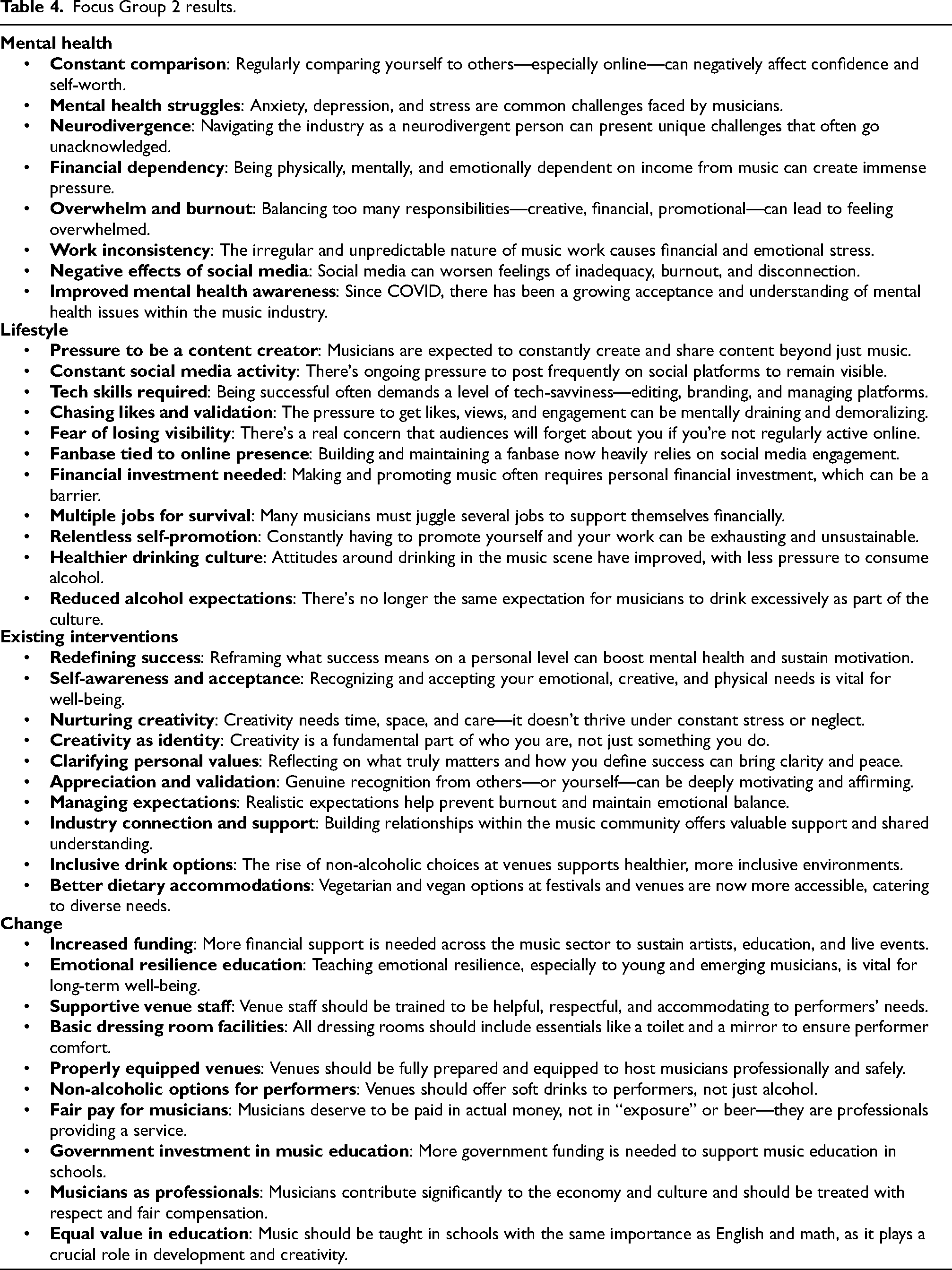
The key words, phrases, and themes were identified and illustrated in Tables 3 and 4:
Focus Group 1 results.

Focus Group 1 results.
Focus Group 2 results.
Social Media Pressure
Participants highlighted the significant pressure and expectation to achieve success based on social media metrics such as likes, views, and shares. This emphasis on digital validation often negatively impacted their mental health. One participant reflected on the shift in perception around online engagement: “I think pressure and expectation on being successful, yeah, because we’re kind of like on a likes and shares generation, you know, and a view generate like views, YouTube views, you know, whereas I remember when the whole YouTube thing kind of came out, if you’re in a band, you got a couple of 100 views, like, we go back to, you know, that was like, wow, now it's, that's almost people are devastated with that.”
Content Creator Role
Participants frequently expressed frustration over the expectation to act as content creators rather than focusing solely on their creative work. Many felt that their success in the industry depended heavily on their ability to market themselves on social media, often at the expense of their artistic pursuits. There was a consensus that industry decision-makers, including record labels and management, prioritized online presence over talent. “But live streaming gigs, you know, to the degree that we are now or documenting everything, or encapsulating people's, you know, mistakes or pitfalls, or, you know, that kind of thing to the degree that they are now. So, just as sort of a thought on that, that I wonder whether the increased social media, and that being a thing that artists need to be mindful of, or maybe even manage themselves or have a consideration, I think that does create a fair amount of unrest.”
Impact of Views and Likes
The emotional toll of tracking views and likes on social media was a recurring concern. Participants noted how their self-worth and perceived success became closely tied to these numbers. This external validation often overshadowed their artistic satisfaction, creating further mental health challenges. “Like in the kind of green room where we’re chatting, and then there is this artist that is going to be playing Glastonbury, and everybody who's in there like, oh my god, he has this many followers. Or blah, blah, blah, blah, blah, and I’m thinking they’re like, so even there, we’re evaluating him to be more or better than anyone else is that is playing that night because he has certain many followers on Spotify or something.”
Neurodivergence
The topic of neurodivergence also emerged in the focus groups. Participants acknowledged the complexities of navigating the music industry while managing their neurodivergent traits. Some found the unpredictability and excitement of the industry aligned well with their tendencies, while others experienced heightened challenges. One participant shared their perspective: “I think it's also worth noting that the sort of people who are attracted to being creative or being a performer, they’re not necessarily neurotypical, and that obviously plays a huge role in people's ability to cope with life, whatever job they’re doing and whatever their daily experiences. But yeah, I think just having that, having a supportive networking environment, and certainly when you’re younger because I think that's for me, that's the biggest pitfall that I experienced is the at the moment because I do everything myself.”
Lifestyle
Multiple Jobs to Survive
Participants expressed concern over the need to juggle multiple jobs to make ends meet. This precarious financial situation added significant stress, contributing to their mental health struggles. “You know, I have other forms of income. Actually, we’re all just trying to survive. Everyone's trying to, you know, there's so many moving parts to those legs moving, you know, how many income streams can I get instagram sponsorship things like there was maybe some some of these other sites, you know, just to just to survive as a creative person. You know what I mean? I was doing like 24 h a day, seven days a week on there and there abouts. Because, because I was caught in that I was quite in that like, okay, the cool you know, doing the cool job, you have to live it, you have to breathe it. And actually that's really unhealthy.”
Lack of Preparedness for Pitfalls
A recurring theme was the lack of preparation for the realities and challenges of the music industry. Participants felt underprepared to handle career instability and the emotional toll of navigating an unpredictable environment. “And it's just the work is quite intense. And the nature of the work is late nights, you know. And you do to put in four days, so she keep your head above water, but I’ve definitely noticed it in the, in the actual performance performing. And the point in the more pressure that way, there's audience involvement, when there is pressure from audiences, there's a lot more mental health issues. Nobody tells you, you know? Nobody sits you down and warns you at the start.”
Unstable Work and Career Insecurity
The unstable nature of work in the music industry was another major concern. Many participants experienced anxiety due to inconsistent income and the constant pressure to secure the next opportunity. “I mean, you want to work hard. So you’re not doing it, complaining about it, but you don’t, it's never actually spelled out to you that you’re actually you shouldn’t be working that hard. You know, you just, it's just that what you do when you sort of while you’re setting up a business.”
Interventions
Mental Health Support Services
Participants highlighted the need for accessible, industry-specific mental health support. Dedicated music industry therapy was widely regarded by participants as a valuable resource. “I think actually, like people need to have a bit of time with someone that's qualified to sort of help support them. Counselling with someone that had awareness of the music industry massively helped me and I didn’t spend time having to explain the ins and outs of my job.”
Building Supportive Communities
The importance of establishing a strong sense of community was emphasized. Participants believed that fostering supportive networks could provide emotional and practical support. “Peer communities, online communities, have actually helped me more than I think, anything else in this industry, and helped me and both of those groups are actually something I created.”
Promoting Boundaries and Breaks
Participants advocated for the normalization of setting boundaries and taking regular breaks to prevent burnout. They felt these practices could significantly improve mental health and overall well-being. “I’m probably better at it now, spotting, when I need to do have a break. And I think that's, that's something you needed, perhaps you need help with really losing any money, usually aware of that? Oh, God. That's why I’m feeling a bit anxious. That's fine. I just need to leave the room for 10 min or something.”
Change
Training and Education
Participants identified the need for more training and education around mental health for all music industry members, regardless of their role or level of success. They suggested that workshops, courses, and university programs could help equip individuals with the tools needed to navigate the challenges of the industry. “Get yourself supported. Make sure your talent are talking to somebody. And here are some places where you can get some and make sure you’re looking after yourself. And here's some, you know, things you can consider, like ways of living.”
Resilience and Managing Pitfalls
Participants believed training on resilience and rejection management would be beneficial. They emphasized the importance of creating safe spaces to discuss industry challenges and ways to cope. Participants expressed the view that executives and management should also be equipped with knowledge of mental health services to support their artists effectively. “I think education is probably the most important. I mean, I do some work at universities and some of the development delivery now, I make sure that there's a lesson or session on well-being or sort of, you know, time management, resilience, just, do you know what they call soft skills, but I think it's important that they’re embedded. That these things are flagged early on, so they are recognized by kids going into the industry before they get there. And there's definitely, yeah, definitely a lack of preparation.”
Support for Freelancers
Freelancers were seen as particularly vulnerable due to the lack of guidance on entering the industry. Participants stressed the need for targeted advice and mentorship programs to alleviate the isolation and uncertainty experienced by freelancers. “I would like to see some policies supporting freelancers, some policy changes that are around. Here's how people need here's like a minimum freelance rate, right? Where's the advice? mentorship? your delivery projects, and in 10 to 12 weeks or something like that. So you might have like, a period of like intensity, so for maybe these eight jobs and I didn’t know that going in, it would have been good to have someone saying ‘right, here's how you manage this’.”
Community and Support Groups
Participants advocated for more support groups, both online and in-person, to foster connections and provide shared experiences. The need for open conversations and peer support was highlighted. “We’re not having those conversations. So as well, having conversations in these kind of group settings where we’re sharing and cross-referencing. Or, you know, just, just having that community, because I think I know, speaking for myself and the vocal community, there is a bit of a community there.”
Shift in Industry Perspective
A significant shift in how artists are viewed was suggested, with participants calling for musicians to be treated as people rather than commodities. They emphasized the need for management to listen to artists’ concerns and implement appropriate mental health interventions. “And then it's about picking out key people in the music industry behind the scenes and going look, you, oh, this needs to happen. Can you have some quiet conversations in the background about whether, you know, we’ll want to, or Sony will come out and say, support this code of practice, you know, the have been coding practices embedded since MITI, since Black Lives Matter. But the enforceability of said code of practice is always difficult.”
Government and Public Perception
Participants felt the government had a role in validating music as a viable career path. They suggested that supporting music education and promoting music careers as legitimate options would contribute to systemic change. “If kids had the education. Yeah, it's the answer to everything, basically, if they had the opportunity and the encouragement earlier, as early as possible, to engage in these things and not be told that they’re a waste of time and you should be doing something proper, and that's just for playtime or what have you taking music lessons away from toddlers, you know, not letting them have an hour a week in, like, reception class to bang on a pan. It's, it's criminal, like this is, this is a, a primal thing that we all have in us. Yeah, that must mean something, right? And I think it just needs to be given the same level of importance from the earliest stage possible as you know?”
Mentorship and Duty of Care
The absence of structured mentorship was highlighted as a key issue. Participants believed formal mentorship programs could provide guidance, emotional support, and practical advice. Several participants stated that establishing a clear duty of care within the industry would ensure long-term support and create a healthier environment for artists. “I think, as I said, you have a lack of duty of care in this industry is, is at the core of it. You know, like, substance abuse, drugs and alcohol, the reliance on that and just you know, speaking with someone who's been through it helps in a big way.”
Another participant said; “But you know, maybe if there was, if in terms of live performance, that there is a quiet space for performers to go, if it seems like a bare minimum, really, doesn’t it. I’ve actually sorry this slight tangent, but I find in the sort of unsigned scene that DIY scene, the fact that you don’t get fed when you go to perform really challenging, I feel like there's should be a base level of taking care of the people that are coming to work.”
Discussion
This research aimed to identify the changes needed to improve the music industry's approach to mental health. Semi-structured interviews and focus groups were conducted using an ethnographic approach alongside Participatory Action Research (PAR) to gather qualitative insights from industry professionals. Critical challenges were identified alongside potential strategies to create a healthier, more supportive industry. Findings revealed that factors such as social media pressure, unstable work, and lack of support negatively affect mental health, whereas access to therapy, supportive communities, and clear boundaries may help promote well-being.
These findings suggest that while social media can serve as a valuable tool for social interaction and self-identity formation, it also presents significant risks that need to be managed. For instance, the prevalence of curated content and comparison culture aligns with previous research indicating a link between excessive social media use and increased anxiety (Fuchs, 2014). Participants emphasized the role of parental guidance and digital literacy in mitigating these risks, reinforcing existing literature on the importance of media education (Levine, 2009).
Some participants highlighted the potential for social media to foster positive mental well-being through online communities and mental health advocacy, contradicting the common narrative that social media is entirely detrimental (Naslund et al., 2016). This suggests that individual experiences vary depending on factors such as self-regulation, platform use, and offline support systems. The findings contribute to ongoing debates on whether regulatory policies should focus on content moderation or user education, indicating that a balanced approach may be most effective (Gillespie, 2018).
Participants discussed the impact of both success and failure, emphasizing that defining success early on played a crucial role in managing mental health. Some knew from the outset that signing to a well-known record label was their goal, while others saw simply making a living as a measure of success. However, as their careers progressed, their understanding of success evolved, often shaped by industry challenges they hadn’t anticipated. There was also a strong sense of stigma around needing multiple jobs to sustain a career, with some feeling like they had failed if they had to take on roles such as teaching. Managing expectations and preparing for setbacks was a recurring theme, with many participants highlighting the need for more training and education that engages individuals at all levels of the industry. A significant concern was the lack of preparation for the realities of a music career, particularly around rejection, instability, and financial management. While music business courses exist, participants felt that mental health support and resilience training were missing from the curriculum, calling for urgent changes to better equip future generations. The findings around success and failure in the music industry reveal significant pressures that align with research on the intense emotional toll of career instability (Loveday et al., 2022). Participants highlighted the emotional challenges of facing frequent rejection and the struggle to maintain a sense of worth in an environment where success is often defined by external validation, such as chart rankings or social media engagement. This resonates with studies by Leblanc (2020), which found that individuals in creative fields often experience a heightened sense of failure, driven by unrealistic expectations and a lack of consistent support.
In contrast, participants also discussed moments of success and recognition, which, while rewarding, were often fleeting and tied to external validation rather than internal fulfilment. This finding mirrors the work of Kohn (1992), who argued that success based solely on external achievement can lead to an unstable sense of self-esteem. Furthermore, some participants reflected on the need for better systems of support, particularly for freelancers, which correlates with research by Borgen and Vanhalakka-Ruoho (2013), indicating that structured career guidance and mentorship can buffer against the negative effects of failure in freelance and creative industries. Unlike in the interviews, discrimination related to race did not emerge as a significant theme in the focus groups. This contrast may suggest differences in comfort levels when discussing sensitive topics in a group setting versus a one-on-one interview.
Regarding existing interventions, participants highlighted the importance of setting personal boundaries, taking regular breaks, and encouraging a sense of community as key strategies for protecting mental health in the music industry. Therapy helped individuals develop self-awareness, enabling them to understand their motivations and set healthier limits, particularly in navigating external pressures and neurodiversity. Taking time for rest and activities like yoga or walking was seen as essential for maintaining well-being. Additionally, the communal nature of music was recognized as both creatively enriching and emotionally supportive, reinforcing the value of connection and shared experience in sustaining mental health.
Concerning the theme of change, participants emphasized that long-term, sustainable therapy is essential for genuine mental health support in the music industry, moving beyond short-term fixes to address deeper, ongoing needs. Alongside this, there was a clear call for management to take more responsibility, with many expressing frustration at the lack of structural change despite individual efforts. Funding and dedicated resources were seen as potential catalysts for progress, enabling the creation of supportive platforms and training initiatives. Equally important was the need to normalize conversations around mental health, promoting inclusive spaces where open dialogue can be nurtured and creating meaningful, lasting change.
The JDC model provides a valuable framework for interpreting the mental health challenges identified in the study. According to the model, psychological strain arises when individuals experience high job demands alongside low decision-making autonomy. Participants described significant stressors within the music industry, including precarious employment, social media pressure, and frequent rejection—factors that align with high job demands. Simultaneously, they reported limited control over career progression, financial stability, and responses to industry expectations, indicating low autonomy.
This imbalance contributes to poor mental health outcomes, as predicted by the JDC model. However, this study also highlights the mitigating role of support systems, such as therapy, community networks, and mentorship, reflecting the model's later extension to include social support as a buffer. Participants emphasized the need for mental health education, resilience training, and more transparent career preparation, all of which would increase both perceived control and actual support within the industry.
In summary, these data challenge traditional narratives that only emphasize the glamorous aspects of the music industry, suggesting a need for more comprehensive support systems that promote long-term well-being, rather than focusing solely on success metrics. The JDC model helps to explain how structural conditions in the music industry contribute to psychological strain, and it reinforces the importance of systemic interventions that enhance autonomy and support to promote well-being.
Recommendations for Practice
Based on the findings of the study, a recommendation would be strongly made to develop a code of practice around mental health in the music industry. In terms of the environmental factors in the music industry, participants in this study all explained some of the pitfalls they have faced in music and how it affected their mental health negatively. All participants who took part in the study both welcome and yearn for a change in how people can be supported with their mental health, illustrating that the time for a code of practice is now.
The Code of Practice around Mental Health in the Music Industry is a set of guidelines developed to promote better mental health and wellbeing for those working in the music industry. It is designed to create safer, more supportive environments for artists, managers, producers, crew, and other industry professionals who often face unique stressors such as irregular income, long hours, intense performance pressure, and limited job security.
A Code of Practice around Mental Health in the Music Industry is being recommended as research has shown a clear and urgent need for structured, industry-wide support when it comes to mental wellbeing. Through our findings, it is evident that mental health issues are highly prevalent among music professionals, with many experiencing anxiety, depression, burnout, and emotional exhaustion at significantly higher rates than the general population. This is often driven by the unique pressures of the industry, such as irregular working hours, financial instability, job insecurity, intense performance expectations, and social isolation.
Recommending the Code advocates real, research-backed change and shifting the culture from silence and stigma to openness and support, while giving the music industry the tools it needs to better care for the people who power it.
Based on the findings, recommendations for policies that a code of practice may include:
Accountability for anyone working in the music industry for their own mental health and the mental health of others, taking responsibility for their actions towards others and the language they use that may be abusive or cause offense to others. A pledge from all music industry community members to continue talking about positive change for mental health and the music industry and how both individuals and organizations can achieve this together. Anyone in a management role must have knowledge of mental health services and be equipped to signpost to dedicated services. Music Industry community members to have knowledge of where to go if they needed to talk about their mental health or report unacceptable behavior or treatment from other music industry community members and or organizations. That all music industry workplaces adhere to this code of practice whereby there is a culture of kindness, collaboration, sharing mental health experiences where appropriate and listening to others when they are struggling without fear of repercussions on their career.
Strengths and Limitations
The research involved completing 12 individual interviews lasting no more than 60 min, ensuring focused and manageable discussions. Research indicates that this timeframe encourages greater participant engagement (Knapik, 2006) and that saturation is typically reached around this number of interviews, with no new themes emerging (Baker et al., 2012). The inclusion of two 90-min focus groups further strengthened the study by encouraging collaborative discussions, allowing participants to cross-reference their experiences and provide deeper insights. This format enabled a dynamic exchange of perspectives, which may not have emerged in one-on-one interviews. The diverse composition of the focus groups, including individuals of different ages, races, and genders, helped ensure a broad range of perspectives. A further strength of the study was its commitment to ethical research practices. Pseudonyms were assigned to all participants to protect confidentiality, identifying details were removed from transcripts and reports, and clear ground rules emphasizing respect and discretion were established during focus groups, ensuring a safe space for open dialogue.
The study's methodology, while effective, has some areas for consideration. The use of convenience sampling through industry contacts allowed for access to a targeted group of participants, though it may have resulted in a participant pool that does not fully represent the entire spectrum of the contemporary music industry. Those with particularly strong opinions or experiences related to mental health may have been more inclined to participate, potentially skewing the findings. Additionally, while 12 interviews are generally sufficient for reaching data saturation, it is possible that voices from specific sub-sectors of the industry were underrepresented. Although this the study included individuals of different ages, races, and genders, it remains possible that certain perspectives, such as those from marginalized or underrepresented groups, were not fully captured. To further improve diversity, future studies could specifically target underrepresented groups within the industry, using stratified sampling techniques to ensure a broader range of experiences is captured.
The focus group format, while valuable for promoting discussion, may have also introduced limitations. Some participants may have felt uncomfortable sharing certain experiences in a group setting, particularly if discussing sensitive mental health topics. Group dynamics could have influenced responses, with more dominant voices potentially steering the conversation or shaping the perspectives of others. Future research may benefit from providing participants with the option for anonymous contributions could help overcome any discomfort around discussing sensitive topics in a group setting.
Another limitation relates to the reliance on qualitative data. While the ethnographic approach allowed for a deep exploration of industry challenges and experiences, the findings are inherently subjective and cannot be quantified or generalized to the entire music industry. Future research could incorporate a mixed-methods approach, combining qualitative insights with quantitative data to enhance the generalizability of the findings.
Implementing an industry-wide code of practice would present challenges, including securing widespread commitment, ensuring adoption across diverse organizations and individuals, and establishing mechanisms for monitoring its application.
Conclusions
This study provided valuable insights into the changes needed to improve the music industry's approach to mental health. Data obtained through interviews and focus groups with music industry professionals justifies the development and implementation of a code of practice around mental health in the music industry. Introducing a code of practice to the music industry will provide the necessary regulations, duty of care, and safeguarding that is required for people to feel that their mental health is being supported. A code of practice will potentially reduce the likelihood of poor mental health for music industry members and contribute to resolving the issues that have been rife in the industry for decades.
The findings of this research open the door for further study into how the music industry affects classical musicians and those outside the contemporary scene. Both the literature and this study reveal that the biggest struggles—social media pressures, lack of training, instability, and insufficient support—are deeply embedded in the industry's structure. To develop a truly comprehensive code of practice globally, more research is recommended across all genres and musical environments, ensuring that every musician, regardless of their field, has access to the support they need to thrive. (Marfori, 2025)
Footnotes
Action Editor
Eckart Altenmüller, Hochschule für Musik, Theater und Medien Hannover, Institut für Musikphysiologie und Musikermedizin.
Peer Review
Two anonymous reviewers
Data Availability
Data sharing not applicable to this article as no datasets were generated or analyzed during the current study.
Declaration of Conflicting Interests
The authors declared no potential conflicts of interest with respect to the research, authorship, and/or publication of this article.
Ethical Approval
The ethics committee at Bath Spa University approved this study on the 23/09/2024 REC number: 131223RJ.
Funding
The authors received no financial support for the research, authorship, and/or publication of this article.
