



Abstract
Shortage of nurses negatively influences the working environment in hospitals, by placing extra burden on newly graduated nurses. Thus, it is important to improve the knowledge and skills of nurses to increase their confidence levels. Experienced nurses serve as role models for junior nurses. This study aimed to describe and analyze a project with a nursing preceptorship in an internal medicine ward in the eastern region of Sweden. Standards for Quality Improvement Reporting Excellence (SQUIRE 2.0) were used in the multi-method approach. Quality indicators, staff turnover, short-term absence, and annual survey were analyzed using descriptive statistics. Moreover, two focus group interviews were analyzed using qualitative content analysis. The results showed marginal improvements due to quality indicators and working environment, and decreased staff turnover and short-term absenteeism. Two factors, ‘supportive working environment’ and ‘improvement in nursing’, were identified. The study concluded that selection of nurse preceptors with expertise and interest in supportive and reflective approaches is significant for promoting a healthy working environment. Moreover, interventions such as nursing preceptorship facilitate implementation (<one year) and evaluation using a multi-method design to describe, explain, and understand the possible considerations and consequences of quality improvement in healthcare.
Keywords
Introduction
Due to the global shortage of nurses, workplaces need to recruit and retain well-trained nurses.1,2 Personal and organizational factors influence nurses’ behavior in the workplace. 3 Personal factors are described as interest, professional ambitions, job satisfaction, life situations, and family circumstances,4,5 while organizational factors include infrastructure (transportation, school), working environment, salary, work tasks, and career plans.1,6 In terms of staff turnover, organizational factors appear to influence nurses’ decision to resign, while personal factors determine whether they remain in the profession. 7
Nurses with one year of experience have an increased risk of leaving the nursing profession, and therefore, the period of transitioning from university to clinical practice is crucial to improving their working environment. 8 Limited preparedness in nursing with gaps between theory and practice causes insecurity and problems such as physical fatigue, mental stress, and insomnia.8–11 Organizational weaknesses and the shortage of nurses causes tension between a nurse’s ideals on holistic care and demands at work.1,4 Unexpected changes in patients’ conditions create feelings of unpreparedness, uncertainty, and inadequacy, in combination with the fear of negative judgement by colleagues, which are found to cause stress among nurses with limited experience.12,13 As nurses who are responsible for acute clinical situations tend to be stressed due to the overwhelming nature of the work,14,15 support from well-trained nurses is crucial.6,10 Organizational matters such as insufficient staffing, exclusion from social interaction amongst colleagues, and conflicts due to unwritten rules at work, influence nurses’ self-esteem and confidence.8,12,15 The lack of support, feedback, and positive affirmation from experienced nurses as well as high demands from first line managers (FLM) contribute to uncertainty in nursing.16,17
Improvement of knowledge and skills in clinical settings strengthens newly graduated nurses’ confidence in nursing. Experienced nurses serve as role models who provide support in difficult situations.9,11 A supportive atmosphere is crucial to the flow of questions and reflection in nursing, 17 which increases self-confidence, 18 and support is highlighted as a ‘lifeline’ without which there is a feeling of ‘drowning’ in unexpected situations. 14 Moreover, mentoring and introductory programs impact the transition from students to professional nurses.19–22 The selection process of mentors is emphasized, focusing on factors such as experience (as number of working years), interest, clinical knowledge, and communication skills. 23 In addition, nurses with limited experience in nursing tend to work in a task-oriented manner, which is why supportive leadership within a healthy working environment24–26 is highly recommended. Honest, personal, and committed leadership with an inclusive and supportive approach 16 results in a lower turnover rate. 27
According to Benner, 28 there are five stages of nursing competence. A novice is a nurse student who has memorized the guidelines and rules of nursing without experience and understanding of the nursing practice. An advanced beginner is a newly graduated nurse with a lack of holistic view, for whom nursing is a task-oriented activity built on routines, instructions, and regulations. In the third stage, competent nurses use a critical and reflective approach to nursing, while in the fourth stage, proficient nurses are skilled and perceive the entire situation by making efficient decisions. In the fifth and final stage, expert nursing skills and knowledge result in understanding the complexity of nursing, characterized by the awareness of patients’ needs, based on intuition and holistic understanding 28 with responsibilities for education and quality improvement. 29
Uncertainty in nursing, especially among newly educated nurses and in limited working environments, causes staff turnover, and organizational and leadership issues are significant factors to consider in improving healthcare. To handle these challenges, an intervention was started at an internal medicine ward in Sweden, where two expert nurses were employed as nurse preceptors. The job description was to organize and manage day-to-day caring activities through supported clinical leadership to promote a healthy working environment, including professional development, teamwork, and quality of healthcare.
Aim
This study aimed to analyze a project with a nursing preceptorship in an internal medicine ward in the eastern region of Sweden by answering the following research questions: Are quality improvements achieved when nurse preceptors are employed in the ward, and, if so, what kind of new knowledge is developed? How are staff working environments affected by nursing preceptorship?
Methods
Standards for Quality Improvement Reporting Excellence (SQUIRE 2.0) were used to support and judge the trustworthiness and validity of the current study findings. 30
Settings
The current study was conducted as a master’s thesis at an internal medicine department in a hospital in Sweden with 167 beds, of which only 158 were used due to shortage of nurses. The selected ward had 28 beds and 47 staff members (registered nurses [RN] = 26, assistant nurses [AN] = 21) working in teams with other health professionals, such as physicians. A project on nursing preceptorship designed by a steering group (two managers and one administrator) was launched in 2019 to improve the quality of care by strengthening nursing, especially among nurses with limited experience. Two nurses with graduate degrees and at least five years of experience were employed as nurse preceptors with the mission to develop a conducive working environment, especially for newly graduated nurses, as well as to improve the quality of healthcare to improve patient safety. Their job description was to organize and manage day-to-day caring activities through clinical leadership, such as managing team rounds and supervising staff members daily. Another task was the introduction of new staff members, as well as planning and conducting educational activities to improve patient safety.
Design
A multi-method approach31,32 was used to describe the one-year project in which two nurse preceptors were employed at the ward. Quantitative data were used to answer the effects of the intervention due to quality improvements as well as working environment. Quality indicators (nutrition, pressure ulcers, falls, methicillin-resistant staphylococcus aureus [MRSA]) documented in medical records, six items (professional development, workload, support at work, knowledge, support from staff, collaboration) relating to the annual survey, staff turnover, and short-term absence (<14 days) were analyzed using descriptive statistics. 32 Moreover, two focus group interviews 33 were conducted with RNs and FLMs (RN and physicians) to understand the results of the intervention by using qualitative manifest content analysis. 34
Sample
A total sample of medical records from all inpatients (n = 4041, the year 2019) at the specific medical ward was included, measuring four quality indicators (nutrition, pressure ulcers, falls, MRSA) selected on the basis of national indicators. Moreover, a strategic sample of available staff (>8 questionnaires/month/55% RN, 45% AN, n = 121) selected by the FLM at the ward, answered a hospital annual survey (routinely collected questionnaire) including six items (professional development, workload, support at work, knowledge, support from staff, collaboration). The inclusion criteria were employment (>50% part-time) as RN or AN in the ward. In addition, staff turnover and short-term absence for all RNs (n = 26) employed in the ward in 2019 were included. The exclusion criteria were staff with >50% night shifts, employed in other wards or hours.
In addition, a convenience sample (n = 6) was used to select participants for focus group interviews31,33 to understand the results of the intervention in the ward. The inclusion criteria were employment (>50%) as RN (focus group one) and FLM (focus group two) with > two years of experience in the ward. The selection of FLM professional background (nursing, medicine) was decided by the available manager at the specific ward where the intervention was carried out. The exclusion criteria were staff with >50% night shift hours, employed in other wards.
Data collection
Four quality indicators (nutrition, pressure ulcers, falls, and MRSA) were measured monthly from the medical record system and computerized metrics used for quality improvement. All patients enrolled in the ward in 2019 (n = 4041) were included and compared to those enrolled in 2018 (n = 3437, baseline). Responses for six items (professional development, workload, support at work, knowledge, support from staff, collaboration) from the hospital’s annual survey (n = 121) were collected for 11 months (February–December 2019). The target value of eight questionnaires per month was not achieved during July, August, or October 2019. The staff turnover and short-term absence (<14 days) figures among all RNs (n = 26) employed in the ward were collected monthly during 2019.
Two focus group interviews were conducted with only three participants in each group, due to the time constraints of this study (it was a master’s thesis). Three RNs participated in the first focus group, the first author being one of the nurse preceptors, due to ethical considerations, and the second focus group comprised FLMs to avoid a one-sided employer perspective. 33 All six participants received both verbal and written information 35 regarding voluntary participation as well as the aim, method of the present study, and agreed to participate verbally and via a written consent form. Two focus group interviews (first three RNs + second three FLMs = 6) were conducted in November 2019 by an administrator from the human resources department to ensure there was no personal relationship between the interviewer and participants. This was to enable the expression of experiences in a friendly atmosphere. Semi-structured interviews were conducted in a conference room according to three themes due to a combination of theoretical and empirical knowledge5,26, 28 – professional development, teamwork, and quality of healthcare. 30 There were follow-up questions to clarify and elaborate answers regarding nursing preceptorship. The first focus group interview (three RNs aged 23–30 years, experience, 2–22 months) lasted 26 minutes, and the second interview (one RN, two physicians aged 36–51 years, experience, 8–24 years) lasted for 45 minutes. The interviews were recorded and transcribed verbatim by a medical secretary at the medical department responsible for the de-identification of data.
Data analysis
All quantitative data were analyzed using SPSS and descriptive data such as the mean, median, standard deviation, percentage, and χ2 test with p-value < 0.05. The quality indicators of nutrition, pressure ulcers, falls, and MRSA were measured by the number of established care plans, which were dichotomized and compared as a percentage of enrolled patients in the ward, and the difference in 2018 and 2019 was calculated using the χ2 test with p-value < 0.05. 32 Six items regarding professional development – workload, support at work, knowledge, support from staff, and collaboration – from the year 2019 were calculated and compared with those of 2018. Reliability and internal consistency were tested using Cronbach’s alpha of 0.86. The staff turnover was calculated as a percentage with differences in 2018 and 2019 results, using the χ2 test with a p-value < 0.05 for statistical significance. 31
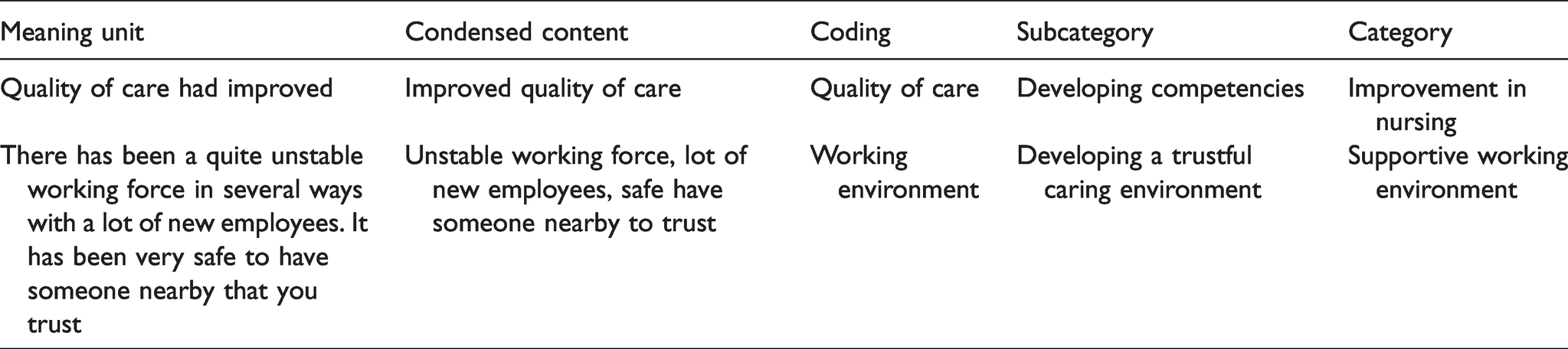
A manifest qualitative content analysis was carried out by examining participants’ experiences of nursing preceptorship.34,36 To get an overall impression of the results, the interview responses were read several times over by the authors. Meanings of units relevant to the aim were identified and extracted from the data. The meanings of each unit of words, sentences, or sections were determined in relation to the aim of the study. Sentences that were too long (composed of several statements) and too short (fragmented statements) were avoided, and the data were condensed into a central message, followed by coding and grouping of the statements. Data analysis (Table 1) resulted in two categories, with two subcategories each.
Example of description of data analysis.
To deal with the first author’s preunderstanding of nursing preceptorship, data were also analyzed by an expert panel (interviewer and nurse/quality controller with master’s degree). The expert panel 37 found consistency regarding transcribed interviews and an analysis process wherein data analysis was described as trustworthy. Moreover, a senior researcher (second author) with no involvement in the project analyzed all data until agreement was fulfilled, and trustworthiness achieved.
Ethical considerations
The head of the internal medicine department granted permission to conduct the study. Ethical approval is not necessary when conducting a master’s thesis or quality improvement 30 as per Swedish regulations.38,39 Quality indicators are computerized and collected as standardized tools for continuous quality improvement. Furthermore, the metrics of personal turnover and short-term absence are presented without personalized information. Verbal and written consent were obtained due to voluntary and confidentiality participation without negative consequences (no harm) at the group level. Ethical guidelines for human and social research were complied with throughout this project, applying four main principles: information (verbal, written), voluntary participation, confidentiality, and no misuse of the results. 35
Results
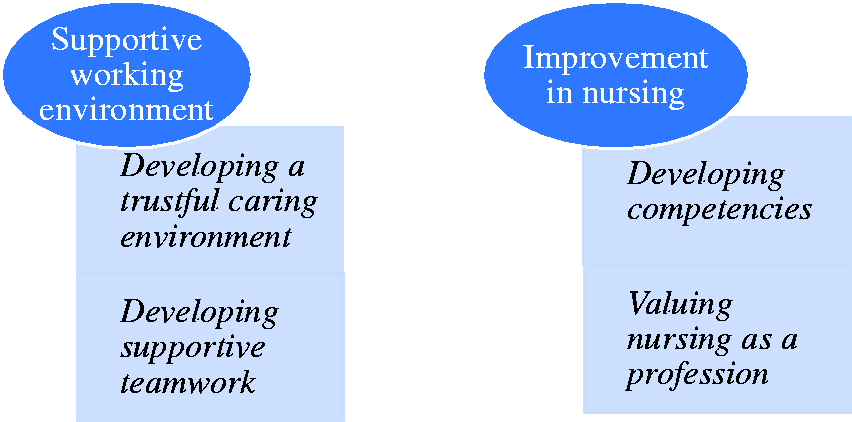
The results are presented in two sections. The first part (quantitative) showed some changes (positive and negative) due to the working environment and quality of care, such as decreased staff turnover and short-term absenteeism. The second part (qualitative) comprises two categories – a supportive working environment, to develop a trustful caring environment and to develop supportive teamwork; and improvements in nursing, to develop competencies and value nursing as a profession.
Working environment
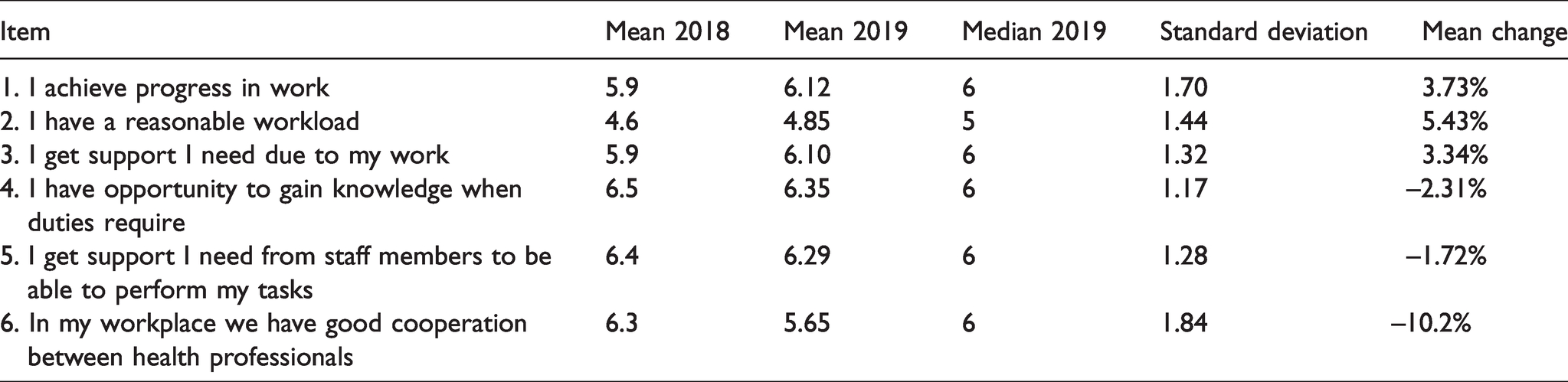
The results of the questionnaire showed marginal improvements (2018–2019). Positive differences were found in items 1–3 (Table 2) in terms of work development, workload, and support at work. However, negative aspects (–1.72% to –10.2%) are shown in items 4–6 (gain knowledge, support from staff, cooperation between health professionals).
Overview of the hospital annual survey due to working environment.
Quality of care
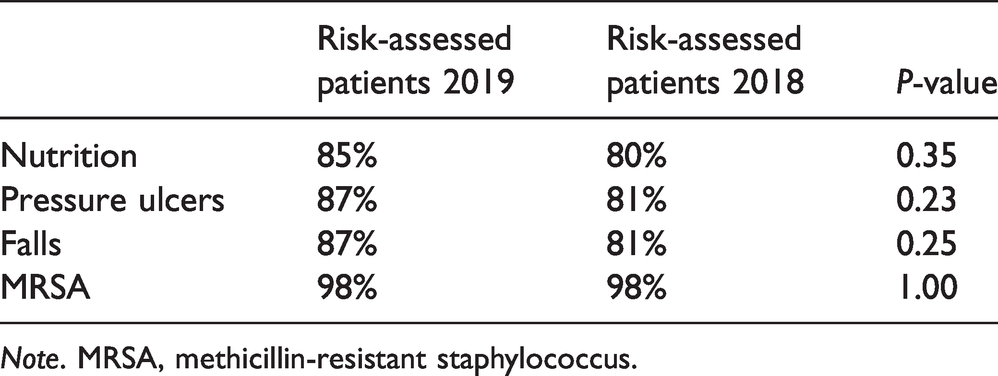
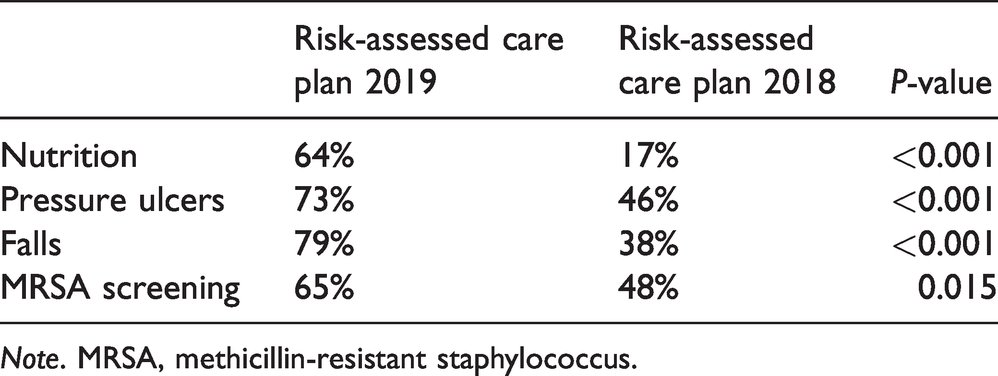
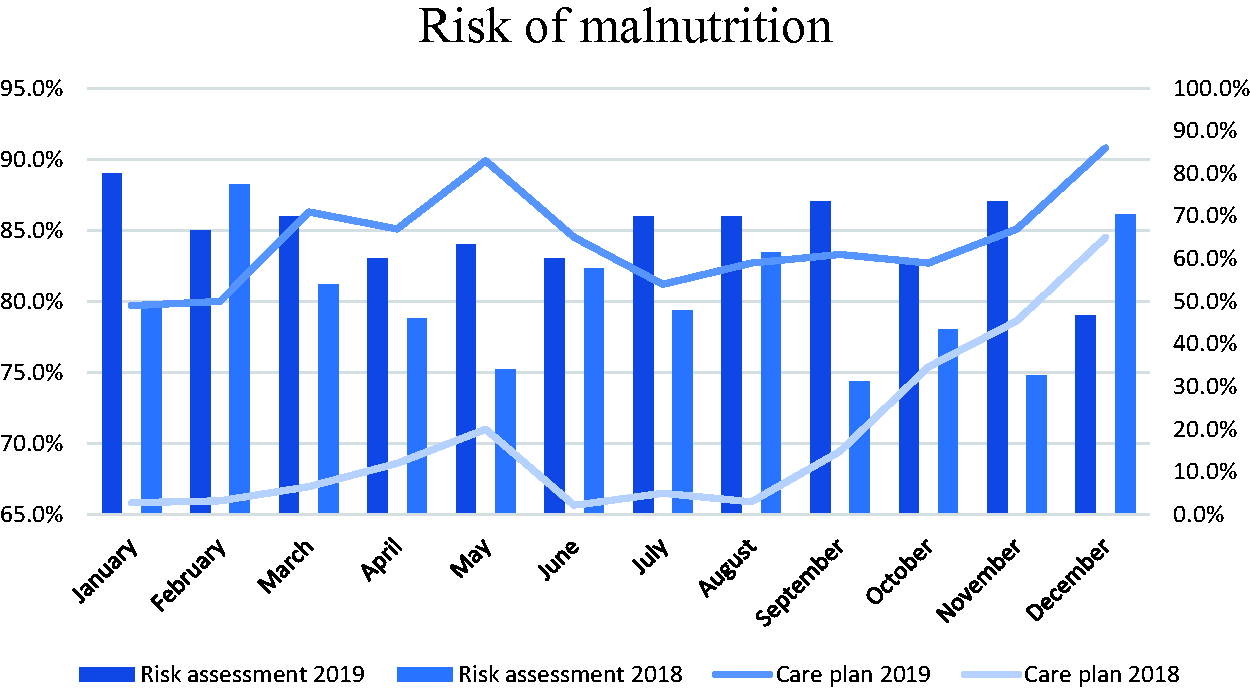
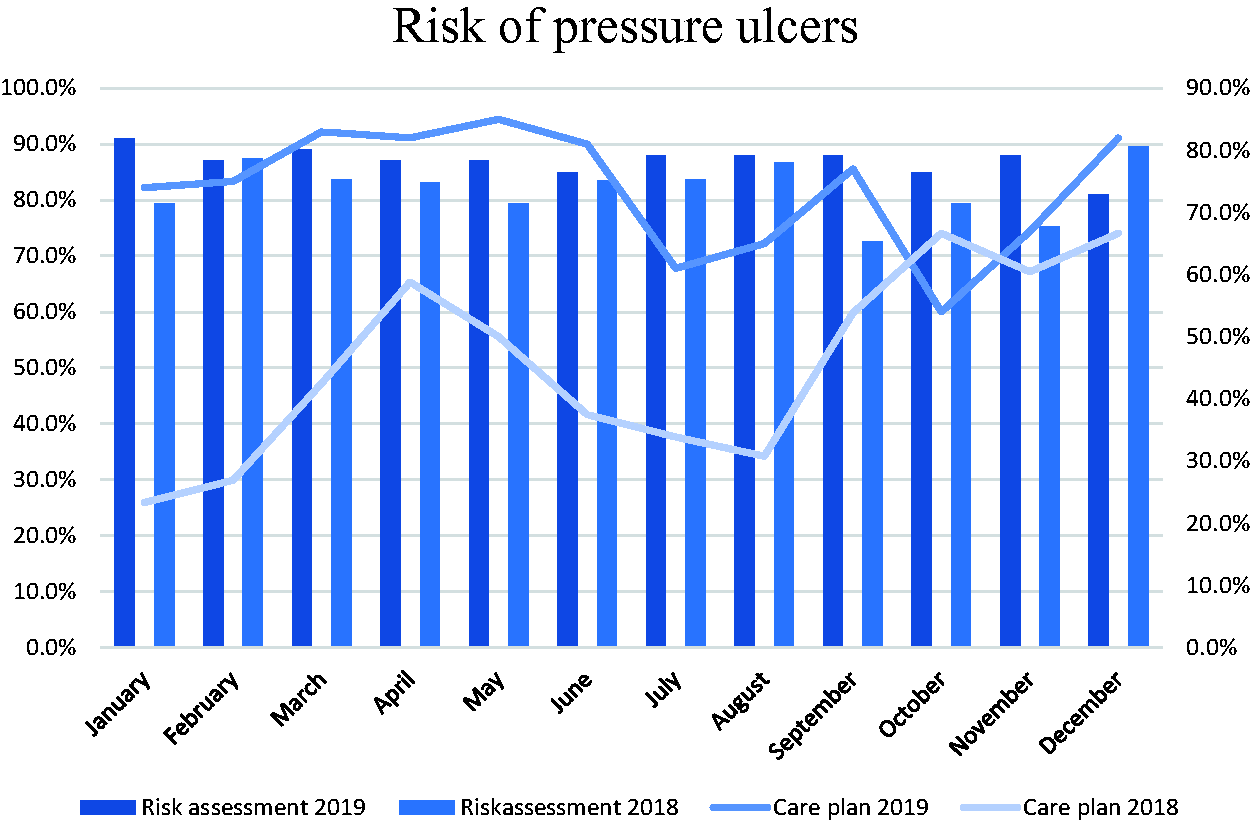
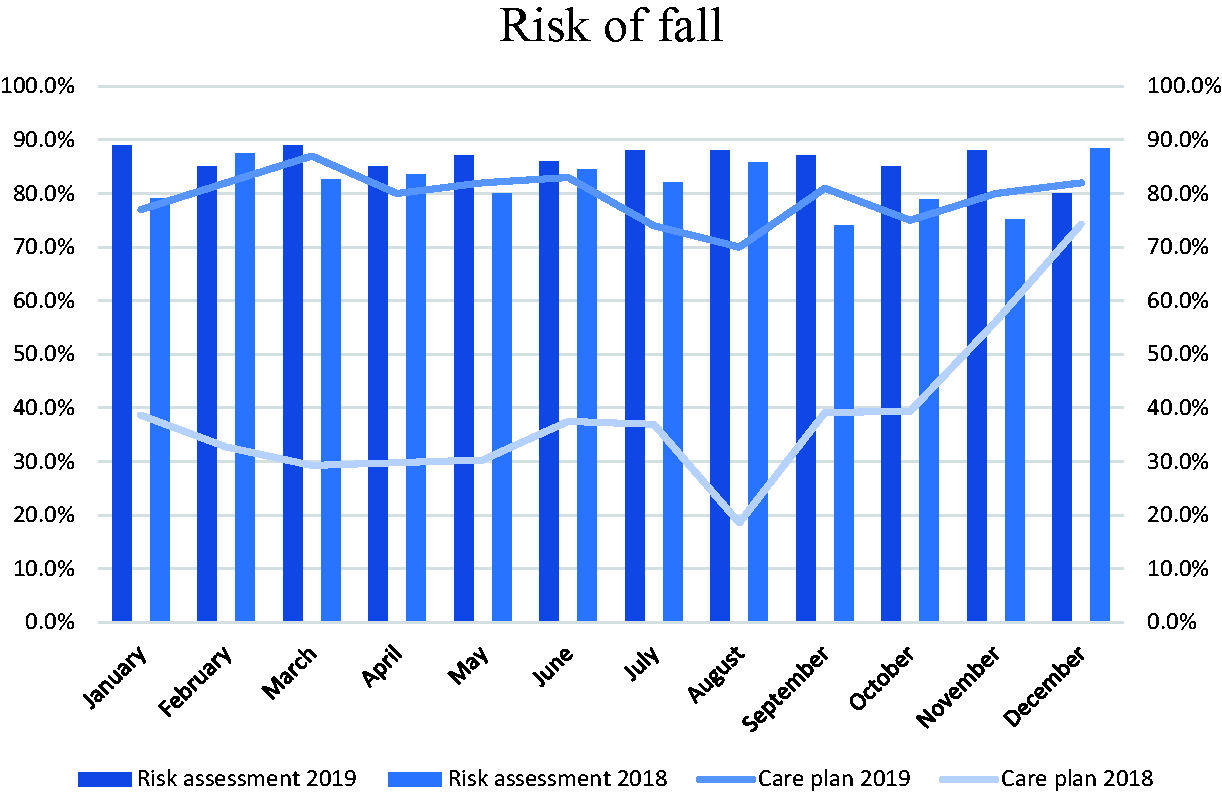
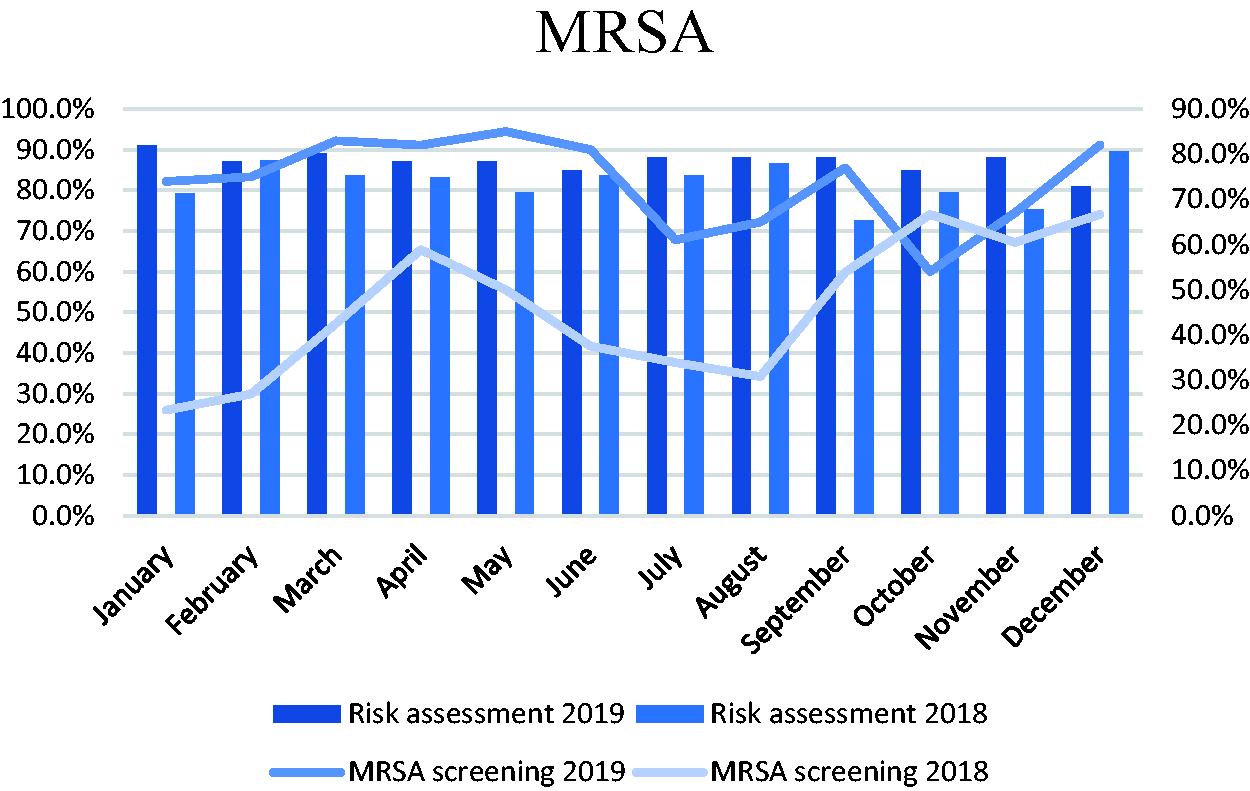
While some improvements were observed in selected quality indicators documented in the medical records (Figures 1–4), there were no significant differences in the percentage of risk-assessed patients between 2018 and 2019 (Table 3). However, there were significant differences (p < 0.001–0.0015) in risk-assessed patients and care plans related to nutrition, pressure ulcers, and incidence of MRSA cases (Table 4).
Differences 2018–2019, quality indicators and risk assessment.
Note. MRSA, methicillin-resistant staphylococcus.
Differences 2018–2019, quality indicators and care plans.
Note. MRSA, methicillin-resistant staphylococcus.
Overview of categories and subcategories.
Risk-assessed patients and care plans, nutrition.
Risk-assessed patients modified Norton with care plans, pressure ulcers.
Risk-assessed patient and care plans, fall.
Personnel turnover and short-term absence
The staff turnover decreased from 52% in 2018 to 18% in 2019, and zero nurses left the profession in 2019. In addition, short-term absenteeism decreased by 52%, from 6.8 days in 2018 to 3.3 days in 2019.
Supportive working environment and improvements in nursing
The second part, qualitative data, describes staff (RN, FLM) experiences of nursing preceptorship: 1) a supportive working environment, to develop a trustful caring environment and develop supportive teamwork, improve nursing, and develop competencies and value nursing as a profession; 2) nurse preceptors facilitate daily reflection and learning by highlighting nursing in everyday practice, which contributes to professional growth, especially for newly graduated nurses, which positively influences the quality of care (Figure 5).
Risk-assessed patients and screening, MRSA.
Supportive working environment
The category Supportive working environment included two subcategories: ‘Developing a trustful caring environment’ and ‘Developing supportive teamwork’.
Developing a trustful caring environment
The subcategory ‘Develop a trustful caring environment’ included experiences regarding nursing preceptorship that facilitated the preparation of organizational conditions for work. Nurses stressed the importance of supportive working environments in feeling secure at work, due to limited nursing experience. Prior to the project, they lacked support from experienced nurses and often felt abandoned and insecure while working due to excessive responsibilities as new graduates in a complex healthcare setting. During the project, nurse preceptors were involved in daily nursing, which enabled the whole team to address questions or concerns about patients’ healthcare in a trustful way. Participants described nurse preceptors as several well-experienced colleagues who were committed and competent in nursing and supporting daily work. Nursing preceptorship positively influenced continuous dialog regarding the quality of care and patient safety through support, assistance, and guidance with nursing, for example, multiple visits to patients or prioritizing work. Individualized advice facilitated the participants’ professional growth. Furthermore, they felt that having someone to turn to who knew their work experience in nursing created a sense of security during daily work in the ward. Nurse preceptors were described as mentors who supported the staff in terms of professional and personal development.
Nurse preceptors were available in the daytime; however, participants also stressed the effects due to quality improvements around the clock. The presence of experienced nurses contributed to confidence in the ward, a sense of continuity, and security during the evening and night shifts due to overlaps with nurse preceptors in the afternoon and early morning. Then you can tell them, ‘I was involved in this difficult situation. How should I proceed the next time?’ It is nice to have the opportunity to talk about what happened during the night with the nurse preceptors. (Nurse 1) You have to be committed, willing, observant, experienced, and competent in the profession, and also innovative to be able to help different people with different things and produce an improvement for the whole group. (Nurse 2)
FLMs confirmed that nurse preceptors created a sense of security, especially for newly graduated nurses. One participant said: Different wards have certain contents that can be slightly scary for a new staff member, but if you are guided into it by a nurse preceptor, you can easily approach the most common practical problems. Such a workplace feels much safer. (FLM Physician 1)
Developing supportive teamwork
The subcategory ‘Developing supportive teamwork’ included experiences that facilitated efficient teamwork through collaboration. Managers stress that nursing preceptorship develops opportunities for senior employees. Teamwork, especially with senior physicians, was challenged when nurse preceptors disagreed with the treatment and care of patients, which created friction in the ward. Participants described nursing preceptorship as an opportunity to break down traditional hierarchies and structures to improve nursing by equal interprofessional collaboration with physicians in the ward. It is a bit like nurse preceptors open up better communication with physicians. As experienced physicians are far ahead of us in the discussion due to more education and much more experience, it is a great advantage to have nurse preceptors in the discussion, on the same level as the physician. (Nurse 1) I think it has been very good to have such a competent person to bounce ideas off. I do not want to have a round without a nurse preceptor. The difference is like night and day. (FLM physician 2)
Improvement in nursing
The category Improvement in nursing included two subcategories: ‘Developing competencies’ and ‘Valuing nursing as a profession’.
Developing competencies
The subcategory ‘Developing competencies’ included learning through supportive activities during daily work. The nursing preceptorship project led to increased competence and skills among staff members, especially among newly graduated nurses. Learning activities were described as rewards based on daily patient-related teaching. The preceptors have a helicopter perspective on what you are doing at the ward. They can support you by being available in the corridor or watching you when you practice nursing. (Nurse 3) Even if they are not here, my knowledge has increased with the information I have received through the week. It may be new knowledge from the last Friday or a few weeks or months ago. I use their expert knowledge even though it is not daytime or rounds. (Nurse 1) Nurse preceptors help staff constantly reflect on what they are doing. (FLM nurse) Better healthcare, better clinical judgment … simply better healthcare. (FLM physician 2)
Valuing nursing as a profession
The subcategory ‘Valuing nursing as a profession’ included experiences of evaluating nursing in relation to medicine. Due to the shortage of nurses and limited nursing experience, participants highlighted that nursing had been outsourced to physicians. However, well-trained nurse preceptors have returned and developed nursing as a profession. Managers reported that due to the shortage of nurses, other health professionals were expected to handle nursing and undertake tasks that they lacked knowledge and skills in, as follows. I am certainly not competent to solve all the things that emerge from a nursing perspective and know everyone’s job better than they do, an insanely strange view. (FLM physician 1) Over the years, I have been asked about all kinds of nursing issues, and I feel: why do they ask me? I know nothing about this. (FLM physician 2) Suddenly, nursing was visible. It is more valued, which means that you have completely different discussions and dialogs in the ward. It makes room for more nursing issues, which benefits the team and the patient. (FLM nurse)
Discussion
This study aimed to analyze a nursing preceptorship project, focusing on the working environment and patient safety. The results showed both positive and negative changes during the project due to quality of care, professional development, and teamwork. The hospital annual survey of ANs and RNs showed negative results regarding the opportunity to gain knowledge, support from staff members, and cooperation between health professionals, compared to focus groups (RNs and FLMs). One explanation could be that nurse preceptors lack managerial responsibilities such as staffing, or use of short follow-up (one-year) evaluation with a non-validated annual survey. 31 Another reason could be differences in the collected data: AN and RN (quantitative data) compared to RN and FLM (qualitative data) as well as possible answers (questionnaire = structured and written, focus group interviews = semi-structured and verbal). Moreover, the current study showed marginal improvements due to quality indicators and risk assessments, for example, an increased number of correctly cultured patients for MRSA infection. However, there is room for improvement, although 35% of patients lack proper cultivation, that is, the risk of spreading resistant bacteria. Additional factors were a decrease in the number of care plans regarding risk assessment during the summer, a period of high workload, and one nurse preceptor on duty. This conclusion strengthens the need for available, well-trained nurse preceptors throughout the year regardless of the holiday situation, to safeguard the high quality of care (i.e., healthy working environment for all involved to increase patient safety). 2 Expert nurses as nurse preceptors could be viewed as resources for all staff, acting as guardians of patient safety by providing supportive reflections in everyday life situations at the ward, especially for newly educated nurses,9–12 and facilitating supportive and learning function in day-to-day activities, which strengthens team collaboration.5,26 Staff members who are supported in clinical work could improve their decision-making through individually tailored nursing activities in line with Benner’s 28 stages of competency development. Furthermore, personnel turnover and short-term absenteeism were reduced, which could be viewed as a result of nursing preceptorship. However, it is difficult to analyze how and why changes appear during a running project, even though many influences are bound to exist which are difficult to handle and control. Therefore, we could only speculate on why these changes occurred, and why further evaluation is needed.
During the project of nursing preceptorship, nurses seemed to keep their employment. Staff turnover decreased from 52% in 2018 to 18% in 2019. In addition, short-term absence decreased from 6.8 days per nurse (2018) to 3.3 days (2019) – the rate of absence would increase if there is rise in sickness such as stress and poor mental health.3,8,10 Although sick leave is a multifactorial phenomenon, the current results should be interpreted with caution and we should examine why qualitative methods emphasize a deeper understanding of changes during the project of nursing preceptorship. Support from expert nurses 28 for less trained nurses is crucial,17,18,20,21 so that they do not feel vulnerable and want to abandon their jobs due to the pressure of transition from education to professional work and extensive nursing responsibilities for seriously ill patients.13–15 Therefore, nurse preceptors could be viewed as role models who create safety and as mentors to turn to for advice and support, providing timely individual feedback, which can often be forgotten during high workloads.5,18 Moreover, managers in the current study described a wider organizational perspective regarding the impact of nursing preceptorship due to the working environment and quality of care. One nurse compared nursing preceptorship with a safety net that prevented drowning, which is in line with Ratta’s 14 results, where newly graduated nurses described experienced nurses’ advice and support as a lifeline. The development of clinical competence is described as a strong factor of self-confidence and self-esteem in professional practice,8,10 and explains why well-trained nurses 28 contribute to the transition of nursing theory to practical skills and the integration of knowledge and skills toward patients’ needs.19–21
Nurse preceptors seem to facilitate a sense of security at work due to teamwork, with in-depth discussions of professional boundaries regarding assessments and decisions, thereby increasing professional growth. The whole team can grow together toward a common goal that focuses on patients’ needs from different angles to reduce the gap between theory and practice through individually tailored support. 22 Therefore, careful selection of nurse preceptors is needed. 23 They should have had a career path that has offered meaningful development, and should have gained attractive employment where expert knowledge can be used to supervise less experienced nurses. This is in line with earlier research4,22,29 emphasizing the significance of retaining experienced nurses in clinical settings, an urgent task due to the shortage of nurses with high staff turnover, offering well-trained nurses new challenges in line with Benner’s theory. 28
To facilitate trustworthiness, 30 a multi-method design was used to obtain in-depth and more reliable results due to nursing preceptorship, although different data could determine different aspects. Answers (RN, AN) from the annual survey showed a mostly negative influence on the working environment compared to mostly positive experiences visualized by focus group interviews (RN, FLM). These differences show difficulties in evaluating a project, and uncovered changes from one measurement to another could only lead us to speculate on why these changes have occurred. One limitation is the use of quantitative metrics with limited scientific soundness: a commonly used hospital annual survey was conducted.31,32 Moreover, the data collection performed at one medical ward at one hospital, had limited scope for generalization. The use of more than four quality indicators offers better possibilities to draw conclusions, even though all patients were included. According to the above limitation of quantitative methodology, generalization to other settings must be considered carefully. 31 However, the use of a multi-method design facilitates trustworthiness. Qualitative content analysis is a scientific and systematic methodology 34 used in healthcare to develop a deeper understanding through participants’ experiences of a phenomenon such as nursing preceptorship. Qualitative methods depend on the way researchers handle preunderstanding, and the reason for external interviewers, expert groups, and well-trained researchers to be used to ensure the trustworthiness of the current results. According to the limited number of participants in each focus group (3 + 3 = 6) who worked in one setting, further studies are needed to develop knowledge of nursing preceptorship effects due to the working environment and quality of care. One suggestion for a deeper understanding of nursing preceptorship is to analyze patients’ experiences of patient safety and quality of care. In addition, a longer follow-up period (e.g., three years) may be useful to analyze interventions with nursing preceptorship regarding work environment, quality of care, and patient safety.
Conclusion
The study concluded that the selection of nurse preceptors with expertise and interest in supportive and reflective approaches is significant for improving a healthy working environment. Moreover, interventions such as nursing preceptorship facilitate implementation and evaluation with scientific well used multi-method design to describe, explain, and understand possible considerations and consequences for quality improvement in healthcare.
Footnotes
Acknowledgements
The authors would like to acknowledge staff who shared their experience with us as well as the Southern University Hospital, Department of Internal Medicine, Stockholm and University of Gothenburg, Institute of Health and Care Sciences, Sahlgrenska Academy, Gothenburg, Sweden.
Authorship
Both authors contributed to the design and interpreted the data, KR critically drafted and revised the article. Both authors read and agreed to the final version of the article.
Conflict of interest
The authors declare that there is no conflict of interest.
Funding
This research received no specific grant from any funding agency in the public, commercial, or not-for-profit sectors.
