




Abstract
Knowledge about public health and public health work is important for meeting current and future health challenges. A group of nursing students in a cohort participated in a practicum programme pertaining to the study of the academic subject ‘Nursing and Society’. The municipality’s public healthcare services were the learning arena. The purpose of this pilot project was to explore whether participation in the municipality’s public healthcare services is a pedagogical approach that enhances nursing students’ acquisition of knowledge about the public health perspective in nursing. Combined methods were used in the evaluation. Data were collected through focus-group interviews and questionnaire surveys. The results reveal that participation in the municipality’s public healthcare services while studying the subject contributed towards enabling the students enrolled in the practical study to visualize the public health perspective in nursing.
Introduction
The current panorama of diseases involving increased lifestyle illnesses demand that health personnel have knowledge and skills in the field of public health. 1 Many nurses in Norway currently work on a daily basis in the municipal healthcare services. Because of social developments and health-related priorities in both Norway and other European countries, the municipal healthcare service will be a particularly important arena of public health provision.2–4 Demographic developments indicate an increasing rise in an older population having complex health problems. Reports show that a focus on the life-cycle perspective, promotion of health and preventive healthcare are clearly relevant in public health.3,5,6 Interdisciplinary and intercultural skills will be increasingly sought after. 2 The Coordination Reform 4 calls public health work society’s combined effort to promote health, to reduce the risk of disease and injury and to protect against outer threats to health.
In Norway, the public health perspective is expressed particularly clearly in the legally mandated preventive health services at municipal level. Nurses are important agents in these services. Illness prevention and the promotion of good health are central elements of public health work. Nurses with special competence in public health work, such as health visitor nurses, midwives, nurses in the field of mental health, dementia care and so on, focus their efforts primarily on health promotion and prevention of illness. In recent years, some municipalities have established healthy life centres with a focus on changing lifestyles. Public health clinics for young people are also available. In addition, a number of municipalities have established preventive services for older persons and preventive health measures for persons with foreign-culture backgrounds. It is frequently necessary to cooperate closely between occupational groups, between various service levels and across governmental departments. The need for an interdisciplinary orientation and collaboration between various services and levels and the increased need for a closer focus on health promotion and prevention were further underscored as an important backdrop for introduction of new health legislation.6,7
At our education institution, we have a strong focus on the public health perspective in nursing in the course ‘Nursing and Society’. The framework plan’s content has been operationalized in the students’ study portfolio as a 10-credit course offered during the third year of study under course code Sy-301, with all lessons delivered on campus.8,9
Participation in practice-oriented environments that offer a supportive and introspective community with specialized and competent advisers and partners has been found to be particularly suited to learning processes in nursing subjects.10–12
The purpose of this pilot project was to explore whether participation in the municipality’s public healthcare services is a pedagogical approach that enhances nursing students’ acquisition of knowledge about the public health perspective in nursing. There is a scarcity of studies in Norway involving a practicum-oriented organization of the study of the topic; therefore, the knowledge acquired from this study may help to bridge the gap.
Background
There seems to be a broad consensus that teaching methods that strengthen knowledge about general preventive healthcare and enhance knowledge about the life-cycle perspective, interdisciplinary, cultural understanding and health policies are crucial in the new millennium and should therefore be part of nurses’ knowledge base. In both a national and an international context, the public health perspective has increasingly become the object of scrutiny. Nurses, including those who are non-specialists in public health, are important proponents of public health, and their knowledge base should be updated and brought in line with the needs of society. 2
A search in the Cinahl database using different combinations of the search terms ‘public health’, ‘public health work’, ‘nursing and public health perspective’ and ‘nursing education’ resulted in numerous hits, although with highly varied content in terms of the concept of public health. Varying conceptual content, different organization and different levels of academic accreditation in countries comparable to Norway can make it challenging to draw parallels between various countries’ provisions for disseminating the public health perspective in their nurses’ education and training programmes. Likewise, it was challenging to find knowledge about the particular pedagogical approaches and academic content that are best suited to such dissemination.
In an article entitled ‘The use of innovative pedagogies in nursing education’, Brown et al. describe the application of numerous teaching approaches in educating nurses. 13 However, they find that documentation of innovative methods that best meet the demands of different defined learning outcomes in education is lacking, and that this documentation should be used as a knowledge base for teachers of nursing subjects. Such a documentation base, according to the authors, could serve to improve nursing education.
Today’s panorama of diseases mirrors factors associated with lifestyle, living conditions and psychosocial issues and differences in health. There is increased focus in Norway on regarding public health challenges in a life-cycle perspective. It has been emphasized that there is a need for increased focus on prevention and collaboration across service levels, as well as updated medical skills in the municipal health service.4,5,14 In its political strategy document, the Norwegian Nurses Organization emphasizes that the public health perspective must be an integral part of all nursing services. 2 The perspective must be reinforced and made visible.
The learning outcomes for the course Nursing and Society state that the student shall be able to assess societal factors that influence disease, health and wellbeing. They should be able to discuss various health-policy issues, explain health-promotion and preventive nursing, as well as organization, management and interdisciplinary cooperation in the public health service. The Norwegian Health Personnel Act 15 and the ethical guidelines of the Norwegian Nurses Organization (NNO) 16 stress that the nurse shall possess an occupational standard in line with the needs and demands of society. The content of the course ‘Nursing and Society’ can also be regarded as being preparatory for this occupational skill.
Research questions
In this project, we wanted to illuminate the following research questions:
What are the experiences of nursing students and their practicum advisers from the study of the course ‘Nursing and Society’ in the municipality’s public healthcare services? How does participation in this learning arena enhance nursing students’ acquisition of knowledge about the public health perspective in nursing?
Method
Presentation of the project
The first author of this article and one university colleague served as project managers and were responsible for the evaluation of the pilot project. In preparing for the project, information was acquired from three Norwegian nurse training programmes pertaining to how the public health focus was accounted for and organized in each of the programmes in question. A steering and reference group was set up comprising both project managers from the university and personnel from the municipality’s public healthcare services. The purpose of the project and its academic focus were discussed and rooted.
The project’s pedagogical view
The project was rooted in a basic, socio-cultural view of learning. 17 Involvement, self-activity and interaction, according to this view of learning, are fundamental if learning is to take place. Mikhail M. Bakhtin, a central and important contributor to the socio-cultural learning view, claims that we can see ourselves only in relation to others. It is within the communication situation itself that meaning emerges, that is, in the dialogue or interaction between the participants. It is in this dialogue that meaning and the basis for understanding is created. For learning in practice to occur, teamwork and interaction are prerequisites. 18 This socio-cultural view of learning furthermore emphasizes that the individual is always situated. This means that the individual is a part of a context and must be understood based on the particular context in which he/she is situated. Learning situations will therefore never be identical. They will change in relation to place, participants and situation.
Implementation of the project
The project managers organized the teaching approach. The project managers and representatives from the practical environment facilitated access to the practical field and planned pedagogical measures in the relevant public healthcare services. Representatives from the practical field took responsibility for developing a detailed, individual rotation programme for each student. Students’ chances to experience involvement, self-activity and interaction guided the planning and implementation of the project.
Example of rotation plan for project students’ participation in practicum.
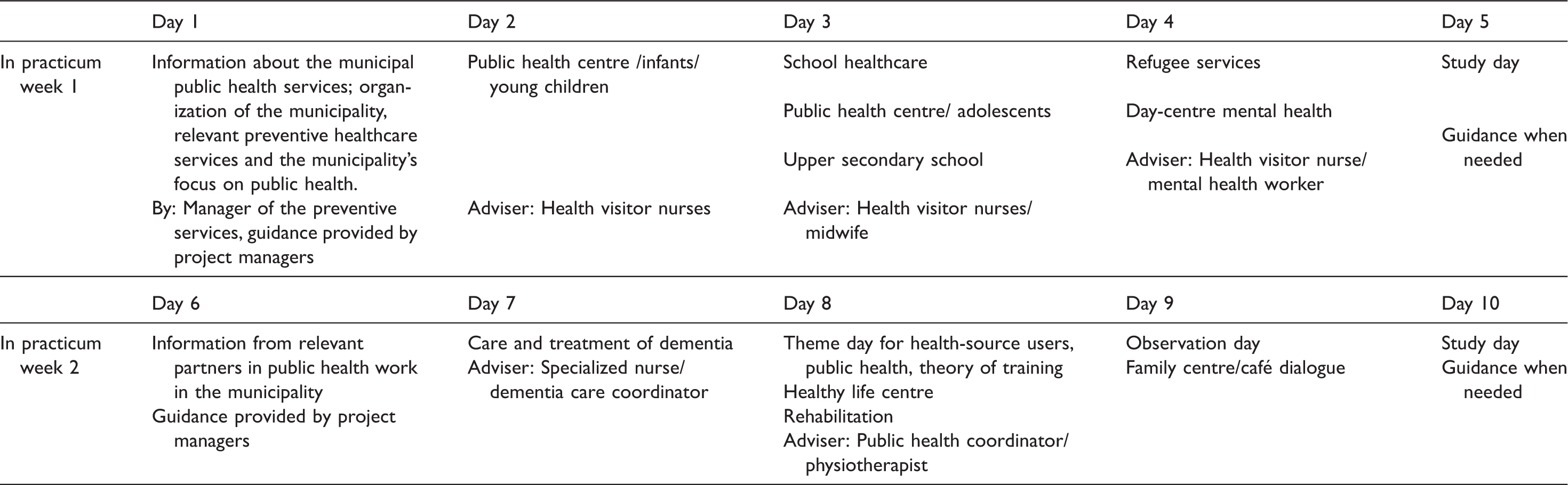
The project was organized so that time was allotted for counselling and reflection pertaining to the learning situations in the practical environment, both in groups including the project managers and in groups with interaction between students and between students and advisers in the practice portion.
Plan for carrying out the study programme of course Sy-301 ‘Nursing and Society’ for project students and main-cohort students.
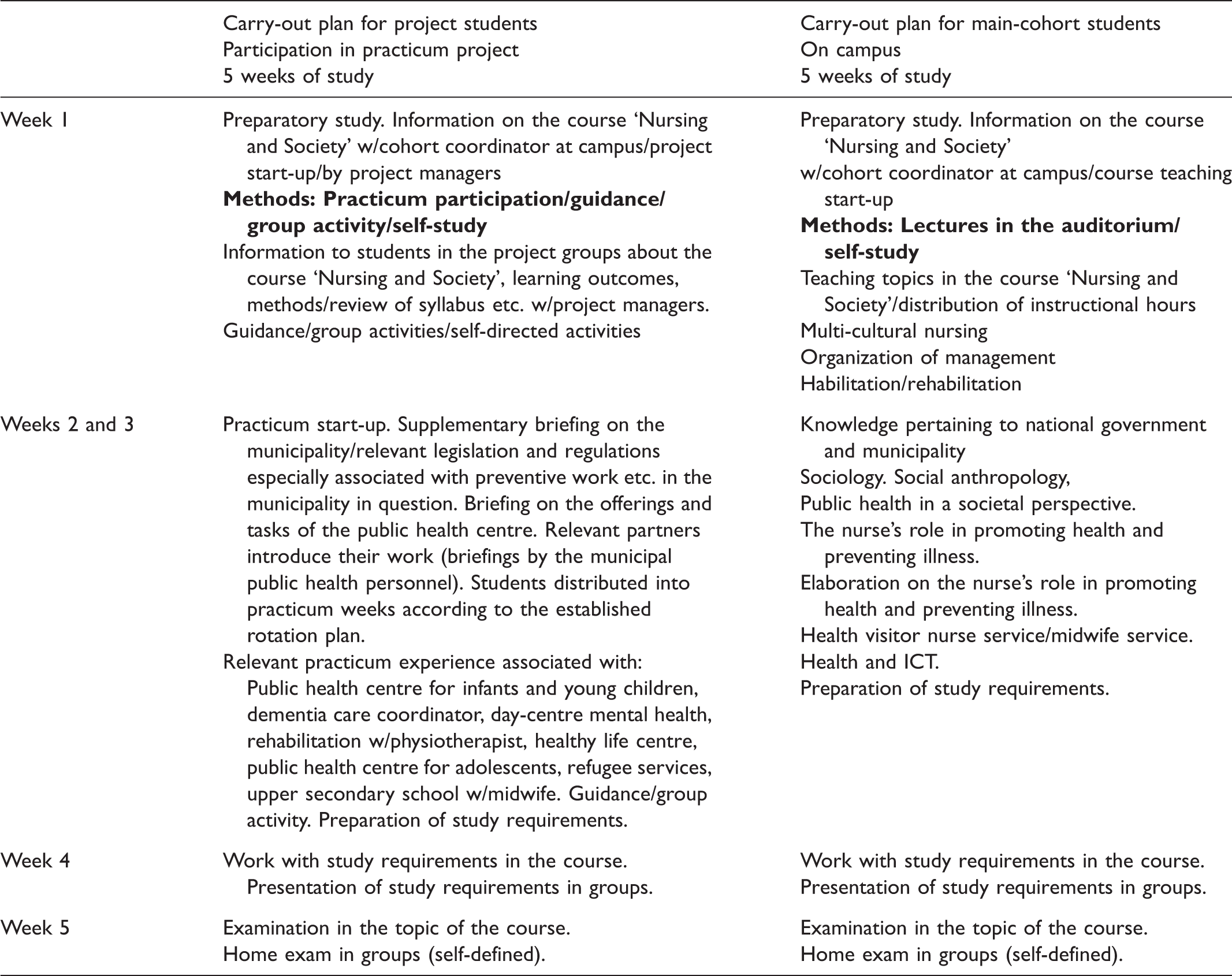
Evaluation of the project
Design
We used a combined method in the evaluation of the project, involving the collection of both quantitative and qualitative data. In the study, we used focus-group interviews and questionnaire surveys. This design enables the researcher to analyse the data separately, and the data from both collection methods support one another. 19
Data collection
We collected data pertaining to the focus-group interviews with project students and a group of practicum advisers. The students were divided in two focus groups, comprising five women in one group, and four women and one man in the other. The groups participated in two interviews each, one on day 1 in the practice arena, and one after participation in practice had ended. Three of the students’ practicum advisers participated in one focus-group interview after the students had left the practical learning arena. The interviews were conducted in the practicum environment and on university premises. The interviews lasted between 30 to 45 minutes. A semi-structured interview guide was used. The guide for the project students contained topics pertaining to the students’ expectations concerning the course, preparedness, experience with the organization of practicum and their evaluation of learning outcomes. The practicum advisers’ guide covered experiences relative to practical aspects of the project and evaluation of anticipated utility value for students. The project managers directed the focus-group interviews, one acted as moderator. The interviews were sound-recorded and later transcribed verbatim.
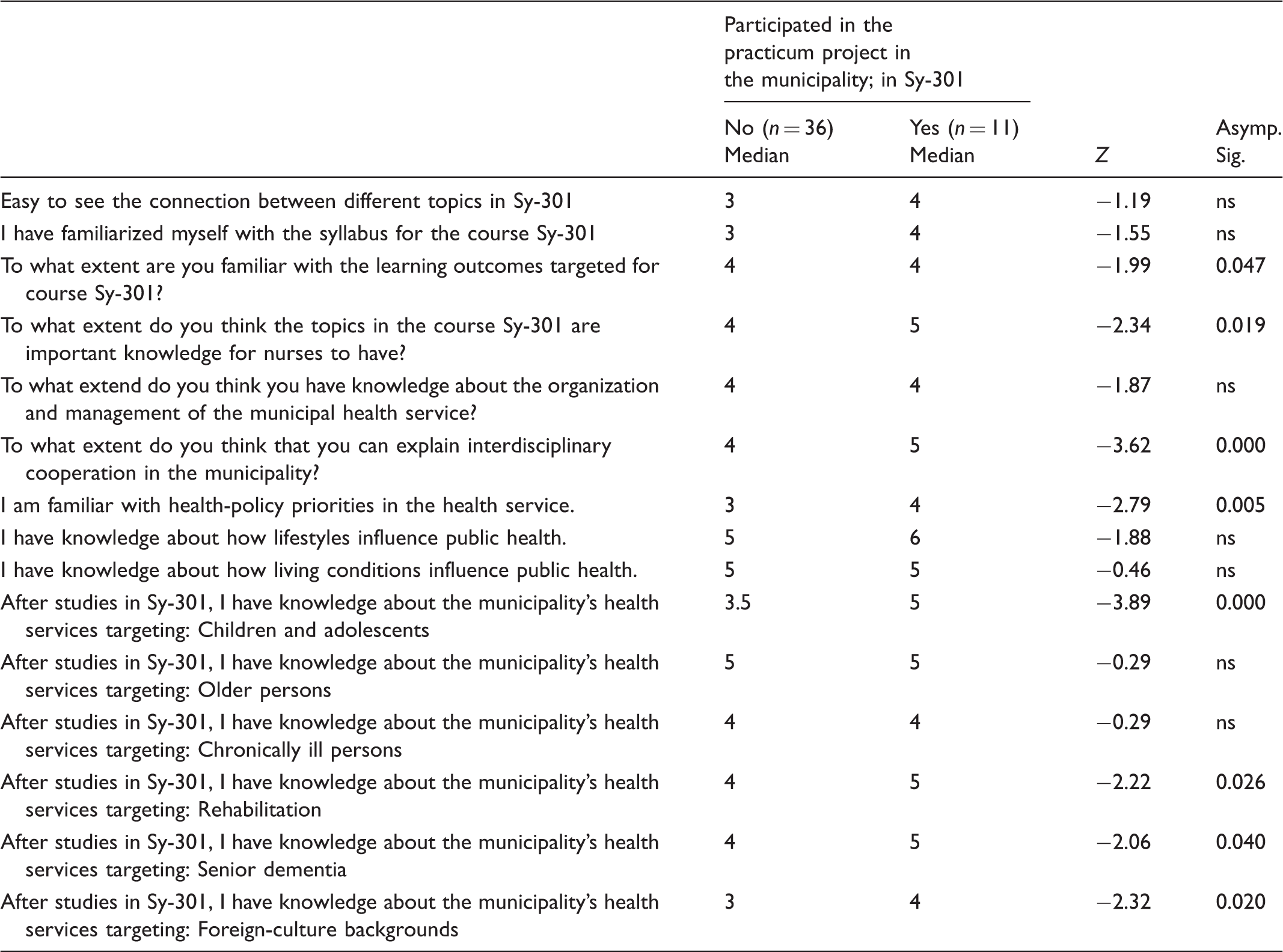
In addition, data were collected from a questionnaire survey. Questionnaires were distributed to the cohort in conjunction with class council after the course had ended and the examination had been taken. The number of eligible students in the cohort was 92. A teacher who was not involved in the project collected the completed questionnaires. The response rate was 51% (N = 47: n = 36, n = 11, see Table 4).
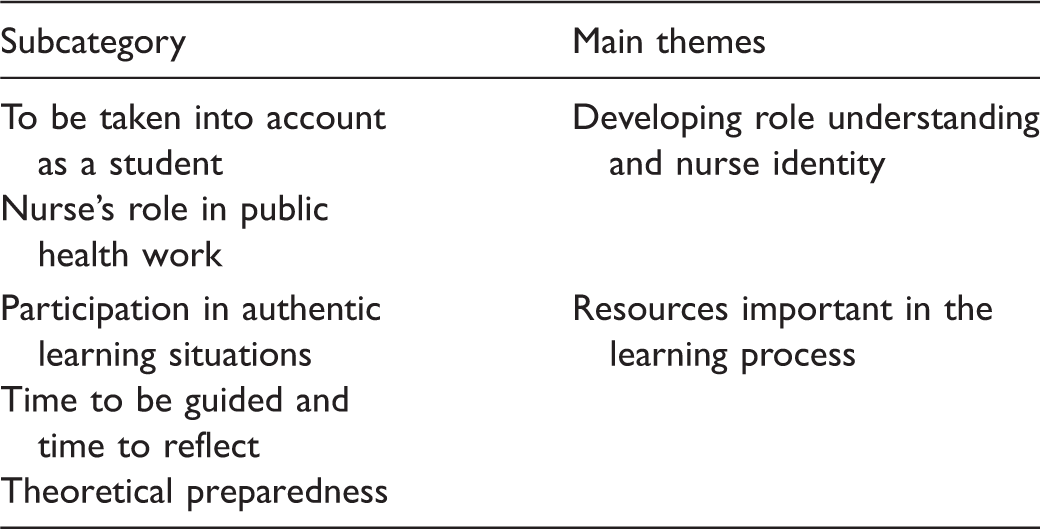
Overview of subcategories and main themes that emerged from analyses of the focus-group interviews.
Results of the questionnaire survey.
Analyses
We coded and then analysed data from the questionnaire survey using SPSS for Windows (Statistical Package of Social Science). Version 22 was used for data analysis. The Mann–Whitney U test was applied to ascertain differences in answers using continual response options between those students who had participated in the practicum project (project students) and those who did not participate (main-cohort students, N = 47).
The project managers conducted the analysis of the focus-group interviews, and both managers participated throughout the entire analysis process. The researchers completed a careful first reading of the transcribed interviews to acquire an initial impression of the whole. Topics from the guides provided background. The analysis was conducted manually using different colours as tools in the systematization of the data. Throughout the analysis process, the researchers repeatedly referred to the research questions. We identified meaning units in the transcribed text, and we condensed and abstracted these into subcategories. The subcategories were abstracted into two main themes. Subcategories and main themes that emerged from the analyses of the interviews are presented in Table 3. Kvale and Brinkmann’s interpretation levels – self-understanding, common sense understanding, and theoretical understanding – were applied in the analysis and interpretation of the data from the focus-group interviews. 20 The project’s pedagogical view guided the theoretical understanding in the analyses.
Ethics
Norwegian Social Science Data Services (NSD) approved the project (25215). The research ethics principles pertaining to information concerning participation and evaluation were duly observed. The participants signed both the project information sheet and the informed consent form. Voluntary participation in project practicum was deemed important because the topic was the subject of a subsequent examination. It was deemed necessary to inform participating students that the opportunity to take part in ordinary academic classes was limited. Information about the survey and the questionnaires themselves were distributed to the cohort in conjunction with class council after the topic had been closed and the examination taken. Participation in the questionnaire survey was voluntary and open to both project students and students from the main cohort. Participation in the class council was not mandatory.
Results
We based the evaluation of the project on focus-group interviews and the conducted survey. The questionnaire survey was carried out after the practical participation was over. The questionnaire survey (Table 4) reveals that the students who participated in the practicum reported greater knowledge of the learning outcomes of the course. They acquired deeper knowledge about interdisciplinary collaboration, about health policy priorities and about various health provisions for some of the groups for whom the municipal health service is responsible, such as children/adolescents, rehabilitation, senior dementia and persons with foreign-culture backgrounds. The students who participated in the practicum reported to a greater extent than did the students in the main-cohort group that they regarded the topics in the course as important knowledge that nurses should possess. No significant differences (ns) were found for the other response options between the main-cohort and the project students.
As the survey results indicate, the students who participated in practice obtained a more relevant learning outcome closer to the expected learning outcome of the course than did students who had ordinary teaching of the course on campus.
The results of the analyses of the focus-group interviews are presented as a whole.
Developing role understanding and nurse identity
To be taken into account as a student
Being met by practicum advisers who had an inclusive attitude was important for the students. The advisers also highlighted this as being important. Feeling included seems to have helped the students to feel secure and confident. One student described his/her experience in the following manner: During the discussion at the young-mothers meeting, I was even able to contribute some input that they listened to. The child welfare representative, the health visitor nurse and one other person were sitting there, and they were listening to a nursing student.
The nurse’s role in public health work
The students emphasized the importance of familiarizing themselves with the existing provisions in the municipality, so that as nurses, as one put it: ‘they know what it is all about, with whom they can cooperate and how this can be done’. The students seem to have gained an understanding of the central role nurses play in public health work. To meet the complexity of today’s health challenges, nurses need to initiate cooperation and cooperate closely with other professionals. One student put it this way: I have become more aware of the things that have to be handled, that there is a help apparatus that one can call on and that, if nurses do not have knowledge about them, things will not be taken care of and one will not get into the right channels; useful knowledge in the role of the nurse.
For third-year students who will soon enter the practical arena as registered nurses, it is important to have a certain overview of the field and to familiarize themselves with the importance of working together with other professionals to promote health and prevent illness. In a municipality, experts in health promotion and preventive health work may be good teachers who are able to illuminate working methods and collaborative relationships that can facilitate good public healthcare.
Resources important in the learning process
Participation in authentic learning situations
The students stated they had perceived their participation in the practicum as promoting learning, as one student put it: ‘To see how things actually work and to observe it, not just read about it’. Another student put it like this: ‘Learn more from being in practicum, and have a few more pegs to hang things on. One can investigate and ask questions in practicum and get a lot of information in return’.
The practicum advisers underscored the importance of participating in practice. They expressed that they deemed it important that students ‘got to see what the municipality had to offer’ in this field. After participating in the project, the students stated that they had acquired knowledge about health provisions they did not know existed.
The results from the survey and from the focus-group interviews indicate that the project students participated in learning situations that gave them a certain knowledge of public health work and of the importance of the public health perspective in nursing.
Time to be guided and time to reflect
The students and the practicum advisers both stressed time as an important aspect in the learning process; lack of time was perceived as inhibiting learning. Both project students and practicum advisers shared the perception that organization of practical learning was time-consuming. All participants experienced rigid and detailed organization of the project to be infeasible, because the practicum advisers were pressured for time and had difficulty accommodating changes in the ongoing project. Minor changes in the schedule resulted in unfortunate interruptions in continuity, since the rotation plan had to be altered and time was wasted.
One student described his/her experience of having insufficient time and a frequently rotating schedule as resulting in disjointed learning: ‘There is a lot to be learned, and there was little time in each place’. Students experienced that time for counselling by the individual practicum advisers was scant, which in turn prevented them from asking for more specific advice, even though they wanted it. It was challenging to find time for reflection in groups. If such a learning arena is to be continued, the participants suggested that it would be an advantage to allocate more time for guidance and reflection.
Theoretical preparedness
The practicum advisers found that the students were not sufficiently prepared in terms of theory before participating in practicum. Being better prepared might have enhanced the students’ learning outcomes, they felt, since time would have been better utilized and the students would have been more receptive to counselling. Nevertheless, consensus among the students revealed satisfaction with practice-oriented teaching in the course. One student described his/her experience in the following manner: ‘I think everyone could benefit from this; one learns in a completely different way in practicum; you absorb a lot subconsciously that you don’t reflect over there and then, but you think about it later’. Another student moderated this somewhat: ‘I feel I would have liked to have some more of the theory. I’m a little like, I want both. I feel, maybe, that there is a depth that I haven’t totally reached’. The students recommended repeating the practicum scheme, but they suggested some changes. Although they were in favour of more theory beforehand, they were at the same time uncertain whether theory instruction could be combined with the practical studies in the practicum environment, since the total time allotted to the course was scant. The students suggested expanding the time spent in the practicum environment.
Discussion
The purpose of this pilot project was to explore whether participation in the municipality’s public healthcare services is a pedagogical approach that enhances nursing students’ acquisition of knowledge about the public health perspective in nursing. The project students found that they were included and invited to participate in the practical arena. Their experience of being taken into account as a student was underlined in the results.
In nurses’ training, the practical field is an essentially important learning arena for students’ acquisition of knowledge.10–12 Researchers underscore the importance of strengthening students’ understanding of the public health perspective in nursing, and they make suggestions in favour of adopting, and making available to more students, the pedagogical methods that are well suited for dissemination of knowledge. 13
Knowledge in the performance of nursing is expressed through judgements, assessments, discretion, attitudes and actions, and will vary in proportion to the student’s pre-knowledge and aptitudes. The students must derive their own experiences, which enable increased academic and personal insight and lead to formation of personal opinions. To participate in dialogue enables expansion of one’s conceptual horizons. This means that we, as supervisors, must have confidence that students bring in important knowledge and that we must have an open and enquiring attitude both to academic material and to the students themselves. In the acquisition of knowledge, a practical field that invites students in as learners, but at the same time as partners, can provide a very favourable learning forum for students of nursing.
Results from participation in the practicum arena show that the project students became acquainted with central parts of the nurse’s role in public health work. The students were welcomed into and included in a shared practical environment that was positive towards student participation and generously imparted knowledge, thus helping the students to gain insight into the nurse’s role in public health work. The practicum advisers who esteemed their own professional competence as important for nurses seem to have been good role models for the project students. Environments that can promote professional learning, among others, were described as: good guidance, the opportunity to participate in learning situations, recognition and autonomy and role clarification. 21
The results show that participation in authentic learning situations was deemed important. The students were given the opportunity to participate in and experience real client situations during the practicum. Learning in practice might be more meaningful than learning in the classroom, since available advisers may help students to reflect and think critically at the same time as they gain practical experience. 22
According to Lave and Wenger, the socio-cultural view of learning emphasizes that the individual is always situated. 17 This means that the individual is a part of a context and must be understood based on the particular context in which he/she is situated. Learning situations will therefore never be identical. They will change in relation to place, participant and situation, as was also experienced by the project students. Proceeding on the basis of the adopted view of learning, being included in a practical environment of professionals and experiencing authentic learning situations in the field can support good learning processes for the student.
As shown in the results, having enough time for guidance and reflection seemed important. Time was allocated for both guidance and reflection, but was perceived as scant.
Latter et al. point out the importance of participation in the practical field, and that nursing students can find important knowledge about public health work there. 23 At the same time, they point to the necessity of having a sufficient number of practicum advisers with the desired competence and good learning situations. This may present challenges in terms of large student cohorts and the availability of relevant practicum environments. The number of project students was limited in this pilot project. Nevertheless, the participants experienced challenges regarding not having sufficient time for guidance and reflection. More time available for guidance and reflection might have promoted a deeper insight into the expected learning outcome. Studies show that providing enough time for counselling students is important for both the students and the advisers; likewise, good organizational frameworks around students’ learning enhance the students’ feeling of security in the learning situation.24–26 Lack of time can be a constraint on the choice of teaching methods in an educational programme that is pressed for time.
Students’ theoretical preparedness before entering a practical arena is important in the learning process. Students’ own initiative to prepare themselves theoretically is important in nursing education.
In this case, the learning process may have been reinforced if the project students had come better prepared in terms of theoretical knowledge, which would then have potentially closed the gap between theory and practice. The subject matter of the course ‘Nursing and Society’ is broad, and much knowledge has to be acquired during a brief period of study. There is also little time to prepare for and read the syllabus in the interim between different academic courses. However, in the questionnaire survey, no differences were found relating to the variables pertaining to student preparedness for the course. The topics in the course are crucial to understanding and implementing the intentions in new legislation and public health reports. The evaluation shows, nonetheless, that the project students reported in their questionnaires a higher degree of acquaintance with and knowledge about important aspects relevant to the public health perspective in nursing than did their fellow students in the main cohort.
Based on the results, there are grounds to assume that participation in practicum was suitable as a teaching approach and helped to enhance nursing students’ understanding of the public health perspective in nursing, of public health work in general and to clarify for the students, to some level, the nurse’s role in this work. However, on the basis of this study alone, it is impossible to ascertain the specific depth of the project students’ understanding. This lies outside the scope and purpose of the study. Nevertheless, some of the results from the questionnaire survey reveal that the project students responded more positively on several important variables than did the students from the main cohort.
Knowledge about and understanding of interdisciplinary collaboration, health in a lifetime perspective and multicultural understanding will be an important knowledge base for health personnel in the coming years.2,4,14 The answers given by the project students in the survey may be interpreted as a positive expression of such an understanding, as their answers are significantly different from those of the main cohort. Both their own experience in interdisciplinary work in the practical environment and participation in various rotational foci seem to have helped to clarify content in the above-mentioned concepts. This may have reinforced the perception of possessing knowledge. When it comes to other variables, no significant differences were found between the main-cohort group and the project students. Basic knowledge from earlier years of study, along with the main cohort’s participation in classroom teaching may have affected the balance between the responses in this respect. It is also possible that some of the topics were not sufficiently exposed or learned by the students in the practical environment.
Methodological considerations
The researchers’ pre-understanding may have skewed interpretation of the findings in a positive direction, since both researchers are keenly interested in the public health perspective and regard the practical field as an important contributor and collaborative partner in the students’ learning process. In addition, our enthusiasm may have had an influence on students and urged them to show interest in participating in the project; a participation that was vital for carrying out the project. Those students who showed an interest may have already been interested in public health work in the municipality and found in the project an opportunity to get in contact with this local practical environment. The students’ attitude towards and knowledge about the public health perspective was not mapped beforehand. This can be considered a weakness in terms of method. We are unable to generalize based on the results of this study; the number of participants was too small and the response percentage for the questionnaire survey was only 51%, which provides a limited statistical sample and precludes generalization. By using a design comprising combined methods, however, the evaluation of the project’s results is strengthened. Both researchers analysed and interpreted the focus-group interviews, and the results have been a subject of discussion. These factors strengthen the quality and credibility of the study.
Conclusion and implications for nursing education
The results reveal that participation in the municipality’s public healthcare services in the study of the course ‘Nursing and Society’ contributed towards enabling the students enrolled in the practical study of the subject to visualize the public health perspective in nursing.
Results show that both project students and their practicum advisers regarded the public health perspective as important for the nurse’s role and that this perspective should be strengthened and brought to students’ awareness in education. Requirements made of nurses place particular emphasis on the need for students to have an enhanced general knowledge base within the public health perspective in nursing education. Participation in the practical field in the study programme course ‘Nursing and Society’ has proved to be beneficial and suitable as a teaching approach to promote such an understanding. The study has not fostered knowledge concerning the depth and robustness of the project students’ understanding. We recommend, therefore, that a follow-up study be conducted that can scrutinize these factors. Our recommendation is in favour of a continuation of a practice-oriented course of study, expanding, if possible, the time allocated for completion. Knowledge from this project will also be relevant for other nursing education programmes.
Footnotes
Funding
This research received no specific grant from any funding agency in the public, commercial, or not-for-profit sectors.
Conflict of interest
The authors declare that there is no conflict of interest.