



Abstract
Motivated by role theory and the concept of the “self-fulfilling prophecy”, this study examines how entries into marriage and parenthood affect the fertility ideals of men and women in China. To address this question, we apply propensity score matching estimators to data from the China Family Panel Studies (CFPS) within a counterfactual framework. We find that marriage and parenthood have a positive effect on fertility ideals, and this result remains robust when we apply difference-in-differences matching estimates. In terms of gender asymmetry in marriage, men and women respond differently to marriage and parenthood. Entry into marriage has a positive effect on men's fertility ideals, while parenthood influences women's ideals. Beyond the average treatment effect, we further examine heterogeneous treatment effects as a function of estimated propensity scores. The study reveals that the life transition treatment effect is the highest among those with a moderate propensity for entering into marriage and parenthood.
It has been nearly 30 years since China's total fertility rate (TFR) first fell below the replacement level. The most recent China Census, conducted in 2020, revealed that China's TFR had dropped to 1.3. With the relaxation of national family planning policies, China's future fertility will increasingly depend on ideational factors, namely, how many children Chinese people wish to have (Zhuang et al., 2020).
Despite the widespread interest in this topic, the existing research has primarily focused on describing trends in fertility willingness at the macro level (Yu and Xie, 2022) and examining determinants of fertility willingness through subgroup comparisons using cross-sectional data at the micro level (Yang et al., 2023). The individual-level changes in fertility ideals are not well understood. Consequently, how people adjust their fertility ideals as their lives unfold remains unknown. Fluidity in fertility-related attitudes across life transitions, if true, would challenge conclusions drawn from measurements of fertility ideals on the basis of cross-sectional data. For instance, how should we interpret responses to survey questions measuring fertility ideals among unmarried young adults who may not intend to start childbearing for many years to come?
This study aims to uncover the impact of life transitions in the family domain, specifically entries into marriage and parenthood, on fertility ideals. Role theory and the concept of the “self-fulfilling prophecy” (Merton, 1948; Thornton et al., 1995) suggest that when single young adults enter into marriage and parenthood, they may respond to the social meanings or expectations associated with their new life roles by personally conforming to those social expectations and internalizing them as their own beliefs. For example, before marriage, questions about the ideal family size may be perceived to be too distant in the future to be relevant for some young adults. It is only after they get married that they realize the societal expectations associated with this new role, which may lead them to reconsider and adjust their fertility ideals.
Existing research has found evidence for changes in fertility willingness associated with the transitions into marriage and parenthood (Hayford, 2009; Liefbroer, 2009). However, marriage and parenthood may serve as both the cause and the effect of fertility ideals if individuals who initially desire more children then self-select into marriage and parenthood. To mitigate the influence of self-selection bias and examine the causal effects of entries into marriage and parenthood on fertility ideals, this paper constructs a counterfactual framework and applies it to a longitudinal database. The study employs propensity score matching to match the pretreatment fertility ideals and other background demographic characteristics between those who enter into marriage or parenthood and those who do not. The identification assumption is that if married individuals and parents did not experience the treatment of marriage and parenthood, their fertility ideals would be the same as their matched, actually untreated counterparts. In addition, we also employ the difference-in-differences (DID) matching method as a robustness check to absorb the influence of unobservable factors that may contribute to differences between the treated and untreated groups.
For ideational measurement, we focus on fertility ideals. We realize that our choice departs from past research that examined the association between fertility intention and life events (Hayford, 2009; Liefbroer, 2009). Research on fertility intention is largely motivated by the desire to predict fertility behaviors according to individual and contextual constraints, in accordance with planned behavior theory (Fishbein and Ajzen, 1975). In contrast, the construct of the “fertility ideal” employed in our study encompasses broader family size preferences, which more closely reflect societal norms (Trent, 1980). For example, fertility ideals may evolve in times of cultural change and can provide useful insights into shifting family norms and changing attitudes toward family, childbearing, and children (Philipov and Bernardi, 2012; Sobotka and Beaujouan, 2014). Consequently, employing the fertility ideal reduces the influence of self-selection compared to personal fertility intention used previously.
Our paper proceeds as follows. First, we introduce the theoretical background and propose the research questions. Next, we present our research design and method to estimate the treatment effect of life transition events on fertility ideals. In the subsequent section we present our empirical findings. The final section concludes.
Theoretical background
Life transitions in family formation
The process of becoming an adult has been characterized as a series of transitional events that encompass taking on new roles and social positions. These may include completing education, entering the workforce, getting married, and starting a family. These transitions can be divided into two main categories: school-to-work transitions and family formation transitions. Past research has consistently shown that transitions associated with family formation are closely linked to changes in fertility expectations (Hayford, 2009).
During a transition, individuals not only respond to the objective aspects of a new situation but also, and sometimes primarily, to the meanings or expectations associated with that situation. This perspective aligns with role theory, which suggests that individuals have expectations for their own behavior and the behavior of others within social positions. The transitions into marriage and parenthood involve a shift in social identity, moving from being single to becoming a spouse and from being a non-parent to becoming a mother or father. These roles carry role-specific social expectations (Thornton et al., 1995).
Merton's concept of the “self-fulfilling prophecy” (1948) suggests that public expectations about a situation can act as prophecies, leading to the formation of genuine beliefs that subsequently shape new developments, causing initially “false” beliefs to become true. Social beliefs regarding the roles of spouse or parent can inadvertently influence individuals to behave in ways that align with those beliefs. Consequently, once individuals enter into marriage and parenthood, their subsequent beliefs and behaviors, including their fertility ideals, are influenced by the meanings attributed to those roles; this is the main focus of our study.
To be more specific, young adults who are not married or have not become parents have most likely yet to contemplate the meanings or social expectations associated with those roles. They may not even foresee marriage and fertility as significant events in their near future. In the absence of concrete plans, when asked about their ideal family size, these young adults may be inclined to give socially desirable responses or draw from their own family experiences, including their parents’ fertility preferences and behaviors (Axinn et al., 1994).
However, as young adults actually enter into marriage or parenthood, their new roles expose them to fresh beliefs shaped by the social expectations associated with these positions. Consequently, they may integrate their new experiences or beliefs into their ideal family size and revise their previous notions. For example, advice from parents-in-law could shift women's fertility ideal in an upward direction (Ji et al., 2015). These revisions are likely to be more realistic and grounded in their individual life experiences, reflecting more reasonable assumptions about their future (Stolzenberg and Waite, 1977).
Transition sequence
In many other developed societies such as those of the United States and Western Europe, the timing and sequence of transitional events have become highly variable, rendering traditional sequences of transitions inapplicable (Buchmann and Kriesi, 2011; Furstenberg, 2010; Settersten and Ray, 2010). In contrast, contemporary China exhibits a relatively stable pattern of transitioning to adulthood, particularly when it comes to family formation (Djundeva et al., 2019; Fulda et al., 2019). Despite being part of a rapidly changing society, young adults in China still adhere to a timely, orderly, and structured transition to marriage and parenthood (Tian, 2016), despite a trend of delayed marriage (Yu and Xie, 2015). Marriage remains a prerequisite for parenthood in China, with nonmarital childbearing remaining relatively uncommon in behavior and socially unacceptable in ideals (Yeung and Hu, 2016). Furthermore, East Asian marriages are characterized by expectations of a swift transition to parenthood, with a strong emphasis on childbearing during the early years of marriage (Raymo et al., 2023).
The ordered nature of marriage and parenthood in China is influenced by cultural traditions and policies. Many aspects of family expectations and obligations have remained unchanged over the past half-century, particularly regarding the significance of children within marriage (Yeung and Hu, 2013). State policies also play a role in shaping the sequencing of family formation events, as marriage is required to get access to family planning services. Therefore, in this study, we consider entries into marriage and parenthood as sequenced transitions.
The self-selection into family formation events
Previous literature has demonstrated a positive association of being married and having children with a higher level of fertility willingness (Abma and Martinez, 2006; Liefbroer, 2009). However, it is important to note that these findings do not establish a causal relationship between family formation and ideal family size. The connection between marriage, fertility behavior, and fertility ideals can be bidirectional. In other words, individuals may self-select into marriage based on their pre-existing diverse fertility preferences, independent of external influences or treatments. This bidirectional relationship is particularly relevant in the context of China, where there is a cultural expectation of a swift transition to parenthood after marriage (Yu, 2021). As a result, inherent differences may exist between women who desire multiple children and those who desire no children, leading to distinct life experiences that subsequently shape changes in fertility ideals.
Diverging from much of the existing literature, which primarily examines the association between family formation and ideals or expectations of family size, our research aims to specifically address the issue of self-selection in family formation. To achieve this, we adopt a counterfactual framework and utilize propensity score matching to isolate the causal effects of life transitions. Our primary focus is to estimate the average treatment effects so as to address our key research question: Does entry into marriage or parenthood influence the fertility ideals of young adults?
By utilizing a counterfactual approach and considering potential self-selection biases, our research also aims to provide more robust and causal insights into the relationship between family formation and fertility ideals. After establishing the average treatment effects, we then proceed to explore the heterogeneous treatment effects by examining how the propensity for entering into marriage and parenthood influences the impact of these events. Specifically, we investigate whether individuals with a higher or lower propensity for marriage or childbirth are most affected by these life transitions.
Through our research, we seek to contribute to a better understanding of how entering into marriage or parenthood may influence the desired family size of young adults. By analyzing the variations in treatment effects based on individual propensities, we can gain insights into the differential impact of these life transitions on fertility ideals. This will further enhance our understanding of the complex relationship between family formation and desired family size among young adults.
It is worth noting that fertility ideals can be altered by factors beyond life transition events, such as period effects. Changes in macro-level social norms regarding child rearing and family size can contribute to individuals’ changing expectations about their ideal family size. However, unlike life transition events that are unique to each person, period effects resulting from social events or changes in social norms affect all individuals exposed to the same circumstances simultaneously.
Given this understanding, we assume that in the absence of individual life events, period effects would be the same for both the treated and untreated groups. This assumption allows us to utilize the DID matching method to account for and absorb the potential period effects, even if they remain unobserved. By employing this approach, we aim to mitigate the influence of period effects and isolate the causal impact of life transition events on fertility ideals. This helps us gain more accurate insights into the specific effect of entering into marriage or parenthood on individuals’ desired family size, beyond any broader social changes or period effects.
Gender asymmetry
In the East Asian context, particularly in relation to marriage, significant gender disparities exist. These disparities manifest in various forms, including an unequal division of domestic labor and the prevalence of societal norms that prioritize intensive maternal investment in children (Luo and Chui, 2019; Raymo et al., 2023). As a consequence, women face a higher risk of sacrificing their career development (Ji and Zheng, 2020). The asymmetric gender roles associated with family formation assign distinct meanings and responsibilities to men and women, shaping their gender-specific experiences and expectations within marital relationships and parenthood.
One direct consequence of these asymmetric gender relations is that the determinants of entries into marriage and parenthood differ between genders. For instance, economic prospects play a crucial role in men's decision making regarding marriage and childbirth, whereas this is not the case for women (Yu and Xie, 2015). Additionally, it is not only fertility ideals themselves that are influenced by these asymmetric gender relations, but also the way in which they are altered in response to other life events (Lacovou and Tavares, 2011).
Building upon our understanding of these asymmetric gender relations, our research aims to further explore the effects of life transitions on fertility ideals by examining them separately for men and women. By examining these effects separately, we can gain a better understanding of how life transitions impact fertility ideals within the context of gender-specific experiences and expectations. This gender-specific analysis allows us to delve into the nuances and variations in the effects of life transitions on fertility ideals, contributing to a more comprehensive understanding of the complexities surrounding family formation and fertility preferences.
Research design
In our study, we view treatment as an external intervention given to a unit. We consider two treatments: marriage (
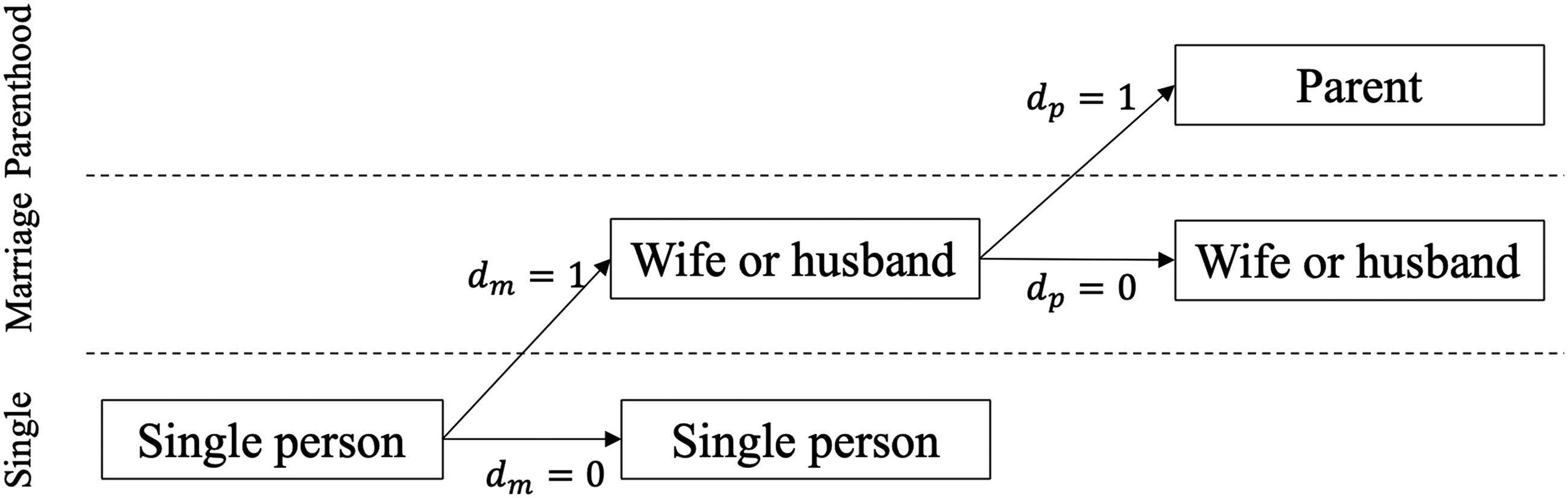
Life transitions of marriage and parenthood in China.
We denote
Potential outcomes in different treatment statuses.
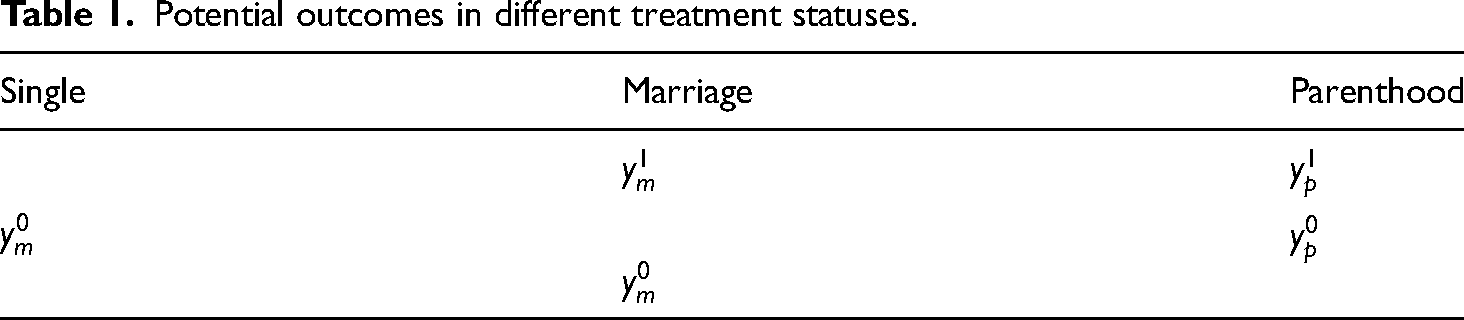
Moreover, Table 1 clearly illustrates that the population for the two treatments is not directly comparable due to data truncation. We assume that those who remain unmarried are not at risk of childbearing (as indicated by the blank bottom-right corner of the table). To be conservative, we exclude those who experience both the marriage and parenthood transition to estimate the net effect of marriage. This leads to incommensurable populations between the two treatments.
Our objective is to estimate the treatment effects of marriage or parenthood. If the respondents were randomly assigned to the treated or untreated group, we can compare the outcome variables between the observed treated and untreated groups to yield the average treatment effect (ATE), as described in equation (1):



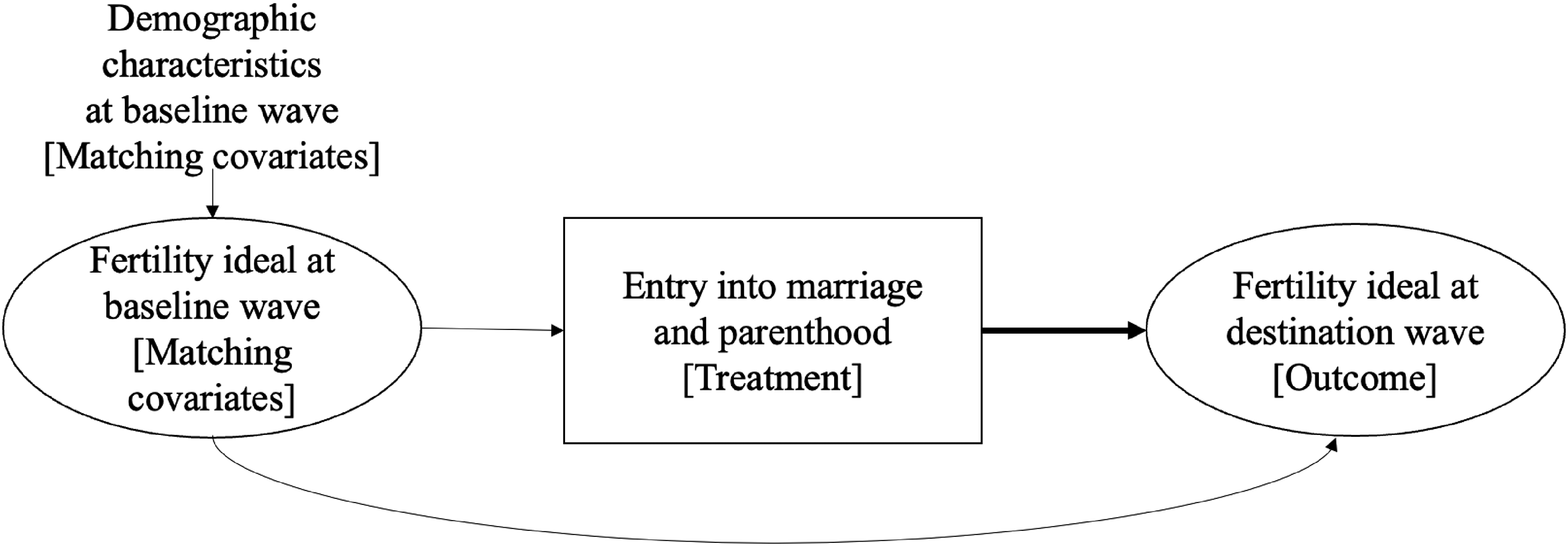
Schematic diagram for the propensity score matching design.
We assume that, conditional on the baseline fertility ideal and demographic characteristics, the fertility ideal at the later stage is independent of the entry into marriage or parenthood. This assumption allows for the estimation of the causal effect of marriage and parenthood on fertility ideals by addressing potential confounding factors through the propensity score matching approach.
Using the estimated propensity score, we employ nonparametric matching methods to construct control matches for each treated unit by calculating a kernel-weighted average over multiple persons in the untreated group. The matching method aims to balance the distribution of covariates between the treated and untreated groups, ensuring that there are no significant differences in the average values of covariates and the propensity score between treated and untreated groups. By doing so, we can create a more comparable group of untreated units that closely resemble the treated units in terms of observable characteristics, reducing the potential bias in estimating the treatment effect.
Compared to traditional pairwise matching methods, the kernel matching method offers the advantage of reducing the asymptotic mean squared error (Heckman et al., 1997). It can be conceptualized as a weighted regression, where the kernel weights depend on the distance between each observation in the untreated group and the treated observation for which the counterfactual is being constructed. To further adjust for any remaining covariate imbalance, we apply both Ordinary Least Squares regression and Poisson regression models. Note that the ideal family size can be regarded as a counting variable. Inferences are made within the regions of “common support”, where we observe both treated and untreated cases. This allows us to make valid comparisons between the treated and untreated groups and draw reliable conclusions regarding the treatment effects on fertility ideals.
It is important to acknowledge that the conditional independence assumption, or the ignorability assumption, is just an assumption, because we cannot know in advance which covariates should be included. The selection of covariates to control for confounding factors is based on our best knowledge and available data. However, there is always a possibility that unobserved or unmeasured covariates may exist that could confound the relationship between treatment and outcome, such as period effects. As a result, there may be systematic differences between the treated and untreated outcomes even after conditioning on observable variables. In order to address this concern, we utilize a DID matching strategy, as defined by Heckman et al. (1997), as a robustness check for the standard matching estimator.
The DID matching method allows for temporally invariant differences in outcomes between the treated and untreated groups. It is analogous to the standard DID regression estimator but reweights the observations based on the weighting functions used by the matching estimators. This approach removes any time-invariant systematic differences between the two groups, conditional on the propensity score. In our context, this is achieved by subtracting a cross-sectional matching estimate of the pre-random-assignment difference from a cross-sectional matching estimate of the post-random-assignment difference, as described in equation (5):
The estimation we discussed previously focused on estimating the overall treatment effect. However, it is important to recognize that individuals may systematically vary in their responses to a specific treatment. In order to explore the heterogeneity of treatment effects, we further investigate how the effects may vary by the propensity for treatment. Specifically, we are interested in examining whether the effects on fertility ideals are stronger or weaker for groups with a high or low propensity for treatment. By analyzing the differential treatment effects based on the propensity for treatment, we can gain a deeper understanding of how individual characteristics influence the impact of the treatment on fertility ideals.
To examine the heterogeneous treatment effects as a function of the propensity score, we employ the smoothing-differencing method introduced by Xie et al. (2012). This method involves fitting two separate nonparametric regression models for the outcome variable on the propensity score, one for the treated group and one for the untreated group. We use local polynomial regression with an Epanechnikov kernel method as a smoothing device, with a degree of 1 and a bandwidth of 0.2. By fitting these group-specific regressions, we can estimate the relationship between the outcome variable and the propensity score for both the treated and untreated groups separately. The differences between the group-specific regressions provide an estimate of the heterogeneous treatment effects, allowing us to examine how the treatment effects vary across different levels of the propensity score. This approach helps us understand how individual characteristics, as represented by the propensity score, influence the impact of treatment on the outcome variable.
Data
The data analyzed in this study came from the China Family Panel Studies (CFPS), which is a comprehensive longitudinal survey conducted by Peking University. The CFPS provides nationally representative sample data on Chinese individuals, families, and communities. The survey was launched in 2010 and features a sampling design that ensures the sampled respondents represent approximately 95% of the total population. The initial survey included 14,960 households located across 25 provinces in China in 2010. Subsequently, biennial follow-up surveys have been conducted to gather data on various aspects of individuals’ lives, including family dynamics, socioeconomic status, and attitudes.
For this particular study, we use the 2014 and 2018 waves of the CFPS, which contain questions regarding ideal family size. Among these two waves, the 2014 wave is considered the pretreatment period, while the 2018 wave is regarded as the post-treatment period. Given the focus of this study on young adults, we restrict our sample to individuals under 35 years old in 2014. This age group is chosen as it represents the stage in life when most individuals have married and had their first child (Yu and Xie, 2021). By limiting the sample to this specific age group, we can analyze the effects of marriage and parenthood on fertility ideals among young adults in China.
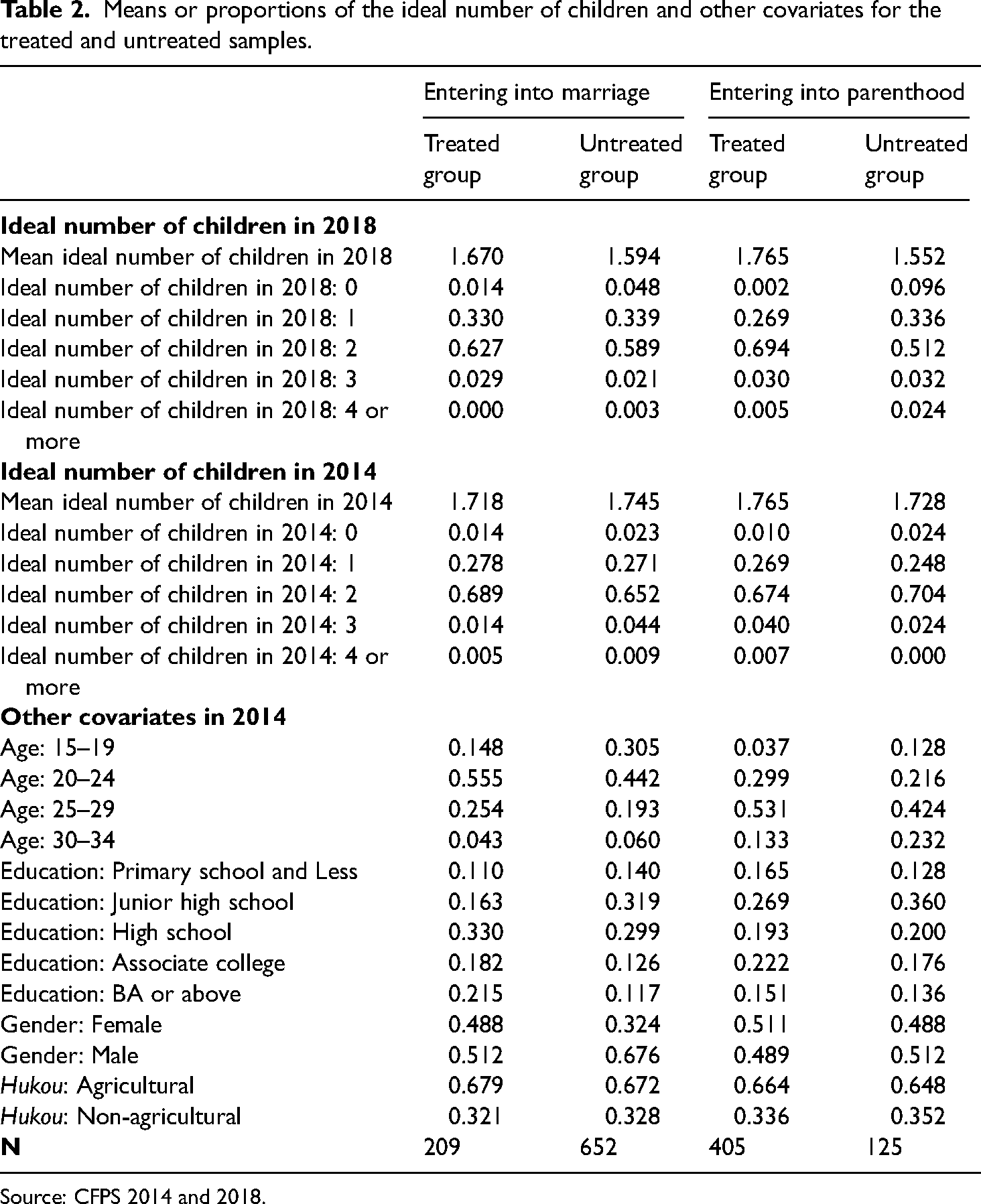
To identify the treatments of marriage and parenthood, the sample is divided into two subsamples. The first subsample includes all young adults who were unmarried in 2014. Within this subsample, the treated group consists of individuals who later got married but did not have a child by 2018 (N = 209), while the untreated group comprises those who remained unmarried from 2014 to 2018 (N = 652). The second subsample includes all married young adults who did not have a child in 2014. Within this subsample, the treated group comprises individuals who had a child by 2018 (N = 405), while the untreated group consists of those who remained childless as of 2018 (N = 125).
The outcome variable of interest in this study is the fertility ideal, which is measured by asking respondents the question: “Regardless of policy restrictions, how many children do you think is ideal?” The response options for this question range from 0 to 10, representing the number of children that individuals perceive as ideal.
Table 2 presents the distribution of fertility ideals and the background characteristics of the treated and untreated groups. Upon examining the table, it is evident that there are some differences between the treated and untreated groups in terms of their background characteristics. Specifically, the untreated group consists of younger individuals, individuals with lower levels of education, and a higher proportion of male respondents, compared to the treated group. These differences highlight the need to account for these factors when analyzing the effects of marriage and parenthood on fertility ideals.
Means or proportions of the ideal number of children and other covariates for the treated and untreated samples.
Source: CFPS 2014 and 2018.
Figure 3 illustrates the changes in the mean number of the fertility ideal before and after the treatment, with a breakdown by gender. The findings indicate that most individuals express a desire for children when they are young. However, among those who are married, there is no significant increase in the fertility ideal family size. On the other hand, the group that remains unmarried or childless tends to decrease their fertility ideal over time. This suggests that marriage alone may not necessarily lead to a change in the desired family size, while individuals who have not entered into marriage or parenthood may alter their fertility ideals to a lower number.
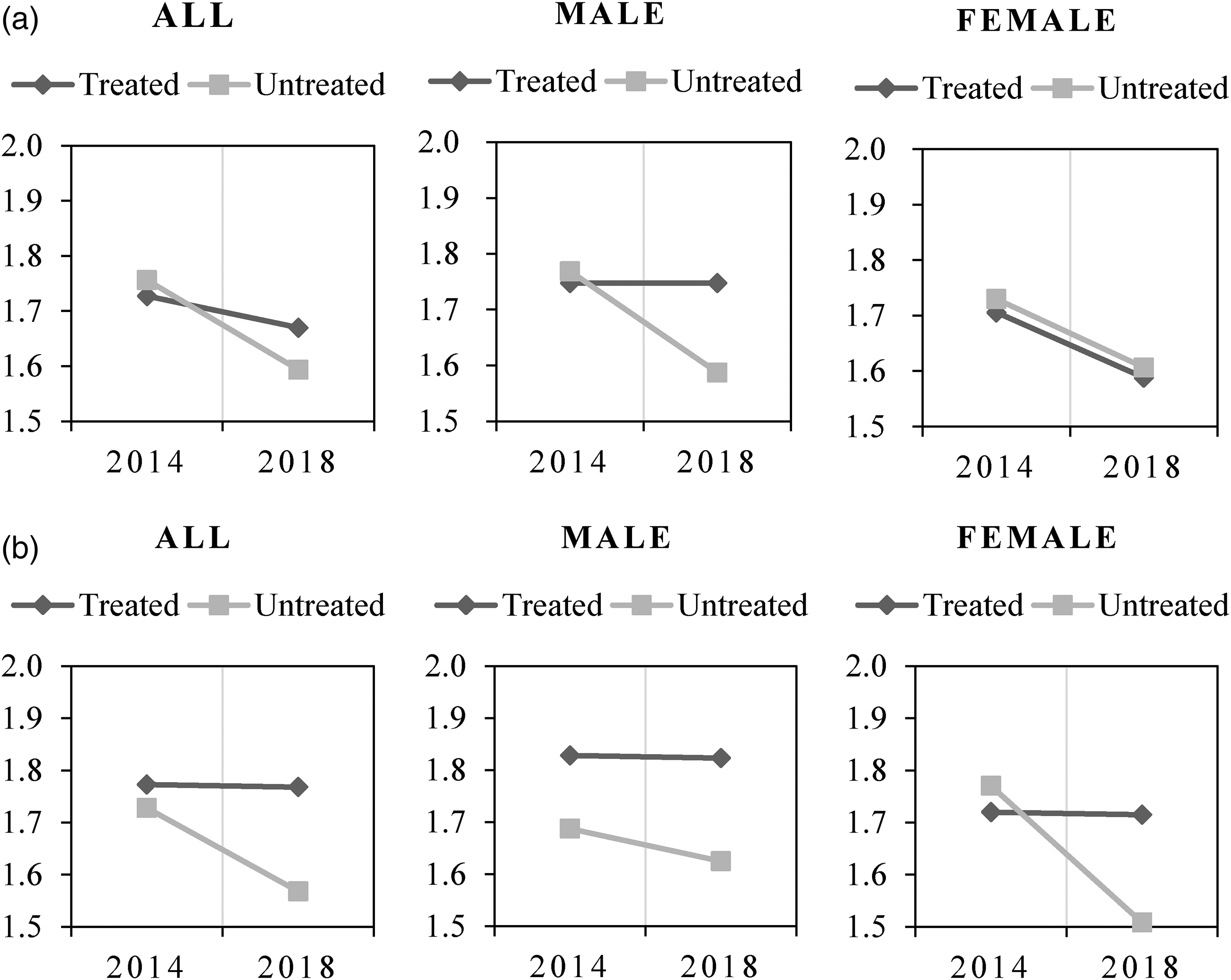
(a) Mean number of the ideal number of children pre- and post-marriage within the treated group and untreated group. (b) Mean number of the ideal number of children pre- and post-parenthood within the treated group and untreated group.
When analyzing the fertility ideal by gender, we observe distinct patterns. Specifically, men exhibit more pronounced changes in fertility ideals after the treatment of marriage, while women show greater changes following the parenthood treatment. For the marriage treatment, the difference in the mean difference between the treated and untreated groups before and after the treatment is 0.18 for men and 0.01 for women. In contrast, for the treatment of parenthood, the difference in difference in the mean is 0.06 for men and 0.26 for women.
Results
Propensity score matching for life transitions
The first step in our analysis involves estimating the propensity scores for each respondent in the sample using a logit regression model. The propensity scores represent the probabilities of entering into marriage and parenthood given a set of observed covariates. Figure 4 displays the density of the estimated propensity scores for the treated and untreated groups on the left side of Panels A and B. The solid lines represent the treated group, while the dashed lines represent the untreated group. From the figure, we observe that higher propensity scores are indeed associated with a greater number of treated units compared to untreated units. The density distributions of the propensity scores highlight the differences in the likelihood of being in the treated or untreated groups based on observable characteristics.
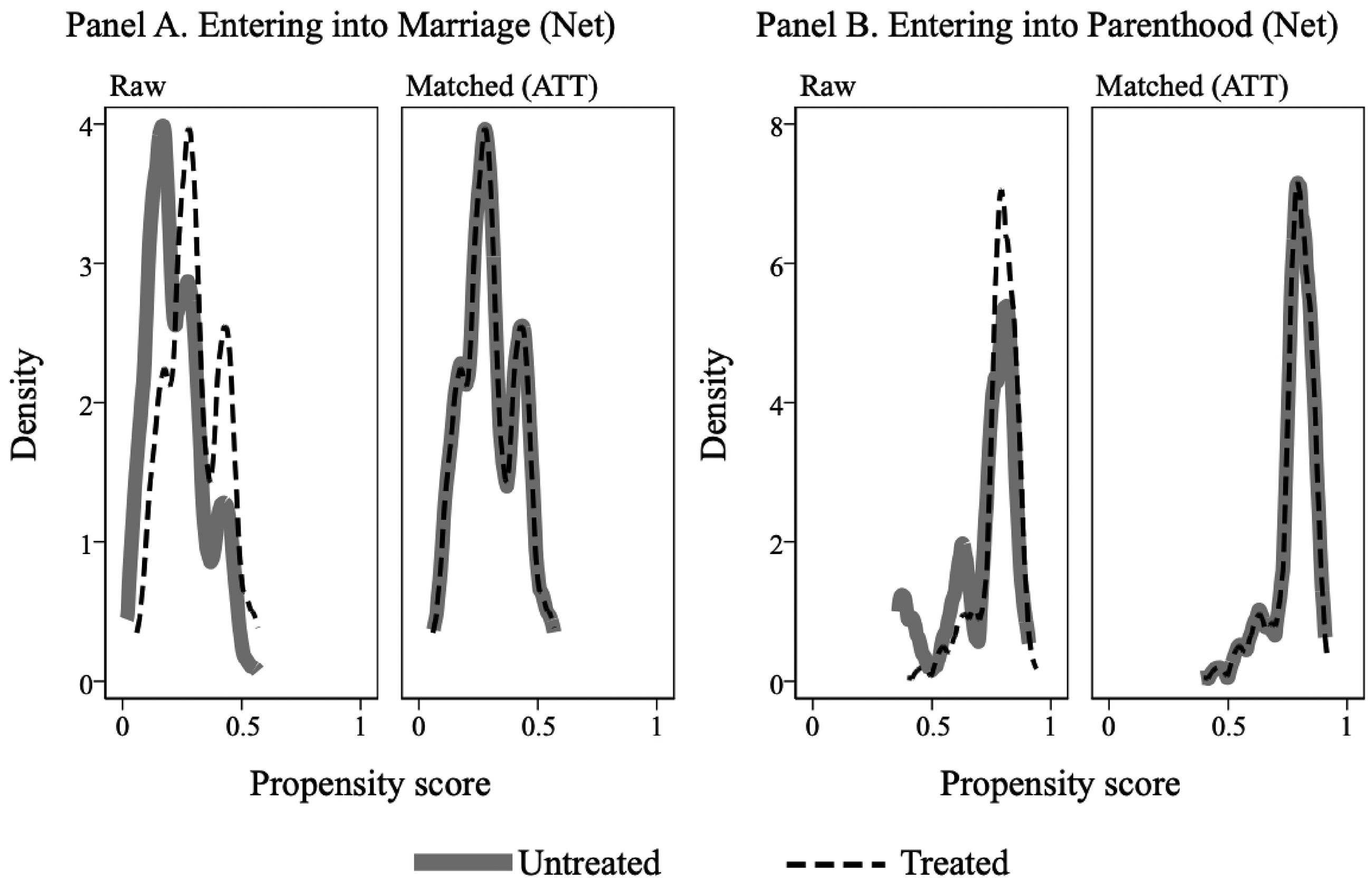
Estimated propensity scores of entering into marriage and parenthood.
On the right side of Panels A and B in Figure 4, we present the matching results achieved through the kernel method. The solid and dashed lines virtually overlap, indicating a high degree of similarity between the treated and untreated groups after matching. This visual representation suggests that the untreated respondents have been successfully matched to their treated counterparts for both the marriage and parenthood treatments. The matching procedure has effectively balanced the distribution of propensity scores between the treated and untreated groups, creating comparable subgroups for the subsequent analysis. This matching process enhances the validity of our estimates and allows us to draw more robust conclusions about the treatment effects on fertility ideals.
The matching process requires a common support between the treated and untreated groups. However, there are small intervals near the upper and lower bounds of the propensity score that do not satisfy this condition. This is partly due to the limited pool of untreated cases, which may not be large enough to achieve perfect matching in these regions. We delete the cases that do not meet the common support condition for each treatment. Specifically, we removed 19 cases from the untreated group for the marriage treatment, as well as 7 cases from the treated group and 5 cases from the untreated group for the parenthood treatment.
Overall, the propensity score does not span a complete continuous scale from 0 to 1. Specifically, it is capped at the upper end for the marriage treatment and bounded at the lower end for the parenthood treatment, as depicted on the x-axis of Figure 4. This discrepancy is attributable to the sequential transition from marriage to parenthood. Individuals with a very high propensity for entering into marriage often proceed to parenthood shortly after getting married, experiencing both marriage and parenthood within the four-year period covered by our data. However, our aim is to examine the net effect of marriage, so we exclude these participants, resulting in excluding cases with high-end propensity scores for marriage. Simultaneously, we aim to isolate the net effect of parenthood, so we restrict the sample to those who are married. Many individuals with a low propensity for having a child will not get married at all and, therefore, are not at risk of giving birth. Consequently, there is a gap in the lower end of the propensity score for the parenthood treatment. As shown in Table 1, the subsamples for the two treatments are not comparable.
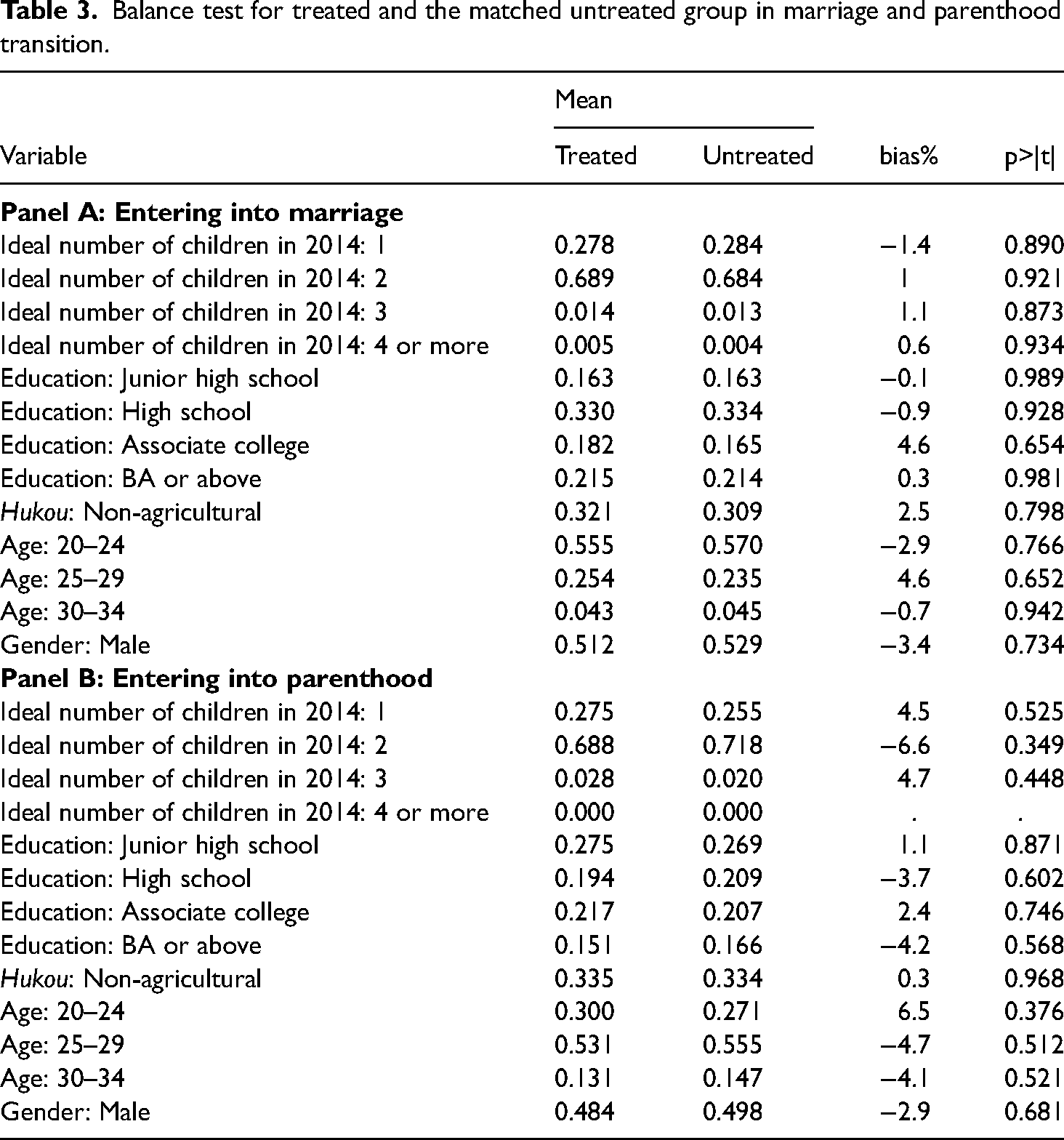
The balance tests conducted in Table 3 reveal that there are no significant differences between the treated and untreated groups in terms of their pretreatment fertility ideals and demographic characteristics. This suggests that, after the matching process, the observable characteristics of the two groups are similar. Building upon this observation, we further assume that the underlying unobservable characteristics between the treated and untreated groups are also similar, which enhances the validity of our analysis and supports drawing causal inferences based on the matched samples.
Balance test for treated and the matched untreated group in marriage and parenthood transition.
Effects of marriage and parenthood on fertility ideals
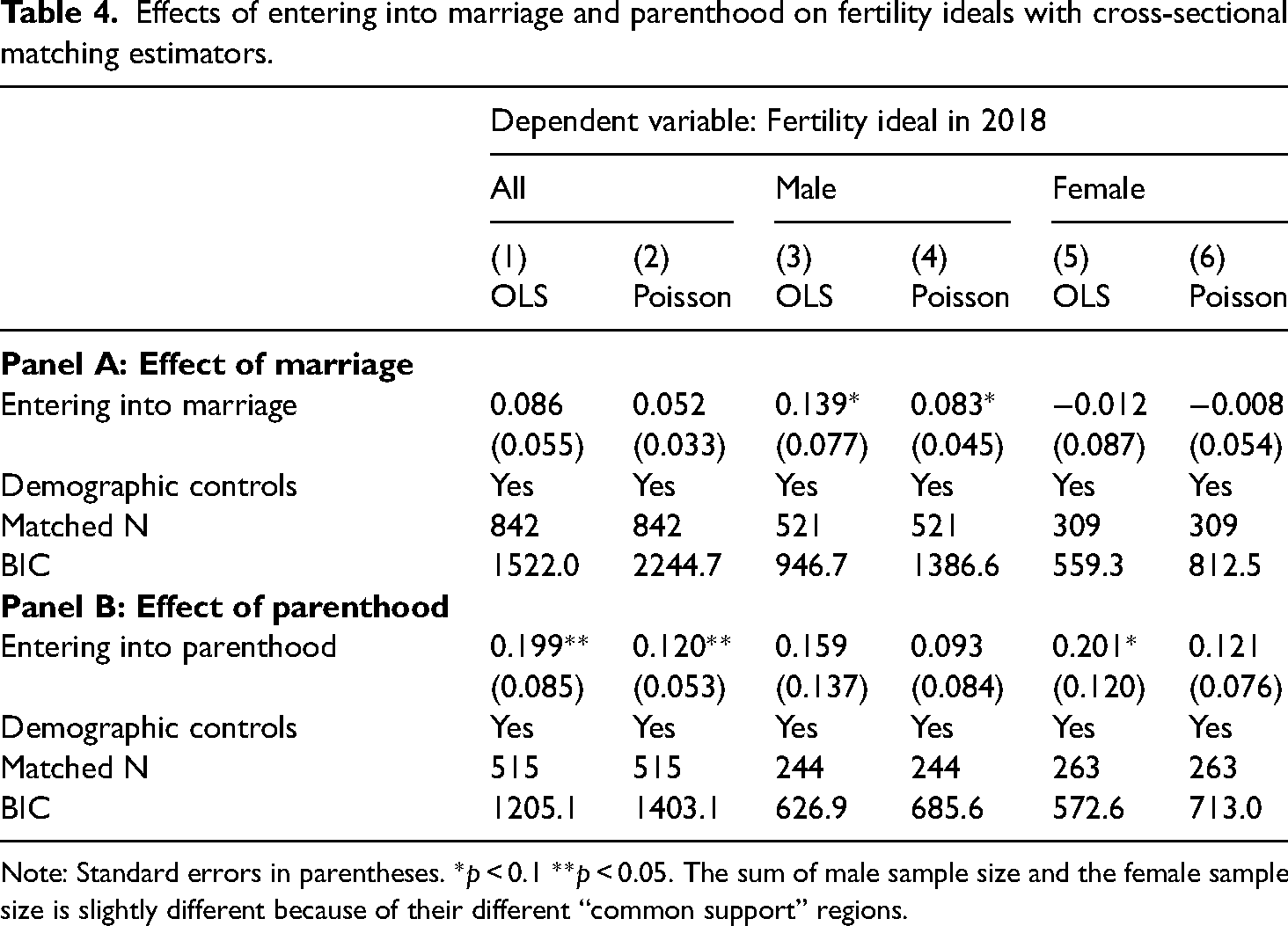
The estimates of the effect of entering into marriage on fertility ideals are presented in Panel A of Table 4. Bootstrap standard errors, based on 50 replications, are reported below each estimate. In terms of modeling fit, the OLS regression model outperforms the Poisson regression model, as evidenced by the smaller Bayesian information index (BIC) in the OLS estimates. This difference in performance may be attributed to the fact that the ideal family size is highly concentrated around a value of 2, deviating from the assumption of a strict Poisson distribution typically used for actual numbers of births.
Effects of entering into marriage and parenthood on fertility ideals with cross-sectional matching estimators.
Note: Standard errors in parentheses. *p < 0.1 **p < 0.05. The sum of male sample size and the female sample size is slightly different because of their different “common support” regions.
In the overall sample, the effect of entering into marriage on fertility ideals is not statistically significant. However, when examining the sample by gender, we observe that entering into marriage has a positive and significant effect on fertility ideals for men, but not for women. Specifically, for men, entering into marriage is associated with an increase of 0.14 in the fertility ideal, which is statistically significant at the 0.10 level. This effect is estimated using an OLS model. Alternatively, when using a Poisson regression model, the estimated effect suggests an 9% increase
In Panel B of the results (Table 4), we present the estimated effect of entering into parenthood on fertility ideals. The results show a positive and significant impact of entering into parenthood on fertility ideals. The estimated effect is 0.20, indicating that after becoming parents, the mean fertility ideal increases by approximately 0.20 (statistically significant at the 0.05 level). Alternatively, when expressed as a percentage change, the estimated effect suggests a 12% increase
DID matching estimates
As previously discussed, the matching estimates rely on the assumption of ignorability, which assumes that there are no relevant unobserved confounders once we match on the observed differences between the treated and untreated groups. However, it is important to acknowledge that we cannot definitively know if there are other unobserved covariates that may confound the relationship between treatment and outcome in the cross-sectional matching. To address potential biases arising from a potential violation of the ignorability assumption, we employ the DID matching estimator. Unlike the matching method, the DID matching estimator accounts for and removes time-invariant differences between the treated and untreated groups, conditional on the propensity score. This helps to mitigate biases that may result from unobservable confounders that remain constant over time.
We use the same basic kernel matching method for the DID matching estimator. However, it is important to note that the DID matching estimator also relies on an assumption that there are no other relevant time-varying unobserved confounders. This assumption, while still unverifiable, is weaker than the ignorability assumption previously used for the matching method.
Table 5 displays the DID matching estimates for the effects of marriage and parenthood on fertility ideals. In Panel A, where the effects of marriage are presented, there is no statistically significant impact on fertility ideals for the overall sample. However, for men, entering into marriage is associated with an increase of 0.19 in mean fertility ideal, significant at the 0.10 level. In Panel B, where the treatment effects of parenthood are presented, the estimated treatment effect for the entire sample is 0.15. There are, however, gender differences, with the effect being significant only for women at the 0.05 level. The estimated coefficient suggests that becoming a mother has a significantly positive effect on the fertility ideal, with an increase of 0.26. In summary, the DID matching estimates closely resemble those from the cross-sectional matching estimates, although magnitudes are slightly larger in in the former than in the later. The DID results indicate that while entering into marriage does not have a significant impact on fertility ideals for women, it has a positive effect for men. On the other hand, becoming a parent has a significant and positive effect on fertility ideals, particularly for women.
Effects of entering into marriage and parenthood on fertility ideal with difference-in-differences matching estimators.
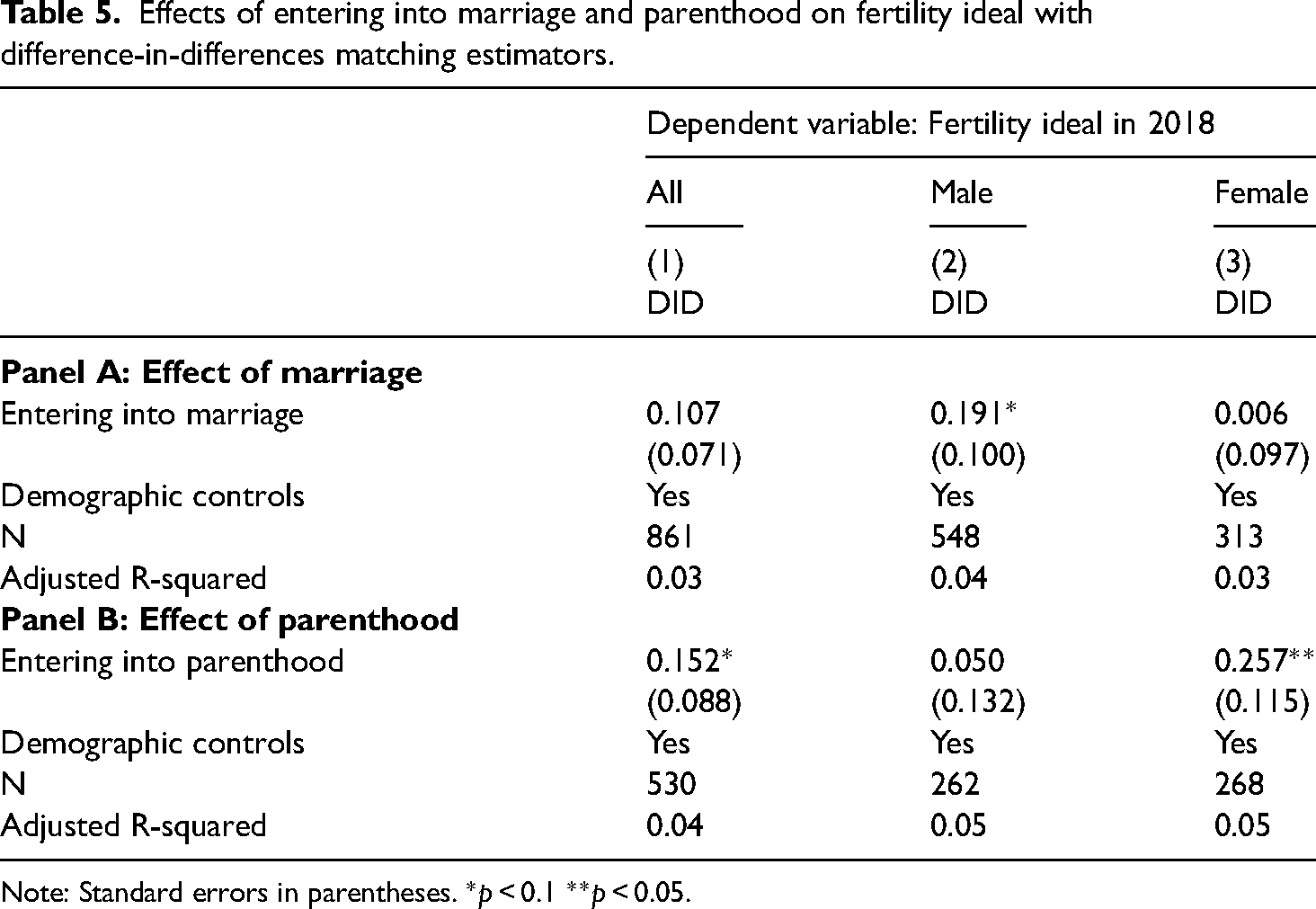
Note: Standard errors in parentheses. *p < 0.1 **p < 0.05.
Heterogeneous treatment effects
Figure 5 provides a nonparametric visualization of the estimated heterogeneous effects of marriage and parenthood on fertility ideals. It depicts the differences between group-specific regressions of the treated and untreated groups. The x-axis represents a continuous representation of the propensity score, while the y-axis represents the difference in the ideal number of children between the treated and untreated groups. The plot includes a 95% confidence interval, allowing for an assessment of the precision of the estimates.
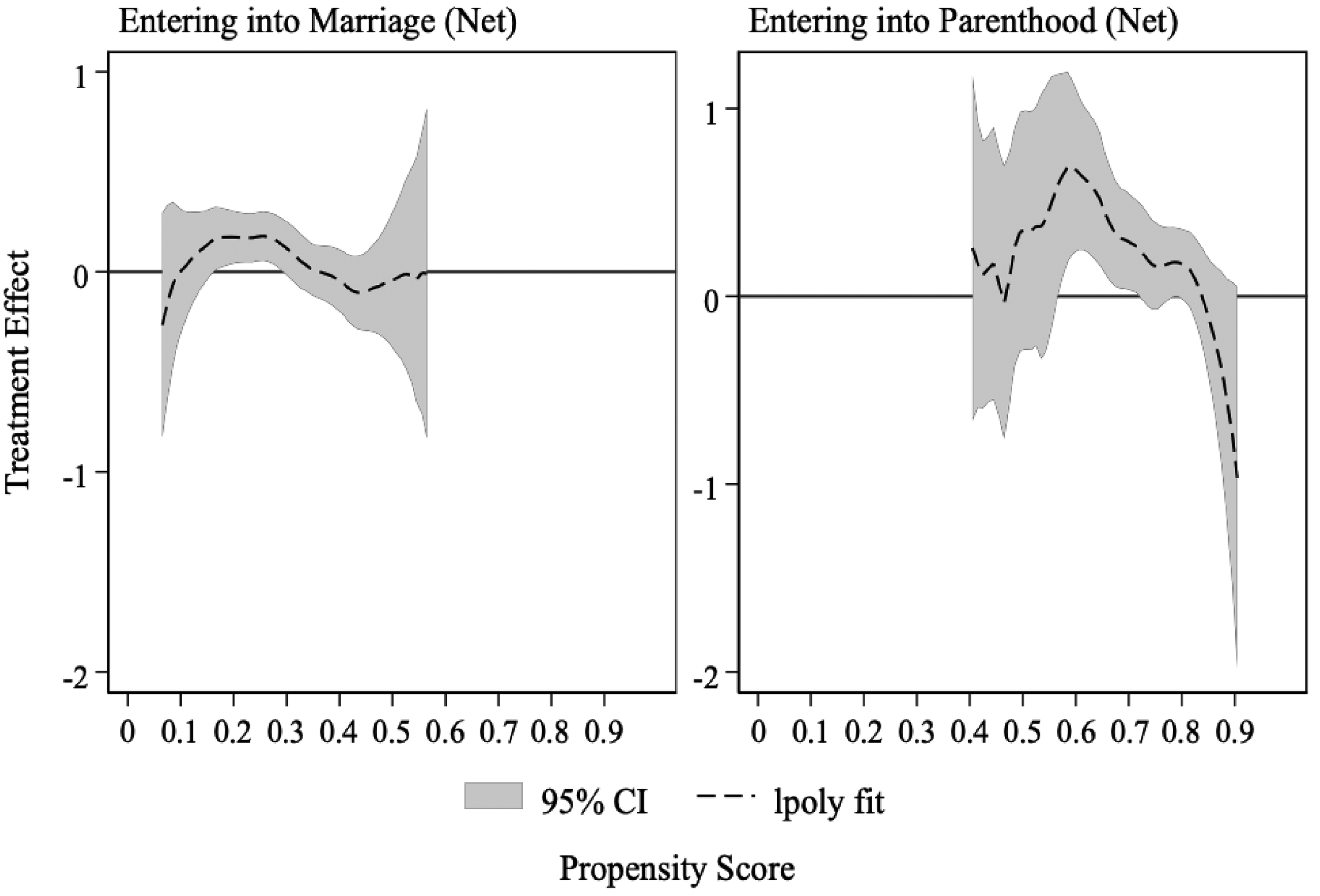
Heterogeneous effects of marriage and parenthood on fertility ideals.
When examining the treatment effects as functions of the propensity scores, we observe non-monotonic patterns that resemble an inverted-U shape. Specifically, the relationship between the propensity scores and the effects of marriage and parenthood on fertility ideals show an initial increase when the propensity to marry or have children is low. However, this relationship reverses direction and starts to decline after reaching the middle region of the propensity scores. In other words, the effects of marriage and parenthood on fertility ideals are the largest when the propensity to enter into marriage and parenthood is at a moderate level. It is worth noting that, after considering the confidence level, the treatment effects are statistically significant only in the middle region. This suggests that for individuals with very high or very low propensities for entering into marriage and parenthood, their fertility ideals may already be strongly influenced by pre-existing pro-natalist or anti-natalist norms, making them less responsive to life events such as marriage or childbirth.
Conclusion
This study yields three main conclusions. First, the propensity score matching estimates, as well as the difference-in-differences matching estimates, demonstrate that marriage and parenthood have positive effects on fertility ideals. This finding suggests that fertility ideals should be viewed dynamically because they are revised and updated as individuals experience life changes. This can be understood through the lens of role theory and the self-fulfilling prophecy. Initially, the fertility ideals of young unmarried adults may be influenced mainly through socialization by their parents, as they do not perceive fertility as a salient issue in their own lives.
We note, however, that the positive effects of marriage and parenthood on fertility ideals are driven by a decline in the expected fertility of those who remain unmarried or childless. This indicates that societal trends may also play a role in shaping fertility ideals. Further research is needed to explore these factors and disentangle their specific contributions to changes in fertility ideals.
Secondly, the responses to marriage and parenthood differ between men and women. Specifically, the effects of marriage on fertility ideals are stronger for men, while the effects of parenthood are stronger for women. This finding highlights the significant role of gender in shaping the impact of family formation on fertility ideals.
The asymmetric gender roles within the family, particularly in East Asian societies, play a significant role in shaping the gender difference in the effects of family formation on fertility ideals. These gender roles assign distinct meanings and responsibilities to men and women within the context of marriage and parenthood. For men, entering into marriage often entails increased economic responsibilities and expectations as husbands and potential breadwinners. This change in roles and responsibilities may increase their fertility ideals, as they consider to take on their ability to provide for a larger family after getting married.
On the other hand, women typically assume the primary caregiving role for the child, at least temporarily. When a couple becomes parents, the increased caregiving responsibility and the associated changes in daily routines and priorities may have a more significant impact on women's fertility ideals. The experience of becoming a mother and the societal expectations placed on women as nurturers and caregivers may lead to upward adjustments in their ideal family size.
Lastly, the treatment effects of life transitions are found to be highest among individuals with a moderate propensity for entering into marriage and parenthood. Those with very high or low probabilities of family formation may already hold strong convictions about family size, such as firmly believing in the norm that “having more children means more blessings” or firmly believing in the happiness of childlessness. It is challenging for individuals with deeply held convictions to change their attitudes. However, individuals with a moderate propensity for family formation are more susceptible to the influence of life events such as marriage and parenthood, which can impact their fertility ideals.
Overall, this study highlights the dynamic nature of fertility ideals and the influence of family formation events on their revision. It underscores the importance of considering individual experiences, societal expectations, and gender dynamics in understanding how fertility ideals are shaped and updated over time. The findings suggest that fertility ideals are not static and can be influenced by various factors, potentially including policy interventions. Future research should further investigate how fertility ideals respond to different interventions and explore additional factors that may impact their formation and revision.
Footnotes
Contributorship
In this research, Yuchen He undertook data analysis and drafted the paper, and Yu Xie shaped the research design and provided revision to the manuscript.
Declaration of conflicting interests
The authors declared no potential conflicts of interest with respect to the research, authorship, and/or publication of this article.
Funding
The authors received no financial support for the research, authorship, and/or publication of this article.
