




Abstract
In recent decades, sexuality studies has become an increasingly important field of social scientific research in and beyond China. This paper uses CiteSpace and VOSviewer to carry out a bibliometric analysis of 26,975 sexuality-related papers included in the Web of Science database in the past four decades through mapping knowledge domains. Situating the literature on Chinese sexuality studies in global English-language academia, this study adopts performance analysis, collaboration network analysis, and co-citation network analysis to identify the main bodies that produce knowledge in the field and their networks of collaboration. We also depict the research trends and the hotspots in the field of (Chinese) sexuality research. Drawing on insights from postcolonial sociology, we discuss the epistemic politics in the social scientific knowledge production of (Chinese) sexuality that emerges from the findings. Specifically, we recognize the importance of a global intellectual division of labor whereby Westerners theorize the world and the rest of the world serves as data. We argue that the early stage of Chinese sexuality research was largely conditioned and profoundly influenced by this Western-centric global intellectual division of labor in terms of research problematics and themes. Recent development in the field, by contrast, indicates a departure from this labor division by challenging the Western-centric notion of sexuality and opening up possibilities of theorizing sexuality from an Asian/Chinese perspective.
Keywords
Introduction
The past four decades or so have witnessed a shift in sexuality studies from a relatively limited body of literature dominated primarily by biomedical and sexological research to a rapidly expanding field encompassing a wide range of social sciences and characterized by an increasing interest in the social and cultural dimensions of sexuality (Parker, 2009). This process has also been accompanied by a terminological shift in the field from “sex”—a term that is intimately tied to sexual activity, the physical characteristics of the reproductive organs, and biological reproduction (Giddens and Sutton, 2021)—to “sexuality”—a term referring to “the way in which people experience their bodies, pleasures, and desires” and “a historically and culturally situated domain of experience that is shaped by social relations of power” (Mottier, 2008: 1–2, 47). Under such circumstances, it is understandable that there has been a burgeoning of publications on (Chinese) sexual issues in recent years, from both indigenous and overseas scholars (Ho et al., 2018: 486). Chinese sexuality has always been an attractive topic for English-language academia. Early academic discussion was primarily dominated by an Occidental interest, as exemplified by Van Gulik's (1961) influential book Sexual Life in Ancient China, Hinsch’s (1990) book Passions of the Cut Sleeves, and Ruan’s (1991) book Sex in China and his serialized articles published in the 1980s and 1990s (Bullough and Ruan, 1994; Ruan and Bullough, 1992; Ruan and Tsai, 1988, 1989; Ruan et al., 1989). With China's increasing involvement with the global arena in the 1990s, the traditional sexual moralities and norms have gradually been challenged by emerging new forms of sexual conduct, subjectivity, culture, and community (Farrer, 2002; Jeffreys, 2006; Pan and Huang, 2013). In sociologist Suiming Pan’s (1993) words, there has been a sexual revolution taking place in post-reform China. This has attracted both indigenous and overseas social scientists to conduct empirical research, write, and publish in English on the new sexual landscape of contemporary China, which is different from the old, Occidental image of Chinese sexuality that is mainly based on literature and images of ancient China (e.g. Choi and Luo, 2016; Farrer, 2002; Jeffreys, 2004, 2006; Kong, 2011; Luo, 2021, 2022a, 2022b; Luo et al., 2022; Pan and Huang, 2013; Rofel, 2007; Wei and Yan, 2021; Zheng, 2012).
Although some review articles have provided either an overview of Chinese sexuality studies (Ho et al., 2018) or systematic reviews of some specific topics, such as homosexuality (Kong, 2016) or women's sexuality (Pei et al., 2007), these reviews conducted in a traditional way cannot quantitatively analyze the development of knowledge in a specific field from the vast literature (Qi et al., 2022). Furthermore, although they have tried to situate Chinese sexuality studies in the landscape of sexuality research in general, there is a lack of attention being paid to the latter in these reviews, not to mention systematically comparing them. It has been convincingly argued by postcolonial sociologists that there is a palpable “academic dependency” of non-Western social scientists on Western theorists, or a global intellectual division of labor whereby Westerners theorize the world and the rest of the world serves as data (Alatas, 2003; Bhambra, 2014; Connell, 2007; Go, 2020). Therefore, it is necessary and important to conduct a scientometric analysis based on a large scientometric database that enables a detailed examination of the literature on Chinese sexuality in relation to the general picture of sexuality studies on a global scale.
To address the above-mentioned gaps, this article provides an in-depth scientometric review of social scientific research on Chinese sexuality to map the knowledge structure and development trends in the field in relation to sexuality studies in general in English-language academia. We choose to focus on publications in English because, despite the increase of Chinese sexuality research in Chinese-language academia, the number of sexuality-related publications in Chinese is still relatively limited. Let us take the most prestigious Chinese sociological journal, Sociological Studies (Shehuixue yanjiu), as an example. It only published three articles on sexuality in the 2000s (Huang and Pan, 2003; Pan, 2004; Pan and Huang, 2007), and no publications on sexuality have appeared in this journal after 2007. By contrast, the number of Chinese-sexuality-related publications in English-language journals is much larger, which makes the literature published in English a much more appropriate object for the conducting of scientometric analysis. Furthermore, Chinese academic publication datasets, such as CNKI and Wanfang data, do not provide data on co-citations. As such, co-citation analysis is not an available option when analyzing these Chinese datasets. However, co-citation analysis is an essential part of the scientometric analysis that helps researchers to recognize the hotspots and research trends in the development of scientific knowledge (Chen, 2004; Qi et al., 2021, 2022). The co-citation data provided by the Web of Science (WoS) database, by contrast, makes it possible to conduct such analysis on Chinese sexuality research published in English-language academia, which, as will be further elaborated, is the most important part of our analysis.
Scientometric analysis uses statistical and computation methods to demonstrate the inputs (e.g. researchers, research funds), outputs (e.g. articles, periodicals), and processes (e.g. information dissemination, communication networks) of scientific activities. It has been widely applied to analyze knowledge structures and discipline evolution, to evaluate scientific output, and to anticipate future hotspots and research trends (Aleixandre-Benavent et al., 2019; Chen et al., 2008; Qi et al., 2021, 2022). Although scientometrics has not been applied to the study of social sciences as frequently as it has in the physical sciences, it has recently received attention and been adopted to map domains of social scientific knowledge (Sooryamoorthy, 2020; Tian and Wise, 2020).
Specifically, this study asks the following questions: what are the patterns of knowledge production in the field of sexuality research in English-language academia and how can we situate the literature on Chinese sexuality within them? What are the research hotspots and trends in sexuality research in general and Chinese sexuality research in particular, and what are their commonalities and differences? To answer these questions, this study provides a scientometric analysis based on 26,975 journal articles on sexuality included in the WoS in the past four decades using the software tools CiteSpace and VOSviewer, with a special focus on the case of Chinese sexuality studies. In the following sections, we first introduce our data, method, analytical tools, and research procedures. We then compare the literature on Chinese sexuality and sexuality studies in general in terms of temporal and spatial dynamics and research hotspots and trends. We also adopt concepts from postcolonial sociology to discuss the epistemic politics in the production of sexuality knowledge in the social sciences, with a focus on the potential contributions that Chinese sexuality research has made to the general picture in recent years. In doing so, this research aims to contribute to the literature on Chinese sexuality by providing an intellectual map of the field and suggesting potential hotspots and trends in the future. We also build on recent discussions on epistemic politics of sexuality research and the possibilities of challenging Western-centrism in sexuality studies (e.g. Brown et al., 2010; Luo et al., 2022; Wilson, 2006) with scientometric analysis.
Methodology
Quantitative research methods have been much appreciated and widely applied in recent investigations of the accumulation, evolution, and circulation of scientific knowledge (Chen, 2017). Among different quantitative methods, scientometric analysis has gained in popularity in recent years as a vital resource of reference for scientists’ decision-making and their scientific activities. Utilizing data mining and visualization techniques, scientometric analysis allows researchers to discover information and potential features in massive corpuses of literature, detect the processes of knowledge flow in the structure of citation networks in the literature, and in doing so, reveal the patterns and processes of knowledge accumulation and evolution (Qi et al., 2021).
This research adopts CiteSpace (Chen, 2004) and VOSviewer (Van Eck and Waltman, 2010), two software tools for conducting and visualizing scientometric analysis, to perform data mining and visualization analysis of the literature on (Chinese) sexuality. Specifically, this research aims to explore the knowledge production process and the underlying epistemic politics in the social scientific research on (Chinese) sexuality to provide resources of reference for future studies. Three methodological strategies are adopted: performance analysis, collaboration network analysis, and co-citation network analysis.
The specific analytical framework of this study is shown in Figure 1.
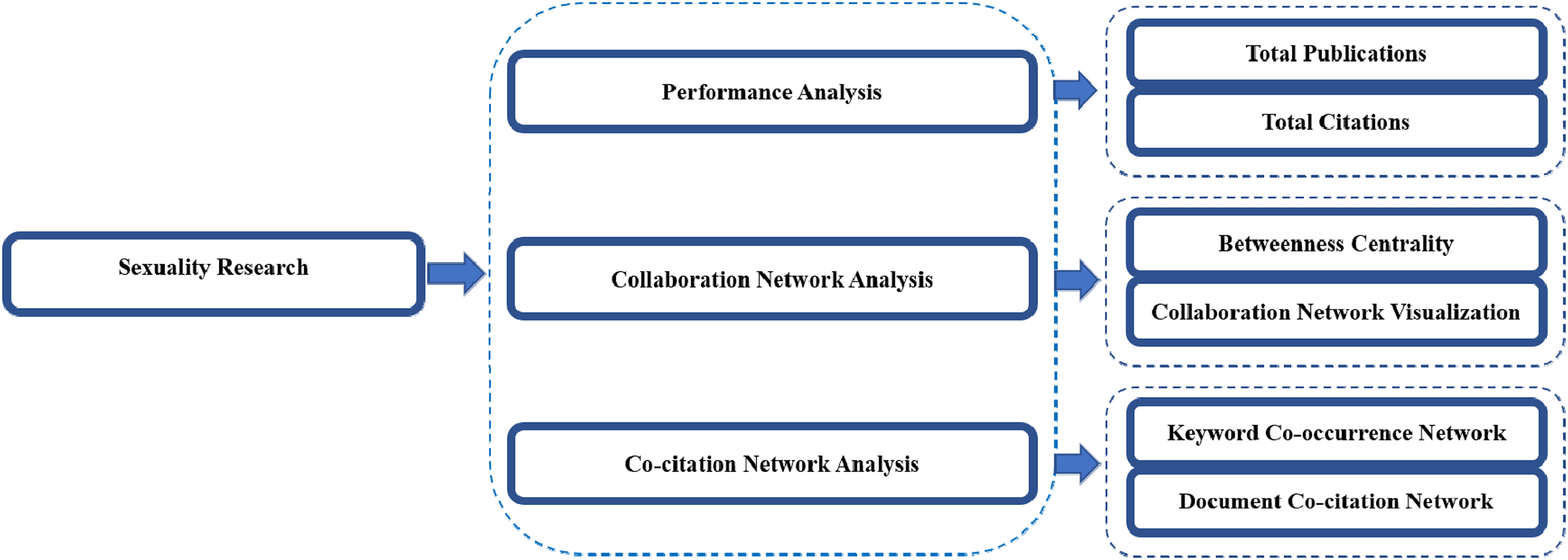
Analysis framework.
Data filtering and data cleansing
Accurate and comprehensive data are the basis of scientometric analysis (Donthu et al., 2021; Qi et al., 2021). The WoS database has a large amount of literature and rich data on each publication; as such, it is considered to be an ideal data source for scientometric analysis (Qi et al., 2022; Van Leeuwen, 2006). Therefore, this study uses the WoS for data retrieval. The data are systematically screened and cleaned according to Preferred Reporting Items for Systematic Reviews and Meta-analyses (PRISMA) guidelines (Page et al., 2021) to ensure the accuracy of the data and the transparency of the screening process.
In order to showcase our data filtering and data cleaning processes in a clearer way, we include detailed information on the total number of publications in parentheses in our later introduction to the processes: “N” and “n” stand for the total number of publications in the field of sexuality research in general and that in the sub-field of Chinese sexuality research, respectively. Numbers with a “ + ” in front represent the number of documents that were included in our dataset, whereas numbers with a “–” in front represent the number of documents that were excluded from the overall dataset with the addition of certain parameters.
The data filtering and data cleaning processes of this paper are as follows: firstly, we took “Topic = (sexual or sexuality)” and “Topic = (sexual or sexuality) and (China or Chinese)” as the retrieval formula to search in the core collections of the WoS, and from this established the (Chinese) sexuality research database (N: +351,166; n: +6692). We used the word sexuality because it highlights the social and cultural aspects of sex, whereas the word “sex” is more generally used in biological terms and in many cases as the biological counterpart of the word gender. We also used the word “sexual” as a keyword because it is an adjective related to both “sexuality” and “sex” without pointing to one's gender. The search was further optimized by the following conditions: “document type = (article + review)” (N: –47,602; n: –283); “language = (English)” (N: –15,377; n: –61).
Secondly, we adopted multiple strategies to select different data sources for social scientific publications on sexuality in the core collections of the WoS, with a specific focus on the sociology of sexuality, after which all the selected publications were examined and irrelevant literature was eliminated. Specifically, our data consist of three groups of literature. The first group includes the fields of sociology, demography, social work, and anthropology, all of which, according to the categorization of subjects and disciplines in China, belong to the broader discipline of sociology. We also selected categories that contain a large amount of social scientific research on China, namely Asian studies and area studies. The third group consists of several interdisciplinary categories in which sociology and other related social sciences have been actively involved, including family studies, women's studies, urban studies, social issues, and interdisciplinary social sciences. Publications that could not be attributed to one of these three categories were excluded from the dataset (N: –248,342; n: –5445). The second author and the corresponding author of this article reviewed the filtered publications one by one and eliminated irrelevant publications independently, and their results were consistent with each other (N: –23,309; n: –269).
Thirdly, recognizing the difficulty of capturing all publications related to sexuality, we also included all the articles published by social scientific journals with the words “sex”, “sexual”, or “sexuality” in the title. Overall, 19 journals with 15,129 articles were included (N: +15,129; n: +331). Finally, we used CiteSpace to remove duplicate articles (N: –3414; n: –272). Through the above steps, 26,975 sexuality research publications were finally included in the scientometric analysis, and 655 publications in Chinese sexuality research. Furthermore, 594,924 citation records for document co-citation analysis were obtained from the 26,975 papers and divided into citing articles and cited references. Detailed information of our data filtering processes is shown in Figure 2.
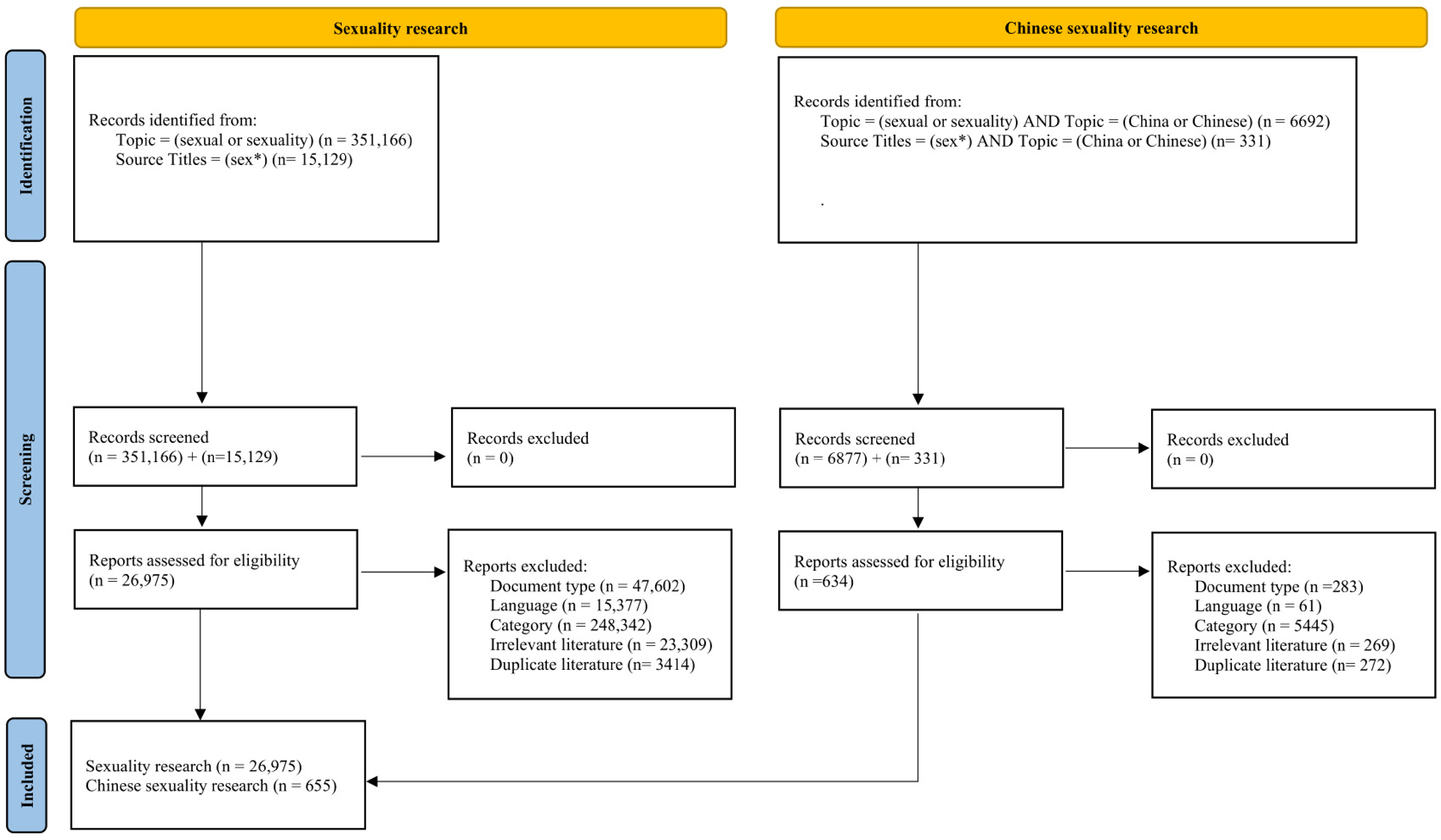
Article selection procedure.
Results
Basic attributes of sexuality research
Publications
An increase in the number of publications can be seen as an indicator of an increase in the scientific knowledge of a field (Qi et al., 2022). Based on our literature retrieval process, which returned 26,975 articles on sexuality in general and 655 articles on Chinese sexuality in particular, a line chart of papers published in the field was created (Figure 3). As the figure shows, the number of publications on sexuality has risen precipitously over the past four decades. This increase is particularly obvious in recent years, with total annual publications in the field averaging more than 500 after 2003 and with 2143 such publications in 2021 alone. It is safe to say that sexuality has been an increasingly important field in the social sciences since the 1980s.
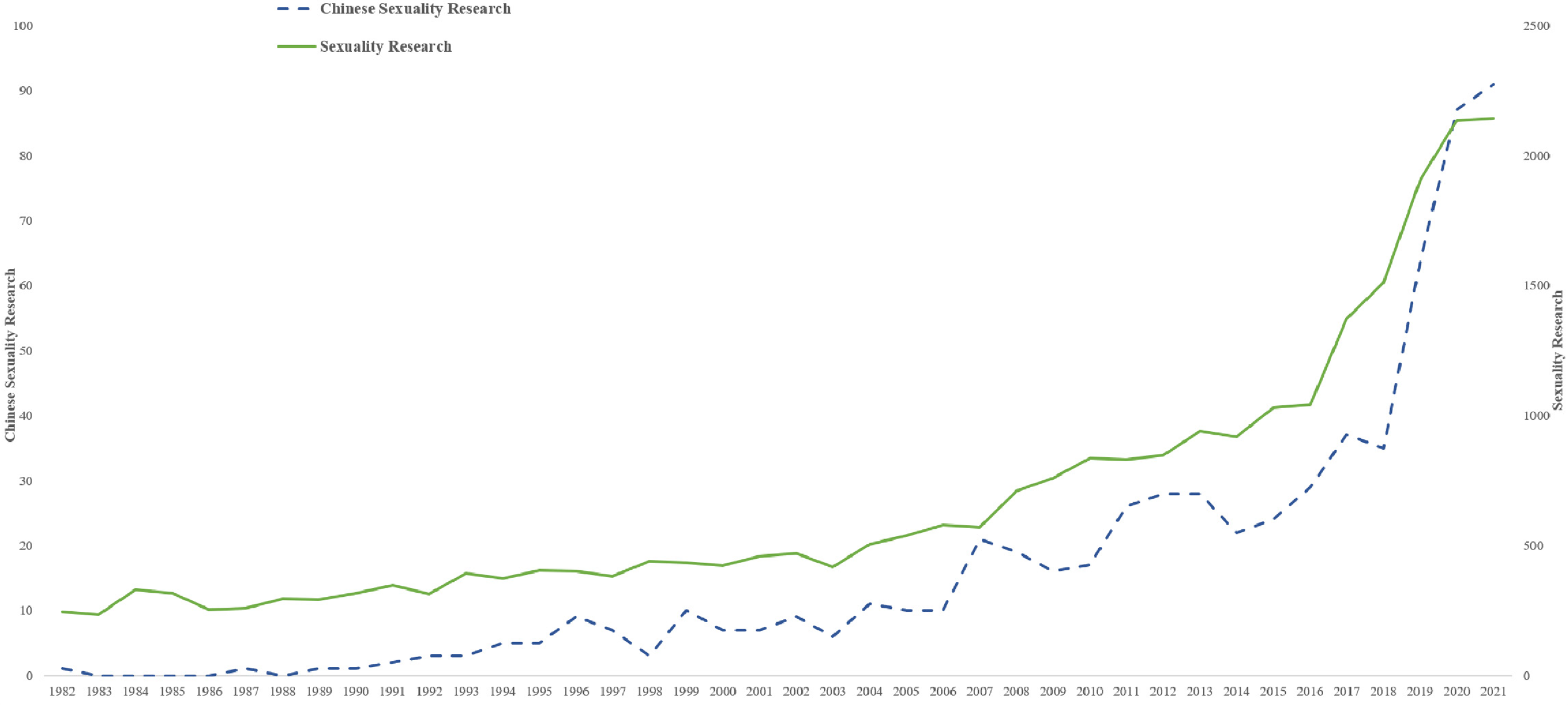
Annual publishing trend of (Chinese) sexuality research.
The growth in output in the sub-field of Chinese sexuality studies over the 40 years from 1982 to 2021 synchronizes with that of the overall field, albeit on a relatively smaller scale. There were 91 articles on Chinese sexuality published in 2021, representing only around 4% of the annual total for sexuality research as a whole. The overall rising trend in publications on Chinese sexuality indicates the increasing attention being paid to sexuality in Chinese society.
Main journals
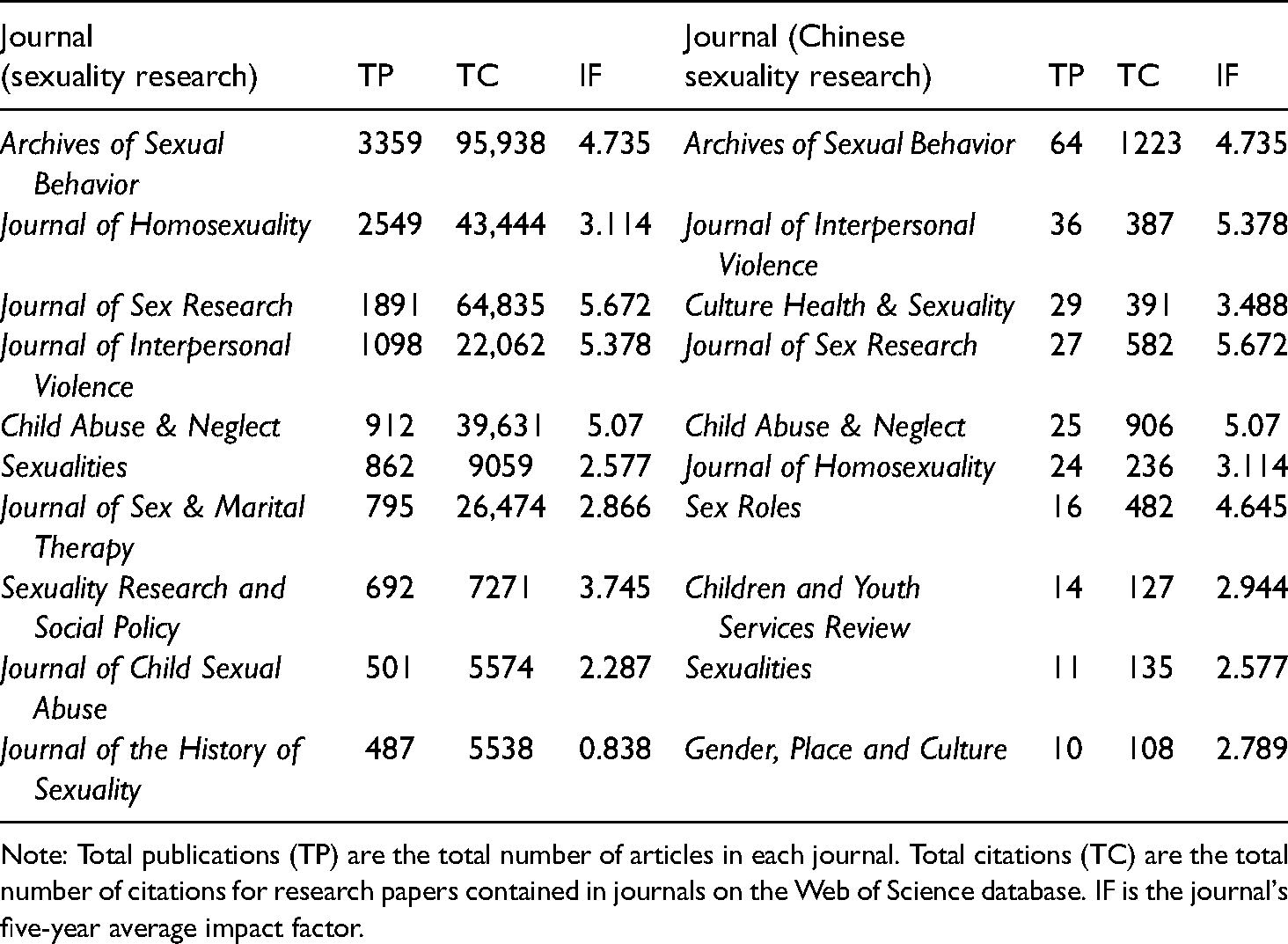
By searching publications on sexuality from 1982 to 2021, we observed that 751 journals had published research related to sexuality. We list the 10 journals with the most articles in the field in Table 1. With 3359 publications and 95,938 citations in total during our period of study, the Archives of Sexual Behavior (five-year impact factor [FYIF]: 4.735) occupies the top of the table; in addition to having published the most articles, this journal is also the most influential in the field on the basis of the TC. With 2549 publications in the past four decades, the Journal of Homosexuality (FYIF: 3.114) occupies the second position in terms of total number of publications. Articles published by the Journal of Sex Research (FYIF: 5.672) have been cited 64,835 times, which makes it the second most influential journal in the field.
Top 10 most prolific journals in (Chinese) sexuality research, 1982–2021.
Note: Total publications (TP) are the total number of articles in each journal. Total citations (TC) are the total number of citations for research papers contained in journals on the Web of Science database. IF is the journal's five-year average impact factor.
Only 177 journals have published articles on Chinese sexuality since 1982. Six journals are included in both the list of the most productive 10 journals on sexuality in general and that of the most productive in the field of Chinese sexuality in particular (Table 1). With 64 publications and 1223 citations in total, the Archives of Sexual Behavior is similarly listed as the most productive and influential journal in Chinese sexuality in the past four decades. Therefore, the mode of knowledge diffusion of Chinese sexuality research can be said to be consistent with that of sexuality research in general.
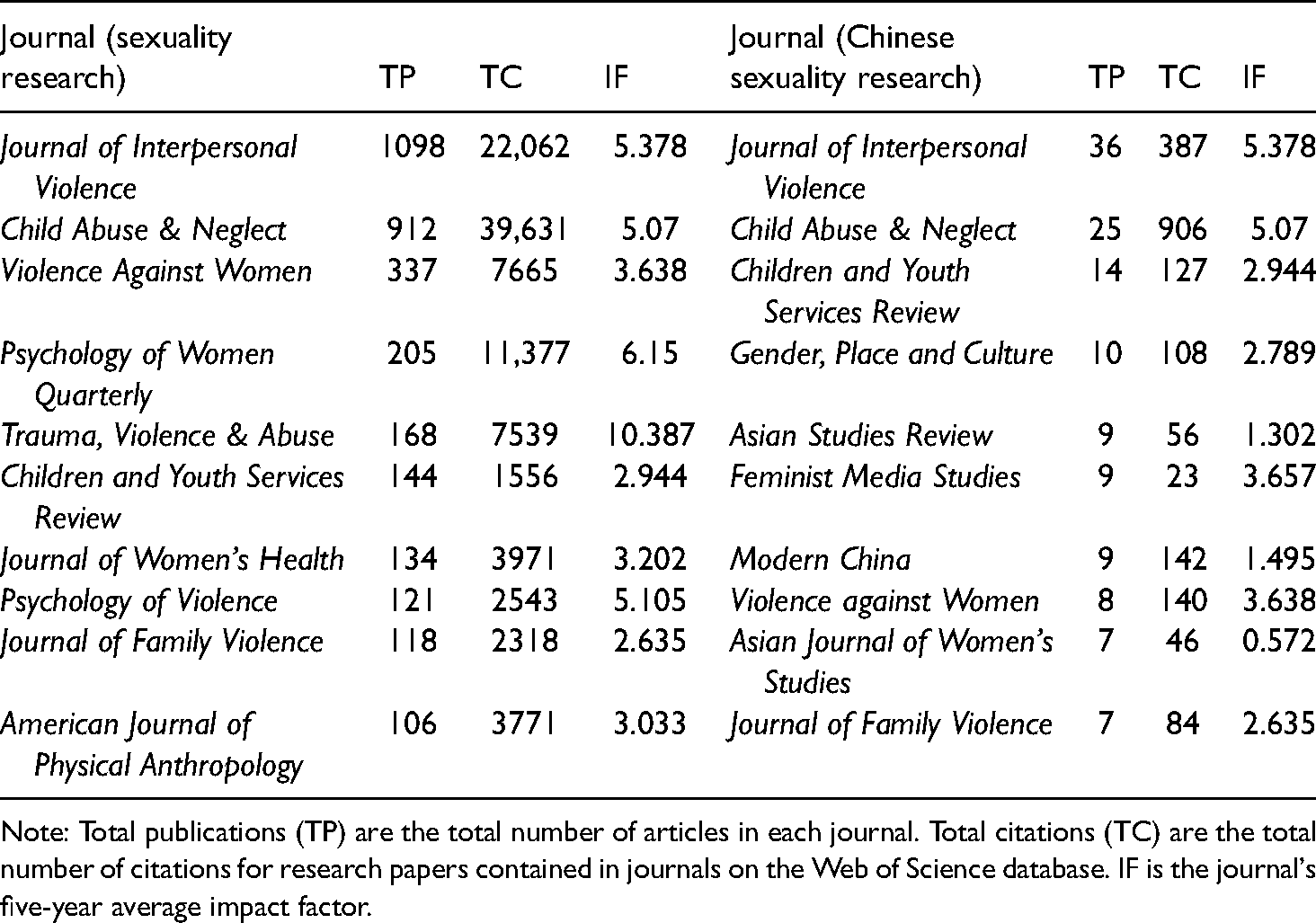
It is not surprising to see that sexuality research journals rank among the most productive journals on sexuality in general and Chinese sexuality in particular. As such, we also list the most productive journals among those without an exclusive focus on sexuality. As can be seen from Table 2, the Journal of Interpersonal Violence (FYIF: 5.387) was the most productive journal in both sexuality research and Chinese sexuality studies, whereas Child Abuse & Neglect (FYIF: 5.07) was the most influential. This analysis further evidences the similarities in patterns of knowledge production and circulation between sexuality research and Chinese sexuality scholarship, despite the fact that journals in area studies and Asian studies serve as a major setting of the knowledge production and circulation in Chinese sexuality research.
Top 10 most prolific journals in (Chinese) sexuality research (sex research journals excluded), 1982–2021.
Note: Total publications (TP) are the total number of articles in each journal. Total citations (TC) are the total number of citations for research papers contained in journals on the Web of Science database. IF is the journal's five-year average impact factor.
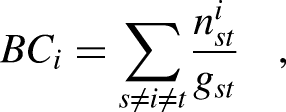
Core authors
According to Price's Law (Price, 1963), core authors in a field of study are determined to be those whose total number of publications are greater than M in the following formula
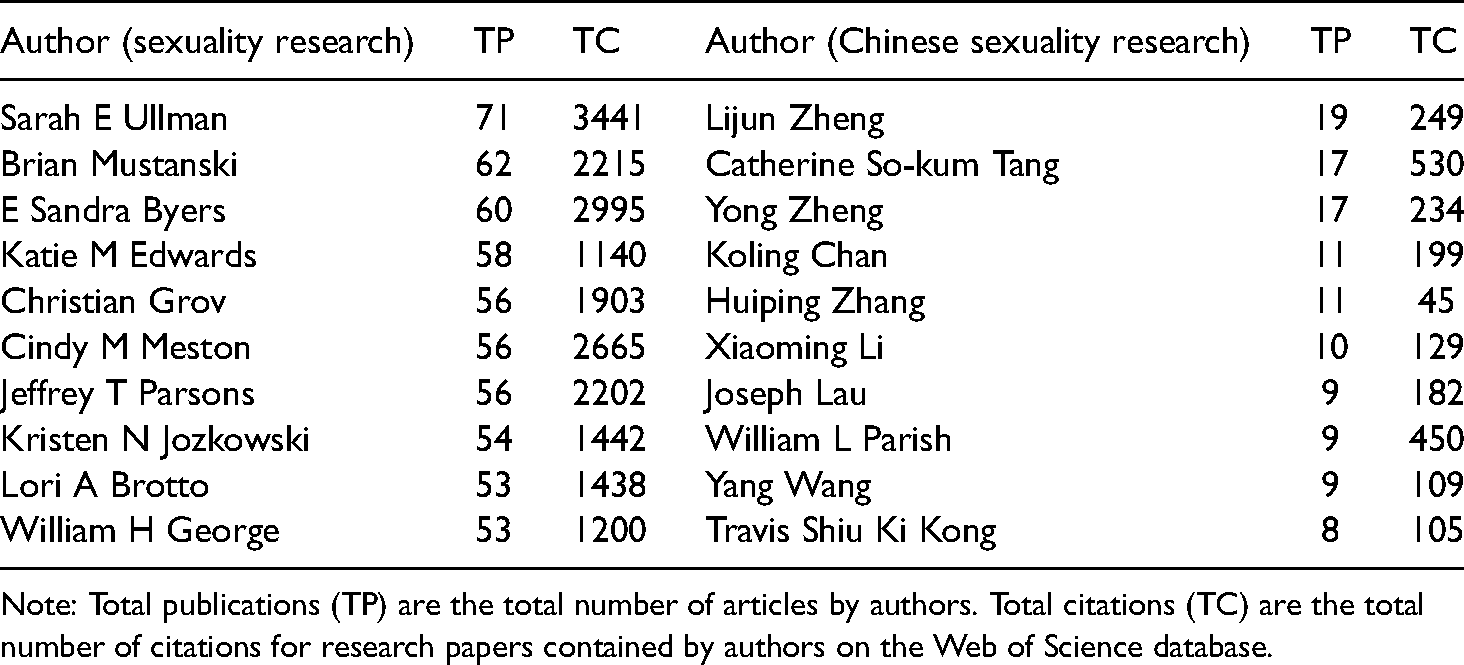
Top 10 most productive authors of (Chinese) sexuality research, 1982–2021.
Note: Total publications (TP) are the total number of articles by authors. Total citations (TC) are the total number of citations for research papers contained by authors on the Web of Science database.
Collaboration network and performance analysis
Scientific cooperation is an important mechanism to promote production and diffusion of scientific knowledge, the importance of which has been recognized and prioritized in the scientific community recently (Qi et al., 2022; Sonnenwald, 2007). Via collaboration network and performance analysis, this study provides a panoramic picture of the cooperation networks and academic influences in the field of sexuality studies.
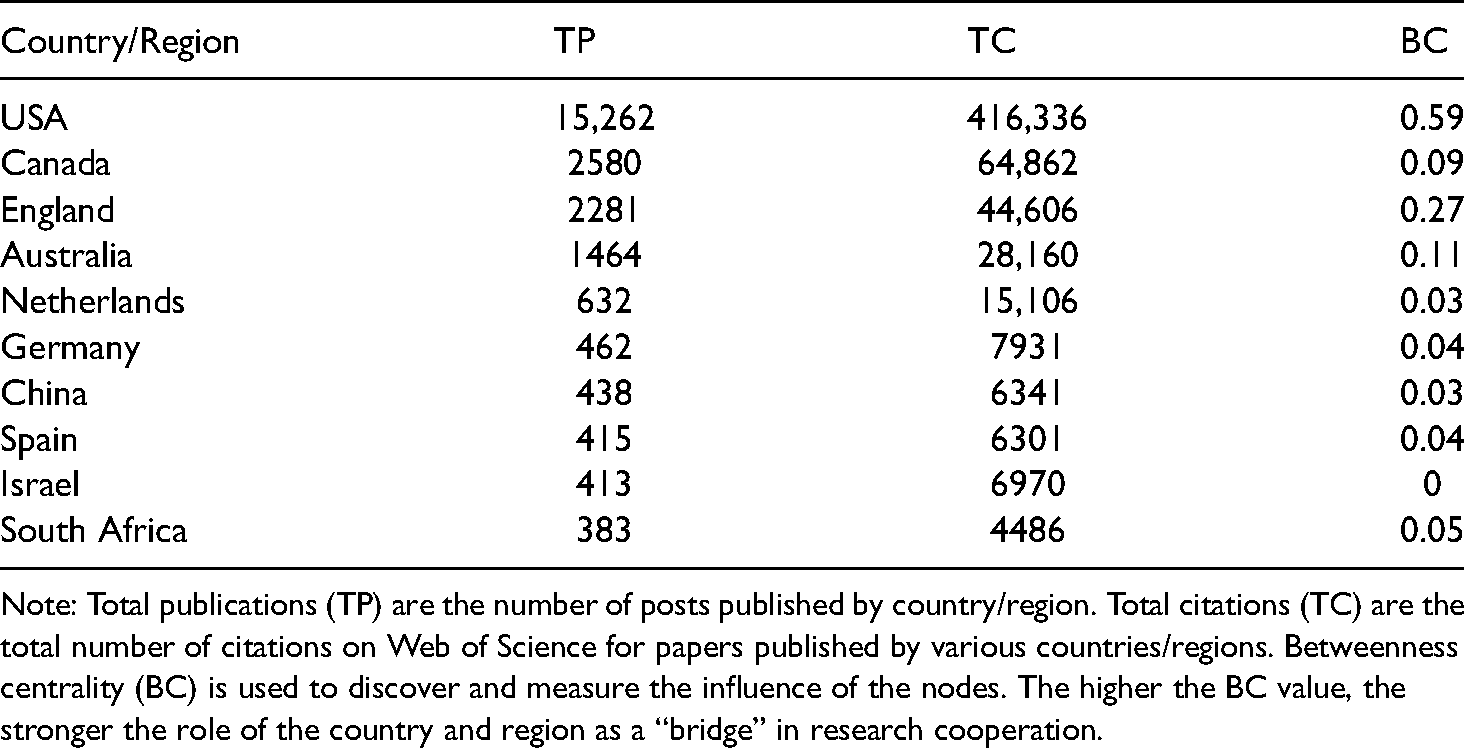
From 1982 to 2021, 152 countries/regions participated in social scientific research on sexuality in English-language academia, and the 10 countries/regions with the most publications are listed in Table 4. As can be seen, the USA has been the leading country in the field.
Top 10 most productive countries/regions in sexuality research, 1982–2021.
Note: Total publications (TP) are the number of posts published by country/region. Total citations (TC) are the total number of citations on Web of Science for papers published by various countries/regions. Betweenness centrality (BC) is used to discover and measure the influence of the nodes. The higher the BC value, the stronger the role of the country and region as a “bridge” in research cooperation.
Social scientists in the USA published 15,262 articles from 1982 to 2021, which were cited 416,336 times, totals which outnumber the overall publications and citations of the other nine countries/regions in the top 10 put together. Among the wide range of institutions in the USA, the University of Michigan, Indiana University, the University of Illinois, Columbia University, and the University of Washington are the most productive and influential, playing a leading role in knowledge production and academic influence in sexuality research. With 438 publications and 6341 citations from 1982 to 2021, China occupies the seventh position in the list. However, it is noteworthy that there is still a significant gap between China and other countries in the list, especially those in North America and Western Europe.
Figure 4 depicts country/region collaboration networks in sexuality research, demonstrating the prevalence of transnational and transregional collaborations. The USA has occupied a vital position in the network, exerting its influence on transnational and transregional collaborations in knowledge production in the field of sexuality studies. China also actively participated in collaboration networks with 27 countries/regions, the majority of which are developed countries/regions in North America and Europe.
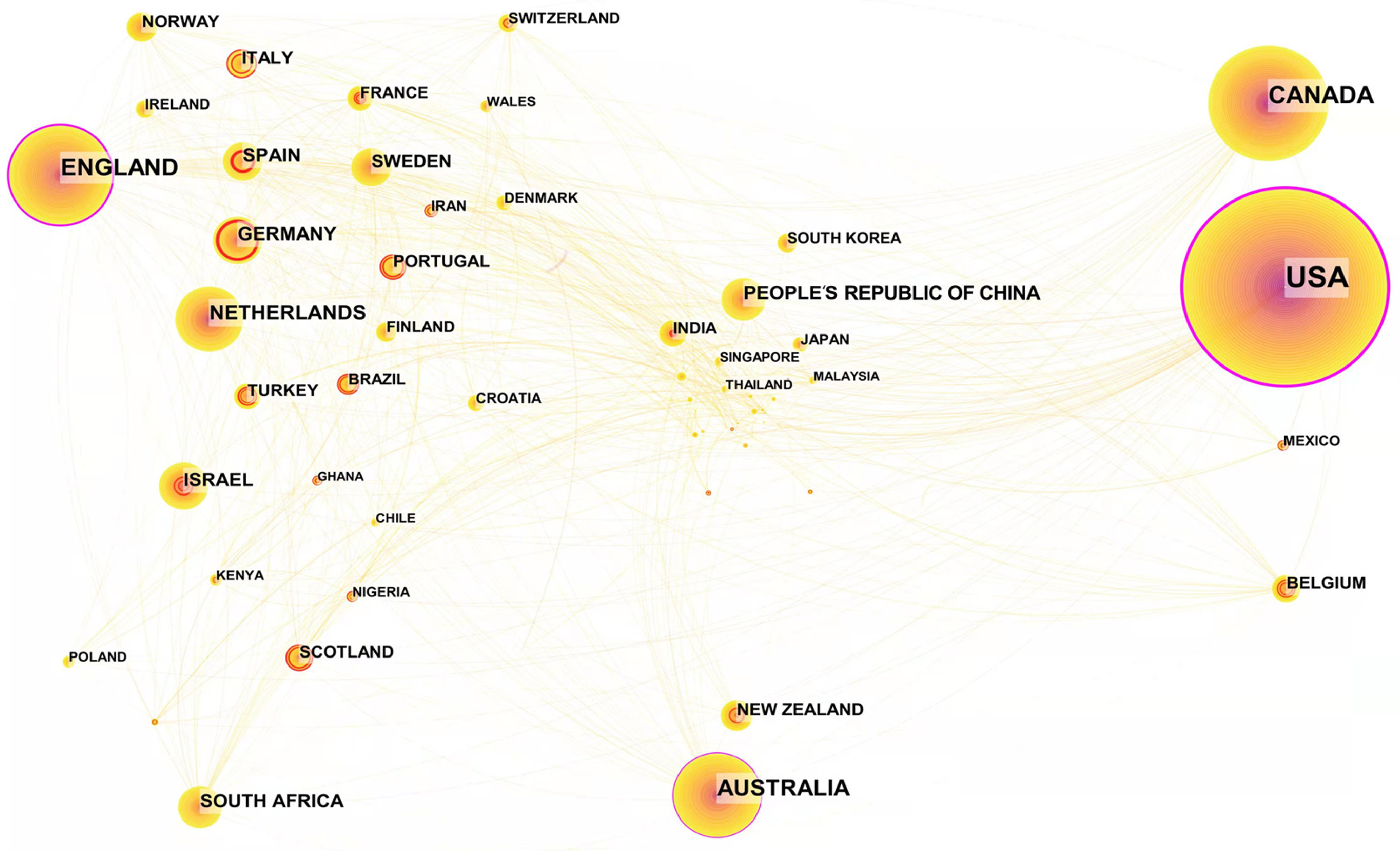
Country/region collaboration network of sexuality research.
As can be seen from the distributions of the nodes with a purple outer ring in Figure 4, there are three centers in the global collaboration network in sexuality studies, namely North America (main nodes: USA, Canada), Europe (main nodes: England, Spain, Germany), and Oceania (main nodes: Australia, New Zealand). Despite Connell’s (2007) efforts to replace the binary of the “West and the rest” with that of the Global North and Global South to highlight the marginal position of the Western/Southern country of Australia, this country nevertheless occupies a central position in sexuality research in terms of knowledge production, academic influence, and collaboration networks. By contrast, most countries in Asia, Africa, and Latin America have been largely marginalized in knowledge production in sexuality research. As academic collaborations are largely conditioned by geographical locations (Liang and Liu, 2018), it is understandable that the patterns of knowledge production in sexuality research reproduce overall patterns of academic collaboration and knowledge production. This has further influenced the limited knowledge productivity and academic influence of marginalized countries in Asia, Africa, and Latin America.
Research hotspots and trends
Keyword co-occurrence analysis
Keywords summarize the main content and link to the research theme and problem of a given paper (Liu et al., 2014). In this sense, there is an inherent linkage between keywords and hotspots in the existing literature. This paper uses a visualization map of keyword co-occurrence provided by the publication visualization software VOSviewer to identify hotspot terms in sexuality research in general and in Chinese sexuality research in particular (Figure 5).
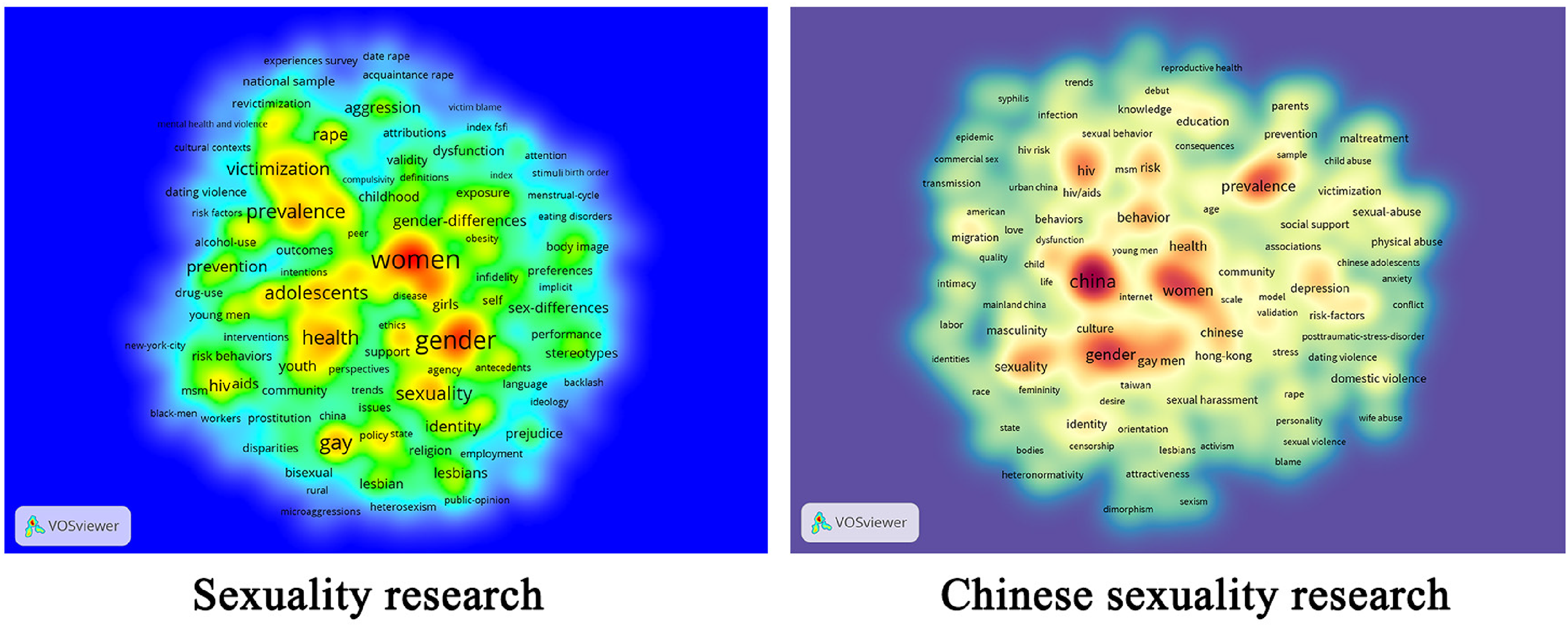
Keyword co-occurrence network of (Chinese) sexuality research.
The 10 most frequently appearing keywords in the literature are women (frequency: 3901), gender (3504), attitudes (2203), behavior (2136), gay (1961), man (1835), prevalence (1713), health (1697), adolescents (1436), and sexual orientation (1389). All of these keywords appeared more than 1350 times. It is therefore safe to say that sexual behavior, sexual health, sexual minorities, and gender constitute the main hotspots in social scientific research on sexuality. Meanwhile, the frequency of the keyword “women” is double that of “men”, indicating a gender imbalance in sexuality literature.
Regarding literature on Chinese sexuality, the 10 most frequently appearing keywords in the literature (“China” and “sexuality” excluded) are as follows: gender (frequency: 107), prevalence (86), women (81), attitudes (80), behavior (58), HIV (53), health (48), adolescents (45), sexual orientation (45), and homosexuality (44). As we can see, the hotspots in Chinese sexuality literature are largely consistent with sexuality research in general, including gender, sexual behavior, sexual health, and sexual minorities.
Document co-citation analysis
We use CiteSpace to retrieve information regarding cited references. The nodes in the co-citation network of the literature depict the deep structure of the literature on sexuality published in English. The visualized network reveals the overall structure of the knowledge domain of sexuality studies in a broader context (Figure 6).
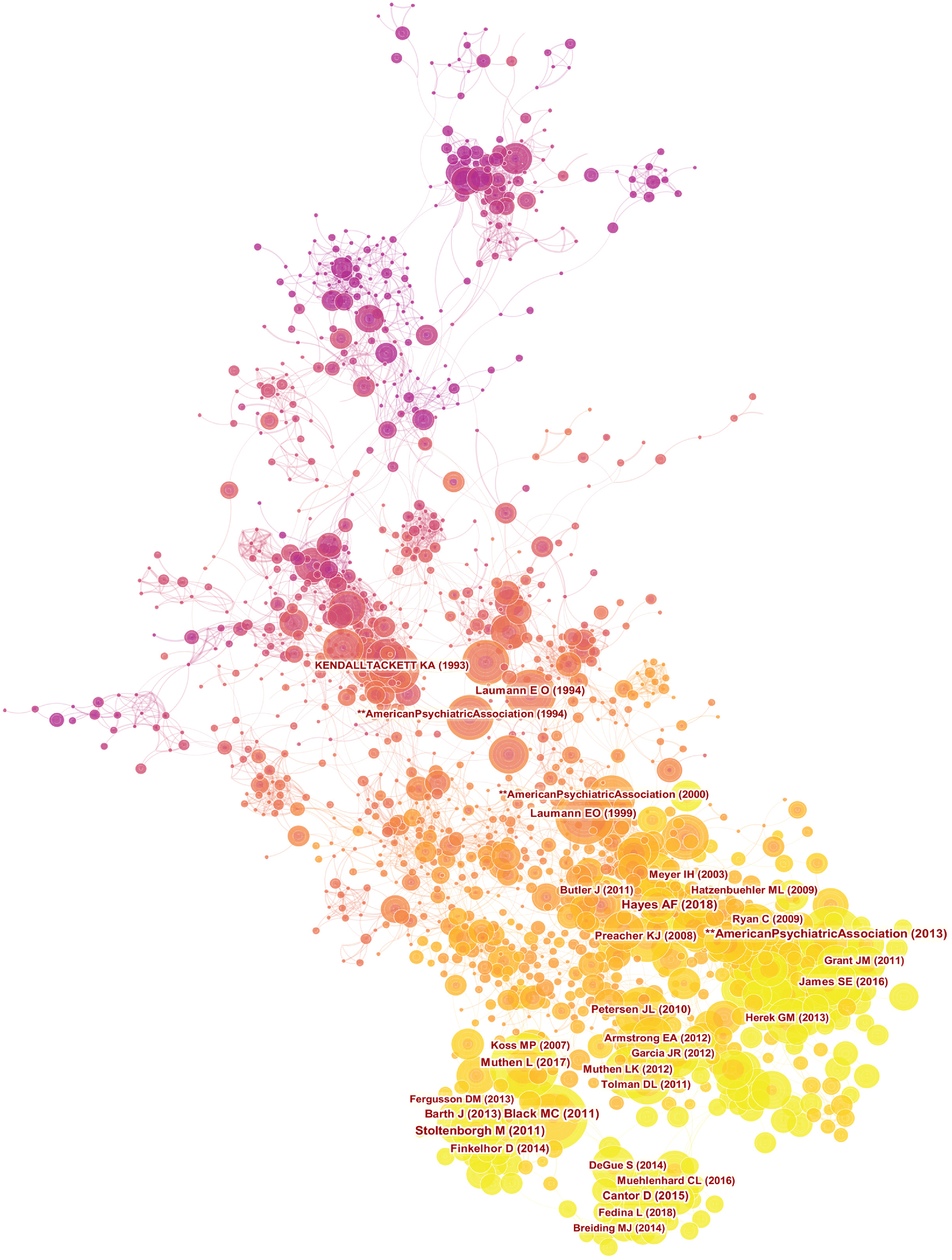
Document co-citation clustering network of sexuality research.
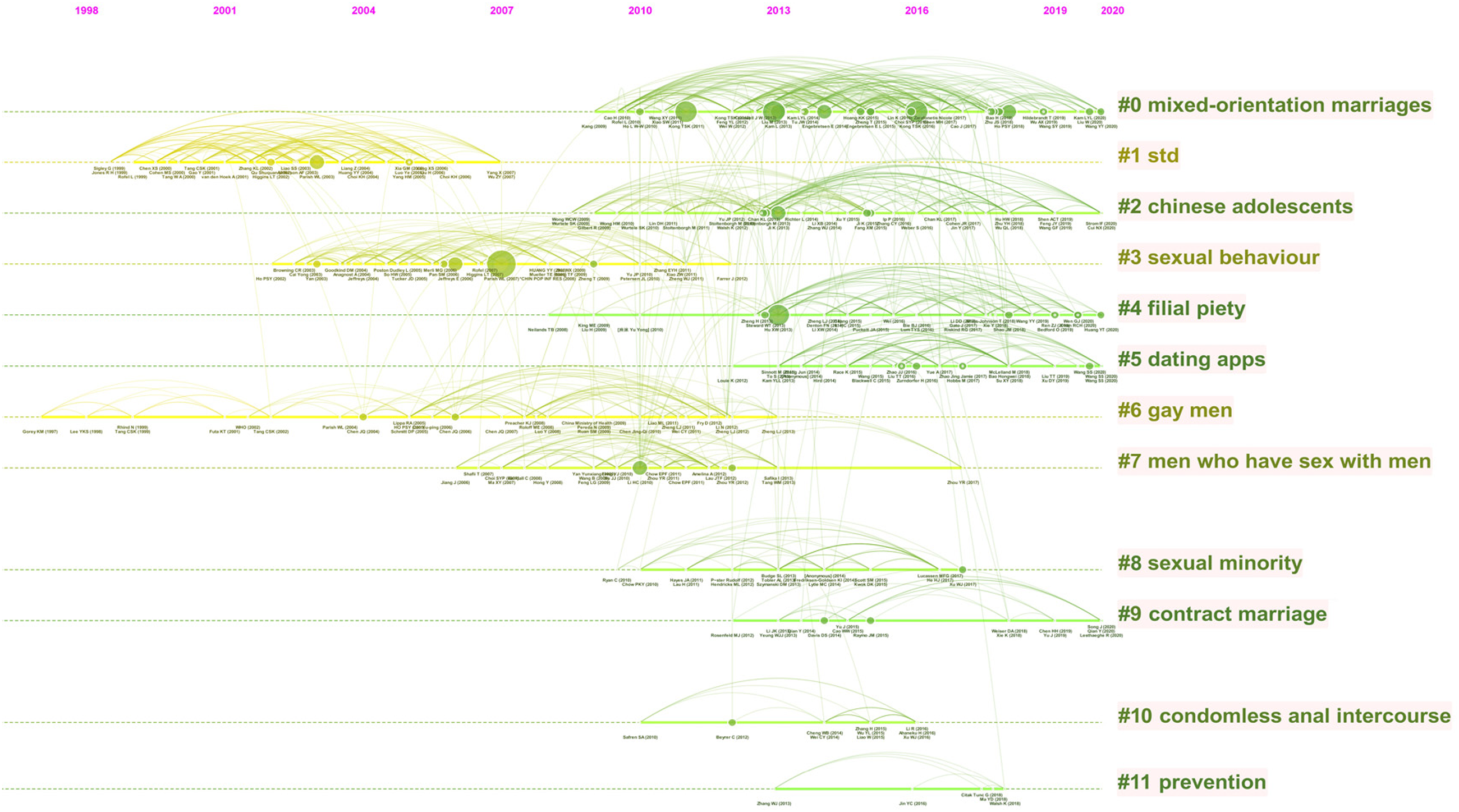
Furthermore, we also conducted cluster analysis with CiteSpace to create figures depicting a timeline view of research clusters in sexuality research in general (Figure 7) and Chinese sexuality research in particular (Figure 8) to visualize the changing patterns of research hotspots in the literature in an objective and vivid way.
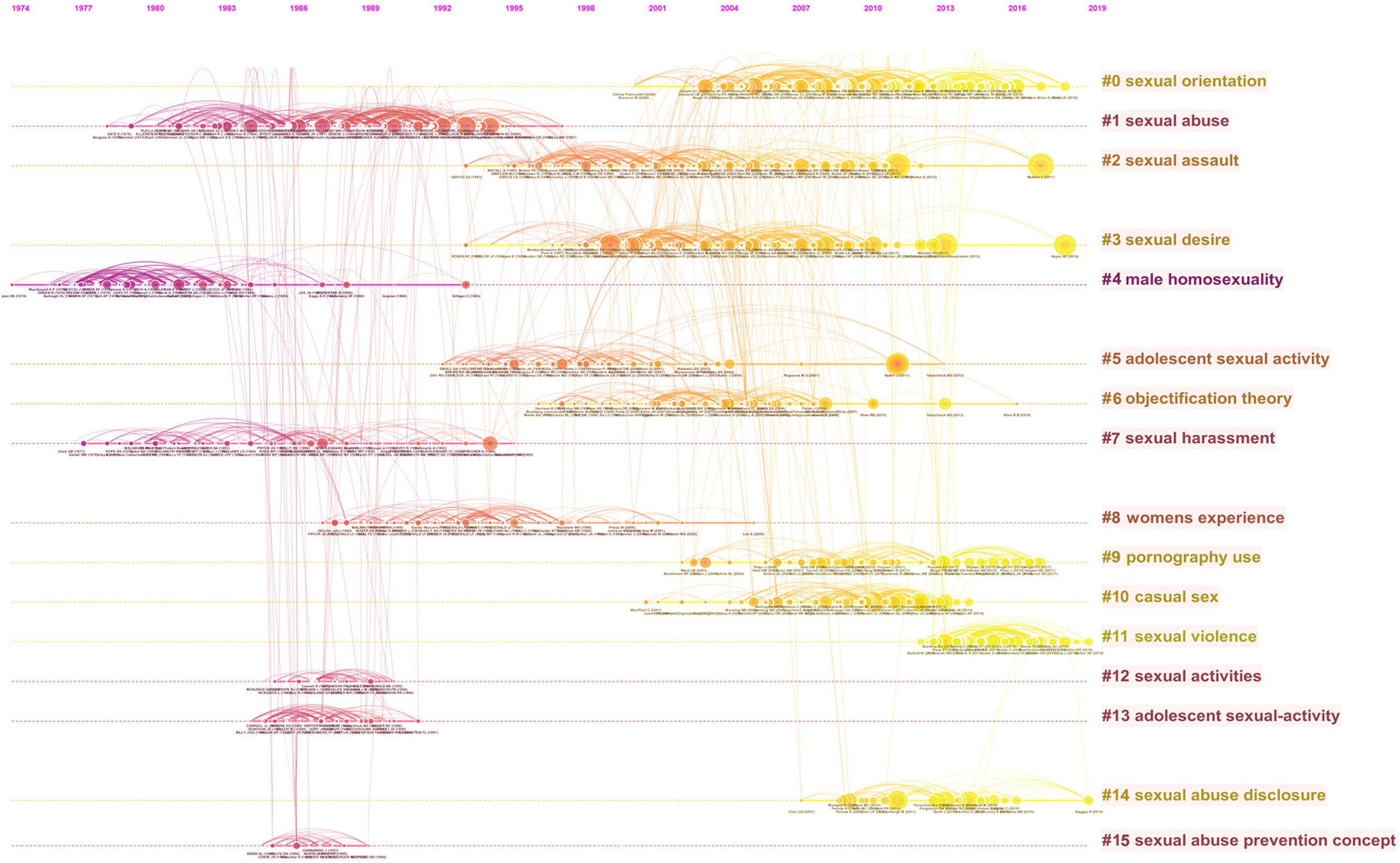
Timeline view of sexuality research.
Timeline view of Chinese sexuality research.
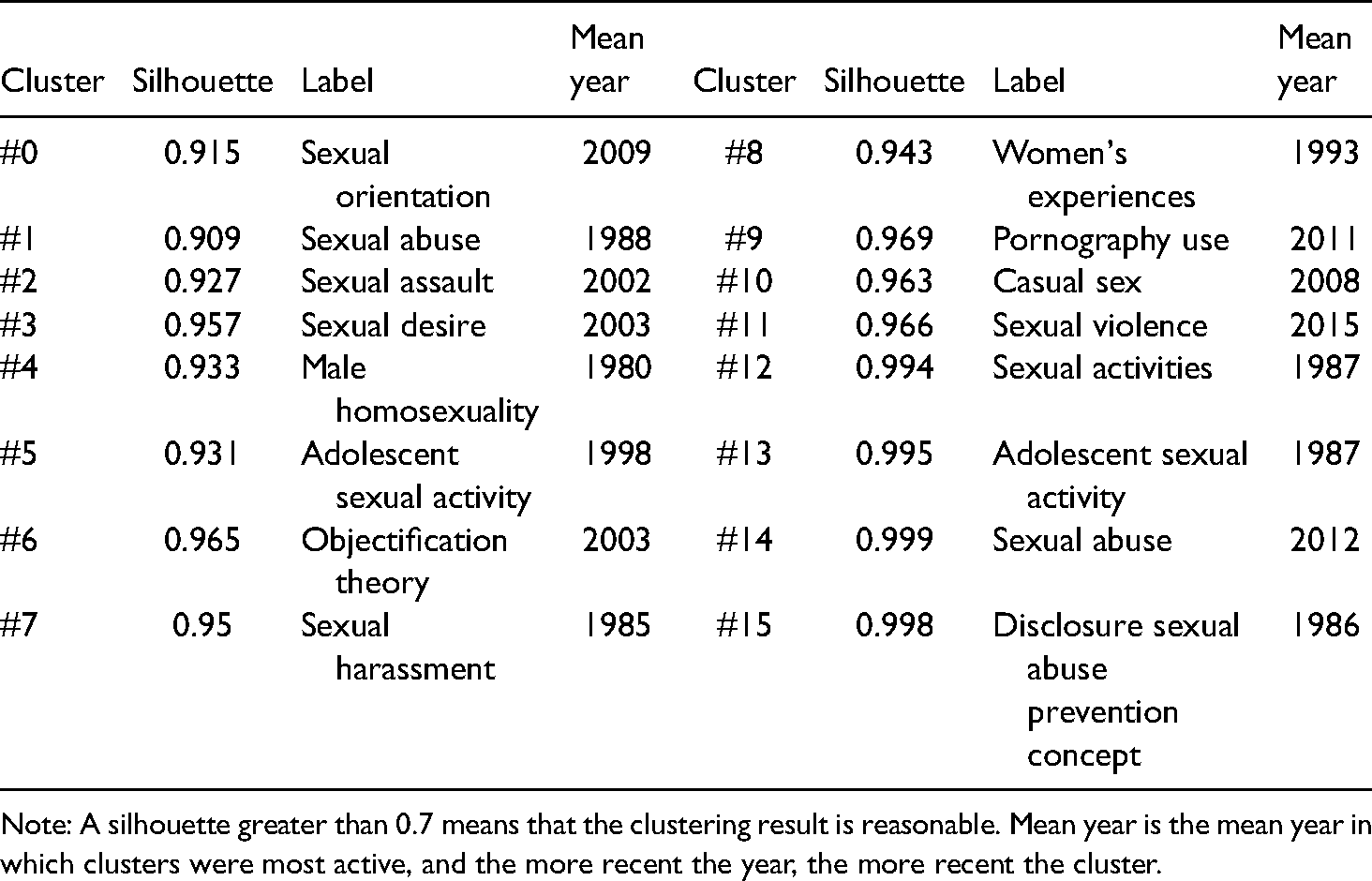
Our clustering analysis results in 16 clusters (Table 5) in the sexuality literature in general. A primary categorization of the labels suggests that the research hotspots of sexuality literature mainly include sexual abuse (#1, #14, #15), sexual violence/harassment/assault (#2, #7, #11), sexual minorities (#0, #4), gender (#8), and sexual behavior (#3, #5, #9, #10, #12, #13), which is consistent with our keyword co-occurrence analysis.
Major clusters of sexuality research, 1982–2021.
Note: A silhouette greater than 0.7 means that the clustering result is reasonable. Mean year is the mean year in which clusters were most active, and the more recent the year, the more recent the cluster.
According to the activeness of these themes in the timeline view of sexuality research (see Figure 7, Table 5), all the papers in the field since 1982 are divided into two stages, namely the “accumulating stage” (1974–1992) and the “developing stage” (1993–2021).
The period before 1992 is labeled as the accumulating stage as sexuality research in this period had just started to extend its landscape from the traditionally biomedical and sexological studies to a more interdisciplinary social scientific field of research (Parker, 2009). The male homosexuality (#4), sexual abuse (#1), and sexual harassment (#7) clusters are the earliest three clusters in sexuality research in our period of study. During this period, these three clusters were not only connected to other clusters—women's experiences (#8), sexual activities (#12), adolescent sexual activity (#13), sexual abuse prevention (#15)—but were also linked to subsequently developing clusters in the developing stage. In other words, these three clusters constitute important foundations for knowledge production in sexuality research.
Nine clusters emerged in the developing stage: sexual orientation (#0), sexual assault (#2), sexual desire (#3), adolescent sexual activity (#5), objectification theory (#6), pornography use (#9), casual sex (#10), sexual violence(#11) and sexual abuse disclosure(#14). The clusters of sexual orientation and sexual assault are a continuation of the key clusters of the accumulating stage, that is, male homosexuality (#4), sexual abuse (#1), and sexual harassment (#7). Other clusters, by contrast, indicate some newly emerging trends in sexuality research. While the cluster of casual sex (#10) implies the importance of sexual health and sexually transmitted disease, the cluster of objectification theory (#6), a theory that attempts to understand the consequences of being female in a society that sexually objectifies the female body (Fredrickson and Roberts, 1997), suggests the influences of feminist scholarship and other recent developments in sexuality research. A similar observation could be made regarding the cluster of pornography use (#9). The rise of pornography use research not only reflects the increasing prevalence of pornography use with the development of the internet (Træen et al., 2006), but also indicates feminism's theoretical concerns related to pornography use since the 1990s (Segal, 1998). In summary, sexuality research in the developing stage has showcased its connections with ongoing societal transformations, on the one hand, and an increasing interest in the social and cultural dimensions of sexuality, on the other.
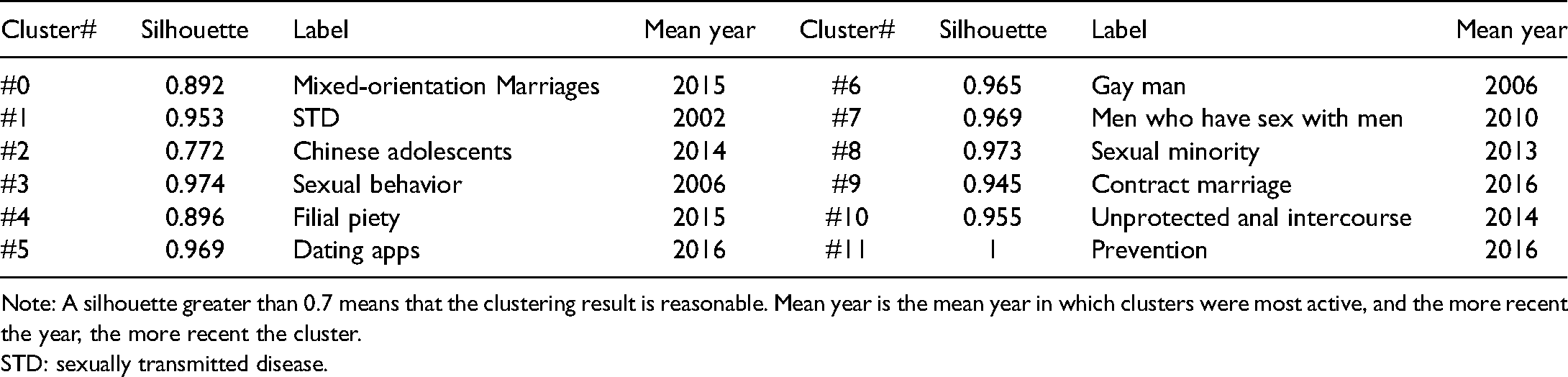
Regarding the literature on Chinese sexuality, our clustering analysis suggests that 12 clusters have emerged (Table 6). We categorize them in terms of four research hotspots—sexual minorities (#0, #6, #7, #8, #9, #10), sexual behavior (#3), sexual health (#1, #11), and adolescent sexuality (#2), which are consistent with the results of our keyword co-occurrence analysis. According to the vitality of different clusters across time, as outlined in Figure 8, the papers on Chinese sexuality are divided into two stages, one again an “accumulating stage” (1982–2009) and a “developing stage” (2010–2021). Three clusters emerged in the accumulating stage, namely sexually transmitted disease (#1), sexual behavior (#3), and male homosexuality (#6), which suggests an affinity with the clusters in sexuality research in general. In other words, the problematics of Chinese sexuality studies in this stage were largely conditioned by sexuality research in general. By contrast, the developing stage has witnessed the rise of local research themes such as mixed-orientation marriages (#0), filial piety (#4), and “contract marriage” (legal marriage between a homosexual man and woman to give the appearance of heterosexuality, #9), implying the profound influence of the emerging neo-Confucian familism on Chinese (queer) sexuality (Luo et al., Forthcoming; Wei and Yan, 2021). In other words, social scientific research on Chinese sexuality in this stage has begun to explore its own empirical problematics and theoretical interests, which depart from sexuality research in general.
Major clusters of Chinese sexuality research, 1982–2021.
Note: A silhouette greater than 0.7 means that the clustering result is reasonable. Mean year is the mean year in which clusters were most active, and the more recent the year, the more recent the cluster.
STD: sexually transmitted disease.
Conclusion
This paper analyzes the network structure and thematic trends in sexuality research in general and Chinese sexuality in particular from 1982 to 2021 by using a collaboration network and co-citation analysis approach. Our analysis not only demonstrates the historical development and current situation of Chinese sexuality research, but also compares it with the social scientific research on sexuality in general in English-language academia.
We summarize our findings as follows. Firstly, academic discussions on (Chinese) sexuality have rapidly increased since 1982 (Figure 3). Secondly, the main sources of sexuality research literature are periodicals on sexuality, such as the Archives of Sexual Behavior, while other journals, such as the Journal of Interpersonal Violence and Child Abuse & Neglect, also play a vital role in the field. Thirdly, the research on sexuality in the USA showcases extraordinary academic productivity and profound intellectual influence, playing a leading role in transnational and transregional collaboration in sexuality research. Despite its increasingly important role in the field, China, by contrast, seems to be less productive and active in the cooperation network structure in sexuality research in English-language academia, and there is still a huge gap between China and leading countries/regions such as the USA, Canada, and England. Fourthly, as our keyword co-occurrence analysis and co-citation analysis show, the hotspots of sexuality research include sexual behavior, sexual health, sexual minorities, sexual victimization, and gender, whereas the research frontiers include sexual violence and sexual abuse disclosure. Early themes of Chinese sexuality research were similar to the field as a whole, suggesting a lack of specific Chinese characteristics. Recent developments in Chinese sexuality research, however, imply a new trend that is characterized by an interest in local experiences, themes, and conceptual and theoretical discussions that challenge the Western-centric notions of sexuality in the existing literature.
As we have illustrated, the landscape of sexuality research has been dominated by researchers from North America and Europe. Although Connell (2007) regarded Australia as part of the periphery in the North-centric/West-centric global system of knowledge production, it still represents a third core region in the collaboration network of sexuality studies on a global scale. By contrast, China occupies the seventh position in the ranking of the most productive countries/regions in the field of sexuality research, and the total number of articles authored by scholars in China (438) from 1982 to 2021 represents only 29% of the total produced by researchers in Australia (1464) and less than 0.3% of the total produced by researchers in the USA (15,262). This can at least partly be attributed to the fact that sexuality research, like most other fields of inquiry in sociology and other social sciences, originated in the West (Pan and Huang, 2007).
Interestingly, a close look at our analysis on the research hotspots and trends in the literature suggests that Chinese sexuality research has been largely influenced by and yet simultaneously has been challenging the epistemic politics in social sciences, characterized by a global intellectual division of labor whereby Westerners theorize the world and the rest of the world serves as data (Alatas, 2003; Bhambra, 2014; Connell, 2007; Go, 2020).
On the one hand, we can see how the early stage of Chinese sexuality research was influenced by the research interests in sexual behavior and sexual health in sexuality studies in general, and paid particular attention to themes including unprotected sex, HIV, and Chinese gay men's sexual behavior. On the surface, we can infer that Chinese sexuality research in these initial years failed to prioritize its “Chineseness” in relation to the unique cultural traditions and social transformations in contemporary China. Rather, it depended on “ideas of Western social sciences such that research agendas, the definition of problem areas, methods of research and standards of excellence are determined by or borrowed from the West” (Alatas, 2003: 603). In other words, social scientific research on sexuality in China, among other countries/regions outside the West, functioned “simply to supplement the truths of the centre by providing interesting new data to be added to the general pool [in this case of knowledge on sexuality] … that pre-exists this data and is deemed to be adequate without consideration of it” (Bhambra, 2014: 100).
Despite the influence of the global division of intellectual labor, however, it is also noteworthy that the research field of Chinese sexuality is not a passive object determined by its Western counterparts. For example, sociologist Huang (2020) has recently argued that the seemingly inherent relationship between HIV/AIDS and sex in China in the past several decades has profoundly influenced the later development of Chinese sexuality research. While HIV/AIDS has been constructed as an important political issue that is closely connected to economic development, societal stability, state security, and national prosperity, priorities have been given to sexual health, risky sexual behavior, sexually transmitted disease, and HIV/AIDS-related issues in the increasingly visible and important research field of sexuality in China. This emerging trend in China in the past two decades, together with the global influences of Western sexuality research, have shaped the contours of Chinese sexuality research.
On the other hand, the latest developments in Chinese sexuality research also suggest a possibility of departing from the above-mentioned influences of epistemic politics and a possibility of building on recent efforts to provincialize (the Western-centric notion of) sexuality (Brown et al., 2010; Kong, 2016) and theorize sexuality from non-Western, or in this case Chinese/Asian, perspectives (Ho and Jackson, 2021; Luo, 2022b; Luo et al., Forthcoming; Wilson, 2006). Three themes emerging from the recent stage in the timeline of Chinese sexuality research, mixed-orientation marriage, filial piety, and contract marriage, indicate an increasing interest in the literature on the intersection of family and sexuality, or to be more specific, queer sexuality. Recent years have witnessed a shift in Chinese homosexuality studies from a functionalist and positivistic approach with a survey-based methodology to a constructivist/post-structuralist approach and reflexive qualitative methodology emphasizing homosexual identity/identification and intimate relationships (Kong, 2016). In this process, social scientists have started to investigate Chinese sexuality in relation to China's emerging neo-familism that is characterized by the rise of individualization, the revival of (neo)Confucian familism, and as a result, an ongoing conflict between individual and familial interests (Luo et al., Forthcoming; Wei and Yan, 2021). While the existing literature has largely assumed an individualistic understanding of sexuality, the important role played by family and the complicated nature of individual–family relations in China, among other countries and regions that have been caught between the neoliberal globalization of sexuality and the revival of (neo)Confucian familism, provides a particularly appropriate case to challenge the Western-centric notion of sexuality from an Asian perspective.
For example, Choi and Luo (2016) develop the concept of “performative family” to analyze nominal marriage/contract marriage—legal marriages between a homosexual man and woman to give the appearance of heterosexuality. They demonstrate how Chinese parents and their gay adult children implicitly and explicitly collaborate to perform family, emphasizing the importance of formally meeting society's expectations about marriage rather than substantively yielding to its demands. Luo et al. (Forthcoming), by contrast, adopt a novel perspective—sociology of story—to analyze the intersection of family and queer sexualities in China. They develop the concept of neo-Confucian homonormativity to analyze the encounter between neoliberal queer sexualities and neo-Confucian familism in China, and in doing so, opening up possibilities to theorize homonormativity from an Asian perspective. These empirical analyses and theoretical discussions on Chinese sexuality in relation to the family, we believe, represent an emerging trend in Chinese sexuality research, in which Chinese scholars are beginning to express their positions in English-language academia.
However, our research is not without limitations. Firstly, our analysis is exclusively based on the WoS dataset. Future research should cover more related research outputs in different languages and from varied data sources. Secondly, given the ambiguity of the word “sex” and the impossibility to spell out all the keywords in sexuality research, our search strategy is relatively simple and may not cover all the studies of (Chinese) sexuality. Thirdly, as the citation analysis is largely based on the representative literature that has been cited, it is difficult for us to objectively evaluate newly published papers. Fourthly, our analyses mainly rely on bibliographic records. That being said, we pay little attention to the practical research conditions, as well as the rich stories behind the relations of the literature (Qi et al., 2021: 20).
Footnotes
Contributorship
Muyuan Luo drafted the manuscript. Gaoran Chen and Qing He conducted data cleaning, filtering, and analysis under Shaojie Qi's guidance. Shaojie Qi framed the research questions and provided basic ideas for the research. All authors read and approved the final manuscript.
Declaration of conflicting interests
The authors have no conflicts of interest to declare.
Funding
The authors disclosed receipt of the following financial support for the research, authorship, and/or publication of this article: This work was supported by the Sichuan Research Center of Sociology of Sexuality and Sexuality Education, China (grant number: SXJYA2102), the Fundamental Research Funds for the Central Universities, China (grant number: JBK2201056), and the Fundamental Research Funds for the Central Universities, China (grant number: JBK2207068).
