




Abstract
Sexual infidelity in China has undergone a rapid increase in recent decades. Despite much speculation, social forces that help to prompt such increase have yet to be identified. Drawing on data from the Chinese Private Life Survey, coupled with the perspectives of attitudinal and institutional changes, we examine social determinants of marital infidelity that may reveal potential mechanisms of its diffusion. We find that more liberal attitudes toward extramarital sex, greater sexual dissatisfaction, and lower marital satisfaction were all positively associated with the likelihood of marital infidelity. Results also show that institutional factors such as personal income, living apart from one's spouse, and urbanity influenced the practice of extramarital sex. Taken as a whole, both attitudinal changes toward sex, love and marriage, and institutional changes as a result of social transformation may play a role in determining the rise of sexual infidelity in China.
Introduction
In China, sexual infidelity is commonly considered an immoral behavior, particularly for females (Zheng et al., 2011). Sexual infidelity is the act of having a sexual relationship with someone other than one's husband, wife or partner. According to the Chinese Health and Family Life Survey (CHFLS), 95% of the general public in China said it was “completely” or “somewhat” unacceptable for people to have an outside partner after they were married (Zhang et al., 2012). Although China nowadays does not have any legal provision to punish a person for adultery, its Civil Law clearly states that “husband and wife shall be loyal to each other” and, “in the divorce case, a non-fault person has the right to claim compensation if his or her spouse was cohabiting with someone else”. 1
Despite being widely disapproved of, sexual infidelity in China has experienced a rapid increase in recent decades (Pan, 2017; Zhang et al., 2021). In 2000, only about 8% of Chinese people in a committed relationship were sexually unfaithful during the course of their current relationship; by 2015, this figure had jumped to more than 24% (Pan, 2017). Contrary to expectations, the infidelity rate in China has already become as high as or even higher than that in some developed countries, such as the United States. Surveys show that in 2016, 16.3% of ever married Americans admitted that they had ever had sex outside marriage during their lifetime (Labrecque and Whisman, 2017). This begs a question: why has sexual infidelity in China increased so rapidly in recent decades?
Scholars have disagreed as to what accounts for the recent rise in sexual infidelity. Some emphasized the role of increasing social tolerance of extramarital sex, while others blamed it on the loosening of the work unit and other controls over social behaviors, including sexual behaviors (Parish et al., 2007; Tian et al., 2013; Zheng W et al., 2011). Despite much speculation, social forces that have helped to prompt the upsurge of infidelity in China have yet to be identified, partly due to lack of comparable data from different time points on sexual attitudes and behaviors in China. To fill this gap, we take an indirect approach and analyze the determinants of sexual infidelity. This practice is not new. For example, through empirically establishing the linkage of job mobility with the risk of sexual infidelity, Tian et al. (2013) argued that the rise of job mobility partly accounted for the rise in sexual infidelity in China. Likewise, using newly collected, nationwide data from the Chinese Private Life Survey (CPLS), we examine social determinants of marital infidelity that may reveal potential mechanisms of its diffusion.
The remainder of this paper is organized as follows. We first review theories about and evidence on determinants of sexual infidelity and set out the conceptual framework and social context underpinning our research. We then describe the level of sexual infidelity and the characteristics of infidelity partners. We estimate logistic regression models of the probability that the married respondent had ever engaged in extramarital sex throughout his/her current marriage, as well as had engaged in extramarital sex during the past year preceding the interview, respectively. Finally, in our concluding section we discuss some of the implications, and limitations, of our results.
Theory and evidence
Determinants of sexual infidelity
We know from previous literature that there is substantial variation in the risk of sexual infidelity among the married (for reviews, see Allen et al., 2005; Blow and Hartnett, 2005). In their seminal work, Treas and Giesen (2000) classified determinants of sexual infidelity into three categories: personal values, the couple's relationship, and the opportunities for extramarital sex. Compared to other classifications (e.g. Allen et al., 2005), this classification has been adopted more frequently in later studies.
Personal values refer to attitudes that an individual holds toward extramarital sex. Attitudes toward infidelity vary across subgroups (Blow and Hartnett, 2005). In the United States and other developed countries, studies have consistently found more permissive attitudes toward infidelity among men (Jackman, 2015; Labrecque and Whisman, 2017), those who are less religious (Jackman, 2015), and those from large cities (Weis and Jurich, 1985). Attitudes toward infidelity influence infidelity experience, with several studies showing higher incidence rates of infidelity among people holding permissive values toward infidelity (Labrecque and Whisman, 2017; Treas and Giesen, 2000).
As for the couple's relationship, Rusbult et al. (1998) emphasized the importance of commitment from both partners to the marriage. Commitment in the marriage is defined as the intent and desire to maintain the relationship. Following the logic of the investment model (Rusbult et al., 1998), commitment level should be positively associated with marital satisfaction, as well as with investments in the relationship; meanwhile, it should be negatively related to quality of alternative sexual partners (i.e. the perceived desirability of the best available alternative to the current spouse). The higher the commitment level, the lower the likelihood of sexual infidelity. In the empirical work, one variable consistently linked to sexual infidelity is marital satisfaction (for review, see Blow and Hartnett, 2005), although causal direction between these two is not clear. That is, people who engage in sexual infidelity are less likely to report satisfaction with their marriage (Atkins et al., 2001; Mark et al., 2011; Munsch, 2015; Treas and Giesen, 2000; Whisman et al., 2007). Beyond marital satisfaction, researchers have also been concerned with the roles of sexual satisfaction, mates’ social dissimilarity, and children in predicting infidelity. Nevertheless, the empirical evidence to date is not conclusive and often shows mixed results. Confirming the investment model, several studies have reported that sexual dissatisfaction is strongly and positively associated with infidelity (Buss and Shackelford, 1997; Liu, 2000). Some researchers associated a greater social difference between partners with their feeling less rewarded in a relationship, and thereby with a higher likelihood of engaging in extramarital sex, especially among men (Munsch, 2015). Some studies showed that the presence of children increased partners’ sense of investment in their relationship, and hence resulted in a greater likelihood of remaining faithful (Liu, 2000). In contrast, others found no evidence of a significant impact for sexual dissatisfaction (Mark et al., 2011), social differences within a couple (Treas and Giesen, 2000), and having children (Munsch, 2015).
The circumstances that facilitate extramarital sexual relations, referred to as opportunity, include the availability and willingness of alternative partners, as well as socioeconomic resources that help to maintain extramarital affairs. In some circumstances, people have more opportunities for encountering alternative partners. For example, jobs requiring social contact are related to engaging in infidelity; so too is living in a large city (Treas and Giesen, 2000). In other circumstances, people have more opportunities for undetected sex. When the couple lives separately, they are more vulnerable to infidelity (Blumstein and Schwartz, 1983). Less overlap between the two partners’ social networks in the marriage increases the risk of sexual infidelity (Treas and Giesen, 2000). Sexual infidelity is also a function of socioeconomic status. A higher risk of infidelity among people with a higher income has been reported (Atkins et al., 2001). This is possibly because people with higher socioeconomic status are more able to hide the expenditure that may result from an affair; or because people with higher socioeconomic status are more attractive to potential infidelity partners.
Unlike in China, where there has been an upward trend in marital infidelity over recent decades (Pan, 2017; Zhang et al., 2021), the reported lifetime prevalence of extramarital sex in the United States has held steady or even decreased slightly since at least the 1990s (Labrecque and Whisman, 2017; Twenge et al., 2015). Given that the majority of research about infidelity is done in the United States and other developed countries, we have little understanding of why a growing percentage of married people are engaging in sexual infidelity in China. Even so, in light of the above-mentioned determinants of infidelity, as well as changes in social and economic contexts, we still can get some clues as to the causal factors in the rise in sexual infidelity in China.
Theoretical background and the Chinese context
There are at least two ways to explain the emergence and upsurge of sexual infidelity in China (Farrer and Sun, 2003; Parish et al., 2007; Tian et al., 2013). One is the changing attitudes toward marriage, sex, and love, which are rooted in the rise of a culture of individualism. Central to this culture is the emphasis on individual identity, individual rights, and individual needs, as compared to the emphasis on the views, needs, and goals of the in-group in a culture of collectivism (Lo et al., 2010). Although the importance of obedience to social norms and group goals does not disappear, nowadays there has been an increased emphasis on thinking for oneself, and tolerance of diverse ideas and behaviors (Thornton and Young-DeMarco, 2001). Particularly important here is the pursuit of romantic and sexual fulfillment in the marriage, as well as the relaxation of the rules around marriage and sexuality. The marital union is traditionally perceived to be the only appropriate context in which sexual behavior should occur. Cultural individualism might promote the increasing acceptance of sexual infidelity among the general public at large and among married people specifically.
The other is economic development and institutional changes, providing more opportunities and material foundations for individuals to engage in extramarital sex. In traditional societies, the majority of people lead a poor life in the countryside, the migration rate is very low and people within the community are familiar with one another. However, industrialization, urbanization, migration, income increase, fertility decline, and other institutional changes associated with economic development offer more opportunities for undetected sex. Under these circumstances, people can have greater access to potential partners, keep sexual infidelity secret more easily and/or are more able to afford the costs of sexual relations with a third person.
It is noteworthy that these two explanations are not mutually exclusive. Modernization and institutional changes may lead to changes in attitudes; and vice versa. In fact, some family behaviors have already been found to be influenced by both attitudinal and institutional factors. For example, using data from the China Family Panel Studies, Yu and Xie (2015) show that attitudinal and institutional changes associated with economic development intertwine with each other, facilitating the rise in cohabitation. We therefore do not intend to establish the unique influences of attitudinal and institutional factors on sexual infidelity in China. Rather, we describe the broad Chinese contexts that are relevant to the study of sexual infidelity, including both attitudinal and institutional changes associated with economic development.
Since the early years of the 20th century, while undergoing modernization China has witnessed broad changes in exposure to Western culture, social institutions, and government policies, which has helped to shape attitudes toward and practices in extramarital affairs. Largely influenced by the Confucianist ideology, traditional Chinese society held conservative attitudes toward sexual behaviors. Specially, it was understood that sexual behaviors should occur within the marriage, sexual intercourse was primarily for procreation rather than recreation, and romantic intimacy and sexual pleasure within the marriage were given a low priority (Pan et al., 2004; Zheng et al., 2011). At that time, adultery was morally condemned, and was even punishable by death in the extreme case (Theiss, 2005). As China becomes more engaged with the world, especially after the economic reforms, the culture of individualism has begun to grow and gradually spread across the country. In individualism, people value pleasure, freedom, and autonomy, provoking individuals’ recognition of marriage as a means of self-development. That is, instead of having children and extending one's family lineage, people start to pursue romantic and sexual fulfillment in marriage. Unmet needs or desires, such as love and sex, are becoming one source of justification for sexual infidelity (Farrer and Sun, 2003). In China, marital satisfaction has declined over time, with 74% of Chinese in 2000 reporting they were “very happy” in their relationship, versus 52% in 2015 (Pan, 2017). This observation might constitute a challenge to marital fidelity. Extramarital sex is increasingly regarded as a private matter that should not be subject to social intervention. Ethnographic evidence even shows that some people have empathy for sexual infidelity in loveless marriages (Yan, 2003; Zheng et al., 2011). The wording commonly used to describe “extramarital sex” has gradually changed from “adultery” to “having a lover”, and this may reflect changes in the public's attitudes toward extramarital sex.
Economic and institutional changes in the reform era have provided a structural opportunity for individuals to engage in extramarital affairs. For example, accompanying economic growth have been the changes in the standard of living, working environments, and family behaviors. Between the years 1990 and 2020, per capita disposable income in China, net of inflation, increased at an annualized rate of 9.3% per year in urban areas, and 8.61 % per year in rural areas (National Bureau of Statistics, 2007, 2021). Using data from the 2006 Sexuality Survey of China, Zhang et al. (2012) found that higher income predicts more infidelity among Chinese men. Higher-income people might be more attractive; or they might enjoy advantages in hiding and affording the expenditures of extramarital affairs. Besides the rise in job mobility (Tian et al., 2013), nowadays many people in China work longer hours than ever before: average working hours per week for urban employees increased from 44.9 hours in 2001 to 47.0 hours in 2020 (National Bureau of Statistics and Ministry of Labor and Social Security, 2004, 2021). The workplace provides access to potential partners. As women's education and income improves, the opportunity costs of childbearing increase, and couples tend to have fewer children (Becker, 1981). Number of children mediates the risk of marital infidelity, as a couple face higher marriage exit costs if they have children.
Unbalanced growth in China, coupled with the relaxation of the hukou (household registration) system, has led to massive internal migration (largely from rural to urban areas by individuals in search of better employment and life opportunities), and rapid urbanization. As migration in China is always temporary, it is common for one spouse to move to an urban area for employment while the other stays behind to meet agricultural and family needs. Being away from their spouse's and/or family's supervision, migrants have more freedom in choosing lifestyles, including sexual behavior outside marriage. Moreover, living in an urban area itself offers more opportunities for undetected sex—more potential partners, greater anonymity and higher tolerance toward infidelity, compared to living in a rural area (Zhang et al., 2012). In fact, temporary migrants do show more acceptance of extramarital sex than non-migrants (Chen, 2017); meanwhile, their acceptance of extramarital sex increases when they stay longer in cities (Jin et al., 2008).
In sum, broad attitudinal, economic, and institutional changes have taken place in China, which allow or facilitate the emergence and upsurge of marital infidelity. Based on the discussion above, we expect that attitudes toward sex, love, and marriage, such as acceptance of extramarital sex, and sexual and emotional fulfillment experienced in marriage, affect individuals’ sexual behavior outside marriage. We also expect that economic development and institutional changes, such as income increase, migration, urbanization, and fertility decline, affect the risks associated with sexual infidelity.
Methods
Data and sample
This study utilizes data from CPLS, an online survey of sexual attitudes and behaviors conducted by a professional survey firm. Completed between August and November 2020, two rounds of respondent recruitment were launched for this survey. In the first round, through private social networking and social media platforms, such as WeChat and Weibo, initial respondents were selected with the snowball sampling method, and they were then asked to recruit additional respondents by sharing the survey link through WeChat Moments or sending the link directly to their friends. In this round, however, the majority of respondents were female, young and university educated. In the second round, respondents were further recruited from the firm's existing research panel, pre-recruited through various online and offline channels. To increase diversity, a quota was set based on age, sex, and education during sampling process. To ensure data quality, the survey verified the authenticity of the respondent's identity, allowed only one completion per Internet Protocol (IP) address, and implemented quality control checks, such as attention and speeding checks.
A total of 7733 respondents completed the survey. Additional verifications from three aspects (i.e. item non-response, logic check, and consistency between self-reported and registration information) were applied to screen the data. Although 6828 participants passed the screening successfully, for the purposes of this study the analytical sample has been further restricted to those who were married at the time of the interview (n = 4017).
Measures
Dependent variable
We are interested in experience of sexual infidelity among currently married respondents. Allowing for the possibility that results might vary by different operational definitions of infidelity, we construct two measures of sexual infidelity. The first measure relates to ever having engaged in sexual infidelity, which is based on the question asked of the respondents about their current marital relationship. Respondents were asked: “During the relationship with your current spouse, have you ever had sex with anyone else?” (0 = no, 1 = yes, and 2 = I don’t want to answer). Respondents who “didn’t want to answer” (3.83%) were reclassified into the “yes” category, 2 since fidelity is a socially desirable behavior. If the respondents answered “yes”, they were further asked about the general type of infidelity, with three response options (i.e. one-night stand, short-term relationship, and long-term relationship), and the identity/identities of their infidelity partner(s), with response options of: (a) a close personal friend, (b) a neighbor, co-worker, classmate or acquaintance, (c) lover, (d) person who you paid or paid you for sex, (e) casual date (e.g. one-night stand, “hookup”), and (f) other.
The second measure relates to having engaged in sexual infidelity during the past year. It is measured by the question “Including your spouse, cohabiting partner, friend, or anybody else, how many people have you had sex with in the past twelve months?” Currently married respondents are counted as having engaged in infidelity in the past year if they reported having sex with two or more partners. To some extent, this measure of infidelity can reduce social desirability bias since it does not require a direct answer about infidelity from the respondents. Since it represents a narrower time frame for observation, it can also reduce recall bias and increase temporal matching between infidelity and the respondents’ characteristics. This measure of infidelity, however, is less than perfect, as the people with whom the respondent had sex in the past year might not include his/her spouse. Another potential problem with this measure of infidelity is the existence of the open relationship, in which sex outside marriage is not considered infidelity, though this practice is rare in today's China. Yet another problem is the possibility of individuals who reported themselves to be married at the time of the survey but had got married during the past year—from the beginning of the past year to when they got married, any sexual partners other than their current spouse would not have been acts of marital infidelity.
Independent variables
To investigate the influence of attitudinal forces on marital infidelity in China, we introduce a series of ordinal variables, pertaining to attitudes toward marital infidelity, sexual satisfaction, and marital satisfaction. Along with the rise of individualism in China, there has been an increasing emphasis on sexual and emotional fulfillment in marriage, and tolerance of extramarital sex. Thus, we expect that people holding more permissive values toward extramarital sex are more likely to engage in extramarital sex. We also expect that infidelity will be more common among those with lower emotional and sexual fulfillment in marriage. Permissive values toward extramarital sex are measured by the question “What is your opinion about extramarital sex?” The responses range from 1 to 5, indicating that it is “always wrong” to “completely right”. Two variables measure respondents’ sexual satisfaction, in terms of physical pleasure and emotional satisfaction. The former is measured by the question “How physically pleasurable do you find sex with your spouse to be: very pleasurable; somewhat pleasurable; not very pleasurable; not pleasurable at all?” The latter is measured by the question “How emotionally satisfying do you find sex with your spouse to be: very satisfying; somewhat satisfying; not very satisfying; not satisfying at all?” We reverse coded these two variables, so that higher values indicate a higher level of sexual satisfaction. Marital satisfaction is gauged by an ordinal item on the respondent's self-reported satisfaction with his/her current marital relationship.
To evaluate the influence of institutional forces on infidelity in China, we consider another series of variables, including personal income per month, the average number of hours worked per week, migration, co-residence with one's spouse, hukou, and whether having any children. Both personal income and hours worked are continuous variables. Note that we truncate personal income at 100,000 RMB to reduce the leverage of the small number of respondents with a very high income (only 0.04% of our sample earn more than 100,000 RMB per month). Migration is a three-category variable: residing in the county/district in which the respondent's hukou is officially registered; residing outside the county/district in which the respondent's hukou is officially registered but without crossing the border of another province; residing outside the province in which the respondent's hukou is officially registered. Co-residence with the spouse is also a three-category variable: respondents who live with their spouses; live with other people but apart from their spouse; and live alone. Dummy variables indicated whether the respondent is a rural or non-rural hukou holder, and whether they are childless or not. As mentioned above, factors such as more tolerant social norms, greater capacity to afford relevant expenditure, more availability of potential partners, greater ability to conceal infidelity, and lower exit cost of marriage result in a higher likelihood of infidelity. Hence, we expect that income, hours worked, migration, living away from one's spouse, urbanity, and having no children are positively associated with the risk of sexual infidelity, respectively.
Finally, we used city-level gross domestic product (GDP) per capita in 2020 to measure regional economic development for each respondent. Given the fact that economic development is unbalanced across regions in China, and economic development is associated with attitudinal and institutional changes, we expect residents from more economically developed regions to be more tolerant of sexual infidelity, and to have more opportunities for undetected sex.
Control variables
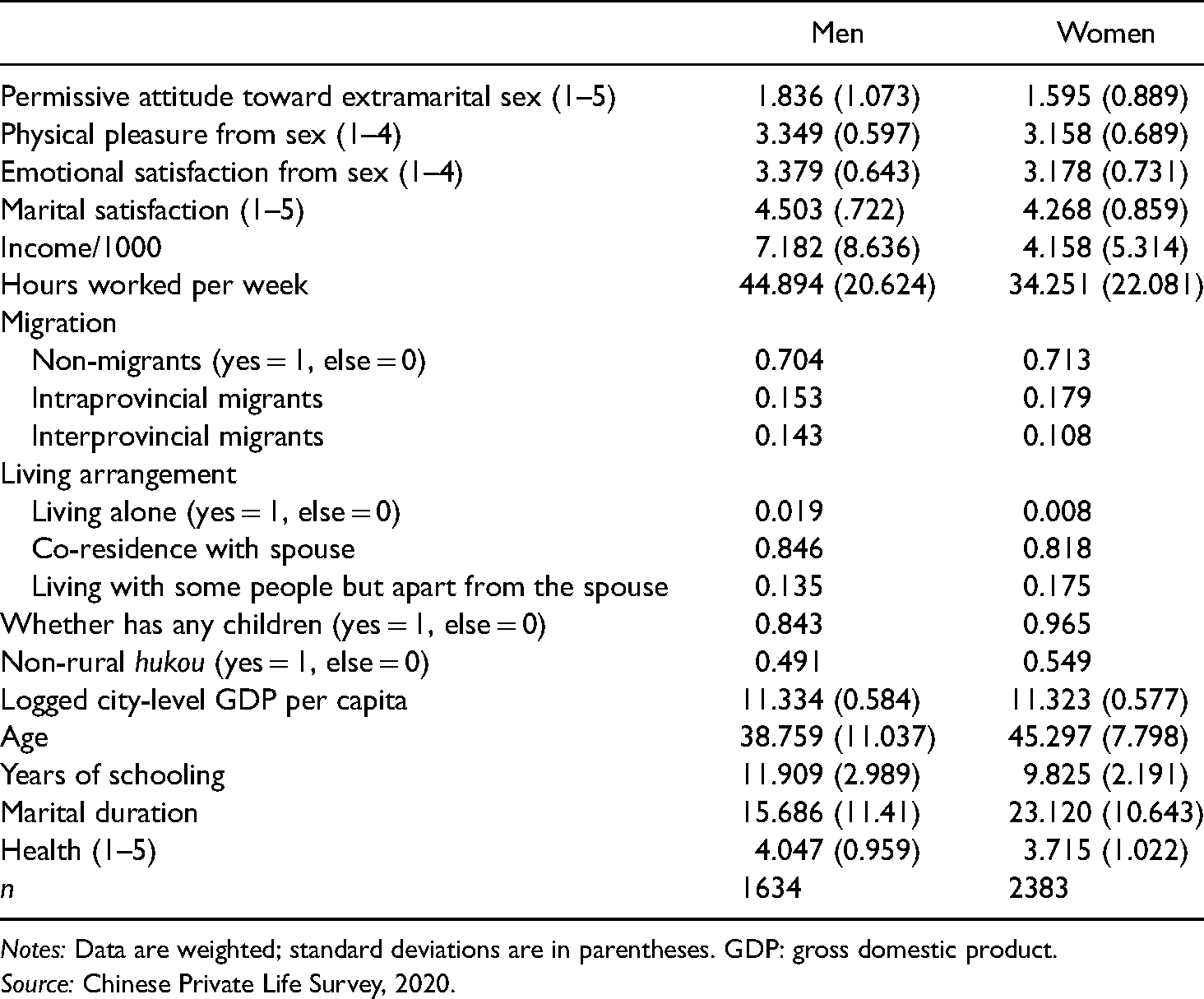
All models control for the respondent's age, education, marital duration, and health. Age is a continuous variable. Age and age-squared are included simultaneously to account for the curvilinear relationship between age and marital infidelity. Education is measured in years of schooling. Marital duration is a continuous variable derived from a questionnaire item asking respondents in which year they were married to their current partner. Self-rated health is measured by an interview question that asked respondents to rate their health on a 5-point scale, ranging from 1 to 5 (excellent to poor). We reverse coded the self-rated health so that higher values indicate better health. Descriptive statistics of all the independent variables and control variables used in the analysis for married men and women are presented separately in Appendix Table A1.
Analyses
We first describe attitudes toward and prevalence of sexual infidelity among the currently married in China. For married individuals who reported ever engaging in extramarital sex throughout their current marriage, we further examine how long the affair(s) usually lasted and with whom they had extramarital sex. We then estimate binary logistic models of the likelihood that married respondents reported ever having engaged in sexual infidelity throughout their current marriage and having engaged in sexual infidelity during the past 12 months.
Considering that standards of sexual conduct differ by gender in contemporary Chinese society, all analyses are conducted separately for males and females. Due to the sample design of the online survey, women, the young, and the university educated made up a larger share of the survey sample than they did in the population. To render our data representative of the adult population in China, we weighted the analytical sample using the sex-age-education distribution of the Chinese population from the 2015 mini-census.
Results
Descriptive analysis
Most people in China today disapprove of marital infidelity, with men being more tolerant of infidelity (see Figure 1). By 2020, about 81% of married respondents (76% of married men and 84% of married women) said that they believed that extramarital sex was always wrong or almost always wrong. Compared with 20 years ago (Zhang et al., 2012), however, there has been a movement toward more freedom for extramarital sex. Specifically, during the past two decades, disapproval of extramarital sex among married people decreased by 14 percentage points.
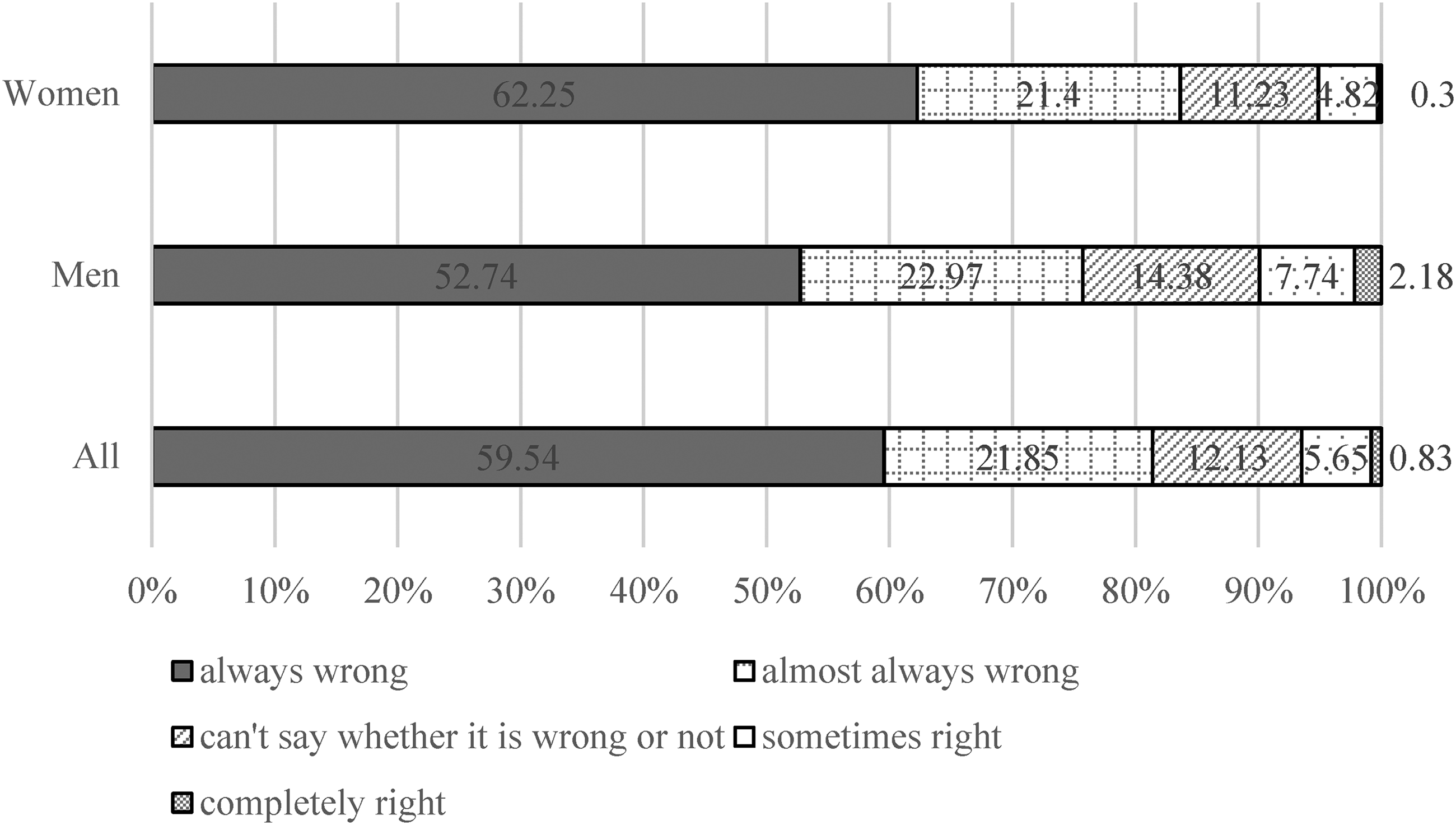
Distribution of attitudes toward sexual infidelity among currently married respondents in China.
Figures 2 and 3 present the overall rate of sexual infidelity among married respondents throughout their current marriage, as well as the incidence of sexual infidelity during the past 12 months. While increasing prevalence of sexual infidelity during the 2000–2015 period has been identified (Zhang et al., 2021), by way of a rough comparison, that increase continued, rising by about four percentage points in the ensuing five-year term 2015–2020. In 2020, 26% of married Chinese (35% of married men and 23% of married women) reported ever having been sexually unfaithful to their current spouse. In 2020, the incidence of sexual infidelity during the preceding year was 21% of married Chinese (27% of married men and 19% of married women). Regardless of how infidelity was measured, men were more likely than women to report ever having engaged in infidelity.
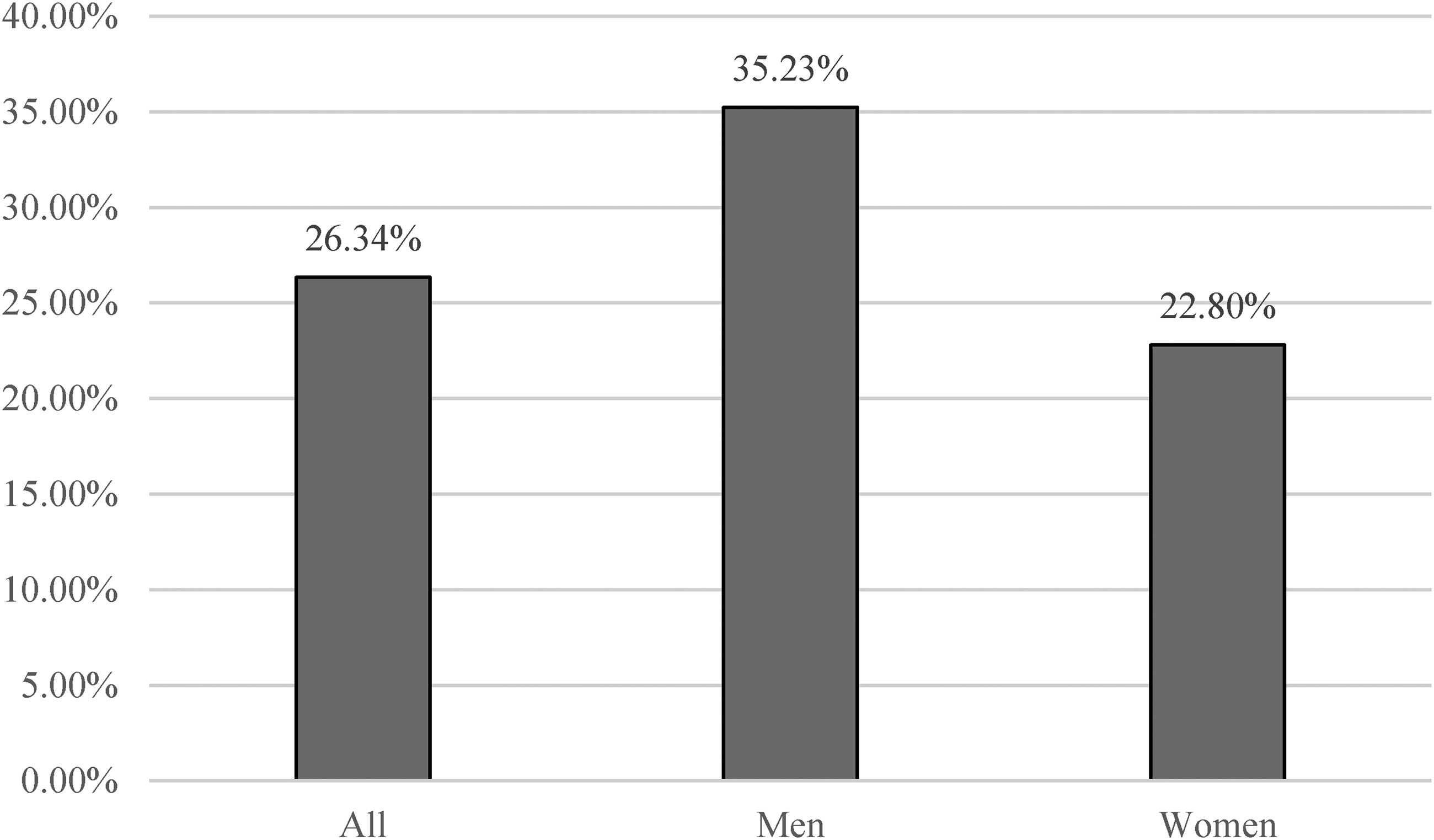
Prevalence of sexual infidelity among married adults throughout their current marriage in China.
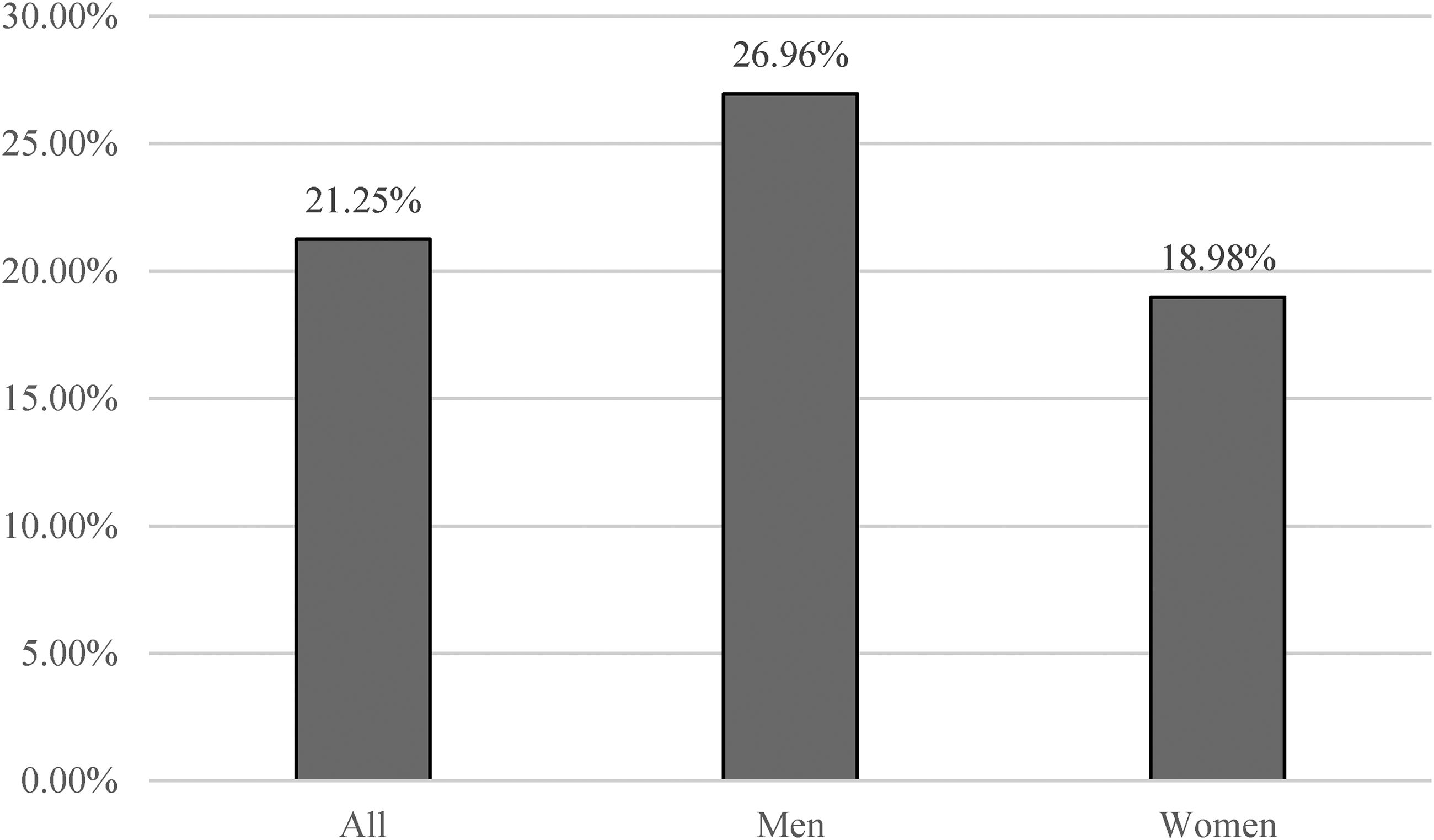
Prevalence of sexual infidelity during the last 12 months among married adults in China.
Married respondents who reported ever having engaged in extramarital sex throughout the current marriage were asked about how long their affairs usually last. Taken as a whole, most affairs do not last for a long period: short-term affairs accounted for the largest part (50%), followed by one-night stands (39%) and long-term affairs (11%) (see Figure 4). With regard to possible gender differences, when engaging in sexual infidelity, men were more likely to maintain long-term affairs and to be involved in one-night stands, while women were more likely to maintain short-term affairs.
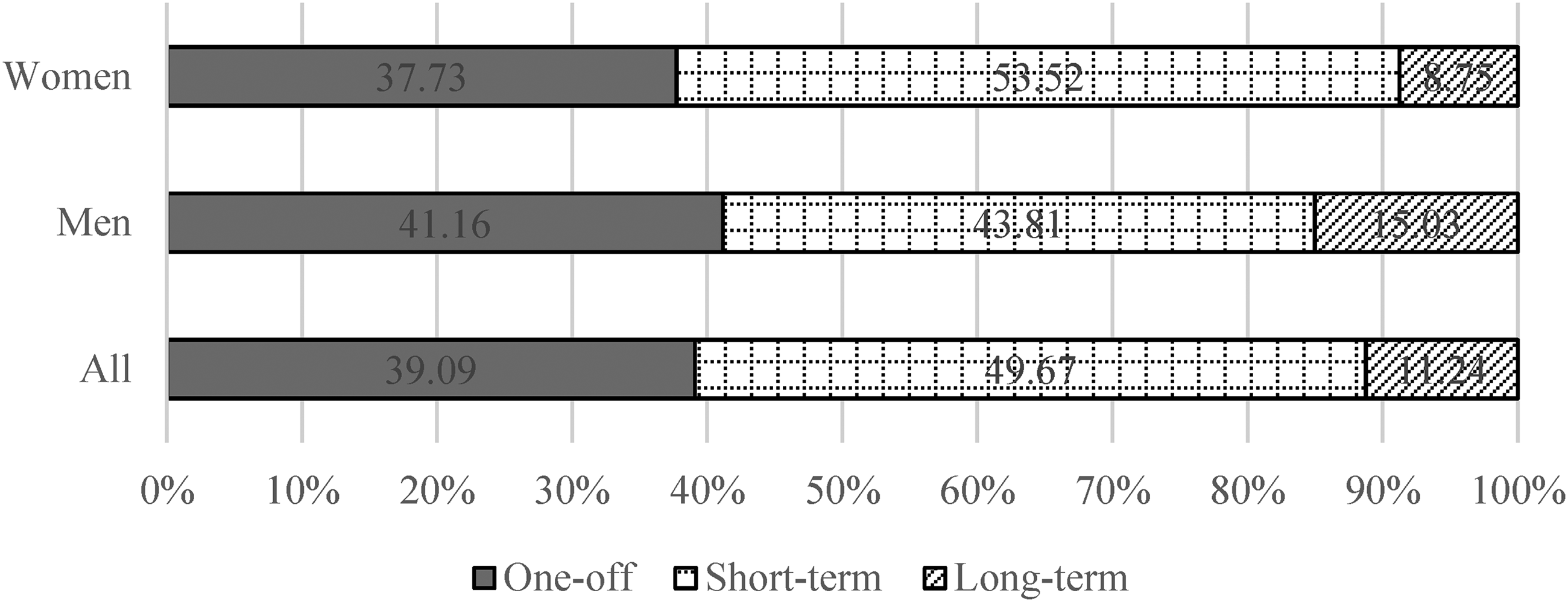
Percentage distribution of general duration of extramarital sex among married adults in China.
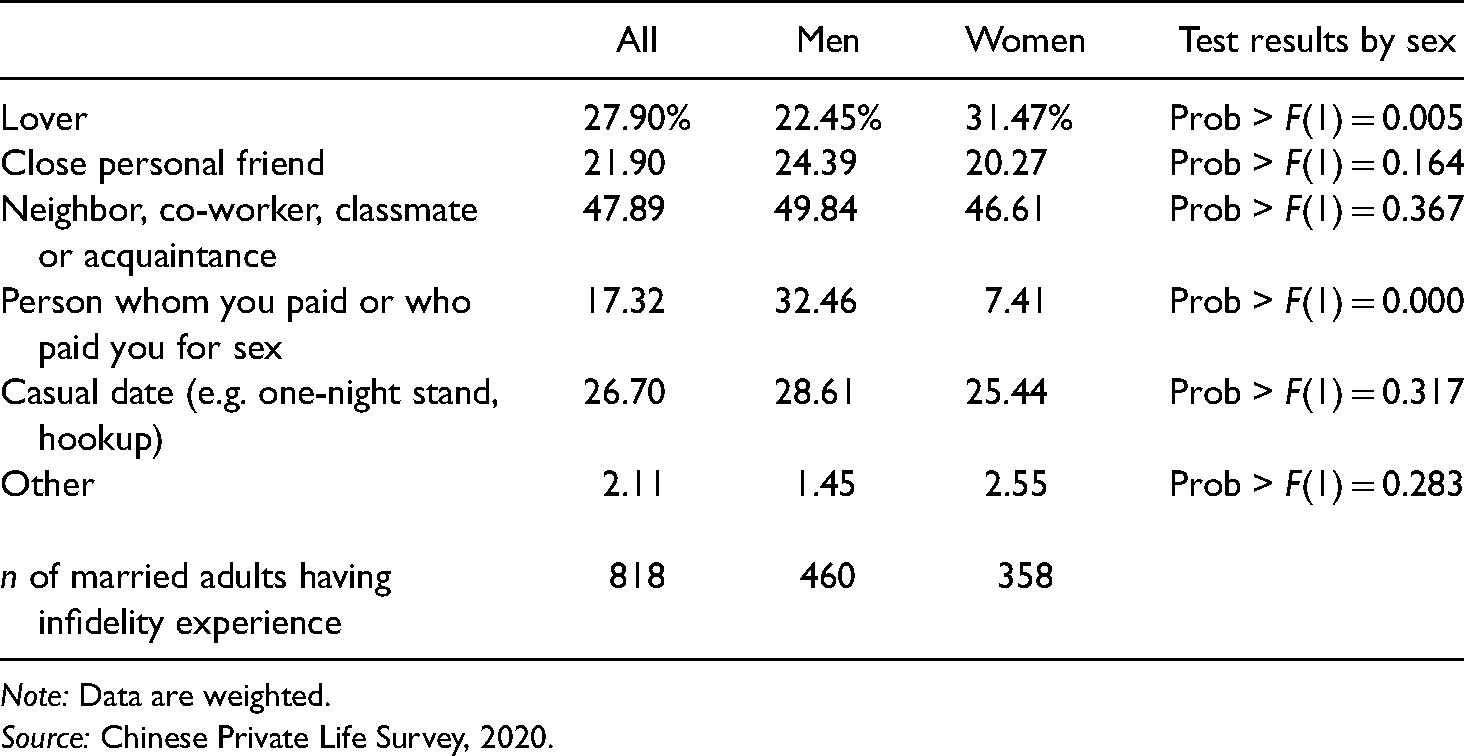
Table 1 further describes the identity or identities of the infidelity partner(s) for married individuals who reported ever having had sex with someone other than their spouse during the course of their current marriage. Overall, people most commonly reported having extramarital sex with a neighbor, co-worker, classmate or acquaintance (48%); and less frequently reported were extramarital sex with a lover (28%), a casual date, such as one-night stand or “hookup” (27%), a close friend (22%), extramarital sex with a partner paying or paid for sex (17%) or extramarital sex with someone who did not fit into one of the other categories (2%). With regard to gender differences, men were significantly less likely to have extramarital sex with a lover, but more likely to have paid for or have received payment for sex, as compared to women. No significant differences between men and women were found pertaining to extramarital sex with a neighbor, co-worker, classmate or acquaintance, with a casual date, with a close friend or with someone who did not fit into one of the other categories.
Percentage distribution of identity of infidelity partners for married adults throughout the current marriage.
Note: Data are weighted.
Source: Chinese Private Life Survey, 2020.
Multivariate analysis
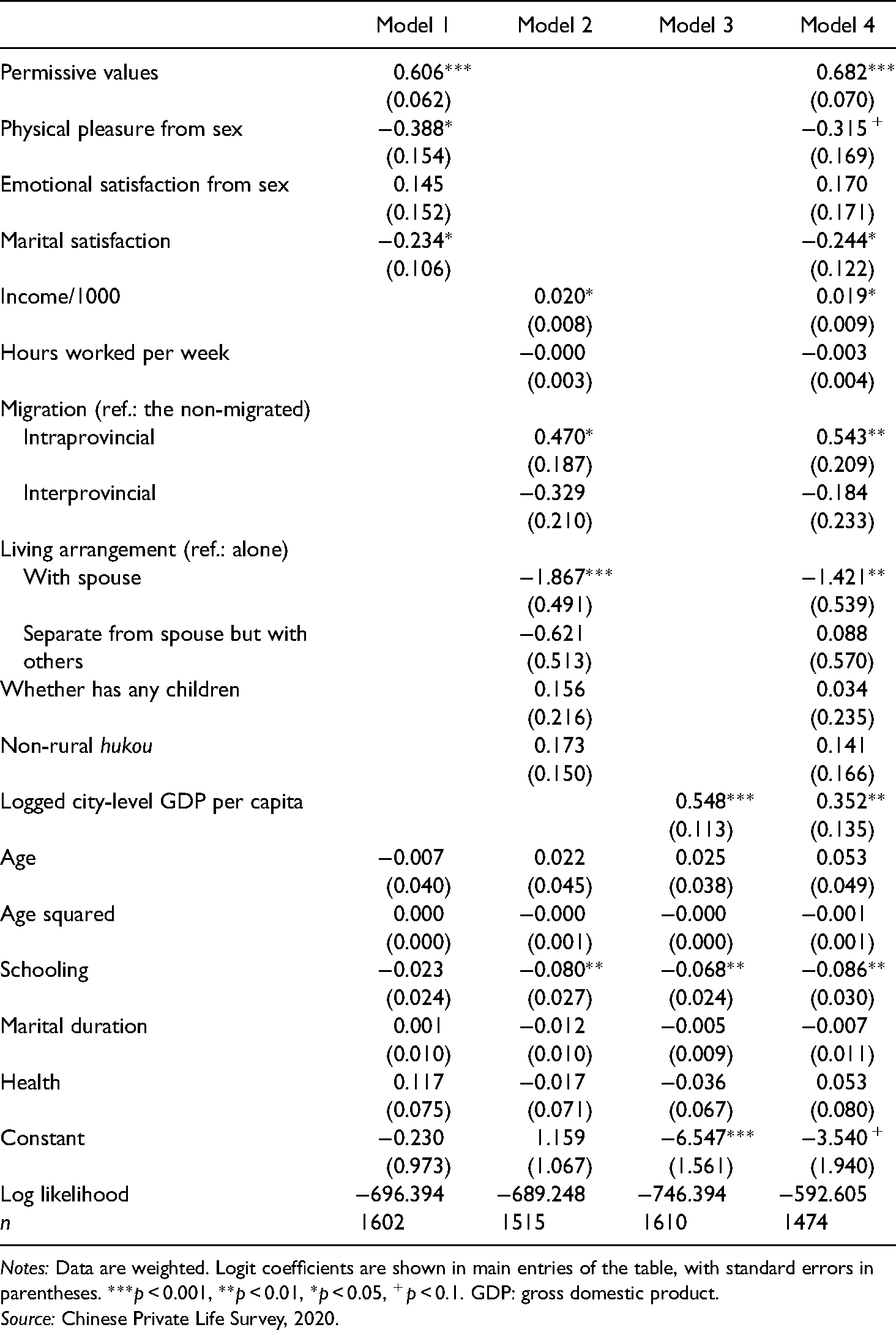
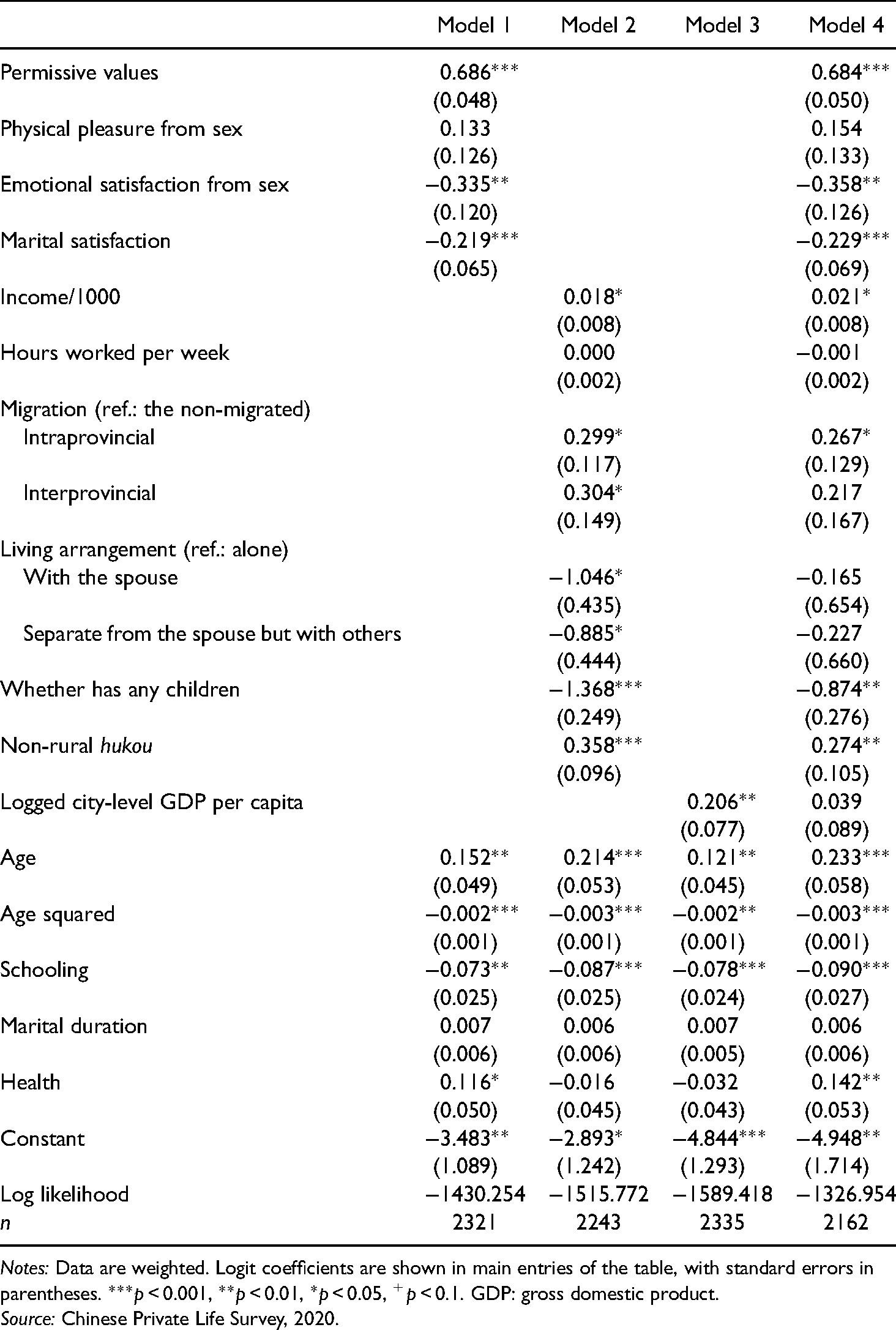
To examine the effect of attitudinal and institutional forces systematically, we next turn to a multivariate analysis. We present estimated coefficients of logit models predicting sexual infidelity throughout the current marriage for men in Table 2 and for women in Table 3. In each table, there are four models. That is, we examine each of the three sets of independent variables (i.e. attitudinal factors, institutional factors, regional variation) separately (Models 1 through 3) and simultaneously (Model 4), so that we can explore their separate and combined effects.
Binary logistic regression models predicting sexual infidelity throughout the current marriage for married men.
Notes: Data are weighted. Logit coefficients are shown in main entries of the table, with standard errors in parentheses. ***p < 0.001, **p < 0.01, *p < 0.05, + p < 0.1. GDP: gross domestic product.
Source: Chinese Private Life Survey, 2020.
Binary logistic regression models predicting sexual infidelity throughout the current marriage for married women.
Notes: Data are weighted. Logit coefficients are shown in main entries of the table, with standard errors in parentheses. ***p < 0.001, **p < 0.01, *p < 0.05, + p < 0.1. GDP: gross domestic product.
Source: Chinese Private Life Survey, 2020.
Values and attitudes demonstrated the hypothesized relationships, as shown in Model 1 of Tables 2 and 3. For both men and women, permissive sexual values were positively associated with the likelihood of infidelity throughout one's current marriage, while greater satisfaction with one's marriage was negatively associated. It is interesting that physical pleasure from sex showed the predicted negative association only among men, and emotional satisfaction from sex was negatively associated with infidelity only among women. These results suggest that men, in attempting to engage in infidelity, place more emphasis on lack of physical pleasure than emotional dissatisfaction in sexual unions, while the order of these two dimensions is reversed for women.
The hypothesized relationships between institutional factors and infidelity received mixed validation. Income, migration and living arrangement were statistically significant and in the anticipated direction, as shown in Model 2 of Tables 2 and 3. Controlling for other variables, each 1000-yuan increase in personal income is associated with 2% higher odds of having ever been unfaithful throughout one's current marriage. Migration, especially intraprovincial migration, raised the likelihood of infidelity. For example, the likelihood of extramarital sex for intraprovincial migrants compared with non-migrants is 60% higher for men and 35% higher for women. Living with one's spouse instead of alone meant an 85% decrease for men and a 65% decrease for women in the odds of having engaged in extramarital sex; living with some people but apart from one's spouse, instead of living alone, meant a 46% decrease for married men (though statistically insignificant) and a 59% decrease for married women in the odds of ever having engaged in extramarital sex. While for men, the presence of children and hukou status did not predict marital infidelity, for women, having children and having rural hukou reduced the net odds of extramarital sex by 75% and 30%, respectively. For both men and women, hours worked were statistically insignificant for extramarital sex.
The coefficients of regional variables indicate that individuals living in more developed areas were considerably more likely to have ever engaged in sexual infidelity throughout their current marriage. As shown in Model 4 in Tables 2 and 3, each 1% increase in regional GDP per capita was associated with 0.73% and 0.23% higher odds of having engaged in infidelity for local men and women, respectively.
For men and women, the complete Model 4 shows that the patterns were quite consistent, compared to the reduced Models 1 to 3. One notable exception is the effect of economic development. Relative to Model 3, the inclusion of attitudinal and institutional variables in Model 4 reduces the effect of economic development by 36% for men and to insignificance for women. Such results suggest that, along with economic development, attitudinal and institutional changes have occurred, influencing the acceptance and practice of extramarital affairs in China.
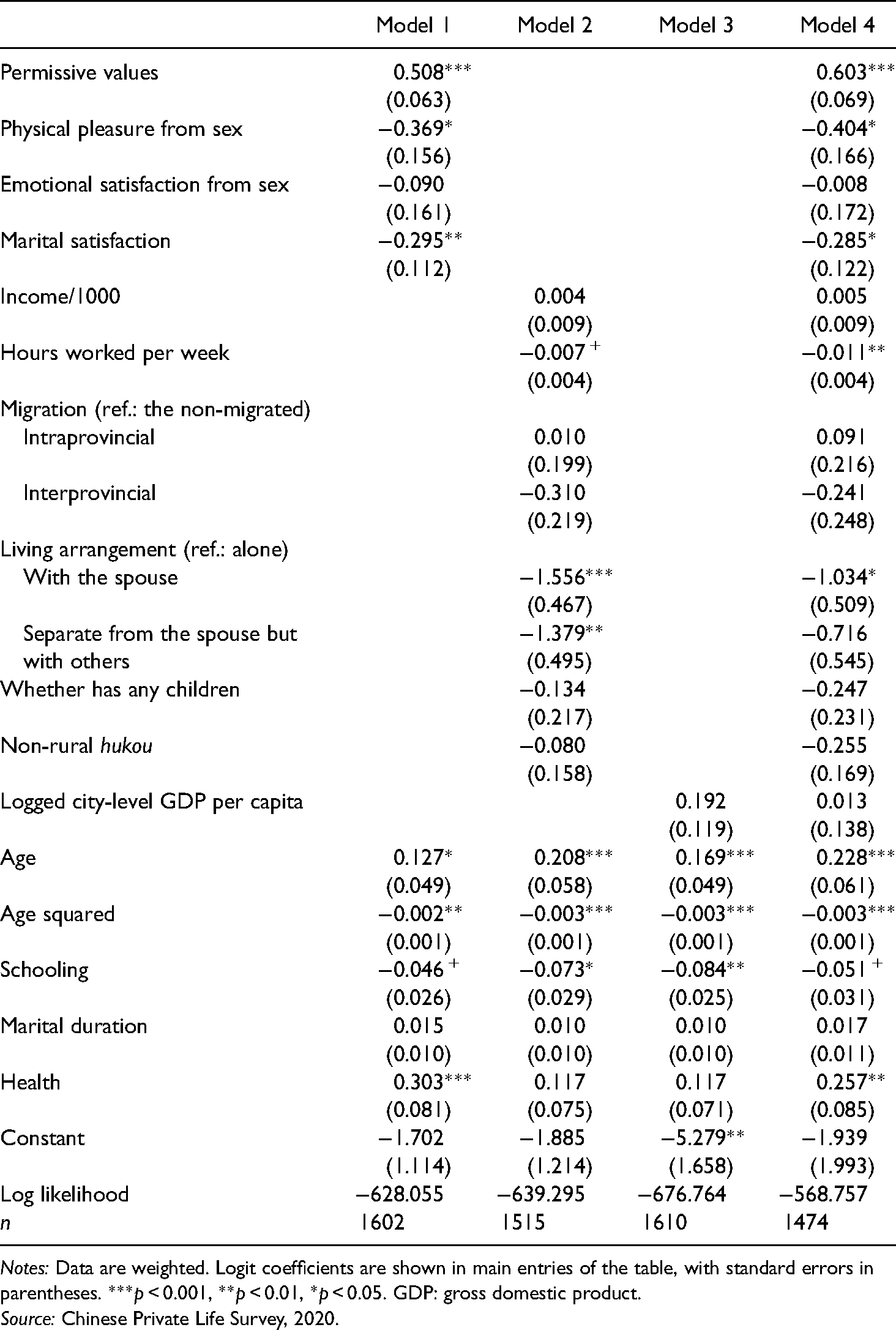
Likewise, the corresponding coefficients of logit models predicting sexual infidelity during the past 12 months for married men and women are shown in Tables 4 and 5, respectively. Although focusing on infidelity within a short time frame cannot address the issue of causation completely, it can help to improve the temporal match between infidelity and the respondent's characteristics.
Binary logistic regression models predicting sexual infidelity during the past 12 months for married men.
Notes: Data are weighted. Logit coefficients are shown in main entries of the table, with standard errors in parentheses. ***p < 0.001, **p < 0.01, *p < 0.05. GDP: gross domestic product.
Source: Chinese Private Life Survey, 2020.
Binary logistic regression models predicting sexual infidelity during the past 12 months for married women.
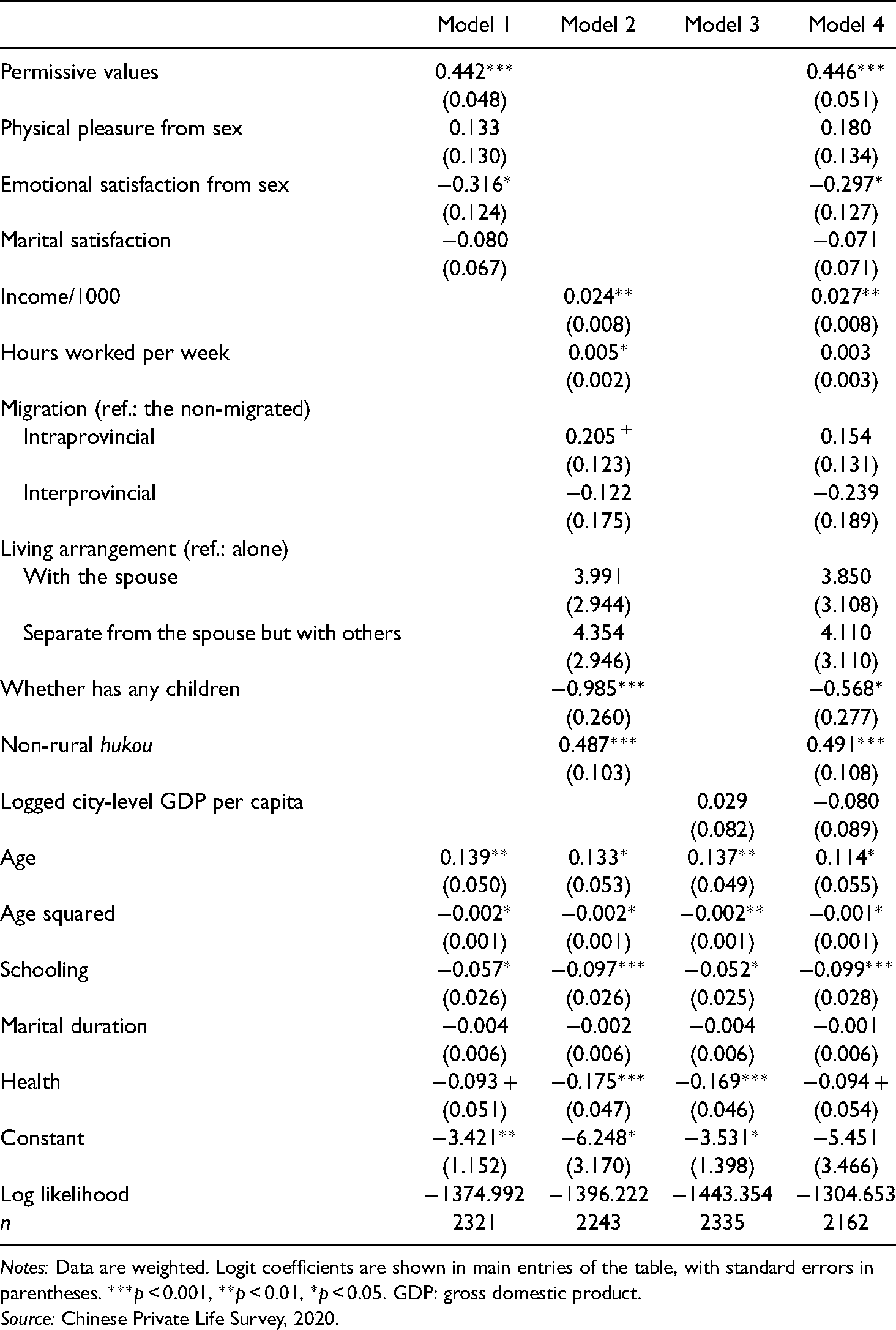
Notes: Data are weighted. Logit coefficients are shown in main entries of the table, with standard errors in parentheses. ***p < 0.001, **p < 0.01, *p < 0.05. GDP: gross domestic product.
Source: Chinese Private Life Survey, 2020.
The first model in Tables 4 and 5 includes attitudes and controls. Results for attitudes and values in predicting short-term infidelity are largely consistent with those from earlier analyses. Permissive values toward extramarital sex were significantly associated with the likelihood of infidelity for both men and women. In terms of sexual life in the current marriage, physical unpleasure rather than emotional dissatisfaction raised the odds of infidelity during the past 12 months among men, whereas emotional dissatisfaction rather than lack of physical pleasure raised the odds among women. If anything, marital satisfaction predicted who engaged in marital infidelity only among men.
The second model in Tables 4 and 5 includes institutional factors and controls. Results show that institutional factors play a role in determining infidelity in the prior 12 months. Similar to earlier analyses, for married men, co-residence with one's spouse continued to be strongly significant. Controlling for other variables, the odds of recent infidelity were 78% lower for married men living with their spouse than for those living alone. However, except for hukou status and having children, the effects of income level and migration also became statistically insignificant, even at the 0.05 confidence level, for the previous 12 months. For married women, in terms of institutional factors, results for recent infidelity generally paralleled those for infidelity throughout the current marriage. With the exception of living arrangement and migration, personal income, having children, and hukou status were all significantly associated with the odds of infidelity in the past 12 months and in the anticipated direction. Even hours worked per week, which was not statistically significant in earlier analyses, showed the hypothesized positive association with infidelity in the previous 12 months. This implies that the characteristics of current working environment matters, but hours worked cannot capture the features of previous working conditions.
As shown in Model 3 of Tables 4 and 5, we did not find the predicted association between level of economic development and infidelity in the preceding 12 months. Unlike in earlier analyses, for both men and women, economic development's effect was not statistically significant, even at the 0.05 confidence level, in the short run. A plausible interpretation is that the popularity of internet access has reduced differences across regions in terms of the likelihood of sexual infidelity.
Finally, Model 4 of Tables 4 and 5 included all attitudinal and institutional factors, and controls. Compared to the reduced models in Tables 4 and 5, the results in the complete model did not change substantially, for both men and women. Notably, after all of the variables were included, for men, hours worked per week was significantly associated with the likelihood of infidelity in the prior 12 months, but in the inverse direction to our expectation. This is possibly because working long hours may reduce the amount of time one can spare to look for extramarital sexual partners. For women, hours worked per week was not significant for having had extramarital sex in the preceding 12 months.
Conclusion and discussion
Today, more people than ever in China have engaged in extramarital sex. According to the CPLS, by 2020 the overall rate of sexual infidelity throughout a current marriage had increased to 26% among married respondents (35% among married men and 23% among married women). Meanwhile, the incidence of sexual infidelity during the past 12 months was 21% among married respondents (27% among married men and 19% among married women). For many observers, the upsurge in sexual infidelity is a detrimental trend, as it likely leads to a reduction in psychological well-being (Whisman, 2016; for a review, see Blow and Hartnett, 2005), a higher incidence of sexually transmitted infections (Conley et al., 2012), and higher rates of union dissolution (Allen and Atkins, 2012; Frisco et al., 2017; Previti and Amato, 2004). Regardless of the consequences that the trend generates, it is important to understand the causes of the rise in sexual infidelity in recent decades in China.
Using CPLS data and framing our analysis within the perspectives of attitudinal and institutional changes, we examine social determinants of marital infidelity that may reveal potential mechanisms of its diffusion. When we consider values and attitudes, the results of the current study are congruent with past research in proving their importance in the occurrence of infidelity (Treas and Giesen, 2000; Zhang et al., 2012; Zhang et al., 2021). Our analyses indicate that more liberal attitudes toward extramarital sex, greater sexual dissatisfaction, and lower marital satisfaction were all positively associated with the likelihood of marital infidelity, even when institutional factors and demographic risk variables were controlled. Interestingly, while women's engagement in extramarital sex is more commonly promoted by their emotional dissatisfaction with their marital sex, for men the practice is more stimulated by lack of physical pleasure from marital sex.
Considering institutional factors, we found evidence that they did play a role in determining the practice of extramarital sex. As we predicted, in general, personal income was positively associated with infidelity. The behavioral constraints imposed by co-residence with one's spouse or other family members reduced the likelihood of infidelity, especially among married men. Having children made women less likely to engage in extramarital sex, but exerted no significant influence on men's risk of extramarital sex. Urban women were more likely to engage in infidelity than their rural counterparts, although no difference was found between rural and urban men. In the long run, at least, migrants were more likely to engage in extramarital sex, as were people living in more economically developed areas.
We know from the previous literature that in China, broad changes have occurred in attitudinal and institutional areas. There has been an increase in individual freedom, greater emphasis on sexual and emotional fulfillment of marriage, and more acceptance of extramarital sex. Modernization, urbanization, migration, increasing personal income, working and family environment changes, and changes in other social institutions associated with economic development have taken place in China. As such, we claim that both attitudinal changes toward sex, love and marriage, and institutional changes as a result of social transformation may play a role in determining the rise of sexual infidelity in China.
Future research examining determinants and therein diffusion of marital infidelity in China might benefit from addressing the limitations of this study. The cross-sectional nature of the CPLS prohibits us from drawing rigorous causal conclusions about the relationship between attitudinal and institutional factors and sexual infidelity. For example, we do not know if more permissive values toward extramarital sex are responsible for an increased likelihood of infidelity, or if sexual unfaithfulness results in greater acceptance of extramarital sex. Indeed, as suggested in earlier observations, infidelity is both a cause and a consequence of poor marital quality (Previti and Amato, 2004). Also worth considering is the discrepancy between attitudes and behaviors. Around 37% of married respondents who have engaged in extramarital sex in the CPLS sample still indicated that it was “always wrong”.
Future research might consider additional determinants of sexual infidelity, particularly given that institutional factors considered in the current study are not that robust. Worth noting is the rapid development of internet access in China, which has led to a profound change in Chinese people's sexual attitudes and behaviors (Liu et al., 2020; Pan, 2017; Zheng and Zheng, 2014). The number of netizens in China had reached 1.03 billion as of December 2021, up from 0.62 million in November 1997, according to reports on China's internet development (China Internet Network Information Center, 1997, 2022). The internet offers easier access to pornographic materials, allows for expression of feelings more freely and constitutes a more convenient channel to seek extramarital partners. Compared to non-netizens, netizens show more sexually permissive attitudes in China (Liu et al., 2020). Online sexual activities have been on the rise in China. For example, for Chinese men aged between 18 and 35, 8.3% intended to seek sexual relations online, and 4.2% found casual sex online successfully in 2015 (Pan, 2017). Also worth considering is the reorganization of the labor market in China. Although we take into account hours worked per week in the current study, it is far from sufficient. Other job characteristics and working environment might also matter, such as types of work unit, job shifts, and work requirements (Tian et al., 2013; Treas and Giesen, 2000).
We acknowledge that the study of sexual infidelity might be subject to reporting errors. Although online surveys can provide more privacy protection than face-to-face and telephone interviews, CPLS asks people to reveal infidelity information that is very sensitive, even potentially damaging. The disclosure of sexual infidelity might vary by the respondents’ characteristics. For example, co-residence with one's spouse may deter the respondent from disclosing information about extramarital sex. Future research could introduce proxy-report data on sexual infidelity, and evaluate the congruence between infidelity information given by the self and proxy.
Footnotes
Acknowledgment
The authors thank the Beijing Kang Zhi Le Si Network Technology Company for helping to promote the online survey via its WeChat public account, Da Yi Ma.
Contributorship
Weixiang Luo and Jia Yu contributed equally to the paper. Both designed the research, performed data analysis, and wrote the paper.
Declaration of conflicting interests
The authors declared no potential conflicts of interest with respect to the research, authorship and/or publication of this article.
Funding
The authors received no financial support for the research, authorship and/or publication of this article.

Notes
Appendix
Descriptive statistics of all independent variables and control variables in the analyses.
| Men | Women | |
|---|---|---|
| Permissive attitude toward extramarital sex (1–5) | 1.836 (1.073) | 1.595 (0.889) |
| Physical pleasure from sex (1–4) | 3.349 (0.597) | 3.158 (0.689) |
| Emotional satisfaction from sex (1–4) | 3.379 (0.643) | 3.178 (0.731) |
| Marital satisfaction (1–5) | 4.503 (.722) | 4.268 (0.859) |
| Income/1000 | 7.182 (8.636) | 4.158 (5.314) |
| Hours worked per week | 44.894 (20.624) | 34.251 (22.081) |
| Migration | ||
| Non-migrants (yes = 1, else = 0) | 0.704 | 0.713 |
| Intraprovincial migrants | 0.153 | 0.179 |
| Interprovincial migrants | 0.143 | 0.108 |
| Living arrangement | ||
| Living alone (yes = 1, else = 0) | 0.019 | 0.008 |
| Co-residence with spouse | 0.846 | 0.818 |
| Living with some people but apart from the spouse | 0.135 | 0.175 |
| Whether has any children (yes = 1, else = 0) | 0.843 | 0.965 |
| Non-rural hukou (yes = 1, else = 0) | 0.491 | 0.549 |
| Logged city-level GDP per capita | 11.334 (0.584) | 11.323 (0.577) |
| Age | 38.759 (11.037) | 45.297 (7.798) |
| Years of schooling | 11.909 (2.989) | 9.825 (2.191) |
| Marital duration | 15.686 (11.41) | 23.120 (10.643) |
| Health (1–5) | 4.047 (0.959) | 3.715 (1.022) |
| n | 1634 | 2383 |
Notes: Data are weighted; standard deviations are in parentheses. GDP: gross domestic product.
Source: Chinese Private Life Survey, 2020.