



Abstract
Driven by economic development, ideational changes and family planning policies, the Chinese family has experienced significant change over the past several decades. Based on data from the 2018 wave of the China Family Panel Studies, this study analyzes China’s younger generations’ union formation and childbearing behaviors. The results show that although the average age of entry into a first marriage continues to rise, young people generally express a desire to enter into marriage and value the creation of a family. As premarital cohabitation became more prevalent, its determinants change from the “second demographic transition” model to the “pattern of disadvantage” model. The differences between cohabitors and non-cohabitors in premarital conception, premarital childbirth and divorce diminished in the recent cohorts. The findings suggest that the age of childbearing for Chinese women remains relatively early. The implementation of the “universal two-child policy” in 2015 has also encouraged younger women’s childbearing. Among those born in the 1980s, almost half have already given birth to a second child. The ideal number of children has declined across birth cohorts in China, especially for individuals with a higher educational level and urban hukou. In summary, changes in union formation and childbearing among Chinese youth imply that China will be facing a further rise in the first marriage age and a further decline in the fertility rate. However, voluntary singlehood will remain rare, and Chinese youth still value the importance of marriage and childbearing.
Introduction
In traditional Chinese society, the family was of paramount importance. It was the social institution for a multitude of activities, including economic production, marriage, reproduction, education, elder care and many other aspects of everyday life (Ebrey, 1993, 2014; Fei, 1946; Whyte, 1996, 2005). As a collectivity, the family, in its extended family and family clan forms, also served as a major social organization mediating between the individual and the state in ancient China, as it performed such social functions as local administration, jurisdiction over civil disputes, and social services (Dutton, 1992; Freedman, 1961; Sommer, 2000).
With economic development and social change, the traditional structure, function and ideologies of the family in China have changed. For example, the nuclear family has replaced the extended family as the main living arrangement (Wang, 2006), patriarchal attitudes have weakened (Jin, 2010), women’s family status has been improved (Cheng, 2019) and family size has become smaller (Cai, 2013). Such changes have had a knock-on effect on family-related behaviors, most notably in union formation and childbearing. Several recent studies have observed the delayed first marriage age, increased premarital cohabitation rate and declined fertility rate (Cai, 2013; Yu and Xie, 2015a, 2021).
As previous research has shown, with current family behavior departing considerably from traditional norms, China is experiencing the “second demographic transition” (SDT). However, previous research has focused on overall family behavioral changes among Chinese people. Less attention has been paid to younger generations, who have undergone the most significant and rapid social changes in China. A limited number of studies have focused on specific family behaviors among Chinese youth in selected regions (Hu and Qian, 2016; Xian and Forrest, 2020), lacking nationally representative research on holistic family behaviors.
Based on data from the 2018 wave of the China Family Panel Studies (CFPS), this study is primarily focused on union formation and childbearing among adolescents and young adults in China. The research goals are threefold. First, to describe attitudes toward union formation and childbearing among China’s younger generations. Second, to investigate socioeconomic determinants of young people’s marriage, cohabitation and childbearing behaviors. Finally, by comparing younger and elder birth cohorts, we can better understand which aspects of family changes are pronounced and whether factors influencing union formation and childbearing differ by birth cohorts.
Union formation and childbearing in China: Past and present
Union formation
The forming of intimate relationships is an essential indicator of the transition from adolescence to adulthood (Coleman, 2004). Such an important life course transition confers upon them new social and familial roles and affects other aspects of their life, including work, time allocation and health (Cherlin, 2004).
There was a long tradition of early and universal marriage in ancient China (Coale, 1992; Hajnal, 1982). Marriage was more an institution for the continuation of family bloodlines than for the realization of personal happiness. Thus, almost all marriages in traditional Chinese society were arranged by parents when children were still very young, and love-based matches were not accepted until the modern era (Xu and Whyte, 1990). In other words, marriage was not an individual family behavior, as an individual, male or female, had little control over when and whom to marry (Riley, 1994). In addition, premarital sexual behavior was strictly prohibited (Sommer, 2000; Wang and Yang, 1996). Female virginity was highly prized, and in certain extreme cases women were encouraged to commit suicide for losing their virginity before marriage (Theiss, 2004).
With the college enrollment expansion, rising gender equality, and ideational changes, the union formation process of Chinese people has undergone substantial changes in recent decades. First, the educational expansion has prolonged people’s time in school. Due to the conflict between being a student and a wife/husband, people delay their entry into the first marriage (Thornton et al., 1995). Furthermore, women’s improved socioeconomic status has also made them less dependent on marriage to secure their livelihoods. Such decline in the necessity of marriage has also brought about an increase in first marriage age and non-marital rate. In addition, along with the economic development and rise in consumerism, marriage becomes more socioeconomic-based. Given the persistent hypergamy preference of Chinese women, a certain proportion of men with lower socioeconomic status and women with higher socioeconomic status might remain single for their lifetime (Yu and Xie, 2015a). Therefore, the increased non-marital rate in China mainly comes from involuntary singlehood, as some men and women cannot find a matched partner in the marriage market. However, among the unmarried group, the proportion of voluntary singlehood, a symbolic element of a fundamental change in marriage, is unknown.
With the weakened traditional function of marriage, the public’s attitudes toward marriage have shifted in China. In traditional society, the primary function of marriage was reproduction and to meet people’s sexual needs. As premarital sex became widely practiced, the companionship between husband and wife became the main purpose of marriage. Such transition reflects the “de-institutionalization of marriage”; that is, the weakening of the social norms that define people’s behavior in a social institution such as marriage (Cherlin, 2004). As a result, marriage is no longer a necessity of life; it has become a choice. In online communities, young people’s increasingly negative attitudes toward marriage are particularly noticeable, such as the slogan “buhun buyu bao ping’an” (no marriage and no children is a blessing). Media reports also pay more attention to single young people living alone, especially in the large metropolises like Beijing and Shanghai. However, from a nationwide perspective, to answer whether marriage has completely lost its appeal requires systematic analysis with the most up-to-date data. Therefore, in addition to marital behavior, this study aims to capture young people’s attitudes towards marriage.
Moreover, with the rise of individualism and more liberal attitudes toward sex, marriage is no longer the only way for individuals to form intimate relationships: more and more people choose premarital cohabitation (Yu and Xie, 2015b). According to the empirical studies, there are two opposing prime causes of the increase in premarital cohabitation: SDT versus pattern of disadvantage (POD) (Lesthaeghe, 2020a). According to SDT theory, the primary driver of premarital cohabitation is ideational change, including individualism, secularism and the dissemination of “modern” conceptions of family. Such ideational changes are often more pronounced in social groups with higher levels of education and better economic conditions; as such, premarital cohabitation and socioeconomic status are positively associated. Conversely, the POD model suggests that premarital cohabitation is “poor man’s marriage”. As some disadvantaged groups cannot provide the required financial resources for marriage, cohabitation is adopted as an alternative for forming an intimate relationship and a family. According to the POD model, premarital cohabitation is more common among people with lower socioeconomic status.
As shown by previous research on China, premarital cohabitation is primarily in accordance with the SDT model, being more common in social groups with higher levels of education, that hold urban hukou, that live in more economically developed regions and that have a better family background (Yu and Xie, 2015a). However, the pattern of cohabitation might change as the economic factor becomes more highly valued. With the rising cost of marriage, particularly reflected in purchasing housing, younger generations face rising financial requirements for marriage. Some of the young people may not be able to enter marriage due to a lack of economic resources. For example, recent research has found that in Shanghai, males with higher education and a local hukou are more competitive in the marriage market and have entered into marriage earlier since 2008 (He et al., 2021). At the same time, the premarital cohabitation rate in Shanghai is larger than 40% among those born in the 1980s (Yu and Xie, 2021). Taken together, for those who cannot enter into marriage for economic reasons, cohabitation has possibly become an alternative to marriage. As a result, the determinants of premarital cohabitation might differ among younger generations compared to older generations. Therefore, this study will investigate whether premarital cohabitation patterns among young people in China continue to follow the SDT model or shift towards the POD model.
Fertility attitudes and behavior
Childbearing has been at the core of China’s traditional family system for thousands of years. First, giving birth to children, particularly sons, ensures the continuation of the father’s family name and bloodline (Earley, 1989; Winfield et al., 2000). Second, in the pre-industrial age, children contributed to the labor force for family agricultural production. Thus, a greater number of children increased the overall economic output of the family — the economic origins of the folkloric concept of “duozi duofu” (more children, more happiness). Finally, when a social security system had yet to be established, elderly care was the responsibility of the family — sons bore the responsibility of caring for their parents in their old age. As a result, childbearing functioned to ensure care in one’s old age. Along with industrialization and modernization, the establishment of a formal education system led to a substantial rise in the cost of raising children, the prohibitions against child labor weakened the economic contribution of children, and the establishment of a pension system lessened the children’s eldercare responsibility. All of these changes have led to a major transformation in the significance of childbearing in China.
With women’s increased presence in the labor market, the conflict between motherhood and career development escalated, leading to a decline in the fertility rate. In China, the impact of family planning policy on reproduction behavior should not be neglected. The total fertility rate in China declined from 5.9 in 1969 to 1.6 in 2000, and stabilized at a level of between 1.5 and 1.6 thereafter (Cai, 2013). Encountering the problem of rapid aging, in 2013 and 2015, China implemented the “dandu erhai” (second child if one parent is an only child) and “quanmian erhai” (universal two-child) policies, bringing about a slight rebound of fertility rate. Yet the total number of new births continued to decline after 2017, and by 2020 it had fallen to the lowest level in the history of the People’s Republic of China.
Individuals born in the 1980s and 1990s are currently in, or are entering into, their childbearing years. Has growing up in the era of strict implementation of family planning policies and experiencing the surrounding low-fertility environment during childhood and socialization impacted their willingness to bear children? Have these factors led to a stronger preference for only one child, or has growing up without the company of brothers and sisters led to more desire for a big family? These questions need to be answered by careful data analysis. In particular, as those born in the 1990s are mostly not limited by the one-child policy when reaching reproductive age, whether they have different fertility attitudes and behaviors compared to earlier birth cohorts requires further study. Using data from the 2018 wave of the CFPS, this study will examine the fertility level, childbearing age and the case of second birth of younger generations in China.
In addition to personal characteristics and national policy, fertility is also influenced by subjective factors. Prior research has commonly relied on indicators like “ideal family size” and “fertility intention” to measure attitudes toward childbearing. The former reflects more of the social norms and fertility preference in an ideal, while the latter reflects detailed childbearing plans; that is, personal expectation based on individual and social circumstances (Sobotka and Beaujouan, 2014). Generally, the fertility intention of women of childbearing age is the key factor in predicting short-term changes in the fertility rate. In contrast, long-term changes are better reflected in ideal family size (Trent, 1980). Less affected by short-term contextual changes and individual conditions, ideal family size is a valid indicator of overall attitudes toward childbearing. Therefore, this study will explore the ideal family size and associated factors in China using the most recent data. Responding to the rising costs of childcare and intensifying educational competition, many young people, particularly women on social media platforms like Weibo and Douban, have begun expressing ever-stronger anti-natalist attitudes, wherein childlessness is considered an important foundation for self-realization. As an important symbol of the SDT, the prevalence of childless intention among Chinese youth will be explored in this research. In addition, influenced by family planning policy propaganda, fertility ideologies may have changed. Therefore, this study will also examine the cohort differences in ideational changes of childbearing and parenting in China.
Data and measurements
We analyzed data from the CFPS, a nationally representative longitudinal survey of Chinese communities, families and individuals, launched in 2010 by the Institute of Social Science Survey (ISSS) of Peking University (Xie and Hu, 2014). This study uses the 2018 wave of CFPS data. The CFPS collects detailed information about respondents’ marriage and cohabitation history, fertility history, family ideologies, and other demographic and socioeconomic characteristics. In this study, young people are defined as those born between 1980 and 1999, including both adolescents and young adults.
Regarding union formation, we measure timing of marriage entry using the age of first marriage. Premarital cohabitation experience is measured by a binary variable. For those who have never married, CFPS asked whether they are willing to marry and at which age they would prefer to marry. Willingness to marry is measured by a binary variable, and ideal age of marriage is measured by an interval variable.
For childbearing behavior, since the CFPS asked respondents about the birth date and sex of each child, we are able to construct variables about the total number of childbirths and the timing of each birth. By comparing the birth date of the eldest child with the age of first marriage, we can construct a binary variable indicating premarital childbirth. Since the CFPS does not directly ask about premarital conception, we compare the birth date of the eldest child and marriage date for a proxy. Premarital conception is determined based on whether the birth date of the woman’s first child is less than nine months from her first marriage date.
The CFPS asked respondents about their ideal number of children and ideal number of sons. Using such information, the ideal family size of respondents is measured by an interval variable. The CFPS also includes questions about family ideology. In terms of marriage and family, the respondents were asked to rate the importance of “intimacy with one’s spouse” and “having a happy family”. Respondents were asked to rate the importance of “continuing the family bloodline” and “having children with good prospects” (1 = very unimportant to 5 = very important), and their ratings were used to measure their attitudes toward childbearing.
To gain a better understanding of the family behaviors and attitudes among Chinese adolescents and young adults, I compared them to their elder generations. Therefore, the sample is divided into four birth cohorts: those born (a) before 1970; (b) between 1970 and 1979; (c) between 1980 and 1989; and (d) between 1990 and 1999. 1 Educational level is divided into five categories of highest attainment: (a) primary school or below (reference group); (b) middle school; (c) high school; (d) three-year college; and (e) four-year college or above. I construct a variable to measure hukou and migration status with three categories: (a) urban residents who have urban hukou and live in urban areas (reference group); (b) migrant workers who have rural hukou and live in urban areas; and (c) rural residents who have rural hukou and live in rural areas. The CFPS oversampled five provinces and municipalities: Shanghai, Liaoning, Henan, Gansu and Guangdong. Thus, we control for these five oversampled “large provinces”, using the other “small provinces” as a reference group.
Results
Marriage
Figures 1(a) and 1(b), respectively, show the Kaplan-Meier survival curves of the likelihood of entering a first marriage for men and women in different birth cohorts. Incorporating all respondents from the age of 15, the starting point of the curve is 1, indicating that 100% of the observed sample did not enter a marriage at the age of 15. At 0, it means that all observed samples have entered a marriage.
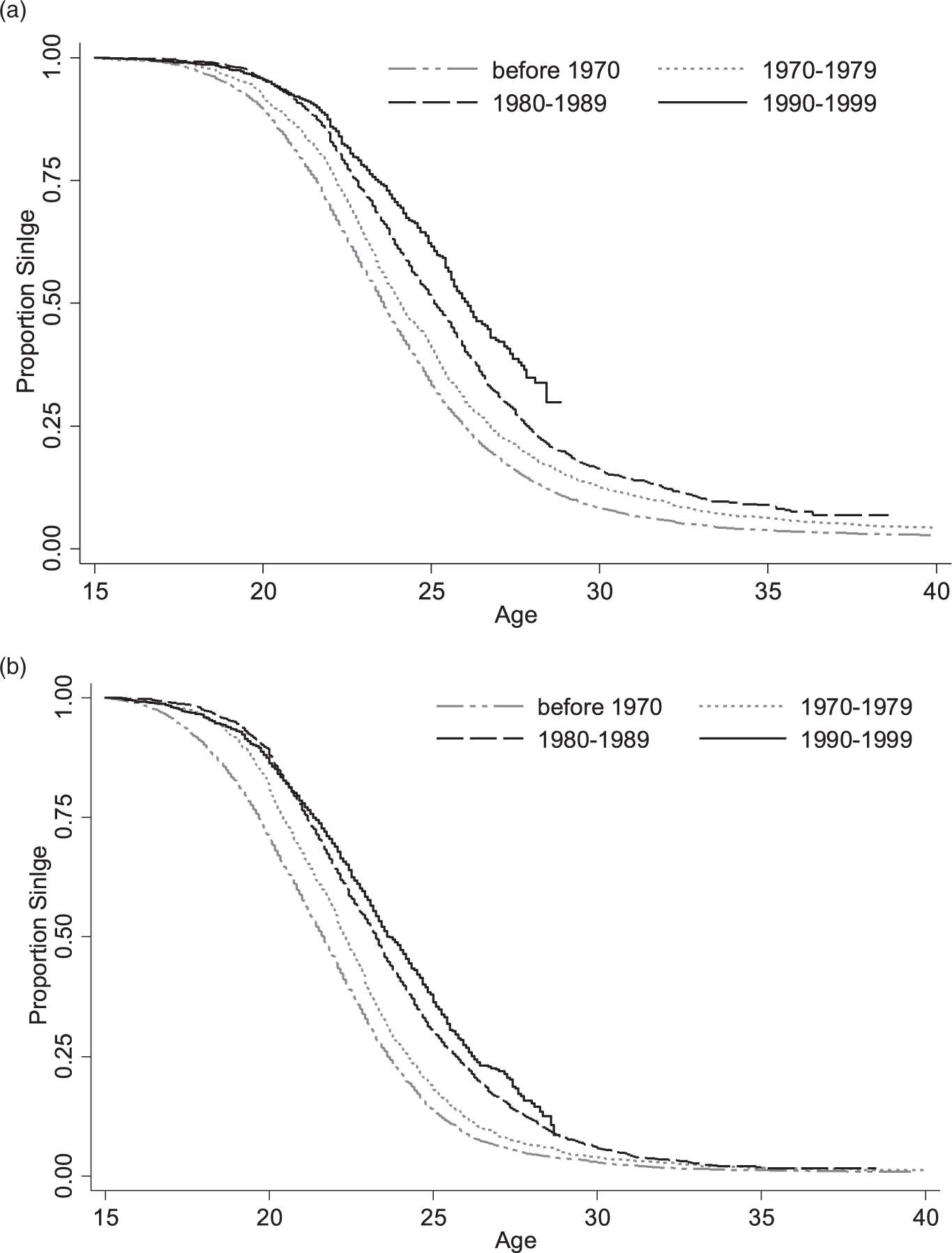
(a) Kaplan-Meier survival curves of entrance into first marriage by birth cohort for men and (b) Kaplan-Meier survival curves of entrance into first marriage by birth cohort for women.
Figure 1(a) shows that the first marriage age of men has increased across birth cohorts, especially pronounced for those born in the 1980s and 1990s. For men born before 1970, the first marriage age is comparatively low, with more than 95% of them entering marriage before the age of 40. Among men born in the 1970s, about two-thirds enter marriage before the age of 25, while among those born in the 1980s more than half have not yet entered marriage at the age of 25, and about 20% have not yet married by the time they turn 30. For men born in the 1990s, only about one-third have entered marriage before the age of 25. Finally, the proportion of men born in the 1980s who remain unmarried has also increased somewhat, and the proportion of those who have not yet entered into marriage by the age of 35 is also higher than that of the previous birth cohort.
Compared with men, Figure 1(b) shows that the increase in first marriage age is more pronounced among women. For women born before 1970, about 80% get married before the age of 25. Yet among those women born in the 1980s and 1990s, more than 30% have not yet entered marriage at the age of 25. In addition, the proportion of women born in the 1980s who have not entered a marriage by the age of 30 has also increased significantly, reaching about 8%.
Figure 2 shows the proportion of unmarried men and women of different age groups who express that they do not want to get married. Among unmarried individuals under the age of 25, the proportion of women who do not want to marry is higher than that for men. Among adolescent females aged 10–14 and 15–19, 2.8% and 3.6%, respectively, do not want to marry. Among adolescent males aged 10–14 and 15–19, the proportions were 1.9% and 1.1%, respectively. Among unmarried individuals aged 20–24, this proportion has decreased, with 0.6% and 1.7% of men and women responding that they do not want to marry, respectively. For those over the age of 25, the proportion of unmarried respondents not wanting to marry is 0.7% for women aged 25–29 and 1% for women over 30 years of age; the proportions are significantly higher for men over the age of 25, with 2.7% of men aged 25–29 and 5.2% of men over 30.
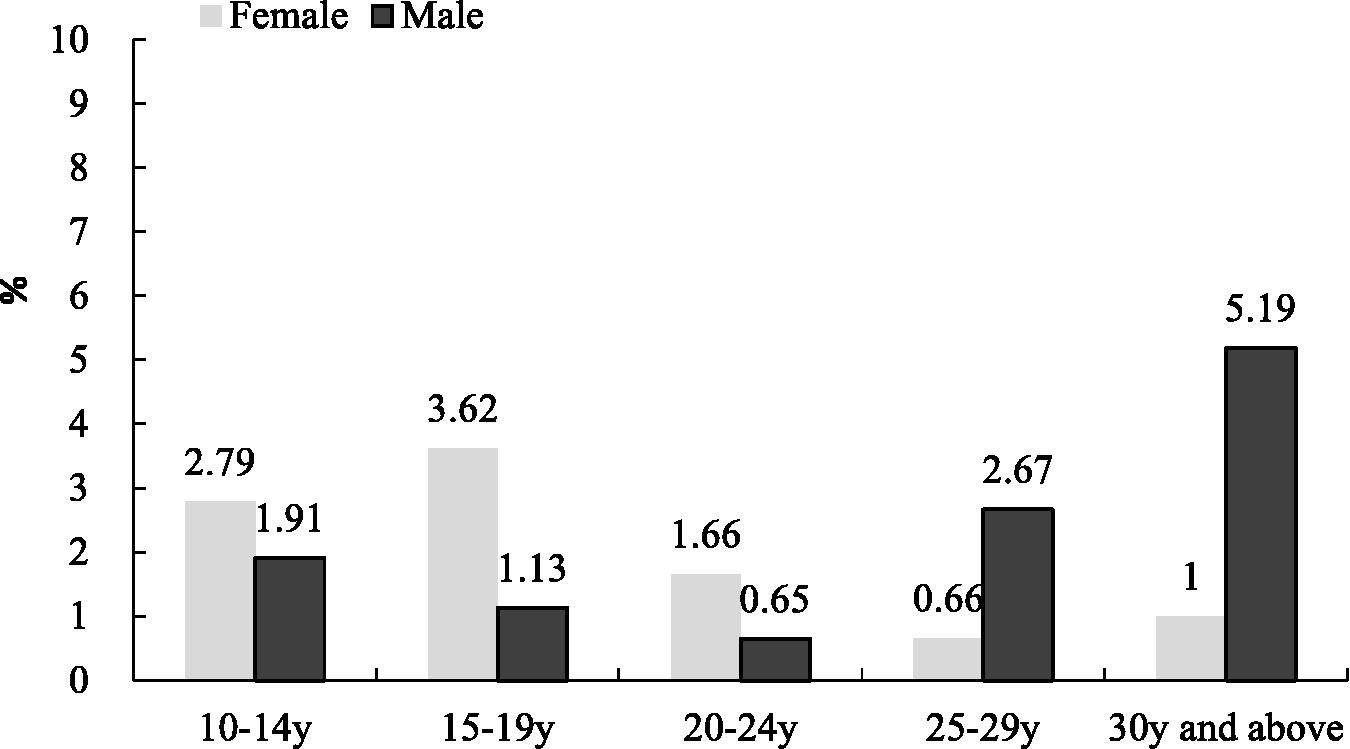
Proportion of unmarried men and women who are not willing to marry.
For unmarried people over the age of 30, the intention of not wanting to get married may be voluntary or involuntary. Results show that among men over 30 who are unmarried and do not want to marry, 64.5% have an education of elementary school level or below, while the proportion among those with a 3-year college degree is only 12.3%. Older men with lower levels of education may be excluded from the marriage market because of a lack of financial capacity, so they passively choose to be unmarried. On the whole, the vast majority of young people in China are still eager to enter marriage. It suggests that the change in marriage behavior will be primarily reflected by the ongoing rise in the age of first marriage in the future, instead of a sharp increase in non-marital rate led by voluntary singlehood.
Figure 3 shows the mean and Lowess curve of ideal marriage age for unmarried men and women by birth year. The ideal marriage age gap between males and females is not large. It is slightly higher for women at younger ages than for men, and a reversed gap is observed for those older than 25 years old. For adolescents aged 10–20 who have not yet entered the active mate-selection process, their ideal marriage age is relatively low, about 25–27 years old. For unmarried males and females between the ages of 20 and 30, their ideal marriage age increases as they get older. However, this effect is mainly brought about by age — that is, as people increase in age, if they have not yet entered marriage they often adjust their expected marriage age upwards — rather than reflecting different views on the ideal marriage age between generations. Similarly, for men and women over 30 years of age who have not entered into marriage, the increase in their ideal marriage age is also due to adjusting expectations in line with their rising age. In general, the ideal marriage age of Chinese teenagers is relatively low, which is consistent with the current median age of first marriage for the 1980–1989 and post-1990 birth cohorts. The latest data show that the average age of first marriage in Japan and South Korea in recent years has exceeded 30 (Yu et al., 2020). From the above results, the age of first marriage for Chinese people will not reach this point within the coming 10 years.
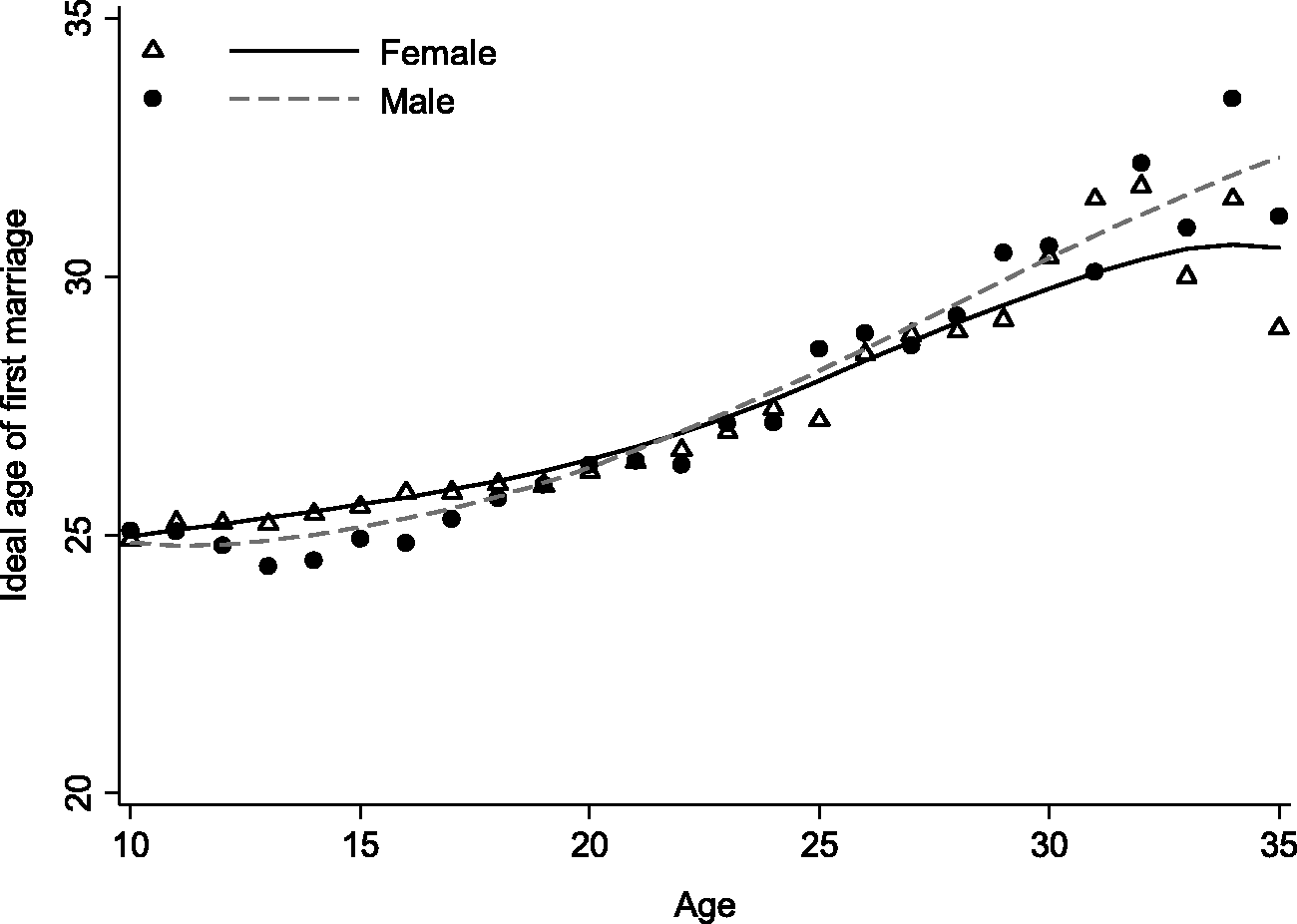
Ideal age of first marriage for unmarried men and women.
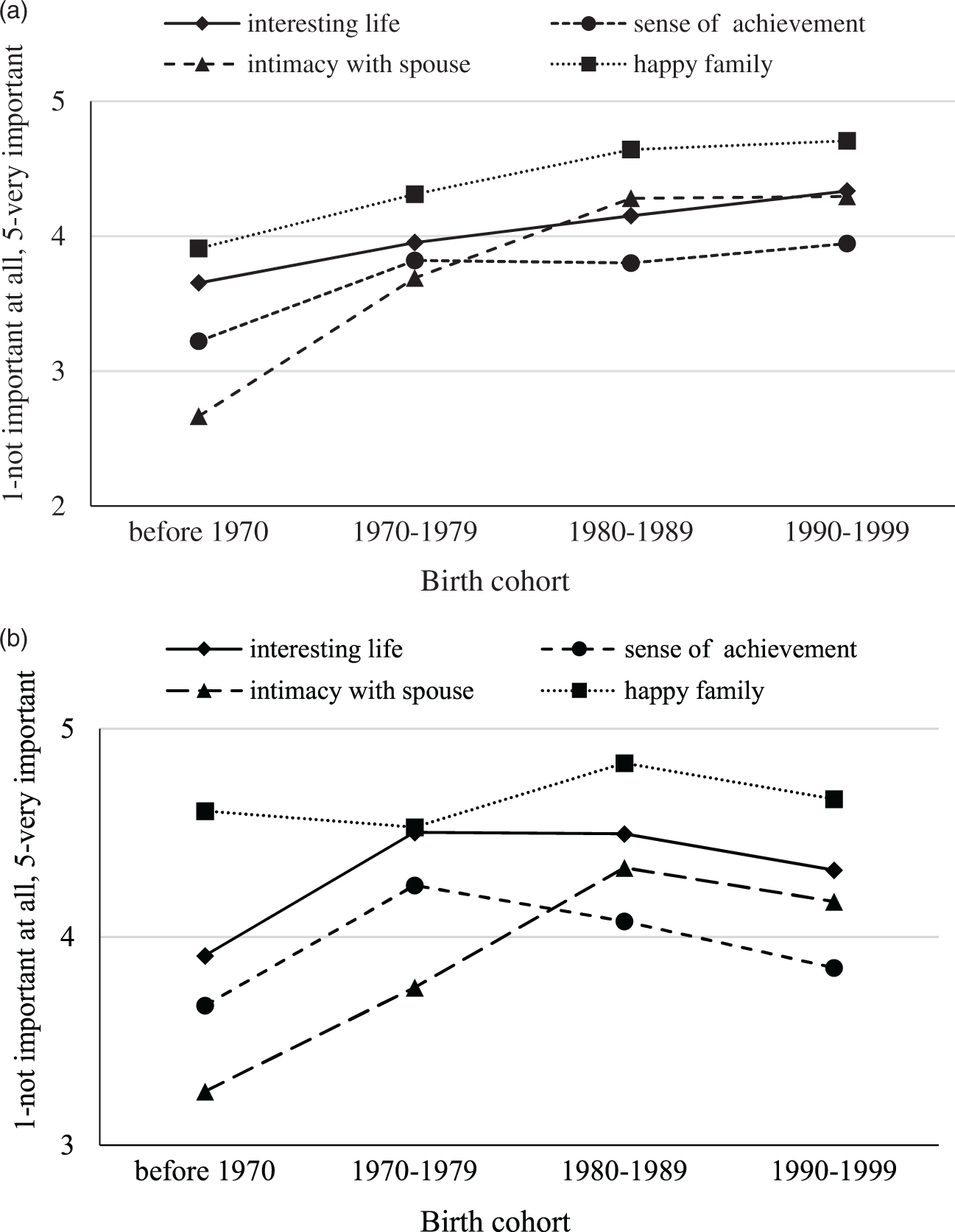
(a) Importance of different life aspects by birth cohort among Chinese men; and (b) Importance of different life aspects by birth cohort among Chinese women.
Figures 4(a) and 4(b) show the degree of importance that marriage and family hold for men and women of different birth cohorts. To facilitate comparison, I also selected two other measures related to individual realization and individualism: the degrees of importance attached to “having fun in life” and “having a sense of accomplishment”. It can be seen from Figures 4(a) and 4(b) that both men and women attach great importance to “family happiness”, higher than to individual realization, reflecting that the family is still at the center of the lives of Chinese people. Even for those born in the 1990s and most of whom have not entered marriage yet, “family happiness” remains highly important. In contrast, men and women attach less importance to their “intimate relationship with their spouse”. Among men and women born before 1980, the degree of importance attached to this item is lowest among the four, but the importance of this factor increases slightly among the 1980–1989 and post-1990 birth cohorts. As younger generations increasingly value the spousal relationship, Chinese families may transition from a “child-centered” to a “couple-centered” model.
Cohabitation
Figure 5 shows the proportion of men and women who have experience of premarital cohabitation by birth cohort. For the pre-1970 birth cohorts, the proportion of people with premarital cohabitation experience does not exceed 10%. For cohorts born after 1970, premarital cohabitation has increased significantly. For those born in the 1980s, the proportion of individuals engaging in premarital cohabitation has reached one-third. For those born in the 1990s, since a considerable proportion of them have not yet completed their studies and entered the active mate-selection process, the cohabitation rate is slightly lower than that for those born in the 1980s. The CFPS 2018 shows that the average and median length of premarital cohabitation for Chinese people is 11.3 months and 6 months, with relatively small differences between birth cohorts. It indicates that although cohabitation has become more common in China, it is still not a long-term, stable family form compared to marriage. Cohabitation functions more as a prelude to marriage or as a trial marriage.
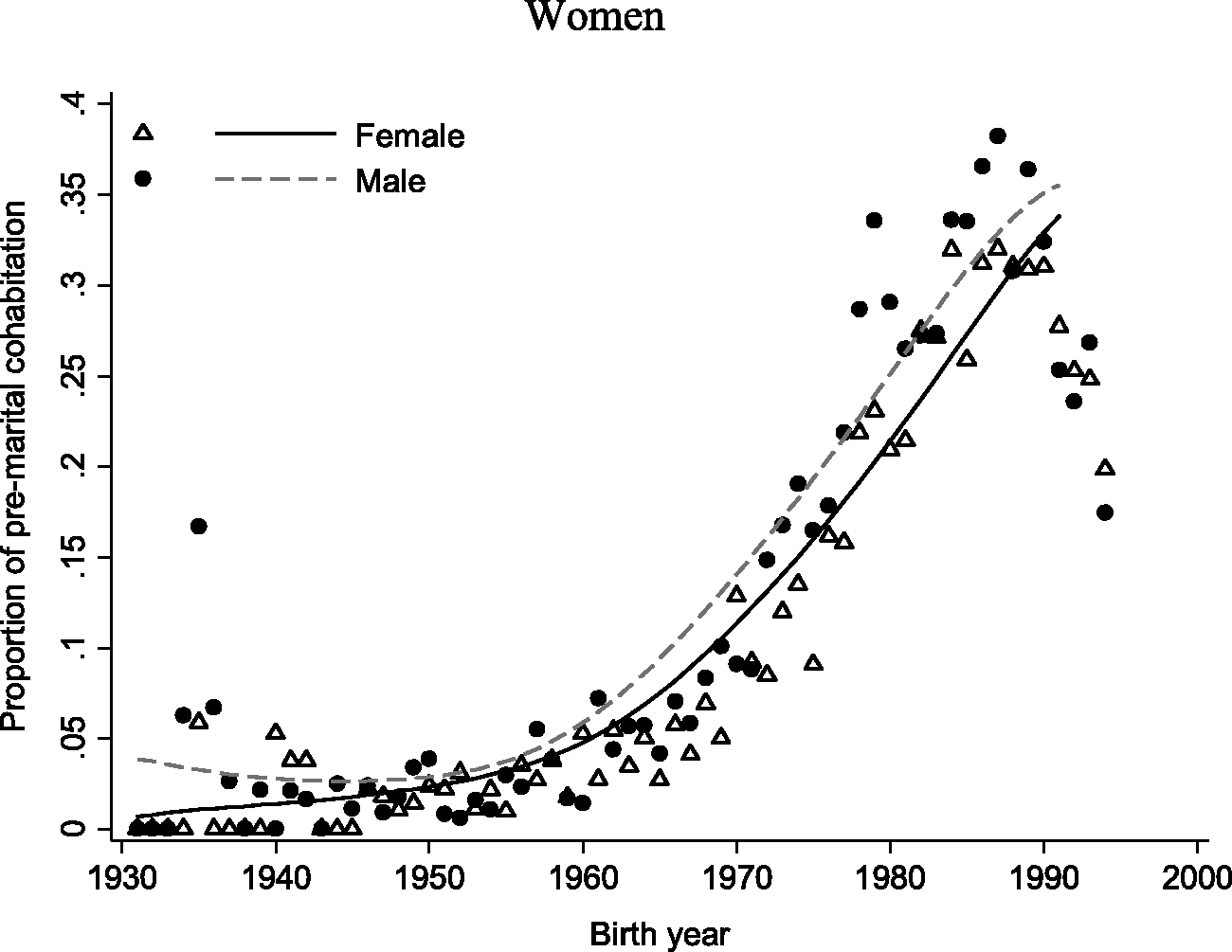
Premarital cohabitation rate by birth year among Chinese men and women.
To explore the factors associated with premarital cohabitation, Table 1 shows the cohabitation rate by birth cohorts and other personal characteristics. Considering the conflict between school enrollment and experiencing cohabitation, the sample is restricted to those born before 1995, who were over 23 years old at the time of the CFPS in 2018. First, for the groups born before 1980, the higher the education level, the higher the rate of premarital cohabitation, with the gap between people with higher education and lower education being very large. The proportion of male respondents born before 1970 with cohabitation experience is almost four times higher for those with a three-year college degree than for those with elementary school-level education and below. The proportions of women born before 1970 and between 1970 and 1979 with premarital cohabitation experience are highest among those with a three-year college degree. The premarital cohabitation rate among those born in the 1980s is much higher for all educational levels. Among men born in the 1980s, those with a three-year college degree had the highest premarital cohabitation rate, reaching 43.1%, but the proportion of those with a junior high school, high school and four-year college or above education also exceeded one-third. Among women born in the 1980s, those with a college degree had the highest premarital cohabitation rate, reaching 38.5%, followed by women with a high school diploma, with a premarital cohabitation rate of 36.6%, and those with junior high school education or a three-year college degree, at around 30%. Generally, the premarital cohabitation rate did not vary a lot by education levels among those born in the 1980s. However, for those born between 1990 and 1994, the positive relationship between education and cohabitation changes. Among men and women born between 1990 and 1994, the group with a junior high school education has the highest cohabitation rate, 26.8% for men and 35.8% for women. In contrast, the premarital cohabitation rate was lowest among respondents with three-year and four-year college degrees and above. Moreover, the premarital cohabitation rate of women exceeds that of men among those born between 1990 and 1994, a phenomenon that was not evident in earlier birth cohorts.
Premarital cohabitation rate by cohort and other variables among Chinese men and women.
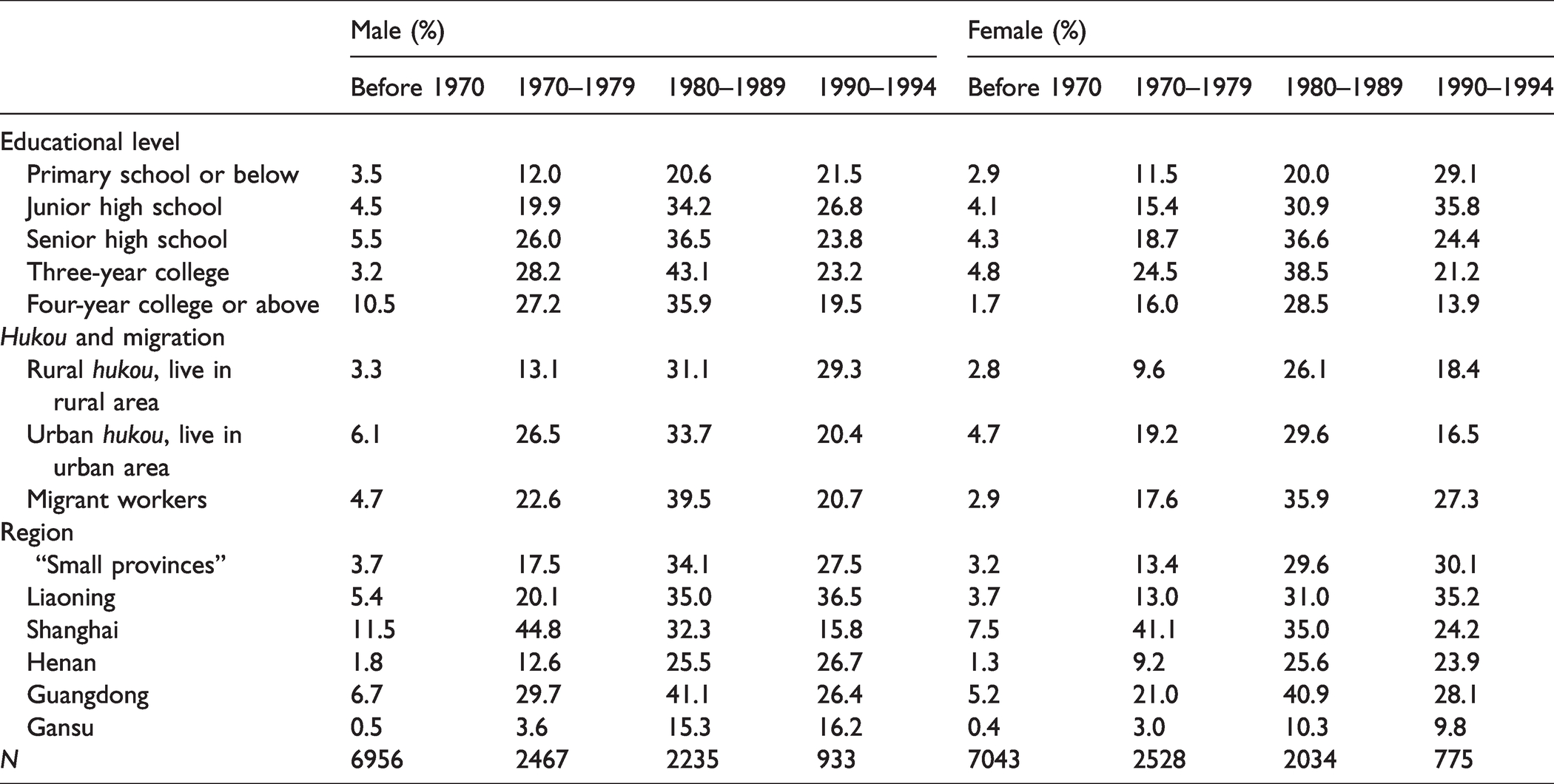
Second, premarital cohabitation is also associated with hukou and migration status. Among men and women born before 1980, the premarital cohabitation rate is highest among urban residents, followed by migrant workers, showing a clear urban–rural gradient. However, among men and women born after 1980, the premarital cohabitation rate is higher for migrant workers than for urban residents. The proportion of female migrant workers born between 1990 and 1994 who have experience of premarital cohabitation is 27.3%, far exceeding that of urban females and male migrant workers of the same cohort. One of the main reasons for the increase in premarital cohabitation among young migrant workers is that they have left their original residence, are less supervised by their parents and relatives and friends, and have more freedom to choose whether to live together. In addition, for migrant workers born before 1980, a considerable proportion of them may have entered marriages before they migrated for work, and cannot practice premarital cohabitation. Due to the overall rise in first marriage age in China, most migrant workers born in the 1980s have not married before migration and thus were more likely to engage in premarital cohabitation.
Third, the premarital cohabitation rate shows noticeable regional differences. For those born before 1980, the premarital cohabitation rate is highest for male and female Shanghai residents, followed by Guangdong residents; Gansu residents had the lowest premarital cohabitation rate among the five provinces and municipalities surveyed. However, for those born in the 1980s, the premarital cohabitation rate is higher for Guangdong residents than that for Shanghai residents, at more than 40%; in Shanghai and Liaoning, the rate is about one-third. Among those born in the 1980s, the premarital cohabitation rate in Gansu has increased to 15.3% and 10.3% among men and women, but it is still low compared with the national level. Among men and women born between 1990 and 1994, the pattern of regional differences changes. The premarital cohabitation rate in Shanghai, the most economically developed region in the survey, ranks lower than earlier cohorts, while the rate in Liaoning rises to more than one-third.
Premarital cohabitation, as a new phenomenon in the Chinese family format, poses a challenge to the existing status of marriage in the family system, and other family behaviors may also change accordingly. Table 2 shows premarital conception, premarital birth and first-marriage divorce rates for those with and without premarital cohabitation experience, by birth cohort. Since CFPS does not directly ask about premarital conception, we compare the birth date of the eldest child and marriage date to derive a proxy measure of premarital conception. If the birth date of the woman’s first child is earlier than nine months from her first marriage date, the woman is considered as having premarital conception.
Premarital conception/childbirth rate and divorce rate by premarital cohabitation experience among Chinese women.
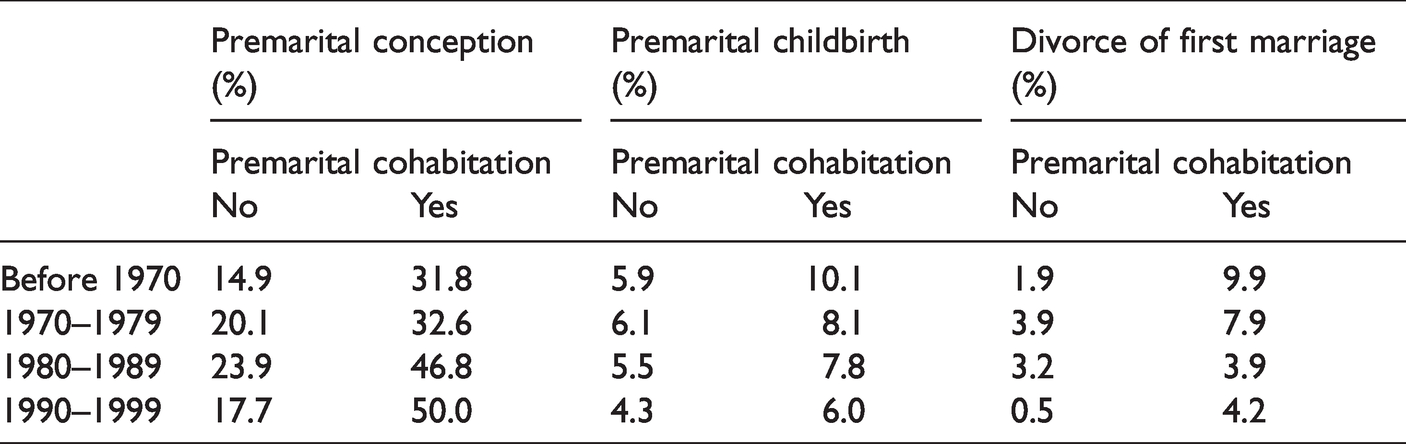
First, it is observed that the premarital conception rate increases for more recent birth cohorts. However, across all birth cohorts, the rate is significantly higher among those with premarital cohabitation experience. This is especially pronounced among women born in the 1980s and 1990s: nearly half (or exactly half) of those who had cohabited before marriage were pregnant before marriage, while the premarital conception rate among women without premarital cohabitation experience was only 23.9% and 17.7%, respectively. Therefore, premarital cohabitation increases the likelihood of premarital conception to a certain extent.
Second, compared with premarital conception, the proportion of women experiencing premarital childbearing is much lower. It means that although some women become pregnant before marriage, most of them enter marriage before giving birth. Compared with premarital conception, the difference in premarital childbirth rate is relatively small between women who have and have not cohabited. Among women born before 1970, for whom cohabitation is relatively rare, the premarital childbirth rate is much higher for those with cohabitation experience than those without. However, for those born in the 1970s, 1980s and 1990s cohorts, cohabitation has become much more commonplace; the difference in the premarital childbirth rate for cohabiting and non-cohabiting groups is gradually shrinking.
Finally, Table 2 also shows that the divorce rate of first marriage is also different for those with and without cohabitation experience. Among those born before 1970, the divorce rate is much higher for those who cohabited before marriage. Although the difference narrows for those born in the 1970s and 1980s, those cohabitors still have a higher divorce rate of first marriage.
The above results indicate that premarital cohabitation is associated with some “non-traditional” marriage and childbearing behaviors. However, as premarital cohabitation changes from an avant-garde and rebellious behavior to a widely accepted behavior of a society, its influence on childbearing and marriage will diminish.
Childbearing
Since China began implementing family planning policies in the 1970s, I divide the earlier birth cohorts into more detailed groups. Table 3 shows the average number of children born to different groups of women by birth cohorts. Women born before 1950 have a higher fertility rate, but still show obvious urban–rural, educational-level and regional differences: the average number of childbirths for non-agricultural hukou women is 2.6, while it is 3.2 for those with agricultural hukou. The average number of children born to women with elementary school education and below is 3.2, falling to 2.0 for those with senior high school education; however, the number of children born to those with a college degree or above is slightly higher than that of those with a high school education, at 2.5. In Shanghai, the average number of childbirths for this cohort is only 2.1, while in other regions it is 3.0 or more.
Average number of childbirths by birth cohort and other variables among Chinese women.
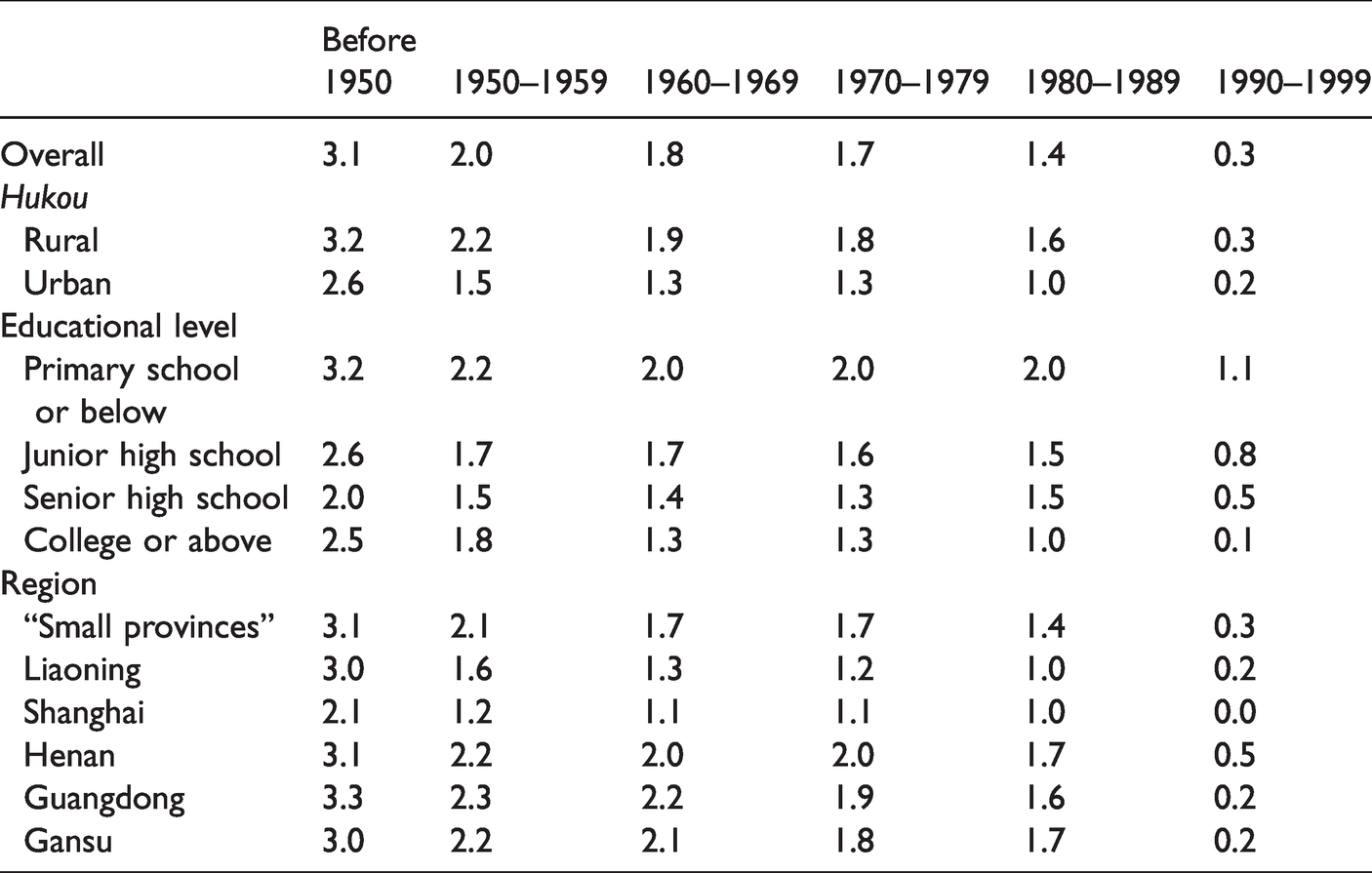
For women born after 1950, reproductive behavior is strongly affected by family planning policy. While fertility levels drop significantly, there remain urban–rural, education-level and regional differences. The average number of childbirths for women with agricultural hukou is consistently higher than for those with non-agricultural hukou; for women with either an elementary school-level education or below or with a junior high school education, the number of childbirths is relatively large. The most significant decline in fertility is observed in Liaoning province. The average number of childbirths falls from 3.0 in the pre-1950 birth cohort to 1.6 and 1.3 in the 1950–1959 birth cohort and the 1960–1969 cohort, respectively, lower than any other regions except Shanghai.
For women born in the 1970s, the average number of childbirths has fallen below the replacement level. The average number of children born to women in urban areas is only 1.3, and the average number of children born to women in Liaoning and Shanghai is only 1.2 and 1.1, respectively. It indicates an ultra-low fertility level considering that the women in this cohort were between 39 and 48 years old at the 2018 CFPS survey, and most of them have passed the active reproductive period. To a certain extent, this number represents the lifetime fertility level of this cohort. The 1980–1989 and 1990–1999 birth cohorts have not yet completed their active reproductive period, so the average number of children born does not represent the lifetime fertility level. Still, we can see obvious differences in childbearing by different social groups. For women born in the 1980s, the average childbirths for those with primary school education or lower and junior high school education are 2.0 and 1.5, respectively. For those with a college degree or above, it is only 1.0.
In addition to fertility level, the childbearing age of women is an important indicator for fertility studies. Figure 6 shows the Kaplan-Meier survival curve of age at first childbearing for women by birth cohorts. Compared with the first marriage age, Chinese women’s first childbearing age does not change much by cohorts, holding steady between 22 and 28 years old. For women born before 1980, we can observe universal childbearing, with more than 95% having given birth to a child by the age of 40. For those born after 1980, most had given birth to their first child by the age of 25, and by the age of 30, more than 80% had given birth to children. For those born after 1990, childbearing comes slightly later on average. Compared with other East Asian and western countries, Chinese women still give birth to children at a relatively young age, and their childbearing period is more concentrated (Yu et al., 2020).
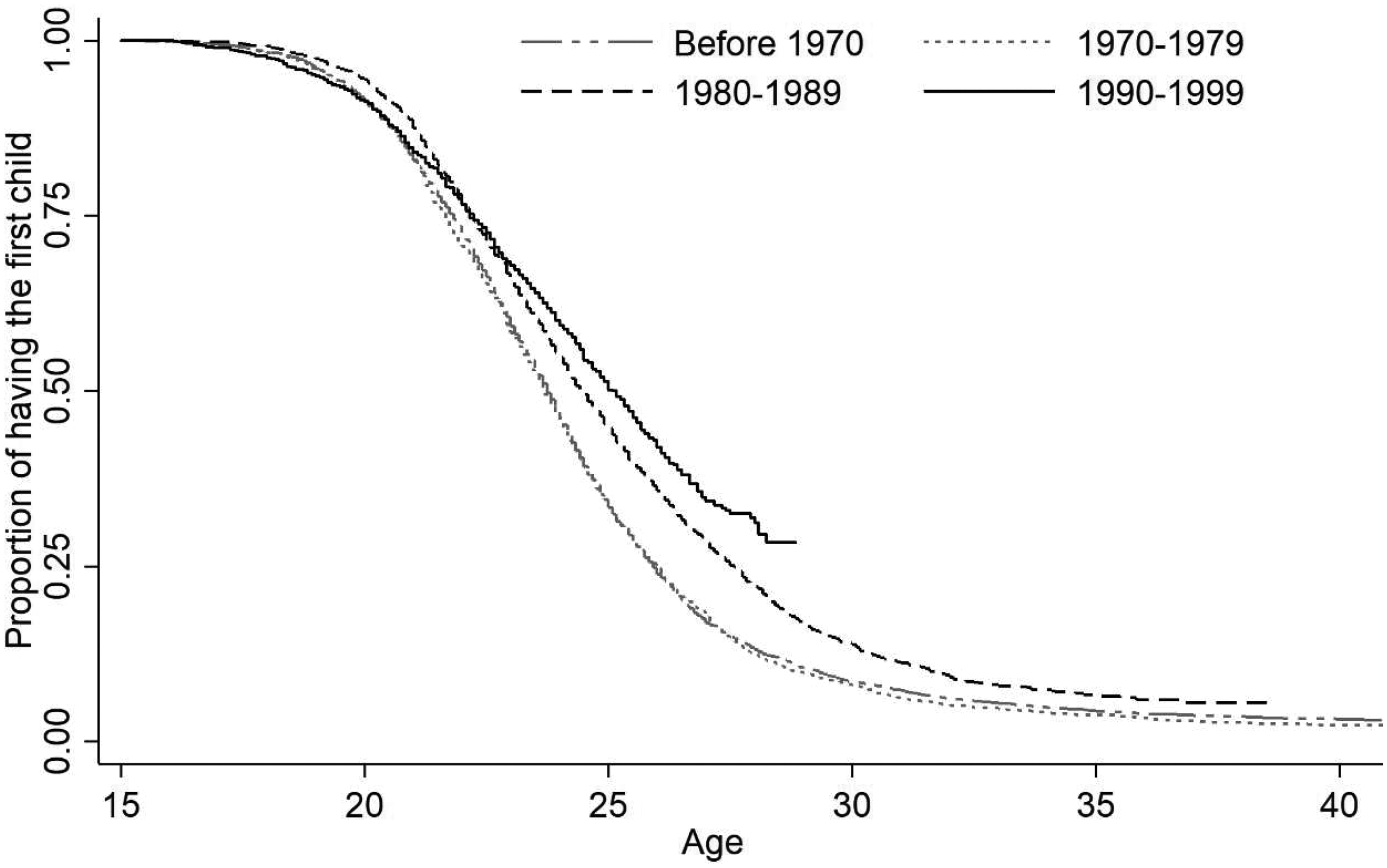
Kaplan-Meier survival curves of having the first child by birth cohort for women.
Limited by the family planning policy, many women could only have one child in the past. Has the implementation of the “universal two-child” policy in 2015 increased willingness to have a second child? Using CFPS 2018 data, this article will also investigate the bearing of a second child by Chinese women. Table 4 shows the fertility status of women by birth cohorts. We can observe that more than two-thirds of women born before 1950 and during the 1950s have a second child. Only about 60% of women born between 1960 and 1969 and between 1970 and 1979 have a second child. Women born in the 1980s and 1990s are most affected by the universal two-child policy. We can see that for women born in the 1980s, the proportion having a second child has reached 51.3%. Considering that women born in the 1980s have not yet completed their reproductive period, we may expect a further increase in such proportion. For women born in the 1990s, the proportion of women who have given birth to a second child is 18.2%. As some women born in the 1980s and 1990s have not yet given birth to children, the assessment of the overall fertility levels of younger generations in China requires longer-term tracking data.
First and second childbirths for Chinese women by birth cohort.
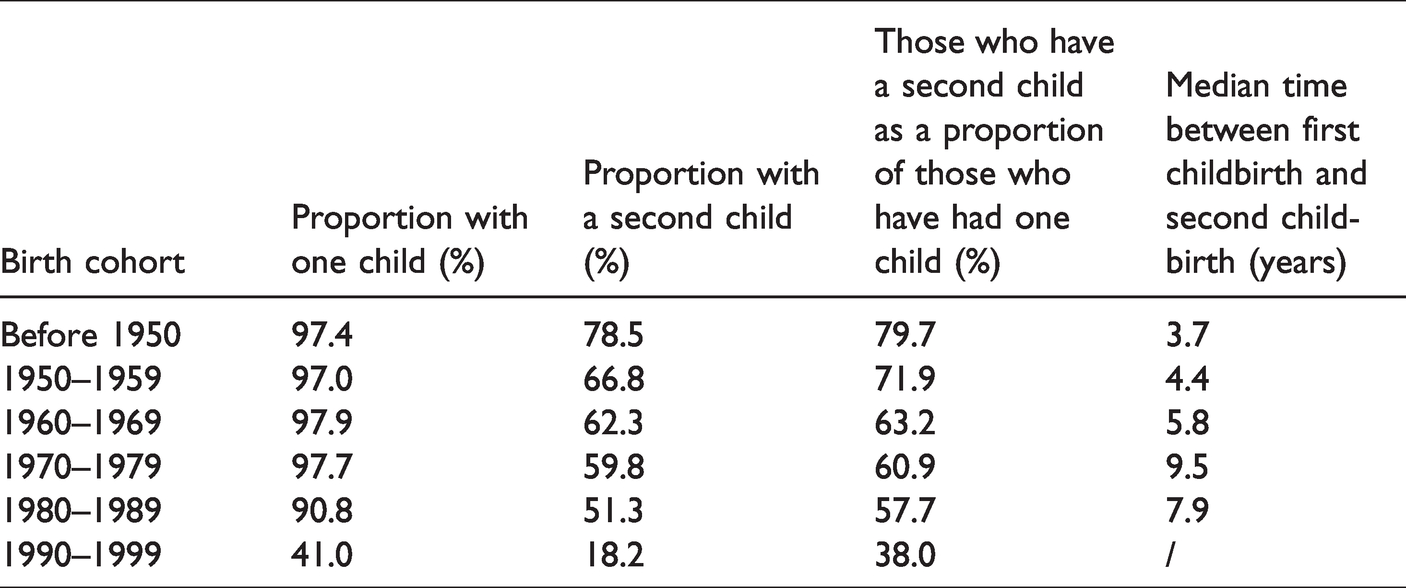
Finally, we calculate the intervals between women’s first and second childbirth. For women who have not given birth to a second child, we set the interval to a larger value, which is ranked after the interval of women who have given birth to two children, to calculate the median. For those born before 1950 and in the 1950s, the median interval between the first child and second child is about 4.0 years. Women born in the 1970s have the largest median birth interval between their first and second child, at 9.5 years. For women born in the 1980s, the median interval is 7.9 years.
Fertility attitudes
Table 5 shows the distribution and average of ideal number of children by birth cohort and hukou/migrant status. We can see that the average ideal number of children declines across birth cohorts: for those born before 1970, the average ideal number of children is 2.3; for the 1970–1979 and 1980–1989 birth cohorts, it falls to around 2.0; and for those born after 1990, the average drops to 1.7. In terms of distribution, for those born before 1970, about 25% prefer to have three or more children, and the proportion of those having the one-child ideal is only 13.4%. In the 1970–1979 birth cohort, only around 12% of respondents prefer to have three or more children, while for those born after 1990, only about 5% have the three-or-more-children ideal. Across all birth cohorts, the most common preference was two children, and this preference was maintaining at around two-thirds of all respondents born after 1970.
Distribution and average ideal number of children by explanatory variables among Chinese people.
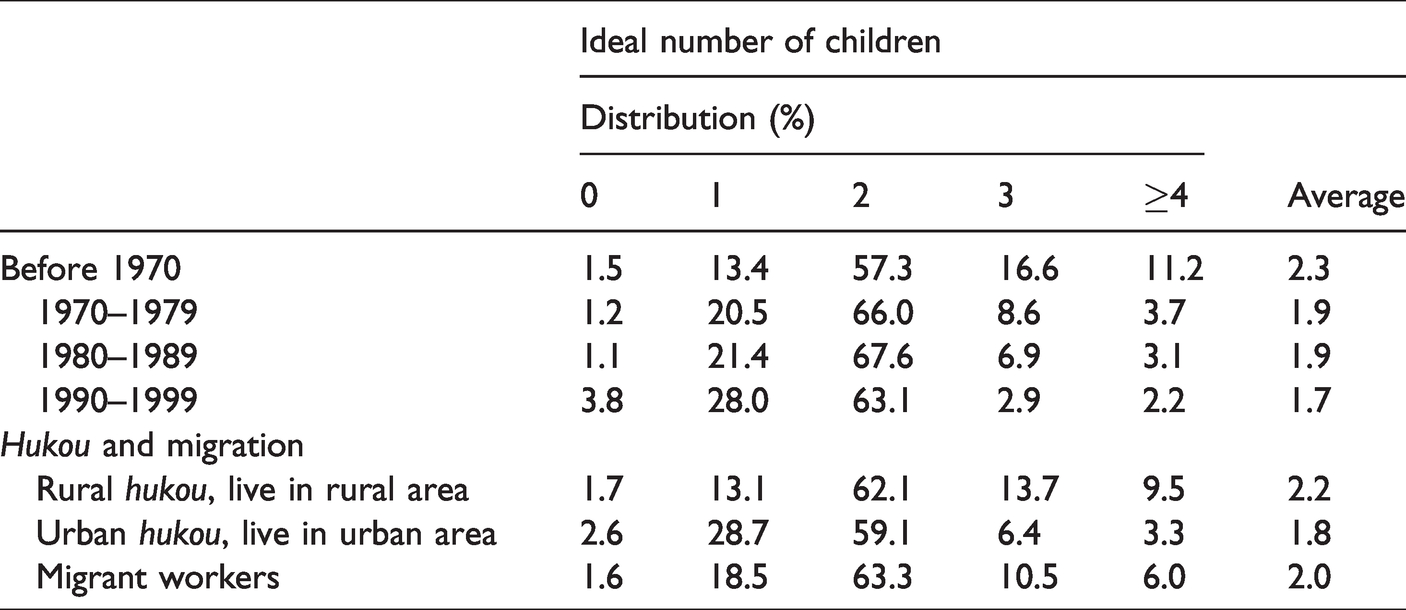
Finally, Chinese youth have a growing preference for only one child, with 21.4% for those born in the 1980s and 28% for those born after 1990. The 2018 CFPS was conducted three years after the universal two-child policy was introduced in China, but the long-term implementation of family planning policy has changed societal attitudes toward childbearing, with many internalizing the “only child is best” propaganda. Therefore, despite the opening up of family planning policy among young birth cohorts, a considerable percentage of people want only one child.
Figure 7 shows the ideal number of children for men and women by education. We can observe a negative association between education and the ideal number of children. The average ideal number of children for men and women with elementary school education or below is 2.3, compared to 1.8 and 1.7 for men and women with a 3-year college degree. Such a relationship implies a further decline in fertility in China. With the expansion of college education, the educational level of younger generations will keep increasing, leading to a lower average ideal number of children, which might consequently inhibit childbearing.
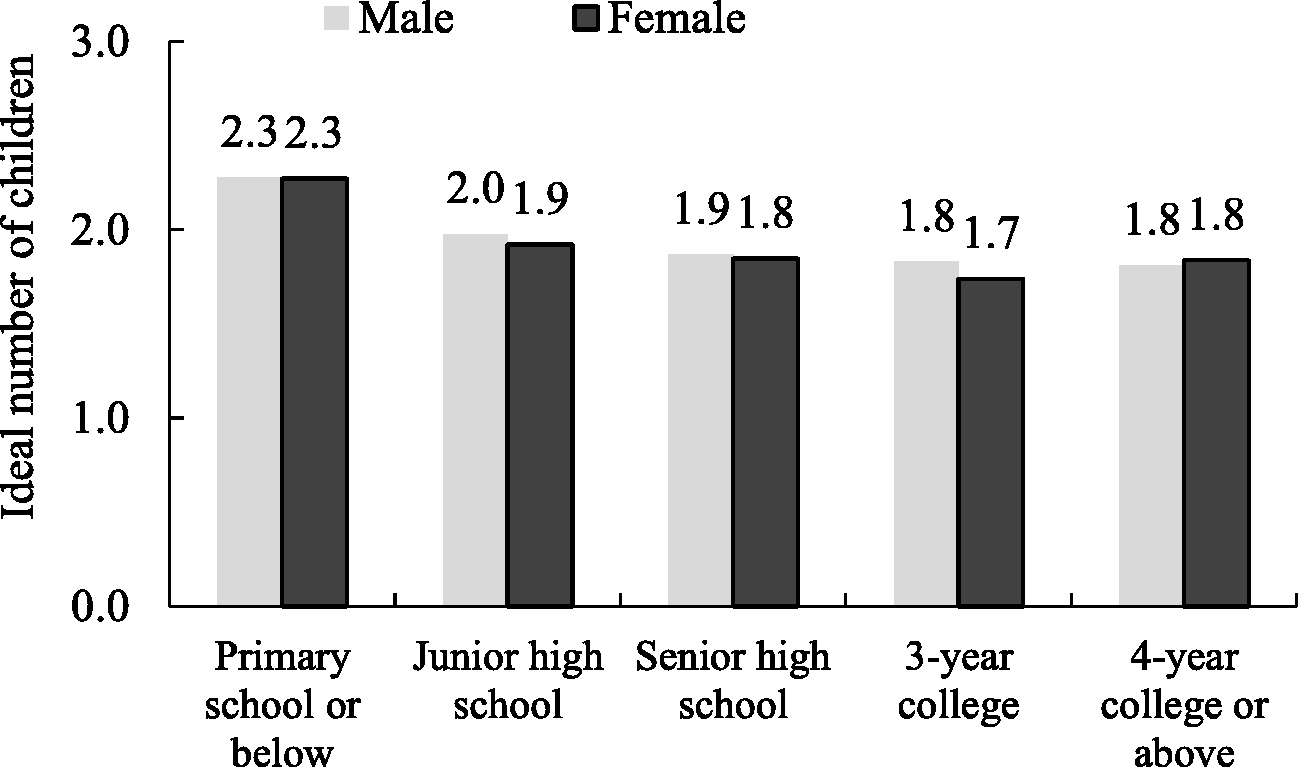
Average ideal number of children for men and women by education level.
The 2018 CFPS asked the interviewees about their fertility ideologies, primarily regarding the “importance of continuing the bloodline” and the “importance of children having good prospects”. Figure 8 shows the average scores of men and women by birth cohorts, with a score of 5 representing “very important” and 1 representing “very unimportant”. In general, the average score for the two questions is above 3.5, which shows that most people recognize the value of childbearing. The younger the birth cohort, the less importance is accorded to continuing the bloodline. It is especially pronounced for women, with the average importance score falling by 0.8 points between the pre-1970 birth cohort and the post-1990 birth cohort. In contrast, men’s recognition of the importance of bloodline changed less across the birth cohorts, falling by only 0.2 points between the pre-1970 birth cohort and the post-1990 birth cohort.
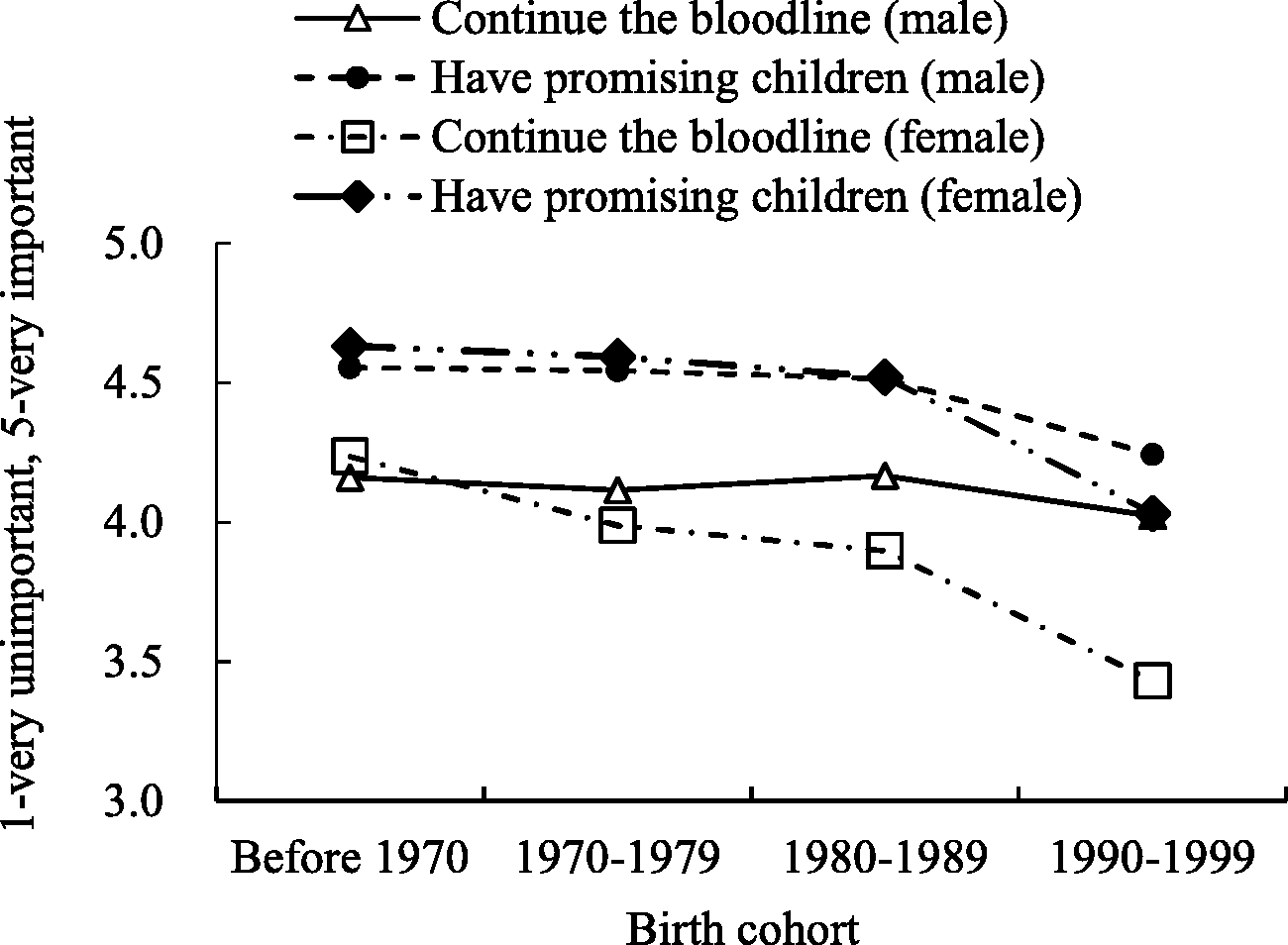
Fertility ideologies of men and women by birth cohort.
Compared with bloodline continuation, Chinese people have attached more importance to their children’s prospects. For the pre-1990 birth cohorts, men and women have little difference in their evaluations of the importance of their children’s prospects, with women’s scores being slightly higher than those of men. The overall average score is above 4.5, suggesting that Chinese people have high expectations for their children’s achievement. However, among the post-1990 birth cohort, the importance accorded to children’s success has dropped significantly, falling by about 0.5 points for women and 0.3 points for men. On the one hand, the declined importance attached to children’s prospects might be because most of them have not yet entered the stage of marriage and childbearing and thus have no clear attitude towards children. On the other hand, the responses of this cohort may indicate a substantial change that is underway in attitudes toward children, which is worthy of further discussion.
Conclusion and discussion
Based on data from the 2018 wave of the CFPS, this study has analyzed the changes in family attitudes and behaviors and young people in China, particularly those born after 1980. The results show that the age at first marriage is rising, with the proportion of the 1980–1989 birth cohort entering marriage after 30 years old showing a considerable rise. Despite a slightly increased non-marital rate, lifelong singlehood is still relatively rare in China. In terms of marriage attitudes, only less than 4% of those aged 10 to 19 do not want to get married, implying a widespread desire for marriage. Based on the above results, it can be inferred that the rate of voluntary singlehood will not rise much in the future. In addition, the ideal marriage age for unmarried people in China is still generally low, concentrated between 25 and 30 years old, which is close to the median age of first marriage for the 1980–1989 birth cohort, and slightly lower than that of other East Asian countries (Yu et al., 2020). The analysis of attitudes towards family and marriage shows that younger Chinese people still attach great importance to family. Overall, although the importance placed on intimacy with their spouses is relatively low, it is on the rise among younger generations, implying that the couple’s relationship may gradually become a central element of the family.
Furthermore, the premarital cohabitation rate continues to rise. For the 1980–1989 birth cohort, the proportion of people with experience of premarital cohabitation has reached one-third, but the average length of premarital cohabitation is less than one year, compared with 25 months in the United States and 18 months in Japan, indicating that premarital cohabitation is still a transitional family form in China (Lesthaeghe, 2020b; Mernitz, 2018). For the pre-1980 birth cohorts, the premarital cohabitation rate is higher among groups with higher levels of education and in areas more economically developed, following an SDT model. However, among post-1980 birth cohorts, the premarital cohabitation rate of migrant workers exceeds that of urban residents. For the youngest cohort born between 1990 and 1994, the cohabitation rate is also much higher for those with lower education levels. The results suggest that as cohabitation has become more prevalent, the primary driving force of cohabitation has shifted from the liberal attitudes to the growing economic constraints of entering marriage; that is, the transition from the SDT model to the POD model. In addition, for women born before 1980, premarital cohabitation has significantly increased the possibility of premarital conception, premarital childbirth and divorce. However, as premarital cohabitation becomes a common practice, differences in these “non-traditional” marriage and childbearing behaviors between those with and without premarital cohabitation experience are gradually shrinking.
In terms of fertility, the average number of childbirths has dropped significantly across birth cohorts, and shows heterogeneity across groups. Compared with women with agricultural hukou and lower education levels, women with non-agricultural hukou and higher education levels have fewer children, on average. The average number of childbirths also shows apparent regional differences. The average number of childbirths for women in Shanghai is consistently low across cohorts, while in Liaoning it has experienced a substantial decline from a relatively high level to a relatively low level. Among the 1970–1979 birth cohort of women, who are close to completing their active reproductive period, the average number of childbirths in Shanghai and in Liaoning is only 1.1 and 1.2, respectively, reaching a very low level. The first childbearing age has not changed dramatically across birth cohorts and mainly ranges between 22 and 28 years old. An analysis of the second parity shows that more than half of the women in the 1980–1989 birth cohort have already given birth to a second child, and the median interval between the first child and the second child is about eight years. Among women born after 1990 who already have one child, about one-third have had a second child. In general, for young married women who have already had one child, the universal two-child policy has increased fertility. But it should be noted that a considerable proportion of women in the younger birth cohorts have not yet entered marriage and begun considering childbearing.
Analysis of attitudes towards fertility shows that the average ideal number of children has decreased significantly among younger birth cohorts. The average ideal number of children for those born after 1990 is only 1.7, one of the lowest levels worldwide. In addition, for younger birth cohorts, the proportion of people who want to have three or more children decreases, accounting for less than 5% of the post-1990s birth cohort. Conversely, the proportion of people who want to have only one child is getting higher and higher. It is close to 30% for the post-1990s birth cohort, to some extent reflecting the long-term impact of the family planning policy on concepts of fertility. For the younger cohorts, who remain in the active childbearing period, the ideal number of children decreases as the educational level rises. For those born in the 1980s with a 3-year college degree, the average ideal number of children is only about 1.8. It can be predicted that with the further expansion of higher education provision in China, the ideal number of children may continue to decline. On the whole, the Chinese still attach great importance to continuing their bloodlines and to their children’s prospects. However, the importance of traditional fertility ideologies has significantly weakened among women born in the 1980s and 1990s, implying that young people’s attitudes towards childbirth and children have quietly changed.
To sum up, in terms of union formation, although premarital cohabitation has been widely practiced, young people still desired to marry. The primary changes in marriage formation are the rising age of first marriage and the increasing rate of involuntary singlehood. Despite universal childbearing among married women, the ideal number of children and fertility ideologies have changed substantially among Chinese young people. If the lack of effective family-friendly and fertility-supportive policies persists, the fertility rate may continue to decline in the future.
Footnotes
Declaration of conflicting interests
The author declared no potential conflicts of interest with respect to the research, authorship, and/or publication of this article.
Funding
The author received no financial support for the research, authorship and/or publication of this article.
