



Abstract
Previous studies on social stratification and intergenerational mobility have mostly focused on the effects of parents on their children’s socioeconomic status (SES) attainment, but less attention has been paid to the important role played by grandparents in the life chances of their grandchildren, and its underlying mechanism. By analyzing a national survey sample data of junior high school students in China, this study examines the influence factors of living with grandparents and their effect on the academic performance of adolescents, and the intermediate mechanism. The study finds that (a) three-generation cohabitation occurs when there is a functional need for the nuclear family, and children with lower SES, working mothers, or single-parent families are more likely to experience cohabitation between grandparents and grandchildren; (b) living with grandparents has significant positive effects on adolescents’ academic performance after controlling for other factors; (c) the effect of living with grandparents is moderated by the family’s SES and family structure, and students from lower-SES or single-parent families benefit more from living with grandparents; and (d) living with grandparents to a certain extent benefits grandchildren’s academic performance by enhancing family social capital investment. Households in which grandparents cohabit invest significantly more in the social capital of children than those who do not have grandparents cohabiting. The results of this study show that in modern society, family kinship networks still play a very important role in the status attainment and social mobility of individuals. Therefore, scholars should pay more attention to the important role of extended families in social stratification and mobility and its micro-mechanisms.
Keywords
Introduction
The family constitutes the most important site of socialization. The family structure and its kinship networks exert a crucial influence on the life chances of individuals and their socioeconomic status (SES) attainment. Classical family modernization theory holds that, in the process of industrialization and modernization, the nuclear family will replace the extended family as the dominant family model, and the ties between family kinship networks will also weaken, making the family increasingly a site of private life (Goode, 1986). According to this theoretical logic, the influence of family background on individuals’ SES attainment and the shaping of social inequality will be reflected only in the connection between the generations of parents and children in the nuclear family, with minimal influence from family kinship networks (Becker and Tomes, 1986). However, the reality shows that there is no direct correlation between industrialization and family patterns. Despite the dominance of the nuclear family, the stem family (zhugan jiating) still occupies a certain proportion of society, and the ties between family kinship networks have not been weakened as predicted by modernization theory (Tang, 2010). In fact, with prolonged life expectancy and rising divorce rates, grandparents are playing an increasingly important role in the lives of adolescents in some Western countries (Bengtson, 2001; Bengtson et al., 2002; Swartz, 2009). Thus, studies of status attainment or social mobility based solely on nuclear families (i.e. the parents’ and children’s generations) may overlook the importance of family lineage in producing and maintaining social inequality. Scholars have called for more attention to be devoted to multigenerational mobility, especially between three generations, to enable a deeper understanding of the important role of families in the process of social stratification and mobility as well as its micro-mechanisms (Mare, 2011, 2014; Pfeffer, 2014).
Research on kinship networks and social mobility in three-generation families has focused on the influence of grandparents on the SES attainment of children and its working mechanisms. Some early studies found a relational chain pattern among grandparents, parents, and children, with grandparents ultimately influencing children’s SES attainment by affecting their parents’ SES attainment (Erola and Moisio, 2007; Jæger, 2012; Warren and Hauser, 1997). That is to say, grandparents do not directly affect their grandchildren’s SES attainment when paternal factors are controlled. According to these findings, SES attainment or intergenerational mobility does not extend beyond the resource accumulation patterns of nuclear families (between two generations). However, a series of recent empirical studies have shown that grandparents still play a direct role in their grandchildren’s educational or SES attainment, even after controlling for characteristics such as paternal SES (Chan and Boliver, 2013; Dribe and Helgertz, 2016; Hällsten, 2014; Knigge, 2016; Lindahl et al., 2015; Song and Mare, 2017; Zhang and Li, 2019; Zhang et al., 2016). This suggests that intergenerational mobility has over time gone beyond the original pattern of resource transmission between two generations and extended to a reproduction pattern among three generations.
One of the basic ideas in current academics regarding the intergenerational mobility mechanisms in three-generation families is that grandparents play a role via direct economic or human capital transmission to their grandchildren or via the social capital developed through interactions between grandparents and grandchildren. However, most previous studies have overlooked a crucial factor, namely the pattern of residential arrangements in multi-generational families, or more directly, whether or not the grandparents are co-resident with members of the nuclear family. In fact, the transmission or generation of either economic/human capital or social capital between grandparents and their grandchildren is influenced by spatial factors. On the one hand, the transmission of economic or human capital will be faster, more direct, and more efficient when grandparents live with their grandchildren. On the other hand, interactions between grandparents and their grandchildren may be more frequent when living under the same roof, and the family social capital generated by frequent interactions will not only directly benefit the development of the grandchildren, but may also enhance the transmission of economic resources and human capital between grandparents and their grandchildren. More importantly, the pattern of interactions between parents and their children may also change due to the presence of grandparents (Chen, 2016). This also implies that in addition to the transfer of resources between grandparents and their grandchildren, cohabiting grandparents may also indirectly influence the social development of their grandchildren by affecting the family social capital between parents and their children. Unfortunately, although a few scholars have noted the important role of living-arrangement factors (Zeng and Xie, 2014), they have failed to conduct rigorous empirical tests of its mechanisms, and there is a lack of in-depth examination of how cohabiting grandparents influence the family social capital between parents and their children.
China’s long tradition of extended-family cohabitation and the profound social changes since the modern era have facilitated the testing of this hypothesis. Numerous studies have shown that in recent decades, although the nuclear family has become the dominant family pattern in China, it is still relatively common for offspring to form permanent or temporary stem families with their parents due to intergenerational relationship patterns, residential habits, family needs, the absence of state patronage, and inadequate social security systems (Chen et al., 2011; Ma et al., 2011; Shi, 2016; Wang, 2013). Moreover, in the current social context of increasing economic risks and marital instability, family kinship networks have become an important resource for individuals to improve their life chances (Liu, 2016). In fact, with increasing intergenerational association (Li et al., 2018) and mounting housing and work pressure in China in recent years, individuals have also come to rely more on their family kinship networks for support and assistance. Therefore, it is of great theoretical and practical importance to include kinship networks beyond the nuclear family in the study of social stratification and analyze the influence of family kinship networks, especially grandparents, on adolescents’ life chances.
Based on the above discussion, this study focuses on analyzing the influential factors of three-generation living arrangements and their effects on the educational development of adolescents from different family backgrounds, as well as examining the mechanisms through which grandparents influence their grandchildren. By analyzing data from nationally representative middle school students, this article attempts to answer the following questions: What kinds of families are currently more likely to practice three-generation co-residence in China? How does living with grandparents influence adolescents’ academic performance? How does living with grandparents work through the mechanism of social capital?
Three-generation living arrangements and adolescents’ academic performance in contemporary Chinese families
Three-generation living arrangements in contemporary Chinese families and their influence factors
Social changes in recent decades have profoundly altered the intergenerational relationships and living patterns of Chinese families. Numerous studies have shown that family living arrangements, as an expression of intergenerational interactions, are a flexible, dynamic process, which contains elements of intergenerational mutual assistance in cultural traditions as well as individualistic tendencies and rational calculations (Liu, 2016; Ma and Wen, 2016; Shi, 2016; Yao, 2012). This implies that the three-generation living arrangements in contemporary Chinese families are a product of a particular historical context. In addition to being regulated by cultural traditions, three-generation living arrangements are also primarily a selective decision-making process that depends on the functional dependence of the nuclear family and are a strategy that enables the nuclear family to satisfy its own needs and cope with social risks.
According to the functionalist view, the family is regarded as a two-lineage nurturing group formed by the division of labor between men and women, which takes the nurturing of offspring as its basic function (Fei, 1998). However, in modern society, the division of “men managing external affairs and women managing internal affairs” within the household has changed, with most women (especially highly educated ones) stepping out of the family and participating in the work and production processes (Ma et al., 2011; Wu and Zhou, 2015). However, due to the traditional concept of “men managing external affairs and women managing internal affairs”, biological nurturing such as childcare is still considered to be women’s main family responsibility, leading to more serious work–family conflicts for females (Jiang, 2015). Therefore, mobilizing the resources of the older generation to alleviate family burdens and work–family conflicts by forming temporary or long-term stem families has become a common strategy for married couples. That is to say, the question of whether married couples live with the older generation is closely related to women’s engagement in paid employment. Working women’s families are more likely to witness three generations living together because they are more dependent on the services provided by the older generation with regard to household chores and childcare (Chen et al., 2011; Xu, 2013).
In addition to mitigating work–family conflicts by turning to the older generation, working women’s families can purchase the services of social agencies to achieve the same goal. However, during China’s market-oriented reform, while rapidly withdrawing from the private sphere, the state has not established a sound social security system or a market for domestic labor. Under such circumstances, for most two-paycheck families, having grandparents take care of their grandchildren becomes the best strategy after rational calculation (Liu, 2016). Meanwhile, the underdeveloped domestic labor market also makes high-quality domestic services a “luxury”, which largely limits the consumption ability of lower-class families, as these can only be enjoyed by higher-class families. In addition, the high price of housing and rocketing living costs in recent years have made it difficult for low-income families to purchase independent housing to a certain extent, forcing them to live with the older generation. Some empirical studies also show that the SES of the offspring is negatively related to whether or not they live with their parents. The lower the SES of the offspring, the more likely they are to choose to live with their parents (Chen and Chen, 2016). Therefore, we expect that families with low SES are more dependent on grandparents in terms of financial support and childcare than families with high SES, and thus are more likely to choose three-generation cohabitation. In addition, since the market reform, marital instability has increased due to changes in social attitudes, leading to rapidly growing divorce rates in China. 1 Meanwhile, due to the household registration (hukou) system and their own economic conditions, farmers who migrate to urban areas for work often leave their children behind in rural areas, resulting in a large number of “left-behind children”. This has led to the increasing absence of one or both parents in the process of child-rearing and a serious crisis in the two-linage family-rearing structure. In particular, the mother’s absence from the family often results in more serious child-rearing problems due to the gender differences in performing family functions (Fei, 1998). Therefore, we expect that families with absent parents have a greater need for family networks to alleviate family crises due to family disintegration or parents’ absence than do two-parent families, and are also relatively more dependent on grandparents’ resources and thus more likely to have three generations living together (Dunifon et al., 2014; Pilkauskas, 2012).
Grandparenting, three-generation living arrangements, and adolescents’ academic performance
There are currently two representative views in the academic community regarding the mechanisms via which grandparents directly influence their grandchildren’s education and status attainment: direct resource transmission between grandparents and grandchildren and interaction between grandparents and grandchildren (Knigge, 2016). The former argues that grandparents influence their grandchildren because the prestige, power, social status, and economic wealth that grandparents possess will shelter their offspring. The more resources the grandparents possess, the more shelter they can offer to their offspring, and this effect persists even after the death of the grandparents (Knigge, 2016; Sheppard and Monden, 2018). Mare (2011) notes that durable resources, such as the financial wealth and land owned by grandparents, can have a lasting influence across the generations, especially for both high- and low-class groups, and that the transmission process is unaffected by the education level of the parents. Hällsten and Pfeffer (2017) also contend that the wealth of grandparents has a positive impact on the educational attainment of their grandchildren because this can not only purchase quality educational resources for their grandchildren, but also provide guarantees and backing for their education. There is also some evidence of the direct transmission of economic resources from grandparents to their grandchildren. Established research suggests that grandparents often perceive that they are responsible for securing material resources for the family and will therefore provide material assistance to their married children and grandchildren (Hoff, 2007; Tan et al., 2010).
In addition, it has also been noted that grandparents directly influence their grandchildren’s status attainment and educational development because grandparents are increasingly involved in the nurturing process of their grandchildren in today’s society, resulting in more opportunities for direct interaction and communication between grandparents and their grandchildren (Bengtson, 2001; Zeng and Xie, 2014; Zhang and Li, 2019). Many studies have shown that apart from daily care, grandparents also take on many tasks, such as tutoring and giving advice when adolescents need to make important decisions (Griggs et al., 2010; Tan et al., 2010). Therefore, this frequent direct interaction between grandparents and their grandchildren helps to increase the transmission efficiency of various resources (including human capital, cultural capital, and values, etc.) from grandparents to their grandchildren, which in turn influences their grandchildren’s status attainment and educational development.
According to the theoretical logic of both views, choosing to live with grandparents will benefit adolescents’ educational development. First, living with grandparents makes it more likely for grandparents to be involved in the nurturing process of the adolescent, thereby leading to more frequent interaction between grandparents and their grandchildren (Knigge, 2016; Tan et al., 2010; Thomese and Liefbroer, 2013; Raymo et al., 2014; Zeng and Xie, 2014). Second, cohabitation means the sharing of economic resources between multiple generations, which benefits not only the elderly, but also their children and grandchildren at the same time (Chen and Chen, 2016). Moreover, due to the reduced spatial distance, co-resident grandparents are also more likely to provide direct financial assistance and investment for their children’s families and grandchildren. Raymo et al. (2014) show that the proportion of grandparents providing financial support is higher among families who choose to live with grandparents. It has also been shown that single mothers who choose to live with grandparents are less likely to report family financial difficulties (Raymo and Zhou, 2012) and that children in single-mother families who live with grandparents are significantly less likely to live below the poverty line than those who do not (Mutchler and Baker, 2009; Shirahase and Raymo, 2014). Thus, we expect that living with grandparents will positively affect adolescents’ educational development, all else being equal.
It is worth noting that group heterogeneity may exist regarding the positive effects of living with grandparents. For example, living with grandparents may be more important for children in lower-class families. This is because, in lower-class families, grandchildren may obtain fewer economic resources from their parents, so the economic resources provided by their grandparents become more meaningful (Deindl and Tieben, 2017). Moreover, grandparents are also more likely to provide economic support and financial assistance when the SES of the parents is relatively low (Ma et al., 2011). Therefore, we expect the effect of grandparents to be moderated by family SES. Specifically, all else being equal, living with grandparents has a more positive effect on the academic development of children from lower classes than those from higher-class families.
The positive effects of living with grandparents may also vary depending on the family structure. Studies have suggested that in two-parent families, children may obtain fewer socioeconomic resources from their co-resident grandparents, because living with grandparents is usually associated with problems in the grandparents’ generation, such as financial difficulties and poor health (Monserud and Elder, 2011). Moreover, grandparents living with two-parent families will also be less likely to engage in child-rearing than those living with single-parent families (Raymo et al., 2014). This reduces the role of co-resident grandparents in two-parent families compared with those in single-parent families. Several studies based on Western societies have also found significant compensatory effects of cohabitation with grandparents on the educational attainment and academic development of adolescents in single-mother families (DeLeire and Kalil, 2002; Dunifon and Kowaleski-Jones, 2007; Monserud and Elder, 2011), yet the effect of living with grandparents is not significant for adolescents in two-parent families (Monserud and Elder, 2011). Similar findings have been obtained from studies based on East Asian societies (Chen, 2016). Therefore, we hypothesize that living with grandparents is more beneficial for the educational development of children in single-parent families.
Family social capital—mechanisms of the effect of living with grandparents
As noted earlier, the literature has focused on the direct effects of grandparents on their grandchildren, that is, the direct transfer of resources from grandparents to their grandchildren or direct involvement of grandparents in the parenting and mentoring of their grandchildren, which positively affects the latter’s academic performance or educational achievement. We suggest that living with grandparents (reduced spatial and temporal distance) can reinforce these direct effects. We also hold that apart from exploring the direct mechanisms of living with grandparents, the indirect mechanisms cannot be ignored. Actually, studies have been conducted on such indirect mechanisms. For example, Roksa and Potter (2011) show that grandparents’ social class can act on their adolescent grandchildren’s academic development by influencing the parents’ child-rearing practices. In this study, we emphasize the mechanisms of social capital and maintain that compared with a two-generation nuclear family, the inclusion of grandparents not only increases the total amount of family social capital, but more importantly, may indirectly promote the academic achievement of grandchildren by improving the social capital between the parents and children.
Social capital is an important factor that affects education and status attainment, as well as an important tool for social reproduction. Coleman (1988) first applied this concept to the study of adolescents and held that family social capital is an important way for transforming parents’ economic resources and human capital, etc., into human capital of their offspring. According to Coleman (1988), family social capital is divided into internal family social capital and external family social capital. Internal family social capital is derived from effective interactions between parents and children in the family, as well as commitment, reciprocity, and trust between parents and children. External family social capital refers to parents’ social relationships with other community members and their connections to social institutions. Coleman further pointed out that family social capital is critical to the social development of adolescents. A large body of empirical research supports this theory (Astone and McLanahan, 1991; Coleman, 1988; Sandefur et al., 2006; Wu et al., 2018).
So, how will living with grandparents affect the family social capital? First, when living with grandparents, the intergenerational interactions will expand from interactions between parents and children in the nuclear family (as shown in Figure 1a) to interactions between grandparents, parents, and grandchildren across three generations (as shown in Figure 1b) due to the increased number of adults in the family. This means that, in addition to the family social capital generated by the interaction between parents and children, the family social capital between grandparents and parents and grandparents and grandchildren is also included in three-generation cohabitation families. Therefore, the total amount of family social capital that grandchildren can use will be greater in families that choose to live with grandparents, and the abundance of family social capital will benefit the educational development of the children.
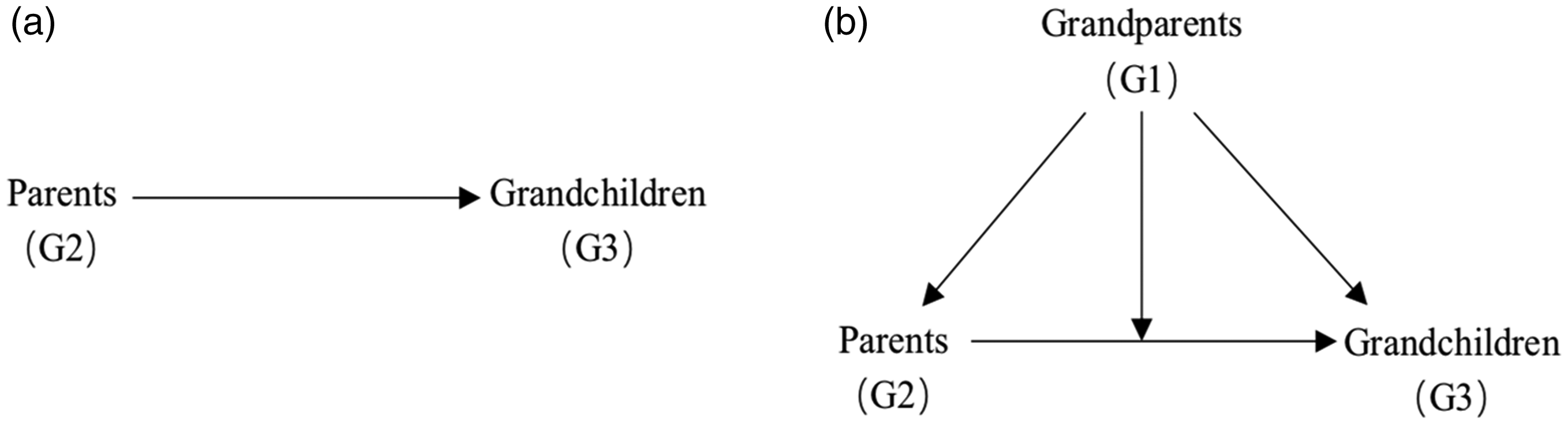
Different types of interaction structure in families. (a) Nuclear family (two-generation living mode) (b) Stem family (three-generation living mode).
Second, and more importantly, living with grandparents may also indirectly affect the educational development of children by increasing the family social capital of both the parents and children (as shown in Figure 1b). It has been noted that parents’ financial stress and mental-health status are closely related to their expectations and parenting practices regarding their children. When parents are more financially stressed or in poorer health, they tend to have lower expectations for their children and engage in relatively less communication and fewer interactions with their children (Carlson and Corcoran, 2001; McLoyd, 1990). When living with grandparents, the support provided by grandparents in terms of household chores, childcare, and finance will help to alleviate the financial stress and promote the mental health of the parents (Raymo and Zhou, 2012). Therefore, when living with grandparents, parents will have more time and energy to devote to the children, which increases their interaction frequency with, expectations for, and supervision of their children. Meanwhile, parents are more likely to contact social institutions such as schools, to improve the upbringing environment and parenting quality of their children, which will in turn positively influence their children’s educational development (Chen, 2016; Monserud and Elder, 2011).
The division of labor and power relations between grandparents and parents in areas such as child-rearing may also influence the parents’ investment in the family social capital. Relevant studies of contemporary Chinese urban families show that when multigenerational living arrangements are used as a strategy for families to cope with their own needs, the newly formed living unit is an extension of the young couple’s family, and there are clear power boundaries and divisions of labor between the young couple and their parents (Xiao, 2014; Xiao and Guan, 2018). Specifically, in the child-rearing practices of contemporary Chinese urban families, mothers have the say and decision-making rights about their children’s growth and take on the educational responsibility of social nurturing, while grandparents enter their children’s families as “helpers” and take on much of the physical nurturing and daily care of their grandchildren, at the same time being marginalized in the decision-making and the discourse of family affairs (Xiao, 2014). In this division of labor, as grandparents replace the biological nurturing functions of the parents, the parents can focus more on their children’s education, and their interactions are thus more targeted, efficient, and profound, contributing to the quality of social capital between the parents and their children.
In addition, the mutual adjustment of the relationship between parents and grandparents under this division of labor system is also conducive to improving the family social capital between parents and their children. Studies point out that, in this flexible non-institutional power relationship, parents tend to take the initiative to coordinate their relationship with grandparents, forming multiple mechanisms to coordinate internal relationship conflicts to achieve a balance of power, meet grandparents’ expectations regarding intimacy, and maintain the pattern of multigenerational cooperative nurturing (Xiao, 2014; Xiao and Guan, 2018). This means that under the goal of maintaining this multigenerational cooperative parenting pattern of “putting the next generation first”, parents are more likely to adopt a more positive and effective parenting style and show a more responsible image for their children’s development to meet the grandparents’ expectations regarding intimate relationships. Grandparents may also act as a “sounding board” for the parents, communicating their expectations and demands to the children (Kuan and Yang, 2004) and providing feedback on the children’s performance. This to some extent increases the mutual expectations and consistency between parents and their children, as well as the parents’ supervision of their children. In addition, this mutual adjustment itself leads to improved interactions between parents and their children. In a study by Yi et al. (2006), it is found that co-residence is conducive to increased intimacy between grandparents and their grandchildren. Such intimacy and the interactions between grandparents and their offspring in turn have a significant positive impact on parent–child relationships.
In summary, we assume that the total internal family social capital increases substantially in families that choose to live with grandparents because of the additional family member(s) (as shown in Figure 1). In addition, the inclusion of grandparents improves or enhances the original pattern of interactions between parents and children, including a potentially higher frequency and better quality of interaction between the two parties, thus improving the internal family social capital. Moreover, the inclusion of grandparents who take on family functions can allow parents to have more time and energy to expand the external family social capital (such as enhancing connections with the schools or other social structures attended by the children). According to Coleman (1988), this increased social capital not only directly benefits the comprehensive development of the children, but also increases the intergenerational transfer efficiency of economic or human capital within the family, which further contributes to the development of the children.
Data, variables, and research methods
Data sources
This study uses the data collected by the China Education Panel Study (CEPS) of the China Survey and Data Center of the Renmin University of China 2 in the 2014–2015 school year. This tracking survey has followed up all seventh-grade samples in the baseline survey (2013–2014 school year), with 9449 students successfully tracked, 471 new entrants, 830 losses to follow-up, and a total of 9920 valid samples. To ensure that the social interaction between parents and children can be measured, we have excluded cases in which both parents are currently absent from home and some missing cases, leaving a total of 8879 samples for the final analysis.
Variables
While examining the effect of living with grandparents on adolescents’ academic performance, we have reconstructed the family SES by using four variables, namely “parents’ occupational status score”, “years of education”, “self-rated economic status”, and “party membership”. Among them, parents’ occupational status score and years of education are taken from the higher side, and the missing values are filled by the data from the baseline survey. Self-rated economic status is the parents’ subjective assessment of the current economic conditions of the family, which is a fixed-order variable ranging from “very difficult” to “very well-off”. “Party membership” is a dichotomous variable. If either the father or mother is a member of the Communist Party of China or other democratic parties, a value of 1 is assigned; in other cases, a value of 0 is assigned. Finally, using the principal component factor analysis method and min–max normalization, the above variables are combined into a variable of “family socioeconomic status”, with values ranging from 0 to 100.
External family social capital consists of the student’s own social capital and the parents’ social capital. We have modified Coleman’s measurement of students’ external family social capital in Catholic schools to suit the Chinese context. According to research in the United States, students in Catholic schools are usually relatively competent and create a good network of social relationships, including student–parent involvement in school activities, shared beliefs about what students should learn, proper teaching norms, and how individuals get along with others (Bryk et al., 1993). Using the Catholic school as a proxy variable for external family social capital reflects three aspects, namely the quality of school peer groups, the students’ group integration, and their interpersonal relationships. Therefore, in this study, we have measured students’ social capital in these three dimensions. Peer group quality is the ratio of the number of positive peers to the number of negative peers among the students’ friends (ranging from 0.3 to 3), with larger values indicating higher peer group quality. Students’ group integration consists of five related questions, namely whether they like the “class teacher”, “other teachers”, and “classmates”, whether they are “bored at school”, and whether they “wish to go to another school”. Each question has four options, ranging from “completely disagree” to “completely agree”, which are summed and averaged to obtain a continuous variable ranging from 1 to 4. The higher the value, the better the student’s group integration. Students’ interpersonal relationships are also obtained via five related questions, namely “My classmates are friendly to me”, “I think I get along with people easily”, “My class has a good atmosphere”, “I often participate in school or class activities”, and “I feel close to the people in this school”, each with four options ranging from “completely disagree” to “completely agree”, which are summed and averaged to obtain a continuous variable ranging from 1 to 4. The higher the value, the better the interpersonal relationship of the students.
Parents’ social capital is measured by whether parents “know the parents of their children’s friends”, “attend parent–teacher meetings”, and “actively contact teachers”. In particular, whether a parent “knows the parents of their children’s friends” reflects the degree of intergenerational closure between the parent and child, which measures the parent’s ability to provide social control and supervision over the child. A value of 1 is assigned if the parents “know at least one parent of the children’s friends”, while a value of 0 is assigned if the parent “does not know any of them”. The frequency of participation in parent–teacher meetings and active contact with teachers reflect the involvement in the child’s schooling. A value of 1 is assigned if the parent “attended or intended to attend parent–teacher meetings” and 0 is assigned if the parent “did not attend or intend to attend”. Active contact with teachers is a fixed-order variable with four categories from “never” to “five times and more”. Each are assigned a value of 1–4.
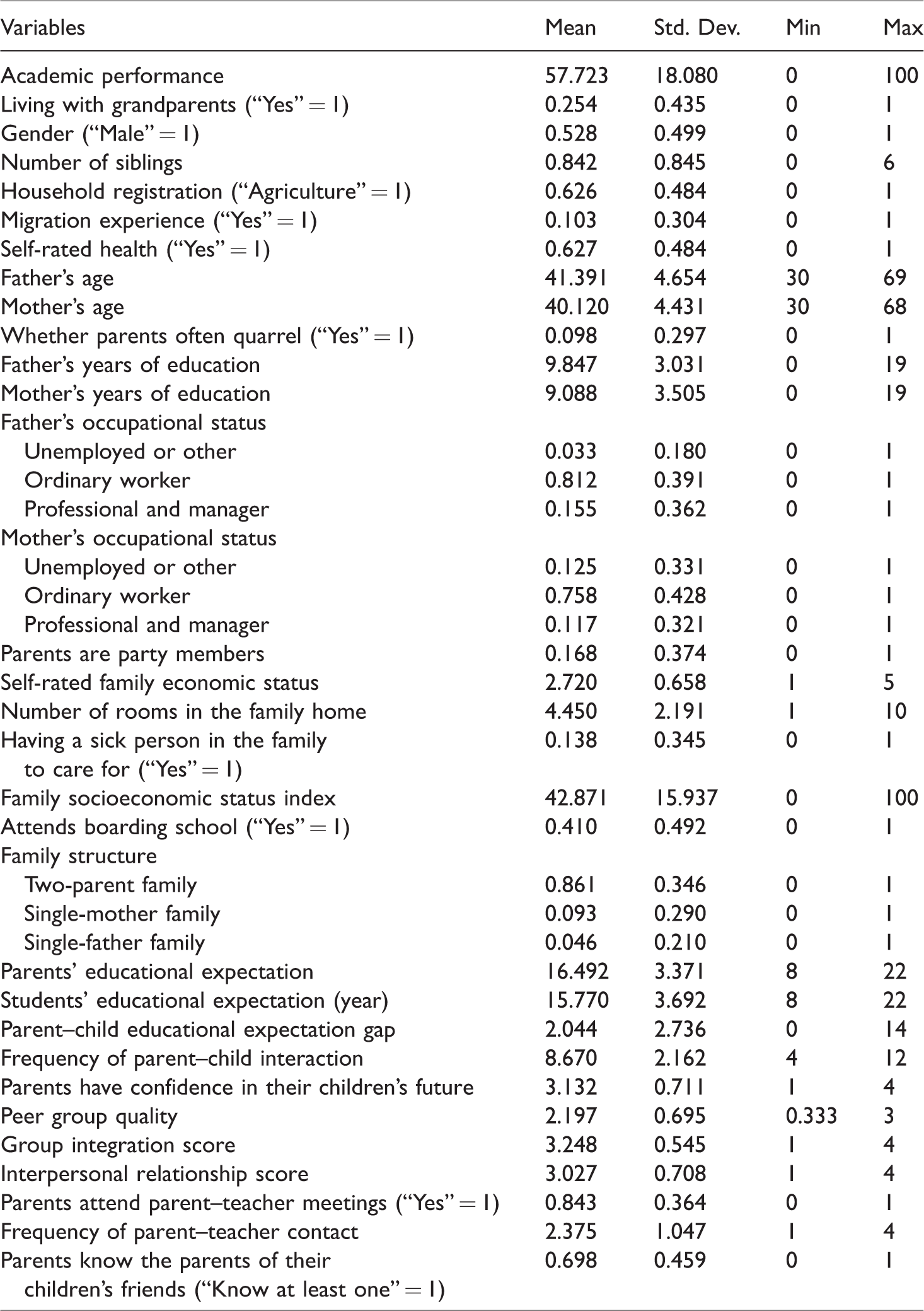
Weighted descriptive statistics for variables included in the analysis (N = 8879).
Methods
Besides parents’ occupational status, parents’ years of education, and family structure, the independent variables in this model include gender, migration experience, number of siblings, household registration, self-rated health status, parents being party members, self-rated family economic status, having a sick person in the family requiring care, parents’ relationship, father’s and mother’s ages, whether attending a boarding school, and number of rooms in the family home. Considering the significant socioeconomic and cultural differences between regions in China, a “county-level random-effects Logit model” has been used, with a specific formula as follows:

The formula predicts the log odds of adolescents living with grandparents relative to those not living with grandparents (the reference group). In this case,
The independent variables in the model include whether the child is living with their grandparents, the family SES of the student, family structure, and internal and external family social capital. The control variables include sex, migration experience, number of siblings, household registration, and self-rated health status. The specific formula is:

The formula predicts the influence of living with grandparents on adolescents’ academic performance. In this case,
As noted earlier, a multigenerational living arrangement is a strategic choice for families to respond to their needs, which is influenced by family structure, family SES, etc., and is therefore inherently selective. To minimize the effect of bias of selectivity on the estimation, the stabilized inverse probability of treatment weights (Stabilized IPTW) technique (Guo and Fraser, 2014; Robins et al., 2000) has been adopted. The weights are calculated as:
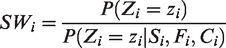
In this case,
Results of the data analysis
Analysis of the influential factors of living with grandparents
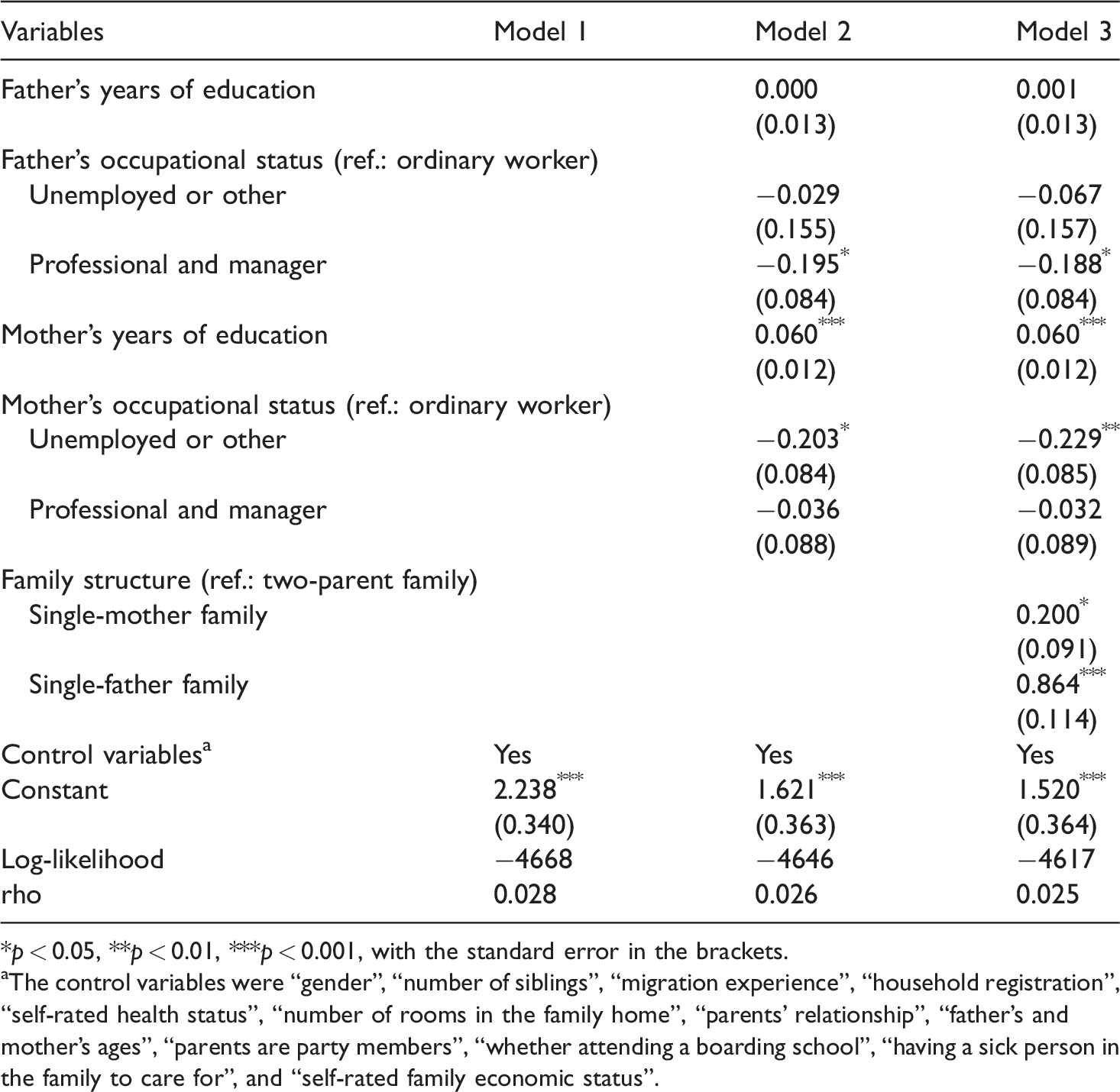
The first question addressed in this study is what types of families are currently more likely to practice the three-generation co-residence in China. In other words, which adolescents are more likely to live with their grandparents? The results of Model 2 in Table 2 suggest that whether adolescents live with their grandparents is influenced by the father’s occupational status and the mother’s work participation. To be specific, after controlling for other variables, the odds of students living with their grandparents increases by about 6% for each additional year of the mother’s education, exp (0.060) − 1 ≈ 0.062, p < 0.001. Compared with students whose mothers are ordinary workers, the odds of students whose mothers are unemployed living with their grandparents is about 18.4% lower, 1 − exp (−0.203) ≈ 0.184, p < 0.05, while there is no significant difference in the odds of students whose mothers are professionals and managers living with their grandparents. Also, it is found in Model 2 that the father’s years of education are not directly related to whether students live with their grandparents. The higher the father’s occupational status, the less likely the students are to live with their grandparents. When controlling for other variables, the odds of students whose fathers are professionals and managers living with their grandparents is about 17.7% lower compared to students whose fathers are ordinary workers, 1 − exp (−0.195) ≈ 0.177, p < 0.05, and there is no significant difference in terms of students whose fathers are unemployed. The results of Model 2 are consistent with our expectation, which implies that the gender division of labor in the family has not fundamentally changed in modern society. Although women (especially those who are highly educated) are increasingly going out of the family for work, childcare remains largely the woman’s responsibility. As a result, women experience more work–family conflict than men, while the involvement of children’s grandparents helps to mitigate this work–family conflict. Therefore, children whose mothers are in the workforce and/or whose mothers have more years of education are more likely to live with their grandparents. In addition, as the level of the family SES depends primarily on the occupational status of the male rather than the female, the higher the occupational status of the male in the family, the more the family can afford to address issues such as childcare by the market instead of relying solely on grandparents. Therefore, the higher the occupational status of the father, the less likely the adolescent is to live with grandparents.
County level random-effects model for estimating whether living with grandparents (N = 8879).
*p < 0.05, **p < 0.01, ***p < 0.001, with the standard error in the brackets.
aThe control variables were “gender”, “number of siblings”, “migration experience”, “household registration”, “self-rated health status”, “number of rooms in the family home”, “parents’ relationship”, “father’s and mother’s ages”, “parents are party members”, “whether attending a boarding school”, “having a sick person in the family to care for”, and “self-rated family economic status”.
Model 3 has examined the influence of family structure based on Model 2. The results show that students in single-parent families are more likely to live with their grandparents. When controlling for other variables, the odds of students living with their grandparents is about 22% higher in single-mother families compared with two-parent families, exp(0.200) − 1 ≈ 0.221, p < 0.05, and that figure rises to about 137% in single-father families, exp(0.864) − 1 ≈ 1.373, p < 0.001. Such results are also in line with our expectation. In general, the gender division of labor within the family functions based on a structure in which couples divide their work and cooperate to raise the next generation together. When the structure of the division of labor and cooperation between husband and wife is disrupted, the functions performed by one of the partners in the family need to be replaced by the other partner, which will inadvertently increase the family pressure on the other partner. The child-rearing crisis faced by families is especially acute when the mother is absent from the family. Living with grandparents helps to alleviate the stress caused by the disruption of the family structure, so students from single-parent families are more likely to live with grandparents, especially those from single-father families.
In conclusion, Table 2 has retested the complementary role of grandparents in modern family life. The data analysis results show that the multigenerational living arrangement is a selective strategy for families to respond to their needs, and is mainly influenced by the mother’s engagement in paid employment, the occupational status of the father, and the family structure. Among these factors, children whose mothers participate in the workforce, whose fathers have lower occupational status, and children from single-parent families are more likely to live with their grandparents.
Group heterogeneity of living with grandparents on adolescents’ academic performance
The study above finds that living with grandparents is a strategic choice for families to respond to their needs. In this section, the authors will discuss how this selective living arrangement for family influences adolescents’ academic performance and heterogeneity.
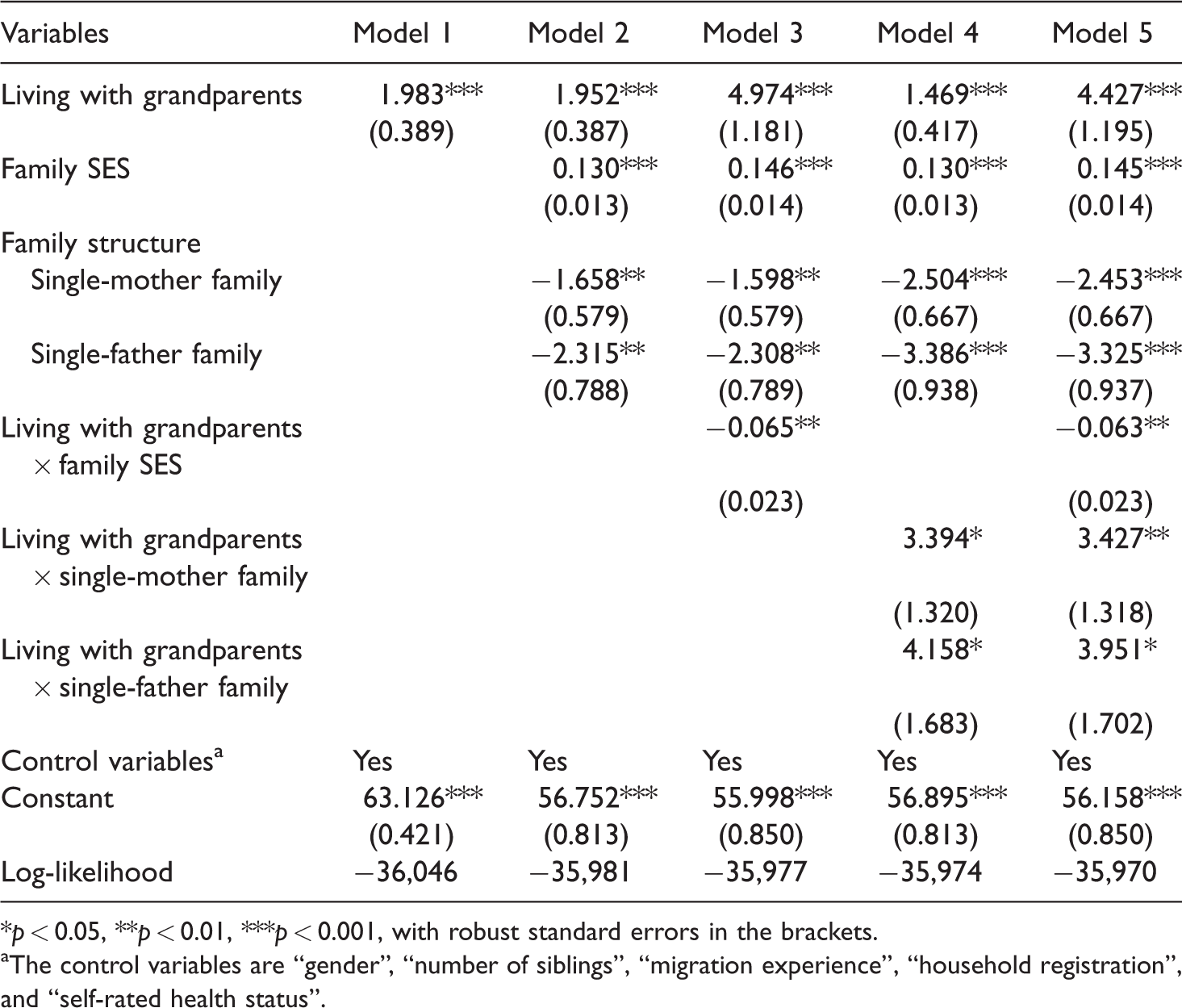
As shown in Table 3, we find that living with grandparents still improves adolescents’ academic performance after IPTW weighting, with all other variables being the same. The results of Model 2 show that after controlling for demographic characteristics, such as family SES, family structure, and gender, adolescents living with grandparents perform better academically than those who are not by 1.952 (p < 0.001). This result is in line with our expectation that living with grandparents indeed positively affects adolescents’ academic performance.
School fixed-effects model (IPTW weighted) for estimating the effect of living with grandparents on students’ academic performance (N = 8879).
*p < 0.05, **p < 0.01, ***p < 0.001, with robust standard errors in the brackets.
aThe control variables are “gender”, “number of siblings”, “migration experience”, “household registration”, and “self-rated health status”.
To examine the heterogeneous effects of living with grandparents on adolescents from families with different SES and family structure, an interaction term approach has been adopted. It is found that living with grandparents has a differential impact on the academic performance of adolescents from families with different SES, and significantly benefits adolescents from lower-class families (as shown in the left panel of Figure 2). To be specific, the results of Model 3 show that when controlling other variables, compared with those who do not live with grandparents, the effect of living with grandparents decreases by 0.065 (p < 0.01) for every 1-unit increase in family SES for adolescents living with grandparents. Similarly, it is found that the effect of living with grandparents is also differentiated for students with different family structures and is more beneficial for adolescents from single-parent families (as shown in the right panel of Figure 2). The interaction term between living with grandparents and family structure in Model 4 shows that living with grandparents has a significant compensatory effect on single-parent families. Specifically, when controlling other variables, compared with two-parent families, the effect of living with grandparents is an approximately 3.394 (p < 0.05) higher academic performance by students from single-mother families and a 4.158 (p < 0.05) higher academic performance by students from single-father families. In Model 5, after considering the interaction effects of living with grandparents and the family SES and family structure simultaneously, the result also shows that living with grandparents has a more positive effect on adolescents from lower family SES and single-parent families. This result is in line with our expectation, which implies that although lower SES and single-parent families have a negative effect on adolescents’ academic performance, this negative effect can be largely mitigated by living with grandparents.
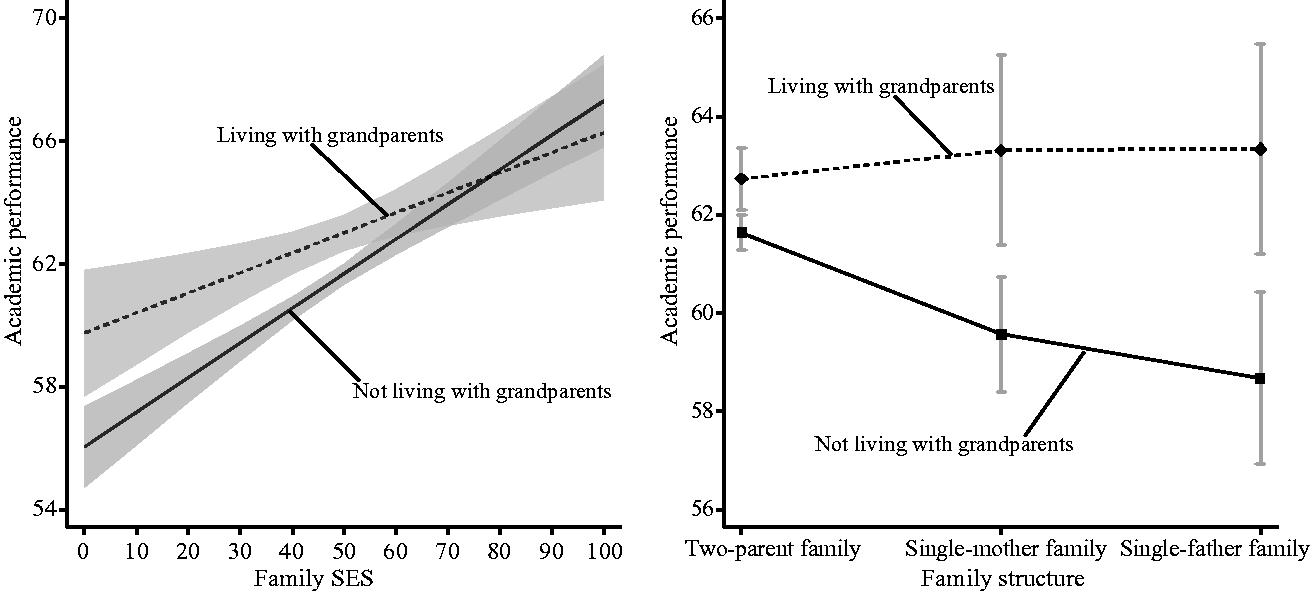
Interaction effects of living with grandparents, family SES, and family structure.
In conclusion, the data analysis results show that living with grandparents has a positive influence on the academic performance of adolescents, with a significant compensatory effect, especially for students from lower-SES families and single-parent families. This suggests that living with grandparents is more beneficial in terms of increasing the resilience of low-social class families and families with absent parents to social risks.
Indirect mechanisms of the impact of living with grandparents: Family social capital
The last dimension of this study is how living with grandparents indirectly affects adolescents’ academic performance via family social capital. A descriptive analysis is conducted to assess whether family social capital differs due to living with grandparents, after which a more rigorous statistical model is adopted to test the effect.
As shown in Table 4, in terms of internal family social capital, the educational expectations of parents and children are higher and more consistent in families living with grandparents. Also, families living with grandparents have more parent–child interactions and have more confidence in their children’s future. All of these variables have passed the test of significance. Similar to the results shown for internal family social capital, there are significant differences in external family social capital. Students’ peer group quality, interpersonal relationships, and group integration are higher in families living with grandparents, and again these variables have all passed the test of significance. In terms of parents’ social capital, apart from parents’ frequency of contact with teachers, which shows no difference, parents’ attendance at parent–teacher meetings and parents knowing the parents of their children’s friends have both passed the significance test. Moreover, the proportion of parents who attend parent–teacher meetings and parents who know the parents of their children’s friends is higher in families living with grandparents than those that do not. In summary, the results of the descriptive analysis suggest that there is a significant difference between internal and external social capital, depending on whether the family lives with grandparents, with those who choose to live with grandparents having higher family social capital.
Differences between internal and external family social capital by whether or not living with grandparents (N = 8879).
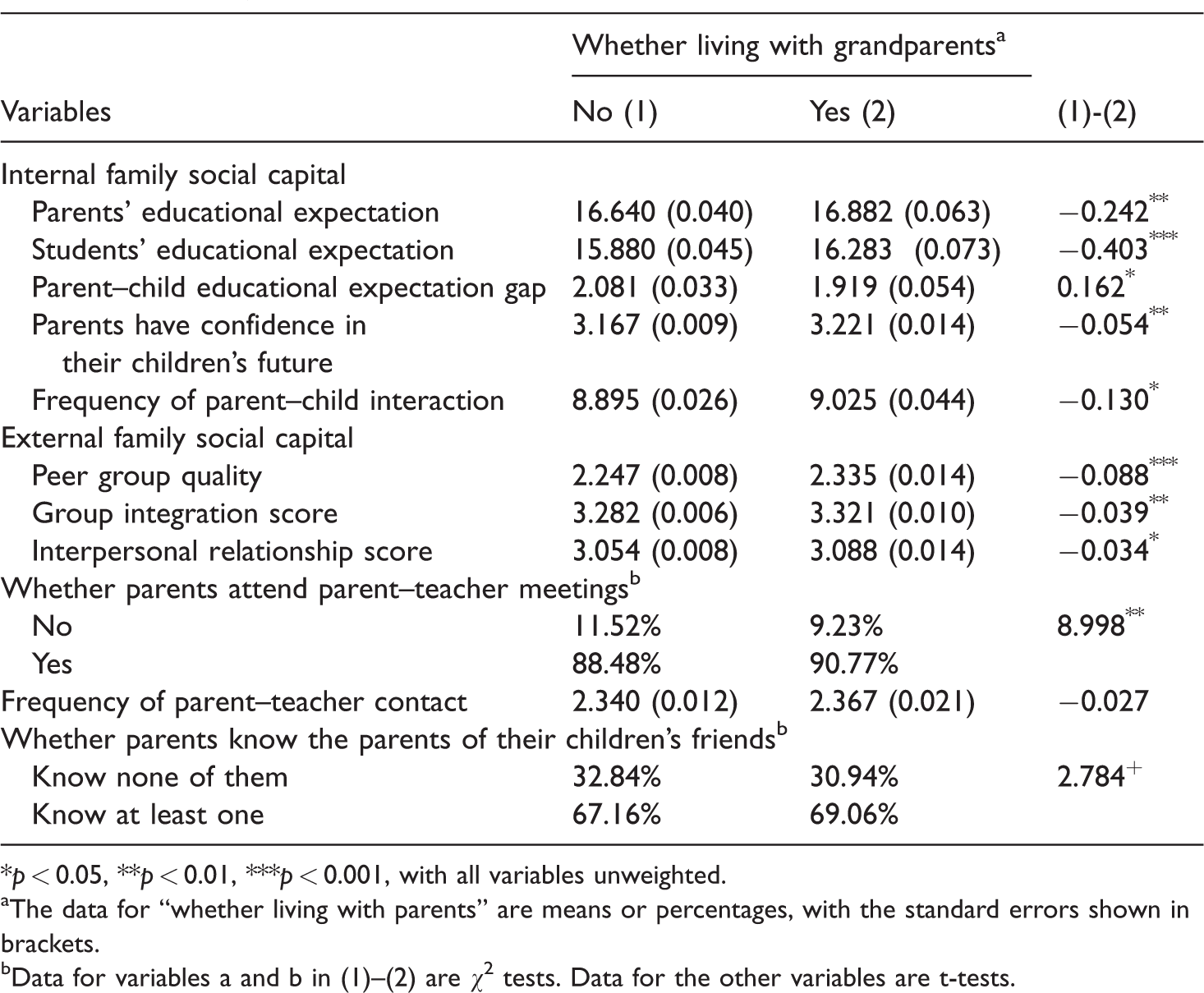
*p < 0.05, **p < 0.01, ***p < 0.001, with all variables unweighted.
aThe data for “whether living with parents” are means or percentages, with the standard errors shown in brackets.
bData for variables a and b in (1)–(2) are
So, is family social capital an intermediate mechanism between living with grandparents and students’ academic performance? Table 4 shows that families living with grandparents invest more in various types of family social capital. Since family social capital is an essential factor influencing students’ educational output, living with grandparents may affect students’ academic performance via the intermediate mechanism of family social capital. However, as noted earlier, living with grandparents is a result of a strategic choice by the family, so families who choose grandparents to care for their children may also tend to invest more in various types of social capital. In other words, the intermediary role of family social capital implied by Table 4 may be a bias resulting from the selective process of living with grandparents. For this reason, the causal mediation analysis framework recommended by Imai et al. (2010) is adopted to test whether family social capital is an intermediate mechanism via which living with grandparents affects adolescents’ academic performance. The causal mediation analysis framework is based on a “counterfactual” framework, making the results more reflective of the true causal relationship than traditional mediation mechanisms (see Table 5 for calculation results).
School fixed effects models for estimating the impact of social capital on students’ academic performance (IPTW weighted) (N = 8879).
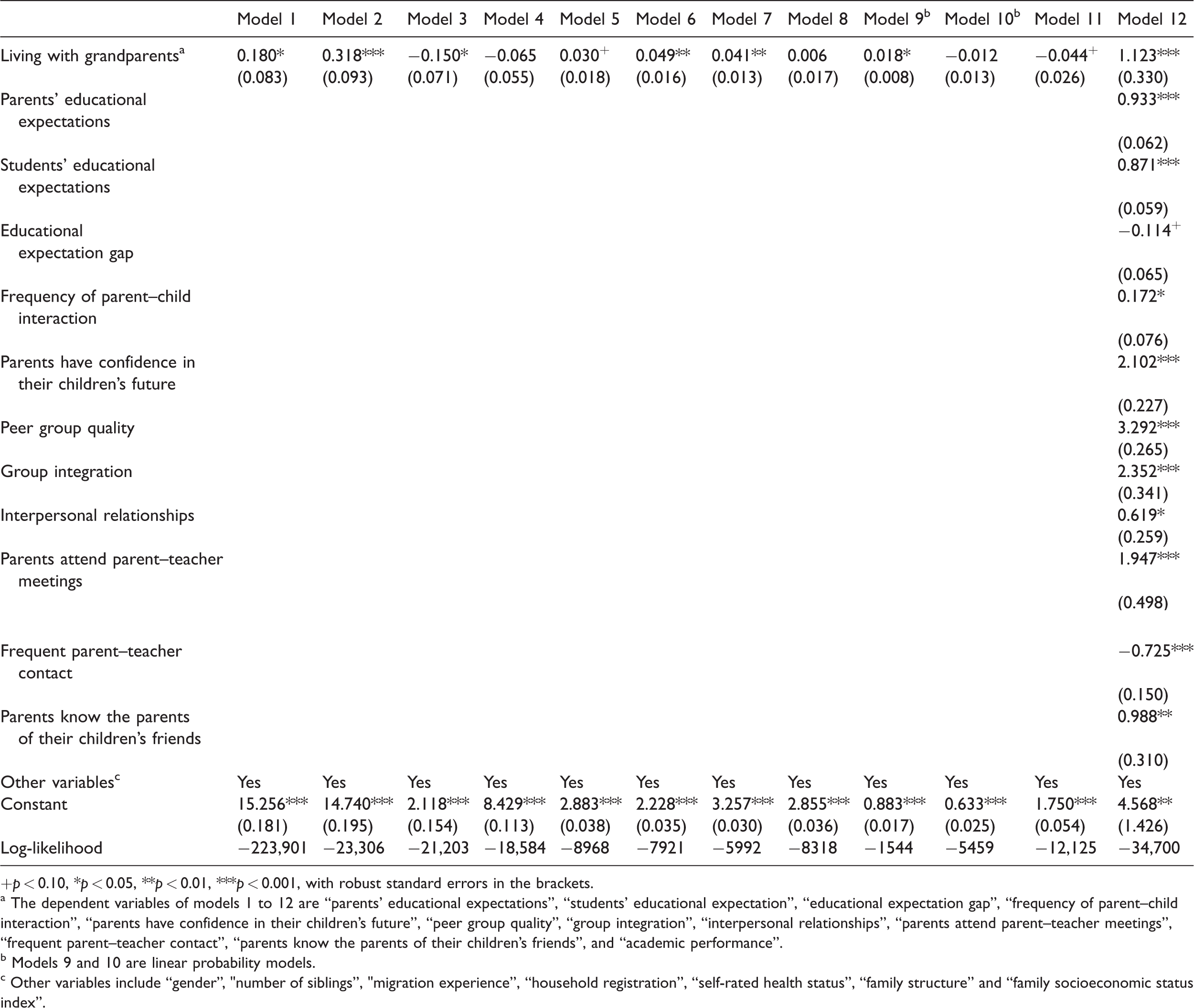
+p < 0.10, *p < 0.05, **p < 0.01, ***p < 0.001, with robust standard errors in the brackets.
a The dependent variables of models 1 to 12 are “parents’ educational expectations”, “students’ educational expectation”, “educational expectation gap”, “frequency of parent–child interaction”, “parents have confidence in their children’s future”, “peer group quality”, “group integration”, “interpersonal relationships”, “parents attend parent–teacher meetings”, “frequent parent–teacher contact”, “parents know the parents of their children’s friends”, and “academic performance”.
b Models 9 and 10 are linear probability models.
c Other variables include “gender”, "number of siblings”, "migration experience”, “household registration”, “self-rated health status”, “family structure” and “family socioeconomic status index”.
Table 5 shows that apart from the variables of “frequency of parent–child interaction”, “interpersonal relationships”, “knowing the parents of the children’s friends”, and “frequency of parent–teacher contact”, the effect of “living with grandparents” on all other aspects of family social capital is consistent with the results of the descriptive analysis. It increases the parents’ and children’s educational expectations and their consistency, strengthens the parents’ confidence in their children, improves the quality of the children’s peer group and group integration, and increases the parents’ involvement in their children’s learning. This means that living with grandparents does increase the family’s investment in various aspects of social capital, after excluding the selective effect of living arrangements. The results of Model 12 show that both internal and external family social capital still significantly affect students’ academic performance when controlling other variables. This suggests that family social capital is indeed an intermediate mechanism via which living with grandparents affects adolescents’ academic performance. Rather than by means of increasing the frequency of parent–child interactions, the mediating role is achieved primarily through increasing the expectations for the children, intergenerational consistency, parents’ involvement in their children’s learning, and the environment in which the children grow up. In other words, when families choose to have grandparents take care of their children, the family social capital is more likely to be in the form of expectations or norms between the parents and children. Such expectations or norms improve the environment in which the children grow up, which promotes their educational development. In summary, the results in Tables 4 and 5 suggest that living with grandparents is of significance in improving both the internal and external social capital in the family. Coleman (1988) argues that resources, such as parents’ human capital, need to be transformed through social capital. Therefore, parents should strive to improve their family social capital to increase their offspring’s efficiency in transforming resources, such as parents’ human capital. The findings show that living with grandparents has such an effect, leading to higher social capital in the family between parents and their children. When variables such as family SES and family structure are the same, higher family social capital enhances the adolescents’ efficiency in transforming the parents’ resources, which in turn improves their academic performance.
Conclusion and discussion
Exploring the influence of family kinship networks on individual SES attainment is of theoretical importance for a more comprehensive understanding of the transmission of intergenerational inequalities. Using the data from the 2014–2015 academic year of the China Education Panel Survey, this study focuses on the factors influencing the three-generation living arrangements of contemporary Chinese families and their impact on adolescents’ academic performance and intermediate mechanisms. The analyses yield the following four main findings. First, whether or not adolescents live with their grandparents tends to depend on the family’s functional needs, and is closely related to family SES, the mother’s participation in paid employments, and the family structure. Adolescents from lower-class families and single-parent families with mothers participating in the workforce tend to be more likely to live with their grandparents. Secondly, living with grandparents helps to improve adolescents’ academic performance, and this positive effect remains significant after maximizing the data balance. Thirdly, it has been noted that when discussing the impact of the extended family on individual SES, attention should be paid to the differential influence of the role of family kinship networks in different social contexts (Mare, 2014; Solon, 2014), and this study supports this view. The findings show that living with grandparents has a significant compensatory effect on the academic performance of adolescents from lower-SES families and single-parent families, with all the other variables being the same. The study also finds that living with grandparents works through family social capital. In particular, it increases the parents’ and children’s educational expectations and their consistency, parents’ confidence in their children, children’s peer group quality and group integration, and parents’ involvement in their children’s learning, ultimately exerting a positive impact on adolescents’ academic performance.
Analyzing the mechanisms of intergenerational resource transmission is the key to understanding the critical role that families play in shaping and sustaining social inequalities. In current discussions of the multigenerational mobility mechanisms, the direct transmission of grandparents’ economic resources to grandchildren or the intergenerational transmission of resources via interactions with grandparents are the two most dominant mechanisms. However, this view has ignored the influence of family living arrangements on the process of resource transmission. In modern societies, due to the nuclearization of families and changes in the intergenerational relations, whether or not to live with grandparents has become a strategic choice for nuclear families to meet their needs and cope with social risks, which is influenced by the extent of nuclear families’ dependence on their grandparents’ resources. This strategic choice also means that the positive impact of living with grandparents varies according to the social context. More importantly, when families choose to live with grandparents, the pattern of interaction between the parents and children also changes. The study shows that in families that choose to live with grandparents, the parents’ investment in the family social capital is higher, which has a more positive impact on adolescents’ academic performance. This implies that when examining multigenerational mobility in the future, it is necessary to consider not only the transmission of resources between grandparents and their grandchildren, but also the factors of family living arrangements and how grandparents indirectly influence the educational development and SES attainment of their grandchildren via their involvement in interactions between parents and children.
This study has practical implications for understanding the role of family kinship networks in withstanding various social risks. Although the nuclear family is the dominant family model in modern Chinese society, the tradition of mutual assistance and cooperation among family kin networks has been sustained in the new historical period, with even stronger functional dependence than ever before. In recent years, nuclear families have faced increasing social risks due to the rising cost of living, increasing work pressure, and weakening marital stability. As a result, nuclear families tend to expand into stem families, temporarily or permanently, to increase their resistance to the risks of modern society. The findings of this study suggest that this strategic multigenerational co-residence arrangement has enhanced the ability of modern families to cope with social risks and improved the life chances of family members. In particular, for adolescents from low-social class and single-parent families, multigenerational co-residence is of great importance in improving their academic performance. Regarding child-rearing, this means that the selective use of grandparents’ resources and the multigenerational co-residence patterns may not be a bad thing. On the contrary, it may, to some extent, reduce the gap in the educational development of adolescents from different classes and with different family structures, thereby reducing the risk of inequality reproduction.
This study has a few limitations. Firstly, due to the data limitations, the income and education of grandparents, which can influence the choice of family living arrangement, are not included in the analysis when examining the factors influencing family living arrangements. Secondly, the effect of living with grandparents may differ in terms of the gender of the grandparent and paternal and maternal lineage, but these have not been distinguished in the study. Moreover, it has been suggested that grandparents’ economic and cultural resources, such as income, education, and their interactions with each other, can play an essential role in their grandchildren’s attainment of social status. Yet, these mechanisms could not be tested directly due to the data limitations. Finally, although the study has found that living with grandparents increases families’ investment in various types of social capital, the reasons for this require further analysis and discussion. In addition to what has been discussed here, perhaps the “symbol” of intergenerational solidarity associated with the presence of grandparents in the family is also a source. All of these limitations remain to be addressed based on more detailed data collection and analysis in the future.
Footnotes
Acknowledgements
The first draft of this study was presented at the International Chinese Sociological Association 2018 Annual Asian Conference (Hong Kong) and the Chinese Sociological Association 2019 Annual Academic Conference (Kunming). We would like to thank the attenders of the conferences and anonymous reviewers of Chinese Journal of Sociology (Chinese version) for their valuable comments and suggested revisions. We remain fully responsible for the contents of this article.
Declaration of conflicting interests
The author(s) declared no potential conflicts of interest with respect to the research, authorship, and/or publication of this article.
Funding
The author(s) disclosed receipt of the following financial support for the research, authorship, and/or publication of this article: This research was supported by National Social Science Fund (grant no. 19ASH007) and Dengfeng Talents Project of Nanjing University (Level B).