




Abstract
The theory of strategic action fields (SAFs) is a perspective from which to better understand the emergence, stability, and change of the meso-level social order. However, the transferability of this theoretical perspective requires additional empirical evidence. Therefore, this study regards municipal solid waste (MSW) incineration in China as a SAF, in which various forces vie for the dominant position around the construction and operation of incineration plants. Given that all fields are embedded in a shifting social and cultural context, I analyze the interactions and competitions between incumbents and challengers. I then examine a series of consecutive events in the SAF, such as the emergence of the waste crisis, the development of MSW incineration, and consequential episodes of contention. I also investigate other factors that may affect the prospects for stability and change of the SAF, including actions of the state, influences of other related fields, and large-scale crises. By tracing the developmental trajectory of the SAF of MSW incineration, I discuss the applicability of the theory of SAFs to understanding an underexplored field in China.
Introduction and research question
The theory of strategic action fields (SAFs), first proposed by Neil Fligstein and Doug McAdam (2011, 2012), is an integrated theoretical perspective based on social movement studies and new institutional theory. Focusing on competitions between a set of actors in a given field and interactions between related fields, the theory of SAFs seeks to understand the emergence, stability and change of the meso-level social order. Previous literature has employed this theoretical framework to explore how collective actions (Domaradzka, 2017; Gastón, 2018) or exogenous changes (Pettinicchio, 2013) affect the policy community and policy implementation systems (Moulton and Sandfort, 2017) over time. Although it has been almost ten years since the theory was elaborated, empirical investigations in the Chinese context are still insufficient (except for Alpermann, 2014; Lei, 2016; Modell and Yang, 2018). Therefore, I look at a series of consecutive events happening within and around the field of MSW incineration in China to supplement the theory of SAFs with additional elements.
In this study, I consider the MSW incineration in China as a specific SAF and analyze the historical evolution of the SAF, including the emergence of the waste crisis, the application and promotion of MSW incineration, episodes of contention, and resulting adjustments and changes. The following question is then addressed: To what extent do ongoing competition and interaction around MSW incineration bring about changes in the field? My aim is to explore the applicability of the theory of SAFs in understanding the development and transformation of incineration-oriented waste disposal policies in China. More specifically, I explore the ways in which the theory of SAFs can be useful in interpreting stability and changes in the field of MSW incineration and in which aspect it is insufficient to provide an effective theoretical tool.
The article is organized as follows: The first section presents an introduction to the research question and research objectives. The second,
Strategic action fields as a theoretical framework
SAF is a constructed meso-level order in which actors carry out individual or collective action to influence the state of the field. The theory of SAFs is elaborated by Fligstein and McAdam (2011, 2012) to analyze the formation, stabilization, reproduction, and transformation of social order achieved by strategic collective actions in a given arena. In other words, Fligstein and McAdam wanted to provide a general theory for understanding how social actors cope with adversity, redefine power relations, and shape a new order in a given field. As an integrated analytical framework, the theory of SAFs has received significant attention and been applied to social movement studies (Gastón, 2018; Özen and Özen, 2011), as well as institutional analysis (Moulton and Sandfort, 2017; Naqvi, 2017). It borrows conceptual elements from structuration theory (Giddens, 1984), field theory (Bourdieu, 1979; Bourdieu and Wacquant, 1992), institutional theory (Powell and DiMaggio, 1991; Scott and Meyer, 1983, 1991), network analysis (DiMaggio and Powell, 1983; Passy, 2003; Powell et al., 2005), and social movement theories (Benford and Snow, 2000; Gamson, 1975; McAdam et al., 2001; Snow et al., 1986; Snow and Benford, 1988; Tilly, 2004). Based on previous research, the theory of SAFs pays extra attention to the relationship between structure and agency. In this sense, both macro structural factors (including political regime, institutional arrangement, and cultural backgrounds) and micro human behaviors (including individuals’ identities, values, interests, discourses, and shared meanings) are considered crucial dimensions in understanding what happens in a SAF.
To unfold the processes of contention, Fligstein and McAdam assert that it is essential to identify incumbents (sometimes along with governance units 1 ) and challengers: main actors within a given SAF. According to them, incumbents are privileged actors who dominate a field, while challengers are actors who occupy relatively inferior positions within the field. More specifically, incumbents are like the “members” proposed by Gamson (1975). They control most political, cultural, and economic resources of a field. Incumbents usually occupy privileged positions and control the dominant rules of the field on terms favorable to them. Since the order by which a SAF operates is largely defined by them, this group of actors tends to keep the field stable and continues to profit from the established order. In contrast, challengers are excluded or marginalized people who “lack the basic prerogative of members” (Gamson, 1975: 140). Because challengers occupy a relatively inferior place and hold insufficient resources, their interests are rarely recognized within the existing order. Having different interests and logic (including identities, beliefs, values, and positions) than incumbents, challengers are looking for opportunities to change the current order. In this light, challengers may frame an alternative interpretation of the field. When strong enough, they will dominate the field and generate a new order oriented towards their needs.
Competition between incumbents and challengers constitutes the key dynamic within SAFs. Based on this idea, the theory of SAFs reconciles structure and agency to overcome the false dichotomy between these two categories. Having macro-considerations, the theory puts every single field into its structural mechanisms and emphasizes the limitations and/or opportunities of the broader systematic context. In the work of Fligstein and McAdam (2012: 9), a SAF is likened to a “Russian doll” because it consists of multi-sized fields, and smaller fields are nested inside larger ones. When a wide field receives a huge impact from the outside, embedded fields could be affected. Here, it is essential to notice that this wide field is nested inside an even larger field and inevitably influenced by the larger one. Taking MSW incineration as an example, when the total amount of MSW (larger field) increases, the incineration industry (wide field) is likely to encounter a boom period, and incineration plants (small field) may get higher benefits accordingly. And, vice versa, once a larger field experiences any dramatic event or destructive shock, the wide field, as well as the small fields embedded in it, will be under attack. For instance, when a country (large field) is hit by a war or economic crisis, these shocks could easily bring chaos to the waste disposal industry (wide field), which eventually impacts incineration plants (small field). The theory of SAFs regards the state as a system encompassing a series of fields. Given a “state’s unique claim to exercise sovereignty within a designated geographic territory” (Fligstein and McAdam, 2012: 67), its role as the arbiter of rules also affects non-state fields. Thus, the theory of SAFs argues that it is imperative to take the state into special consideration when examining non-state SAFs. Usually, incumbents lobby the state to produce rules in their favor. During episodes of contention, they can look to the state to help restore stability of the SAF. Similarly, challengers can also make demands on the state. When challengers seek to reshape the order within a given SAF, they take their grievances to the state. The state, forced to be involved in conflicts, will “adjudicate disputes in the interests of existing organized powers” (Fligstein and McAdam, 2012: 76) within the SAF.
In addition to structural factors, the theory of SAFs also pays attention to collective agency. Underlining the autonomy of actors (including incumbents and challengers), the theory suggests that social actors’ attempts to defend and challenge an existing order rely on “social skill” (Fligstein, 2001: 105). Skilled actors can take appropriate action based on their understandings of opponents and prevalent circumstances. This means that they can learn tactics and adjust their actions in response to moves made by others. They sometimes take innovative actions or propose new frames to achieve a breakthrough. Incumbents with social skills can defend the existing order by cooperating with their allies. When a field is relatively stable, it is less accessible for negotiation by the powerless. Among challengers, social skill may compensate for a lack of power and resources. Skilled challengers are those who have the capacity to act in innovative ways and mobilize support from potential adherents. Through strategic actions, they have opportunities to subvert the existing order and promote a new one.
According to Fligstein and McAdam (2012: 84), a SAF is a meso-level social world within which actors in diverse positions “are engaged in an iterative strategic dance”. Their efforts are dedicated to gaining an advantageous position and striving for more resources through the interactive processes of controlling social order in a given SAF. If challengers succeed in altering the existing order, they might introduce a new logic and reshape power structures within the field. However, if challengers meet strong defenses from incumbents, their failures may lead to the restoration or reinforcement of the prevailing order. The theory of SAFs reminds researchers to consider institutional constraints or opportunities within a given field. It also provides a perspective from which researchers can consider how actors build a coalition to challenge or defend an established order in the field. The theory of SAFs contends that all fields are fluid, since interactions and contestations always exist in fields. Social structures, power relationships, and actors’ identities are not fixed but in a state of flux. Internal competitions and external shocks might introduce changes into a specific field, and field production, evolution, development, and/or transformation reshape the relations between actors embedded in the field.
Methods and data
To understand the dynamics of SAFs, I focused on MSW incineration in China. I made this choice for the following reasons: First, the SAF of MSW incineration in China and the main actors within the field can be clearly defined. The events that occurred in this SAF during the past few years could provide a wealth of empirical data. Second, MSW incineration in China is a fiercely controversial and competitive arena in which the dominant order is up for grabs. Actors’ interpretive frames are elaborated through confrontations in several different fields, such as the environment, technology, and land use. These ongoing conflicts lead to feelings of uncertainty regarding the order, which is a key feature for episodes of contention and the transformation of a SAF. Third, the SAF of MSW incineration constantly changes. Since 2006, the implementation and operation of incineration plants have caused nearly 100 protests in China. Corresponding responses have been made by companies, local governments, and the central government. This provides a good opportunity for us to understand how the dominant order of a SAF develops over time. Fourth, the theory of SAFs is predominantly based on Western social facts and theoretical research. Although it has been examined by empirical evidence from Western democracies such as the United States (Chen, 2018; Gastón, 2018; Pettinicchio, 2013) and Europe (Domaradzka, 2015, 2017, 2019; Domaradzka and Wijkström, 2016, 2019; Kauppinen et al., 2017), little is known about the applicability and transferability of this theory in a centralized context.
To shed light on emergence, development, and transformation within the SAF of MSW incineration in China, I reviewed anti-incineration campaigns that took place from 2006 to the present by reading online news written in Chinese and English. Thereafter, 95 protests were identified. They all met the following three criteria: (1) controversies over MSW incineration exist; (2) activists were mobilized to join in contentions; (3) the protests succeeded in receiving attention from more than three media. 2 These protests constituted the database of this study, providing comparable data to track changes happening within the field over time. More specifically, I not only focused on strategic interactions between pro-incineration alliances and anti-incineration forces, but also examined impacts from related fields. Extra attention was paid to important events and key turning points to create a timeline regarding the evolution of the SAF. To a great extent, these diachronic data contributed to an understanding of the long-term development of the SAF of MSW incineration.
Materials collected included both primary data and secondary data. Primary sources came from 42 semi-structured interviews (320,756 total words of transcripts) conducted during a three-month period of fieldwork from August 2018 to October 2018 and supplementary research carried out at the beginning of 2019. In addition, secondary data collected from the Internet (including online news, municipal government websites, environmental organizations’ websites, and social actors’ social media); libraries (including related scholarly research); and archives (including local chronicles, and national and local statistics yearbooks) were crucial sources of information. Data were presented in multiple formats, for example, interview notes, digital pictures, videos, reports, dissertations, books, articles, and archival documents. Data from different sources could be mutually verified to present a relatively complete and accurate picture of confrontations within the field of MSW incineration.
The strategic action field of MSW incineration
The waste crisis
Since China implemented the Reform and Opening-up Policy 3 in 1978, people’s living standards, as well as their level of consumption, have greatly increased. In particular, the acceleration of urbanization from the beginning of the 1990s resulted in rapid growth of populations in urban areas. The economic development and lifestyle transformation led to a boom in materialism and consumerism. What followed was millions of tons of MSW, characterized by a high proportion of organic waste and recyclable waste (Zhang et al., 2010). Due to the rapid growth of collected and transported MSW, some landfills have reached their capacity limits while others are about to overflow.
At the end of the 1990s, the State Environmental Protection Agency 4 (1998) indicated that MSW disposal and management was a thorny issue since the volume of MSW in urban areas was particularly compelling. In 2004, China “surpassed the United States as the world’s largest waste generator” (The World Bank, 2012). However, both landfill and composting—two major methods of garbage disposal before 2005—were unable to handle the fast-growing MSW. Facing a large amount of untreated MSW, the state and the media admitted that China had fallen into a waste crisis (Xu, 2009). Taking Beijing as an example, about 500 waste dumping sites were found distributed along Fifth Ring Road and Sixth Ring Road at the end of the first decade of the 21st century (Wang, 2010). Since 2016, the growth rate of MSW has further accelerated (see Figure 1). In 2018, collected and transported MSW in the entire country was approximately 228 million tons, which is more than three times the amount collected and transported in 1990 (National Bureau of Statistics of China, 2019). Even worse, underdeveloped garbage disposal facilities and the incomplete MSW management system have caused additional environmental pollution and health degradation. This ever-deepening crisis puts enormous pressure on both the central government and municipal governments. Thus, MSW management has become an extremely urgent issue in China.
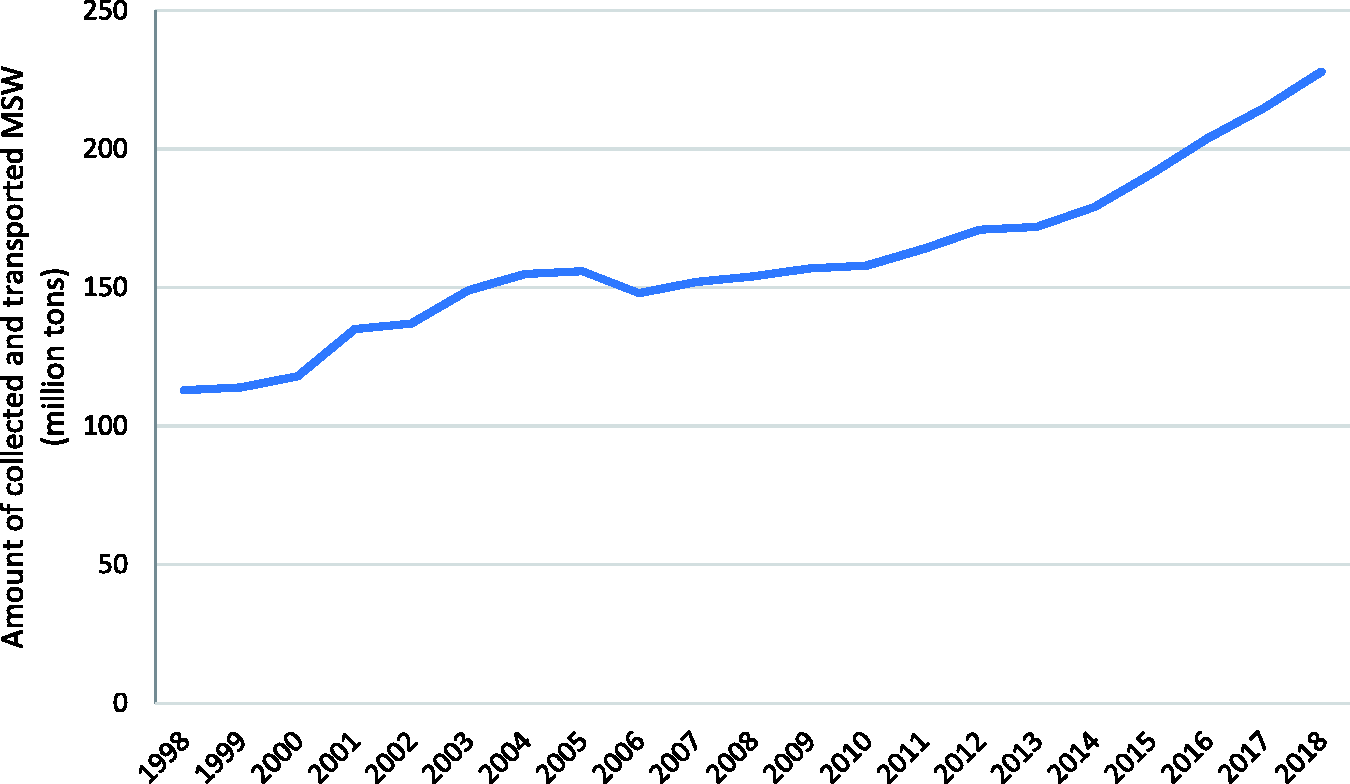
The growth trend of the total amount of MSW collected and transported across the country from 1998 to 2018 (Source: author’s own compilation using data from China Statistical Yearbook).
Construction and expansion of MSW incineration plants
Since the 1980s, both high-level leaders of the state and municipal officials have tried various waste disposal and management methods, including landfill, composting, sorting, and incineration. At the very beginning, landfill and composting were widely used. However, with an increase in the amount of MSW, the disadvantages of landfill and composting gradually emerged. Landfills require a lot of accessible land, while composting takes a long time. From the beginning of 2010, many urban administrators turned to incineration in hopes of resolving the waste crisis. MSW incineration is a technology that burns waste and turns it into ash, smoke, heating, and electricity. This technology not only deals with large volumes of garbage within a short time but also generates energy. Therefore, it has been labelled “waste-to-energy technology”. In this case, municipal officials have regarded incineration as a panacea and given priority to this technology.
In 1988, China’s first incineration plant was completed in Shenzhen. During the next decade, the number of incineration plants increased at a steady pace. Incinerators sporadically appeared in certain economically developed regions. From the beginning of the 21st century, MSW incineration had received much support from the central government. In 2000, the “Technical Policy for MSW Treatment and Pollution Prevention and Control” issued by the Ministry of Construction (2000) 5 regarded incineration as one of the main MSW disposal methods. Given that the evaluation of local government performance is linked to the capability of waste disposal, incineration was widely promoted by some municipal officials. In 2006, MSW incineration was admitted as a renewable energy project that was supported by national and local finance. Many cities have further increased the investment ratio in MSW incineration projects. Some of them have tried to pursue an all-in-incinerator policy.
In 2011 the State Council approved the “Opinions on Further Strengthening Municipal Solid Waste Disposal” and announced that cities with limited urban space and high population density should give priority to MSW incineration (General Office of the State Council, 2011). The National Development and Reform Commission (2012) issued the “Notice on Improving the Price Policy for Waste-to-Energy” in the following year, which clearly supported the development of MSW incineration. At this point, more municipal governments used incineration as a space- and time-efficient strategy for overcoming the waste crisis. In addition, the Twelfth Five-Year Plan 6 confirmed the MSW incineration policy and planned to increase the proportion of incineration from 20% to 35% in the entire country (General Office of the State Council, 2012). An explosive growth of incineration plants followed starting in 2012 (see Figure 2). According to a report issued by Wuhu Ecological Center (2019), the number of incineration plants grew from 122 (2012) to 428 (2019). 7 By 2015, over 40 enterprises had entered this field and invested in plants in China (Li et al., 2015).
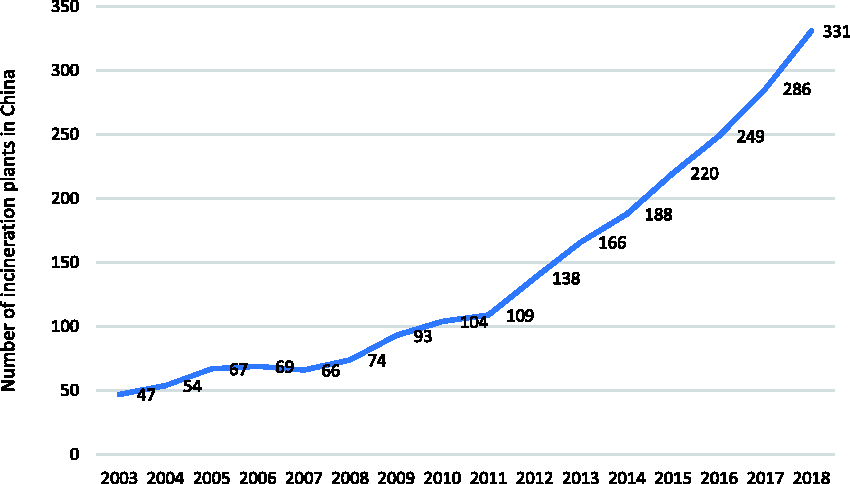
The growth of MSW incineration plants in China (Source: author’s own compilation using data from China Statistical Yearbook).
Episodes of contention (2006–2019)
The implementation and operation of MSW incineration plants have caused multiple problems. Since the beginning of 2000, the risks of incineration were gradually recognized, and hence criticism began to appear. According to a survey, 12 out of 17 incineration plants’ gas emissions exceeded national standards (Sun et al., 2004). In 2006, some people in Beijing took a strong stand against the Liulitun Waste Incineration Plant. This resistance is commonly considered the first anti-incineration campaign in China. It received widespread media coverage and public attention. Some experts—for example, Zhangyuan Zhao (an environmental scientist), Jun Xia (an environmental lawyer), and Da Mao (an environmental historian)—began to intervene in debates over incineration technology and administrative procedures. Through their efforts, the incineration issue has received attention from a large audience, which promoted debates on the public agenda. In 2009, a protest against the Asuwei Waste Incineration Plant in Beijing and opposition to the Panyu Waste Incineration Plant in Guangzhou started episodes of contention over MSW incineration in China. Thereafter, actors in different regions mobilized and joined various forms of resistance against incinerators to prevent or reduce the negative effects of burning garbage.
Collective actions in Guangzhou largely encouraged anti-incineration activism in other cities and provided many useful lessons for subsequent campaigns. Activists who opposed the Panyu Waste Incineration Plant set up a local environmental non-governmental organization (NGO) and provided support to other anti-incineration groups in Guangzhou. In the same year, certain influential environmental NGOs—such as the Friends of Nature and the Global Village Beijing—introduced the issue of MSW on their own agenda. Two environmental NGOs—the Wuhu Ecological Center and the Green Beagle—became pioneers and were actively involved in controversies around MSW incineration. Born out of the Green Beagle, the China Zero Waste Alliance was founded in 2011. It is a network of activists and environmental groups, including 91 institutional members and 23 individual members. 8 The network linked up affected communities and promoted dialogue between people who are concerned about MSW disposal and management. These people range from environmentalists to researchers, media professionals, and lawyers, as well as affected residents. As anti-incineration frames and tactics have spread, an increasing number of residents and environmentalists have been mobilized to oppose proposals for constructing or expanding MSW incineration plants. Over the past 15 years, a wave of anti-incineration protests has swept the country. Anti-incineration activism reached a peak in 2016 (see Figure 3). Nevertheless, challengers are less powerful than incumbents in China. Taking a waste disposal seminar held in 2010 as an example, only one of the 32 experts who participated in the seminar pointed out the risks of incineration and expressed objections (The Beijing News, 2010). Among the expert groups, there were far fewer cautious sceptics than technological optimists.
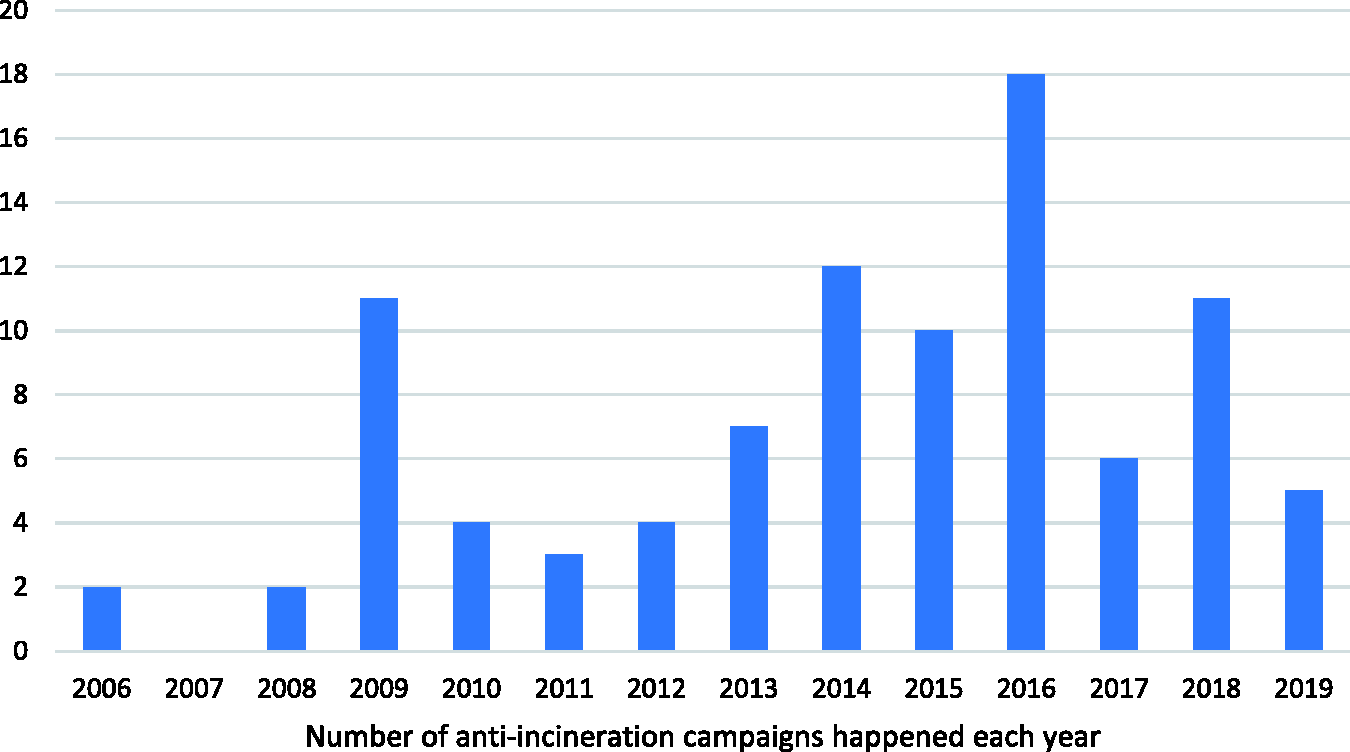
Identified anti-incineration campaigns in China (Source: author’s own compilation).
Interactions around MSW incineration
According to the theory of SAFs, incumbents and challengers are main actors who interact continuously with each other within a given field. In the SAF of MSW incineration, incumbents predominantly include local governments, companies, and certain experts. They generally share a common understanding of the development of MSW incineration and maintain a relatively consistent position. They have formed a pro-incineration coalition and together promoted the incineration industry. For them, burning garbage in incinerators is a space- and time-efficient method of dealing with the increasing piles of MSW. On the contrary, challengers hold thoughtful and conscientious opinions regarding incineration technology. The anti-incineration groups mainly include affected residents, environmentalists, and environmental NGOs. For them, burning garbage, especially unsorted garbage, may cause serious environmental degradation, health damage and other social problems. Generally speaking, the interests and objectives of the pro-incineration coalition are defined by functionality, efficiency, and profitability, while concerns of anti-incineration groups mainly involve sustainable development and social justice.
State actors, as special and powerful forces, have fundamental impacts on most non-state fields. In the SAF of MSW incineration, the state involves some functional organs of the central government, such as the National Development and Reform Commission, the Ministry of Environmental Protection, and the Ministry of Housing and Urban-Rural Development. The state responds to demands of incumbents and challengers and plays the role of mediator to balance the two forces in the SAF of MSW incineration. Here, it is worth mentioning the complex central-local government relations in China (Qi and Zhang, 2014). As the local executive organs of state administration, local governments report to higher-level governments. However, the implementation of national policies by local governments does not necessarily reflect the intention of the central government due to administrative and fiscal decentralization and localization (Shen et al., 2020). In terms of MSW incineration, municipal governments usually belong to the pro-incineration camp on account of employment opportunities, economic performance, and actual needs of MSW disposal. As an official stated in an interview, if urban administrators cannot figure out what to do with piles of garbage, “a plague will soon come” (from an interview coded as INBGES01, 2018). Yet the central government has been caught up in a dilemma on this issue, especially over the last decade. On the one hand, the central authority promoted the development of the incineration industry because more than one-third of Chinese cities had been besieged by MSW (China Daily, 2013). Piles of MSW have brought huge challenges to the whole country. On the other hand, some opposing voices came up in certain departments of the central government. Considering that burning waste may pollute the air, soil, and water, some measures to restrict emissions have been introduced. More importantly, social stability is the top priority and an important concern of the state. When an incineration project caused massive protests, the central government intervened and stopped the construction of the plant. Given that the position of the state has been ambiguous, both pro-incineration coalitions and anti-incineration groups are fighting for support from the state (see Figure 4).
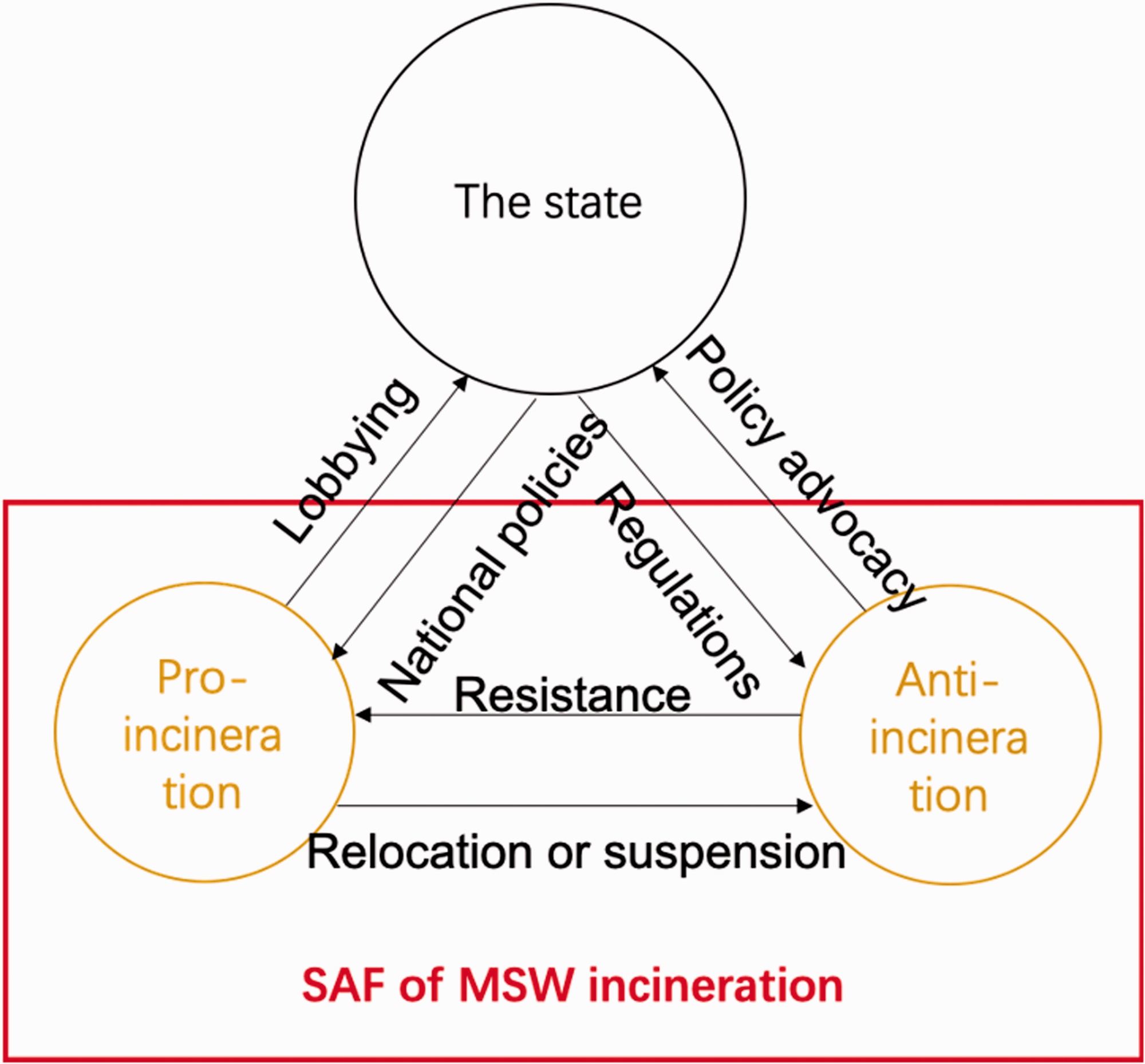
Interactions around MSW incineration (Source: author’s own compilation).
Like many disputes over proposals for large facilities, competition between incumbents and challengers within the SAF of MSW incineration has revolved around environmental risks, technical controversies, land acquisition, information openness, supervision systems, and administrative processes. Challengers initiated both institutional (including applying for information disclosure, administrative reconsideration, and litigation) and extra-institutional (including online and offline protests) collective action to prevent incineration plants from being constructed or from going into operation. In response, incumbents sometimes made compromises, such as suspension, relocation, or cancellation of a proposed incinerator. This is mainly because the performance of local governments is largely linked to social stability. Local officials may be denied promotion once there is a persistent or large-scale protest. The pressure to maintain social stability sometimes made local governments side with local residents and environmental NGOs. In the face of collective action, incineration companies sought to obtain more resources and defend the prevailing order. In 2016, the National Waste Incineration and Power Generation Industry Alliance was established (Zhang, 2016). This alliance unites multiple large and powerful companies (including Everbright International, Zheneng Jinjiang Environment, the China Energy Conservation and Environmental Protection Group, the Shanghai Environment Group, and Shenneng Environment), which greatly enhances pro-incineration forces.
These efforts proved effective. By presenting themselves as environmental solutions providers and environmental resource managers, many incineration companies, with joint forces from local governments, strived for support from the state. With sustained lobbying efforts from the pro-incineration alliance, the superiorities of incineration were accepted by the central government. Concomitantly, functional organs of the central government have promulgated a series of policies that favor MSW incineration. First, the build- operate-transfer (BOT) model 9 vigorously promoted by the central government has helped reduce local financial burdens by introducing social capital. Then, the Thirteenth Five-Year Plan (National Development and Reform Commission and Minister of Housing and Urban-Rural Development, 2016) set an ambitious goal—increasing the proportion of incineration to 54% of all collected and transported MSW across the country by the end of 2020. This plan has finally facilitated an all-in-incinerator policy in many large and mid-sized cities (from an interview coded as INAENT01, 2018).
In the contest between incumbents and challengers, anti-incineration forces also strove to win support from sympathizers in the central government. They leveraged national leaders’ concern for the environment to enhance the legitimacy of the anti-incineration position. To quell the criticisms of activists, and, more importantly, to prevent massive confrontations, the state implemented certain regulations. In 2014, the Ministry of Environmental Protection (2014) revised the “Standards for Pollution Control on the Municipal Waste Incineration” to increase standards for the emission of dust, NOx, HCl, SOx, dioxins, and heavy metals. To achieve new emission standards, many incinerators (especially those using old technology) had to upgrade their flue gas cleaning systems. Waste incineration plants across the country underwent technological upgrades and transformations during these few years. In 2017, the regulatory policy was further refined to ensure that incineration plants stuck to the new rules (Wuhu Ecological Center, 2017). The new regulatory policy included three tasks: installation, display, and connection. First, plants should install automatic monitoring equipment. Second, electronic displays of plants should publish pollutant emissions and incinerator operating data in real time and make sure information is accessible to the public. Third, real-time monitoring equipment of incineration plants should be connected to the supervision systems of environmental protection departments at all levels. In addition, the central government rolled out a new regulation to control pollution emissions from incinerators. If an MSW incineration plant violates emission standards, subsidies will be cut or suspended (Ministry of Finance and Ministry of Ecology and Environment, 2020). In this way, the state further improved environmental levels at incinerators and strengthened supervision over the incineration industry.
Stability and change within the SAF of MSW incineration
The theory of SAFs indicates that fields are rarely stable. The impetus to change exists even in the most stable SAF. In addition to emphasizing tensions between different actors within a field, the theory also attaches importance to other external fields that have vertical and horizontal interconnections with a given field. Links between fields include “resource dependence, mutual beneficial interactions, sharing of power, information flows, and legitimacy” (Fligstein and McAdam, 2012: 59). When the internal dynamics within the field are not enough to change the balance of power, inputs (including ideas, identity, resources, and shocks) from outside the field may create opportunities for transformation, and hence become the driving force for a new order. In brief, the stability or change of a field is closely related to fields around it. SAFs “are generally destabilized by exogenous shocks originating from other strategic action fields, invasion by other groups of organizations, actions of the state, or large-scale crises such as wars or depressions” (Fligstein and McAdam, 2012: 189). Like many other controversial issues, MSW incineration is embedded in a dense and interlaced network. To understand the prospects for the stability and crisis within this SAF, it is necessary to overcome the “fieldcentric bias” (Fligstein and McAdam, 2012: 58) and take external relationships into consideration. In addition to interactions between incumbents and challengers and the intervention of the state, turbulence from adjacent fields and/or a broader field environment might break the balance of the existing order (see Figure 5). It should be noted that the horizontal fields (including landfill and anti-PX 10 ) and vertical ones (energy supply, MSW disposal, pollution control, habitat protection, consumerism, and environmentalism) shown in Figure 5 are only examples to shed light on the dependency and nesting relationships between the SAF of MSW and other fields. In fact, proximate and broader fields discussed in this study are only some examples, and fields related to incineration are more numerous.
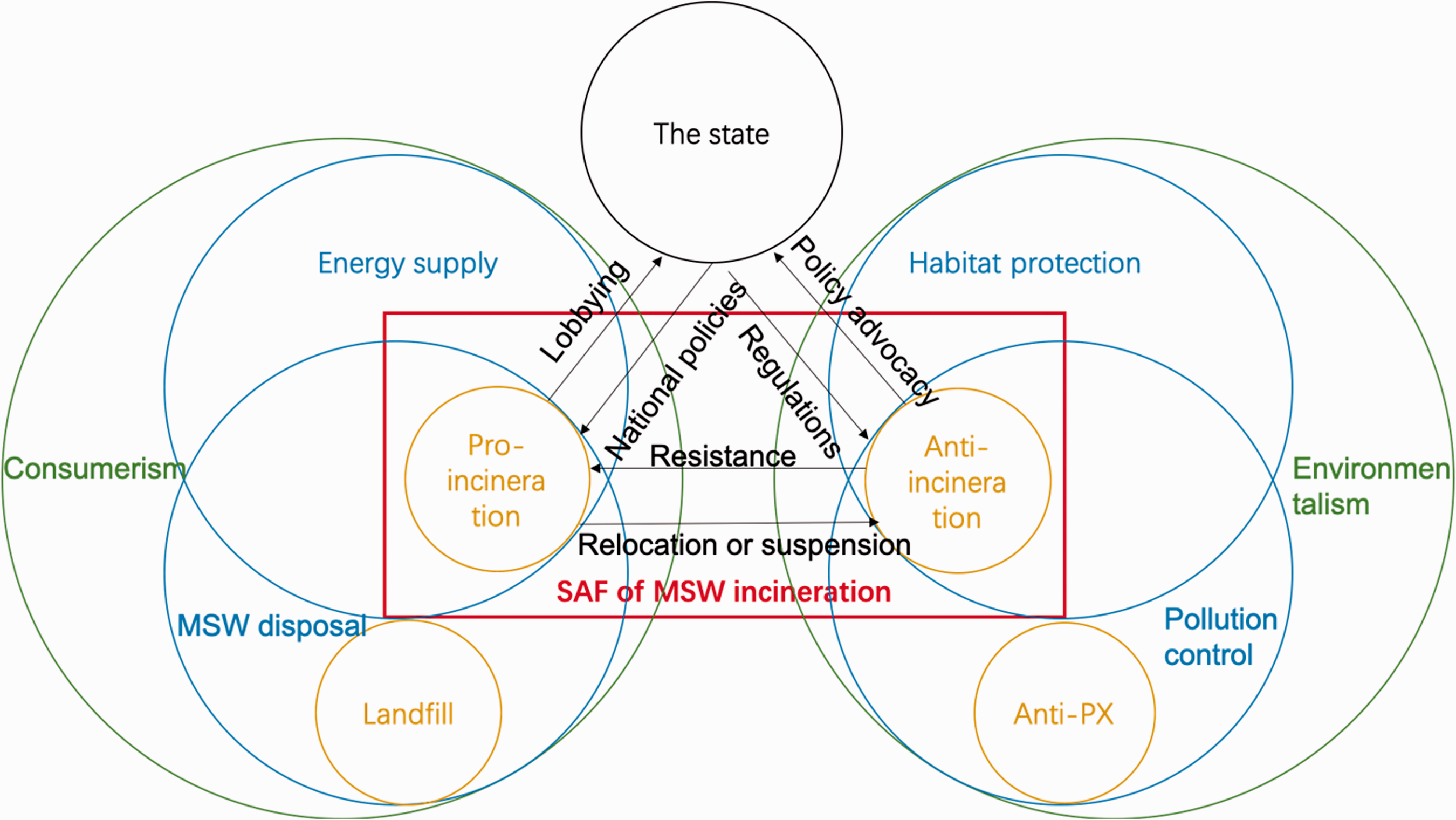
The SAF of MSW incineration, its proximate fields, and larger fields in which it is embedded (Source: author’s own compilation).
Influences from proximate fields
According to the theory of SAFs, all fields are inextricably linked with the adjacent ones. Fields sharing direct social relations influence each other. More specifically, the theory supposes that changes occurring in a field are likely caused by fluctuations in its proximate fields, especially in those located within a closer social space. For instance, landfill is a proximate field that has horizontal and competitive relationships with the SAF of MSW incineration. As indicated by many municipal governments, incineration is an alternative to landfill because landfill puts a lot of pressure on the urban land supply and produces environmental pollution (from interviews coded as INAGES02, INBGES01, INCGES01, 2018). In this regard, many cities have claimed that they need to build more incineration plants to diminish dependence on landfills. However, over the past decade, both landfills and MSW incineration plants have experienced a sound momentum of development. The amount of waste sent to landfills and incinerators shows an upward trend as well (see Figure 6). Landfills and incinerators were supposed to compete for limited MSW resources since they were regarded as alternatives to each other. Yet the larger field in which they are nested continues to expand. As the total amount of MSW waste grows, incineration and landfill have not played a zero-sum game thus far.
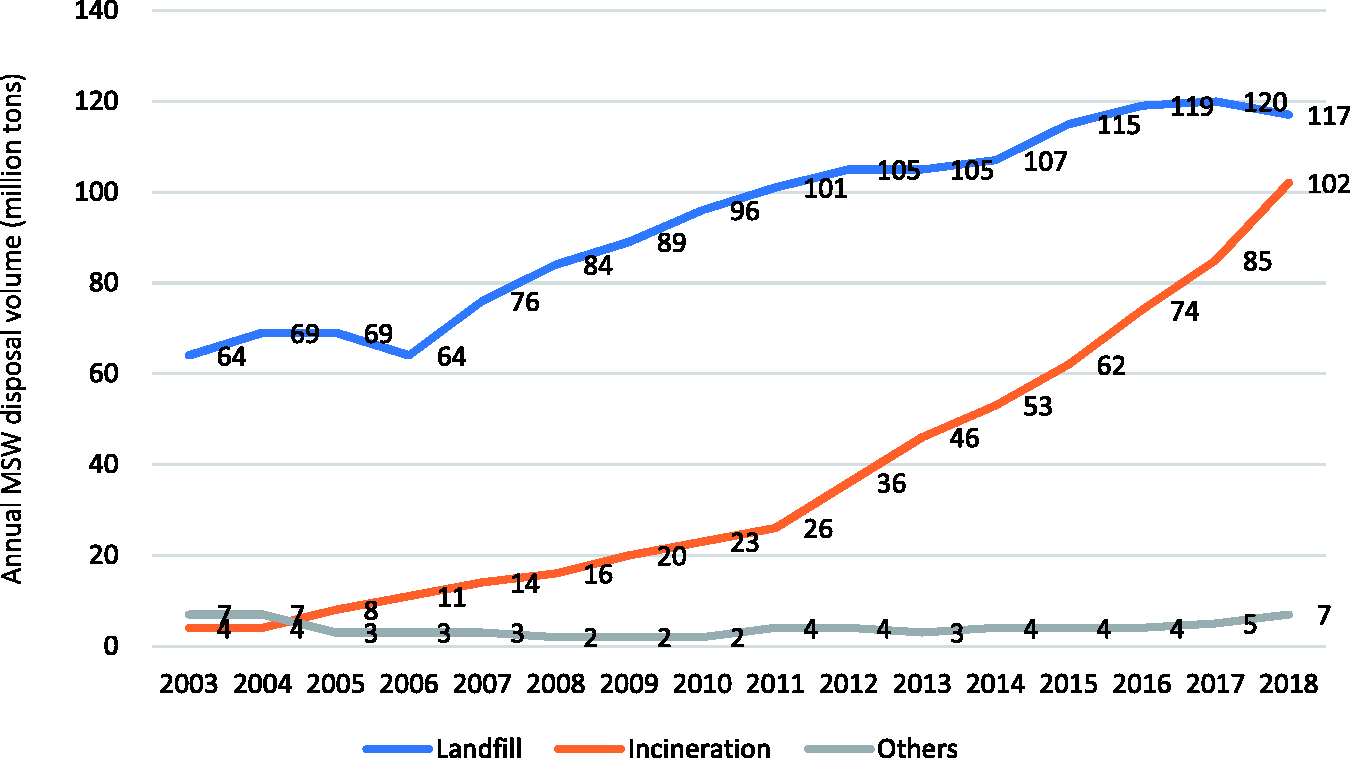
The amount of MSW treated in different ways each year (Source: author’s own compilation using data from China Statistical Yearbook).
Anti-incineration forces sought to obtain supports from two groups of adjacent fields. They first turned to sorting, recycling, and composting fields. In recent years, some cities have begun the practice of waste sorting. In this case, some companies working on waste sorting and recycling have recently joined the anti-incineration camp. Despite favorable policies, the financial support received by sorting and recycling companies has been far less than that received by the incineration industry. Due to the limited scale of these new allies, the strength of the anti-incineration groups has not been greatly improved. In the second place, anti-incineration forces tried to seek sources from other types of local activism, including resistance against industrial factories, maglev trains, high-speed rails, and nuclear power plants. For protestors, these projects are “unnecessary, technologically unsound, or environmentally and socially destructive” (Hager and Haddad, 2015: 1). Negative effects (including odor, noise, dust, radiation, and stigmatization) from these projects could threaten their health, safety, and/or property values. Taking anti-PX projects as examples, collective actions in several cities provided valuable experience for anti-incineration activism. Especially, “peaceful strolls” and other moderate methods invented by activists of the anti-PX campaign occurring in Xiamen during 2007 have been regarded as effective repertoires of contention in the Chinese context. In the subsequent anti-incineration protests, these repertoires were imitated and recreated. These fields, operating at the same level, have formed cooperative relations in terms of controlling negative impacts from undesirable large facilities. Nevertheless, local activism was largely restricted by the Chinese political setting. From a general point of view, although anti-incineration forces allied themselves with several external actors, they were less powerful than pro-incineration alliances. Incumbents were larger in number and more politically connected, while challengers and their allies were at a disadvantage in these respects. In this case, challengers have adjusted their action strategies and devoted more efforts to policy advocacy for sustainable alternatives. They have changed their slogan from “refusing to burn garbage” and “eliminating incinerators” to “refusing to burn unsorted garbage” and “updating incinerators” (from an interview coded as INBENV02, 2018).
Impacts from larger fields
In addition to proximate fields, the broader field environment has significant impacts on fields embedded in it. The theory of SAFs argues that the establishment of a new order in a SAF largely relies on the “resolution of the broader underlying conflict” (Fligstein and McAdam, 2012: 101). Especially when a broader field is altered by the introduction of new resources or ideas, impacts are likely to spread to smaller fields. In other words, changes in higher level fields are likely to bring opportunities for transformations within lower level fields. As shown in Figure 5, incineration is hierarchically nested in two larger fields: MSW disposal and energy supply. On the one hand, incineration meets the growing needs of MSW waste disposal. In this sense, incineration plants enjoy many preferential policies, including free land-use, prioritized commercial bank loans, construction subsidies, waste disposal subsidies, fly ash treatment subsidies, and leachate treatment subsidies. On the other hand, incineration has been listed as a renewable energy technology. Many incineration companies are also eligible for power generation subsidies, tax breaks, and/or premiums from reducing carbon emissions. With favorable policies in the larger fields, not only have state-owned enterprises been involved in the incineration industry but also a growing number of joint ventures and local companies have joined the SAF.
Anti-incineration activism is embedded in two larger fields: pollution control and habitat protection, as presented in Figure 5. Opposition to incineration sometimes stems from concerns about the air, water, and soil pollution caused by burning waste. As people’s knowledge about pollutants and toxic chemicals increases, individuals and organizations have increasingly joined the collective efforts to control pollution. In addition, many activists oppose large facilities because they occupy land in an ecologically fragile area. For example, incinerators located in national parks, nature reserves, and/or water source areas have confronted strong opposition from local residents and environmental NGOs (from an interview coded as INBENV02, 2018). In this sense, anti-incineration protests have resonated with endeavors to protect ecosystems and animal habitats.
From a broader perspective, the popularization of MSW incineration is a product of consumer culture. In contemporary society, many people are addicted to material consumption and pay little attention to the issue of waste disposal. As for the incineration industry, many companies promote advanced technology and indicate that it can eliminate large amounts of garbage in a very short period. In this case, people do not feel guilty for irrational material consumption, or worry about the consequences of the waste crisis. As Fligstein and McAdam (2012: 96) indicate, it is difficult for “culturally ‘embedded’ actors to shift worldviews dramatically”. Without reflection on consumerism, the ever-increasing MSW feeds the growing number of incineration plants. On the contrary, anti-incineration forces are deeply influenced by environmentalism. Many efforts against incineration stem from concerns for human health, animal rights, and non-living matter. Environmentalists were once considered an active force who were most likely to bring changes into public administration and promote democratic transformation (Kuo, 2013; Steinhardt, 2019; Steinhardt and Wu, 2016). However, the growth of environmentalism has encountered many restrictions. Most environmental NGOs remain localized and geographically dispersed. In this sense, it is difficult to initiate cross-regional cooperation and mobilization. Until today, environmentalists have not become an independent force who can bring transformative changes to institutional arrangements. Anti-incineration activism, as a field nesting in that of environmentalism, has also faced many obstacles.
Status of the SAF of MSW incineration
Through examining the 95 identified anti-incineration campaigns in China, I found that local resistance could barely succeed in closing or relocating incineration plants. For example, in 2011, the Panguanying Waste Incineration Plant was stopped under pressure from local resistance, which was then considered a successful example of a campaign (Johnson et al., 2018). But the plant was restarted in 2019, and the daily waste disposal capacity was increased from 700 tons to 900 tons (Chen, 2020). Similar cases are ubiquitous—opposed plants are either moved to a more remote location (to ensure they encounter less resistance) or restarted after several years. Opposing a given incinerator in a certain area has not proved to be an effective method for reversing the incineration-oriented waste disposal policy on a national scale. From a general perspective, the number of MSW plants is still at a stage of rapid growth for the time being. In particular, under the incentive of the Thirteenth Five-Year Plan (National Development and Reform Commission and Minister of Housing and Urban-Rural Development, 2016), many cities have invested a lot of human, material, and financial resources in planning and building incineration plants. As shown in Figure 7, except for Tibet, other provinces have incorporated incineration into local policies. Provinces that did not apply incineration technology—such as Liaoning, Gansu, Qinghai, Ningxia, and Xinjiang—planned to burn garbage. Provinces that already had incineration plants—Anhui, Guangdong, Jiangxi, and Hunan—set radical development goals. Economically developed provinces are more dependent on the incineration technology. In the eastern areas of China, the number of incineration plants can be expected to grow significantly. In large and middle-sized cities in the central and western areas, MSW incineration will likely gradually play a more predominant role in waste disposal. From a general viewpoint, the previous order in the SAF of MSW incineration seems to have been re-established.
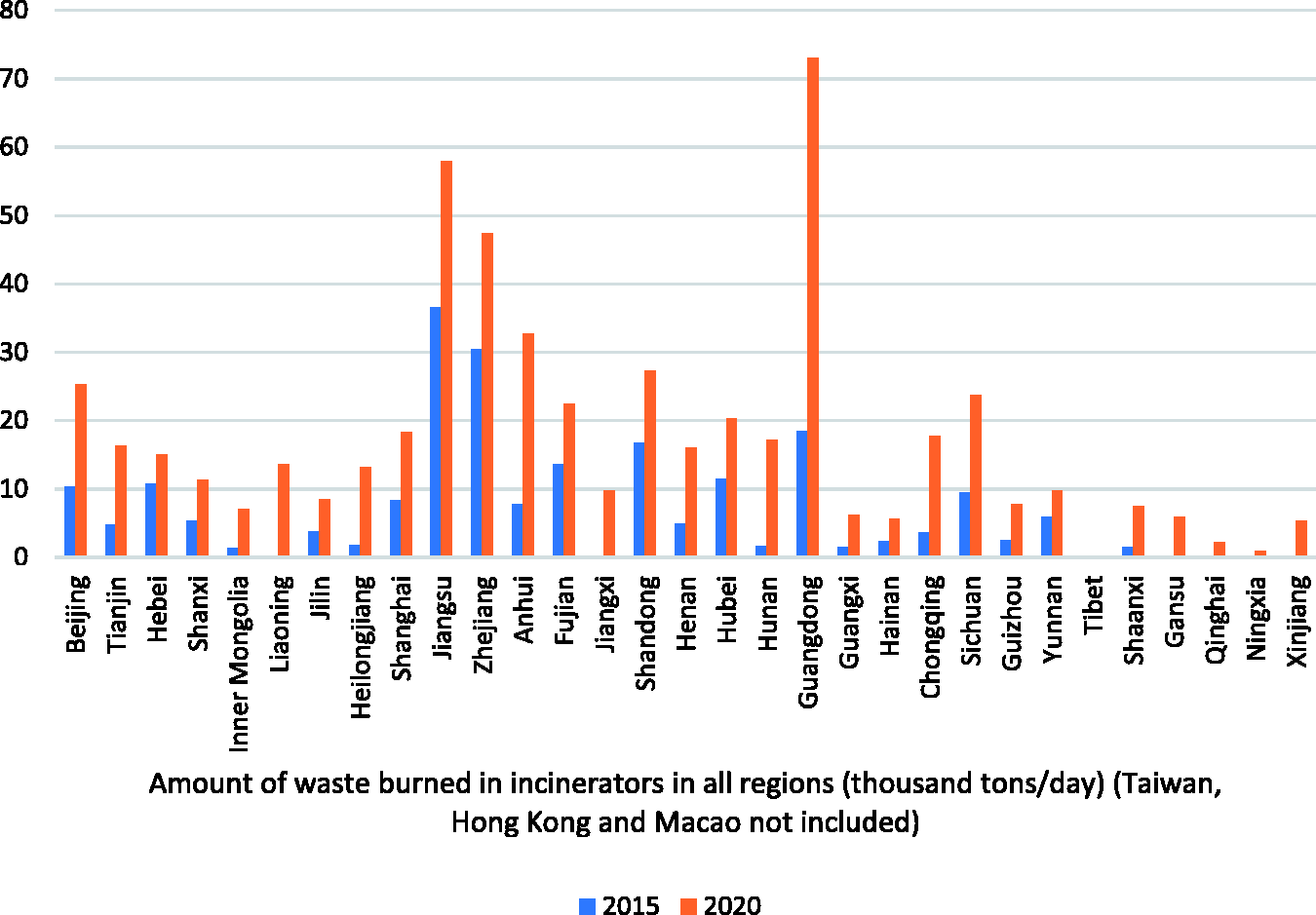
A comparison of the actual amount of waste burned in incinerators in 2015 and the planned amount of waste burned in incinerators in 2020 in all regions (Taiwan, Hong Kong and Macao not included) in China (Source: author’s own compilation using data from Thirteenth Five-Year National Planning for the Construction of Environmentally-Sound MSW Disposal Facilities).
Concluding remarks
In this study, MSW incineration policy is conceptualized as a SAF. To understand stability and change of the existing order in the SAF, I examined both internal and external dynamics. More specifically, within the SAF of MSW incineration, incumbents and challengers have struggled for a dominant position. Pro-incineration forces sought to defend their privileged position and maintain their advantages. In contrast, the anti-incineration community produced an alternative understanding of MSW incineration and tried to change the dominant order in the SAF. The state responded to these two competing groups in different ways, trying to find a balance between them. In addition, given the interconnections between fields and the embeddedness of these fields, some adjacent fields and larger ones that are tightly coupled with MSW incineration have been discussed.
The theory of SAFs contends that four factors may contribute to the transformation of a field: opposition from the challengers, actions of the state, influences of other related fields, and large-scale crises caused by macro events (Fligstein and McAdam, 2012). Through examining the wave of anti-incineration campaigns in China, my analysis showed that the first three potential factors of destabilization have brought about some piecemeal changes and minor fixes. As for exogenous shocks, the COVID-19 pandemic, which has had huge impacts on almost all aspects of Chinese society, is in line with the definition of a macro event and also related to incineration. Taking this opportunity, many members of the anti-incineration community called for refining waste sorting and collection, especially hazardous medical waste. However, large amounts of used medical waste—for instance, used masks, gloves, and coverall suits—were sent to incinerators since the coronavirus was proved to weaken in a high temperature environment (Abraham et al., 2020). In early 2020, the central government announced that some medical waste could be sent to MSW incinerators (Ministry of Ecology and Environment, 2020). Although the epidemic has forced policy makers to pay more attention to MSW incineration and make partial adjustments to previous rules, we have only seen stricter supervision and management regarding waste collection and transportation. Dramatic shifts, like the impact of the Fukushima nuclear disaster on nuclear policies, have not been observed. Here, I do not exclude the possibility that the epidemic will change people’s lifestyles in the future and thus affect the SAF of MSW incineration. Yet impacts of the epidemic require further investigation and research. In sum, factors that have replaced the existing order within the SAF have not been observed.
From what has been discussed above, I found that competition within the SAF of MSW incineration and impacts from fields around it allow conflicts to be alleviated within the dominant order. Fundamentally speaking, this provides further chances to perpetuate the status quo. As shown in the SAF of MSW incineration, burning waste still dominates garbage disposal, despite a few policy adjustments. It seems that the shocks from the COVID-19 pandemic also failed to open windows of opportunity to transform the initial order and subvert the current structure of the SAF. In some extreme cases—for instance, when the whole country confronts a serious public health crisis caused by incineration—challengers may expect the elimination of the technology. Yet these extreme cases are difficult to imagine. In this sense, it must be asked: to what extent do interactions within a field and impacts from the surrounding environment help us to understand the stability and change in the field? It is still unclear under what circumstances we can expect minor adjustments and under which conditions there will be a radical transformation.
I argue that the case of MSW incineration in China has demonstrated the effectiveness and validity of the theory of SAFs, but only partially. On the one hand, I believe the theory offers an insightful perspective into complicated political processes. It paves the way for a dynamic analysis of competition between challengers and incumbents in a specific SAF. It also emphasizes potential effects from surrounding fields. In the case of MSW incineration in China, it is very instructive in portraying the confrontations within the SAF and impacts that the field receives over time. On the other hand, the theory of SAFs still has some shortcomings. First, it remains unable to highlight the root cause that threatens the prospects for stability of a field. More specifically, the theory leaves the following question unanswered: to what extent can factors inside and outside a SAF destabilize the existing order or restructure incumbent-challenger relations? As mentioned in a critique by Goldstone and Useem (2012: 44), the theory of SAFs is “unable to distinguish between routine change within a social order and a crisis that challenges that order”. Second, taking the state as a unified actor, the theory of SAFs ignores the complexity of political processes. Returning to the case of MSW incineration in China, the central and local governments are not simply in a top-down hierarchical relationship but in a symbiotic one. As discussed above, the central government needs to balance development and environmental protection, while municipal governments are more concerned about local economic growth. In this case, the central and local authorities are in a contest over policy options, which produces a dynamic form of politics. Meanwhile, disagreements may exist among political elites. Some officials in the central government have realized the problems of MSW incineration. Challengers saw this political opportunity and tried to unite these sympathizers. In sum, I suggest that different considerations from political elites, especially local officials, need to be given special consideration when using the theory of SAFs to investigate China’s contentious politics. Thus, the interaction and competition that take place in the SAF of MSW incineration in China can be regarded as a four-sided game between the central government, local authorities, business, and civil society. In this case, an interesting question arises: What kind of combination between these four sides can fundamentally change the order within a SAF? Exploring this question provides possibilities for understanding complex politics.
In a broad sense, stability and change of social order remains a core concern of sociology. In many cases, the maintenance of a routinized order is attributed to path dependency (Dryzek, 2016). This means that the existing order restricts the emergence of a new order. On the one hand, the broad social and cultural structure in which a SAF is embedded rarely changes radically. On the other hand, the cost of changing the established order within a SAF is very high, which reinforces the trend of maintaining the status quo. In other words, the order of a SAF is largely determined by its initial distribution of resources and formulation of the rules in the field. Even if the existing order is proved to be problematic after a while, it may persist for a long period due to the high costs inherent in processes of change. Thus, many people stick to the functioning modalities of the order because they benefit from its persistence. Nevertheless, understanding how to break path dependency rooted in the existing social and political system and how to shape a new order in a given field has attracted considerable interest from scholars. For instance, in social movement studies, many efforts have been made to explore how collective action brings about change in political fields (Amenta et al., 2010; Andrews, 1997, 2001; Giugni, 1999, 2004; Giugni et al., 1999; Giugni and Yamasaki, 2009; Kane, 2003). Nonetheless, until today, answers to these questions have not provided sufficient understanding of the policy impacts of popular protests in a larger sense. As my study demonstrates, it is necessary to invest more effort to deepen our knowledge of processes involved in the transformation of a social order.
Footnotes
Acknowledgements
The author would like to thank Pierre Hamel and Louis Guay for their helpful comments on earlier drafts. The author also thanks the anonymous reviewer for many insightful comments and suggestions.
Declaration of conflicting interests
The author(s) declared no potential conflicts of interest with respect to the research, authorship, and/or publication of this article.
Funding
The author(s) received no financial support for the research, authorship, and/or publication of this article.
