




Abstract
The mainstream explanation for employee turnover is either cause–effect factor analysis or interaction analysis. The former is effective in identifying causal relations between factors and the latter in revealing the dynamics of interpersonal relationships. Combining the benefits of both methods, this study applies guanxi circle theory to studying employee turnover. It places various turnover factors under the framework of interpersonal interactions and uses the social network structure as an analytic point from which to examine the dynamic evolution of trust within the organization. The study finds that in the case of the Tianyuan Tea Company, the collective resignation was largely caused by the collapse of trust within the guanxi circles that informally operated within the company social network centered on the management authority who had the power of hiring, firing, and promotion. Five conclusions are proposed: (a) the formal hierarchical structure of power can either coincide with or be separate from the informal guanxi circles – when the two are in accordance, resignations rarely happen, while discordance between the two is often an indicator of potential resignations; (b) organizational changes are most likely to cause guanxi circles outsiders to resign; (c) members of the inner guanxi circle in the organization do not resign because of discordant relationships with lower level managers, but rather, they get relocated with promotion; (d) the collapse of ‘bridges’ between guanxi circles can cause collective resignations; (e) those who survive organizational shakeups are members of the inner guanxi circle in the organization and the ‘bridges’ of guanxi circles. This study contributes to the research on employee turnover by introducing a new perspective of guanxi circle theory as well as drawing attention to the important function of the ‘bridge’ in coordinating between circles, and by offering theoretical understanding and practical guidance for social governance.
Introduction
‘How is society possible?’ is the fundamental theoretical question of sociology. As Durkheim stated, anomie is the result of the breakdown of social solidarity. In the same way, the breakdown of connections and interactions among members of an organization may trigger anomie, and collective resignation is one of its manifestations. ‘Collective resignation’ refers to synchronous resignation behaviors (Bartunek et al., 2008), which mostly occur in industries with intensive human capital, such as information technology, media, and communication. Collective resignation may have a negative influence on other organizational members, affect enterprise image, and even bring about an operation crisis. In recent years, the collective resignations of senior faculty members in Huawei and CCTV anchors aroused wide concern and discussions. Collective resignation is a phenomenon that employers try to avoid, but also an important topic in organizational research. This paper conducts a case study on the Tianyuan Tea Company by applying guanxi circle theory to analyze the mechanism and logic behind collective resignation and points out that breakup of a guanxi circle and substitution within it caused by damage and collapse of trust are the root causes for collective resignation.
Guanxi circle theory: A new path for studying resignation
Cause–effect factor analysis and interaction analysis: two explanations for resignation
Organization management and organizational behavior theory have paid close attention to employee turnover for a long time, and have provided two different explanations for resignation: cause–effect factor analysis and interaction analysis. Cause–effect factor explanations include resignation content theory and resignation process theory (Staw and Sutton, 1988). Resignation content theory emphasizes the influences of the individual, the organization and the outside world. Individual factors influence resignation through expectations and values, generally speaking: age has a negative correlation with the intention of resignation and educational background has a positive correlation with the intention of resignation. Organizational factors influence intention of resignation through organizational commitment and work satisfaction: the less satisfaction with salary and welfare benefits, interpersonal relations, and working pressure and the lower organizational commitment is, the greater the possibility of resignation. When job supply becomes tighter, there is a higher degree of turnover (Gerhart, 1990; Liu et al., 2007; Muchinsky and Morrow, 1980; Williams and Livingstone, 1994; Xu and Yang, 2011).
In contrast with resignation content theory, which focuses on the influences of individual factors on resignation, resignation process theory emphasizes the interactive functions of influencing factors and the influences of dynamic processes. The ‘Cusp-catastrophe Model’ regards turnover as a discontinuous change, takes work tension and organizational commitment level into account, and describes the multiple paths of resignation caused by pressure or dissatisfaction or both. The ‘Unfolding Model’ assumes that the differences in employees’ perceptions of and responses to ‘shocks to the system’ may result in spontaneous or controlled turnover (Lee and Mitchell, 1994; Sheridan and Abelson, 1983; Zhang and Li, 2002). Social networks can be divided into weak ties that generally involve information exchanges and strong ties that involve exchanges of human connection, and they influence income by influencing job–worker matching and better income opportunities (Bian et al., 2015); thus, individual or collective resignation may occur when job–worker matching cannot be achieved, better career development cannot be obtained, or income fails to meet personal expectations.
Interaction analysis mainly explains resignation through the relationships among organizational members and leader-member interactions. It asserts that staff members and leaders are ‘Intuitive Auditors’ who may consider and manage cooperation and exchanges, determine levels of trust in individuals and organization, and thus influence resignation (Krammer, 2003). On the one hand, from the perspective of horizontal interaction that is, the upgrading and evolution of trust, if a relationship in the working field fails to evolve from a deterrence-based/plot-based, or acquaintance-based pattern into identification-based trust, the interpersonal relationships may not reach the stage of special trust needed for in-depth and long-term cooperation, and this situation may hinder working and further cooperation and give rise to resignation (Lewicki and Bunker, 2003; Shapiro et al., 1992). On the other hand, in terms of longitudinal interactions, managers’ trustworthy behavior in five dimensions, including consistency, integrity, decentralization and authorization, open communication, and concern for staff members, can influence subordinates’ trust in their leaders (Whitener et al., 1998). If subordinates’ talents and loyalties are limited, they can hardly win their leaders’ trust. Also, it will be difficult for the leaders who lack kindness and integrity to gain trust from subordinates. The low trust between leaders and subordinates may hinder working and influence setup of job posts, resulting in resignations of leaders or subordinates (Zheng, 2003).
From the above discussion we can infer that cause–effect factor analysis proposes the existence of the cause–effect mechanism and studies the multiple factors influencing resignation by applying quantitative methods; however, it abstracts specific individuals into anonymous carriers of action characteristics and pays little attention to the specific context and interactive processes of collective resignation. The application of case studies with in-depth interviews in interaction analysis can make up for the disadvantages of cause–effect factor analysis and make the structural position, individual characters, interacting process, and role expectations of organizational members more explicit and specific, but the cause–effect explanation mechanism is nevertheless too general. It cannot explain member relationships and dynamic network structures and thus is unable to fully present the dynamic features and complexity of trust evolution within the organization. How, then, can the theoretical explanation of collective resignation express the cause–effect logic and present the dynamic process of interpersonal relationships? Is there any mechanism of analysis that can reveal the collective resignation process and its evolutionary path (Qu, 2007)? The goal of this paper is to provide such a mechanism.
Explanation of resignation by guanxi circle theory: A superior combination of cause–effect factor analysis and interaction analysis
As one of the three paradigms in organizational sociology, the focus of social network analysis on the differences among organizations or individuals is the position of a network structure and individuals in that structure (Zhou, 2003). During relational interactions, interpersonal trust may differ among different positions in a network structure (Luo, 2010: 16–38; Yao, 2009); therefore, the social network paradigm can serve as a theoretical and methodological foundation for describing the evolution of interpersonal trust within an organization. The form of a network structure reflects the specific status of the field in which organizational members reside, and its development and evolution results from interactions among individuals and will affect individual and group actions (Fei, 1998; Luo, 2010: 16–38; Peng, 2011). Therefore, starting from network structure forms, we can achieve the research goal stated above by including the influencing factors of resignation into interaction analysis and analyzing the dynamic evolution of trust relationships in an organization. To be specific, informed by ‘the differential mode of association’ proposed by Professor Fei Xiaotong and the theories developed on this basis, this paper applies guanxi circle theory in studying the dynamic evolution process of the network structure of the Tianyuan Tea Company, so as to offer a mechanism-based explanation for collective resignation.
Since the proposal of ‘the differential mode of association,’ a series of studies on the interpersonal interactions among Chinese people have emerged. Fei writes: According to the Western pattern, all members in an organization are equivalent, just as all straws in a bundle are alike. This is quite different from the Chinese pattern. Social relationships in China have a self-centered quality. Like the ripples formed from a stone thrown into a lake, each circle spreading out from the center becomes more distant and at the same time more insignificant… In these elastic networks that make up Chinese society, there is always a self at the center of each web. But this notion of the self amounts to egocentrism, not individualism… Everyone stands at the center of the circles produced by his or her own social influence. Everyone’s circles are interrelated (Fei, 1998: 26–28).
Guanxi circle theory demonstrates the latest theoretical progress in guanxi studies among Chinese scholars. The ‘circle’ discussed by Professor Fei is a specific expression of the differential mode of association, and its structure and division is further developed by Hwang’s differentiation of ‘expressive tie,’ ‘mixed tie,’ and ‘instrumental tie’ (Hwang, 1987) and Yang’s categories of ‘family members,’ ‘acquaintances,’ and ‘strangers’ (Yang, 1995). Yan’s analysis on longitudinal ‘order’ and rigid hierarchical differences (Yan, 2006), and Zhang’s findings on ‘charisma’ in the public field and the contradiction between the public and private sectors brought about by systematization of individuals (Zhang, 2010) emphasize the stereoscopic structure and extensibility of ‘the differential mode of association.’
The guanxi circle theory represents a new stage in this field. As a form of network structure, such a circle is a relatively closed and small-scale action set, with fierce sentimental and instrumental exchanges among its members. It is an informal group developed from a self-centered network (Luo et al., 2013). The guanxi circle phenomenon exists extensively in Chinese society (Cai, 2008; Fei, 1998; Liang, 1998, 1999; Luo and Ye, 2007: 83; Xu and Liang, 2007), showing that, on the one hand, the Chinese like to gather together and are good at seizing opportunities while, on the other hand, corruption and rent-seeking may easily grow out of Chinese society.
Guanxi circle theory is an important perspective in analyzing interpersonal interactions and trust relationships in the workplace. The theory not only distinguishes between in-group and out-group members as well as core and peripheral members, but also summarizes moral standards based on special rules of trust, namely the demand rule for family members or quasi-family members in the innermost layer, the rule of exchange of human connections among acquaintances in the middle layer, and the equality rule for strangers on the outermost layer. In addition, the theory specifies five possible roles: core member in a supervisor’s guanxi circle; core member in an informal leader’s guanxi circle; peripheral member in the supervisor’s guanxi circle; outsider; and bridge. Some scholars have even studied the dynamic evolutionary process of the guanxi circle (Luo, 2012; Luo and Cheng, 2015; Luo et al., 2013).
Originating from case discussions and theoretical concepts (Luo, 2012; Luo et al., 2013; Zhou, 2012) and being built on the development of empirical measurement (Luo and Cheng, 2015; Zhang, 2015; Zhang and Luo, 2015), the guanxi circle theory has gradually matured and is now widely applied in empirical studies of organizational citizenship behaviors, individual work performance (Zhang, 2015; Zhang and Luo, 2015), and organizational trust (Luo and Cheng, 2015) that have demonstrated its significant influence. However, few studies have been conducted applying guanxi circle theory to the topics of resignation and collective resignation. As a theory that has demonstrated a comprehensive and specific grasp of changes in field relations and network structure, guanxi circle theory not only studies positions and roles in static network structures, but also analyzes dynamic changes in relation and network structures; moreover, its explanation of individual and collective resignations possesses the advantages of both cause–effect factor analysis and interaction analysis. On the one hand, it describes the interactive situation and process for the occurrence of collective resignation; on the other hand, it explores the influencing factors and cause–effect mechanisms of individual and collective resignations from the perspectives of individual relations, overall structure, and the systematic view of the interactions between individuals and the organization.
Guanxi circle theory developed out of the theory of ‘the differential mode of association’; a guanxi circle is a self-centered trust network in which equal trust difference determines the core and periphery of an individual’s guanxi circle as well as role change outside the circle (Luo and Ye, 2007: 63–93; Luo, 2012; Luo et al., 2013; Yao, 2009; Zhang, 2010); therefore, trust is the key to analyzing a guanxi circle. The degree of trust that the core figures of the guanxi circle have in different roles determines the positions of the roles in the network structure of the guanxi circle. The different positions in a network structure reflect the core figures’ degrees of trust within the guanxi circle. This paper will analyze the process of the construction and destruction of trust relationships by applying guanxi circle theory and show that breakup of a guanxi circle and substitution within it caused by damage and collapse of trust are the fundamental reasons for collective resignation. In this empirical case study, guanxi circle theory provides a framework for analysis that incorporates the concepts of three network structure forms of guanxi circle, five roles within a guanxi circle, its dynamic evolution, and its analytic method. Thus, the theory constitutes the soul of this paper: the concepts of interpersonal trust and network structure trust are incorporated into analysis of a specific, experiential case so as to bring the case to life.
The analysis in this paper follows three steps.
First, determine the form of the network structure. Is it a single circle or a multi-circle network? If it is a multi-circle network, does it have a ‘bridge’? A single circle means the structure has a unified power source and the leader’s guanxi circle is formed by the power structure affiliated with the formal organization. A multi-circle network without a bridge includes multiple authorities and tends to grow into multiple factions for lack of interest integration in a broader range by higher authorities. A multi-circle network with a bridge means there is an informal leader who decentralizes the formal organizational power and creates the status of checks and balances.
Second, assess the guanxi circle based on the aspects of employment method, ranking of positions, interpersonal relations and behavioral approaches, and the structural positions of organizational members in the formal power structure and determine the roles of core members in a supervisor’s guanxi circle, whether they are core members in an informal leader’s guanxi circle; peripheral members in the supervisor’s guanxi circle; outsiders; or bridges (Luo and Cheng, 2015; Zhang and Luo, 2015).
Third, study the dynamic evolution of the network structure and the changes of structural positions of its members and draft the structure chart of a guanxi circle in different stages of development so as to present the dynamic, evolutionary sequence of establishment, destruction, and restoration of interpersonal trust and network structure trust.
The existing studies provide theoretical supports for the analysis of trust evolution within an organization. First, the construction of interpersonal trust should blur or surpass the trust boundary between outsiders and insiders and transform irrelevant and weak ties into familiar ties and quasi-familial ties into ties of ‘imitated kinship’ and ‘insiders’ (Deng, 2006; Qiang, 2013; Yang, 1999), progressing from outside to inside and from boundary to the core of the guanxi circle (Luo, 2012). Specific means for trust construction include instrumental and communal as well as legal means (Peng, 1999; Yang and Peng, 1999).
Second, in regards to trust upgrading and evolution, the reinforcement of trust testing and trust trigger mechanisms may affect the development of trust (Zhao, 2010). Indigenous psychologists divided trust establishment into three stages: knowledge of background, knowledge of conduct, and heart-to-heart understanding (Yang and Peng, 1999). Western scholars divided it into plot-based, knowledge-based, and identification-based trust (Lewicki and Bunker, 2003).
Third, trust damage has its own specific processes and results, and the attributions of trust damage can have effects on trust restoration (Bies and Thomas, 2003; Chen et al., 2010; Lewicki and Bunker, 2003).
Fourth, absence of trust may lead to adaptive responses and functional substitutions for trust (Sztompka, 2005: 155–158).
Finally, network structure trust originates from network structures. Therefore, its indexes, such as degree of trust, clarity of circle layers, completeness of structure, network density, interconnectivity, and degree of accessibility as well as able individuals, incentives, rule categories, and change can also influence trust development in a network structure (Shuai, 2015).
Tianyuan Tea Company: A case study
The field study for this paper was done at the Tianyuan Tea Company, Xia City in Fujian province. 1 The company, established by Chen Chong in 2008, was engaged in production and marketing of Tianyuan Tieguanyin, 2 a mid- to high-end gift tea for commercial and official use. The company was made up of a tea factory, an office, a business club, and some stores. The business club was the company’s chief sales channel. Before January 2013, when Zeng Chao was employed, there were over 30 staff members in the company: more than 20 in the tea factory, three in the office, and five to six in the business club. In its organizational structure, Chen Chong was in charge of production, the office, and marketing: the tea factory 3 undertook production of Tieguanyin; the company had an independent office in Xia City; the business club opened in a four-star hotel in Xia City in August, 2012, for which Chen Chong established a structure that included a general manager, a store manager, and four to five tea specialists. The club had six compartments and sold Tianyuan Tieguanyin at the price of 588–12,000 yuan per jin (1 jin = 500 grams) and also offered free tea storage service. Tea specialists also served as attendants and sales staff for the business club. Their salaries included a basic salary and commissions, with free accommodation. No insurance and housing funds were provided for them and they had to buy food themselves. 4
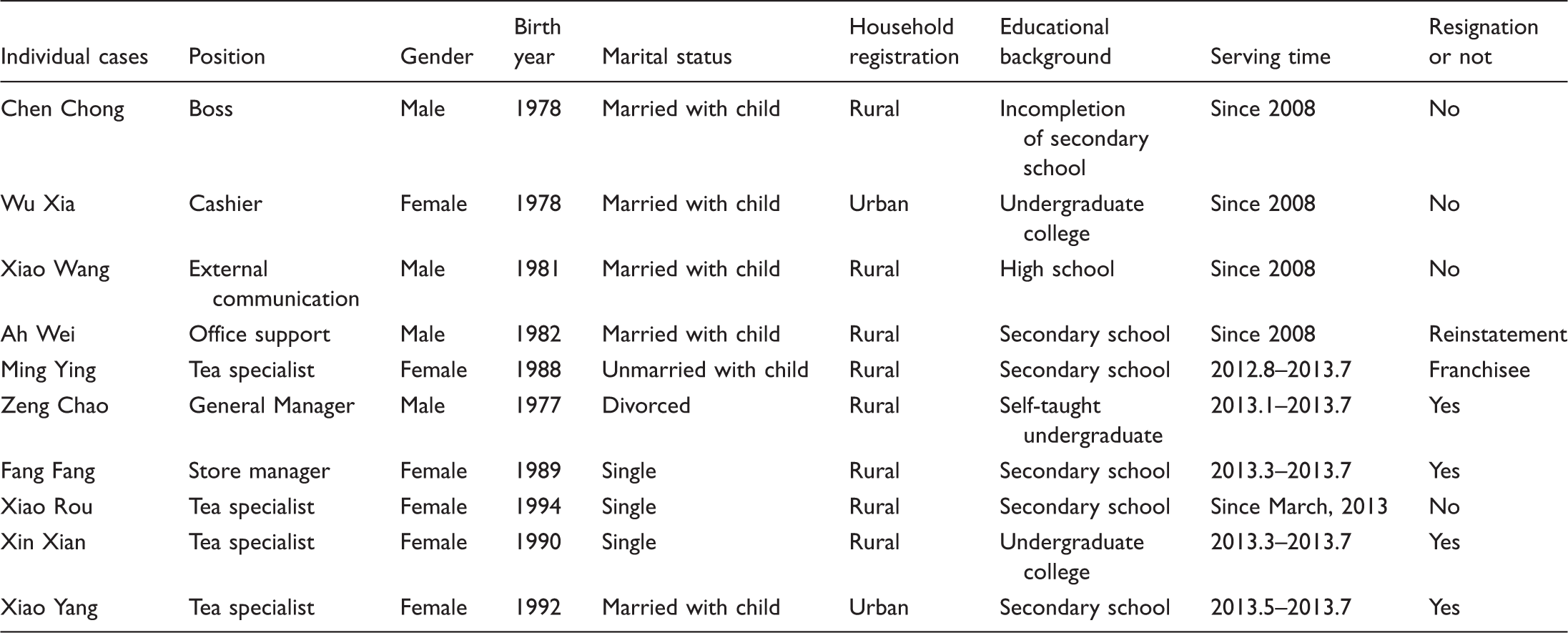
On June 30, 2013, I entered the Tianyuan Tea Company as a researcher and began to observe the company’s working process, joining in their training, discussions, and meetings. The field study lasted for 40 days. Materials were collected mainly through observation and in-depth interviews and I also wrote daily field logs, with an accumulative total of 120,000 characters. Interviews and material analysis mainly focused on development and reform of the company and deep analysis was made on key events, which indicates the empirical and contextual characteristics of the field study. Material sorting and analysis was done by applying the software Nvivo 10. A Grounded Theory Approach was applied in material coding 5 and theory construction. Almost all respondents were residents in Fujian Province, except Zeng Chao, who was from Hubei Province. Among the Fujian natives, only Xiao Rou was not a native of Xia city, and she was born in Ningde city. The information of respondents is shown in Table 1.
Basic information on individual employees.
Single-circle member recruitment and trust reconstruction
Chen Chong grew from a peasant boy who failed to complete secondary school studies into a successful businessman in the real-estate industry in Xia City. Notwithstanding frequent regulation and control in the real estate industry, Chen Chong employed a multivariant operation strategy and took advantage of his hobby of tea drinking and the tea culture in Fujian province to acquire over 1500 mu (1 mu≈666.667 m2) of forestland and plant tea trees in 2008 by utilizing his position as village Party secretary and later established the Tianyuan Tea Company and, eventually, the business club. By mobilizing ‘intimate trusted followers’ (Bian, 2010), Chen Chong established a single-circle trust structure by combining a formal structure with working positions and an informal circle. The employment of Zeng Chao as the general manager reconstructed the original trust structure.
Single-circle trust and member recruitment
Single-circle trust: unity of posts and the guanxi circle
Within an organization there are formal working relationships as well as informal circle relationships, and these two kinds of relationships may or may not coincide, either complementing or working against one another (Liu and Wei, 2013; Wang, 2000). After mobilizing relatives and friends, Chen Chong quickly established a new company and team: Chen Chong was the president and general manager; his wife Wu Xia was the cashier; and his brother Xiao Wang and business partner Ah Wei served as coordinator and office supporter respectively. Because of their intimate relationship, Chen Chong’s younger brother and his followers 6 started to participate in the core decision-making of the company.
Chen Chong advocated the cultural idea of ‘family’ and encouraged his staff members to know each other well and grow with the company. His life and work were merged together. He had a special compartment in the business club and went to work there almost every day. Chen Chong had business talks, encountered with friends, and internal meetings in the compartment. Chen Chong ‘doodles’ in the business club. He would come over in the afternoon at 12, or between 2 pm and 3 pm, and leave at 10 pm. He talks about everything in the business club with his friends. (Interview on July 9, 2013 with store manager Fang Fang).
With trust, future situations can be predicted from the past, and unfamiliar situations can be understood from the familiar, since familiar characteristics, past records, and reputations simplify the past and become media between the past and trust, forming an intimacy-based trust by integrating memory–reputation–trust (Zheng, 2001: 103–110). Trust built on intimacy is a strong kind of trust, and intimacy and harmony give rise to smooth collaboration and coordination. In the initial period after the founding of the Tianyuan Tea Company, the post structure and guanxi circle with Chen Chong as the core overlapped and a single-circle trust mode was formed. The strong trust based on intimacy promoted the smooth development of the company in terms of company registration, recruitment, brand recognition and tea quality authentication, and the company quickly got on the right track. The first tea specialist of the business club, Ming Ying, was ‘poached’ by Chen Chong from a tea company that he frequently visited. Ming Ying was the tea specialist who paid the most frequent visits to Chen Chong’s compartment and stayed the longest. She was the insider in Chen Chong’s guanxi circle (Figure 1).
The single-circle trust structure in the initial period of Tianyuan Tea Company.
Plot-based trust and member recruitment
Chen Chong received information at the ‘information window’ and also gave out notices that the company was in urgent need of talent and planned to expand its sales. Through the weak ties of ‘bridge’ that transmitted heterogeneous information (Granovetter, 1973), Zeng Chao, a management trainer at the Shiguang Tea Company, applied to work as the general manager of the Tinyuan Tea Company. Based on the actual situation of the company and also appreciation for Zeng Chao’s working and practical experiences in managing a large tea company, as well as congenial talks with Zeng Chao and friends’ acknowledgments and recommendations, Chen Chong decided to employ Zeng Chao, hoping to realize an annual turnover of 10 million yuan. There is a difference between trust based on ability and trust based on moral quality (Yang and Peng, 1999). Reputation serves as a bridge to combine the past and trust, and reputation can be established through public praise, advertisements, and archives (Zheng, 2001: 103–110). Zeng Chao’s experiences and style of conversation won Chen Chong’s trust in his ability. Chen Chong’s friends’ praises of Zeng Chao were a form of public praise and confirmed Zeng Chao’s credibility by proving the information (Zhai, 2003) and thus, Zeng Chao was invited to enter Chen Chong’s working circle. Chen Chong’s trust in Zeng Chao was plot-based trust (Lewicki and Bunker, 2003; Shapiro et al., 1992); Zeng Chao had the potential to bring in huge interests and promising development prospects to the Tianyuan Tea Company; therefore, Chen Chong recruited him into his positional structure. If this plot-based trust could be continuously upgraded through contacts and tests, then Zeng Chao might become a member of Chen Chong’s guanxi circle.
Zeng Chao’s entry changed the positional structure of the company (Figure 2). As an ‘airborne’ leader, Zeng Chao was ‘the leader of all except the boss.’ His salary was nearly the total annual salary of all staff in the office and the business club. Since he held an important post in the positional structure, could he get the acknowledgment of members in Chen Chong’s guanxi circle?
Positional structure after member recruitment.
Trust tests and power deprivation
Trust damage: contradiction against the core circle
In January 2013, Zeng Chao took office as the general manager of the Tianyuan Tea Company. Chen Chong’s plot-based trust in Zeng Chao had to be built on contacts before it could develop to a higher level. In this process, contacts, frequency and duration of intimate emotions, the impacts of a third party (Burt and Knez, 2003), organization properties and atmosphere (Sheppard and Tuchinsky, 2003; Zucker et al., 2003), perception of the reciprocal scripts of both parties (Krammer, 2003), trust burden (Wang, 1992), and development of distrust (Burt and Knez, 2003) are all factors that may affect trust tests and development. When the trustor’s trust expectation is equal to or higher than the actual situation of the trustee, the trust will be maintained and enhanced, and a benign cycle of trust burden may be realized; when the actual trust is lower than expectation and the divergence enlarges, trust will be damaged or even ruined, and the trust burden will come to an end or be shifted to other areas.
After employment, Zeng Chao was required to formulate a strategic development plan for the company. Chen Chong asked me to make a plan, as he wanted to open a store near or opposite RC company, wherever it is,
7
with the aim of competing with it. However, just a few days later, he wanted me to stop, he wanted to have league-cooperation rather than a direct sales model. But later, he wanted me to find out the name list of all companies in Xia City. Chen Chong wished to achieve big sales of tea, but he came up with an idea one day, and another idea the other day; he had neither strategy nor tactics in specific performance. (Interview on July 11, 2013 with Zeng Chao)
A trust relationship may develop through trust damage, trust reconstruction and relation restoration (Lewicki and Bunker, 2003); sentiment is one of the key elements that influences trust (Hwang, 1987; Shuai, 2013; Yang, 1995). Their divergence over organizational strategy affected the relationship between Chen Chong and Zeng Chao and damaged the trust relationship between them to a certain degree. Zeng Chao planned to score achievements in the Tianyuan Tea Company, and his high trust expectations of Chen Chong failed to receive an equivalent response, thus reducing their mutual trust. In the post-structure under Chen Chong, a contradiction between Zeng Chao and Chen Chong hindered Zeng Chao from entering Chen Chong’s guanxi circle.
Damaged trust: power deprivation from the core circle
Since Zeng Chao failed to win Chen Chong’s approval with his strategic planning for the company, he shifted the focus of his work to reorganizing it. In an interview on July 8, 2013, store manager Fang Fang stated that before Zeng Chao’s employment, the business club was once ‘very chaotic, and like a chicken coop with a miasma of all kinds of foul smokes.’ On the one hand, there were no formal regulations, nor was there a system for company management; on the other hand, some tea specialists had previously worked in night clubs and brought bad habits into the business club. In a short period of time, Zeng Chao formulated rules, regulations, and evaluation standards for each company department and made some post changes among the staff members. Except for the veteran company tea specialist Ming Ying, the earliest recruited staff member and the insider of Chen Chong’s guanxi circle, all other tea specialists, including the store manager, found the new regulations unacceptable 8 and resigned. Zeng Chao then poached his subordinate, Fang Fang, from his previous company to work as the store manager, and Fang Fang asked her subordinate, Xiao Rou, to work as a tea specialist. Zeng Chao hired Xin Xian and Xiao Yang through public recruitment, then recruited Ying Jie to be the accountant so that Wu Xia would not have to act as both accountant and cashier at the same time. He also required that Ah Wei report details after using the company car, resulting in Ah Wei’s resignation because of the resignation of his girlfriend, the store manager of the company.
Ah Wei was Chen Chong’s brother and business partner, ‘I’m here to help Chen Chong out of our friendship,’ he told me in an interview on July 15, 2013. Ah Wei was Chen Chong’s designated driver, he was familiar with the real estate and tea business, and Chen Chong always regarded him as ‘an insider’ who could be trusted (Yang, 1999) and as a personal attendant. Ah Wei resisted Zeng Chao’s authority through resignation and urged Chen Chong to choose between himself and Zeng Chao. The resignation of Ah Wei not only affected Chen Chong’s relationship with his brothers, but also had a negative influence on the company’s operation. Therefore, Chen Chong personally asked Ah Wei to resume his post. The divergence in company strategy damaged Chen Chong’s trust in Zeng Chao, and Ah Wei’s resignation made Chen Chong dissatisfied with Zeng Chao (Figure 3). The reinstatement of Ah Wei showed that Chen Chong had more trust in Ah Wei and rejected Zeng Chao’s efforts to reorganize the company, thus ensuring Ah Wei’s position within the post structure and his guanxi circle.
Trust structure after exclusion of Zeng Chao.
The adjustment did not allow Zeng Chao to become an insider in relation to Chen Chong, and his relationships with Chen Chong’s other staff were damaged. Wu Xia, Xiao Wang, and Ah Wei had no personal friendships with Zeng Chao after work. Therefore, although Zeng Chao was a leader in the formal post structure, in reality he was excluded from Chen Chong’s guanxi circle and received neither trust nor approval from its members. Zeng Chao was excluded from the post relationship and structural position taking Chen Chong as the core, creating a phenomenon of ‘power deprivation.’
In the second trust test round, the adjustments led by Zeng Chao damaged the internal relationships among members of Chen Chong’s guanxi circle. Zeng Chao failed again and the trust damage was further aggravated. Zeng Chao was unable to enter Chen Chong’s guanxi circle, his authority as manager had shrunk, his financial power was taken away by Wu Xia, his policy-making power and right to be informed were weakened, and he finally became a passive order executor and information receiver. At five past two in the afternoon, Ah Wei walked leisurely into the hall of the business club with a friend. Zeng Chao asked Ah Wei to drive to Phoenix Hill to discuss a franchise there in the afternoon. ‘Should we go to Gongyicheng? Ming Ying would go with us.’ ‘I don’t know anything about Gongyicheng.’ ‘The boss (Chen Chong) wants to go to MD in the afternoon, and there are three places.’ ‘I know the three places.’ Although Zeng Chao was the general manager, many decisions of the company were not known to him. Instead, he got to know the updated news of Chen Chong and the company through Ah Wei, driver of the company. (Field log on July 3, 2013).
Gaming of a guanxi circle and trust substitution
The two trust-testing events involving strategic planning and personnel adjustment of the company reduced Chen Chong’s trust in Zeng Chao and deprived him of his power. Zeng Chao failed to experience trust upgrading through trust tests; instead, trust in him gradually decreased, and the possibility of his entering Chen Chong’s guanxi circle diminished. The events of salary gaming and performance promotion difficulties that happened later showed that Zeng Chao had suffered setbacks in the trust testing process. Finally, Chen Chong hired Xiao Liu as a trust substitution, and Zeng Chao and members of his own guanxi circle had to resign.
Gaming of guanxi circle and trust collapse
Salary gaming and trust deterioration
After being excluded, Zeng Chao shifted his work focus to improving sales performance, aiming at proving his worth in the company. He applied some methods, such as help and guidance in work and operation of personal interactive relations (Peng, 1999), established a good trust relation with the store manager and tea specialists other than Ming Ying, and made every effort to form a guanxi circle centered on himself. 9
The store manager, Fang Fang, had been Zeng Chao’s subordinate in his previous company. Zeng Chao not only appreciated her working ability, but also had special personal sentiments for her beyond work. Therefore, along with guidance and help in work, to help with her career planning, Zeng Chao asked Fang Fang to take up administrative work and taught her a great many administrative skills; in terms of daily life, he took good care of her. Zeng Chao's leadership was built on kindness and severity (Einarsen et al., 2007; Fan and Zheng, 2000) made Fang Fang a member of both Zeng Chao’s post structure and his guanxi circle.
Zeng Chao acknowledged Xiao Rou’s sales ability, expected her to become a store manager, and even adopted her as his goddaughter. They were intimate as father and daughter. Zeng Chao once said, no matter which company he went to, he would take Xiao Rou as his subordinate. In return for Zeng Chao’s appreciation and care, Xiao Rou coordinated actively with Zeng Chao and Fang Fang in work, and had very close relationships with them.
Zeng Chao encouraged and helped Xin Xian and Xiao Yang improve their sales skills to achieve better career development for themselves, and he also offered help and care with meals and transportation. Zeng Chao built leader-member relationships and friendships with Xin Xian and Xiao Yang, and they got along well together.
As a bridge between Zeng Chao and tea specialists, Fang Fang also tried her best to help and care for Xiao Rou, Xin Xian, and Xiao Yang in work and daily life. She became the elder sister in the circle of tea specialists to ensure the core status of Zeng Chao. Xin Xian invited me to dinner. We took a taxi to the restaurant and found out we brought the wrong coupon. Xin Xian called Fang Fang and asked what to do next, and we decided to stay there for dinner and return the coupon. Then we sat down and ordered, and she called Fang Fang again to ask if we could order half a kilo or one kilo of frogs. She called Fang Fang for just two trivial things. It was clear that she had a very good relationship with Fang Fang. (Field log on 16 July 2013) The single-circle trust structure of Zeng Chao.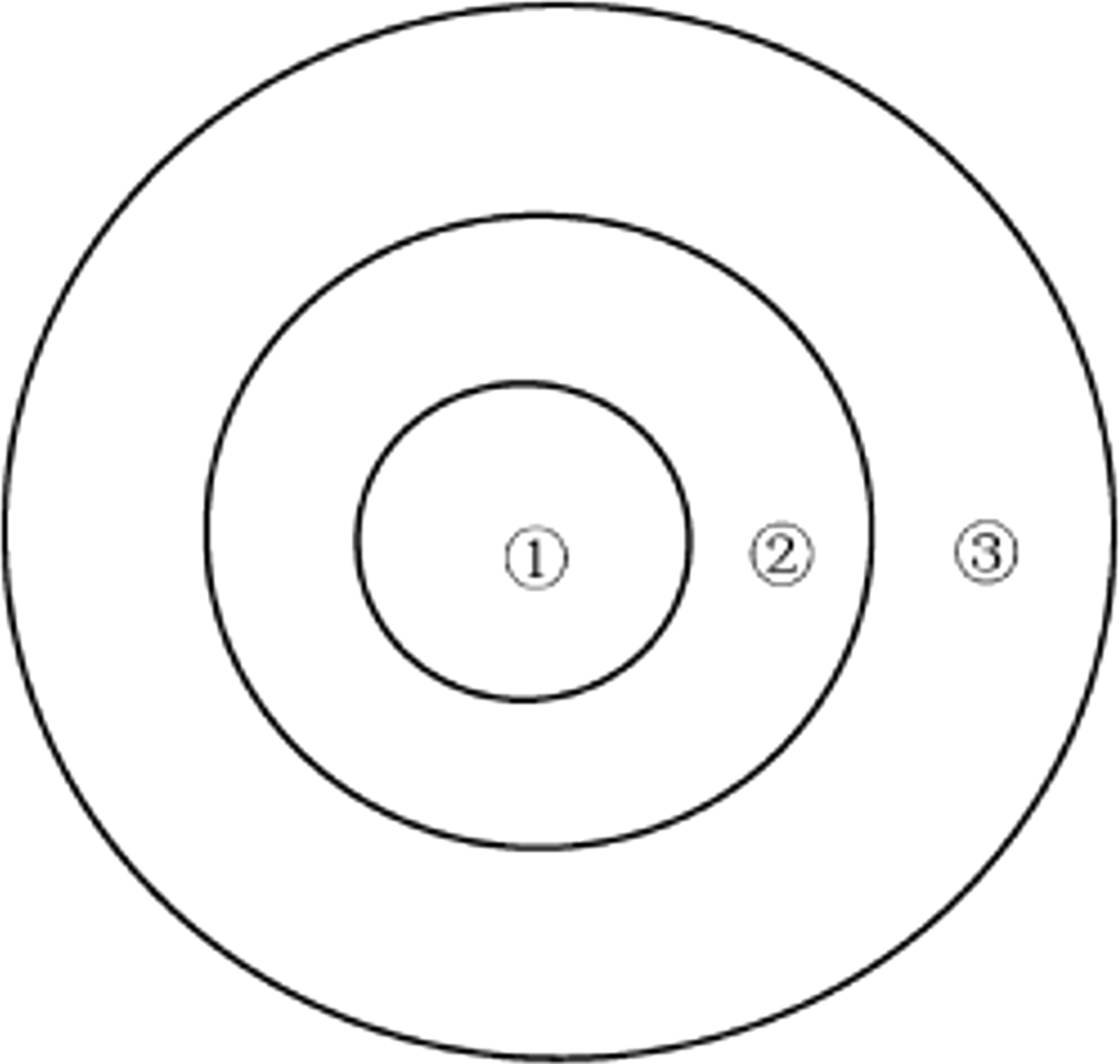
Tea specialists became the bridge connecting Zeng Chao and the guanxi circle of Chen Chong (Figure 5). The tea specialists were Chen Chong’s subordinates and members of his guanxi circle, and they could observe or participate in Chen Chong’s meetings and conversation by offering tea services in Chen Chong’s compartment. Although Zeng Chao was in the post structure of Chen Chong, the tea specialists belonged to two different guanxi circles that had insufficient communications with each other. Therefore, Chen Chong and Zeng Chao needed a bridge to transmit and exchange resources and information. On the one hand, Zeng Chao needed to know the latest decisions by Chen Chong and his followers; on the other hand, Chen Chong also needed to get to know Zeng Chao’s status.
The trust structure with the ‘bridge’ in post structure and guanxi circle in Tianyuan Tea Company.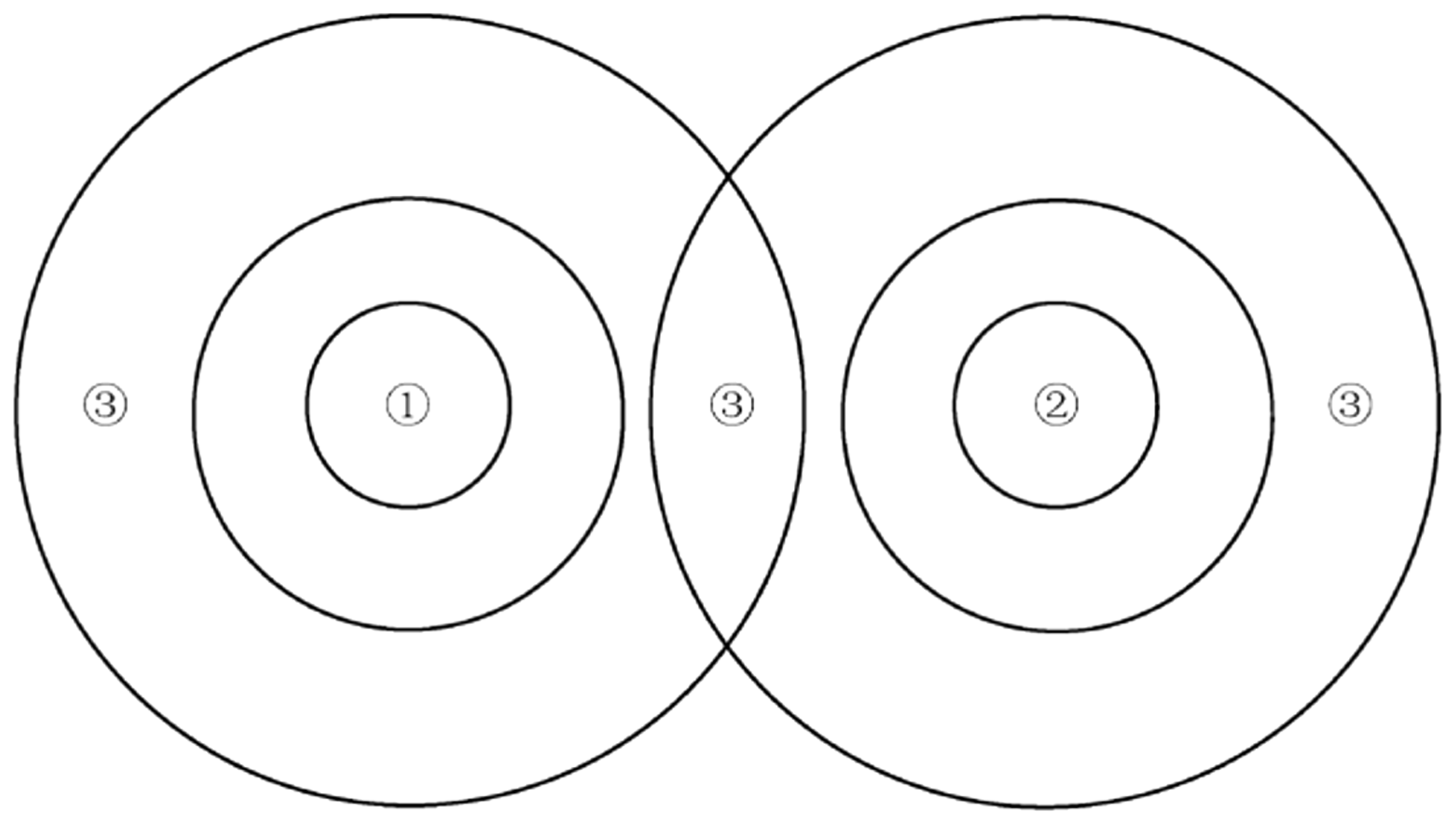
Led by Zeng Chao and the members of his guanxi circle, the sales turnover of the business club maintained a steady rise, but it still fell far behind the guaranteed sales of 300 thousand yuan set by the Chen Chong couple. Therefore, they decided to make adjustments in the salary structure of tea specialists and mobilize their initiative in working. In May 2013, the Chen Chong couple adjusted the salary plan and aroused discontent among tea specialists: We had the basic salary of 2000 yuan before and an extra sales commission; then our boss and Wu Xia proposed a salary plan of a basic salary of 1500 yuan plus an evaluation wage of 1500 yuan, with a performance amount of 10,000 yuan per month. It seemed that we could earn much money, but if we failed to accomplish the goal, our income would be sharply reduced; moreover, it was impossible for us to achieve such a goal. So, we were reluctant. Zeng Chao once proposed a plan of basic salary of 1900 yuan plus sales commission, but Chen Chong only agreed to a basic salary of 1600 plus sales commission. The possible result would be that Zeng Chao would have to pay money himself for our salaries. (An interview with Xiao Rou on July 4, 2013).
Trust repair and trust collapse
Trust damage will cause both parties to feel disorder and damage to self-esteem. Common responses to trust damage include illusions of revenge and facing the situation by oneself (Bies and Thomas, 2003). Attribution has a great impact on trust restoration, and internal attributions or external attributions have different effects. Restoration strategies include verbal responses, practical actions, and a combination of both. Different strategies may have totally different effects (Chen et al., 2010), and some researchers divide trust restoration into two steps: cognition and action (Lewicki and Bunker, 2003).
Chen Chong’s guanxi circle expressed their dissatisfaction with Zeng Chao’s guanxi circle through multiple channels. Wu Xia’s expressions reflected her mood directly when settling accounts every evening. She was poker-faced when that day had a poor sales performance; and she would smile when the sales performance was good: One day the performance was very good. When Chen Chong and Wu Xia left the company, I saw the smile on Wu Xia’s face when I was at the entrance door to send off guests. (Interview with Xiao Rou on July 5, 2013) According to Zeng Chao, the salary of Fang Fang was about 3400 yuan, but the amount calculated by Wu Xia was 260 less, the salary of Xiao Rou was 130 less, and Xin Xian’s salary was reduced by 120 yuan while Xiao Yang was about 100 yuan less. Each time of failure to punch in resulted in a deduction of 20 yuan in salary, and all of us had five or six incidents of this.
10
(Field log on July 12, 2013) When Fang Fang was cleaning, she told me what had happened with Wu Xia the day before. She came over to count the money earned from cigarettes, and the amount should have been 2992, but she actually gave only 2901 yuan. Luckily, Fang Fang was experienced, and she asked Wu Xia to check the money again before she left, and it turned out that the amount became less, otherwise she would have had to compensate for the loss… Fang Fang said the same thing had happened several times before. If you didn’t make it clear, then it would be highly possible that you would have to compensate for the money, because she would deliberately play tricks. (Field log on July 29, 2013). The company always keeps a watchful eye on us… They treat us like thieves and always fear that we stole something from our company. (Interview with Fang Fang on August 6, 2013)
Guanxi circle breakdown and trust substitution
Seeking trust substitutes
Sztompka (2005: 155–158) believed that lack of trust may bring about various kinds of adaptive responses, such as fatalism and corruption, and that substitutes with trust functions may also occur in various forms, such as externalization of trust. Zeng Chao’s guanxi circle’s achievements caused Chen Chong to reconsider the existent operation model. The development of client resources in Xia City was completely fulfilled, and minimal effects were achieved from developing clients from other provinces, revealing the limitations of the existing profit model. There were limitations in the model of selling tea by building special trust between clients and tea specialists, so it was very difficult to open up a market by relying on the universal trust model, such as reputation of the product brand and product quality. Therefore, Chen Chong actively sought an alternative development plan: on the one hand, he searched for an alternative company development strategy; on the other hand, he looked for a trust substitute for Zeng Chao.
The Tianyuan Tea Company entrusted college students with conducting a tea market survey and expected them to offer suggestions for company development, showing Chen Chong’s urgent need to get advice and desire for change. In addition, Chen Chong cooperated with a consulting company, which helped Tianyuan to find a new strategy for development. With the help of the consulting company, Tianyuan Tea Company set a market positioning of high-end tea and formulated explicit steps for implementation. The company began to create a Tmall online store, redesigned advertisement of its products, sought suitable candidates for the new strategy, and reserved a store in Wanda Plaza to carry out its new operation model. Figuring out the direction of organizational reform was also a process of searching for trust substitution by Chen Chong. Chen Chong asked his classmate in tea college, Xiao Liu, to serve as the general manager and asked Zeng Chao to talk with Xiao Liu about taking the job. The appearance of Xiao Liu showed that Chen Chong found a functional substitution of trust after he lost his trust in Zeng Chao’s guanxi circle. ‘There should be professional ethics in work, so you should do your job well when you are at work.’ On the 26th, Zeng Chao confirmed that he planned to resign, and told everyone else. Since the 28th, Xiao Liu, from another company, a girl born in 1990, started to work. When invited to work, she asked to live in an independent bedroom, and now she is living is Zeng Chao’s room. Zeng Chao lives in Xin Xian’s room, and Xin Xian came to live in the room of Xiao Rou and me. (Field log on July 28, 2013)
Trust collapse and trust substitution
Chen Chong’s trust collapse toward Zeng Chao’s guanxi circle was reflected in salary deductions and delays, and his slander of tea specialists. Chen Chong is overcritical of us. He always thinks that one is not so beautiful and another is not capable. He once criticized me in Xiao Rou’s presence. He said that I was not qualified to be a store manager, and not even qualified to be an assistant store manager. If our boss was not satisfied with us, he could tell us directly, or tell it to our leader Zeng Chao, but if he spoke ill of us in the presence of my subordinates, it would damage my authority and bring troubles to my work. If you doubt a person, do not use him; do not suspect the man you use. I wished to do well. I had very good performance at my previous company, so I have confidence in myself and wanted to earn much money. That’s why I worked very hard. The boss in my previous company always encouraged staff members, but here, we could only hear criticism, complaints, and instigation, which made us bitterly disappointed. (Interview with Fang Fang on July 9, 2013)
On July 31, 2013, Xiao Liu took up her position and began to strive for the new model of cultural marketing with Chen Chong. He began to investigate the tea factory and discuss the working ideas in the next stage, when the accountant Ying Jie was busy working on financial settlements for the members in Zeng Chao’s guanxi circle. On August 1, 2013, the departing staff members, Zeng Chao, Fang Fang, and Xin Xian, went to the business club to pack up their belongings and recalled the time they were working together there. From August 2, only Xiao Rou worked in the business club, waiting for the arrival of new tea specialists. It was rumored that the graphic designer also resigned, so only Xiao Wang, Ah Wei, and Ying Jie remained in the company office and only Xiao Rou in the business club. Chen Chong had to ask the former store manager he had once dismissed, who was also Ah Wei’s former girlfriend, to help. Therefore, a new trust structure was formed in the Tianyuan Tea Company, as is shown in Figure 6.
The single-circle trust structure after the collective resignation.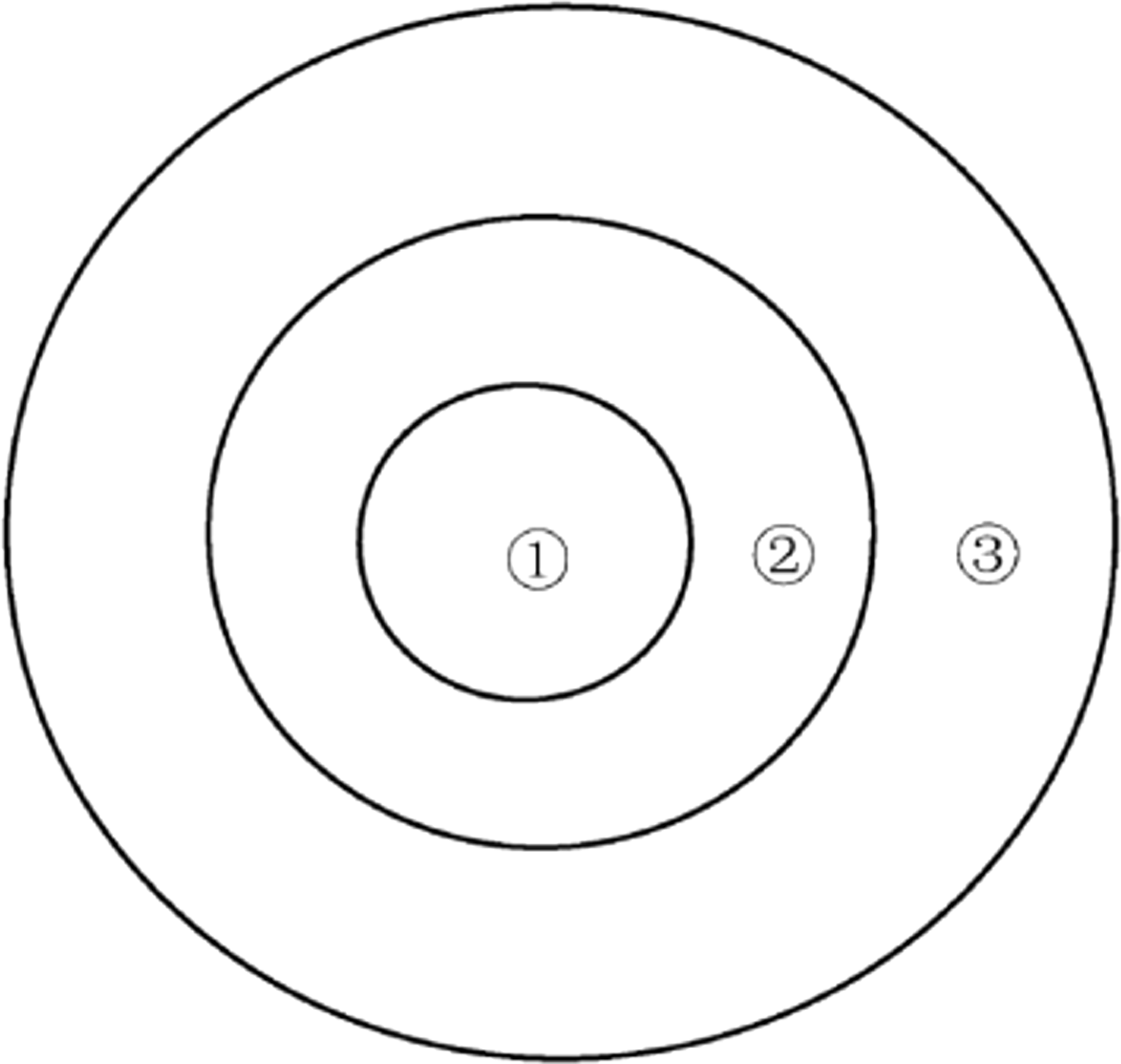
Conclusions and discussion
As stated above, from its opening in August 2012 to July 2013, collective resignations occurred twice in the business club of the Tianyuan Tea Company: after Zeng Chao had worked as the general manager for two months, all the tea specialists except Ming Ying resigned, one after another; in March 2013, Ah Wei resigned and was reinstated; in July 2013, Ming Ying changed from a tea specialist to a franchisee, and all the tea specialists except Xiao Rou and the manager Zeng Chao resigned collectively. What, then, was behind the two collective resignations? Some resigned, some were reinstated, some stayed there, and some were promoted, so is there any rule that covers the differences in individual experiences? What was the mechanism behind the collective resignations?
Five conclusions
By applying the guanxi circle theory that integrates the advantages of both cause–effect factor analysis and interaction analysis in this study, the dynamic evolutionary process of the network structure of the Tianyuan Tea Company, from single-circle trust to double-circle with bridges and finally back to single-circle trust, was analyzed, and a structure chart of guanxi circle was drafted to reflect the dynamic changes in the structural position of members in the organization. The study found that the collective resignation was caused largely by the collapse of trust within the guanxi circles that informally operated in the company’s social network centered on the management authority who had the power of hiring, firing, and promoting. Based on the evolution of the guanxi circle and resignations in the Tianyuan Tea Company, in this paper, the following five conclusions that have been proved in the case above are proposed for future study.
Conclusion 1
When post structure overlaps with guanxi circle, hardly any resignations occur, while the ‘exclusion’ caused by their separation foreshadows resignation. The situation during the initial period of Tianyuan Company’s founding and the good trust relationships developed at that time prove that the former situation existed, while the later existence of the latter situation is confirmed by the fact that Zeng Chao drove away Ah Wei, who was a member of Chen Chong’s guanxi circle and finally lost his power as general manager and Chen Chong’s trust.
Conclusion 2
The outsiders relative to the management authority are most likely to resign in organizational adjustments. Zeng Chao’s reorganization gave rise to the collective resignation of tea specialists. They were not insiders of Chen Chong’s guanxi circle such as Ming Ying and they did not collaborate with Zeng Chao in working and thus they failed to become members of his guanxi circle. The tea specialists who did not belong to the authority’s guanxi circle spontaneously resigned under the pressure of performance evaluation.
Conclusion 3
The followers of a higher authority in disagreement with a lower authority would not resign, but will be promoted instead. In the collective resignation that happened in March 2013, Ming Ying was the only member in Chen Chong’s guanxi circle who did not resign; her independence from Zeng Chao freed her from his control, and she could directly contact Chen Chong. Although Ah Wei resigned after Zeng Chao put forward the new management method, he was reinstated because of his importance in Chen Chong’s guanxi circle and place in the post structure. In the collective resignation event in July 2013, as a member of Chen Chong’s guanxi circle, Ming Ying did not resign but instead was promoted.
Conclusion 4
The absence of a bridge between circles may result in collective resignation. When there were many tea specialists serving as bridges between Chen Chong and Zeng Chao’s guanxi circles, the trust of the network relations could still be maintained even as their managers’ trust relationships continued to deteriorate and collapse. By finding a new model for company development and hiring Xiao Liu as a substitute for Zeng Chao, Chen Chong prompted the tea specialists to resign and the bridge to break up. He totally lost trust in Zeng Chao’s guanxi circle, and collective resignation occurred. It is thus clear that a lower level authority and followers in disagreement with a higher authority are likely to resign collectively.
Conclusion 5
The ‘survivors’ of an organizational reform are members of a higher authority’s guanxi circle or the bridge between guanxi circles. In the collective resignation that happened in March 2013, Ming Ying was the only tea specialist who did not resign. In the collective resignation that happened in July 2013, Xiao Rou was the only tea specialist who did not resign, since she had good working performance and good relationships with others and served as a ‘bridge’ between the guanxi circles of Zeng Chao and Chen Chong.
Contributions and limitations
This paper has made three contributions to research. First, it applies guanxi circle theory to an analysis of employee turnover, provides a new perspective to the study of employee resignation, and expands the explanation scope of the guanxi circle theory. Based on cause–effect factor analysis and interaction analysis of the study of turnover, by integrating the merits of both theories to explain collective resignation, the guanxi circle theory not only explains the logical chain of the cause–effect relationship, but also presents the dynamic process of interpersonal relationships. The study found that the collective resignation in this case was caused largely by the collapse of trust within the guanxi circles that informally operated in the company social network centered on the management authority who had the power of hiring, firing, and promoting. The guanxi circle theory had previously been shown to have explanatory power in the areas of organizational citizenship behavior, individual working performance, and organizational trust. In this paper, the guanxi circle theory is applied to the study of employee turnover. On the one hand, it offers a new theoretical explanation for the phenomenon of resignation, which serves as a contrast with existing studies on resignation; on the other hand, it tests the explanatory power of guanxi circle theory concerning resigning behaviors and lays a foundation for it to explain more topics in organizational management, such as organizational commitment and work satisfaction. In addition, it offers an analytical framework for some social phenomena of Chinese society at a transitional period, such as bureaucratic allegiances and chain corruptions.
Second, the discovery of the coordinative function of the bridge between guanxi circles has wider significance both theoretically and realistically. It can provide explanations for many phenomena in social governance and serve as guidance for the practices of activists. Conclusions 4 and 5 jointly emphasize the importance of the bridge, whose presence can maintain trust in the guanxi circle and stability of the organizational structure, and whose absence will ruin trust in the network structure and harm individuals’ positions and organizational stability. Thus, the core function of the bridge between guanxi circles is coordination. A person in this role is able to coordinate not only relationships among individuals, but also relationships between individuals and organizations and between small groups and organizations.
The bridge between guanxi circles reveals the structural roots beneath many social theories and studies, that is, for large-scale state-society interactions and specific societies or industries, the bridge between public power and social members can effectively coordinate relationships and facilitate target attainments. Horizontal associations can cultivate social norms, sustain intra-trust and cooperation and promote social development and political democracy (Putnam, 2001). In addition, village temples, country churches, and kindred groups that possess the characteristics of embeddedness and inclusiveness are associated with communities and government officials, and the moral authority of such groups motivates local government officials to provide public goods and services to their communities’ residents (Cai, 2006). Finally, lawyers in a period of transition become associated with state government departments through direct or indirect means and re-mold their relationships with the state through political embeddedness and obtain support and help in working (Michelson, 2007). These examples support the importance and rationality of the construction and development of civil society based on social organizations to social governance and should inspire individuals and groups to pay attention to the function of bridge when interacting with government departments: identifying and making use of a bridge person can accomplish half the work with double results.
Third, this study has helped to clarify the concepts of bridge and structural holes. Burt’s social network theory (Burt, 1992, 2005) maintains that network closure can bring about cooperation and unity, that filling a structural hole is beneficial for getting information and control advantages, both of which are good for players seeking commercial benefits. In contrast with filling structural holes, a bridge between guanxi circles links two or more circles, but the members of different circles are not strangers, and thus the bridge between guanxi circles does not occupy the position of a structural hole. Although occupying a structural hole can produce some information advantages, there are no control advantages. 13 However, bridges and structural hole occupants have the following point in common: the acquisition of benefits is determined by advantages in network position, and individuals’ ability to engage in guanxi operation. Ming Ying’s promotion was determined by her identity as a member of Chen Chong’s guanxi circle, and it was also facilitated by the coordination and help of Xiao Wang and Ah Wei. 14 The trust and reciprocity within the closed network without a structural hole contributed to her career achievements. The tea specialists once served as a bridge between the guanxi circles of Chen Chong and Zeng Chao, and Xiao Rou was the ‘survivor’ after the collective resignation. The reason she kept her job related to her position in the network structure as the bridge between guanxi circles and also to her strong ability in guanxi operation. Other tea specialists in the same positions of the network structure were not accepted by the two guanxi circles and became losers in the organizational reform. It is thus clear that, as with structural holes, the profit gaining by the bridge between guanxi circles is the result of both position advantages in the network structure and individual construction and operation, which both are indispensable.
This paper originated from my curiosity about the explanatory power of guanxi circle theory and resulted in my applying the theory to study collective resignations in an organization. From theory to experience to drawing a conclusion, the study finds that guanxi circle theory can explain collective resignation. In the case of the Tianyuan Tea Company, the explanation is that collective resignation was caused largely by the collapse of trust within the guanxi circles that informally operated in the company social network centered on the management authority who had the power of hiring, firing and promoting. In looking at the same case, however, other theoretical approaches and analytical perspectives might have provided different explanations. For example, from the perspective of structural rather than interpersonal relationships, the occurrence of collective resignations in the Tianyuan Tea Company could be explained by an unreasonable salary system, disunity of management power, and entangled benefit and sentiment boundaries of the managers; from the perspective of organizational strategy, the root cause of collective resignation might lie in the manager’s insufficient knowledge of tea markets, unclear company positioning, and defects in long-term planning. Therefore, the perspective of analysis in this paper might not be the best one from which to study the case of collective resignations in the Tianyuan Tea Company, and a more explicit explanation of mechanism, a study through a transformation analysis lens should be undertaken in the future.
In addition, this paper contributes to further reflections and studies on small and micro enterprises. The object of my study was not a large organization but a small business enterprise. The Development Report on Small and Micro Enterprises in China issued on March 28, 2014 by State Administration for Industry and Commerce showed that the number of small and micro enterprises reached 11,698,700 households in China, taking up 76.57% of the total number of enterprises. 15 Such small and micro enterprises can effectively stimulate vitality in folk society, expand employment, increase income, and improve people’s livelihood. They are economic phenomena of ‘entrepreneurship and innovation by the public’ under the New Normal. As an agricultural enterprise whose revenue was less than 5 million yuan, the Tianyuan Tea Company was a small enterprise. Extensive reports and studies have already been done on large and medium-sized enterprises, so this study chose one case of the small and micro enterprises that constitute three-fourths of the total number of enterprises available for empirical study, which is typical in terms of category and may reflect the economic development stage and level of China in a transitional period. Although the guanxi circle phenomenon is common in the Chinese world, and the psychological structure and cultural patterns revealed by the guanxi circle theory have been shown to be highly stable in high-tech enterprises with over 200 employees (Luo and Cheng, 2015; Zhang and Luo, 2015), real-estate companies with over 50 employees (Luo et al., 2013), and tea companies with about 30 employees, the adaptability and explanatory power of the five conclusions verified in the case of a small enterprise in this paper to large and medium-sized enterprises requires further study and verification.
From the perspective of complexity theory, the collective resignations at the Tianyuan Tea Company were not conventional personnel changes, but a radical organizational reform and a systematic mutation and transfer (Chiles et al., 2004; Plowman et al., 2007; Stacey, 1995). The resignation of old employees signifies the collapse of the old system, and the entry of new employees marks the beginning of a new system. The development plan proposed by Zeng Chao at first was almost identical with that ultimately adopted by the company, but the process in between was tedious and full of twists and turns, and transaction costs were very high (Williamson, 1979). If Chen Chong or Zeng Chao were open elites with lofty virtues and leadership ethics (Padgett and Powell, 2012), the development path of the company might have been very different. Therefore, one topic introduced by this paper is that in the complicated process of adapting to organizational development (Liu, 2004), an organization led by an authority with the leadership of open elites can better adapt to a complicated environment and thus grow stronger at a lower cost.
Footnotes
Acknowledgements
I would like to express my gratitude to Professors Bian Yanjie and Luo Jar-der for their guidance and help. Special appreciation should go to the workshop held by Institute for Empirical Social Science Research of Xi’an Jiaotong University, where the paper was presented and to the many scholars and students who offered their valuable suggestions. I would also like to thank the anonymous peer reviewers of the Chinese Journal of Sociology for their comments. The author takes sole responsibility for her views.
Declaration of Conflicting Interests
The author(s) disclosed receipt of the following financial support for the research, authorship, and/or publication of this article: The author(s) declared no potential conflicts of interest with respect to the research, authorship, and/or publication of this article.
Funding
The research was supported by the Youth Program sponsored by the Humanities and Social Science Fund of Ministry of Education (16YJC840019) and Postdoctoral Research Funding of Shaanxi Province (2017BSHANDZZ59).