




Abstract
Previous studies of Hong Kong immigrants have largely focused on those Chinese from the mainland, and less attention has been paid to non-Chinese immigrants. As exceptions to this, a few studies have focused on the channels of non-Chinese immigrants to Hong Kong, but less research has examined their labor market outcomes. This is partly because theories about immigrants in Asia’s global city are underdeveloped, and the traditional labor market assimilation theory based on the North American and European experience may not easily translate to the case of global cities in Asia. In this research, we examine the employment status, occupational rank, and earnings outcomes of Chinese and non-Chinese immigrants from the perspectives of global economic structure and White privilege. Using 5% Hong Kong census/by-census data from 1991, 1996, 2001, 2006, and 2011, we draw two major conclusions. First, in the Hong Kong labor market, immigrants from more developed countries enjoy a labor market advantage, which demonstrates the advantages of core-nation origin. In contrast, their counterparts from peripheral nations are penalized. The labor market gap between immigrants from core nations and peripheral nations grew at the turn of the 21st century but narrowed in 2006. Second, White immigrants are privileged in the Hong Kong labor market, showing that White privilege has been transmitted to a non-White-dominant society.
Introduction
Economic adaptation is essential for immigrants’ integration into the host society (Alba and Nee, 2003). Classical immigration scholarship argues for gradual earnings mobility for immigrants experiencing economic adaptation. Immigrants are thought to have lower earnings upon arrival in the host society, but they gradually catch up with accumulation of local human capital and work experience (Borjas, 1982; Chiswick, 1982; Gordon, 1961, 1964). Some scholars, however, have challenged this argument by contending that immigrant quality varies across time and thus that certain cohorts or groups may never experience mobility (Borjas, 1985, 1995). Researchers thus argue that social contexts matter for the economic adaptation of immigrants (Hirschman, 2001; Portes, 1995; Portes and Böröcz, 1989). To supplement this idea, sociologists have claimed that immigrants experience considerable discrimination in the labor market because of their racial and ethnic minority status (Oreopoulos, 2011; Pager and Shepherd, 2008).
However, despite the emphasis on the role of social contexts in immigrants’ economic adaptation, previous research on immigrants’ labor market assimilation often rests on several assumptions. First, there exists a country-specific mainstream labor market in which the dominant group enjoys certain privileges over newcomers or ethnic minorities. Second, in order to adapt to the mainstream labor market, it is critical to accumulate local human, social, and cultural capital. For example, immigrants who possess local training qualifications and share a similar cultural background will more easily adapt to the labor market than those who do not. However, in global cities such as Hong Kong, it is debatable whether there exists a local mainstream labor market in which the dominant local Chinese people enjoy privileges over immigrants or ethnic minorities (Friedmann, 1986; Sassen, 1991, 1998). It is also questionable whether the local human and cultural capital matters in immigrants’ economic adaptation (Chen, 2014; Evans and Green, 2001), given the experience of economic polarization or the divided labor market in the global city of Hong Kong (Chiu and Lui, 2004). Therefore, against previous modes of immigrant economic assimilation, we hope to answer the following three questions in the Hong Kong context: First, in a global city such as Hong Kong, do immigrants from different foreign countries have to achieve acculturation to succeed in the local labor market? Second, if a disparity exists, how does it change over time? And third, to what extent does acculturation matter by nationality and/or by ethnicity?
Drawing on Hong Kong census/by-census data from 1991 to 2011, we aim to answer the above research questions by examining the labor market outcomes of non-Chinese immigrants in Hong Kong and their changes over time when Hong Kong transitions to a global city. In the remainder of the paper, we introduce the theoretical background and the study context, followed by data, methodology, and results. In the final section, we discuss our conclusions and their implications.
Theoretical background
Since the 1960s, a large body of research has confirmed that human capital, especially educational attainment, is one of the most important determinants for labor market attainment (Becker, 1993; Schultz, 1963). However, educational attainment may shape the process of social mobility differently within different social contexts, especially for immigrants (Portes and Böröcz, 1989). For instance, researchers have found that immigrant’ skills, foreign credentials, and foreign work experience cannot be fully transferred to destination countries (Friedberg, 2000; Tong, 2010; Zeng and Xie, 2004). Their lack of familiarity with the local social and cultural norms, especially those involved in the job application and interview processes, exacerbates immigrants’ difficulties in the stiff competition for stable, well-paying jobs (Preston and Man, 1999; Siu, 1996; Zhang and Wu, 2011). The effort to adapt to the labor market in the host society is only one side of the story. How well immigrants adapt to the labor market also depends on the local structural context (Portes, 1995; Portes and Böröcz, 1989; Portes and Zhou, 1993; Zhou, 1997), such as economic conditions, government policy, local residents’ attitudes, and ethnic community resources. The interactions between these factors and their own human capital stock give rise to different modes of incorporation and levels of attainment (Portes and Böröcz, 1989).
However, previous arguments on structural factors influencing the labor market outcome of immigrants mainly focus on the local structural barriers. That is, the host society has a set of established boundaries that prevent immigrants from receiving equal treatment in the labor market and minimize competition from immigrants. Such barriers include the distrust and undervaluing of foreign educational credentials, restricted access into particular occupations or fields such as medical services or legal services, and open or stealthy discrimination toward immigrants in job promotions (Bratsberg and Ragan, 2002; Fong and Cao, 2009; Oreopoulos, 2011; Pager and Shepherd, 2008). This is especially true for people migrating from less developed to more developed countries (Adsera and Chiswick, 2007; Baker and Benjamin, 1994; Schoeni, 1998).
Yet, we argue that the international economic and political structures, such as a power imbalance between the core and peripheral nations (Wallerstein, 1974a, 1974b) in a global economic system, may also influence immigrants’ labor market outcomes. That is to say, when people migrate from one country to another, not all immigrant groups face structural barriers upon arrival in a particular country or city under the global economic context. Core nations are in an advantaged position in terms of their economic power in the global market. Thus, immigrants from core nations may be in a more advantageous position in global cities such as Hong Kong. These immigrants are often attracted for their talent to global cities by (regional) headquarters concentrated in such places for the purpose of conducting global business. In contrast, immigrants from peripheral nations may have difficulty transferring their overseas education or working experience in global cities. They may suffer from labor market disadvantages due to their racial minority and immigrant status as well as the vulnerable status of their original countries in the global economic and political power structure. Therefore, our first hypothesis is as follows:
H1.1: Other factors being equal, immigrants from core nations may enjoy labor market advantages, but their counterparts from peripheral nations will be penalized.
H1.2: Other things being equal, the gap in the labor market outcome between immigrants from core nations and those from peripheral nations has widened over time due to the process of globalization.
The current study, focusing on Hong Kong, investigates White privilege in the opposite setting, where the White population (immigrants) becomes a racial minority. We argue that White privilege is likely to spread to non-White societies in a globalized labor market in which laborers enjoy more freedom to move across national boundaries. White privilege could be the natural outcome of the global power structure. As the dominant group in the global political and economic system, White immigrants, normally from core nations, may enjoy more privileges than their counterparts from peripheral countries. This is because their White ethnicity means they may have social capital back in their home countries, which are usually more economically advanced. Therefore, their educational attainments, managerial skills, and business networks from the core nations may be more valuable than those of their counterparts in the host society with similar education credentials. On the other hand, however, as argued in the deskilling literature and immigrant assimilation theory (Chiswick et al., 2005; Chiswick and Miller, 2009; Friedberg, 2000), White immigrants may also lack the necessary local knowledge and cultural background in a non-White society. Hence, it may be more challenging for them to adapt to the business culture when doing business with local or regional companies. In contrast, immigrants from the same core nations but with local ethnic and cultural backgrounds may have double advantages: their experiences may be similar to those of their White counterparts, represented by their nationalities of core nations, but they resemble locals. In Hong Kong, returning overseas Chinese who obtained nationality in core nations are a good example of such a situation. Taken together, we have the following competing hypotheses:
H2.1: Other things being equal, White immigrants may continue enjoying labor market privileges over both Hong Kong locals and other Chinese immigrants from core nations in the Hong Kong labor market.
H2.2: Other things being equal, immigrants from core nations who share local ethnicity will enjoy more labor market advantages than the White immigrants in the Hong Kong labor market.
Data, variables, and modeling
Data and variables
This research employs the Hong Kong population census/by-census 5% sample data sets from the years 1991, 1996, 2001, 2006, and 2011. The Hong Kong population census data sets have relatively rich information on demographic, economic, and family characteristics that are important for this research, and they have been widely used to study Hong Kong labor market outcomes and other topics (Chiu and Lui, 2004; Lam and Liu, 1998; Lee et al., 2007; Liu et al., 2004; Zhang and Wu, 2011). We limited our working sample to those aged 25–64. We set the lower age limit at 25 because people above this age usually have already obtained their highest educational level and are thus focused on the labor market. For the upper limit, there is currently no mandatory retirement age in Hong Kong. We set it at age 64 because this is a year prior to the age at which people are first able to withdraw from the Mandatory Provident Fund, a mandatory, privately managed, fully funded contribution scheme that serves as the pension system for 73% of Hong Kong laborers (Mandatory Provident Fund Schemes Authority, 2016). We also excluded foreign domestic workers, full-time students, and prison inmates in our working sample. To investigate the White privilege hypothesis in the Hong Kong labor market, we also grouped those with college degrees into a subsample and categorized these cases by race and ethnicity. Since the Hong Kong census/by-census surveys only started to include racial information after 2001, we can only test the White privilege hypothesis with data from 2001, 2006, and 2011.
We examine the labor market disparities in employment, occupational attainment, and earnings among the nationality groups or nationality–race groups. Employment denotes whether or not an individual has a paid job at the time of interview, and is measured as a dummy variable (yes = 1 vs. no = 0). Among those who have a paid job, we coded their occupation into a dummy variable, indicating whether the respondent is employed in a managerial or professional occupation (yes = 1). In the Hong Kong census/by-census, managers or professional occupations include government administrators and foreign diplomats, corporate managers, small business managers, physical, mathematical and engineering science (associate) professionals, life science and health (associate) professionals, teaching (associate) professionals, legal, accounting, business and related (associate) professionals, social science and other (associate) professionals, and information technology/computer (associate) professionals. Among the nine broad classifications of occupations in Hong Kong, managers and professionals are ranked the highest. Income, another measure of labor market outcomes, is a continuous variable. We took the natural logarithm of monthly income from main employment, adjusted at the constant price in June 2011, as the dependent variable in the regression analysis.
Descriptive analysis of the labor market performance of nationality groups by year and gender.
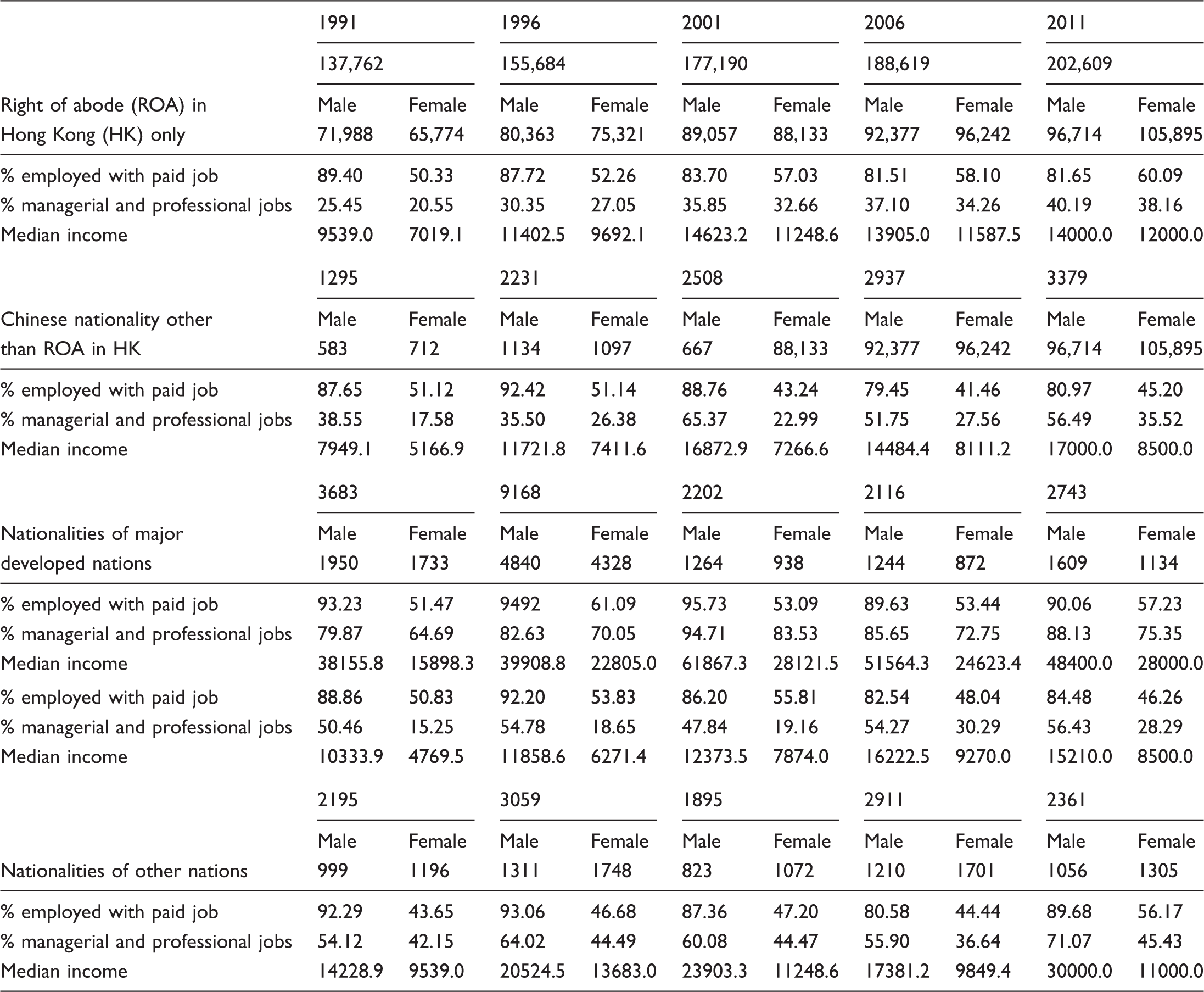
Note: The percentage of managerial and professional jobs and the median income are calculated only among those with paid jobs.
Descriptive analysis of the labor market performance of college-educated nationality–race groups by year and gender.

Note: the percentage of managerial and professional jobs and the median income are calculated only among those with paid jobs.
The control variables used in the models include: age; age squared; gender; marital status; arrival cohort; educational attainment; language ability; and number of domestic workers in the household. Marital status is a categorical variable with 0 representing ‘never married before’, 1 representing ‘currently married’, and 2 representing ‘widowed/divorced/separated’. We group all the individuals who were not born in Hong Kong into five cohorts based on the year they arrived: before 1991; 1992–1996; 1997–2001; 2002–2006; and 2007–2011. The ‘before 1991’ cohort includes all the immigrants in 1991 and those who had resided in Hong Kong for at least 5 years in the 1996 data, 10 years in the 2001 data, 15 years in the 2006 data, and 20 years in the 2011 data. The 1992–1996 cohorts include those who resided in Hong Kong for fewer than 5 years in the 1996 data, 5–9 years in the 2001 data, 10–14 years in the 2006 data, 15–19 years in the 2011 data, and so on. While census data cannot be used to trace individual trajectories over time, they are all representative samples of the same immigrant population that entered Hong Kong within a certain period. The census/by-census data do not allow us to determine the exact number of years an immigrant had been in Hong Kong among those who claimed that they had been in Hong Kong for 10 years or more in the 1991 census, nor can we obtain the same information for those who had stayed in Hong Kong for 20 years or more in the following census/by-census. As a result, we cannot capture the effect of age at arrival, despite the fact that it has been recognized as an important factor in determining the economic assimilation of immigrants (Myers et al., 2009; Stevens, 1999; Zhang and Wu, 2011). Education is measured by the level of schooling attained. We categorize the educational attainment into ‘high school or below’ (0), ‘some college’ (1), and ‘college completed’ (2). Due to the bilingual culture from the colonial period and the deep influence of the Chinese mainland on Hong Kong, language ability is measured in terms of ease of speaking Cantonese, Putonghua (a term for Standard Mandarin), and English. Cantonese is the Chinese dialect spoken by all the Hong Kong-born Chinese. Putonghua is the national standard Chinese language and English is the written official language in Hong Kong. The number of domestic helpers in the household is used as a proxy for household economic condition, since local regulations on hiring domestic helpers require a minimum wage and special living arrangements. The domestic helpers also greatly ease women’s labor market participation. It is coded 0 if there is no domestic helper in the household, 1 if there is one domestic helper, and 2 if there are more than one domestic helpers. Employment status is also used as an explanatory variable in the earnings equations. Employment status involves three categories: self-employed; employers (e.g., business owners); and employees.
Modeling strategy
To illustrate the effect of the influence of social contextual changes, represented by time periods, on labor market outcomes through the effects of nationality and race/ethnicity, we use a two-level mixed-effects logistic regression model to analyze the likelihood of having a paid job and the likelihood of being in a manager/professional occupation given the status of being in the labor force. We also use a two-level, mixed-effect linear regression model to analyze earnings disparities. We use the full sample to examine the global economic structure effect and the college graduate sample to examine the White privilege hypothesis. All the regressions are estimated separately by gender.
The first level represents individuals, and the second level represents periods in which the effect of one’s nationality or immigrant status is allowed to vary across time. For the labor market participation (we define this as people who have paid jobs) analysis, the level-1 model is as follows

In this equation, the logged odds of having a paid job over not having a paid job for person i at period j is modeled as a function of his or her nationality at period j and control variables. Here 
The interpretation of the coefficients is the same as that for the ‘paid job’ analysis. For the ‘earnings attainment’ analysis, the level-1 model is as follows

In this equation, the logged personal income from main employment for person i at period j is modeled as a function of his or her nationality at period j and control variables. The coefficient
The goal of the level-2 analysis is to detect the inter-period differences of the effect of nationality. Therefore, in all the models, we allow the intercepts and the coefficients for nationality or immigrant status to vary across the periods. Therefore, 

The models we test with the data sets can be obtained by combining models at Level 1 and Level 2. The combined model for whether the individual had a paid job is

The combined model for whether the individual had a paid job in the occupation of managers or professionals is

The combined model for the personal income is

In the combined models above,
Results
Descriptive analysis
Table 1 3 and Table 23 describe the labor market outcome variables we focus on in this study. Table 1 shows the descriptive analysis with the full working sample. Generally speaking, those with nationalities of major developed nations were leading in the rate of having paid jobs and having high-rank occupations as well as median monthly earnings, while those with ROA in Hong Kong only and Chinese nationality other than ROA in Hong Kong performed worse. Compared with women, men were more likely to have paid jobs, take managerial and professional jobs, and enjoy higher incomes, regardless of their nationality. Thus, it is necessary to conduct the analysis separately by gender.
Men with nationalities of major developed nations and other nations were usually the most likely to have paid jobs. For women, however, those with ROA in Hong Kong only took the lead, especially in recent years. Men and women with Chinese nationalities other than ROA in Hong Kong were usually left at the bottom among those having a paid job. In general, the gap in the paid job rates for men was widening across periods mainly due to the decreasing rate of men with ROA in Hong Kong only and those with Chinese nationality other than ROA in Hong Kong. The gap in the paid job rates for women remained at a similar level.
Except those with nationalities of major developed nations, the proportion taking managerial and professional jobs among all the other groups increased over time for both genders. However, the percentage of people who took managerial and professional jobs among men and women with nationalities of major developed countries were always the largest, while those with ROA in Hong Kong only were, surprisingly, the least likely to be managers or professionals, especially among men. The gap in the proportion taking managerial and professional jobs between different nationality groups remained nearly constant for both genders across the 20-year period.
For all nationality groups and both genders, monthly earnings were increasing over time. However, for both genders, those with nationalities of major developed nations were paid much more compared with other groups, while men with ROA in Hong Kong and women with Chinese nationality other than ROA in Hong Kong were paid least. The earnings gaps between those with nationalities of major developed nations and other groups increased a small amount, especially for women.
Table 2 presents descriptive statistics for the college-educated subsample. Compared with the average level of the total working population in Hong Kong as shown in Table 1, a higher proportion of the college-educated population had paid jobs and worked in managerial and professional occupations. They also enjoyed much higher monthly earnings. Although the labor market performance of all the groups fluctuated from 2001 to 2011, White people were always the most likely to take managerial and professional jobs and always earned most among both genders. Chinese men with nationalities of major developed nations and Chinese women with nationalities of other nations followed the White population in terms of labor market performance, indicating a higher status in the local labor market compared with other Chinese. Chinese with ROA in Hong Kong only and with Chinese nationality other than ROA in Hong Kong usually lagged behind their counterparts with foreign passports in terms of the proportion taking managerial and professional jobs as well as median income.
Multivariate analysis for the working sample: All education groups
Results of multilevel models with full working sample.
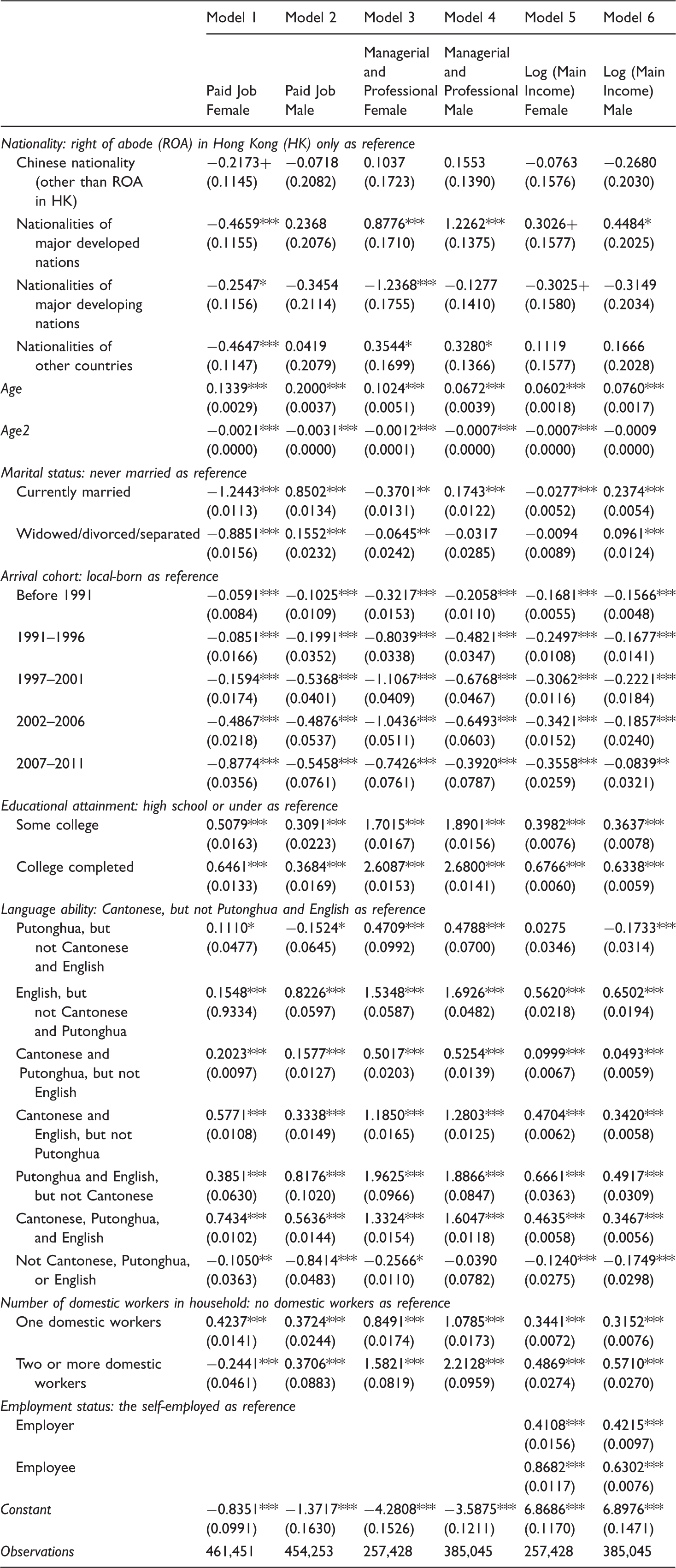
Note: ***, p < 0.001; **, p < 0.01; *, p < 0.05; +, p < 0.1.
For the effects of other variables in the models, special attention should be paid to the significant, positive, strong and constant effects of Putonghua and English compared to Cantonese on labor market outcomes. In a city of immigrants and a global hub of financial flows and population movement, it seems that Cantonese, the local language, yielded a much smaller effect on one’s labor market performance than Putonghua and English, the two major non-local languages. Other variables being controlled, even if they could not speak Cantonese, men and women who could speak Putonghua and English (for example, many talented immigrants from the Chinese mainland) were 126.51% and 46.98% more likely, respectively, to have paid jobs. Their likelihood of taking managerial and professional jobs was around seven times that of their counterparts who could speak only Cantonese for both genders, and male and female Putonghua and English speakers earned 63.51% and 94.66% more than their Cantonese-speaking counterparts, respectively.
Figures 1–3 illustrate the effects of nationality on labor market performance after taking into consideration the variance of the nationality effect across years. The effect of nationality here combines both the cross-year average effect of nationality over ROA in Hong Kong only and the effect of a specific year for this specific nationality. Therefore, the reference group in Figures 1–3 should be a cross-year average group of people with ROA in Hong Kong only who can be compared with both those with ROA in Hong Kong in each specific year and those with other nationalities in each specific year.
Odds ratio of having paid jobs by nationality, year, and gender. Odds ratio of obtaining managerial and professional jobs by nationality, year, and gender. Adjusted income of nationality groups by year and by gender (renminbi).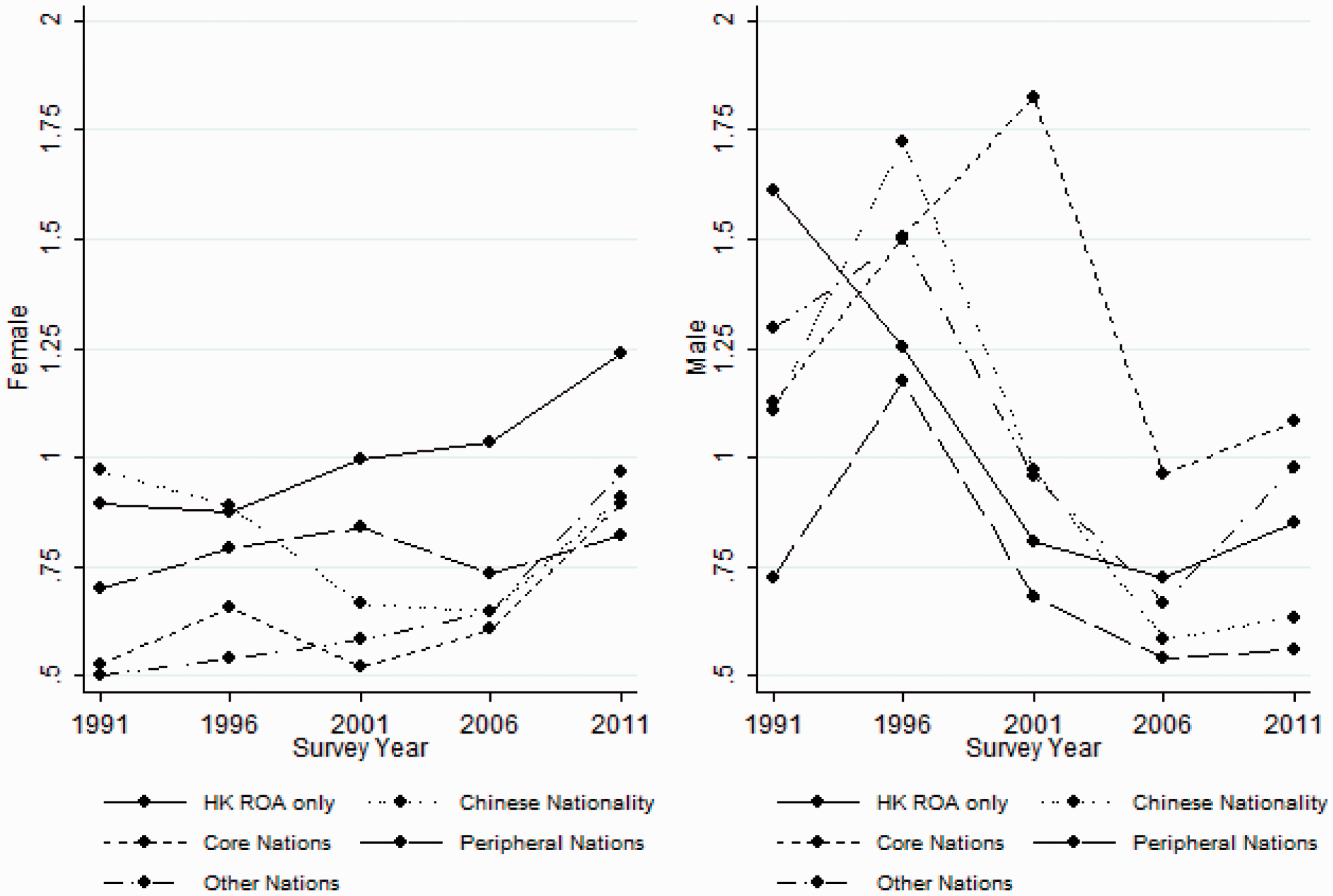
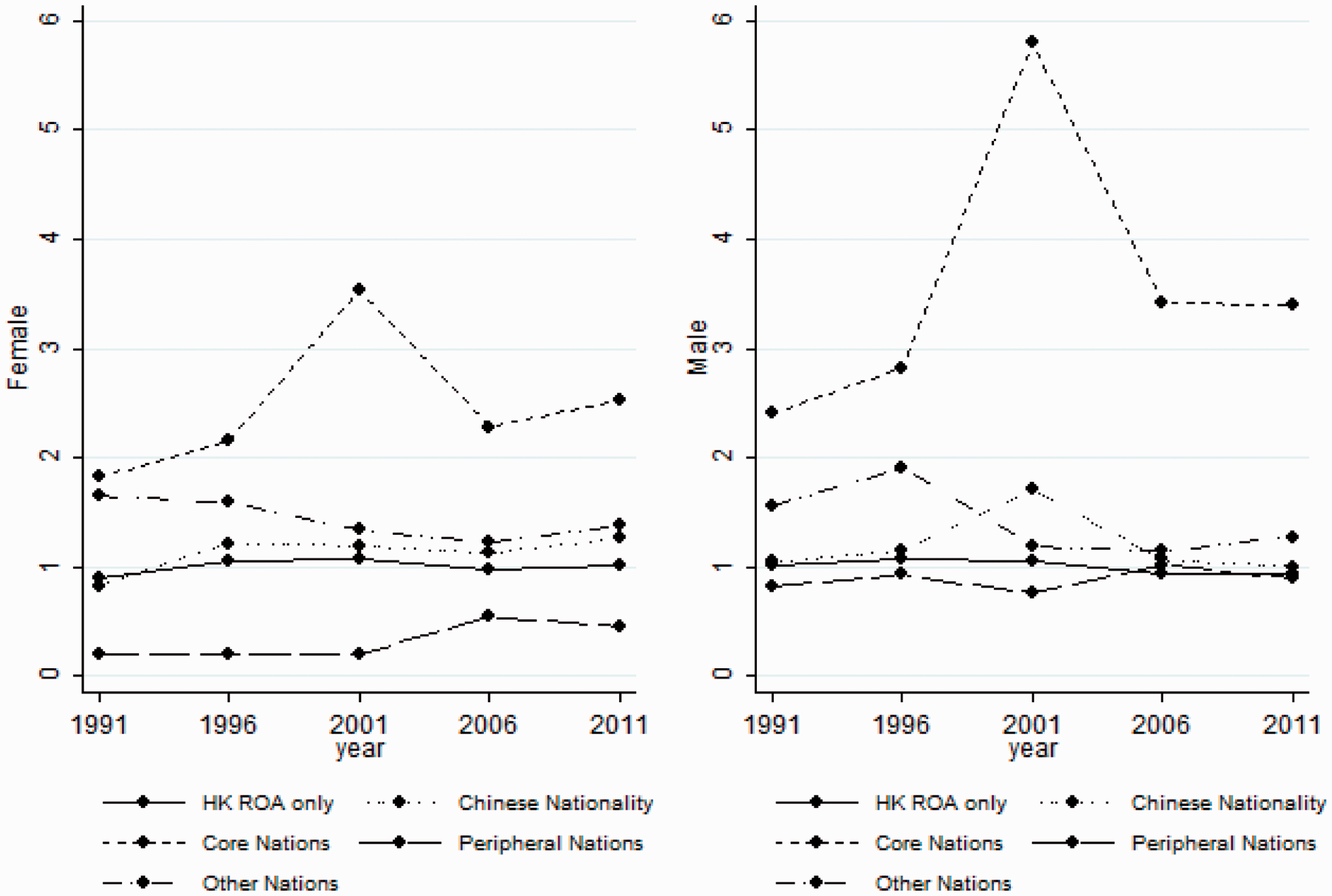
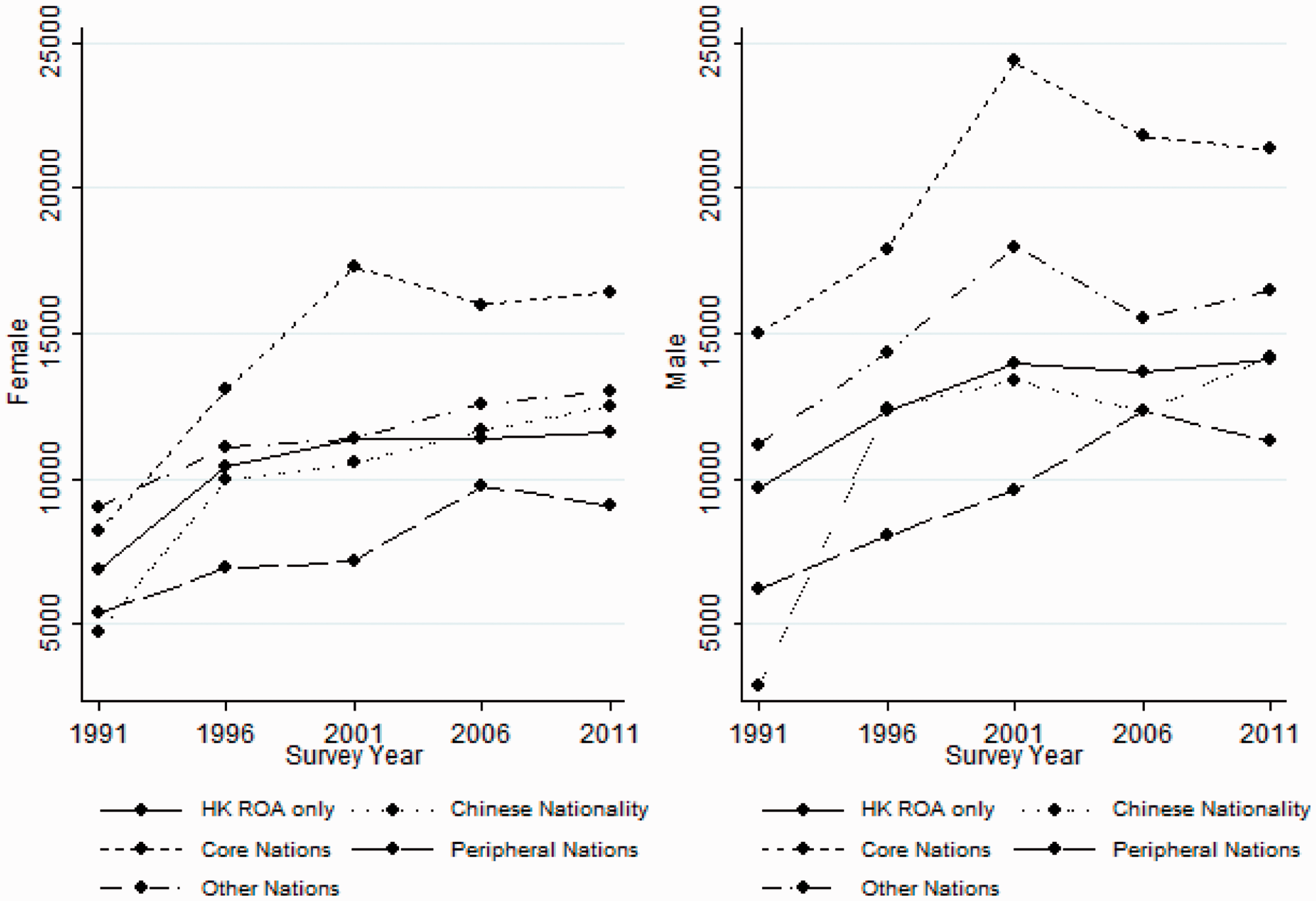
Figure 1 shows that, other variables being controlled, women with ROA in Hong Kong and nationalities of major developed nations were increasingly likely to have paid jobs while the employment rate of women in other nationality groups experienced a downward trend in the 1990s and recovered in the 21st century. Among all women, those with ROA in Hong Kong had the highest likelihood of having a paid job. In 1991, the likelihood of having a paid job for women with ROA in Hong Kong was only 10.60% lower than the cross-year average level; in 2011, their likelihood of having paid jobs was 23.87% higher than the cross-year average level. However, for men with all types of nationalities, the probability of having a paid job plummeted from 1996 to 2006 and started to rise again since then. The largest fall was experienced by men with Chinese nationality other than ROA in Hong Kong. In 1996, they were 72.50% more likely than the cross-year average group of people with ROA in Hong Kong only to have a paid job, while in 2006 they were 41.57% less likely to have a paid job. Men with nationalities of major developed nations were generally the most likely group to have paid jobs, while men with nationalities of major developing nations were the least likely group to have paid jobs.
Figure 2 illustrates the effect of nationality on the likelihood of obtaining managerial and professional jobs among those with paid jobs. Other variables being controlled, men and women with nationalities of major developed nations were more advantaged in terms of their occupational status, although the likelihood of their obtaining managerial and professional jobs fluctuated over the twenty-year study period. They were followed by those with nationalities of other nations and with Chinese nationalities other than ROA in Hong Kong. Those with nationalities of major developing nations had the lowest likelihood of obtaining managerial and professional jobs in the Hong Kong labor market from 1991 to 2011, especially women. The gaps in the likelihood of obtaining managerial and professional jobs between those with nationalities of major developed nations and those with other nationalities were largest in 2001 for both groups. These gaps narrowed significantly in 2006, mainly due to the decreased likelihood of obtaining managerial and professional jobs for those with nationalities of major developed nations.
Figure 3 presents the adjusted income by nationality. Men and women with nationalities of major developed nations earned much more than their counterparts with other nationalities. This advantaged nationality group was followed by those with nationalities of other nations and then those with ROA in Hong Kong only. Men and women with nationalities of developing nations were left at the bottom again. The earnings gap between those with nationalities of major developed nations and those with other nationalities were largest at the turn of the 21st century. However, the earnings of the former group decreased starting in 2001, while the incomes of other groups continued to increase. As a result, the earnings gap narrowed between 2006 and 2011.
Thus, in the analysis for all education groups, the results showed that for all three labor market outcome variables, men and women with nationalities of major developed nations performed much better than their counterparts of other nationalities, especially those with nationalities of developing countries. These findings are consistent with our first hypothesis (H1.1) that people from core nations enjoy a much better labor market outcome than other groups in the Hong Kong labor market, and immigrants from peripheral nations are the most disadvantaged group. However, the trends of the gaps between those with nationalities of major developed countries and the rest are not always clear, as the gap between immigrants from core nations and those from peripheral nations widened at the turn of the 21st century but narrowed in 2006. Thus, Hypothesis 1.2 was not firmly supported.
Multivariate analysis for the college-educated sample
Results of multilevel models with college-educated subsample.
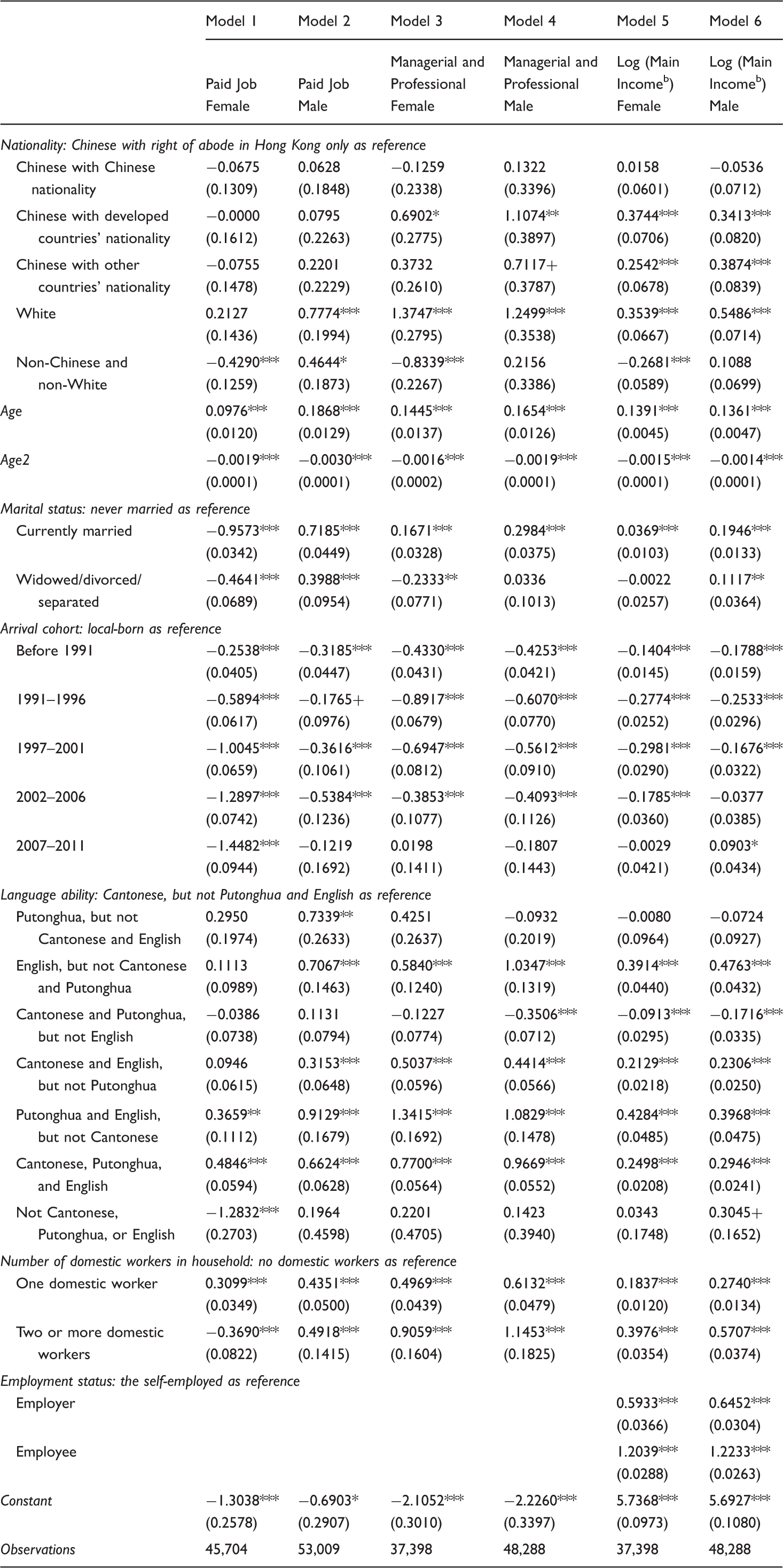
Note: ***, p < 0.001; **, p < 0.01; *, p < 0.05; + , p < 0.1.
However, compared with Chinese people who have developed country nationalities, White people were more advantaged, especially White men, despite the fact that White people do not share the same racial/ethnic background with the dominant group of Chinese ethnics in Hong Kong, so we assume they are less knowledgeable about the local society. Specifically, we found that White men were 117.58% more likely to have paid jobs. Their likelihood of taking managerial and professional jobs was nearly 3.5 times that of Chinese with ROA in Hong Kong only. And their earnings were 73.08% higher than those of their local counterparts. Although White women were not more likely to have paid jobs, their likelihood of taking managerial and professional jobs was nearly four times that of Chinese women with ROA in Hong Kong only, and they earned 42.46% more than their counterparts with local residency. When comparing White people with Chinese people who have developed country nationality, their likelihood of being in managerial and professional job as well as earnings outcome were also higher. Thus, White privilege in the labor market does exist in a non-White society such as Hong Kong.
Among other variables, Putonghua- and English-speakers again outperformed Cantonese-only-speakers even though Cantonese serves as the most popular language in Hong Kong daily life. Men and women who could speak Putonghua and English but not Cantonese were 149.15% and 44.18% more likely to have paid jobs, respectively. Their likelihoods of taking managerial and professional jobs were also nearly three and four times, respectively, those of people who could only speak Cantonese, and they also earned 48.71% and 53.48% more, for men and women, respectively.
Figures 4–6 illustrate the effects of nationality–race/ethnicity status on labor market performance for the college-educated sample after taking into consideration the variance of the nationality–race effect across years. Similar to Figures 1–3, the reference group here should be a cross-year average group of Chinese with ROA in Hong Kong only. It is clear from these graphs that White men and women outperformed all other groups in terms of all three labor market outcomes over the ten years from 2001 to 2011, though the gap may have narrowed during some years. Chinese women and men with developed country nationalities were usually in second or third place in these labor market outcomes over the years, showing a relatively advantaged status over other Chinese in the Hong Kong labor market. For other groups, their performance may not be consistent over time or between different genders. For example, non-Chinese and non-White women usually performed worse than women from other nationality–race groups, but non-Chinese and non-White men usually performed better.
Odds ratio of having paid jobs by nationality–race, year, and gender. Odds ratio of taking managerial and professional jobs by nationality–race, year, and gender. Adjusted income of nationality–race groups by year and by gender (Hong Kong$).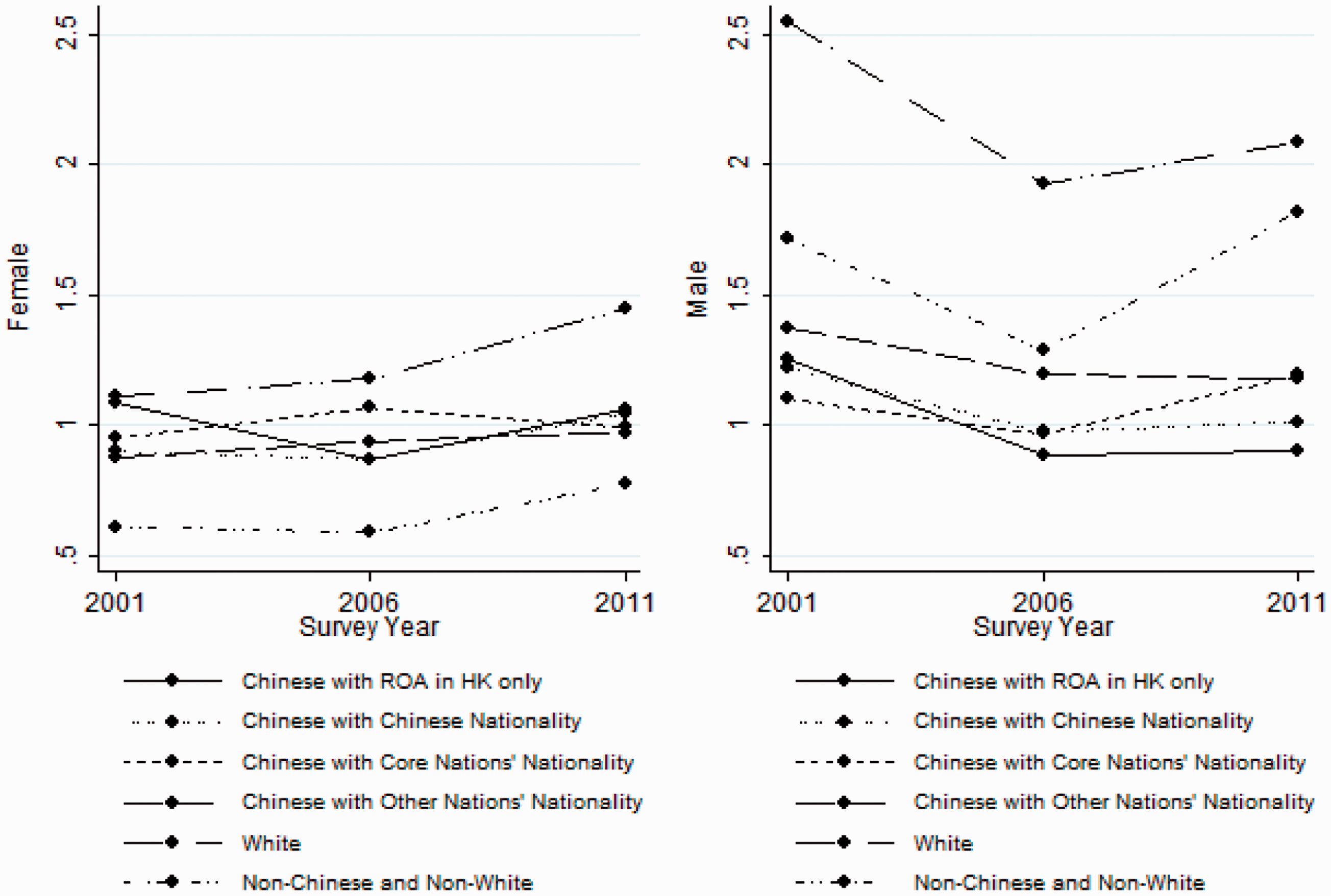
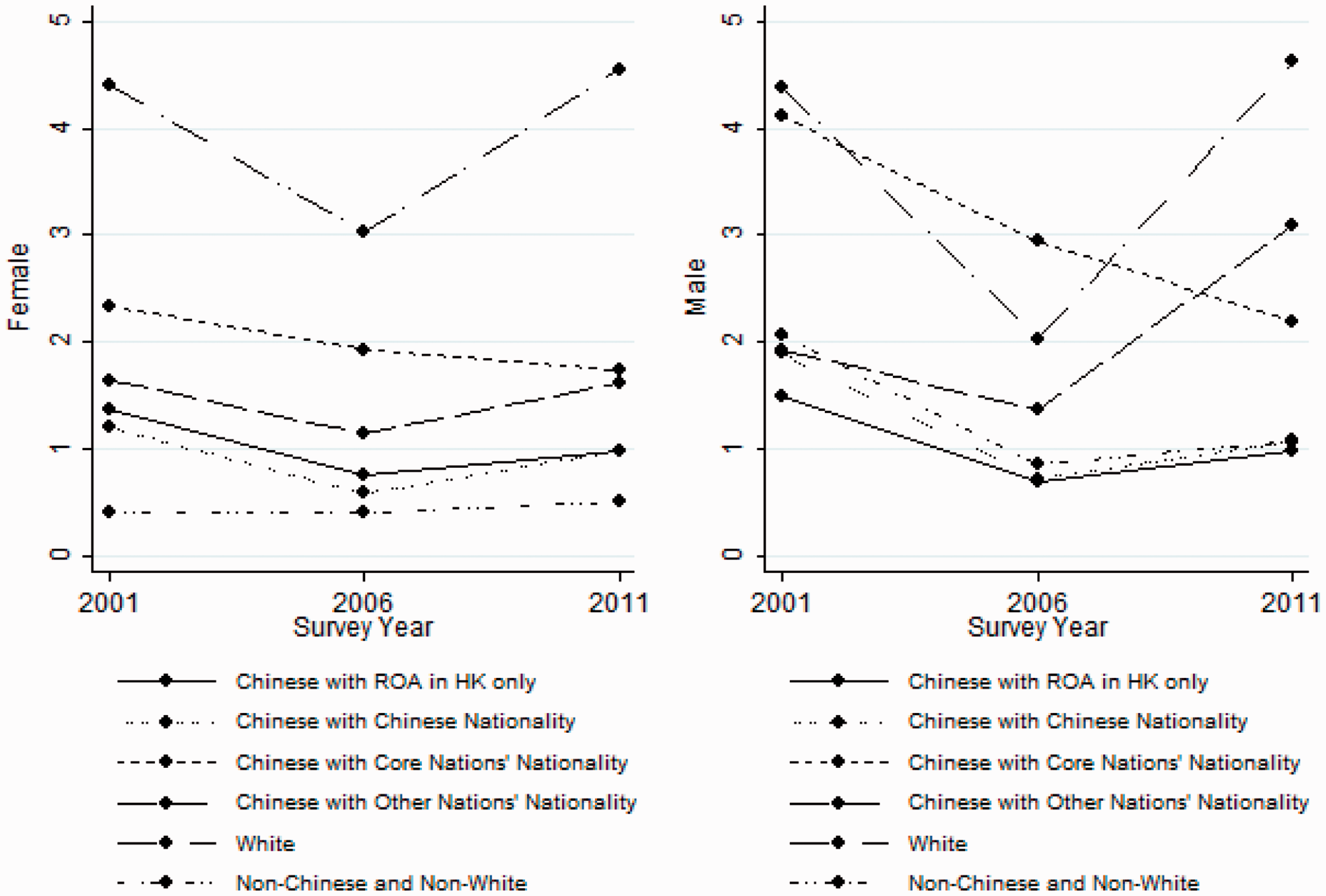
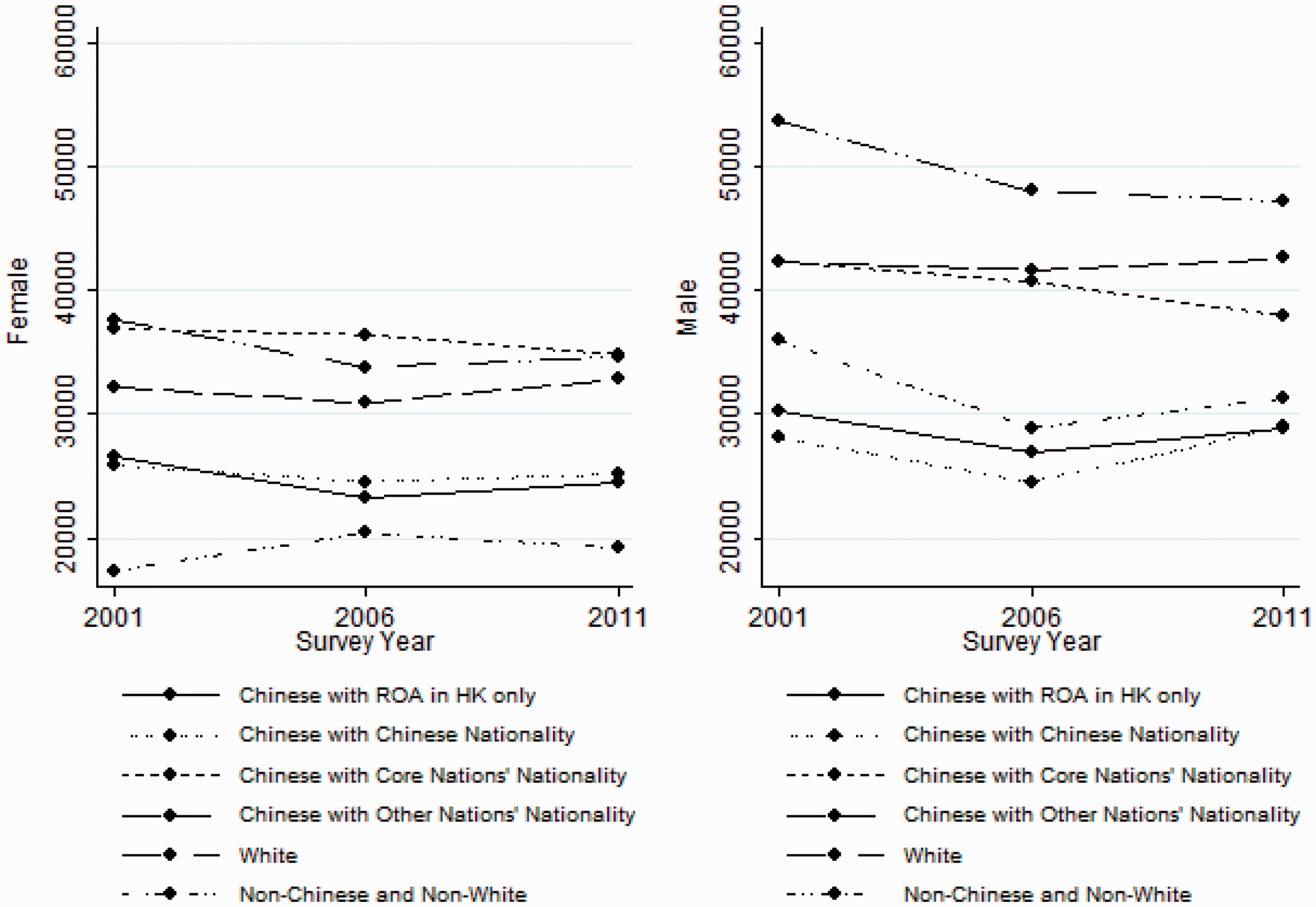
Based on the analysis in this section, we found that White privilege does exist in Hong Kong. Among college graduates, Whites were still more likely to take managerial and professional jobs and in general they earned more than Chinese people with nationalities from core nations. These findings are consistent with Hypothesis 2.1 but counter to Hypothesis 2.2. Nevertheless, we still found that Chinese people with nationalities of major developed countries did have a labor market advantage over other Chinese.
Discussion and conclusion
Previous literature about immigrant economic assimilation often assumes that immigrants suffer from labor market disadvantages immediately upon arrival, but the gap narrows or even closes as the length of residence increases. This argument has been largely challenged by the extreme heterogeneity found among immigrants due to their different times of arrival and different racial and ethnic backgrounds, indicating the importance of the receiving social context. However, almost all debates about the economic assimilation of immigrants are based on the North American or European experience.
In this research, we further challenge the traditional argument about the linear economic assimilation process with the Asian experience in the global city of Hong Kong, and we focus on the contextual factors at the global level rather than the local level. We assume that, given the unequal global power structure, immigrants from core nations and their counterparts from the peripheral nations are likely to be rewarded differently in the same host society. Similarly, racial/ethnic inequality, which used to be a local problem, could be present at the global stage, since both the racially advantaged and the racially disadvantaged could move to the same host society. This paper is the very first attempt to examine the non-Chinese immigrants’ economic outcomes in Hong Kong society and their changes over time by testing the influence of the global economic power structure and White privilege hypotheses.
Our results can be summarized as follows: consistent with the global power structure, immigrants from core nations have enjoyed better economic outcomes than both local Chinese and other immigrants from peripheral nations. In fact, immigrants from peripheral nations suffered the most in the Hong Kong labor market. The huge gap between those from the developed countries and those from the peripheral nations largely supports the global power structure hypothesis. However, contrary to our expectations, this gap did not widen over time. We also found that White people in Hong Kong still enjoyed some White privilege. Despite their status as immigrants and their lack of Chinese cultural background, they were still more likely to take top jobs and earn more than both local Chinese and Chinese people with the same nationality from core nations.
Based on these findings, we argue that the global economic and power structures are important factors for immigrants’ economic performance in the host society. This again emphasizes the essential role of contextual factors in immigrants’ assimilation process. However, we extend the traditional focus on the contexts of the receiving society to see how the position of the sending society in the global economic and political structure affects their emigrants’ life chances. Immigrants from the more developed core nations bring their international experiences, advanced managerial expertise, connections with major markets, and communication skills as well as language abilities. All of these qualities are highly valued in the global city of Hong Kong, where the high-end producer service industry is burgeoning. As a result, there should be no doubt that these immigrants are much better rewarded in the local labor market. However, the economic gaps between those from core and peripheral nations are not necessarily widening over time. This could be explained in several ways. First, the economic gaps might be more influenced by global economic fluctuations than by deeper globalization, as we have mentioned above. Second, the degree of globalization may not always be progressing linearly as it is constantly shaped by the global economic situation. Since we only have census and by-census data every five years, we may not be able to catch all the changes and test these potential explanations.
Moreover, our study also shows that not only immigrants’ places of origin, but also their observable characteristics, matter. We found that White people in Hong Kong still enjoyed more advantages than Chinese with nationalities of developed nations, despite the fact that the latter group usually had double advantages from their core-nation experiences and their local cultural backgrounds. Therefore, White privilege has been extended to the market far away from their home countries. Several explanations are offered for this situation, although we cannot test them with the current data set. First, most existing transnational companies are established by White people in core nations, and White people still take up the higher positions in management and capital possession. Minorities in core nations are still underrepresented at higher positions (perhaps due to discrimination), and the same situation could be extended to the regional headquarters and offices. Second, those White people working in Hong Kong may be highly selected (Findlay et al., 1996). They intentionally request or are intentionally offered higher salaries and occupational ranks so that they can work in culturally distant places like Hong Kong. In contrast, overseas Chinese people may have other considerations, so they are willing to work in Hong Kong for lower pay (Findlay and Li, 1998; Li et al., 1995); or they are purposely employed to work in Hong Kong just because of their ethnic backgrounds (Findlay and Li, 1998; Findlay et al., 1996). People who are neither White nor Chinese may suffer double disadvantages. Thus, it is important that future studies on immigrants’ labor market performance take into consideration the economic context as well as the nature of the immigrant stream.
Our research has some limitations. First, as mentioned above, the selection streams for different ethnic and nationality groups may be different and not random, which might bias the results. Second, the results we have found in Hong Kong may not be generalizable to other global cities around the world. However, we speculate that, at least in Asia, the same may be true for global cities such as Tokyo, Singapore, and Shanghai, given their similar position in the global political/economic system. Although we cannot address these limitations with the current data, we believe that our study makes an important contribution to the research on the economic outcomes of international migration in non-Western societies, and we have examined some core theories established in the Western setting. More studies need to be done in other global city settings to enhance our understanding of the relationship between the global power structure and the assimilation of immigrants.
Footnotes
Funding
This research was partially supported from a grant for data purchase and research assistant support. The funding source is ‘Labor Market Outcomes among Highly-Skilled Immigrants and Return Migrants: The Role of Place of Education’ Research Development Fund of Worldwide Universities Networks (WUN) in 2015-2016.