



Abstract
Understanding students’ perceptions of Christian education is essential for schools seeking to make changes that enhance opportunities for students to understand and engage with Christian faith. This study introduces and describes the validation of an accessible survey that probes students’ perceptions of the Christian culture of their school and the degree to which the school culture has influenced their willingness to engage with and adopt a faith stance. Schools can use the survey to identify areas for change related to the school climate, teaching and social-emotional learning, in conversation with teachers and students.
Keywords
Background
Australia has a high percentage of students attending fee-paying non-government schools (35%) (Australian Bureau of Statistics, 2020; Marks, 2015), of which 1755 are Catholic schools (National Catholic Education Commission, 2021); 149 are affiliated with Anglican Schools Australia (2019); 48 are affiliated with the Uniting Church in Australia (2021); 83 are Lutheran schools; and more than 320 schools are affiliated with Christian School Associations in Australia (Cheng and Iselin, 2020). Although each of these schools has Christian affiliations, their mission statements and stated philosophies of Christian education are varied. For instance, schools affiliated with Christian Schools Australia only employ practicing Christians who regularly attend church and report a commitment to communicate their faith to students in their care. The school is seen as a community of people who share the same faith and beliefs, although many students attending these schools may come from other faith traditions or have no religious affiliation (Christian Schools Australia, 2021).
On the other hand, schools affiliated with churches such as the Anglican and Uniting churches employ staff who, while encouraged to support a Christian ethos, may or may not identify as Christians and may not be active members of a church community. Families who choose to send their children to church schools are aware of the Christian ethos of the schools and know that their children may be encouraged to attend church/chapel services and Religious Education classes. However, the families come from many religious backgrounds, including those with no religion or atheists (Canberra Goulburn Anglican Schools Commission (CGASC), 2021). For instance, the core values of the Anglican Schools Commission (ASC) are Faith, Excellence, Justice, Respect, Integrity and Diversity (ASC, 2020). As such, the focus of these schools is to give opportunities for students ‘to learn that they have a spiritual nature and to develop ways to nurture that throughout life’. In doing so, schools introduce students to worship, encourage staff and students to demonstrate Christian values in their lives, provide a safe and friendly environment that respects the worth of all individuals, and encourage students to help and serve the wider community and creation (CGASC, 2021). Similarly, in a study of Christian ethos (involving church schools that catered to many secular students in the UK), leaders identified a Christian ethos as multifaceted. That is, in schools with a Christian ethos: all students are valued as being made in the likeness of God; students are supported to do their personal best; the prevailing culture is one where forgiveness, kindness and respect are evident; others are loved as one would love oneself; the importance of serving others is stressed; differences are respected; and Christian faith is presented as a living faith which affects individuals and others for good (Pike, 2011).
Translation of the Christian values and ethos espoused by bodies such as the ASC or the CGASC often fails. The aspirational school ethos as defined by the core values and goals stated on school websites may differ substantially from the school ethos perceived by students (and teachers) in the classroom and throughout school activities and interactions (Donnelly, 2000). On the one hand, studies report the stated philosophy, goals and values related to a Christian ethos are often ignored at the classroom level (Scouller, 2012). On the other hand, enthusiastic Christian teachers may shut down debate rather than ‘gently inviting students to consider the gospel and particular aspects of it’ (Collier and Dowson, 2007: p. 28). Another common pitfall is pushing Christianity to the periphery by limiting the discussion to religion classes or chapel rather than considering a Christian ethos central to the school’s identity and purpose (Jackson, 2009). Donnelly (2000) suggests that a superficial engagement by school leaders and teachers with values and goals found in the aspirational school ethos statements may result in an experienced school ethos of ‘outward attachment’ rather than ‘inward attachment’ (p. 151). An outward attachment is one which has been imposed on students with superficial adoption of behaviours, traditions or symbols, while an inward attachment is one where the aspirational school values, beliefs and behaviours have become second-nature to students and teachers and coherent with their beliefs about themselves and the world (McLaughlin, 2005).
In Church of England schools in the UK, there has been a movement encouraging schools to actively engage with spiritual development to enact the school’s Christian vision rather than leaving this to chance. This engagement focuses on pastoral care, social action, developing values such as hope and high expectations, Christian service, inclusivity, prayer and restorative justice (Carson et al., 2017). Given these research findings and the problematic notion of embedding a Christian ethos across the school, our research sought to help schools find a way forward that was consistent with their founding principles, vision, goals and values.
One way of assisting the school in determining a plan of action could be to examine students’ perceptions of how the Christian ethos is addressed. A literature review identified only one (non-peer-reviewed) survey, developed under the auspices of the Association for Christian Schools International (ACSI), to help understand the culture and outcomes of Christian education (Swaner et al., 2019). The Flourishing School Culture Instrument (FSCI) has been adopted as a pilot study in schools affiliated with Christian Schools Australia (Christian Schools Australia, 2021). Although the FSCI provides valuable insights into malleable factors that support a flourishing school culture within Christian schools, with an ethos aligning with CSA, close scrutiny suggests that it might not be an appropriate fit for church schools such as those belonging to the Catholic, Anglican and Uniting Church traditions, where the majority of students may have a secular worldview, since one of the foci of the survey is on the explicit integration of a Christian worldview into all aspects of teaching and learning. From our discussions with leaders in church schools, they would find it difficult to justify use of such a survey to parents. To our knowledge, no survey was available that would suit the unique goals and aims and large cohorts of non-Christian students and teachers in church schools. To address this gap, we developed a survey that would allow church schools to: (1) identify the degree to which students perceive the school to be achieving these important goals and (2) the extent to which students are willing to adopt Christian spirituality, values and belief in their lives. The new survey, the Christian Education Health Check (CEHC), provides a valid and reliable way forward for schools wishing to understand students’ experience of Christian education in these church schools. This article describes the development and validation of the CEHC and reports one way in which results from the questionnaire may be used to differentiate between the experiences of students by religious affiliation.
Method for the initial development of the Christian education health check
The development of the CEHC involved a multi-staged process in identifying scales that would most closely represent the stated goals and values of church schools. This process included reviewing existing questionnaires, examining mission statements of various church schools and discussions with stakeholders in the church school community. This process allowed us to ensure that each survey scale could be related to the goals and values stated by CGASC, ASC and other representative groups.
We chose to use the framework of Heart, Head, Hands and Feet, attributed to Edmund Rice (ERE Australia, 2016) to organise survey scales. Variations of Heart, Head, Hands and Feet have been used to describe holistic, transformative experiences and learning (Taylor, 2007) in Social Work (Kelly and Sewell, 1988), Education (Gazibara, 2020), including changing attitudes towards sustainability (Singleton, 2015) and refugees (Reimer et al., 2019). The framework that we adopted is illustrated in Figure 1. The Heart represents inclusive education that cares for and respects the students’ culture and differences, ensuring a safe learning environment where peer connectedness is encouraged (c.f. CGASC and other statements). Scales from the What Is Happening in This School (WHITS) survey (Aldridge and Ala’I, 2013), a well-validated school climate questionnaire, were used for this element of the CEHC. The Head represents religious education which makes teaching about the Bible and the central tenets of Christianity relevant and engaging to students. The scales were developed on the premise that, to ensure that religious education is engaging, there need to be opportunities to question, inquire and debate faith issues. Further, to develop a spiritual identity there need to be opportunities to engage with spiritual disciplines, such as prayer, and to apply an ethical stance to the world and its social problems. The Feet represent encouragement of students to walk in Jesus’ footsteps in terms of how they treat others, learn to forgive and restore relationships and adopt a moral identity. The Hands represent the degree to which students are given opportunities to consider their role and develop agency in addressing injustices and concerns in the world such as environmental issues. The Heart, Head, Hands and Feet model of Christian Education Health Check.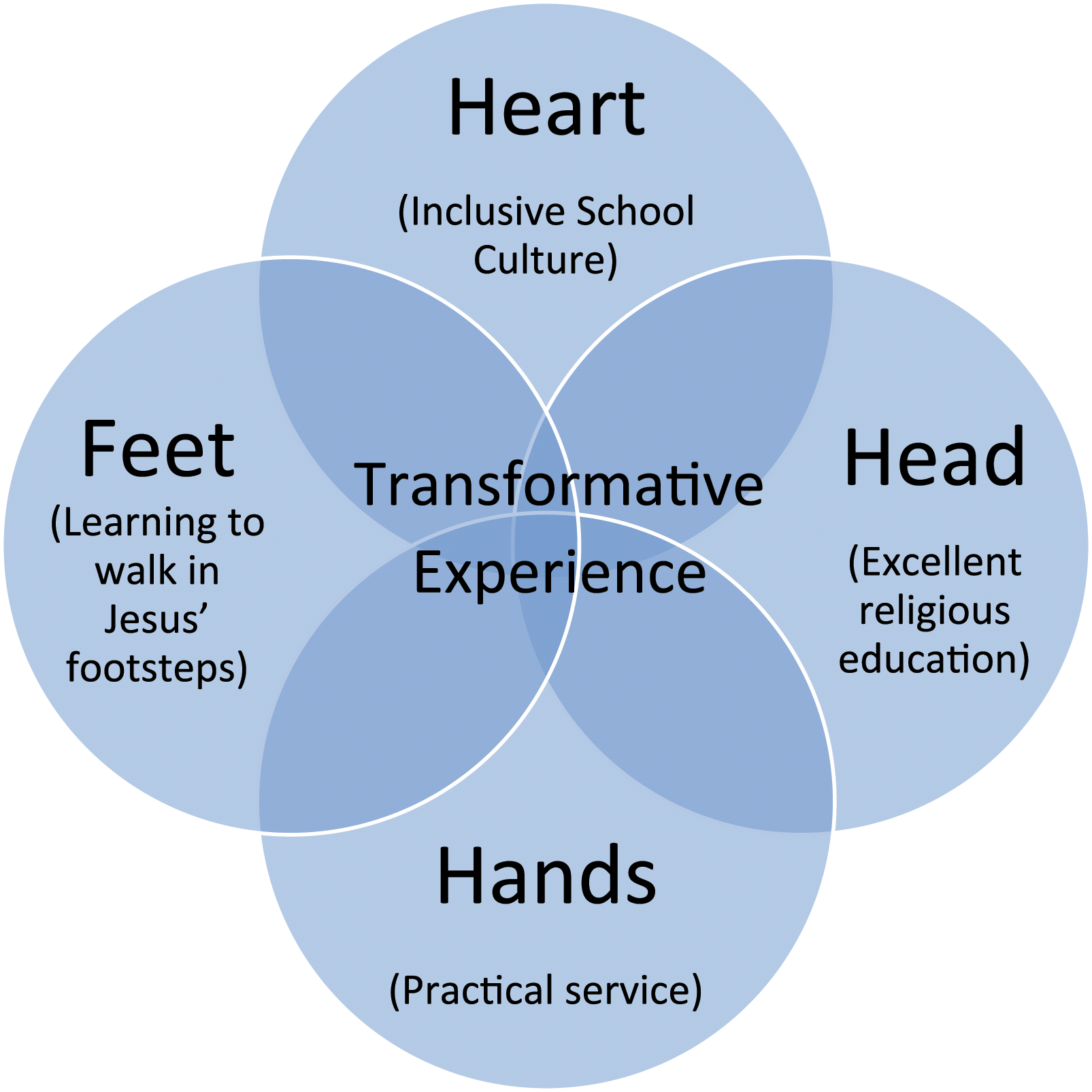
While the Heart, Head, Hands and Feet represent the perceptions that students have of what the school is doing in each of these areas, that is, malleable factors which the school has control over, the outcomes that we chose for evaluation were factors representing the students’ choices or the degree to which an ethos of inward attachment had been adopted by students (Donnelly, 2000; McLaughlin, 2005). The four outcomes scales are: Moral Identity, or the degree to which students are choosing to act according to what they believe is morally correct (adapted from Aldridge and McLure, under review); Spiritual Awareness, or the degree to which the students have become aware of a spiritual dimension to their lives and adopted elements related to Christian beliefs; School Impact on their Spiritual Journey; and Hope for the Future (an important outcome identified by Carson et al., 2017). The scales of moral identity, spiritual awareness and hope for the future are areas that the school’s ethos could reasonably be expected to impact on students. These represent the stated goals of education at these schools as described in their official websites, for instance, whether students have indeed adopted a belief that they have a spiritual nature (CGASC, 2021). The scale of school impact on the student’s spiritual journey, on the other hand, asks students to consider whether their overall experience at the school has led them towards the gospel.
Methods for questionnaire modification and validation
Refining and validation of the CEHC questionnaire took place in three steps: face validation by consultation with experts; piloting the survey with students for feedback; an extensive field test of the questionnaire followed by rigorous statistical analyses. Ethics approval was obtained from the University human research ethics committee to administer the survey to 12–18-year-old students.
Face validity The survey was organised in 10 scales intended to measure students’ perceptions of the school climate and four scales to measure students’ evaluation of their beliefs and behaviours and the degree to which the school had influenced these. The CEHC was given to an expert panel made up of six leaders (principals, deputy principal in charge of student welfare and wellness, school board chairperson) in Australian church schools in WA, NSW and the ACT. These experts changed item wording to improve clarity and better align items with the Christian school context they were familiar with. For instance, it was recognised that different jurisdictions and types of schools used different terminologies for classes that focused on Bible teaching. The wording was adjusted to include these differences. It was recognised that some adaptations in terminology may be required for each school context.
Small pilot study with students After ensuring face validity, the CEHC was administered to four high school students of varying ages who attend a church school to complete and give feedback on clarity of wording and for comprehension. As a result of their feedback some items were re-worded to improve readability and clarity.
Large-scale validation The 14 scales CEHC was completed online by 673 students (Male n=403; Female n=243; Other n=24) who attended a church school in NSW after obtaining informed consent. The questionnaire was administered after instructions were given to students during Christian Development classes, which were conducted online due to a Covid19 lockdown. The sample was made up of Grade 7-12 students (Grade 7 n=135; Grade 8 n=149; Grade 9 n=119; Grade 10 n=133; Grade 11 n=75; Grade 12 n=59). Students identified their religious affiliation as Christian (n=237), no religion (n=316), atheist (n=88), other religion (n=30) which included adherents of Buddhism (n=7), Hinduism (n=3), Islam (n=4) and Judaism (n=4), agnostic (n=9), other spiritual beliefs (n=4).
Analysis
Principal Component Analysis (PCA) with direct oblimin rotation and Kaiser normalisation was chosen to analyse the structure of the questionnaire as we expected to find correlations between scales (Stevens, 2009). To ensure that the data were suitable for factor analysis, they were checked using the Kaiser-Meyer-Olkin (KMO) test for adequate sampling indicated by values between 0.8 and 1.0 (Cerny and Kaiser, 1977). Measurement scales with eigenvalues of 1.0 or greater were identified as significantly contributing to the structure of the questionnaire (Stevens, 2009). To ensure that item reduction was warranted, Bartlett’s test for sphericity was carried out, which compares the correlation matrix with the identity matrix to determine whether there was a statistically significant difference (Bartlett, 1950). The criteria for retaining items were loading of 0.5 or greater on the expected scale and less than 0.5 on other scales after PCA. Items that did not meet these criteria were removed. If appropriate, items were moved from one scale to another with which they had good fit.
Once the scales, and items belonging to each scale, had been determined using PCA, internal consistency using Cronbach’s alpha and composite reliability were checked. In addition, concurrent validity or the ability to differentiate between groups (in this case religious groups) was determined using ANOVA with religious affiliation as the independent variable, discriminant validity (AVE) and predictive validity (multiple regression analysis to determine correlations between perception scales and outcome scales) were computed using SPSSTM.
Results
Exploratory Factor Analysis using Principal Component Analysis, tests of internal consistency reliability, concurrent validity, discriminant validity and predictive validity were carried out on the CEHC data.
Exploratory factor analysis
KMO (Heart, Head, Hands, Feet = 0.955; Outcomes = 0.947) and Barlett’s test of sphericity (Heart, Head, Hands, Feet: χ2 (2278) 28,537, p < .001; Outcomes: χ2 (325) = 15,240, p < .001) indicated that it was appropriate to carry out factor analysis on these data and reduce items from the initial CEHC.
Principal Component Analysis (PCA) with direct oblimin rotation and Kaiser normalisation was carried out on data for the 68 original items identified as describing the 10 proposed scales for ‘Heart, Head, Hands and Feet’ section of the CEHC, and the 26 items describing the four Outcomes scales. PCA suggested that two more scales were appropriate (eigenvalues greater than 1.0) for the ‘Heart, Head, Hands, Feet’ section of the questionnaire. On examination, the new scales were consistent with our original theoretical structure and were adopted as we found that they gave a more nuanced understanding of the data. For instance, the items within the Biblical Teaching scale were found to describe two scales: Students’ understanding about the Bible and central Christian tenets; and students’ perceptions of engagement with Biblical teaching in all subjects across the school. Likewise, two scales were found which described students’ experience of spiritual disciplines such as prayer: application of spiritual disciplines to their lives; and the degree to which they are encouraged to engage with these spiritual disciplines.
Scale description, sample items, mean and standard deviation for each Christian Education Health Check scale.
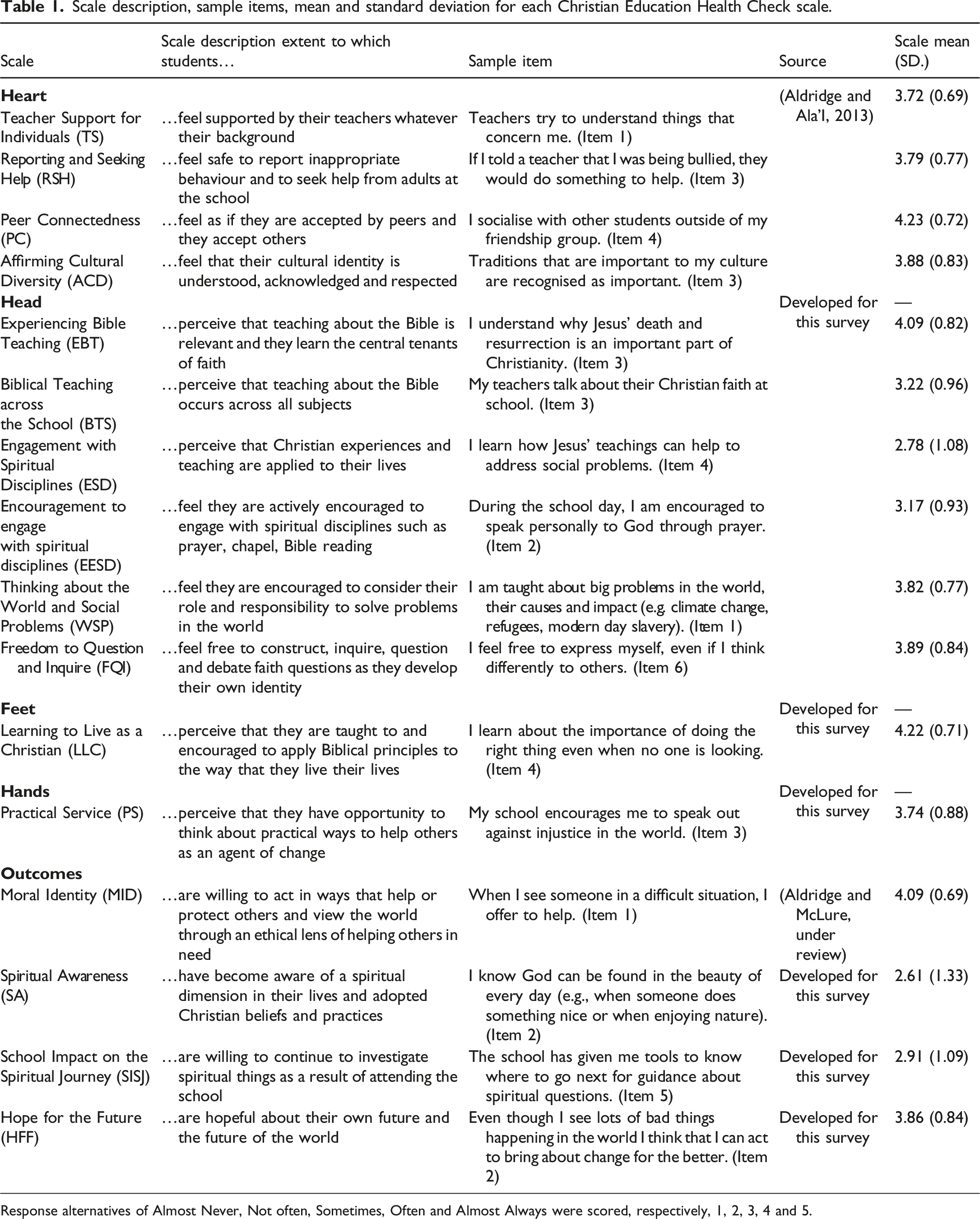
Response alternatives of Almost Never, Not often, Sometimes, Often and Almost Always were scored, respectively, 1, 2, 3, 4 and 5.
Exploratory Factor Analysis (PCA) of the Christian Education Health Check: Heart, Head, Hands, Feet questionnaire actual perceptions (N = 673).
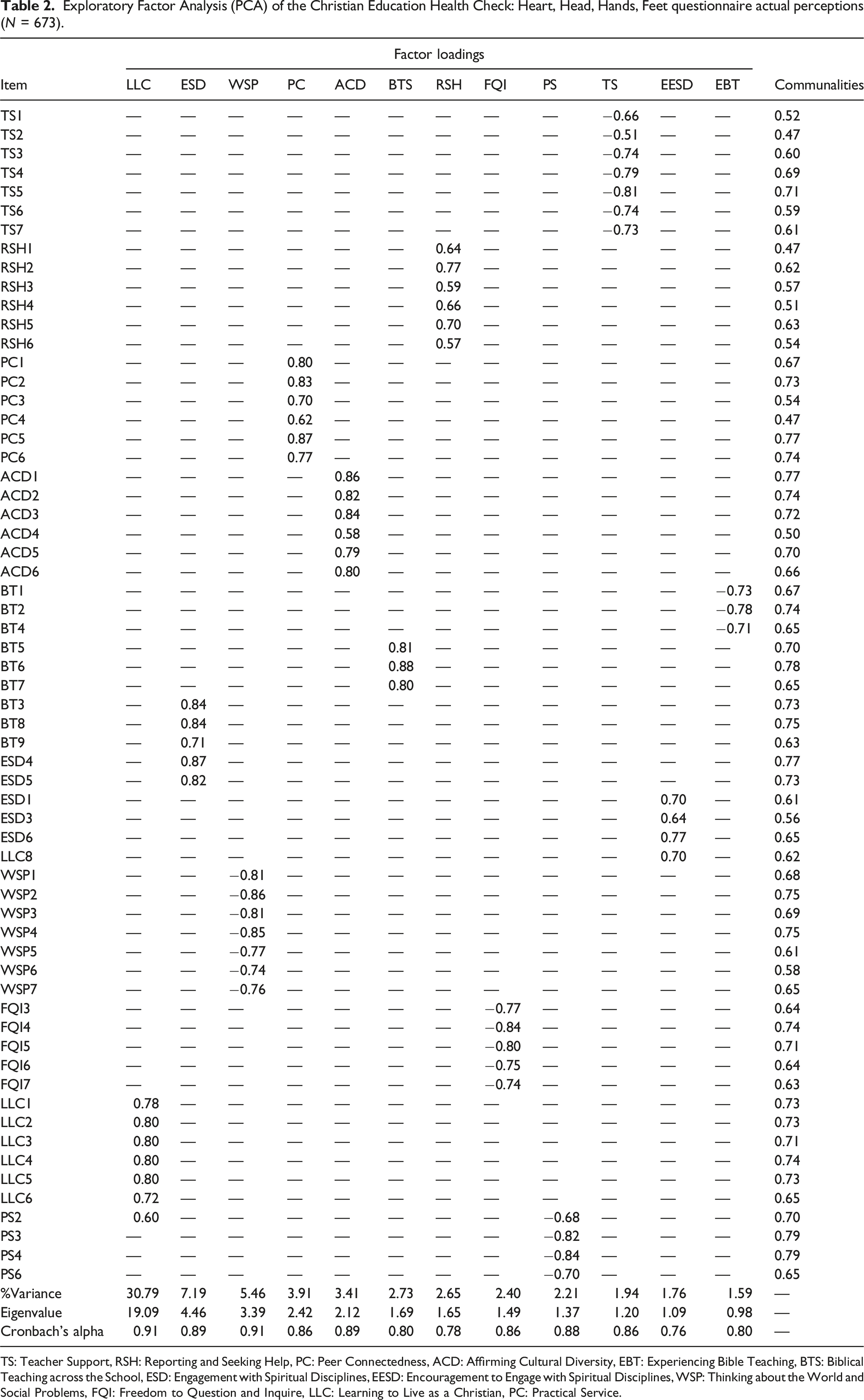
TS: Teacher Support, RSH: Reporting and Seeking Help, PC: Peer Connectedness, ACD: Affirming Cultural Diversity, EBT: Experiencing Bible Teaching, BTS: Biblical Teaching across the School, ESD: Engagement with Spiritual Disciplines, EESD: Encouragement to Engage with Spiritual Disciplines, WSP: Thinking about the World and Social Problems, FQI: Freedom to Question and Inquire, LLC: Learning to Live as a Christian, PC: Practical Service.
Exploratory Factor Analysis (PCA) of the Christian Education Health Check questionnaire outcomes (N = 673).
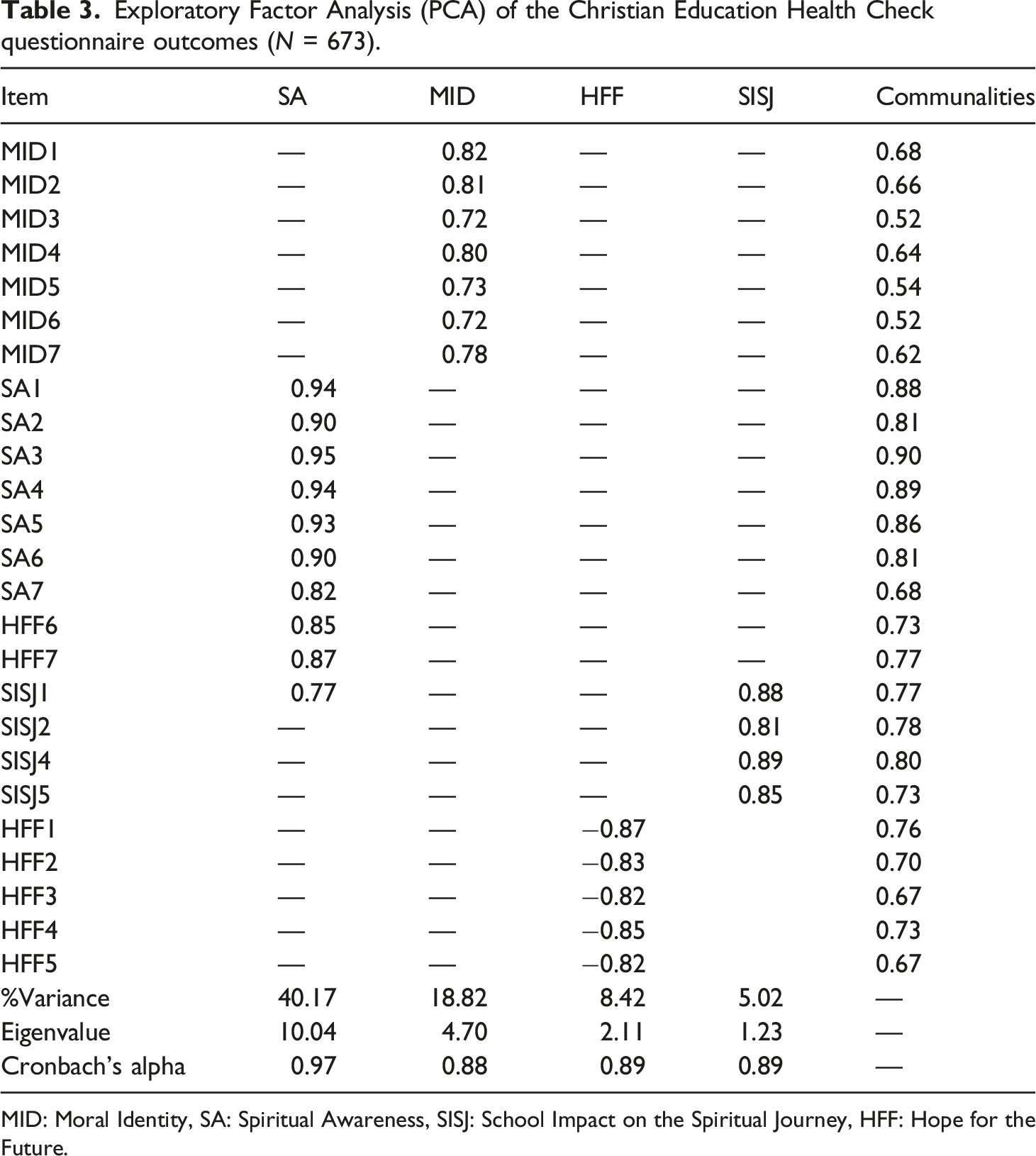
MID: Moral Identity, SA: Spiritual Awareness, SISJ: School Impact on the Spiritual Journey, HFF: Hope for the Future.
Internal consistency, composite reliability and concurrent, discriminant and predictive validities
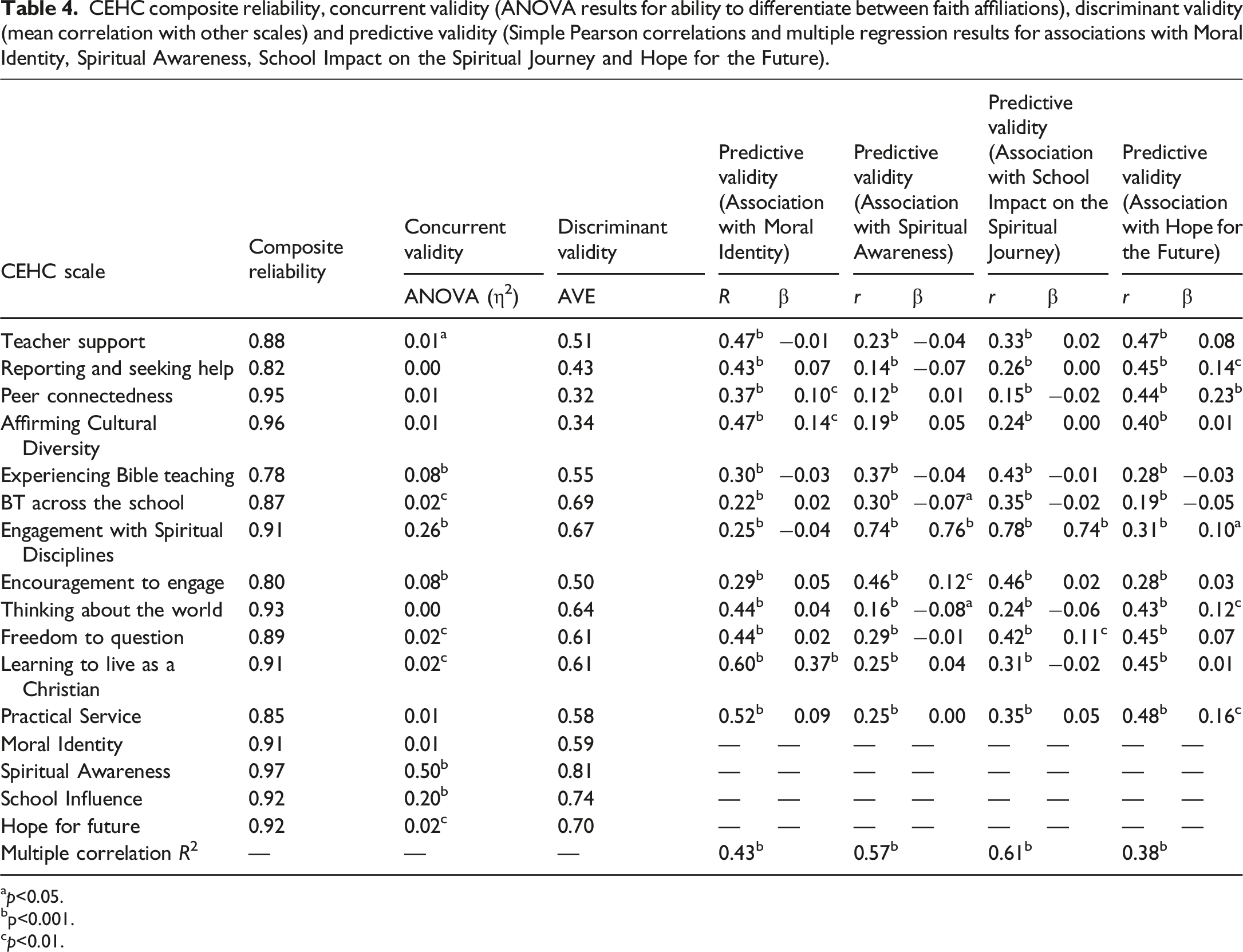
CEHC composite reliability, concurrent validity (ANOVA results for ability to differentiate between faith affiliations), discriminant validity (mean correlation with other scales) and predictive validity (Simple Pearson correlations and multiple regression results for associations with Moral Identity, Spiritual Awareness, School Impact on the Spiritual Journey and Hope for the Future).
ap<0.05.
bp<0.001.
cp<0.01.
It is important that a school environment survey is able to distinguish between schools. We were unable to test whether this was the case since all respondents were from the same school. However, the CEHC questionnaire does differentiate significantly (p<0.05) between the perceptions of students who adhere to different religions for 10 of the 16 scales as seen in the ANOVA results (religious affiliation as the independent variable) as shown in Table 4. Concurrent validity is also indicated by the significant correlation between each of the Head, Heart, Hands and Feet scales with the four outcome scales (Table 4).
Average Variance Extracted (AVE) is a measure of the amount of variance within a scale compared with the variance due to measurement error. It is often used as a rule of thumb to indicate discriminant validity. An acceptable value is less than 0.85 (Fornell and Larcker, 1981) which is met by each of the CEHC scales.
Table 4 reports correlation coefficients (r) and standardised regression coefficients (β) between each of the ‘Heart, Head, Hands, Feet’ scales and the four outcome scales. It can be seen that in each case all scales showed significant correlations with the outcome variable as well as significant correlations for some scales in the multiple regression analysis. This indicates that the ‘Heart, Head, Hands and Feet’ scales may be used to predict Moral Identity, Spiritual Awareness, School Impact on the Spiritual Journey and Hope for the Future. For instance, students’ spiritual awareness is significantly predicted by their perceived experiences of Bible teaching across the school, engagement with spiritual disciplines, encouragement to engage with spiritual disciplines and thinking about the world and social problems.
Multivariate analysis of variance by religious affiliation
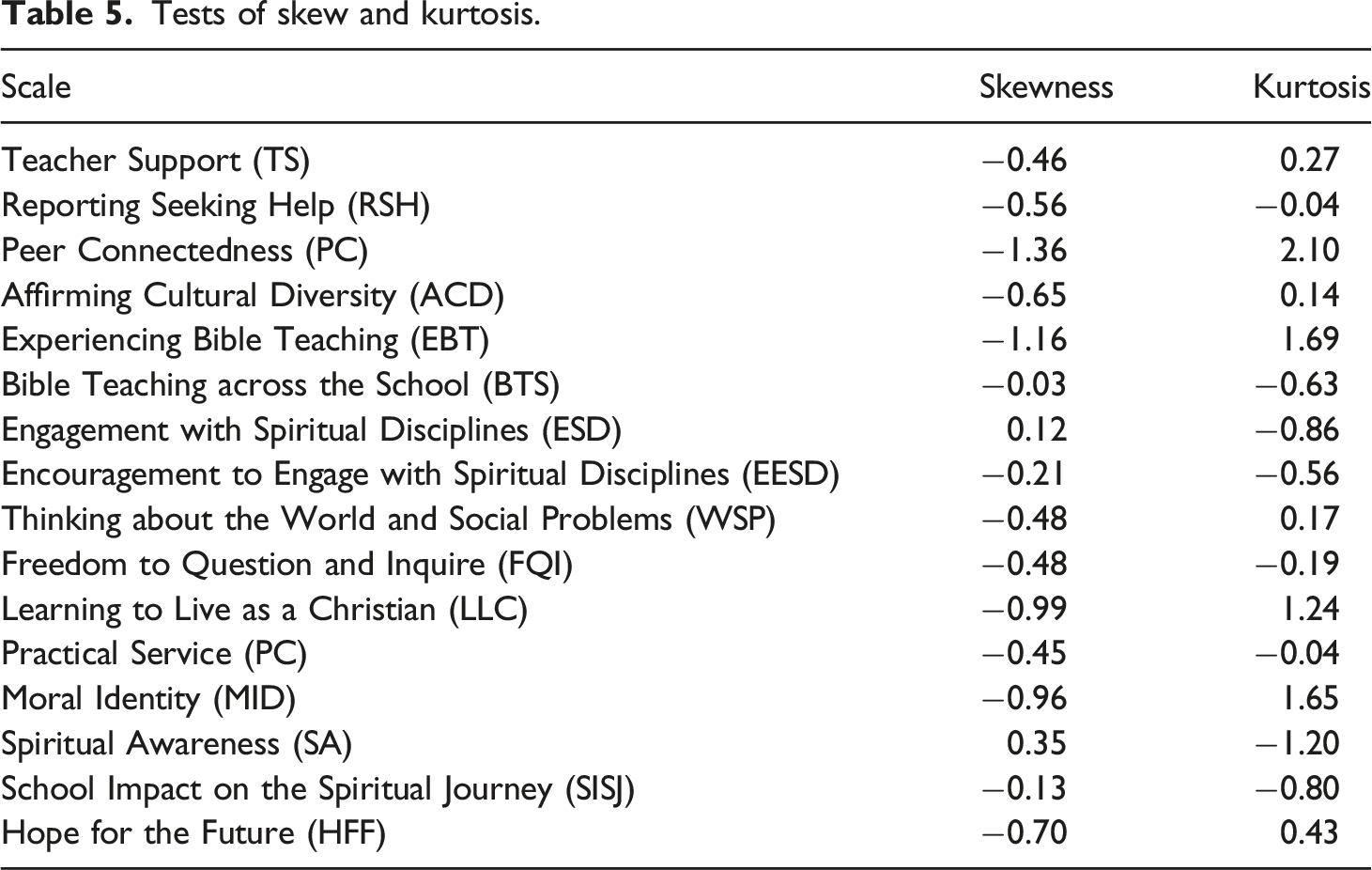
Tests of skew and kurtosis.
MANOVA results comparing the experience of students with different religious affiliations.
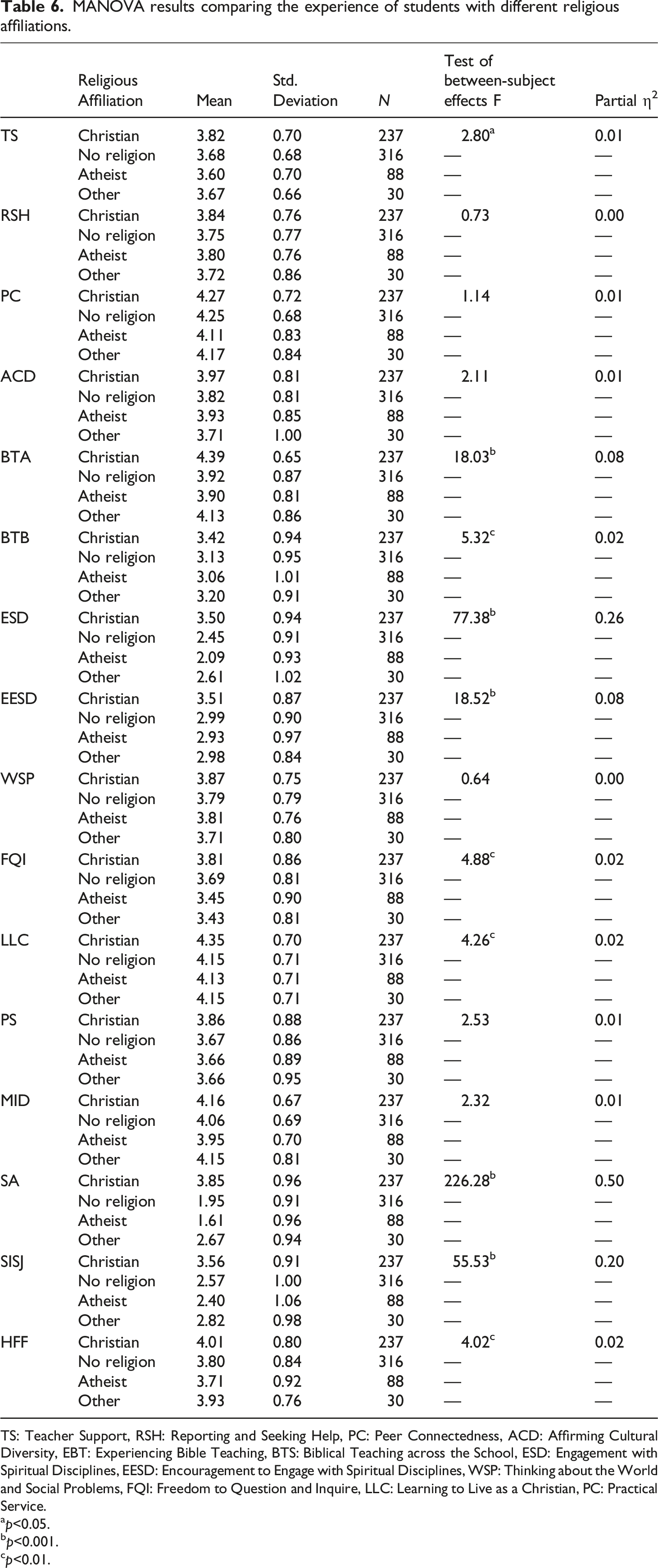
TS: Teacher Support, RSH: Reporting and Seeking Help, PC: Peer Connectedness, ACD: Affirming Cultural Diversity, EBT: Experiencing Bible Teaching, BTS: Biblical Teaching across the School, ESD: Engagement with Spiritual Disciplines, EESD: Encouragement to Engage with Spiritual Disciplines, WSP: Thinking about the World and Social Problems, FQI: Freedom to Question and Inquire, LLC: Learning to Live as a Christian, PC: Practical Service.
ap<0.05.
bp<0.001.
cp<0.01.
Discussion
Using the validated Christian education health check
The CEHC was designed with the goals and values described by different church schools in mind, and each of the 16 CEHC scales are linked with aspects presented in mission statements or statements of values and goals found on church school websites (ASC, 2020; CGASC, 2021). A structure of 12 scales related to Heart, Head, Hands and Feet scales and four outcome scales were supported by PCA and tests of reliability and validity. We expect each school to reveal unique responses to each scale and varying interactions between scales dependent upon the context. However, as this pilot case demonstrates, the descriptive statistics (mean and standard deviation for each, Table 1) can identify scales where students perceive the school to be successfully addressing goals and values (as specified by the school’s mission statement) and those where there is room for improvement. For instance, this cohort of students, on average, perceived that the school frequently makes Bible teaching relevant to their lives, teaches them to apply Biblical teaching to their lives and feel strong connections with their peers. Areas in which students were less positive included the degree to which the school allows them to apply spiritual disciplines to their lives or encourages them to do so. This information enables the school to consider whether addressing these areas is consistent with the school’s Christian ethos and may provide a platform for discussion between leadership, teachers and students about how these factors may be addressed.
Secondly, the predictive value of the Heart, Head, Hands and Feet scales for each of the four outcome scales indicate that the school may use data obtained from the survey to identify possible areas where change may be effective in influencing the desired outcome. However, without further investigation, such as introducing appropriate interventions and measuring changes in student responses, it is important to recognise that observed correlations may be the result of other factors. For instance, Table 4 shows that Moral Identity (that is, a student’s willingness to act upon their beliefs about what is morally correct) is correlated with the student’s perception of the degree to which cultural diversity is affirmed within the school and the amount of peer connectedness that they experience. However, the factor with the strongest correlation in this school was the extent to which students perceived that they were taught how to live out their lives based on Christian values. This finding indicates that focussing on this aspect within the school’s culture may have the greatest effect in developing students’ moral identity. For instance, following initial administration of the CEHC, this school could introduce an intervention to strengthen teaching of Christian values as they play out in students’ lives and use the CEHC as a post-intervention measure, to determine whether there had been a change in both this aspect and in students’ Moral Identity.
Thirdly, the CEHC can differentiate between the experiences of different groups of students. The experiences of students who describe themselves as being affiliated to Christianity, no religion, atheism or other religions had distinctly different perceptions of the school climate in terms of both Bible teaching applied to their lives and throughout the school, experiencing spiritual disciplines and learning to live as a Christian. It should be noted that the small grouping of students with other religions was one of convenience and was made up of students who held very diverse beliefs. Hence, it is inappropriate to consider this group’s responses as a homogenous experience. However, we separated this group’s data as these students did hold religious beliefs of some kind, as distinct from those who stated that they have no religion or are atheists. Not surprisingly, the students who expressed adherence to Christian faith were more positive in each of these scales than those who had no religion or identified as atheists. The fact that the students with no religion, were atheists, or adhered to another religion feel less positive about the freedom that they have to question or inquire about faith issues could be an area that this school chooses to focus on for development in the future.
Future implications
Student perception data, such as those obtained using the CEHC, have been used with some success in designing interventions and measuring the effects of those interventions (see Aldridge et al., 2021). The CEHC could be used as part of a five-step process for school improvement as described by Aldridge et al. (2021). 1. Assess the school climate and obtain feedback about student perceptions by administration of the CEHC. 2. Teachers and administrators reflect on the CEHC data to interpret what it tells them about the school. 3. Teachers and school leaders work collaboratively to plan interventions to address areas of concern that were identified through the CEHC. 4. Teachers introduce the intervention(s) over a 6–10 week period while meeting to reflect and refine the intervention. During this time, group leaders may make classroom observations to understand the fidelity of implementation of the intervention. 5. Student perceptions of the learning environment are reassessed to understand whether the predicted changes have taken place.
Feedback using the CEHC can highlight areas of concern (such as differences between students' perceptions for those who self-identify as Christian, atheist, no religion, or other religion). When reacting to this information, it will be important to examine the data more closely to understand the differences better and what is happening for these students. As a first step, disaggregating the scores on the CEHC (e.g. by religion) can provide a more detailed look at their students. However, it will be valuable for staff to use the salient dimensions of the CEHC alongside the feedback as a framework for discussions about students’ experiences. Allowing students to voice their views makes sense; it serves as a means of both examining issues and promoting the school’s underlying social and spiritual goals (Sands et al., 2007). Tapping into students’ unique knowledge and perspectives can inform school improvement efforts while simultaneously providing an empowering experience for students (Scanlon, 2012). While the CEHC was designed for church schools, the questionnaire is suitable for use and could be used for planning in any school which adopts a Christian ethos.
Limitations
This study has a number of limitations, not least of which is that it was carried out in a single school in the Anglican school system and it is therefore not possible to generalise findings to schools from other systems. Similarly, without further observation of the school in question, it is not possible to identify which aspects of the school environment are actively influencing students’ beliefs and practices. There are many influences on students that come from outside the school environment, such as the influence of family values and experiences. It is therefore likely that a student’s beliefs and values, as measured by the outcome scales of moral identity, spiritual awareness and hope for the future are influenced by these factors as well as school experiences. However, we believe that the school ethos can be a powerful factor in the ethical decisions and beliefs of students and, in some cases, may even override the influence from home. For this reason, it is important for schools to reflect on the malleable factors within the school culture that have potential to influence students, listen to the student voice about these factors and make considered adjustments in the hope that students may be influenced positively by the school in adopting a healthy moral identity, spiritual awareness and greater hope for the future.
Conclusion
To our knowledge, no surveys have been developed to assess important facets of Christian education that are suited to church schools (e.g. Catholic, Anglican and Uniting Church schools). Our research overcomes this gap by providing a validated instrument that assesses students’ perceptions of the Christian ethos (philosophy, goals and values) experienced at school and the extent to which students are willing to adopt Christian spirituality, values and beliefs. The data provides schools with valuable information that they can reflect on to identify and address areas for improvement.
Footnotes
Declaration of conflicting interests
The author(s) declared no potential conflicts of interest with respect to the research, authorship, and/or publication of this article.
Funding
The author(s) received no financial support for the research, authorship, and/or publication of this article.
